C. 1-3 🌴
 Call Kai
 Learn
Learn Practice Test
 Spaced Repetition
 Match
Match Flashcards
 Knowt Play
1/348

There's no tags or description
Looks like no tags are added yet.
Name | Mastery | Learn | Test | Matching | Spaced | Call with Kai |
|---|
No analytics yet
Send a link to your students to track their progress
349 Terms
⭐All materials, living or non-living, are composed of
Chemicals consisting of atoms.
The study of the structure/morphology of the human body and its parts; derived from Greek for “a cutting up”
Anatomy
All anatomical structures are chemicals, and—
All physiological processes are based on chemical reactions
The study of the functions of the human body and its parts; derived from Greek for “relationship to nature.” The structure of organs and parts of the human body determines the function.
Physiology
⭐Subatomic Particles
Protons, neutrons, and electrons that make up cells
⭐Atom
Tiny particles that make up chemicals (hydrogen, carbon)
⭐Molecule
Particles consisting of atoms joined together (water, glucose)
⭐Macromolecule
Large particles consisting of molecules (DNA, protein)
⭐Organelle
Functional part of a cell (mitochondrion, lysosome)
⭐Cell
Basic unit of structure and functions (muscle, nerve, or blood cell)
⭐Tissue
Layer or mass of cells with specific function (adipose tissue)
⭐Organ
Group of tissues with a function (heart, kidney, stomach)
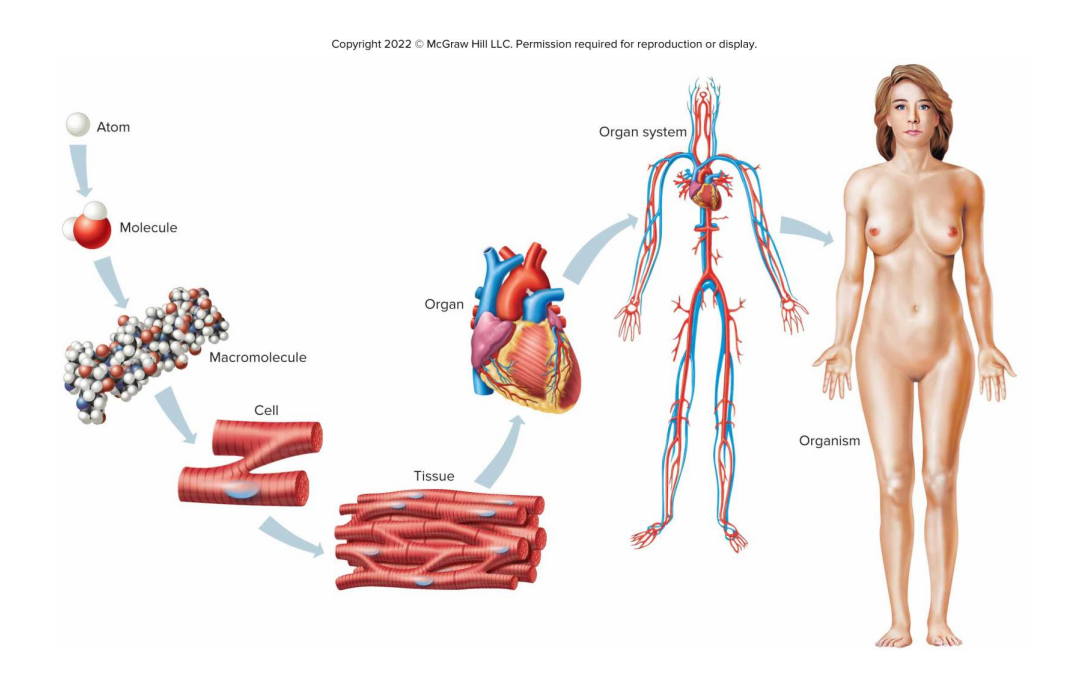
⭐Organ System
Group of organs with common function (digestive system)
⭐Organism
Composed of organ systems interacting (human)
⭐Noninvasive procedures that provide images of internal structures
Ultrasound and Magnetic Resonance Scan (MR)
⭐Ultrasound
High-frequency sound waves that provide images of soft internal structures; used to obtain sonogram of fetus in the uterus
⭐Magnetic Resonance Scan (MR)
Magnetic field changes alignment and spin of certain types of atoms
⭐Magnetic Resonance Scan (MR) provides (image)
High-resolution images of internal structures, such as the brain
Gradients and permeability
Cells move from high to low, down pressure and concentration gradients, across permeable membranes
Cellular differentiation
Specialization of cells due to gene expression
Cell membrane mechanisms
Determine entry of substances, respond to signals. Selectively permeable
Cell-to-cell communication
Via membrane receptors
Balance
Replacement of lost substances, elimination of excesses
Energy processes
Keeps cells active
⭐Aging occurs from
The microscopic to the whole-body level
⭐Aging- Skin wrinkles due to
Decrease in subcutaneous fat
⭐Aging- Skin stiffens due to
Decrease in collagen and elastin
⭐Aging- Percentage of fats in the tissues
Increases
⭐Aging- Elevated blood glucose may progress to
Type 2 diabetes mellitus
⭐Aging Tissues
Atrophy and organs shrink
⭐Aging Cells reach end of ability to undergo cell division because
They lose tips of chromosomes
⭐Aging Metabolic rate
Decreases
⭐Aging causes decreased production of
Enzymes and other proteins. Dementia/Alzheimer disease
⭐Anatomical Position
Standing erect, facing forward, upper limbs at the sides, palms facing forward
⭐Bilateral
Paired structures; on both sides
⭐Ipsilateral
Same side (EX: Right Arm and Right Leg)
⭐Contralateral
Opposite sides (EX: Left Leg and Right Arm)
⭐Proximal
Close to point of attachment to trunk (Shoulder is proximal to the elbow. BUT elbow is distal to the shoulder)
⭐Distal
Farther from point of attachment to trunk (Elbow is distal to the shoulder. BUT shoulder is proximal to the elbow)
⭐Sagittal section
Longitudinal cut that divides body into left and right portions
⭐Mid-sagittal (Median) section
Divides body into equal left and right portions
⭐Transverse (Horizontal) section
Divides body into superior and inferior portions
⭐Coronal (Frontal) section
Longitudinal cut that divides body into anterior and posterior portions
⭐ Cross-section
A cut across the structure (burger)
⭐Oblique section
An angular cut
⭐Longitudinal section
A lengthwise cut (hotdog)
⭐Human body, food, and medications are all composed of
Chemicals
⭐All anatomical structures are
Chemicals (physiological processes)
⭐Matter is anything that takes up space and has mass
Matter is composed of elements. Solids, liquids, and gases.
⭐Chemistry concerned with composition of substances and how they change in chemical reactions
Studies composition, properties, interaction of matter
⭐Biochemistry
Biological chemistry, which studies physiological process and disease
Elements (92 occurring)
Simplest types of matter with certain chemical properties.
Compounds
Chemical combinations of different elements
⭐Different elements are required by the body in different amounts
Bulk elements, trace elements, and ultratrace elements
⭐Bulk elements ("Carbon has nine oxygens per student")
CHONPS
Required by the body in large amounts (C, H, O, N, P, S)
⭐Trace elements
Required by the body in small amounts (Fe, I)
⭐Ultratrace elements (Arsenic)
Required by the body in very minute amounts (As)
⭐Trace elements in the human body
Cobalt (Co), Copper (Cu), Fluorine (F), Iodine (I), Iron (Fe), Manganese (Mn), Zinc (Zn)
⭐Most abundant elements in the human body by weight
CHO
Oxygen (65.0%), Carbon (18.5%), and Hydrogen (9.5%)
⭐Protons
Large particlesand carries a single positive charge:
⭐Neutrons
Large particles and carries NO electrical charge
⭐Electrons
Small particles; carry a single negative charge
⭐Atoms are subatomic particles consisting of
A central nucleus (protons + neutrons) and electrons in constant motion around the nucleus.
⭐Atoms are electrically neutral because
Number of protons equals number of electrons
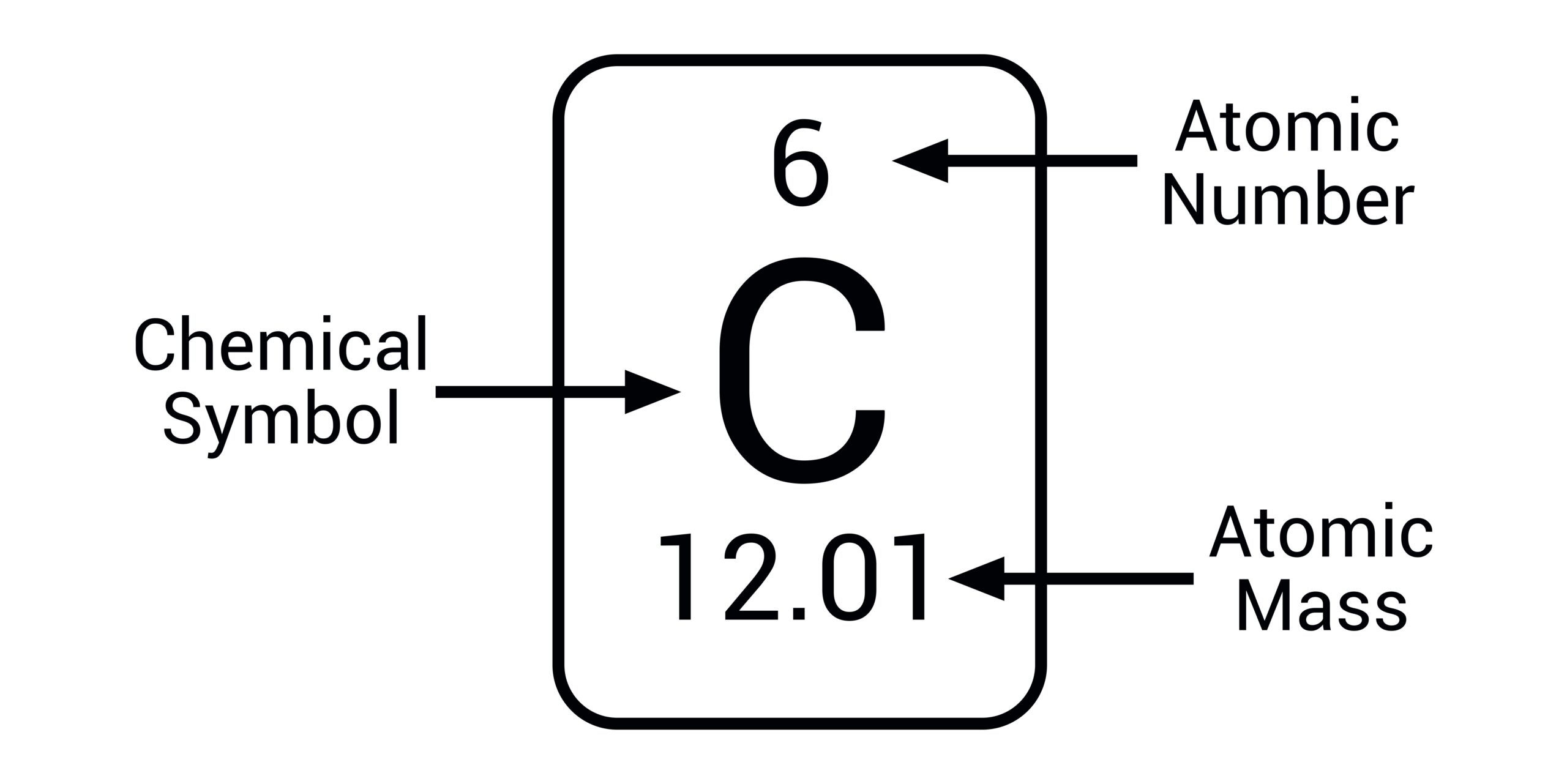
⭐Atotomic number is the element's identity, while the mass number gives the total weight of a specific atom
Number of protons in the nucleus of an atom of a specific element
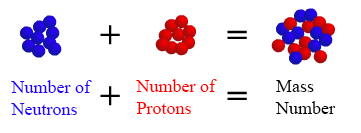
⭐Mass Number
The number of protons + neutrons in (1) atom
Electrons do not contribute to the mass of the atom because
They are so light
⭐Mass is the amount of matter present, and weight is the heaviness due to gravitational pull on mass
Mass vs Weight
⭐Isotopes are atoms with
Same atomic numbers ✔but different mass numbers
⭐All atoms of a certain element have the same
Atomic number
⭐Isotopes contain
Different numbers of neutrons, but SAME number of protons & electrons
⭐Radioactive isotopes
Unstable, releasing energy or atomic fragments (atomic radiation) until they gain stability. Detect and treat disease
⭐Atomic weight
Often considered the average of the mass numbers of all of an element's isotopes
⭐Oxygen often forms isotopes ____ with numbers representing mass numbers
O16, O17, O18
Medical uses of radioactive isotopes
Detecting coronary blood vessel disorders, evaluating kidney function, measuring hormone concentrations in body fluids, and assessing changes in bone density
Ionizing radiation
Radiation whose energy can remove electrons from atoms, resulting in the formation of ions
Examples of ionizing radiation
Alpha, beta, and gamma radiation
Free electrons can
Damage nearby atoms
Sources of ionizing radiation
X rays, naturally occurring radioactive elements in the crust of the earth, and nuclear weapons
⭐Molecule
Particle formed when two or more atoms chemically combine
⭐Compound
Particle formed when two or more atoms of different elements chemically combine
Molecular formulas
Depict the elements present and the number of each atom present in the molecule
H₂
A molecule of hydrogen
C₆H₁₂O₆
A molecule of glucose
Atomic - Number of protons in atom's nucleus
Mass- Total protons and neutrons in atom's nucleus.
Atomic Number vs. Mass Number from the periodic table
⭐Chemical bonds.
When atoms combine with other atoms. Results of interactions between the electrons of the atoms
⭐Electrons occupy regions of space called Electron shells. For atoms with atomic numbers of 18 or less,
They encircle the nucleus. First shell 2 electrons, second 8 electrons, third 8 electrons.
Lower energy shells/inner orbits are filled first
And are stable with a certain number of electrons in the outermost shell (2, 8, or 18 in larger atoms).
⭐Electrons in the outermost shell determine
Whether an atom will react with other atoms to form chemical bonds
⭐Ion
An electrically charged atom that gains or loses electrons to become stable
⭐Cation
A POSTIVELY charged ion, formed when an atom LOSES electrons
⭐Anion
A NEGATIVE charged ion, formed when an atom GAINS electrons
⭐Ionic Bonds
Strong chemical bonds formed when ions of opposite charge attract
⭐Covalent Bonds
Strong chemical bonds, formed between atoms that share electrons
⭐Hydrogen molecules (H₂) often combine with oxygen (O₂) molecules to form
Water molecules (H₂O)
Structural formulas
Show how atoms bond and are arranged in various molecules
One line between atoms means
1 pair of electrons are being shared (forming single bonds)
Synthesis, Decomposition, Exchange, and Reversible.
Types of Reactions
⭐Nonpolar covalent bonds
Electrons are shared equally. Found in atoms with the same electronegativity
⭐Nonpolar & Polar Covalent Bonds of the same element pull shared electrons
Equally