Cellular Reproduction: Mitosis and Meiosis
 Call Kai
 Learn
 Practice Test
 Spaced Repetition
 Match
 Flashcards
 Knowt Play
1/70

71 Terms
Mitosis - Definition and Acrostic Pneumonic
A form of cellular reproduction in which a mother cell divides to yield two genetically identical daughter cells.
2 Identical Twins Own 46 Dogs
2 daughter cells, genetically identical, one division, 46 chromosomes each, diploid.
Meiosis - Definition and Acrostic Pneumonic
A process of cellular reproduction occurring in SEXUALLY reproducing organisms.
One gametocyte divides to produce four non-identical haploid cells.
Four Different Hippos Dance Twice with 23 Penguins
4 Daughter cells, genetically different, haploid, 2 divisions, 23 (individual) chromosomes each
Chromosome - What is it and what does it mean.
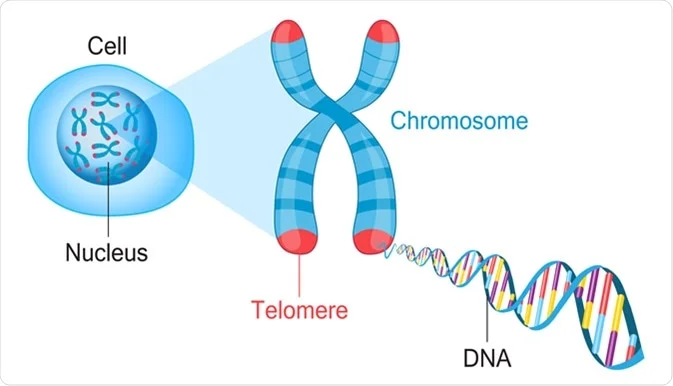
A cellular structure carrying genetic information.
Means "colored body" because it becomes visible when stained during specific stages of mitosis.
Telomeres
Structures located at the ends of chromosomes that fray over time with repeated reading, thought to contribute to the aging process.
Interphase- What is it
The period of the cell cycle where cells spend the majority of their lives carrying out normal functions rather than actively dividing.
Active division would be like…the reproduction phase for people.

G1 Phase
The subphase of interphase in which cellular contents, excluding the chromosomes, are duplicated in preparation for division.
S Phase
The synthesis stage of interphase during which all 46 chromosomes in the cell are duplicated.
G2 Phase
The stage of interphase where the cell runs checks on the duplicated chromosomes to detect and resolve errors before undergoing mitosis.
Cytokinesis
The physical process in the cell cycle where the cytoplasm and cellular structures divide to break the cell apart into separate cells.
Prophase
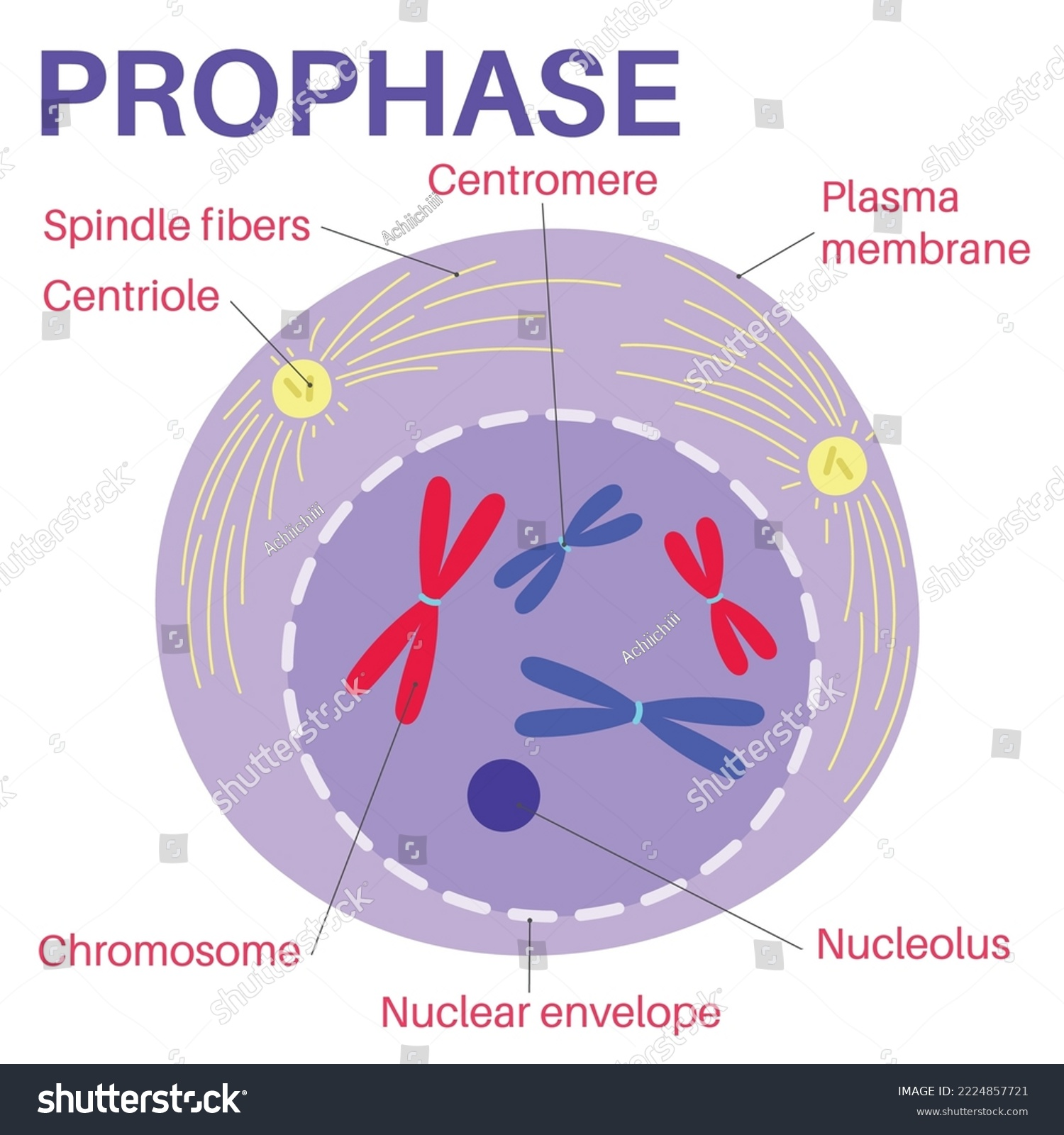
The first phase of mitosis where chromosomes become visible, centrioles move to opposite poles, spindle fibers begin forming, and the nuclear membrane and nucleolus disappear.
Centrioles
Cylindrical structures that migrate to opposite poles of the cell during prophase to produce spindle fibers.
Spindle Fibers
Protein structures produced by centrioles that attach to chromosomes and contract to pull them apart during cell division.
Metaphase
The stage of mitosis where chromosomes align along the middle of the cell and attach to the spindle fibers.
Metaphase- Meets in the Middle

Anaphase- What happens
The mitotic stage where individual chromosomes are separated into two and pulled toward opposite poles by contracting spindle fibers.

Telophase
The stage of mitosis where separated chromosomes move farther apart and the mitotic spindle vanishes. They separate into 2 individual nuclei as the nuclear envelope re-forms around each set of chromosomes.

Cleavage Furrow
The indentation that develops on the surface of a dividing animal cell during cytokinesis as it pinches in two.
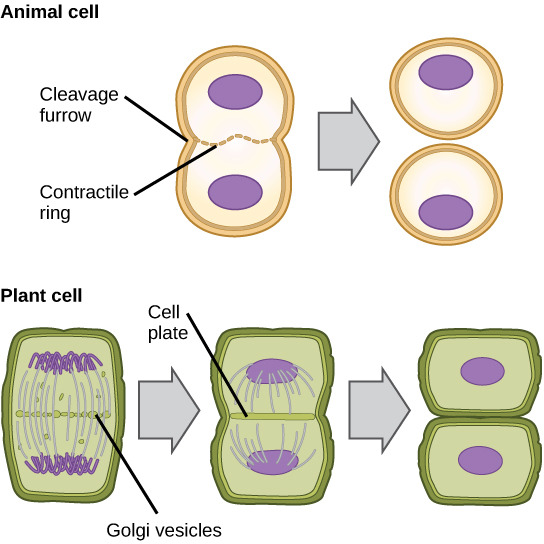
Cell Plate
A structure formed in the middle of dividing plant cells that leads to the synthesis of a new cell wall on either side.

Contact Inhibition
A cell signaling mechanism that causes normal cells to cease dividing once they come into physical contact with surrounding cells.
This process prevents overgrowth by regulating cell mass - too much division can lead to tumor formation. Contact inhibition is essential for maintaining tissue architecture and function.
Tetrad
A grouping of four chromatids formed during meiosis when duplicated homologous chromosomes join together.

Crossing Over
The exchange of genetic material between homologous chromosomes within a tetrad during meiosis, which removes gene linkage and introduces genetic variation.
Polar Body
A tiny cell generated during unequal divisions of an oocyte in meiosis that serves to discard unneeded genetic material, resulting in three polar bodies for every functional egg.
Chromosomes
Short, condensed structures containing DNA and genetic material that is duplicated and passed down from one generation of cells to the next.
Chromatin
The complex of DNA coiled tightly around proteins, resembling beads on a string, which condenses super tightly to form chromosomes during cell division.
Centromere
The specialized region of a duplicated chromosome that joins two sister chromatids together.
Sister Chromatids
The two identical halves of a duplicated chromosome that are joined together at a centromere and separated during anaphase.
Homologous Chromosomes
Matching pairs of chromosomes in diploid body cells that carry genes for the same traits at corresponding locations, with one homologue inherited from each parent.
Alleles
Alternative versions of a gene for the same trait located at corresponding positions on adjacent homologous chromosomes.
Interphase
The non-dividing phase accounting for approximately 90% of the cell cycle, during which the cell grows, synthesizes proteins, and replicates organelles and chromosomes.
G1 Phase
The first growth phase of interphase in which the cell grows rapidly, synthesizes proteins, and duplicates cellular contents excluding chromosomes.
S Phase
The synthesis phase of interphase during which the cell replicates and copies each of its chromosomes (DNA synthesis).
G2 Phase
The second gap phase of interphase where the cell produces necessary division proteins and double-checks duplicated chromosomes for errors to make any needed repairs.
G0 Phase
A state of cell cycle arrest where the cell exits the division cycle and ceases dividing.
Mitosis
The process of nuclear division occurring in somatic cells that yields two genetically identical daughter cells with the same chromosome number as the parent cell (46 in humans).
Prophase (Mitosis)
The first phase of mitosis where chromosomes condense into pairs of chromatids joined by a centromere, centrioles migrate to opposite poles, spindle fibers emerge, and the nuclear membrane and nucleolus dissolve.
Metaphase (Mitosis)
The stage of mitosis where chromosomes align along the midline (equator) of the cell, with spindle fibers attached to kinetochores and aster fibers attached to the plasma membrane.
Anaphase (Mitosis)
The stage of mitosis during which centromeres divide and spindle fibers pull sister chromatids apart to opposite poles of the cell.
Telophase (Mitosis)
The final stage of mitosis wherein chromosomes cluster at each pole, chromatin decondenses, new nuclear envelopes and nucleoli assemble, and the mitotic spindle disappears.
Cytokinesis
The division of the cytoplasm into two daughter cells, occurring during or immediately following telophase.
Cancer
A disorder resulting from disruptions in the cell cycle leading to uncontrolled division, lack of contact inhibition, abnormal nuclei, and multilayered disorganized growth.
Metastasis
The spread of malignant cancer cells away from their primary site through blood and lymphatic vessels to distant tissues and organs.
ABCD Rule
A diagnostic criteria set for skin cancer/melanoma evaluation: Asymmetry, Border irregularity, Color variation, and Diameter exceeding 41 inch (6mm).
Radiation Therapy
A cancer treatment method that damages cellular DNA in order to disrupt and stop uncontrolled cell division.
Chemotherapy
A systemic cancer treatment that utilizes pharmacological drugs to disrupt the cell division cycle.
Cell Cycle Checkpoints
Specific regulatory control points (during G1, G2, and Mitosis) where internal and external conditions such as cell size, DNA replication, and spindle alignment are verified before division proceeds.
Meiosis
A two-stage reduction division occurring in sexually reproducing organisms where one diploid (2n) cell produces four genetically distinct haploid (n) gametes.
Diploid (2n)
Referring to a cell containing two full sets of chromosomes (2n=46 in humans), typical of somatic body cells.
Haploid (n)
Referring to a cell containing a single set of chromosomes (n=23 in humans), characteristic of mature sex cells (sperm and egg).
Tetrad
A four-chromatid structure formed during meiosis when two duplicated homologous chromosomes pair up side-by-side during prophase I / metaphase I.
Crossing Over
The reciprocal exchange of chromosomal segments between non-sister chromatids of homologous chromosomes during prophase I of meiosis, producing genetic recombination.
Gene Linkage
The tendency of genes situated in close physical proximity on the same chromosome to be inherited together and remain unbroken by crossover events.
Spermatogenesis
The production of sperm cells where a primary spermatocyte undergoes meiosis I and meiosis II to form four functional haploid spermatids that differentiate into mature sperm.
Oogenesis
The female gametogenic process in which a primary oocyte divides by meiosis to produce a single mature ovum (egg cell) and degenerate polar bodies due to unequal cytoplasmic division.
Nondisjunction
An error during cell division where homologous chromosomes fail to separate in meiosis I, or sister chromatids fail to separate in meiosis II, resulting in gametes with n+1 or n−1 chromosomes.
Trisomy 21 (Down Syndrome)
A human genetic condition typically resulting from nondisjunction that causes an extra copy of chromosome 21 affecting approximately 1 out of every 700 children.
Polyploidy
A condition in which an organism possesses three or more complete sets of chromosomes (such as triploid 3n or tetraploid 4n), which is typically lethal in animals but common in plants resulting in sterile varieties or larger fruit.
Mnemonic for Stages of Cell Division
I Put My A** To It
Which stands in order for Interphase, Prophase, Metaphase, Anaphase, Telophase, and back to Interphase.
Duplicated Chromosome Structure
An X-shaped package of genetic material consisting of two identical sister chromatids joined at a narrow center region called the centromere.

Cell Cycle Checkpoints
Control stops in the cell cycle where the cell pauses to verify that it has grown sufficiently, received proper signals, and accurately copied its DNA before dividing.

ABCD Rule - Skini
As Borders Collapse Down
A visual guide for identifying suspicious skin moles by checking for Asymmetry, Border irregularity, Color variation, and a Diameter larger than 6mm (.25 inch ).

Metastasis
The dangerous movement of malignant cancer cells away from their primary tumor through bloodstream and lymphatic channels to colonize other organs.

Nondisjunction
A cell division mistake during meiosis where chromosome pairs fail to pull apart properly, producing gametes with an extra or missing chromosome.

Down Syndrome
A genetic condition also called Trisomy 21, caused when nondisjunction leaves a fertilized egg with three copies of chromosome 21 instead of the usual pair.

Polyploidy
A condition in which a cell has three or more complete sets of chromosomes (3n or 4n), which is lethal in most animals but common in agricultural plants to yield larger, seedless fruit.

Mitosis vs. Meiosis: Comparison of Key Features
Feature | Mitosis | Meiosis |
|---|---|---|
Primary Function | Growth, tissue repair, and asexual reproduction | Gamete production for sexual reproduction |
Number of Divisions | 1 division | 2 divisions (Meiosis I and Meiosis II) |
Number of Daughter Cells | 2 daughter cells | 4 daughter cells |
Genetic Identity | Genetically identical to parent and each other | Genetically unique from parent and each other |
Ploidy of Daughter Cells | Diploid (2n; human count = 46) | Haploid (n; human count = 23) |
Synapsis of Homologues | Does not occur | Occurs during prophase I to form tetrads |
Crossing Over | Does not occur | Occurs between non-sister chromatids in prophase I |
Spermatogenesis vs. Oogenesis: Comparison
Feature | Spermatogenesis | Oogenesis |
|---|---|---|
Location | Testes | Ovaries |
Viable Gametes Formed | 4 viable mature sperm cells | 1 viable ovum (egg cell) |
Non-Functional Cells | None | 3 non-functional polar bodies |
Cytokinesis Pattern | Equal division of cytoplasm | Unequal division of cytoplasm |
Cell Morphology & Organelles | Mobile, flagellated; mitochondria located at tail base | Large, immotile cell containing all zygotic mitochondria |
Cytokinesis: Animal Cells vs. Plant Cells
Feature | Animal Cells | Plant Cells |
|---|---|---|
Dividing Structure | Cleavage furrow | Cell plate |
Cellular Mechanism | Actin contractile ring constricts the plasma membrane | Golgi-derived vesicles fuse along the midline to build a cell wall |
Direction of Division | Pinches from the exterior inward (centripetal) | Grows from the center outward to cell edges (centrifugal) |
Effect of Cell Wall | Absent; flexible plasma membrane pinches completely | Rigid cell wall prevents inward pinching |
Cell Cycle Checkpoints (G1, G2, and M)
Checkpoint | Timing | Condition Verified |
|---|---|---|
G1 Checkpoint | Late G1 phase | Evaluates cell size, nutrient stores, growth signals, and DNA integrity before duplication |
G2 Checkpoint | End of G2 phase | Confirms accurate and complete duplication of all 46 chromosomes before entering mitosis |
M (Spindle) Checkpoint | Metaphase | Verifies all chromosomes are correctly aligned along the cell equator and attached to spindle fibers |
Normal Cells vs. Cancer Cells: Growth and Characteristics
Characteristic | Normal Cells | Cancer Cells |
|---|---|---|
Division Rate | Strictly regulated by cell cycle checkpoints | Continuous, uncontrolled division |
Contact Inhibition | Present; cells stop dividing when in contact with others | Absent; cells continue dividing and pile into tumors |
Differentiation | Differentiated into specialized functional tissue cells | Non-differentiated and stem-cell-like |
Nuclear Structure | Standard size with uniform nuclear envelope | Enlarged, irregular, and abnormal nuclei |
Tissue Movement | Anchored within primary tissue | Invasive; spread to distant organs via metastasis |
Cancer Treatment: Radiation Therapy vs. Chemotherapy
Feature | Radiation Therapy | Chemotherapy |
|---|---|---|
Scope of Action | Localized target area | Systemic treatment throughout the whole body |
Mechanism | Direct high-energy beams damage DNA to stop division | Pharmacological drugs disrupt mitosis and the cell cycle |
Administration | External beams or localized radioactive implants | Intravenous infusion or oral medications |
Primary Clinical Use | Confined, localized solid tumors | Metastatic, widespread, or circulating blood cancers |
Nondisjunction: Meiosis I vs. Meiosis II
Feature | Nondisjunction in Meiosis I | Nondisjunction in Meiosis II |
|---|---|---|
Underlying Error | Homologous chromosomes fail to separate during anaphase I | Sister chromatids fail to separate during anaphase II |
Gamete Proportions | 100% abnormal (2 gametes with n+1, 2 gametes with n−1) | 50% abnormal (1 with n+1, 1 with n−1) and 50% normal (2 with n) |
Fertilization Outcome | All resulting zygotes are aneuploid (trisomy or monosomy) | Half of resulting zygotes are aneuploid; half are normal diploid (2n) |
Diploid (2n) vs. Haploid (n) Cells
Feature | Diploid (2n) | Haploid (n) |
|---|---|---|
Chromosome Sets | Contains 2 complete sets of homologous chromosomes | Contains 1 single set of chromosomes |
Human Cell Count | 46 total chromosomes (23 pairs) | 23 total chromosomes |
Typical Cell Types | Somatic body cells (e.g., skin, muscle, neurons) | Gametes (sperm and egg cells) |
Generating Process | Formed via mitosis | Formed via meiosis |