3. adapted from quizlet: ryanfe123 MMCP 10 - Endocrine (Dr. Stephens)
 Call Kai
 Learn
Learn Practice Test
 Spaced Repetition
 Match
Match Flashcards
 Knowt Play
1/192

There's no tags or description
Looks like no tags are added yet.
Name | Mastery | Learn | Test | Matching | Spaced | Call with Kai |
|---|
No analytics yet
Send a link to your students to track their progress
193 Terms
What are the concerns for this patient?
- HPI: Pt is a 55 year old woman presenting for re-care. She reports that she has experienced increasing dry mouth since her last exam 6 months ago.
- PMH: Osteoarthritis, Hyperlipidemia
- PSH: Left Knee Replacement (2020)
- FH: NC
- Med: Atorvastatin, Diclofenac
- Social: Denies alcohol, tobacco, rec drugs
ROS:
- Increasing heart palpitations
- 7 lb weight loss
- Thinning hair
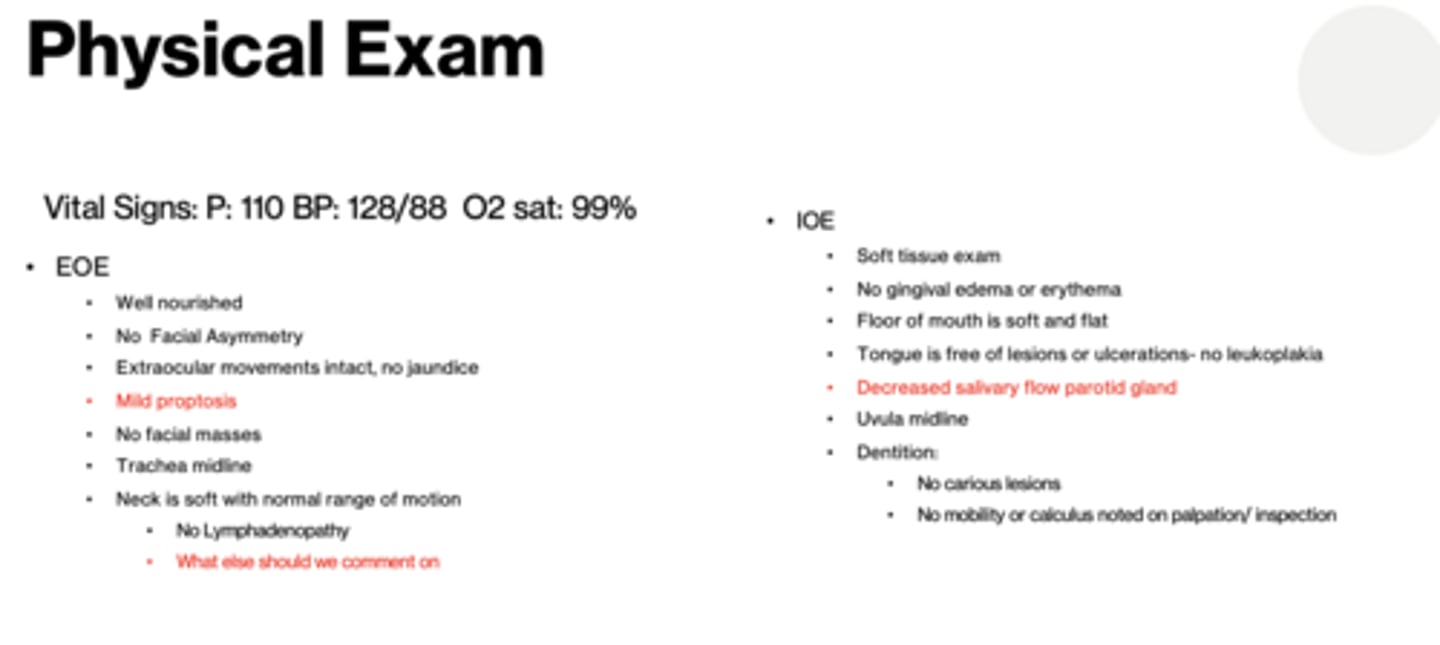
Vital Signs: P: 110 BP: 128/88 O2 sat: 99%
EOE
- Well nourished
- No Facial Asymmetry
- Extraocular movements intact, no jaundice
- Mild proptosis
- No facial masses
- Trachea midline
- Neck is soft with normal range of motion
- No Lymphadenopathy
IOE
- No gingival edema or erythema
- Floor of mouth is soft and flat
- Tongue is free of lesions or ulcerations- no leukoplakia
- Decreased salivary flow parotid gland
- Uvula midline
- High pulse (110 bpm)
- Mild proptosis
- Decreased salivary flow parotid gland
Why do we need to be concerned about Thyroid Disease?
- Avoid poor outcomes
- Detect disease
- May cause patients to have either overactive or under active thyroid glands
- Patients with both hyper and hypothyroidism are at risk for complications during routine dental work
Where is the thyroid gland located?
- Anterior neck
- Below and bilateral to thyroid cartilage
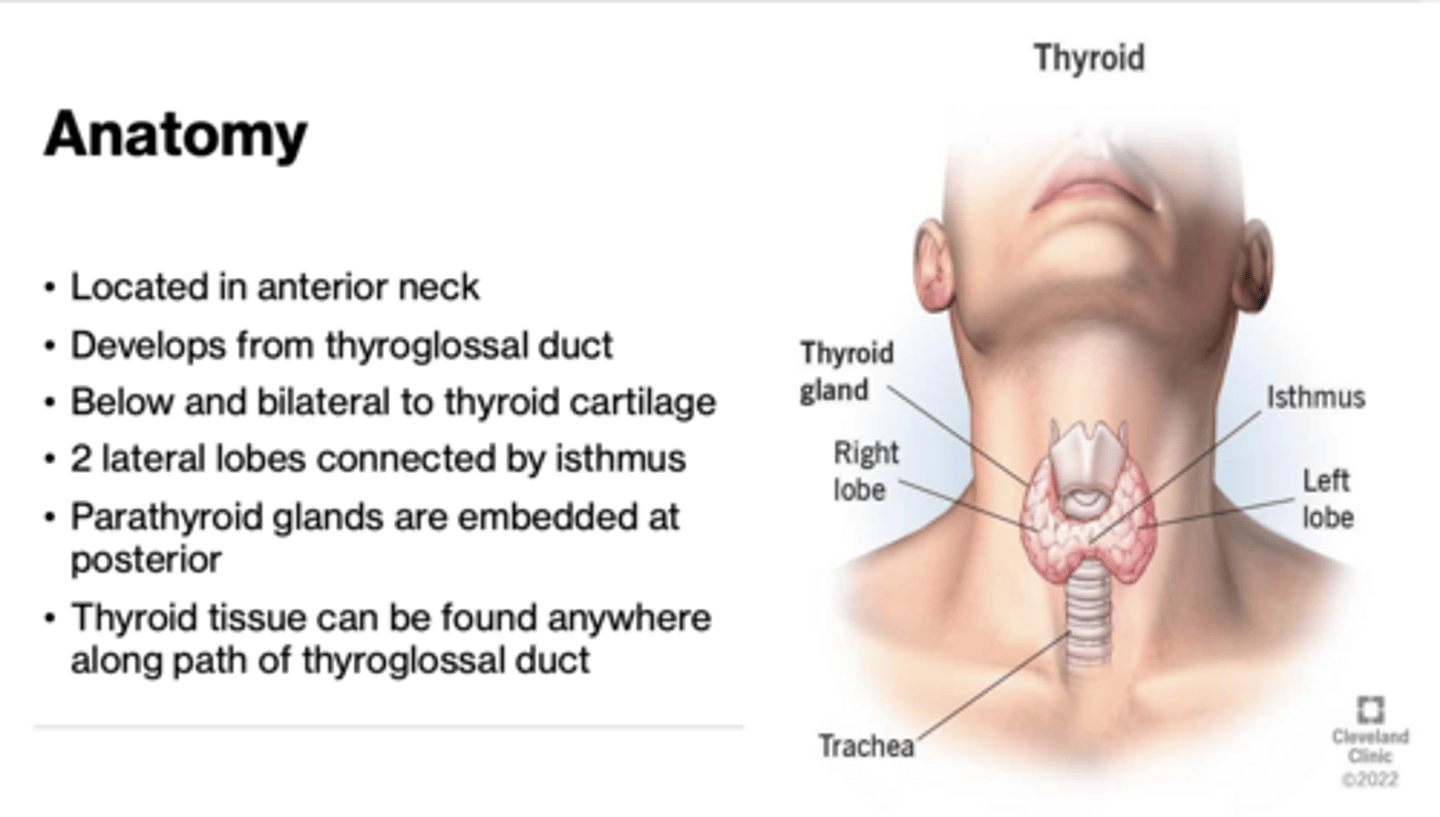
What does the thyroid glad develop from?
Thyroglossal duct
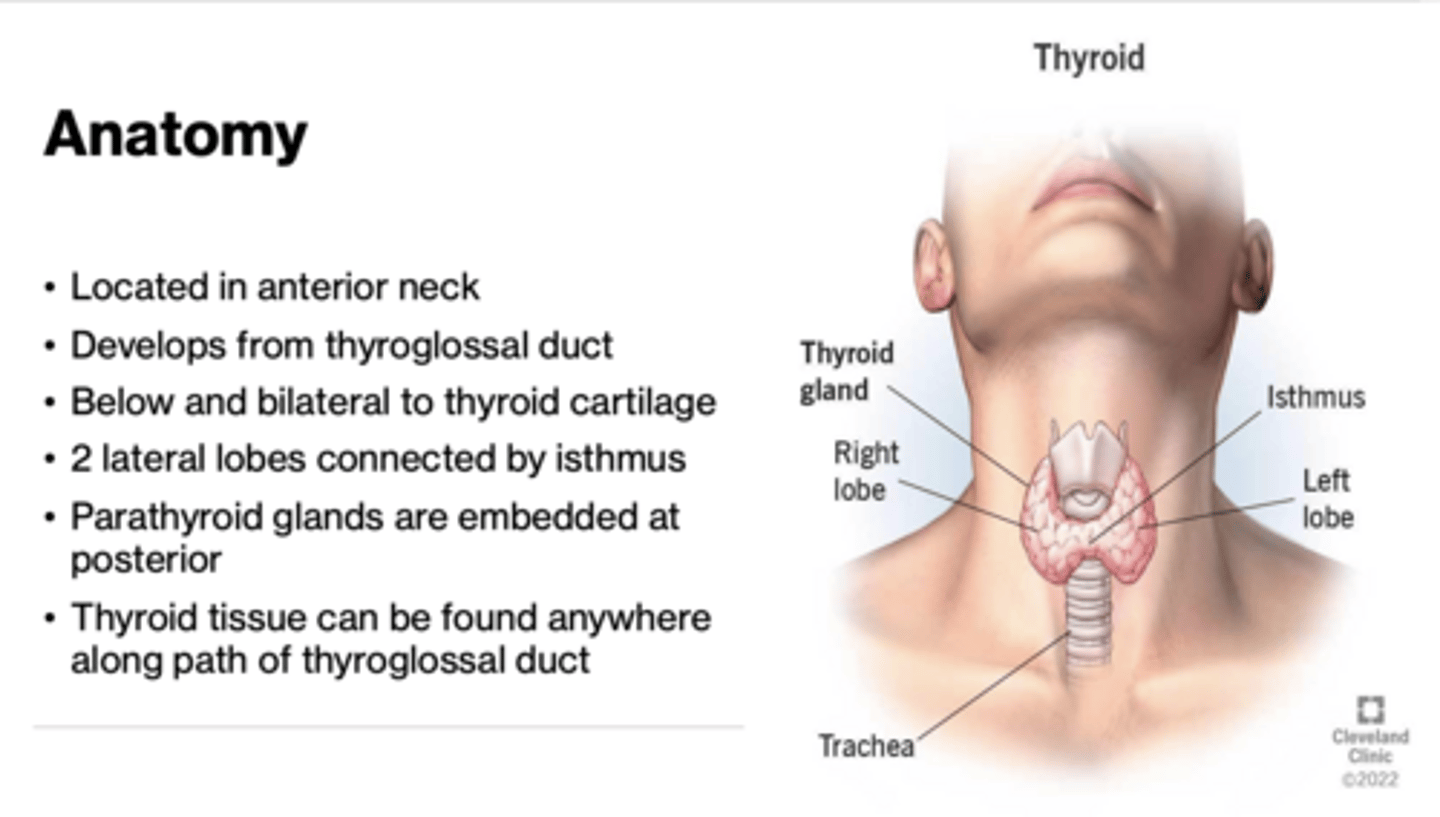
What has the following characteristics?
- 2 lateral lobes connected by isthmus
- Parathyroid glands are embedded at posterior
- Tissue can be found anywhere along path of thyroglossal duct
Thyroid gland
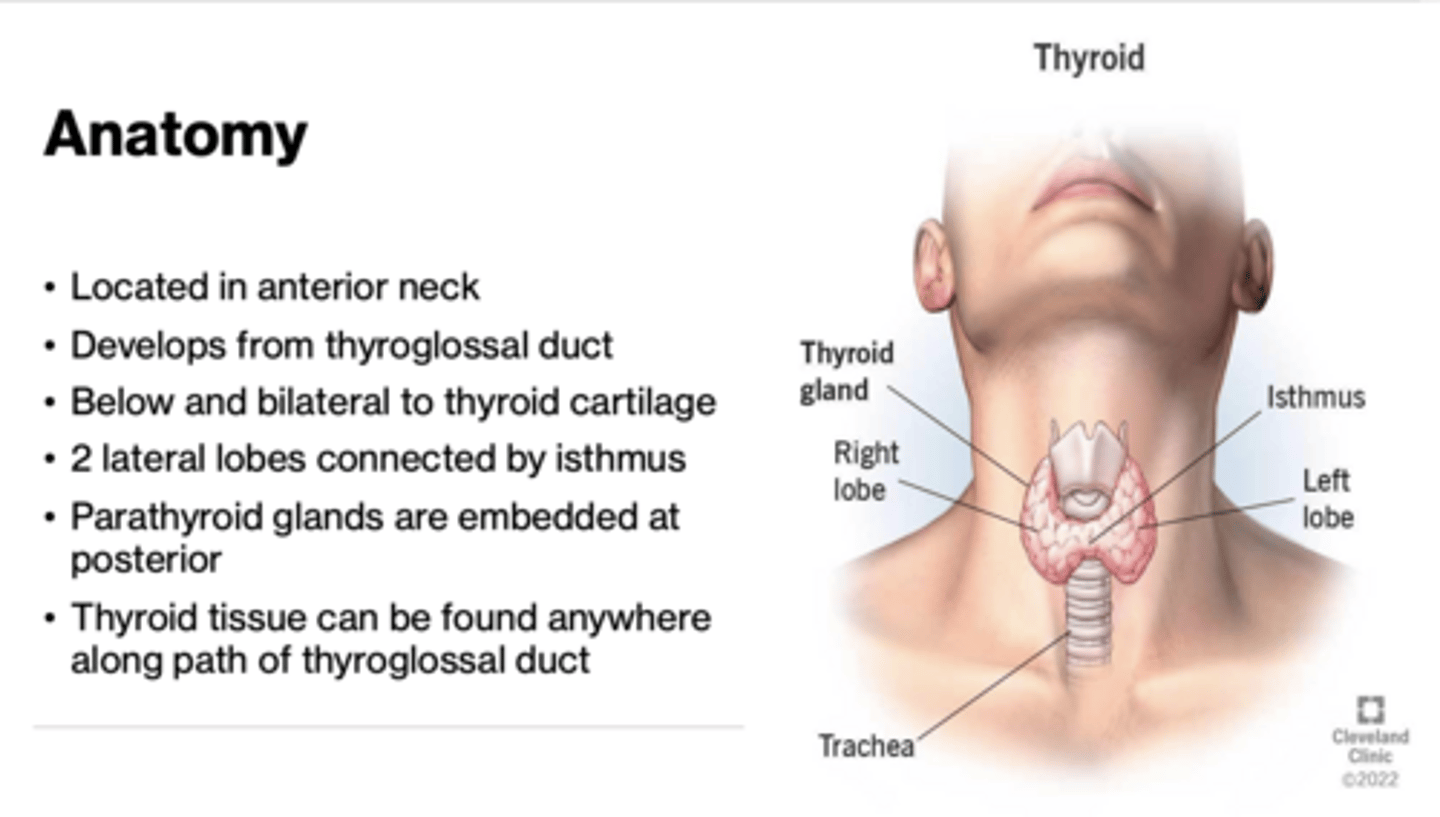
What does the thyroid gland produce? (2)
- Thyroid hormone (T4,T3)
- Calcitonin
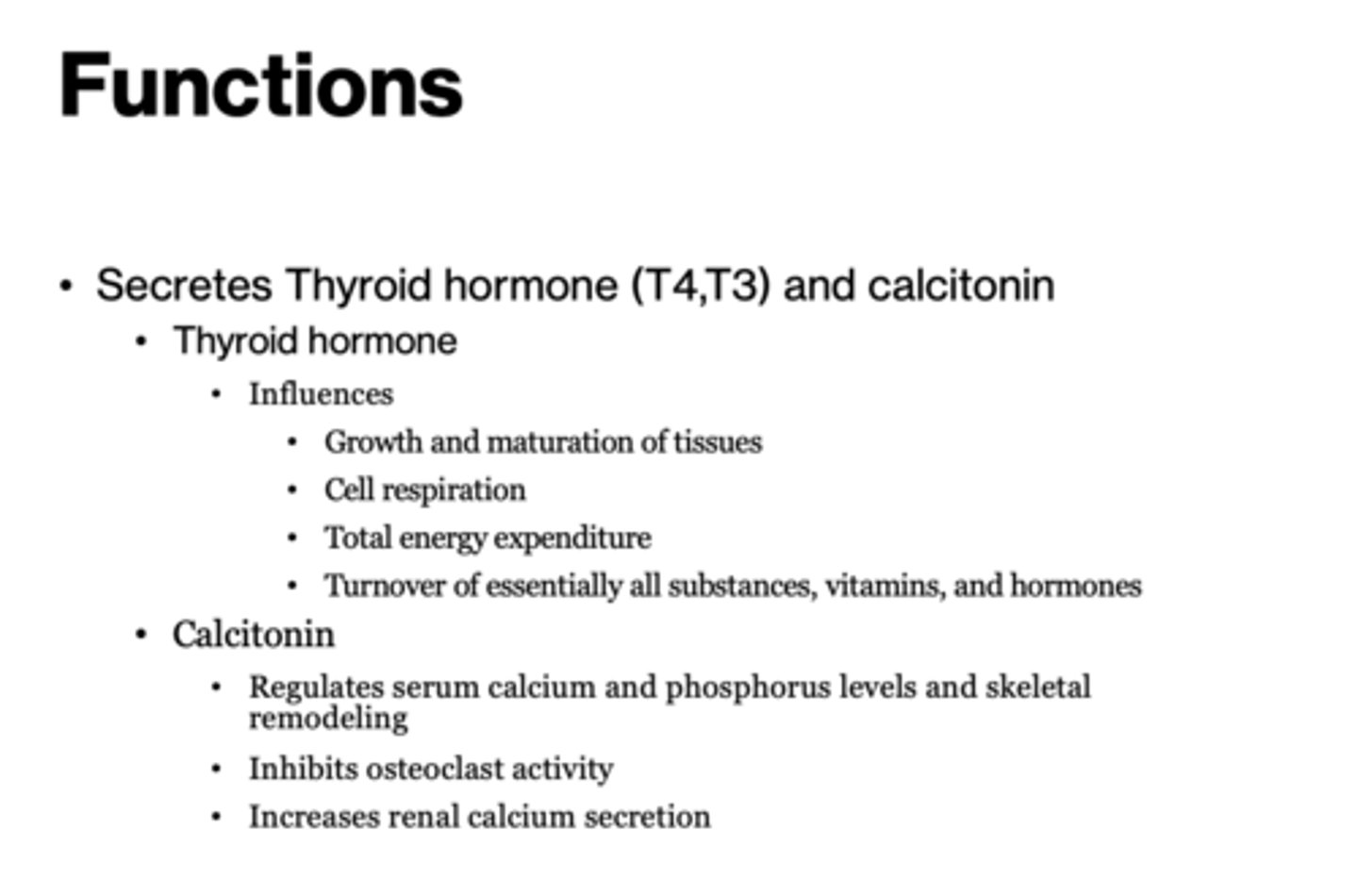
ID the hormone:
- Growth and maturation of tissues
- Cell respiration
- Total energy expenditure (metabolism)
- Turnover of essentially all substances, vitamins, and hormones
Thyroid hormone
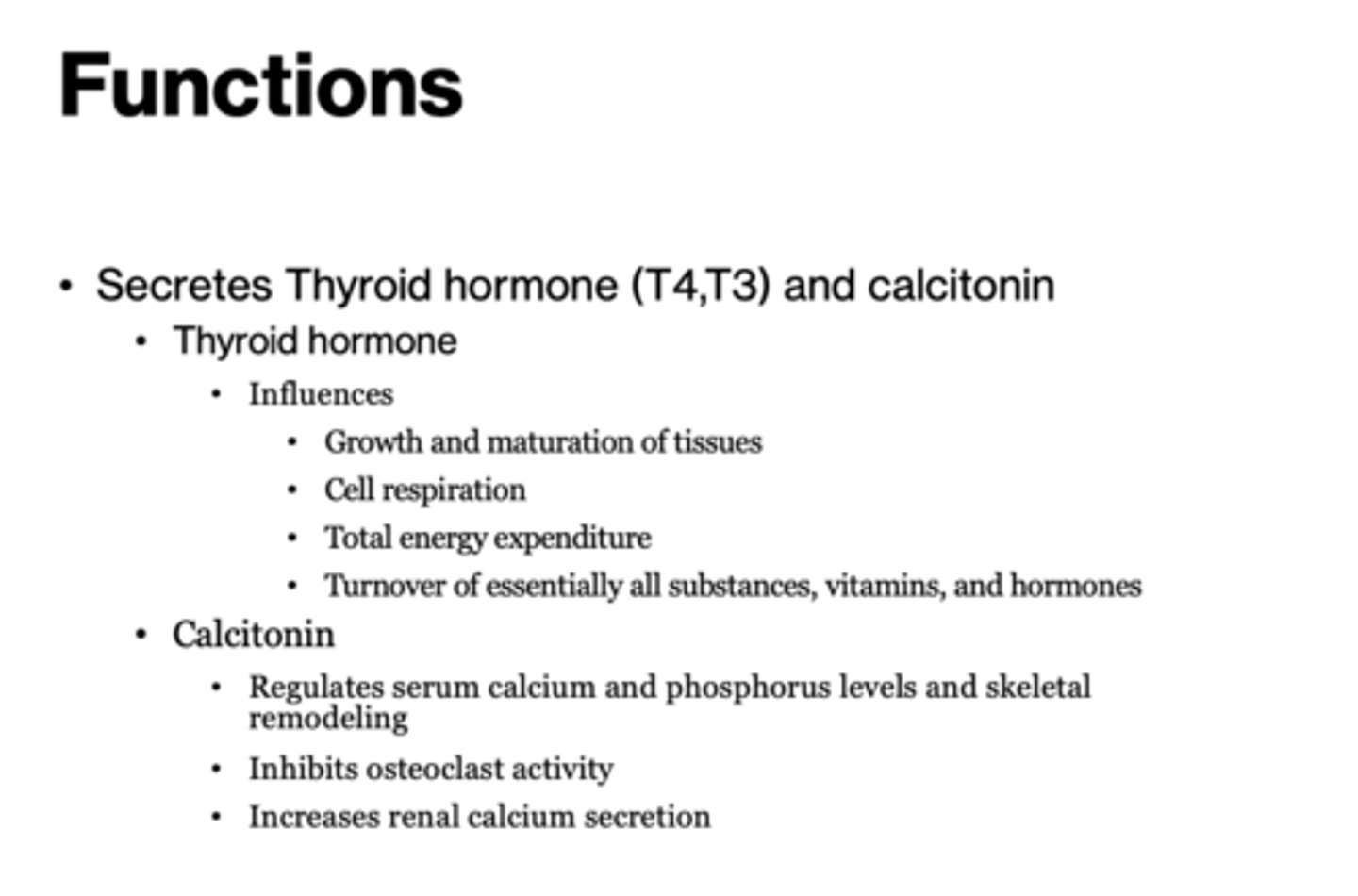
ID the hormone:
- Regulates serum calcium and phosphorus levels and skeletal remodeling
- Inhibits osteoclast activity
- Increases renal calcium secretion
Calcitonin
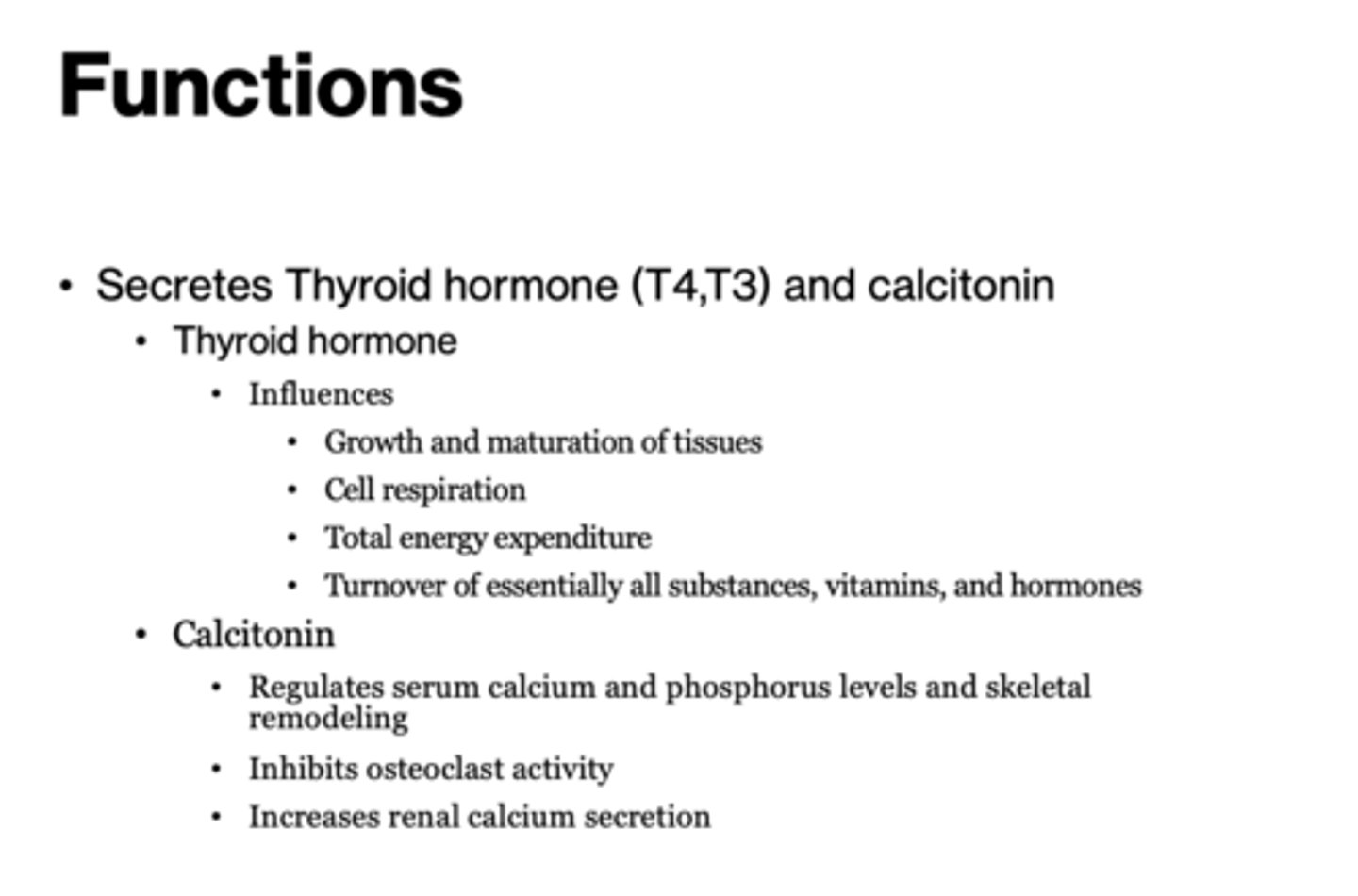
Blood levels of thyroid hormone controlled by hypothalamic – pituitary axis (HPA). What is the primary modifier of this system?
Metabolic demand
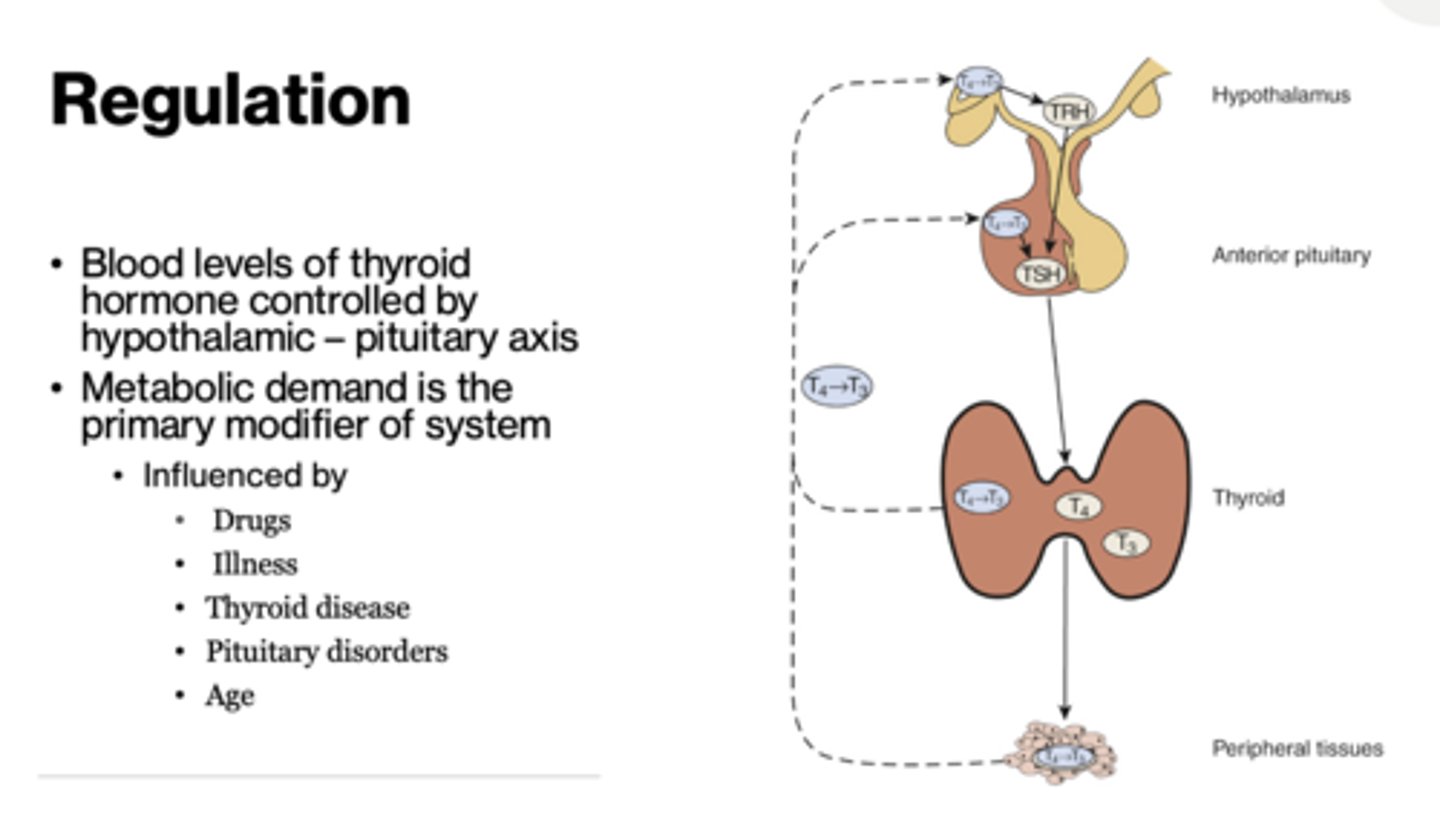
Metabolic demand can be influenced by what five things?
- Drugs
- Illness
- Thyroid disease
- Pituitary disorders
- Age
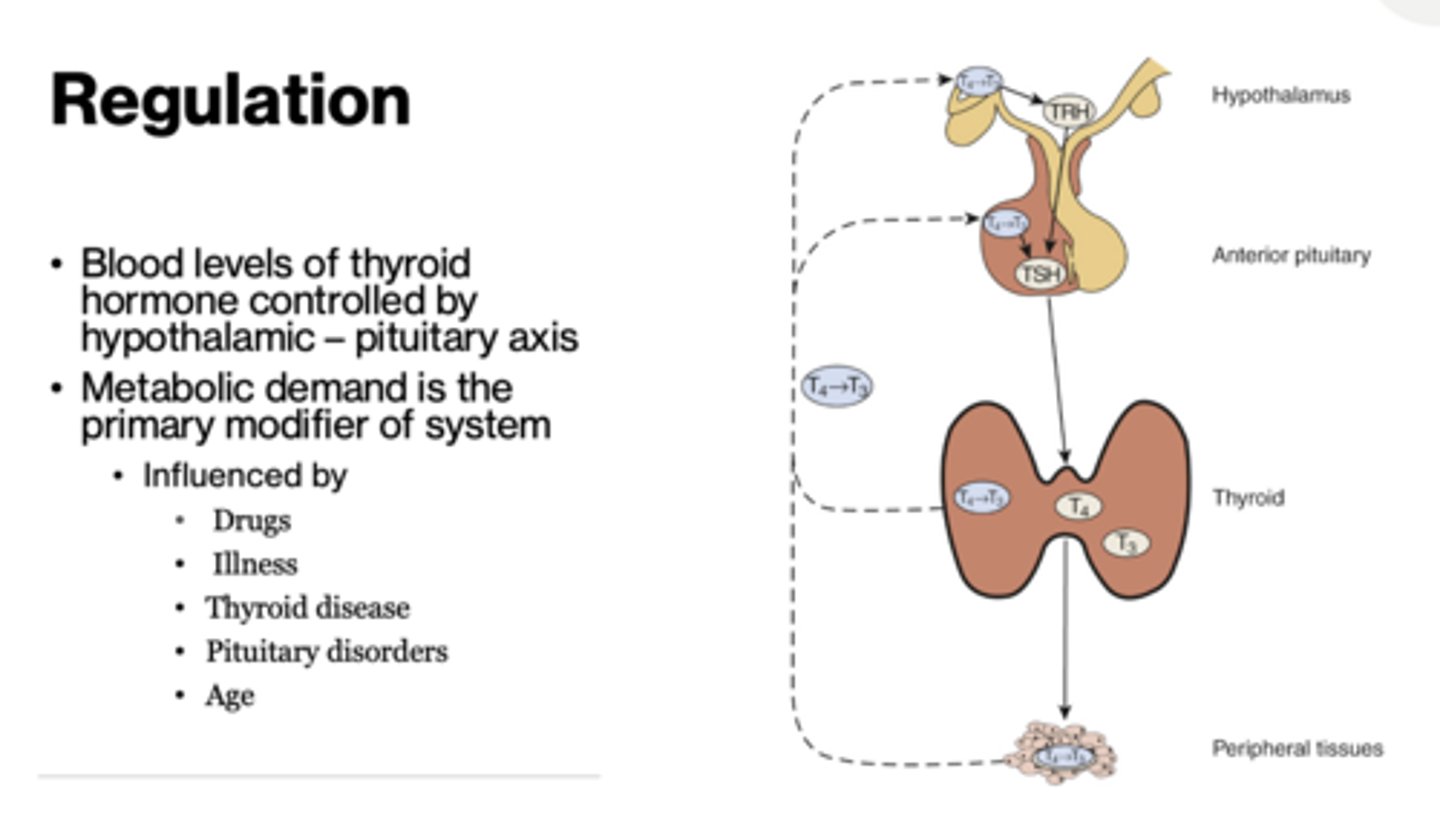
What type of feedback system is the hypothalamic - pituitary axis?
Negative feedback
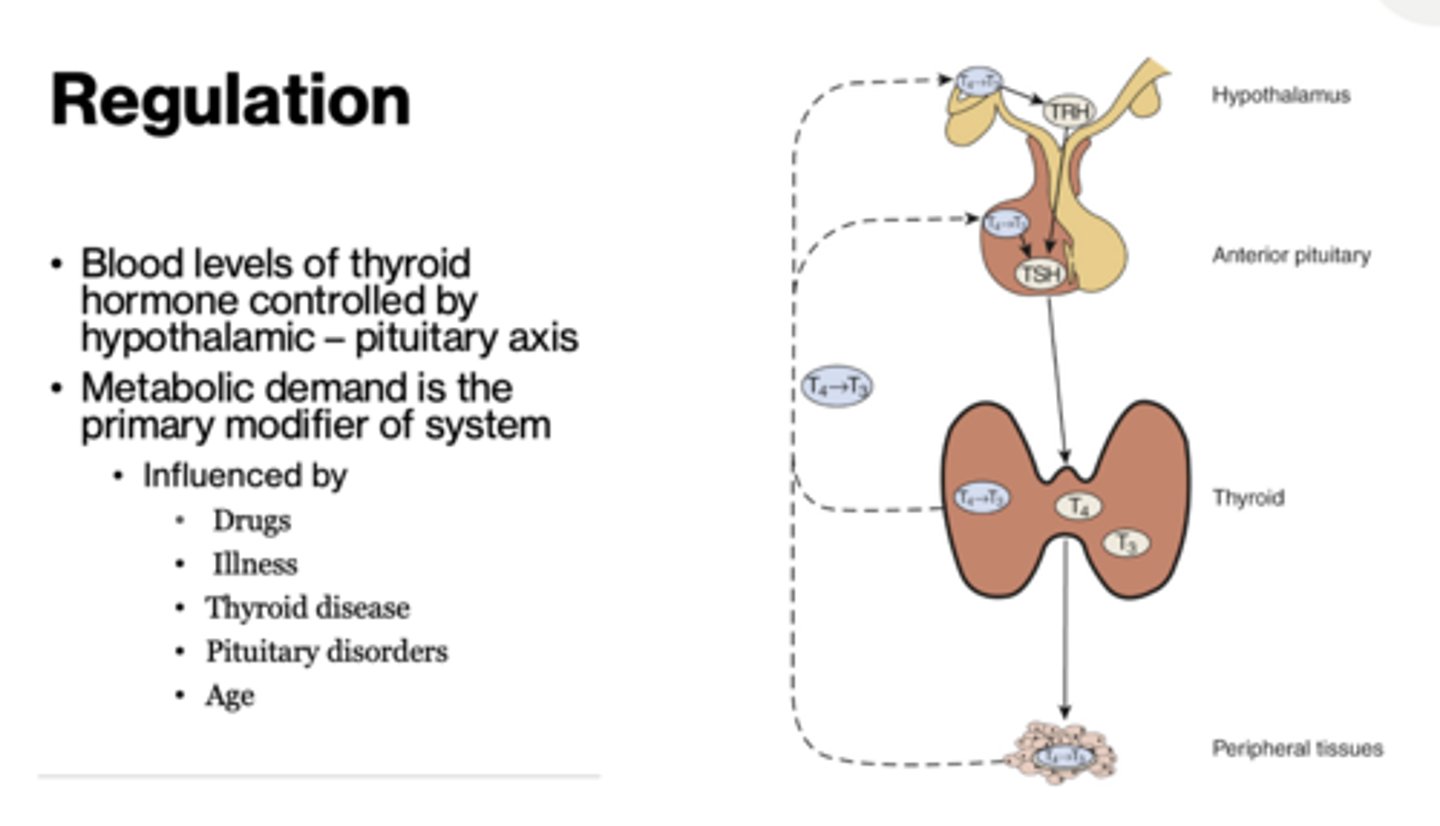
Thyrotoxicosis is an excess of ___ and ___ in the bloodstream
T3 and T4
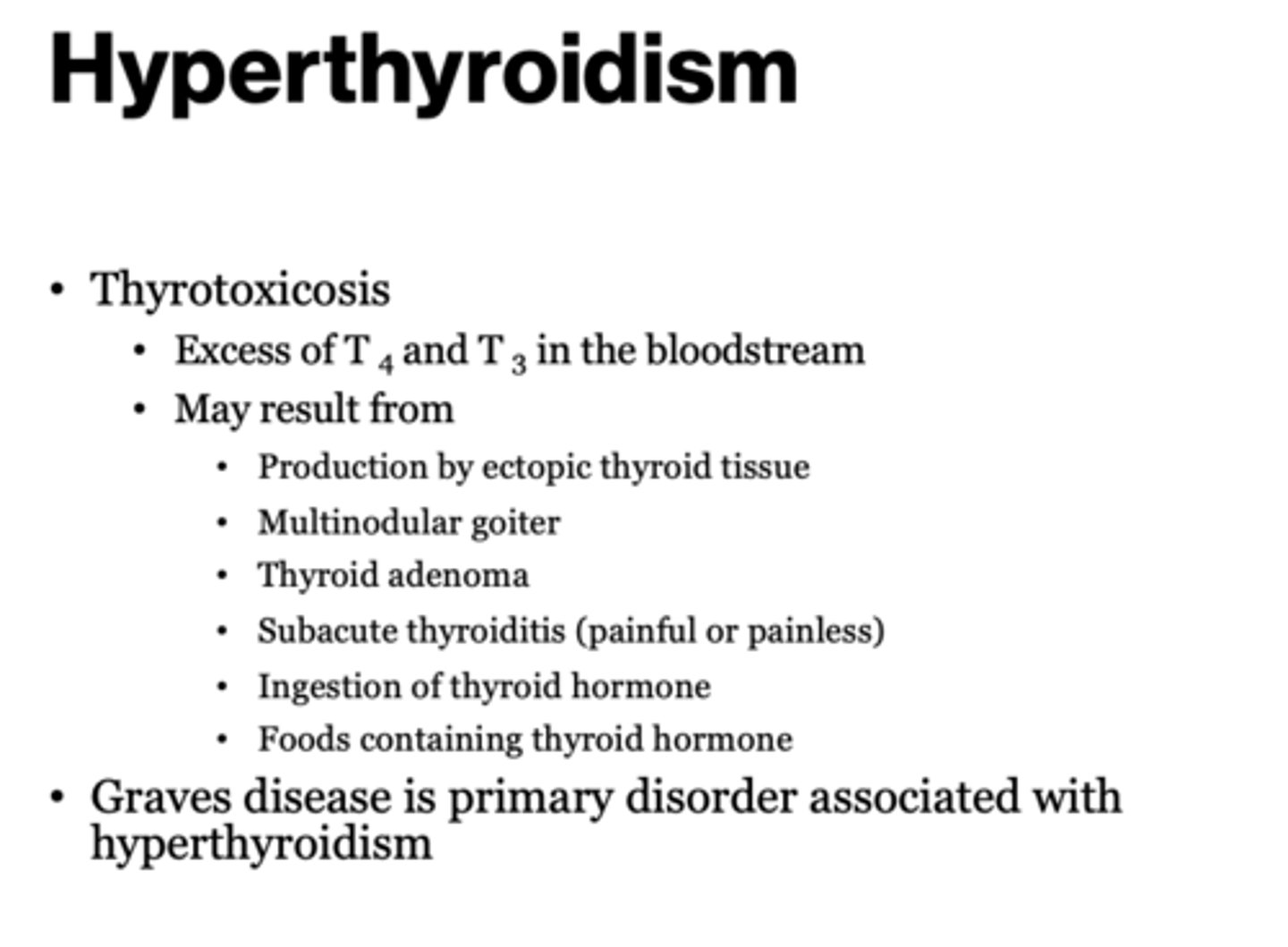
The following can result from what?
- Production by ectopic thyroid tissue
- Multinodular goiter
- Thyroid adenoma
- Subacute thyroiditis (painful or painless)
- Ingestion of thyroid hormone
- Foods containing thyroid hormone
thyrotoxicosis
What is the primary disorder associated with hyperthyroidism?
Graves disease
Graves disease is what type of disease?
Autoimmune
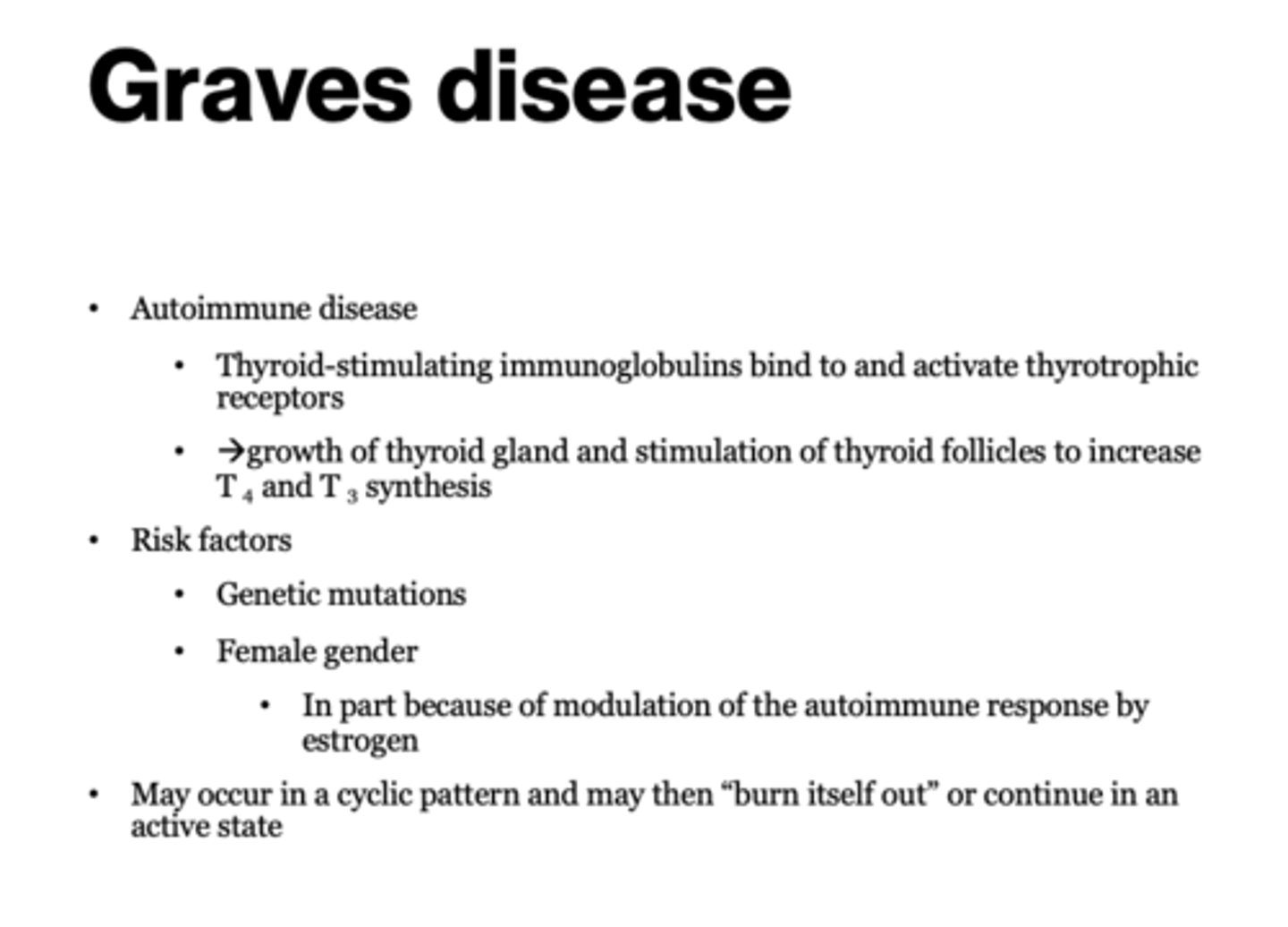
What thyroid disease does this describe:
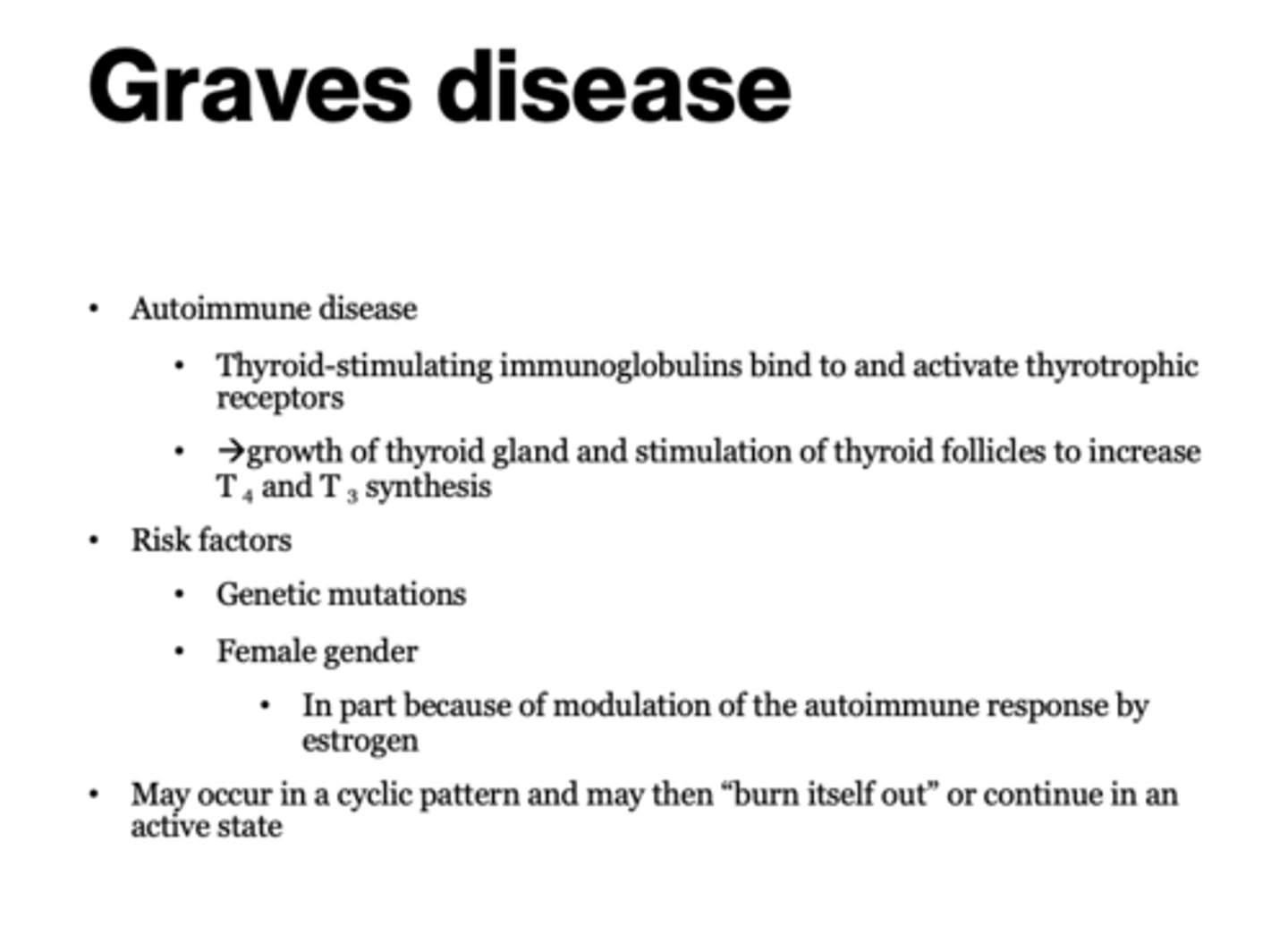
Thyroid-stimulating immunoglobulins bind to and activate thyrotrophic receptors → growth of thyroid gland and stimulation of thyroid follicles to increase T4 and T 3 synthesis
Graves disease (hyperthyroidism)
What are TWO risk factors for Graves disease (hyperthyroidism)
- Genetic mutations
- Female gender (in part because of modulation of the autoimmune response by estrogen)
What are the two presentations of graves disease?
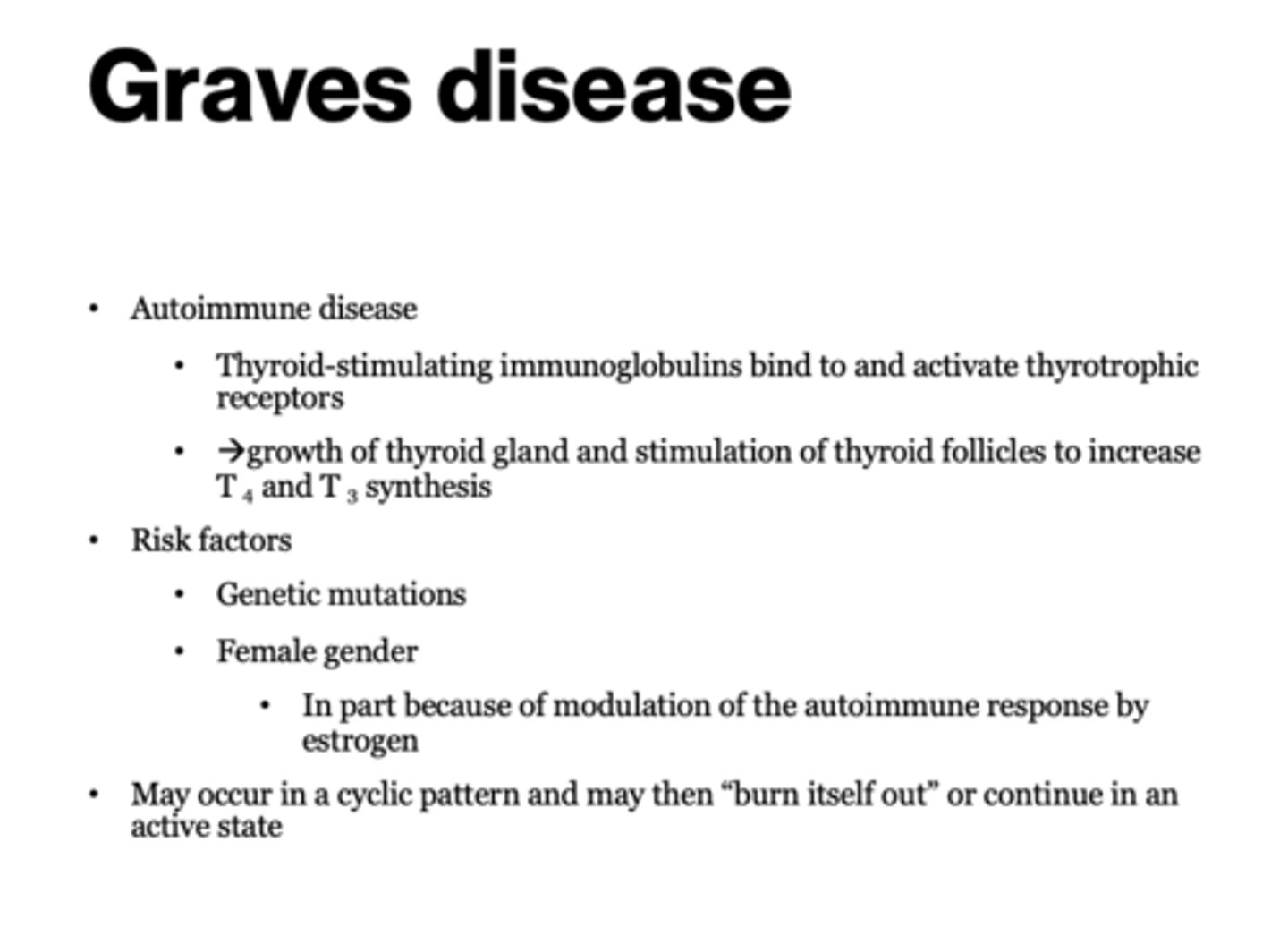
- Cyclic (may "burn out")
- Continuous (active state)
What are the following signs and symptoms of?
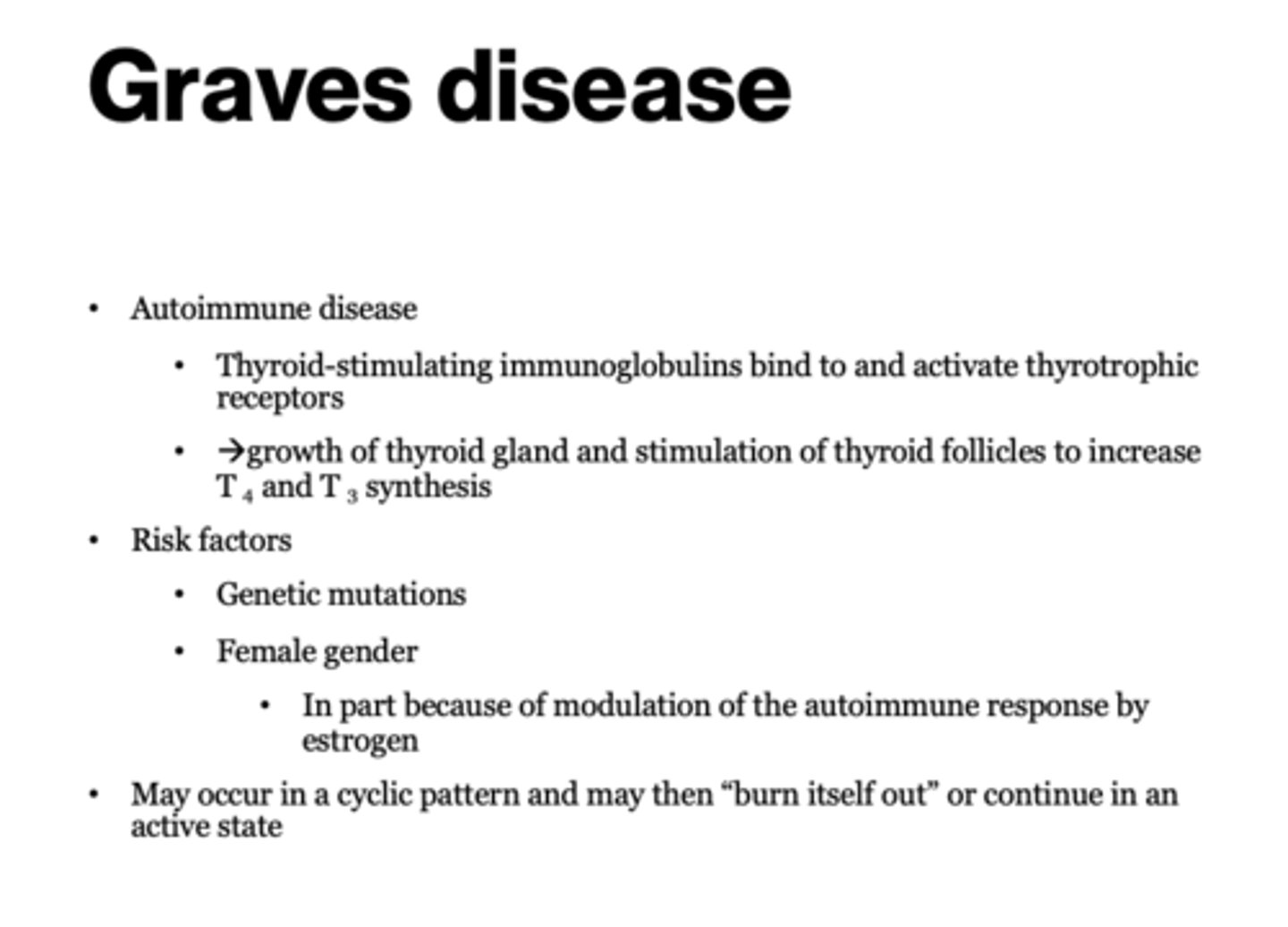
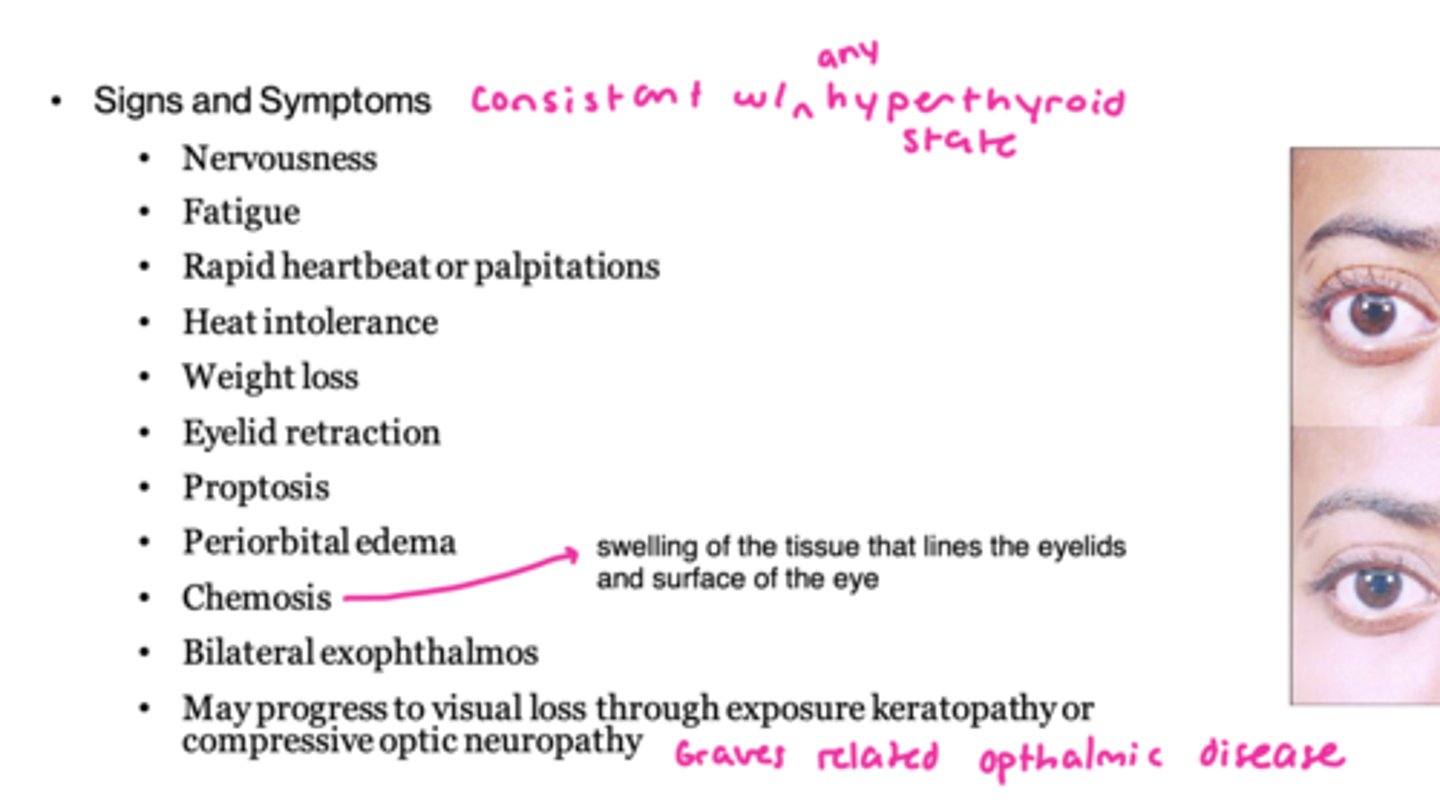
- Nervousness
- Fatigue
- Rapid heartbeat or palpitations
- Heat intolerance
- Weight loss
- Eyelid retraction
- Proptosis
- Periorbital edema
- Chemosis
- Bilateral exophthalmos
- May progress to visual loss through exposure keratopathy or compressive optic neuropathy
Graves disease (consistent with hyperthyroidism)
What are the signs and symptoms that relate to respiratory that we expect to see in Graves disease (hyperthyroidism)
Weakness of the respiratory muscles → reduction in vital capacity
What thyroid disease is associated with this symptom?
- Increased stroke volume and heart rate and palpitations
Graves disease (hyperthyroidism)
What thyroid disease is associated with this symptom?
- Widened pulse pressure → palpitations
Graves disease (hyperthyroidism)
What thyroid disease is associated with this symptom?
- Supraventricular cardiac dysrhythmias
Graves disease (hyperthyroidism)
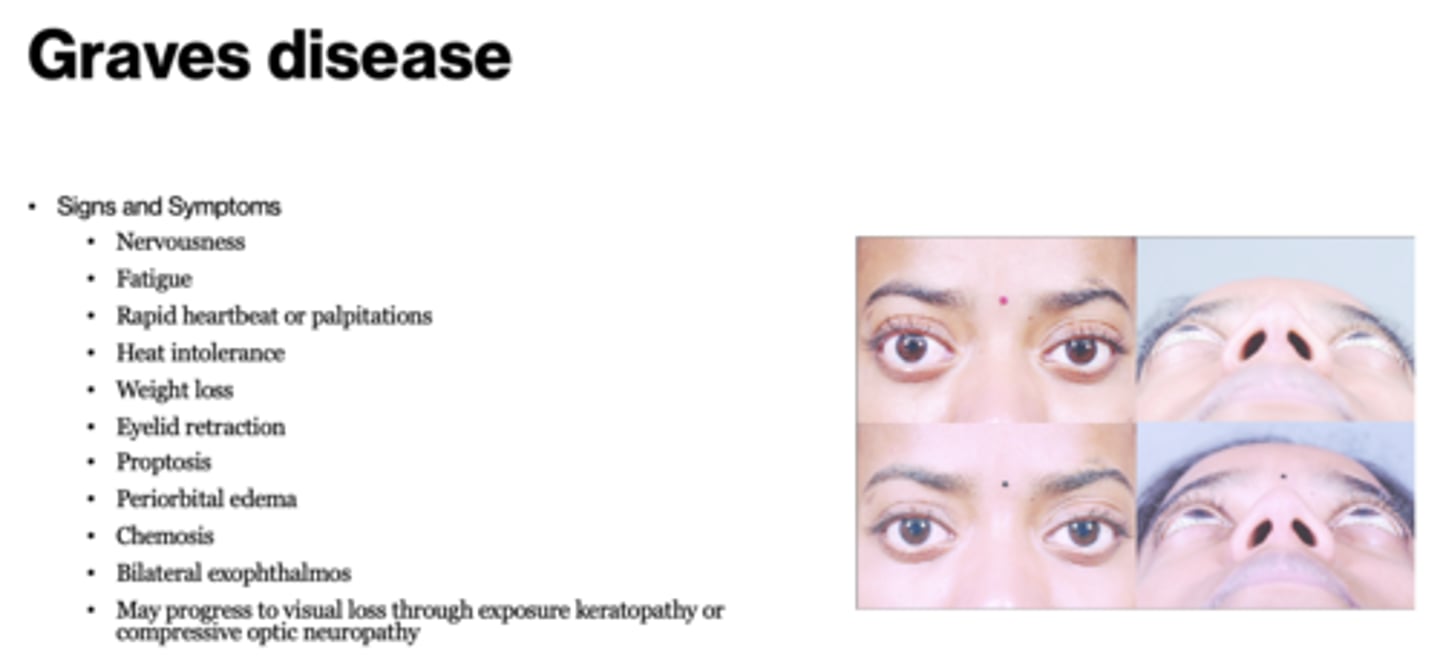
What thyroid disease is associated with this symptom?
- Chemises
- Proptosis
Graves disease (hyperthyroidism)
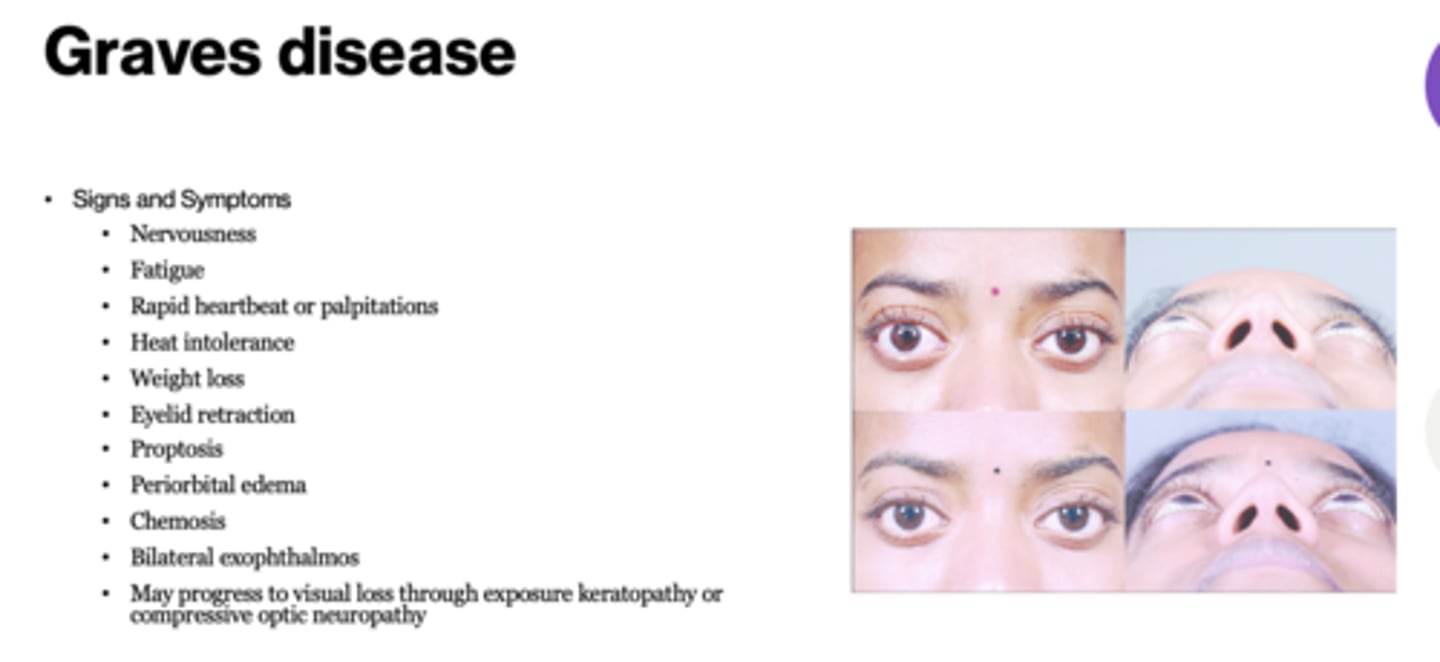
What thyroid disease is associated with this symptom?
- Heat intolerance
- Weight loss
Graves disease (hyperthyroidism)
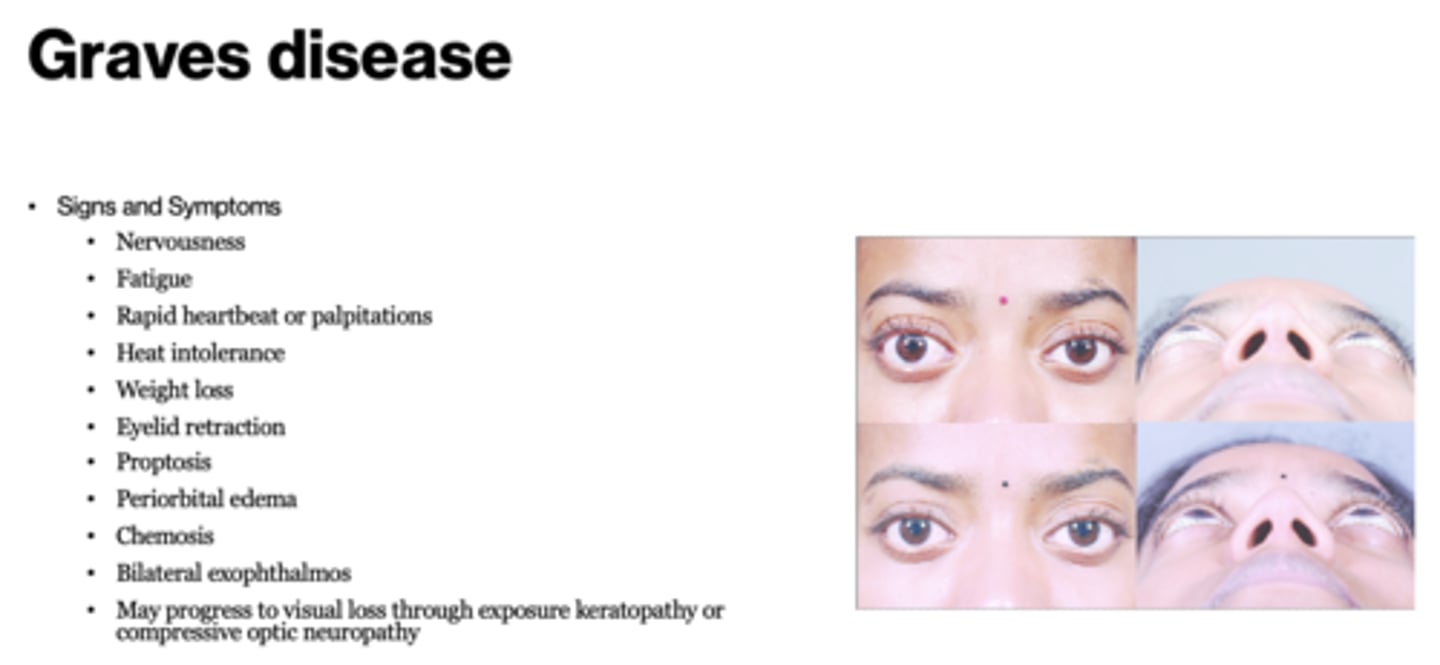
What thyroid disease is associated with this symptom:
- Fatigue
- Nervousness
- Periorbital edema
Graves disease (hyperthyroidism)
Graves disease can affect what other systems?
- Cardiac
- Respiratory
- Eye
- Skin
What has the following signs and symptoms?
- Occurs in 50% of patients
Characterized by
- Edema and inflammation of the extraocular muscles
- Increase in orbital connective tissue and fat
- Produces the greatest long-term disability for patients with this disease
Graves ophtalmology
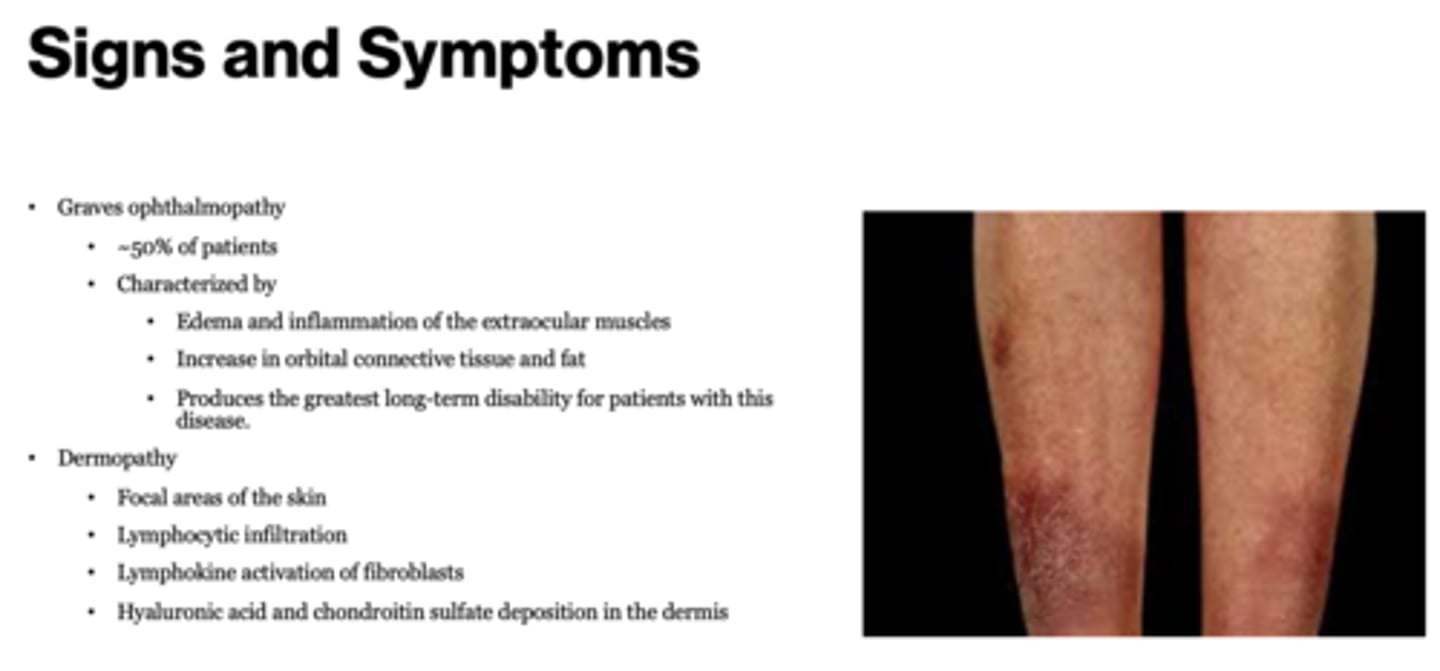
What condition produces the greatest long term disability for a patient with Graves?
Graves ophthalmopathy
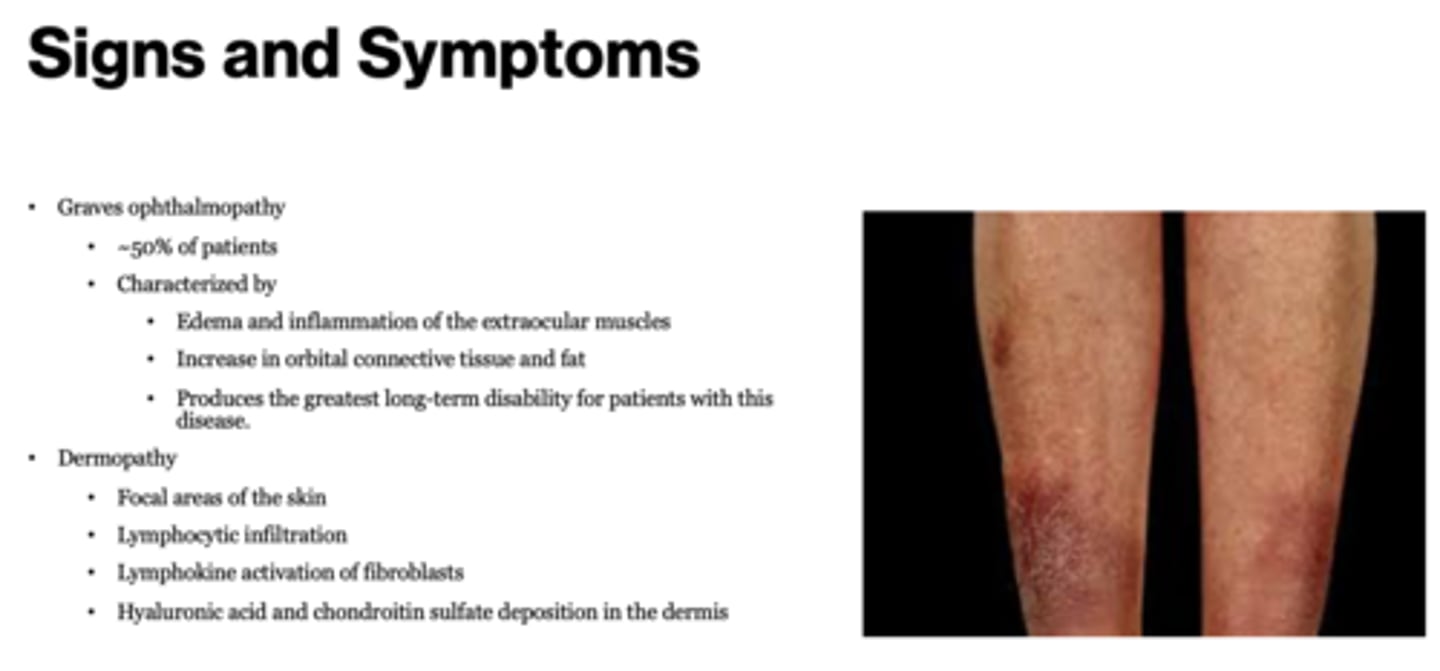
What is characterized by...
- Focal areas of the skin
- Lymphocytic infiltration
- Lymphokine activation of fibroblasts
- Hyaluronic acid and chondroitin sulfate deposition in the dermis
Graves dermopathy
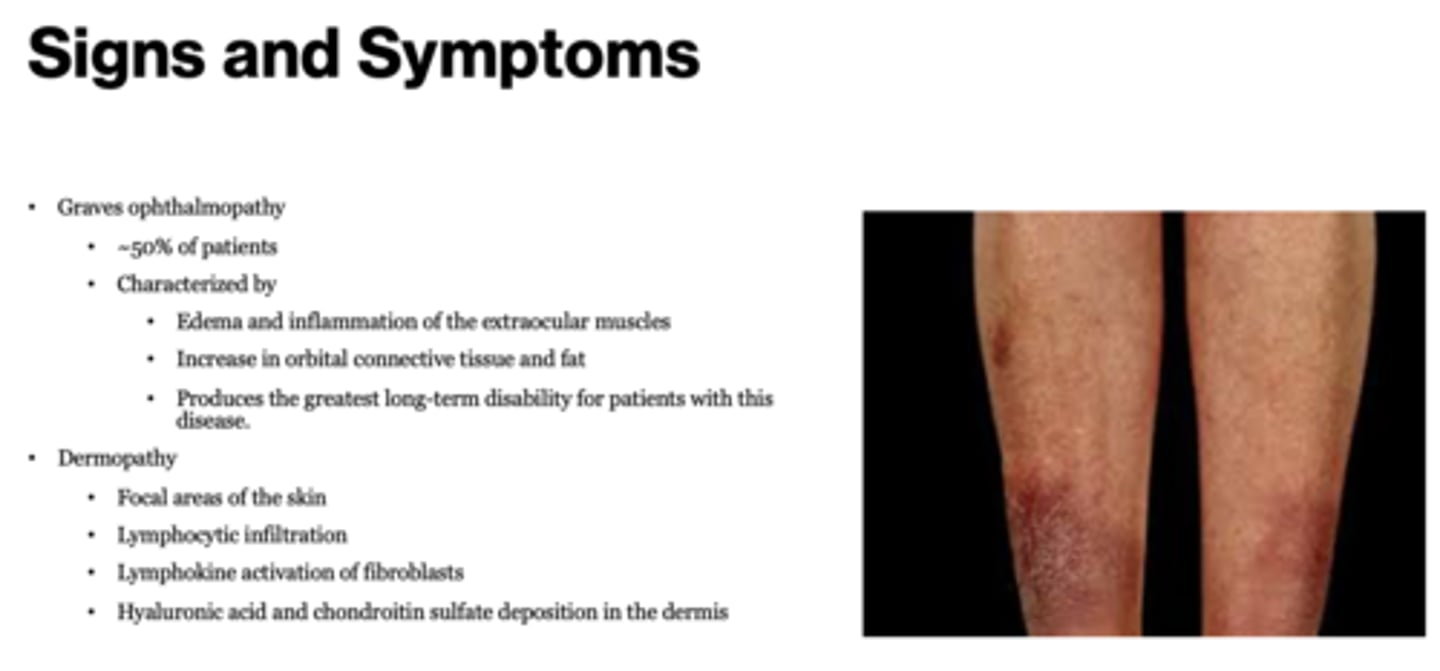
What thyroid disease is associated with this symptom?
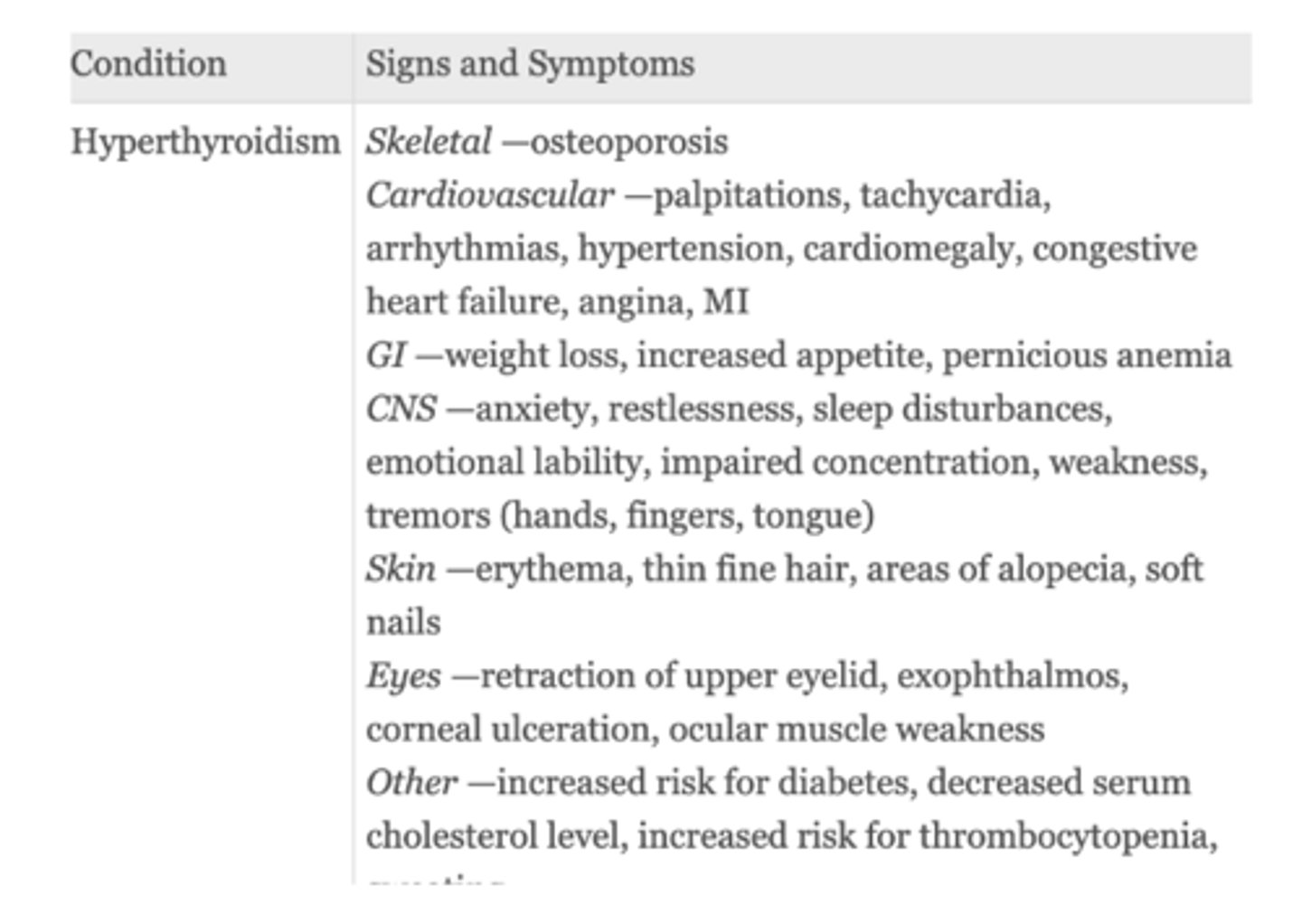
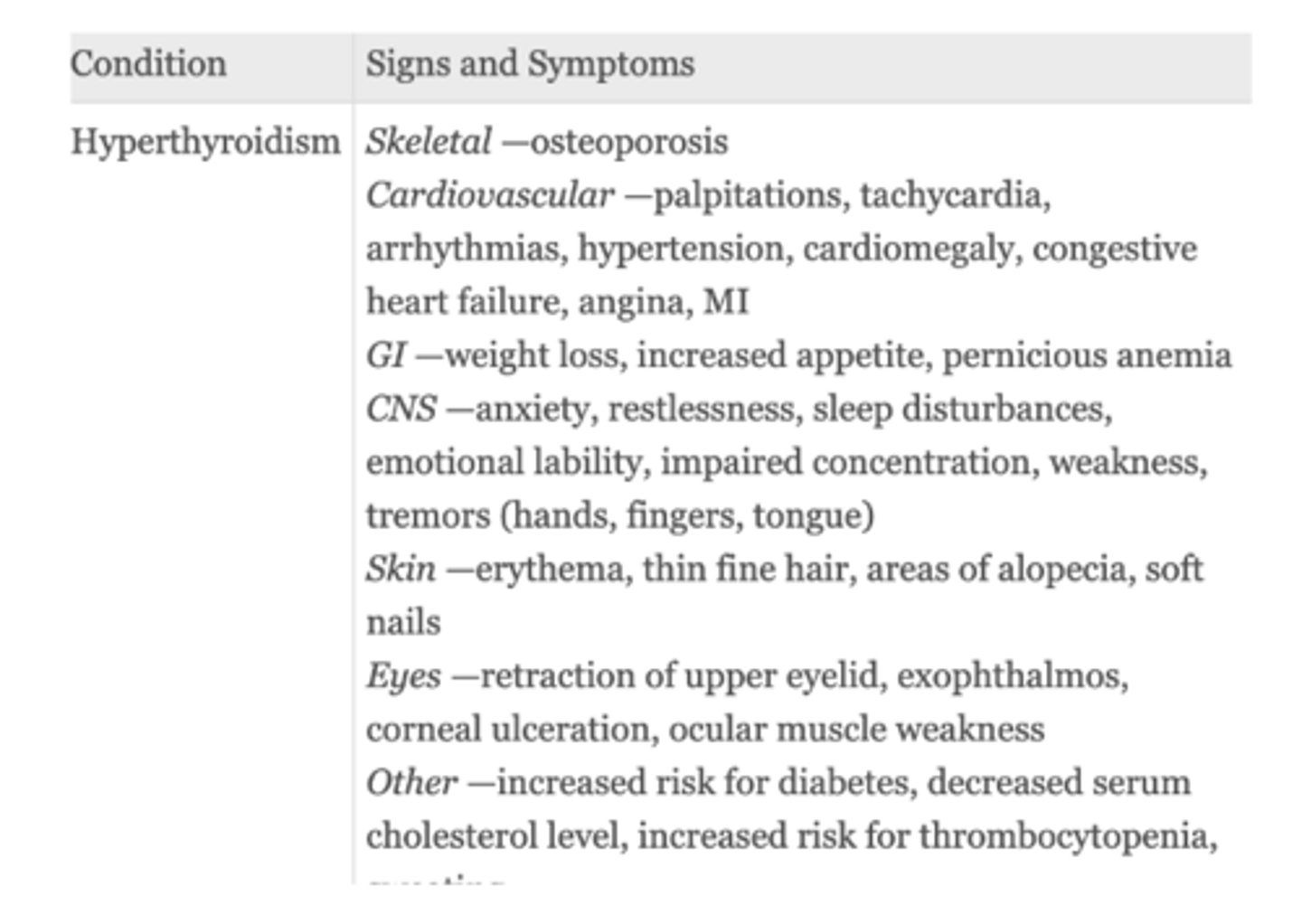
- Skeletal: Osteoporosis
Hyperthyroidism
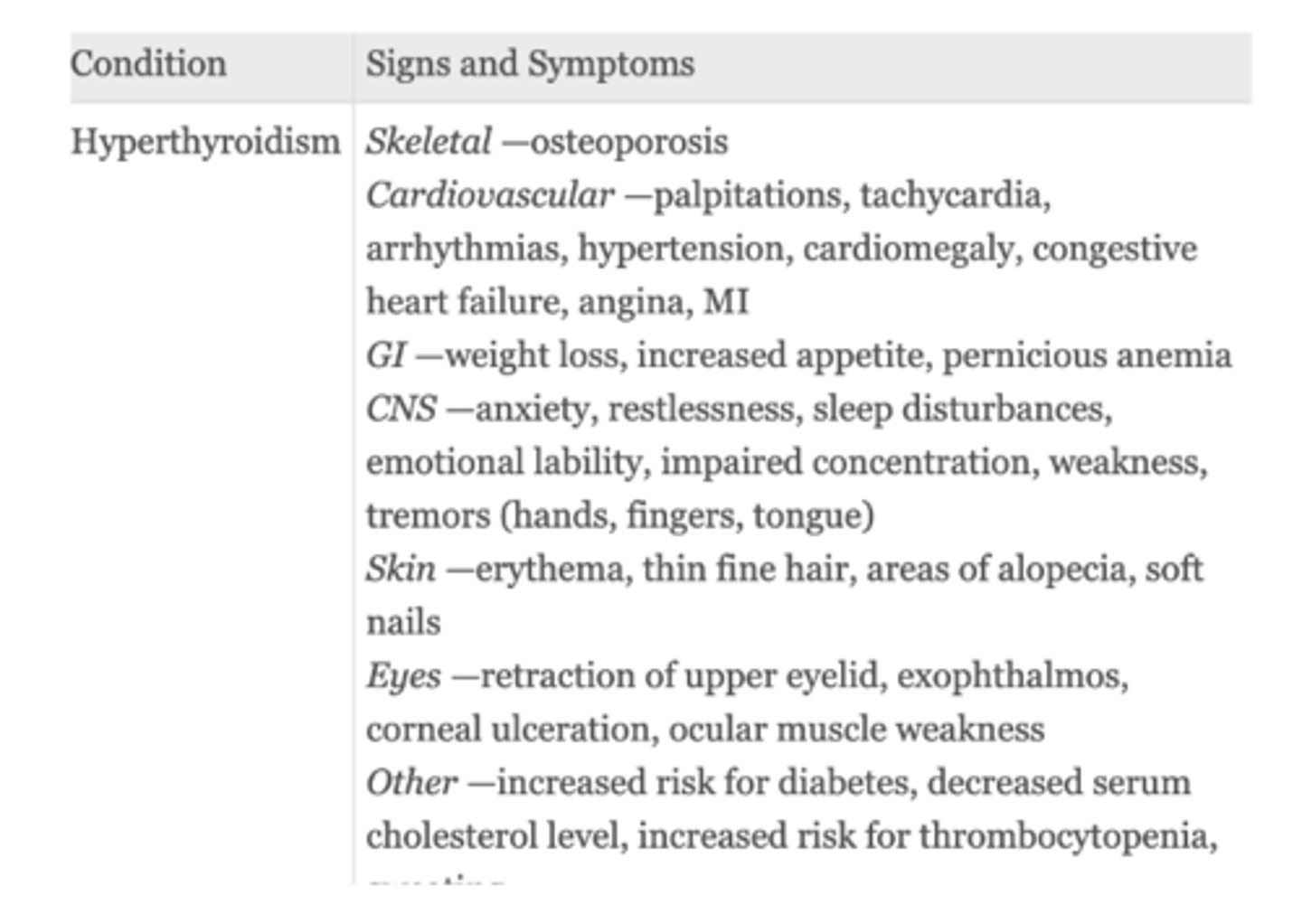
What thyroid disease is associated with this symptom?
- Cardiovascular: palpitations, tachycardia, arrhythmias, hypertension, cardiomegaly, congestive heart failure, angina, MI
Hyperthyroidism
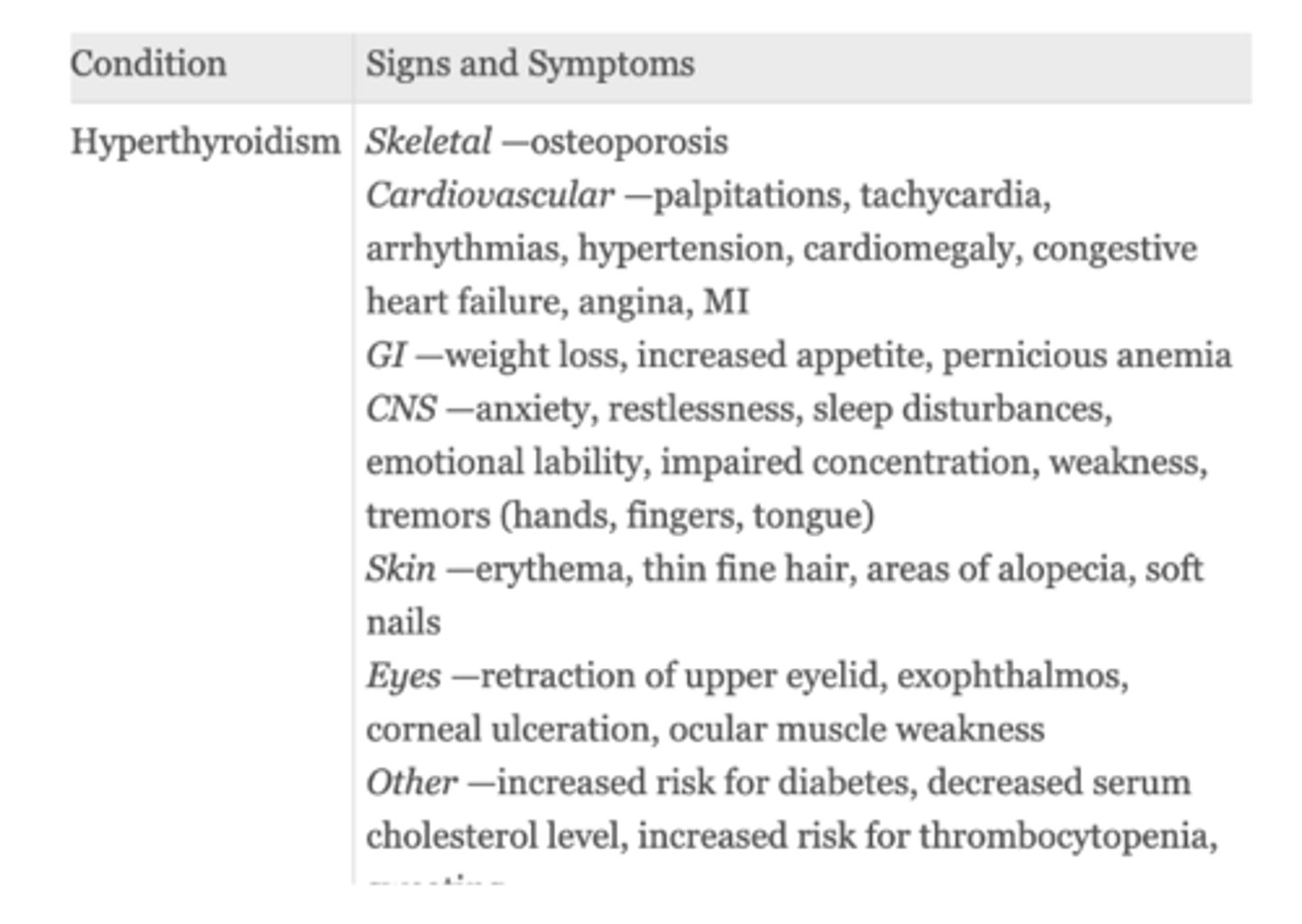
What thyroid disease is associated with this symptom?
- GI: Weight loss, increased appetite, pernicious anemia
Hyperthyroidism
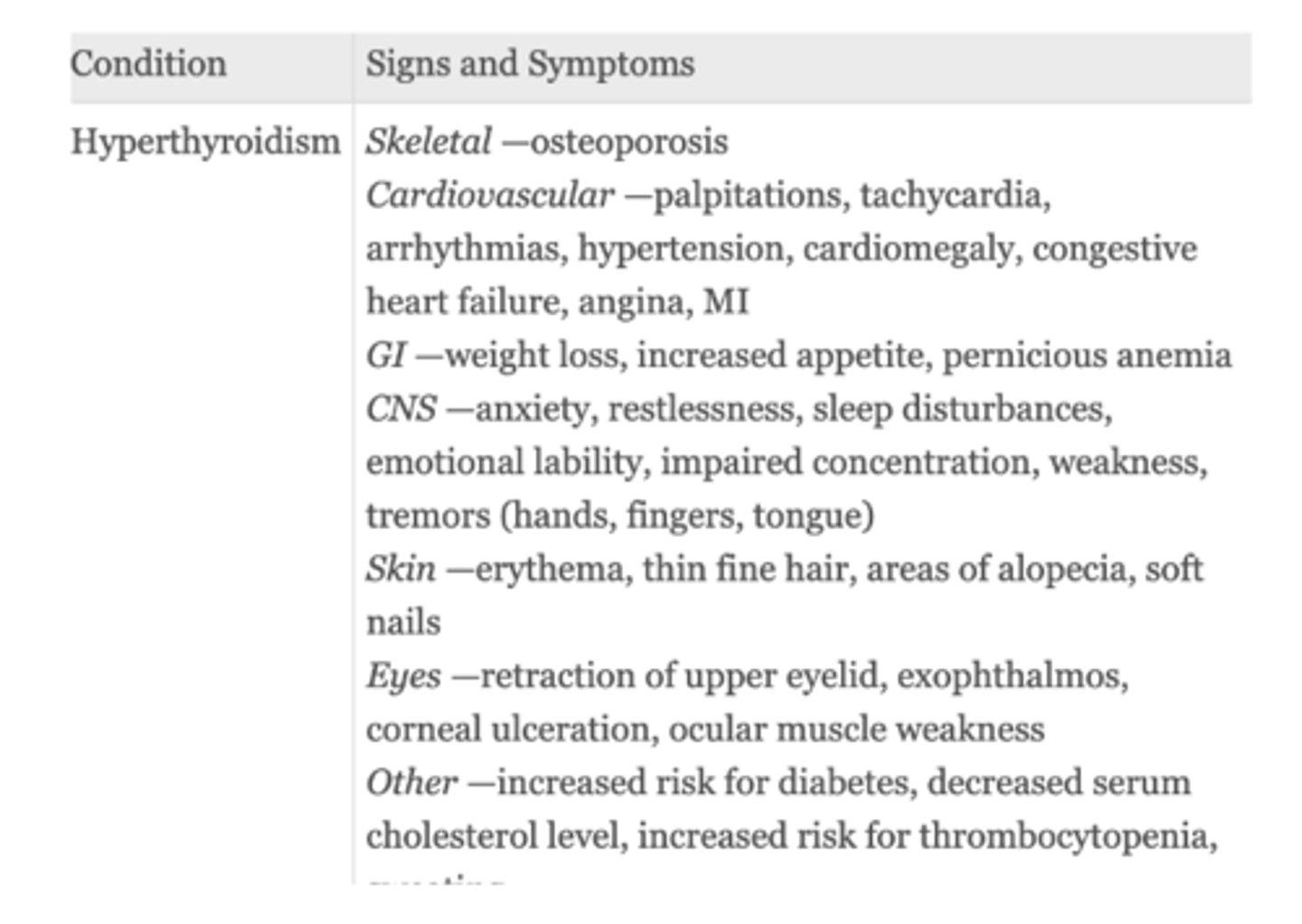
What thyroid disease is associated with this symptom?
- CNS: Anxiety, restlessness, sleep disturbances, emotional lability, impaired concentration, weakness, tremors (hands, fingers, tongue)
Hyperthyroidism
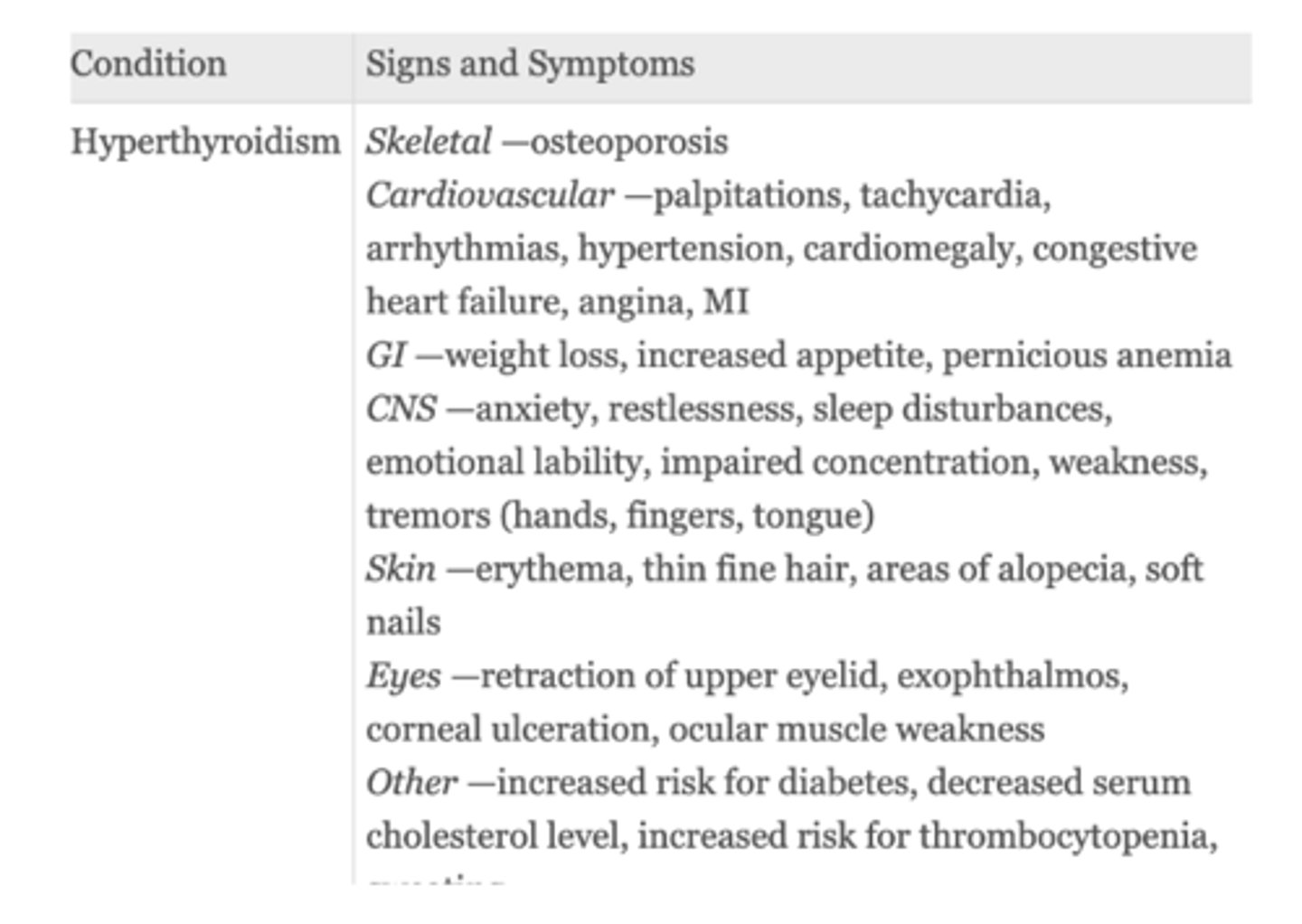
What thyroid disease is associated with this symptom?
- Skin: Erythema, thin fine hair, areas of alopecia, soft nails
Hyperthyroidism
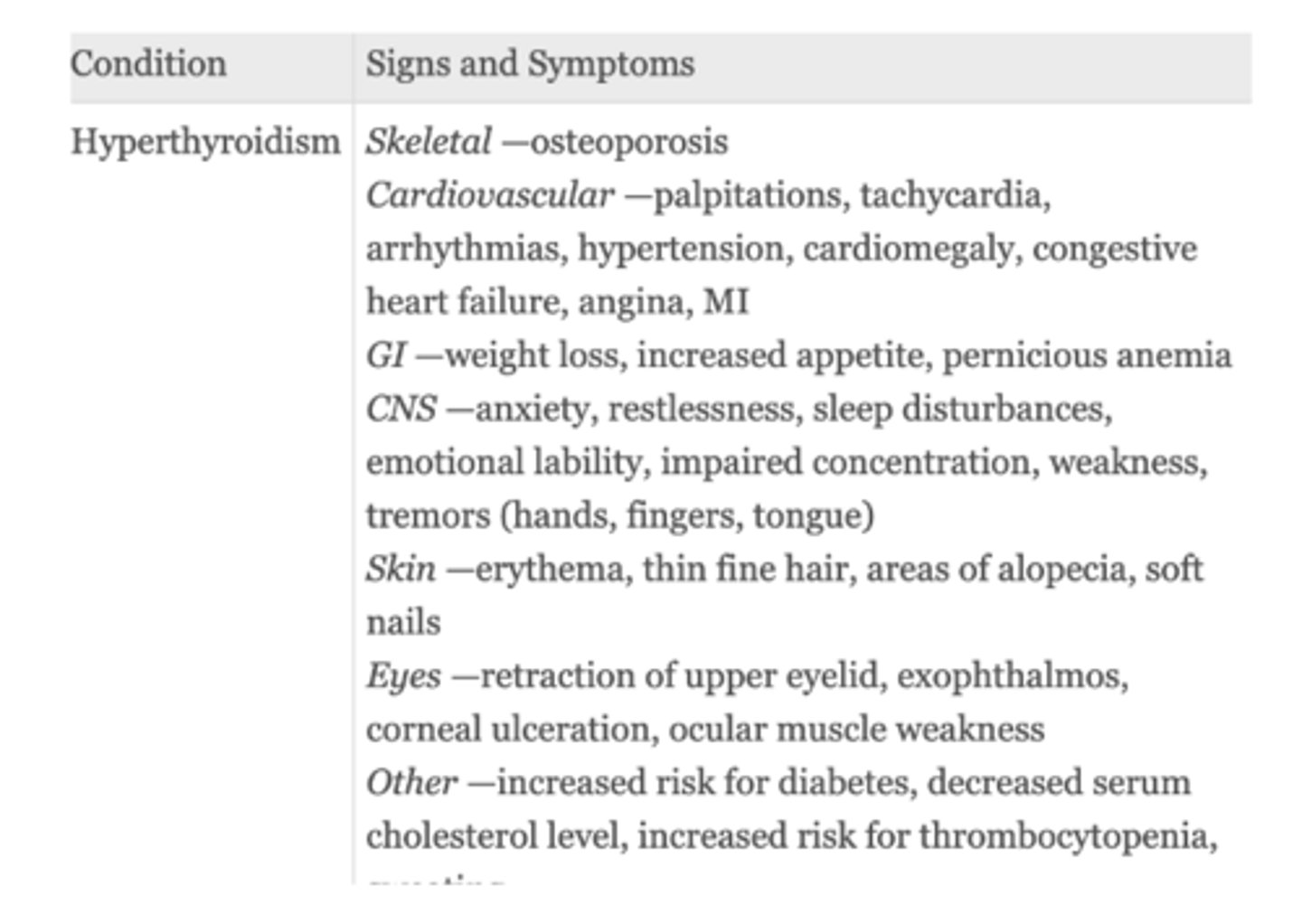
What thyroid disease is associated with this symptom?
- Eyes: Retraction of upper eyelid, exophthalmos, corneal ulceration, ocular muscle weakness
Hyperthyroidism
What thyroid disease is associated with this symptom?
- Increased risk for diabetes, decreased serum cholesterol level, increased risk for thrombocytopenia,
Hyperthyroidism
What is the most common lab finding of Grave's disease?
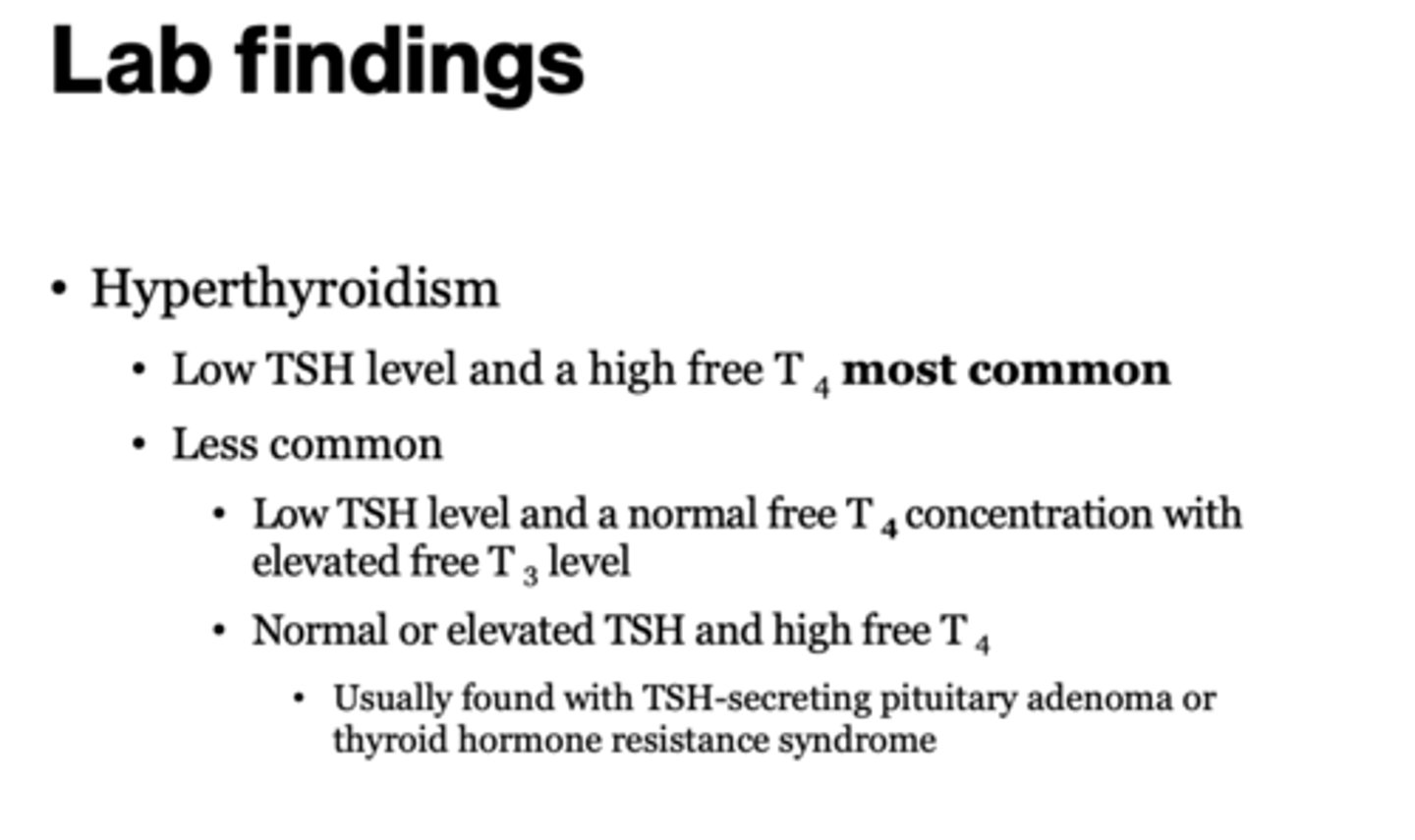
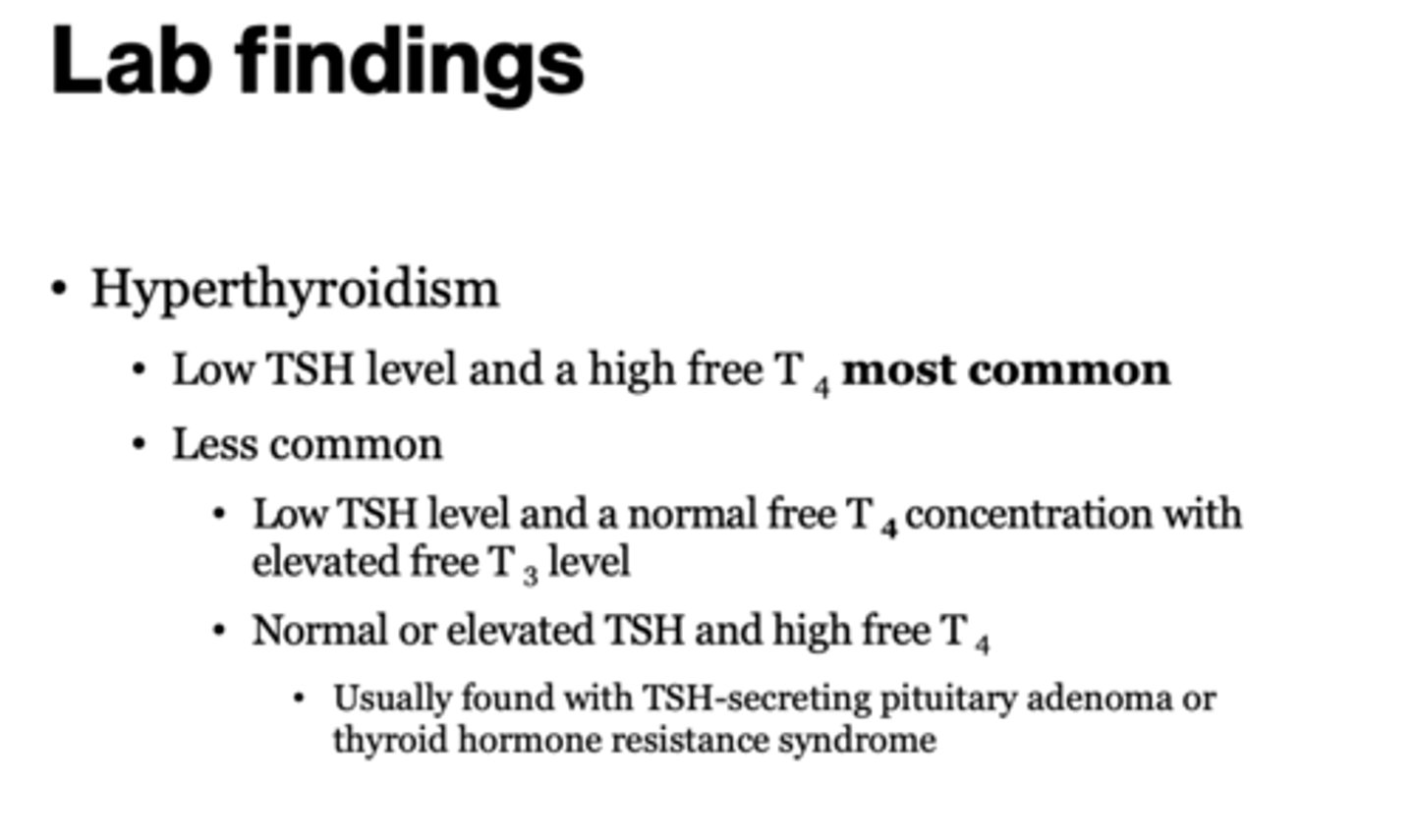
Low TSH level and a high free T4
What are the most common lab values for hyperthyroidism?
- Low TSH level
- High free T4
When would you see a patient with hyperthyroidism presenting with both a high TSH and a high T4?
If they have TSH-secreting pituitary adenoma or thyroid hormone resistance syndrome
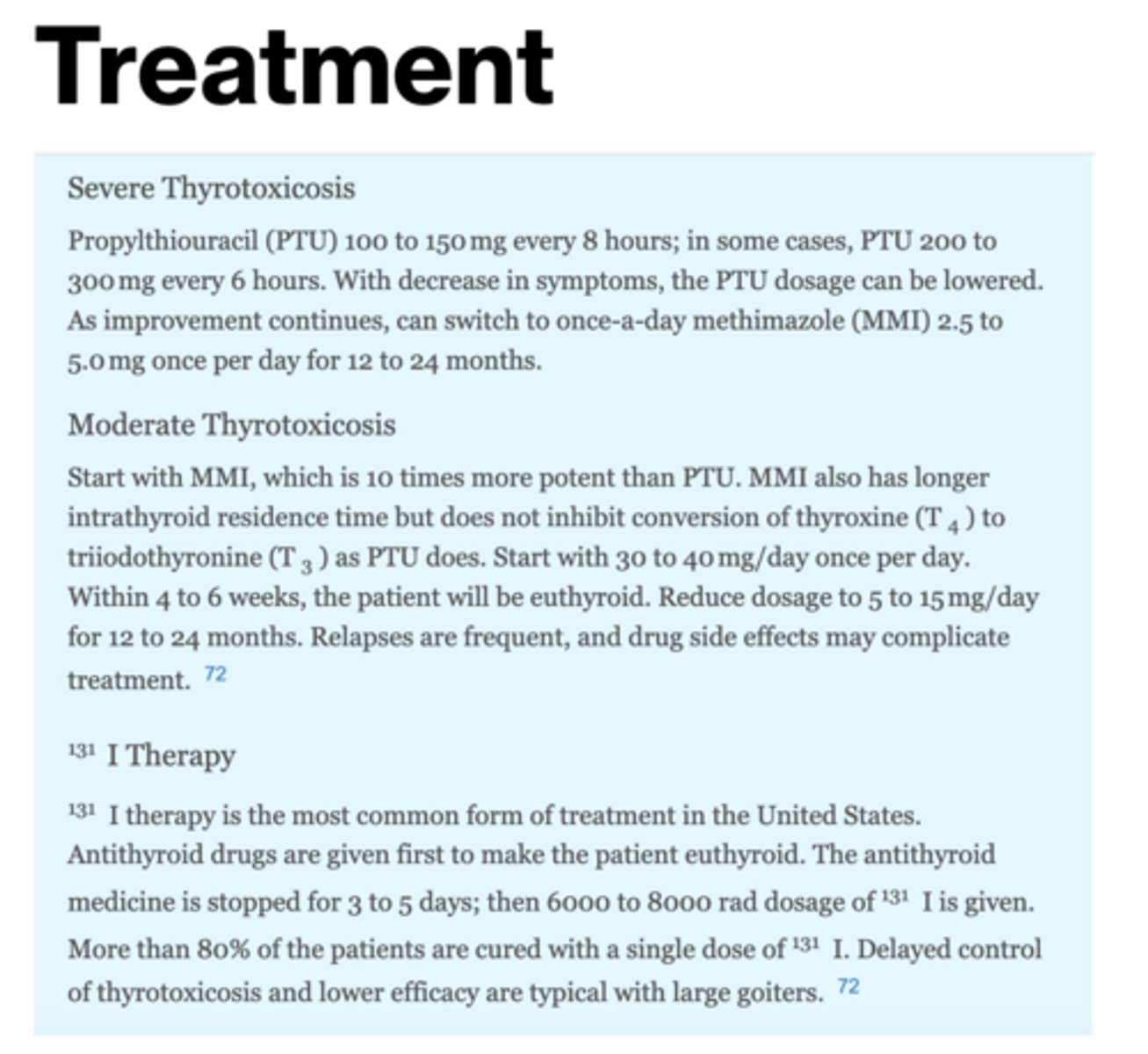
What medications are used to treat hyperthyroidism when it presents with severe thyrotoxicosis?
- Propylthiouracil (PTU)
- Methimazole (MMI)
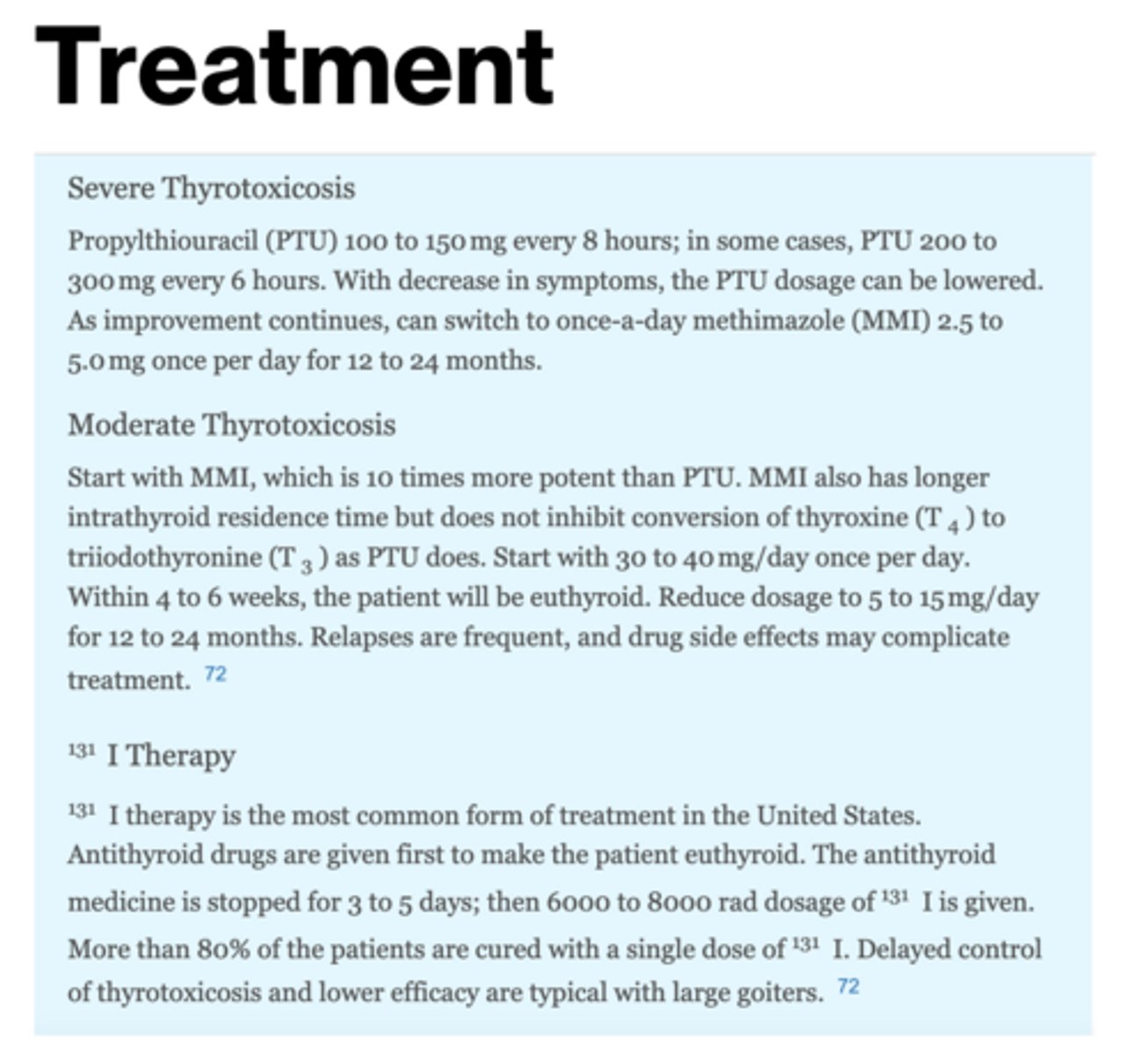
What is the most common form of treatment of hyperthyroidism in the US?
I therapy
What condition is seen in fewer than 1% of patients hospitalized for thyrotoxicosis
Thyrotoxic crisis
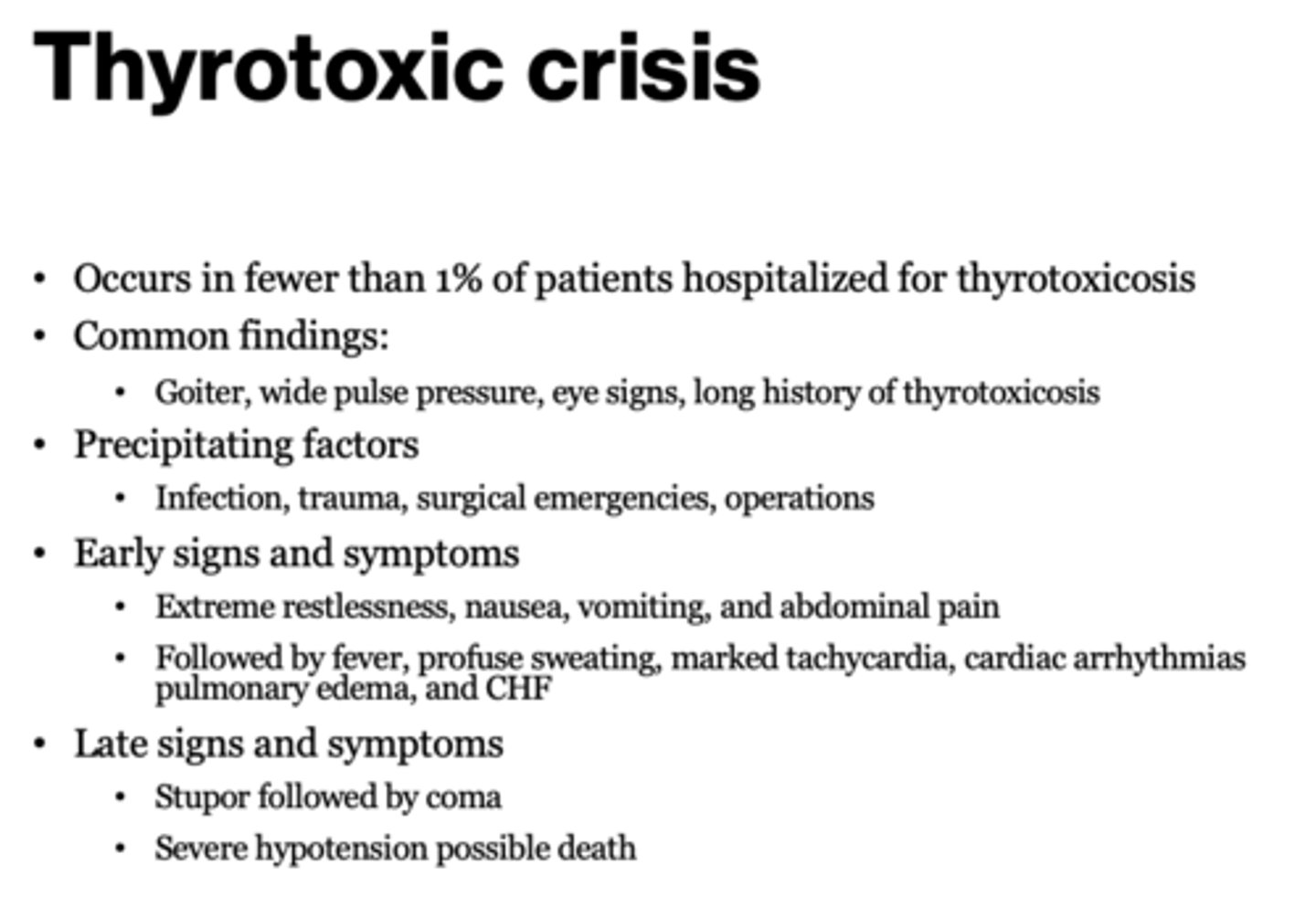
ID condition:
Patient presents with
- Goiter
- Wide pulse pressure
- Eye signs
- Long history of thyrotoxicosis
Thyrotoxic crisis
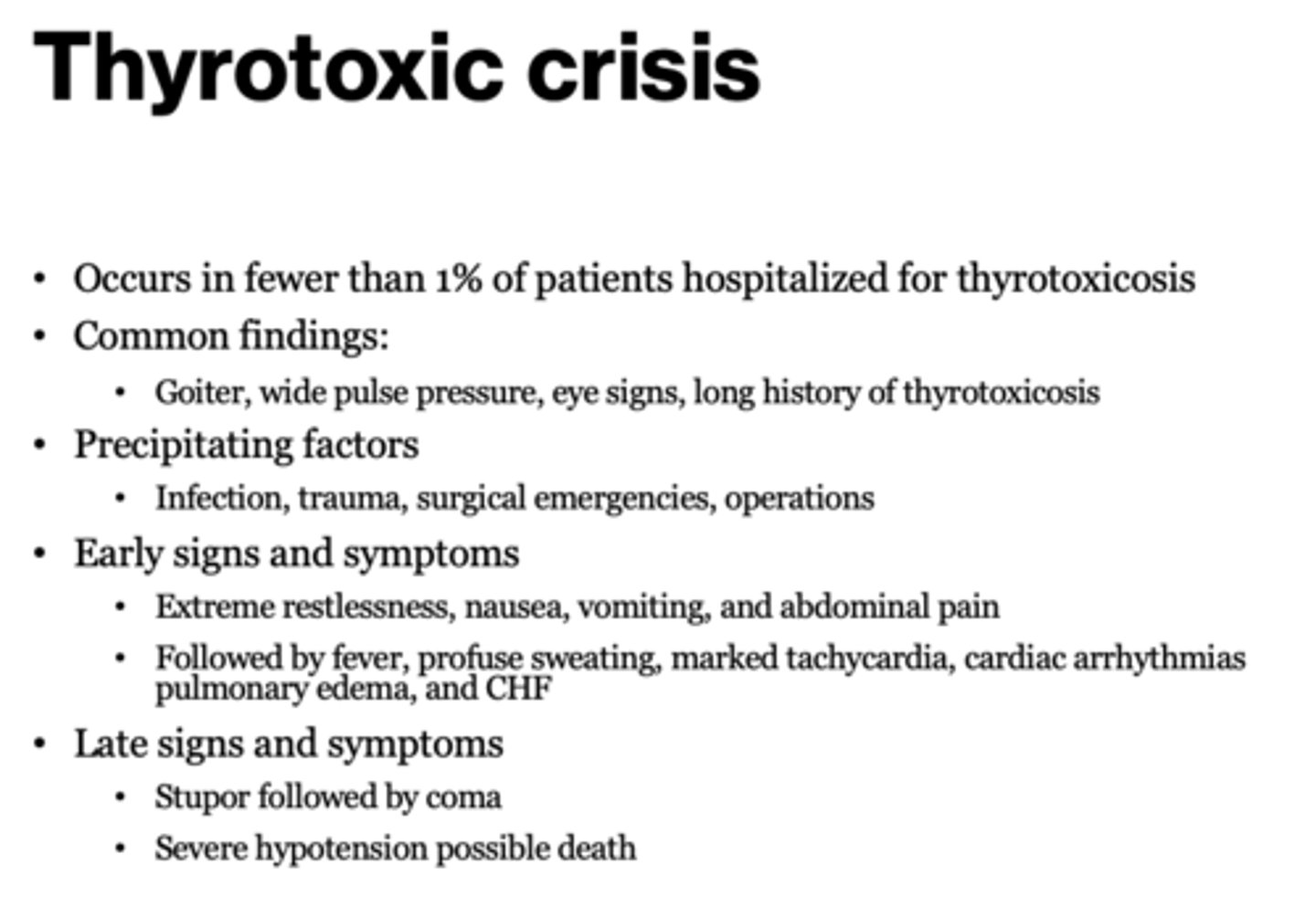
What precipitates thyrotoxic crisis? (4)
- Infection
- Trauma
- Surgical emergencies
- Operations
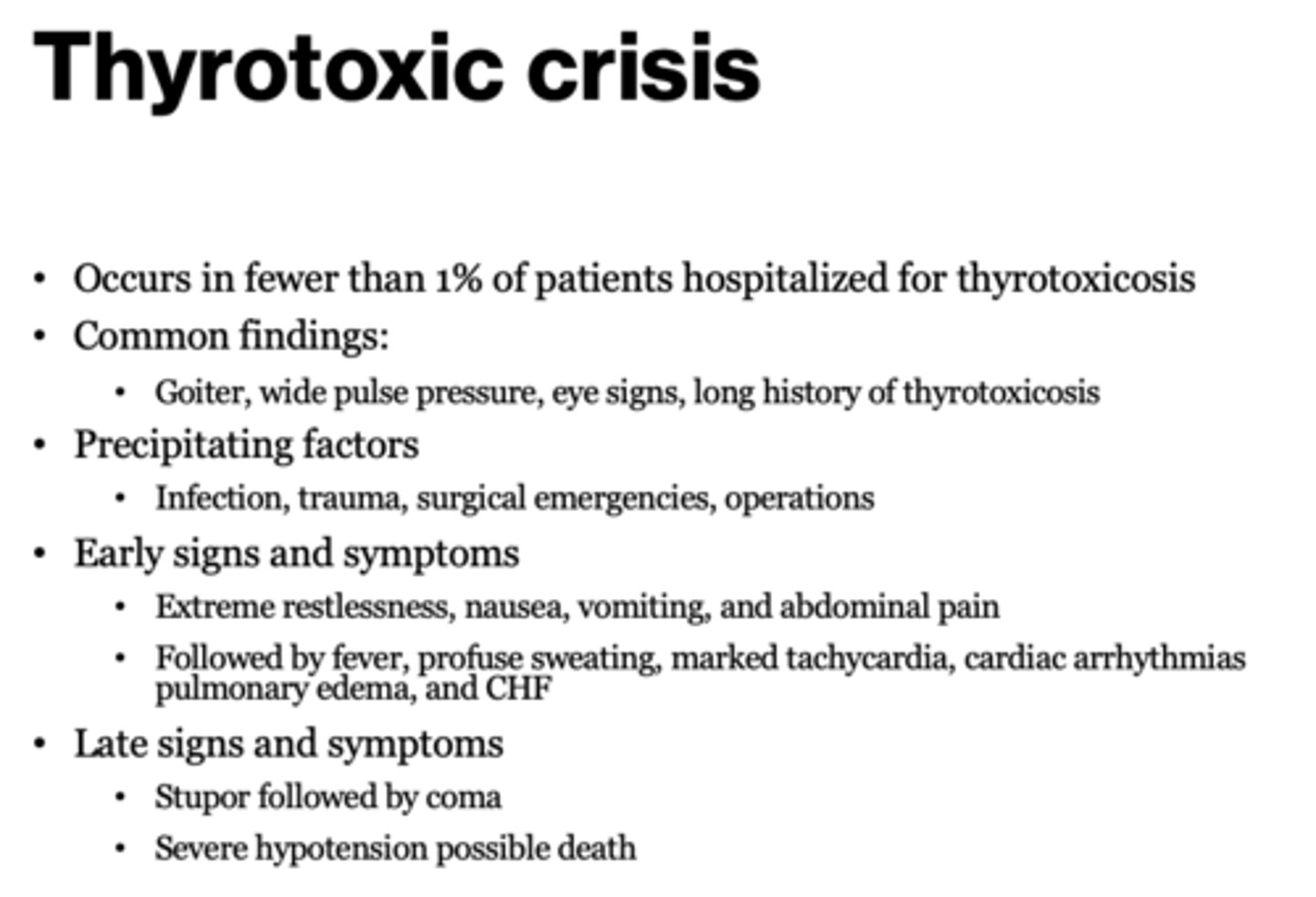
The following are ____ signs of thyrotoxic crisis
- Extreme restlessness, nausea, vomiting, and abdominal pain
- Followed by fever, profuse sweating, marked tachycardia, cardiac arrhythmias, pulmonary edema, and CHF
Early
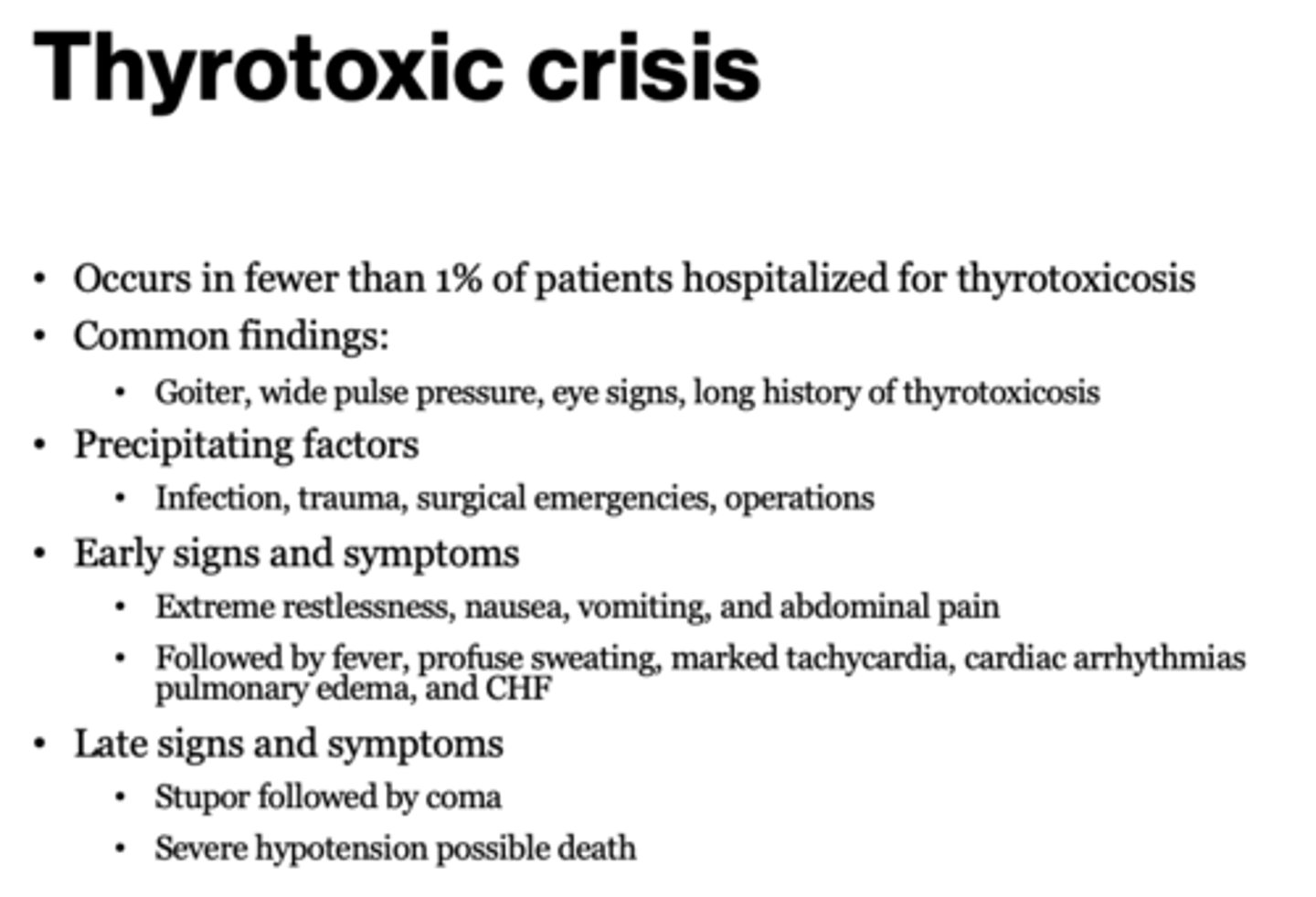
The following are ____ signs of thyrotoxic crisis:
- Stupor followed by coma
- Severe hypotension possible death
late
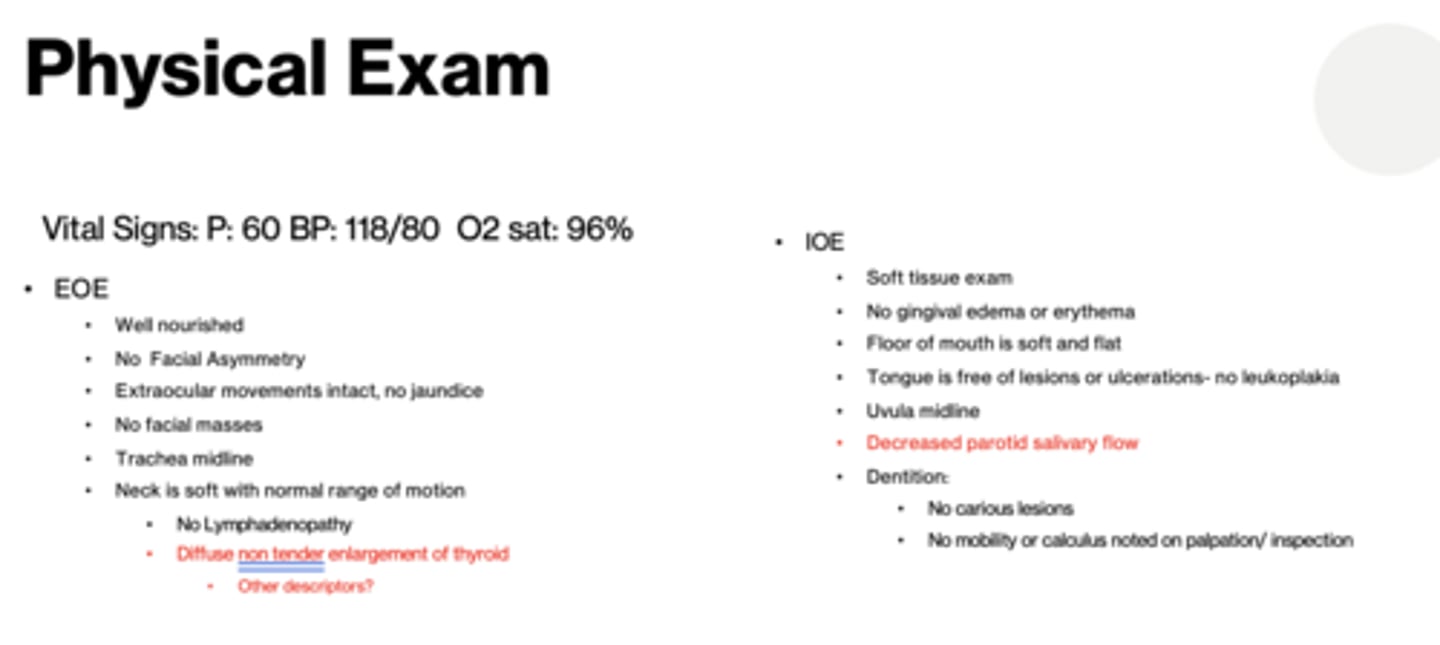
What are the concerns for this patient?
- HPI: 44 year old female presents for new patient exam. She reports not significant changes from a dental standpoint. She does report recently increasing fatigue and you note that she has kept her coat on while sitting in the dental chair and reports that she is cold.
- PMH: HTN, HLD, Rheumatoid Arthritis
- PSH: Denies
- FH: NC
- Med: Lisinopril, Adalimumab, Lipitor
- Social: Denies alcohol, tobacco, rec drugs
ROS:
- Fatigue
- Cold intolerance
EOE
- Well nourished
- No Facial Asymmetry
- Extraocular movements intact, no jaundice
- Trachea midline
- Neck is soft with normal range of motion
- No Lymphadenopathy
- Diffuse non tender enlargement of thyroid
- Vital Signs: P: 60 BP: 118/80 O2 sat: 96%
IOE
- No gingival edema or erythema
- Floor of mouth is soft and flat
- Tongue is free of lesions or ulcerations- no leukoplakia
- Decreased parotid salivary flow
- Diffuse non tender enlargement of thyroid
- Decreased parotid salivary flow
When you are doing a head and neck exam and feel for the thyroid, you should ask the patient to swallow. What would be considered a normal finding?
If the thyroid was mobile (moves when swallow)
if it doesn't move, could be cancer
What are the four main categories of hypothyroidism?
- Primary atrophic
- Secondary
- Transient
- Generalized resistance to thyroid hormone
What causes the majority of hypothyroidism cases? (95%)
Primary and goitrous hypothyroidism
What are all of the following?
- Hashimoto
- Subacute painful
- Subacute painless
- Scute suppurative
- Riedel
Inflammation of the thyroid gland
T/F: Radiation therapy and drugs such as lithium, interleukin-2, interferons, and amiodarone also may cause thyroiditis iatrogenically
True
A patient in their mid 40s presents with a rubbery mass near the thyroid. The mass moves when the patient swallows. You do labs and see that the patient has high levels of thyroid autoantibodies and thyroid antigen-
specific T cells. What do you suspect?
Hashimoto thyroiditis (hypothyroidism)
What is the most common cause of primary hypothyroidism in US?
Hashimoto's thyroiditis
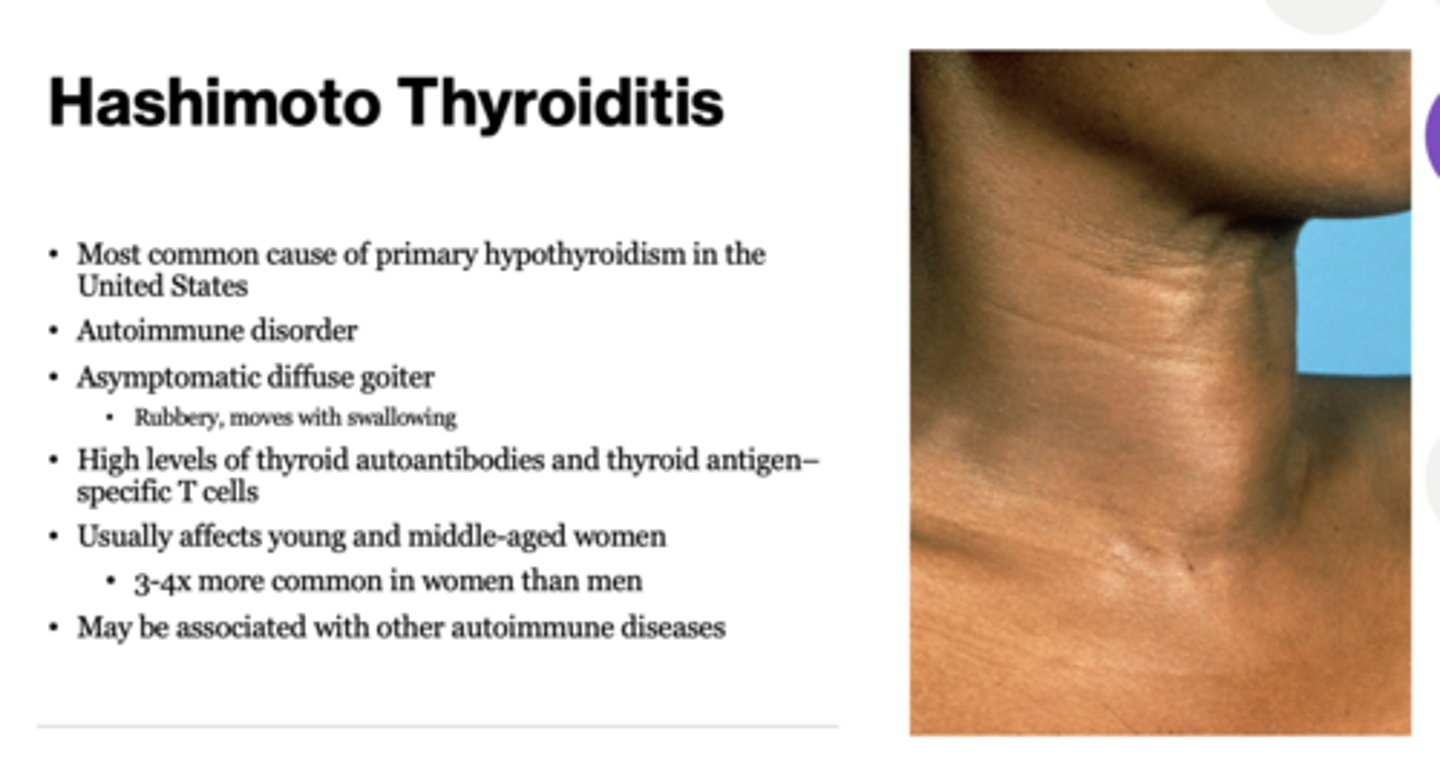
ID the condition:
- Autoimmune
- Asymptomatic diffuse goiter
- Rubbery, moves with swallowing
- High levels of thyroid autoantibodies and thyroid-antigen specific T cells
- May be associated with other autoimmune diseases
Hashimoto Thyroiditis
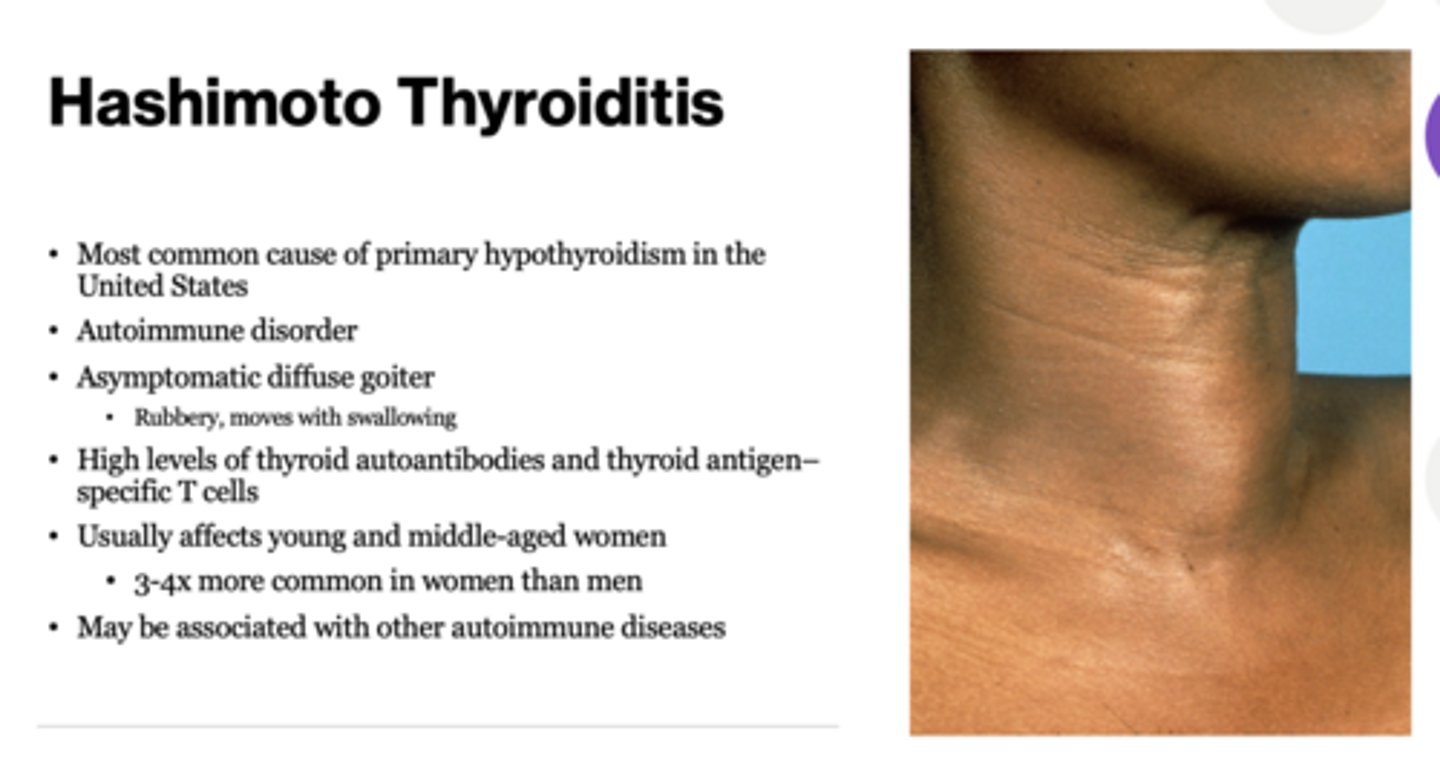
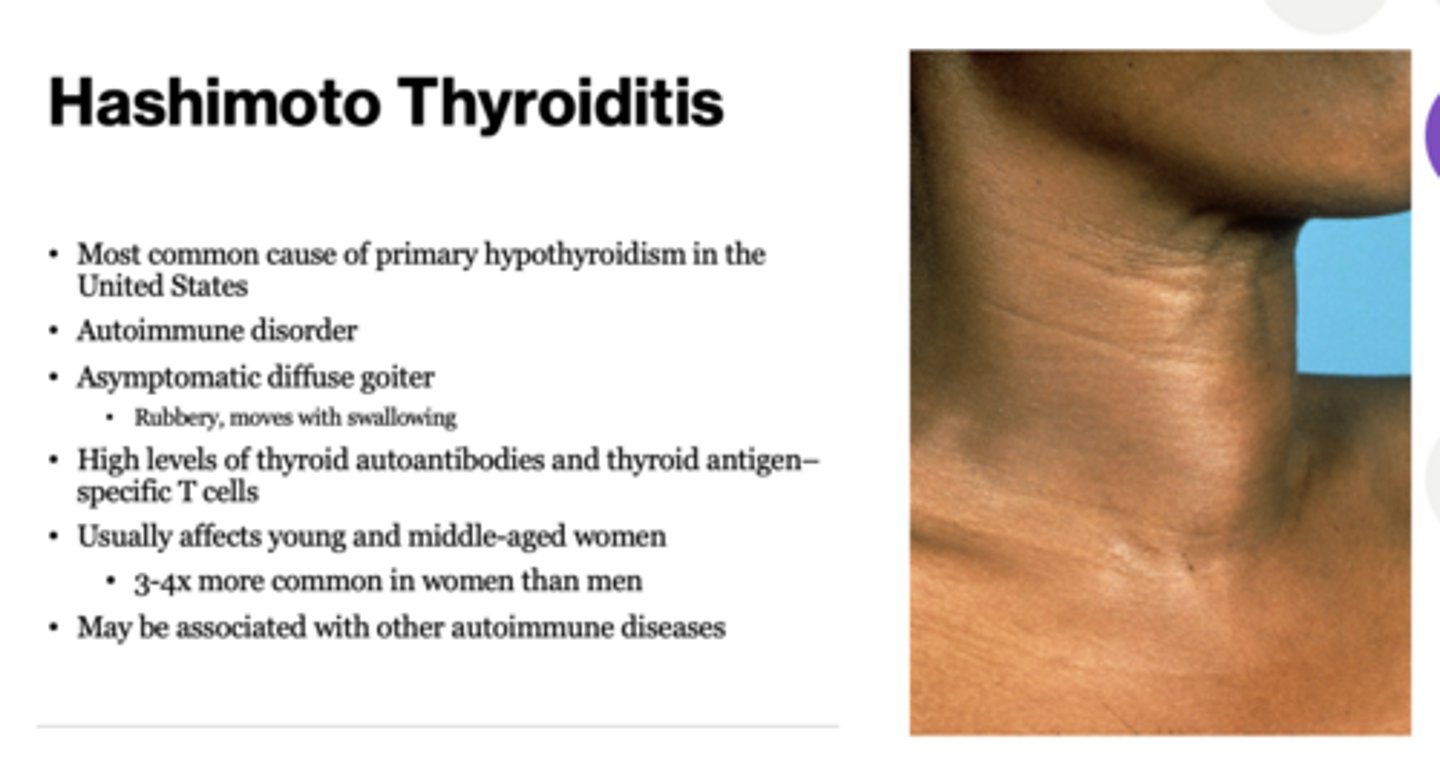
Hashimoto thyroiditis usually affects what gender?
Young and middle-aged women (3-4x more common in women than men)
The following findings describe hashimoto _____ in the clinical course:
- Patient is euthyroid
- TSH slightly increased
- RAIU increased
- Increasing titers of antibodies
early
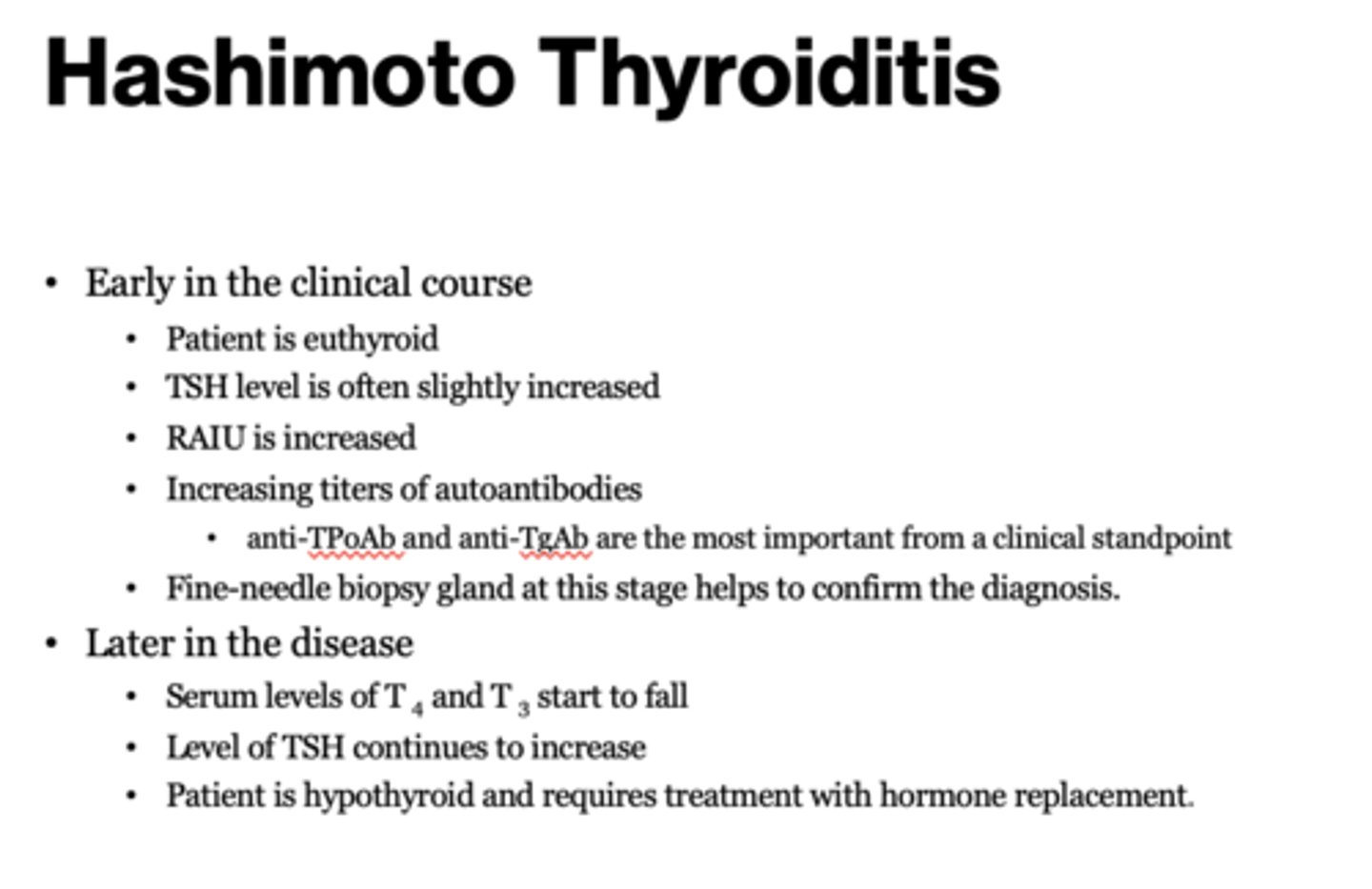
Increasing titers of antibodies are early clinical signs of Hasimotos. What are the most important antibodies from a clinical standpoint?
- Anti-TPoAb
- Anti-TgAb
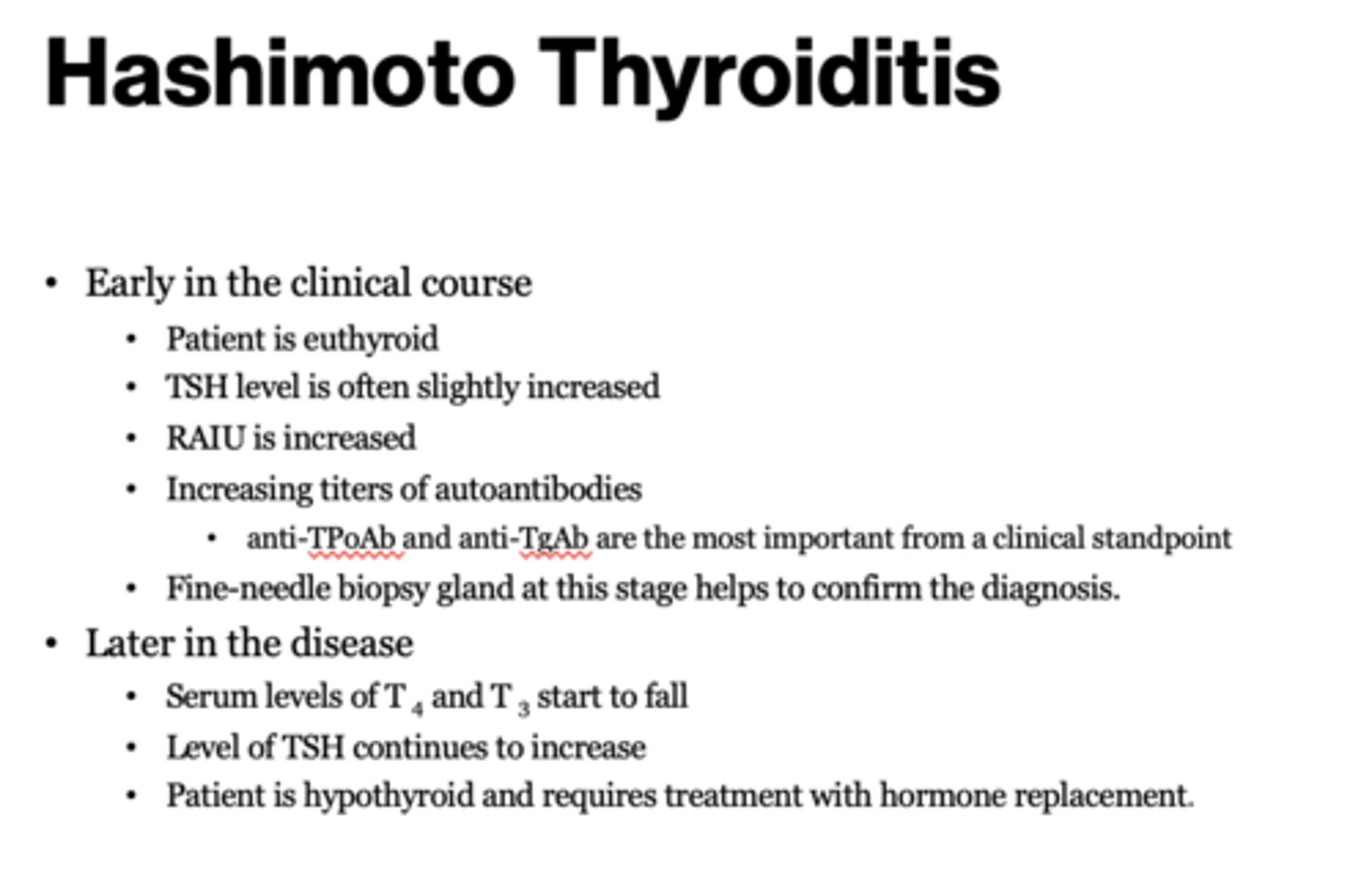
The following findings describe hashimoto _____ in the clinical course:
- T4/T3 start to fall
- TSH increases
- Patient is hypothyroid and requires tx with hormone replacement
Late
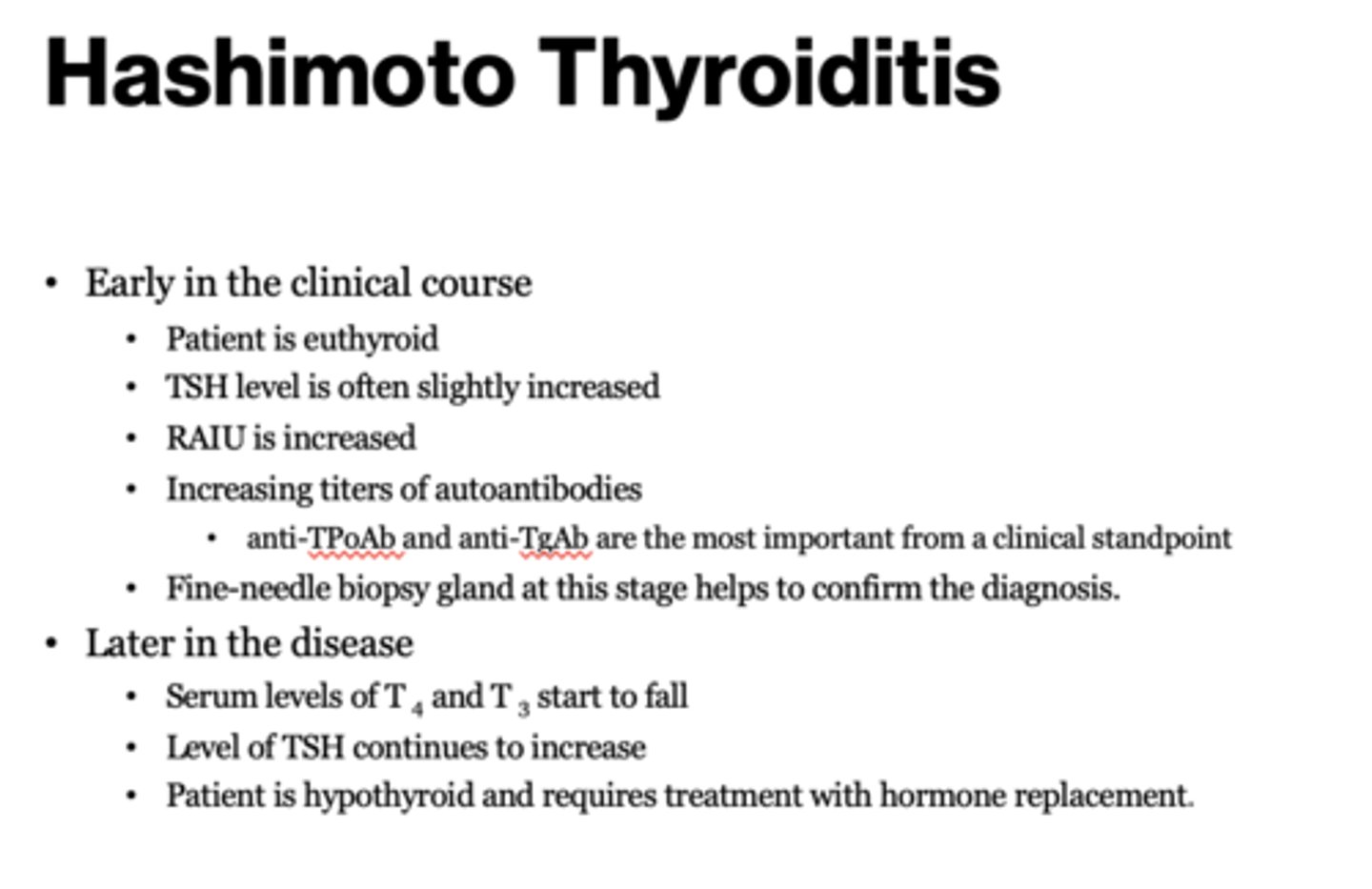
What can help confirm early Hashimoto Thyroiditis?
Fine-needle biopsy gland
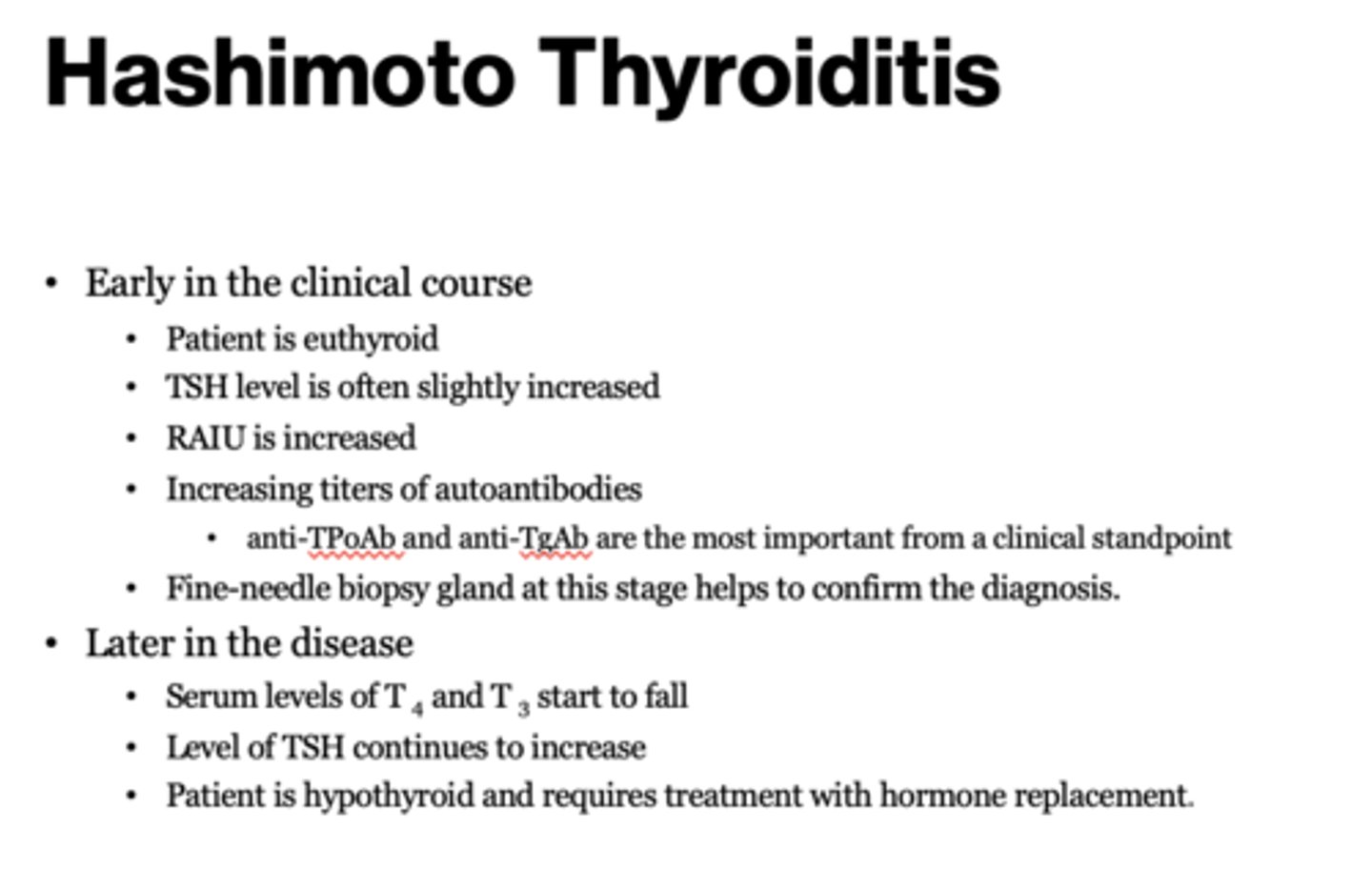
What lab value do you expect to see with Hashimoto thyroiditis (hypothyroidism)?
- Low T3/T4
- High TSH
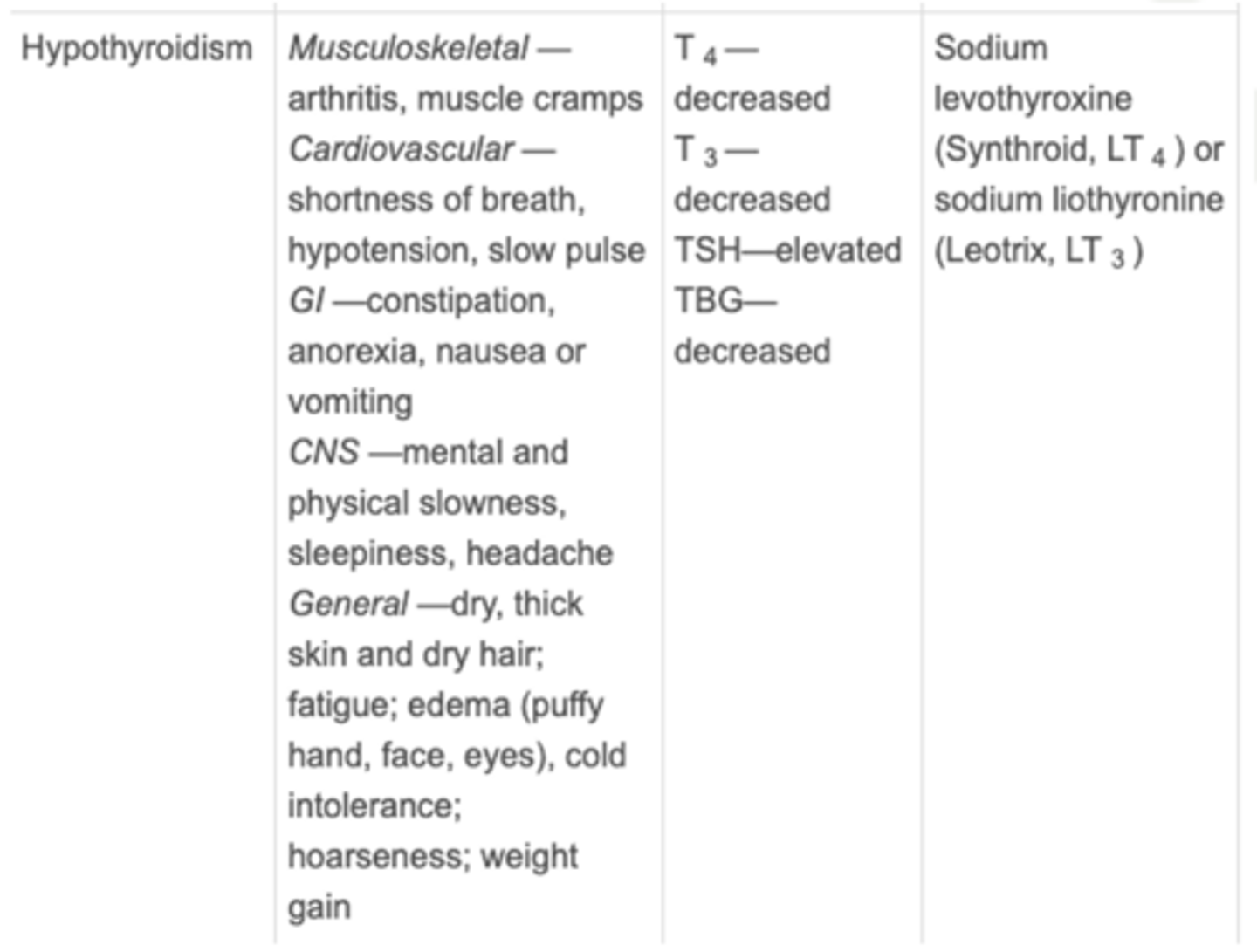
What thyroid disease is associated with this symptom?
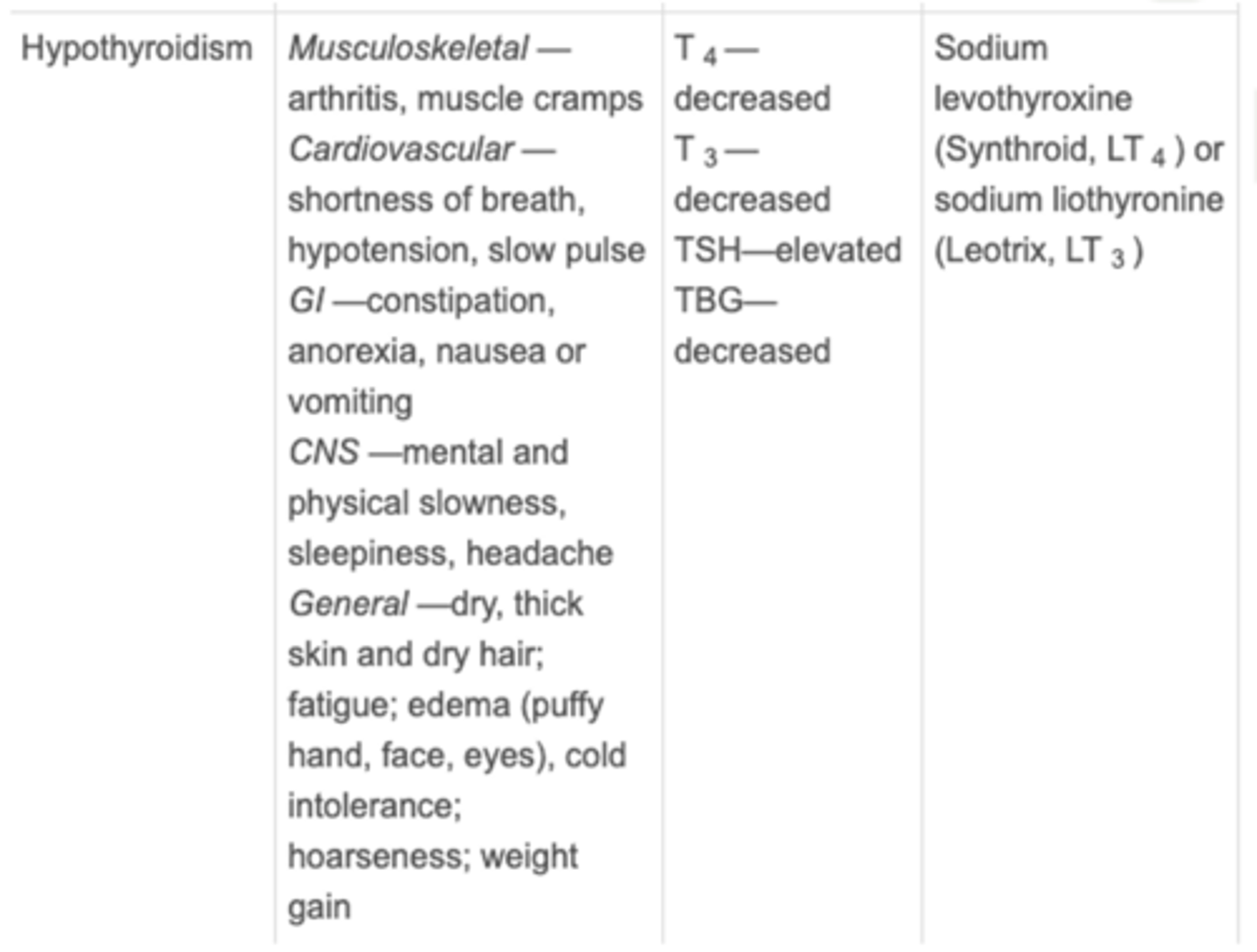
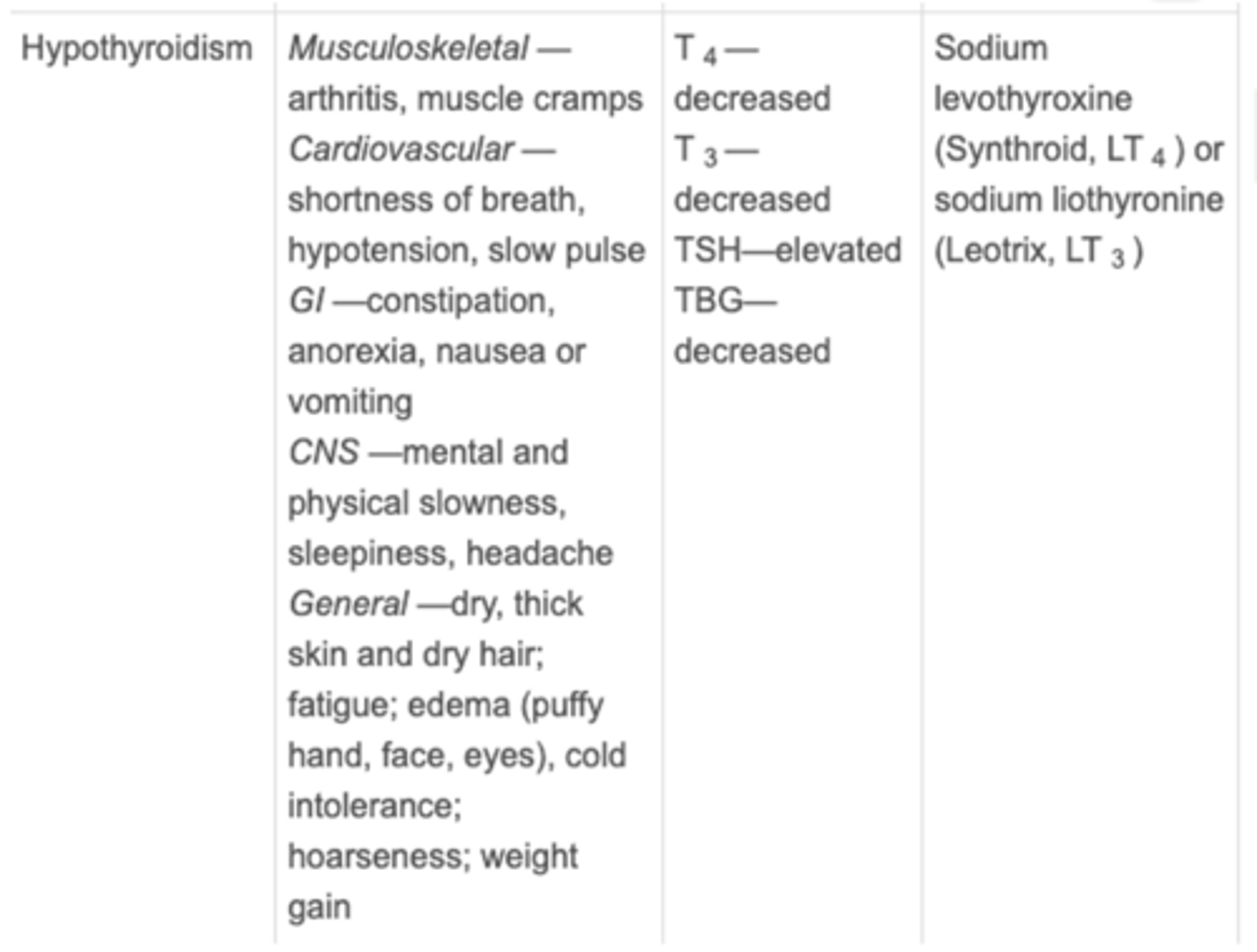
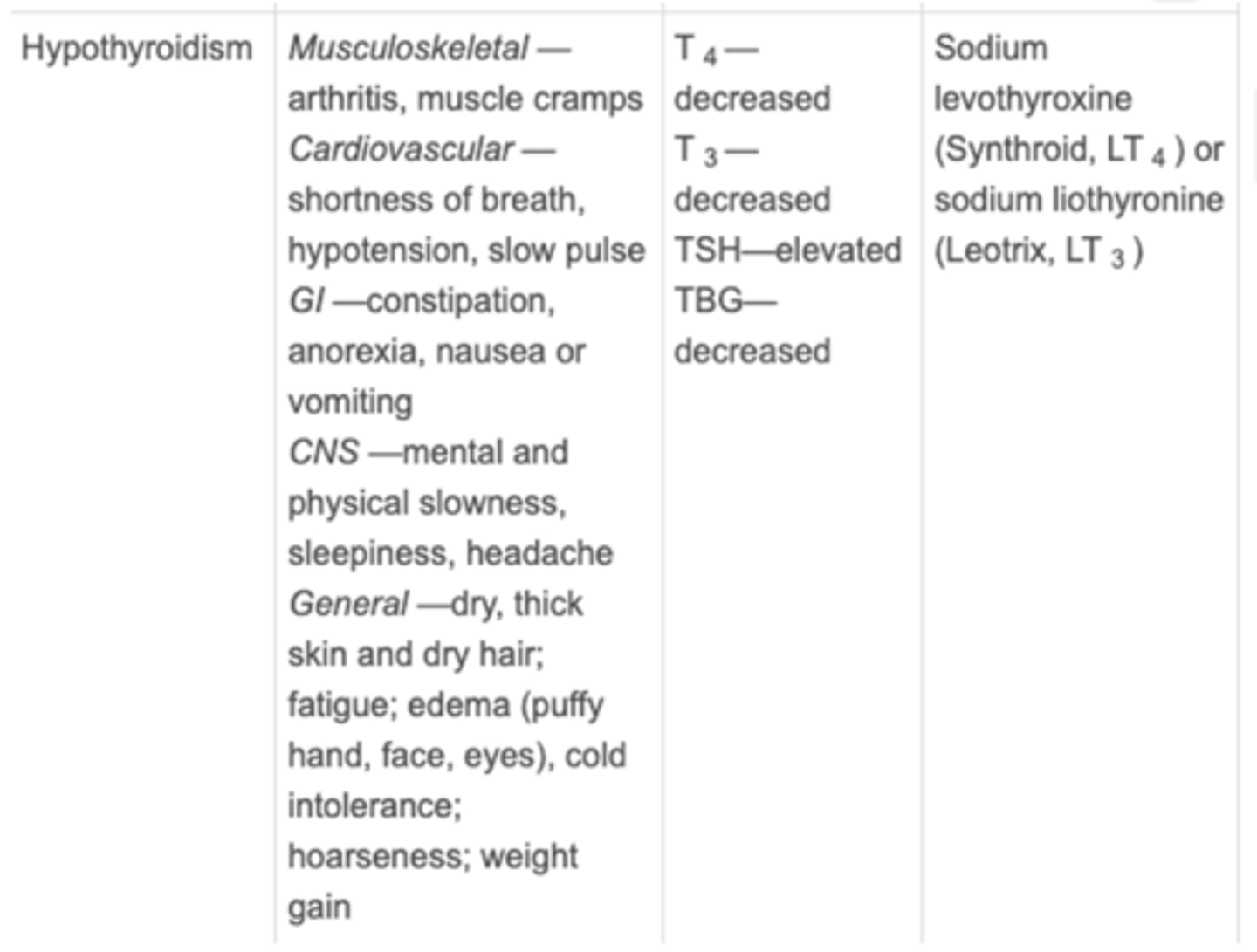
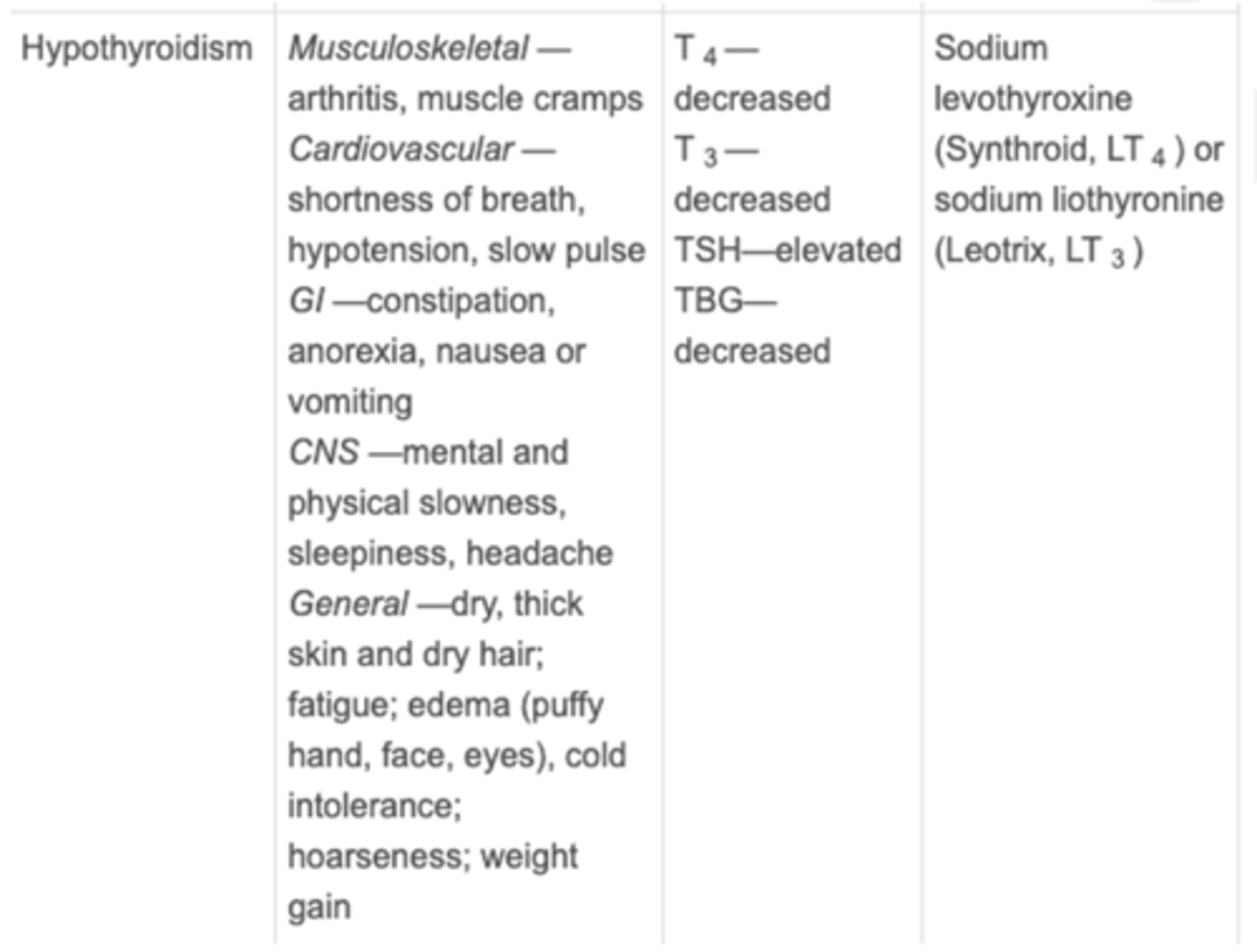
- Muscoloskeletal: Arthritis, muscle cramps
Hypothyroidism
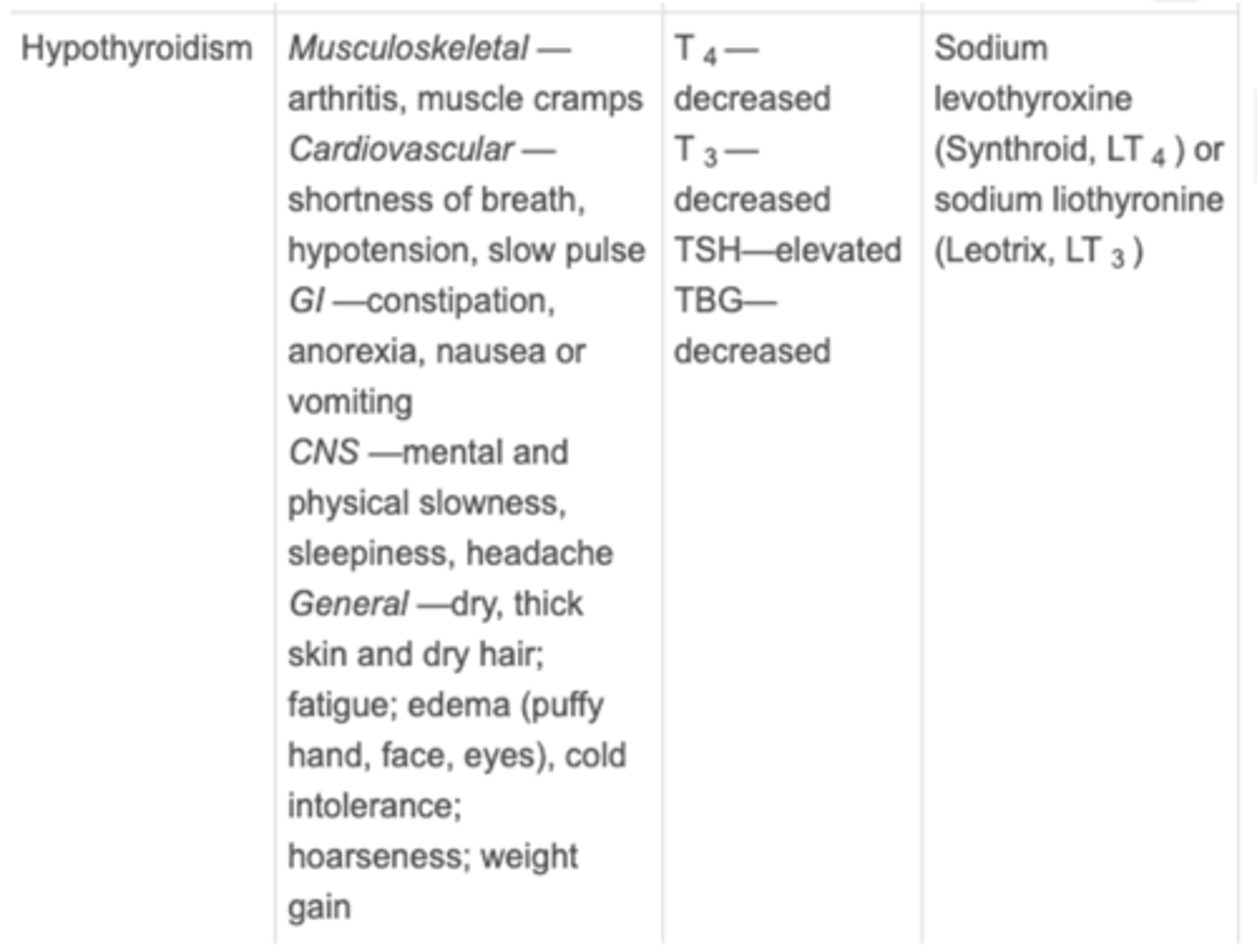
What thyroid disease is associated with this symptom?
- CV: Shortness of breath, hypotension, slow pulse
Hypothyroidism
What thyroid disease is associated with this symptom?
- GI: Constipation, anorexia, nausea, vomiting
Hypothyroidism
What thyroid disease is associated with this symptom?
- CNS: Mental and physical slowness, sleepiness, headache
hypothyroidism
What thyroid disease is associated with this symptom:
- Dry thick skin
- Dry hair
- Fatigue
- Edema
- Weight gain
- Cold intolerance
Hashimoto thyroiditis (hypothyroidism)
What TWO medications are used to tx Hashimoto thyroiditis (hypothyroidism)
- Levothyroxine- (Synthroid LT4)
- Sodium liothyronine (LT3)
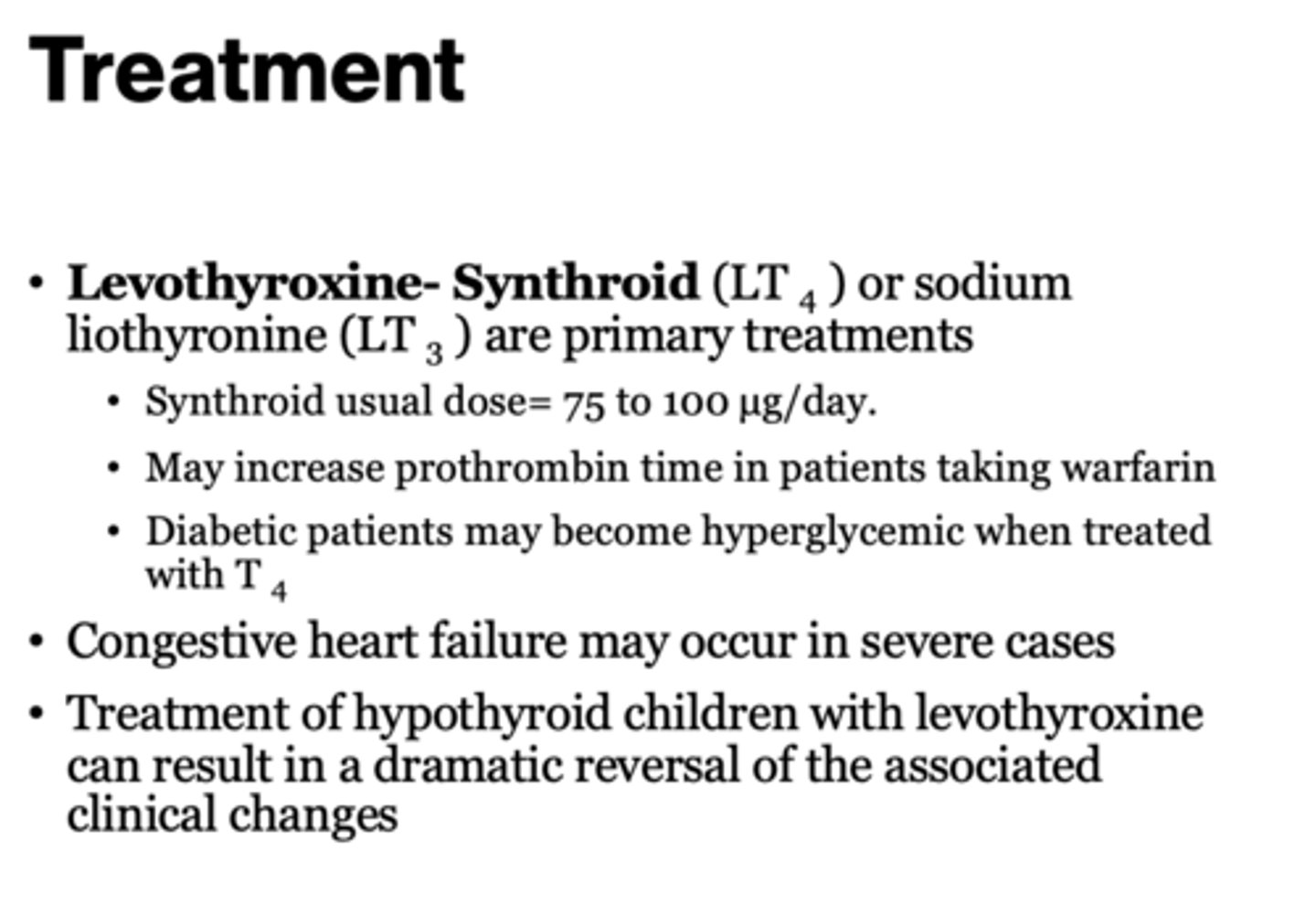
A patient is taking Levothyroxine to tx their Hashimoto. They are also on a popular anticoagulant, coumadin. What is the concern?
Levothyroxine may increase prothrombin (PT) time in patients taking warfarin
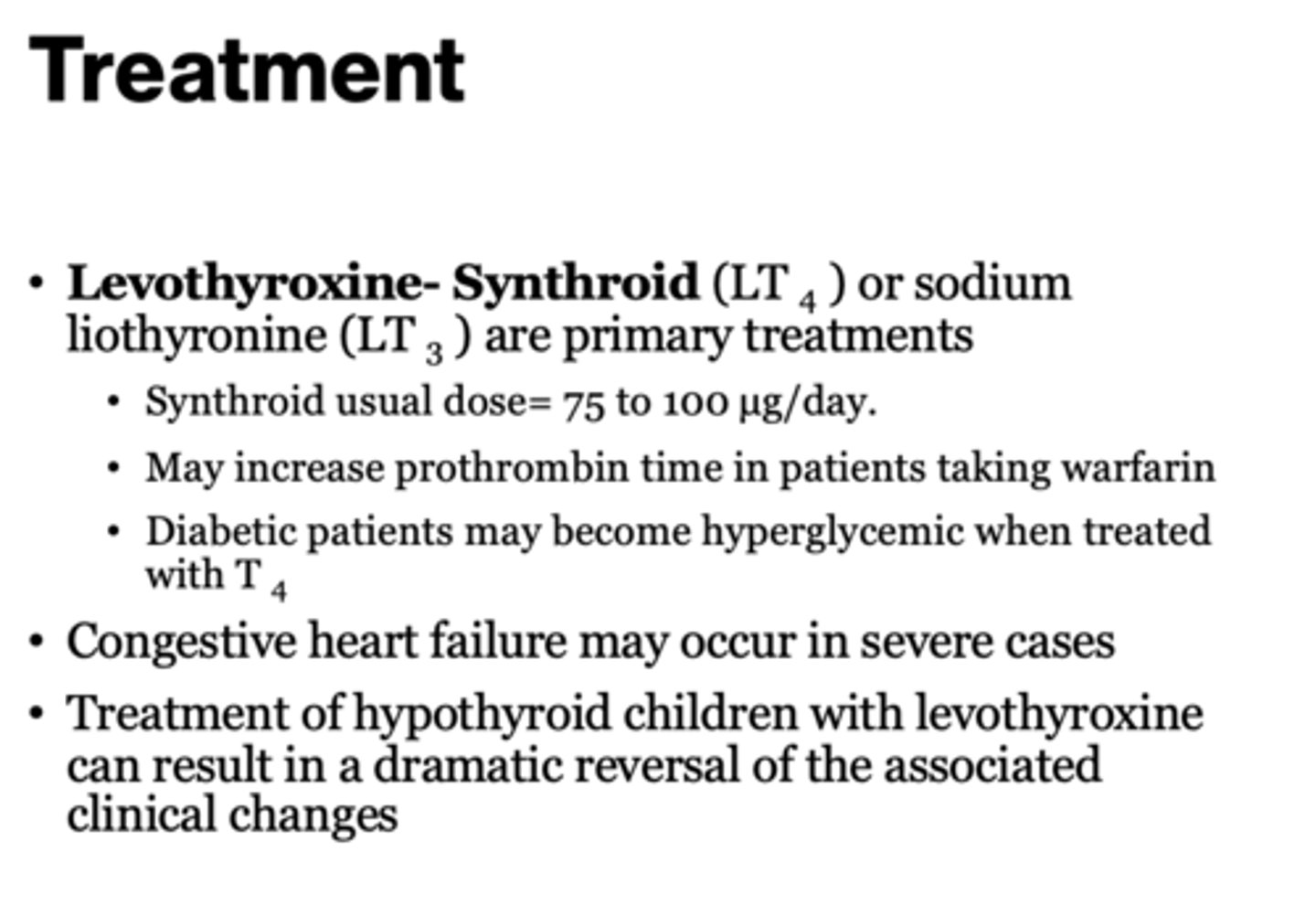
A patient is taking Levothyroxine to tx their Hashimoto. They are also a diabetic. What is the concern?
Diabetic patients may become hyperglycemic when treated with T4
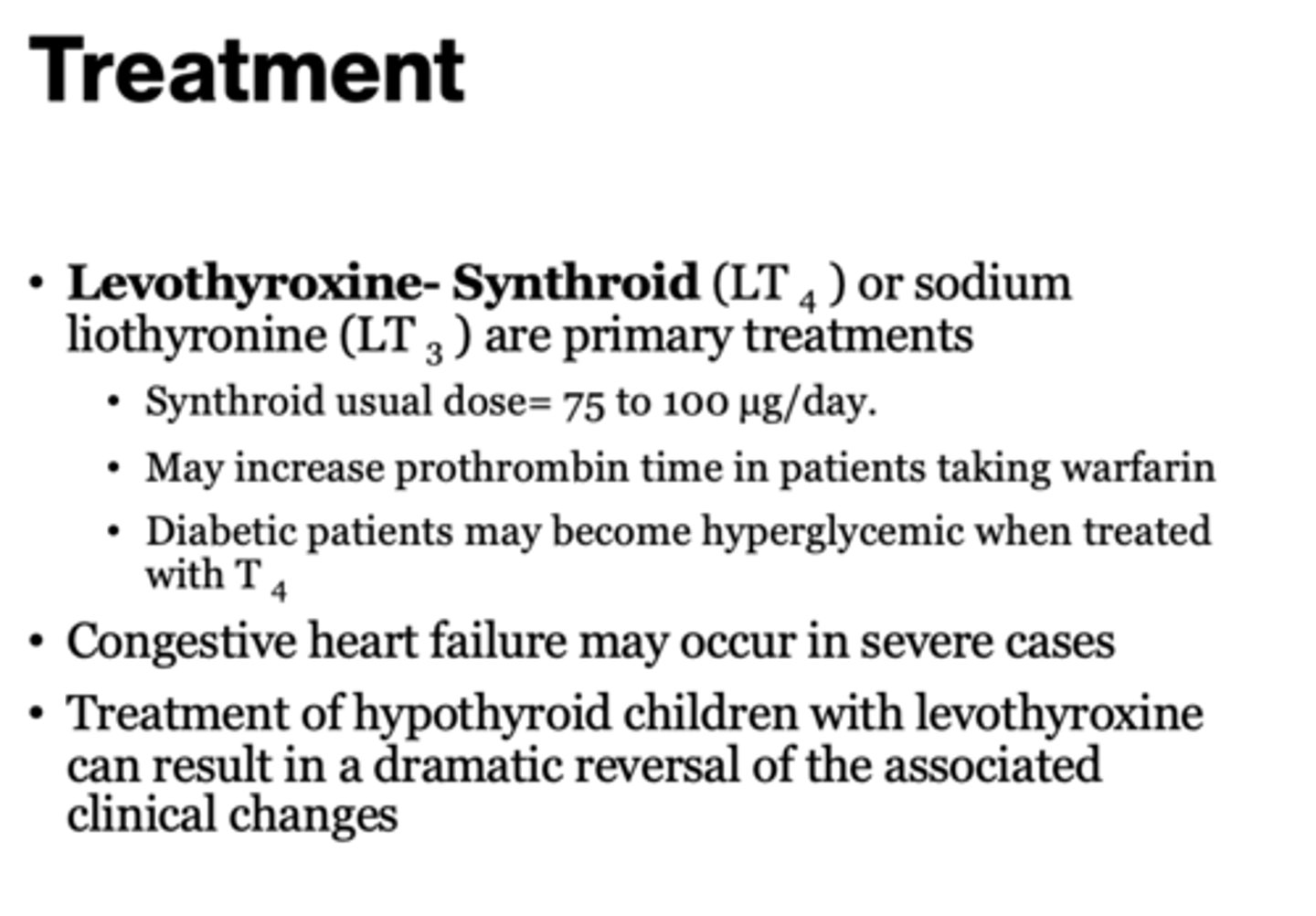
T/F: When treating patients with Levothyroxine- Synthroid (LT4) or sodium liothyronine (LT3), congestive heart failure may occur in severe cases
True
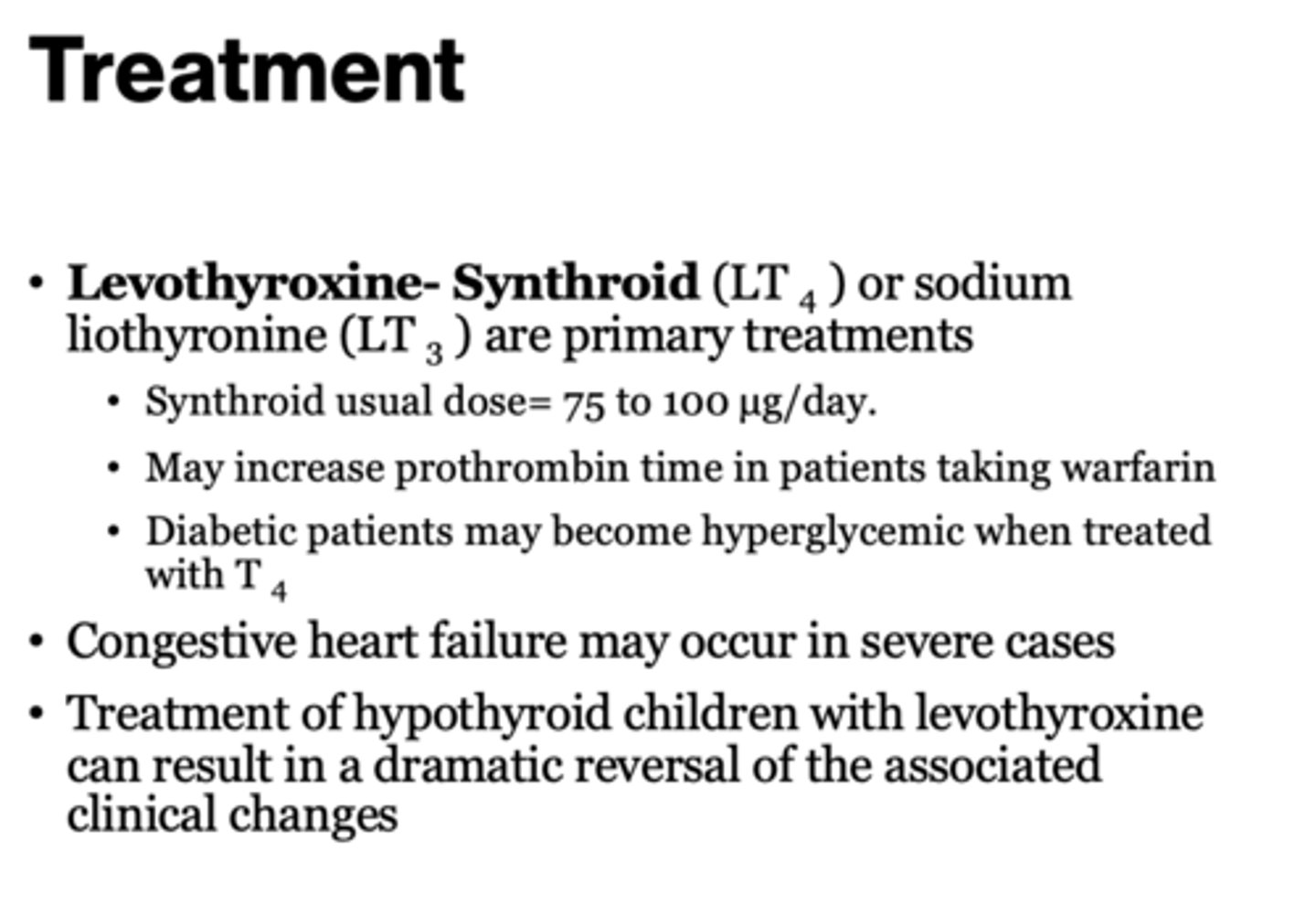
T/F: Treating hypothyroid children with levothyroxine can result in a dramatic reversal of the associated clinical changes
True
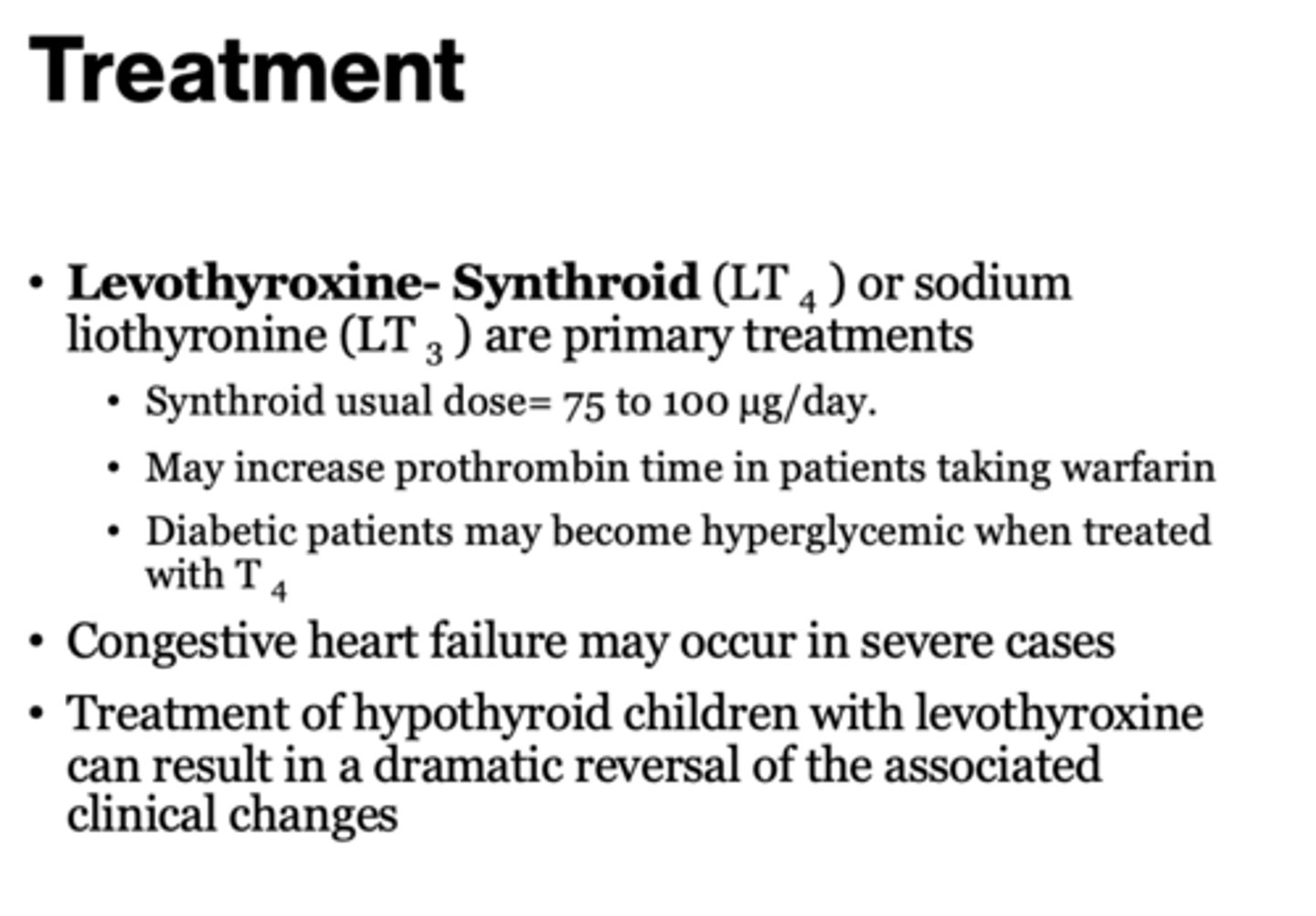
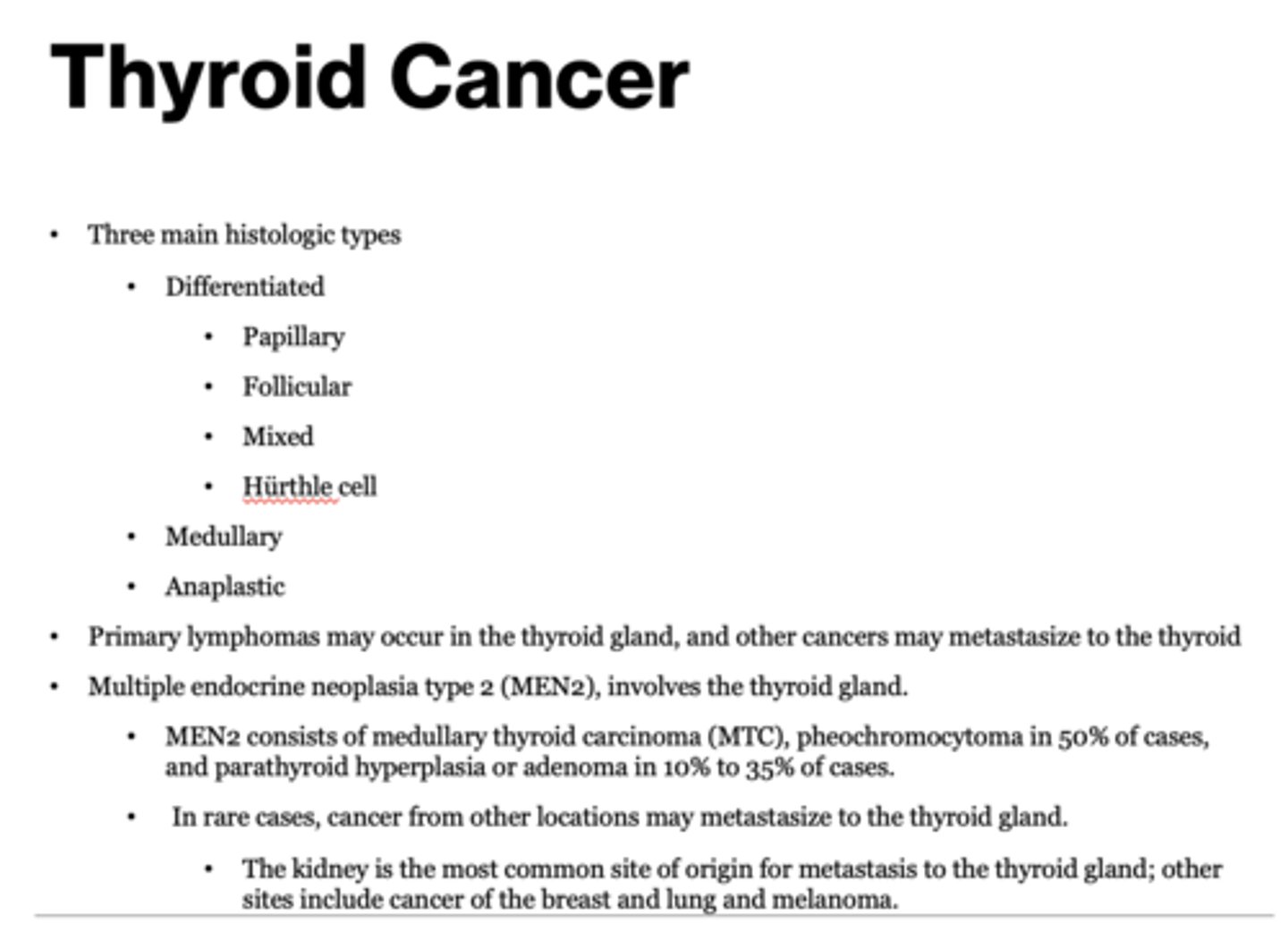
What are the three main histologic types of thyroid cancer?
- Differentiated
- Medullary
- Anaplastic
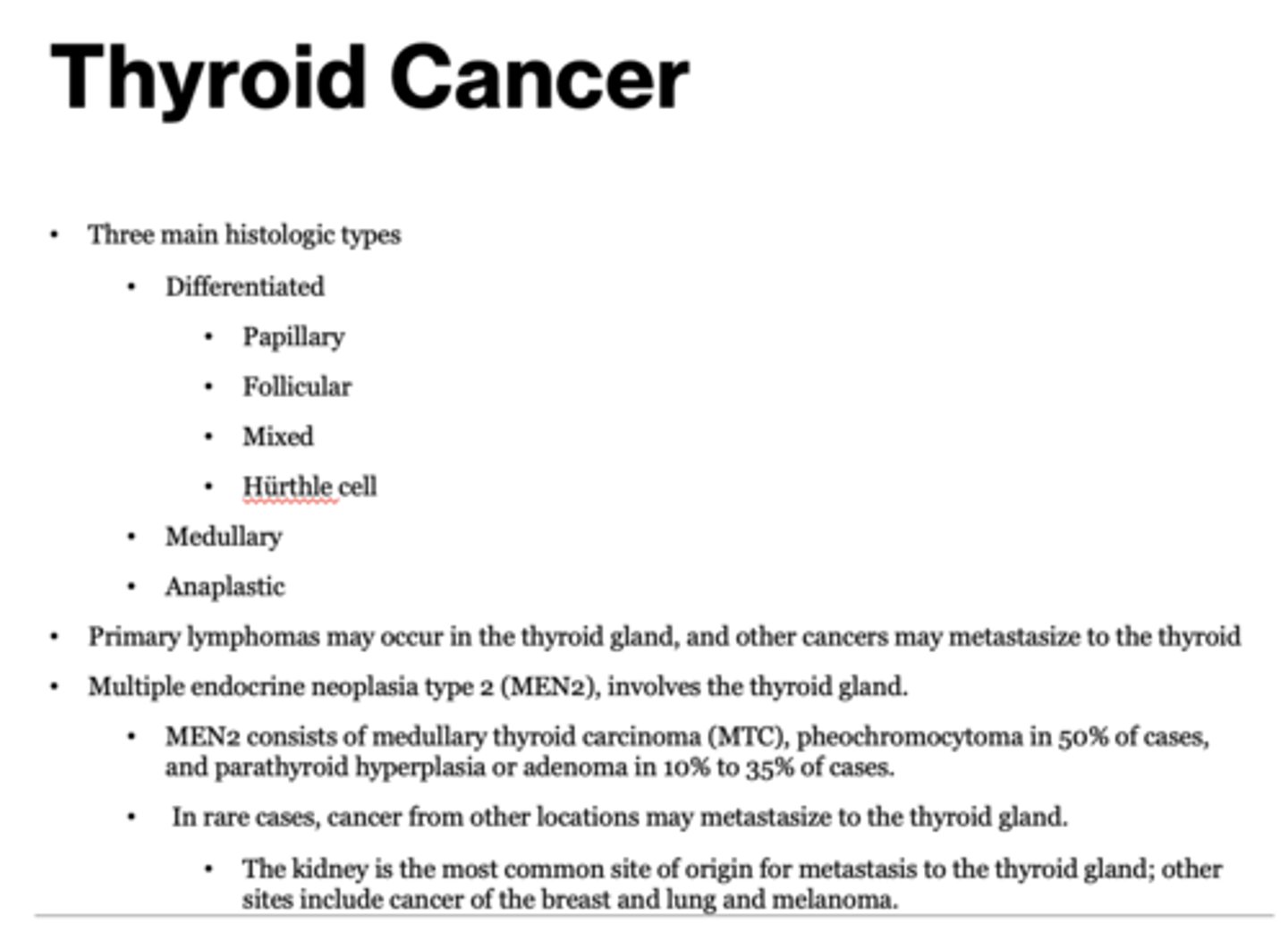
What histologic types of thyroid cancer are the following?
- Papillary
- Follicular
- Mixed
- Hürthle cell
Differentiated
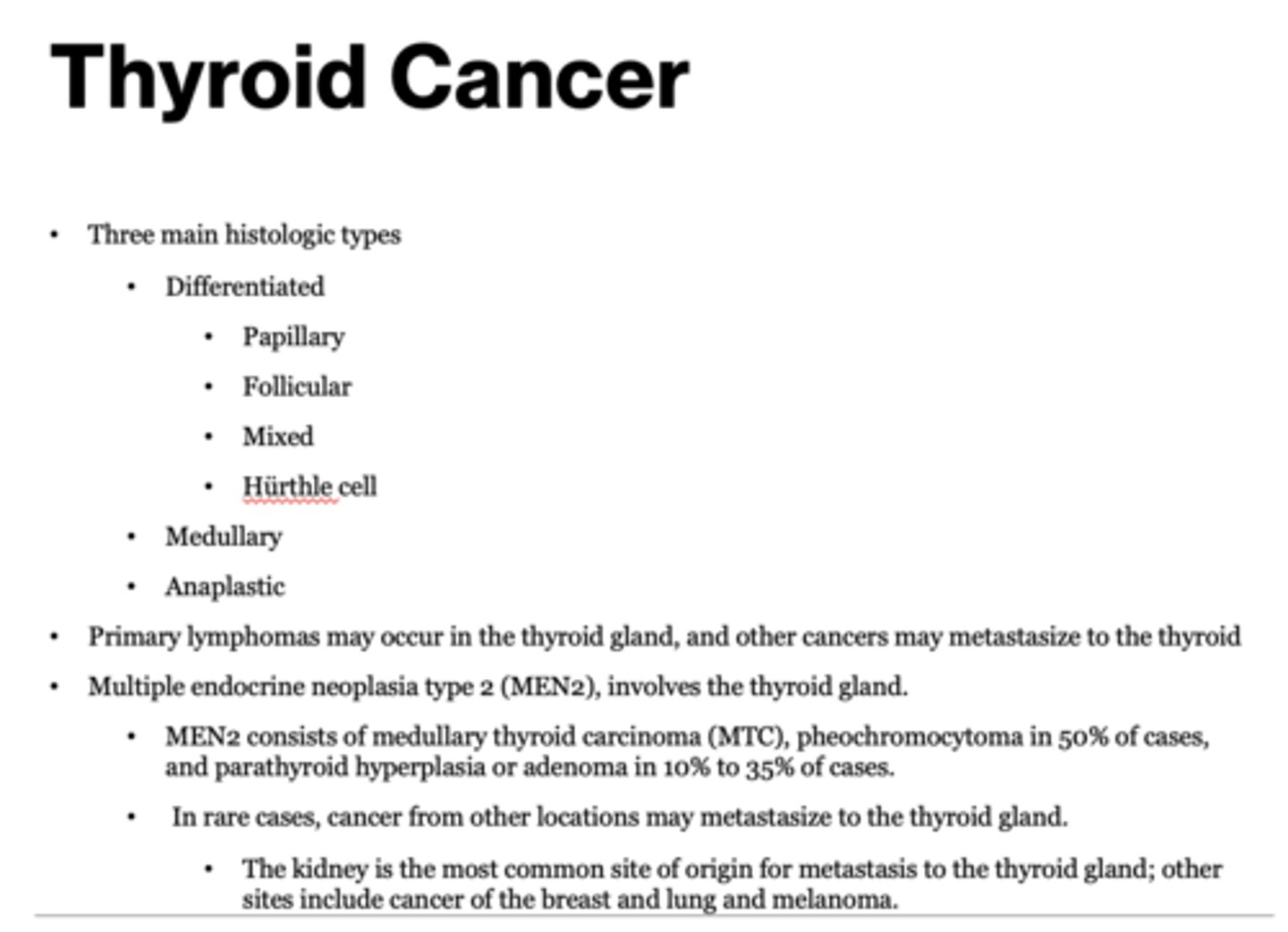
Primary lymphomas may occur in the _______ and other cancers may metastasize to the _______
Thyroid gland, thyroid
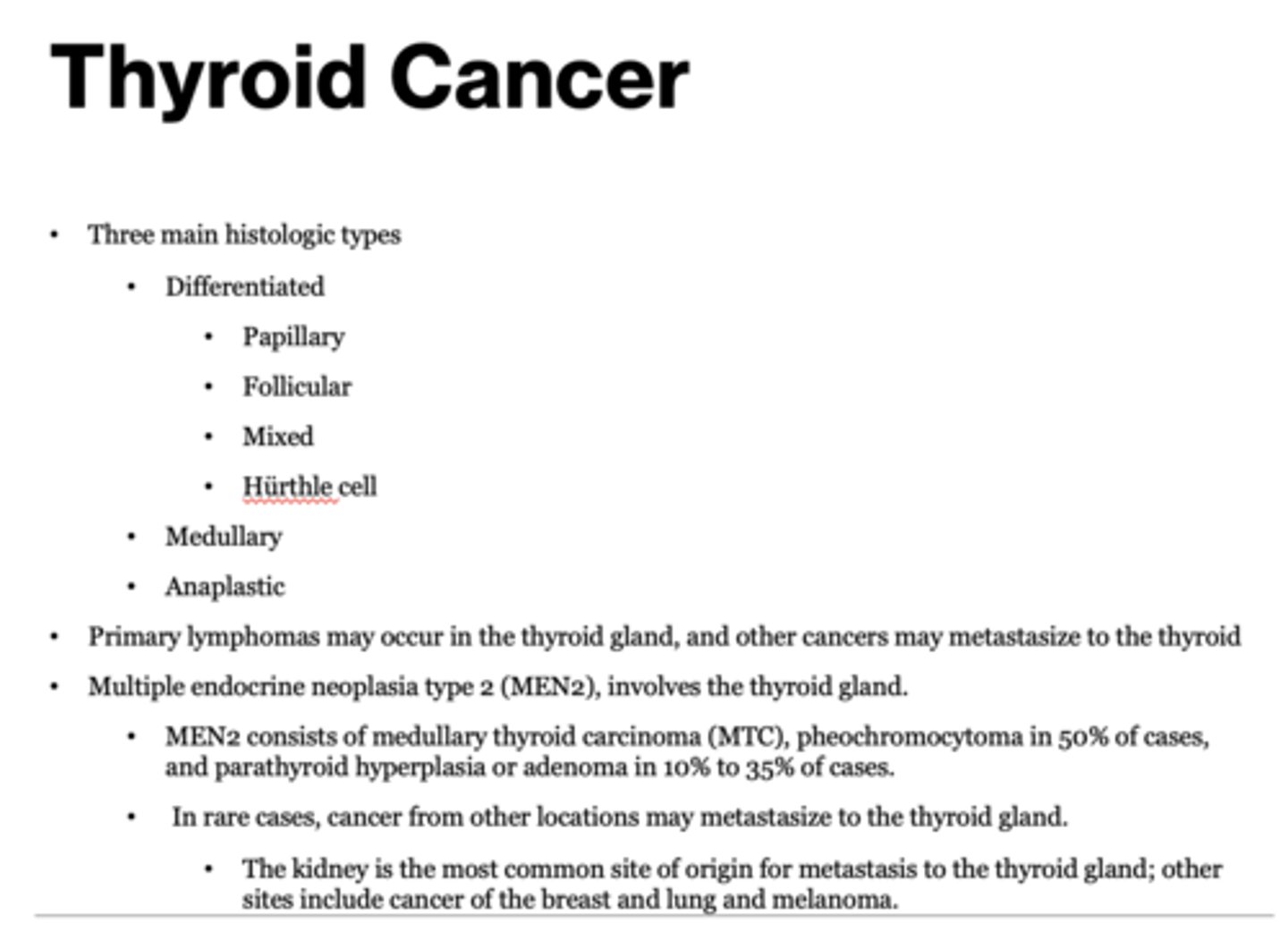
T/F: MEN2 involves the thyroid gland. MEN 2 consists of medullary thyroid carcinoma (MTC), pheochromocytoma in 50% of cases, and parathyroid hyperplasia or adenoma in 10% to 35% of cases
True
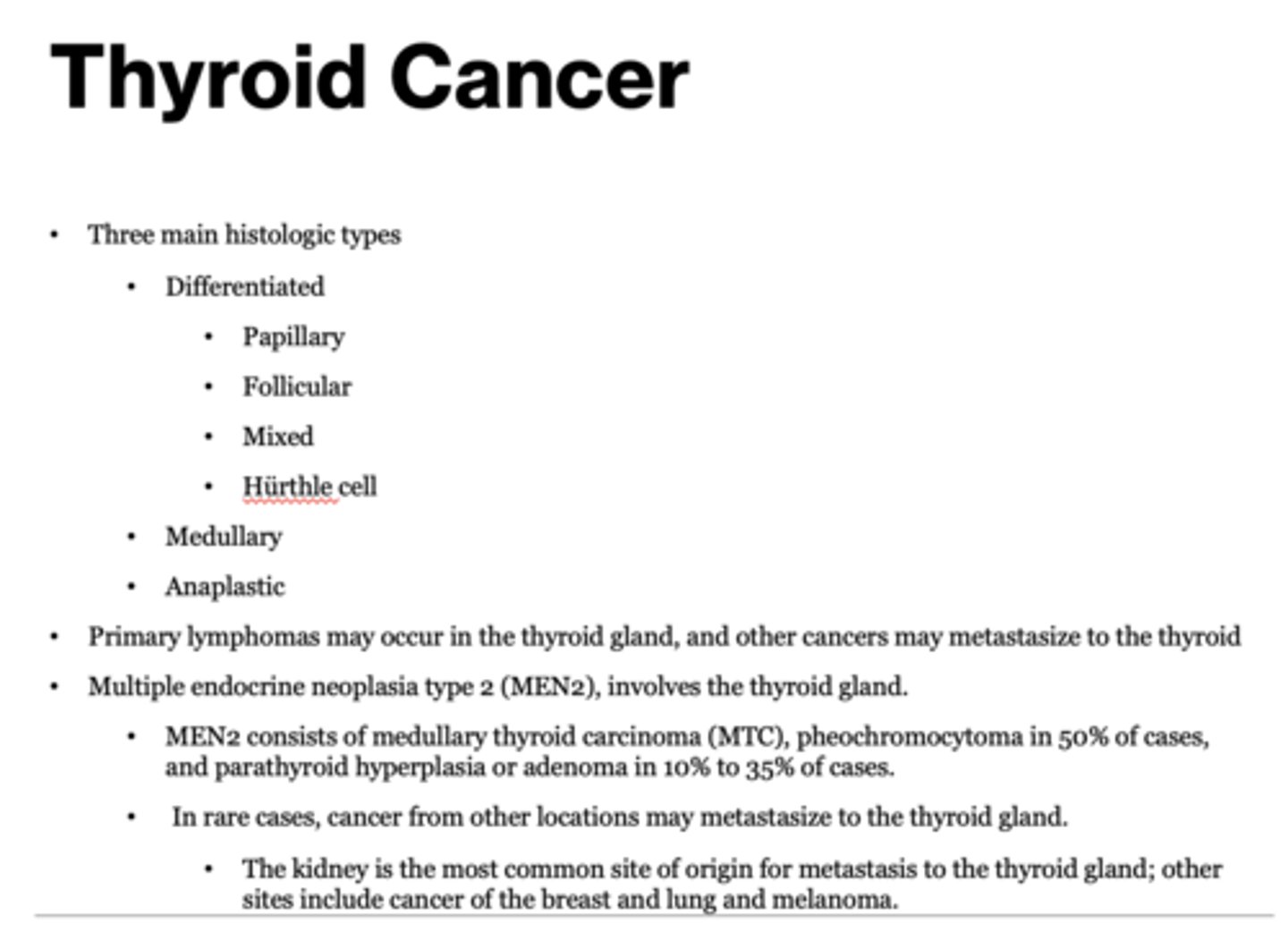
Cancers may metastasize to the thyroid gland. The _____ is the most common site of origin for metastasis to the thyroid gland
Kidney
(other sites include cancer of the breast and lung and melanoma)
What is the treatment for most papillary carcinomas?
Surgery
(Options include lobectomy and total thyroidectomy)
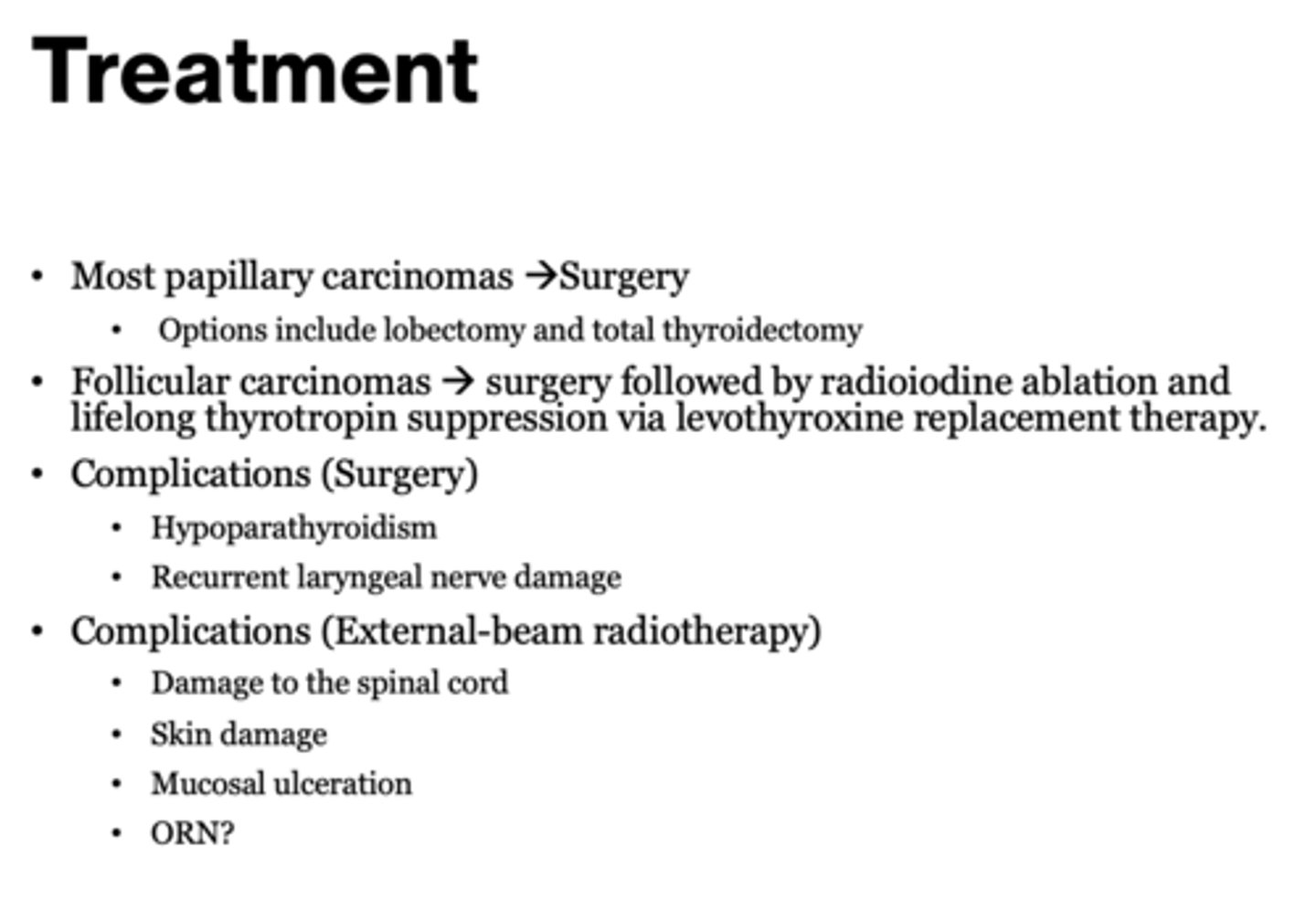
What is the treatment for follicular carcinomas?
Surgery followed by radioiodine ablation and lifelong thyrotropin suppression via levothyroxine replacement therapy
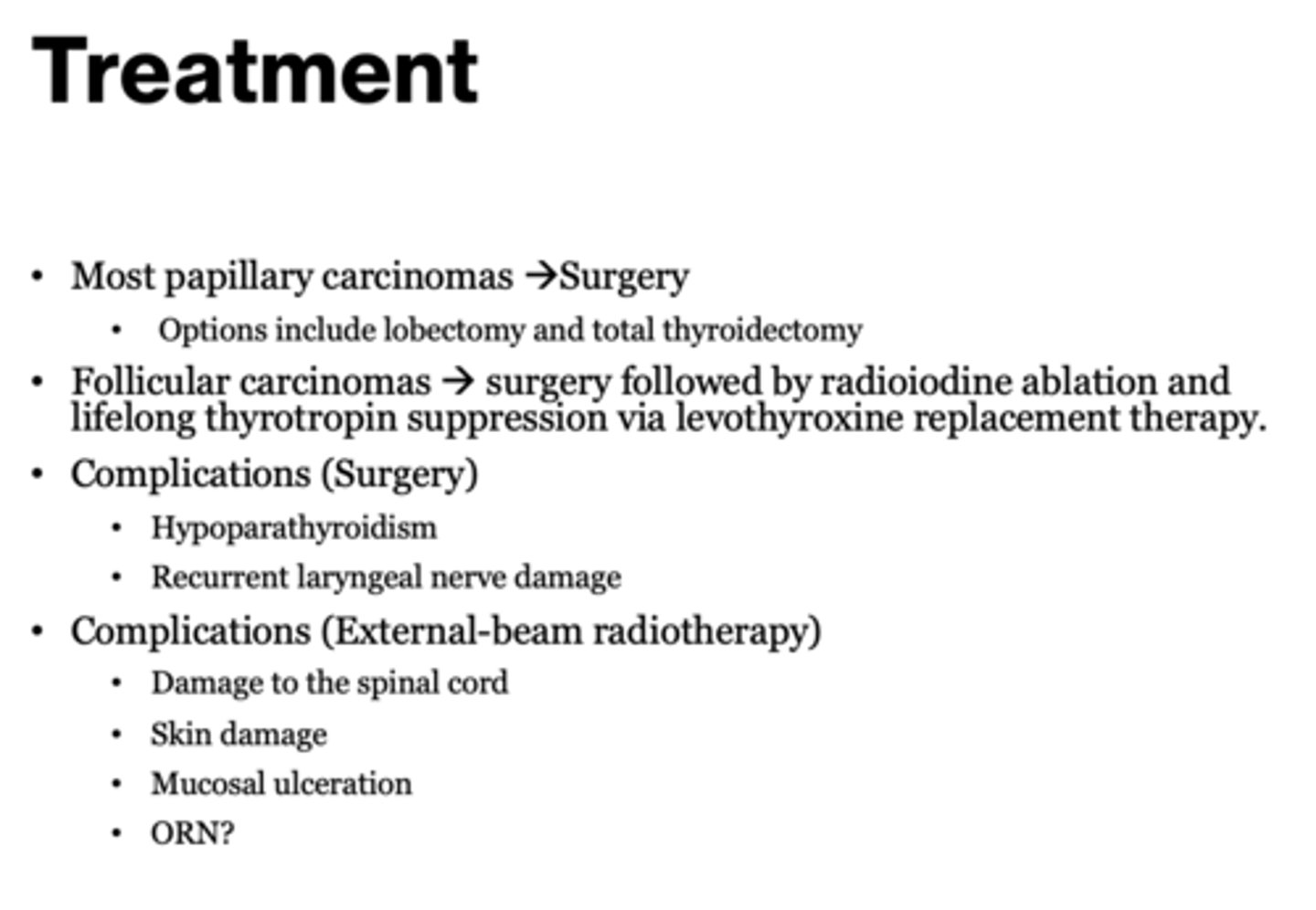
The following are complications of what type of treatment?
- Hypoparathyroidism
- Recurrent laryngeal nerve damage
Surgery
The following are complications of what type of treatment?
- Damage to the spinal cord
- Skin damage
- Mucosal ulceration
- ORN?
External-beam radiotherapy
T/F: Palpation and inspection of the thyroid gland should be included as part of the routine head and neck examination
True
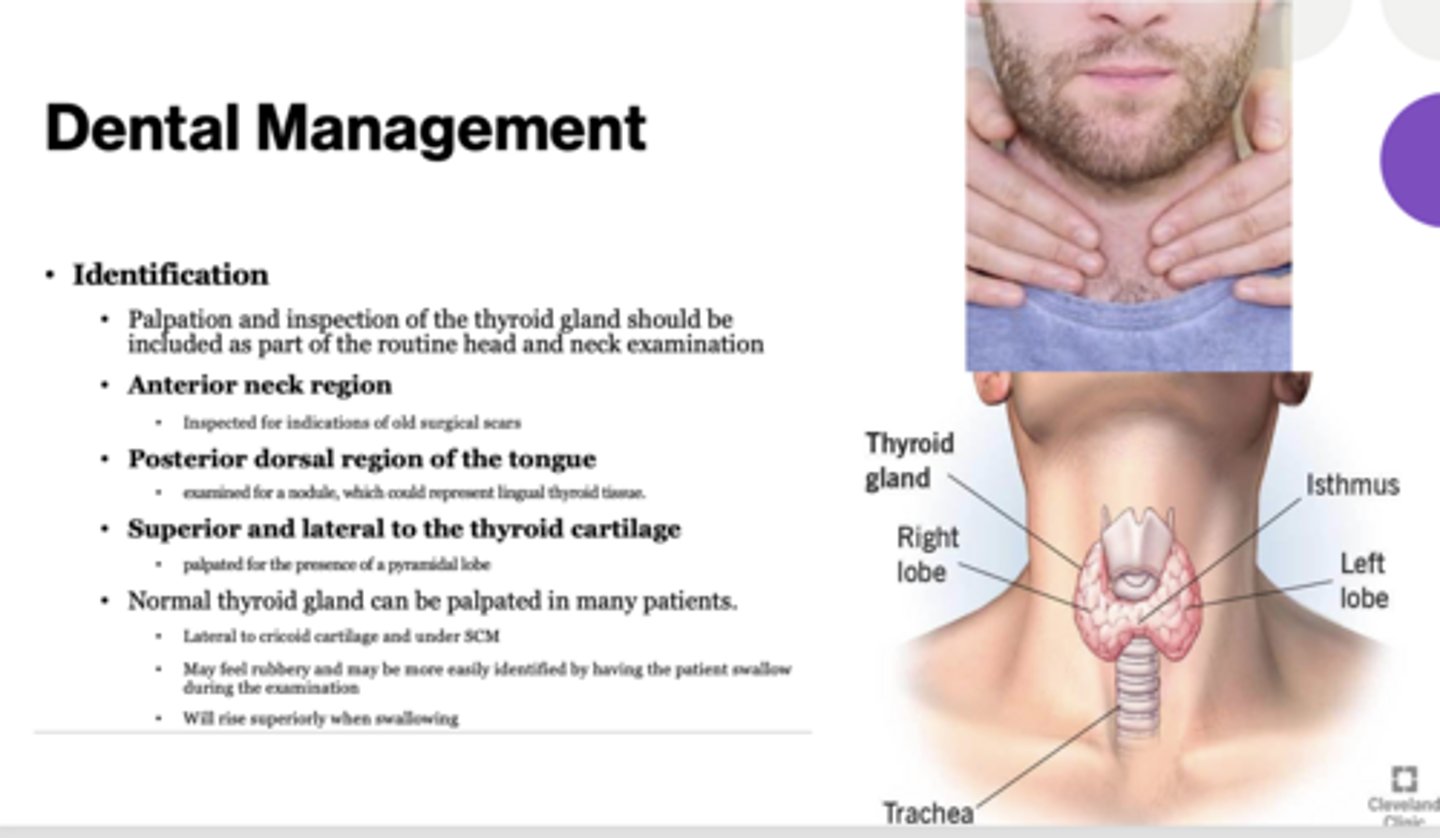
While examining the thyroid gland, what do you look for in the anterior neck region?
Indications of old surgical scars
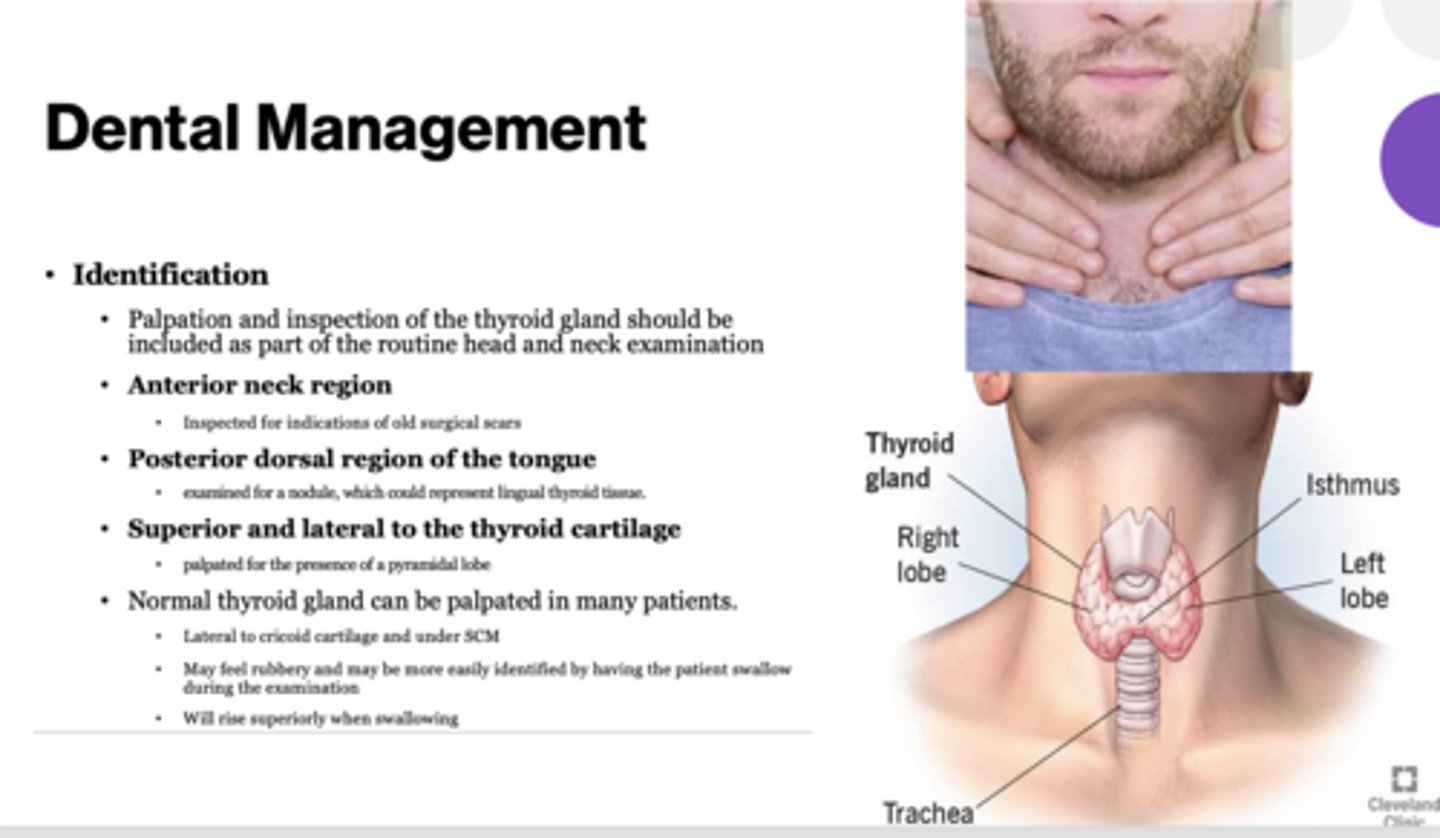
While examining the thyroid gland, what do you look for in the posterior dorsal region of the tongue?
Examined for a nodule, which could represent lingual thyroid tissue
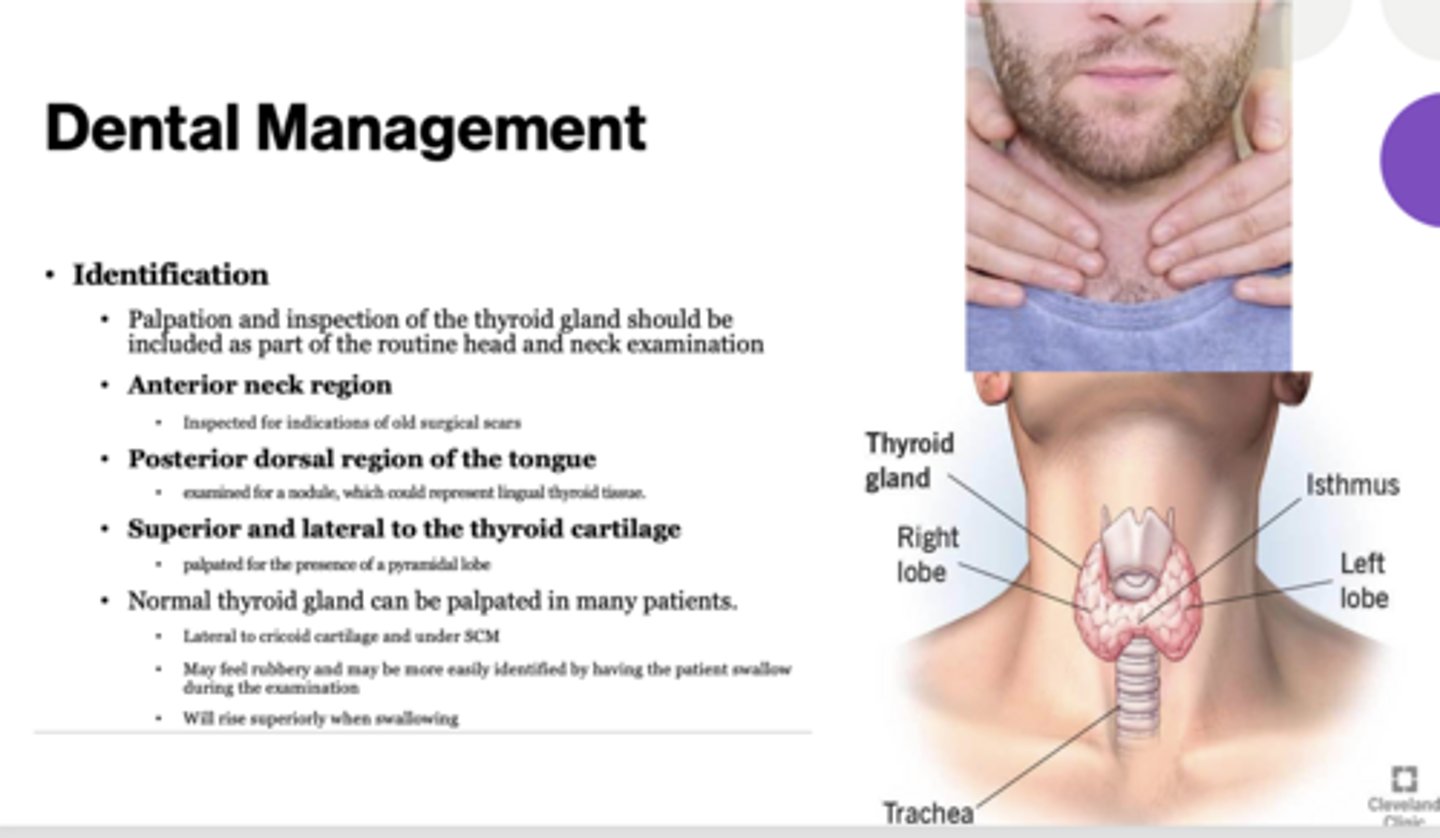
While examining the thyroid gland, what do you look for in the superior and lateral to the thyroid cartilage?
Presence of a pyramidal lobe
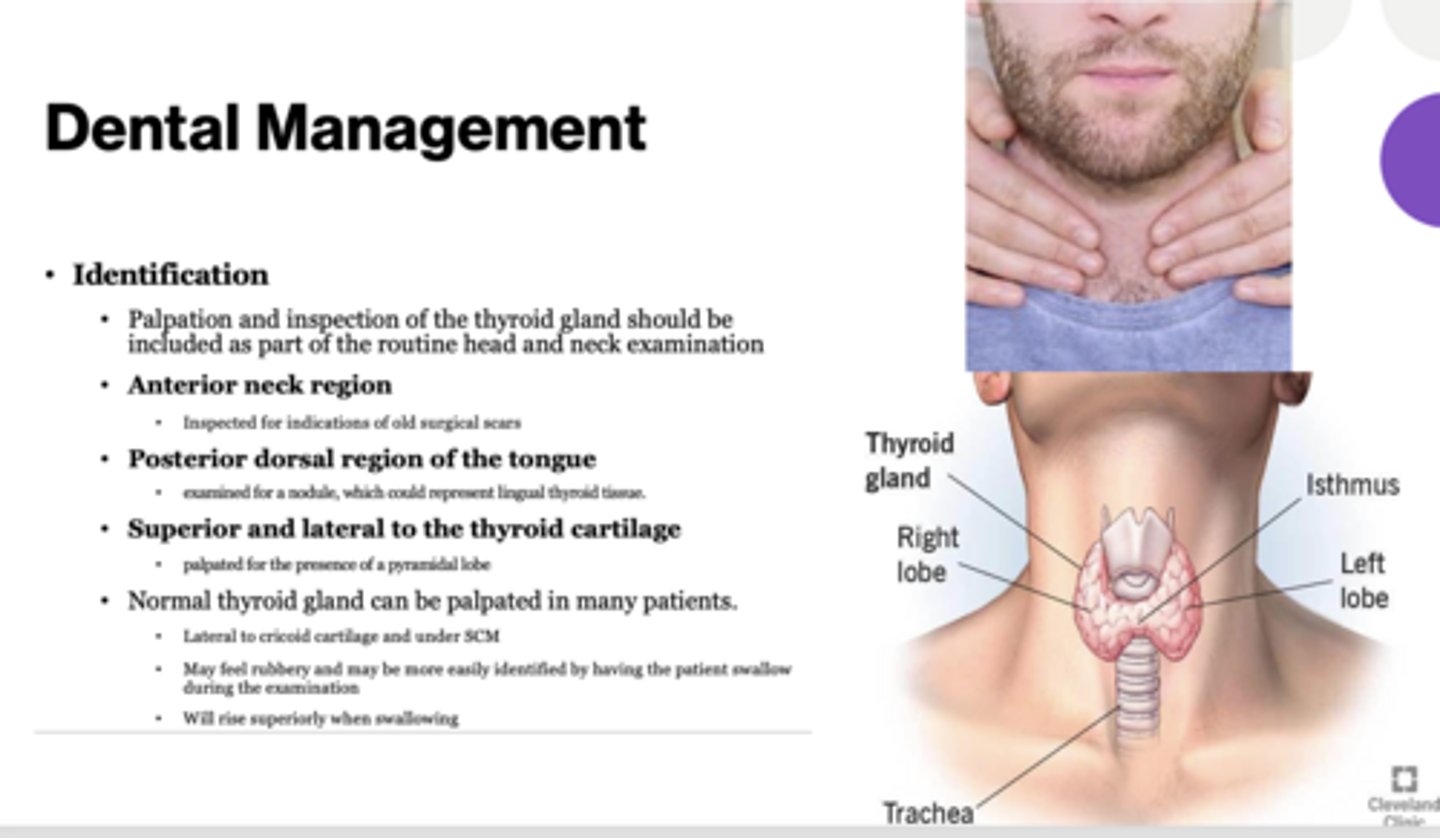
What is being palpated here?
- Lateral to cricoid cartilage and under SCM
- May feel rubbery and may be more easily identified by having the patient swallow during the examination
- Will rise superiorly when swallowing
Thyroid gland
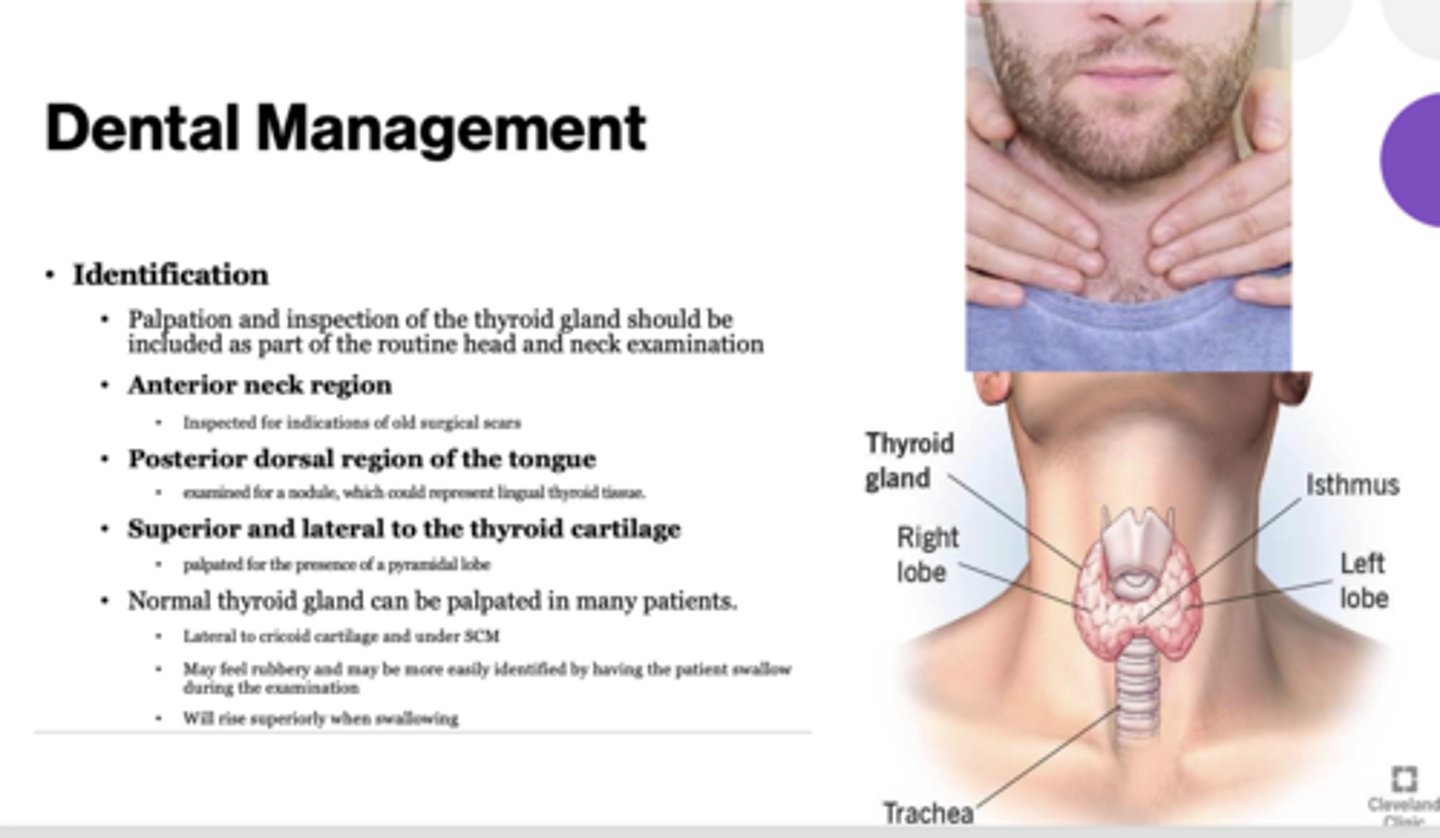
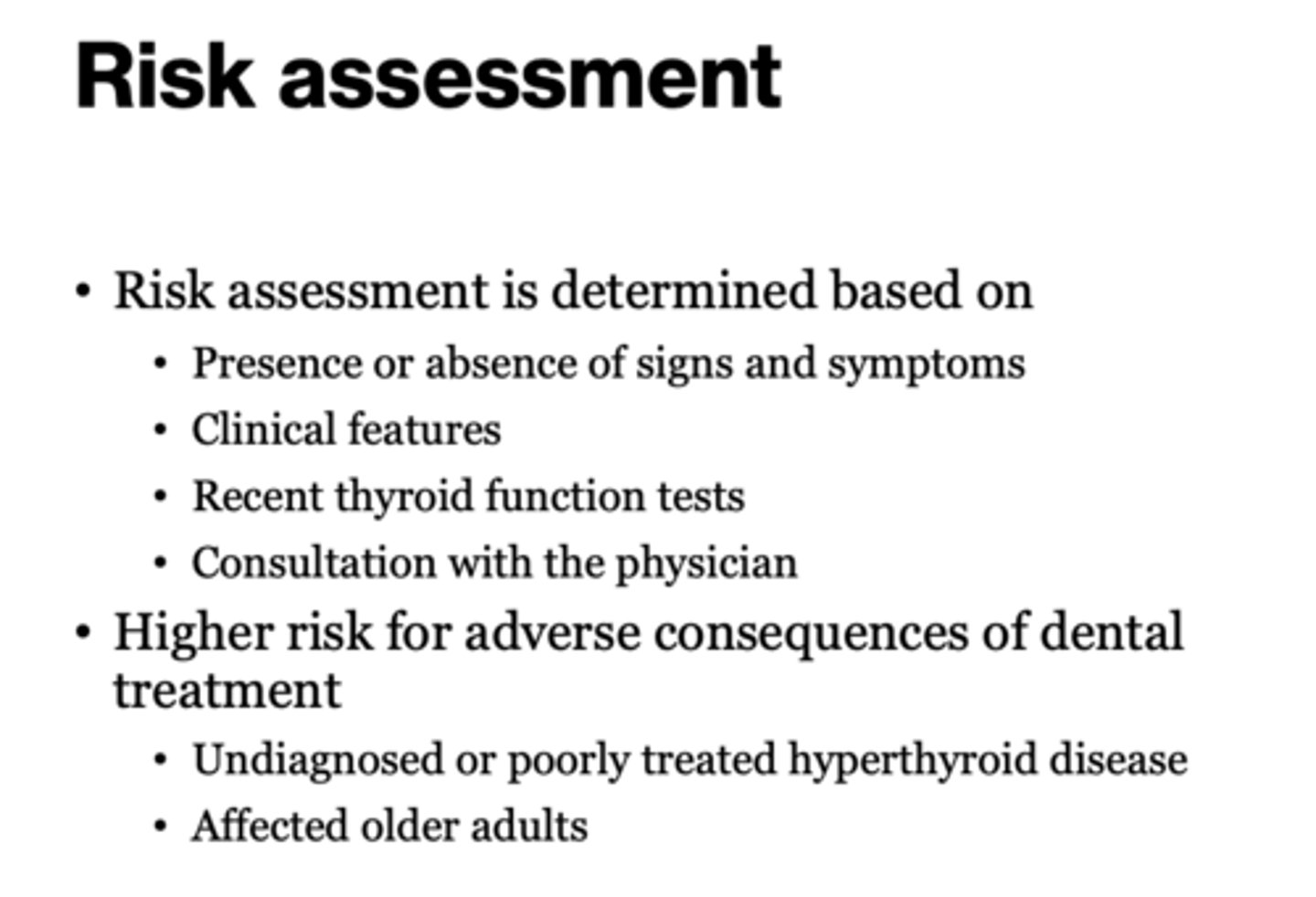
What is determined by the following?
- Presence or absence of signs and symptoms
- Clinical features
- Recent thyroid function tests
- Consultation with the physician
Risk assessment
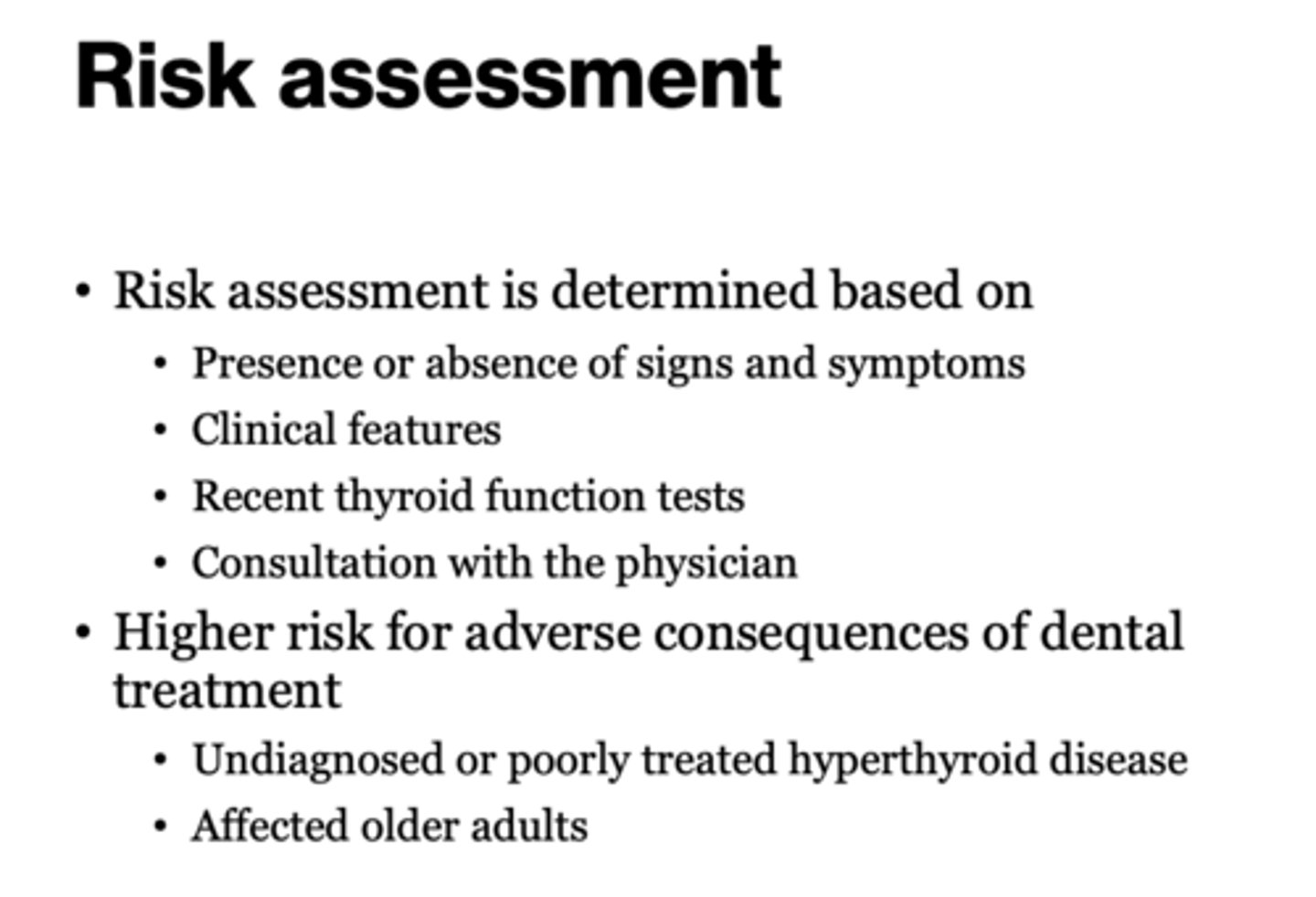
What patient has a higher risk for adverse consequences of dental treatment?
- Undiagnosed or poorly treated hyperthyroid disease
- Affected older adults
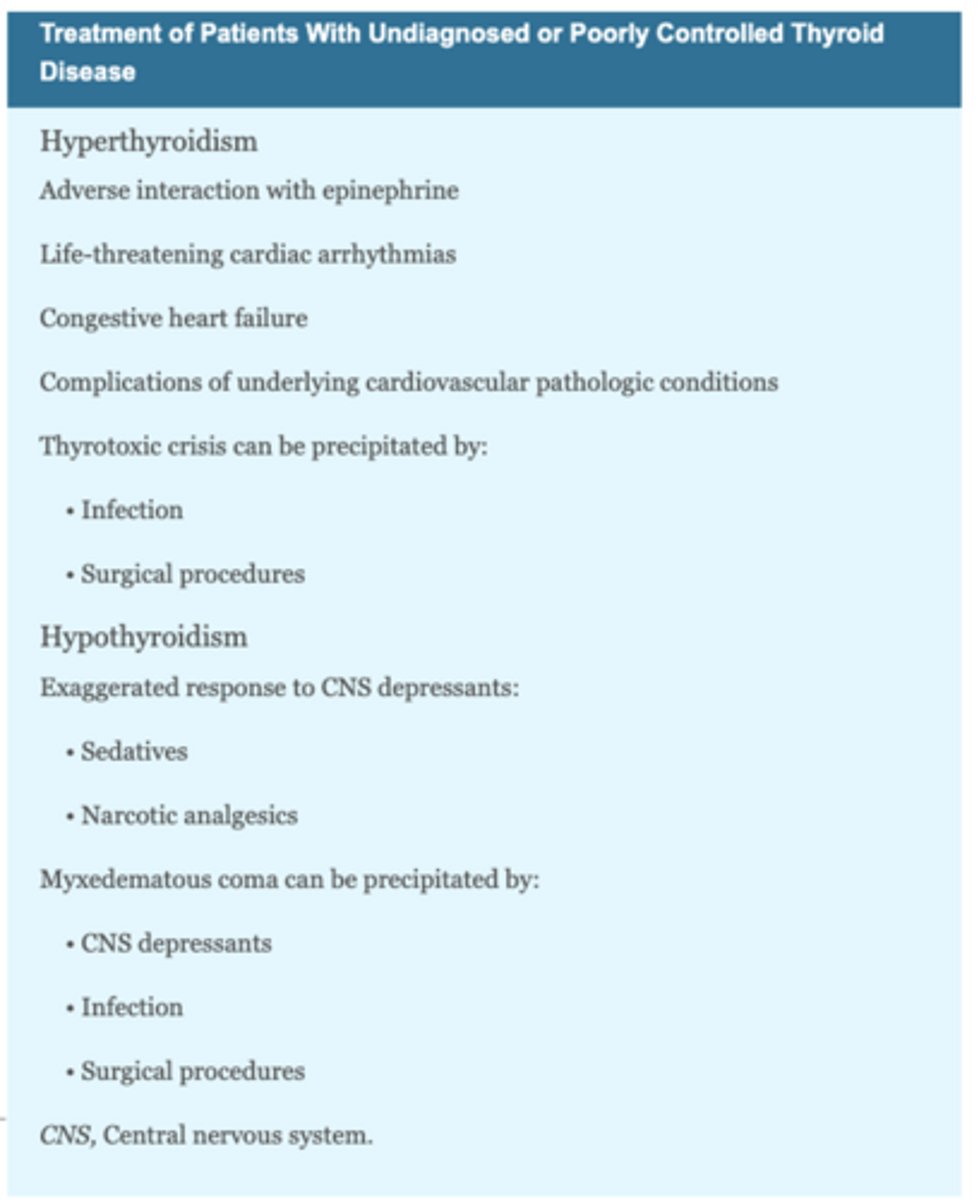
What thyroid disease is associated with this symptom?
- Adverse interaction with epinephrine
- Life-threatening cardiac arrhythmias
- Congestive heart failure
- Complications of underlying cardiovascular pathologic conditions
- Crisis can be precipitated by:
- - Infection
- - Surgical procedures
Hyperthyroidism
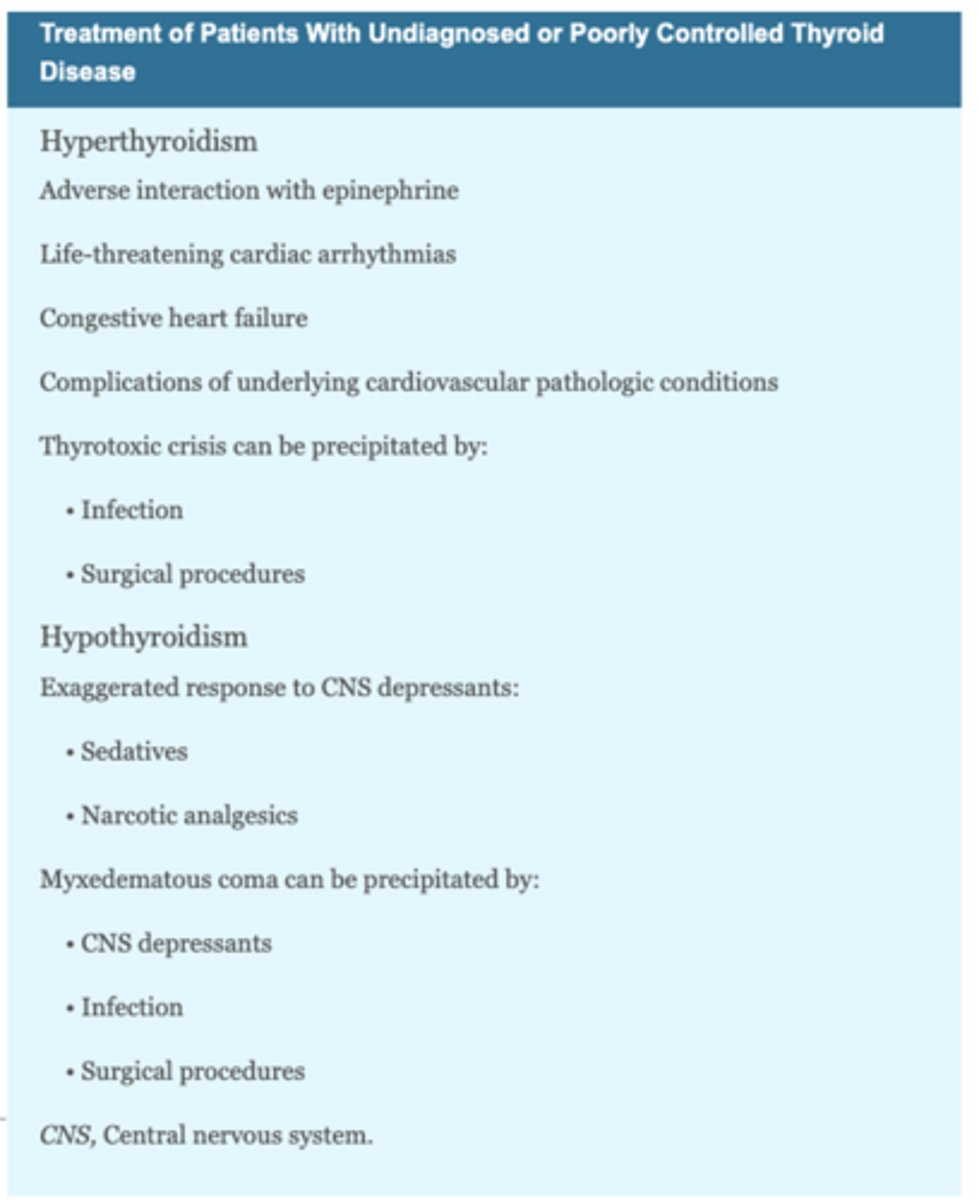
What thyroid disease is associated with this symptom?
- Exaggerated response to CNS depressants:
- - Sedatives
- - Narcotic analgesics
- Myxedematous coma can be precipitated by:
- - CNS depressants
- - Infection
- - Surgical procedures
- CNS, Central nervous system.
Hypothyroidism
T/F: Extensive dental caries or periodontal disease should be treated before medical management of the thyroid problem has been instituted
False - should be treated AFTER medical management of the thyroid problem
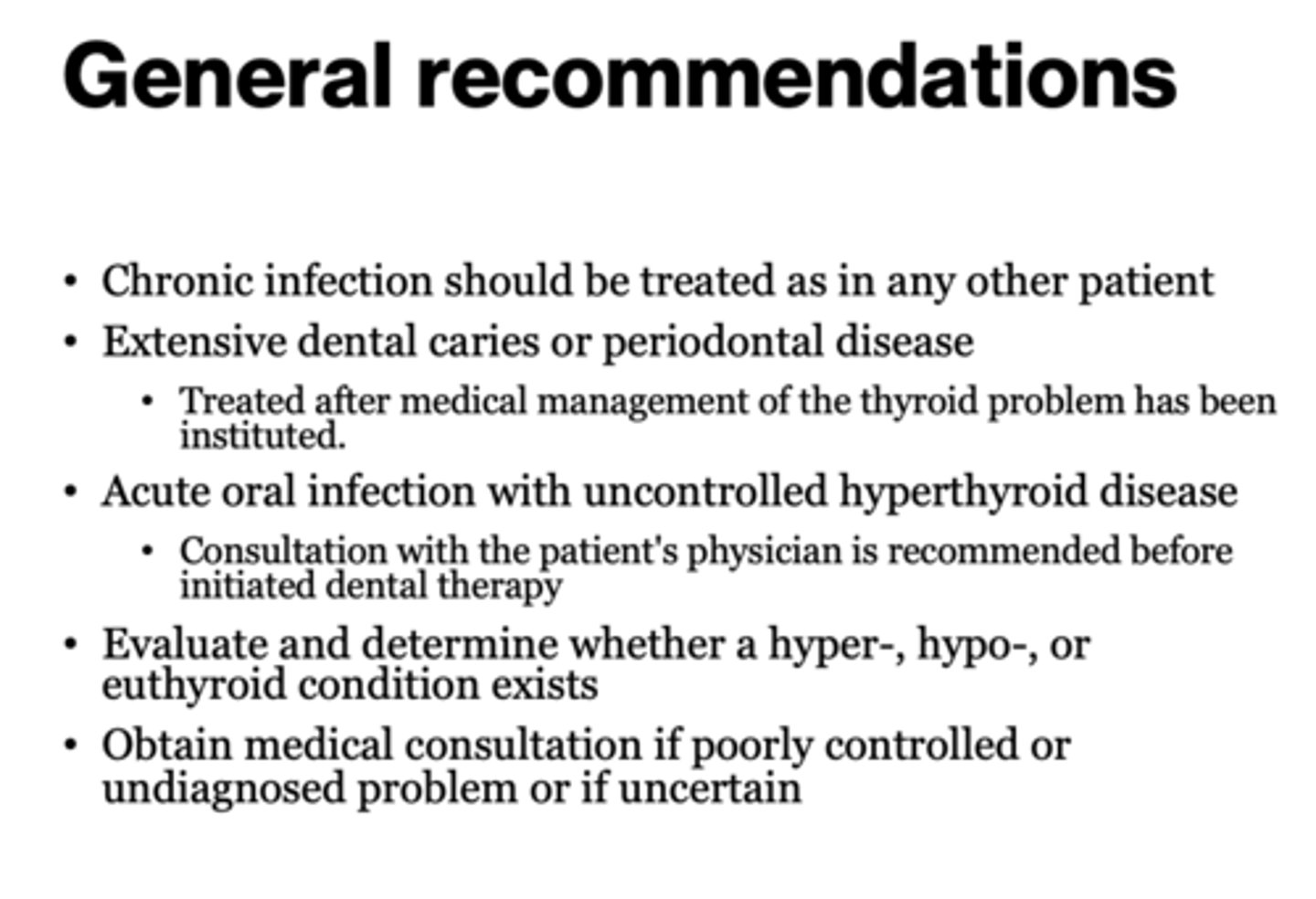
What is the general reccomendation for acute oral infection with uncontrolled hyperthyroid disease?
Consultation with the patient's physician before initiated dental therapy
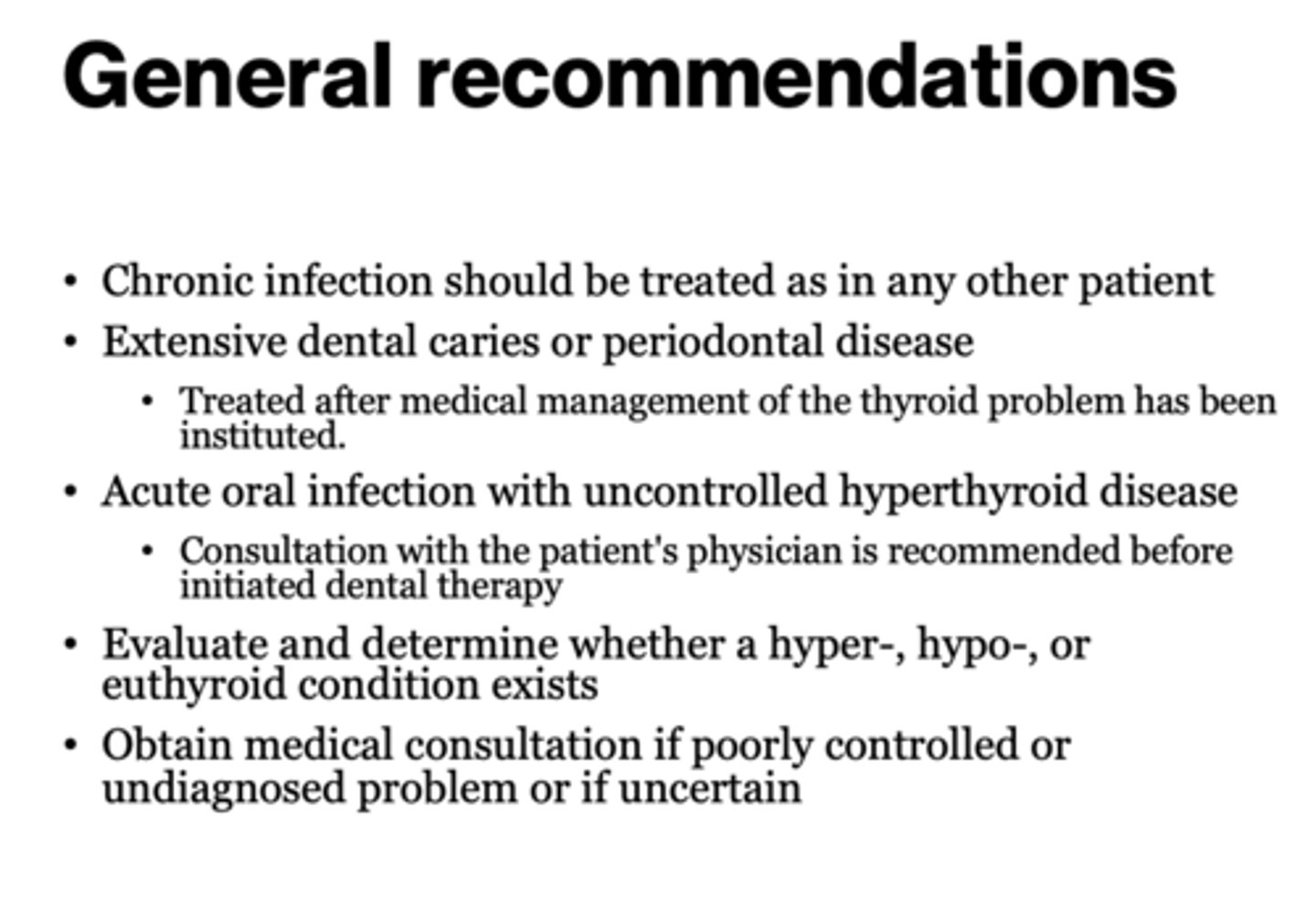
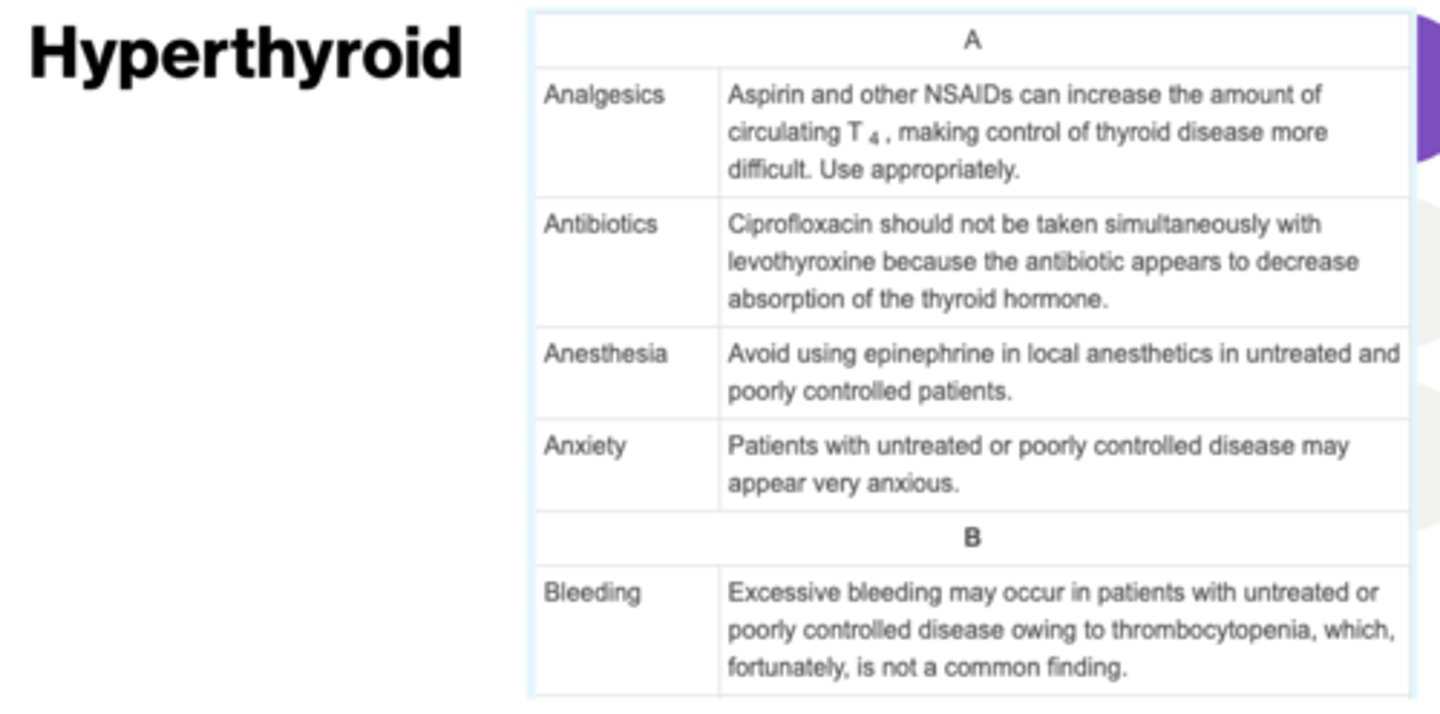
Aspirin and other NSAIDs can (increase/decrease) the amount of circulating T4, making control of thyroid disease more difficult
Increase
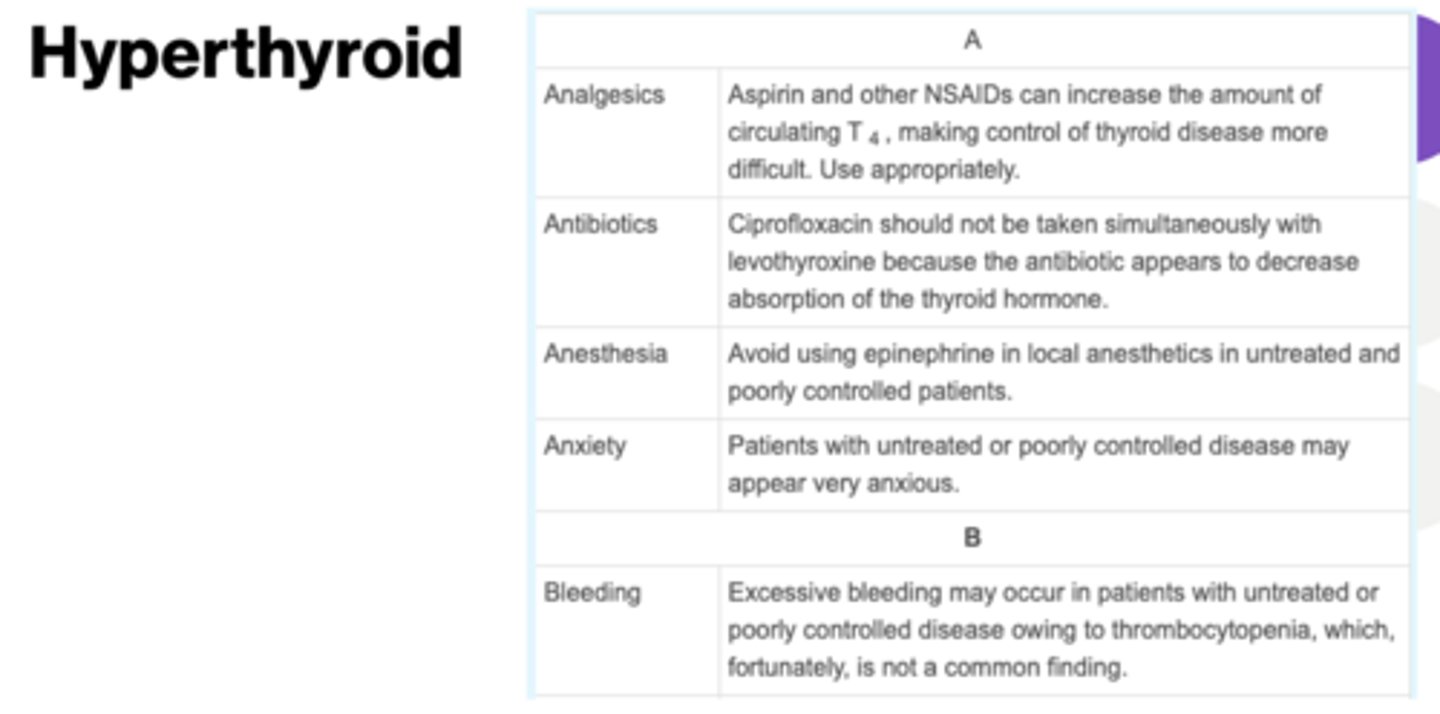
What antibiotic is CONTRAINDICATED in patients take levothyroxine?
Ciproflaxcin
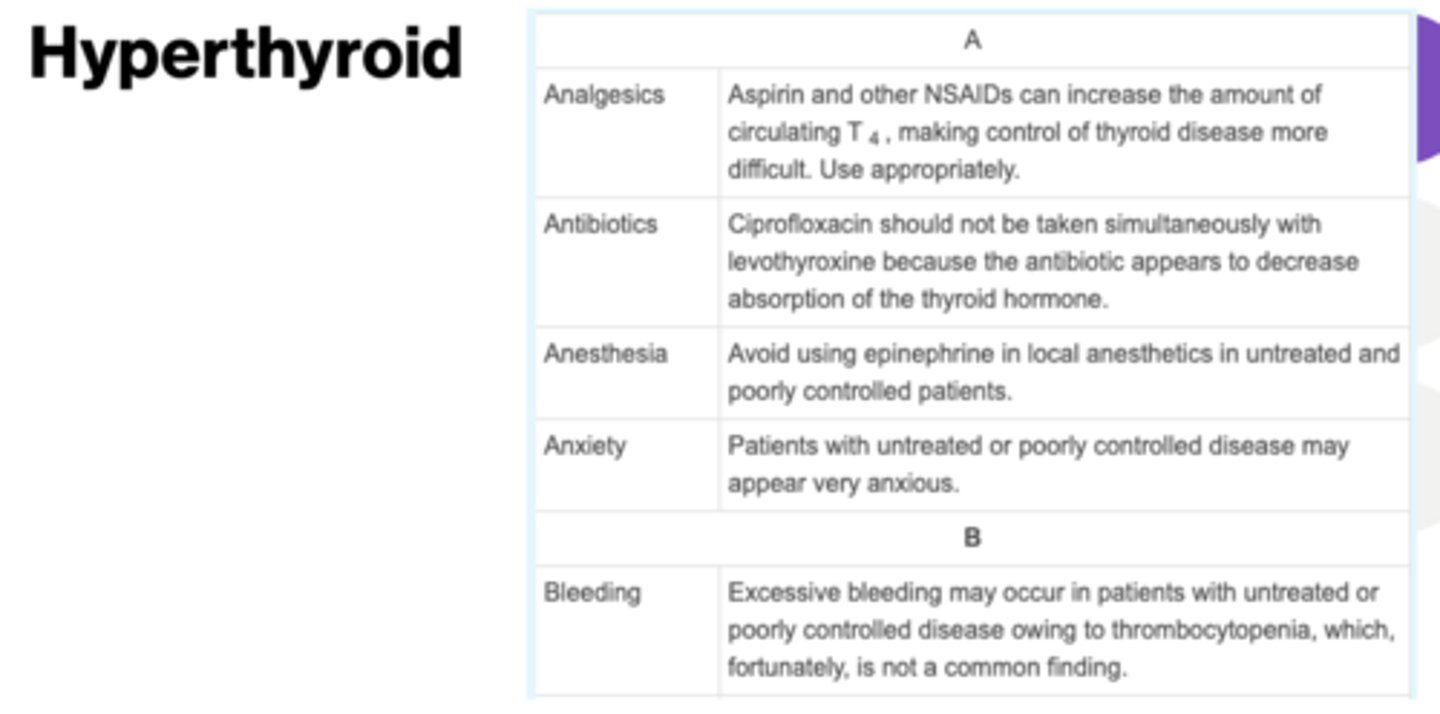
Epi should be avoided in LA in what type of hyperthyroid patients?
Untreated or poorly controlled
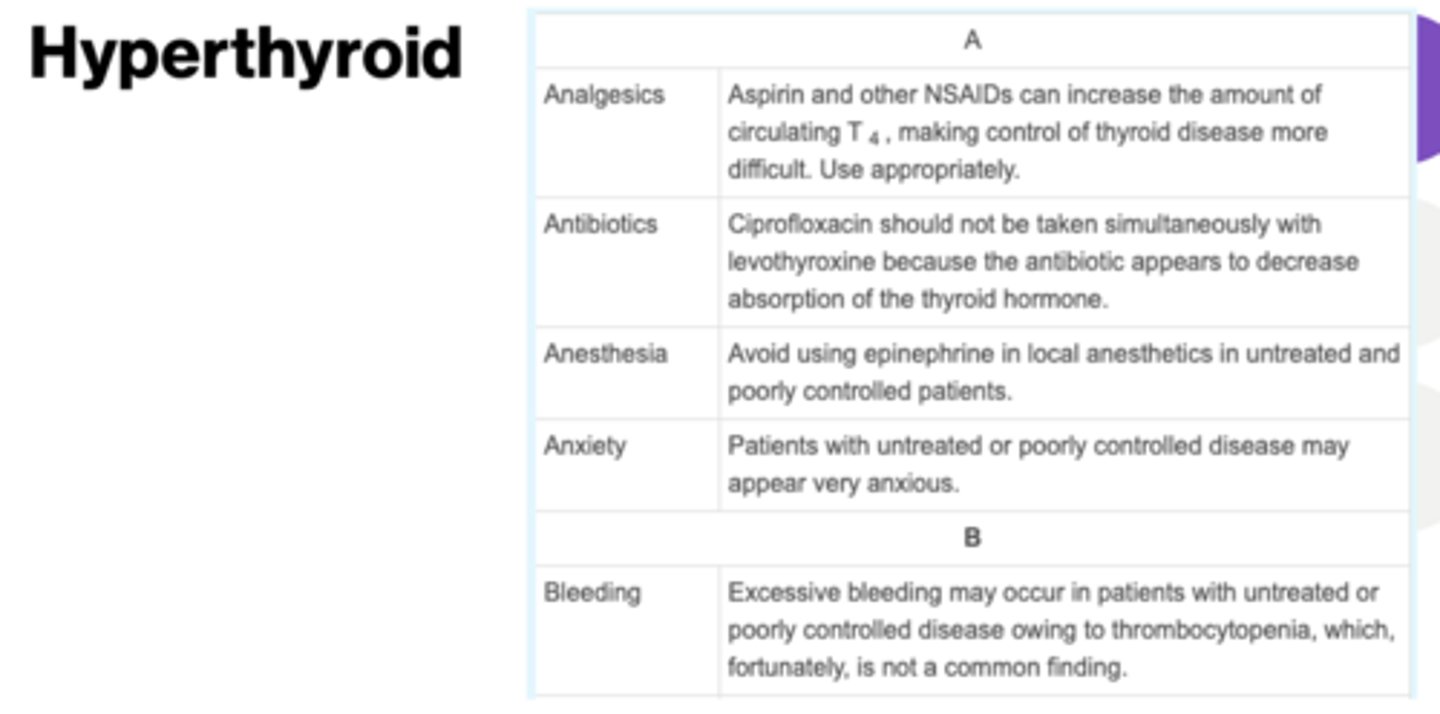
T/F: Excessive bleeding may occur in patients with untreated/poorly controlled hyperthyroidism owing to thrombocytopenia which, fortunately, is not a common finding
True
Arrhythmias might be common in what type of hyperthyroid patients?
Untreated or poorly controlled
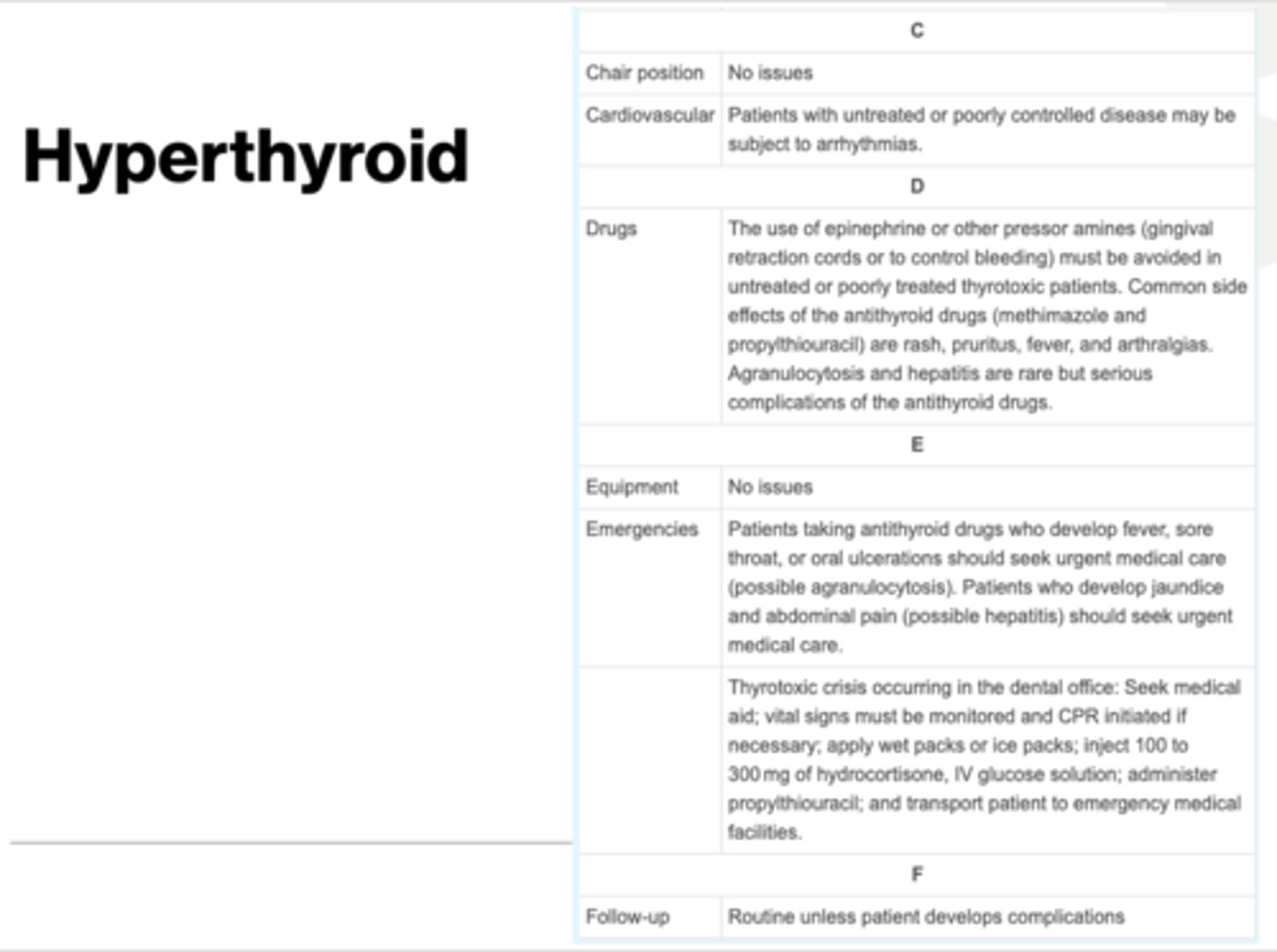
What are 4 common side effects of the antithyroid drugs to tx hyperthyroidism? (MMI, PTU)
- Rash
- Pruritius
- Fever
- Arthralgias
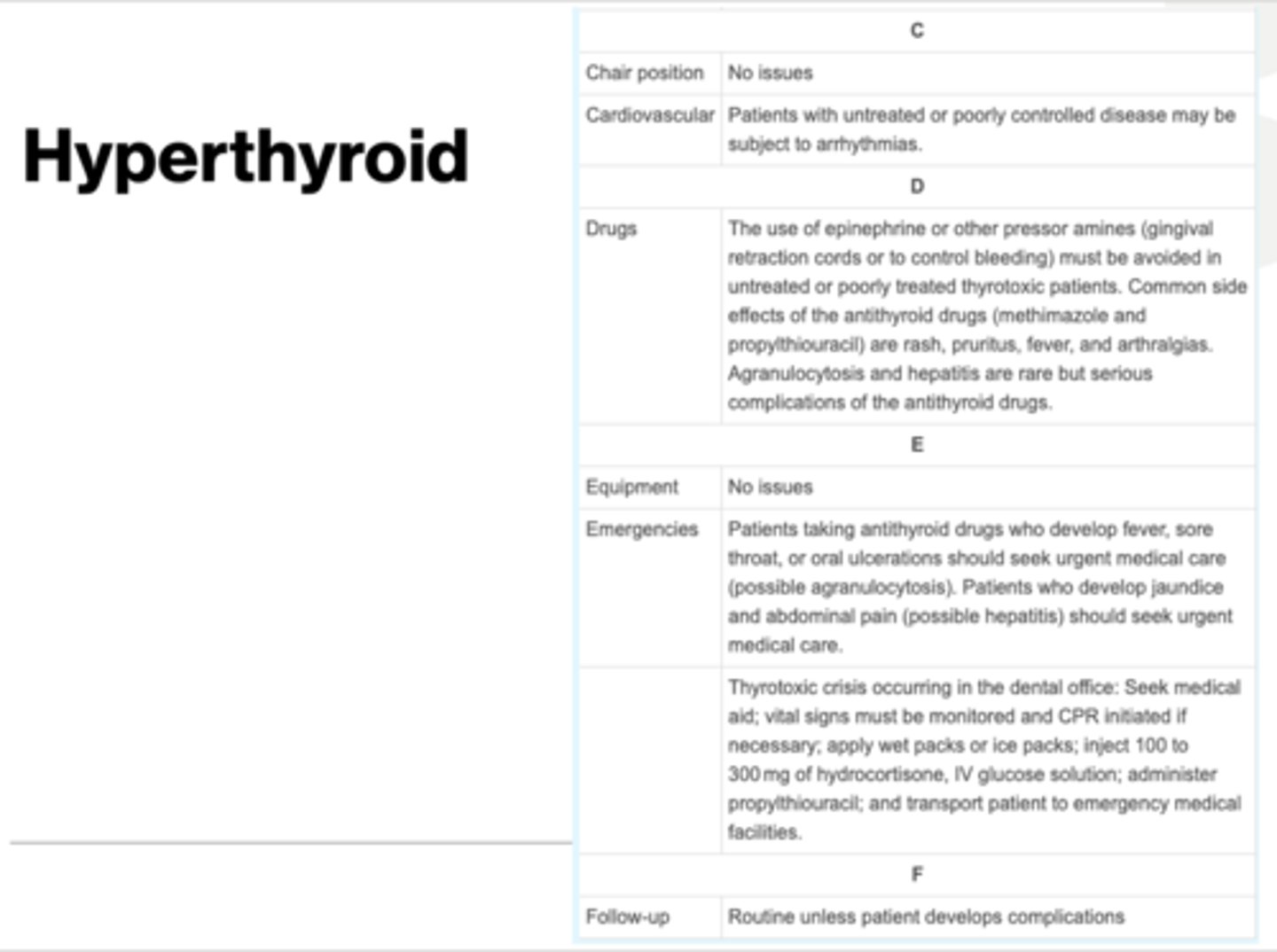
Patients with hyperthyroidism on antithyroid drugs who develop fever, sore throat, oral ulcerations, jaundice, abdominal pain must do what?
seek urgent medical care
What medications are contraindicated in patients with poorly controlled hypothyroidism?
CNS depressants (narcotics, barbituates, sedatives)