Anesthesia VPMM
 Call Kai
 Learn
Learn Practice Test
 Spaced Repetition
 Match
Match Flashcards
 Knowt Play
 Podcast
1/117

There's no tags or description
Looks like no tags are added yet.
Name | Mastery | Learn | Test | Matching | Spaced | Call with Kai |
|---|
No analytics yet
Send a link to your students to track their progress
118 Terms
define anesthetic agent
all drugs used for general anesthetic or sedation
define adjunct
used with anesthetic agent but isnt an anesthetic
what an example of an adjunct
muscle relaxant
define anxiolytics
help and decrease stress and anxiety
define pharmacokinetics
what the body does to the drug
define pharmacodynamics
what drug does to the body
define sedation
mild to profound degree of CNS depression where the patient is drowsy or asleep but may be painful stimuli
sedation is administered through (2)
IV
IM
define sedative reversal
these drugs usually have higher affinity so bind to receptors blocking the sedative from binding
what administration route is a sedatative reversal given
IM
before a pre med a —/— must be done to check the —- and — function
cbc/chem, liver and kidneys
what are the 2 common combo drugs (2+2)
dexmedetomidine/hydro
medetomidine/butorphanol
pre meds reduce
post-anesthetic excitement
define induction
is where the animal leaves the normal conscious state and enters an unconscious state
induction has the risk of causing
apnea
why does the ET tube seal the trachea (2)
prevent debris (saliva, vomit) in mouth from entering lungs
prevents the patients from breathing around the tube
how to pre measure et tube (2)
measure to thoracic inlet for length
use nostril for measure of width
can et tubes be over inflated
yes
whats the protocol for giving induction (3)
give half fast
then give to effect
don’t always give it all
why do we want to avoid following induction protocol (2)
helps reduce reduction apnea
don’t want fast conscious to unconscious
what is laryngoscope for
to make sure et tube is going where we wanna go
et tube adjusments must be made in — recumbancy
sternal
anesthetic machine is for what 2 sizes
less than 10 kg
bigger than 10 kg
how to flip small animal
feet under
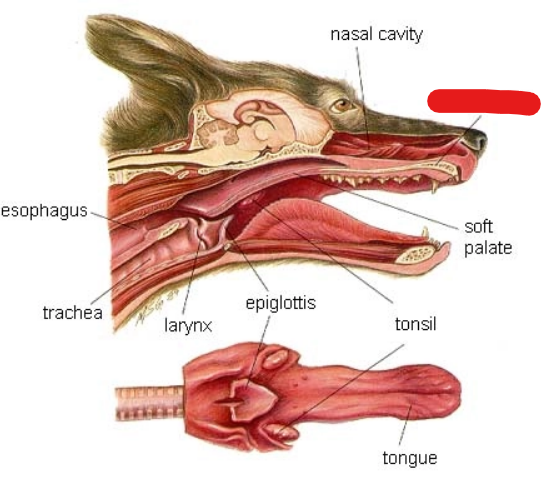
what is it
hard palate
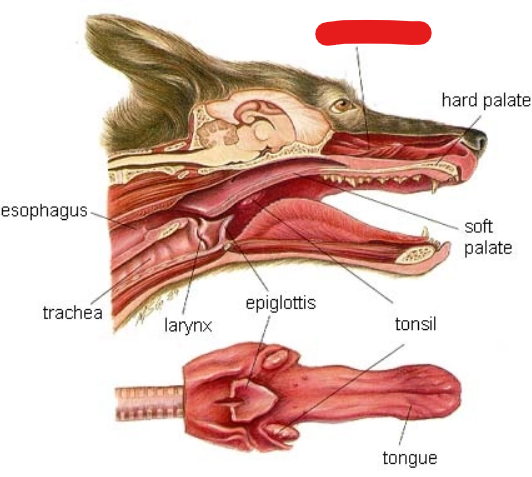
what is it
nasal cavity
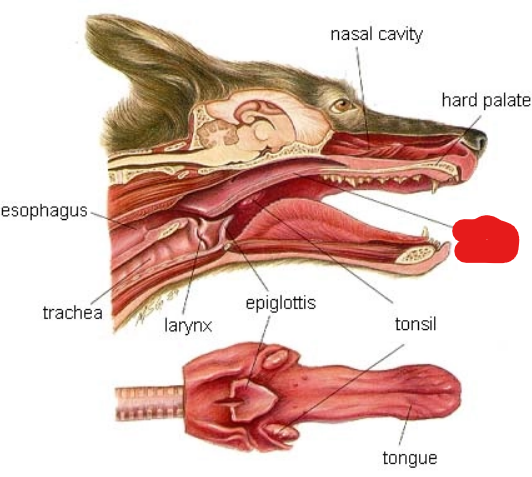
what is it
soft palate
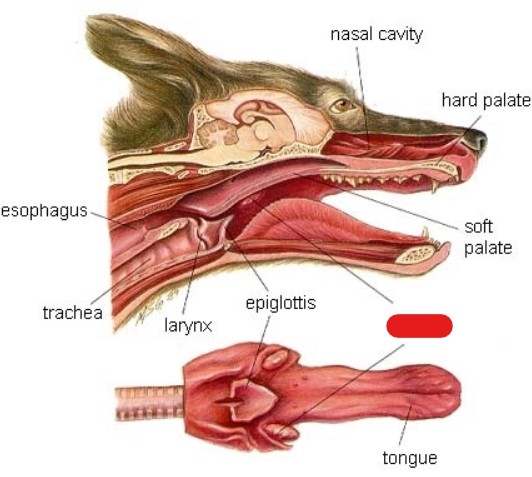
what is it
tonsil
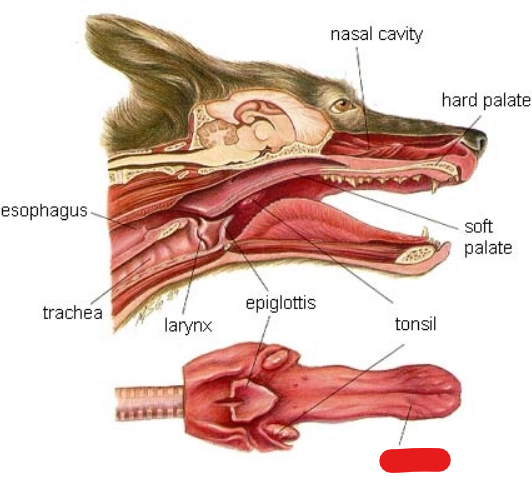
what is it
tongue
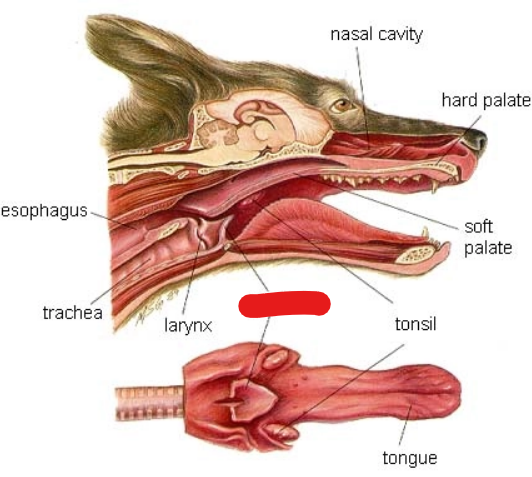
what is it
epiglottis
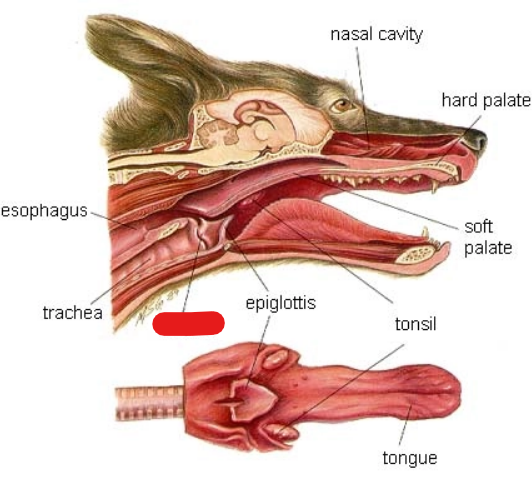
what is it
larynx
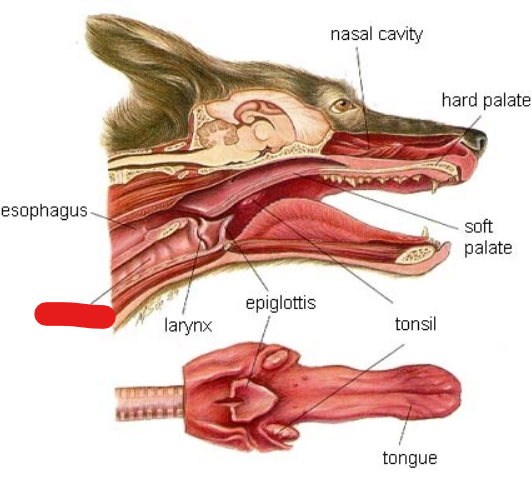
what is it
trachea
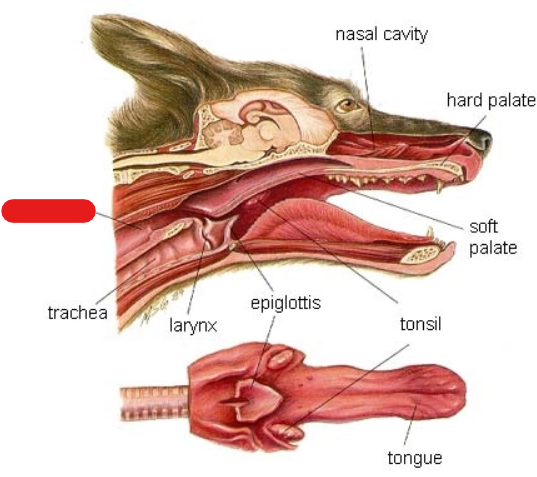
what is it
esophagus
define maintenance
anesthetic is supplied to keep the patient at an appropriate depth of anesthesia
when doing field anesthetic how would we ideally like to try and get them down
ideally getting them to sit to control head
where is the worst location for field procedures
sandy areas
where is the best location for field procedures
grassy field
where can field anesthetic be done in horses (2)
jugular
IV
larger heart means slower heart rate which means
takes longer to take effect
how to keep horses down
putting pressure on head
sedation slows GI tract which means there is a high risk of
colic
how to flip horse under anesthetic
keep horse dorsal for a min or two then flip over
what is considered a non sterile procedure
anything before cutting through one layer tissue
how to help with recovery in the field for horses (2)
put pressure on head and tail from afar so they don’t fall on use
don’t hold bone of tail, hold very end of tail
how to do facility anesthetic when they go down
push them against wall, so they fall down it
what do you use in horses to get an et tube in
PVC pipe
how long does it take for horses to recover from anesthetic
1 hour
facilities have a recovery stall where
tail and head are held up so they are in a forced standing position
how are drugs classifies (3)
timing
effect
chemistry
what are the classifications under timing (4)
pre-anesthetic
induction
maintenance
recovery
what are the classifications under effect (11)
local anesthetic
general anesthetic
anxiolytics
sedatives
tranquilizers
sedatives
tranquilizers
analgesic agents
muscle relaxants
anticholinergics
reversal agents
what are the classifications under timing (12)
anxiolytics
anticholinergics
phenothiazines
benzothiazines
alphas 2
opioids
propofol
alfaxalone
barbiturates
dissociatives
guaifenesin
inhalants
reasons for premedications (7)
decrease stress and anxiety given at home
to calm and sedate
minimize adverse of other drugs later on
reduce nausea and vomiting
reduce dose of other drugs
produce easier et tube
muscle relaxant
Anxiolytics is administered — hrs before visit
1
uses of Anxiolytics (5)
can be used for stressful procedure
surgery
radiographs
nail trims
minimize negative effects of stress, anxiety or fear
what class is Anxiolytics (2)
anesthetic adjunct
what meds are under Anxiolytics (2)
gabapentin
trazadone
gabapentin was developed as a — —
human anticonvulsant
effects of gabapentin (3)
analgesia
reduces anxiety
anticonvulsant properties
trazadone was developed as a
human anti depressent
effects of trazadone
reduces anxiety fear and stress
adverse effects of trazadone
sedation
define Anticholinergic
block the binding of acetylcholine at the muscarinic receptor
effects of anticholinergic (4)
prevent bradycardia
reduces salivation and secretions
mydrasis
brochodilation
adverse effects of anticholinergic (3ish)
may induce first or second degree av block resulting in sinus tachycardia/arrhithmia
temporary bradychardia
increases viscosity of salivary and respiratory secretions
2 meds under Anticholinergic
atropine
glycopyrrolate
what drug is the CPR drug
atropine
glycopyrrolate is for what surgery
branchiocardiac
what drug is under phenothiazines
acepromazine maleate
how is phenothiazines administered
IV
IM
SQ
what is the reversal for phenothiazines
there isnt one
what are the major effects in phenothiazines (4)
antiarrhythmic
antiemetic
sedation
peripheral vasodilation
whats in peripheral vasodilation (3)
hypotensin
increased HR
increased heat loss
mild effects in phenothiazines (4)
no respiratory depression
worsens respiratory depression of other agents
antihistamine
no analgesia
adverse effects in phenothiazines (3)
reduction of seizure threshold
hypotension
penile prolapse
reduced PCV
what does pcv stand for
Packed Cell Volume
what is are the uses for Phenothiazines (2)
adjunct
sedation
what meds are under benzodiazepines
diazepam
midazolam
zolazepam
how is benzodiazepines administered
IV
IM
oral
what benzodiazepines cant be given IM
diazepam
what is the reversal for benzodiazepines
flumazenil
major effects of benzodiazepines (4ish)
antianxiety and calming
anticonvulsant
muscle relation
appetite stimulant in cats and ruminants
adverse effects of benzodiazepines (6)
dysphoria
excitement
ataxia
large animals may become ataxic or recumbent
horses may have tremors or twitching
can cross placental barrier
adverse effects in diazepam (2)
pain
bradycardia
aponia
hypotension
cats receiving oral can develop hepatic failure
storage issues with diazepam
diazepam is soluble in plastic
diazepam and midazolam are light sensitive
is benzodiazepines a controlled medication
yes
how are alpha 2’s administered (3)
IV
IM
SQ
are there reversibles for alhpa 2’s
yes
major effects of alpha 2s (12)
lower head
lip droop
have analgesic properties
vasoconstriction
hypertension
bradycardia
arrhythmia
hypotension
depression of respiratory
muscle relaxation
vomiting in cats
increased effect of other anesthetic
minor effects of alpha 2s (2)
hypoglycemia
hypothermia
adverse effects of alpha 2s (9ish)
hyper responsive
aggressive
cattle may lie down
dramatic decrease of HR, BP, CO
brachycephalic may become dyspneic
hypothermia
increased urination
late stage abortion in ruminants
sweating in horses
drugs under alpha 2s (4)
xylazine
medetomidine/Dexmedetomidine
Detomidine
romifidine
what are 3 alpha 2 antagonists
tolazoline
yohimbine
atipamezole
administration routes for alpha 2 antagonists
IM
IV
SQ
overdose of alpha 2 antagonists causes (6)
excitement
muscle tremors
hypotension
tachycardia
salvation
diarrhea
drugs under opioids (5)
morphine
hydromorphone
oxymorphone
fentanyl
meperidine
buprenorphine
butorphanol
naloxone
administration routes for opioids (7)
IV
IM
SQ
oral
rectal
transdermal
epidural
major effects of opioids (6)
can cause sedation or excitement
analgesia
bradycardia
minimal decrease in respiratory rate and tidal volume
may cause panting
may be hyper responsive
minor effects of opioids (5)
dogs may become hypothermic
cats become hyperthermic
cats become Mydriatic
horses increased locomotor activity
ruminants can experience bloat
adverse effects of opioids (8ish)
anxiety
dysphoria
bradycardia
decreased resp rate and tidal volume
salivation
vomiting
initial increased peristalsis then ileus
addiction