Anatomy and Physiology Final Exam Study Guide
 Call Kai
 Learn
Learn Practice Test
 Spaced Repetition
 Match
Match Flashcards
 Knowt Play
1/30

There's no tags or description
Looks like no tags are added yet.
Name | Mastery | Learn | Test | Matching | Spaced | Call with Kai |
|---|
No analytics yet
Send a link to your students to track their progress
31 Terms
What is the basic unit of life?
Cell
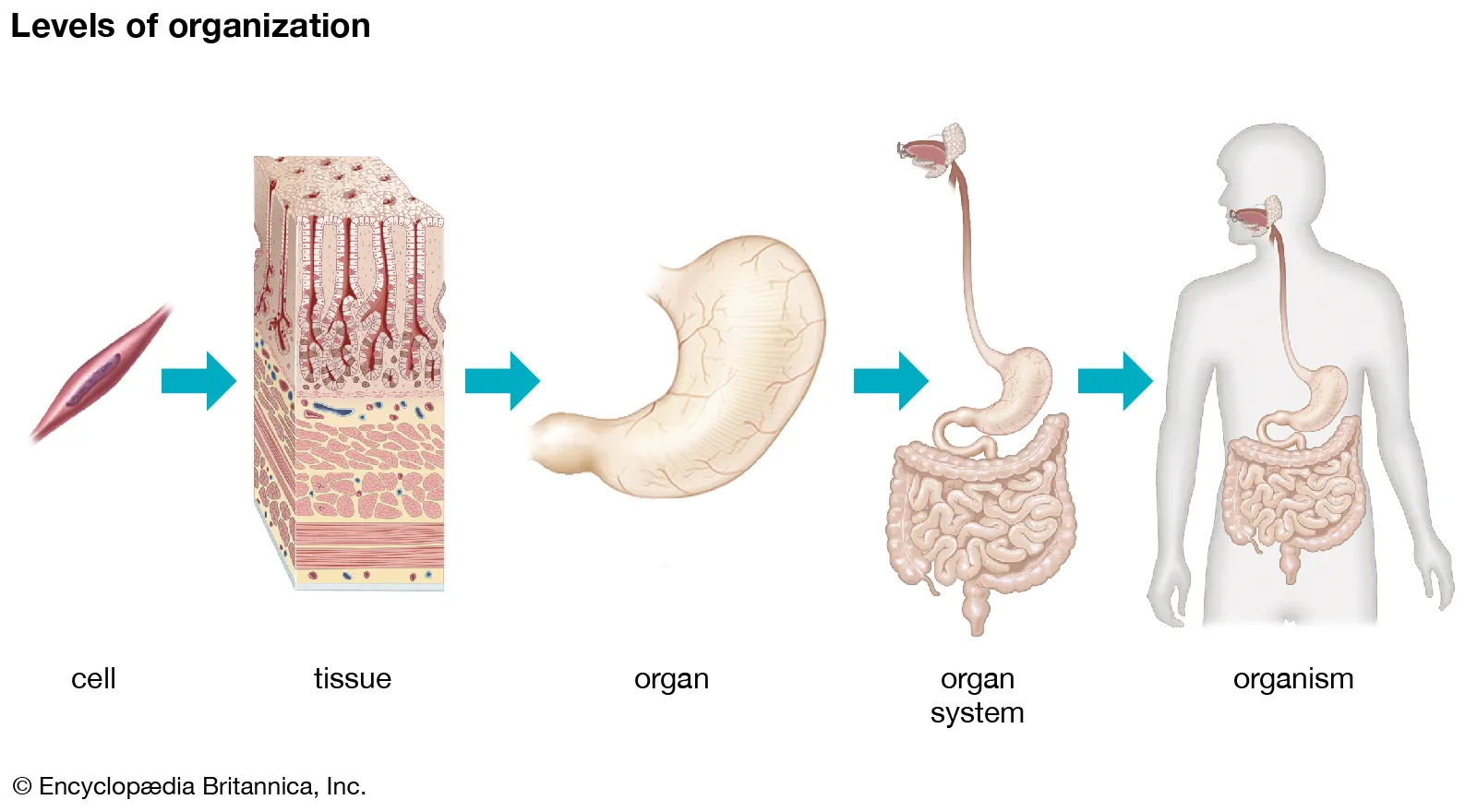
Level of Organization
Cell → Tissue → Organ → Organ System → Organism
Homeostasis
maintaining stable internal conditions (temperature, pH)
Types of Muscles
Skeletal → voluntary, striated, attached to bones
Cardiac → involuntary, found only in the heart, striated
Smooth → involuntary. found in organs (stomach, intestines), unstriated
Tendon
connects muscle to bone
Ligament
connects bone to bone
Sacromere
functional unit of muscle contraction
Orgin
attached area along the muscle; stationary → closer to center of the body (proximal)
Insertion
Mobile attachment on the muscle → farther from the center of the body (distal)
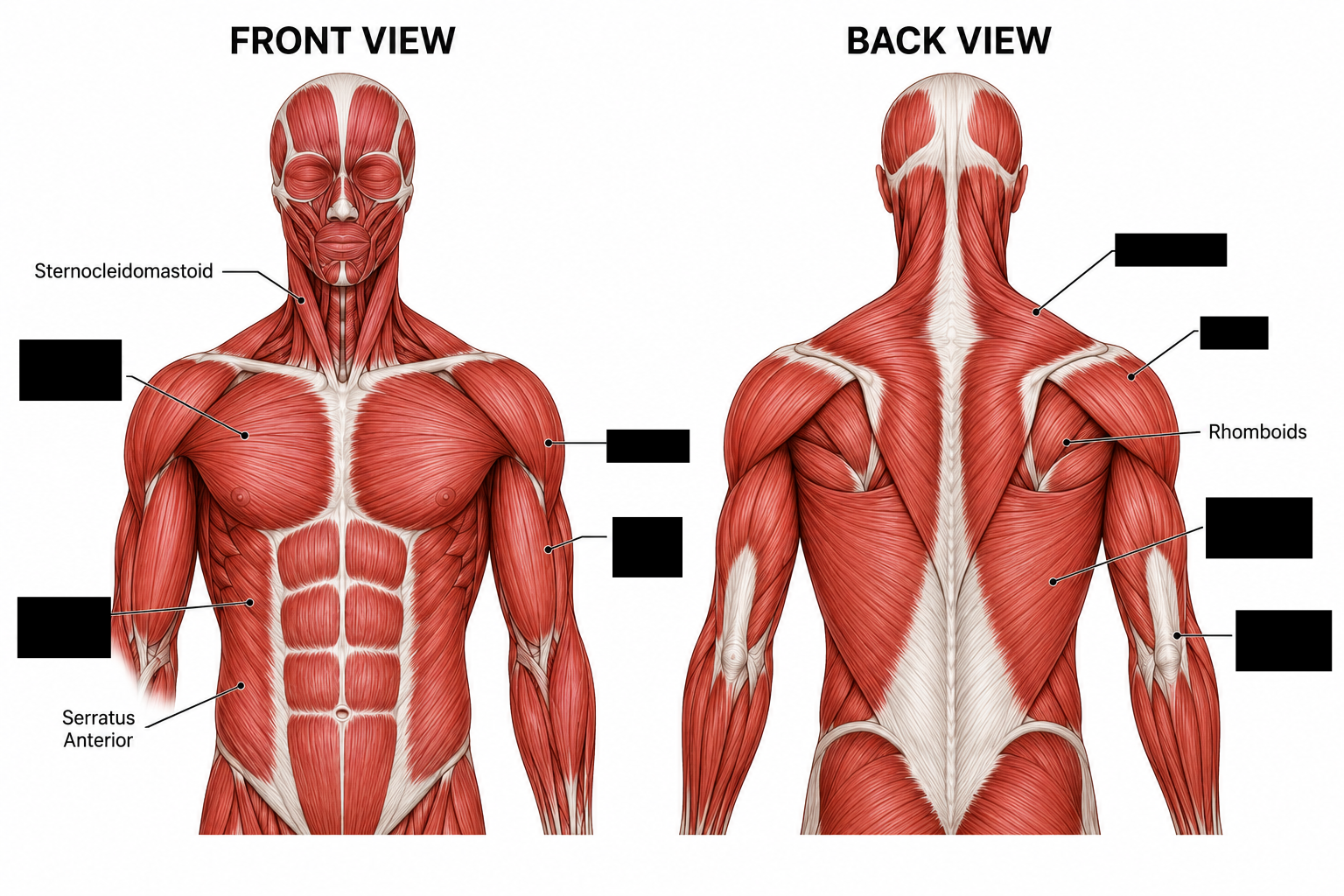
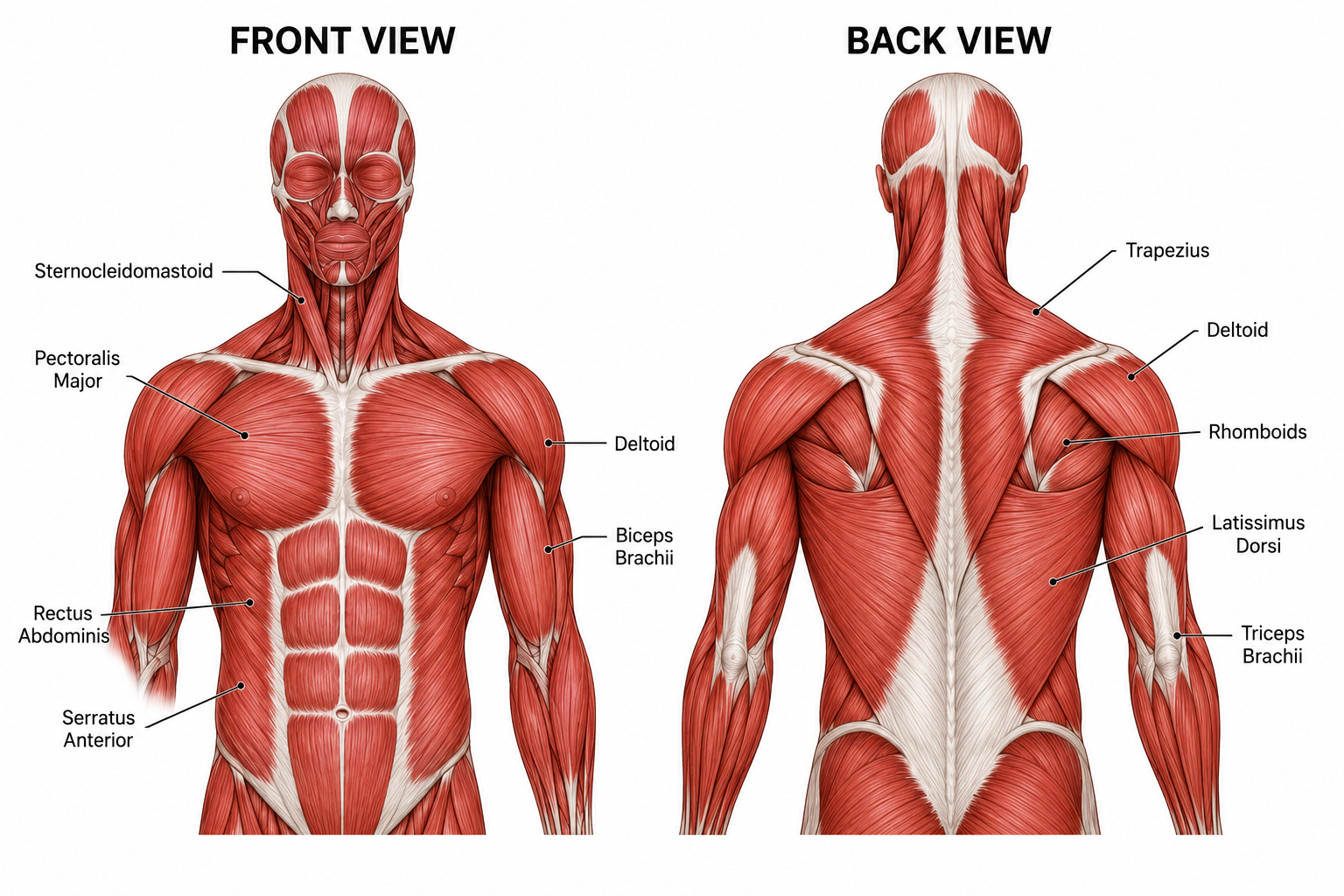
correctly label all parts of the Upper Body
Biceps → bend the arms
Triceps → straighten the arm
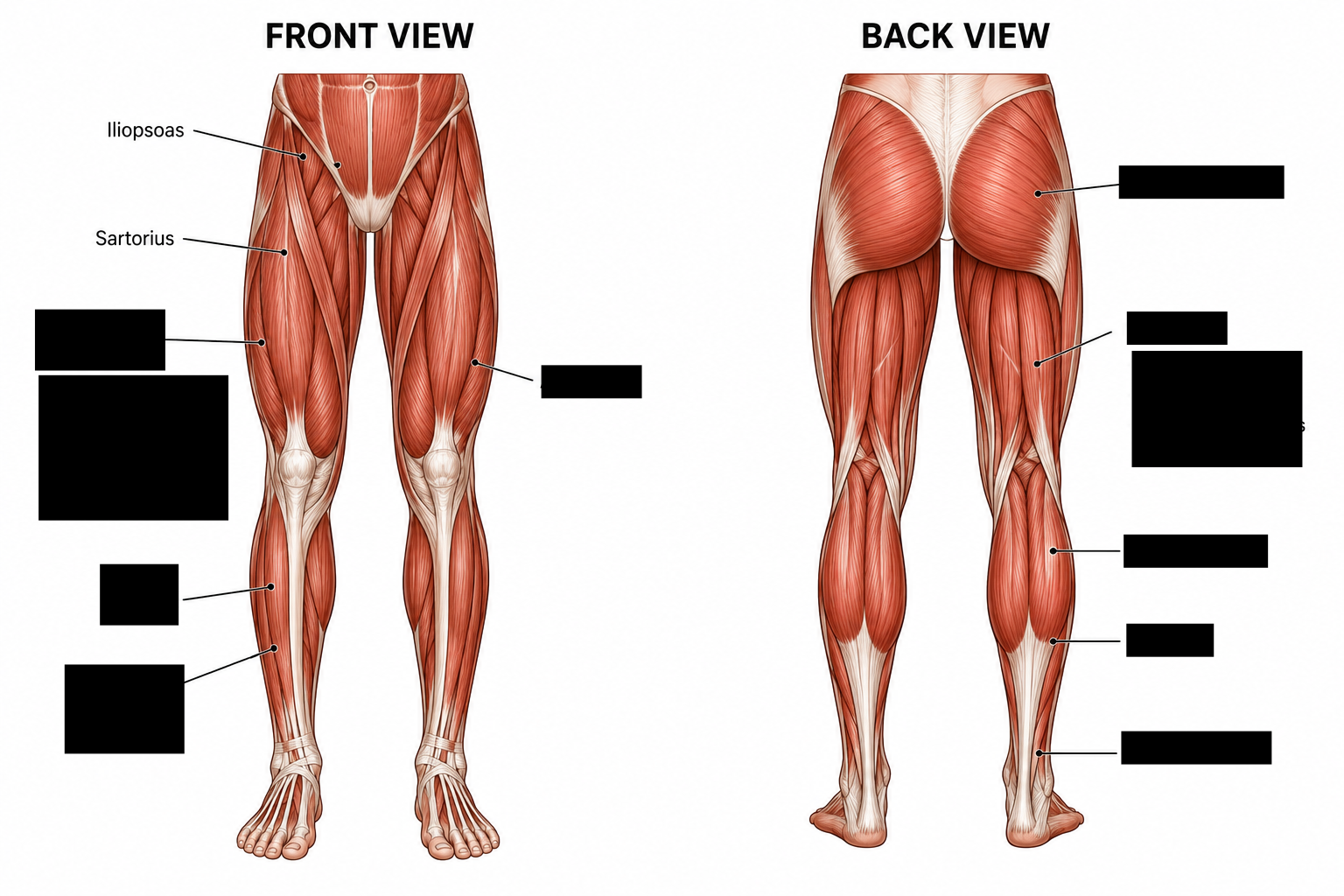
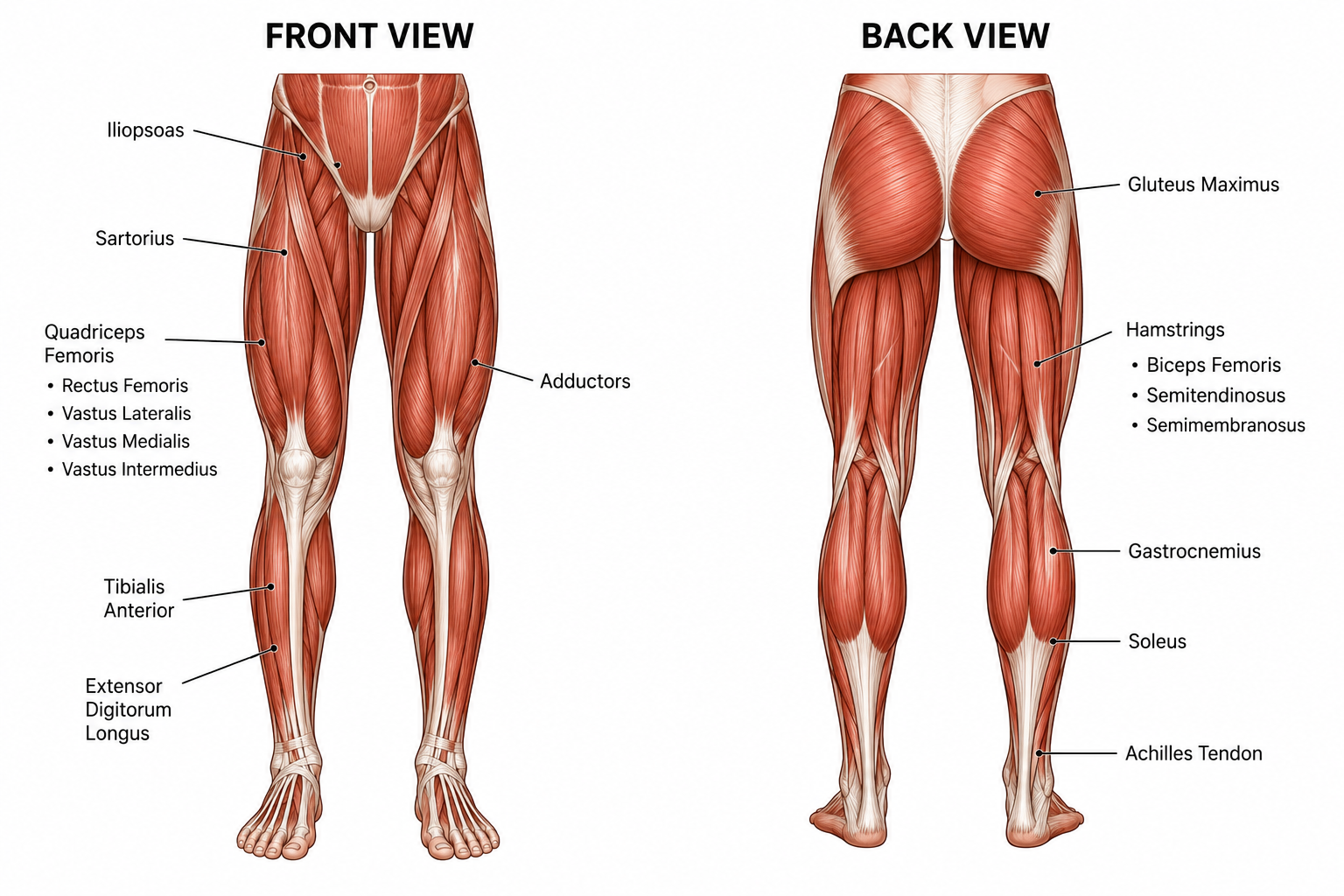
Correctly label all parts of the Lower Body
Quadriceps → straightens the leg
Gluteus Maximus → largest muscle (hip movement)
Endocrine System
controls body functions using hormones
maintains homeostasis
regulates growth, metabolism, and reproduction
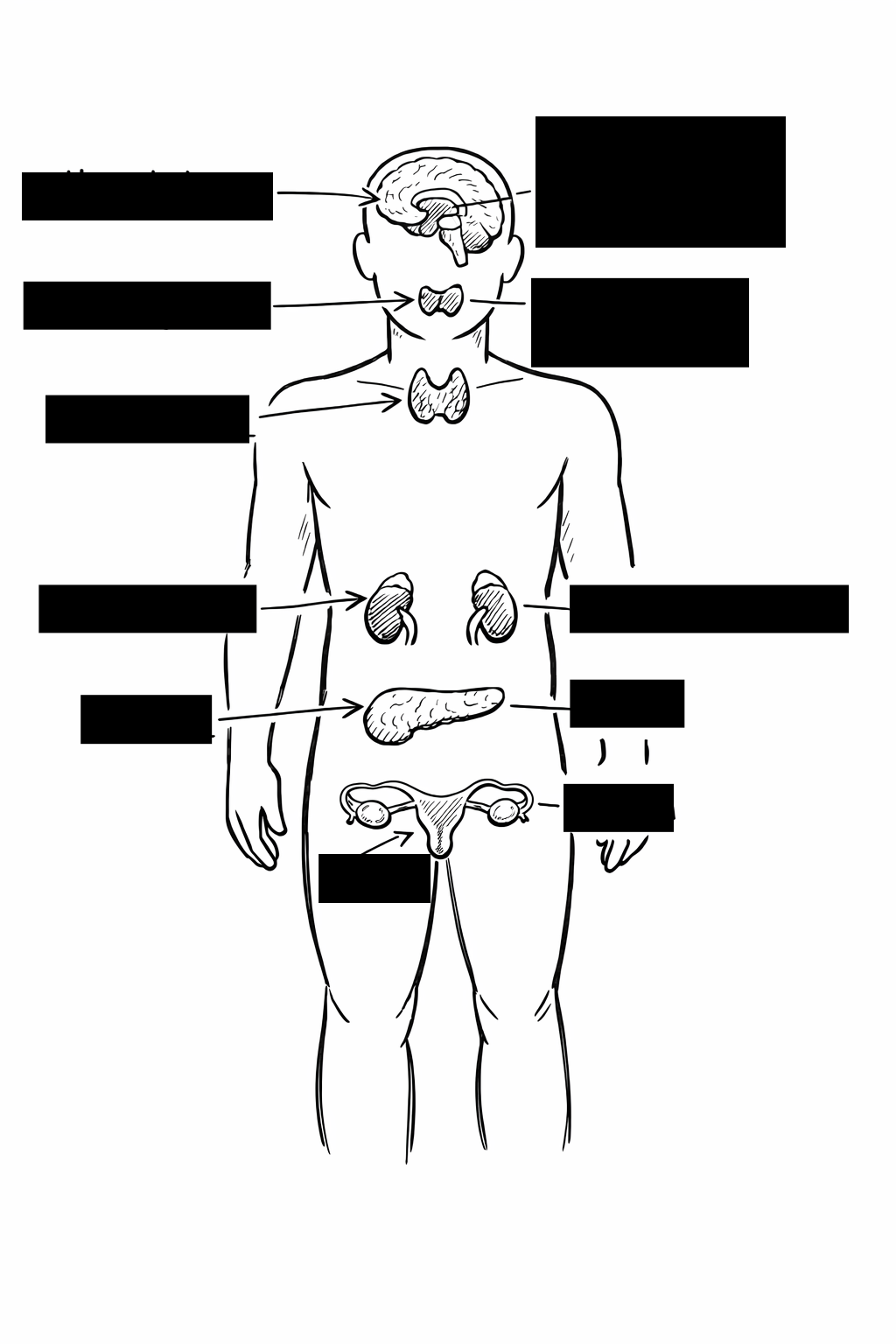
Endocrine Glands
Pituitary Glands → “master gland”; controls others
Thyroid Gland → regulates metabolism
Adrenal Glands → stress response (fight-or flight)
Pancreas → regulates blood sugar
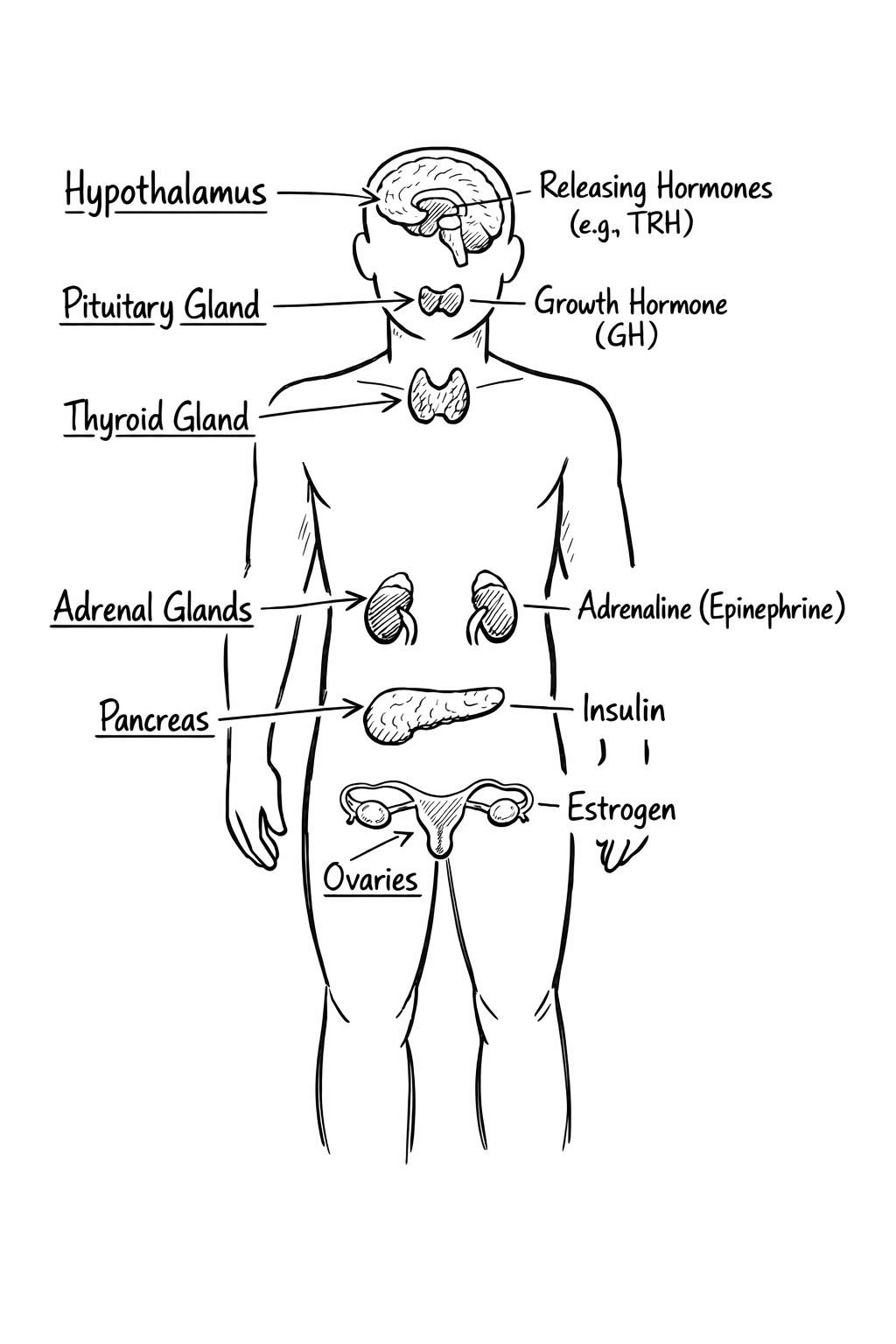
Insulin
lowers blood sugar (in the Pancreas)
Adrenaline (epinephrine)
fight-or-flight response (in the adrenal glands)
Hormones
travel slower, but messages last longer; travel in the blood
Nevres
faster, but message are shorter; electrical signals
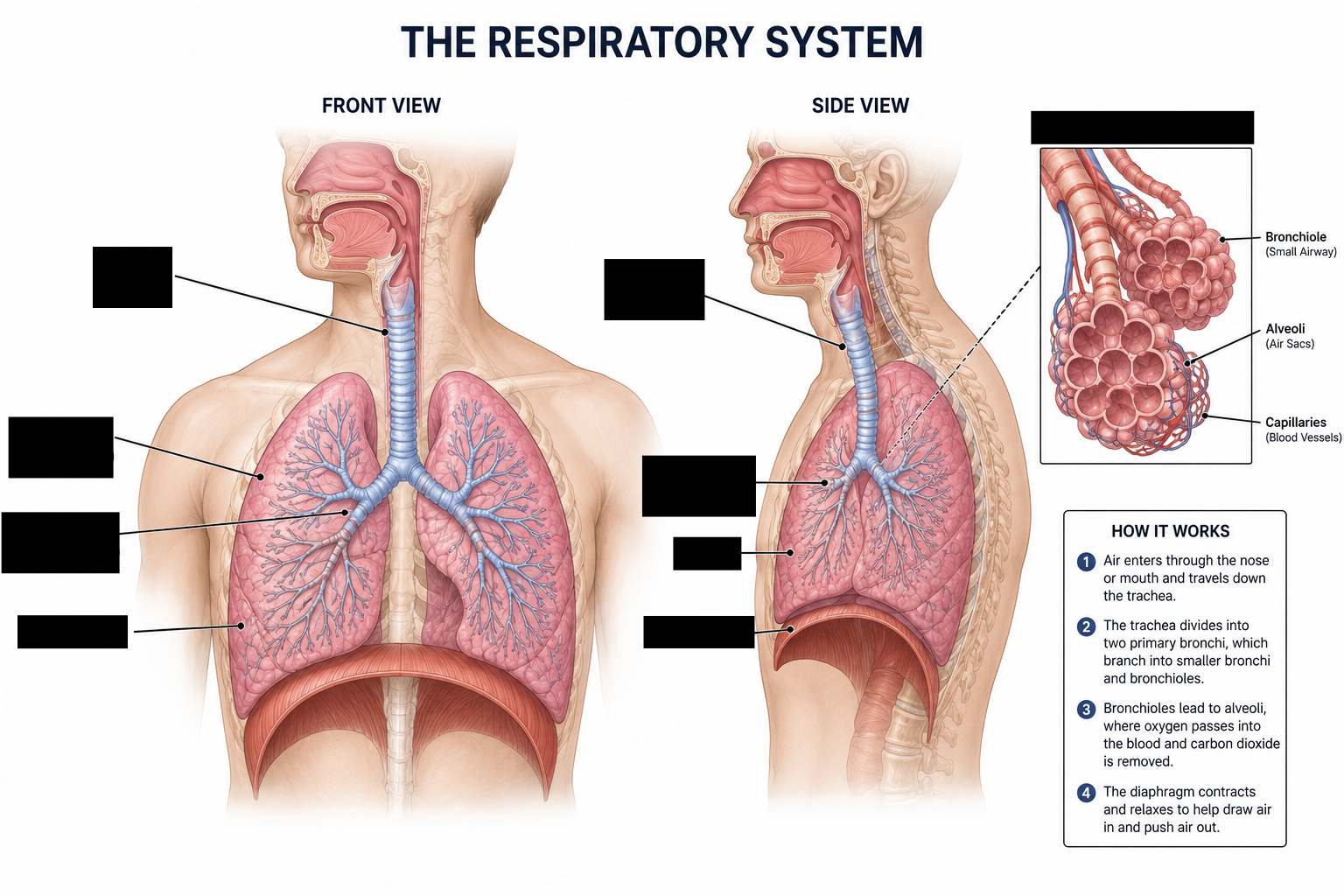
Label and explain the main structures and functions of the Respriatory system
Trachea → air passage to lungs
Bronchi → branches into lungs
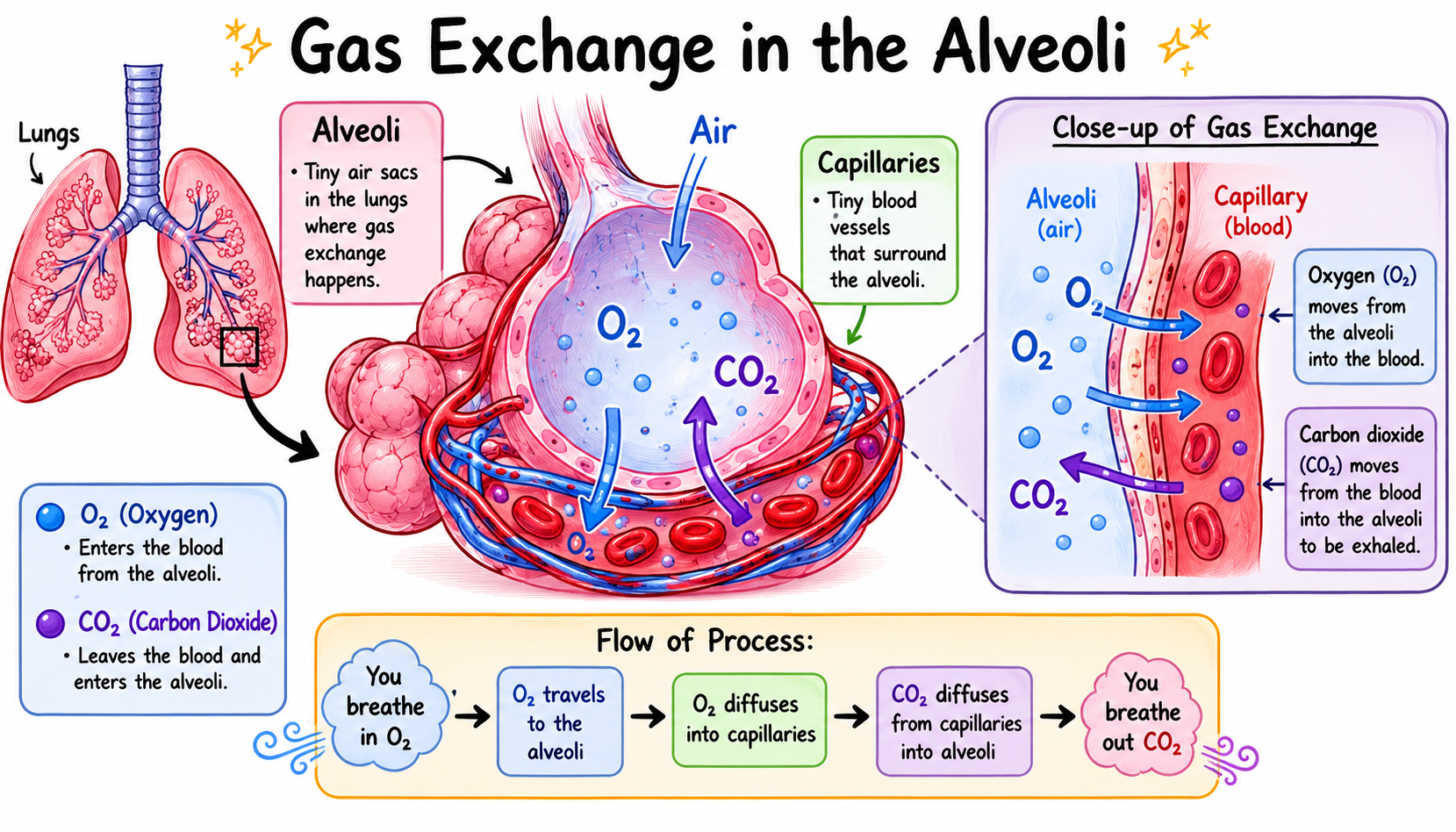
Alveoli → tiny sacs where gas exchange occurs
Lungs → main breathing organs
Diaphragm → breathing muscle
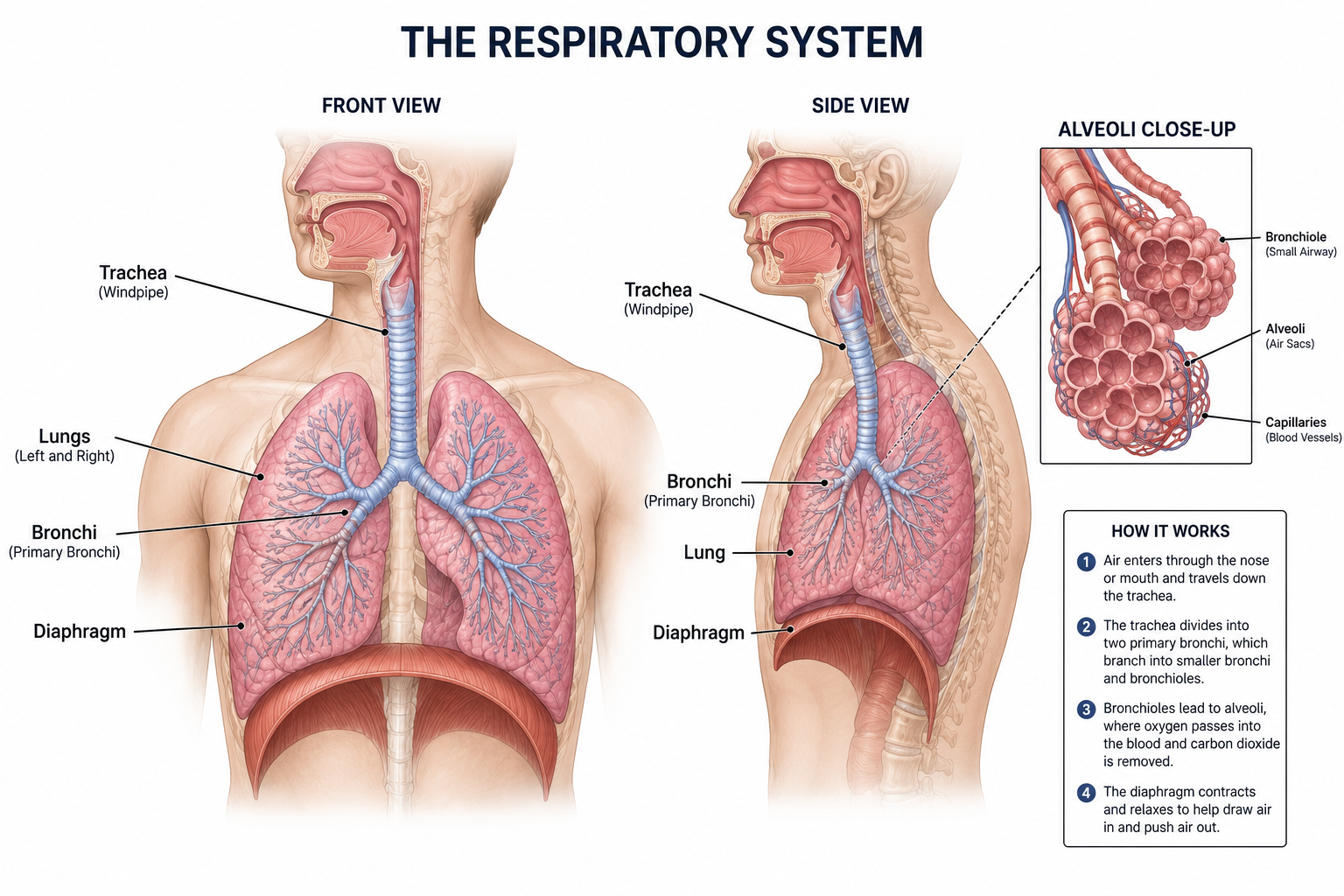
Inhalation
diaphragm contracts → moves down → lungs expand
Exhalation
diaphragm relaxes → moves up → lungs deflate
The respiratory tract and how we breath
The respiratory tract is the pathway air travels through, starting at the nose or mouth, moving down the trachea, and branching into the bronchi inside the lungs, which divide into smaller tubes until reaching the alveoli where oxygen enters the blood and carbon dioxide is removed. Breathing is controlled by the diaphragm, which contracts to pull air into the lungs and relaxes to push air out
Can foods and solids get into you respiratory system? If so, what happens?
Yes, food and liquids can accidentally enter the respiratory system, but the body usually prevents this with a structure called the epiglottis, which covers the airway when you swallow. If something goes down the wrong way, it can trigger coughing or choking as your body tries to remove it. In more serious cases, it can block airflow and make it hard to breathe. If food or liquid reaches the lungs, it can also cause infections like aspiration pneumonia.
What is a disease or condition that can affect the respiratory system and where does it affect it?
Asthma is a chronic disease that affects the airways, especially the bronchi in the lungs. In people with asthma, these airways become inflamed, swollen, and narrow, making it harder for air to move in and out. This can cause symptoms like coughing, wheezing, shortness of breath, and chest tightness. Asthma mainly affects the lower part of the respiratory system, particularly where air travels into the lungs.
Gas Exchange
oxygen enters blood from alveoli
carbon dioxide leaves blood and it exhaled
Gas exchange is the process where oxygen and carbon dioxide are swapped between the lungs and the blood. It happens in the alveoli, tiny air sacs in the lungs, where oxygen from the air moves into the bloodstream and carbon dioxide moves out of the blood into the alveoli. This works through diffusion, meaning gases move from areas of high concentration to low concentration. The oxygen is then carried to the body’s cells, while carbon dioxide is exhaled out of the body.
How do the respiratory system and circulatory system interact?
Oxygen enters through the lungs → blood carries the oxygen to the cells
Carbon dioxide is returned to lungs for removal
The respiratory and circulatory systems work together to deliver oxygen to the body and remove carbon dioxide. In the lungs, oxygen enters the blood in the alveoli, and the circulatory system (through the blood and red blood cells) carries that oxygen to all the body’s tissues. At the same time, carbon dioxide from the cells is carried back through the blood to the lungs. The respiratory system then removes the carbon dioxide from the body when you exhale.
What is the largest organ in the body?
skin
What does the medulla oblongata control?
The medulla oblongata which is located at the base of the brain is in control of our breathing
Why is oxygen needed?
Oxygen is needed because it allows your cells to produce energy. During a process called cellular respiration, oxygen helps break down nutrients like glucose to release energy that your body uses to move, grow, and stay alive. Without enough oxygen, cells cannot function properly and may begin to die.
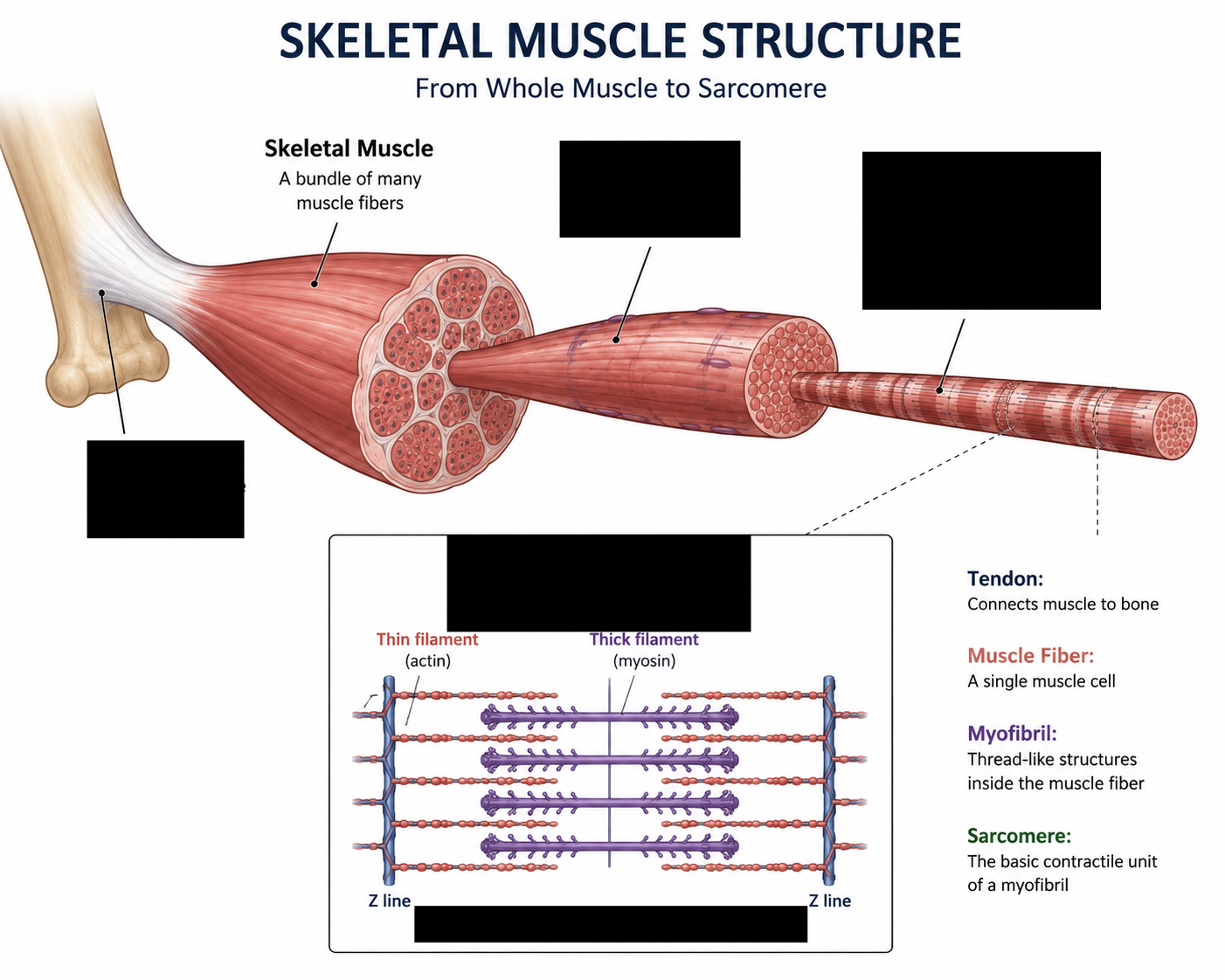
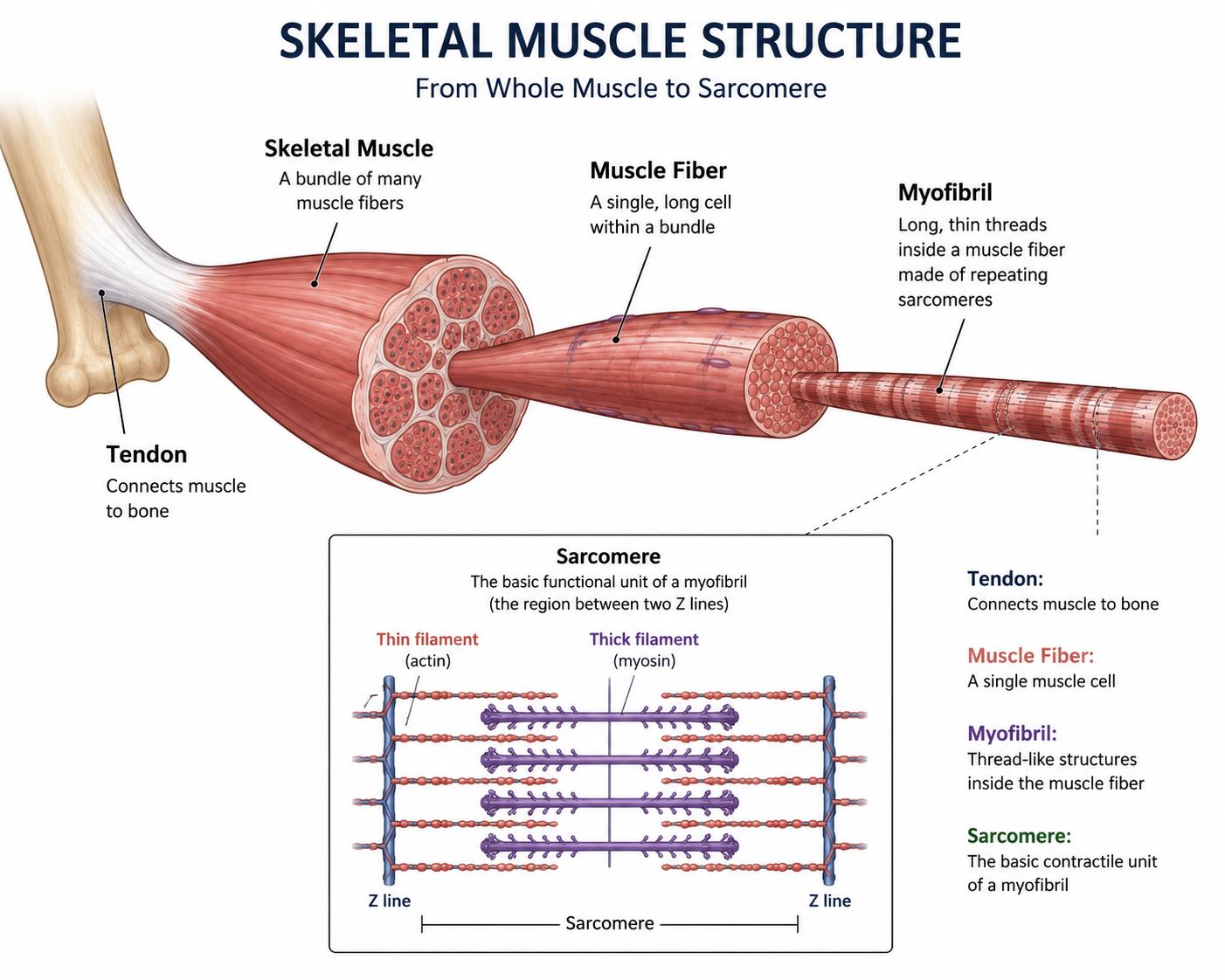
Correctly Label the parts of a muscle structure
Tendon → connects muscle to bone
Muscle Fiber → A single, long cell within a bundle
Myofibril → Long, thin threads inside a muscle fiber made of repeating sarcomeres
Sarcomere → the basic functional unit of a myofibril (the region between the two Z lines)
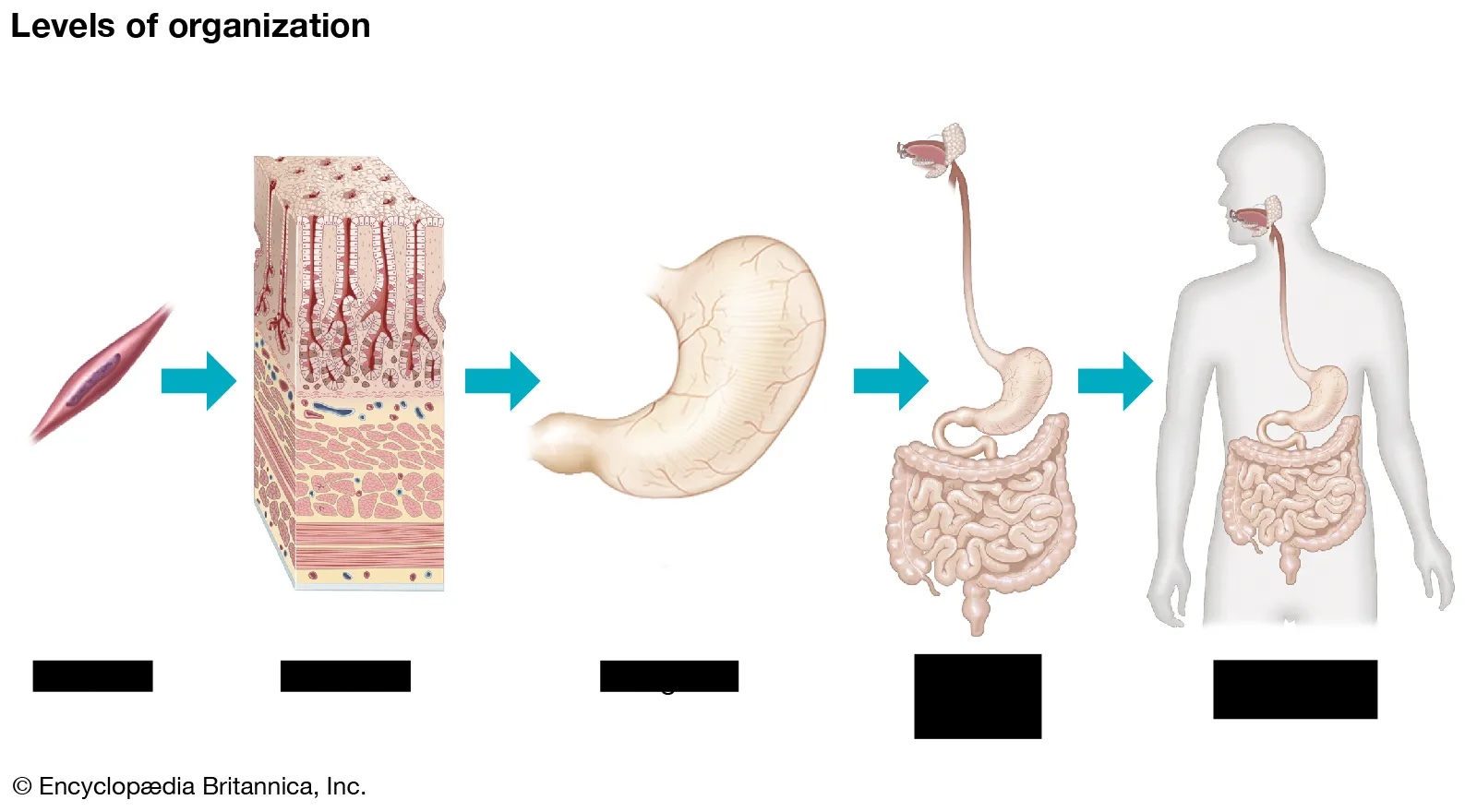
Identify each step of the levels of organization
1) Cell
2) Tissue
3) Organ
4) Organ System
5) Organism
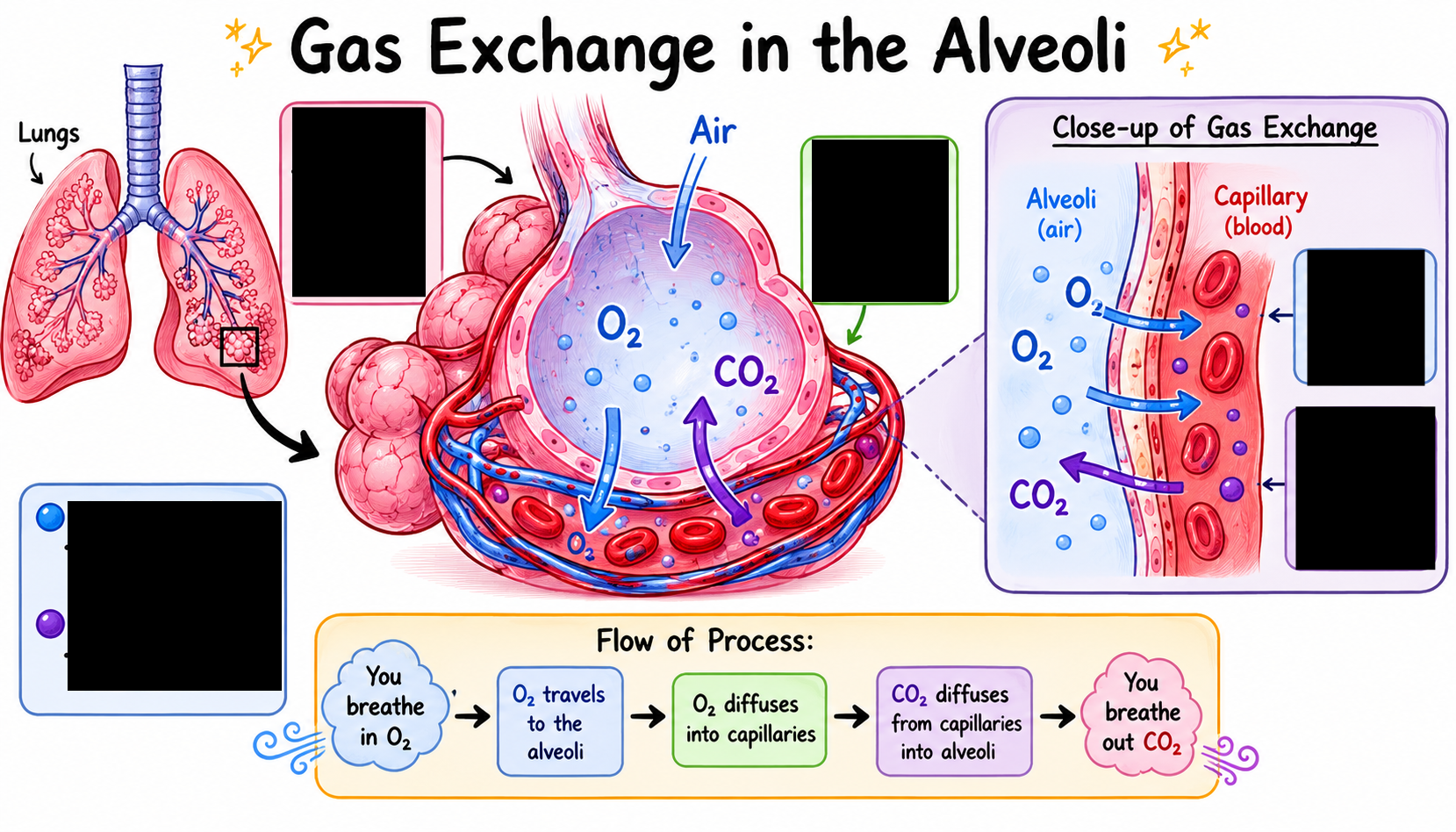
What are the different parts that play a role in the process of gas exchange?
Alveoli → tiny air sacs in the lungs where gas exchange occurs
Capillaries → tiny blood vessels that surround the alveoli
Oxygen → moves from the alveoli into the blood
Carbon Dioxide → moves from the blood into the alveoli ti be exhaled