Drama 9: Greek Theatre test
 Call Kai
 Learn
Learn Practice Test
 Spaced Repetition
 Match
Match Flashcards
 Knowt Play
1/29

There's no tags or description
Looks like no tags are added yet.
Name | Mastery | Learn | Test | Matching | Spaced | Call with Kai |
|---|
No analytics yet
Send a link to your students to track their progress
30 Terms
What kind of historical sources are available?
Texts (Scripts)
Archeological sources and remains
Painted pots, vases w theatrical painting on them
What is the festival of Dionysus?
A big festival of shows/plays where playwrights would compete to see who has the best play. A jury was selected to vote on the best play. Playwrights didn’t compete for money but for glory and honor.
It would start with 3 tragedies and end with 1 satyr play
What are the three types of drama?
Tragedies- wore ugly masks
Comedies- wore beautiful masks
Satyr- rude comedies
What are the 3 renowned playwrights of Ancient Greece?
Aeschylus (Often called the “father of Tragedy”)
Sophocles
Euripides
What are some features of Greek theatres?
Open-air structures- no roof
spectators sat in a semi-circle
bottom of hill there was a flat part called the “orchestra” where the chorus stood
Why did the actors wear masks?
Because theatre was a religious ritual
Allowed actors to change characters
What is the chorus?
“The highlight of the show”
provided the perspective of the community
Originally compromised of 50 members, gradually reduced over time
They’d enter to the arena through the parados and stand in the orchestra facing the audience
What is Catharsis?
“Purging” emotions/getting them out of your system
Who is Dionysus?
A popular Greek god of theatre and wine
What is Thespis (noun: Thespian)
Means ‘actor’
First person to ever step out of formation of the chorus
What is a prologue?
An introduction; it sets the scene )similar to exposition)
Opening section of a play that occurred before entry of the chorus
(Made up of 3 Quatrains and 1 rhyming Couplet)
What is a Sonnet?
A 14 line poem
Who is Aeschylus and what did he do?
He is often called the “father of Tragedy”
He reduced the size of the chorus adding a SECOND actor.
Who is Sophocles and what did he do?
A Greek playwright responsible for writing the ‘perfect example of tragedy’ called the “Oedipus Rex”
Known for adding a THIRD actor
How were judges chosen?
They were chosen for festivals by lot (lottery)
How much did the theatre hold?
The theatre of Dionysus held 17,000 audience members
Who was Philocles?
Philocles (Newcomer playwright) was the shocking winner of the festival in which Sophocles Oedipus first debuted
What did it means for an Athenian to go to the festival?
It was seen as Athenian’s civic duty to attend the play festivals (like voting)
Why should tragedy afflict a mostly good character?
Can’t be a bad character and can’t be a character that does everything right because then it wouldn’t be satisfying and would imply that the universe doesn’t reward good or punish evil
What did ancient Greek theater evolve from?
Religious ceremonies
Who was thespis?
The first actor
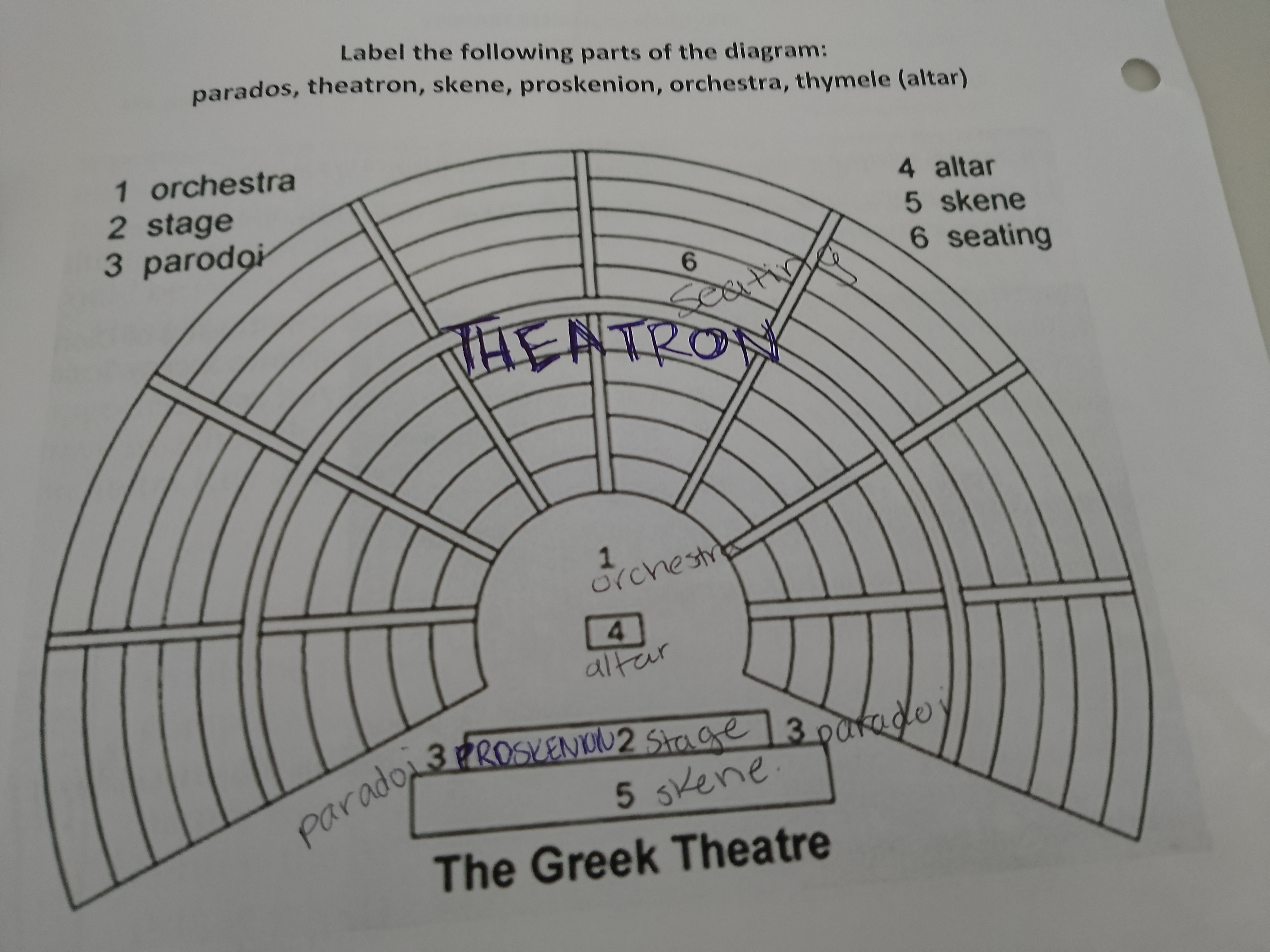
What is the orchestra and where is it?
In Greek, this means “the dancing space” The chorus performed in the circular space.
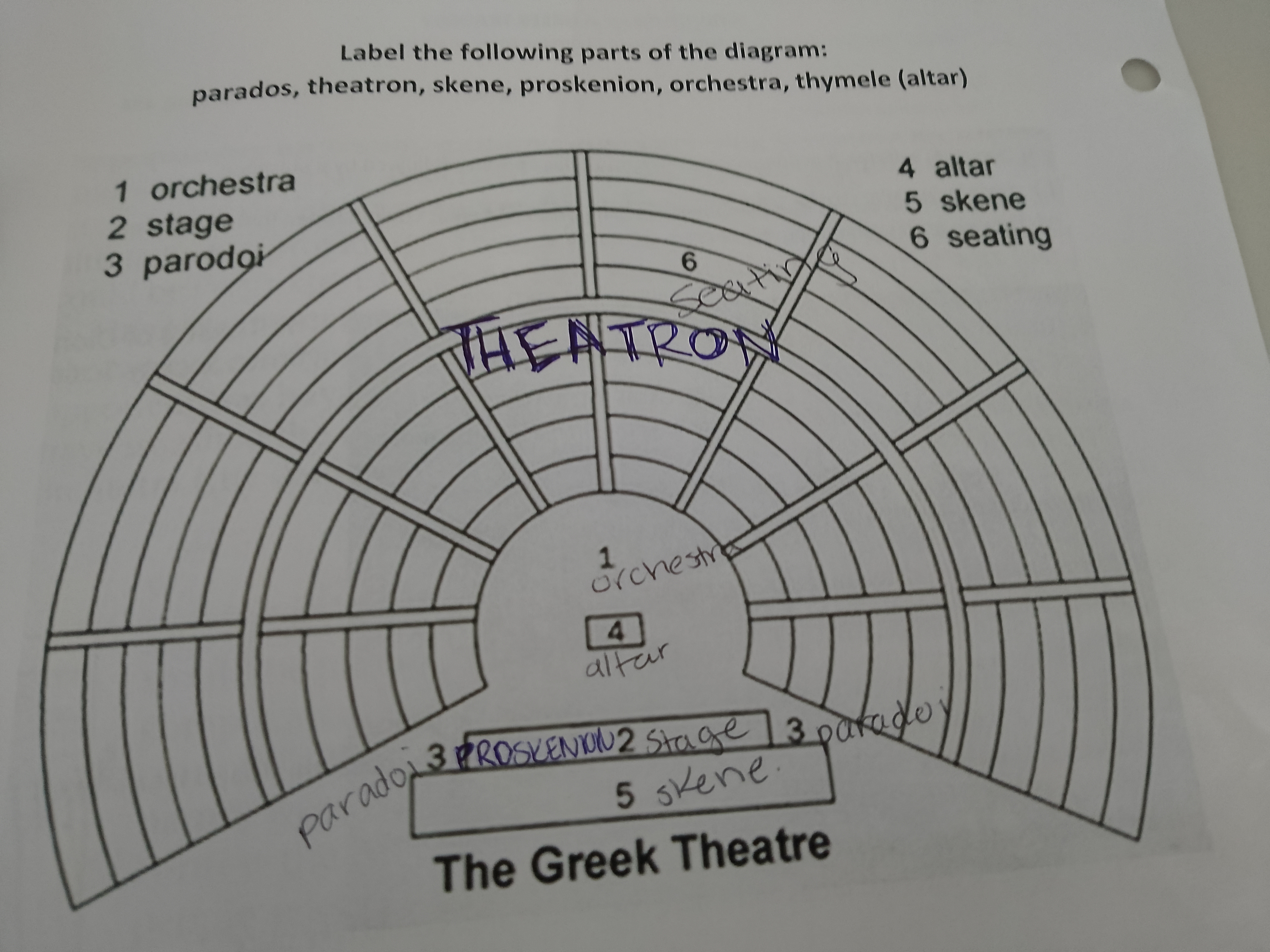
What is the parados (paradoi), where is it?
In Greek this means “passage” or “entrance” there were two side entrances where the chorus enters the orchestra space this is also the name for the entrance song
The chorus usually comes on to the stage either singing, chanting, speaking, or dancing.
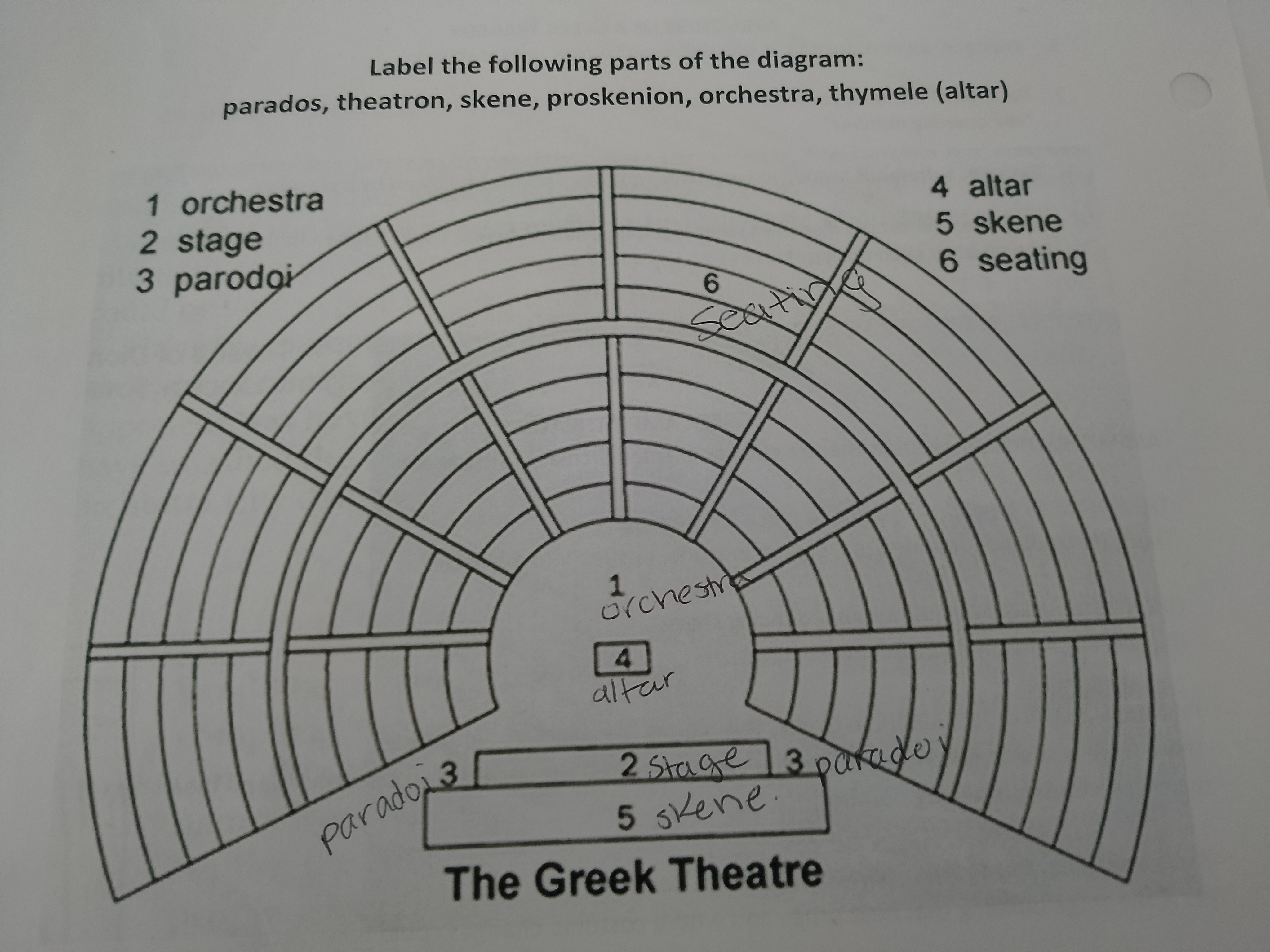
What is the theatron, where is it?
In greek, this means “a place for viewing” this is the audience seating area, carved in stone, nestled into a hillside
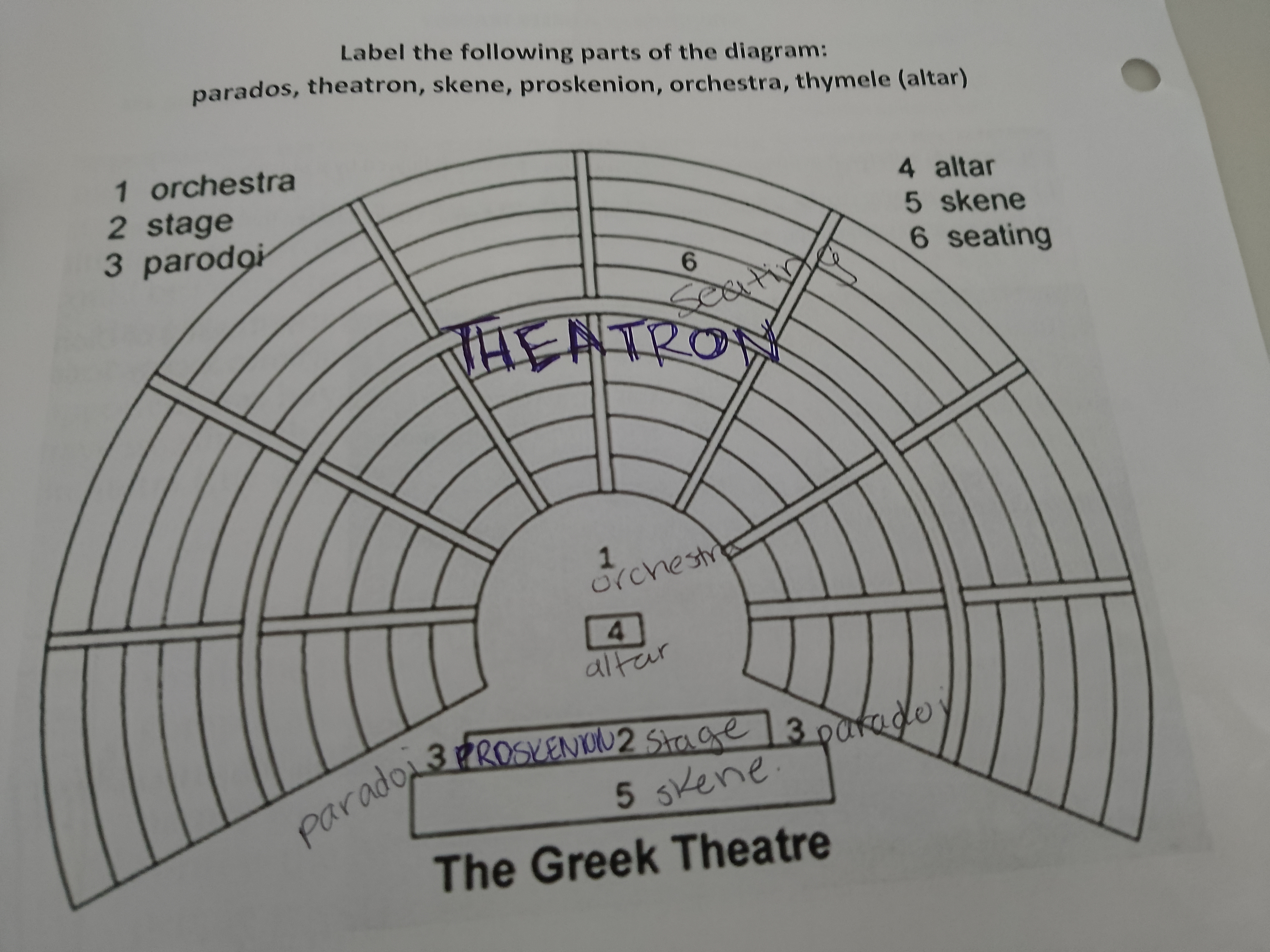
What is an amphitheater, where is it?
An open-air theater: circular or semicircular and structure
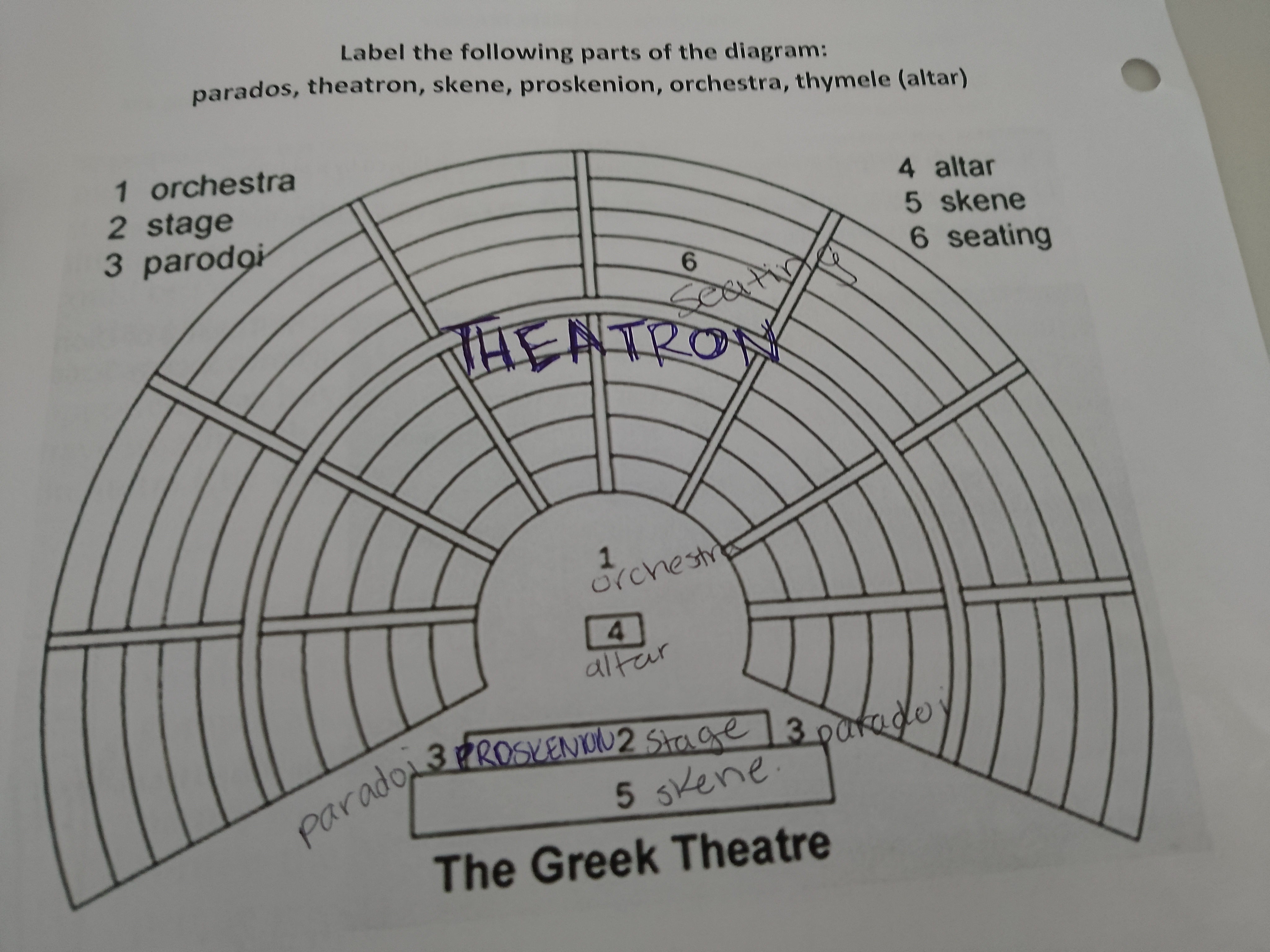
What is a proskenion, where is it?
In greek, this means “in front of the skene” this is a platform/stage area where the actors performed the scenes (not for the chorus)
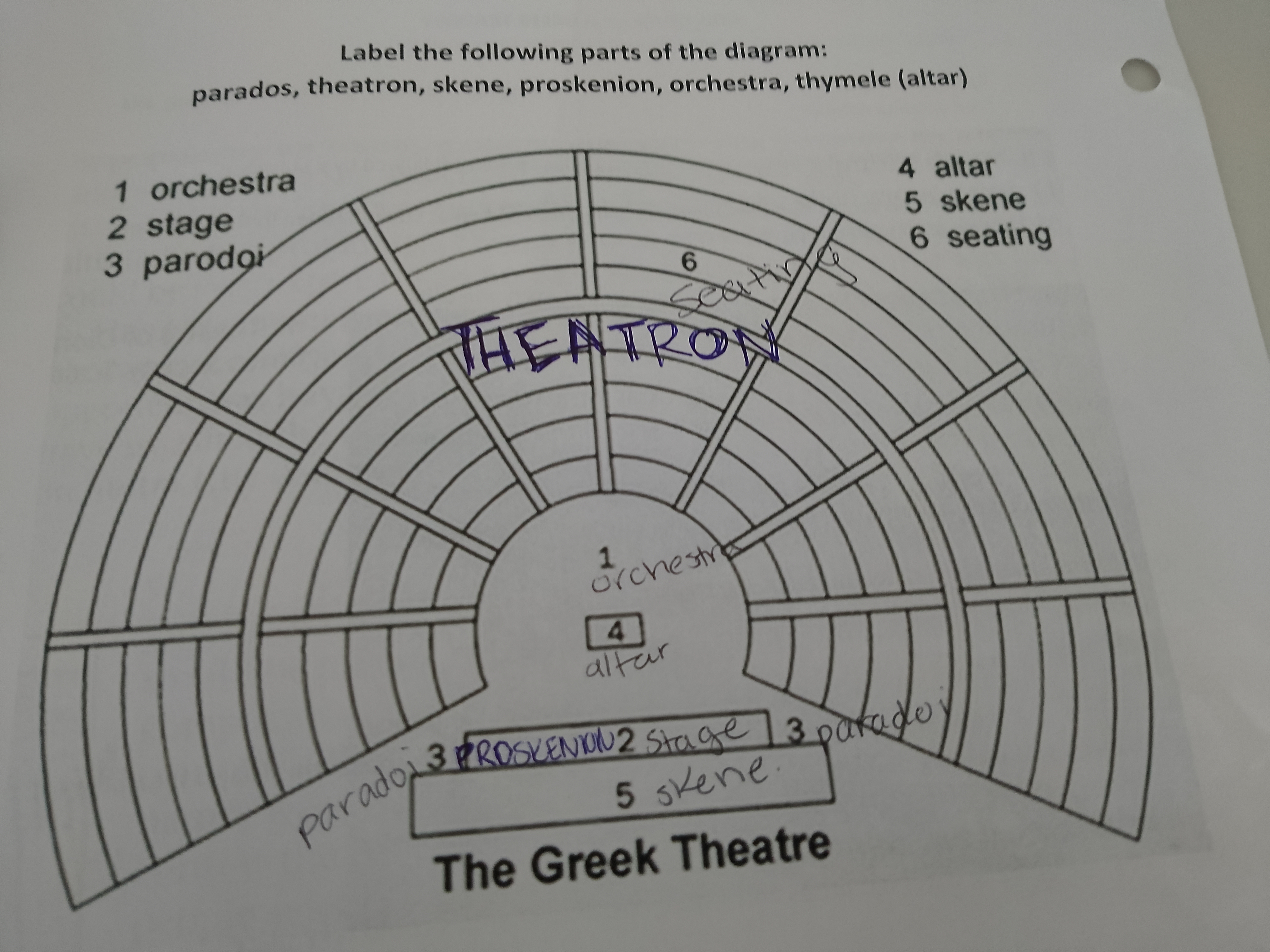
What is a skene, where is it
In greek, this means “covered place” or “tent” This is the stage building that held props and where costume changes could take place
What is an episode?
A dramatic scene; you will have multiple episodes followed by stastimon
What is a stasimon?
The chorus discusses what just happened and what could happen in the next scene (repeat after each episode)
What is the Exodus?
The conclusion/resolution and everyone exits