Biology Unit 1 Characteristics and classification of living organisms 낱말 카드 | Quizlet
 Call Kai
 Learn
Learn Practice Test
 Spaced Repetition
 Match
Match Flashcards
 Knowt Play
1/26

There's no tags or description
Looks like no tags are added yet.
Name | Mastery | Learn | Test | Matching | Spaced | Call with Kai |
|---|
No analytics yet
Send a link to your students to track their progress
27 Terms
Movement
an act of changing physical location or position or of having this changed.
Respiration
the chemical reactions in cells that break down nutrient molecules and release energy for metabolism
Sensitivity
Ability to detect and respond to the changes in the internal and external environment
Growth
a permanent increase in size and dry mass
Reproduction
The process that makes more of the same kind of organism
Excretion
Removal of the waste products of metabolism and substances in excess of requirement
Nutrition
Taking in of materials for energy, growth and development
Species
a group of organisms that can reproduce to produce fertile offspring
Genus
category of classification that ranks above species
Amphibians
- cold blooded
- 4 limbs
- moist skin
- carnivorous (eat other animals)
- live on land and in water
- lay jelly covered eggs
- eggs are fertilised externally (sperm released over the eggs)
Insects
- segmented body made of head, thorax and abdomen
- 3 pairs of joined legs
- compounded eyes
- one pair of antennae
- cuticle (hard exoskeleton)
- often have wings
Arachnids
- 4 pair of legs (8 limbs)
- Combined head and thorax (Cephalothorax)
- Several pairs of simple eyes
- x antennae
- x wings
- pedipalps (더듬이 다리)
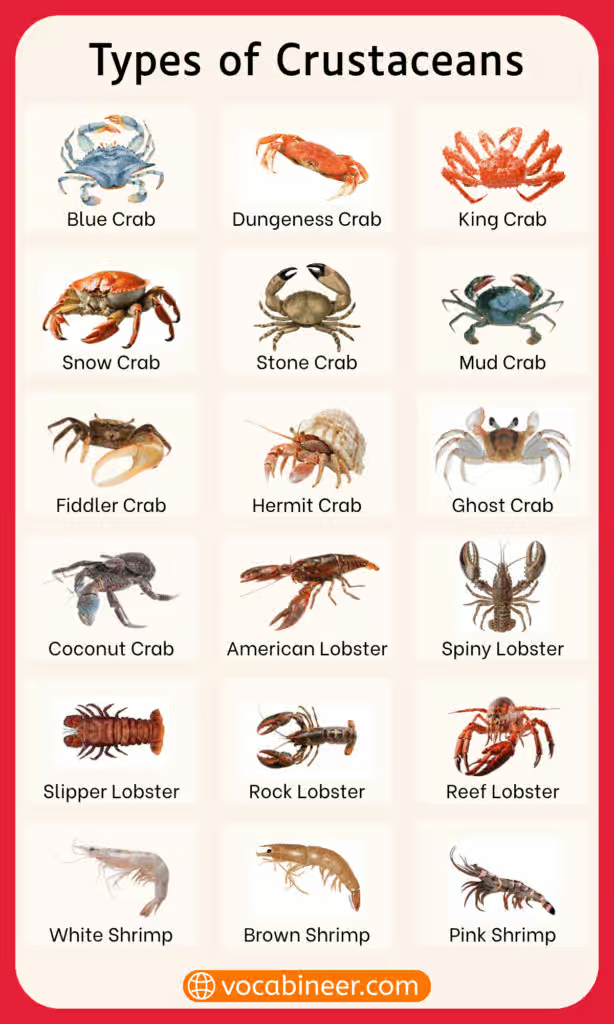
Crustaceans
- 2 pairs of antennae
- compound eyes
- protective exoskeleton
- 5 pairs of limbs
- combined head & thorax (cephalothorax)
(갑각류)
Myriapods
- Segmented body
- pair of legs on each body segment
- at least 10 pairs of legs
- one pair of antennae
- simple eyes
Fungi
- thread like hyphae
- hyphae form a branching structure called mycelium
- Nuclei are scattered throughout the cytoplasm
- Release enzymes that digest food externally
- Absorb nutrients through their cell walls
Prokaryotes
- Single celled organisms
- some have chloroplasts
- other consume and digest their food internally
Viruses
- central core of DNA or RNA wrapped in a protein coat
- x nucleus, cytoplasm, cell organelles or cell membrane
- x eat, respire, excrete or grow
- reproduce only within the cells of living organisms
Ferns
- Stems are usually below the ground
- x produce seeds
- produce single celled spores
- Spores release from sporangia on the underside of the leaves
Monocotyledons
- one cotyledon (embryonic leaf) inside their seeds
- flower parts are grouped in threes
- long, narrow leaves with parallel veins
Dicotyledons
- 2 cotyledons (embryonic leaf) inside their seeds
- flower parts are grouped in fives
- broad leaves with a branching network of veins
Why the scientist used DNA sequencing
- sequences of bases in DNA are used as a means of classification
- recent ancestors will show a similar base
Reptiles
- cold blooded
- Land living
- Dry, scale skin
- lay eggs
- eggs have tough, rubbery shell
Protoctist
single celled organisms
chromosomes are enclosed within a nucleus
some have chloroplasts (make their food by photosynthesis)
other consume and digest their food internally
Mammals
4limbs
warm blooded
hair or fur
diaphragm
produce milk
give birth to fully formed young
Fish
cold blooded
overlapping scales
fins
filamentous gills
eggs are laid and fertilised externally
Birds
warm blooded
fused vertebrae
feathers
2 wings and 2 legs
lay eggs with hard shells
claws and beaks
Animal vs Plant kingdom
Animal kingdom:
multicellular organisms
no cell wall or chloroplasts
most animals can move location
most can ingest solid food and digest it internally
Plant kingdom:
multicellular organisms
have an outside cell wall
contain chloroplasts and chlorophyll
make their food by photosynthesis