Solid Dosage Forms: Processing of Capsules
 Call Kai
 Learn
Learn Practice Test
 Spaced Repetition
 Match
Match Flashcards
 Knowt Play
1/13

There's no tags or description
Looks like no tags are added yet.
Name | Mastery | Learn | Test | Matching | Spaced | Call with Kai |
|---|
No analytics yet
Send a link to your students to track their progress
14 Terms
What are the 2 types of capsules?
Regular capsules
Controlled release systems
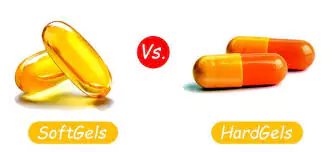
What are the 2 types of regular capsules?
Hard gelatin
Soft gelatin
What are 2 types of controlled release systems in capsules?
Coated granules
Coarse dispersion
Capsules may not be first choice (compared to tablets) due to speed of production.
Why do we use hard shell capsules?
Hard capsules can hold bulk drugs
Capsules are useful for drugs that are not suitable for compression
Capsules can be used in dry powder inhalers
Where do you get gelatin?
Gelatin is a protein substance commonly derived from collagen from animals
It is produced by partial hydrolysis of connective tissues
There’s type A gelatin produced by acid hydrolysis and type B gelatin produced by basic hydrolysis
How do you manufacture empty capsules?
Hard gelatin capsules have 2 parts. A cap and a body.
Soft gelatin capsules are one operation.
How do you fill a gelatin capsule?
A dosator. You can control how much amount you can put in.
Why are glidants and lubricants added?
Reduces friction and improves flow
Why are diluents added?
They are required for low dose drugs
There is non-powder filling of hard gelatin capsules/
A variety of materials other tan powders can be filled, like granules and pellets, semi solids, non aqueous liquids.
The self locking capsules lock in the non powder filling
What are the potential problems with capsules?
Crosslinking
Gelatin crosslinking reactions may make the capsule insoluble
Embrittlement
Water loss to fill material or atmosphere causes brittle capsules to crumble
Sticking/solvation
Water entry hydrates the capsule, making it sticky and may start to dissolve
Leaking
Poor seal at the capsule body may cause leaking
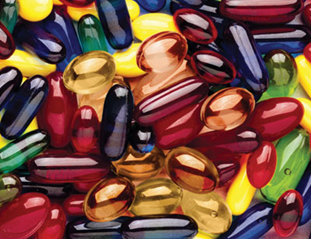
Soft gelatin capsules
Made of continuous gelatin shell surrounding a liquid or semi-solid matrix material
Compounds which are soluble or dispersible in oil, hydrophilic liquids, or a combination benefit from formulaton as a soft gelatin capsule
Capsules are formed, filled, and sealed in one operation
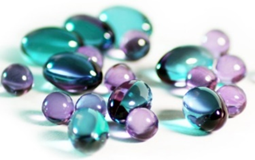
There are many different sizes and shapes
What are the advantages of soft gelatin capsules?
No need to compress drugs (these drugs are usually poorly compressible at high doses)
No drug content uniformity and powder flow issues as drug is dissolved or dispersed in a liquid which is accurately dosed volumetrically.
There is chemical stability of dispersed drug (the oily vehicle will protect drugs sensitive to oxidation or hydrolysis)
Drug formulations as self-emulsifying oils increase oral bioavailability
What are the limitations of soft gelatin capsules?
Drugs or excipients containing high concentration of water or other gelatin solvents cannot be incorporated
Not great for o/w or w/o emulsions, which will become unstable as water is lost from shell
Surfactants affect the capsule seal
You have to avoid pH below 2.5 and above 7.5