AHIS Final
 Call Kai
 Learn
Learn Practice Test
 Spaced Repetition
 Match
Match Flashcards
 Knowt Play
1/89

There's no tags or description
Looks like no tags are added yet.
Name | Mastery | Learn | Test | Matching | Spaced | Call with Kai |
|---|
No analytics yet
Send a link to your students to track their progress
90 Terms
Julio-Claudian Sculpture
NEXT PART
Julio-Claudian Introduction
Julio-Claudian dynasty (14-68 A.D.) founded by Augustus--not an inherited monarchy
the Principate: not an office as such, but a collection of powers guaranteeing primacy in the state
portraits of Augustus' grandsons (and adopted sons) Gaius and Lucius--died in early manhood
Princeps in julio-claudian
Tiberius, Gaius “Caligula”, Claudius, Nero
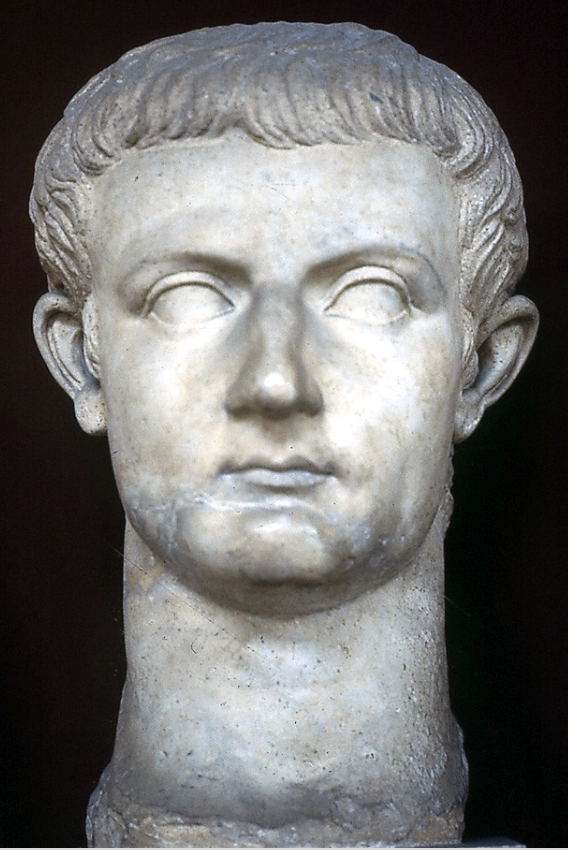
Tiberius (Princeps 14-37 A.D.)
claudian by birth; son of Livia and stepson of Augustus (adopted by augustus)
became princeps at age 56 in 14 AD, dollowing the death of augustus
ancient literary sources generally aristocratic and hostile to Augustus' Julio- Claudian successors (e.g., Suetnoius' Biography of the Caesars, which contains much that is fanciful gossip)
4. Tiberius' grim and introverted nature much misunderstood
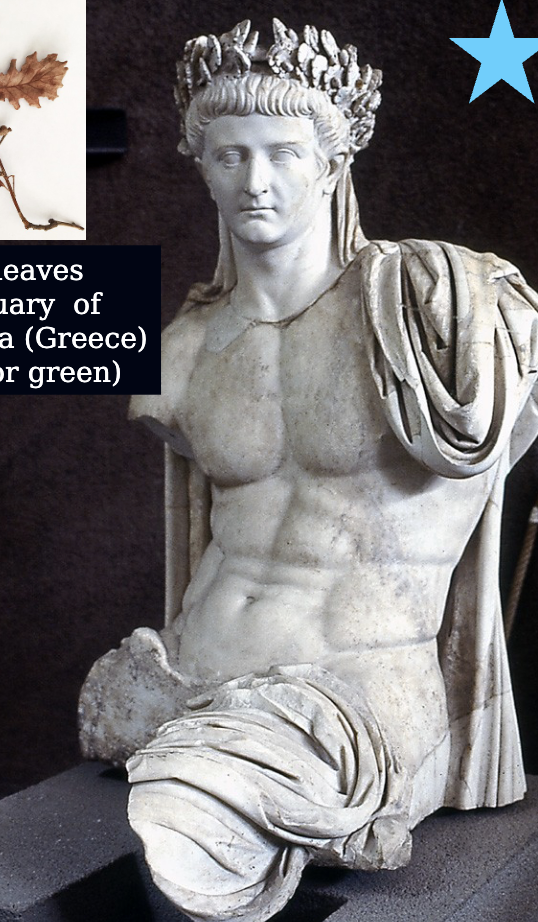
portrait statue of tiberius from Caere
semi nude and jupiter like
corona civica (civic grown) of oak leaves: originally awarded to a
soldier for saving the life of a citizen; in imperial times, the prerogative of the Princeps, as savior and protector of all the people
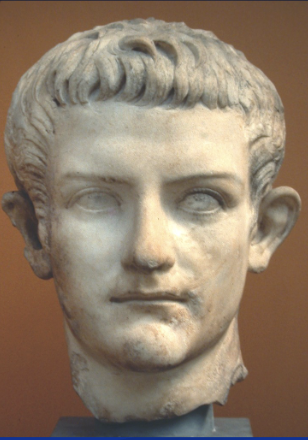
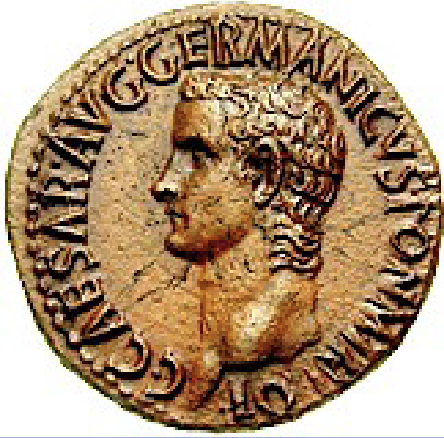
Gaius “Caligula” (Princeps 37-41 A.D.)
“galigula” : means “little boots”
succeeded Tiberius at the age of 24 in 37 AD
initial attempt to govern went well, but hampered by his youth anf inexperience
assassinates in 41 AD by a group of Praetorians (the police force of rome) backed by certain members of the senate
nearly suffered damnatio memoriae--the official damnation of an individual's memory, resulting in the destruction of his official portraits and inscriptions
softer modeling of facial features than customary in Augustan and Tiberian portraiture
Claudius
princeps 41-54 AD
Made princeps by the practorian guard after assassination of caligula
deified by senate in 54 A.D.
illusionistic portraiture
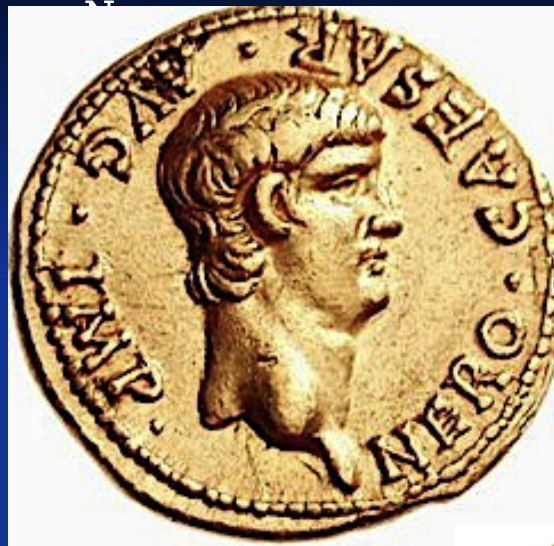
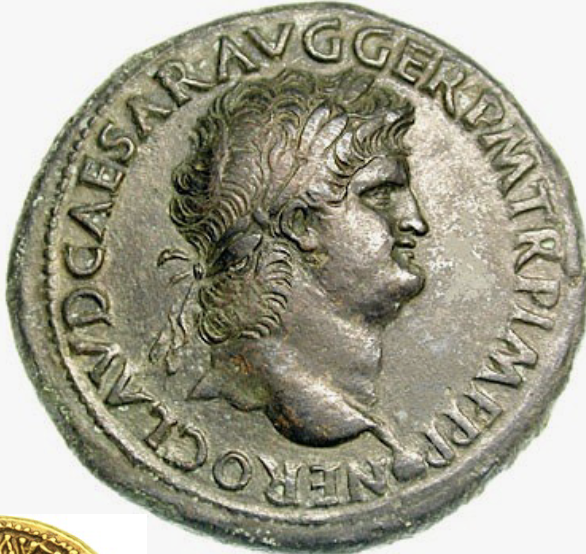
Nero (Princeps 54-68 AD)
stepson of claudius, son of Agrippina Minor, niece and 4th wife of Claudius
succeeded Claudius in 54 A.D. at the age of 17
first five years of his Principate successful, largely because of the good counsel of his advisors Seneca and Burrus
59 A.D.--Nero has his mother assassinated and comes under the influence of bad advisors
66 A.D.--troubled times for the empire: wars in Britain, Armenia, and Judaea; food shortage in Rome
68 A.D.--the rise of the Praetorians against Nero, who takes his own life
Nero's de facto damnatio memoriae
coin portrait of Nero as youth of 20 (57 A.D.); cf. coin portrait at age 27 (64 A.D.)
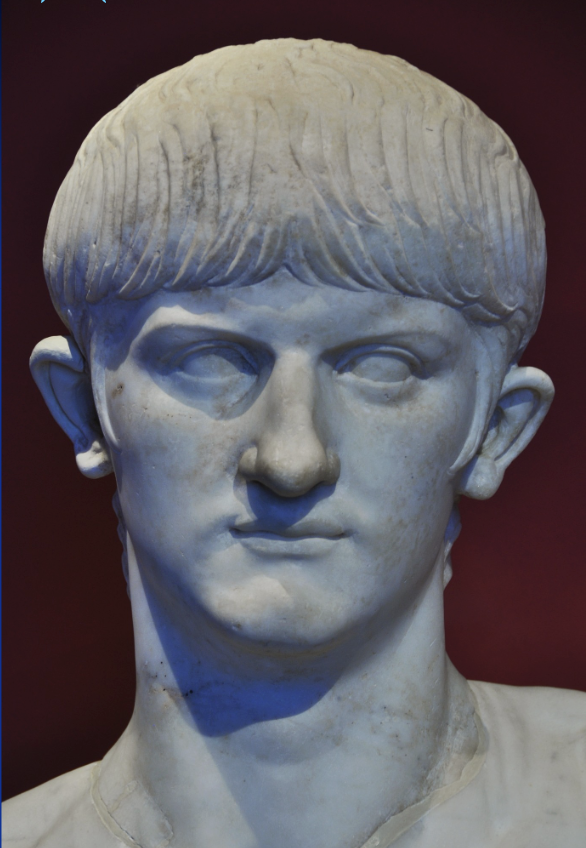
youthful sculptural portrait of Nero
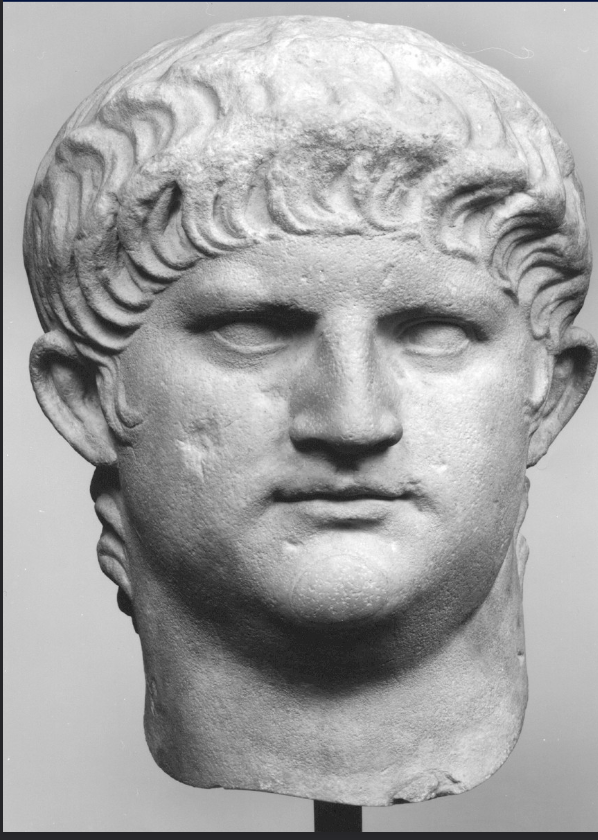
older sculptural portrait of nero
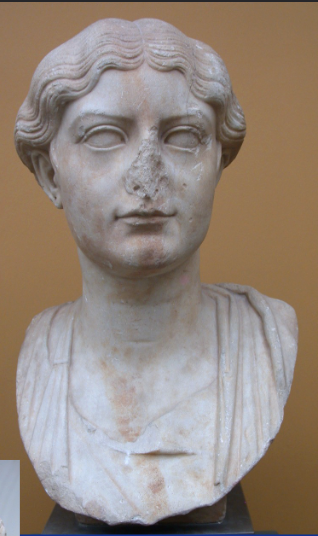
sculptural portrait of Antonia Minor: niece of Augustus and mother of claudius
hair carved in low relief and uniformly linear
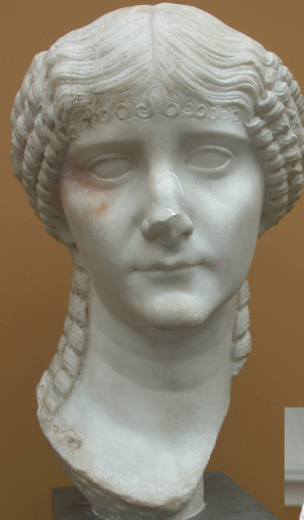
sculptural portrait of Agrippina Minor
deep drill work characteristic of later Julio-Claudian female hairstyles
contrast between richness of plastically carved and drilled haircurls and the smooth, soft planes of the face
JULIO-CLAUDIAN ARCHITECTURE
NEXT PART
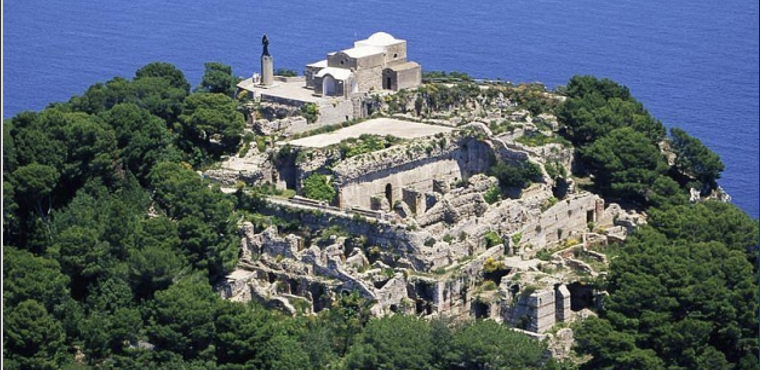
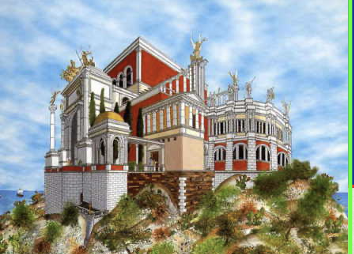
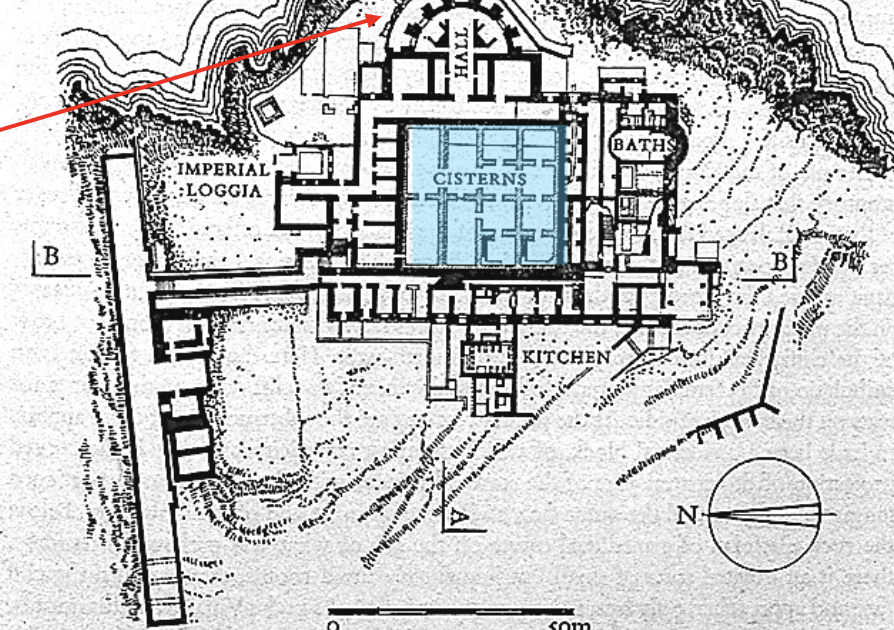
Villa Iovis on the island of Capri - Tiberius
set on 1000’ high cliff
core of villa: large square courtyard with massive vaulted cistern beneath. cistern: store rainwater
4 distinct wings of the villa:
S.W. corner: entrance with vestibule and guard room
South side: bathing complex
West side: lodgings for Tiberius’ entourage; large kitchen beneath
North & East sides: private quarters of Tiberius (formal rooms, private rooms, long terrace with large triclinium)
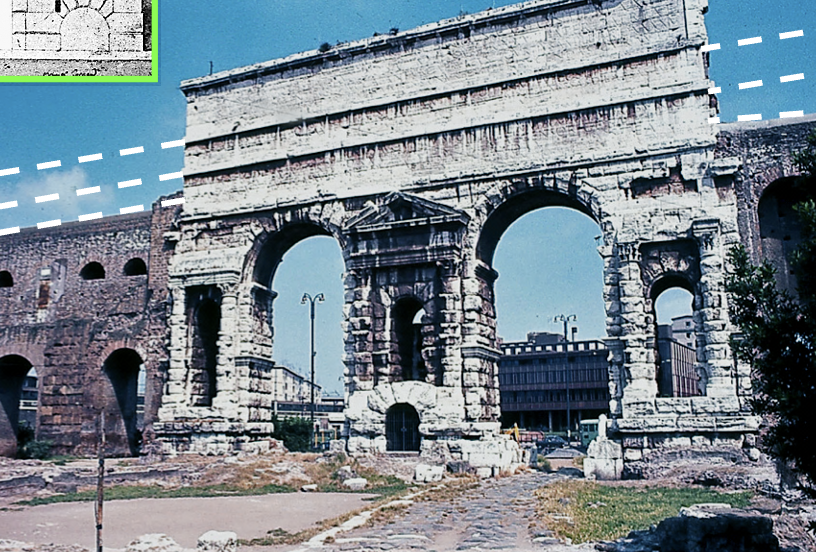
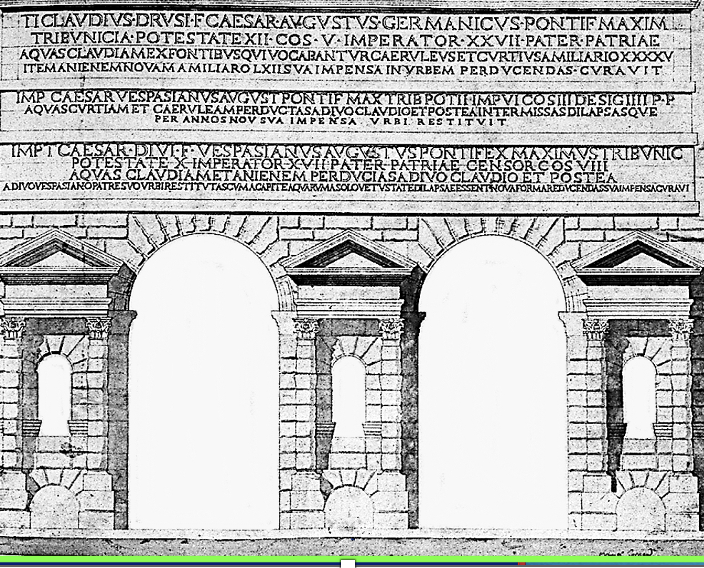
"Porta Maggiore"--monumental double arch spanning the Via Labicana and the Via Praenestina - Claudius
carried the Aqua Claudia and the Aqua Anio Novus (2 aqueducts
completed by Claudius)commemorative inscription in the attic (the upper section of the arch)
giving the completion date of 52 A.D.rusticated masonry--rough-textured blocks of stone, separated by conspicuous joints (popular under Claudius)
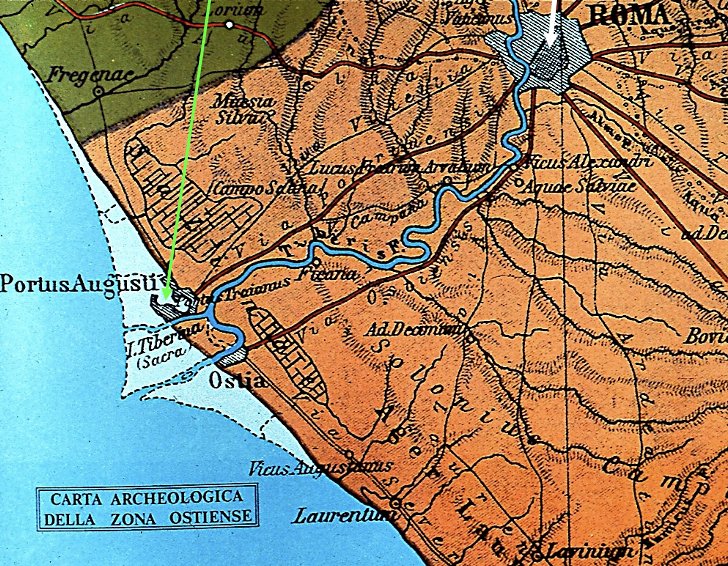
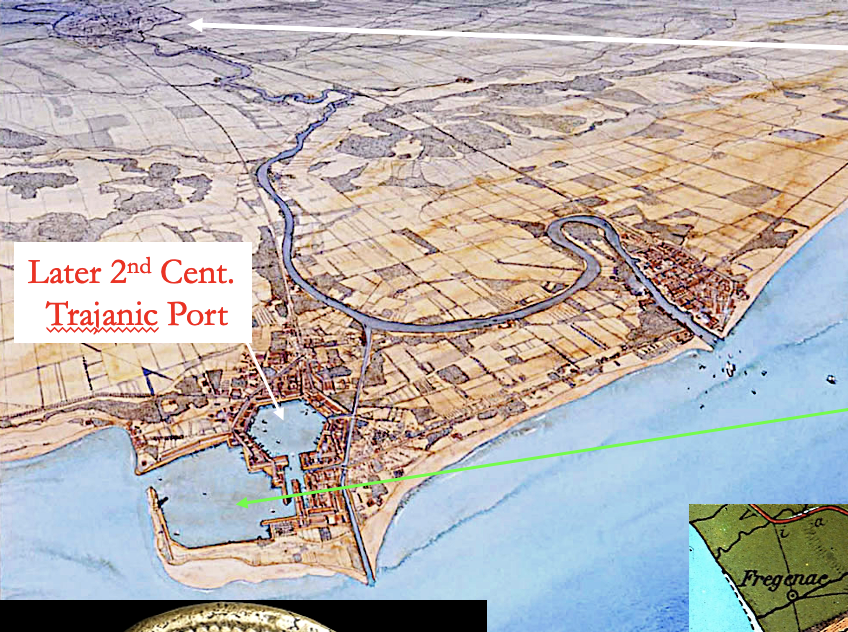
Claudian port at Ostia
planned by Julius Caesar; begun by Augustus; carried out by Claudius
Claudian lighthouse on mole built over transport ship of Caligula
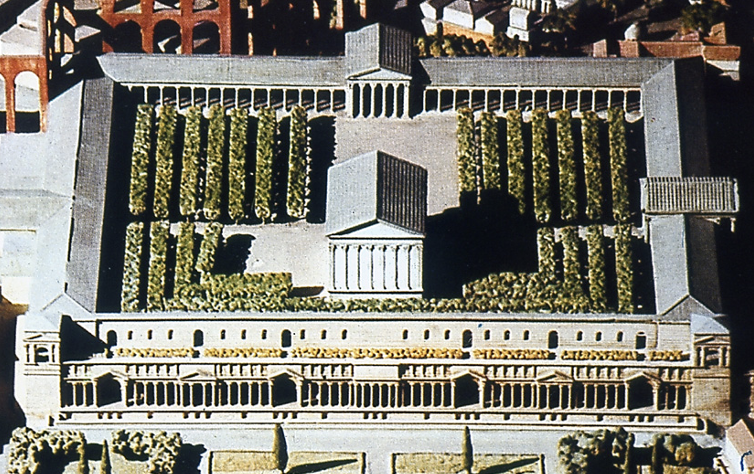
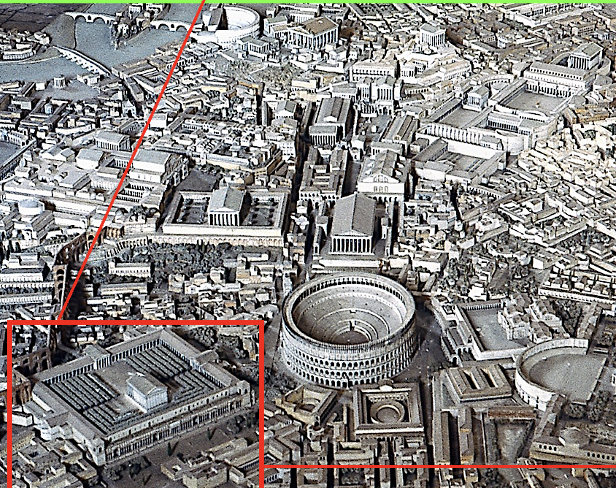
Temple of Divus Claudius (the Deified Claudius)--built on a gigantic platform on the northern slope of the Caelian Hill - Nero
begun by Claudius' widow Agrippina; left unfinished at Agrippina's
death in 59; completed by the emperor Vespasian (69-79)part of podium-platform converted into a nymphaeum (=elaborate
fountain) for Nero's Golden House (Domus Aurea)
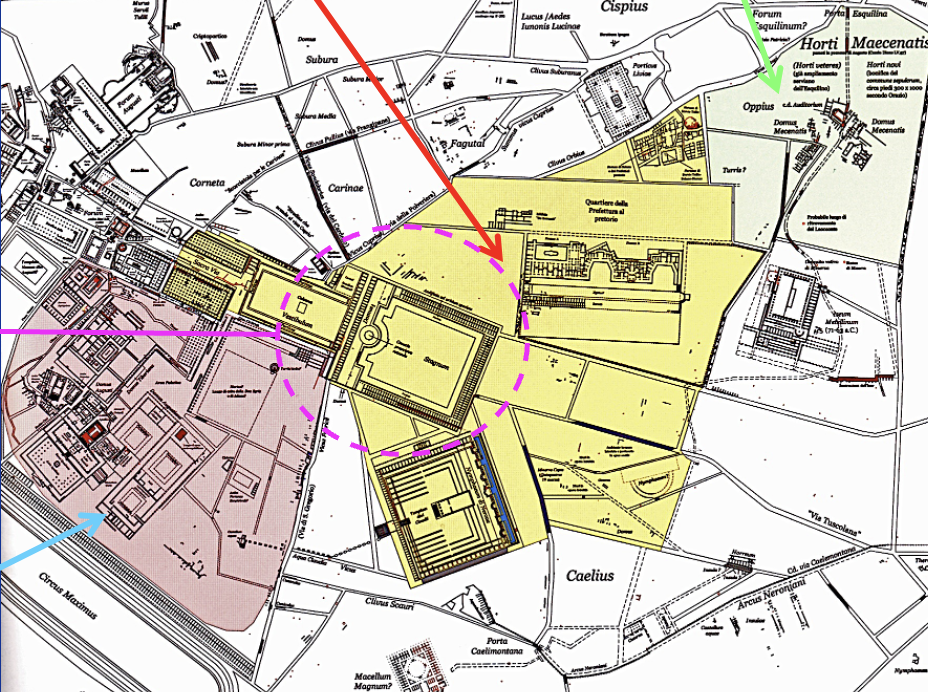
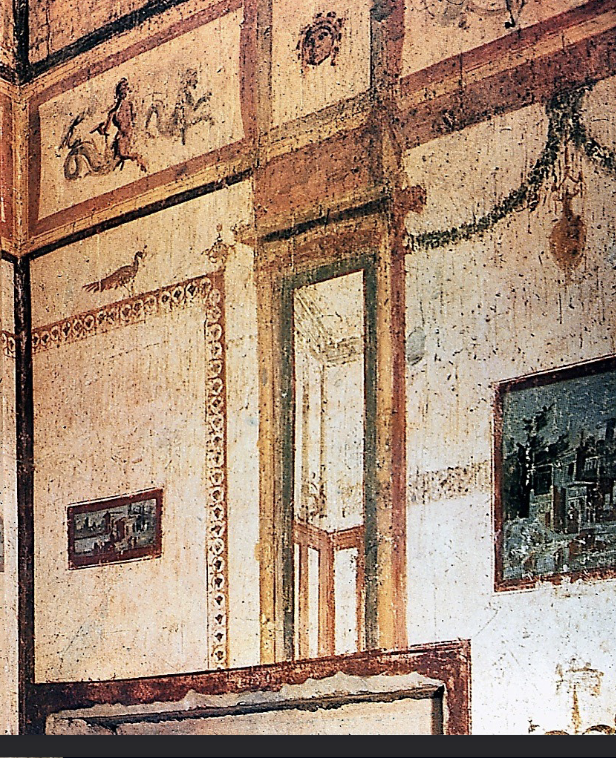
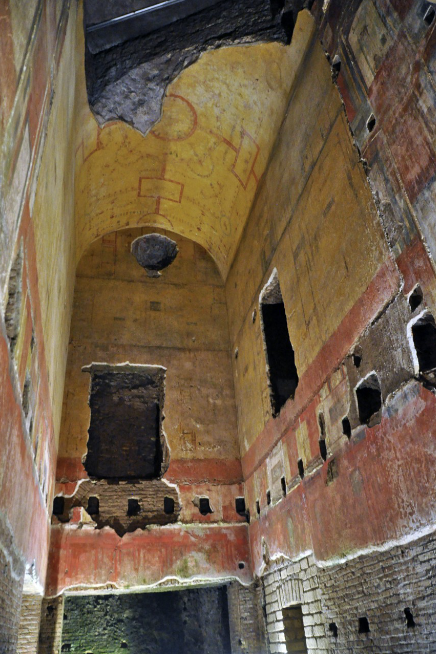
Domus Aurea (“Golden House”), 64-68 A.D.
covered an area of c. 300-350 acres, including Palatine, Caelian, and Esquiline Hills
artificial lake--later site of the Flavian Amphitheater (the Colosseum)
main domestic wing on the Esquiline Hill
grandiose vestibule--later site of Arch of Titus and Temple of Venus and Roma, at the east end of the Roman Forum
120' high gilded bronze statue of Nero in the vestibule
ruins of main residential wing on the Esquiline under the Baths of Trajan
paintings of residential wing copied by Renaissance artists
"grotesque"--word coined by Renaissance artists to describe the underground rooms (called "grotte"=grottoes)
question of the beginning of the Roman architectural revolution (dating back as early as the 2nd century B.C.)
architectural forms of the Baths of Agrippa in Rome
Augustan bathing establishment in the resort of Baiae on the
Bay of Naples
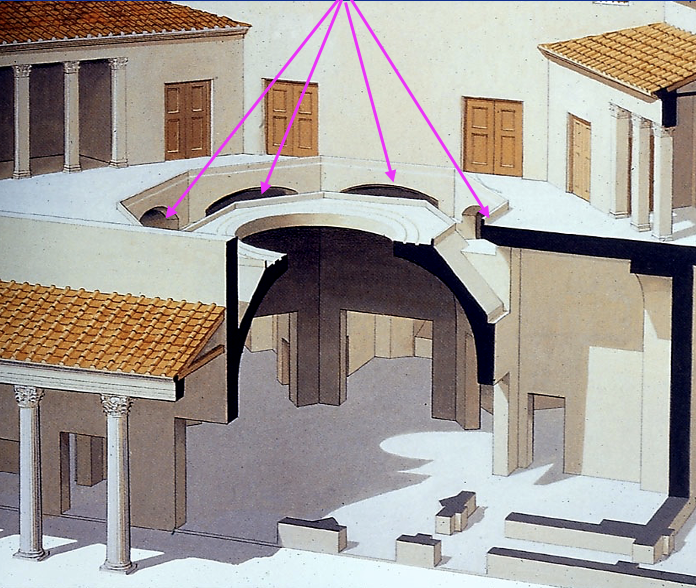
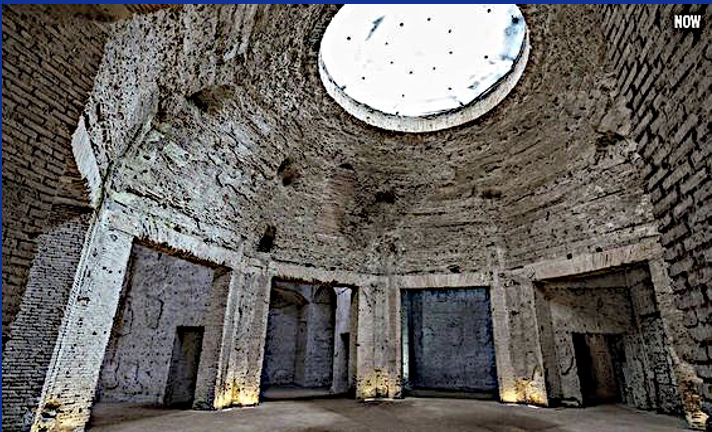
octagonal room of the residential wing on the Esquiline in Domus Aurea
dome with large oculus (=circular opening) at its center
transom windows--light shafts behind dome to permit lighting of adjacent rooms
rectangular and cruciform adjacent rooms with barrel of cross vaults
nymphaeum and triclinia
coenatio rotunda --a round dining room of the Domus Aurea mentioned by Suetonius; the room somehow revolved or had a revolving ceiling
FLAVIAN SCULPTURE
NEXT PART
Flavian era intro
begins after the chaos following neros death
marks a return to stability and traditional roman values after Nero excess
the year of the 4 emperors: Galba, Otho, Vitellius, Vespasian
barroque and classicizing currents in Flavian art
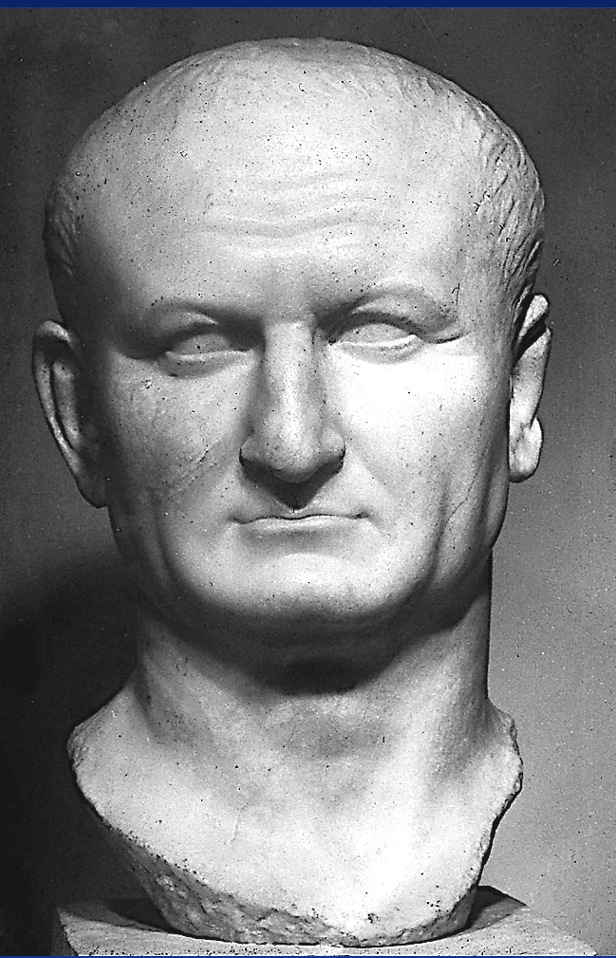
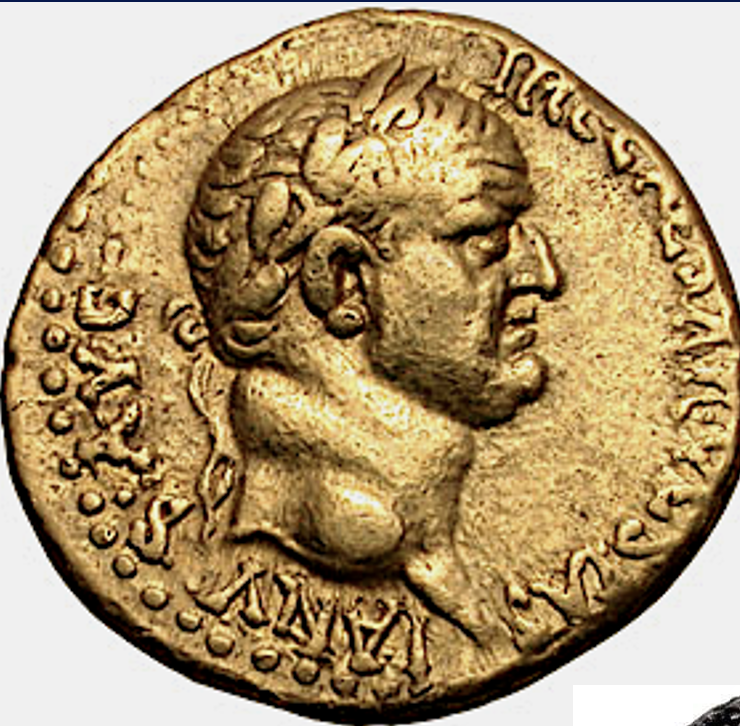
Vespasian (69-79 A.D.)
humble Italian origins of Vespasian, the founder of the Flavian dynasty
great military reputation achieved under Claudius and Nero
sculptural portrait from Lucus Feroniae, north of Rome
represents Vespasian at age of c. 60 at the time he came to power
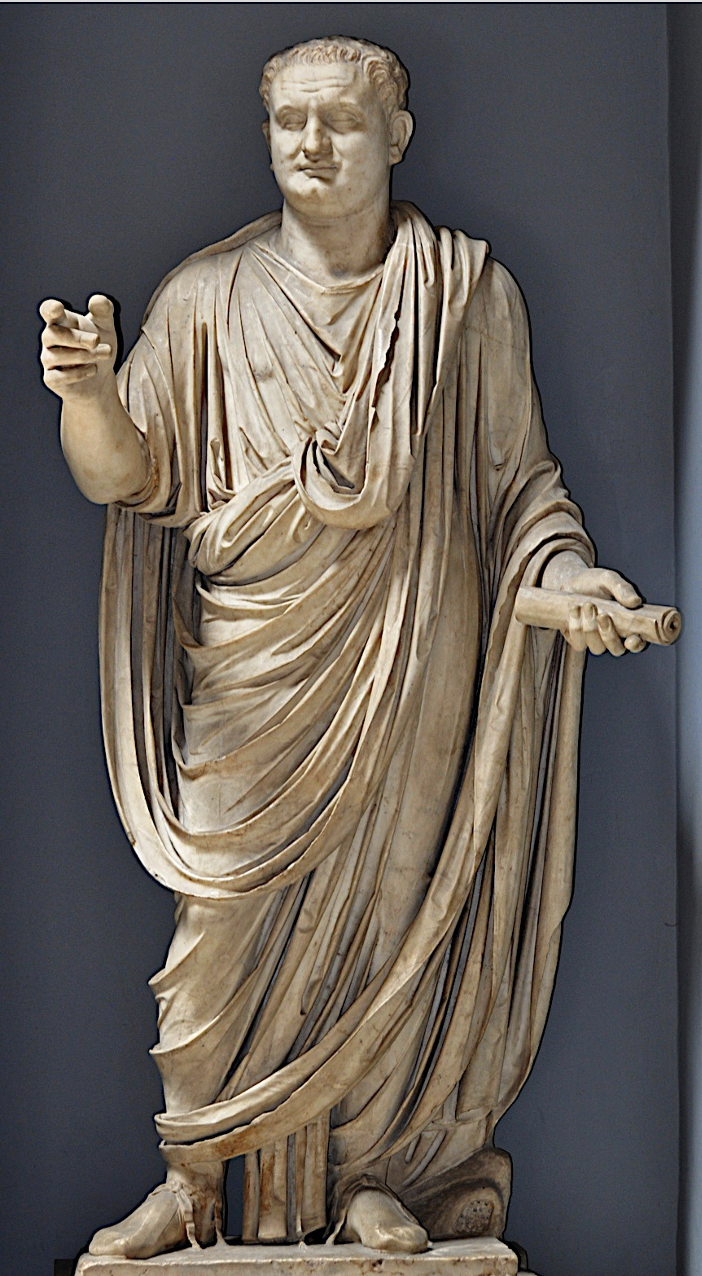
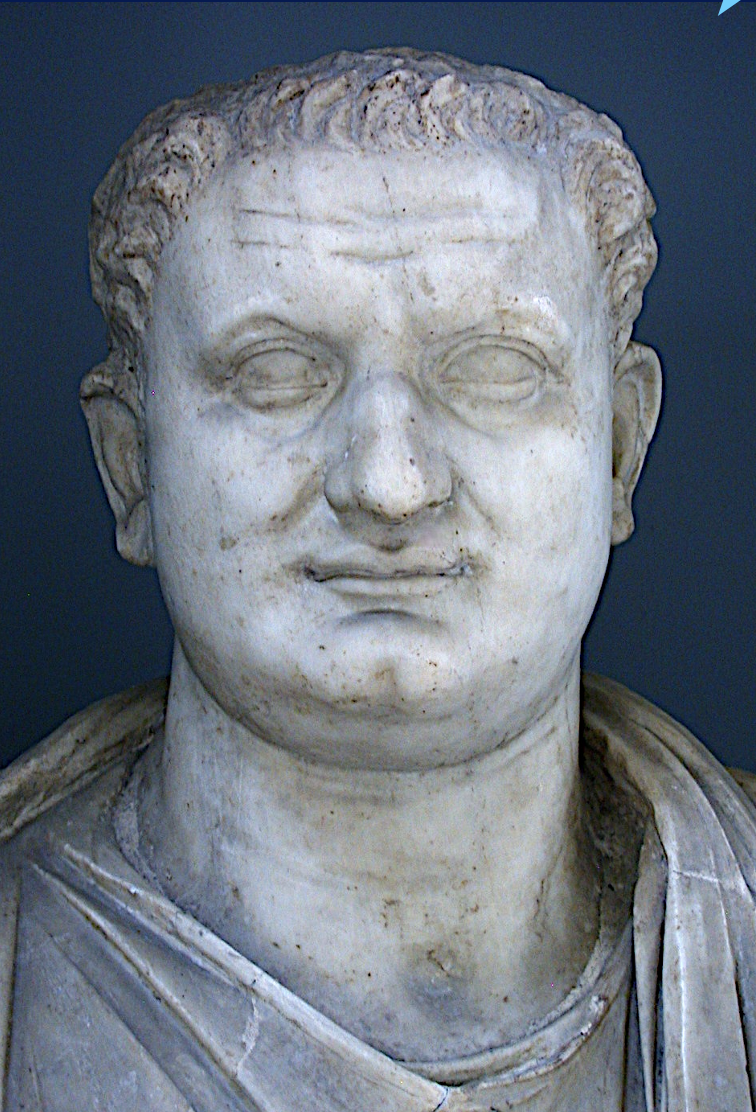
Titus (79-81)
Vespasian's elder son, who became emperor after the death and deification of Vespasian in 79
died in 81 AD at the age of 41; also deified
military man who crushed the Jewish rebellion threatening the peace of the eastern empire
togate portrait statue of Titus--sharp edges and very deep cutting of folds of the toga producing stronger chiaroscuro (contrast of light and shadow) effect than in similar works of the Julio- Claudian period (a stylistic means of dating)
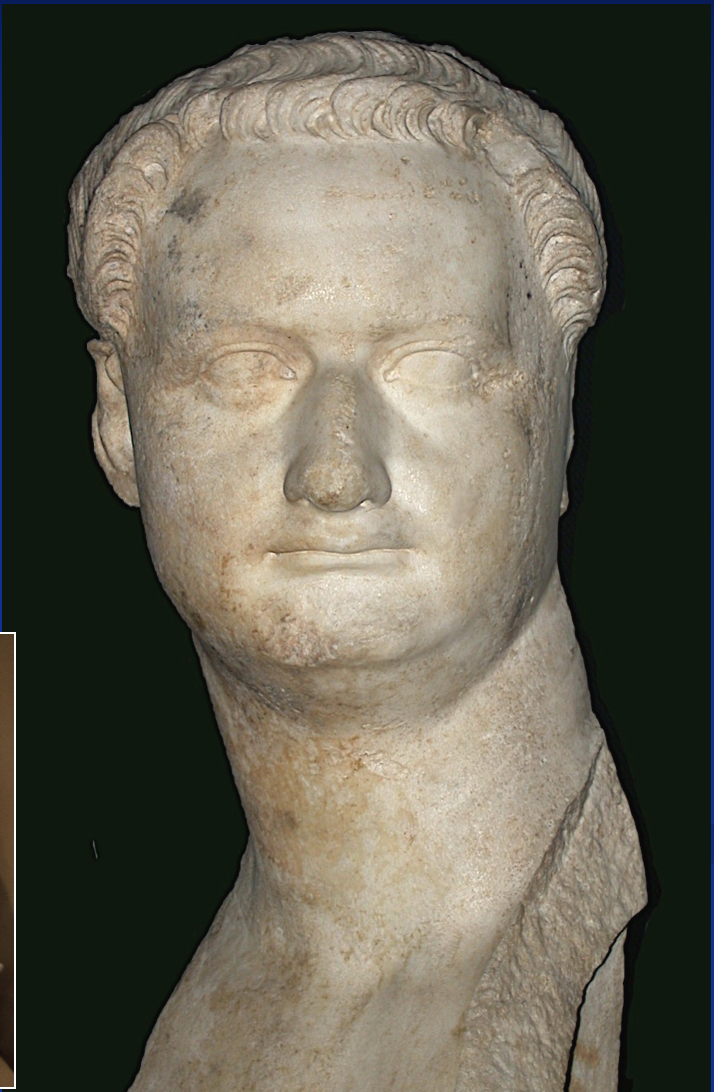
Domitian (81-96)
Vespasian's younger son, who succeeded his brother Titus in 81
Domitian assassinated in 96, after which he suffered a damnatio memoriae
dominus et deus ("lord and god")--a title given to Domitian privately; absent on any official documents, coinage, or monuments
archaeological evidence that Domitian governed well and that the empire was relatively peaceful and prosperous during his Principate
sculptural portrait of Domitian
Domitianic classicism
comparison of wave-like hairlocks with those of later portraits of Nero
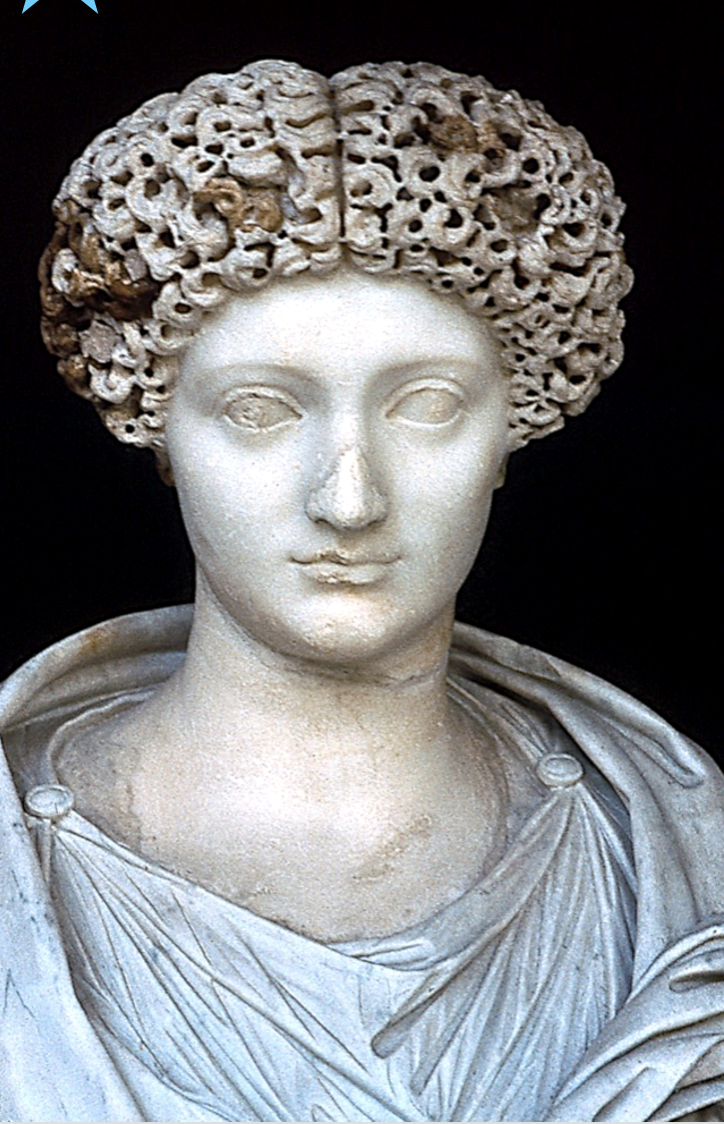
Julia Titi (daughter of Titus)
sculptural portrait of Julia
bonnet-like hairdo
honeycomb effect produced by coarse drill work defining
individual strands of hair, with small bridges (or struts) left
between drill channels"Flavian baroque"--a style characterized by dramatic
chiaroscuro effects, emphasized by plastic carving and deep drill work
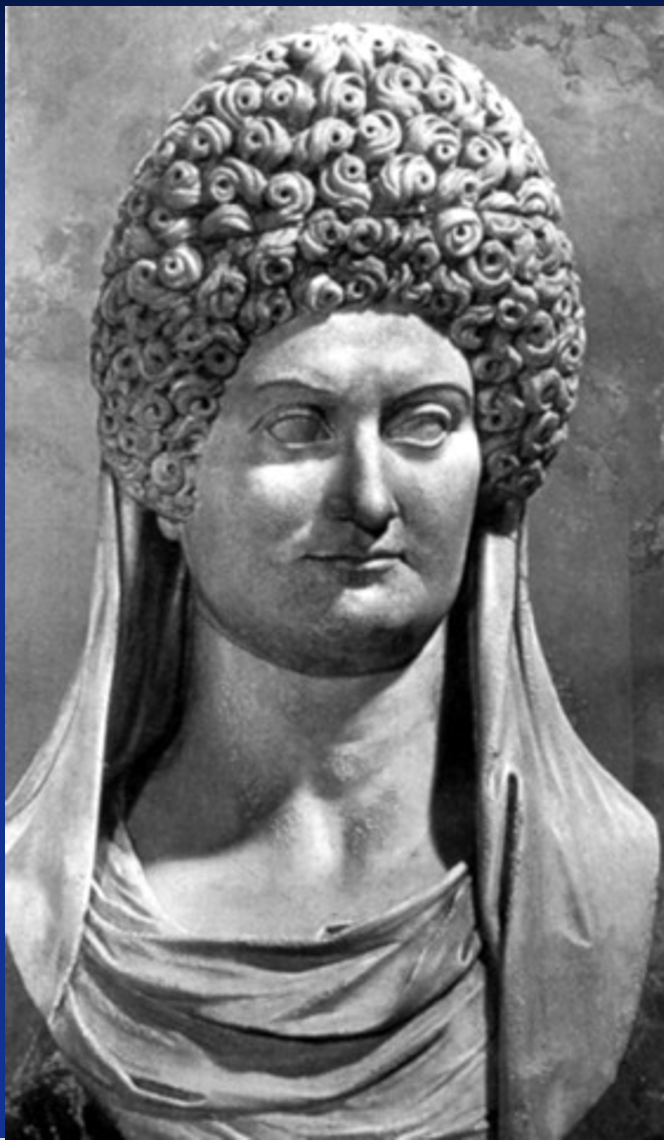
Domitia--wife of the emperor Domitian
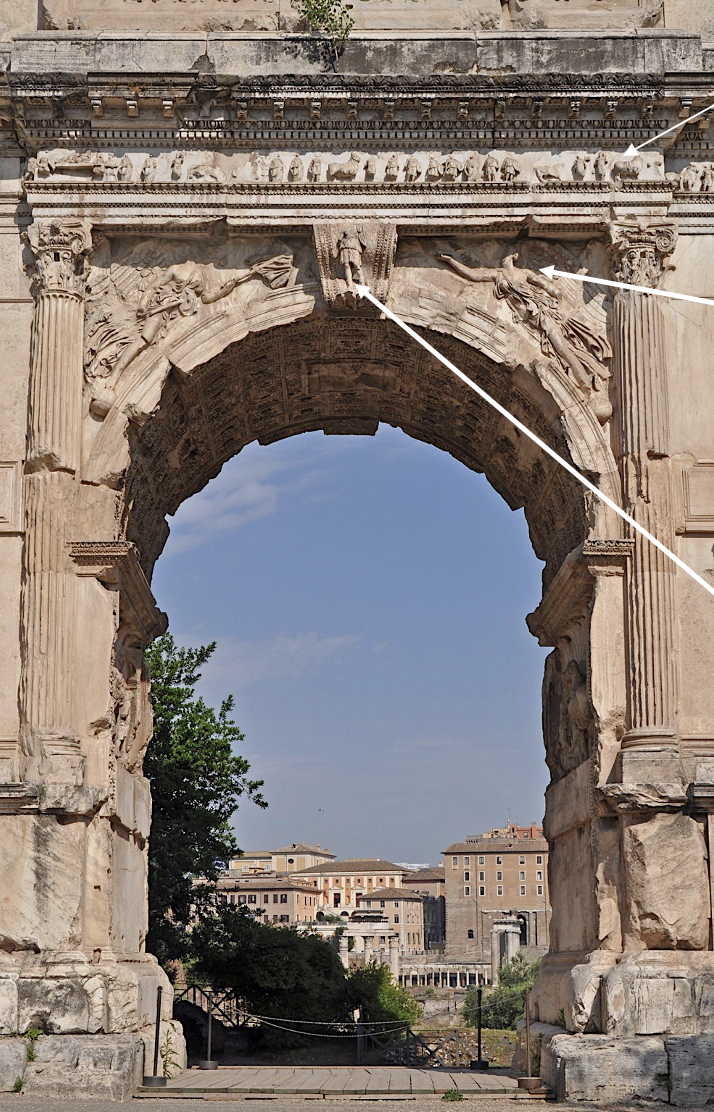
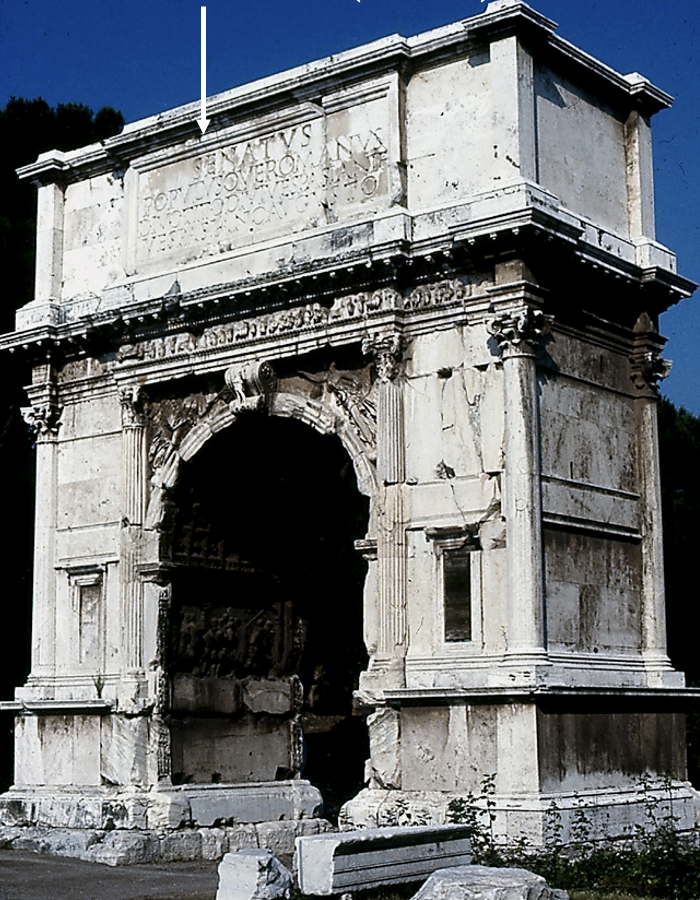
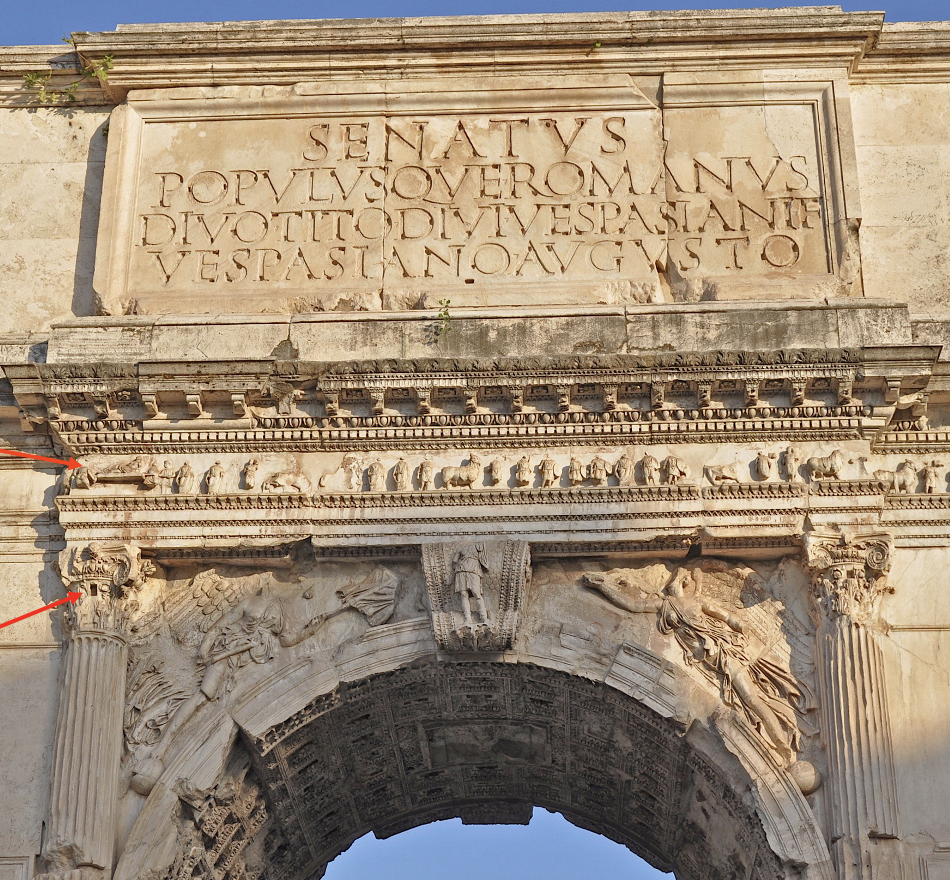
Ancient part of the Arch of Titus
located at east end of the Roman Forum
completed and dedicated after Titus' death in 81--inscription on arch
referring to Divus (deified) Titusmuch of arch reconstructed in 19th century, using new travertine stone
winged Victories holding out military trophies and flags in the
spandrels (i.e., the roughly triangular space between the curve of the arch and the straight sides of the monument)"Virtus" (military virtue personified) decorating one of the keystones
composite capital--a capital combining the volute spirals of Ionic
capitals and the acanthus leaf bell of Corinthian capitals; originated in the Augustan periodsmall continuous frieze representing a triumphal procession (pompa)-- around attic of arch
ferculum (pl. fercula)--portable table for displaying spoils of war
relief panel decorating the summit of the intrados (the inner vault of the arch)--Titus riding on the back of an eagle, a standard apotheosis motif
illusionistic effects of the 2 panels of the inner piers
illusionism--creating an illusion of life, movement, and space,
esp. spatial depthconcave background and convex relief figures of Arch of Titus
panelstiering of figures in spoils of Jerusalem panel
overlapping of figures
mixing of divine and living human figures in panel representing Titus in triumph--relatively new trend in official art of Rome (cf. the Gemma
Augustea, an Augustan private work of art in the Hellenistic tradition of monarchy)
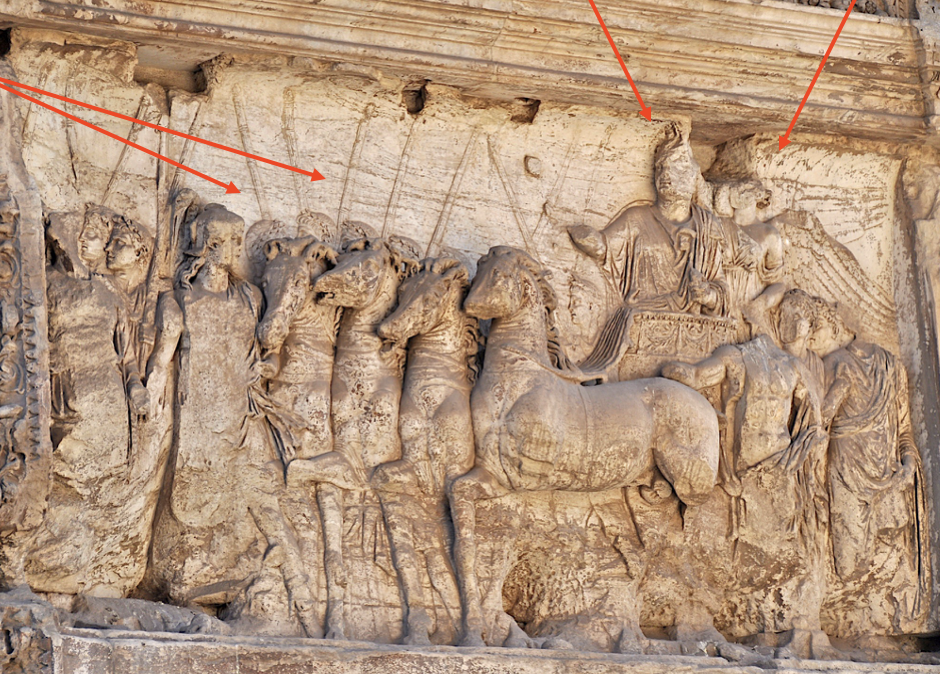
relief panel decorating the inner face of Arch of Titus
panel representing Titus as triumphator in a triumphal
quadriga-(4-horse chariot)holding scipio (eagle topped staff of the triumphator) and laurel
branchwearing toga picta-- embroidered toga of the triumphator and tunica palmata--tunic with embroidered palm motifs
worn by triumphatorVictory crowning Titus with wreath
12 lictors carrying fasces, the bundle of rods and ax
symbolic of the power of life and death2 personifications flanking chariot--either the goddess
Roma and the Genius Populi Romani (the divine spirit of
the Roman people) or the military personifications Honos
and Virtus
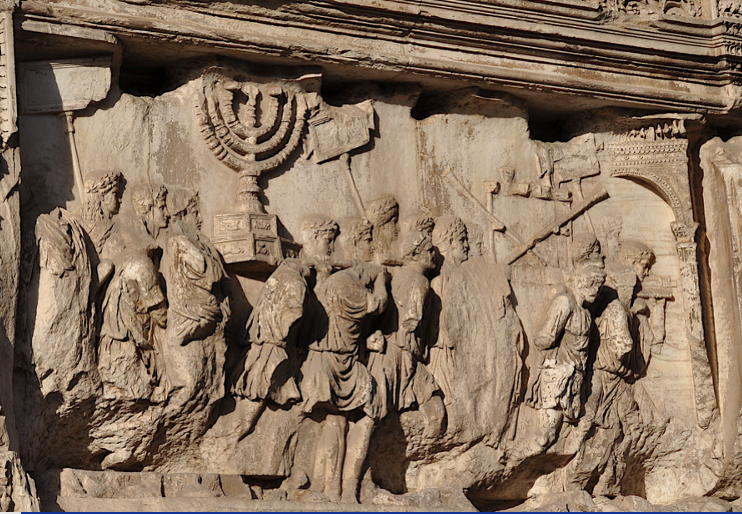
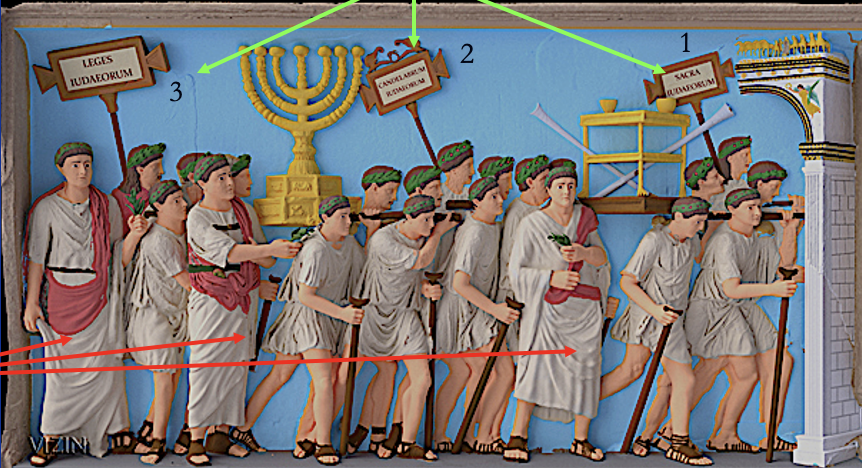
relief panel decorating the inner face of Arch of Titus
panel representing the spoils of Jerusalem (Spolia Relief)
Menorah--the 7-branched candelabrum from the
Temple of Jerusalemgolden table for the shew bread and silver trumpets
Three generals of Titus wearing a trabea, a short toga
worn by members of the equestrian classPorta Triumphalis in top right corner -- Arch of Triumph (at foot of the Capitoline Hill) through which triumphal processions
passed on the way to the Temple of Jupiter
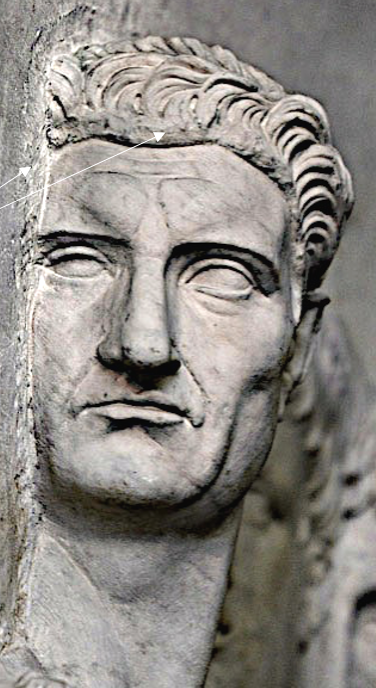
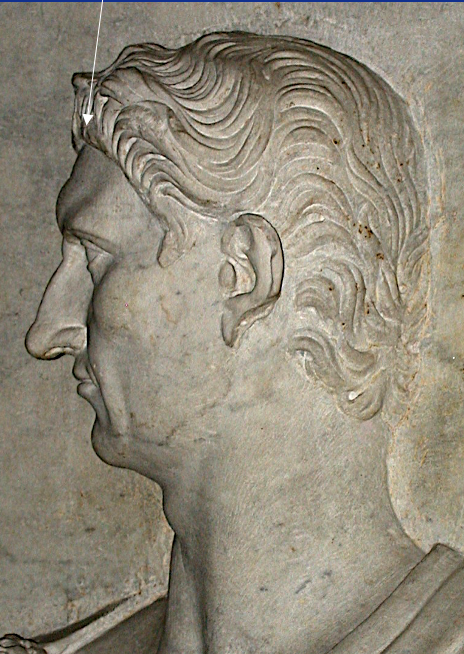
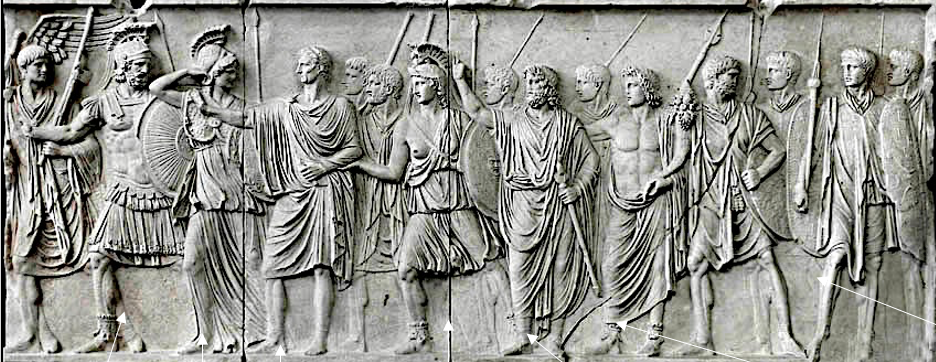
portrait of the emperor in the profection scene in greater Cancelleria relief under the Palazzo del Conservatori in Rome
face recut from Domitian into the likeness of his successor Nerva
FLAVIAN ARCHITECTURE
NEXT PART
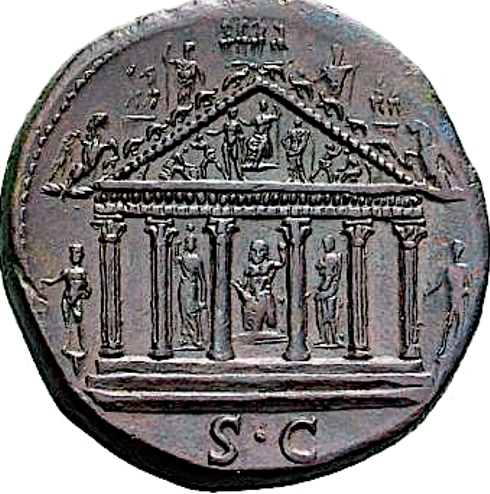
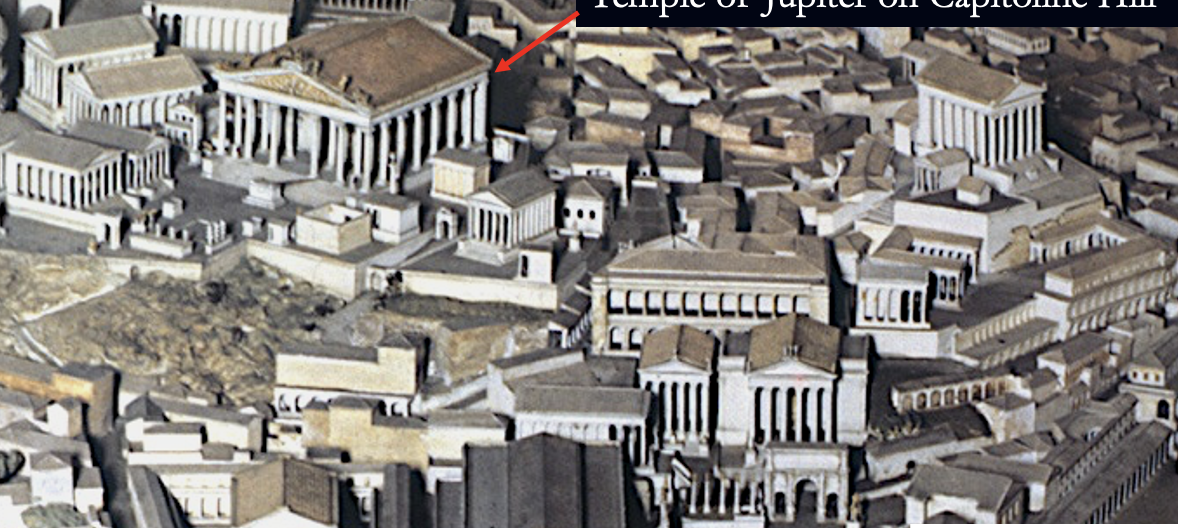
Vespasian rebuilds Temple of Jupiter Optimus Maximus on the Capitoline after the chaod of Nero and civil war
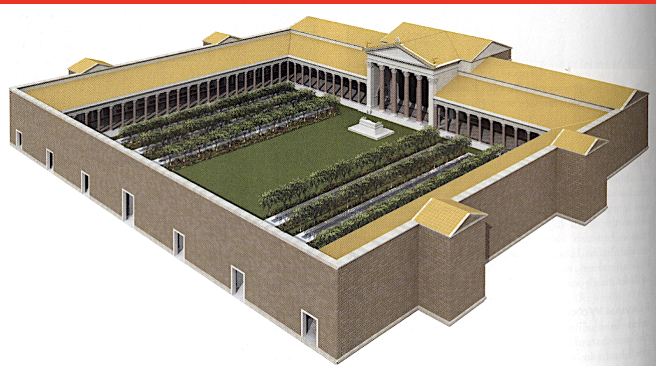
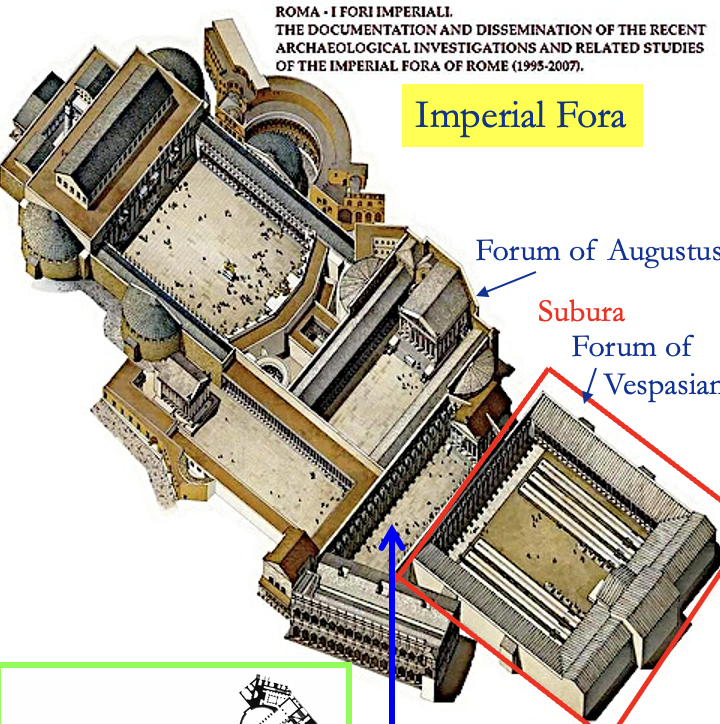
Forum of Vespasian (technically called the Templum Pacis=Temple of Peace) begun in 71 A. D. after the capture of Jerusalem
Argiletum--a busy street which ran between the Forum of Augustus and the Forum of Vespasian, connecting the Roman Forum and the Subura
Forum of Vespasian almost entirely unexcavated under the Via dei Fori Imperiali of modern Rome
Porticoes of red Egyptian granite on 3 sides of Vespasian’s Forum; free-standing columns attached to back wall on the 4th side (the main entrance)
temple of Peace--incorporated into portico and flanked by library and
columnar hall
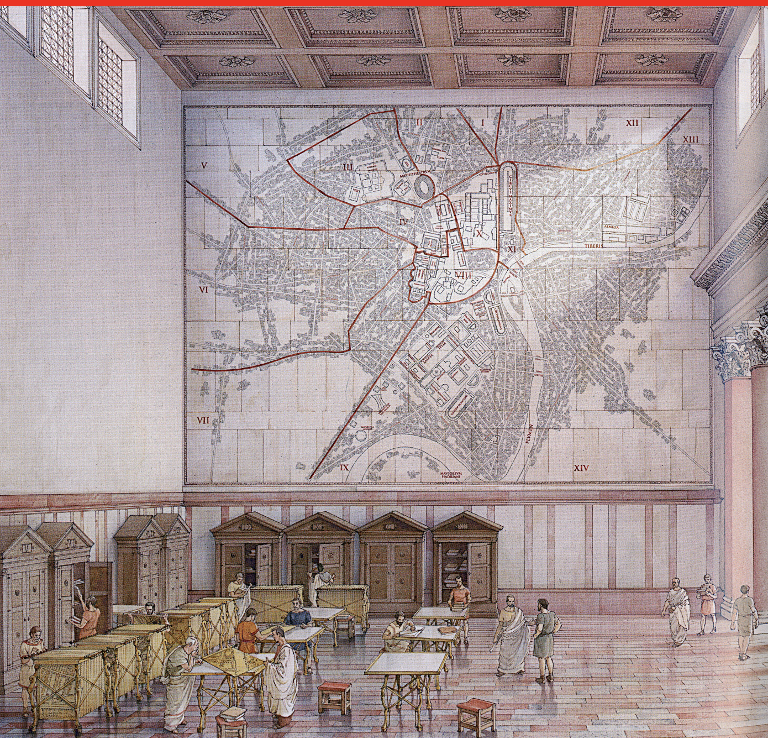
Forma Urbis--literally "Form (or plan) of the City" in Forum of Vespasian
ancient marble map of Rome made between 203 and 211,
under the emperor Septimius Severus151 slabs of marble originally
Attached to the back wall of a hall adjacent to the Temple of
Peace in the Forum of Vespasian (now part of the Church of Saint
Cosmos and Damian)
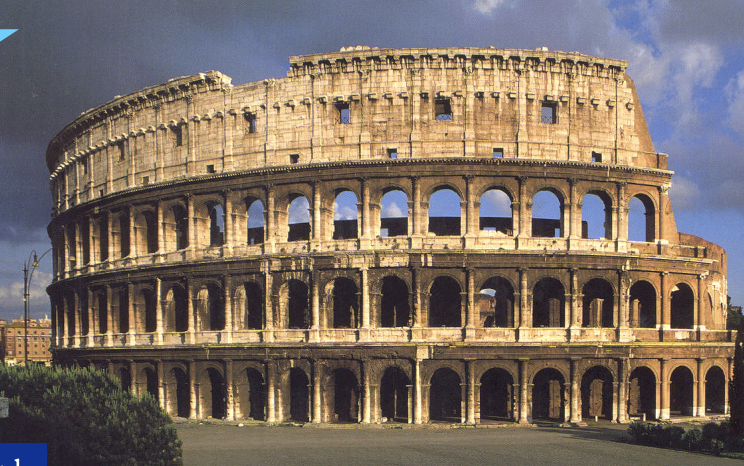
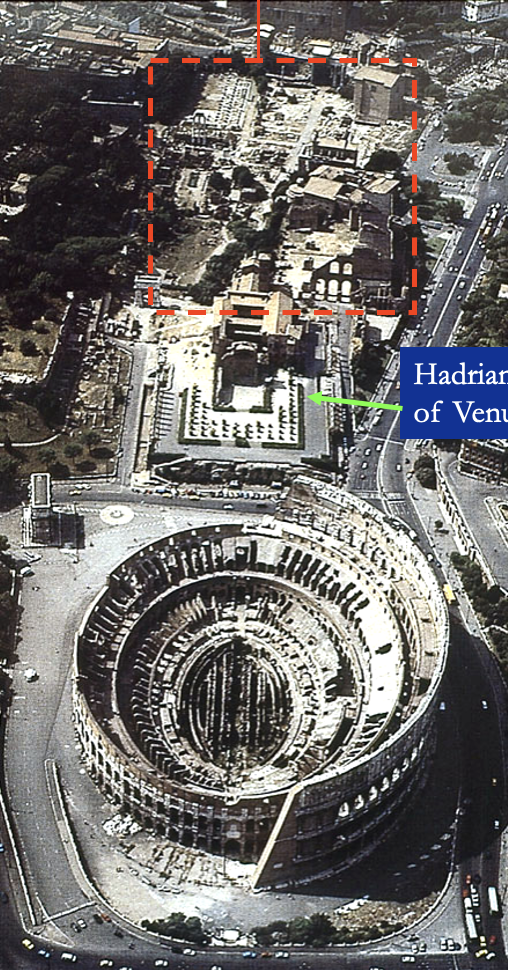
Flavian amphitheater (=colosseum) (69-80 A.D.) - Vespasian
Constructed on the side of an artificial lake of Nero’s Golden House
the Colossus (the colossal statue of Nero that had been changed to
represent Sol) moved by Hadrian from original site to a position closer to the Flavian Amphitheater, which as a result came to be called the “Colosseum”the Colosseum begun by Vespasian, dedicated by Titus, and finally
completed by Domitiannaumachia--mock sea battle (held in the Colosseum)
the Colosseum elliptical in shape (c. 100’ x 500’) 160’ high, with a
capacity of about 50,000 (the largest of all ancient amphitheaters and the first permanent masonry amphitheater of Rome)amphitheater =amphi +theatrum (“theater on both sides”)
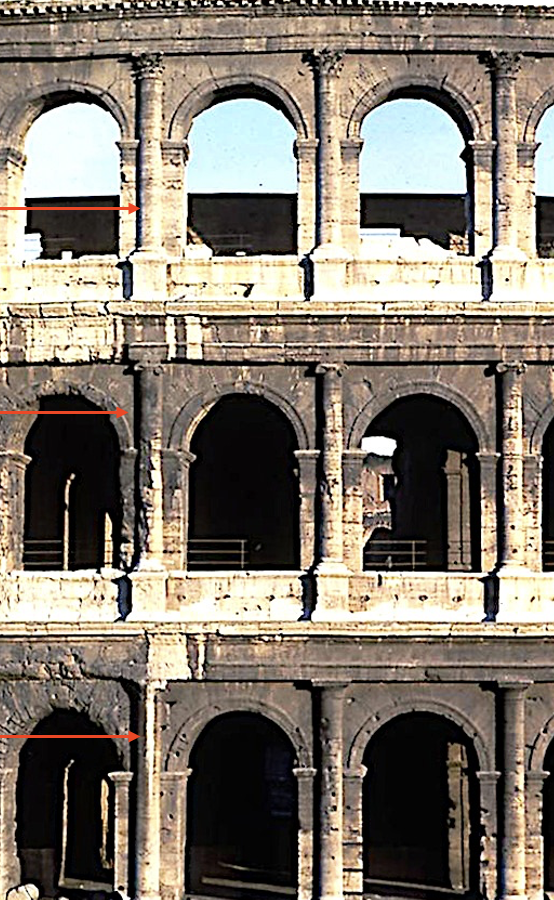
façade of Colosseum--arches framed with half-columns of 3 different
superimposed orders (lower: Tuscan; middle: Ionic; upper: Corinthian);attic of Colosseum--Corinthian pilasters framing square windows;
attached poles for suspension of huge awning to provide shade from the sun during performances
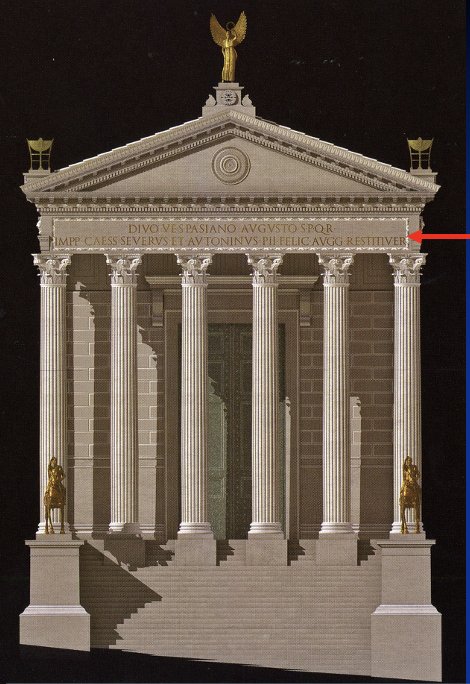
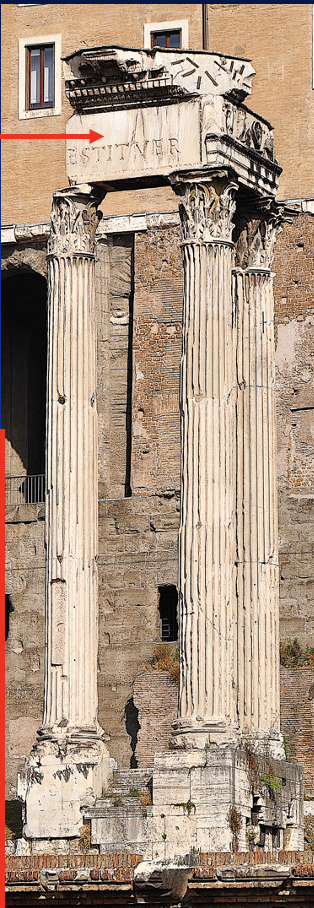
Temple of the Deifield Vespasian--begun by Titus; finished by Domitian, who dedicated it as the Temple of the Deified Vespasian and Titus
built in front of the Tabularium at the foot of the Capitoline Hill
overlooking the Forum3 reerected corner columns with Corinthian capitals and ornate
entablaturehexastyle, with deep porch and shallow cella
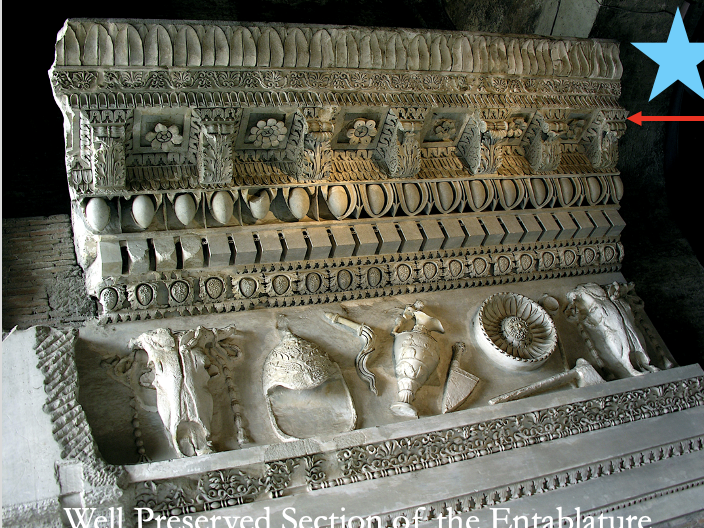
chiaroscuro effects and Flavian baroque tradition in architecture
well preserved section of entablature
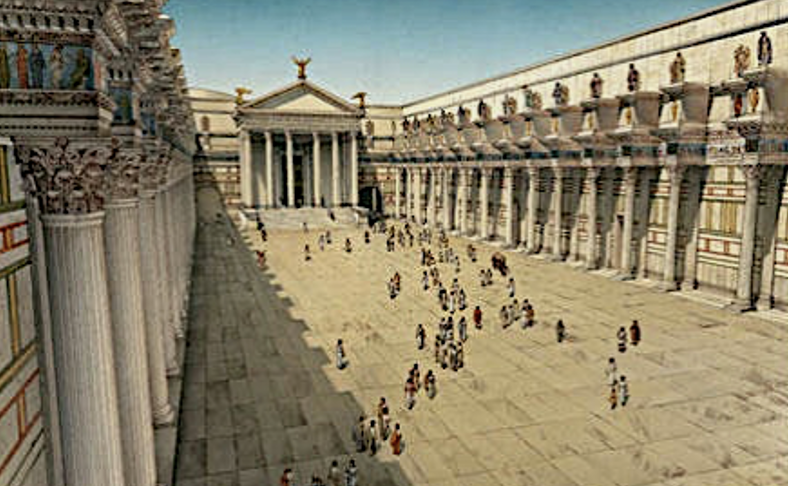
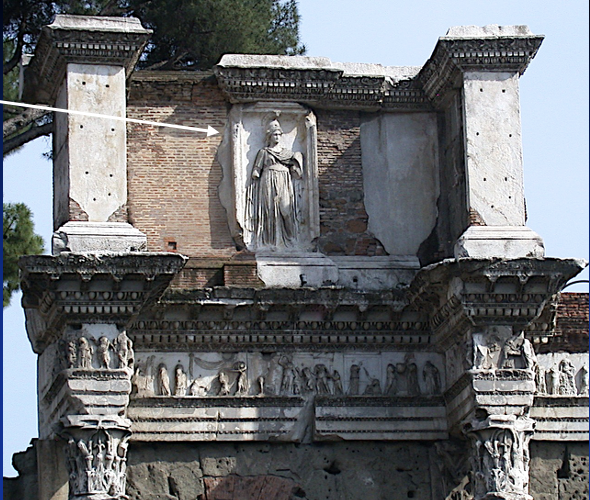
Temple of Minerva in Forum Transitorium - Domitian
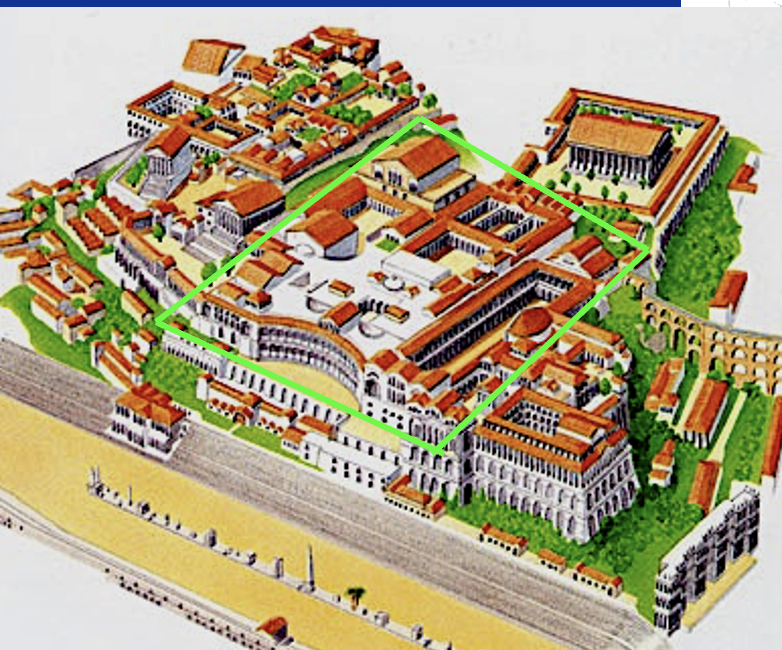
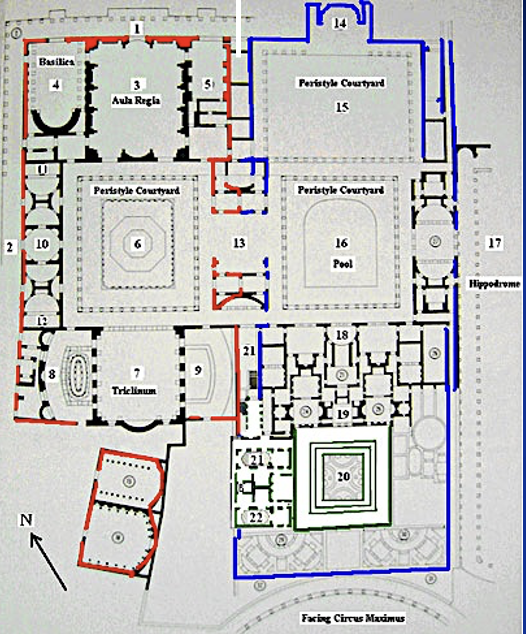
Domus Flavia--great imperial residence on the Palatine S.E. of the Domus
Tiberiana and House of Augustus (though commonly known as the Domus
Flavia, this residence officially called the Domus Augustana or Domus
Augustiana) - Dominitian
Palatium--the common name for the entire imperial residence on the
Palatine Hillwork begun on the Domus Flavia at the outset of Domitian’s Principate and largely completed by 92 A.D.
Rabirius--Domitian’s chief architect in the construction of the Domus
Flaviatwo main sections--official and private rooms
Clivus Palatinus--main approach to the Domus Flavia from the Forum
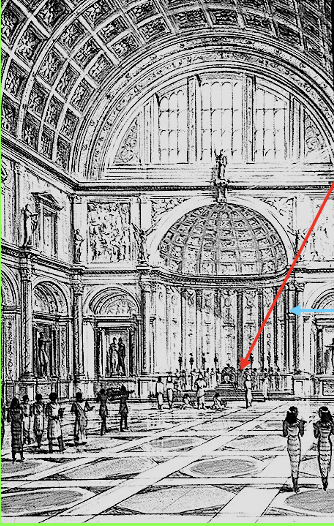
aula regia (literally “kingly hall”)--large audience hall in the state wing
of the Domus Flaviacolossal basalt statues--Hercules and Dionysos with Pan
apsidal niche with dais
disputed nature of the type of roof used to span 100’ width of
hall
“basilica” of the Domus Flavia--hall (adjoining the aula regia) in which
Domitian probably held legal proceedingsLarge columnar peristyle with octagonal fountain
great state triclinium (dining hall) overlooking fountain courtyards
Hadrianic hypocaust system
hot air heating system beneath the floor of the triclinium
earliest example of the hypocaust used for some purpose other
than the heating of bathing rooms
private domestic section of palace complex--ornamental entrance, 2
successive peristyles, large block of rooms surrounding a square sunken peristyle with elaborate fountainsouth façade overlooking largest race track of Rome (the Circus
Maximus)sunken garden stadium--huge garden surrounded by portico with
exedra one side
PORTRAITURE: NERVA THROUGH COMMODUS
NEXT PART
Portraiture: nerva through commodus introduction
(92-192)
“the five good emperors" (96-180): nerva, trajan, hadrian, antoninus pius, marcus aurelius
crisis of the roman state arising under marcus aurelius and his son commodus
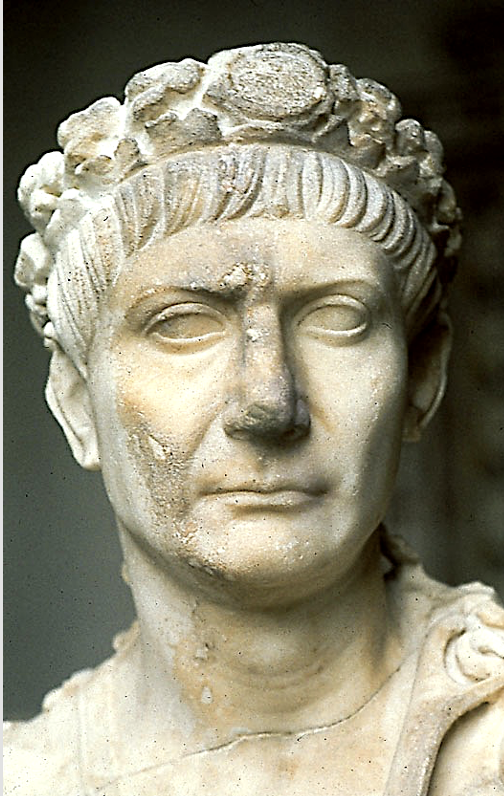
Trajan (98-117)
great soldier-emperor from Spain (the first emperor born outside of Italy)
conquered and annexed Dacia (northern frontier of the Empire) and fought against Parthians in the East
given the official title Optimus Princeps (“Best Princeps”) and deified after his death in 117
sculptural portrait
dry, cold classicizing style
Trajan as a new Augustus
form of bust from Trajanic times on--almost always includes shoulders, upper part of arms, chest down to and including nipples
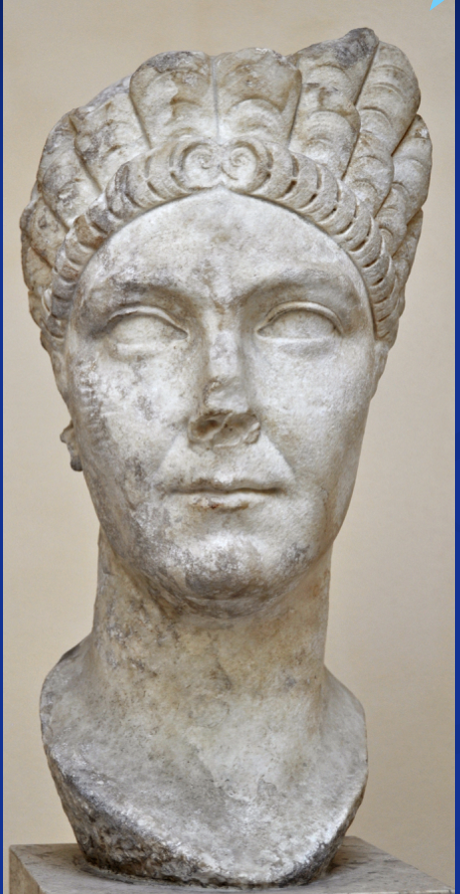
female portraits of the Trajanic period--
sculptural portrait of Trajan’s sister Marciana
cold classicism
bonnet-like hairdo, with flat (rather than full) ring curls at the front; less use of the drill than in Flavian female portraitsum
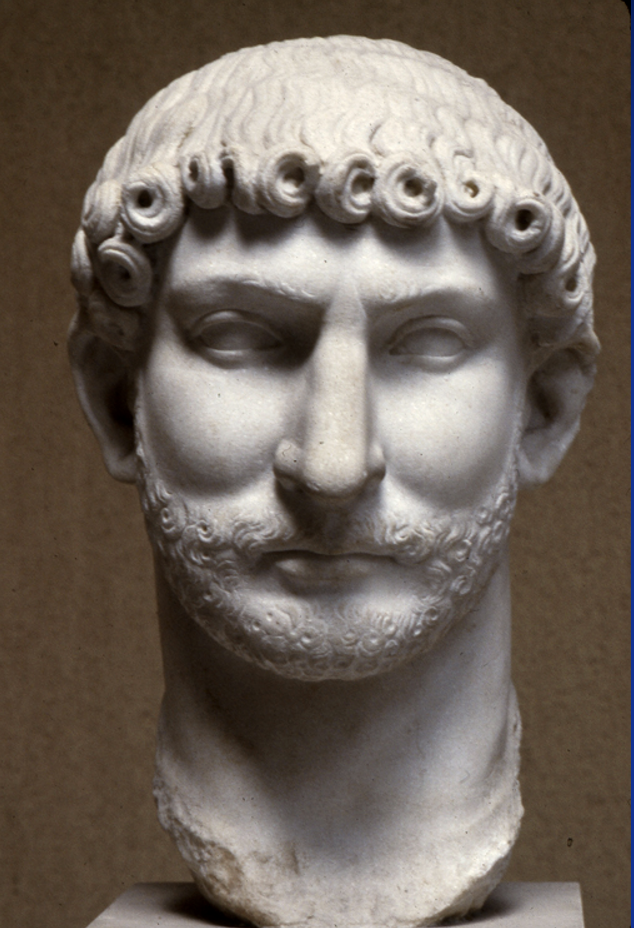
Hadrian (117-138)
a distant relative of Trajan; likewise born to Roman settlers in Spain
governed for 21 years; deified after his death
patron of the arts and most philhellenic emperor--called graeculus (“little Greek”)
though an able administrator and soldier, Hadrian generally unpopular with the Roman aristocracy
a time of great peace and propriety, except for Jewish rebellion in the East (the last Diaspora)
early sculptural portrait of Hadrian [Ostia Museum]
bearded philosopher type--the beard uncommon before this time exceptoccasionally among those in military service
popularity of the beard (both short and long) from the time of Hadrian to that of Constantine (beginning of 4th century)
Hadrianic classicism--greater emphasis on plastically carved and drilledhair and beard
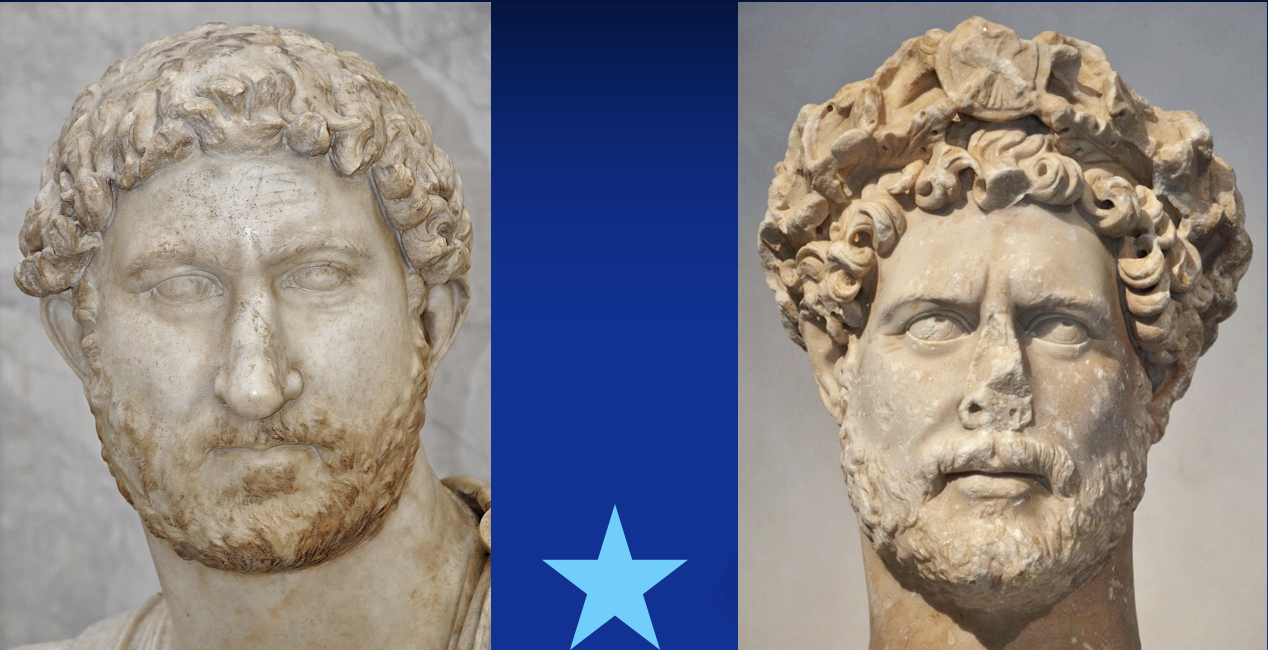
later sculptural portraits of Hadrian
more deeply drilled hair and beard
incision of the iris of the eye and drill hole(s) for the pupil--first
introduced in the Hadrianic period and in vogue from that time
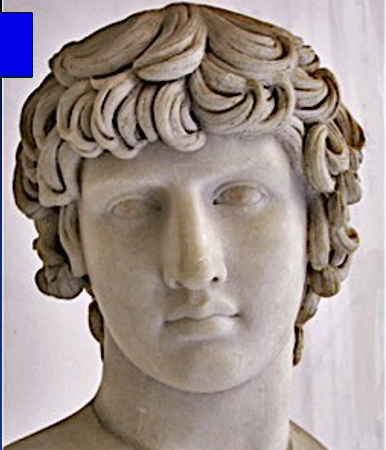
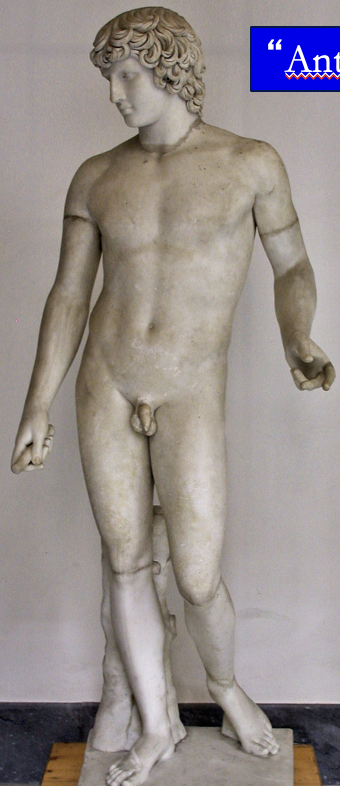
“Farnese Antinous” : portrait statue of Antinous
Bithynian youth who was Hadrian’s boyfriend
drowned in the Nile in 130 and deified
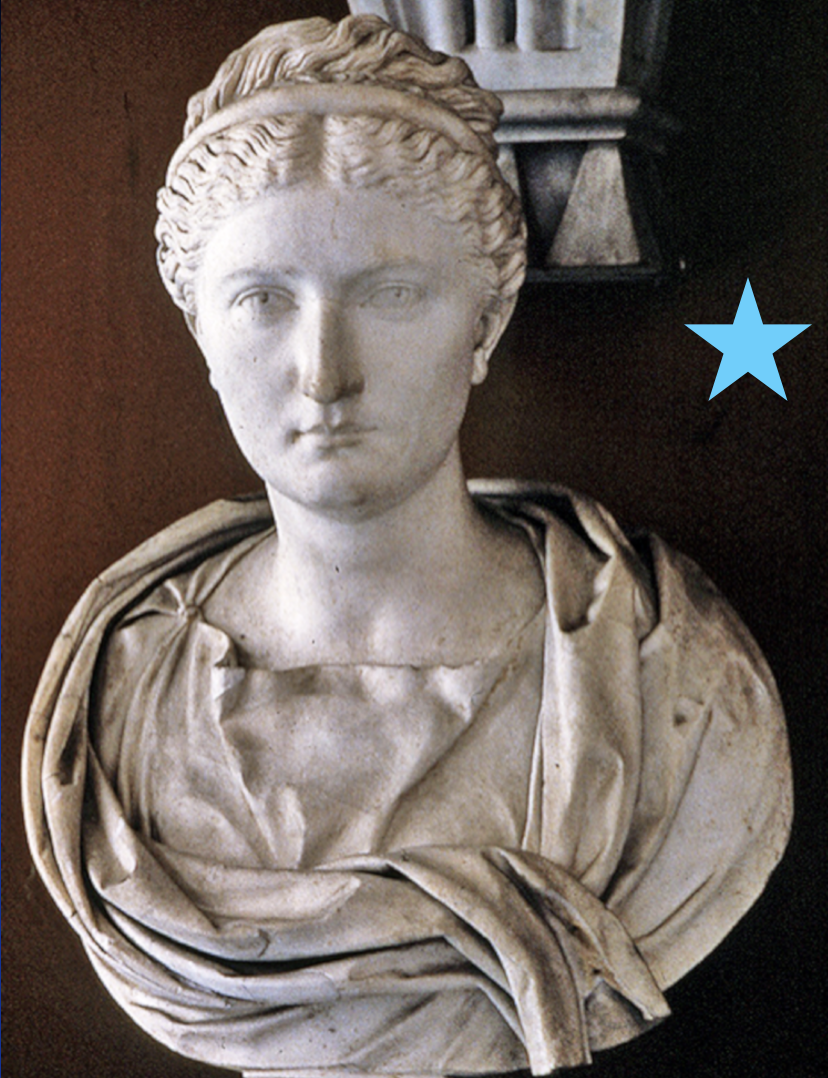
portrait of Hadrian’s wife Sabina: classicism and simple hairdo
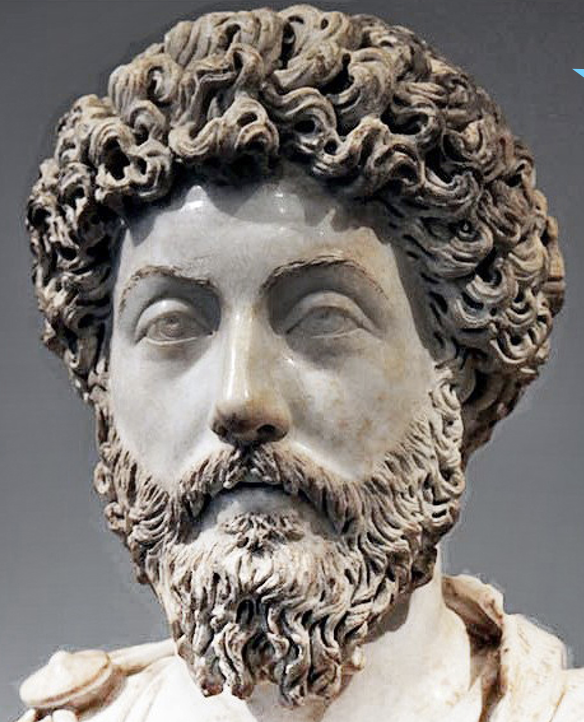
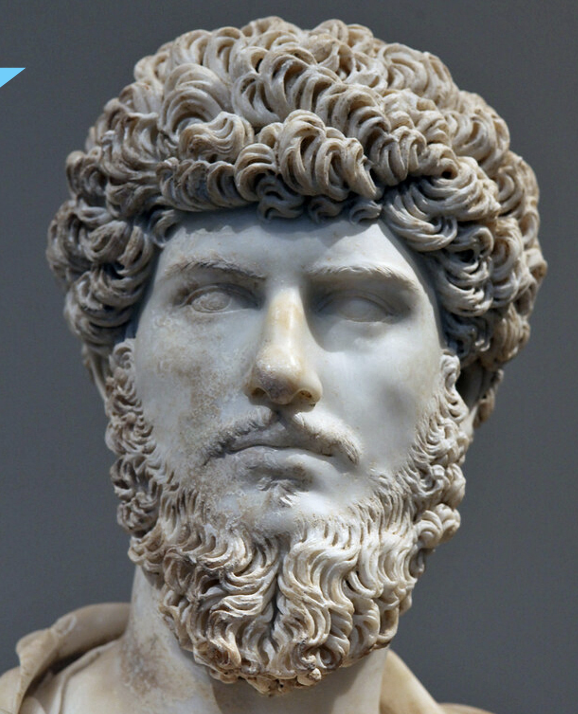
Marcus Aurelius (160-180) and Lucius Verus (161-169 A.D.)
Antoninus’ adoption of Marcus Aurelius (nephew of Antoninus’ wife Faustina Maior) and Lucius Verus (son of Lucius Aelius) at Hadrian’s request
both Marcus Aurelius (died 180) and Lucius Verus (died 169) deified after death
Marcus a philosopher-ruler according to the Platonic ideal (his Stoic writings entitled the Meditations)
Lucius Verus a flamboyant character, lacking in the qualities of the great emperor
sculptural portraits of Marcus Aurelius and Lucius Verus
Antonine baroque style--generally greater contrast and dramatic effects than in previous Roman baroque phases
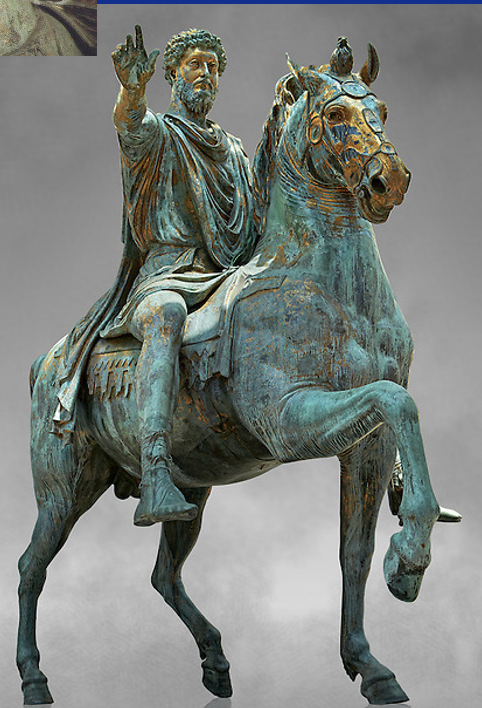
Equestrian statue of Marcus Aurelius (160-180) on Capitoline Hill in Rome
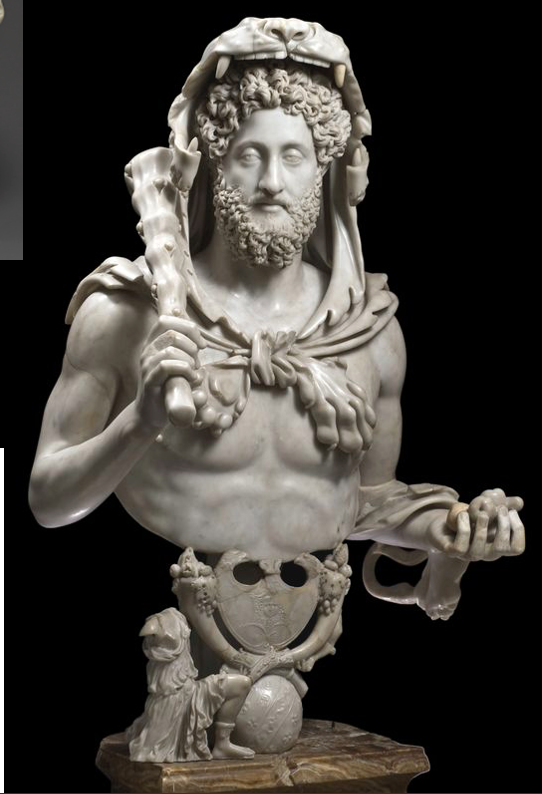
Commodus (180 -192)
Marcus Aurelius’ eccentric son, who was assassinated and suffered damatio memoriae
sculptural portrait of Commodus in the guise of his patron hero Hercules
Nemean lion skin, club, and Golden Apples of the Hesperides all symbols of Hercules
bust a half-length figure including both arms (one of the earliest examples of this bust form)
TRAJANIC AND HADRIANIC RELIEF
NEXT PART
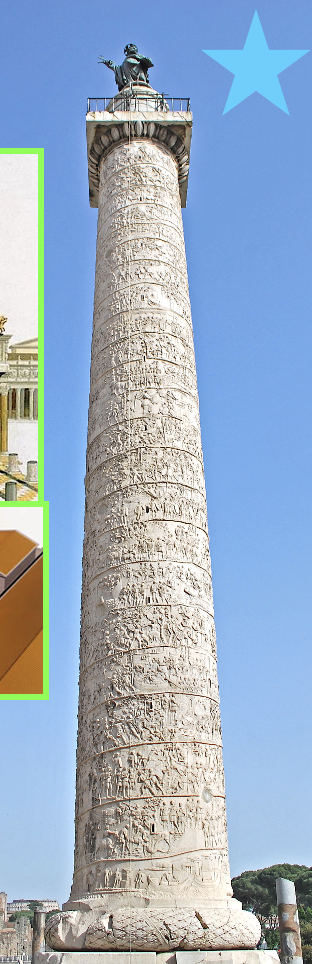
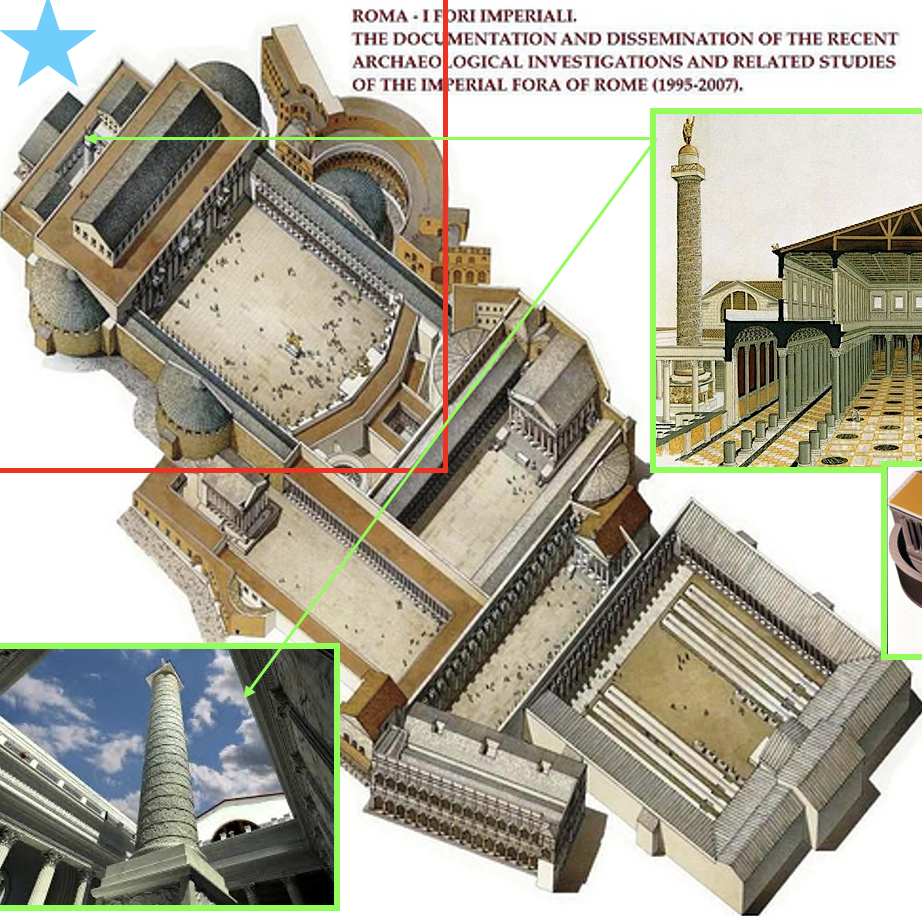
The forum of Trajan and Trajan’s column (completed and dedicated in 113)
located in the Forum of Trajan between the Basilica Ulpia and the
Temple of the Deified Trajan100’ high, with 19 Parian marble drums resting on a square base
containing Trajan’s cremated remainsgilded bronze statue of Trajan on top of the column replaced by statue of St. Peter in later times
internal staircase and small rectangular windows
reliefs on base depicting weapons
spiral “historical” frieze (over 650’ long)
155 scenes with over 2500 figures in low reliefs
Trajan’s two campaigns (of 101-102 and 105-107) against the
Dacians, a barbarian people who inhabited what is now Romaniaunnatural scale and bird’s eye perspective
continuous narrative style--the appearance of the same
individual or individuals in a succession of scenes closely related in time and space6 basic themes repeated: addressing the troops (adlocutio);
sacrifice; building fortifications; reception of envoys and prisoners; battles; marchesquestion of the frieze’s documentary accuracy in representing
historical eventsDecebalus--Dacian King
tradition of ancient illustrated bookscrolls and of triumphal
painting
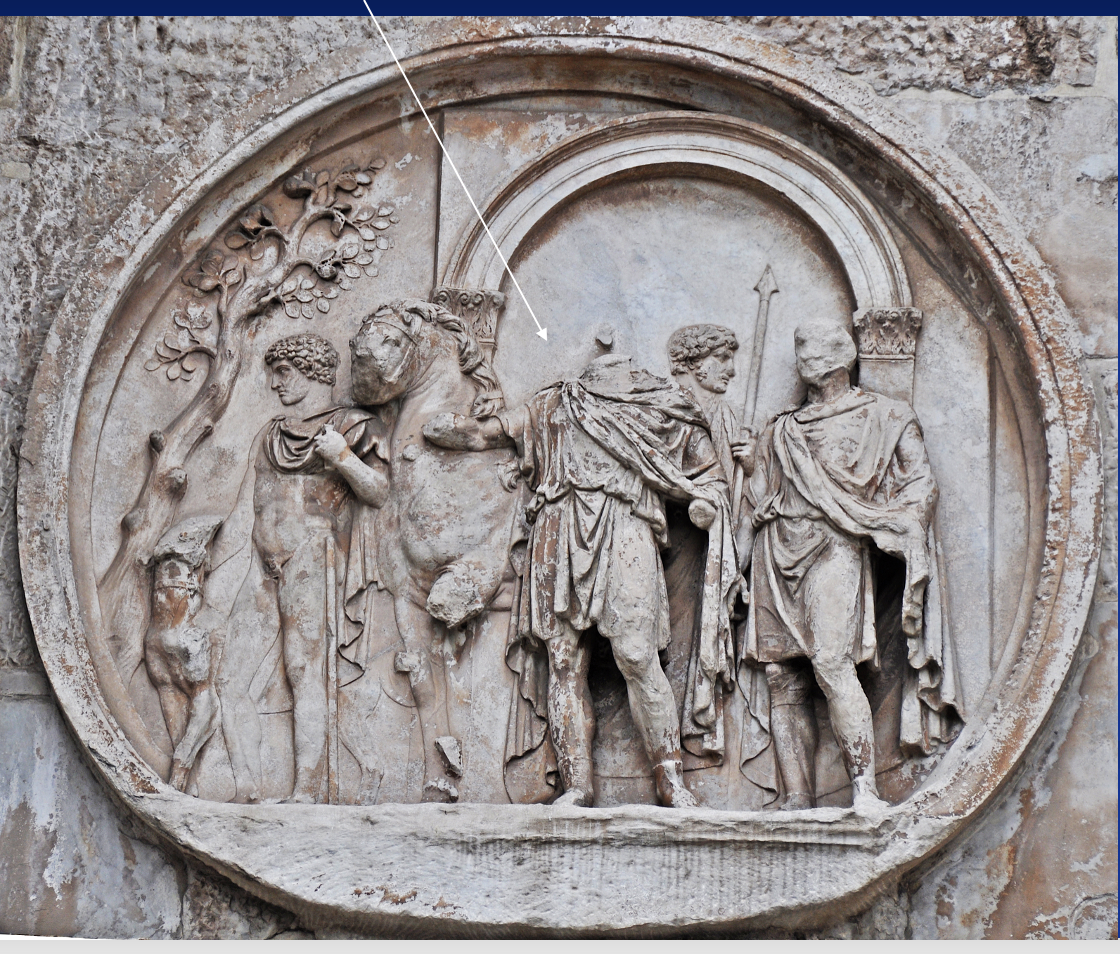
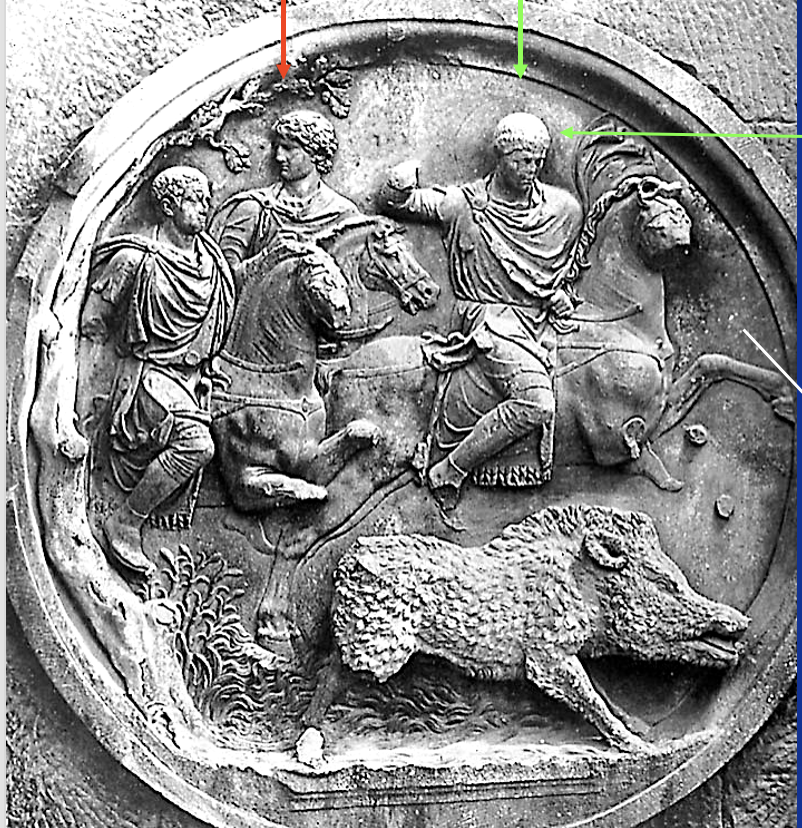
Hadrianic tondo on arch of constantine
profectio scene: hadrian sets forth on hunt
peacetime activities highlighted
Hadrianic sculptural style and hairdos
Antinous represented in at least one of the eight tondi
Hadrian’s portrait replaced with that of Constantine or his colleague Licinius
scenes of hunting
first known appearance of the hunt as a subject of Roman monumental
art (popular hereafter)symbolism of the hunt
style of tondi--baroque and classicizing elements
ANTONINE HISTORICAL RELIEFS AND SARCOPHAGI
NEXT PART
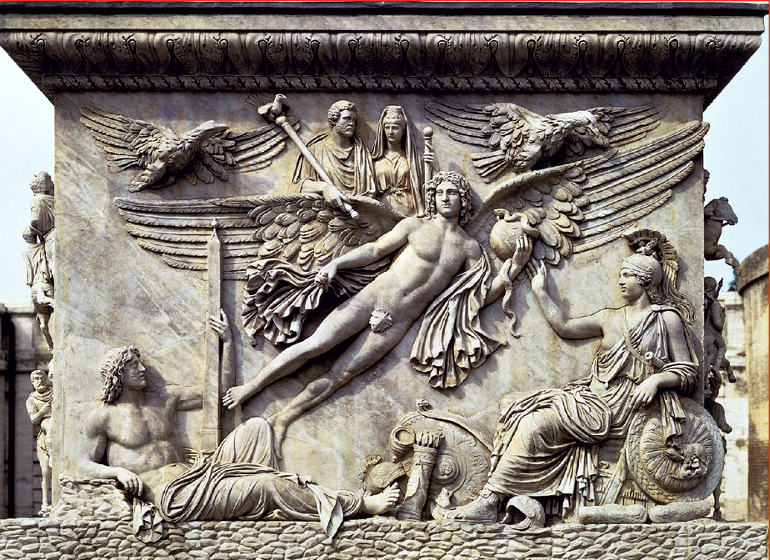
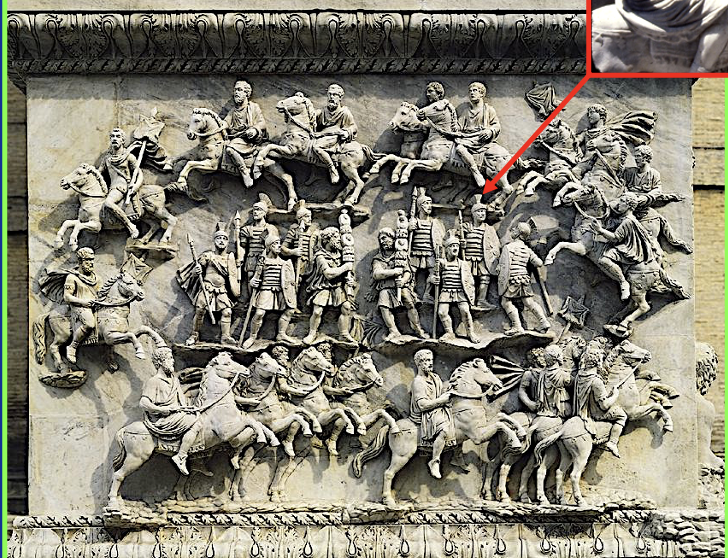
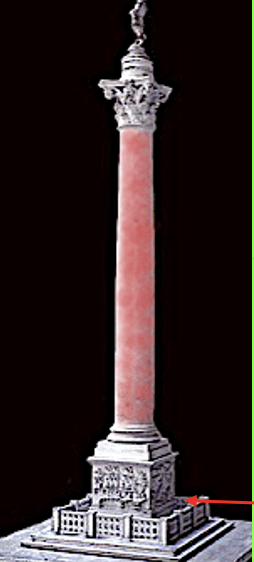
Column of Antoninus Pius: set up by Antoninus’ sucessors after his death in 161
red Egyptian granite shaft topped by statue of Antoninus
reliefs of base apotheosis of Antoninus and Faustina Major
scene of Decursio (military parade) around the funeral Pyre
decursio--military parade at state funeral
bird's eye perspective
Plebeian art (or Volkskunst)--art of the common people
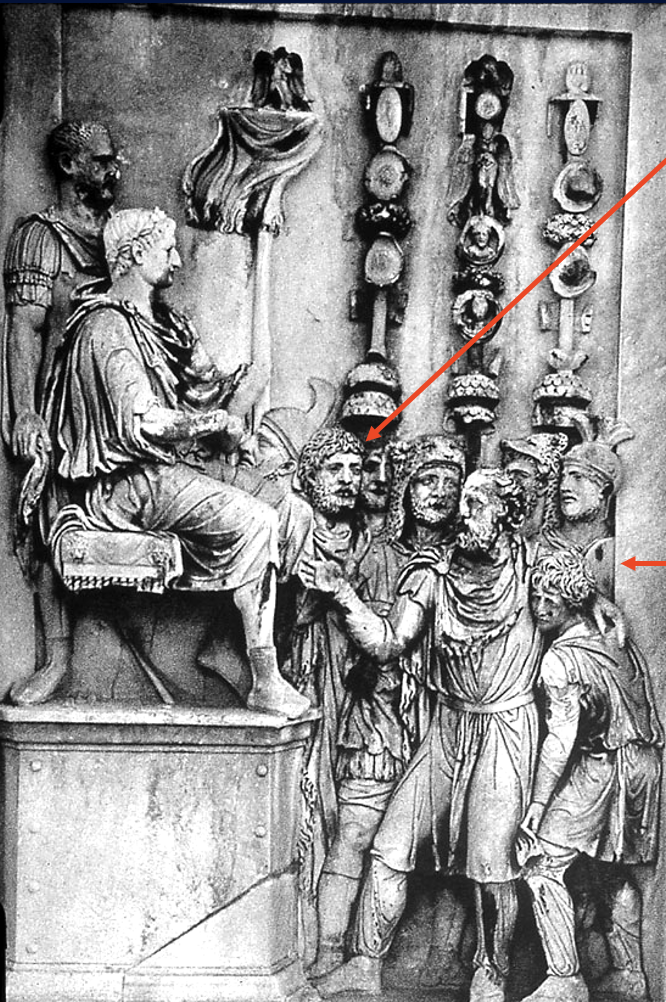
Scene of Barbarian Submission to Mount Aurelius on Arch of Constantine
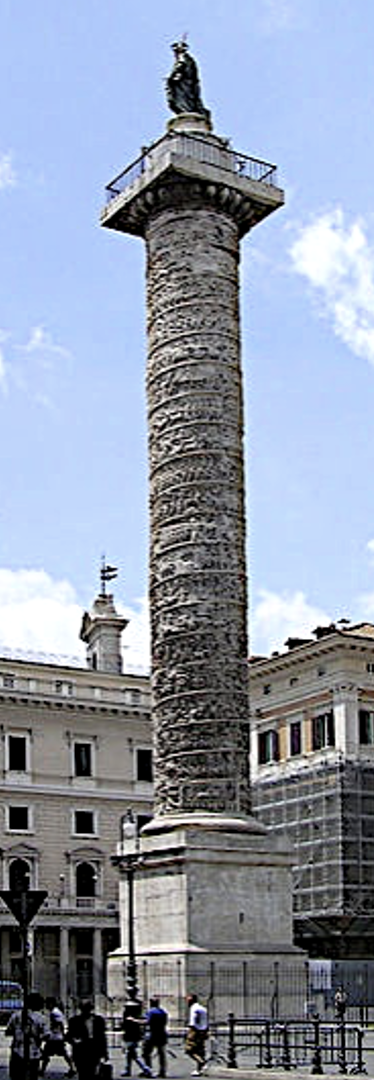
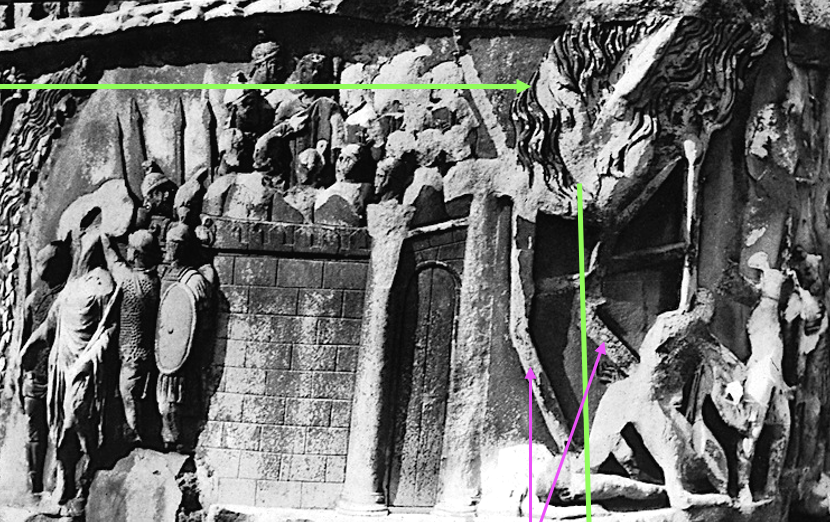
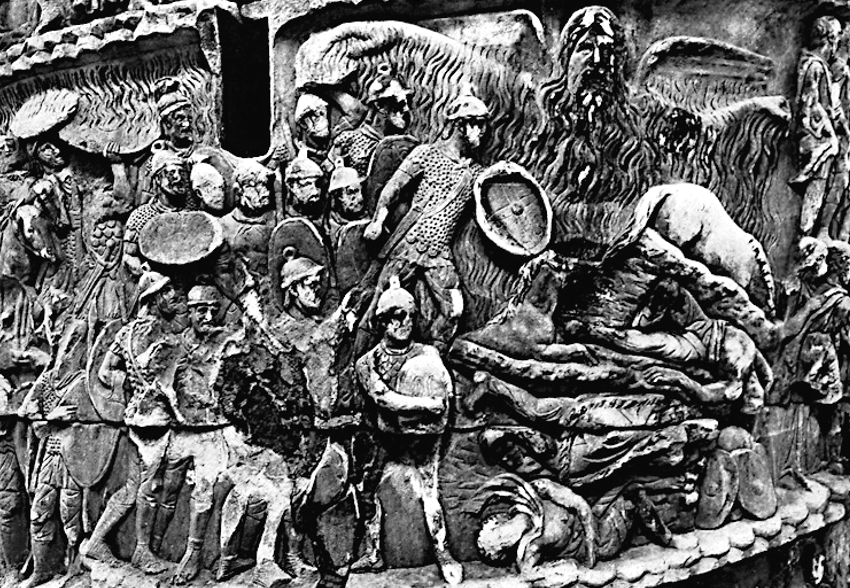
Column of Marcus Aurelius
100' high column in the Campus Martius near the Via Lata
crowning figures of Marcus Aurelius and his wife Faustina Minor
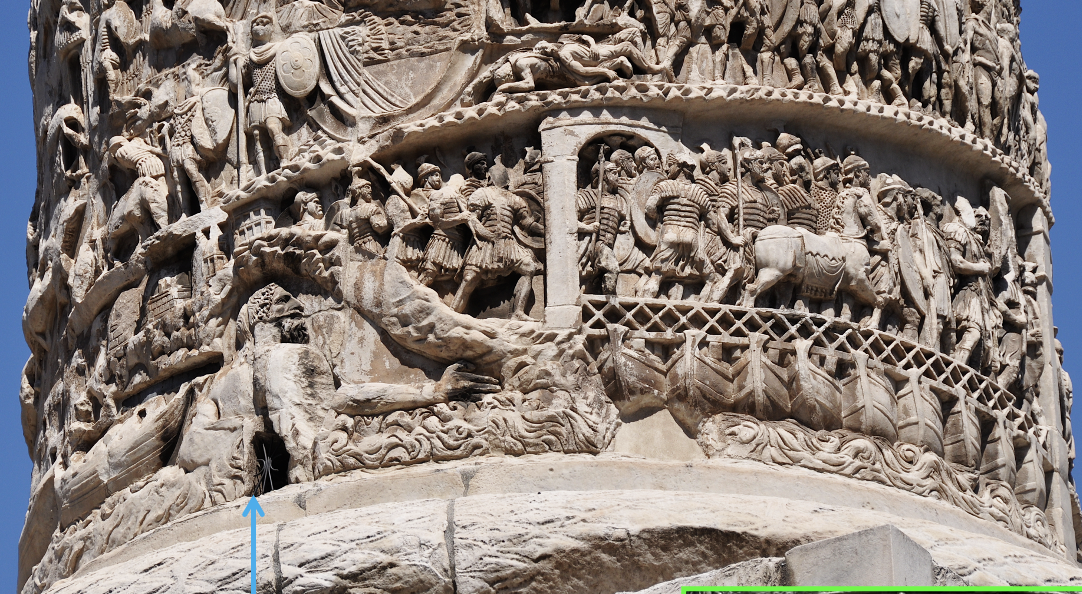
replaced by a statue of St. Paulcontinuous spiral frieze commemorating Marcus' campaign against the Germans and his campaign against the Sarmatians in the 170’s
generalized motifs
specific events represented
comparison with column of trajan
crossing of the Danube at the beginning of the German Wars
"Miracle of the Thunderbolt"
"Miracle of the Rain"
the question of a "decline in Roman art”
influence of viewing distance on style
changing aesthetics--from objective naturalism to abstract
expressionismLate Antique style--the sculptural style of late Roman and
Christian art, characterized by abstraction, frontality, and
exaggerated emotion
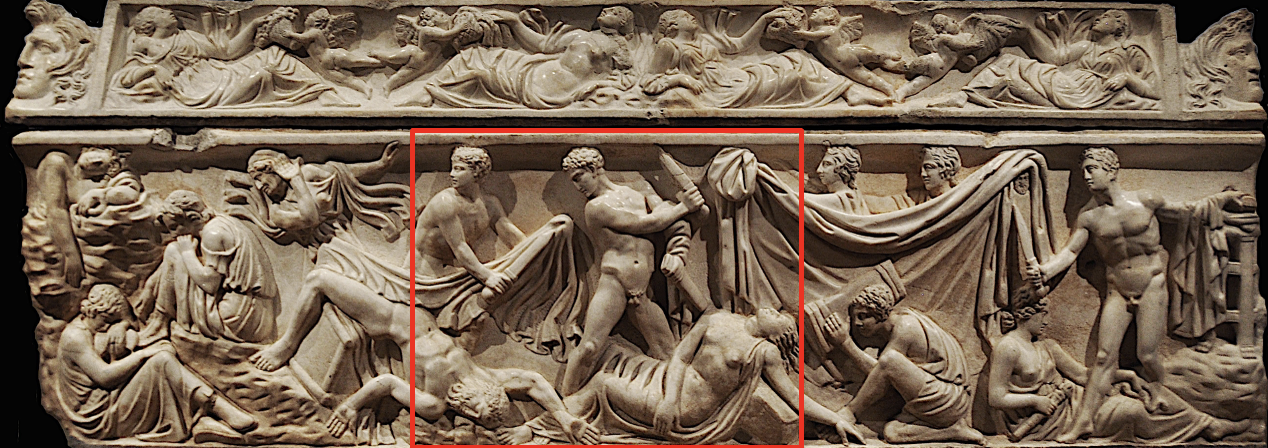
Hadrianic sarcophagi with mythological scenes or events in the life of
the deceased--e.g., 2 sarcophagi with story of. Orestes in continuous
narrative style
Furies threatening Orestes, who is slaying his mother
ClytemnestraOrestes at Delphi
sleeping Furies at tomb of Agamemnon (Orestes' father)
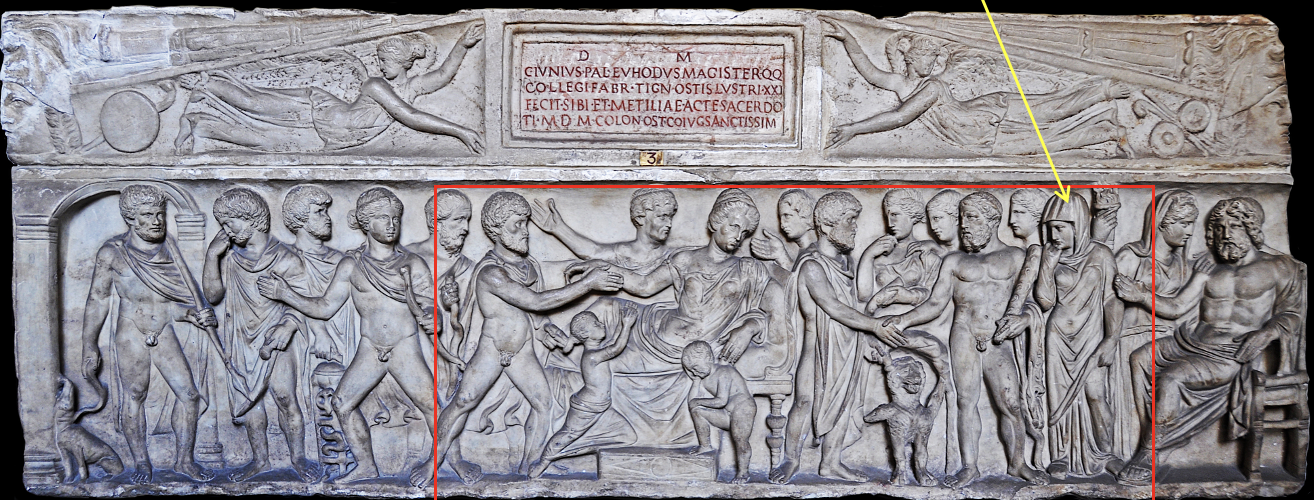
Antonine sarcophagus representing myth of Admetus and Alcestis (with the portrait features of the deceased) - continuous narrative
attic & asiatic type sarcophagi: carved on all 4 sides
TRAJANIC ARCHITECTURE
NEXT PART
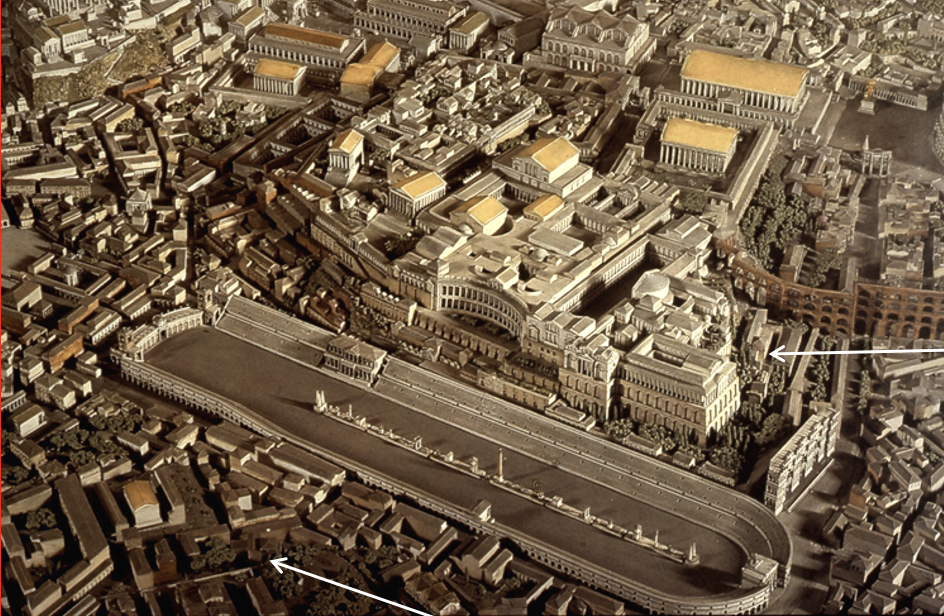
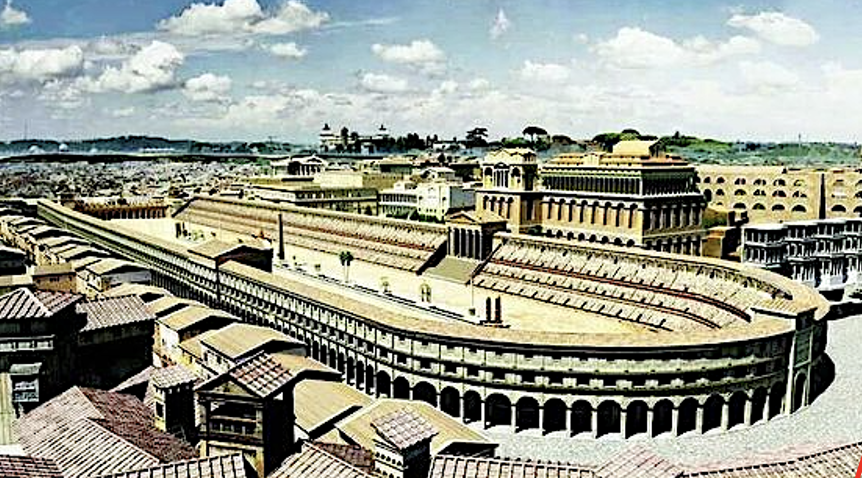
Rebuilding of the Circus Maximus
largest Roman race track (also used for the staging of gladiatorial combats, hunts, etc.
various rebuildings during the Republic and early Empire; Trajanic rebuilding in stone and cement
spina (literally "spine") --the barrier which ran down the middle of the track of a circus
meta (pl. metae)--goal-post
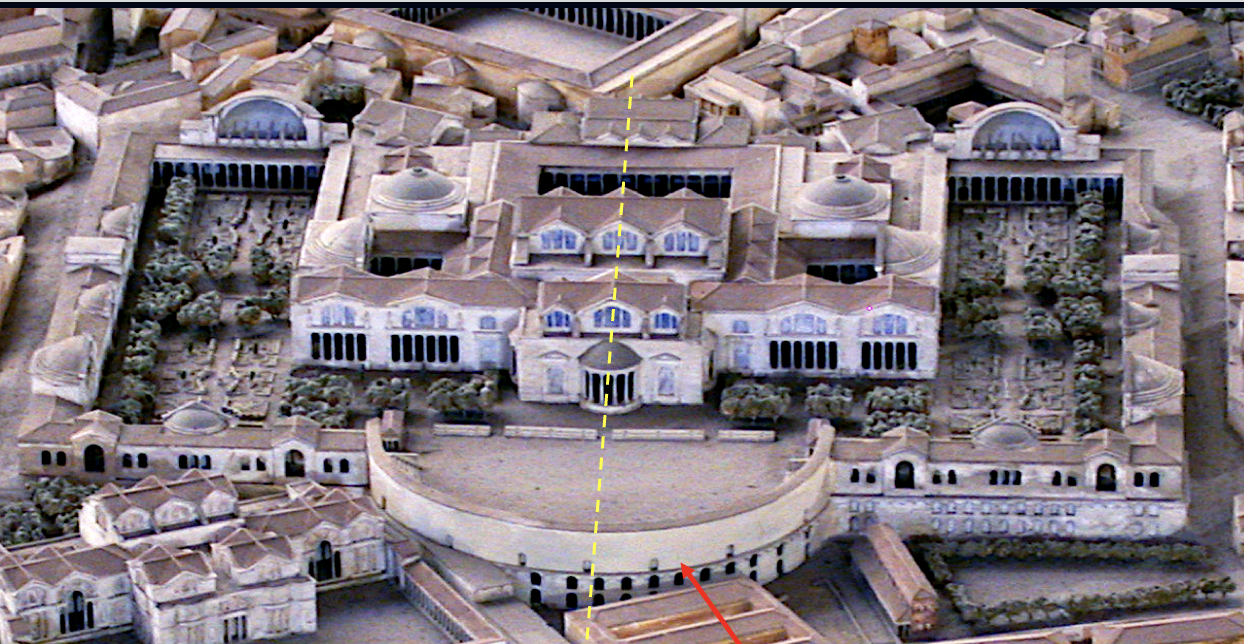
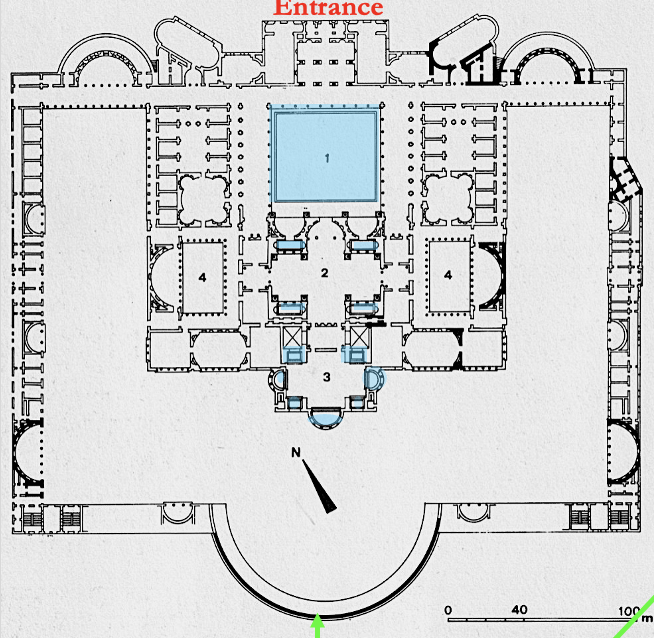
Baths of Trajan (begun in 104, dedicated in 109)
built on the Esquiline Hill (over wing of Nero's Golden House)
4 various rooms
large open hemicycle in perimeter wall
usual features of the Roman bath--natatio, frigidarium, etc.
exedras--nymphaeum, library (?)
evidence of the Stabian Baths at Pompeii
natatio--swimming pool
apodyterium (pl. apodyteria)--changing room
caldarium (p1. caldaria)--hot room
tepidarium (pl. tepidaria)--warm room
frigidarium (pl. frigidaria)--cold room
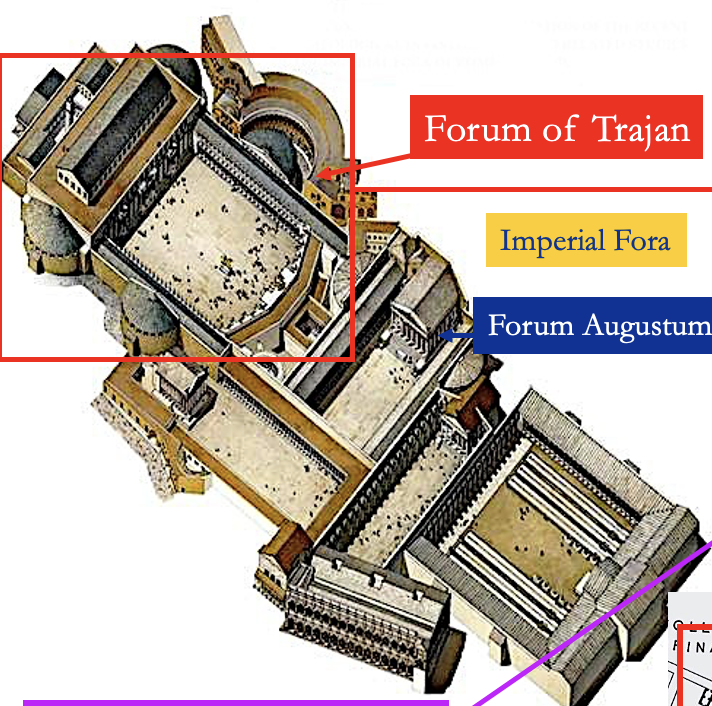
Forum of Trajan (designed by Apollodorus of Damascus and dedicated in 113)
part of the Quirinal Hill cut into to a height of c.100, (location of Trajan's Market)
a triumphal arch serving as a monumental entrance to Trajan's Forum
columnar porticoes with hemicycles
Basilica Ulpia (its name taken from Trajan's family name "Ulpius")
Latin and Greek libraries (bibliothecae) (completed by Hadrian) flanking Column of Trajan
Temple of the Deified Trajan and surrounding portico (built by Hadrian)
axial line through Temple of the Deified Trajan, the Column of Trajan, and the Temple of Peace in the Forum of Vespasian
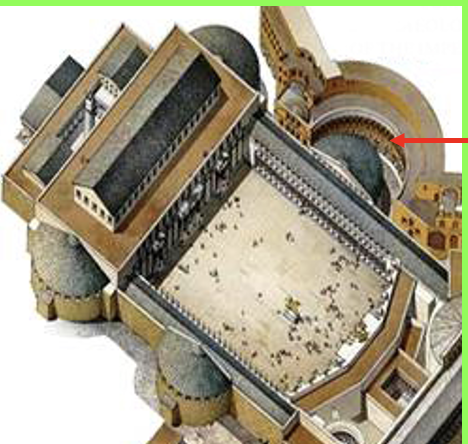
Markets of Trajan--terraced up in 3 levels behind the N. hemicycle of the Forum of Trajan
150 shops and offices and large market hall
brick-faced cement construction
high perimeter wall of portico and hemicycle of Trajan's Forum blocking the Markets off from view from the Forum of Trajan
large market hall at 3rd level
clearstory lighting
buttresses supporting cross-vaulted ceiling (c. 100' x 32')
HADRIANIC AND ANTONINE ARCHITECTURE
NEXT PART
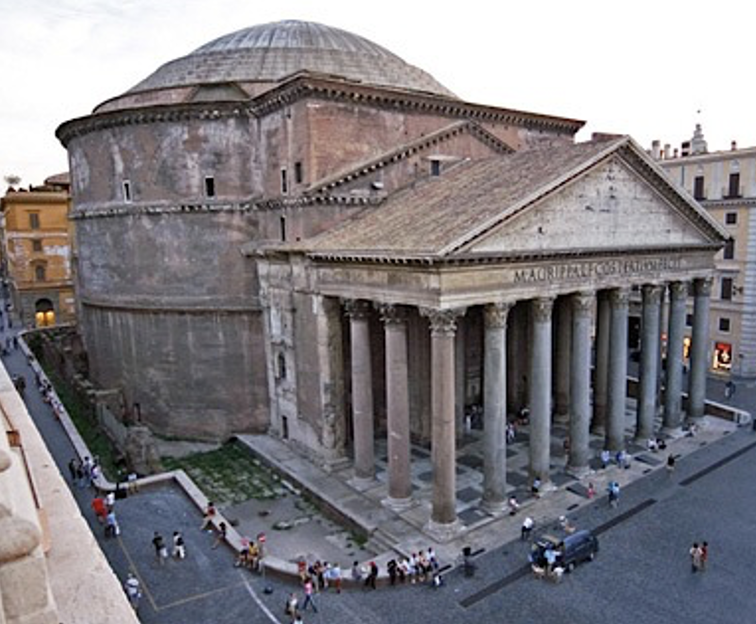
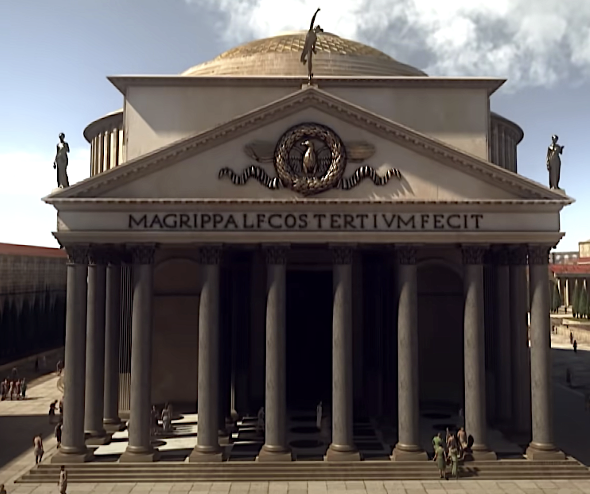
Pantheon (Temple to All the Gods)-- Hadrianic
first built by Agrippa in 27 B.C.; burned in 80 and rebuilt by Domitian; burned in 110 and rebuilt in its final form between 118 and 128
inscription (of Hadrianic date) naming Agrippa as builder
porch with 8 Corinthian monolithic columns (i.e., columns with a shaft
made of a single block of stone, rather than a series of drums set on top on one another)colonnaded forecourt blocking view of domed rotunda behind porch
internal diameter of rotunda 144'; height of dome also 144'
30' wide oculus
gradation of cement from bottom to top
dome originally covered with gilded bronze
19th century and Renaissance restorations (when the Pantheon was
converted to a church; now a tomb)
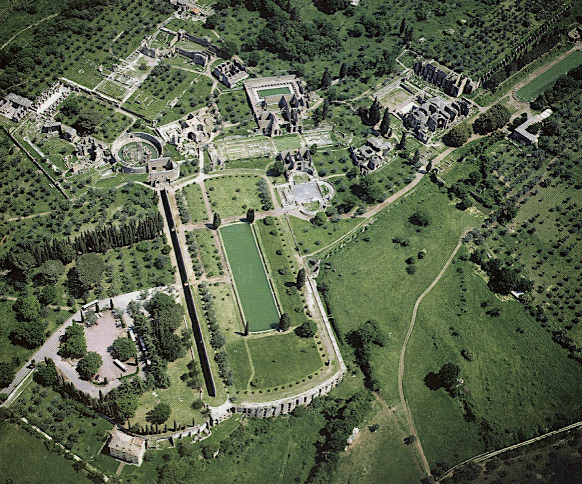
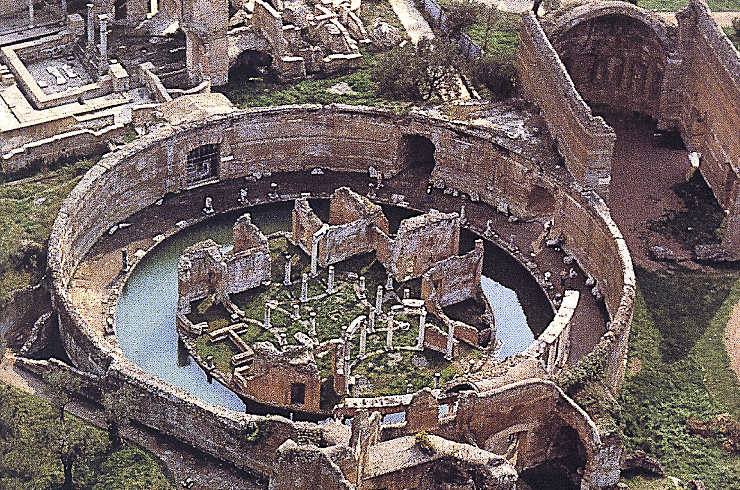
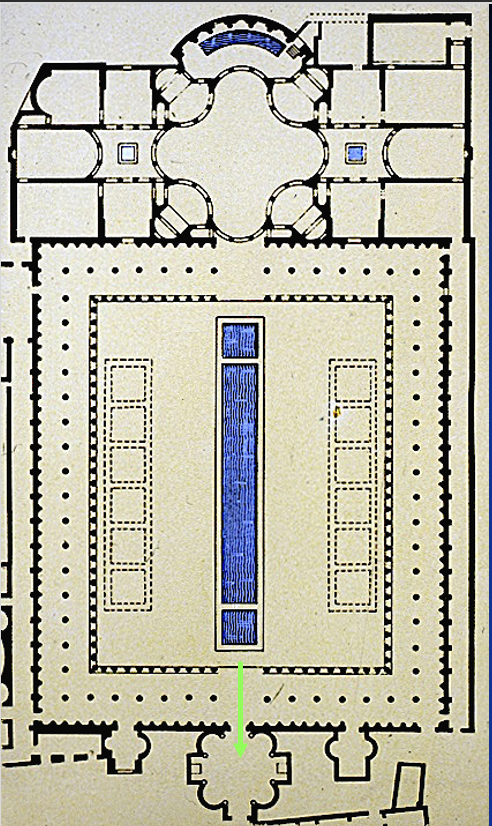
Hadrian's Villa at Tivoli (c. 118-138)
380 acres in size
axes of complexes intersecting at different angle
axial symmetry within complexes
"stoa Poikile": painted stoa
2 bathing complexes
"Teatro Marittimo"-- an artificial island surrounded by a moat (the
totally private retreat of the emperor)"Piazza d'Oro" (the Piazza of Gold)
vestibule with octagonal room covered with ribbed vault--
alternating rectangular and semi-circular recessesperistyle
curvilinear colonnade with surrounding rooms, 2 small
colonnaded courtyards, and semi-circular vaulted nymphaeum
"Canopus" (named after the canal called the Canopus in Alexandria,
Egypt)--400' long pool decorated with statuary"Serapeum" (named after the Temple of Serapis in Alexandria)--summer triclinium with nymphaeum
"Academy" (named for philosophical school, known as the Academy, in Athens)
complex of rooms located at one end of a long terrace (near the Canopus in an area that may have served as summer living quarters for the emperor)
circular hall with clearstory windows
PORTRAITURE FROM SEPTIMUS SEVERUS THROUGH CONSTANTINE
NEXT PART
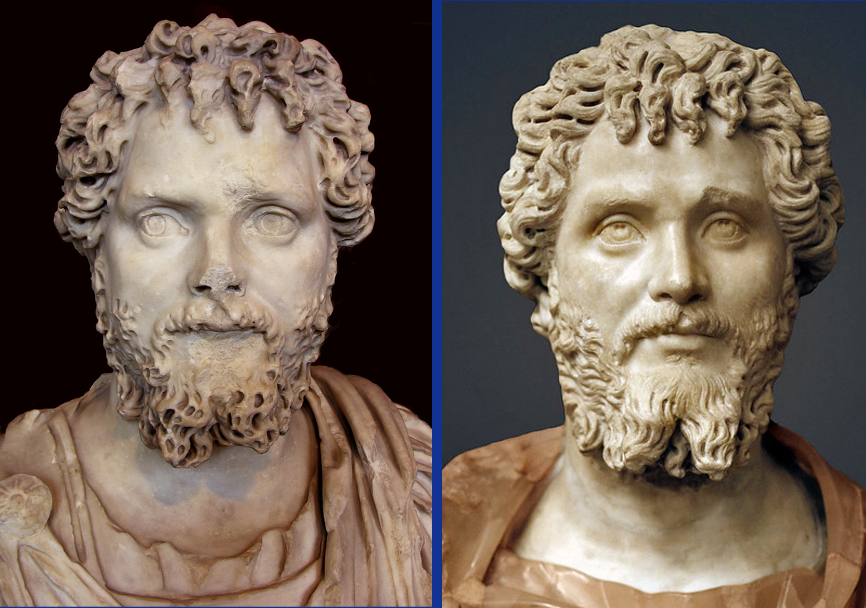
Septimius Severus (193¬-211) - start of Severan dynasty (193 - 235)
Septimius’ claiming of the Antonines as his ancestors by posthumous
adoptionSeptimius actually a North African Berber who rose through the ranks in the army
later sculptural portrait of Septimius - more serene
Septimius Imitates the Hair and Beard Style of His Patron God Serapis
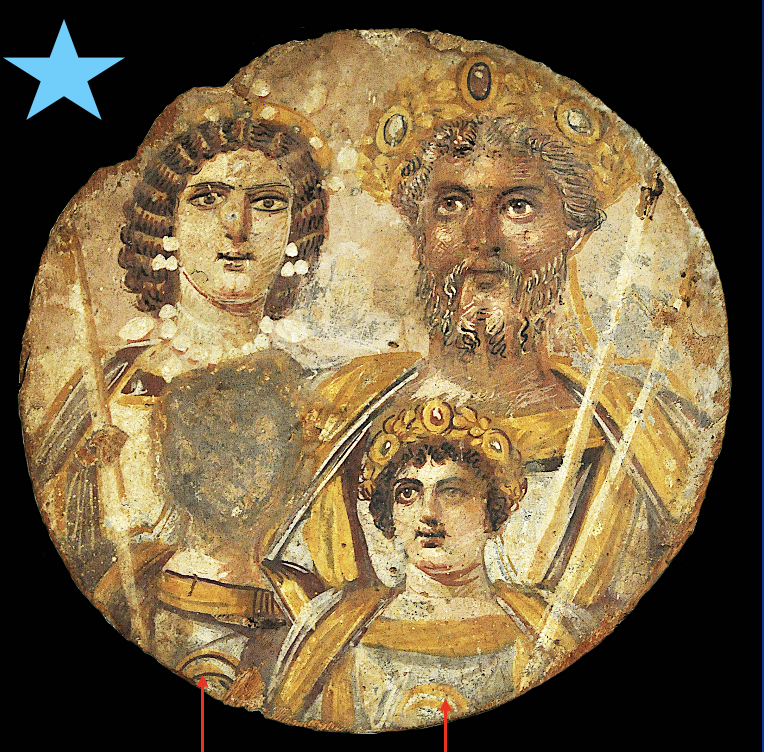
painted wooden disc from Egypt representing Septimius, Julia Domna,
Caracalla (eldest son), and his younger brother Geta (whose face was obliterated after
his damnatio memoriae at Caracalla's instigation)
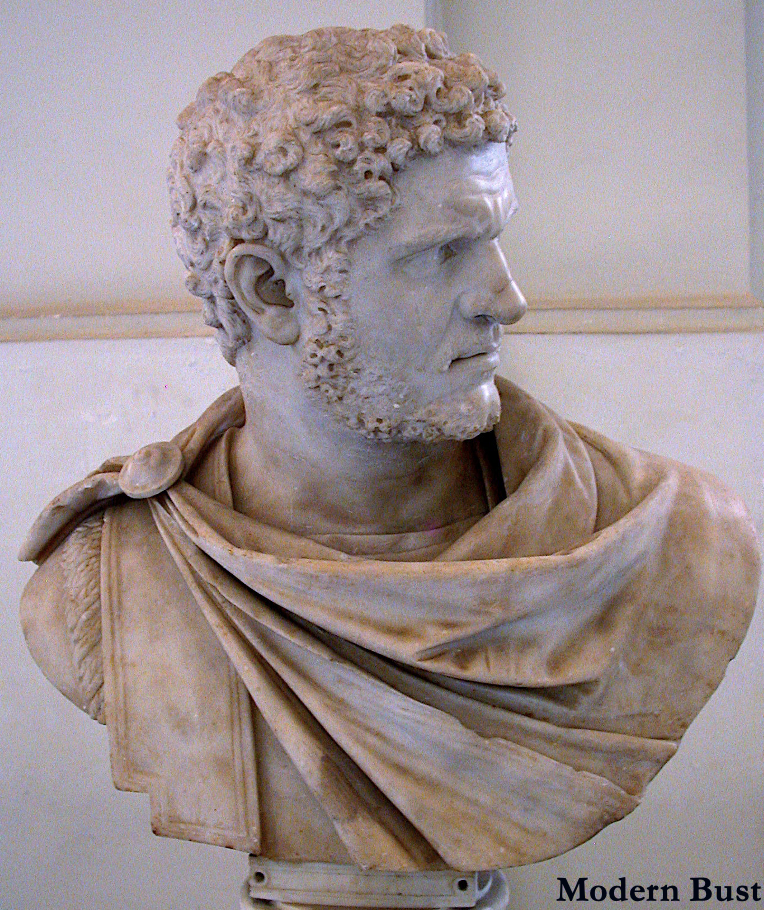
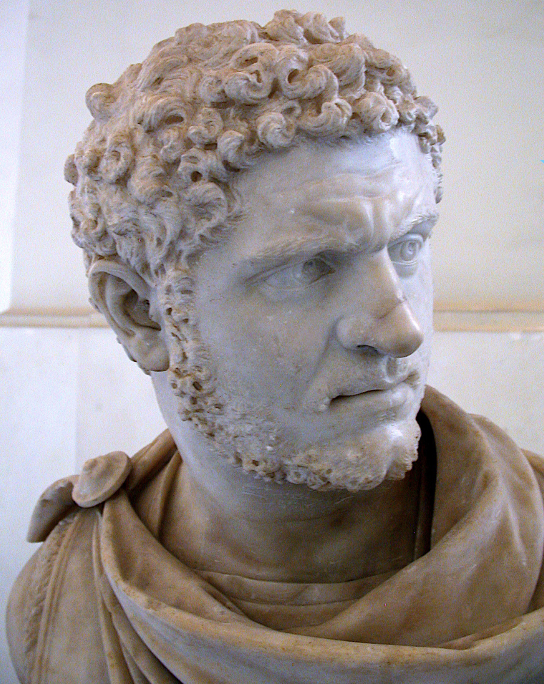
Caracalla (211-217)--
Septimius' elder son, who was assassinated at the age of 29
Caracalla as emperor
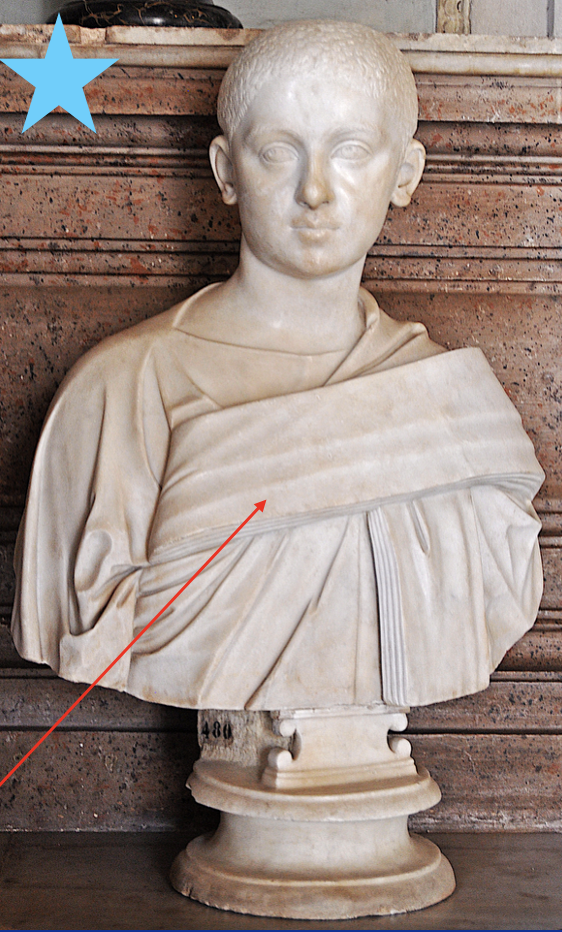
Alexander Severus (emperor 222-235; last of the Severans)
sculptural portrait of Alexander Severus- "skull-cap" hairstyle
toga contabulate-- toga type popular in late Roman times; characterized by a broad band-like fold of cloth-across the chest
Period of crisis and military anarchy (235-284)
20 successive emperors ruling briefly before being assassinated
“style of crisis”
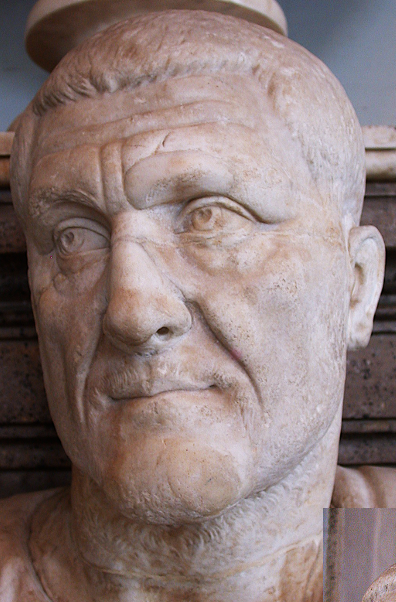
Maximinus Thrax (emperor from 249 to 251)
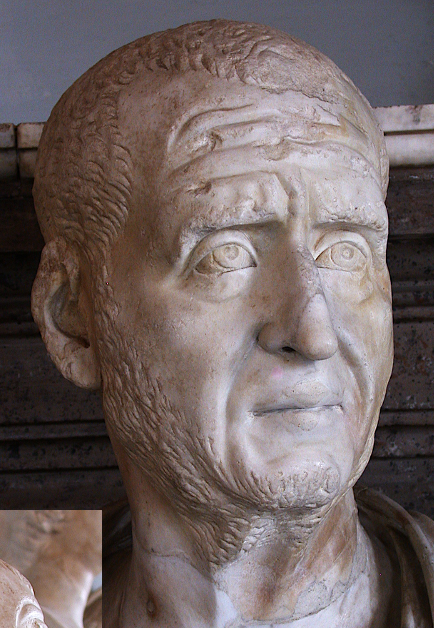
Traianus Decius (emperor from 249 to 251)
mask like expression of anxiety
short chisel strokes to represent short-cropped hair and beard of soldier emperor type
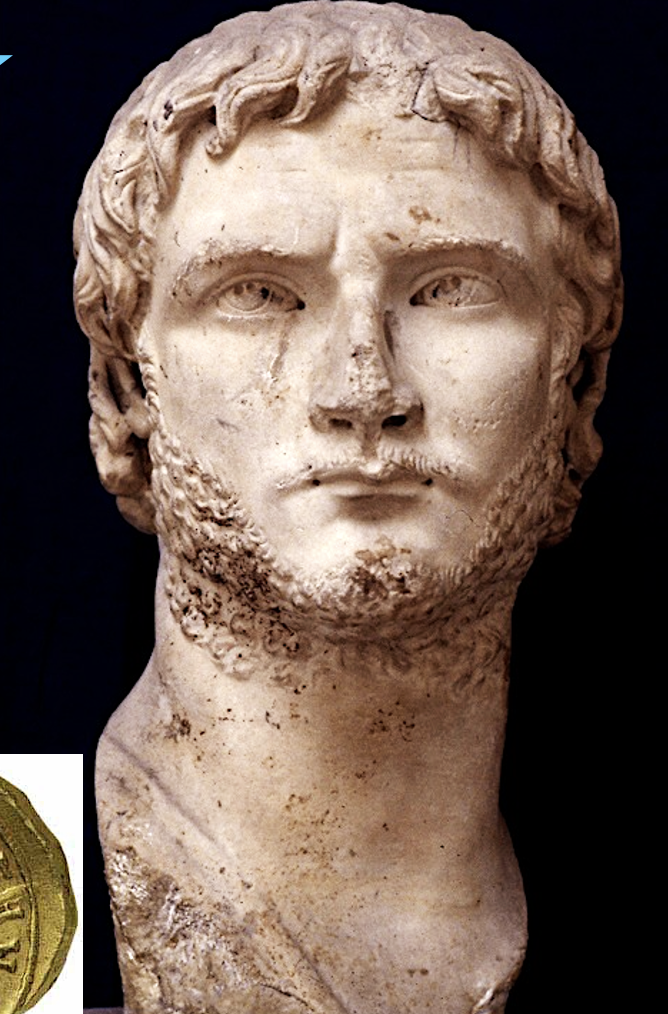
Gallienus (253 to 268)
only significant deviation from the “style of crisis”
Gallienus a philhellene with an interest in Neo-Platonism (a philosophy set forth in the mid-3rd century A.D. by Plotinus; simply stated, this philosophy was concerned with the liberation of the soul form the body)
5th century B.C. concept of the beauty of proportions vs. Neo-Platonic emphasis on the soul illuminating the body
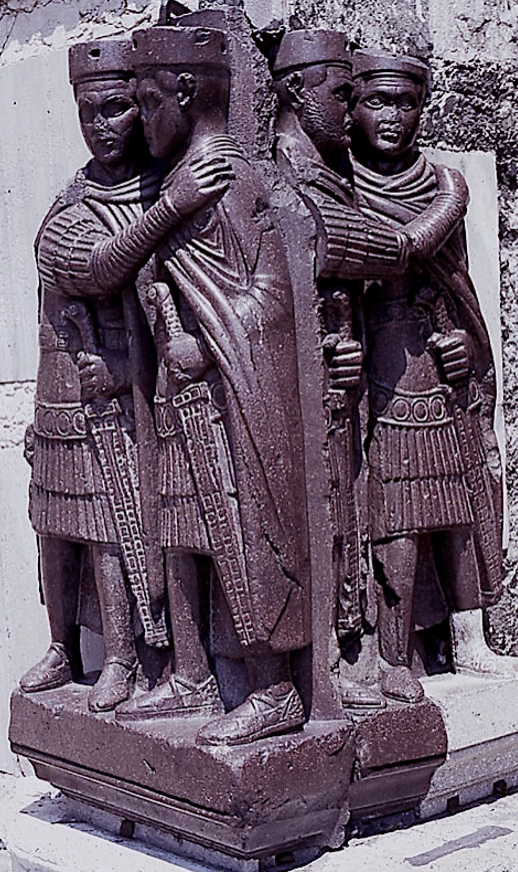
“San Marco Tetrarchs” (after 293 A.D.) Sculpted in Porphyry
Immured in the Corner of the Church of San Marco in Venice
originally 2 pairs of figures decorating the upper shafts of two columns
porphyry--a hard reddish-purple stone quarried in Egypt and reserved for use by the imperial family
symbolic embrace
pillbox-like hats--popular only in the Tetrarchic period
made in period of Tetrarchs
tetrachy: political system in which power of the empire were shared in 4 ways: 2 emperos (each with title augustus) in the west and east respectively and 2 deputies and successors (each with title caesar)
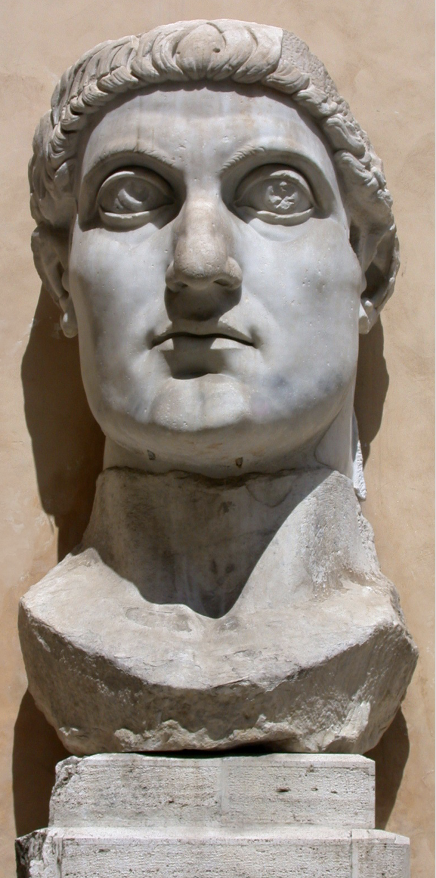
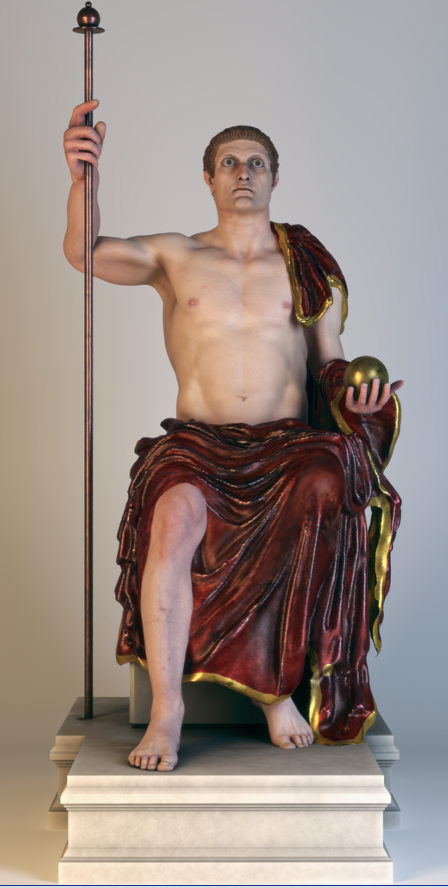
Constantine the Great (324- 337)
establishment of Constantinopolis (literally "the City of Constantine") as a new and Christian capital and of Christianity itself as the state religion
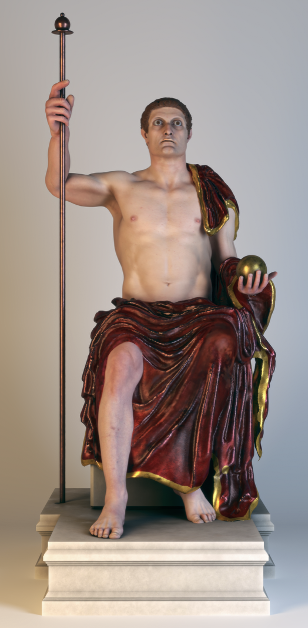
colossal sculptural portrait of Constantine from Basilica of Maxentius
clean-shaven
Constantinian classicism
archivolt hairstyle a characteristic hairstyle of Constantine,: resembling the voussoirs of an arch
sacer vultus (literally "sacred countenance")--the holy countenance of imperial power
RELIEFS: SEPTIMIUS SEVERUS THROUGH CONSTANTINE
NEXT PART
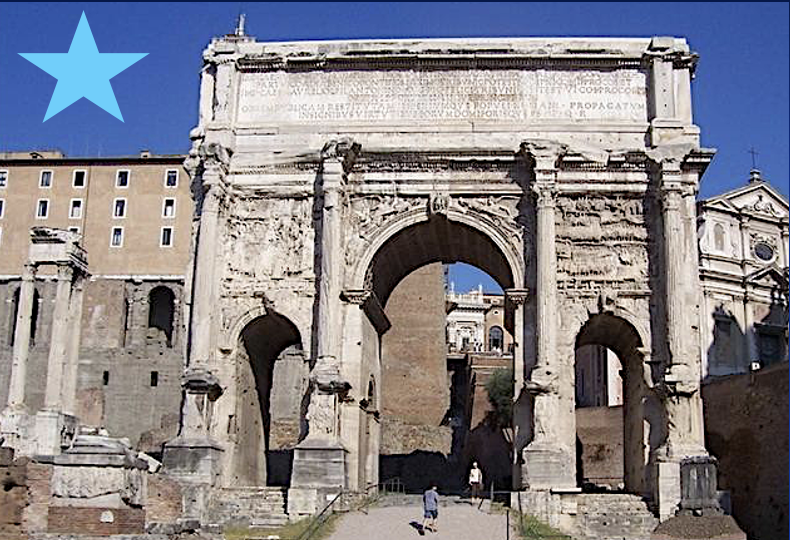
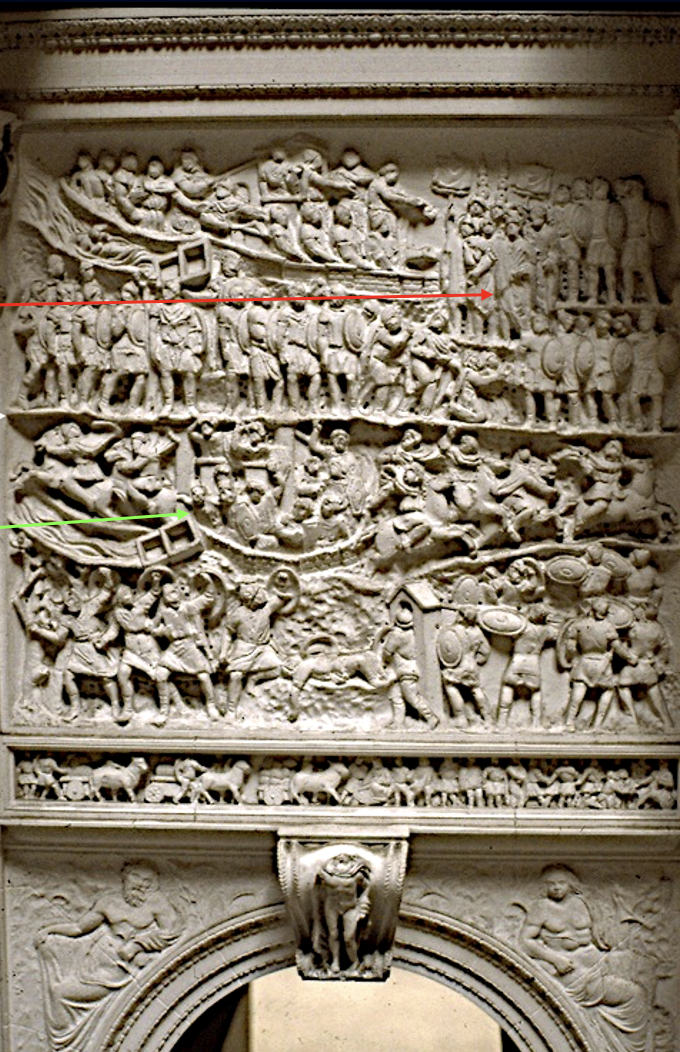
Arch of Septimius Severus in the Roman Forum (completed in 203)
Commemorated Septimius' victory over the Parthians (195-199) and the decennalia (or 10th anniversary) of his Principate in 203
alteration of dedicatory inscription
name of Geta erased and Caracella reinscribed
"historical" reliefs on either face of the arch--division of panels into 2
superimposed registers, with figures at different levels on their own
ground linesseptimius receives suppliant barbarians
romans attack a parthian city
Reliefs in the period of crisis (235 - 284)
little public building, resulting in dearth of “historical” reliefs
mass production of sarcophagi
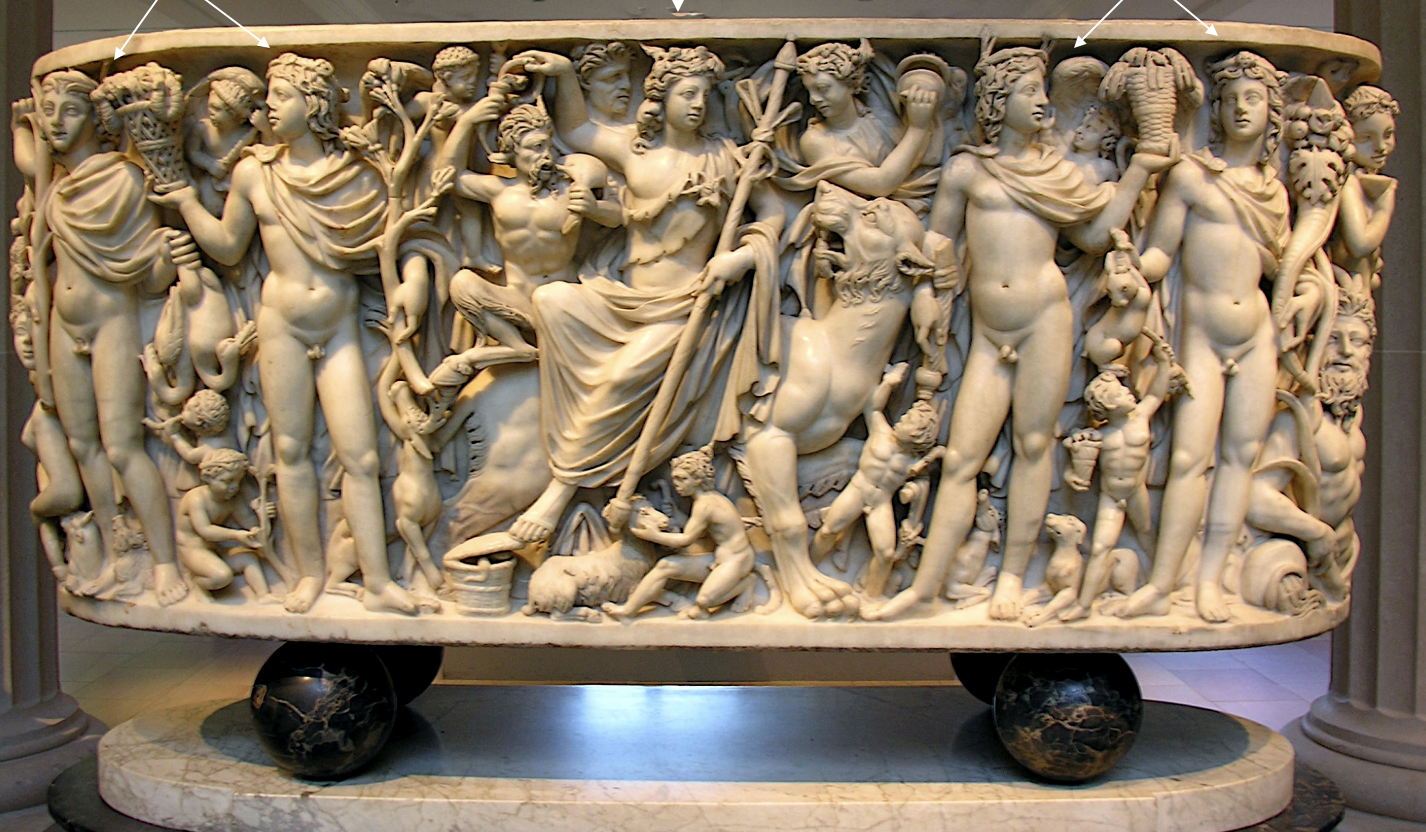
"Badminton Sarcophagus" (220-230 A.D.)
Dionysiac procession flanked by 4 Seasons
quality and technique
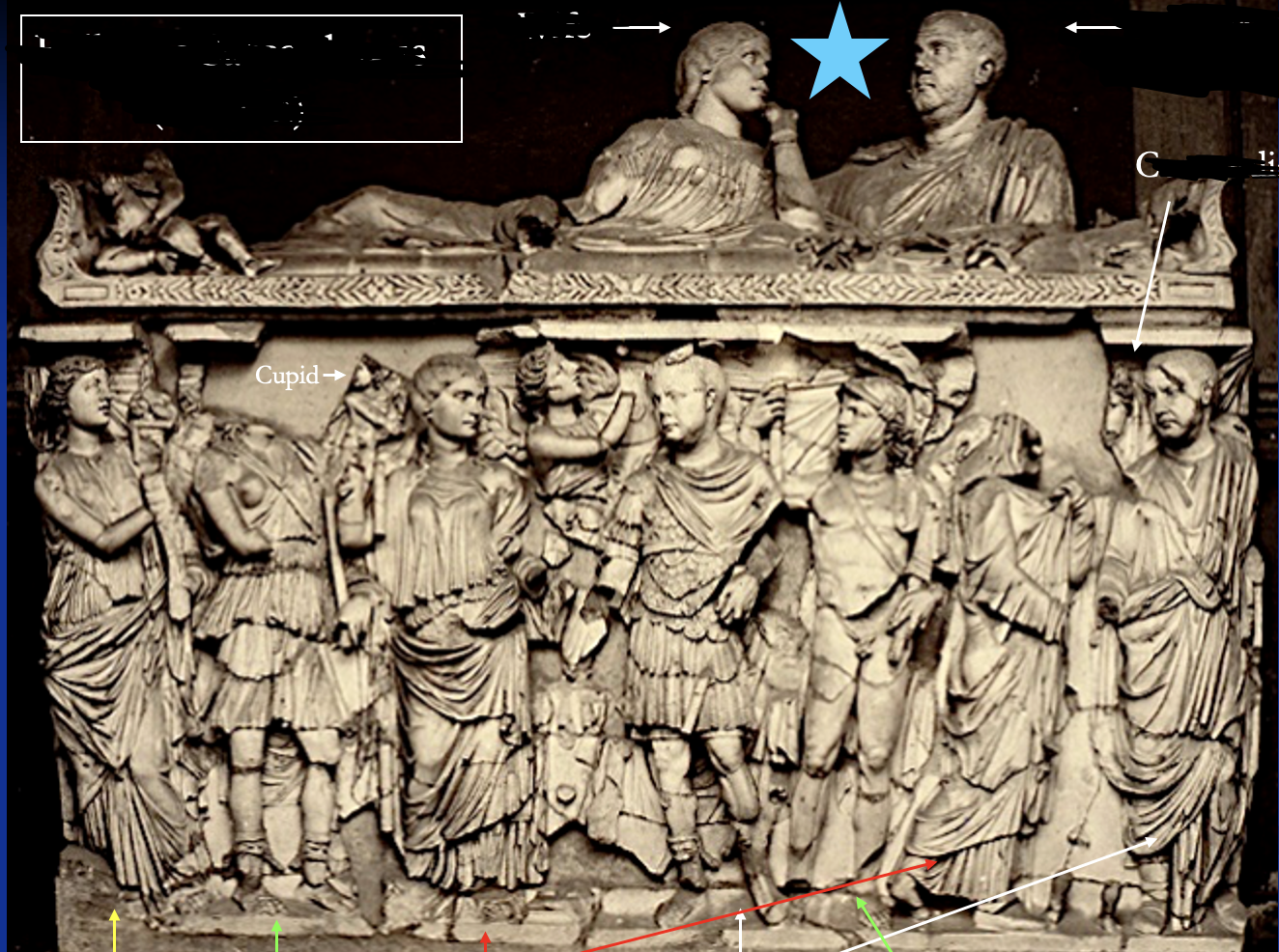
Balbinus Sarcophagus (238 A.D.)
sarcophagus of the emperor Balbinus from Tomb of the Praetextatus in Rome
Balbinus emperor for 99 days in 238
Balbinus represented 3 times on the sarcophagus
on the lid
joining hands with his wife on the front in the presence of
Concordiain the guise of Mars crowned by Victory: his wife in the guise
of Venus, with other divinities around them
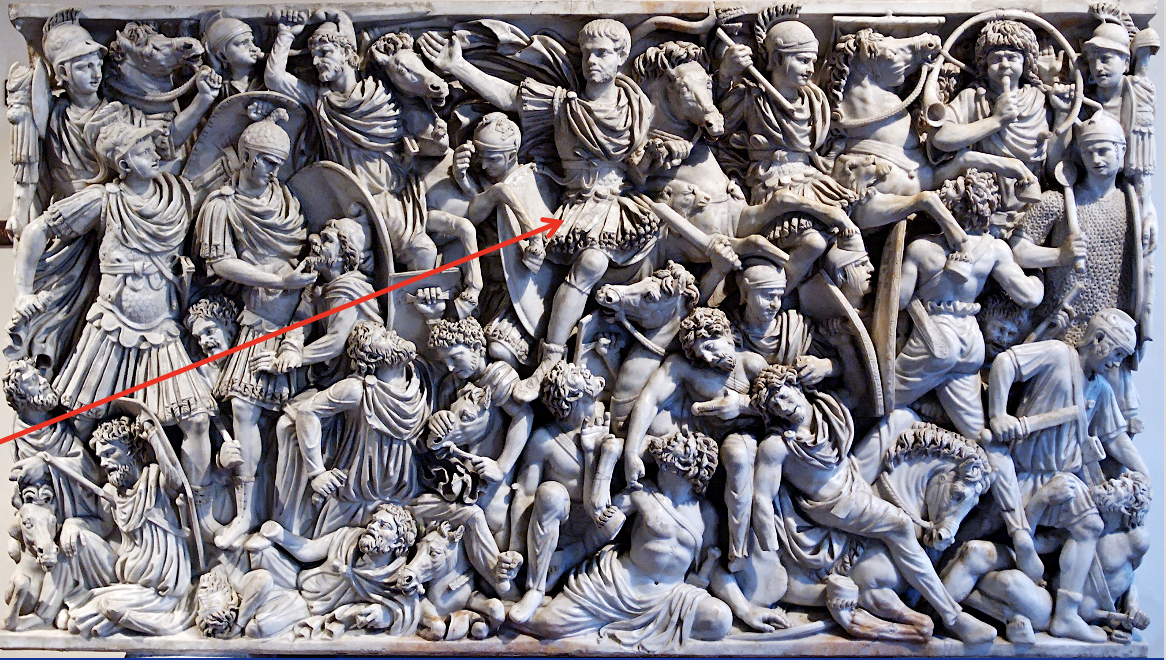
"Ludovisi Battle Sarcophagus" (C. 250)
cross incised on the forehead of the general (possibly a soldier-
emperor)--symbol of the Persian sun-god Mithrasgeneral is probably Herennius Etruscus, co-emperor who died in 351 A.D. fighting the goths in the battle of Abritius in Moesia Inferior
expressionistic treatment
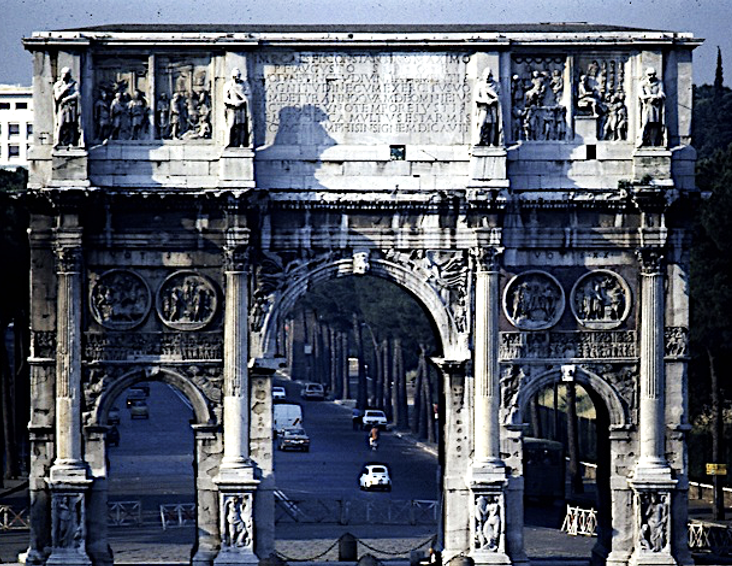
Arch of Constantine (312-315)
triple arch near the Coloseum commemorating Constantine's victory at the Milvian Bridge in 312 and the 10th anniversary of his rule (315)
reused sculptural decoration from earlier monuments
Hadrianic tondi (on faces of arch)
panel reliefs of Marcus Aurelius (in attic of arch)
statues in attic
reliefs on inside of central passageway--Great Trajanic Frieze
sculptural decorations of Constantinian date
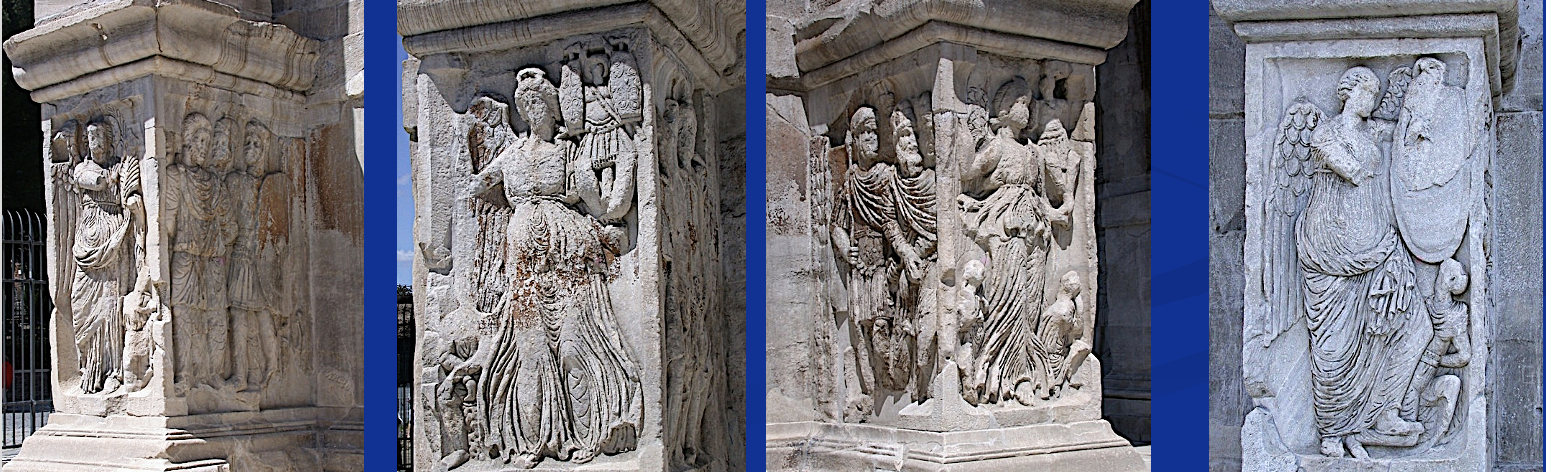
Victories in spandrels
figures on base of attached column (not all of them are)
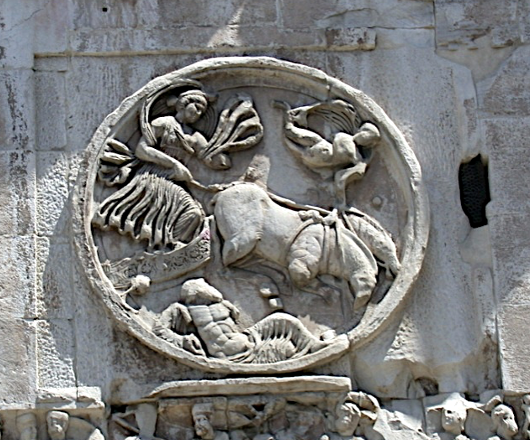
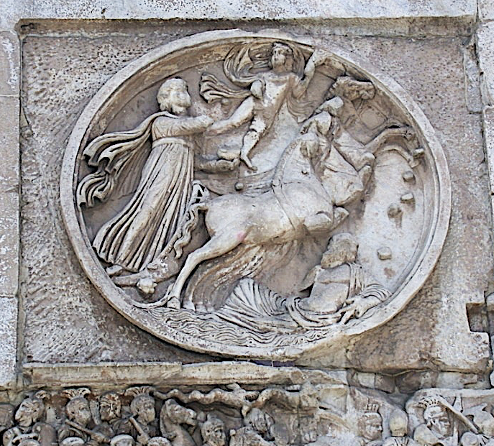
tondi on sides of arch: helios in solar chariot rising, selene in luna chariot setting
6 relief panels set in an almost continuous manner around the middle of the arch--historical subject matter of Constantine
stylistic features
cf. reliefs of Republican and early imperial date in the plebeian tradition of Roman art
SEPTIMIUS SEVERUS THROUGH CONSTANTINE ARCHITECTURE
NEXT PART
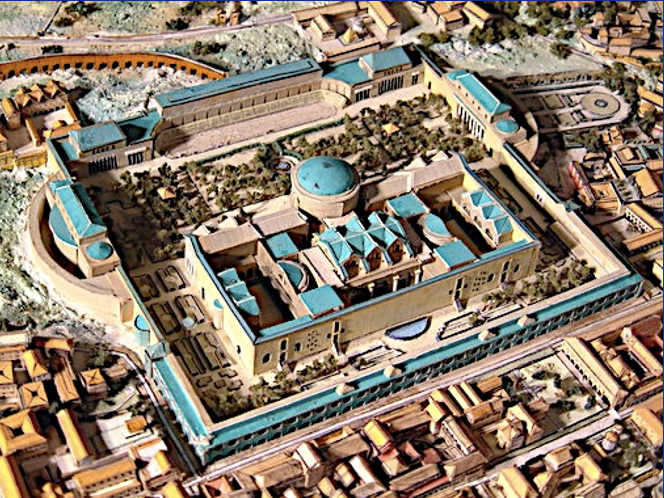
Baths of Caracalla (dedicated in 216)
located near the Circus Maximus in Rome
larger even than the Baths of Trajan
domed caldarium with clearstory lighting (cf. Pantheon)
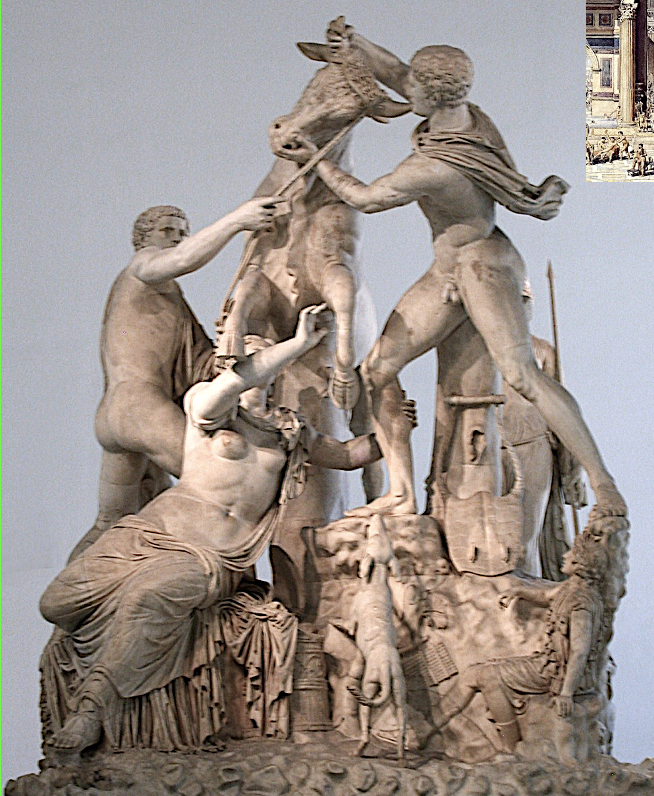
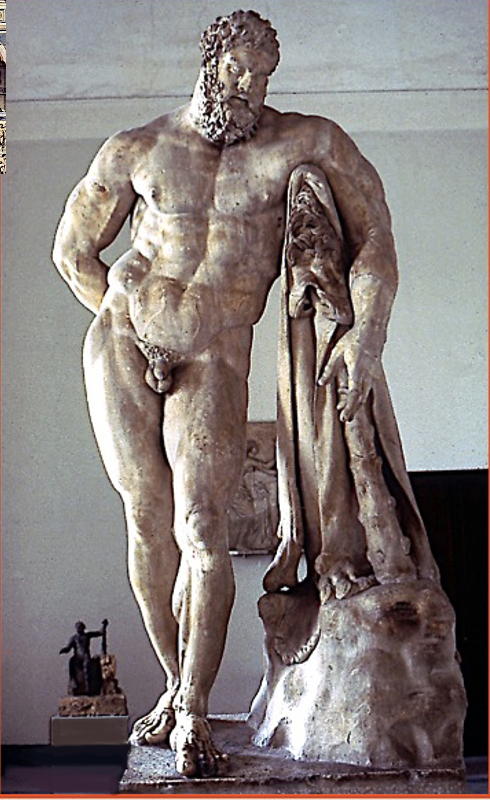
"Herakles Farnese" and "Farnese Bull Group"
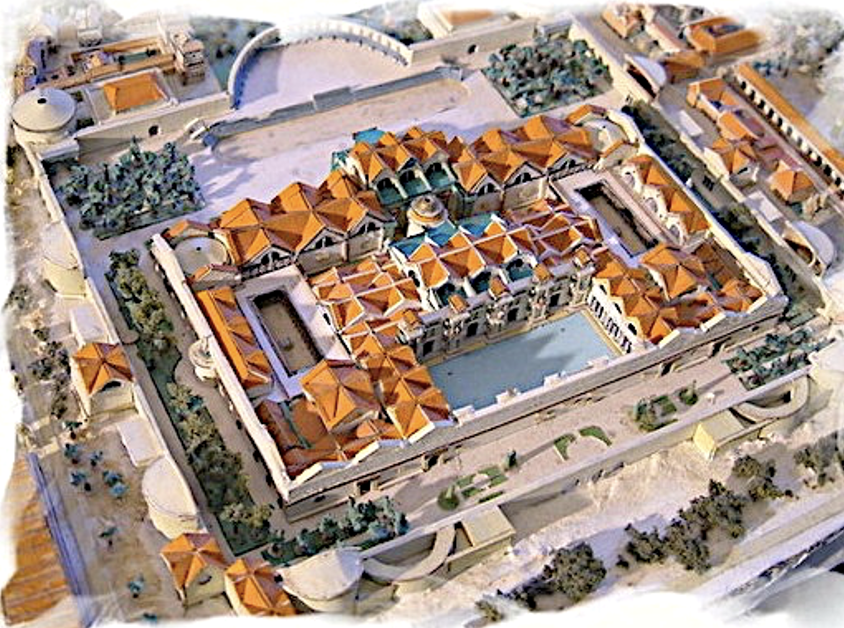
Baths of Diocletian (298- 306)
slightly larger than the Baths of Caracalla, making the Baths of
Diocletian the largest Roman bathing establishmentmodern buildings of the Piazza della Repubblica (or Piazza Esedra)
retaining the form of the perimeter wall of the baths of Diocletianpart of central nucleus of the Baths incorporated in the Terme Museum
frigidarium of the Baths converted into the Church of Santa Maria degli Angelli
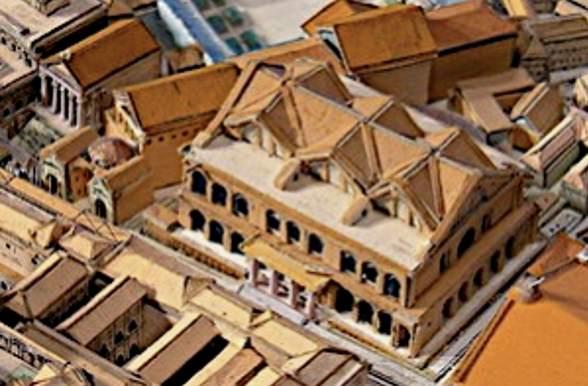
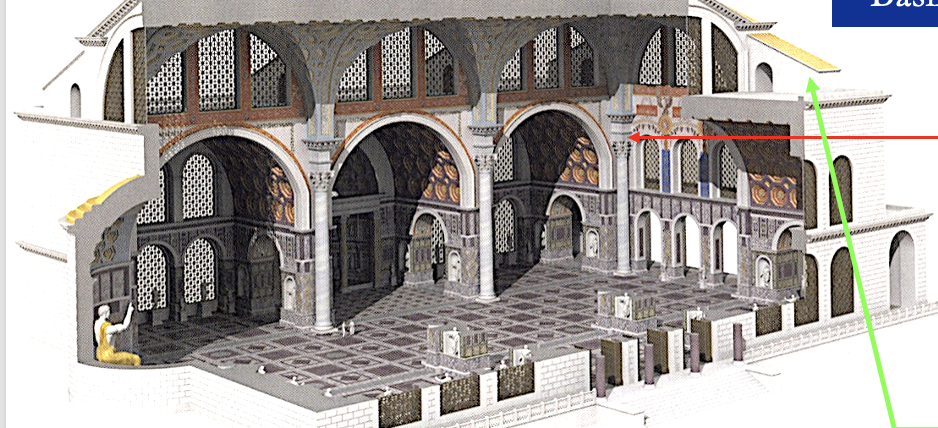
Basilica of Maxentius (also called the Basilica of Constantine) (c. 306 312)
short buttresses reinforcing the central ceiling (foreshadowing "flying
buttresses" of Gothic architecture)colossal statue of Constantine placed in apse on short west end
contrast of interior and exterior
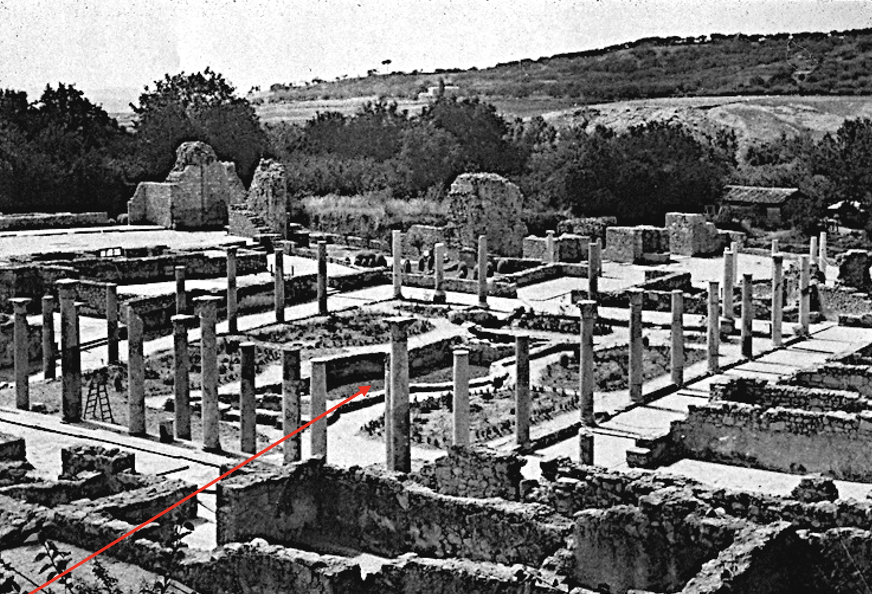
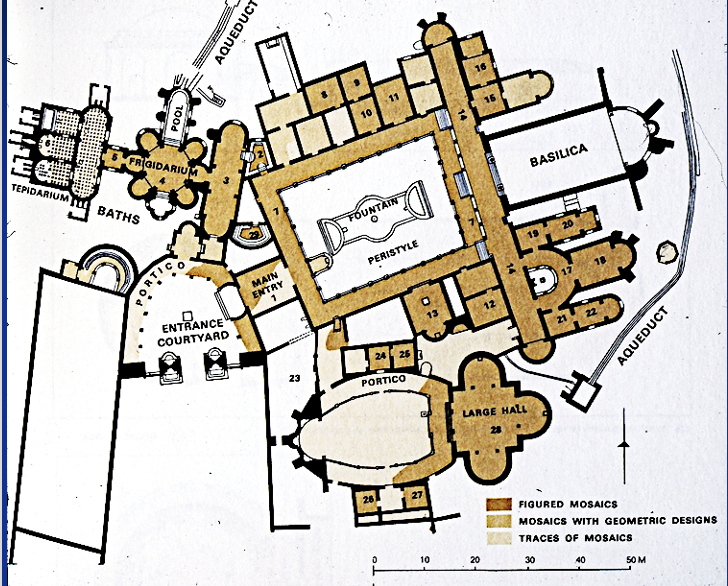
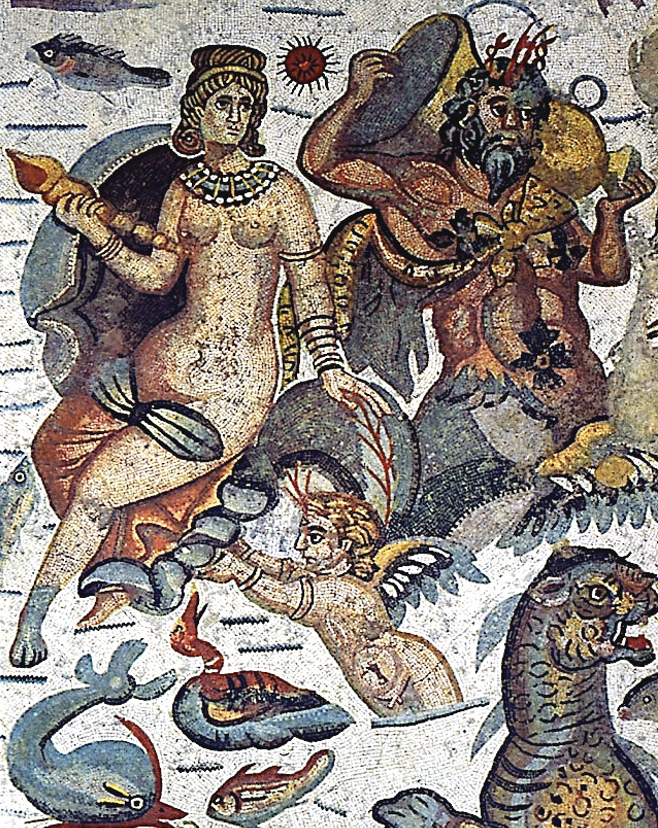
Villa at Piazza Armerina in Sicily (late 3rd-early 4th century)
Once thought to be the property of the Tetrarch Maximian or his son
Maxentius; now believed to be of a Roman aristocrat based on other grand luxury villas also found in Sicilyasymmetrical plan and curvilinear forms
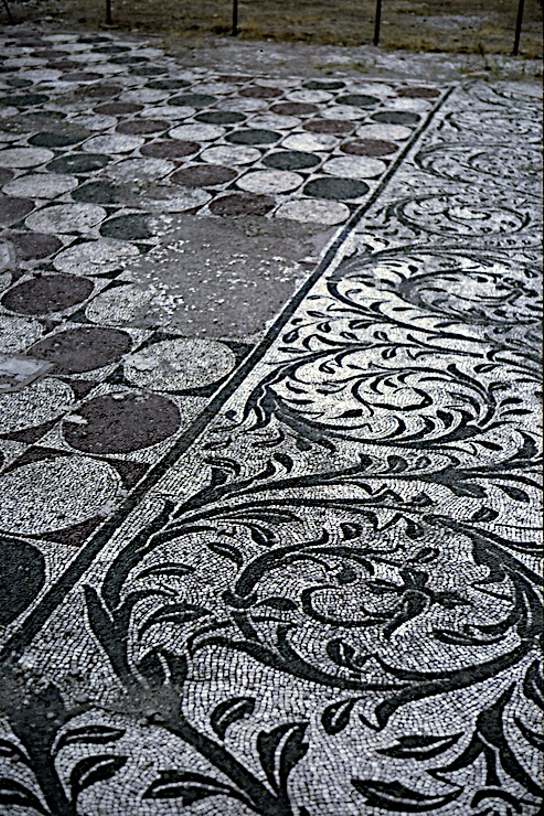
floor mosaics
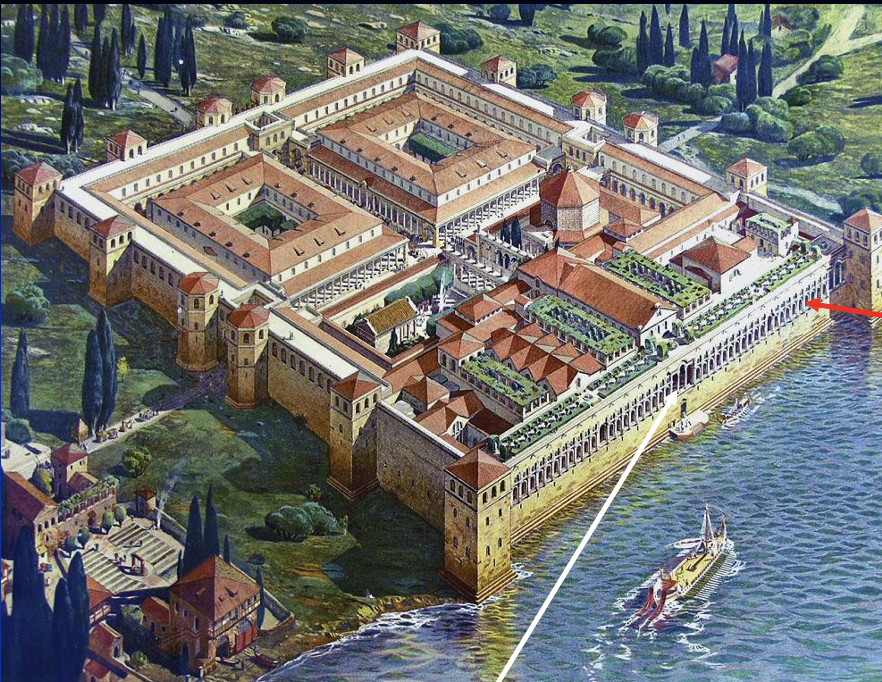
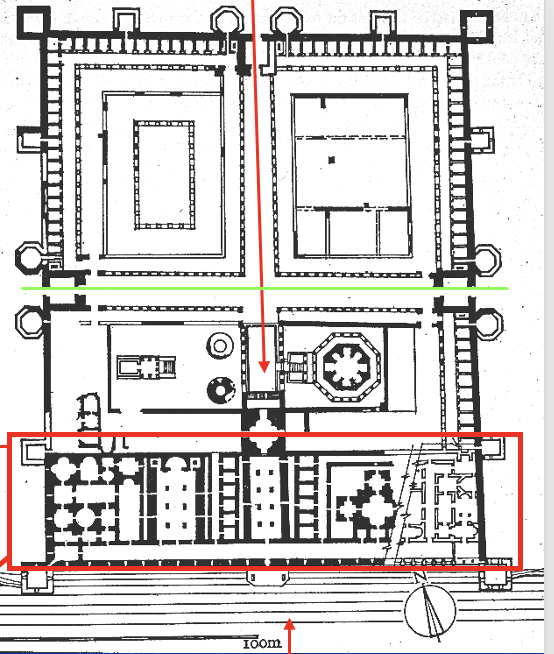
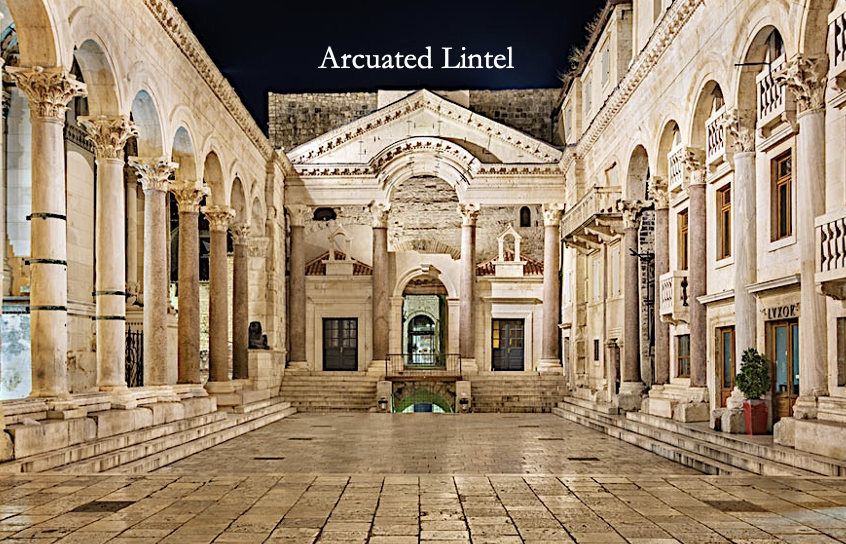
Diocletian's Palace at Split (W. coast of Yugoslavia) (300 A.D.)
built to serve as residence after his retirement in 305
defensive walls with towers surrounding 10 acres by the sea
praetorium--commander's headquarters; term used for the private
quarters of the Palace at Split"peristyle" of the Palace--arcade forecourt to the praetorium
arcuated lintel--an architrave with both horizontal and arched
elements; also called the "Syrian arch" (found as early as the 1st century B.C. in the East)arcuated colonnade with arches springing directly from column
capitals (important in Romanesque architecture of 1000-1300
A.D.)
octagonal mausoleum of Diocletian and his family
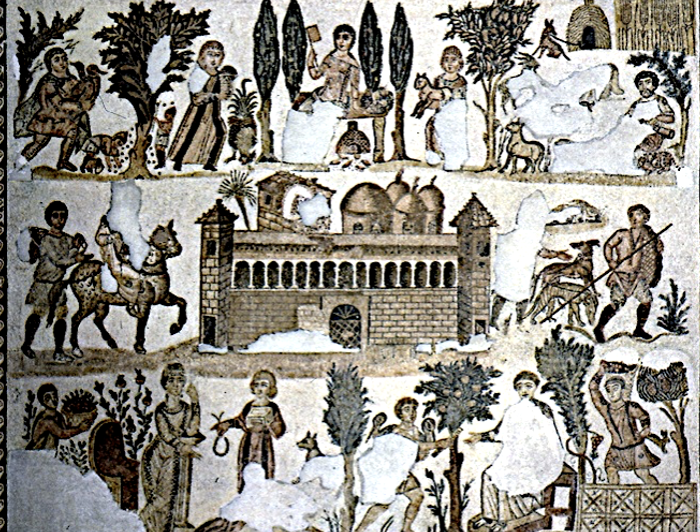
4th century Mosaics from N. Africa representing fortress-like country
villas