lectures 9 (fear conditioning )
 Call Kai
 Learn
Learn Practice Test
 Spaced Repetition
 Match
Match Flashcards
 Knowt Play
1/24

There's no tags or description
Looks like no tags are added yet.
Name | Mastery | Learn | Test | Matching | Spaced | Call with Kai |
|---|
No analytics yet
Send a link to your students to track their progress
25 Terms
circuits for opiate analgesia (process)
endogenous opiate neurons release peptides in PAG and dorsal horn of Spinal cord
opiate drugs can act on recpetors in both of these regions to inhibit the pain pathway and exert their analgeisic effects
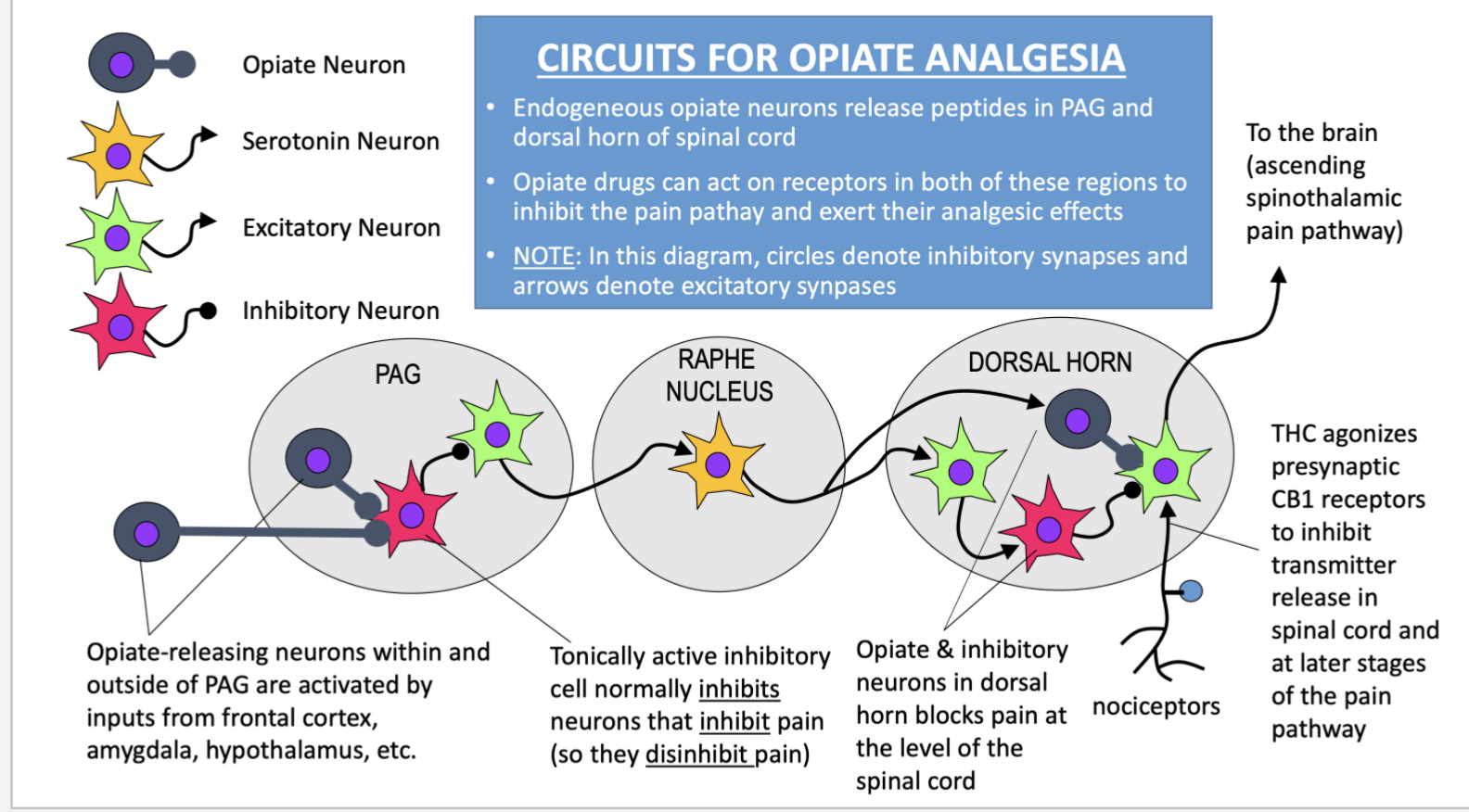
what is the most common excitatroyr/ inhibitor cells for CNS and PNS?
what is PAG? (periaqueductal Gray)
consists of parallel columns taht surround the aqueduct in the midbrain and brainstem
contaisn neural circuts that perform different fucnts, fight or fligth
fight/flight
analgesia (opioid and non-op mediated)
autonomic changes in heart rate/blood pressure
Dorsal PAG (dPAG) = drives flight responses
ventral PAG (vPAG) = drives freezing responses
PAG internet def
a structure in the midbrain (a part of the brainstem) located in the gray matter surrounding the cerebral aqueduct. It acts as a critical hub connecting higher brain regions with the lower brainstem, and is best known for three core functions:
Pain Modulation: It is a primary control center for descending pain inhibition. It contains high concentrations of opioid receptors, meaning it can suppress pain signals before they reach the brain
Fear and Threat Responses: The PAG orchestrates instinctive defensive behaviors like freezing, running away, or fighting when you encounter a threat.
Autonomic Control: It regulates essential bodily functions, including heart rate, blood pressure, respiration, and bladder control
what is tonically active inhibitory cells
neurons that fire continuously over long periods, constantly releasing inhibitory neurotransmitters to suppress the activity of other cells. They regulate the baseline "noise" in the brain and ensure neural circuits don’t become overactive
1. Tonic vs. Phasic Activity
Tonically active: These cells fire persistently and steadily, maintaining a continuous, background level of inhibition.
Phasic: In contrast, phasic cells fire in short, rapid bursts only when triggered by a specific stimulus
what are analgesic effects
the relief of pain. It refers to the ability of a medication or treatment to alleviate pain and discomfort without causing a loss of consciousness, distinguishing it from anesthesia
what is spinothalamic pain pathways
pavlonian fear conditioning
process. = ppl and animals can be trained to be afraid of cues that predict danger,
baseline = tone CS is presented alone, and does not elicit behaviroal fear responses
acquisition = tone CS is paired with a footshock US, triggering increase in blood pressure and post shock freezing
testing. = tone CS is presented alone, elciits a conditioned increae in blood pressure and freezing (CRs)
what pathway is used to connect auditory info from vPAG and ears = fear conditioned Cs can trigger the freezing response after it has been paired with aversive US?
auditory and pain pathways
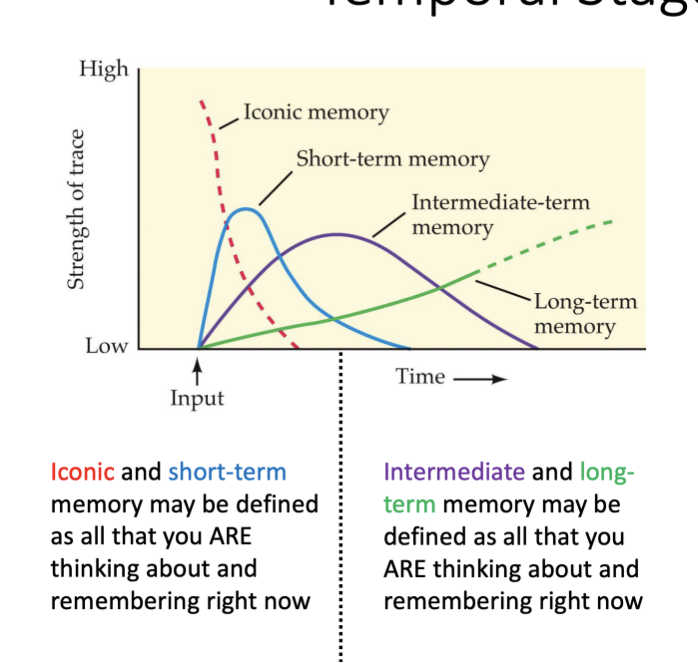
temporal stages in memory
iconic/echoic memories = the briefiest memroies that store sensory impressions that only last a few secs
STM , AKA working memroy, last for les than one min, or throughout conscious rehearsal
intermediate term mems = last for hrs or days
LTMs = last for months, years, lifeitme
fear extinction
repeated presentation of the CS without the US can cause this
the middle ear
includes the eardrum (aka tympanic membrane)
bones — called ossicles
malleus
incus
stapes
amygdala (Beginning of Lecture 10)
latin for almond = BLA almond shape
the tip of the hippocampus
MT lobe
fear center
Anatomy of the Amygdala
the striatal amygdala - has inhibitory projection neurons, and consists of the central (Ce) and medial (M) nuclei
the central and M nucleus together are called the extended amyg
the cortical amygdala complex has excitatory projection nuerons, and consists of teh lateral (LA), Basal (B) and accessory basal (AB) nuclei.
the L and B nuclues together = Basolateral (BLA) amyg
the auditory fear conditioning
def = fear conditioning to an auditory CS,
need the LA and Ce nuclei of the amyg to learn that a tone predicts a shock
pretraining lesions of Ce / LA only impair the rats Conditioned freeezing response (CR) to the CS