IWA Script (Long)
 Call Kai
 Learn
Learn Practice Test
 Spaced Repetition
 Match
Match Flashcards
 Knowt Play
1/24

There's no tags or description
Looks like no tags are added yet.
Name | Mastery | Learn | Test | Matching | Spaced | Call with Kai |
|---|
No analytics yet
Send a link to your students to track their progress
25 Terms
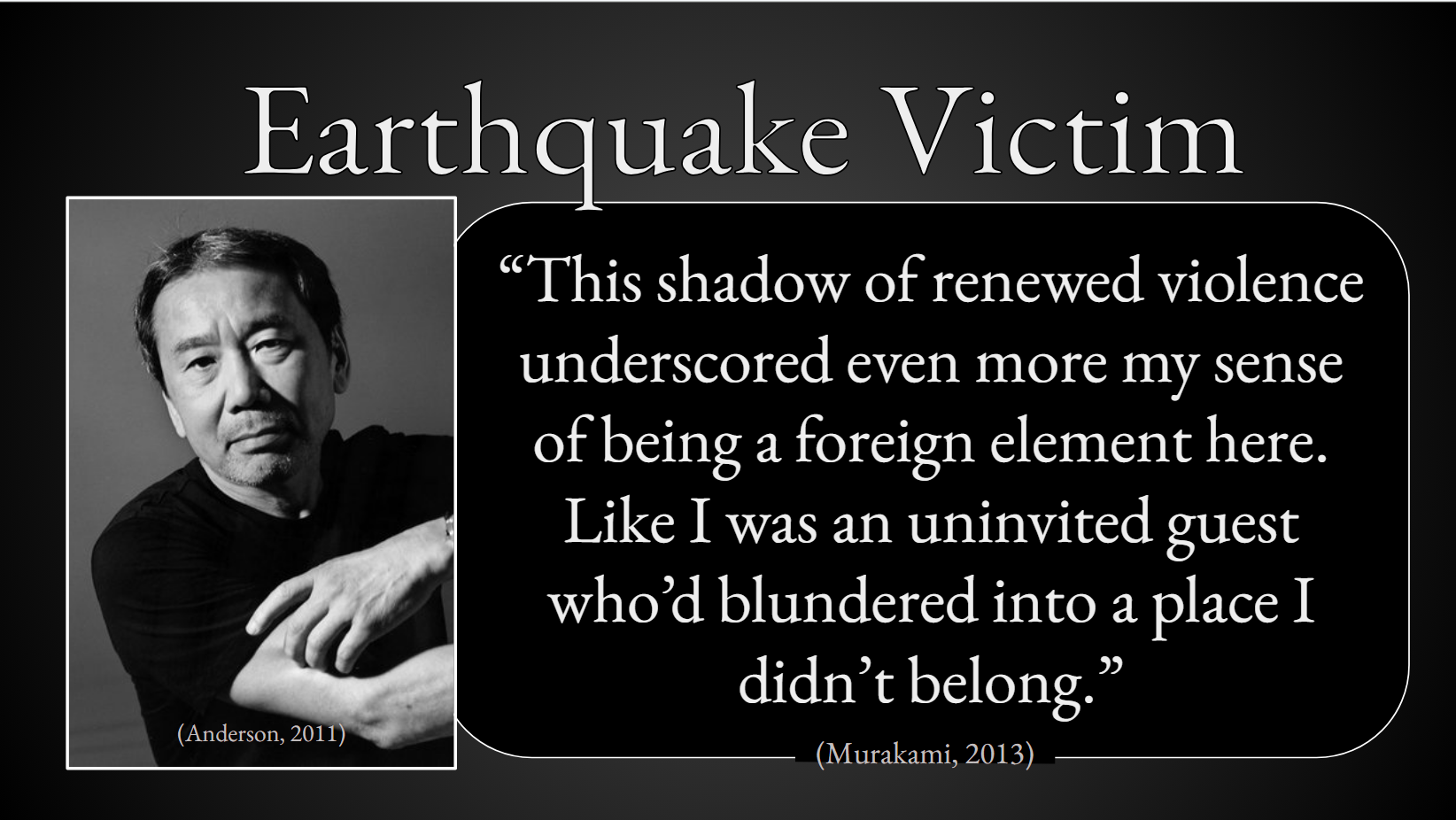
Today, demolishing buildings is viewed as a necessary step towards making cities more modern. However, no one considers the dire consequences they hold. This journalist for Granta Magazine voices how he’d had his childhood home destroyed by a ravaging earthquake, causing him to lose his sense of belonging in what was once his hometown.
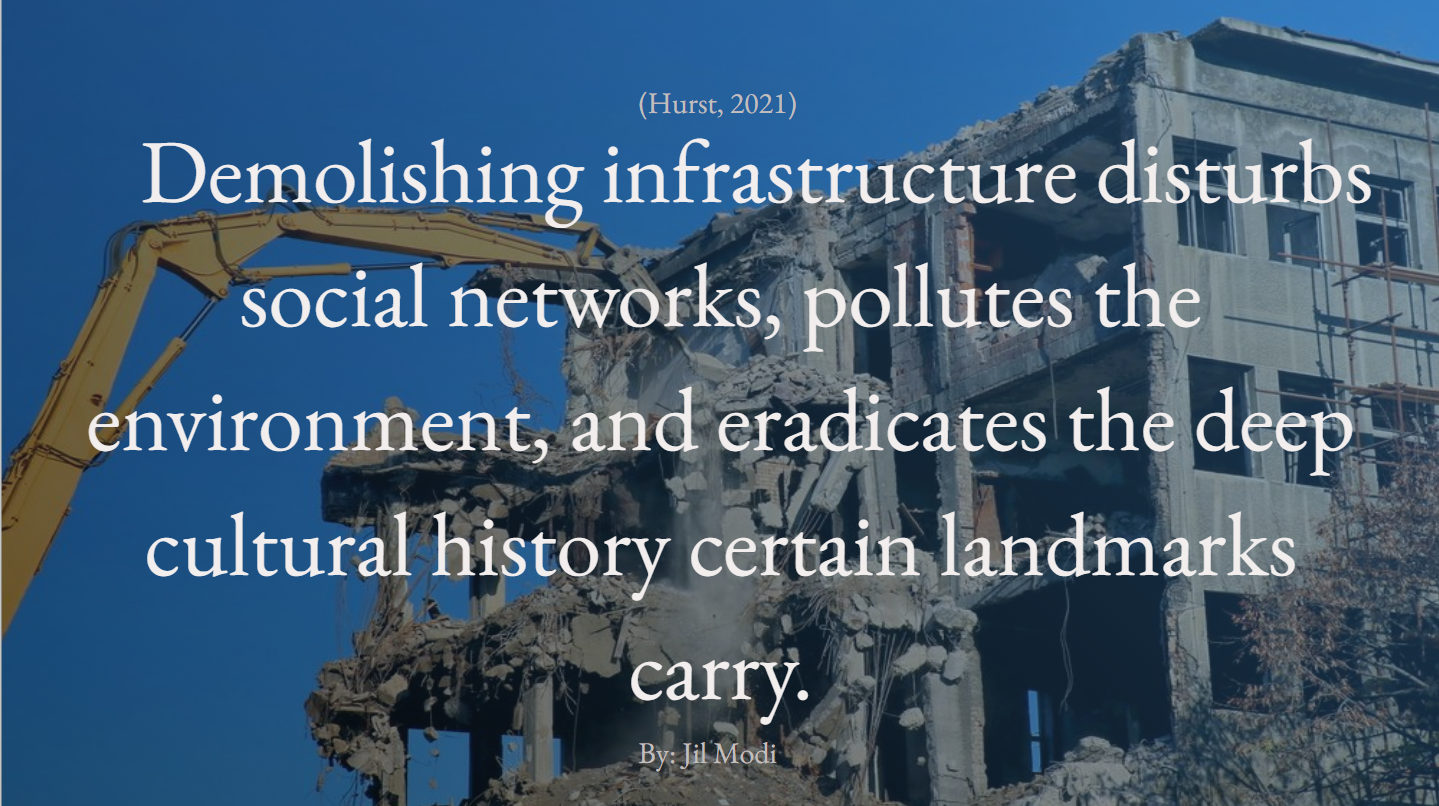
If demolition can inflict this much harm to society, why does society choose to do it purposefully? This leads into my argument. Hello everyone. My name is Jil, and today, I will be arguing that demolishing infrastructure disturbs social networks, pollutes the environment, and eradicates the deep cultural history certain landmarks carry.

Claim one states demolishing infrastructure disturbs social networks.
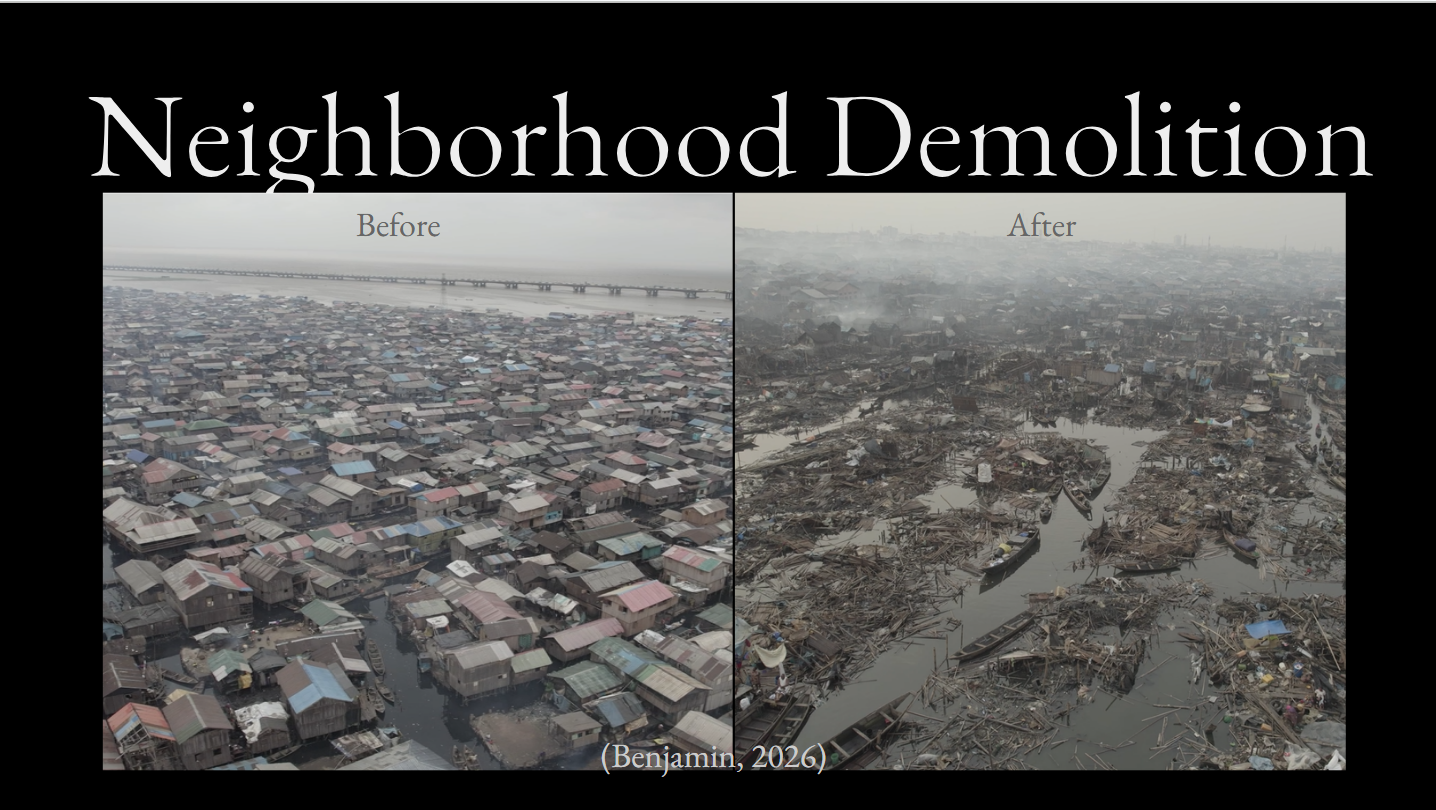
These two images showcase the aftermath of government-issued demolitions in the Nigerian town Makoko. According to The Guardian, thousands of houses in the community were demolished in December 2025, leaving an alarming number of residents homeless and panicked.
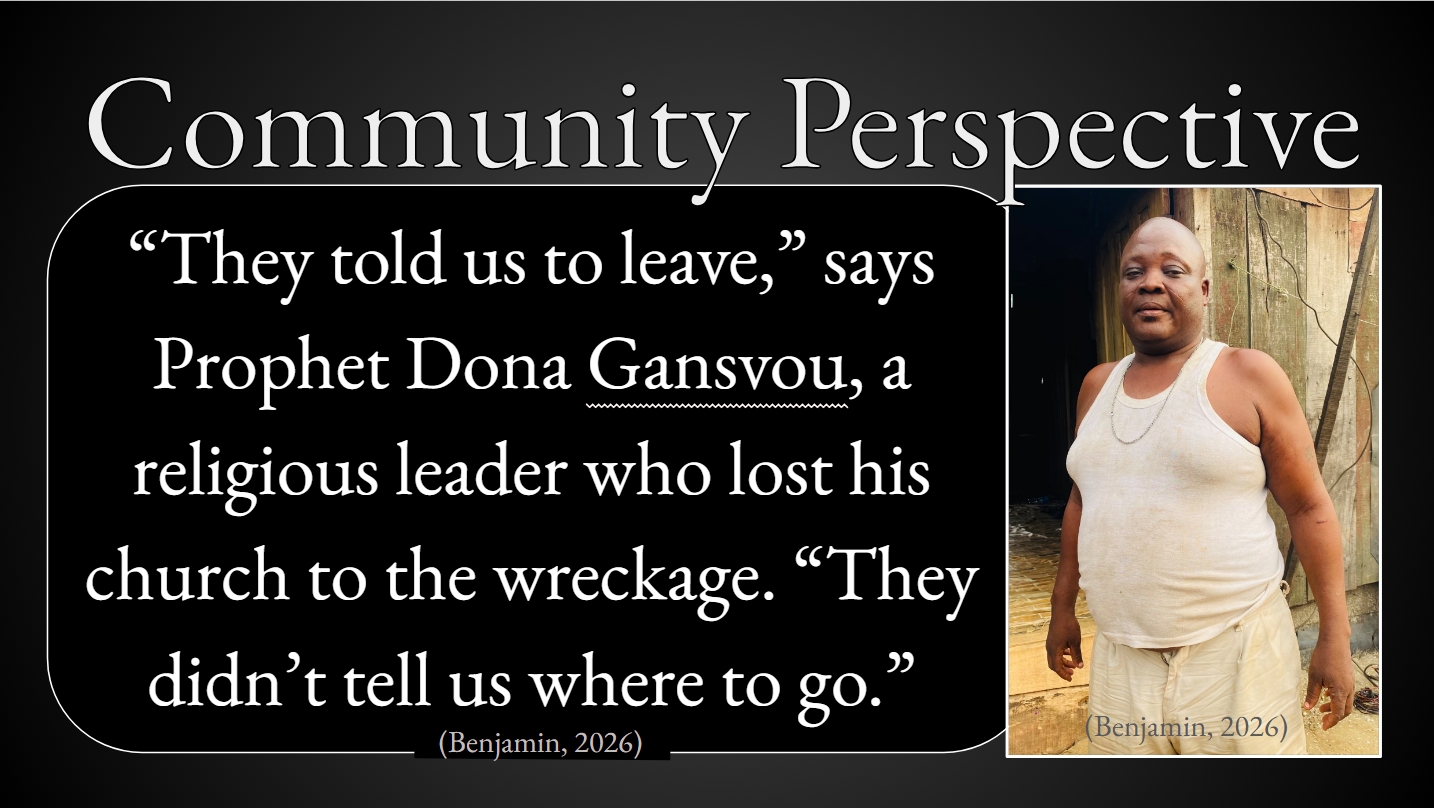
In the same article, a victim who’d lost his own workplace expresses that the demolishings were performed with little-to-no-warning. This reveals how demolition isn’t beneficial in the slightest. Instead of bringing people together, they tear down the structures that they depend on for survival, putting their lives in jeopardy.
Credible research published to the National Library of Medicine shows the implications this can have for mental health. Medical scientist Marie and her team uncover how losing a home to demolition severely damages one’s emotional well-being. This underscores how bulldozings have not only caused physical displacement. They also displace people mentally, proving to be a direct attack on one’s welfare whilst fragmenting communities.

However, this isn’t the only repercussion of demolition. Claim 2 states that demolishing infrastructure pollutes the environment.
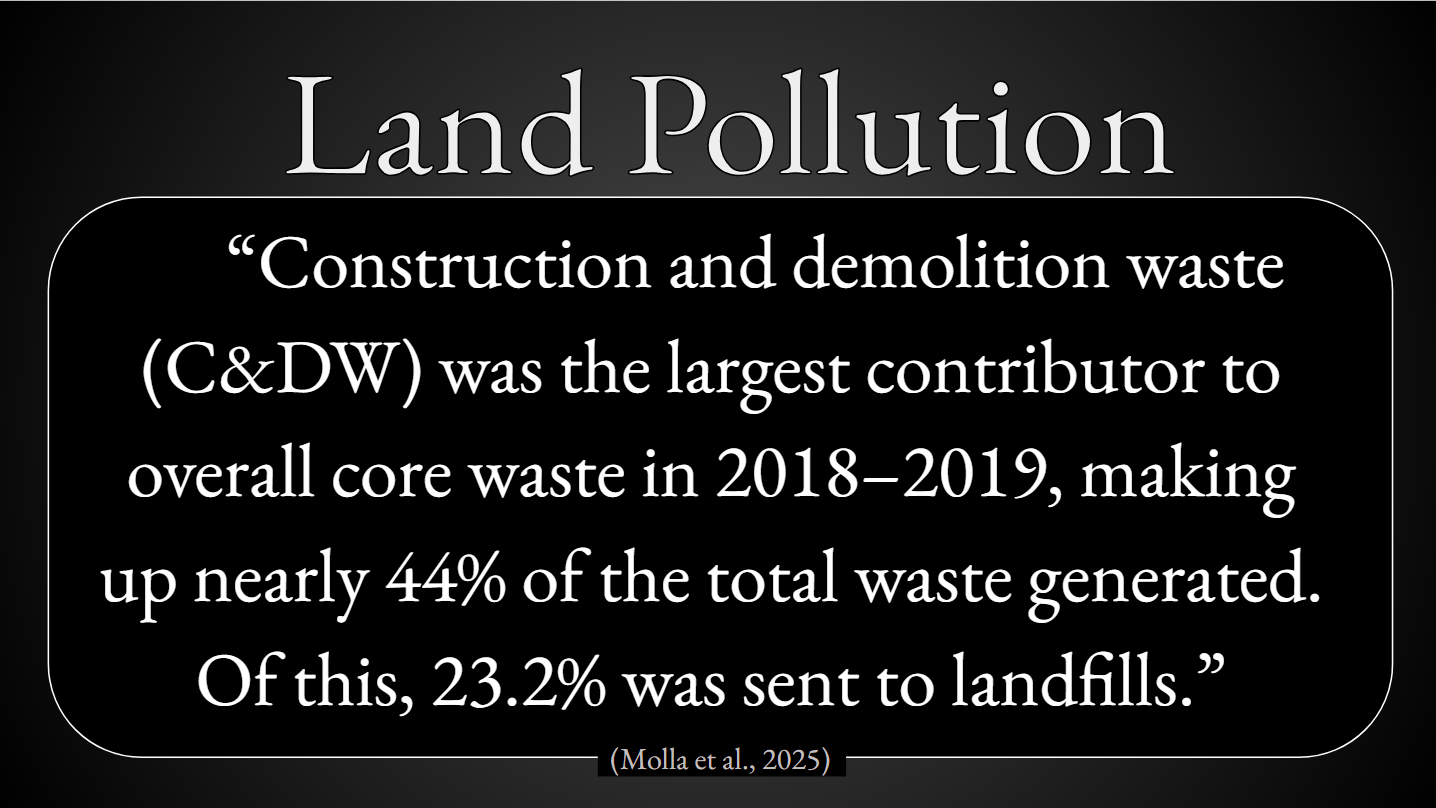
The demolition industry produces an unnerving amount of waste. Researchers for ScienceDirect highlight how debris released through bulldozings accounted for nearly 50% of garbage worldwide, accelerating land pollution.
The waste generated by demolition that later enters landfills goes on to release toxins into the air. According to the reputable organization IPCC, demolitions emit around 40% of the world’s carbon emissions. This fuels the progression of global warming, endangering the future of this planet.
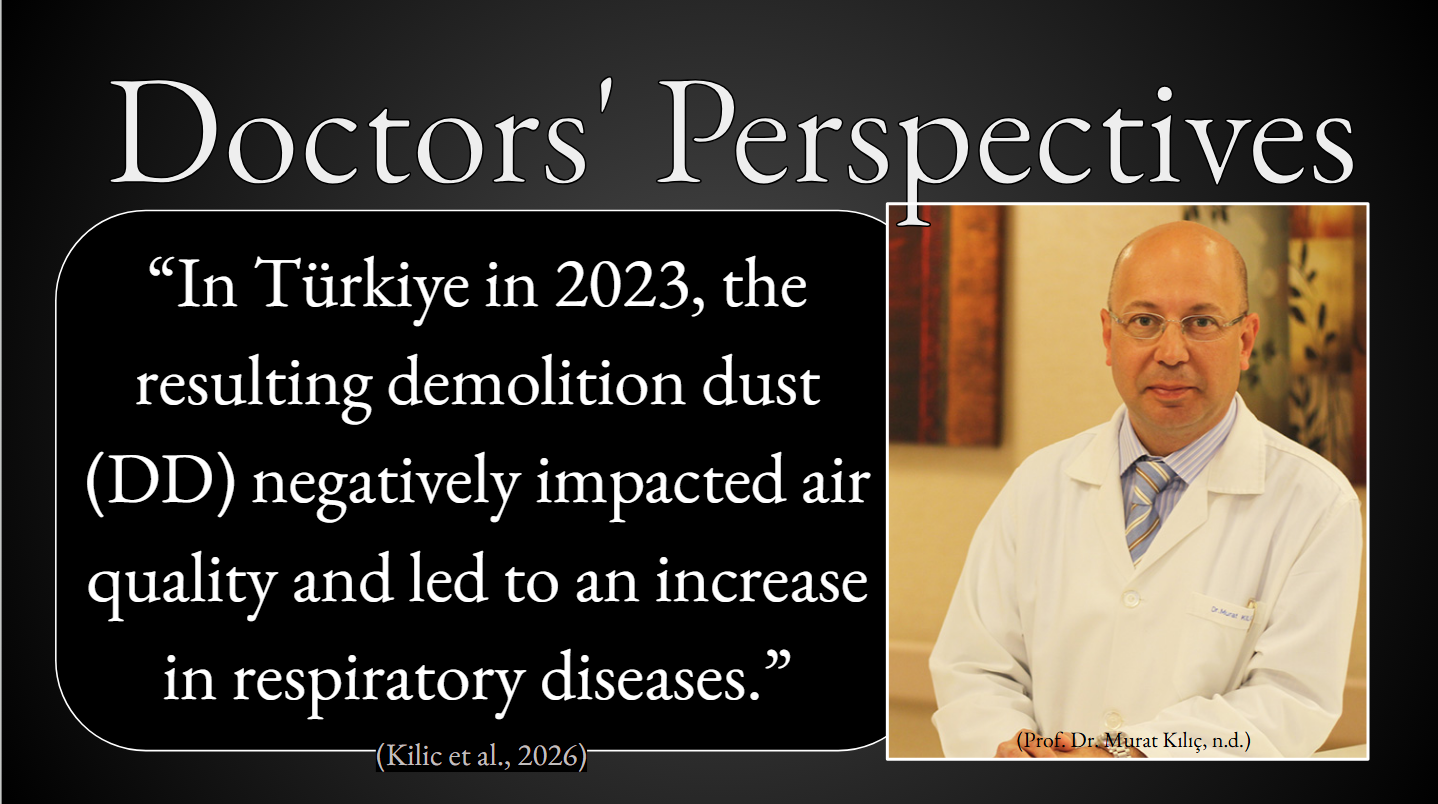
This is further supported by evidence from doctors and medical professionals. The findings of a case study revealed demolitions to increase the risk of humans to respiratory diseases, showing just how destructive they are.
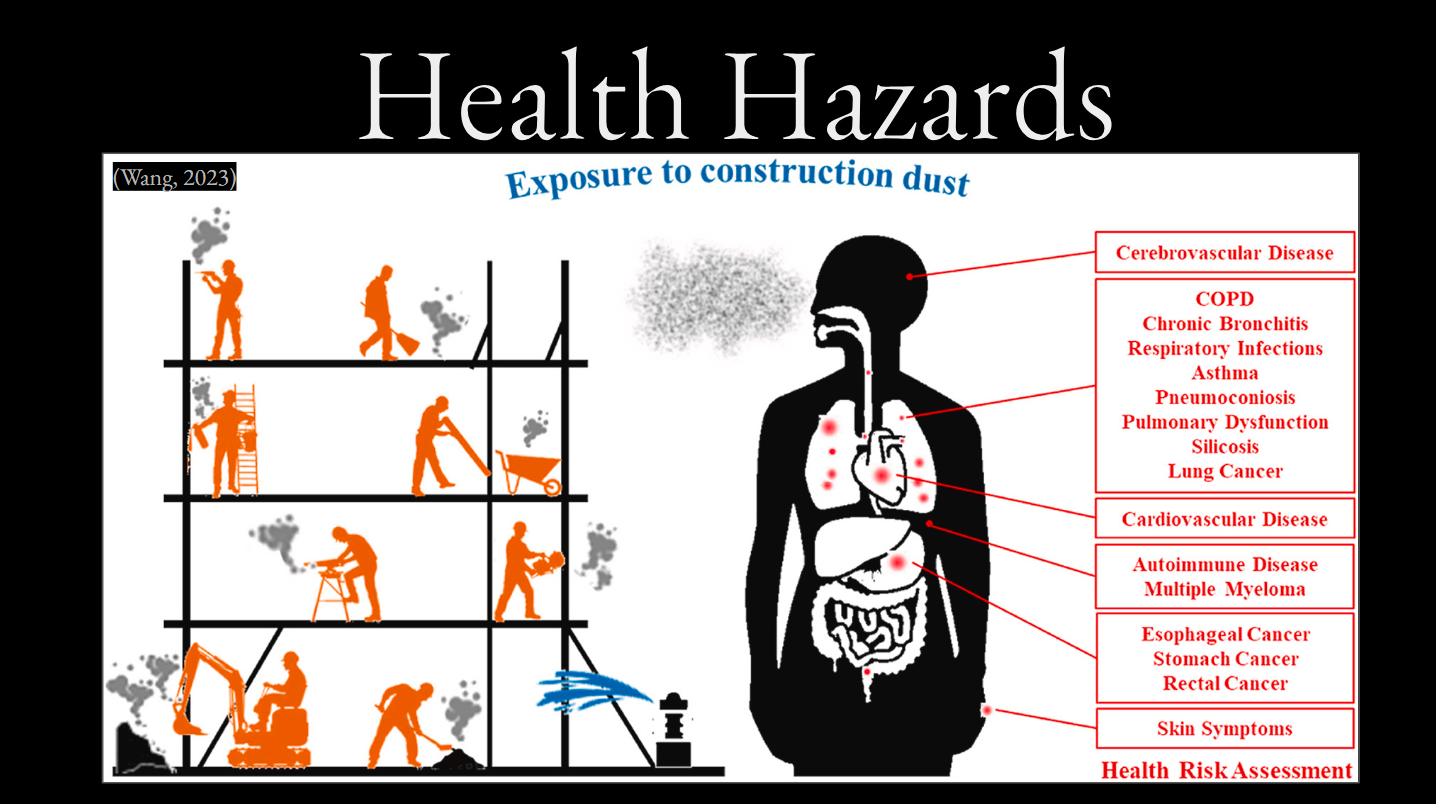
A graph created by construction researchers illustrates this. It reveals that the dust released during bulldozings can trigger the development of fatal illnesses, including heart disease and lung cancer. This demonstrates just how impactful demolitions are. When they are continuously employed as a method to “urbanize cities,” it isn’t only the environment that suffers, but the health of surrounding communities.

This leads me into my third and final claim. Demolishing infrastructure eradicates the deep cultural history certain landmarks carry.
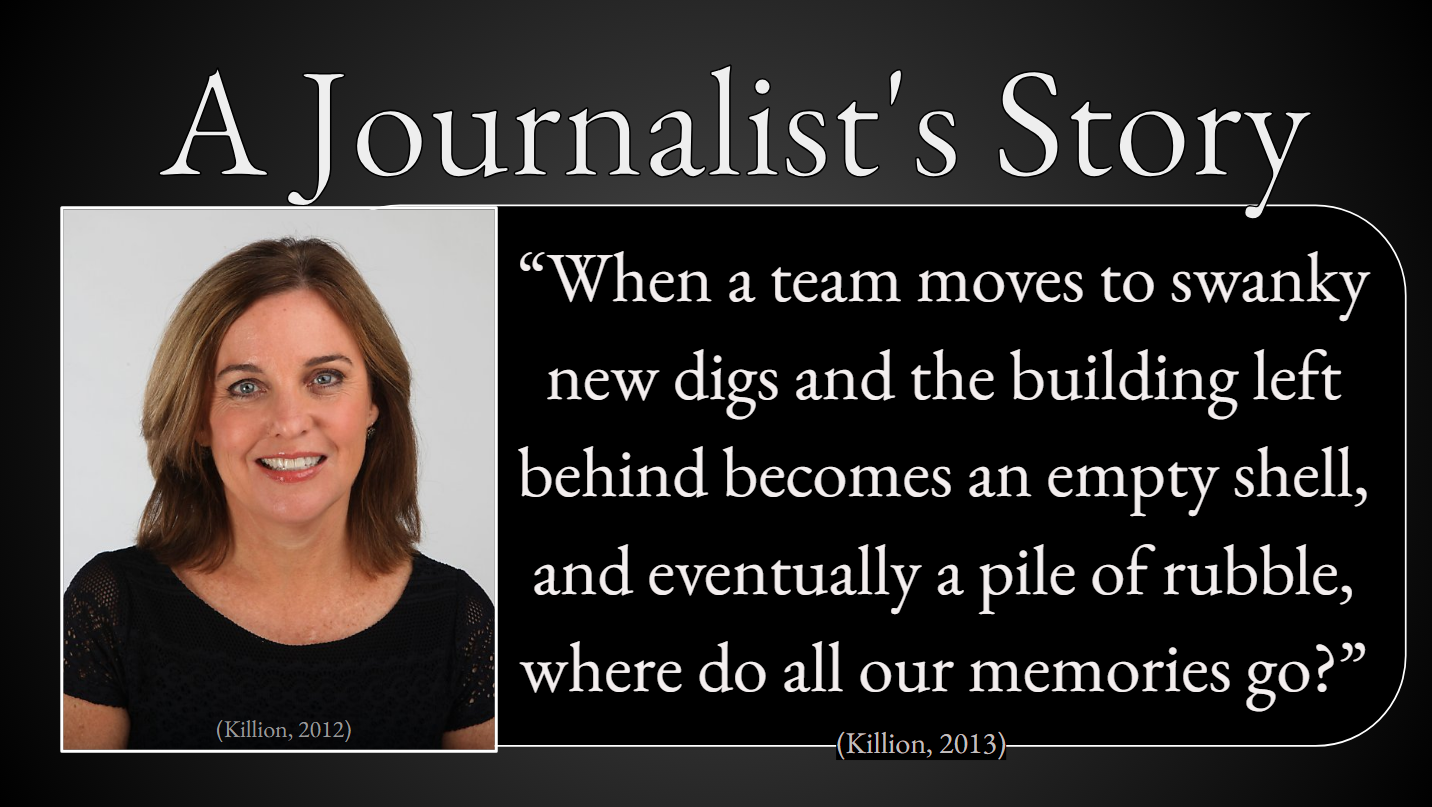
Sports columnist Ann Killion reflects on how her and her father used to visit Candlestick Ballpark as she was growing up. Killion began to treasure the place for the strong memories and father-daughter bond it symbolized, especially after his passing. However, after it was demolished, a piece of this powerful connection died with it. This illustrates how certain landmarks are too precious to be demolished. Some buildings serve as time capsules, and destroying them means destroying the past.
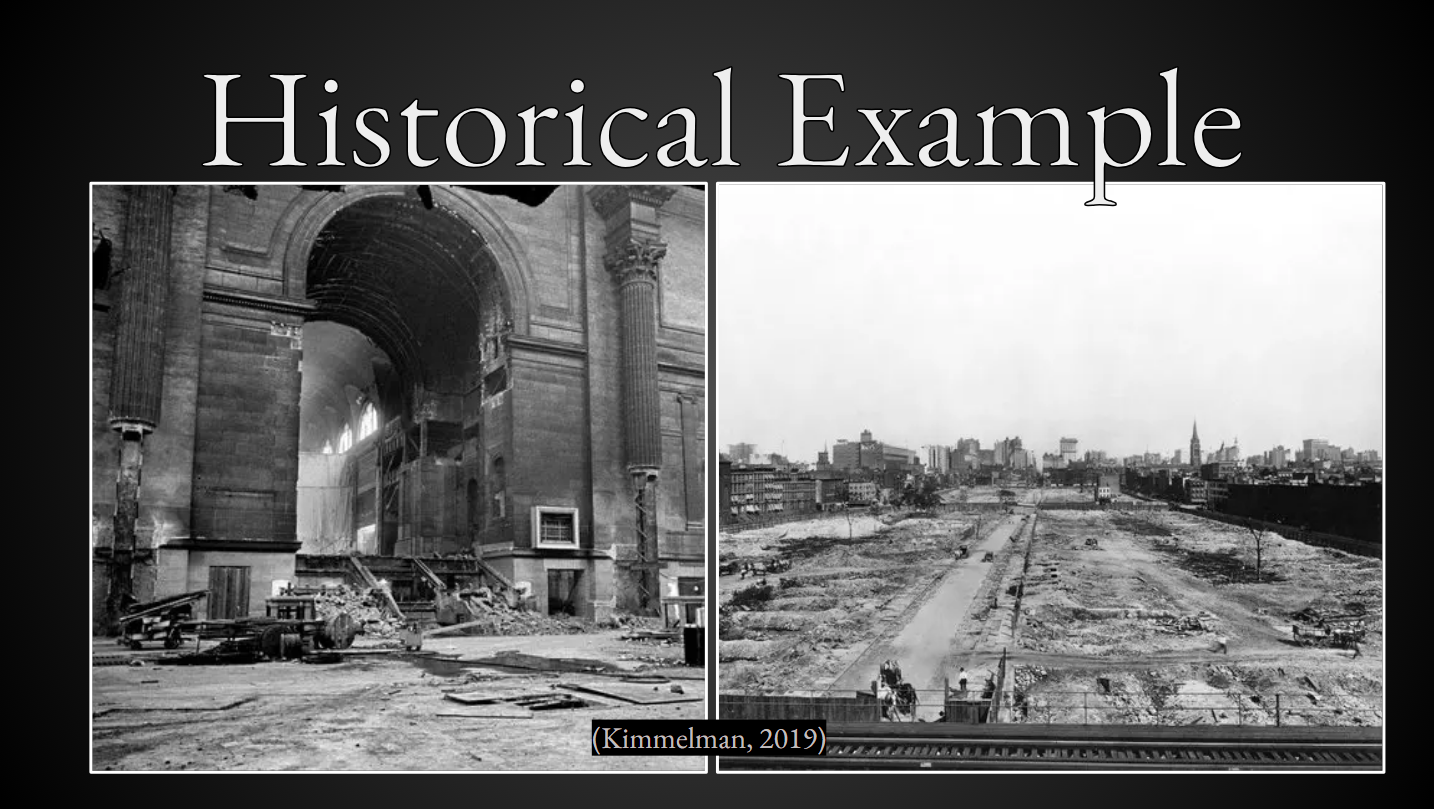
A prime example of this is New York’s beloved Penn Station, which was demolished in the 1960s. According to the New York Times, the structure offered a unique, grand experience to everyday visitors because of its intricate architectural design. It grew into a place people looked forward to going to, surpassing its role as “just a train station” and becoming a testament to history.
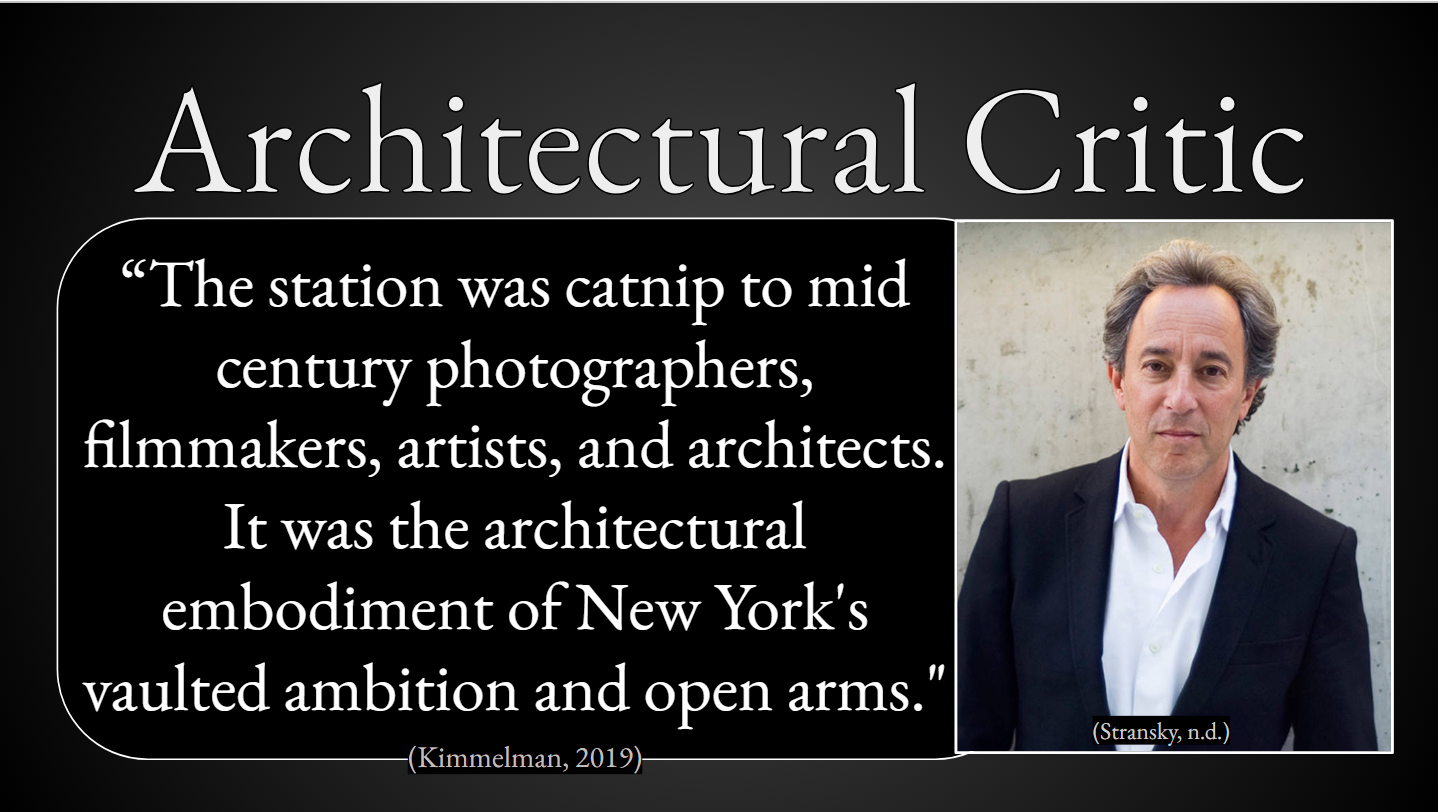
This architecture critic for the New York Times further iterates this. He expresses how the station became a grounds for connection, uniting people of all different backgrounds by inviting them to admire the place. By destroying the place, this profound connection was also destroyed.

This takes me to my solutions.
Solution one reads that buildings can be renovated instead of demolished, lowering carbon emissions and preserving structural integrity.
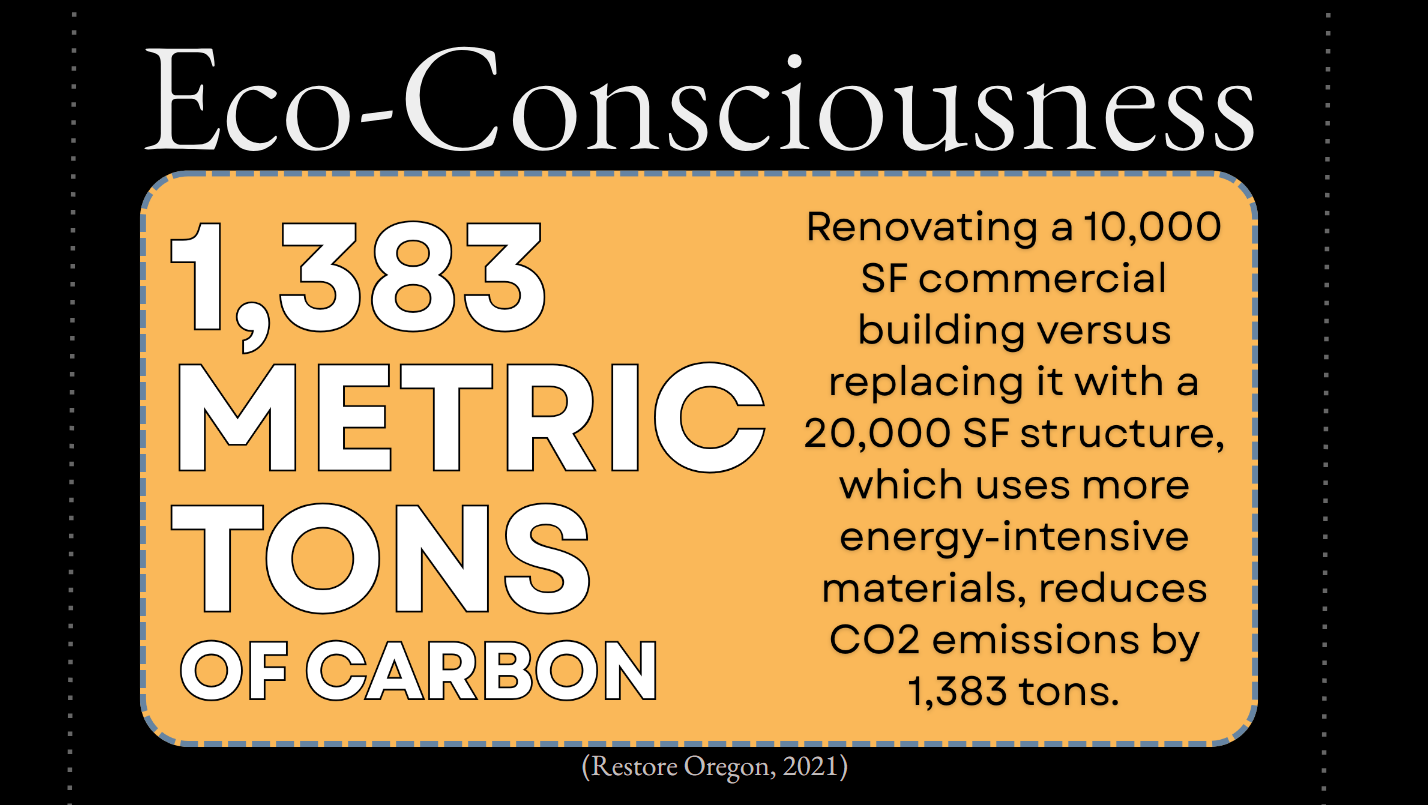
This graph from a non-profit organization shows how much more environmentally safe renovations are than demolition. Renovating a building rather than tearing it down saves considerable amounts of carbon, making it an eco-conscious alternative.
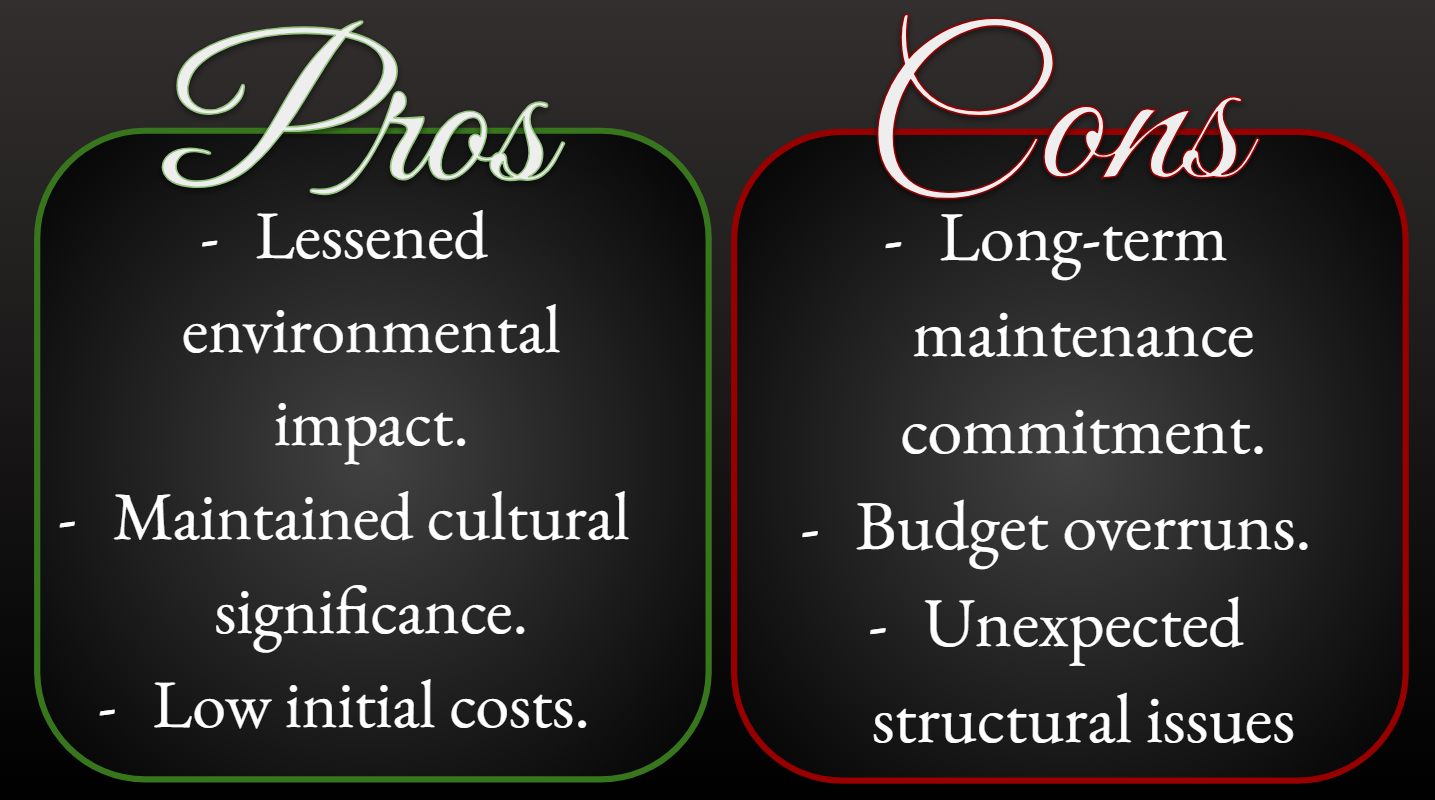
The pros of this solution include lessened environmental impact, maintained cultural significance, and low initial costs. Because renovation preserves the structure of buildings, it is economically-sound and protects the original history a building carries. However, the cons that follow are long-term maintenance, budget overruns, and unexpected structural issues. Issues with a building may be unearthed during renovation and difficult to work around. This extends project duration and raises costs, causing renovations to potentially be inefficient.
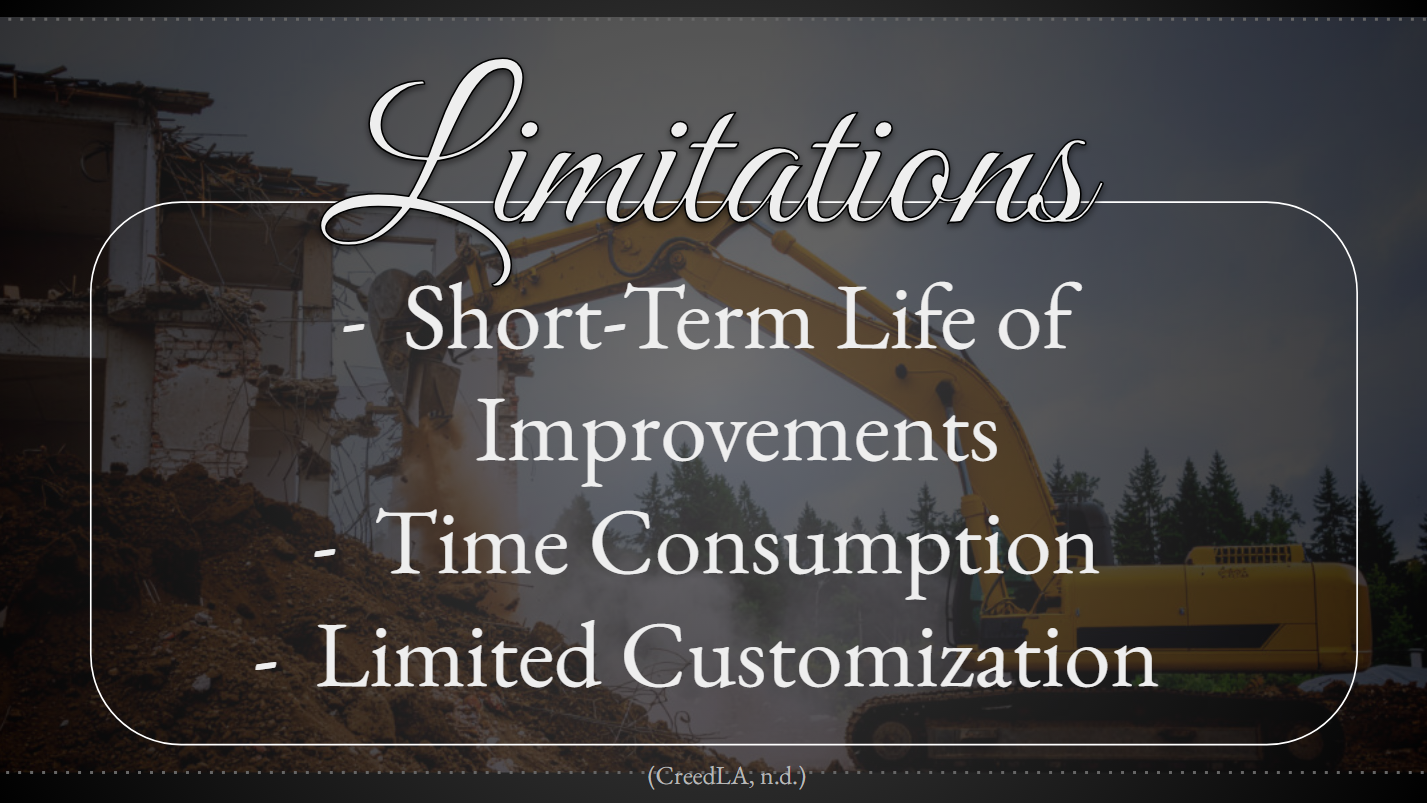
The limitations of this solution are short-term life of improvements, time consumption, and limited customization. Renovations may not be enough to sustain a building’s life, especially if they are old. The requirement for constant updates drains lots of time, causing renovations to become more of a “hindrance” in certain cases, whereas demolitions allow for a fresh start.
Solution 2 poses buildings can be carefully deconstructed, and the collected materials can be repurposed for future projects.
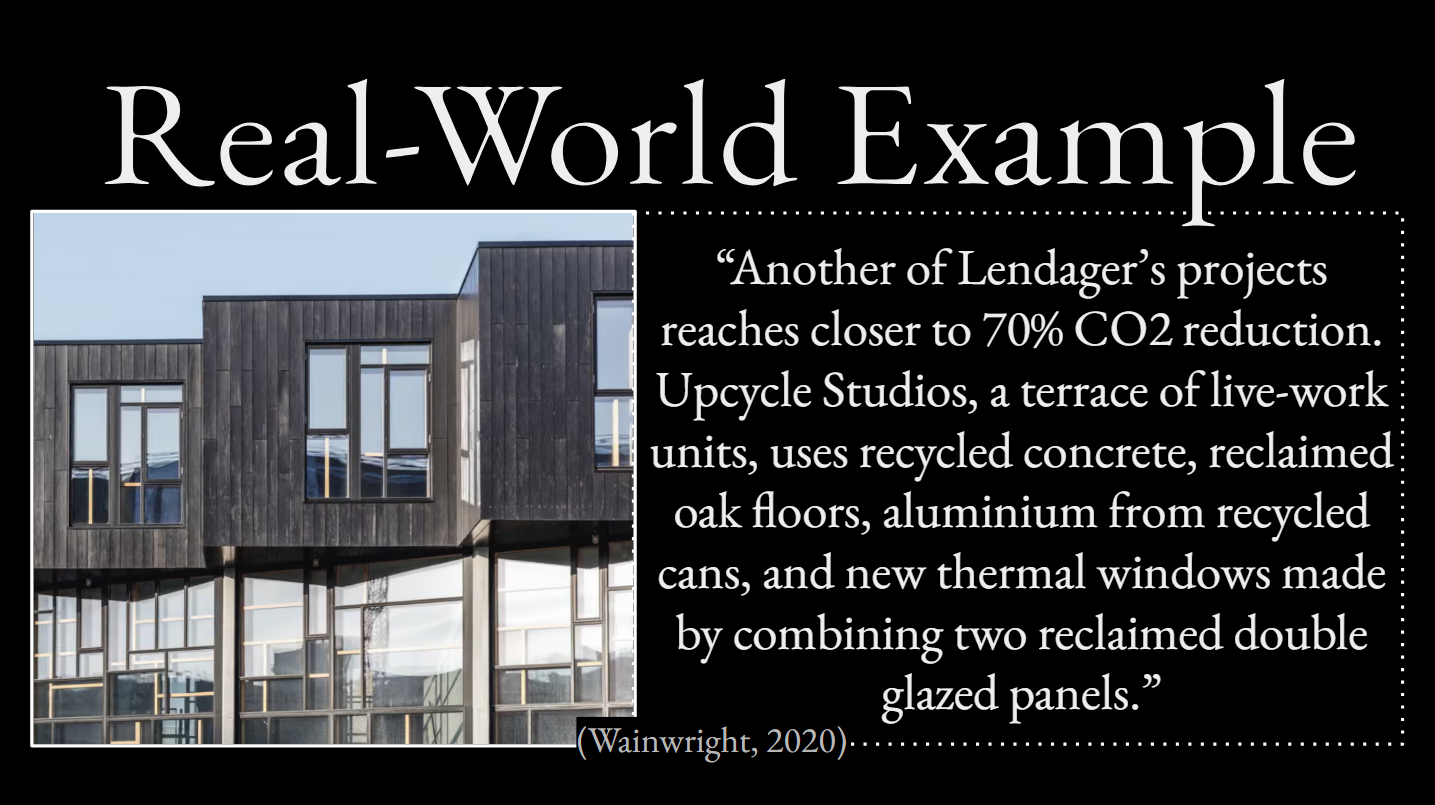
Architectural reporter for The Guardian explores how recent projects are deconstructing past buildings and using the generated materials to form new ones. This process lowered carbon emissions by a drastic margin by giving another life to old resources.
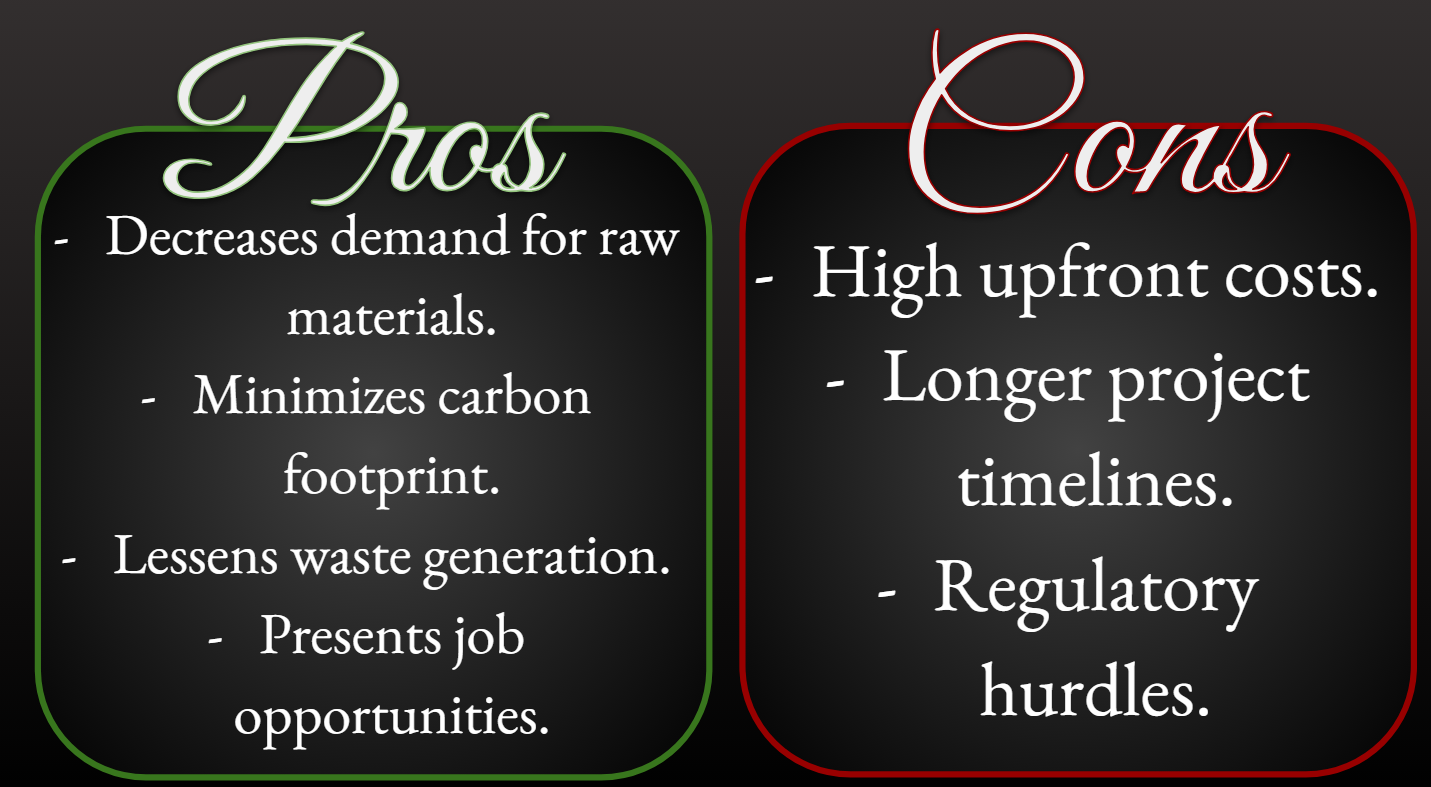
Deconstruction works to carefully dismantle structures and salvage the resources instead of crushing them into landfill waste. This eco-friendly process decreases demand for raw materials, minimizes carbon footprint, lessens waste generation, and presents job opportunities–fostering a circular economy. However, deconstruction poses high upfront costs, long project timelines, and regulatory hurdles. The process consumes a lot of time, money, and may not meet the building codes in certain areas.
The limitations of this solution are time constraints, limited material supply, and lack of infrastructure. The materials used in certain buildings may be too outdated or even hazardous to use, making them difficult to repurpose. Additionally, deconstruction is labor-intensive and generally slower than conventional demolition, increasing the time commitment and demand for workers.

Overall, the best solution is solution 2. Both renovation and deconstruction are strong alternatives to demolition. But, deconstruction diverts more waste from landfills and creates jobs whilst posing the same benefits as renovation, making it a better option all-around.