NM Pecos Fish
 Call Kai
 Learn
Learn Practice Test
 Spaced Repetition
 Match
Match Flashcards
 Knowt Play
1/48

There's no tags or description
Looks like no tags are added yet.
Name | Mastery | Learn | Test | Matching | Spaced | Call with Kai |
|---|
No analytics yet
Send a link to your students to track their progress
49 Terms
Order Cypriniformes
Cyprinidae
Carp family: Stomachless, or agastric, fish with toothless jaws. Even so, food can be effectively chewed by the gill rakers of the specialized last gill bow. These pharyngeal teeth allow the fish to make chewing motions against a chewing plate formed by a bony process of the skull. Constantly grazing.
Cyprinidae
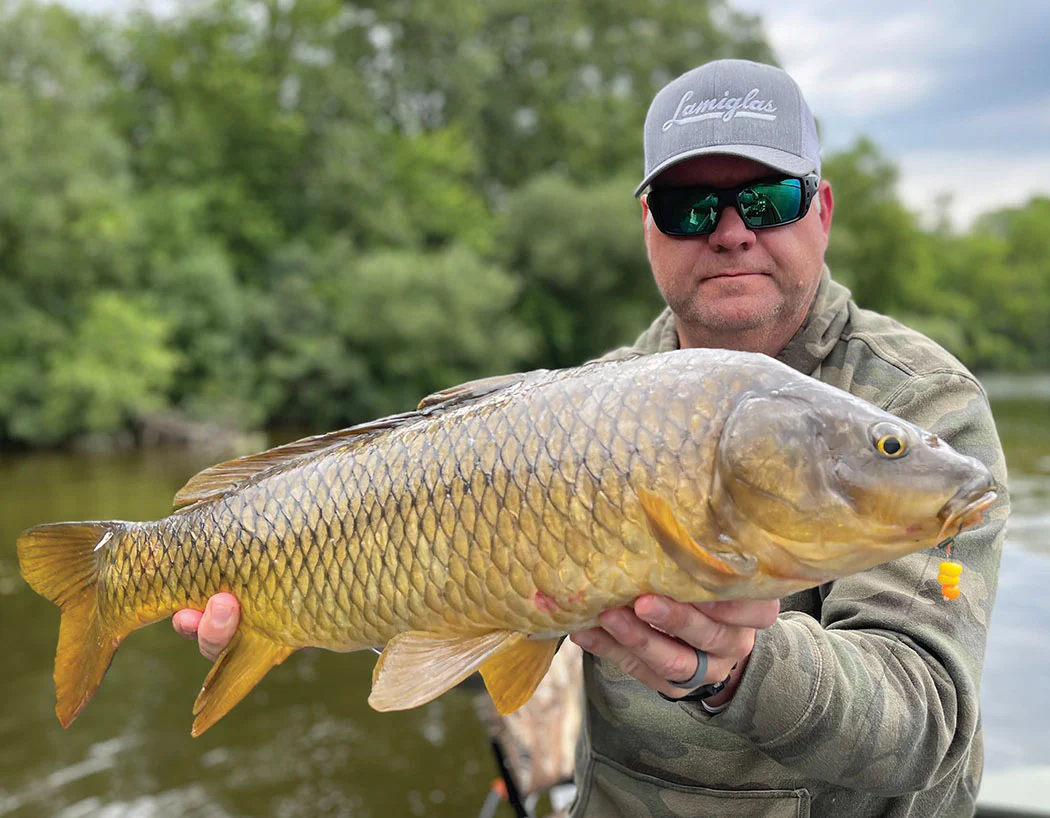
Cyprinus carpio (Common carp)
barbels, long dorsal fin, and bottom-rooting mouth; deep-bodied and sediment-disturbing.
Leuciscidae
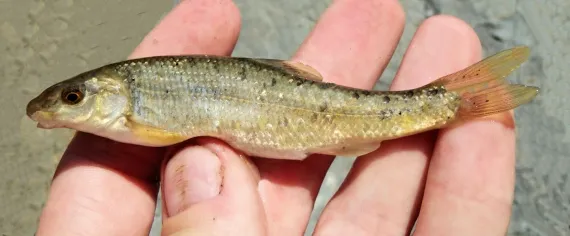
Campostoma ornatum pricei (Mexican stoneroller)
Stout minnow with hard scraping mouth (subterminal), algae grazer on rocks; dark dorsal surface with lighter sides; breeding males develop darker coloration.
Leuciscidae
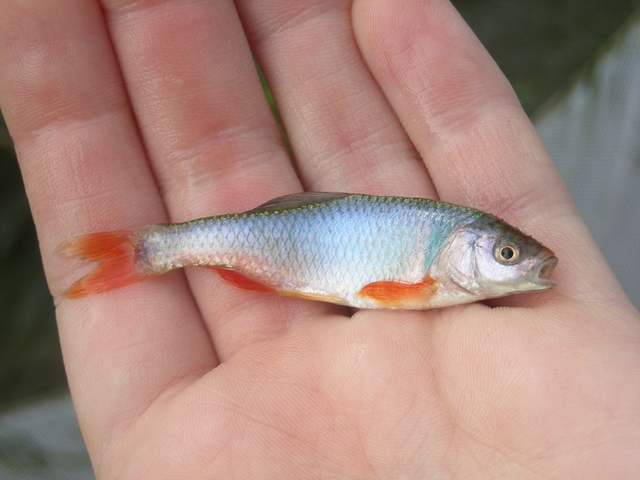
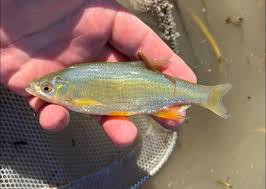
Cyprinella lutrensis (Red shiner)
terminal mouth; silvery to bright red-finned breeding males; tolerant, schooling stream generalist.
Leuciscidae
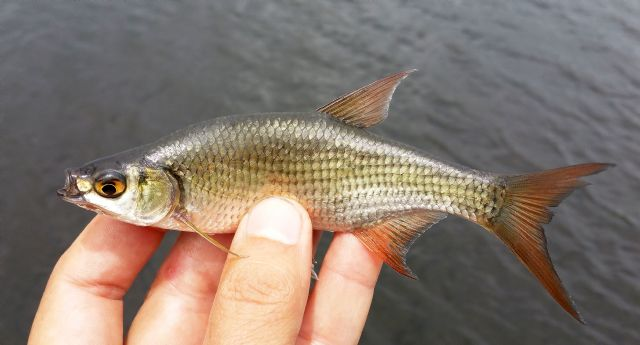
Notemigonus crysoleucas (Golden shiner)
Deep-bodied golden shiner with upturned mouth and bronze-gold coloration.
Leuciscidae
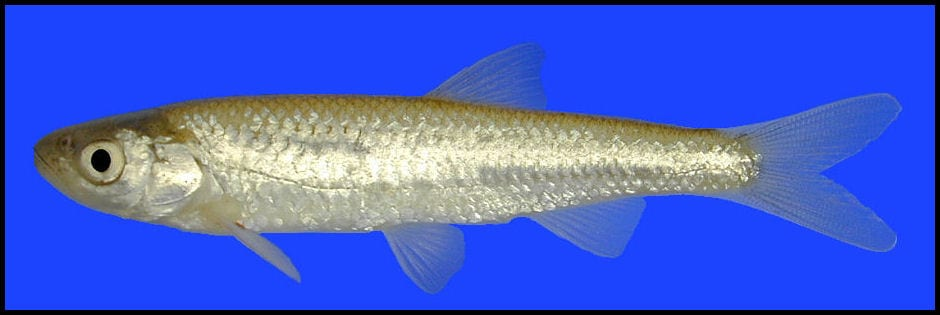
Notropis jemezanus (Rio Grande shiner)
Mostly plain, silvery body with a faint dusky band along its spine. Breeding adults develop a distinct golden-silver flash along their flanks.
Leuciscidae
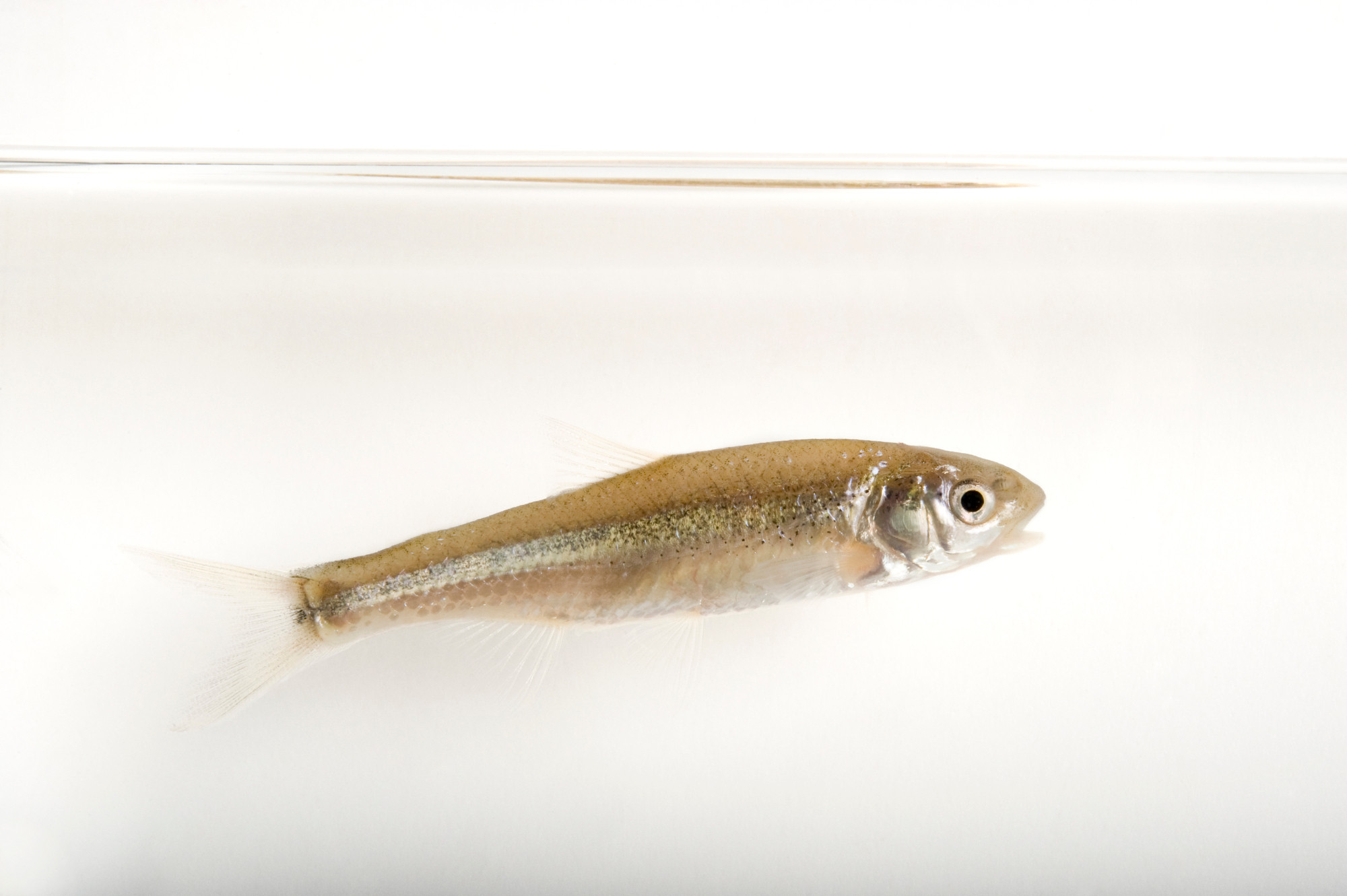
Notropis simus pecosensis (Pecos bluntnose shiner)
Notice the rounder head, but with terminal mouth.
Leuciscidae
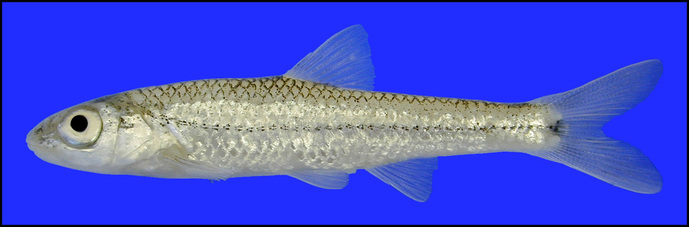
Notropis stramineus (Sand shiner)
Notice the little equal signs along lateral line.
Leuciscidae
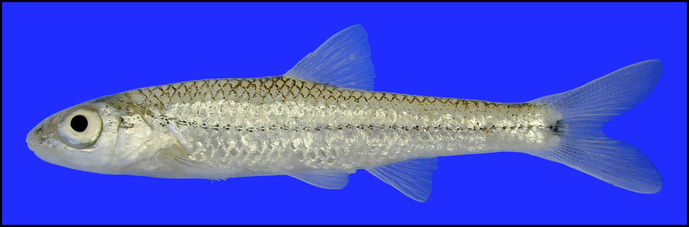
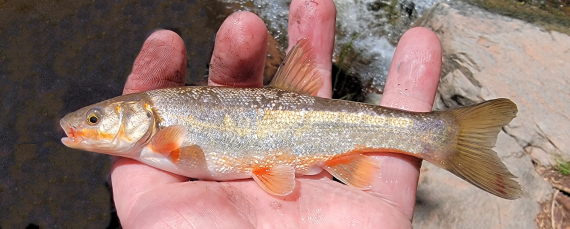
Gila pandora (Rio Grande chub)
Medium sized. Large head, terminal mouth, deeply forked tail, and orange breeding males
Leuciscidae
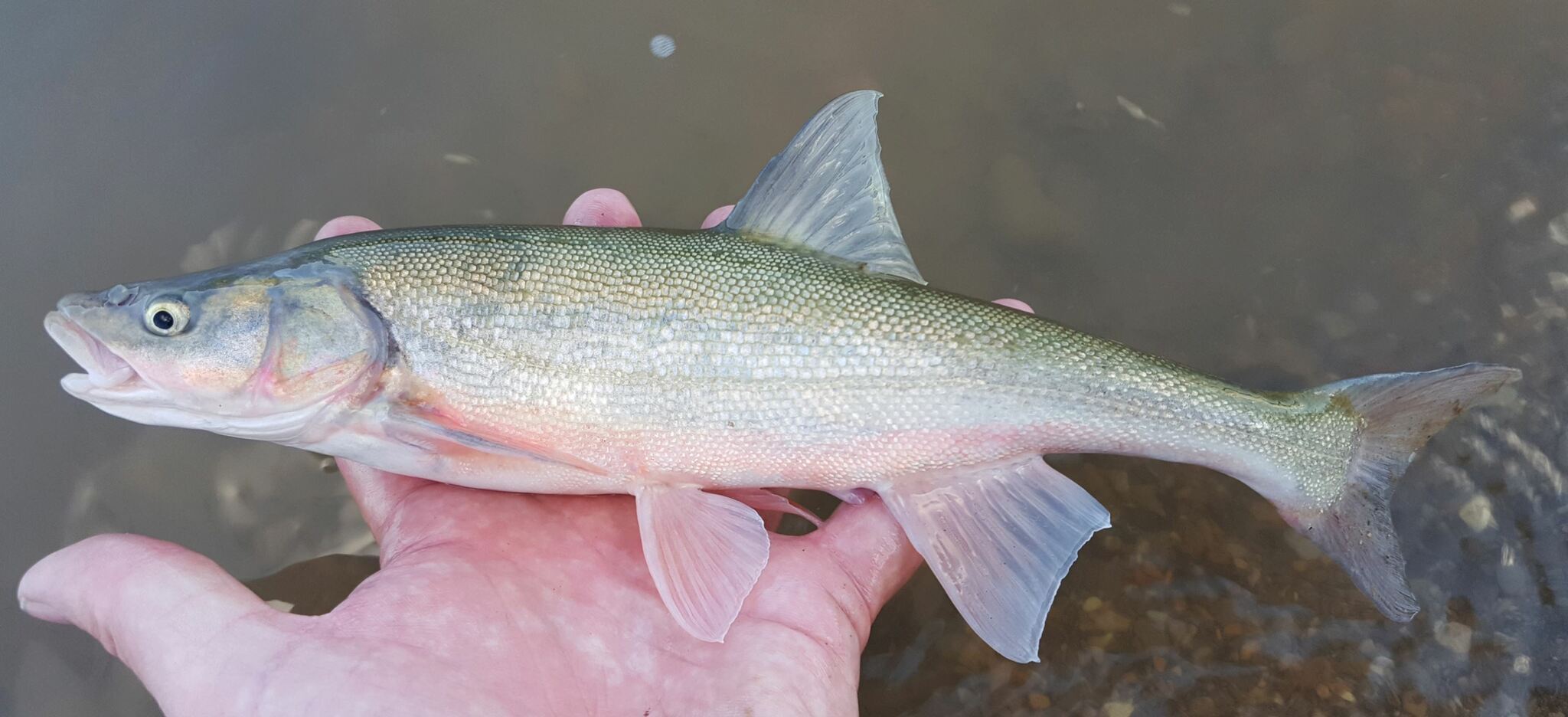
Gila robusta (Roundtail chub)
Medium sized. Robust chub with wedge-shaped flattened head, large terminal mouth, and deeply forked tail.
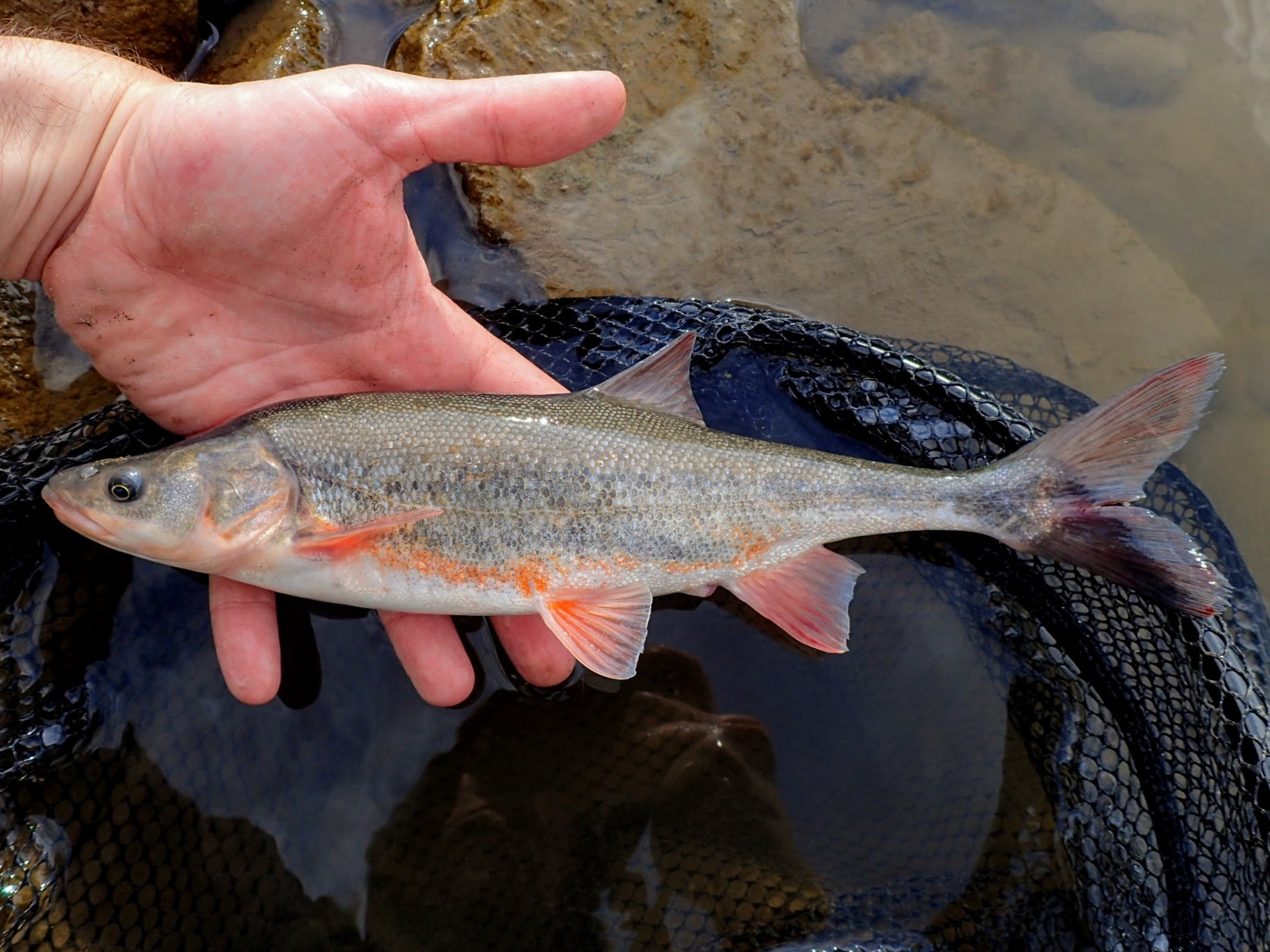
Leuciscidae
Macrhybopsis aestivalis (Speckled chub)
Very small.
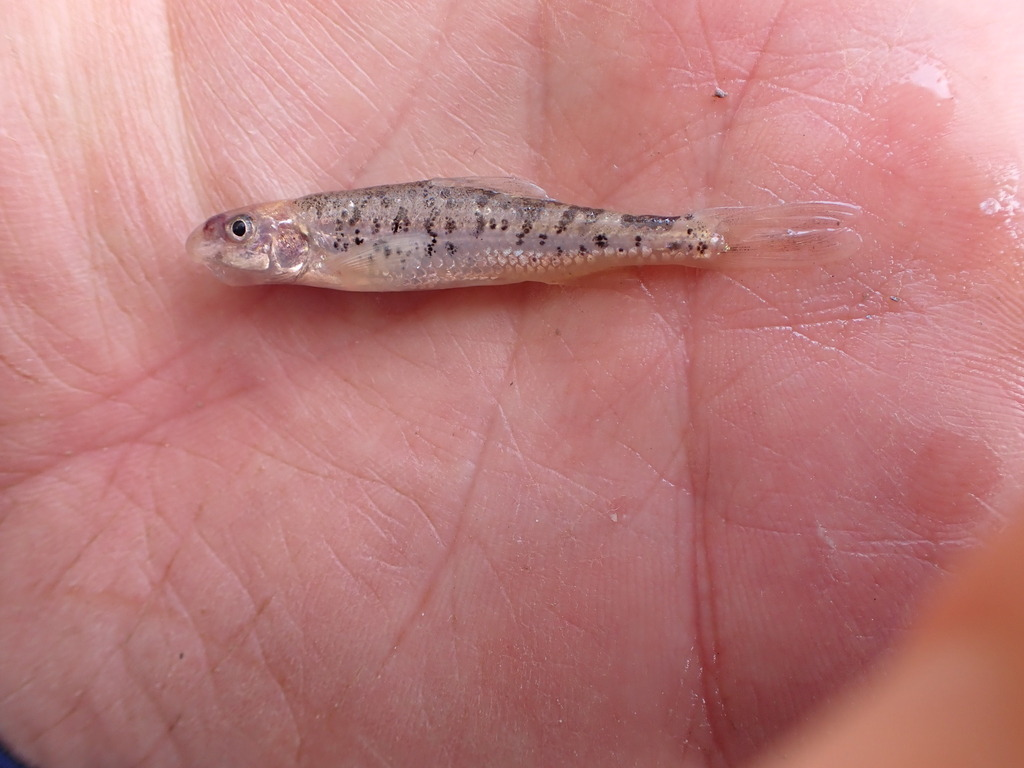
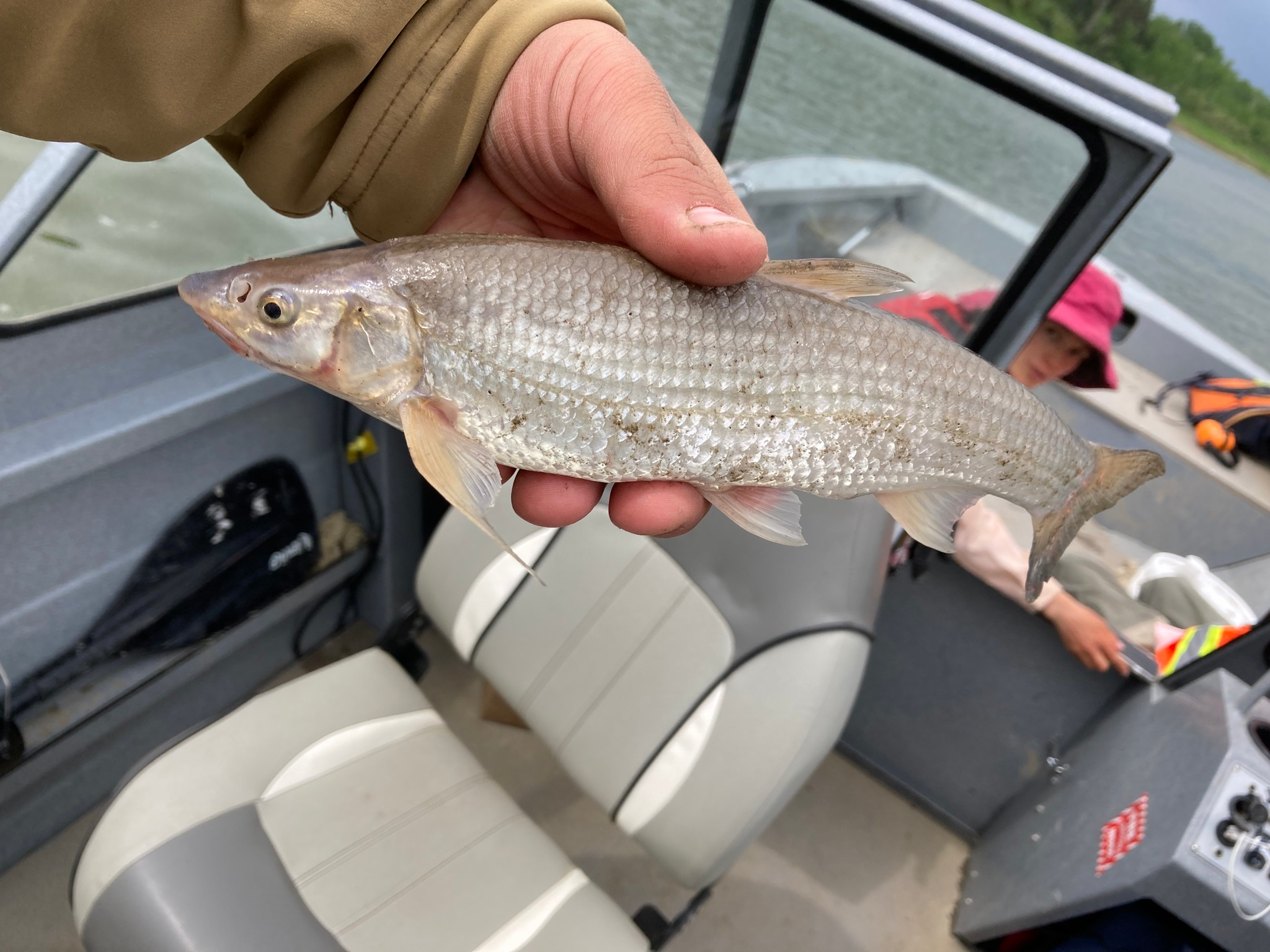
Leuciscidae
Platygobio gracilis (Flathead chub)
Plain. Flattened head, long snout. Underslung mouth with tiny barbels.
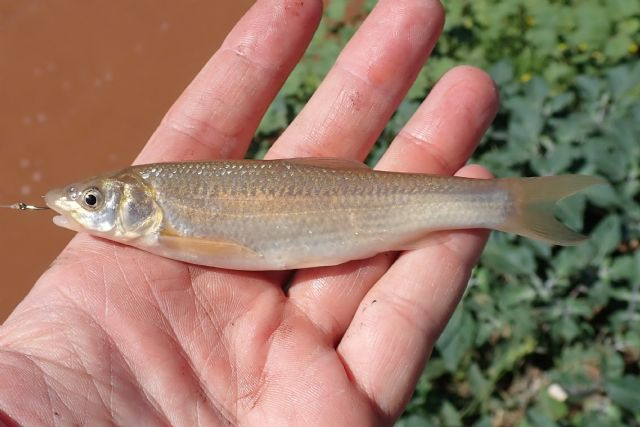
Leuciscidae
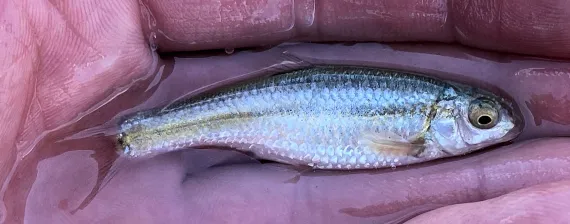
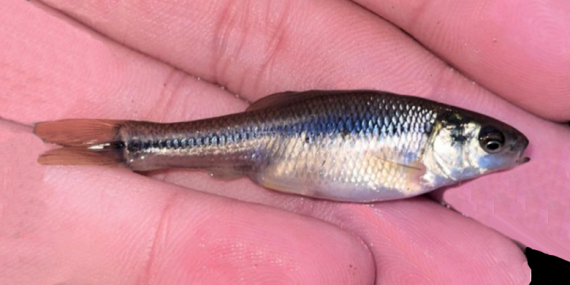
Dionda episcopa (Roundnose minnow)
Rounded snout and small, terminal to slightly subterminal mouth. Silvery body with faint lateral stripe; fins usually plain.
Leuciscidae
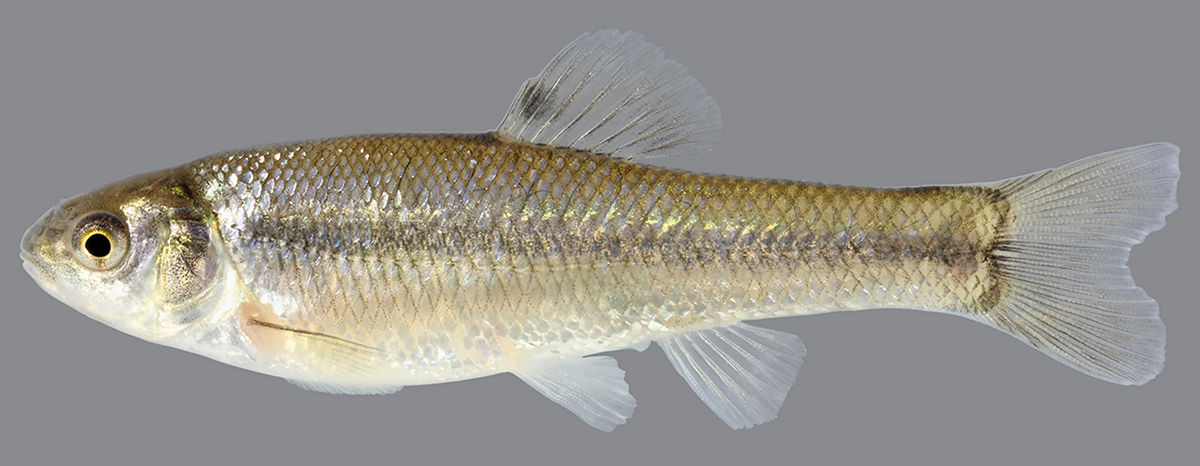
Pimephales promelas (Fathead minnow)
Blunt/fat head, small terminal mouth, dark lateral strip ending in a tail spot, breeding males: black head + pale nuptial bumps
Leuciscidae
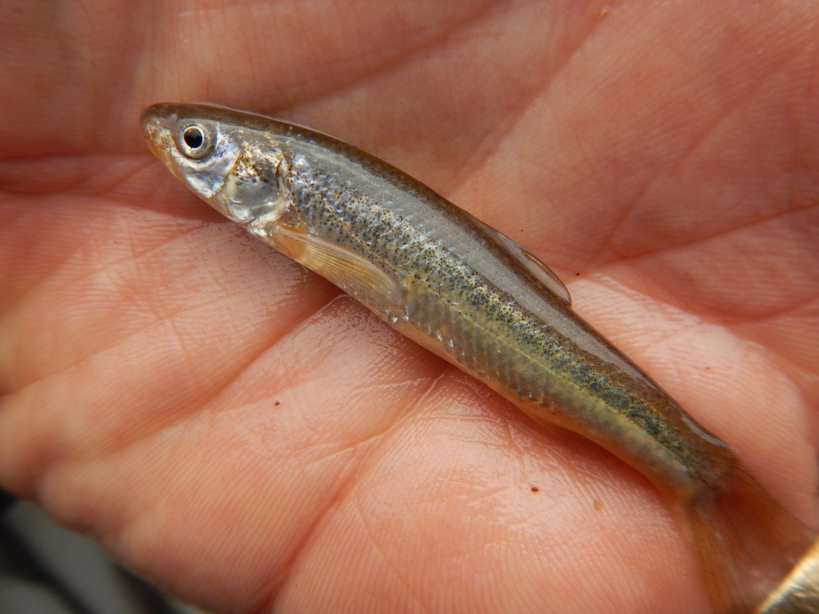
Hybognathus placitus (Plains minnow)
Slender, soft-bodied minnow with tiny subterminal mouth and faint markings; weak-featured drift-water form.
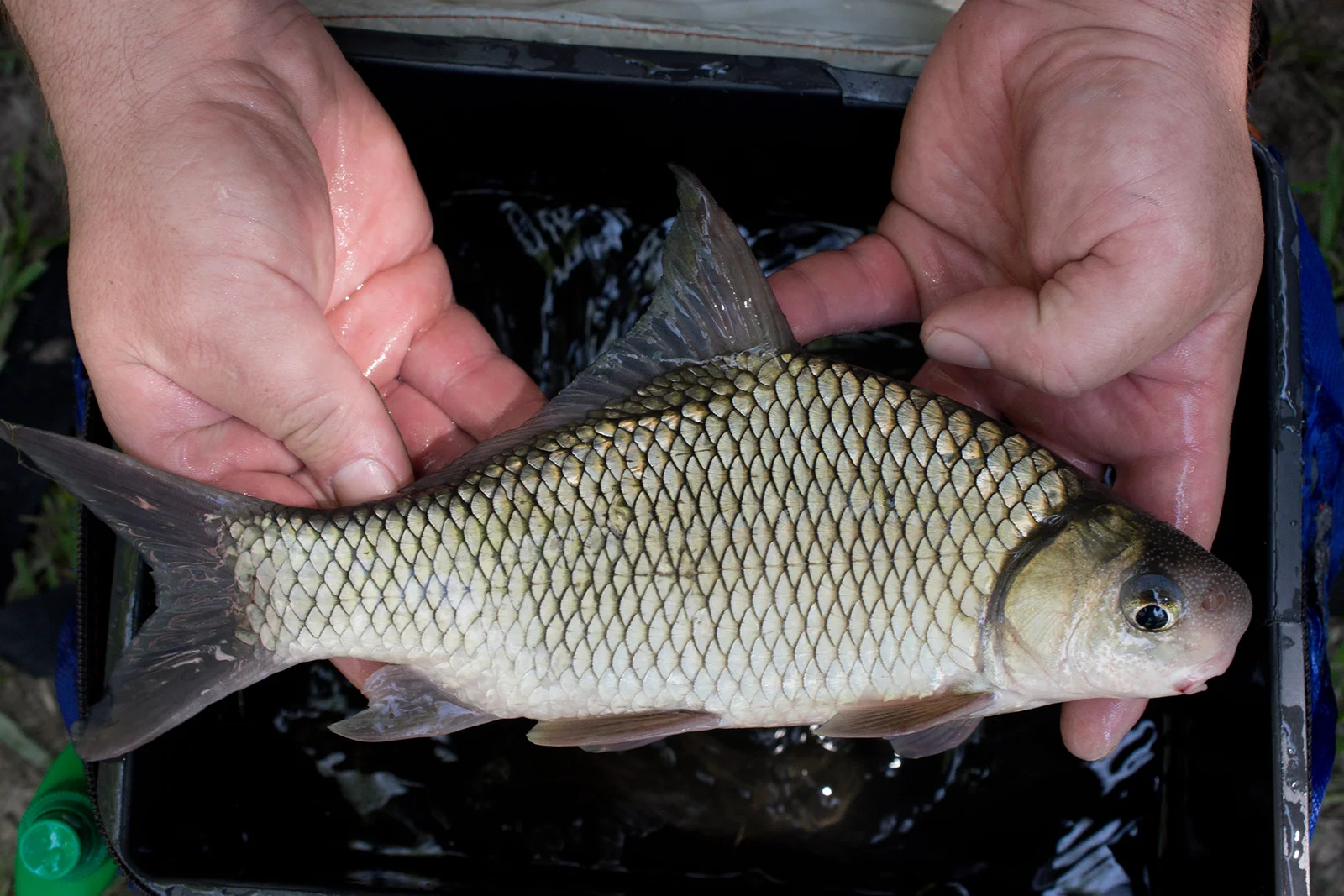
Catostomidae
Carpiodes carpio (River carpsucker)
Long dorsal fin, strongly arched back
Large scales, silvery body
Unlike buffalo: slimmer with smaller head/mouth
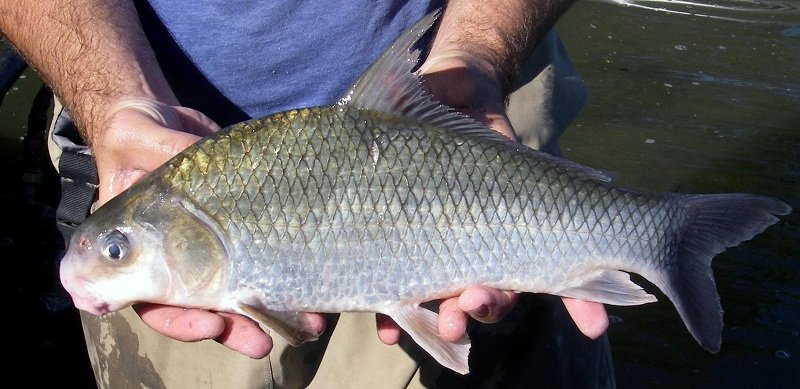
Catostomidae
Ictiobus bubalus (Smallmouth buffalo)
Extremely deep bodied. Blue-gray.
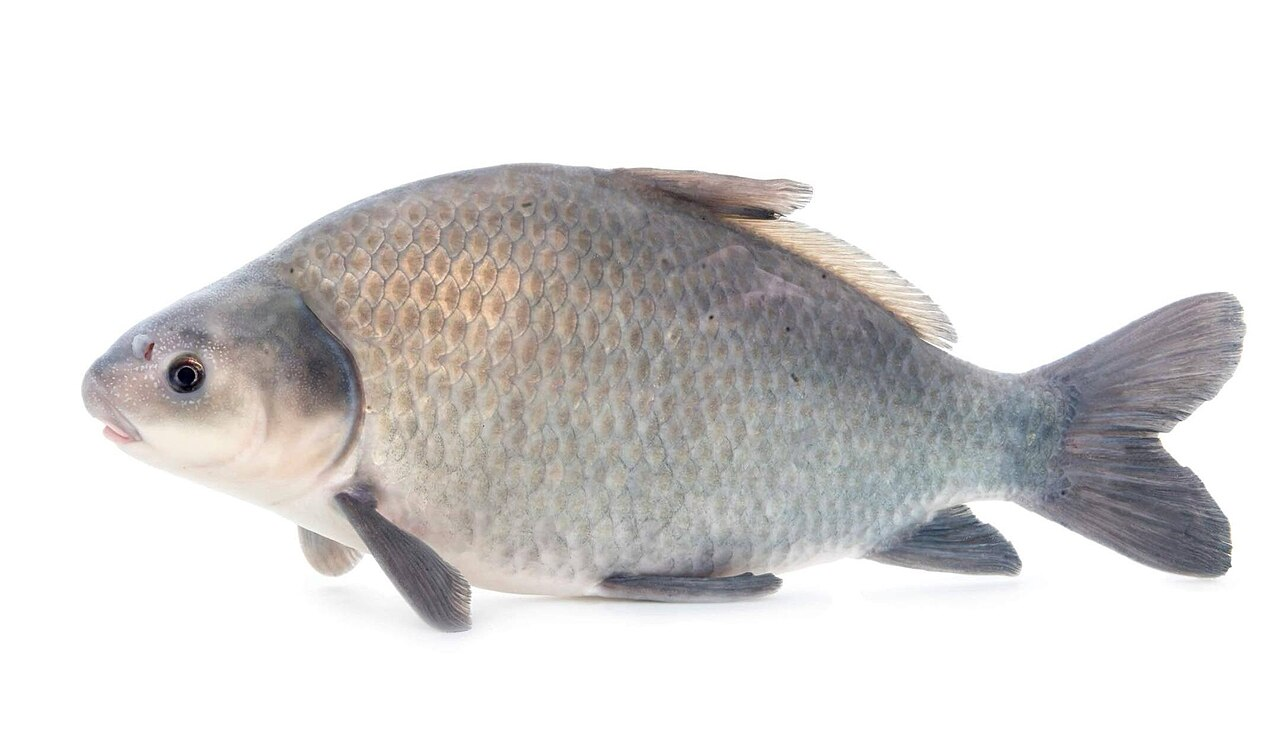
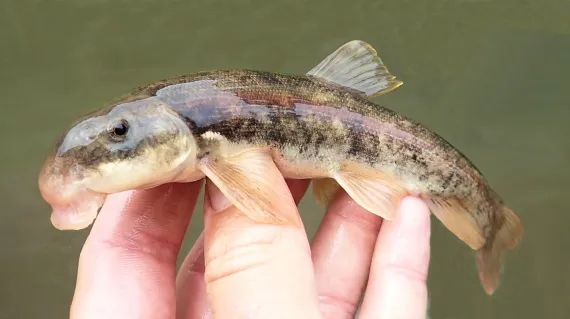
Catostomidae
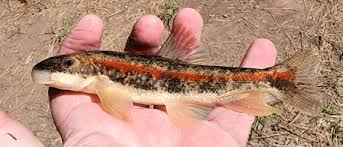
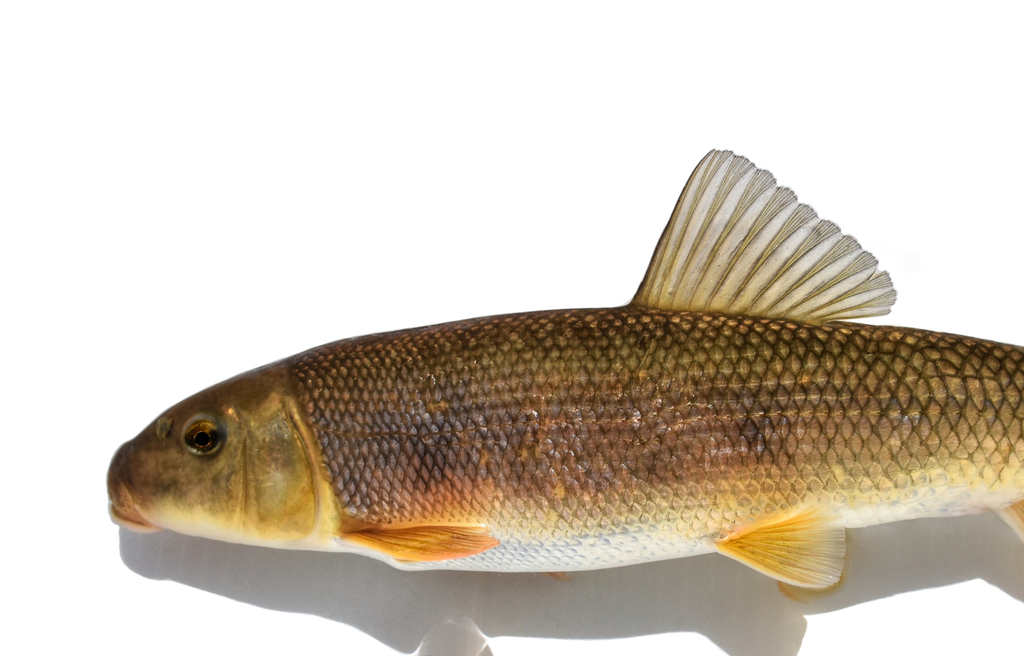
Catostomus plebeius (Rio Grande sucker)
Slender body with dusky lateral band, olives, creams, oranges.
Catostomidae
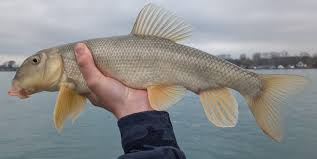
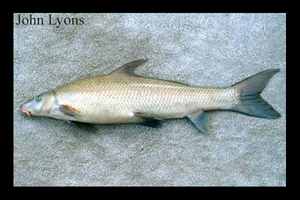
Catostomus commersonii (White sucker)
more streamlined sucker, blunt snout
Dark back fading to white belly, but variable coloration
Catostomidae
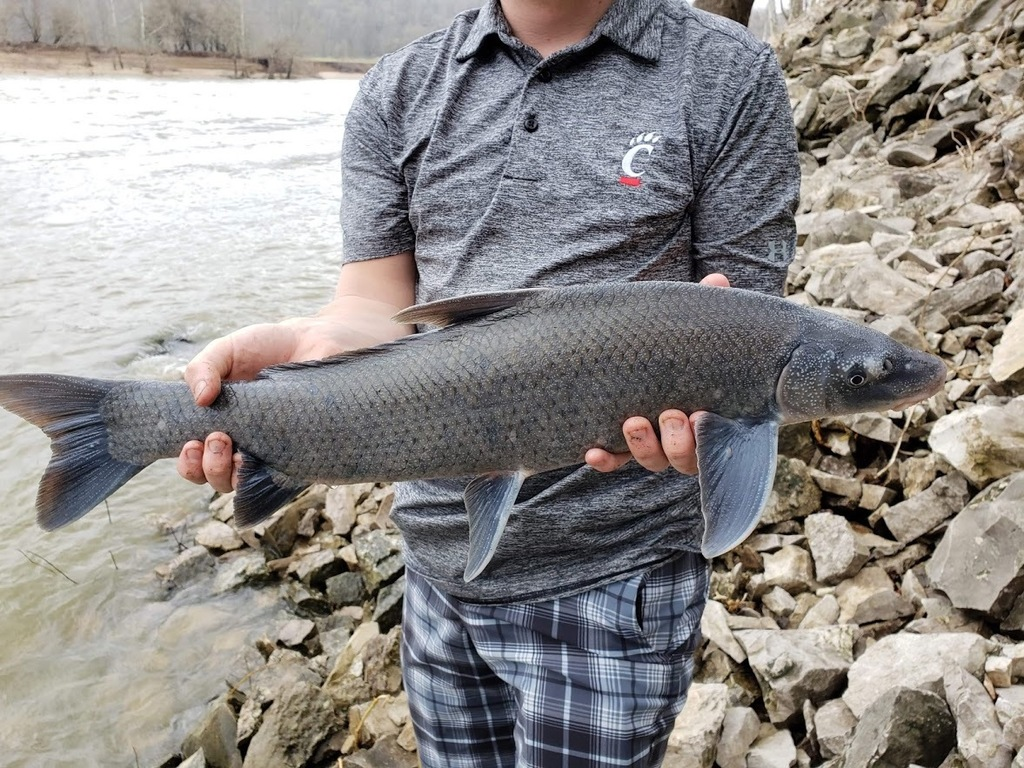
Cycleptus elongatus (Blue sucker)
Blue, less steam-lined but not nearly a deep bodied as buffalo. Look for characteristic sickle shaped dorsal fin.
Catostomidae
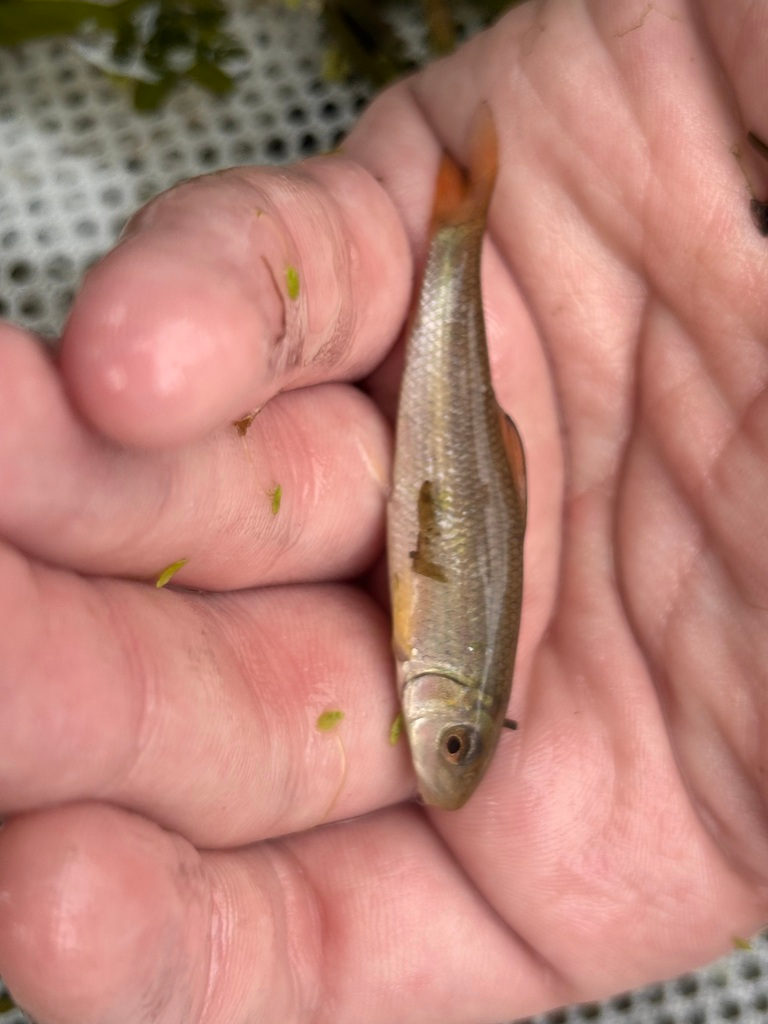
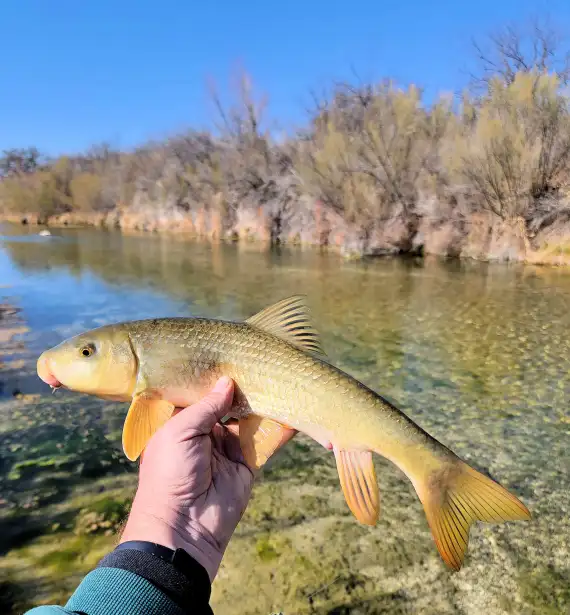
Moxostoma congestum (Gray redhorse)
Salmonidae
Oncorhynchus virginalis (Rio Grande cutthroat trout)
Golden trout with dense black spotting concentrated toward the tail and orange-red throat slash marks; fewer body spots than rainbow trout.
Salmonidae
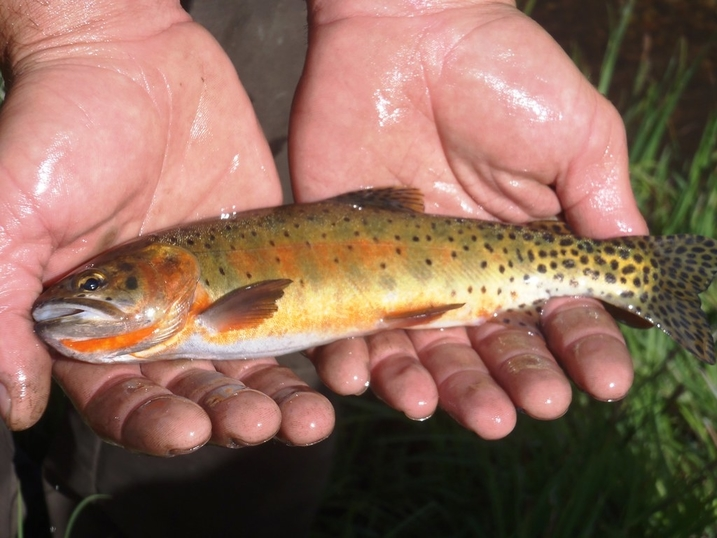
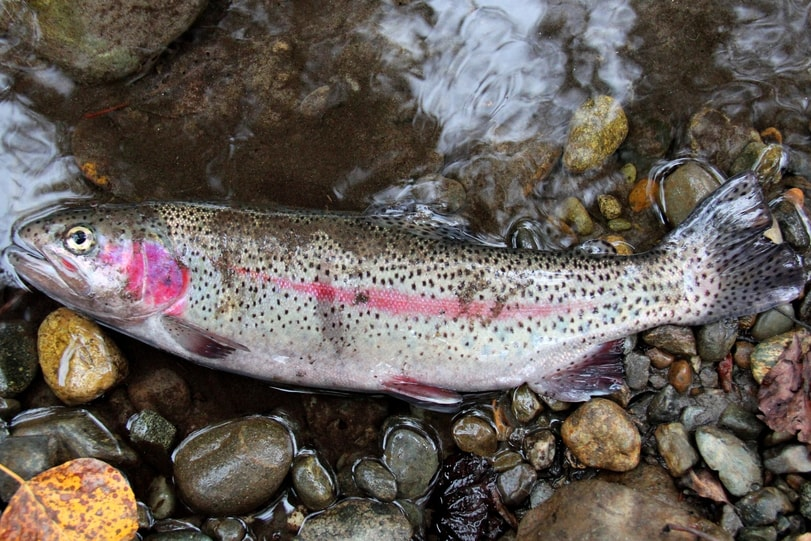
Oncorhynchus mykiss (Rainbow trout)
Silvery trout with pink-red lateral stripe and many small black spots over body and tail; more heavily spotted overall than cutthroat trout.
Salmonidae
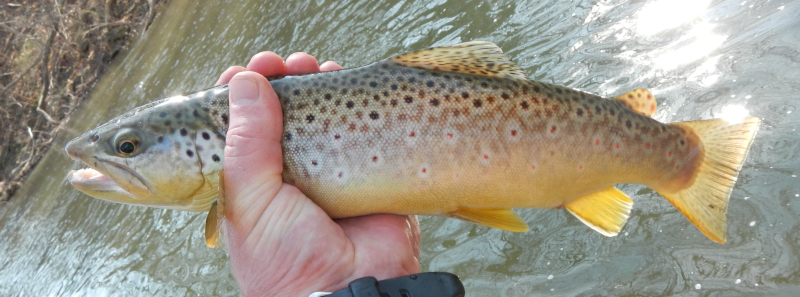
Salmo trutta (Brown trout)
Brown to golden trout with black spots and scattered red/orange spots often haloed pale; squarer tail and less streamlined appearance than rainbow trout.
Ictaluridae
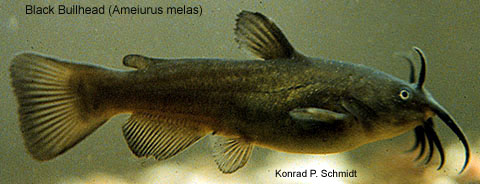
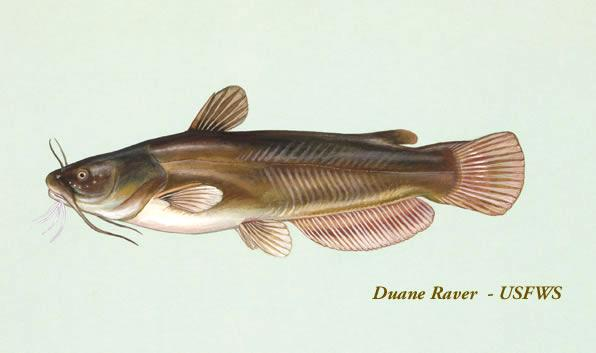
Ameiurus melas (Black bullhead)
Its caudal fin is truncated (squared off at the corners). It is typically black, dark brown, green on the dorsal side of its body and yellow or white on the ventral side.
Ictaluridae
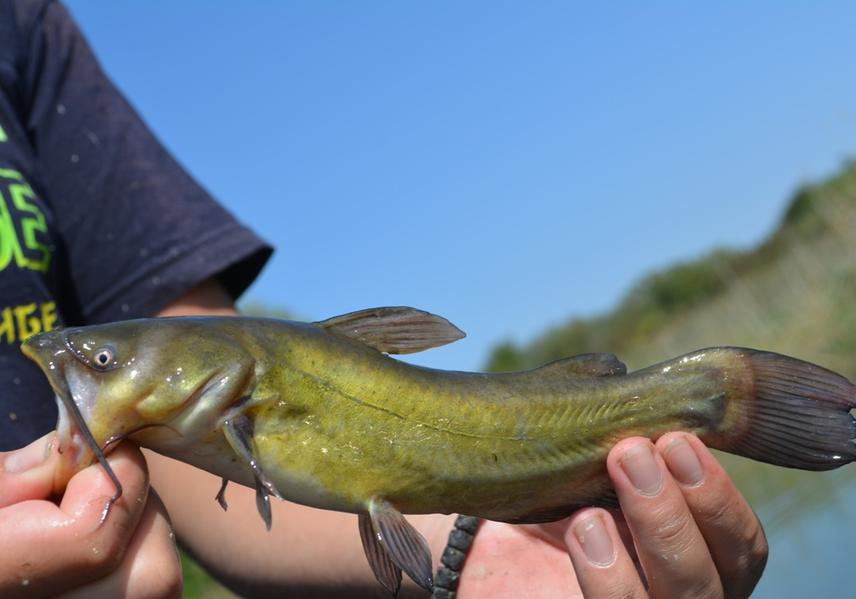
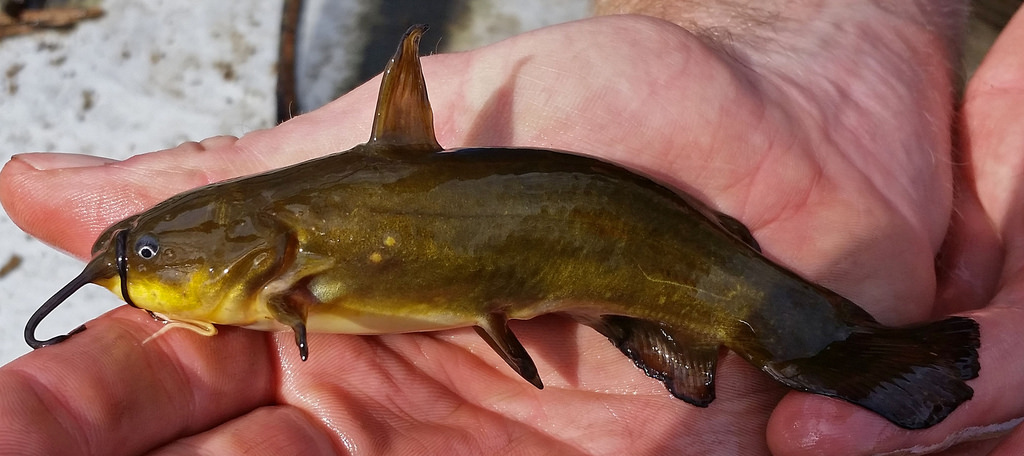
Ameiurus natalis (Yellow bullhead)
Distinguished from other species within the genus by the group of white barbels or "whiskers" under its chin.
Its caudal fin is truncated (squared off at the corners)
Ictaluridae
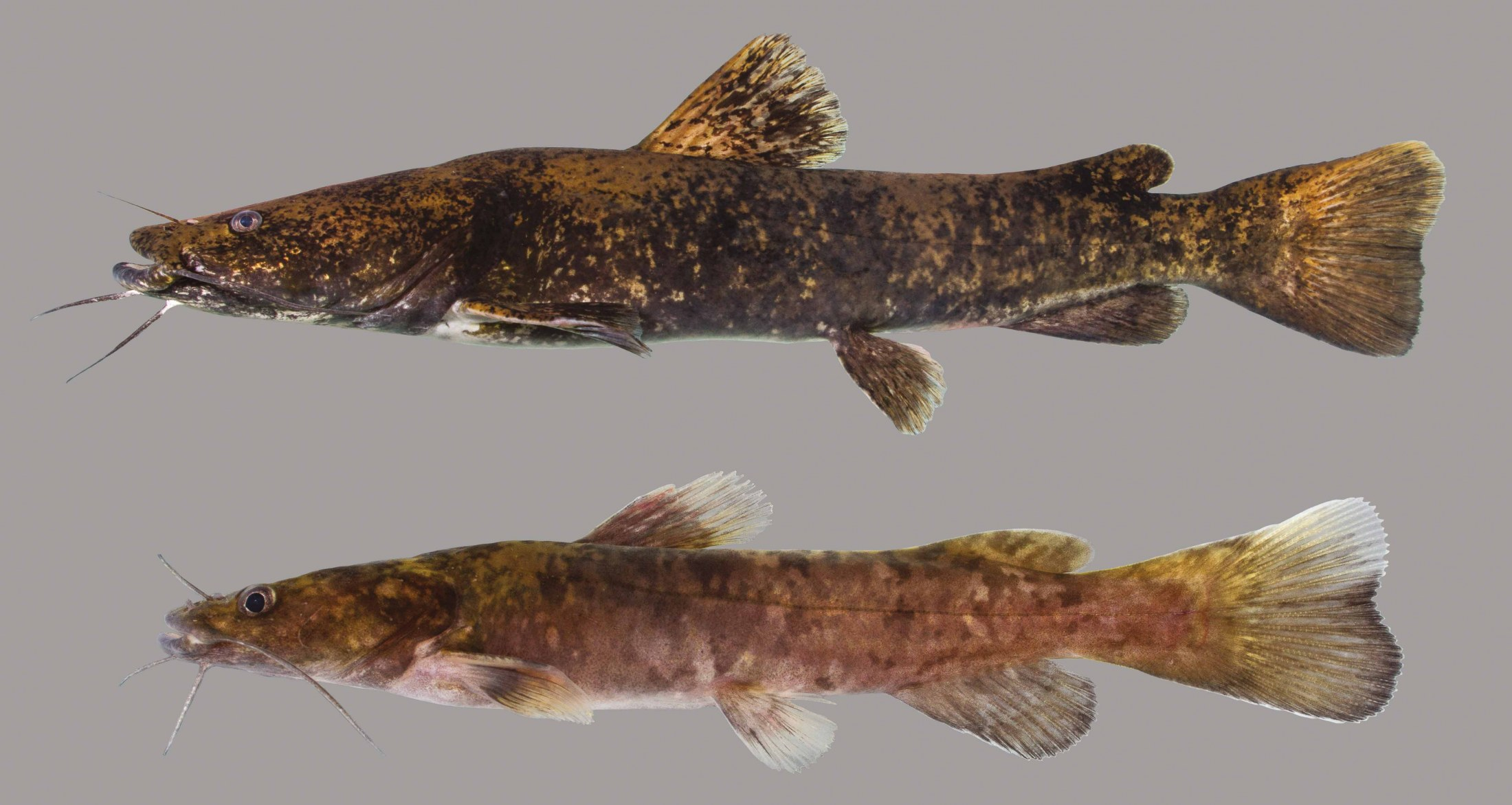
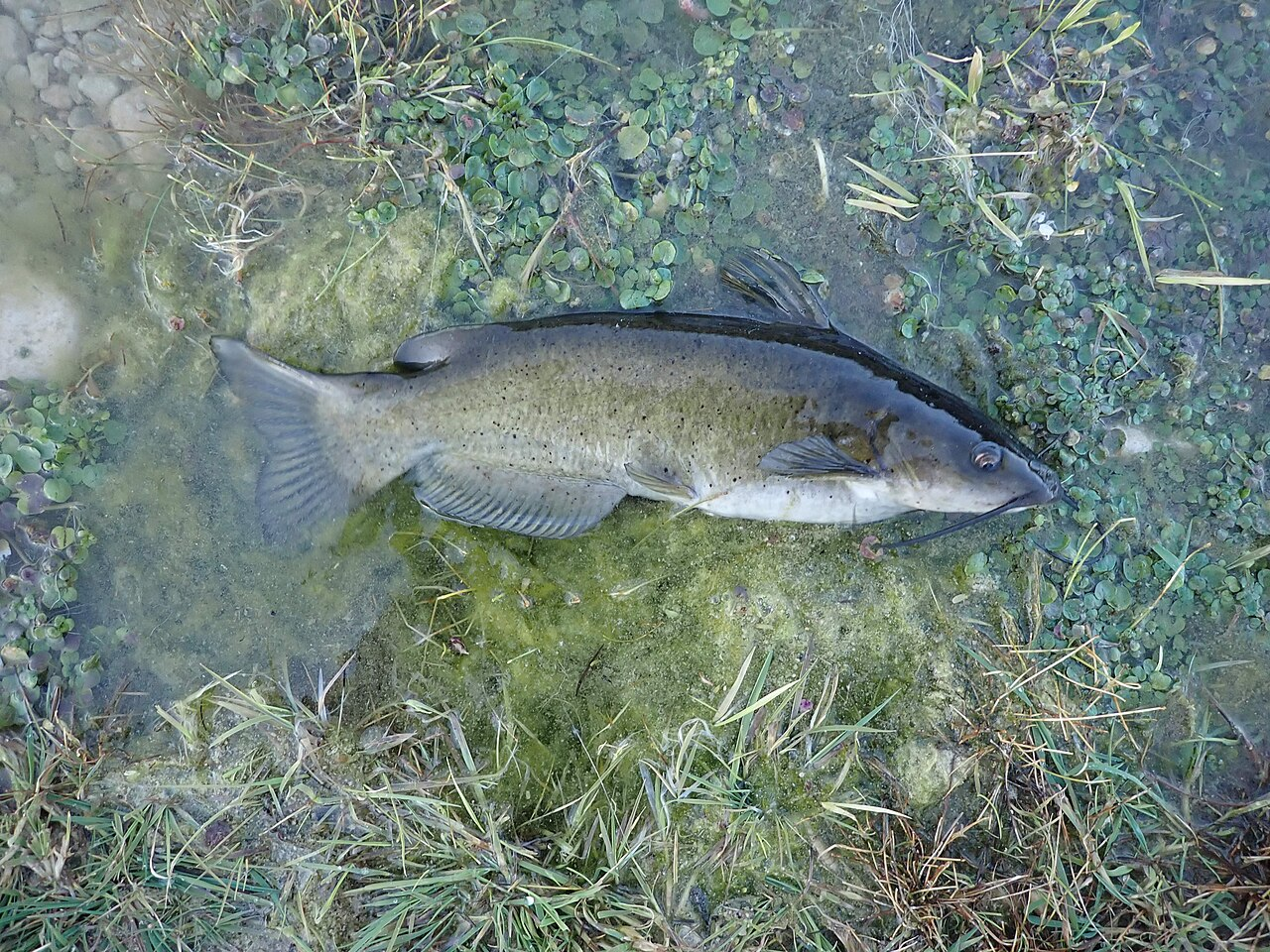
Pylodictis olivaris (Flathead catfish)
Caudal fin is truncated.
Olive colored on its sides and dorsum, with a white to yellow underside. The eyes are small and the lower jaw prominently projects beneath the upper. The fins are otherwise brown, though the body's mottling may extend into the fins. The anal fin has round margin.
Can grow to a length of 155 cm (61 in) and may weigh up to 55.79 kg (123.0 lb), making it the second-largest North American catfish (after the blue catfish, Ictalurus furcatus).
Ictaluridae
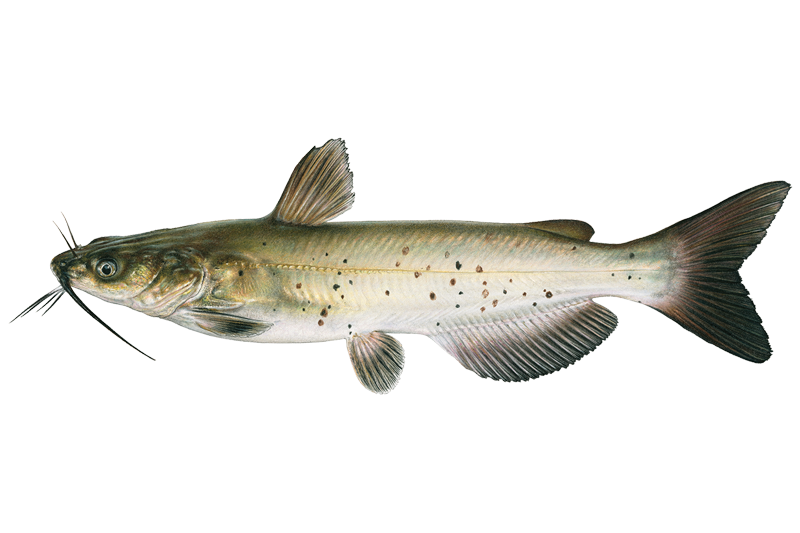
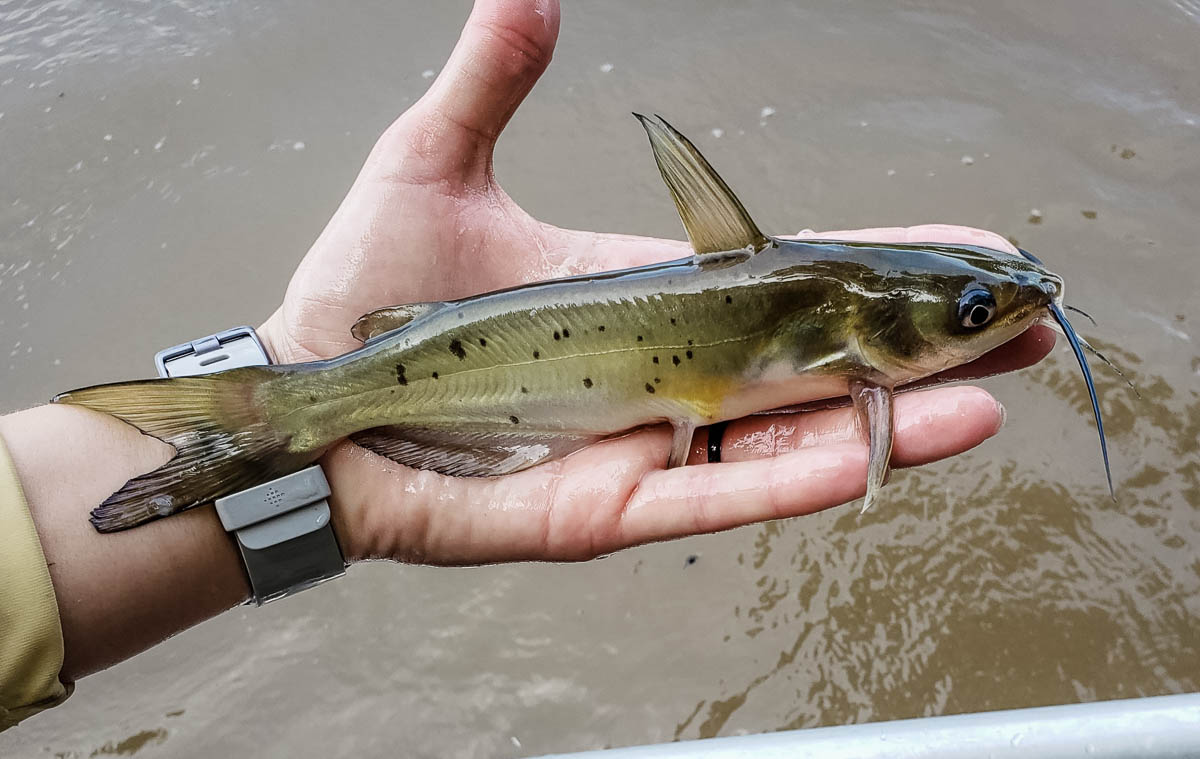
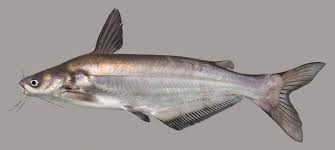
Ictalurus punctatus (Channel catfish)
deeply forked tail, rounded anal fin, and scattered black spots along its silvery-gray-to-olive sides
Ictaluridae
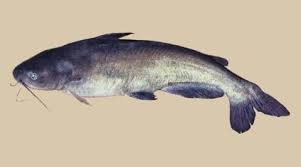
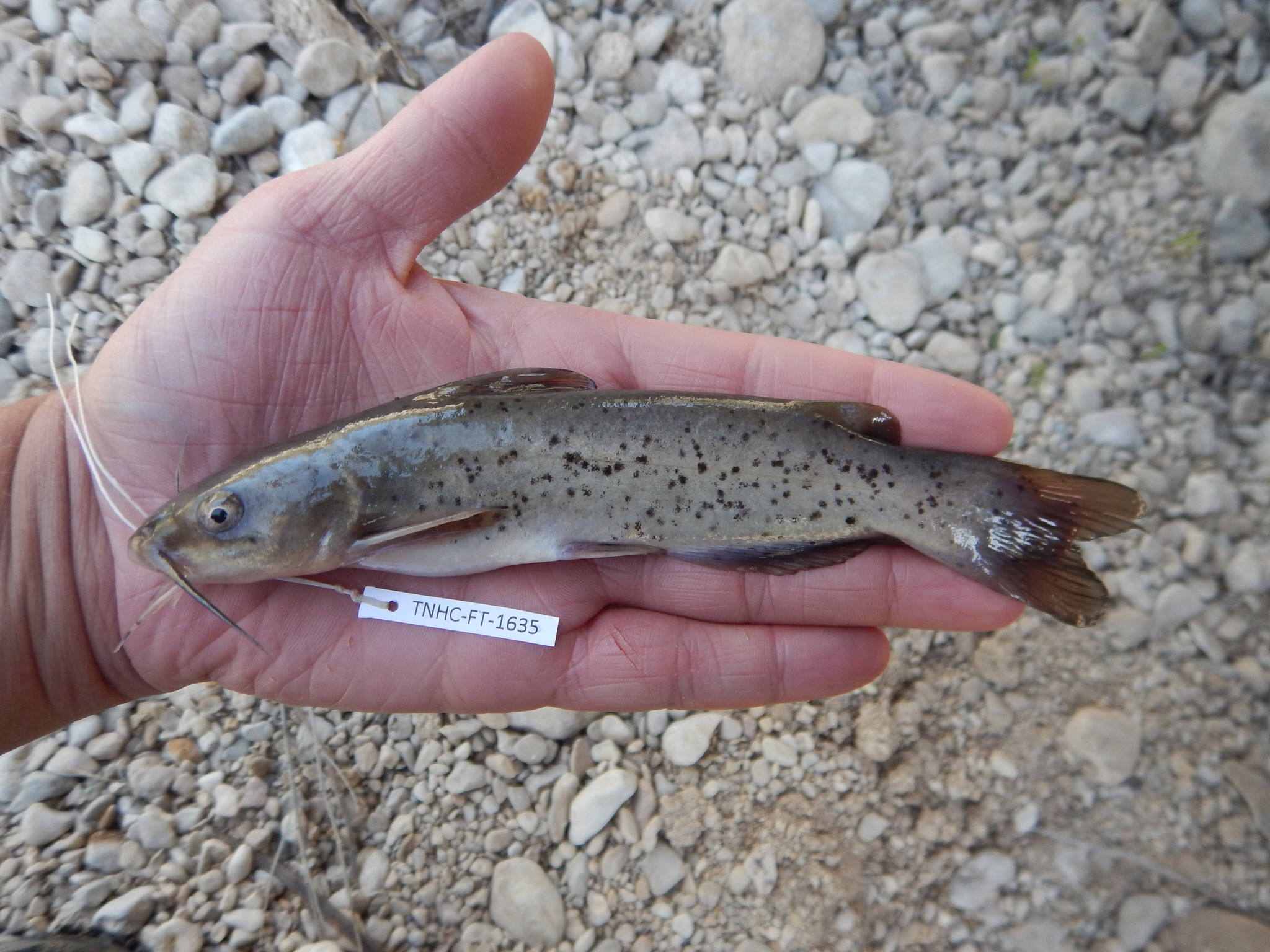
Ictalurus furcatus (Blue catfish)
Largest species. Anal fin has a straight fin unlike other species in genus. Forked tail. No spots.
Ictaluridae
Ictalurus lupus (Headwater catfish)
Caudal tail is less deeply forked.
Dorosomatidae
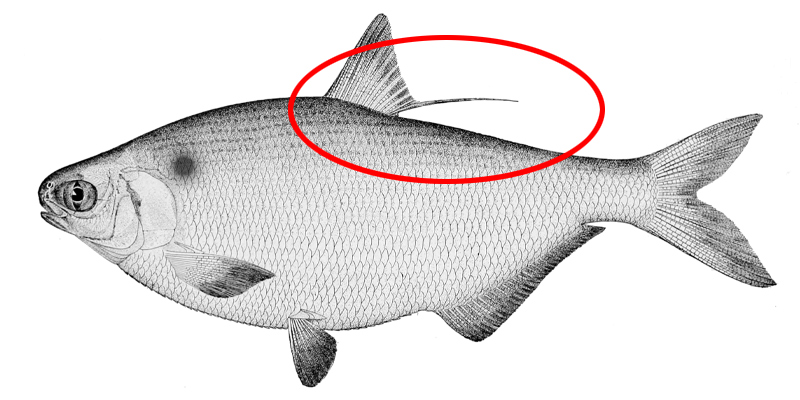
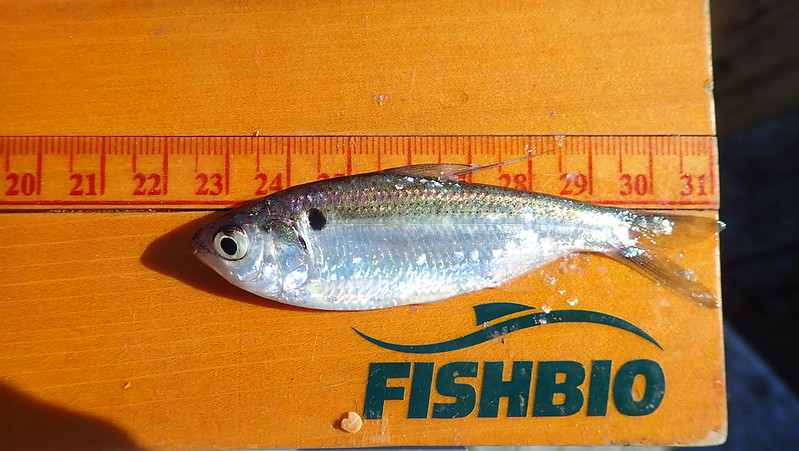
Dorosoma cepedianum (Gizzard shad)
Typically small bait fish for sport fish, but rarely can get up to 20 in.
Look for dark spot (may be faded) present on each side of their body near the gill cover, and they possess a long anal fin. On the dorsal fin the last ray is very long and thin, and said dorsal fin starts before the insertion of the pelvic fins.
Dorosomatidae
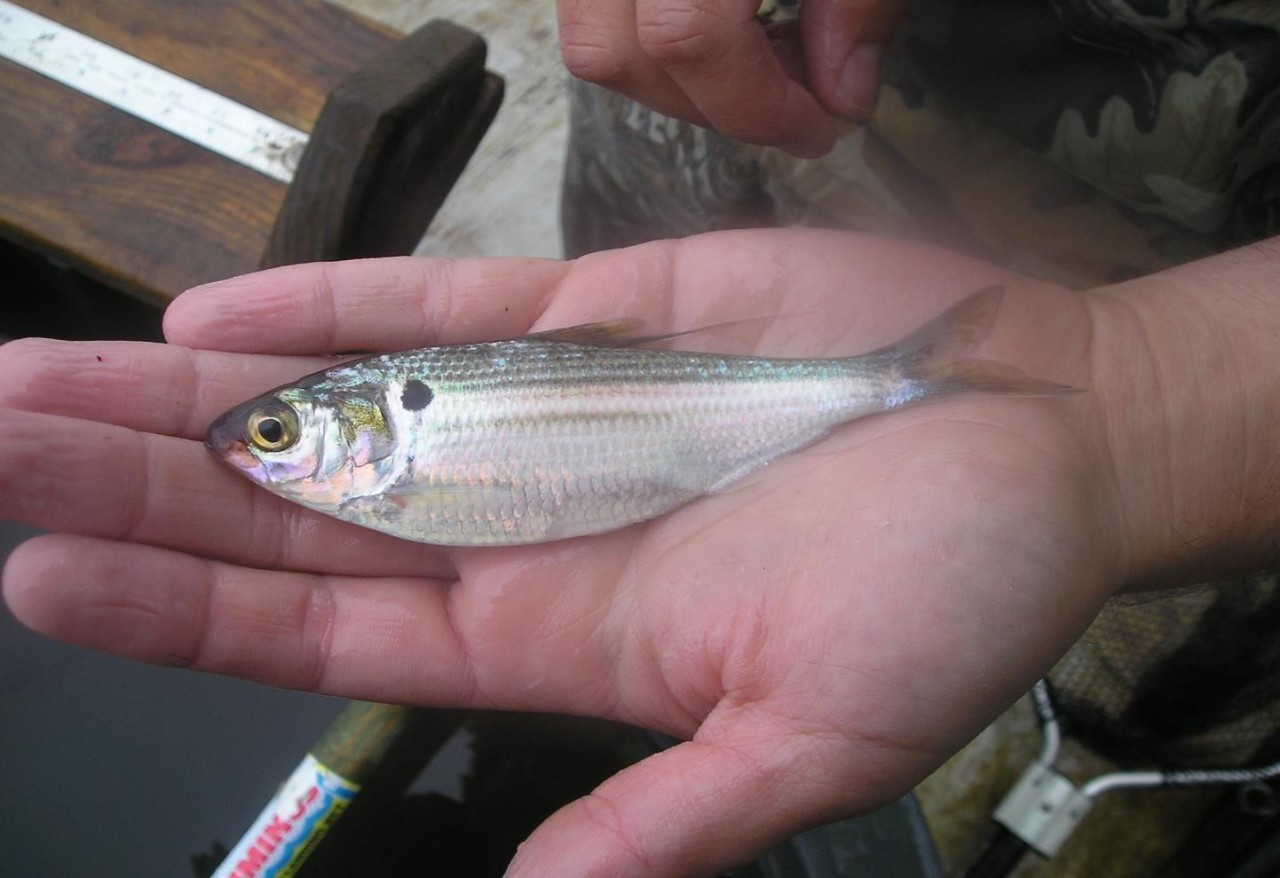
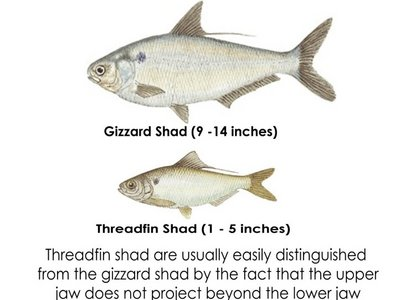
Dorosoma petenense (Threadfin shad)
Smaller. Golden tails and terminal mouth.
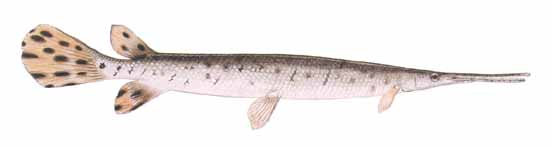
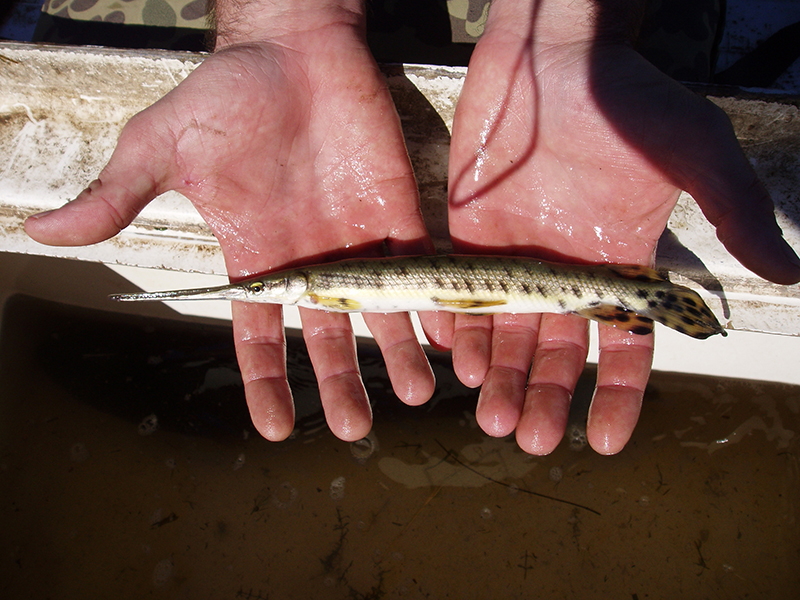
Lepisosteidae
Lepisosteus osseus (Longnose gar)
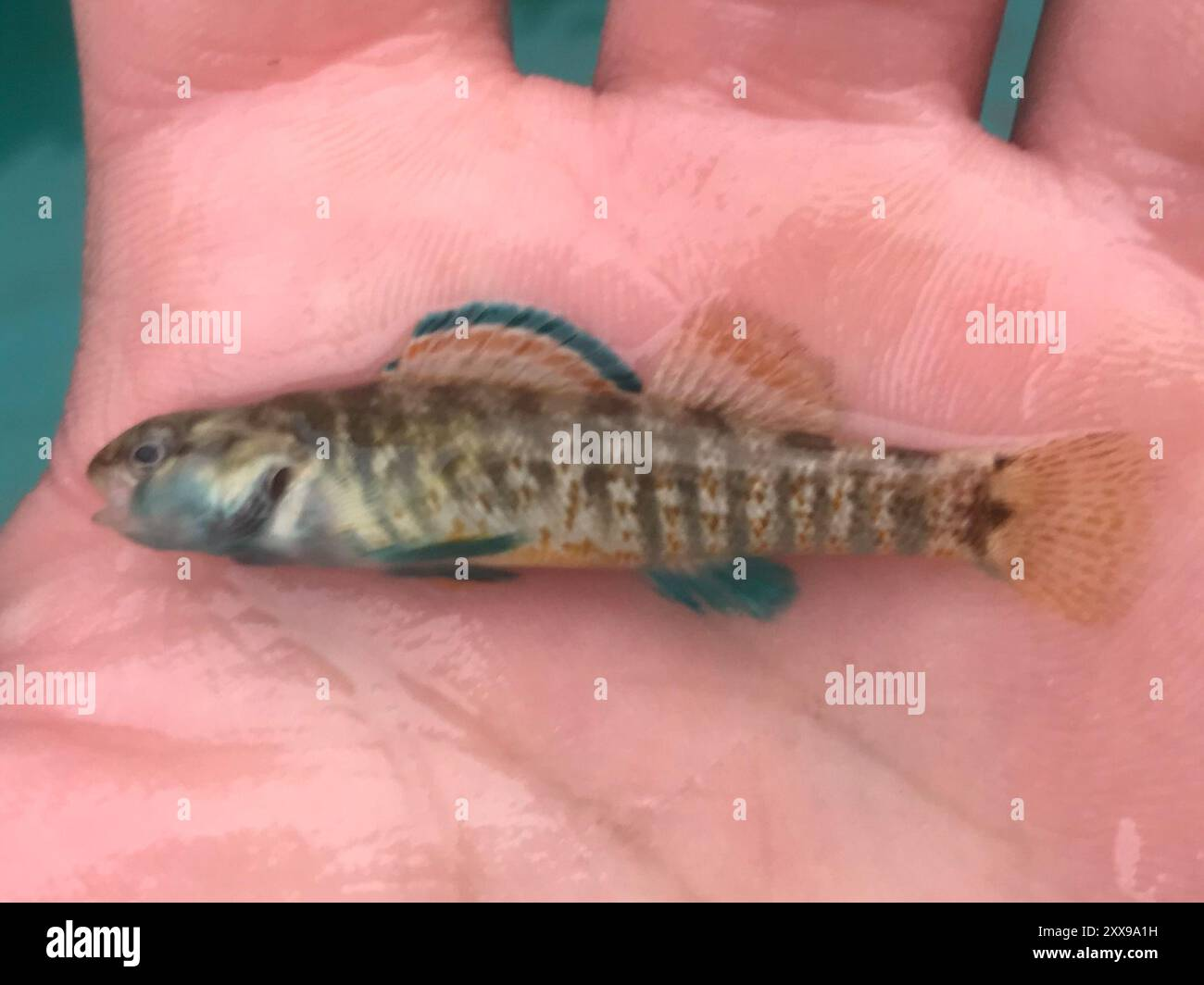
Percidae
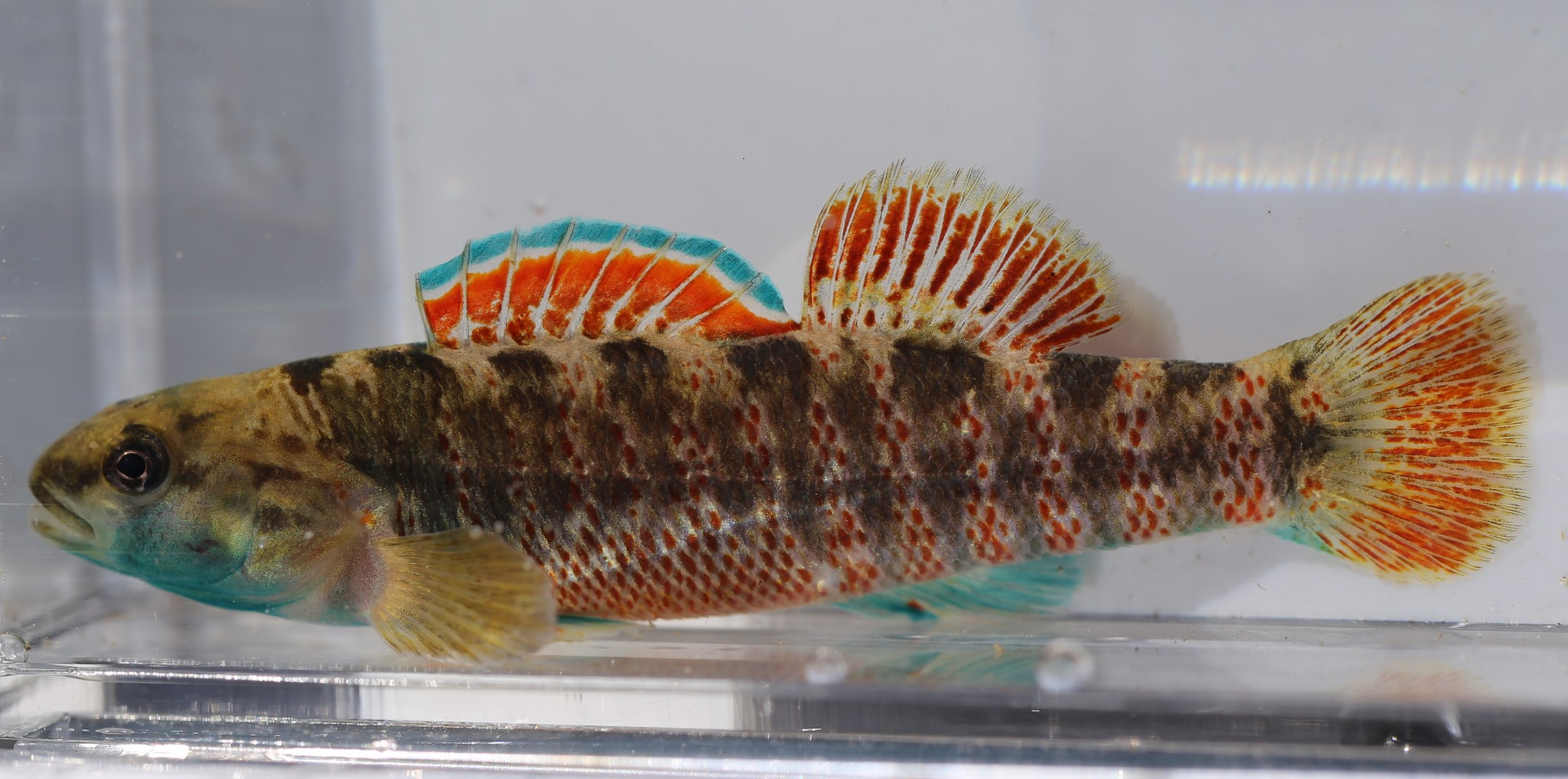
Etheostoma lepidum (Greenthroat darter)
Long and Slender. 2 Distinct dorsal fins
Percidae
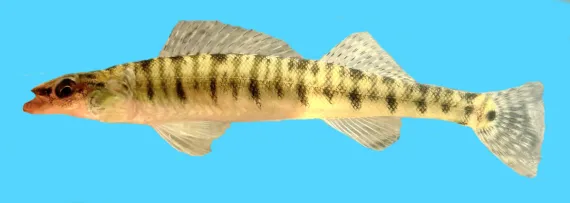
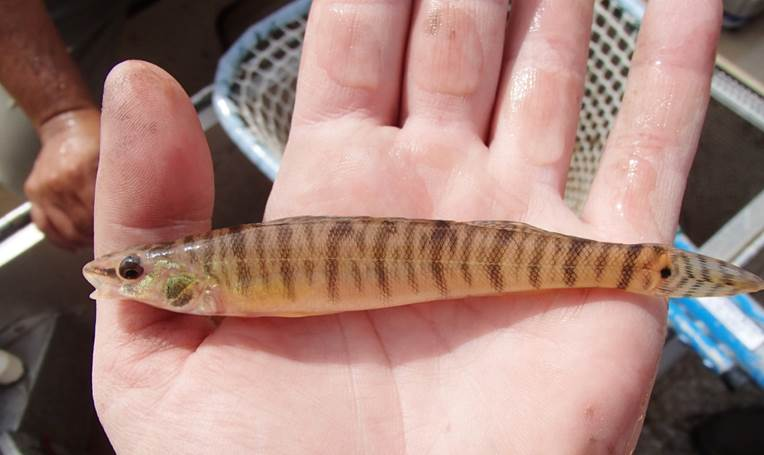
Percina macrolepida (Bigscale logperch)
Small and narrow. 2 Distinct Dorsal fins.
Percidae
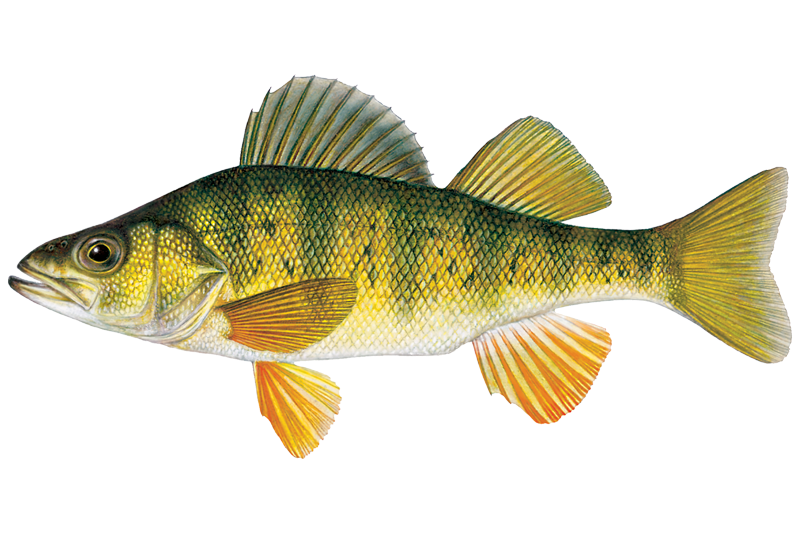
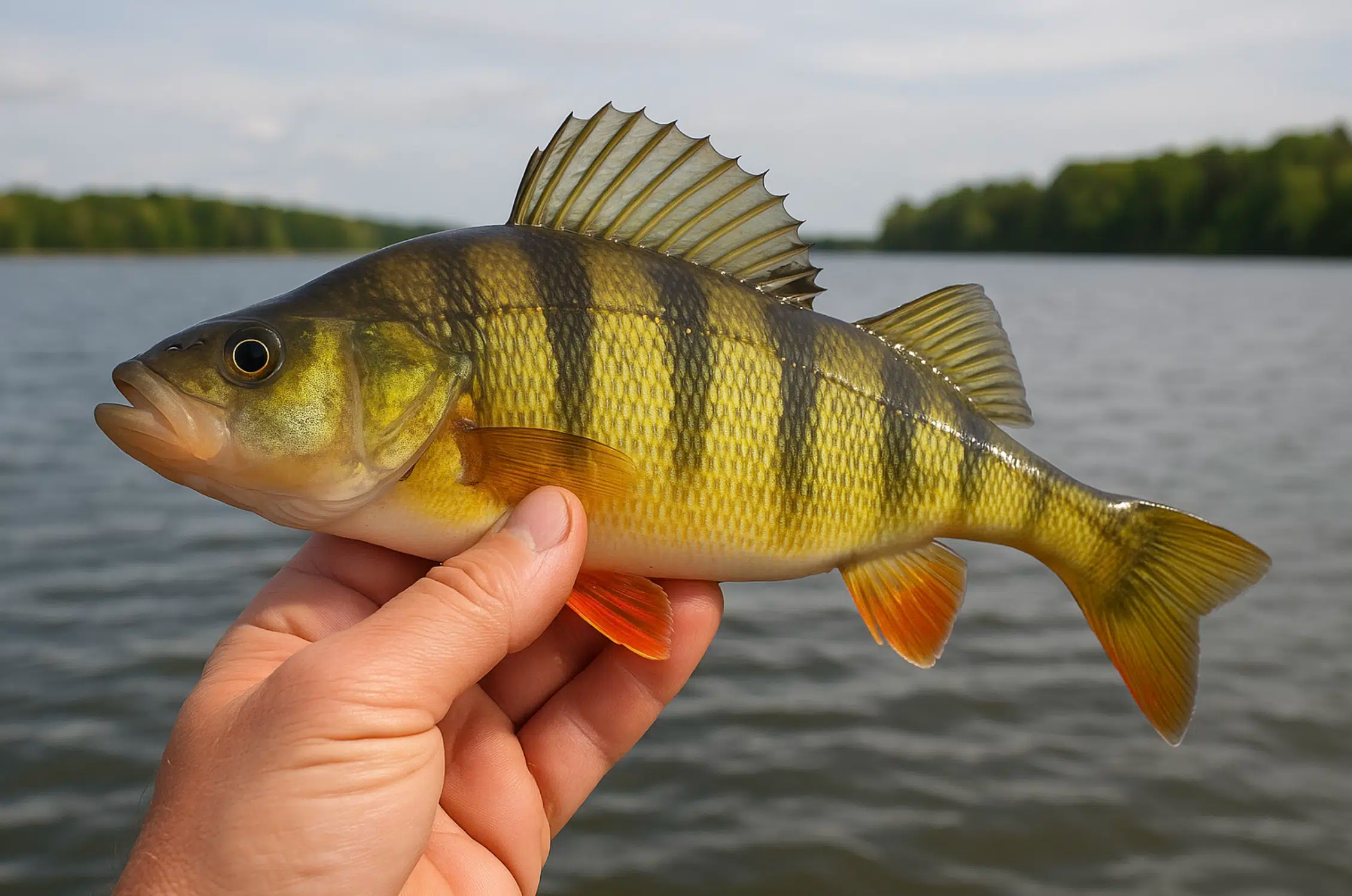
Perca flavescens
Tiger striped and two distinct dorsal fins.
Percidae
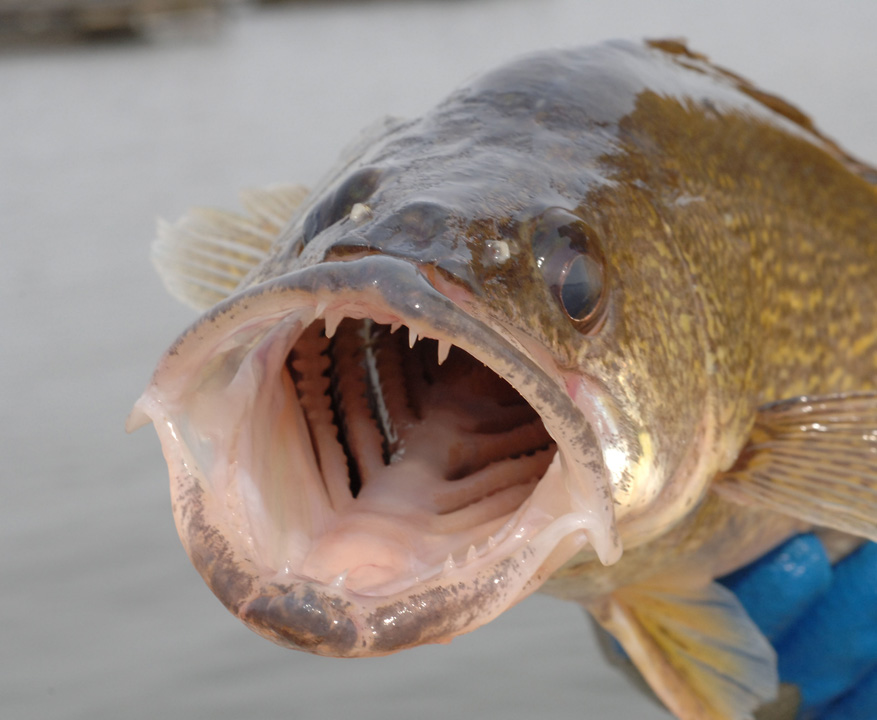
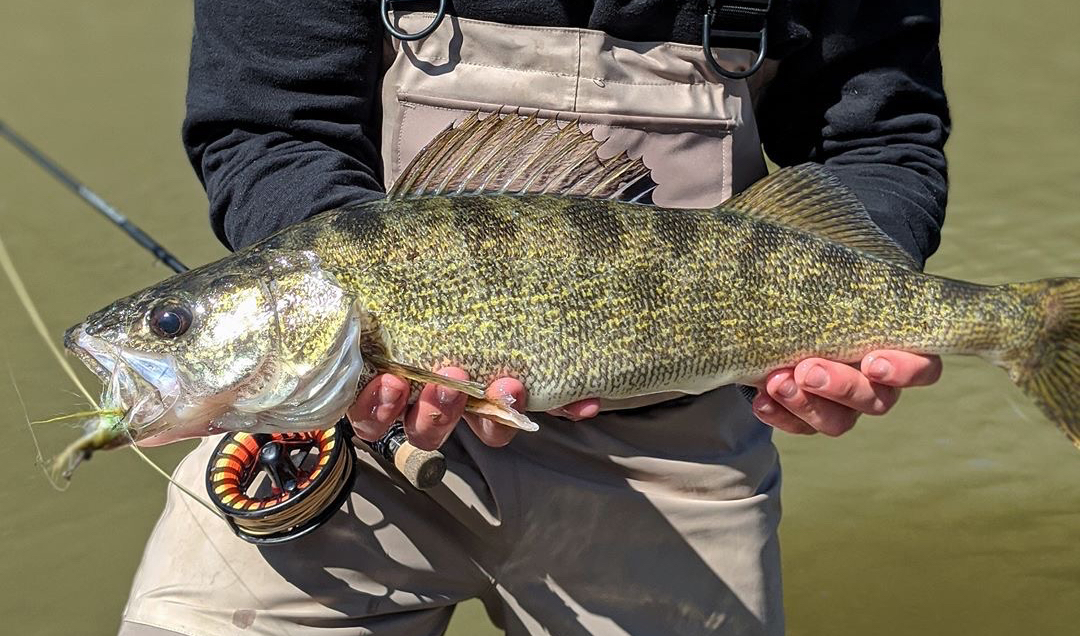
Sander vitreus (walleye)
Long body, canine teeth, two distinct dorsal fins.
Moronidae
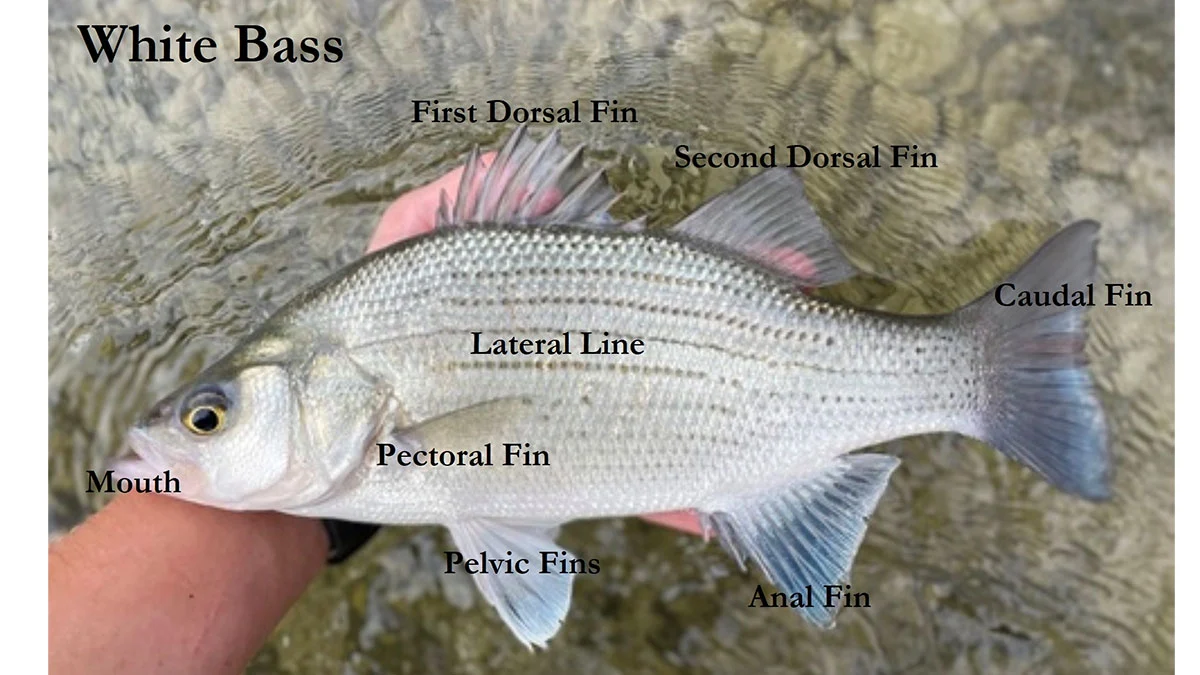
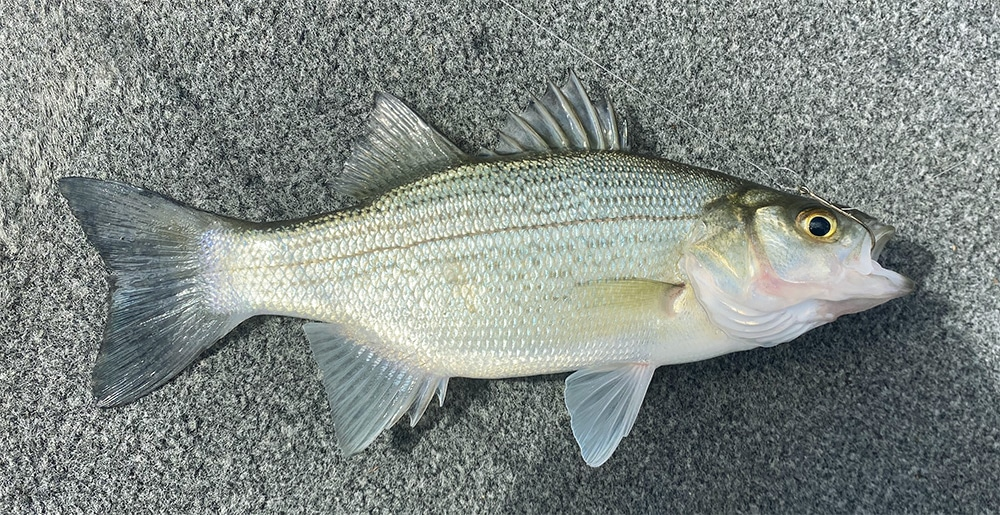
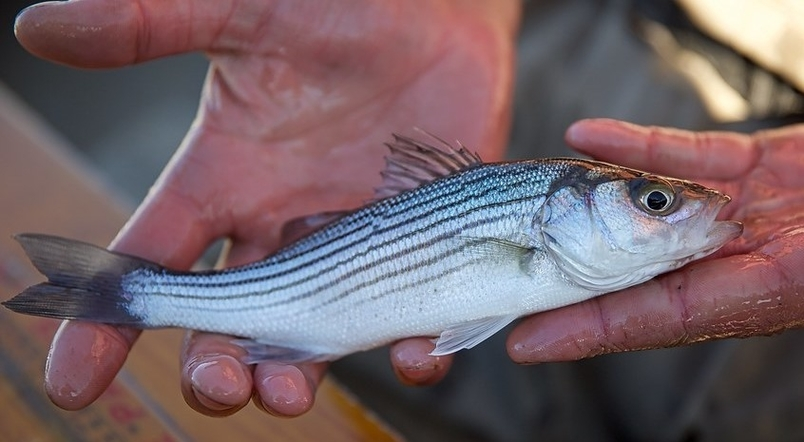
Morone chrysops (white bass)
12–15 inches long. It has large, rough scales and two dorsal fins. Silvery-white sides, marked by a series of thin, horizontal stripes, only one of which extends to the tail.
Moronidae
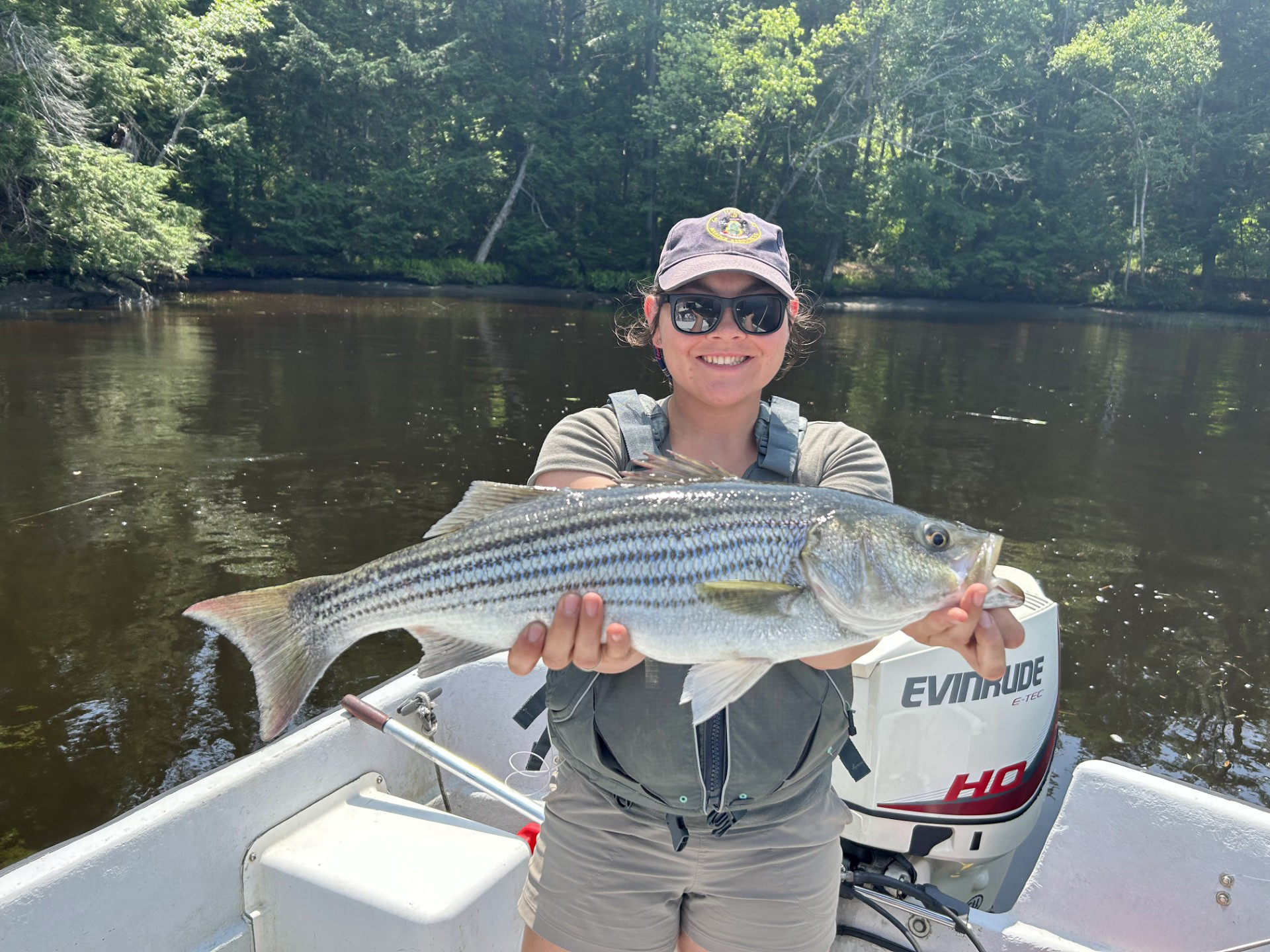
Morone saxatilis (stripped bass)
Olive or blue back. Silvery sides with 7 to 8 stripes that extend onto tail. Slender body, up to 55 pounds. Two dorsal fins.
Centrarchidae
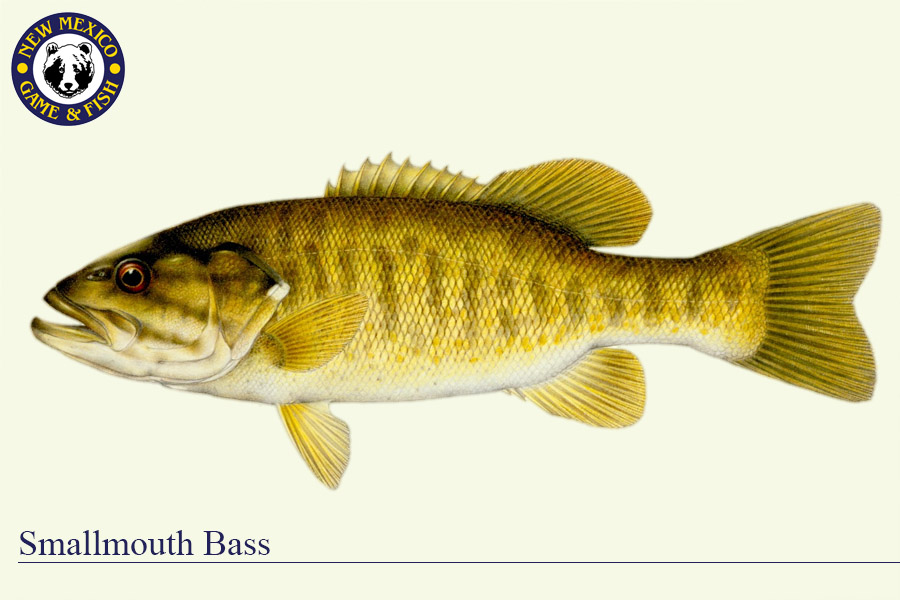
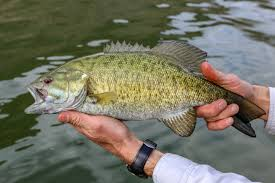
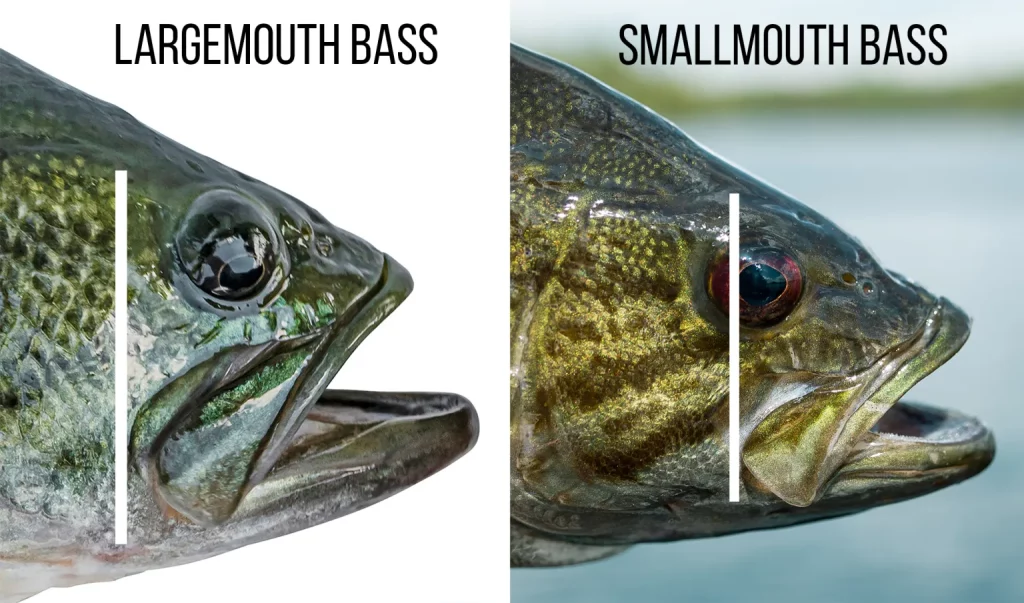
Micropterus dolomieu
Uniform olive brown color. Shallow notch between dorsal fins Upper jaw extends to eye. Vertical barring.
Centrarchidae
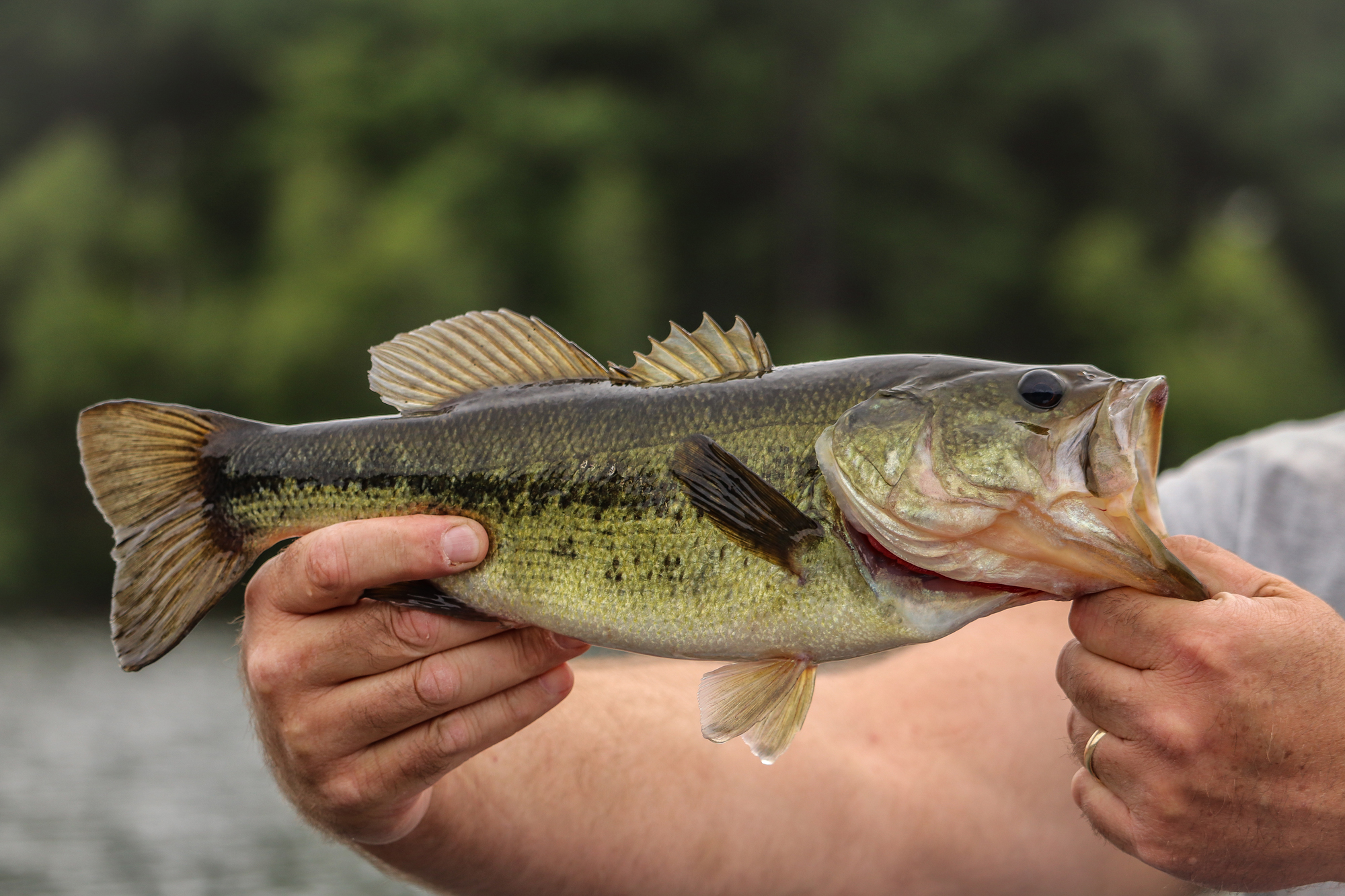
Micropterus nigricans
Greenish color, usually with dark horizontal stripe on sides. Deep notch between dorsal fins, but not clearly separated. Upper jaw extends beyond eye.
Centrarchidae
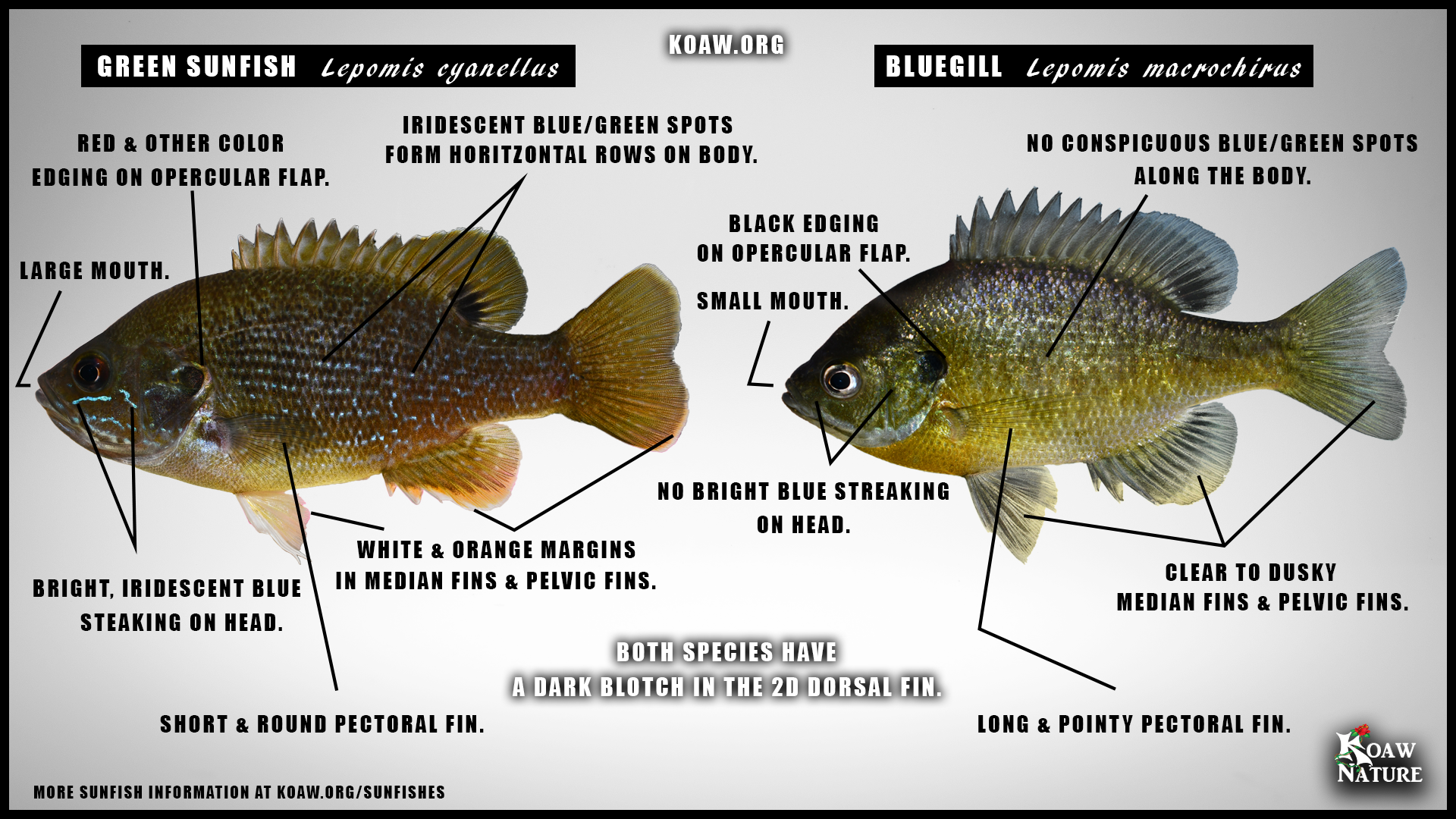
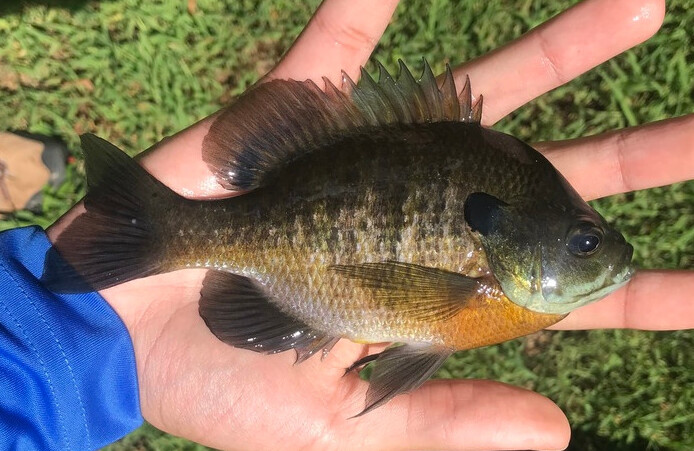
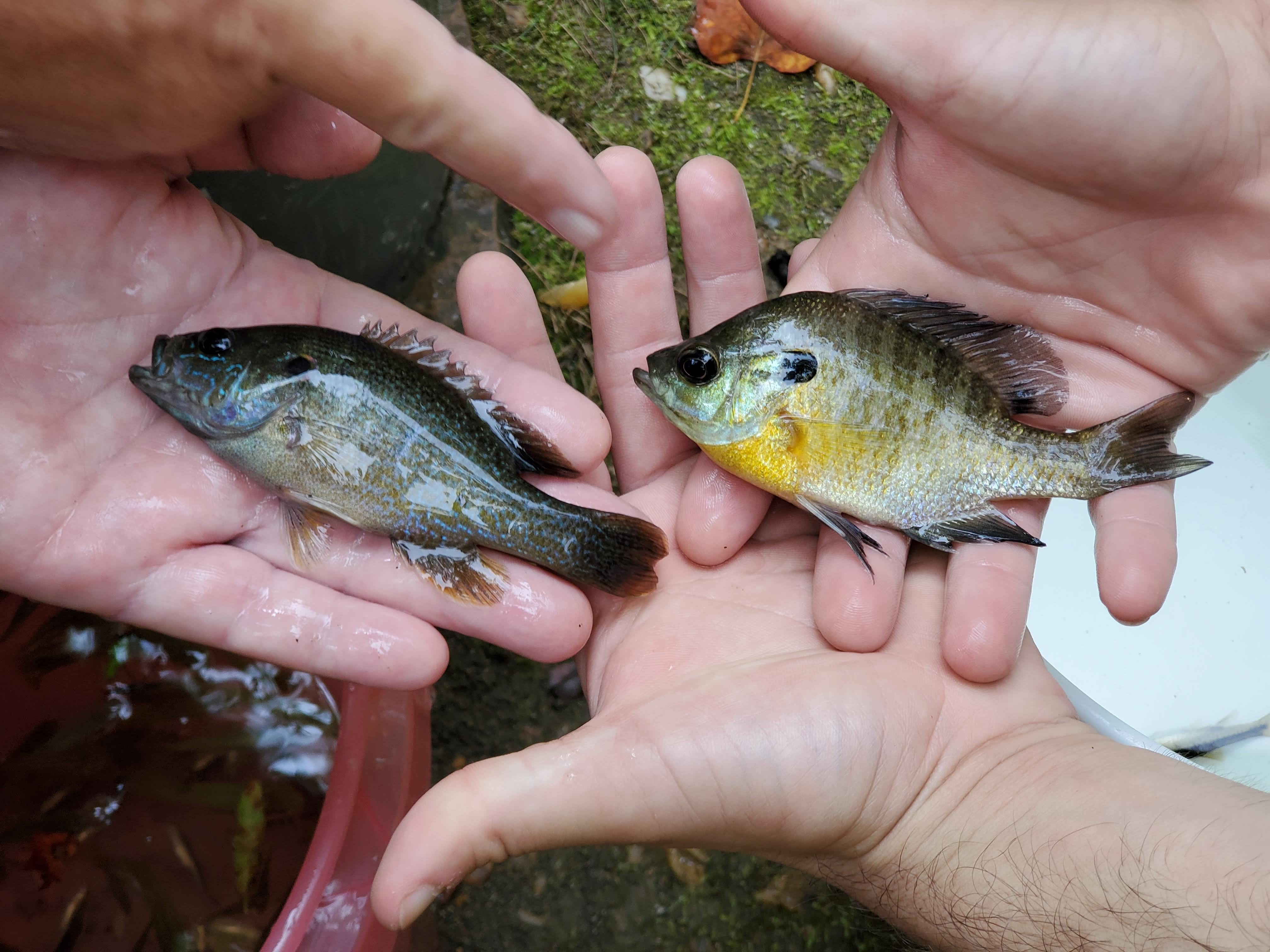
Lepomis macrochirus (blue gill)
Deep bodied.
Centrarchidae
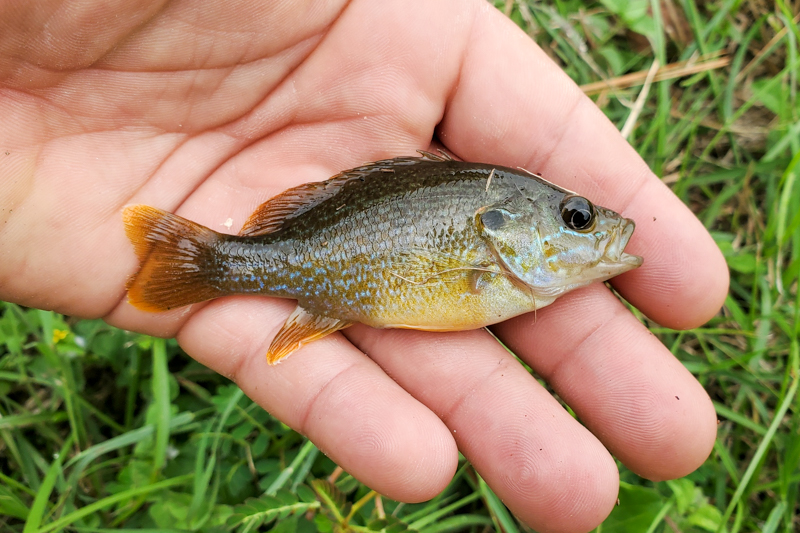
Lepomis cyanellus (green sunfish)
more elongated and bass-like.
Centrarchidae
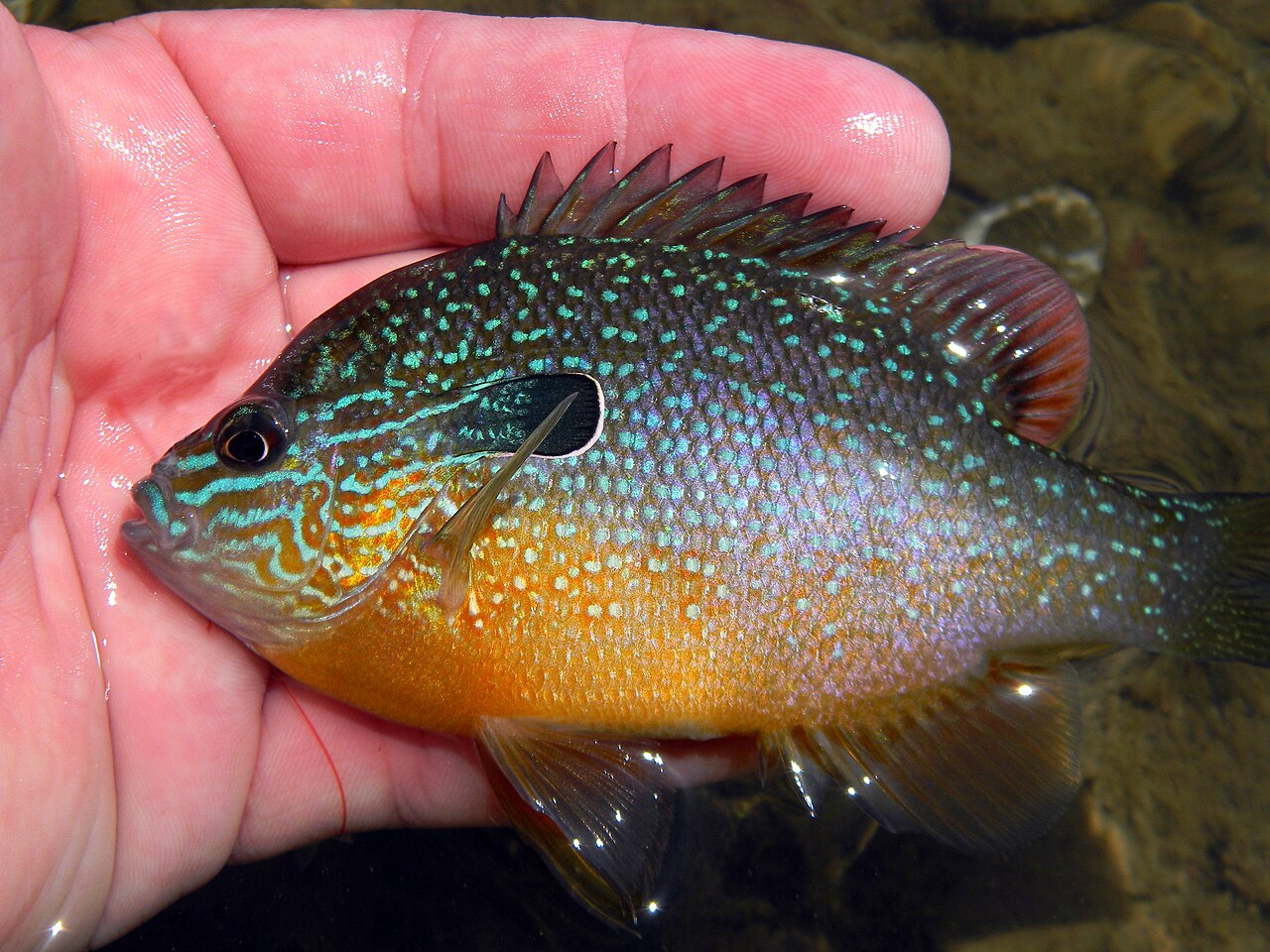
Lepomis megalotis (longear sunfish)
colorful, with an olive to rusty-brown back, bright orange belly and vermiculate blue-green bars on the sides of its head, the latter two features most pronounced in breeding males. A unique characteristic of longear sunfish is their elongated operculum flap, giving an appearance of a "long ear". It is black and often has a white margin.
Centrarchidae
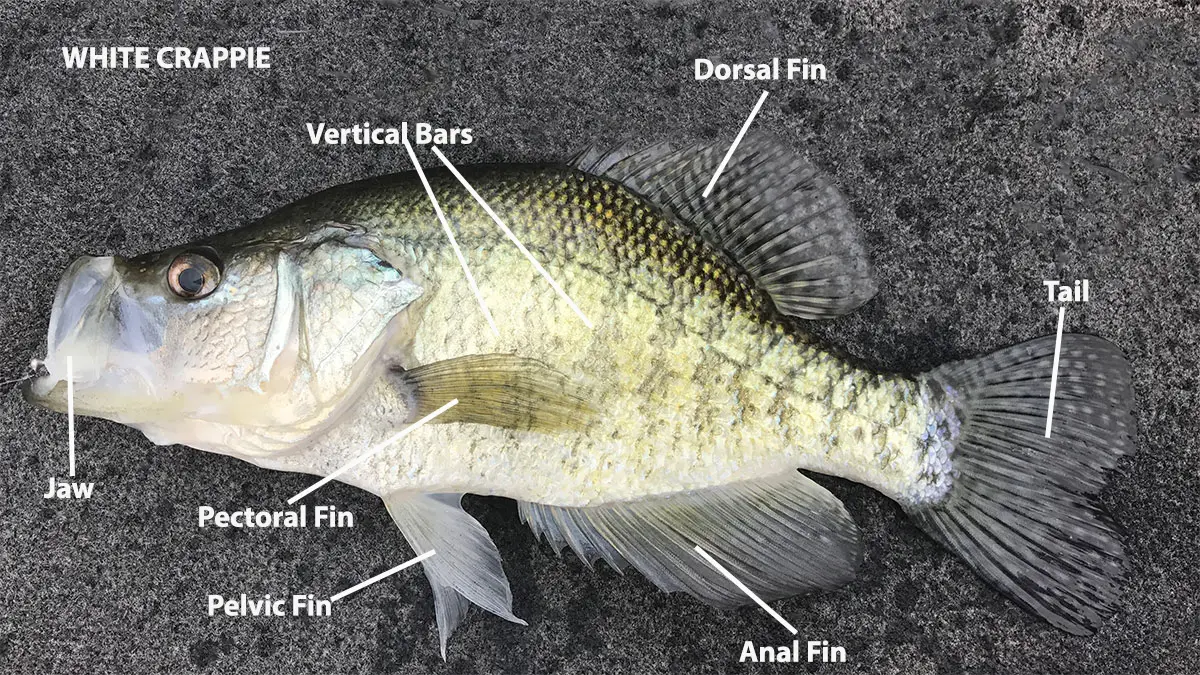
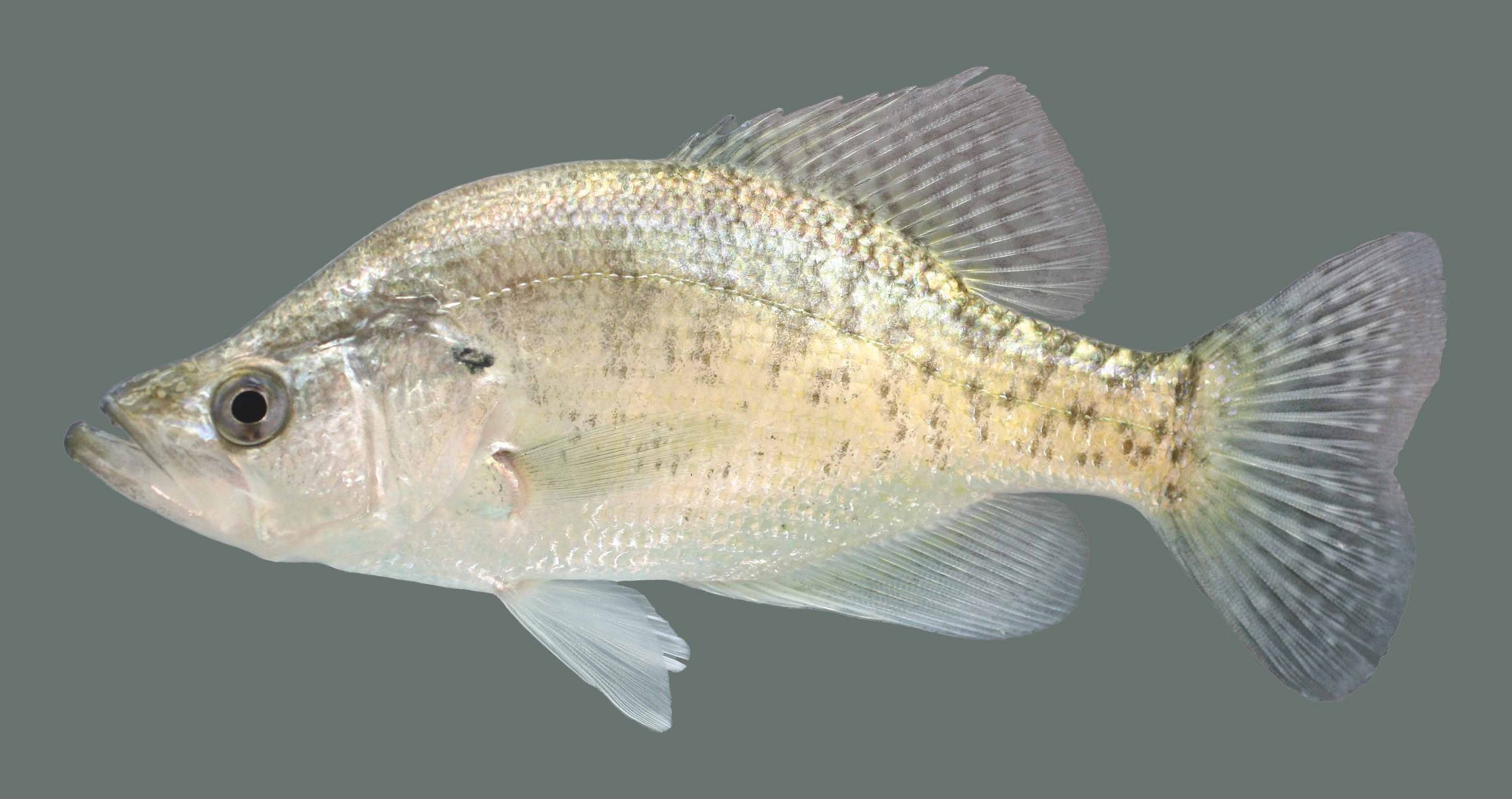
Pomoxis annularis (white crappie)
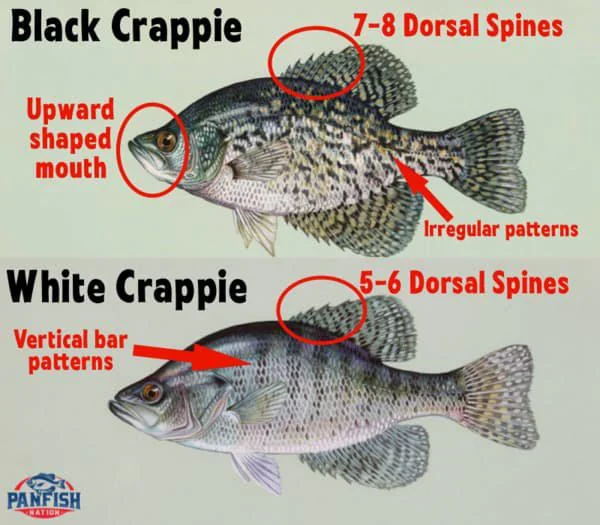
Two dorsal fins joined, appearing as one. Deep bodied, large lower jaw. Olive or dark green back with 7-to-8 indistinct vertical stripes along its sides.
Centrarchidae
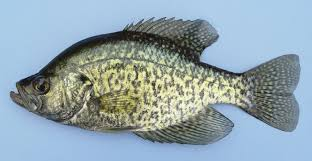
Pomoxis nigromaculatus (black crappie)
Dorsal fins appear as one. Darker with patterns of black splotches instead of vertical stripes.
Poeciliidae
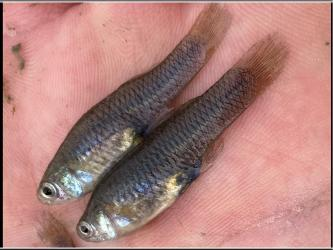
Gambusia affinis (mosquito fish)
Live bearers. Small and of a dull grey coloring, with a large abdomen, and have rounded dorsal and caudal fins and an upturned mouth.Sexual dimorphism is seen; mature females reach a maximum overall length of 7 cm (2.8 in)
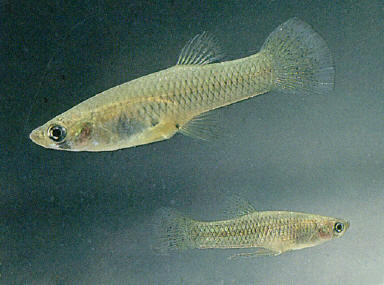
Poeciliidae
Gambusia nobilis (peco gambusia)
This species has a dorsally flattened head and a mouth that is significantly angled upwards as the lower jaw is protruding. The back is curved, and the caudal peduncle is notably deep. This species has a dorsally flattened head and a mouth that is significantly angled upwards as the lower jaw is protruding. The back is curved, and the caudal peduncle is notably deep.