6A: regulation of homeostasis
 Call Kai
 Learn
Learn Practice Test
 Spaced Repetition
 Match
Match Flashcards
 Knowt Play
1/10

There's no tags or description
Looks like no tags are added yet.
Name | Mastery | Learn | Test | Matching | Spaced | Call with Kai |
|---|
No analytics yet
Send a link to your students to track their progress
11 Terms
homeostasis
regulation of a constant internal environment despite changes in the external environment.
systems that control homeostasis
nervous and endocrine system
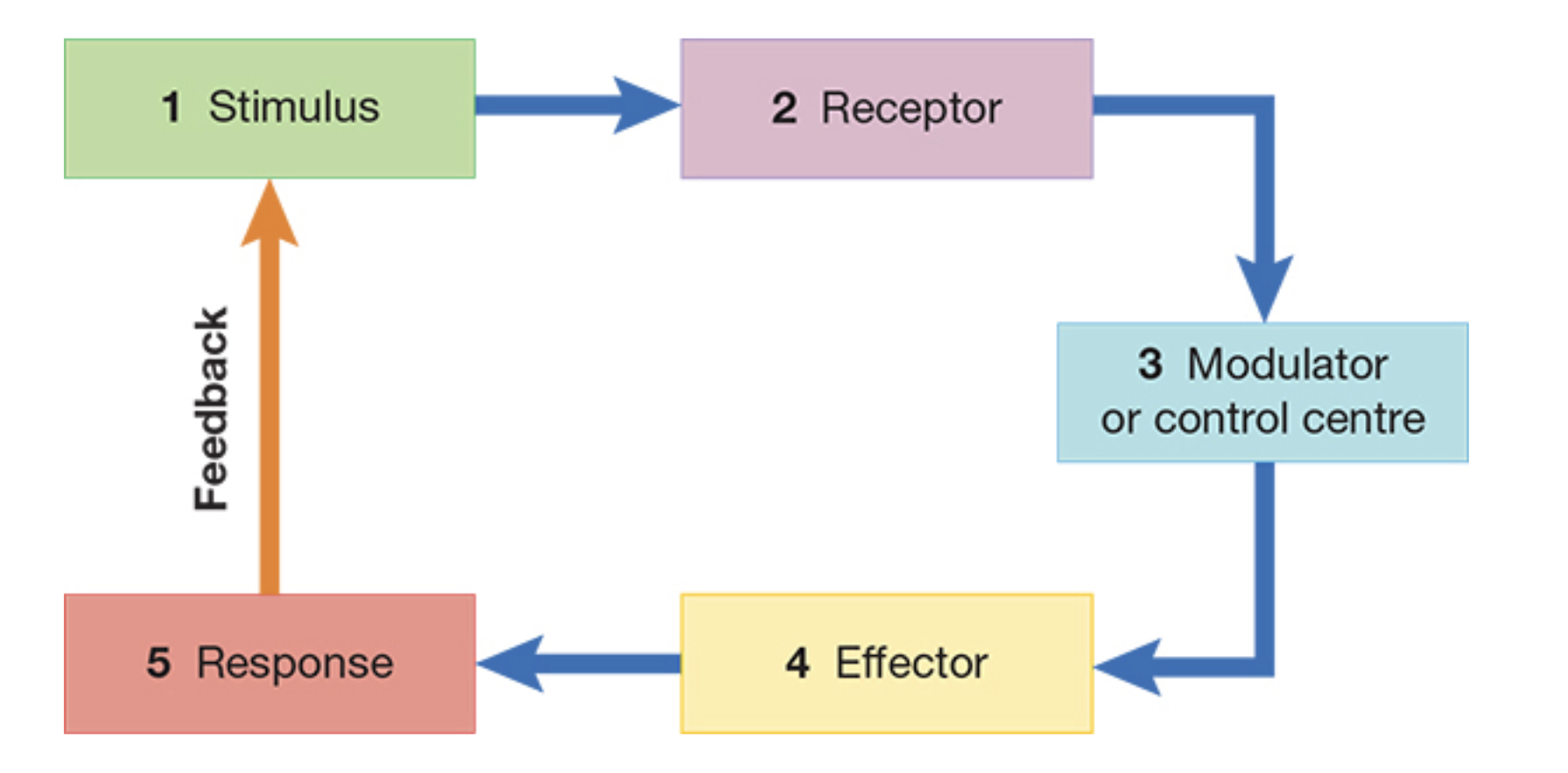
stimulus-response model
homeostatic regulation involving monitoring a variable and detecting changes outside normal range
stimulus
change has occurred in the external or internal environment
change in variable / change from normal level
e.g. change in temperature / glucose concentration
receptor
stimulus detected by the receptor
transfers into chemical / electrical signal
cell receptors = embedded in membrane / cytosol
modulator
processing / control center
info from receptors is sent to the modulator
compares incoming info with an ideal condition
if not ideal, release molecules to alter effector
effector
responds to signal from modulator, produces a response
molecule / cell / organ
e.g. sweat glands, smooth muscle in blood cells
response
effector initiates response to stimulus
any change in function of a target cell, organ, organism
e.g. sweat cools body temperature back to 37C
stimulus-response diagram
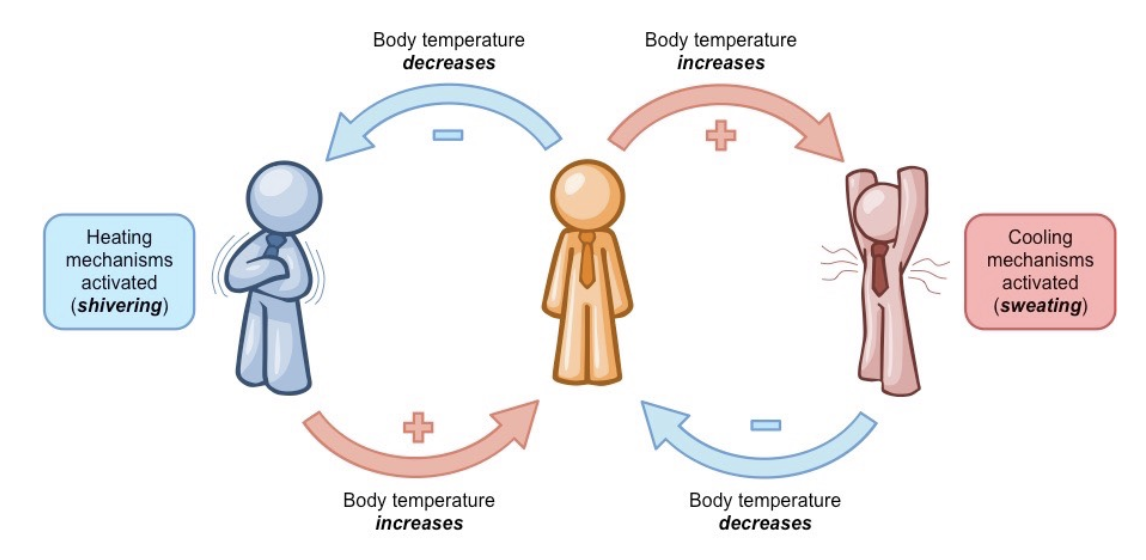
negative feedback loop
occurs when response counters (negates / reduces) the stimulus
attempts to revert system back to the normal state
homeostasis usually involves
normal level = set point
positive feedback loop
occurs when response increases / amplifies the initial stimulus
do not form part of homeostasis
e.g. contractions of childbirth
hormone oxytocin released
stimulates more contractions