Animal Structure, Thermoregulation, and Energy in BIO 123
 Call Kai
 Learn
Learn Practice Test
 Spaced Repetition
 Match
Match Flashcards
 Knowt Play
1/49

There's no tags or description
Looks like no tags are added yet.
Name | Mastery | Learn | Test | Matching | Spaced | Call with Kai |
|---|
No analytics yet
Send a link to your students to track their progress
50 Terms
What is thermoregulation?
The process by which animals maintain their body temperature within a certain range.
Which system is primarily involved in thermoregulation?
The integumentary system, which consists of skin, hair, and nails.
What is the role of insulation in thermoregulation?
Insulation reduces heat flow between the animal and its environment.
Name three adaptations for thermoregulation in mammals.
Skin, hair/fur, and blubber.
What is evaporative heat loss?
The cooling effect that occurs when water evaporates from the body surface.
How does sweating help in thermoregulation?
Sweating increases evaporation, which cools the body.
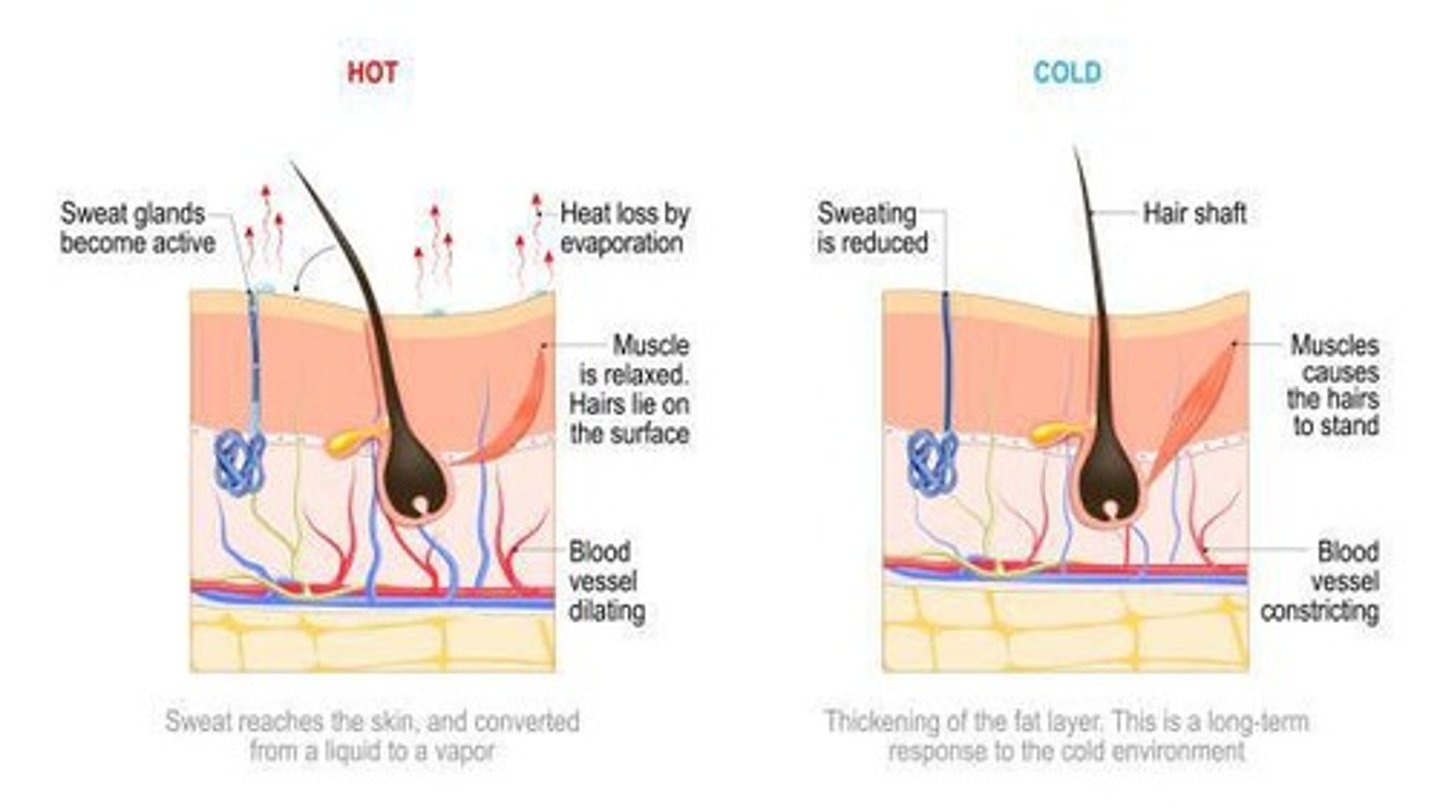
What are vasodilation and vasoconstriction?
Vasodilation is the widening of blood vessels to increase blood flow, while vasoconstriction is the narrowing of blood vessels to reduce blood flow.
How do energy requirements relate to an animal's size?
As an animal's mass increases, its energy requirements also increase.
What is malnutrition?
The failure to obtain adequate nutrition, often due to deficiencies in essential nutrients.
What are essential nutrients?
Nutrients that must be obtained from the diet because the body cannot synthesize them.
What is the difference between ingestion and digestion?
Ingestion is the act of eating or feeding, while digestion is the process of breaking food down into smaller molecules for absorption.
What is the function of the stomach in food processing?
The stomach mechanically digests food by churning and enzymatically digests protein using gastric juice.
What is the role of the small intestine in digestion?
The small intestine is the site of most enzymatic digestion and nutrient absorption.
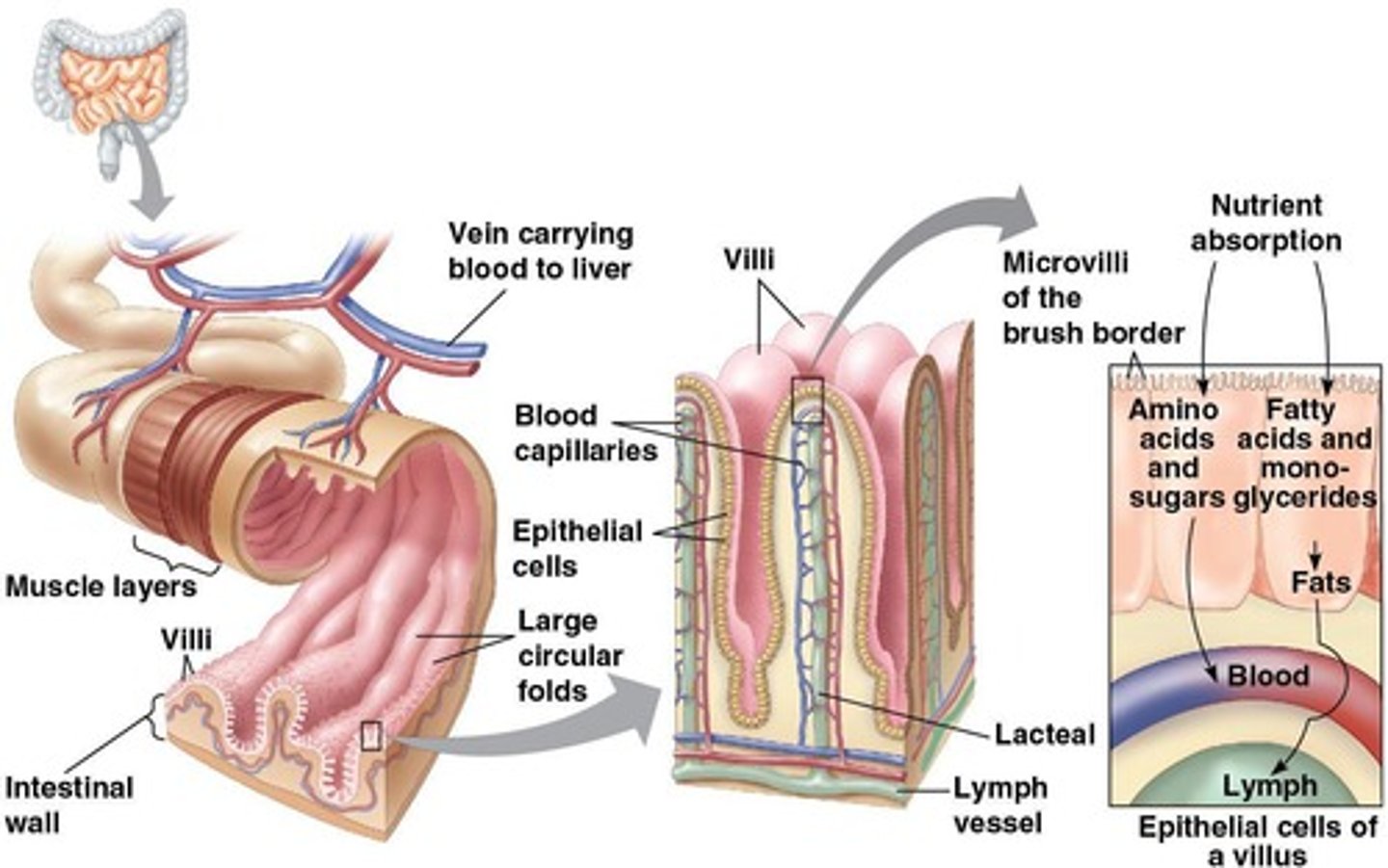
What are villi and microvilli?
Villi are finger-like projections in the small intestine that increase surface area for nutrient absorption, while microvilli are smaller projections on the villi.
What is the function of the liver in digestion?
The liver produces bile, which emulsifies fats for digestion.
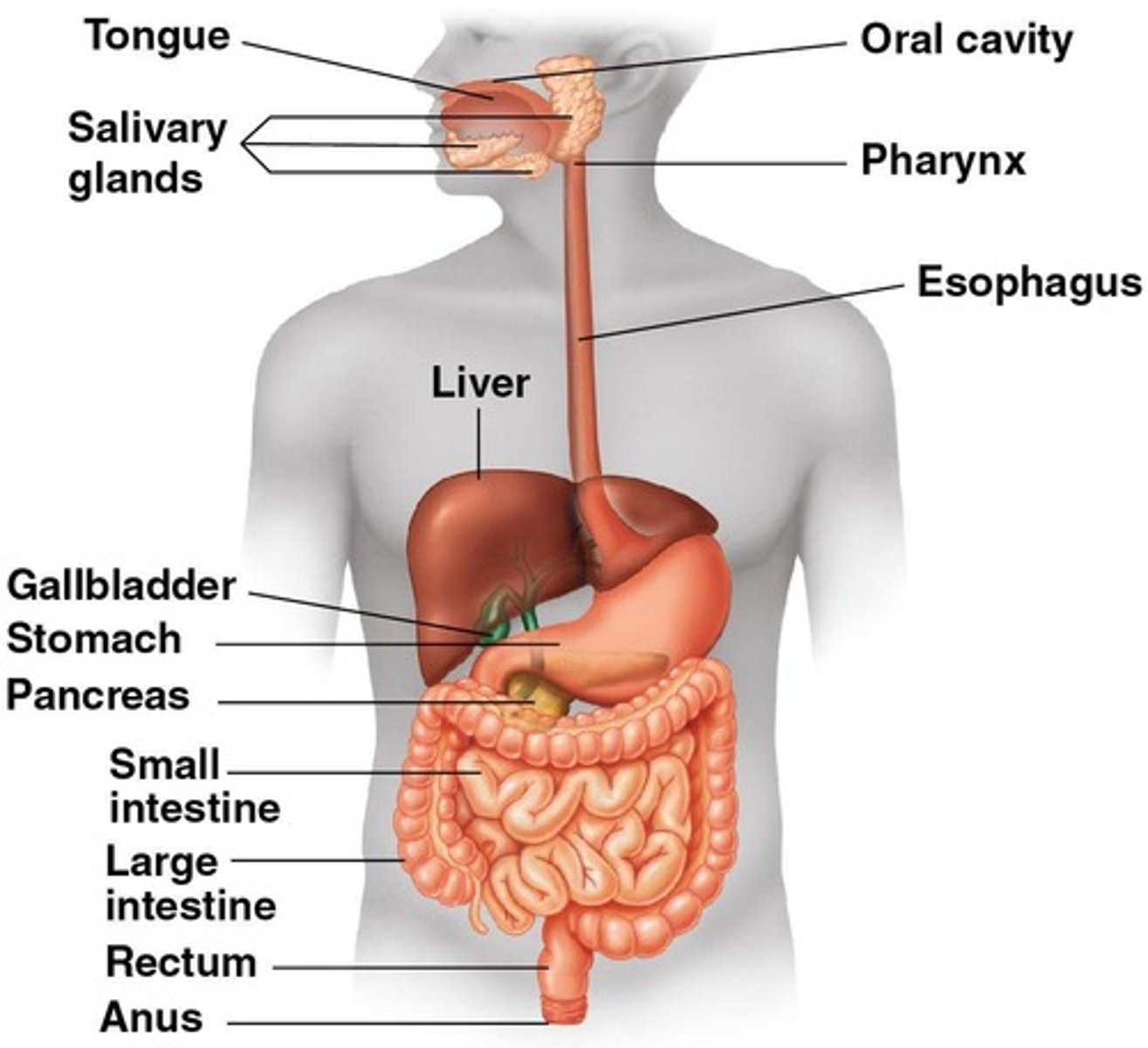
What is the role of the pancreas in digestion?
The pancreas produces enzymes that digest proteins, lipids, carbohydrates, and nucleic acids.
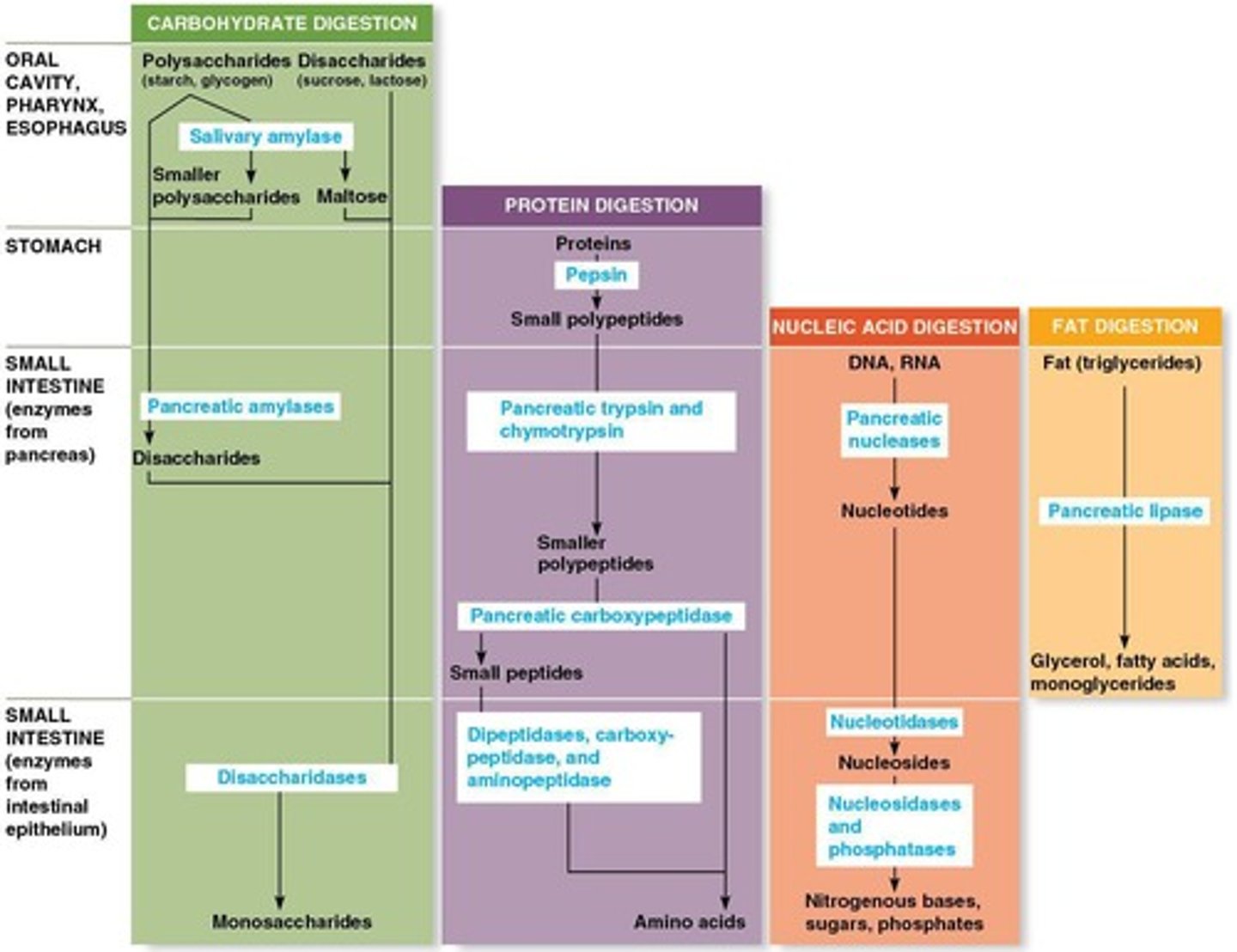
What is the alimentary canal?
A complete digestive tube with two openings, containing specialized compartments for digestion and absorption.
What is the function of the large intestine?
The large intestine completes water absorption and stores undigested waste until elimination.
What is the role of the gallbladder?
The gallbladder stores bile produced by the liver.
How do energy budgets differ among terrestrial vertebrates?
Energy budgets vary based on size and thermoregulatory strategies, affecting energy expenditures for metabolism, reproduction, thermoregulation, activity, and growth.
What is the significance of essential amino acids?
Essential amino acids cannot be synthesized by the body and must be obtained from the diet.
What are some examples of essential nutrients?
Essential amino acids, essential fatty acids, vitamins, and minerals.
What is the digestive process that occurs in the oral cavity?
Mechanical digestion by teeth and enzymatic digestion of starch by salivary amylase.
What is chyme?
Chyme is the semi-fluid mass of partly digested food that moves from the stomach to the small intestine.
What is the function of sphincters in the digestive system?
Sphincters regulate the entry and exit of materials in and out of the stomach.
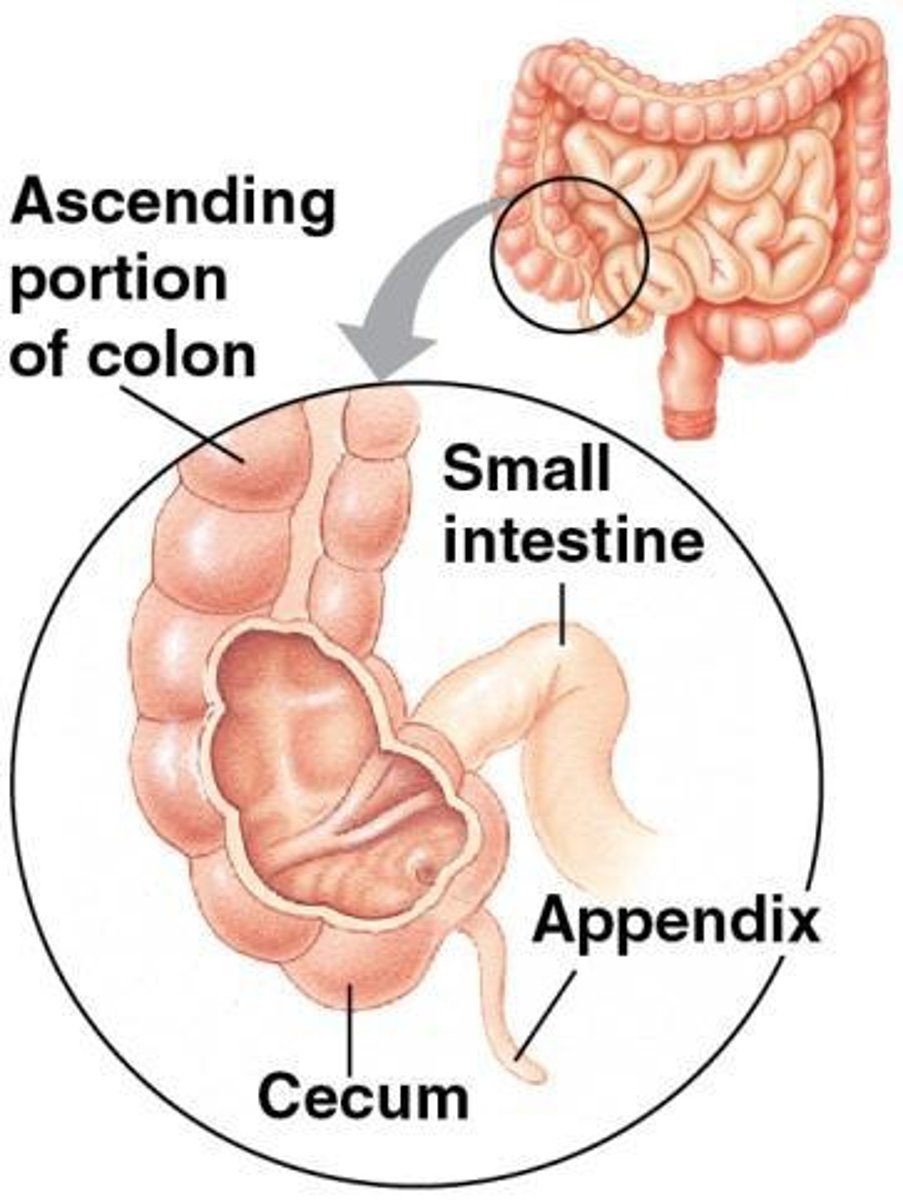
What is the role of the cecum in digestion?
The cecum is important for fermenting plant material in some animals.
What is the primary function of the rectum?
The rectum stores feces until they are eliminated from the body.
What is the relationship between structure and function in animals?
Structure and function are closely linked at every level of organization.
What are the four main types of animal tissues?
Epithelial, Connective, Muscle, Nervous.
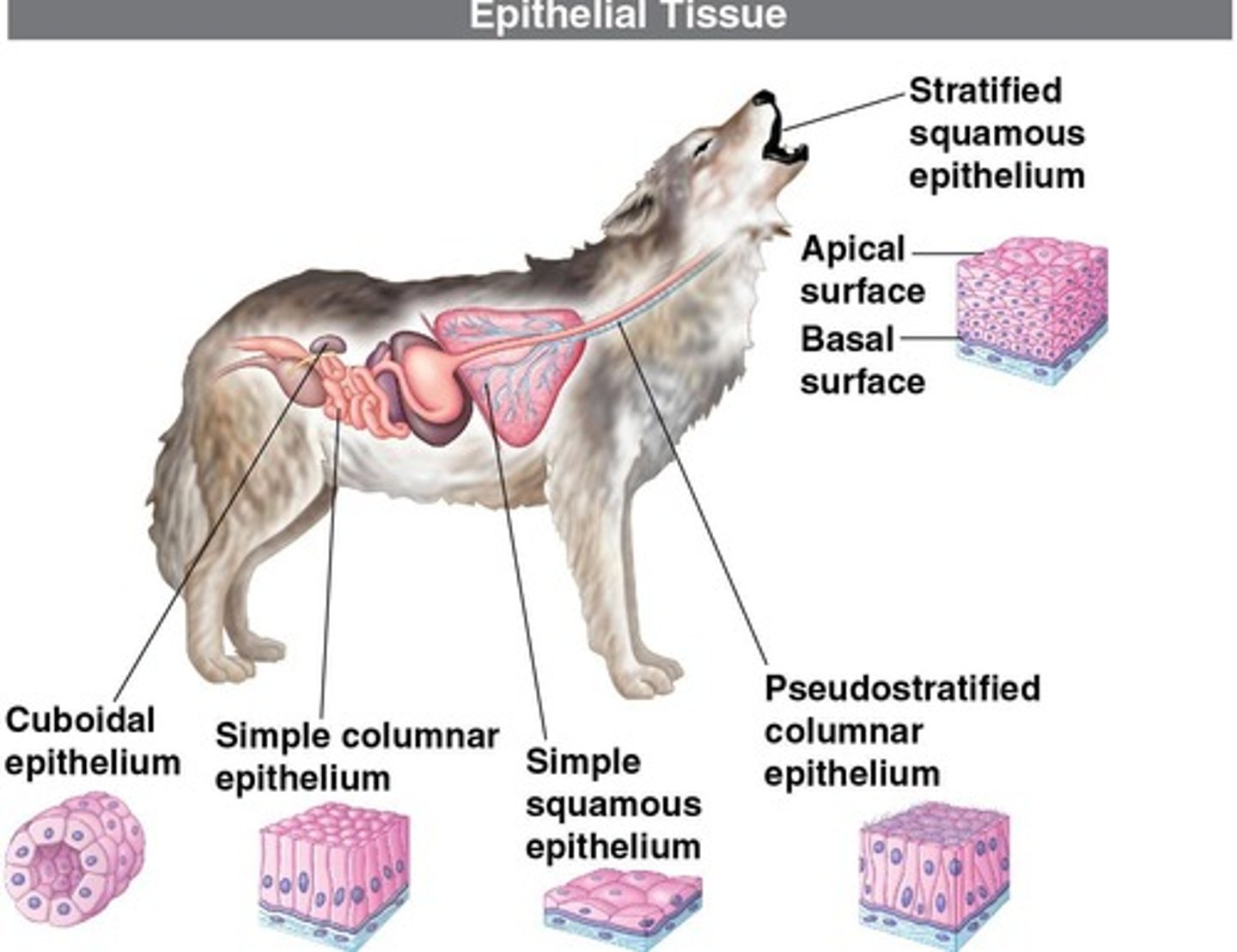
What is the primary function of epithelial tissue?
To cover the outside of the body and line organs and cavities, providing protection, absorption, and secretion.
What are the three types of muscle tissue?
Skeletal, Smooth, Cardiac.
What is the main role of connective tissue?
To hold many tissues and organs together and in place.
What is homeostasis?
A relatively constant internal environment regardless of external conditions.
What is the difference between a regulator and a conformer in terms of homeostasis?
A regulator uses internal control mechanisms to maintain internal conditions, while a conformer allows internal conditions to vary with external changes.
What is negative feedback in homeostasis?
A control mechanism that reduces a stimulus and helps maintain homeostasis.
What is positive feedback?
A control mechanism that amplifies a stimulus and helps drive a process to completion.
What are endotherms?
Animals that generate heat through metabolism, such as birds and mammals.
What are ectotherms?
Animals that gain heat from external sources, such as fishes and amphibians.
What is the significance of maintaining body temperature?
It is important for enzyme function and overall cellular health.
What are the advantages of endothermy?
Higher rate of enzyme activity and the ability to remain active in low temperatures.
What are the disadvantages of endothermy?
Higher energy cost and the need for more food.
What are the advantages of ectothermy?
Very little energy usage and the ability to survive on less food.
What are the disadvantages of ectothermy?
Activity may be limited by daily temperature fluctuations and seasonal changes.
What is the role of fibroblasts in connective tissue?
Fibroblasts are specialized cells within the matrix that secrete proteins.
What is the function of macrophages in connective tissue?
Macrophages engulf foreign items and help in immune response.
What is the role of sensory epithelial cells?
They may be specialized for sensory functions, such as taste or smell.
What is the hierarchical organization of biological systems?
Cells form tissues, tissues form organs, and organs form organ systems.
What is the set point in homeostasis?
A value maintained for a particular variable, such as body temperature.
What is a stimulus in the context of homeostasis?
A fluctuation above or below the set point that triggers a response.
What is the function of glial cells in nervous tissue?
Glial cells support and protect neurons.