Chemistry Regents Comprehensive Review
 Call Kai
 Learn
Learn Practice Test
 Spaced Repetition
 Match
Match Flashcards
 Knowt Play
 Podcast
1/258

There's no tags or description
Looks like no tags are added yet.
Name | Mastery | Learn | Test | Matching | Spaced | Call with Kai |
|---|
No analytics yet
Send a link to your students to track their progress
259 Terms
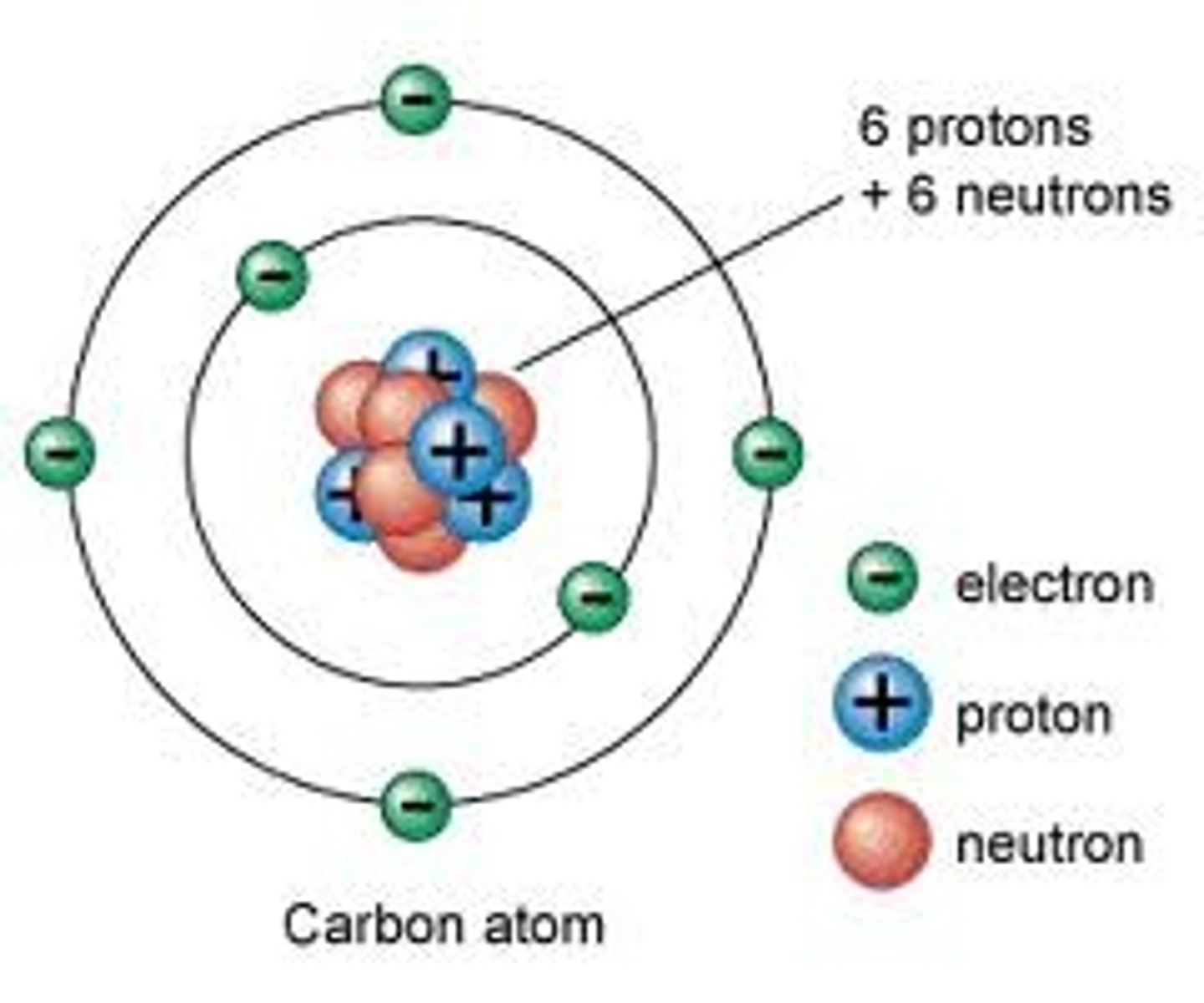
Protons
+1 charge; 1 amu; located in the nucleus
Neutron
neutral; 1 amu; located in the nucleus
electron
charge is -1 ; tiny mass; located in orbitals outside the nucleus
Mass number
Protons and neutrons added together, this is the top number in isotopic notation
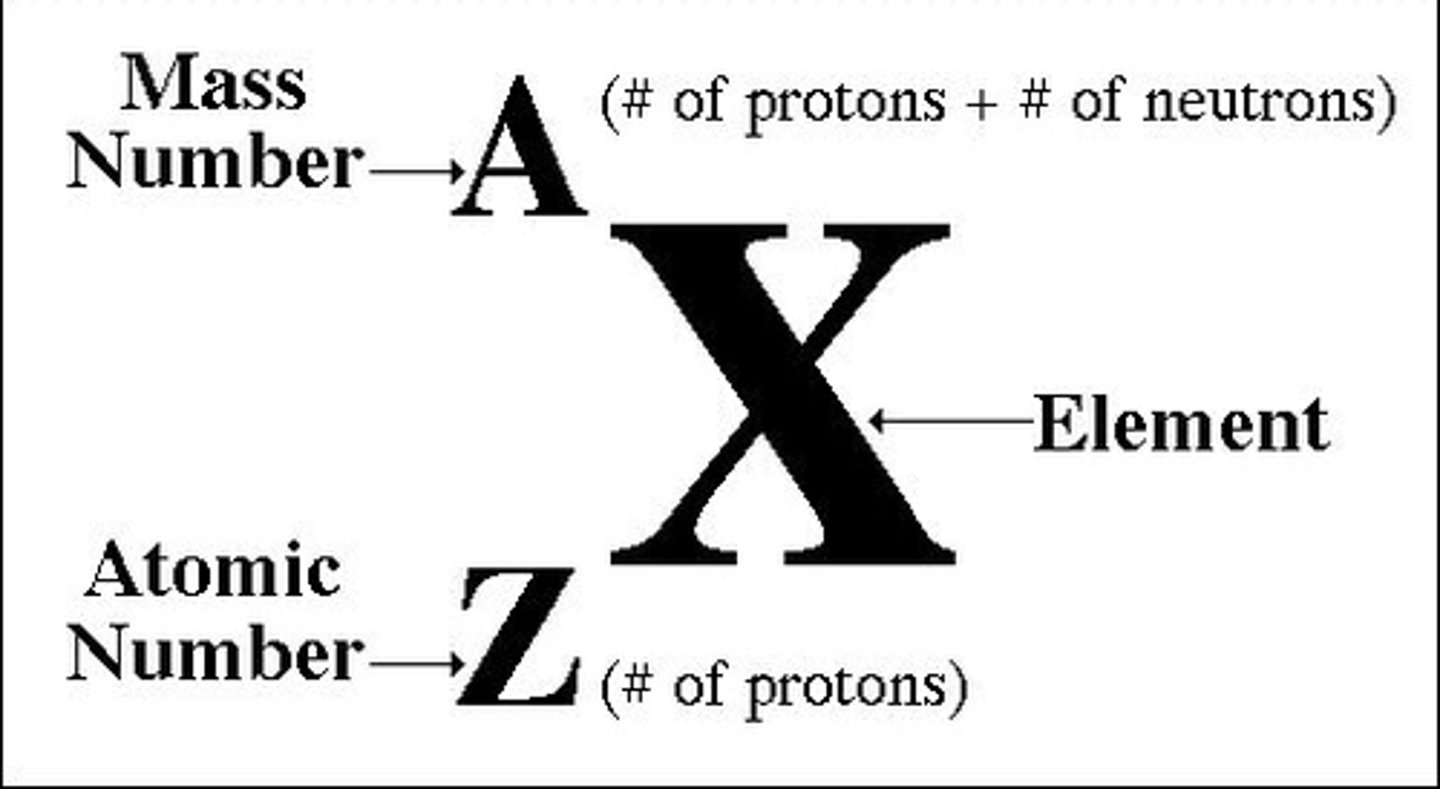
Atomic number
number of protons, this identifies the element. You can find this on the Periodic Table on your Reference Sheet
Nuclear Charge
number of protons in the nucleus, this makes the nucleus have an overall POSITIVE charge.
How is the periodic table arranged?
Its arranged in order of increasing atomic number
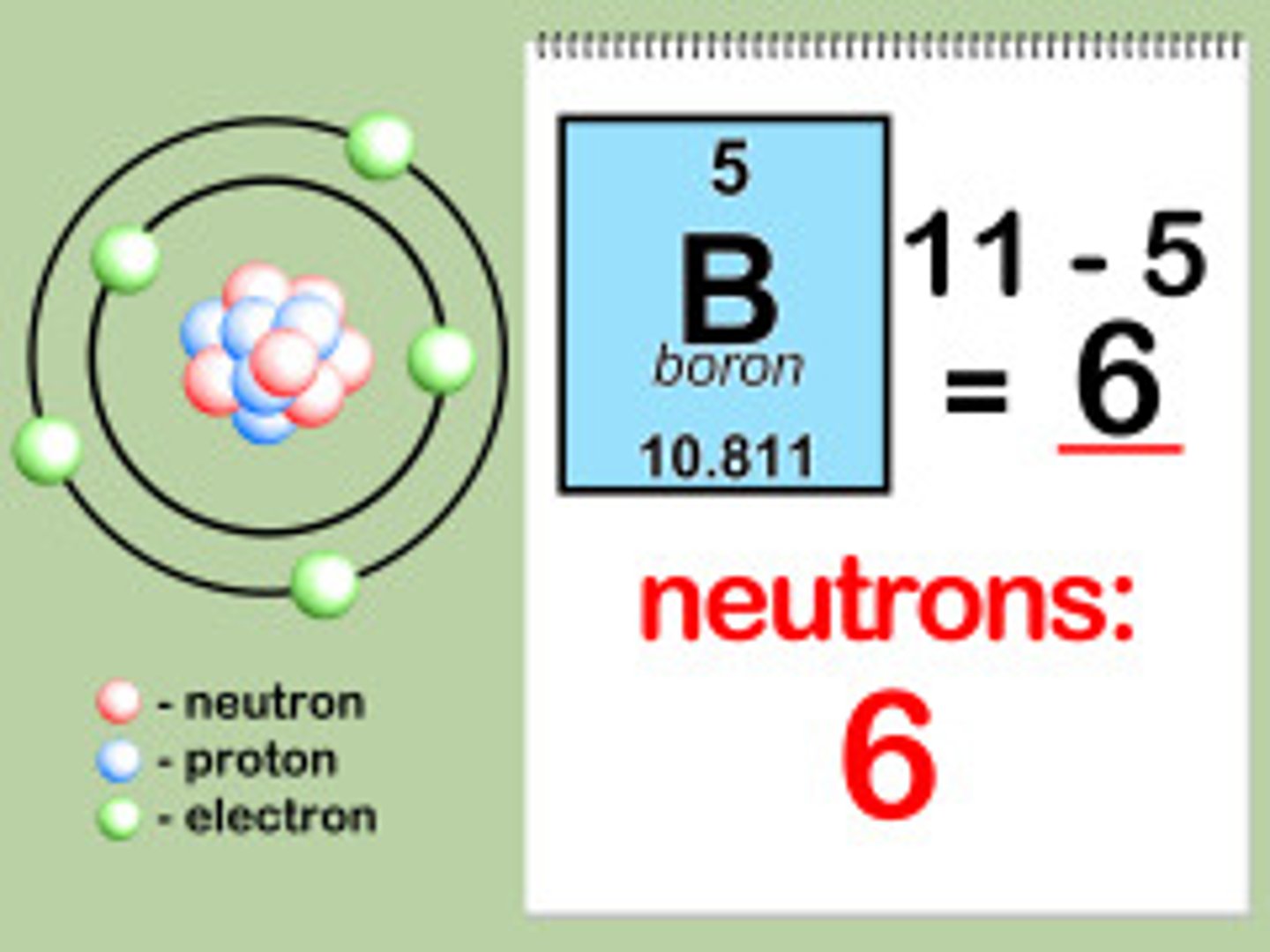
How do you determine the number of neutrons?
Subtract the mass number from the atomic number
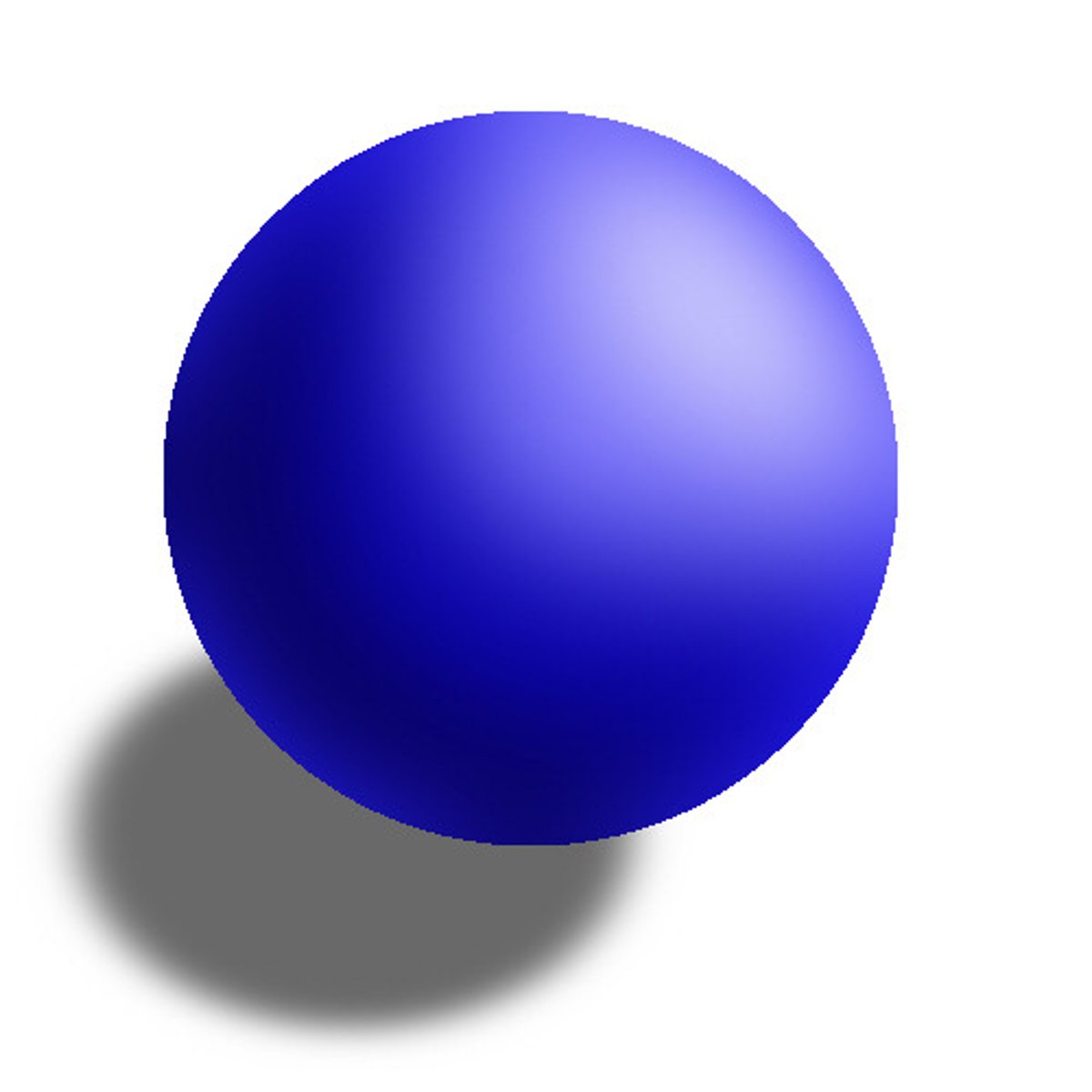
Dalton's atomic model
One of the 1st atomic models, atoms were solid, indivisible, spheres
Element
Pure substance, made of one type of atom
Compound
Pure substance; made of two or more different elements in a fixed proportion
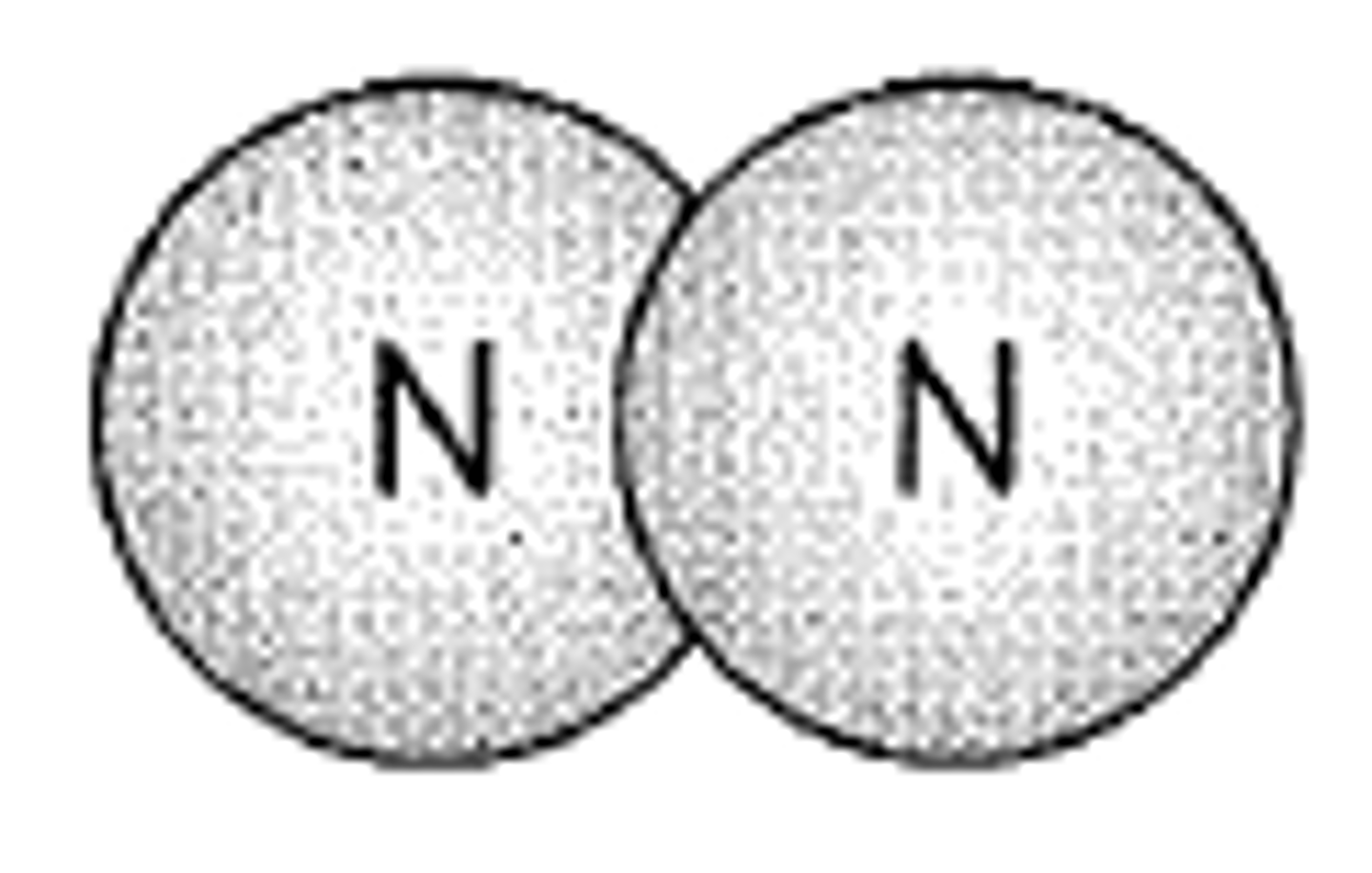
Diatomic element
HONClBrIF; still a pure element, two of the SAME element chemically bonded
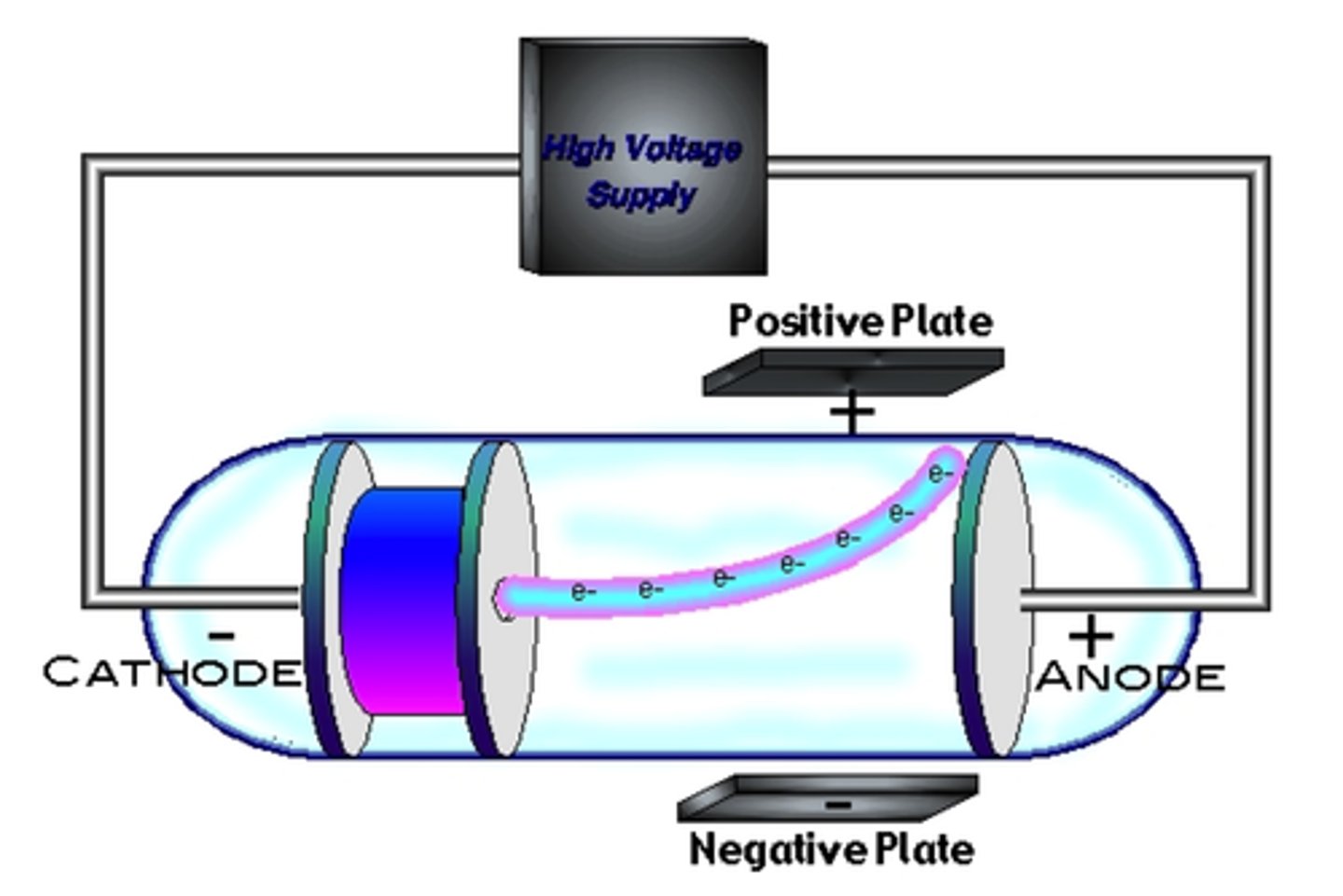
JJ Thompson
Cathode ray tube, discovered the electron
Rutherford's gold foil experiment lead to the discovery that atoms
were mostly empty space with a small dense positively charged nucleus
Gold Foil Experiment - Most of the alpha particles went straight through the gold foil, this meant
that the atom was MOSTLY EMPTY SPACE
Gold Foil Experiment - Some of the alpha particles were deflected backwards this meant
that the atom has a DENSE POSITIVE NUCLEUS
Bohr's model showed that
the nucleus was small, dense, positive, with electrons that moved in circular orbits around the nucleus
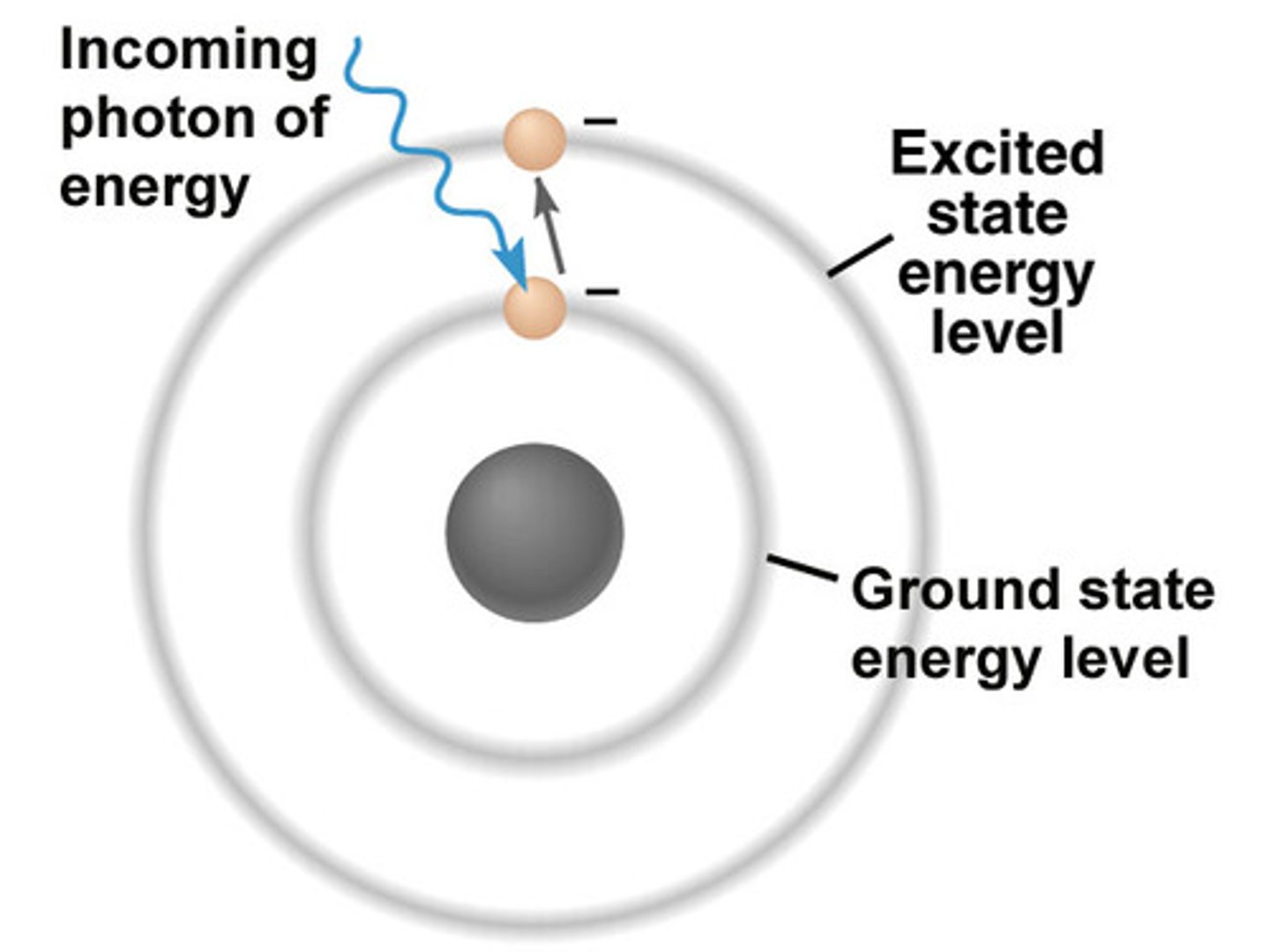
Higher energy levels are
farther from the nucleus and higher in energy
Lower energy levels are
closer to the nucleus, more stable, and lower in energy
Wave mechanical model says that
electrons move in an electron probability cloud around the nucleus
Wave mechanical model says that orbitals are defined as
a region of the most probable electron location
Each atoms is made of a....
positively charged nucleus with orbiting negatively charged electrons on the OUTSIDE
Protons and neutrons are located
IN THE NUCLEUS
In an ATOM the number of protons equals the number of
electrons; the positive charges are cancelled by the negative charges to make a NEUTRAL charge
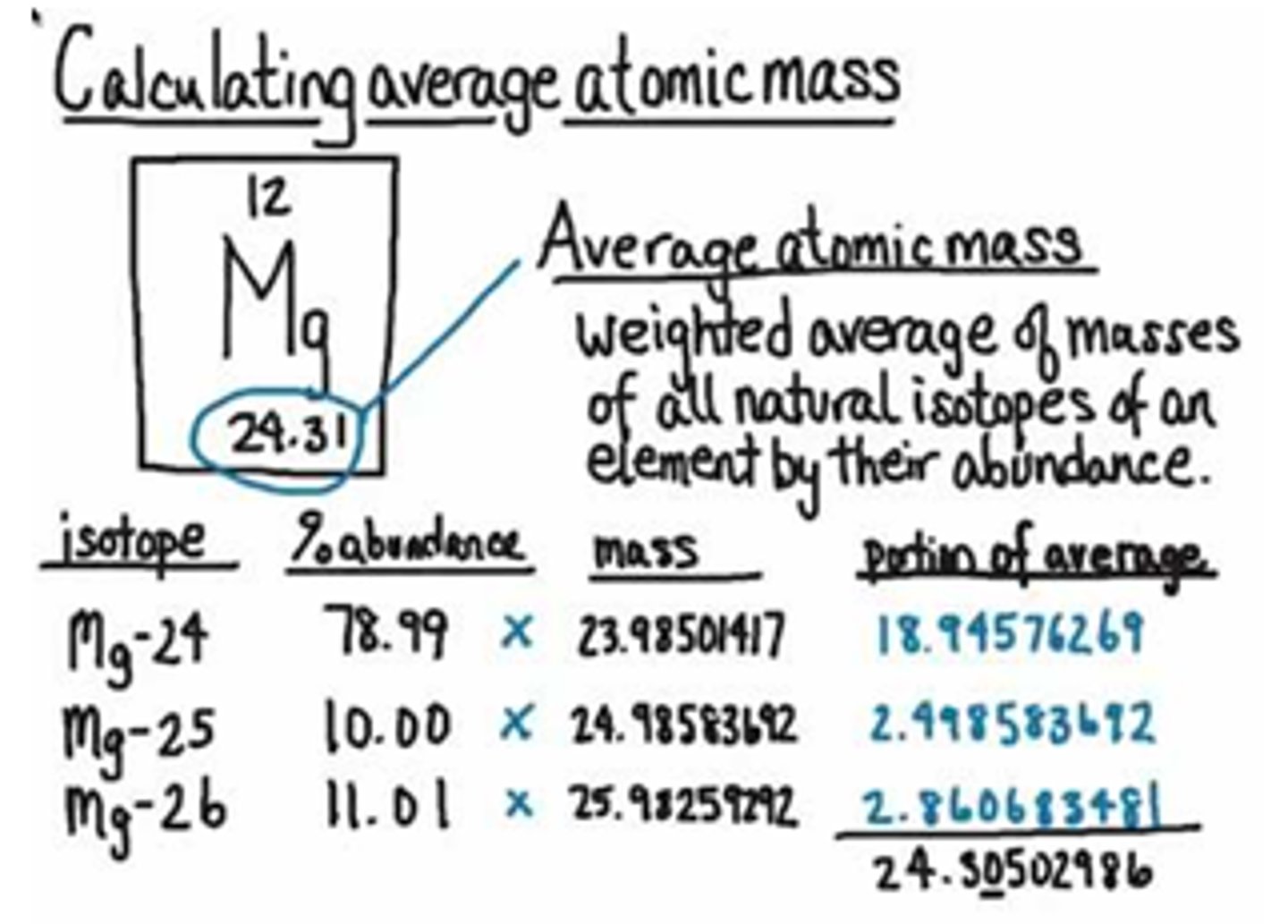
Average atomic mass is calculated using
natural abundances of isotopes and relative masses of the isotopes
Isotope
same number of protons DIFFERENT number of neutrons
Where do I find polyatomic ions on the reference table?
TABLE E
Ground state
when all electrons are in their lowest possible energy level, with the first orbital having the least amount of energy
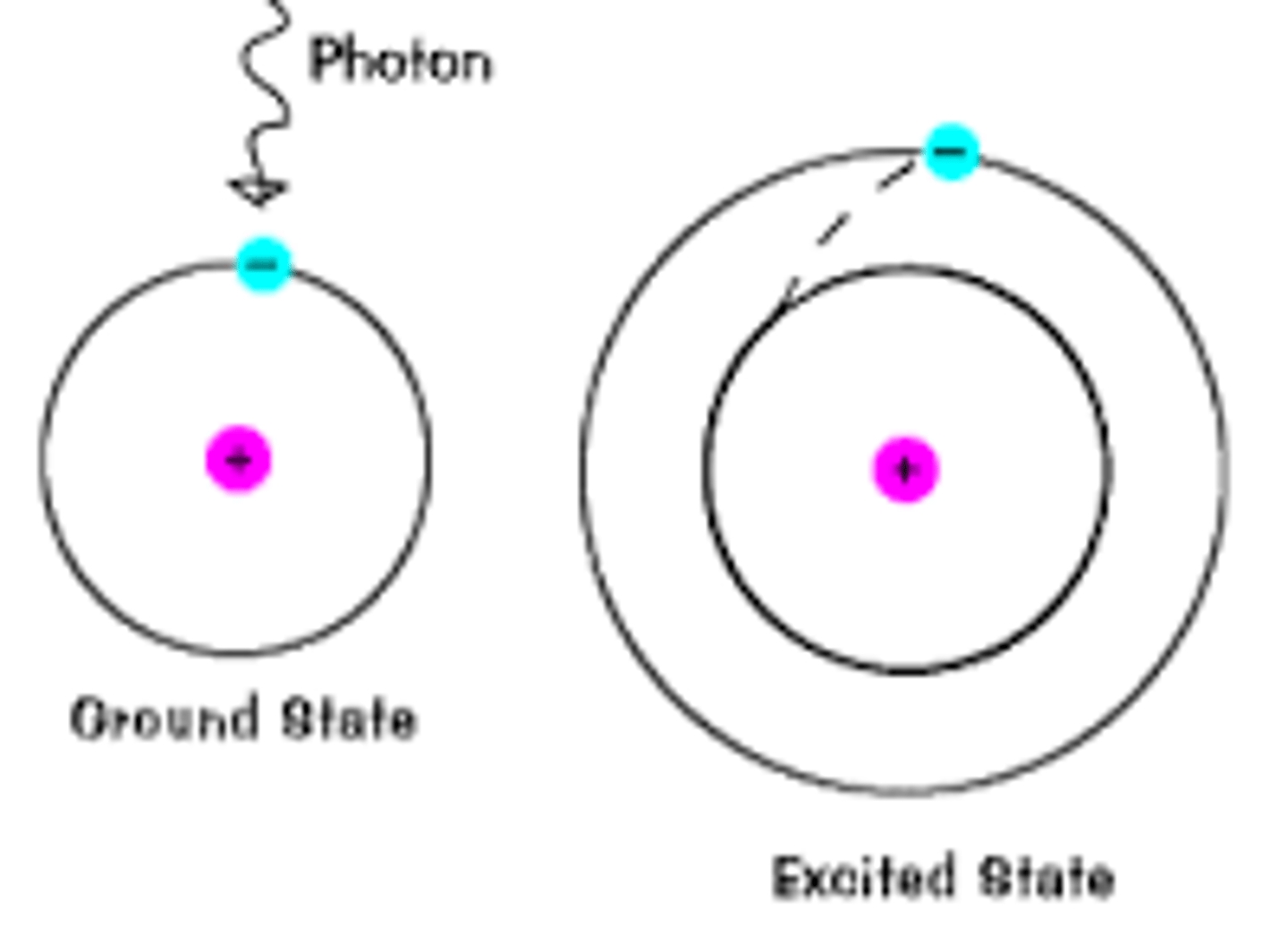
Excited state
When an electron gains energy it moves up to a higher energy level
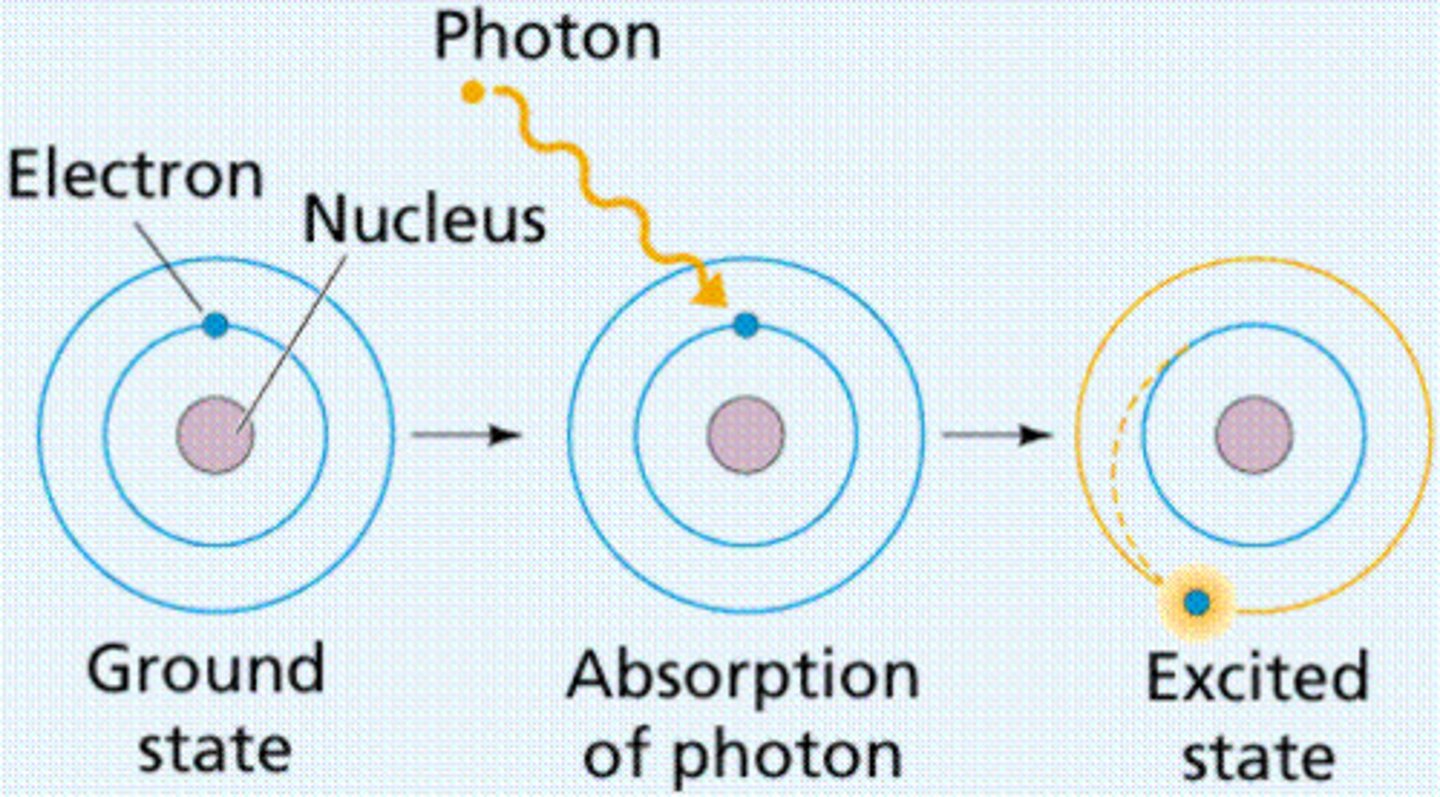
Electrons that move from the ground state to the excited state
electrons must absorb energy to move from a lower energy level to a higher energy level
In terms of electrons, how could an atom emit colored light?
When excited electrons fall to a lower energy level, they can release energy in the form of light
Bright line spectrums can be used to identify elements because
bright line spectra are UNIQUE to every element, this only depends on the element, not amount!
The brightline spectrum is produced when....
excited state release energy and move to lower energy states
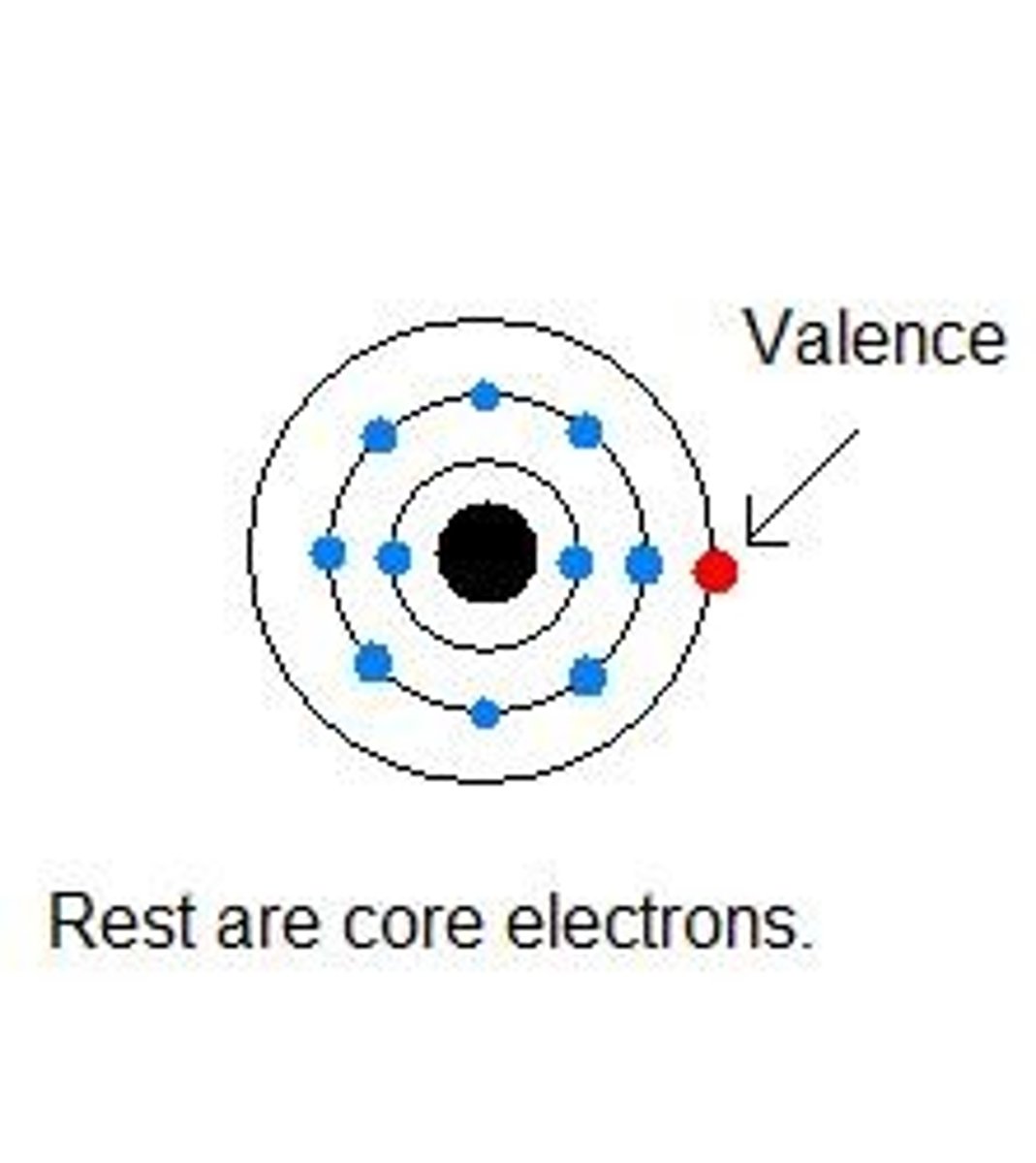
Valence electrons
are the outermost electrons; they determine the chemical properties of an atom, can be found in the electron configuration on reference table.
Elements in the same group have similar chemical properties because
elements in the same group have the same number of valence electrons
Why would elements in the same group, like Carbon, Silicon, Germanium all form same number of bonds?
They have the same number of valence electrons and will react in a similar way.
Atoms with a filled valence shell,
are stable; they will not react with other elements
Noble gases do not react because
they have full valence shells and stable electron configurations
Noble gases are located in
group 18! Helium, neon....
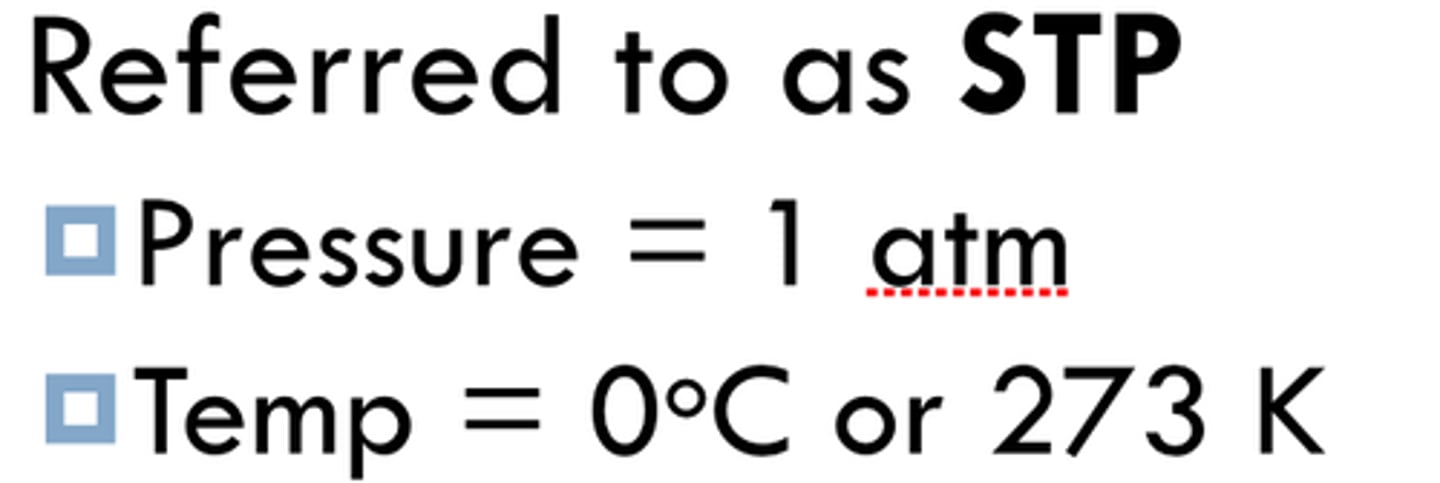
STP
Standard temperature and pressure, first page of your reference table on Table A
Atoms of the same element all have the
same number of protons in their nucleus
Nuclear charge is determined by
the number of protons in the nucleus of an atom, you can look at the atomic number on the periodic table
Changing the number of protons in a nucleus...
changing the number of protons in an element will change the identity of the element
Transmutation
when an element changes into a different element
What is evidence that transmutation occurred?
A different element formed
Stability of an isotope depends on
the ratio of protons to neutrons
Most radioactive elements have an atom number of
83 or above!
Table N shows...
each isotope has a specific decay mode and rate of decay (half life)
Table O tells you....
types of particles, mostly in decay, as well as their masses and charges
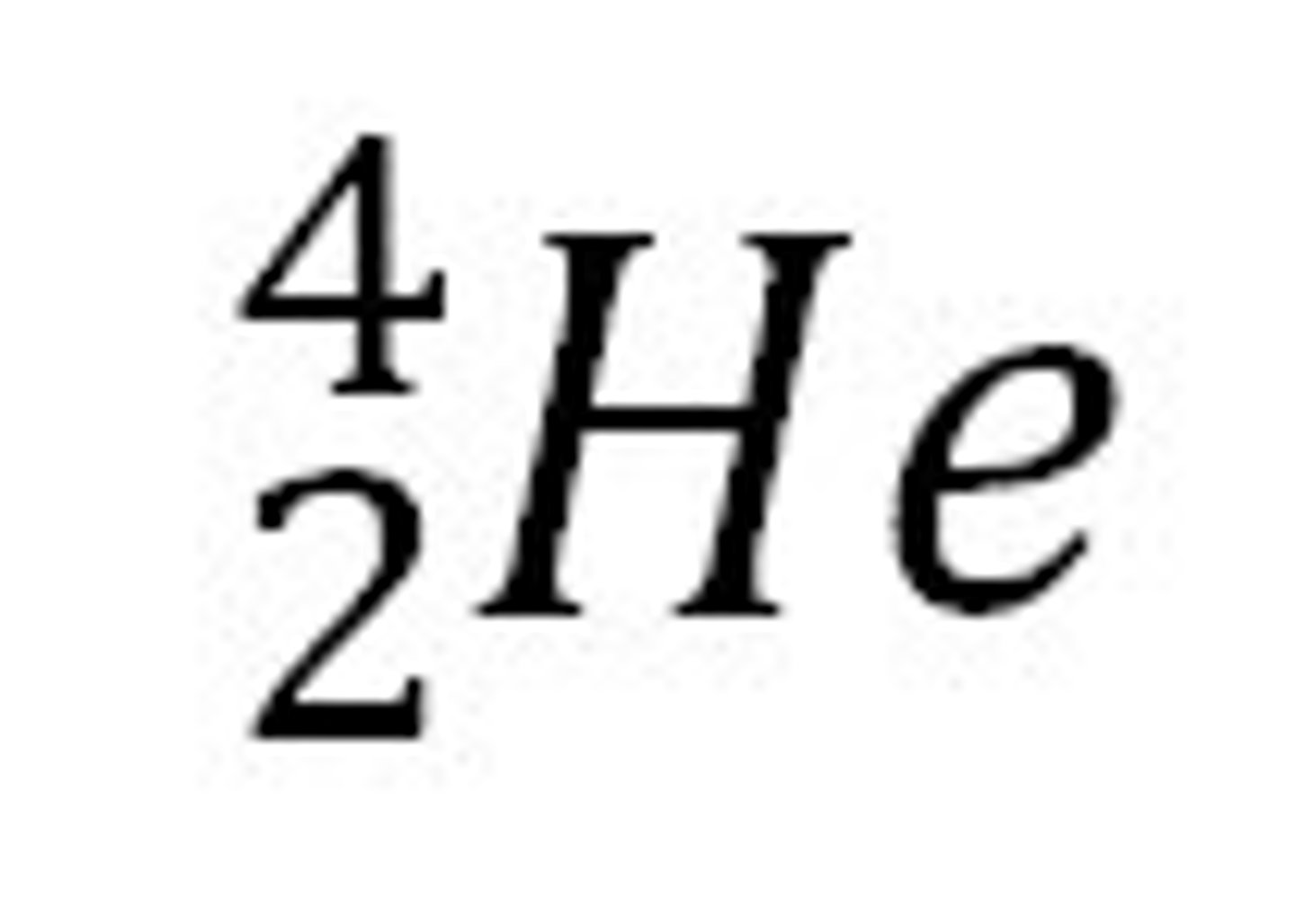
Alpha Decay
LEAST Penetrating power, and MOST ionizing power and can cause the MOST damage to living tissue; can be stopped by paper, HEAVIEST mass, and positively charged.
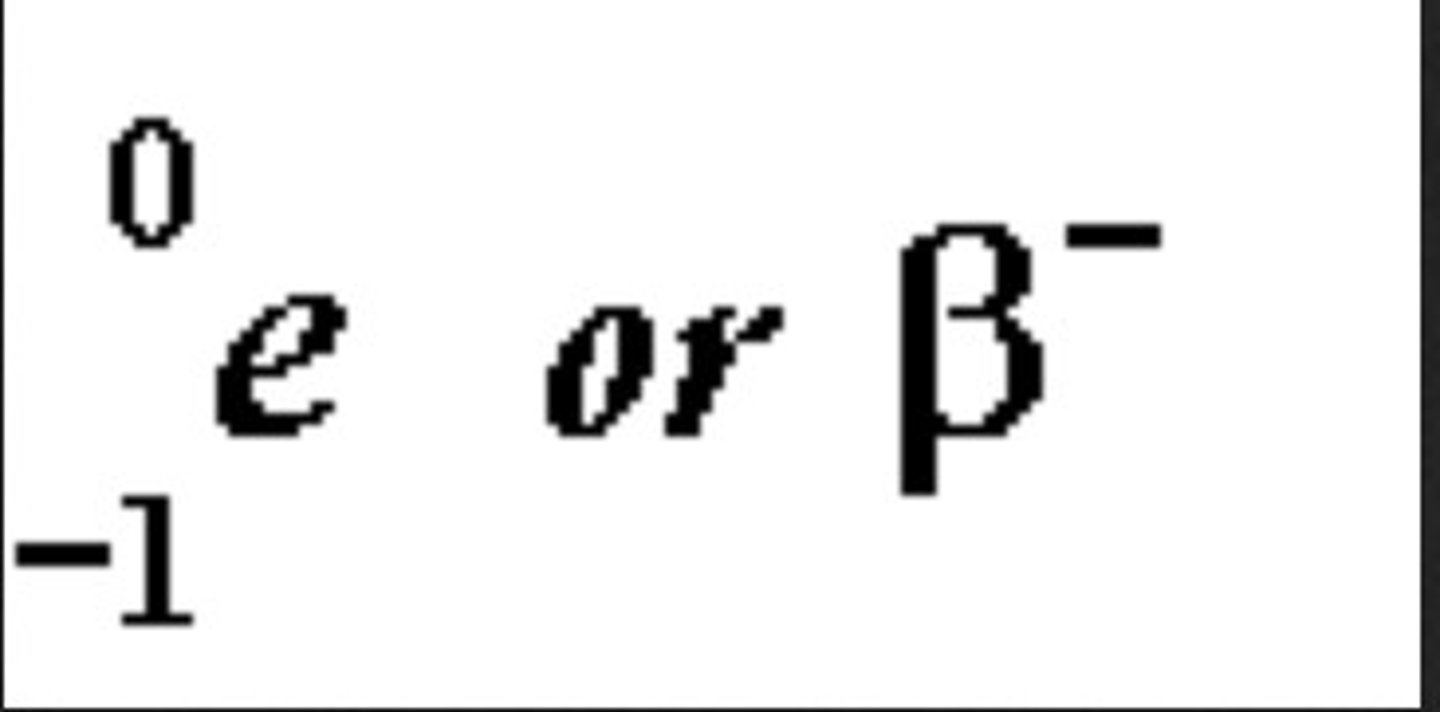
Beta Decay
More penetrating power than alpha decay, less ionizing power than alpha, can be stopped by foil, has NO MASS and is negatively charged
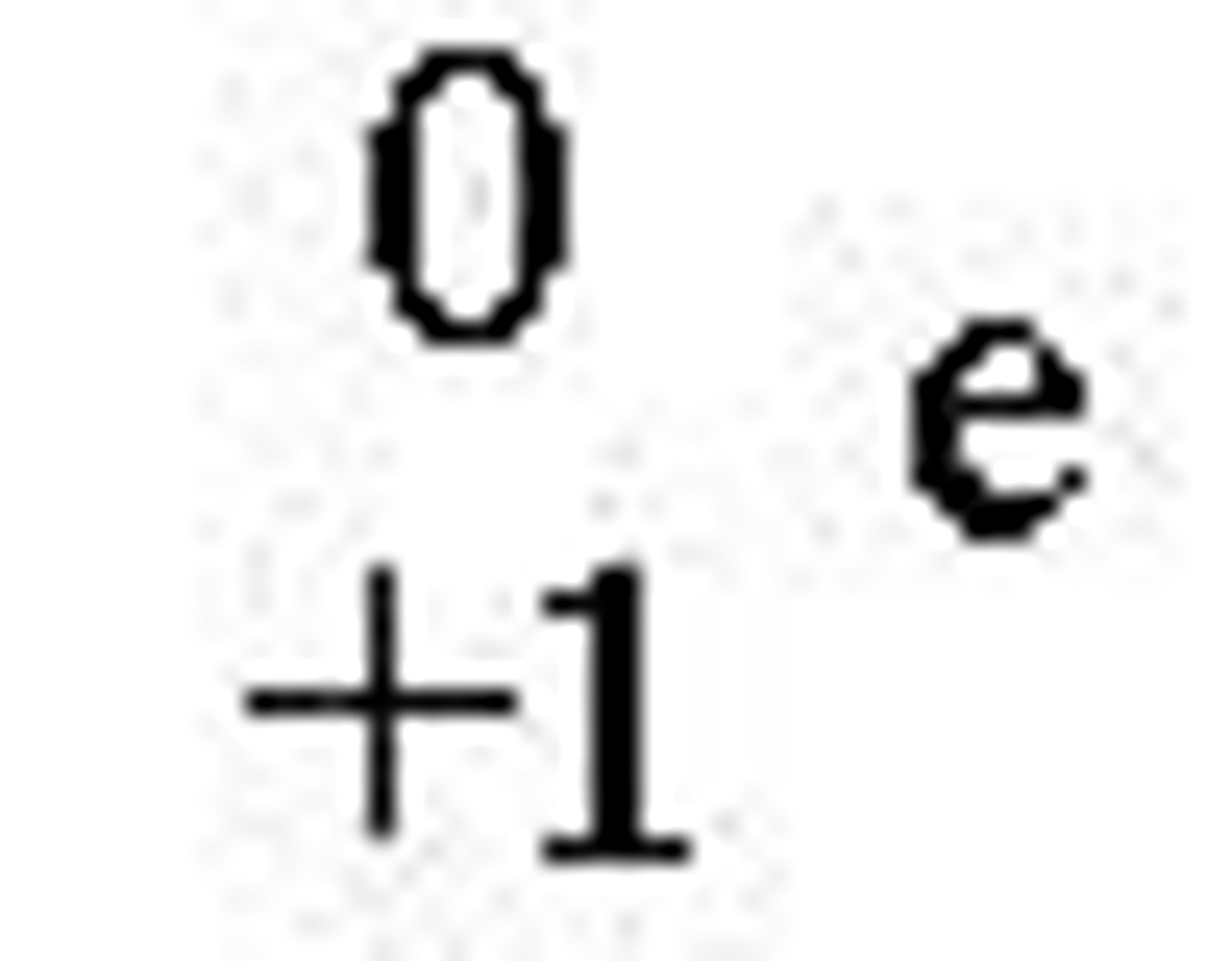
Positron decay
Has no mass and is positively charged
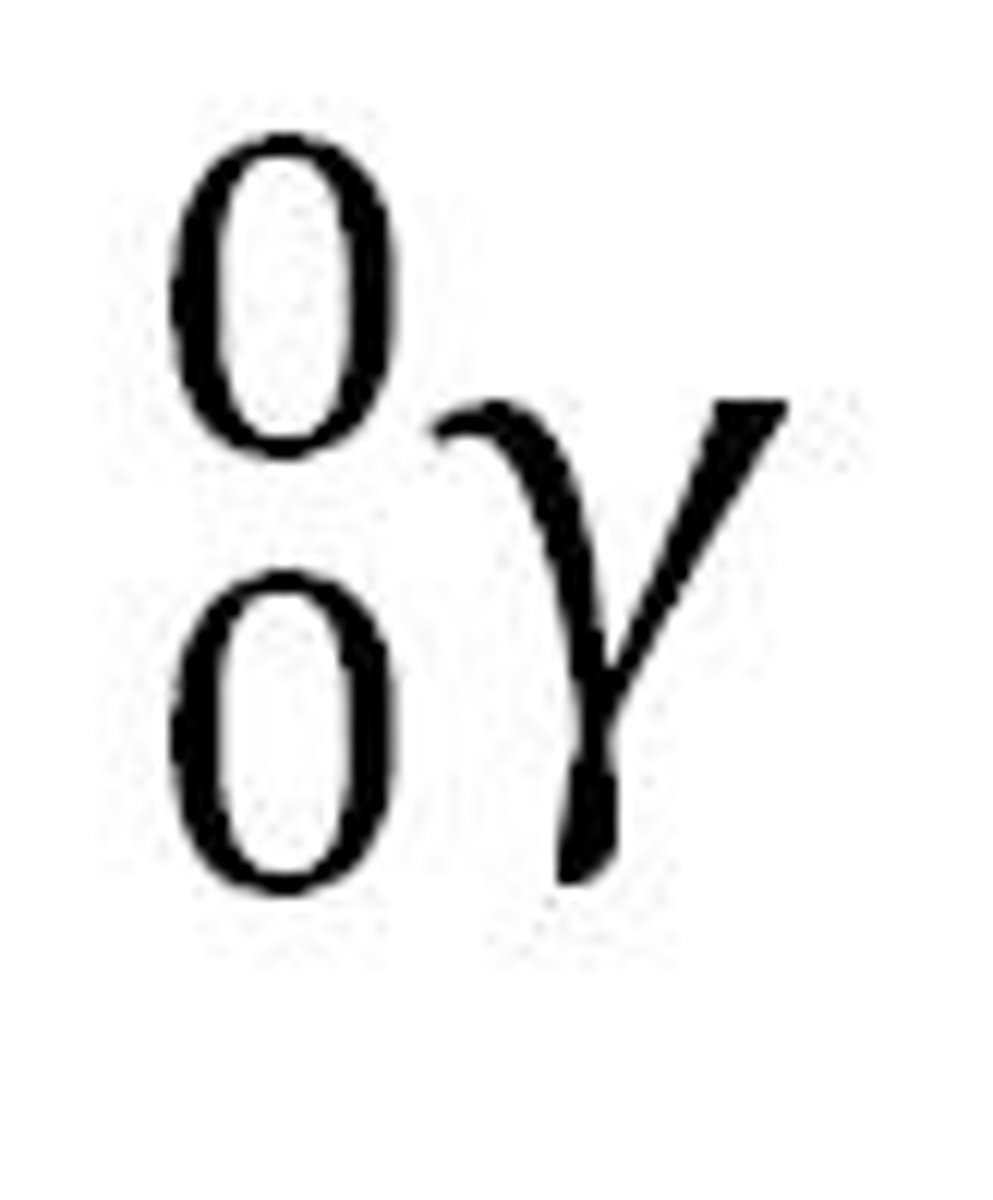
Gamma Rays
Highest penetrating power of all of the nuclear decay particles, LEAST ionizing power; can be stopped by lead or thick concrete, has NO MASS and NO CHARGE
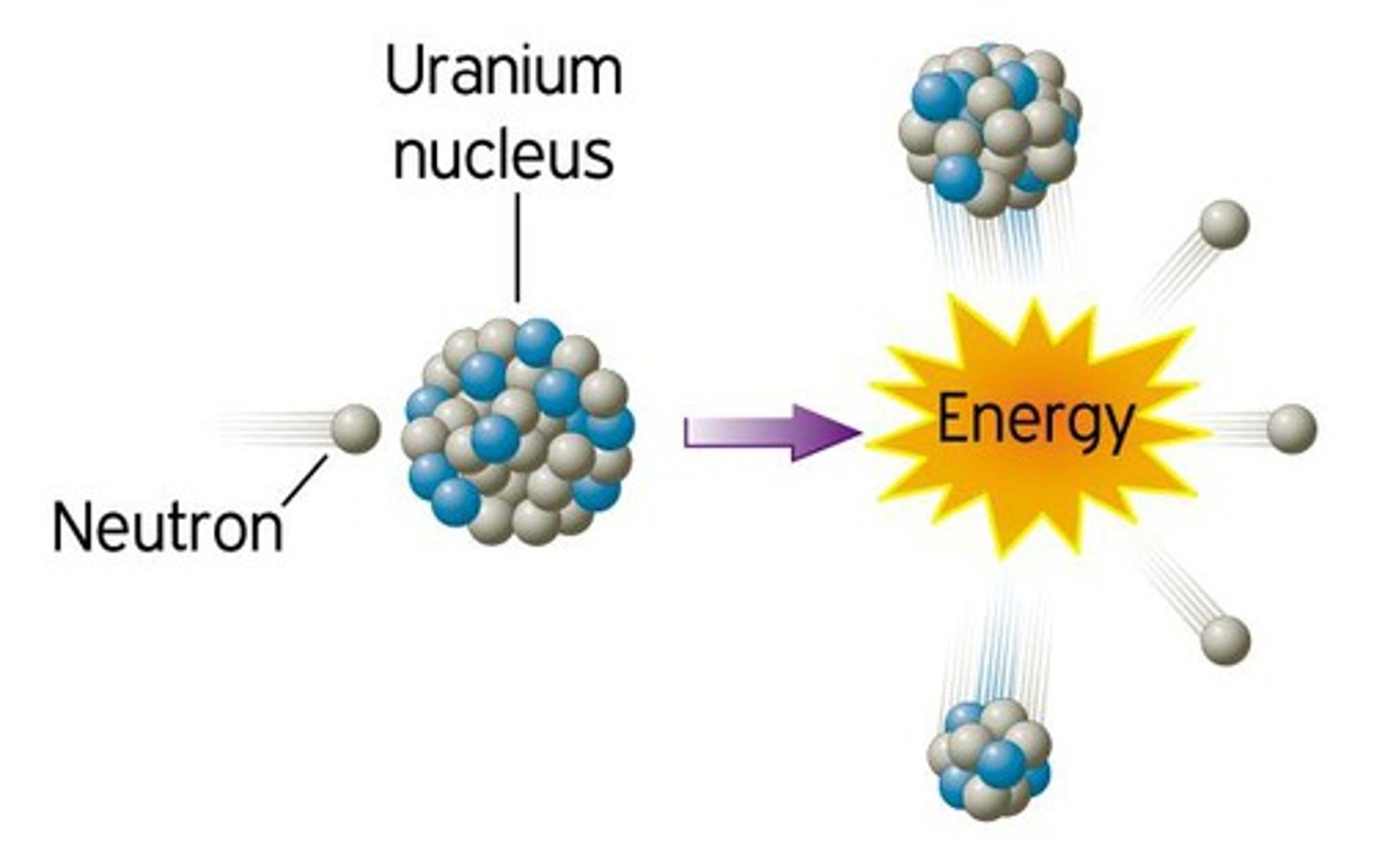
Fission reactions
Split a heavy nuclei into smaller ones
Fusion reactions
occur when light nuclei combine into heavier nuclei
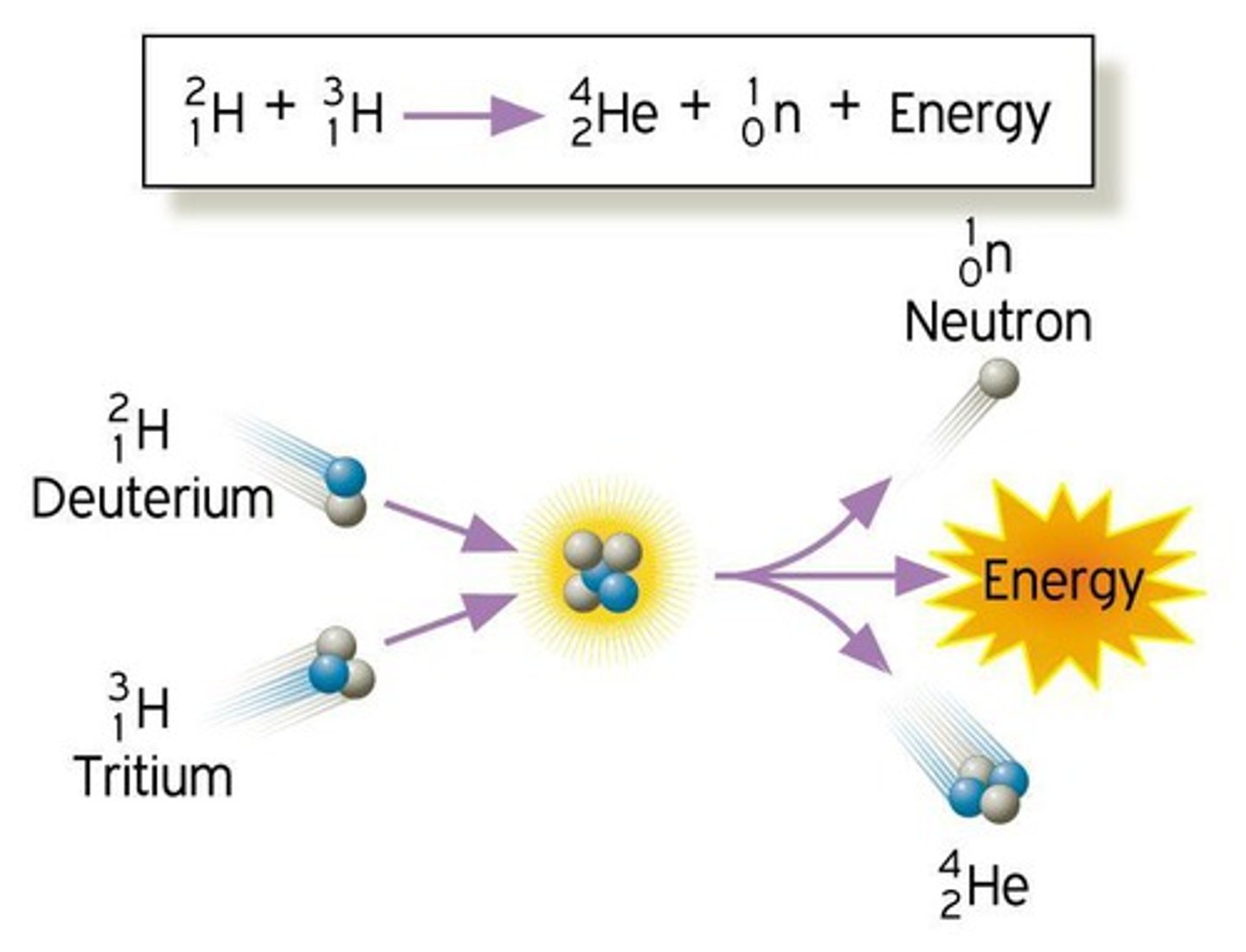
In nuclear fission and fusion reactions, mass is converted into
large amounts of energy! Think of nuclear bombs (fission) or the sun (fusion)
Artificial transmutation
requires the bombardment of a nucleus by high energy molecules
Benefits of using radioactive or nuclear reactions are
production of LOTS of energy (nuclear power plant); radioactive dating (determine the age of something)
Risks with radioactive or nuclear reactions can be
biological exposure (cancer poisoning), long term storage, disposal and nuclear accidents
C - 14 isotope is used for
carbon dating of once living organisms
U - 238
geological dating of planets and rocks
I -131
treatment of thyroid disorders
Co - 60
cancer treatments and kill tumors
Atomic Radii Group Trend
how big an atom is, increase as you go down a group because electrons shells are being added
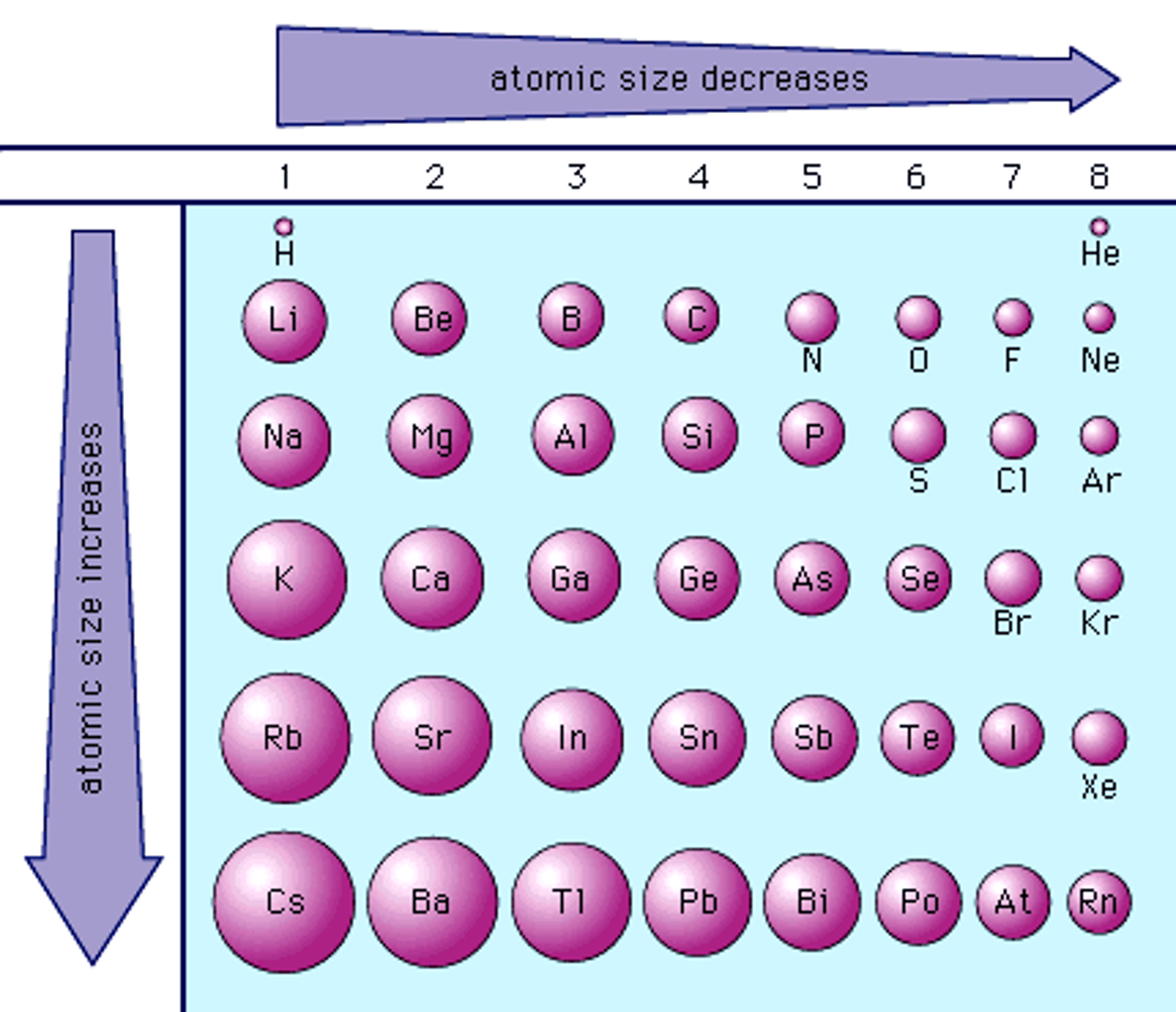
Atomic Radii (Across a Period -> look at table S)
As you move across a period (-->), the atomic radii decreases because the number of protons in the nucleus increases
How does the radius of an ion change when it becomes negative by gaining an electron?
The radius INCREASES
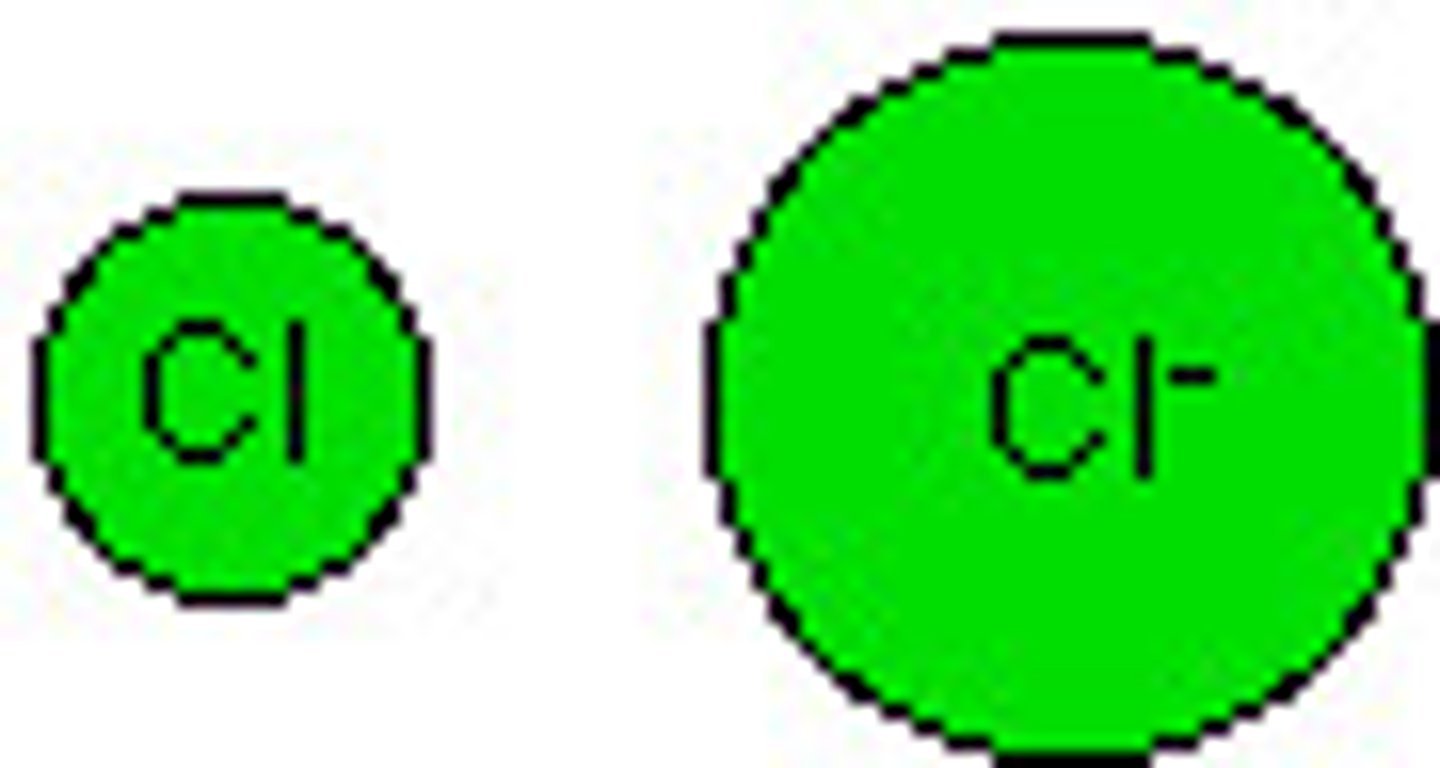
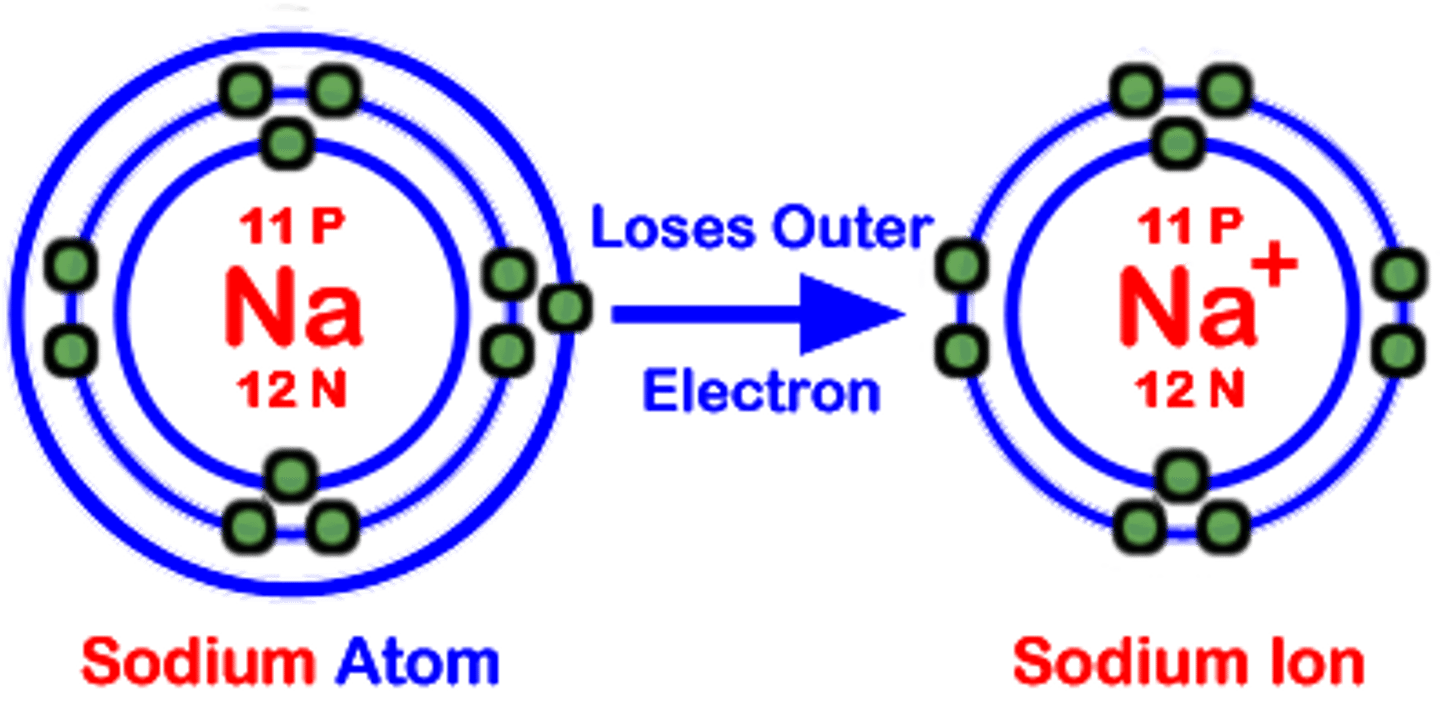
How does the radius of an ion change when it becomes positive by losing electron(s)? Explain in terms of atomic structure
The radius of the ion decreases because an electron shell is lost
Ionization energy
amount of energy required to completely REMOVE an electron
Electronegativity
attraction to an electron within a bond
Where do you find information about atomic radii, ionization energy, electronegativity, density and other properties?
TABLE S
Which element has the strongest attraction to an electron in a bond? Nitrogen or Fluorine? (Use Table S)
Fluorine has the highest electronegativity on table S, indicating it has the strongest attraction to an electron
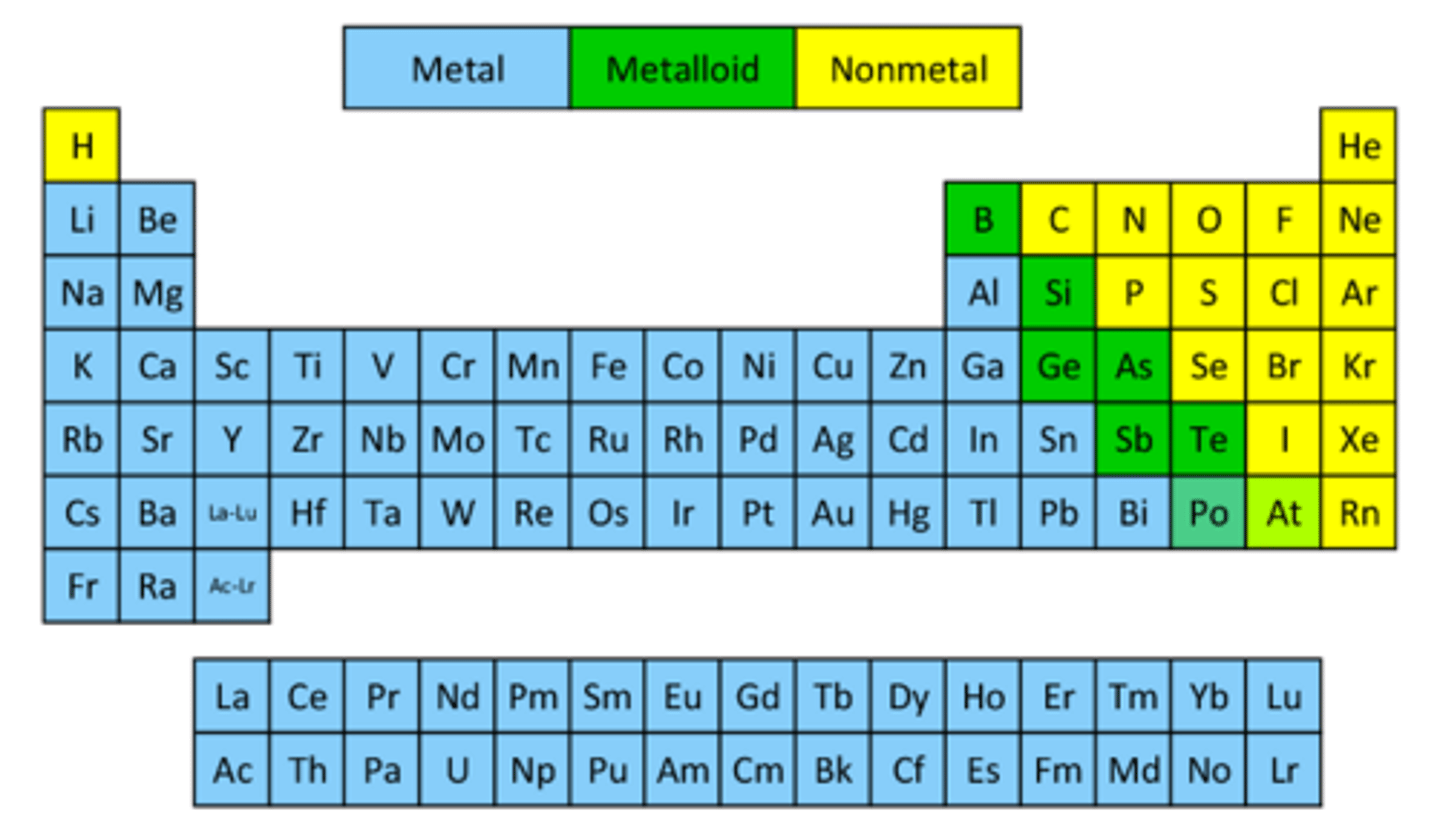
Name all metalloids
Boron, Silicon, Germanium, Arsenic, Antimony, Tellurium (B, Si, Ge, As, Sb, Te)
Where do you find the metals?
left side of staircase
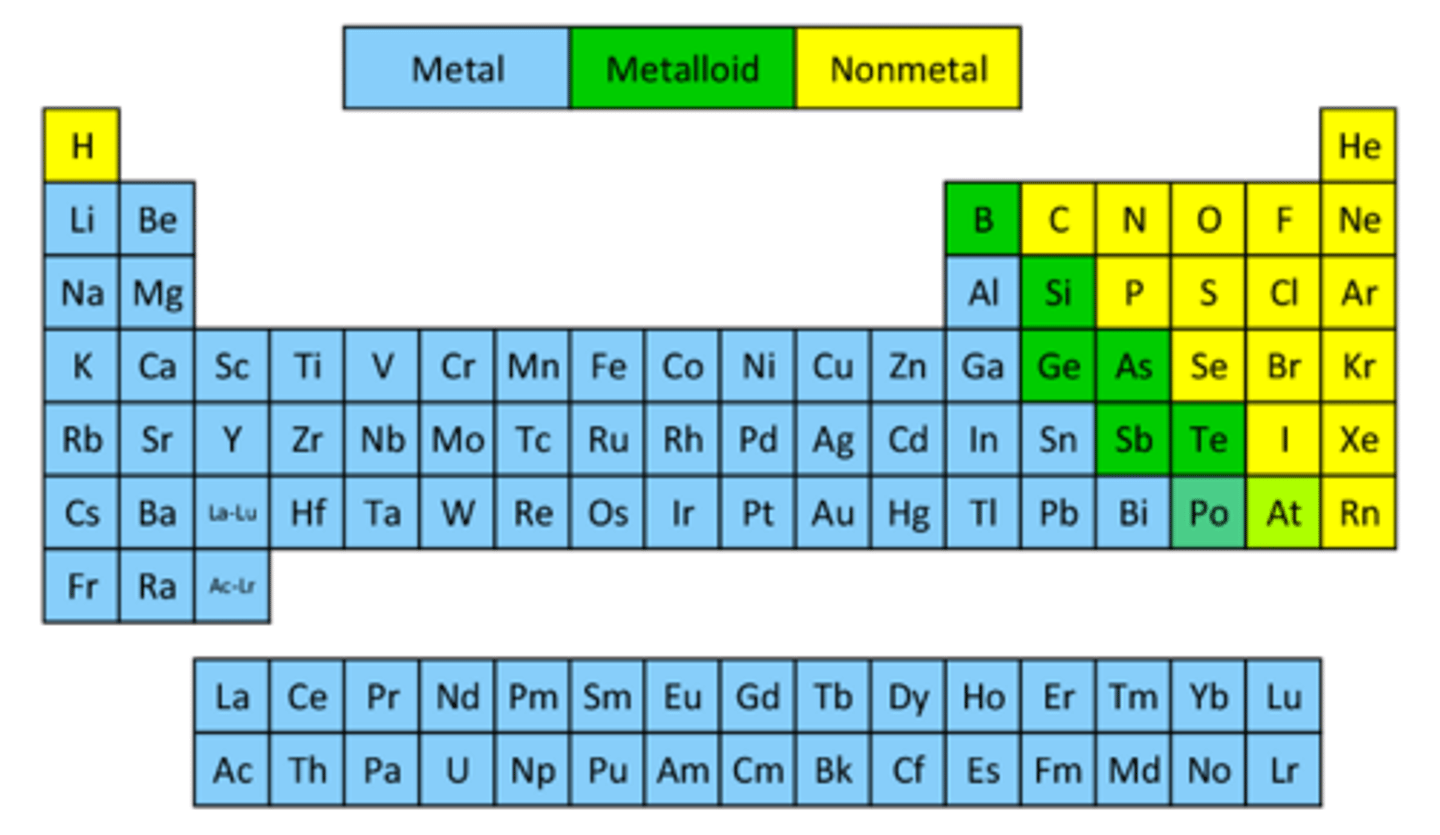
Where do you find the nonmetals?
Right side of the staircase
Lewis dot diagram
draw valence electrons around an element symbol
Metallic properties
malleable, lusterous, conduct electricity as a solid
Nonmetal properties
dull, brittle, do not conduct electricity
Allotropes of carbon (Like diamond and graphite)
have different structures and different properties (Carbon)
O2 (oxygen) and O3 (ozone) have.....
different structures and different properties (Oxygen)
Breaking a bond is an....
ENDOTHERMIC PROCESS, you must gain energy (bonding)
Forming a chemical bond is an..
EXOTHERMIC PROCESS, you go to a more stable state (bonding)
Ionic bonding
between a METAL and NONMETAL, electrons are transferred here
Atom gains an electron....
it becomes a negative ion with a larger radius ex) F + e- -> F-
Atom loses an electron
it becomes a positive ion with a smaller radius (usually due a loss in a shell) Ex) Na --> Na+ + e-
What are the two categories of compounds?
ionic and molecular (covalent)
(molecular) Covalent bonding
between two nonmetals; electrons are shared
Ionic substance properties
high MP and BP; form crystals, dissolve in water (Table F) and conduct electricity in solution and as a liquid
Ionic substances conduct electricity when dissolved or melted because
ionic substance dissolve into MOBILE FREE MOVING ions. These ions can move freely
Which substance conducts electricity when dissolved or as a liquid but NEVER as solid?
Ionic
Covalent substance properties
never conduct electricity, tend to be soft, low MP and low BP
Metallic bonding
is described as a sea of free moving electrons, resulting in metals being malleable, conductive of electricity and heat
How do you determine if an ionic compound is soluble or insoluble?
USE REFERENCE TABLE F: Solubility guidelines
Polar substances dissolve
only in other polar substances (like dissolves like)
Nonpolar substances dissolve
only in nonpolar substances (like dissolves like)
Single covalent bond has...
1 pair of shared electrons, or 2 electrons being shared
Double covalent bond
2 pair of shared electrons; 4 electrons are being shared total
Triple covalent bond
3 pairs of shared electrons, 6 electrons are being shared in total
How many bonds do these generally form? HONC
H-1; O-2; N-3; C- 4
BOND polarity is determined by
subtracting two electronegativities values, a high difference (0.5 - 1.9999) is POLAR; (0.4 and below) is NONPOLAR
Polar bond forms if
the difference in electronegativity is higher than 0.4