GIT secretio
 Call Kai
 Learn
Learn Practice Test
 Spaced Repetition
 Match
Match Flashcards
 Knowt Play
1/23

There's no tags or description
Looks like no tags are added yet.
Name | Mastery | Learn | Test | Matching | Spaced | Call with Kai |
|---|
No analytics yet
Send a link to your students to track their progress
24 Terms
exocrine and endocrine glands
exocrine out- secrete substances onto an epithelial surface by duct eg salivary, mammary, mucous
endocrine in- ductless glands of the endocrine system that secrete products directly into the blood eg pancreas, gonads
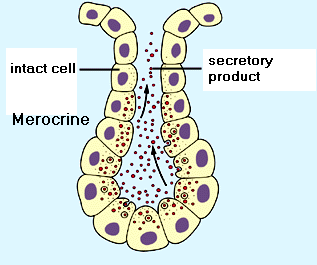
merocrine
secretory vesicles fuse with apical plasma membrane to release product into a duct
apocrine
scretory products released at apical cell surface in small membrane bound vesicles that enter into a duct
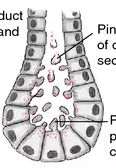
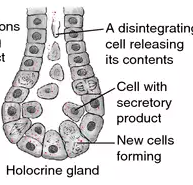
holocrine
secretory products accumulate in the secretory cells which then die and the entire cell and its secertory products are released into a short duct
saliva- what does it secrete, what is the pH, function, and what is it controlled by
mucous
amylase
lingual lipase
electrolyte solutions
proteins and enzymes
ph 6.5
lubrication
digestion
volume varies among species
autonomic parasympathetic control
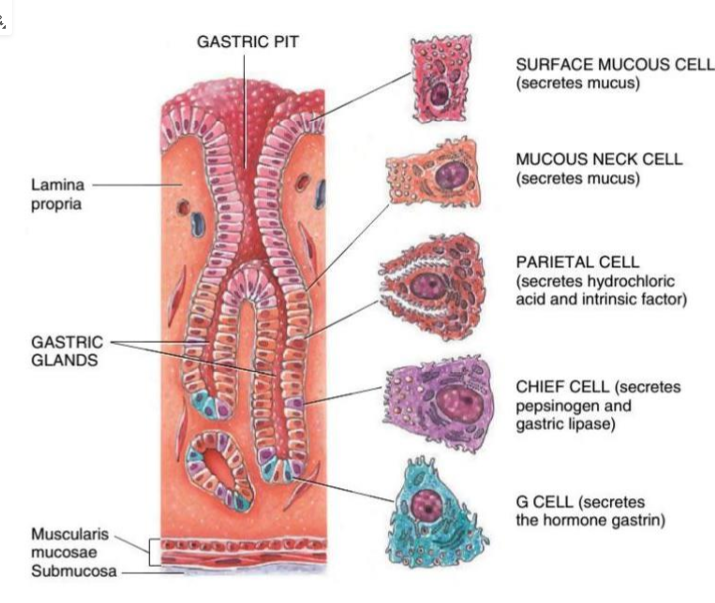
stomach secretions
including which cells secrete them
what are these secretions stimulated by
surface mucous cell secretes mucus
mucous neck (found in gastric glands) cell secretes mucus
parietal cell secretes hydrochloric acid and intrinsic factor
chief cell secretes pepsinogen and gastric lipase (pepsinogen is a precursor to pepsin)
g cell secretes hormone gastrin
this is stimulated by acetylcholine, gastrin, histamine
what are the 3 phases of gastric secretion regulation?
cephalic
conditioned reflex or sight/smell/taste of food
via vagus, gastrin secretion and histamine
increase stomach motility
increase hcl and pepsinogen secretion
gastric
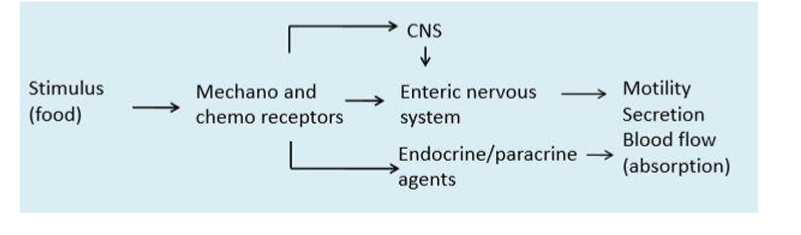
stimulation of chemo and mechano receptors in stomach lead to release of gastrin and histamine
local negative fedback loop operates if gastric pH is less than 3
intestinal
presence of chyme in duodenum inhibits acid secretion and motility via release of secretin, gastric inhibirotry peptide and cholecystokinin
what should not be in the saliva
blood
glucose
regulatory peptides
gastrin promotes growth of stomach mucosa
enteroglucagon and cholecystokinin promote growth of intestinal mucosa
small intestine secretions
exocrine
endocrine
effect of chyme
exocrine cells- mucus, peptidase, sucrase, maltase, lactase, lipase, enterokinase
endocrine cells- secrete cholecystokinin and secritin
greater the amount of chyme the greater the secretion (local reflex action from chemical and mechanical irritation from chyme)
intestinal secretions and what is the pH
enterokinase (activates trypsinogen)
carboxy and aminopeptidases
maltase
lactase
sucrase
lipase
nucleases
ph 7-8
brunner glands
mostly secrete alkaline mucoid fluid, no enzyme
designed to protect the small intestine mucosa from damage by stomach acid in first part of duodenum
function of the liver
digestion (bile)
metabolism
production of bile, enzymes, hormones, cholesterol, triglycerides
detoxification
amino acid and protein synthesis
storage of vitamins and minerals
ammonia to urea
blood clotting regulation
breakdown of erythrocytes
mainenance of blood temp and pressure
how is bile produced
where from
where does it secrete into and as what
what is secreted from duct cells into bile
from cholesterol in smooth ER of hepatocytes (also takes phospholipids and cholesterol from cell membrane)
hydrophobic and hydrophilic sides
secretes into canaliculi as sodium salts- draws water into bile by osmosis and electrolytes
bicarbonate is secreted from duct cells into bile
bile pigments are excreted through this route, main one is bilirubin
what is entero hepatic circulation
the circulation of biliary acids, bilirubin, drugs etc from liver into bile followed by entry into the small intestine, absorption by the enterocyte and transport back into the liver
exocrine secretios of the pancreas, the pH and what is this stimulated by?
trypsinogen
carboxy and aminopeptidase
lipase
amylase
nucleases
bicarbonate pH7-8
stimulated by acetylcholine, cholecystokinin and secritin
general composition and characteristics of gi secretions
water, ions, mucous, enzymes, hormones
colour less, pale yellow (pH 1-3)
shape of gastric glands
straight tubular
branched tubular
what are pancreatic glands called
acinar
structure of salivary glands
compound acinar
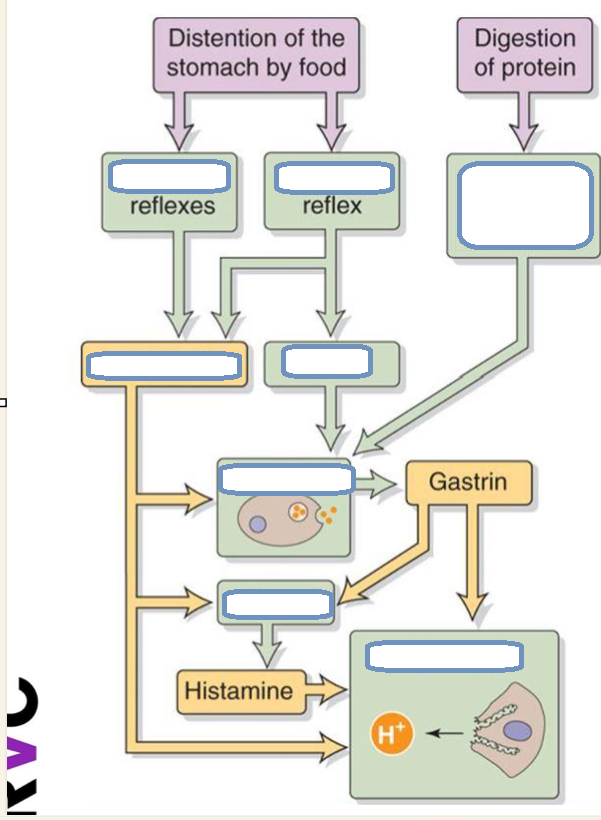
mechanism of stomach secretions
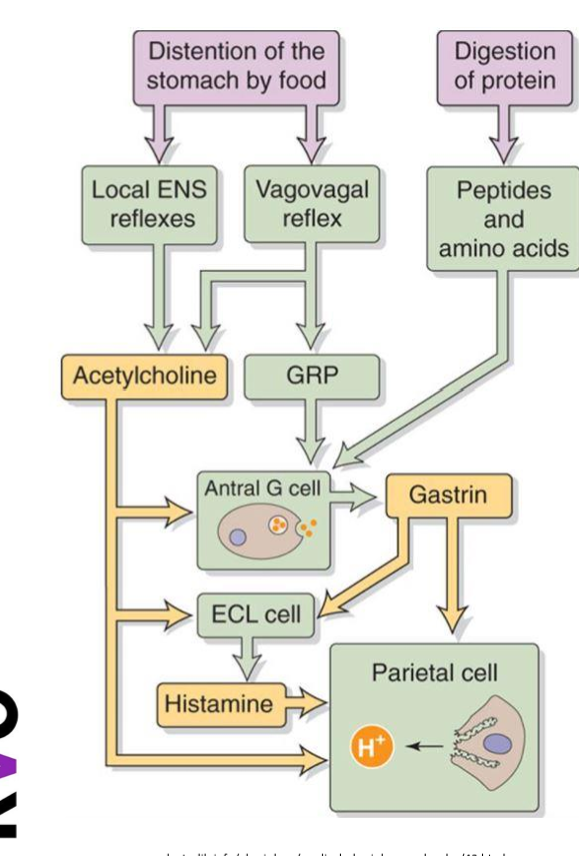
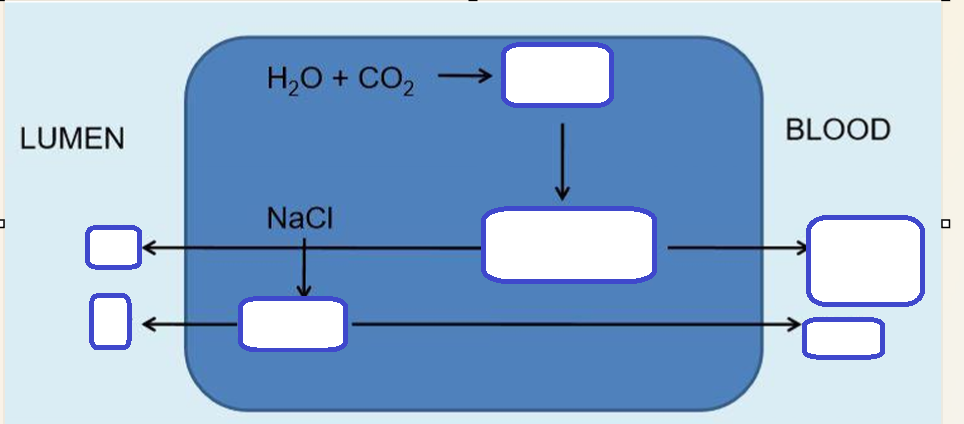
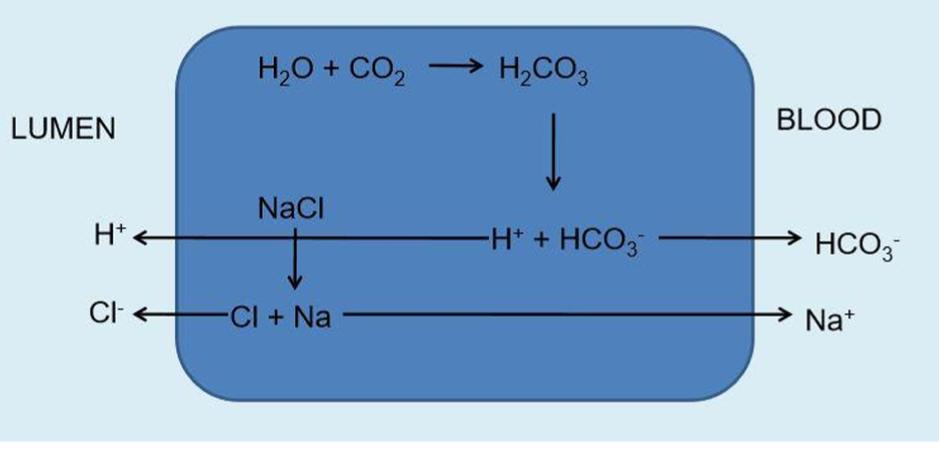
production of HCl in parietal oxyntic cells