ESS 2.1.1 and 2.1.2
 View linked note
 Call Kai
 Learn
Learn Practice Test
 Spaced Repetition
 Match
Match Flashcards
 Knowt Play
1/30

There's no tags or description
Looks like no tags are added yet.
Name | Mastery | Learn | Test | Matching | Spaced | Call with Kai |
|---|
No analytics yet
Send a link to your students to track their progress
31 Terms
Significance of the Biosphere
All of Earth's life-supporting zones, providing essential resources like air, water, and soil - vital for conservation, resource management, and climate action.
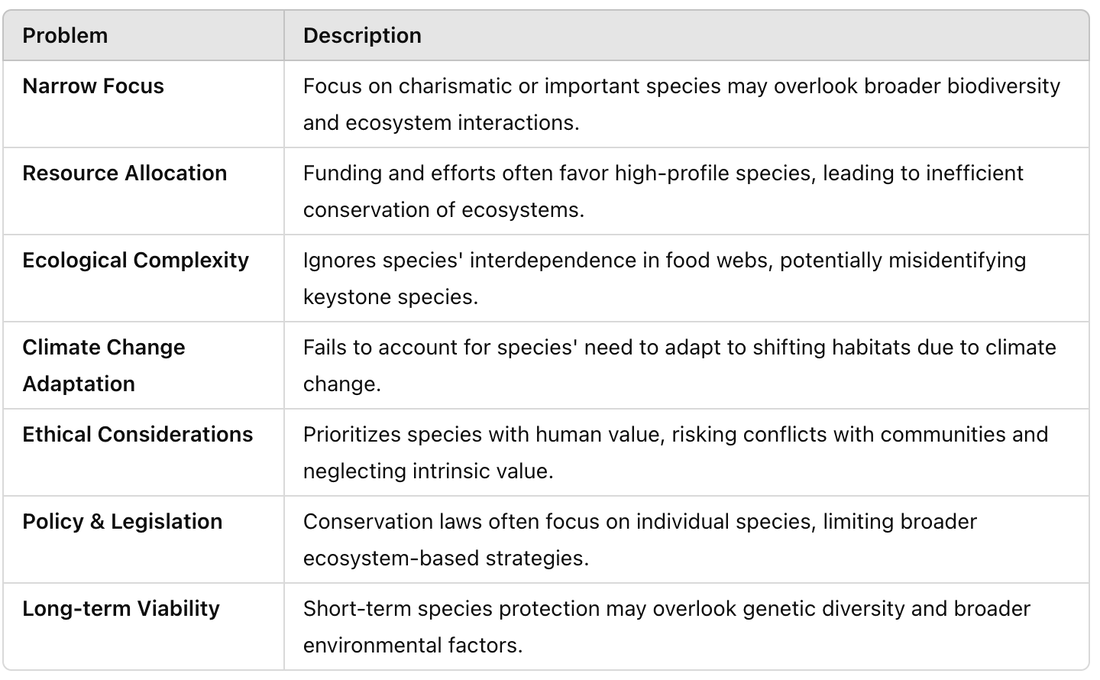
Issues with the species model
Include challenges like neglecting ecosystem health, overlooking interspecies relationships, and focusing solely on single species conservation.
Population Dynamics: Herbivore
More plants = more food. Consumers keep plant population in check and balance trophic level
Migration Hibernation Reproduce in spring/summer
Plants develop defects such as spines and toxins. Consumers develop tolerance to toxins. Plants produce fruit for seed dispersal
Population Dynamics: Predators
Predators regulate prey populations, influencing ecosystem balance and biodiversity. (negative feedback)
Nocturnal, Underground, Tree climbing Stalking/hunting behaviours
Features to help any of the examples e.g. night vision, big ears, extra senses such as whiskers or electro. Long limbs, claws, Binocular vision etc. Adaptation to extreme environments.
Population Dynamics: Parasitism
Parasitism affects host populations by reducing their health and reproductive success (fleas, ticks and worms)
Washing of food Eating of leaves or bark toxic to parasites scratching / grooming
Reproductive cycle of parasites to allow infection of new hosts such as sticky eggs, fast moving. Cleaner species - oxpecker birds.
Population Dynamics: Mutualism
Mutualism enhances the survival and reproduction of both species involved, often leading to increased population stability and ecosystem health.
Population Dynamics: Disease
Diseases can decrease host populations by causing mortality and impairing reproduction, leading to shifts in community dynamics.
Abiotic Factors
Non-living components of an ecosystem that affect living organisms, including climate, nutrients, and pH.
Biotic Factors
Living components of ecosystems that include all organisms and their interactions.
Habitat
The specific environment where an organism lives, providing the necessary conditions for survival.
Population Interactions
The relationships between populations, including predation, mutualism, parasitism, and competition.
Predator
An organism that hunts and consumes another organism for food.
Prey
An organism that is hunted and eaten by a predator.
Producer
Organisms that create their own food through photosynthesis or chemosynthesis, forming the base of the food chain.
Consumer
Organisms that obtain energy by consuming other organisms, classified into different levels based on their dietary habits.
Mutualism
A type of interaction where two species benefit from each other.
Parasitism
A relationship where one organism benefits at the expense of another, often harming the host.
Pathogen
An organism, such as bacteria or viruses, that causes disease in its host.
Ecosystem Services
The benefits provided by ecosystems to humans, including clean air, water purification, and pollination.