Citric Acid Cycle and Oxidative Phosphorylation
 Call Kai
 Learn
Learn Practice Test
 Spaced Repetition
 Match
Match Flashcards
 Knowt Play
1/39

There's no tags or description
Looks like no tags are added yet.
Name | Mastery | Learn | Test | Matching | Spaced | Call with Kai |
|---|
No analytics yet
Send a link to your students to track their progress
40 Terms
What does the citric acid cycle allowed for?
All carbon sources to be oxidized
What happens when 2 C acetyl group reacts with 4C oxaloacetate?
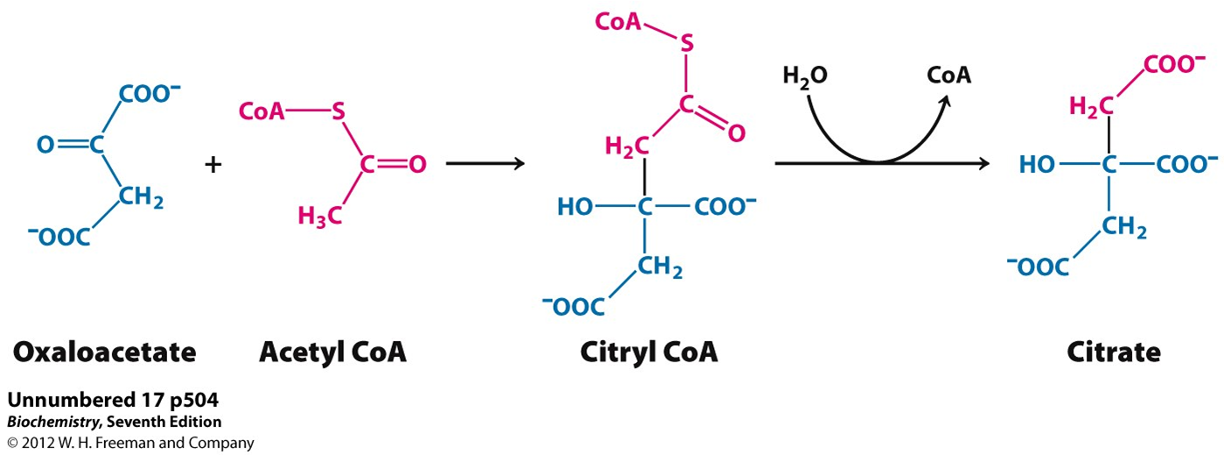
6C Citrate is formed
Can citrate be converted back into oxaloacetate?
Yes, oxaloacetate → citrate is a reversible reaction
What is lost when citrate is formed?
2 CO2
Electrons (NADH & FADH2)
Where is CO2 Lost in the Citric Acid Cycle
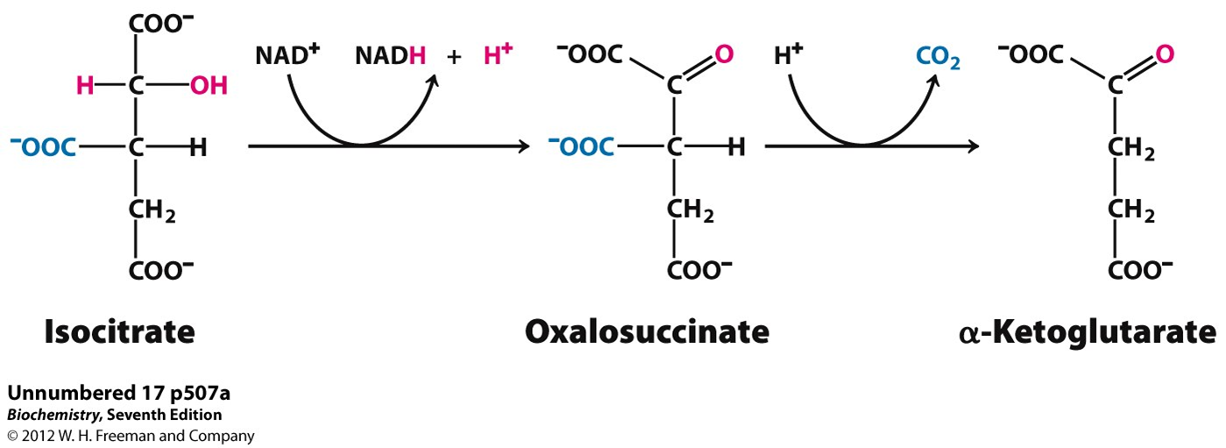
Isocitrate → a-ketoglutarate
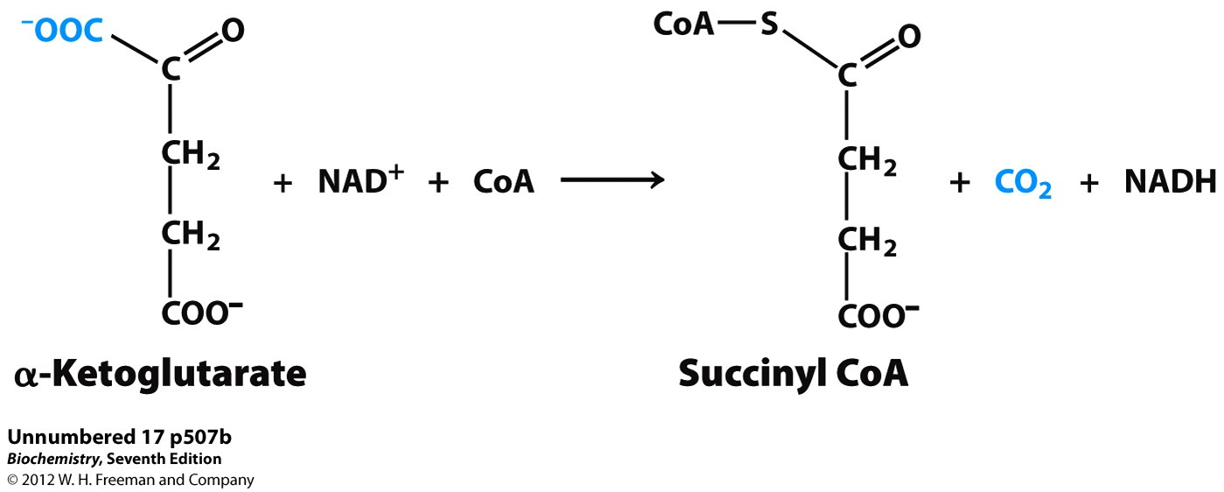
a-ketoglutarate → Succinyl CoA
Products of the Citric Acid Cycle
3 molecules of NADH
1 molecule of FADH2
Why is CoA recycled?
To use for the synthesis of more acetyl CoA
Enzymes of the Citric Acid Cycle
Soluble
Located within the matrix
What does solubilization of the mitochondria release?
A multi-enzyme complex containing the soluble enzymes of the citric acid cycles
What is the advantage of the multi-enzyme complex?
products pass from one enzyme to the next without the need for substantial diffusion
More efficient
Acetyl CoA and Oxaloacetate Combine
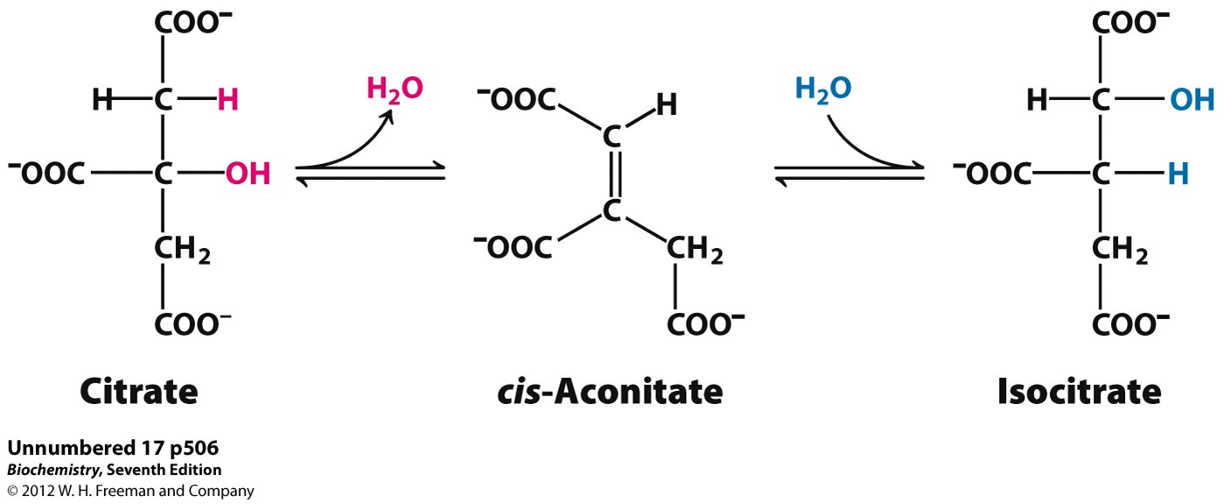
Isomerisation of Citrate
Oxidation of isocitrate of alpha ketoglutarate
Succinyl CoA Formation
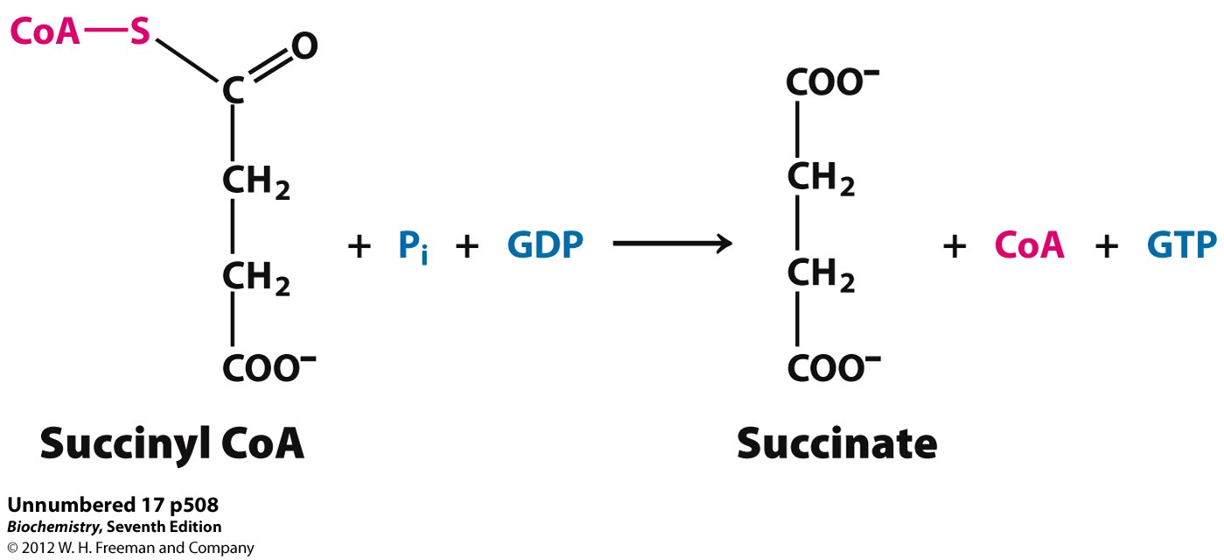
Succinyl CoA to Succinate
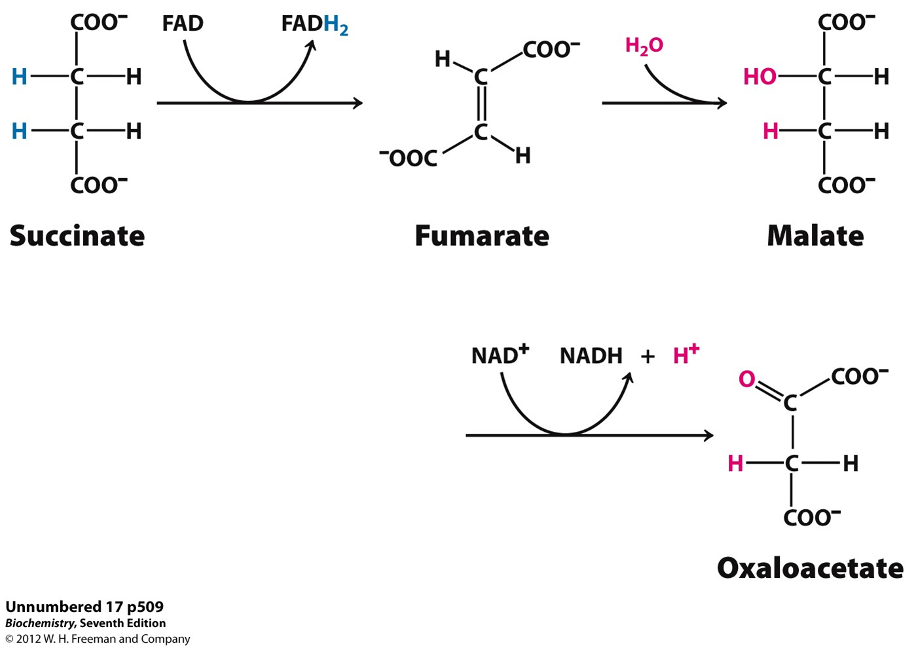
Regeneration of Oxaloacetate
What does the citric acid cycle generate?
NADH & FADH2
Where do the electrons from NADH and FADH2 go?
Transferred to O2 via the electron transport complexes
What does the Electron Transport Complex do?
Transports H+ out of the matrix
How is ATP generated?
F0F1 ATPase complex used the H+ gradient
What can fats and amino acids be used for?
Generating ATP
What does the breakdown of Triglycerides produce?
Fatty acids and glycerol
Are fatty acids are a predominant energy source?
Yes, in many tissues including cardiac muscle cells
What does the oxidation of NADH and FADH2 generate?
A Proton Motive Force
What happens to most of the energy produced when biological fuels are oxidised to CO₂?
Most of the energy is used to reduce NAD⁺ and FAD into NADH and FADH₂.
What is the oxidation of biological fuels coupled to?
The Reduction of O2
Reduction of O2
NADH + H+ + 1/2 O2 → NAD+ + H2O
FADH2 + 1/2 O2→FAD + H2O
What is the energy released from NADH and FADH₂ used for in the mitochondria?
It is coupled to the transfer of electrons across the inner mitochondrial membrane (IMM)
What does the transfer of electrons across the inner mitochondrial membrane produce?
the proton motive force → drives ATP synthesis
What does electron Transport Generate?
A proton gradient
What does the proton motive force generate the ETC drive?
ATP synthesis via ATP synthase
Mechanism of ATP Synthesis
Flow of proton through Fo motor
Rotation of the ring of c subunits
C ring rotation
Gamma rotation
Conformational change in beta subunit
ATP synthesis
Location of ATP Synthesis in Bacteria
aerobic bacteria plasma membrane
Location of ATP Synthesis in Eukaryotes
mitochondrial inner membrane
Location of ATP Synthesis in Plants
chloroplast thylakoid membrane
ETC Complex 1
two electrons are carried to the first complex aboard NADH
Transfers e- to ubiquinone
Enzyme = NADH dehydrogenase
Pumps 4 hydrogen ions across the membrane to intermembrane space
ETC Complex II
Directly Receives FADH2 which does not pass through complex I
Ubiquinone
moves electrons from complexes I and II to complex III
ETC Complex III
Accepts electrons from reduced ubiquinol
Transfers electrons to cytochrome c
ETC Complex IV
Receives electrons from cytochrome c
Reduced oxygen to water
Pumps protons across the inner membrane to create a gradient for ATP synthesis