PSY309 Lecture 2: Ethics and Measurement
 Call Kai
 Learn
Learn Practice Test
 Spaced Repetition
 Match
Match Flashcards
 Knowt Play
1/36

There's no tags or description
Looks like no tags are added yet.
Name | Mastery | Learn | Test | Matching | Spaced | Call with Kai |
|---|
No analytics yet
Send a link to your students to track their progress
37 Terms
What is the Tuskegee Syphilis Study? What are its major ethical violations?
Participants were not treated respectfully
The participants were harmed
The participants were a targeted, disadvantaged social group.
Assumed trust, illiterate, poor disadvantaged individuals
Waste away, resulted in death for many of participants
Withheld information about treatment
Intended benefit all people but conducted on disadvantaged group
The Milgram Obedience Study
Ethical questions
Balancing participant risk with the possible benefits that the research will have for society
How authority influences responses, with something unethical
Has to be balanced, how much risk
Deception, participants deceived, not debriefed, forceful probes, leading participants to believe they could not drop out of the study.
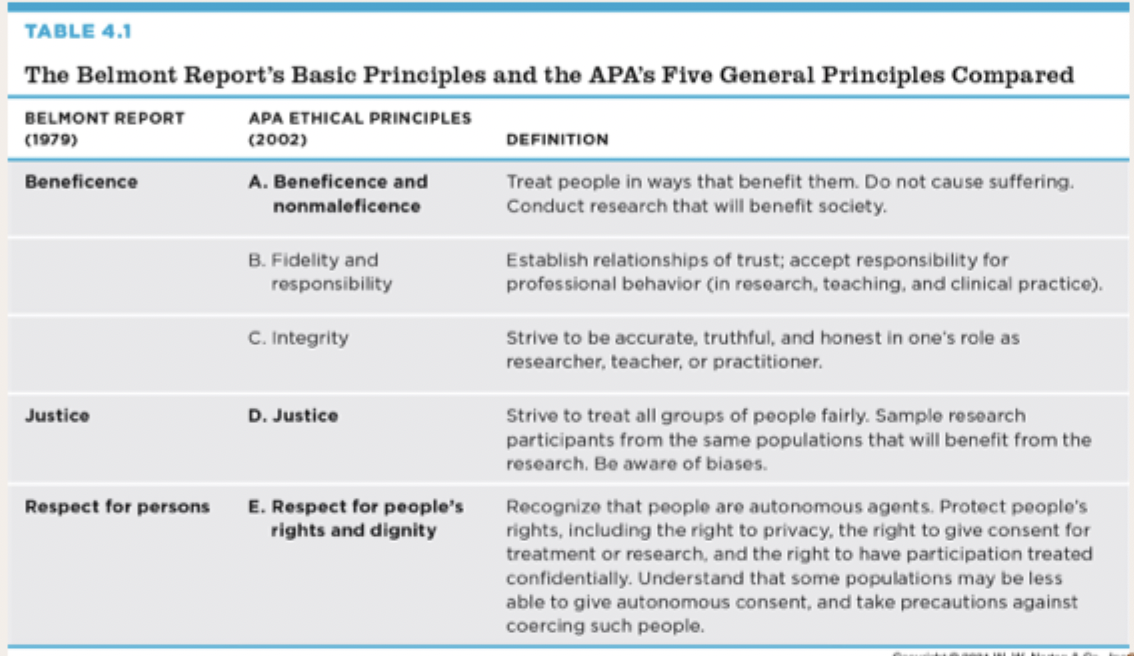
Core Ethical Principles
Belmont Report
APA
What are the Belmont Report Principles and Applications? (3)
1. Principle of respect for persons
Informed consent
2. Principle of Beneficence
Assess potential harm to participants & potential benefits to society
3. Principle of justice
Who bears the burden of research participation?
Syphilis study, should be same group of people who should benefit from it.
What are APAs 5 General Principle?
Belmont Plus 2
Beneficence
Treat people in ways that benefit them
Do not cause suffering
Conduct research that will benefit society
Justice
Strive to treat all groups of people fairly
Sample research participants from the same populations that will benefit from the research
Be aware of biases
Respect for people’s rights & dignity
Recognize that people are autonomous agents. Protect people’s rights, including the right the privacy, the right to give consent for treatment on research & the right to have participation treated confidentialy.
Understand some populations may be less able to give autonomous consent & take precautions against coercing such people.
Fidelity and Responsibility
Establish relationships of trust
Accept responsibility for professional behaviour (in research, teaching & clinical practice)
Integrity
Strive to be accurate, truthful and honest in one’s role as researcher, teacher or practitioner
What are Ethical Standards for Research?
Institutional review boards
Submit proposal before any research or doing anything
Monthly
Rounds of revision, modification & guide researchers
Informed consent
Consent to be part of research study
Infants or very elderly people, defer to substitute decision maker, provide consent on behalf of dependant (infant, elderly person in long-term care)
Deception
Essential for some experiments, inhibit researchers to discover hypothesis
Reserved for instances integral to research design
Deception shouldn't be involved in project not crucial
Debriefing
Must debrief participants
Provide resources if cause anguish later on
Complete explanation of what went on
Research misconduct
Data fabrication & data falsification
Plagiarism, self plagiarism
What are ethical standards for animal research?
Legal protection for laboratory animals
Animal care guidelines & the 3 R’s
Replacement, Refinement, Reduction
Attitudes of scientists & students toward animal research
Attitudes of animal rights groups
Ethnically balancing animal welfare, animal rights & animal research
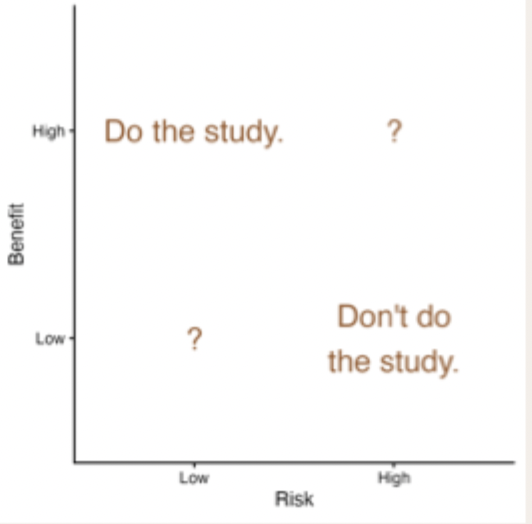
Ethical Decision Making: A Balance
Requires a balance of priorities
We need to weight the potential harm to human or animal participants against what the knowledge gained from the research will contribute to society/
Cost-Benefit Analysis
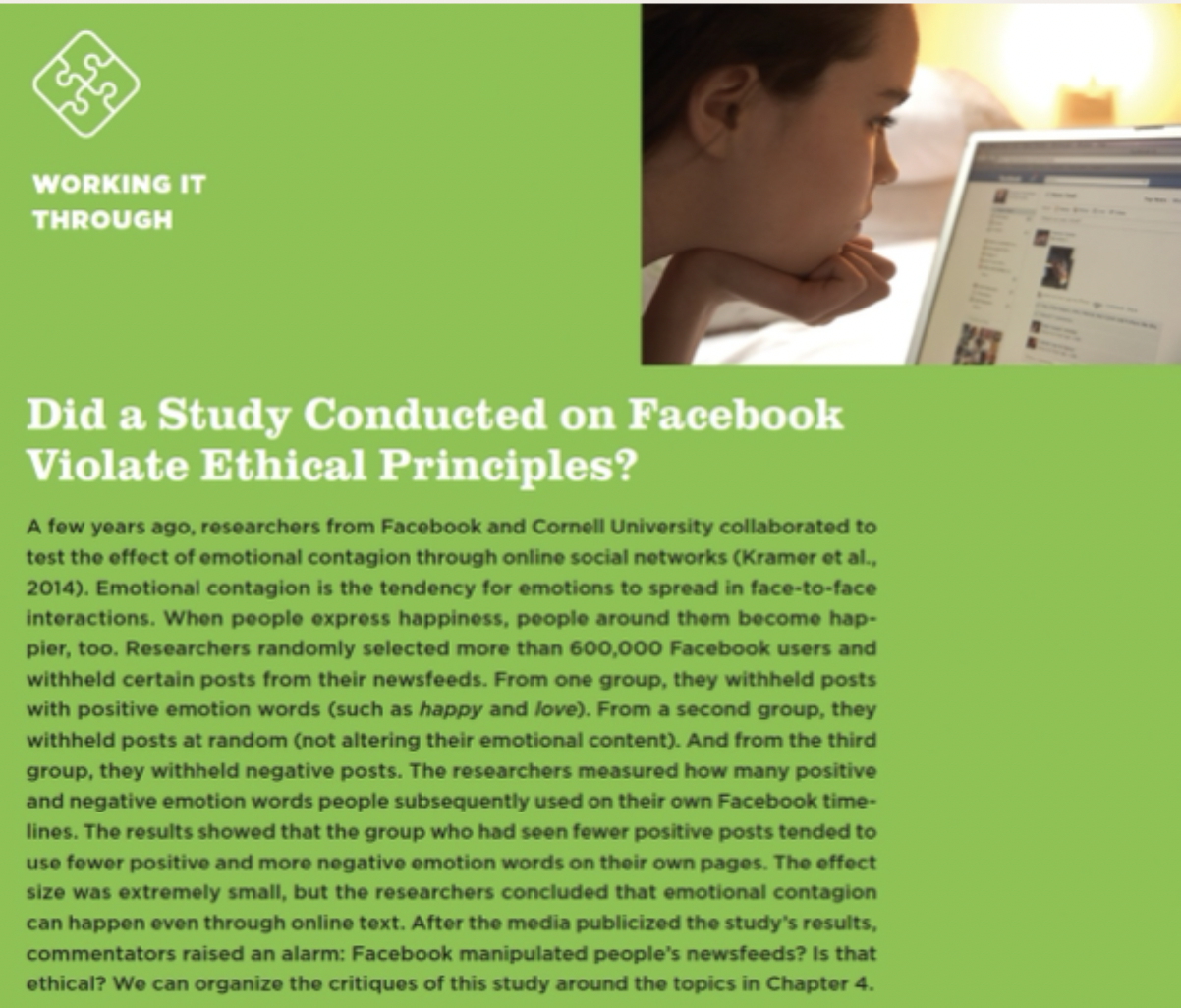
Facebook Violation of Ethical Principles
Institutional review board
Was the study reviewed by an IRB?
The study’s lead scientist was employed by Facebook and is not required to follow federal ethical guidelines such as the Common Rule
The other 2 scientists had the study reviewed by Cornell University’s IRB. and decided the study did not fall under its program because the data had been collected by Facebook
This example highlights that private businesses sometimes conduct research on people who use their products & such research might not be reviewed for ethics
Informed Consent
Were Facebook users able to decide whether they wanted to participate?
The study’s authors reported that when people create a Facebook account, they agree to a data use policy & this was constituted informed consent
Not all critics agreed. Although it had agreed to public the paper, it was concerned that the study did not allow participants to opt out
Deception & Debriefing
Were participants deceived about the study? If so, were they debrifed?
Participants were not told their newsfeeds might have been manipulated for research purposes.
Participants were deceived through omission of information
People were not debriefed afterward. Even now, people cannot find out whether they participated in this study or not.
What would the IRB say about this study?
If an IRB has considered this study in advance, they would have evaluated it for…
1) Respect for persons
Respect for persons requires informed consent. Participants did not consent to this study.
Although people did not provide informed consent for this study, informed consent might not be deemed necessary when a study takes place in a public place where people can reasonably expect to be observed
2) Beneficence
The study demonstrated that people felt worse when positive emotion posts were removed
The researchers argued that the study benefited society. Social media plays a role in many people’s daily lives & emotions are linked to well-being.
People may have suffered a bit but wa their distress any greater than it might have been in daily life? Perhaps not, because effect size was so small
Facebook already manipulates newsfeeds, selecting stories & posts according to computerized algorithm.
The results did not show that social media is a source of emotional contagion that could potentially affect public wellbeing.
3) Justice
The study randomly selected hundred of thousands of people who read Facebook in English
Because the sample was selected at random, it appears that the people who “bear the burden” of research participation were the same types who could benefit from its findings
The principles of justice has probably been met.
What are Constructs?
Constructs are Hypothetical Entities that explain observed phenomena
ex. culture, intelligence, empathy, companionship, stress
Research questions are generally formed on constructs
Ex. Does intelligence predict productivity
We generally cannot directly study or measure the constructs that we are interested in
We use tools to measure or quantify the construct of interest
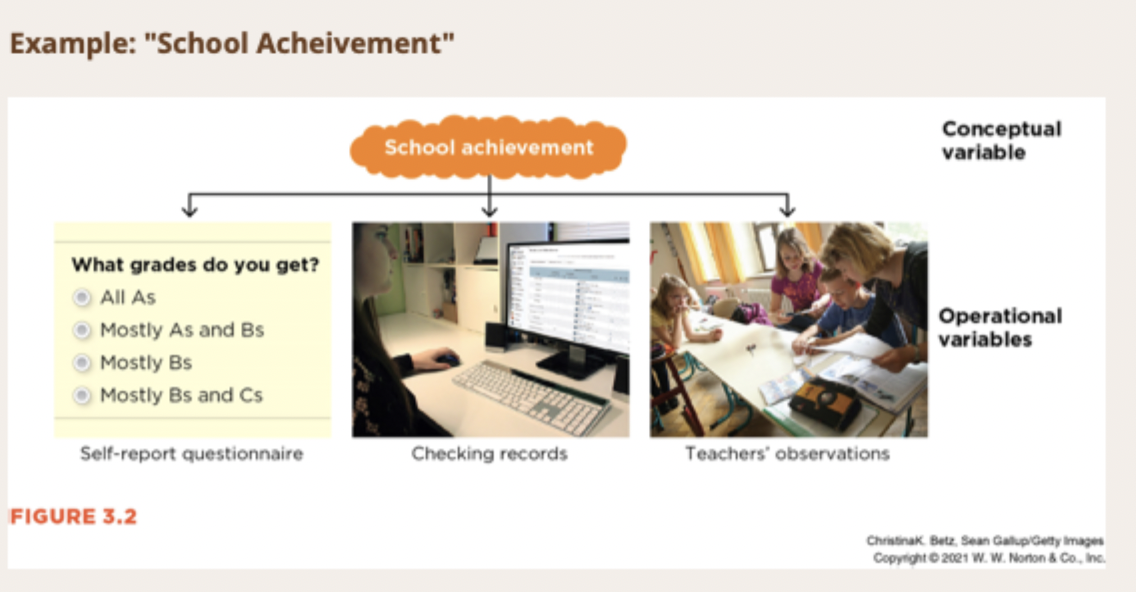
What does opperationalize mean?
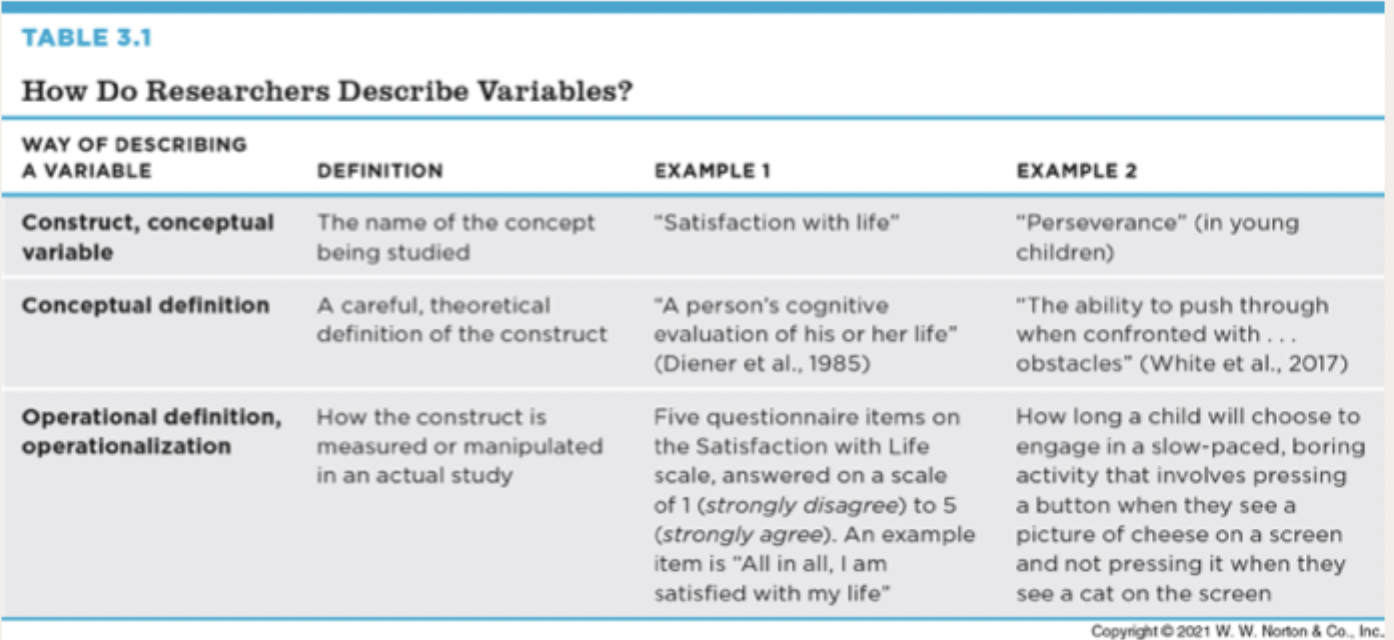
Opperationalize is the the process of turning abstract concepts or ideas into observable & measurable phenomena
Describing Variables
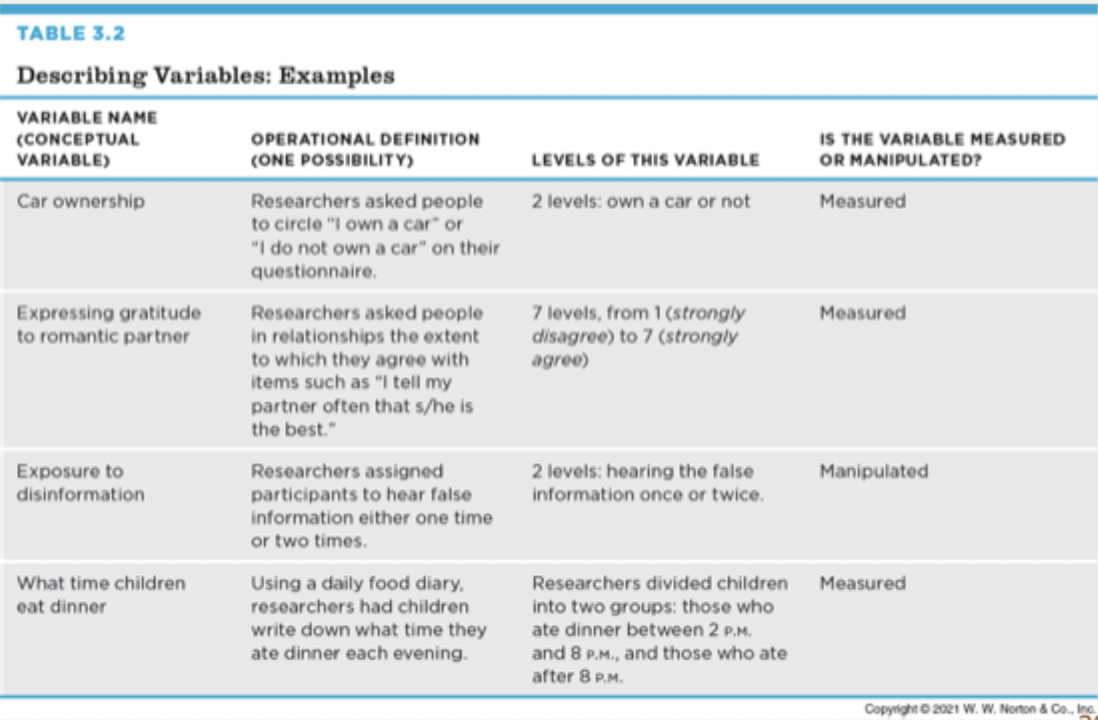
When describing your variables, it is important to inform the reader about both the construct that is being investigated & how the construct is opperationalized
Measured vs. Manipulated Variables
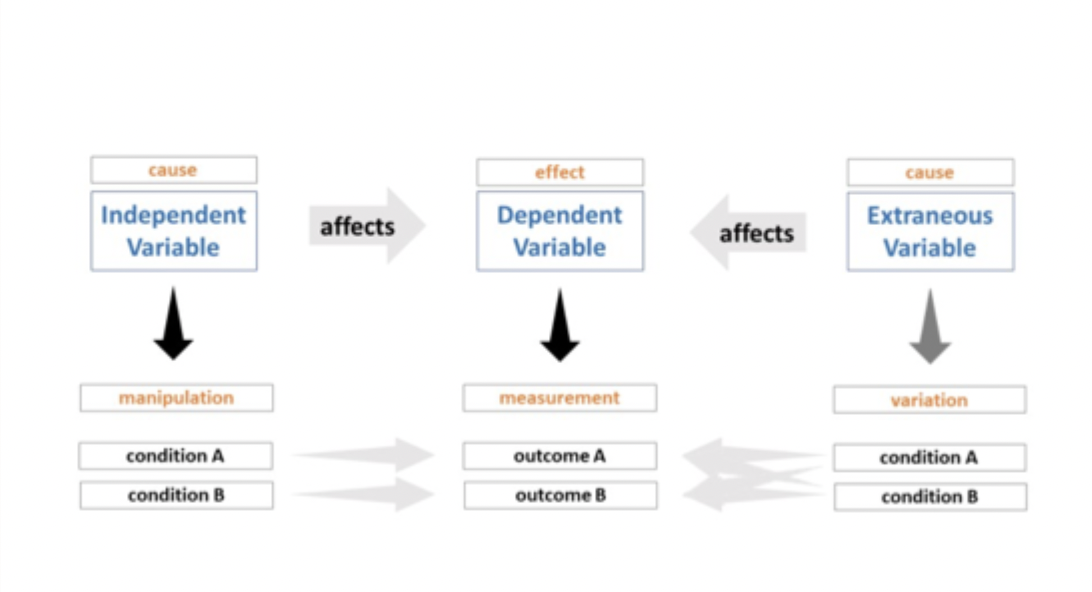
A Measured variable is observed & recorded
A Manipulated variable is controlled
Some variables can only be measured (ie. cannot be manipulated)
ex. gender, age, height cannot be manipulated
Some variables can be both manipulated & measured, depending on the context/study
ex. anxiety can measure natural state levels of anxiety but can also do manipulation
Describing Variables Example Chart
Variable Opperationalization
Relationship Between Variable Types
We run studies so that we can make claims about the variables that we are interested in studying
What are 3 types of claims?
1) Frequency Claims
How often a given outcome occurs
2) Association Claims
How levels on two or more variables might be related
3) Causal Claims
X causes y
What are Frequency Claims?
A frequency claim describes a particular level or degree of a single variable
Frequency claims involve only one measured vairable
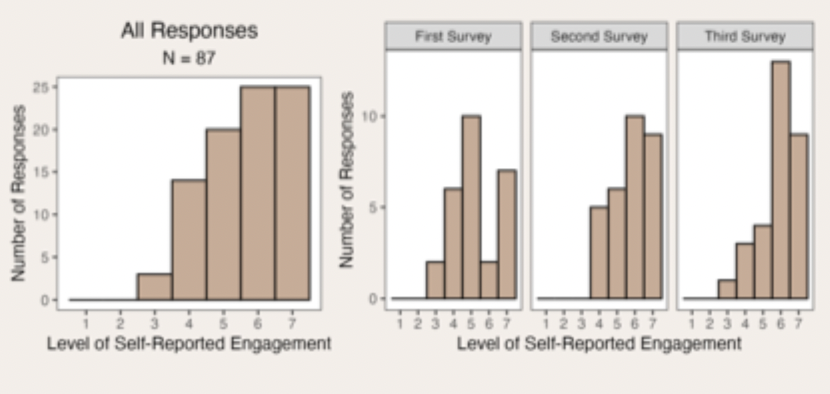
Example of Frequency Claim: Self-Reported Engagement
No students indicated that they were “not at all engaged” at any point during class 1
80% of responses were 5 or higher on the engagement scale
Students reported high levels of engagement in PSY309 on the surveys
Negatively skewed distribution, more negatively skewed as class went on
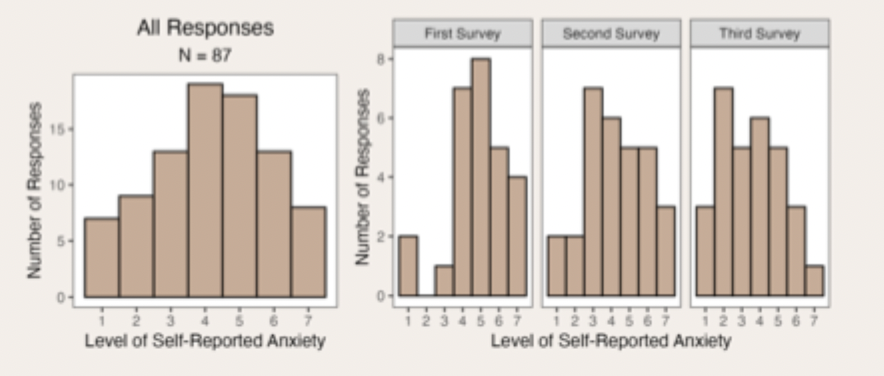
Example of Frequency Claim: Level of Self Reported Anxiety
8% of responses indicates that students felt ‘not anxious at all’ about the Psy309 course content
8% of responses were ‘extremely anxious’ about the Psy309 course content
Approximately normally distributed
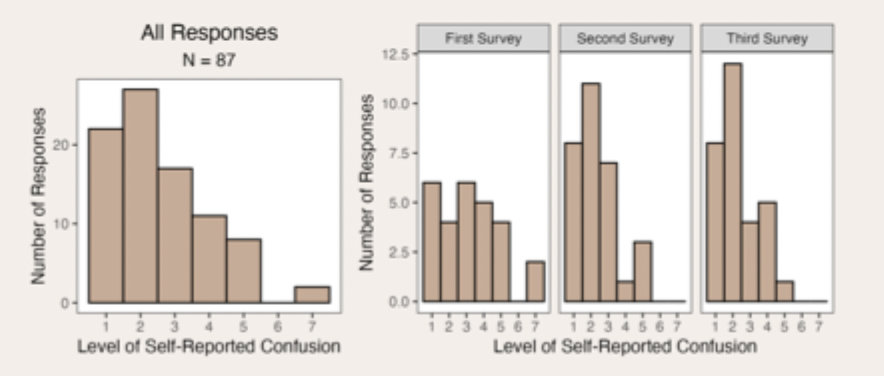
Example of Frequency Claim: Self Reported Confusion
25% of responses were “not confused at all”
65% of responses were below 4 on confusion scale
Students reported low levels of confusion & high levels of engagement with the Psy309 content
More rightly skewed, positively skewed
What are Association Claims?
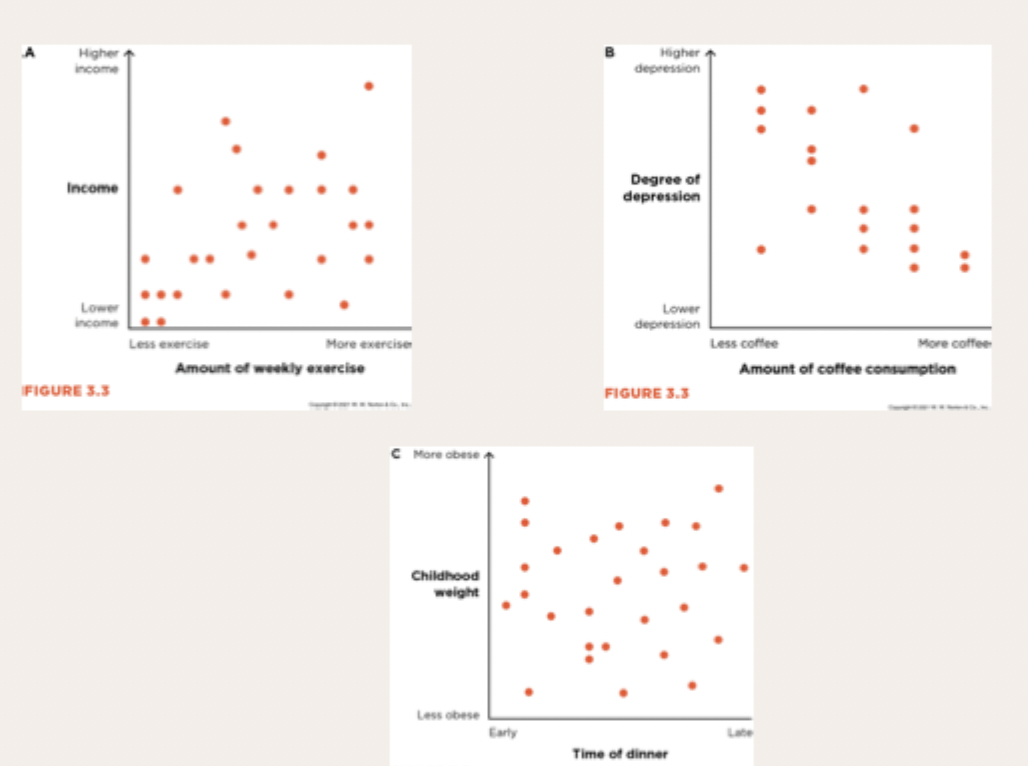
An association claim argues that one level of a variable is likely to be associated with a particular level of another variable
Association claims are supported by studies that have at least 2 measured variables
Variables that are associated are said to correlate.
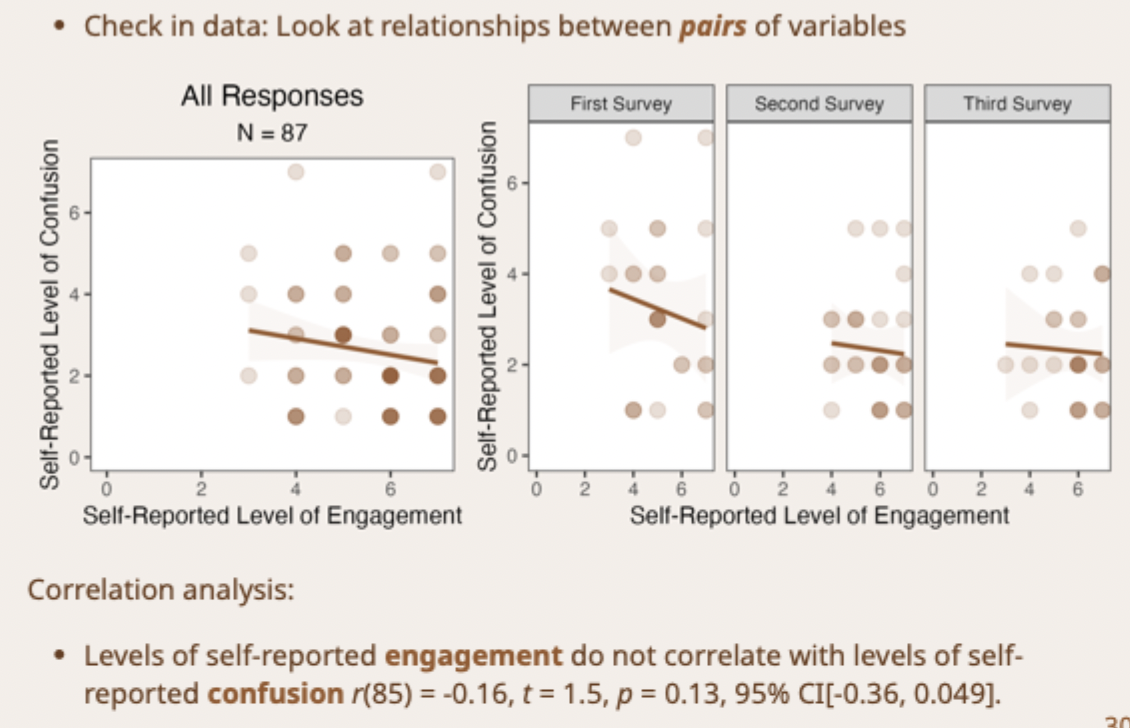
Example of Association Claim: Relationship between engagement & confusion
Levels of self reported engagement do not correlate with levels of self reported confusion
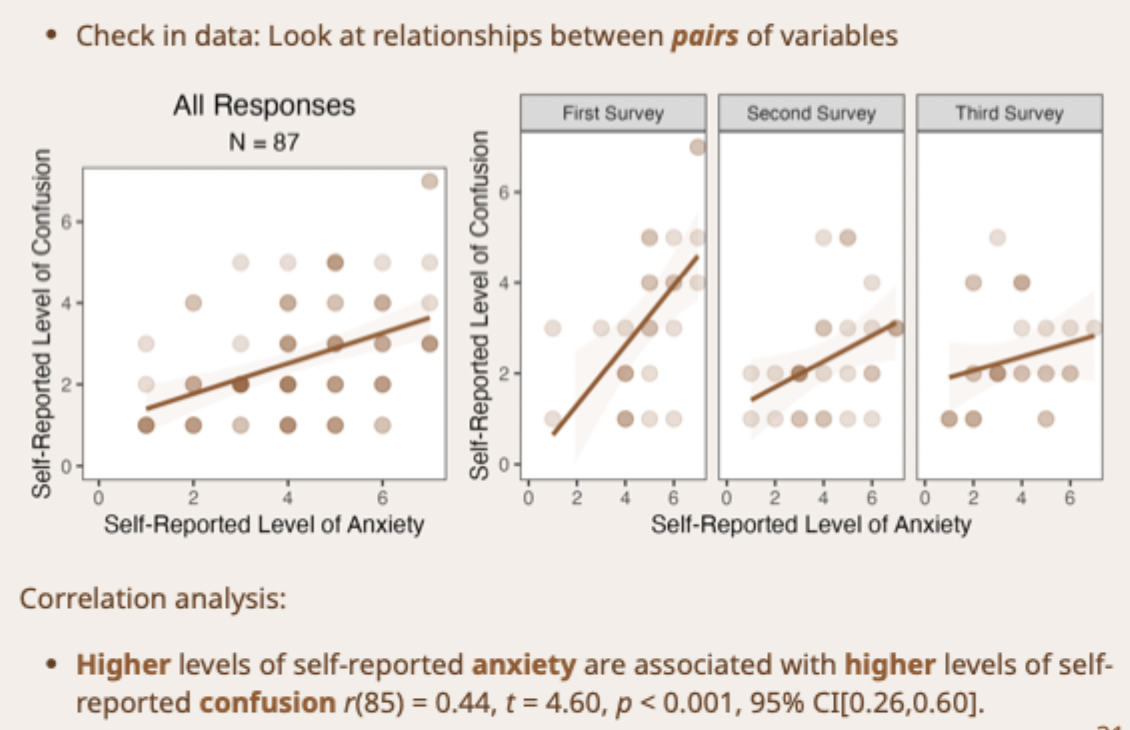
Example of Association Claim: Anxiety and Confusion
Higher levels of self reported anxiety are associated with higher levels of self reported confusion
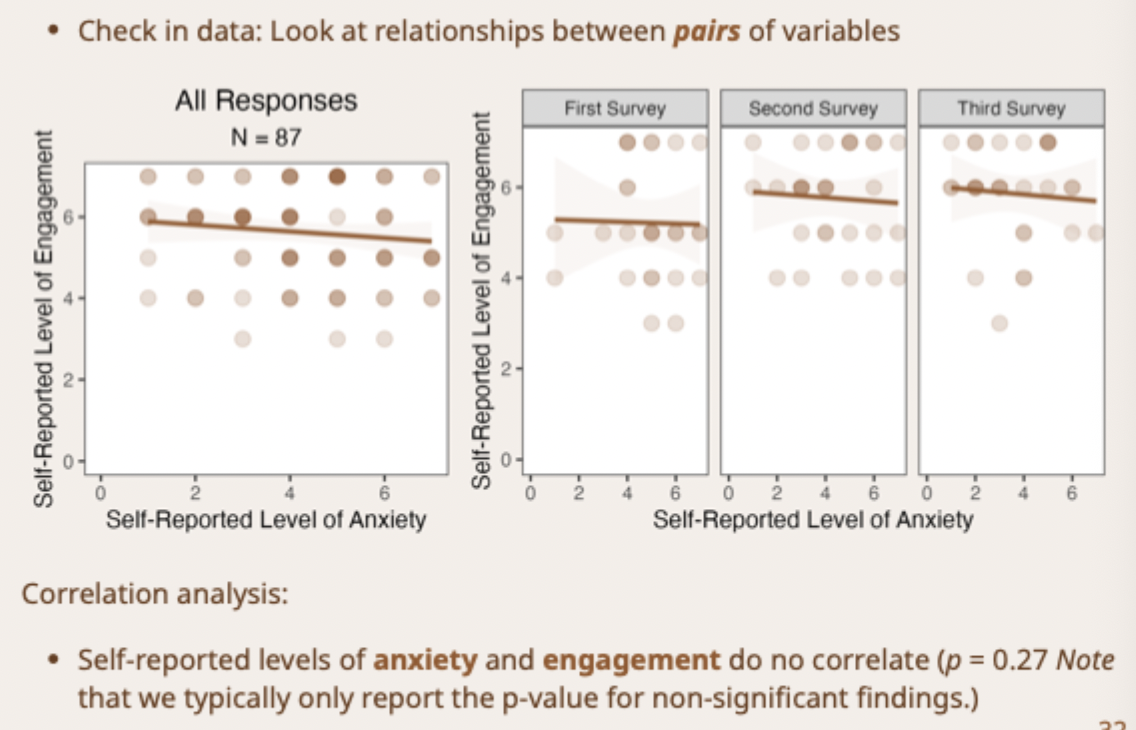
Example of Association Claims: Self-Reported Anxiety & Levels of Engagement
Self reported levels of anxiety & engagement do not correlatte
Making Predictions Based on Associations
Some association claims are useful because they help us make predictions
The stronger the association between the two variables, the more accurate the prediction will be
Both positive & negative associations can help us make predictions, but zero associations cannot
What are Causal Claims?
A causal claim argues that one variable causes changes in the level of another variable
Causal claims are supported by experiments (studies that have manipulated variable & a measured variable)
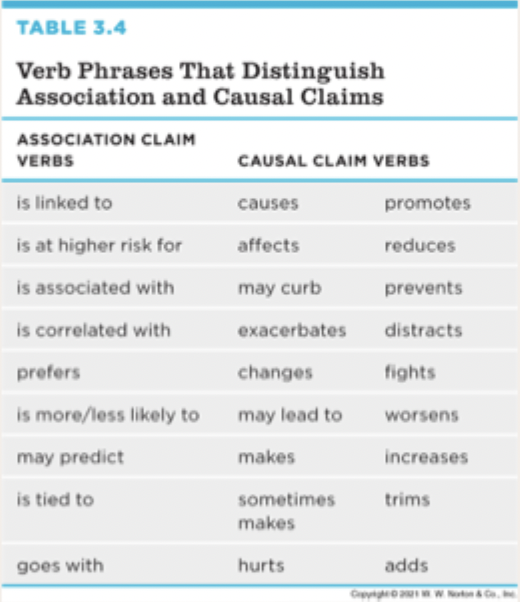
Example of Causal Claim
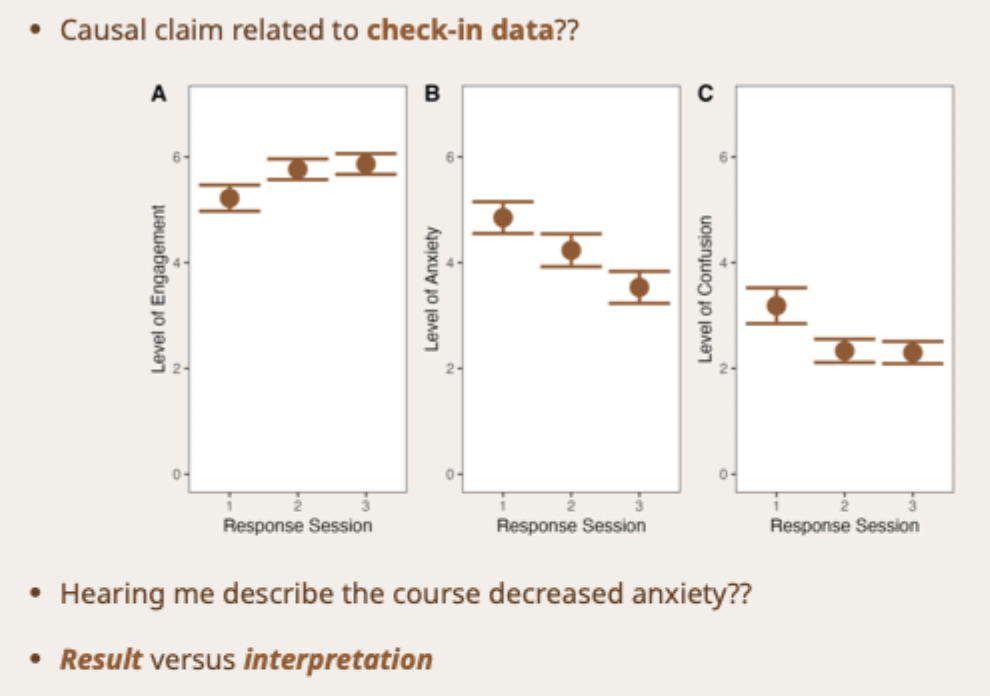
Not all Causal Language is Supported by Research
Not all claims we read about in the popular press are based on research
Many (most) claims are based on experience, intuition or authority
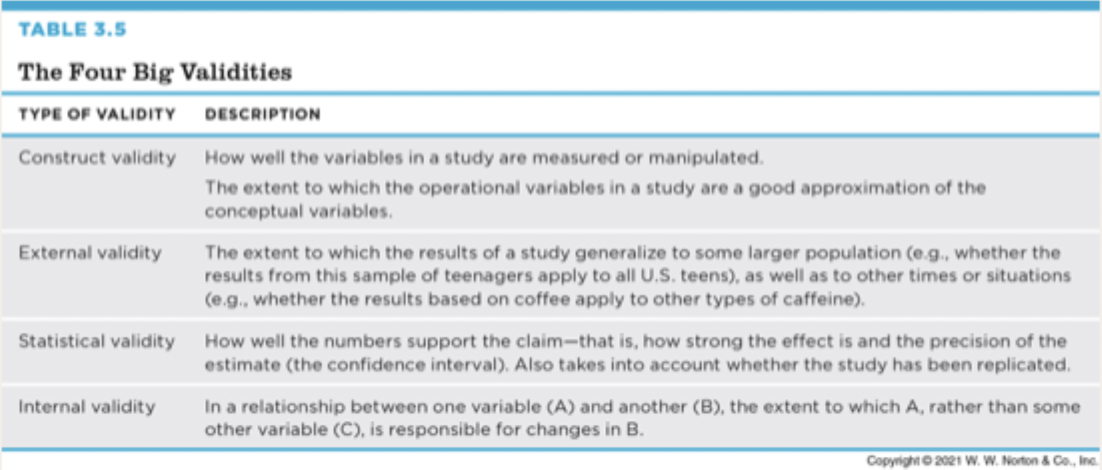
What are the 4 Validities? Summary Chart
Construct validity
How well the variables in a study are measured or manipulated/opperationalized
The extent to which the operational variables in a study are a good approximation of the conceptual variables
External validity
The extent to which the results of a study generalize to some larger population
Statistical validity
How well the numbers support the claim, the extent to which the studys findings are reasonable & accurate
Internal Validity
In a relationship between on variable A and another B, the extent to which A, rather than some other variable C, is responsible for changes in B
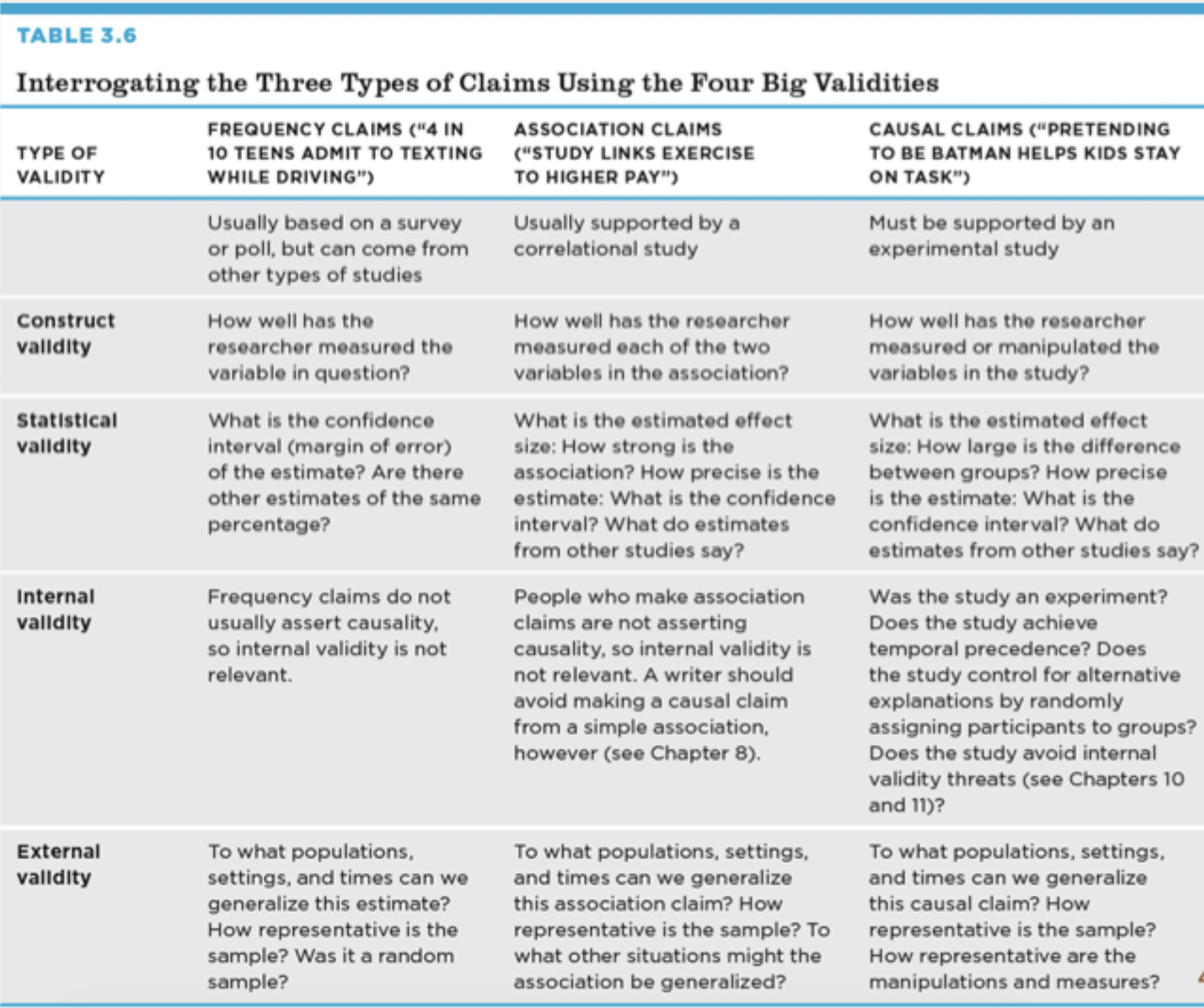
Interrogating Frequency Claims & the Big 4 Validities
Construct Validity
How well a variable is operationalized
Example: 39% of teens text while driving. How was this measured
External validity
Generalizability
Who was measured and who do they represent/no represent?
Statistical validity
The extent to which the studys findings are reasonable & accurate
Often involves looking the error of measurement to establish a confidence interval or margin of error around a point estimate
Interrogating Association Claims & the Big 4 Validities
Construct Validity
What was measured? How to operationalize the construct?
External validity
Does the association claim generalize to other populations, contexts, times or places
Statistical Validity
Strength of associaiton
Statistical significance
Interrogating Causal Claims
3 key criteria must be met to support use of causal claims
1) Covariance
The study’s results show that as A changes, B changes
ex. high levels of A go with high levels of B, low levels of A go with low levels of B
2) Temporal precedence
The study’s method ensures that A comes first in time, before B
3) Internal Validity
The study’s method ensures that there are no plausible alternative explanations for the changes in B, A is the only thing that changed.
Rules out other alternative/plausible explanations
Most difficult to support.
Interrogating the 3 Types of Claims Using the Big 4 Validities