Practical 3: Trematodes, Acanthocephalans, Protozoans, Arthropods, & Pentastomida
 Call Kai
 Learn
Learn Practice Test
 Spaced Repetition
 Match
Match Flashcards
 Knowt Play
1/236

There's no tags or description
Looks like no tags are added yet.
Name | Mastery | Learn | Test | Matching | Spaced | Call with Kai |
|---|
No analytics yet
Send a link to your students to track their progress
237 Terms
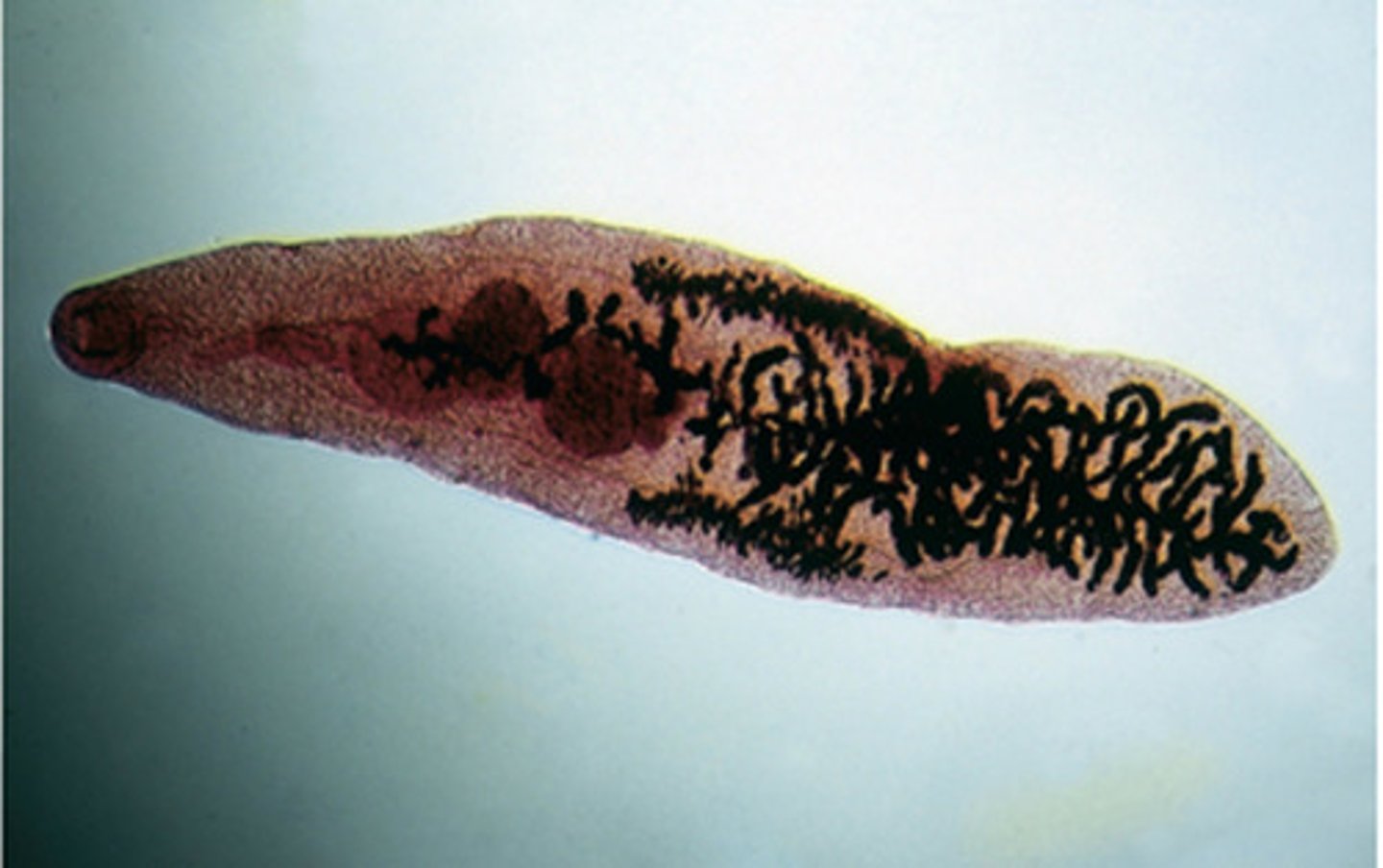
Dicrocoelium dendriticum
- Lancet fluke of ruminant
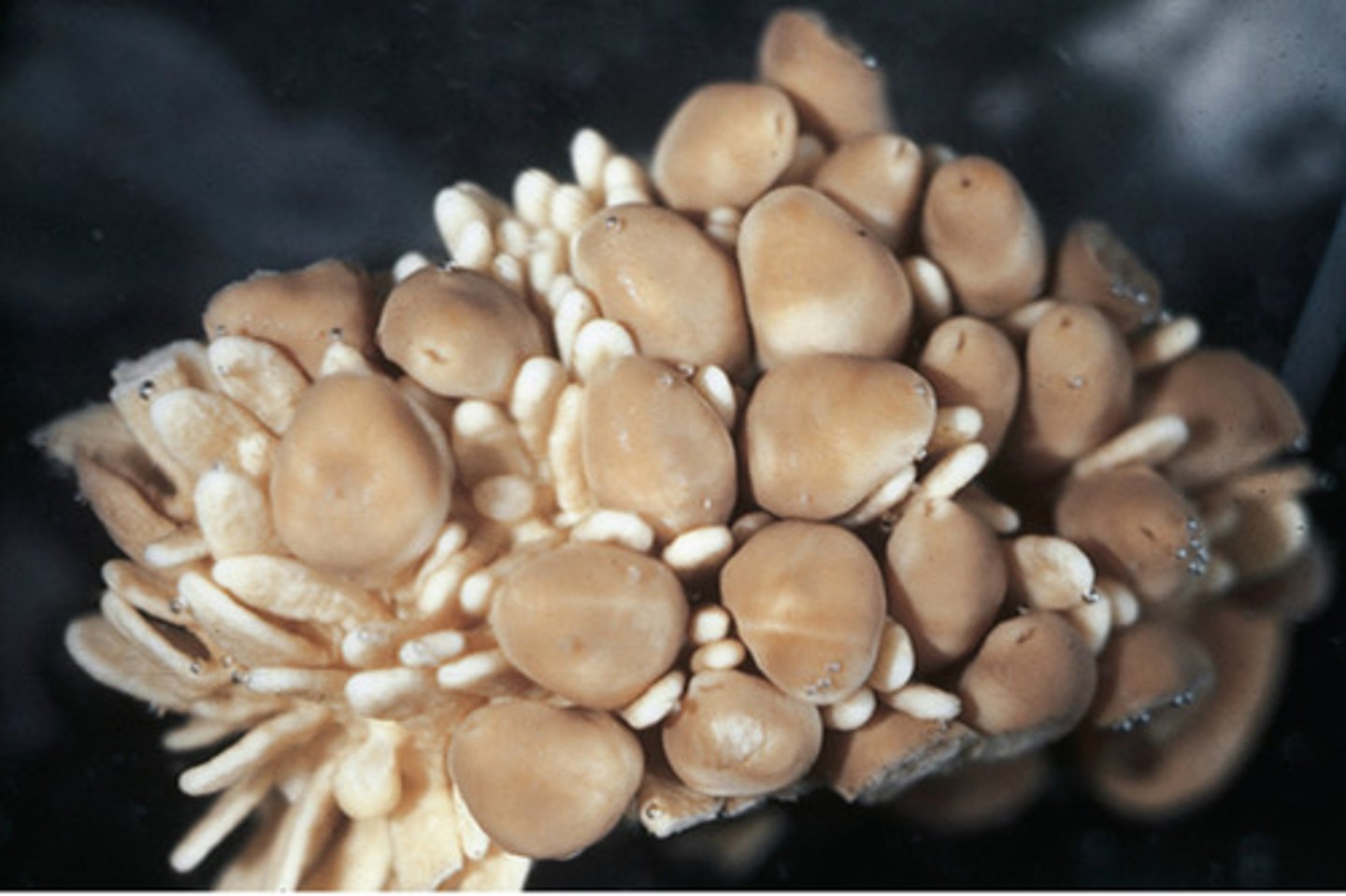
Paramphistomum spp. & cotylophoron spp.
- Rumen flukes
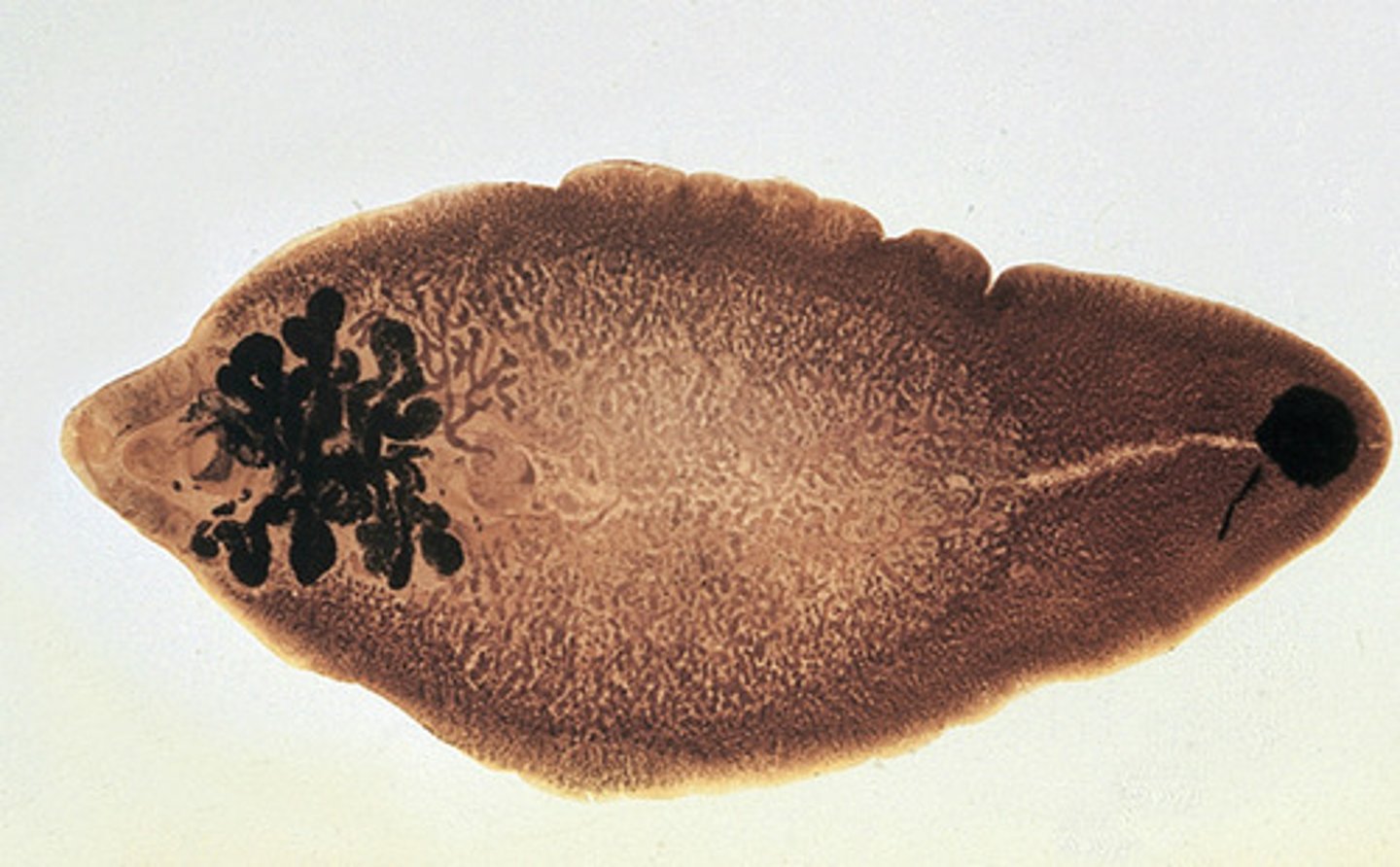
Fasciola hepatica
- liver fluke of ruminant
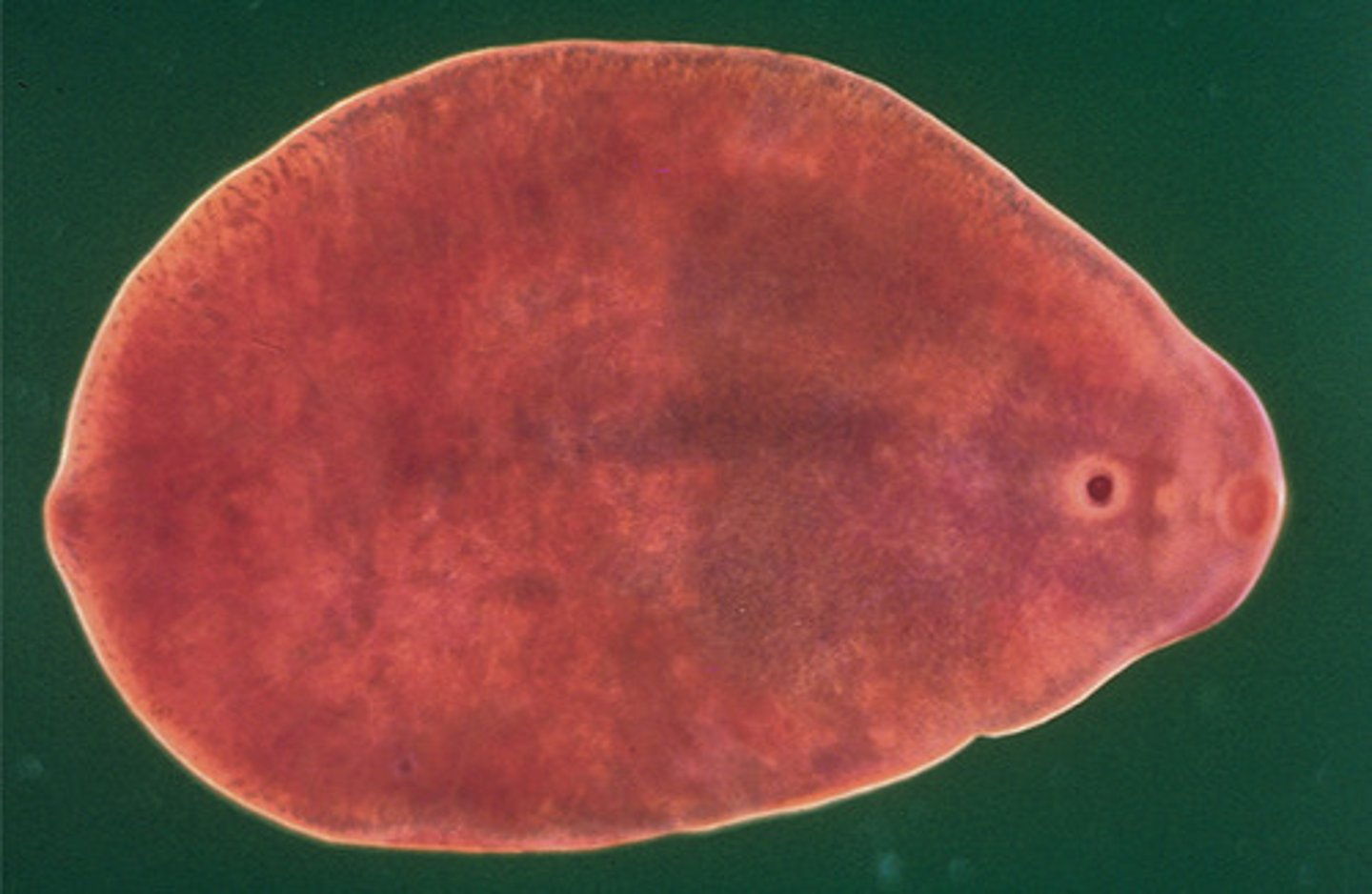
Fascioloides magna
- liver fluke of WILD (deer) ruminants
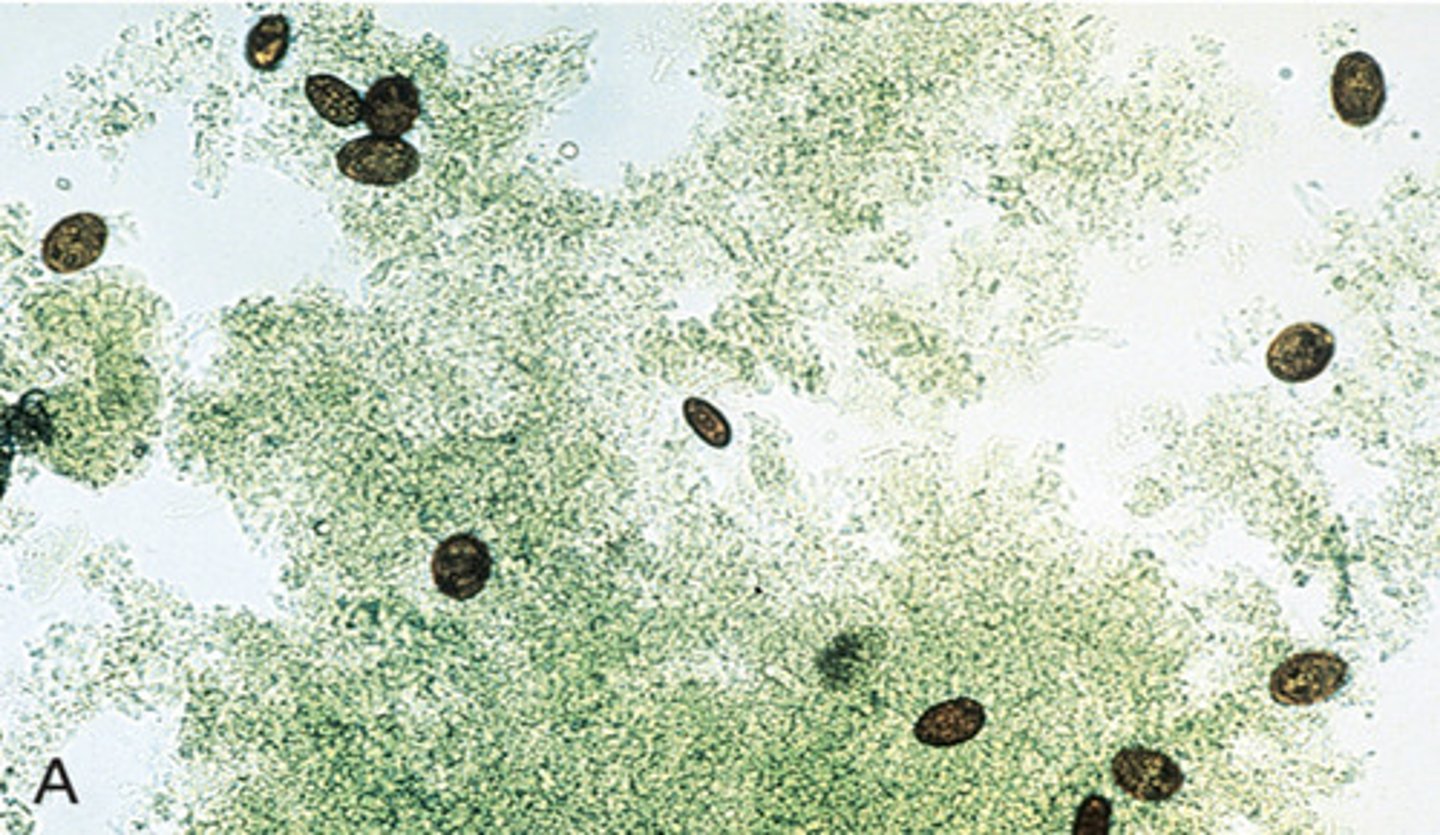
Platynosomum fastosum
- lizard poisoning fluke of cats
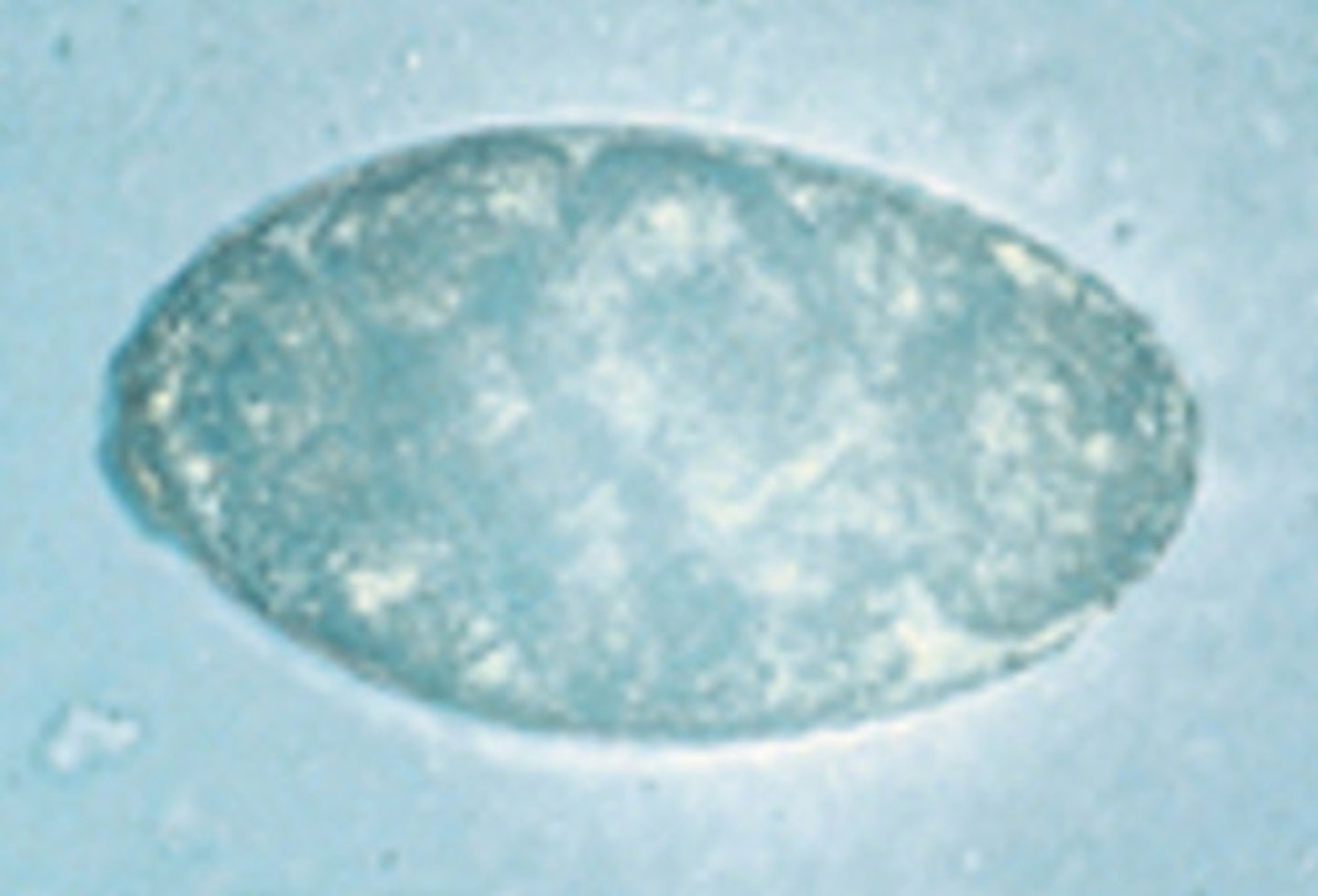
Nanophyetus salmincola
- salmon poisoning fluke of dogs
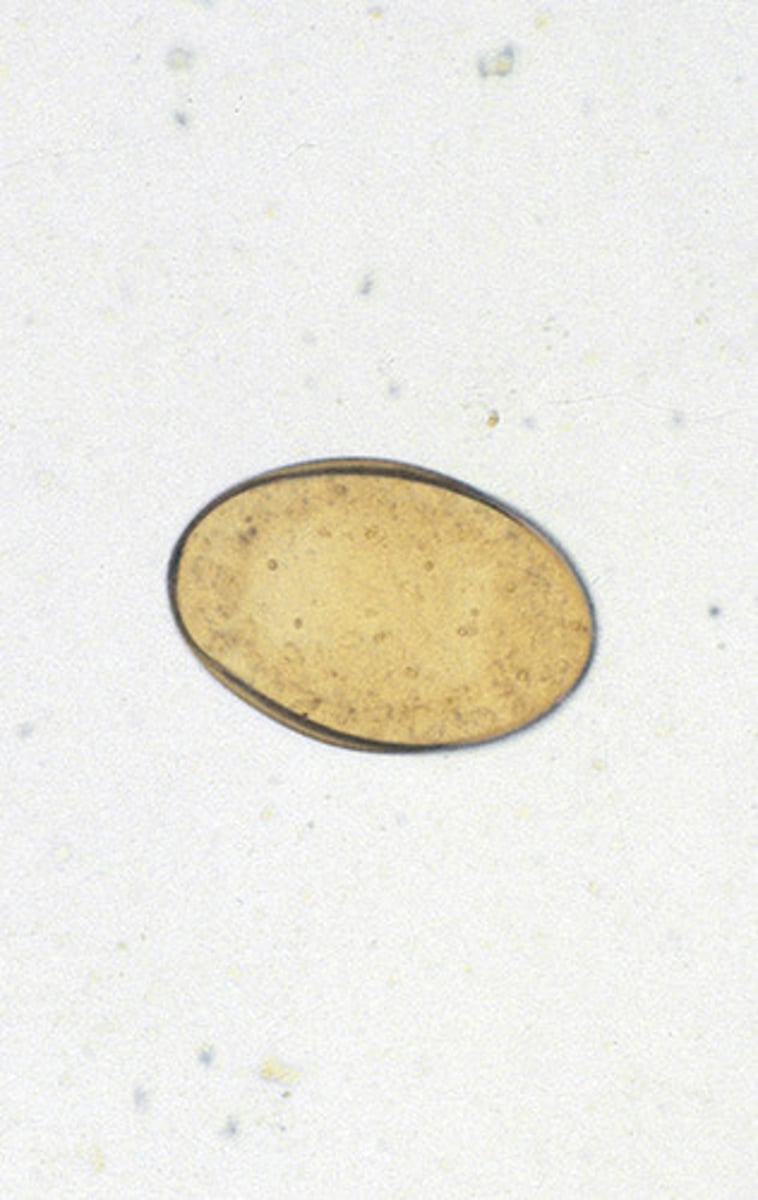
Alaria spp.
- intestinal fluke of dogs and cats
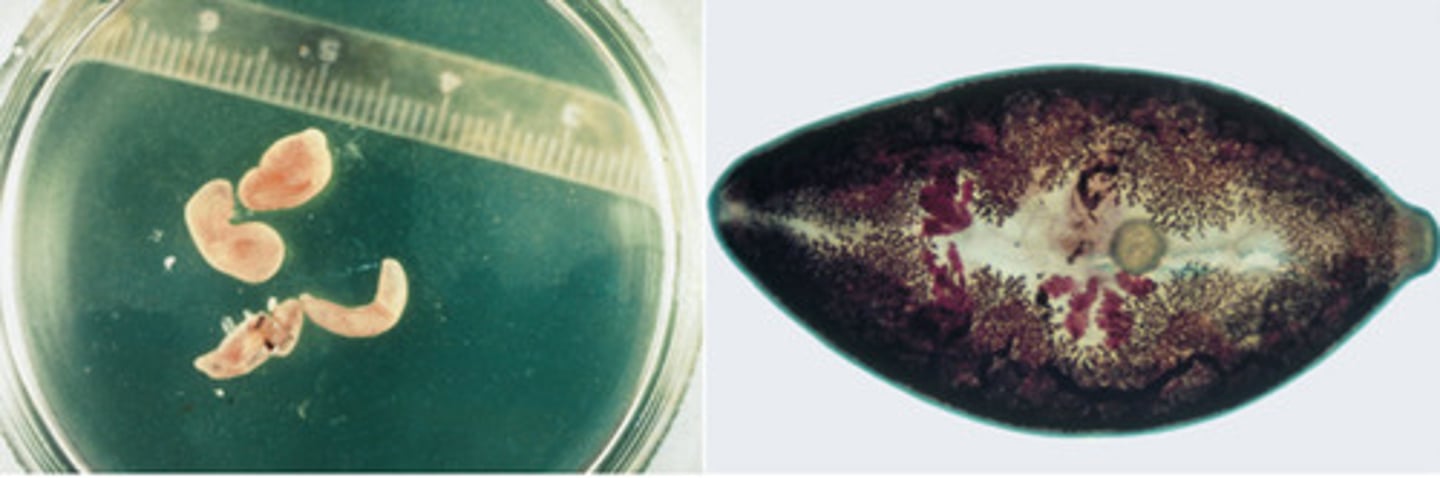
Paragonimus kellicotti
- lung fluke of dogs and cats
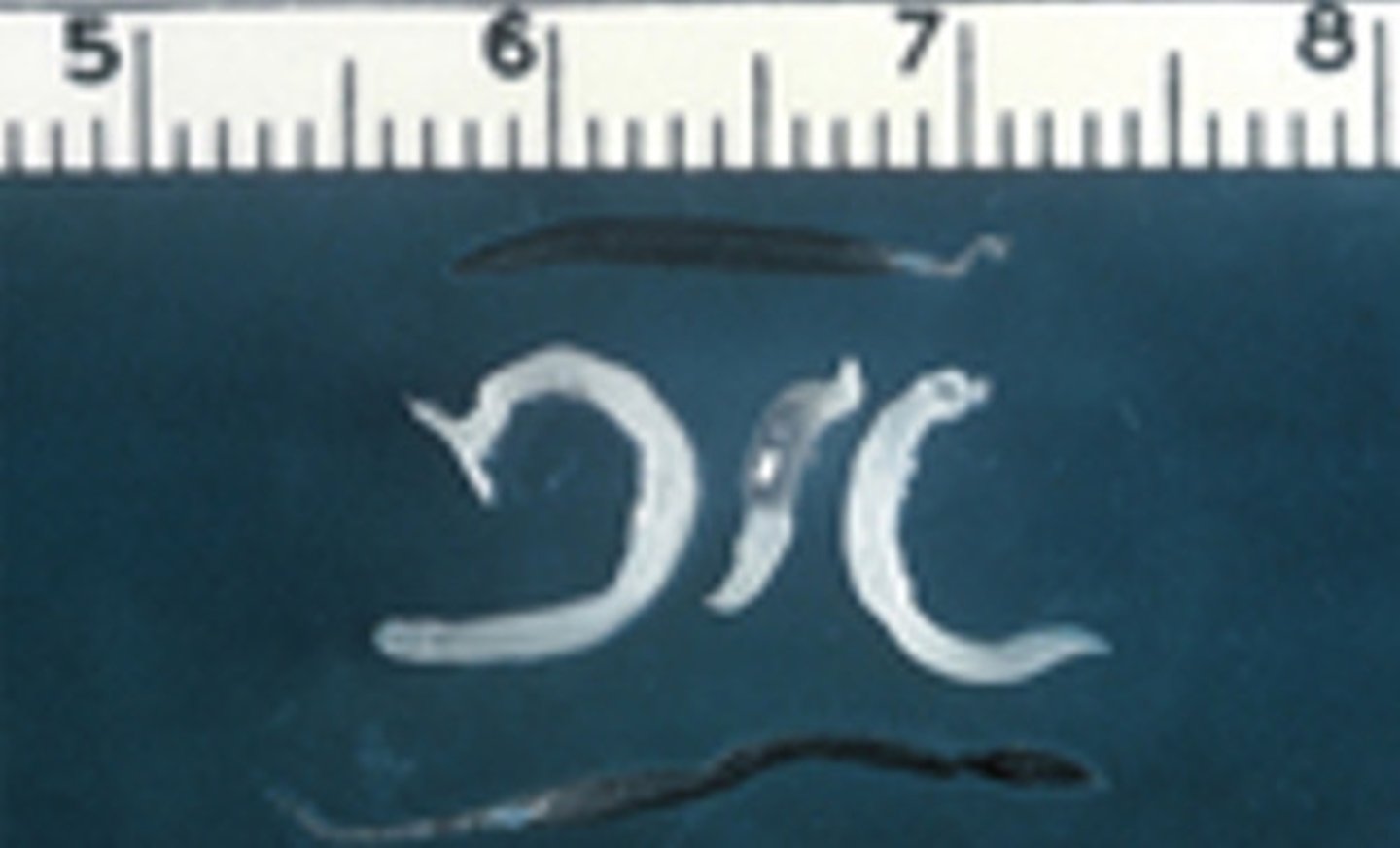
Heterobilharzia Americana
- schistosome (blood fluke) of dogs
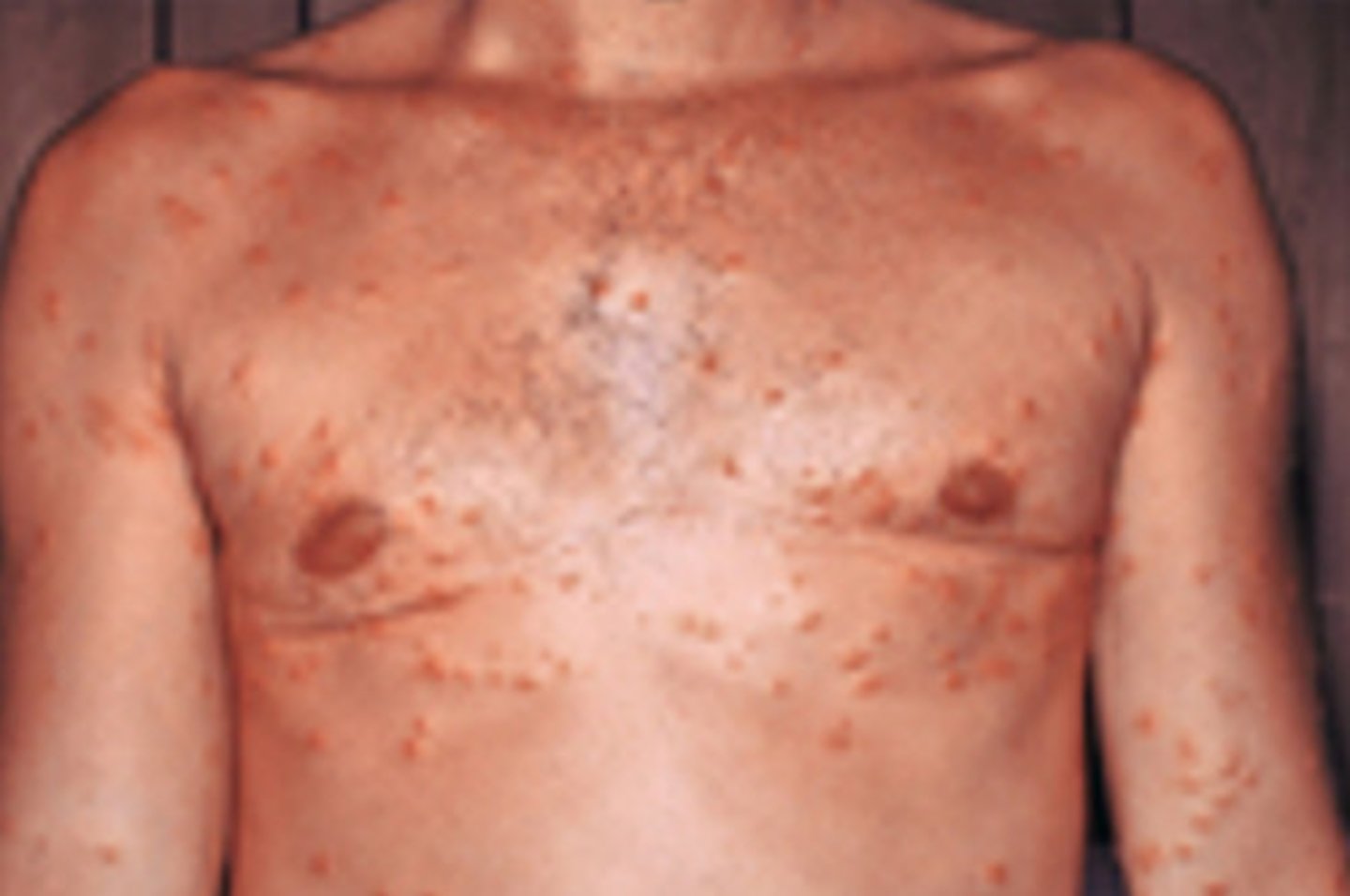
Schistosoma species
- avian (wild birds) schistosomes
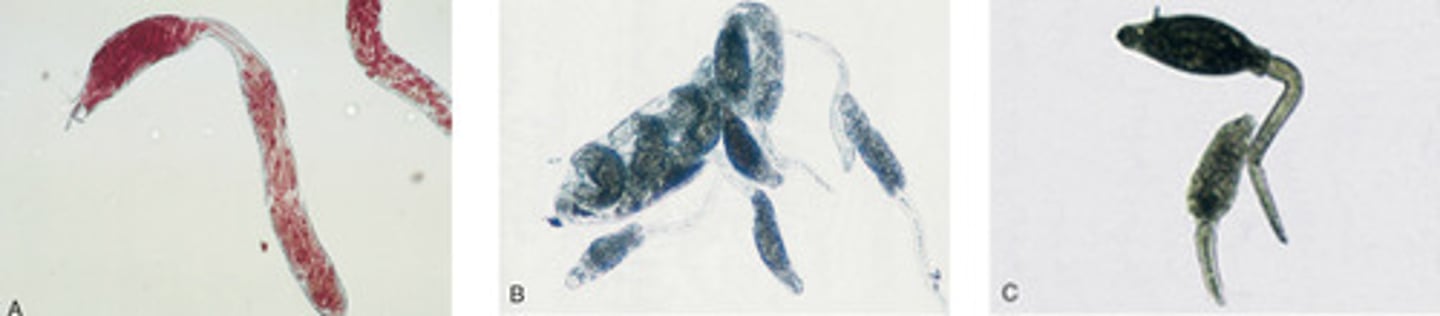
What is being shown? What is the stage of each letter?
Digenea life cycle
A. Sporocyst being formed from miracidium
B. Sporocyst stage
C. Redial stage
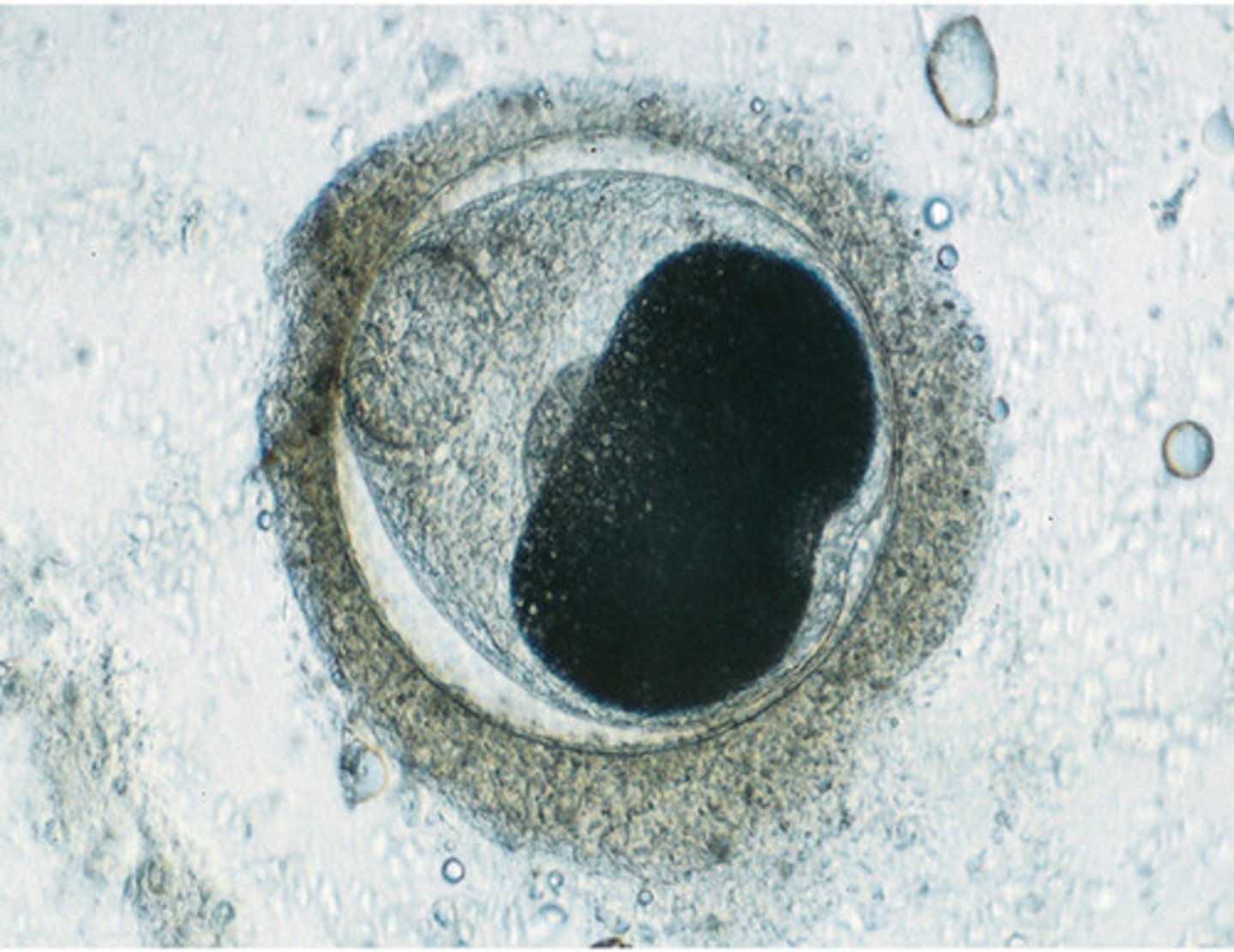
Metercarial stage of digenetic fluke
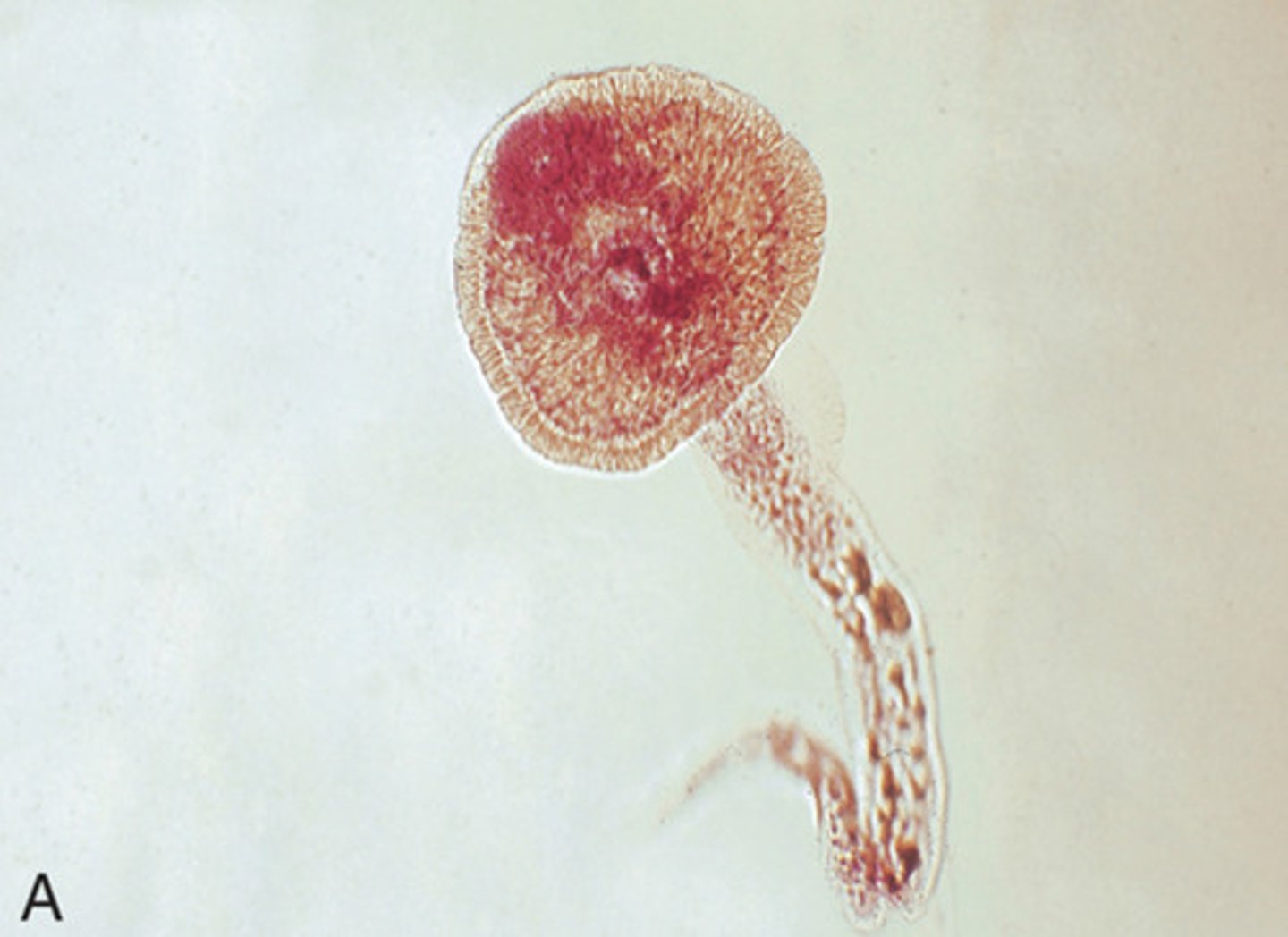
Cercarial stage of digenetic fluke
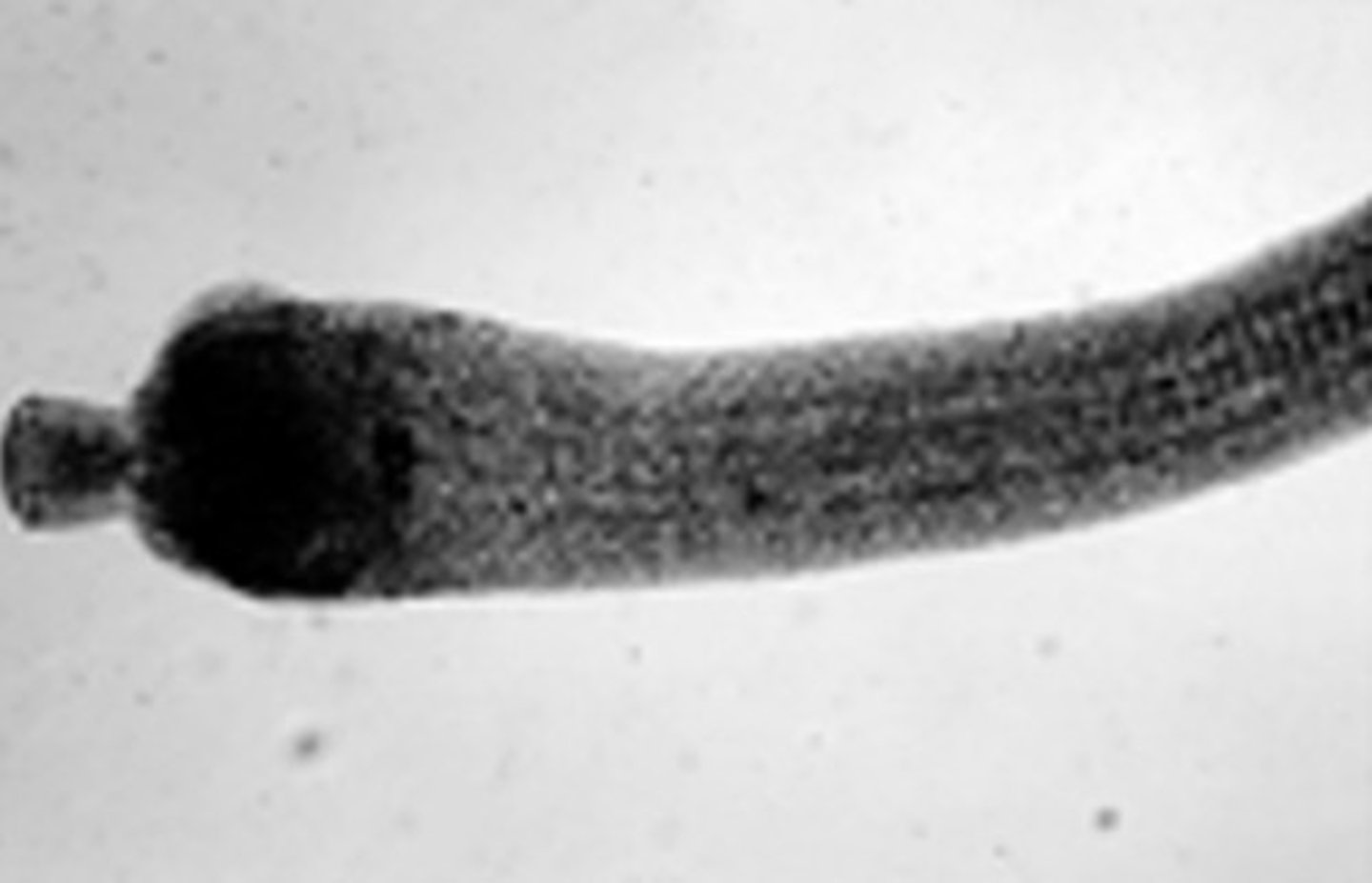
Hymenolepsis nana
- rodent tapeworm: armed
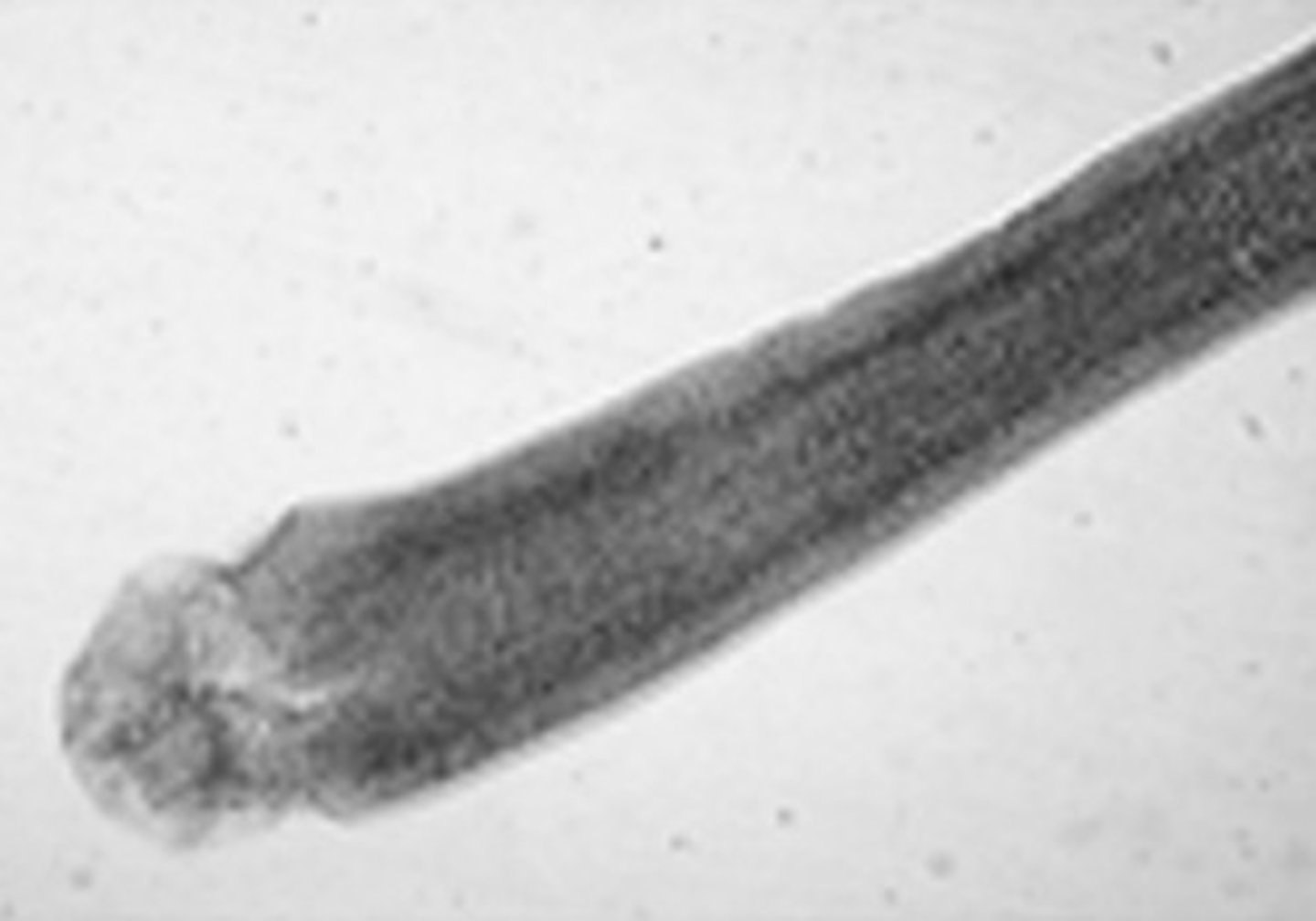
Hymenolepsis dimunata
- rodent tapeworm: unarmed
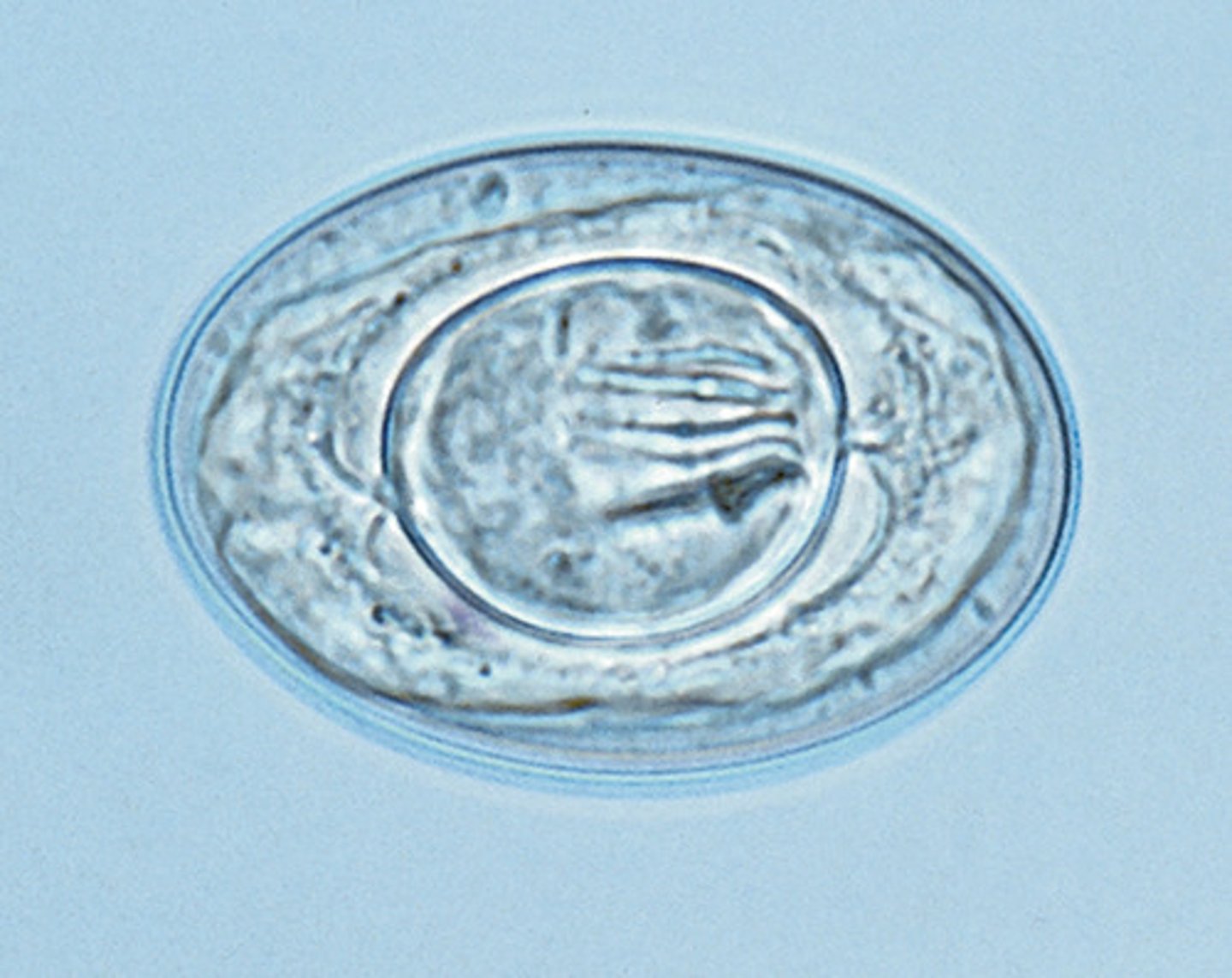
Hymenolepsis spp. egg
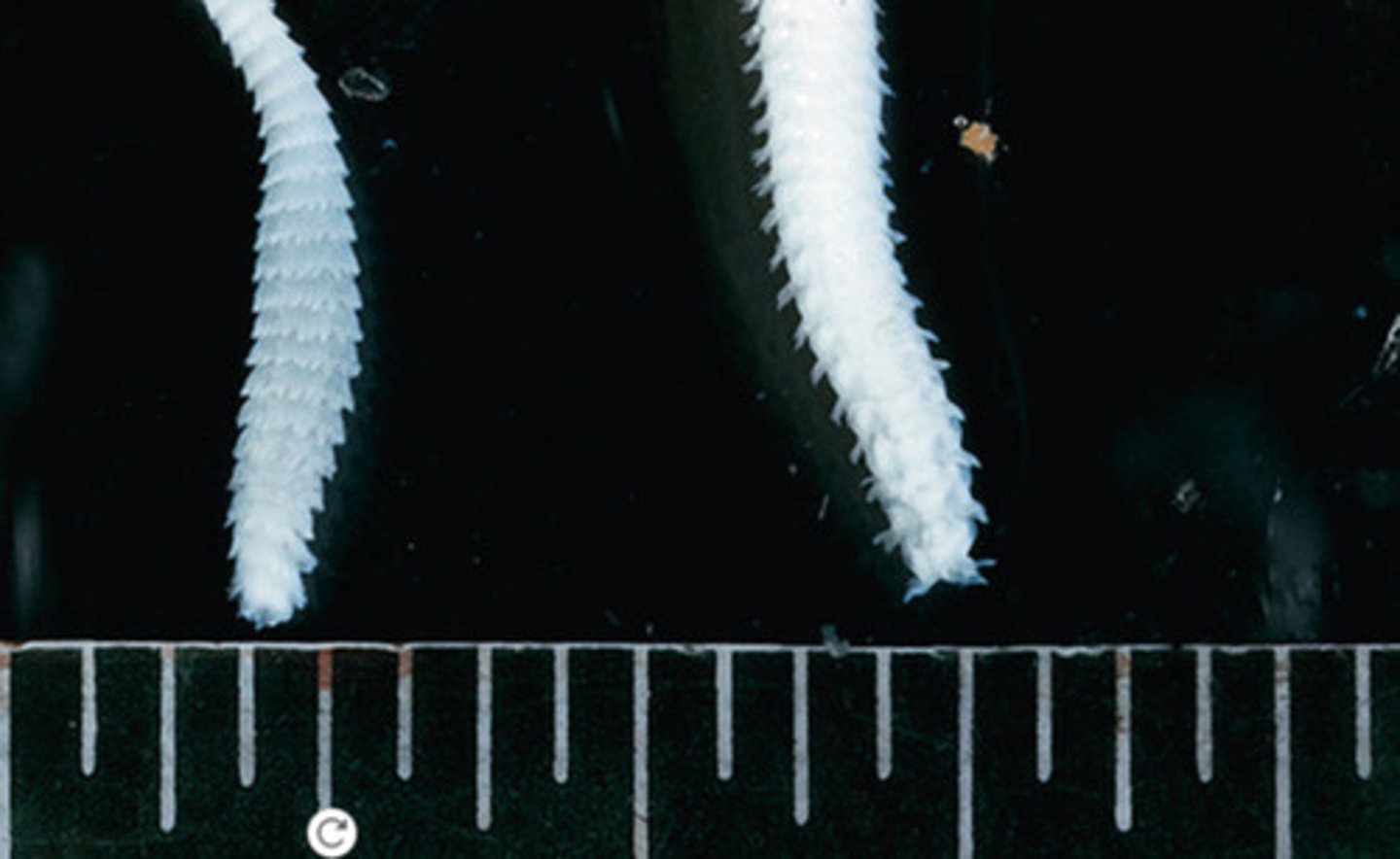
Thysanosoma actinides
- fringed tapeworm of sheep and goats
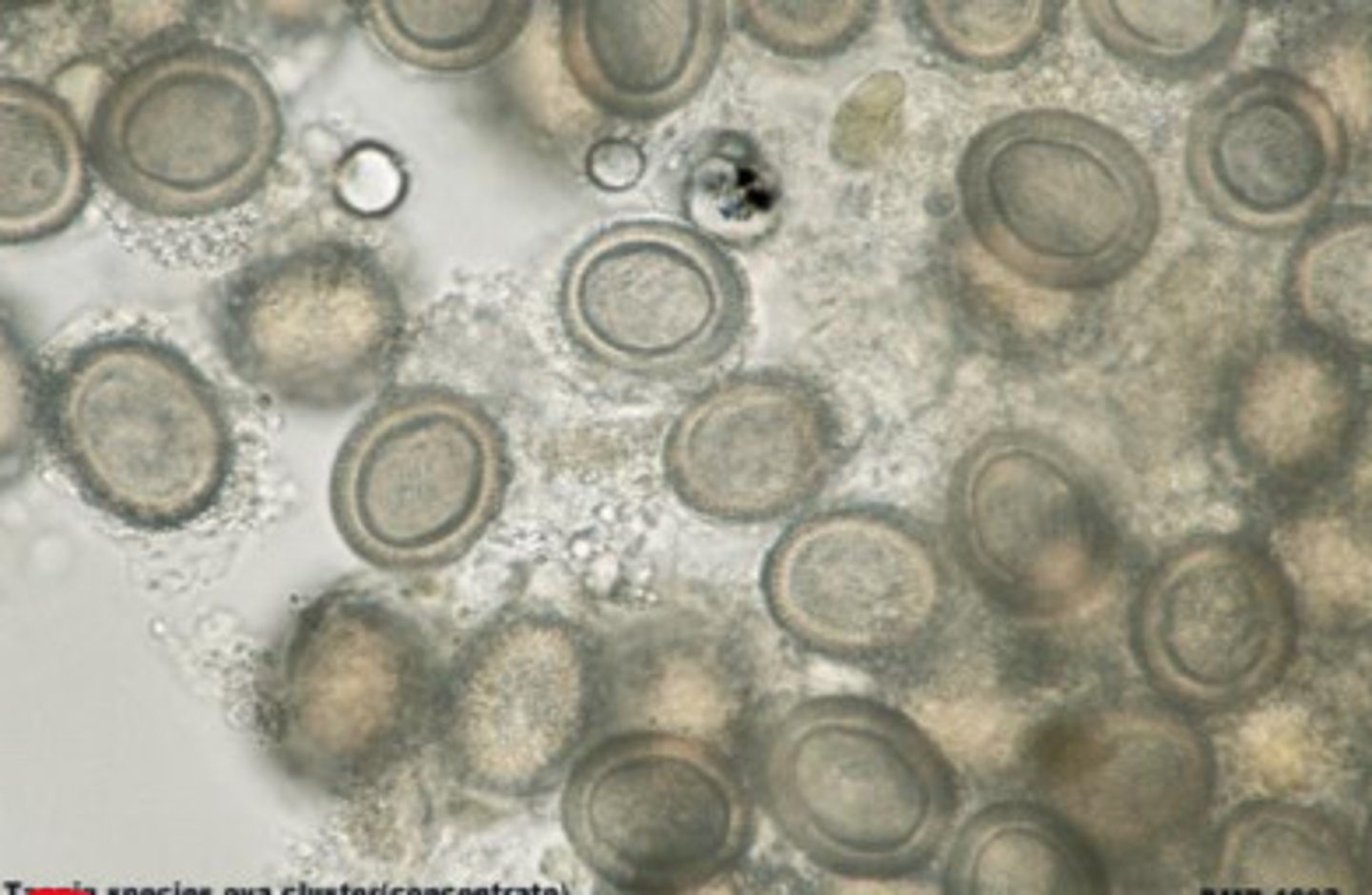
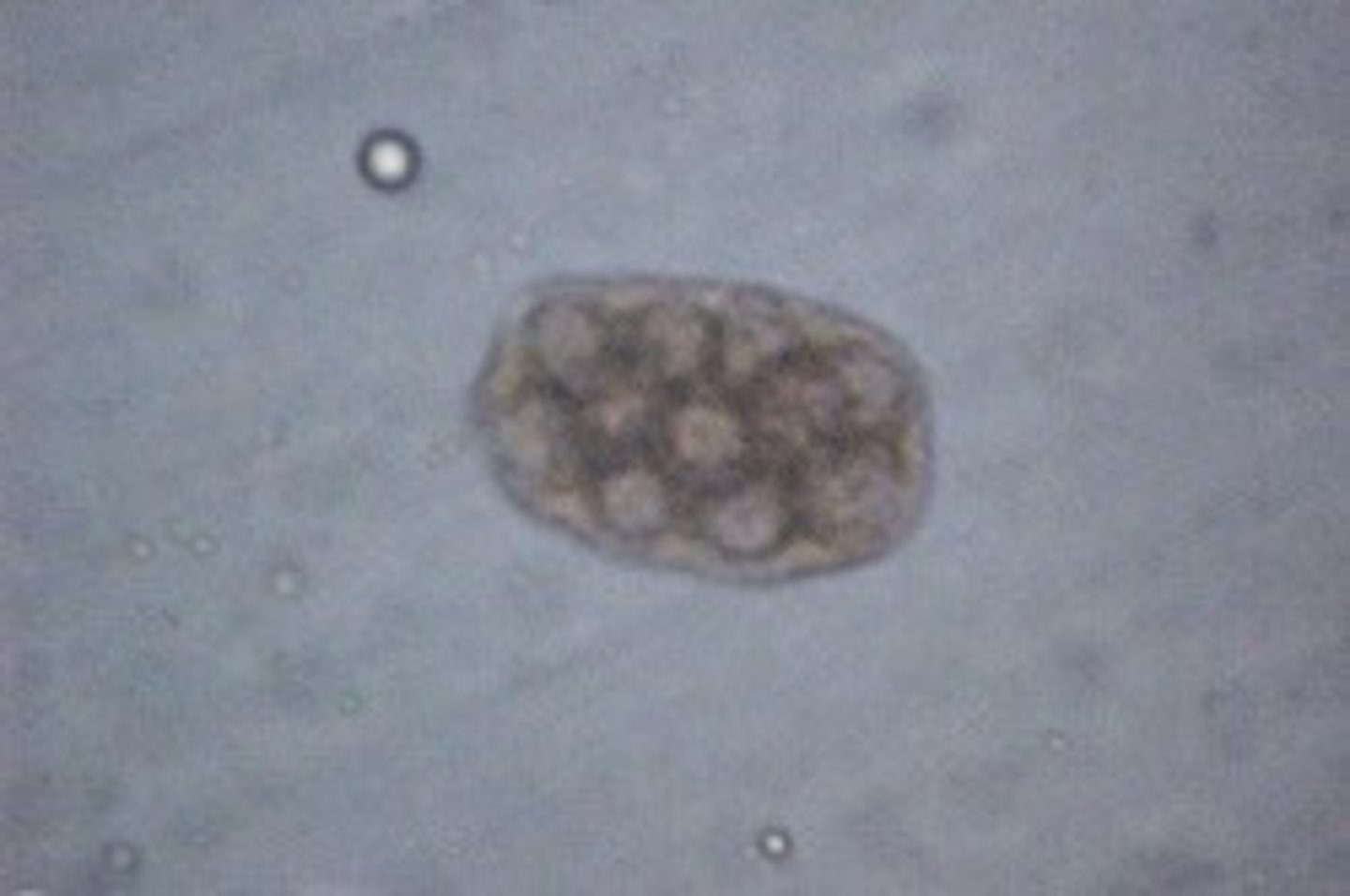
Taenia spp - typical taeniid type egg
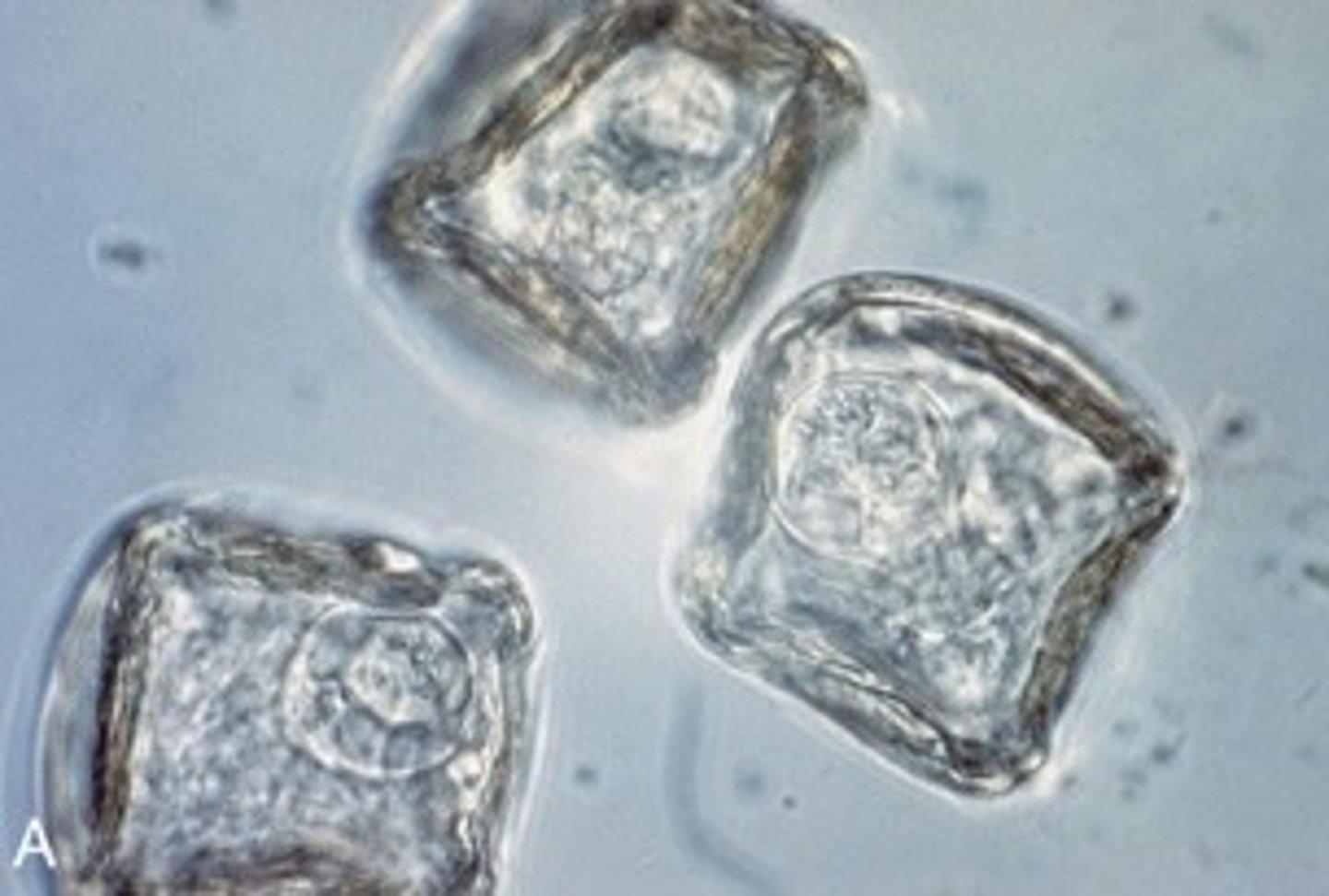
Pyriform apparatus type eggs
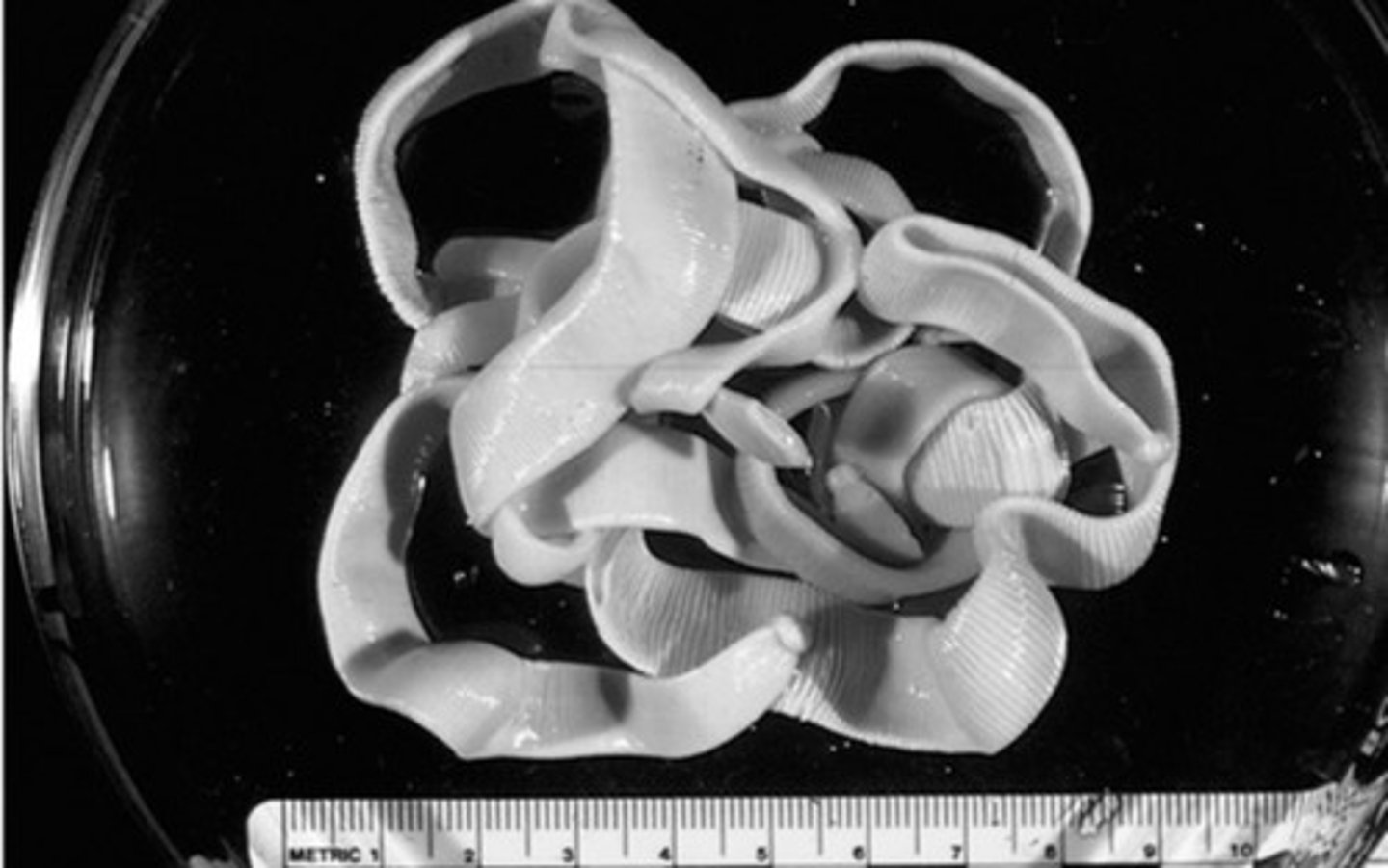
Anoplocephala manga
- large scolex tapeworm of horses
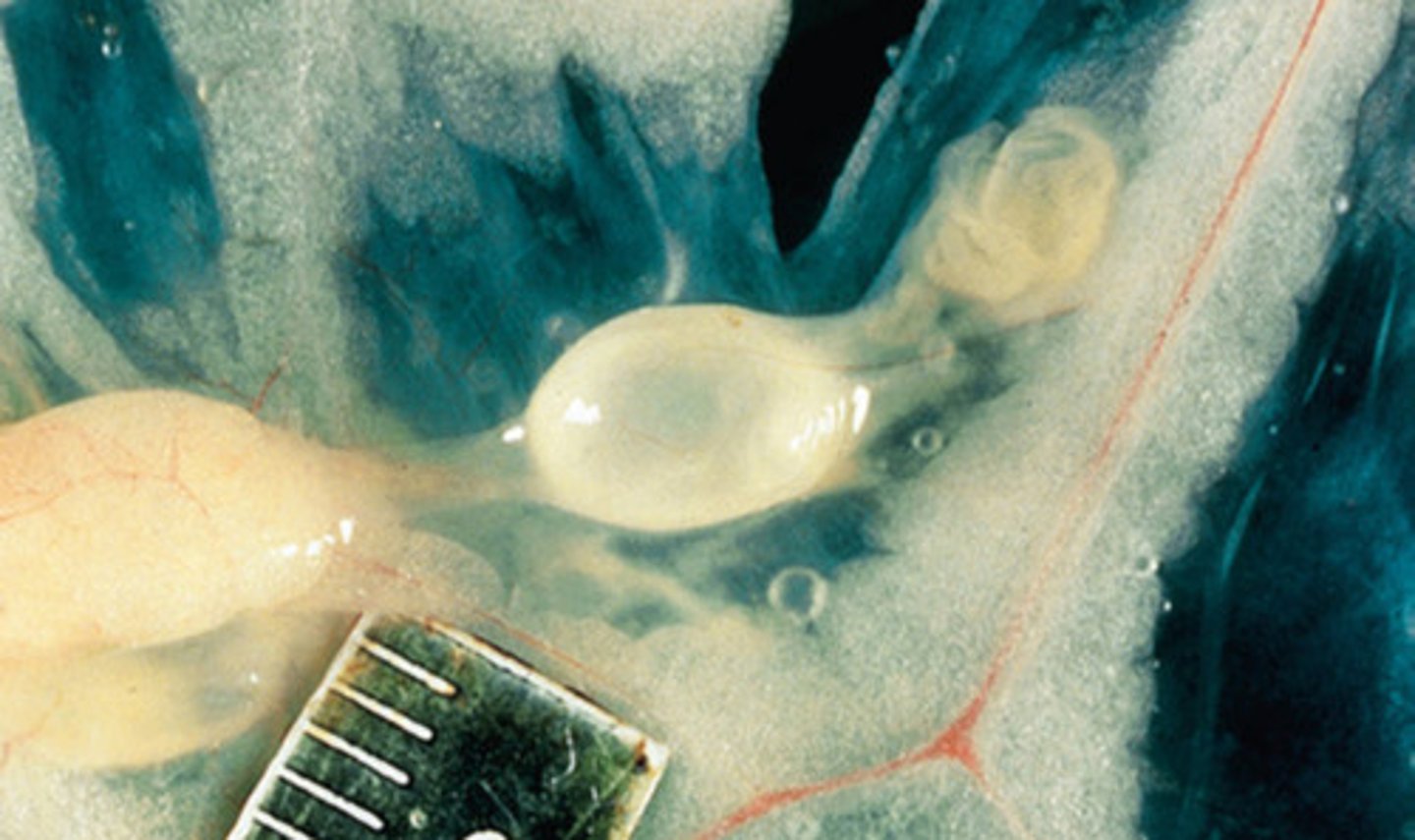
Taenia pisiformis
- canine taeniid with rabbit intermediate host
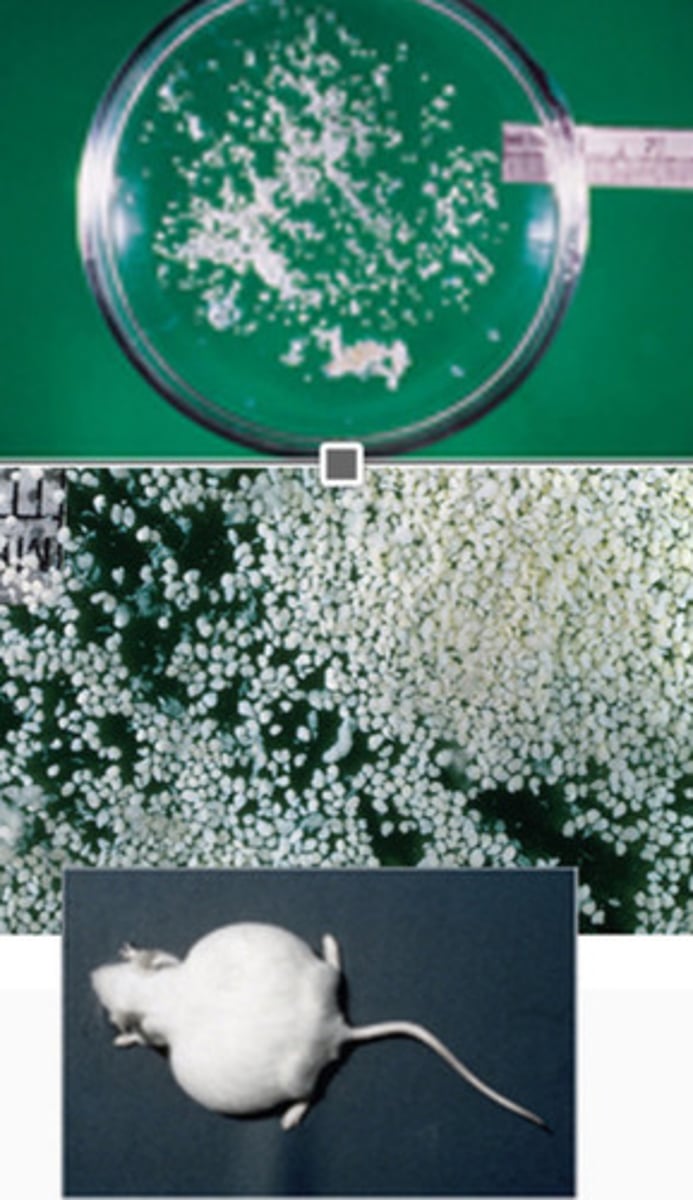
Dipylidium egg
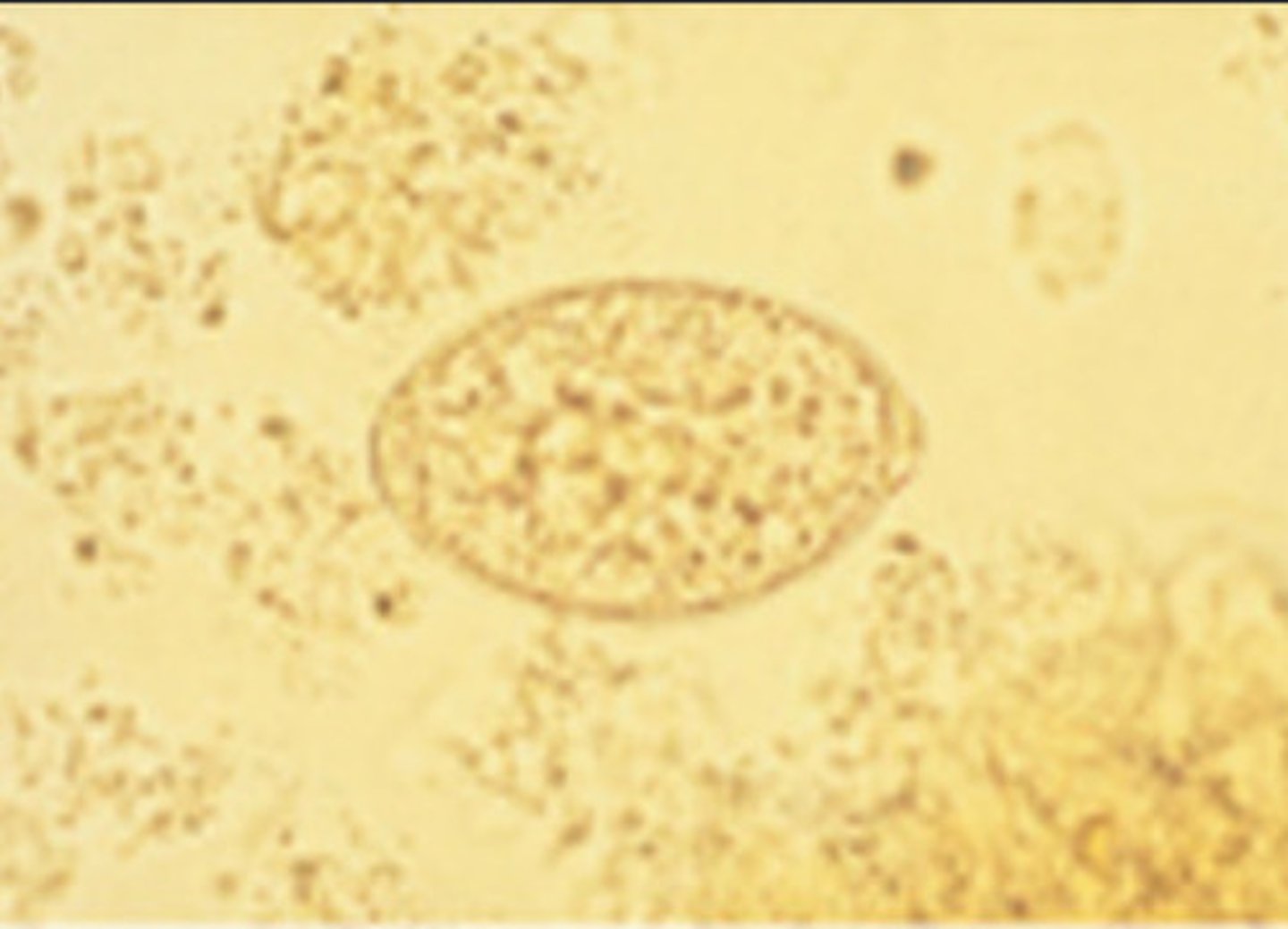
Metacestode spp.
- tetrathyridium tapeworm (dogs, cats, and carnivores)
Spirometra spp.
- zipper pseudotapeworm of dogs and cats
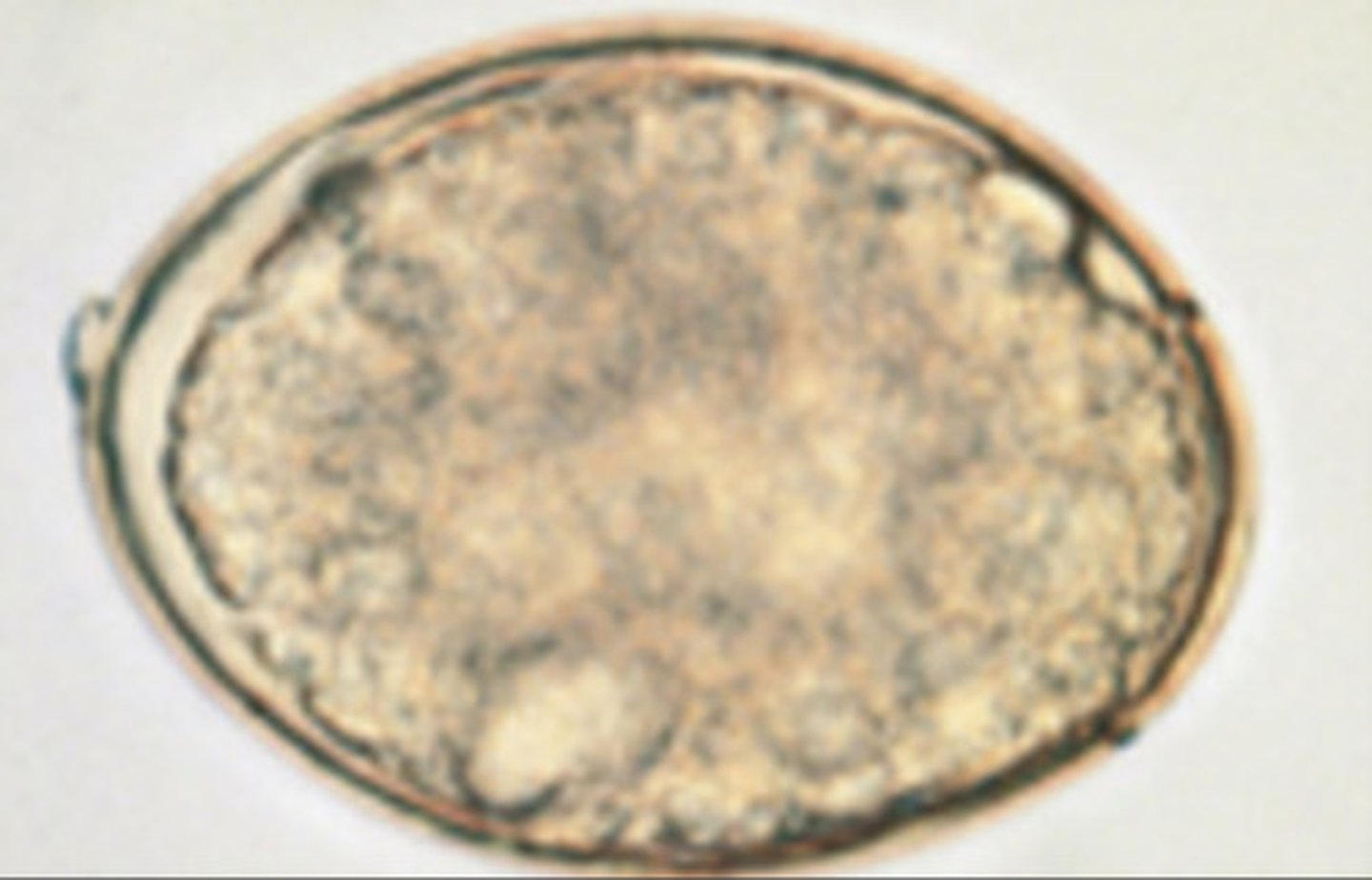
Diphyllobothrium spp.
- broad fish pseudotapeworm of dogs and cats
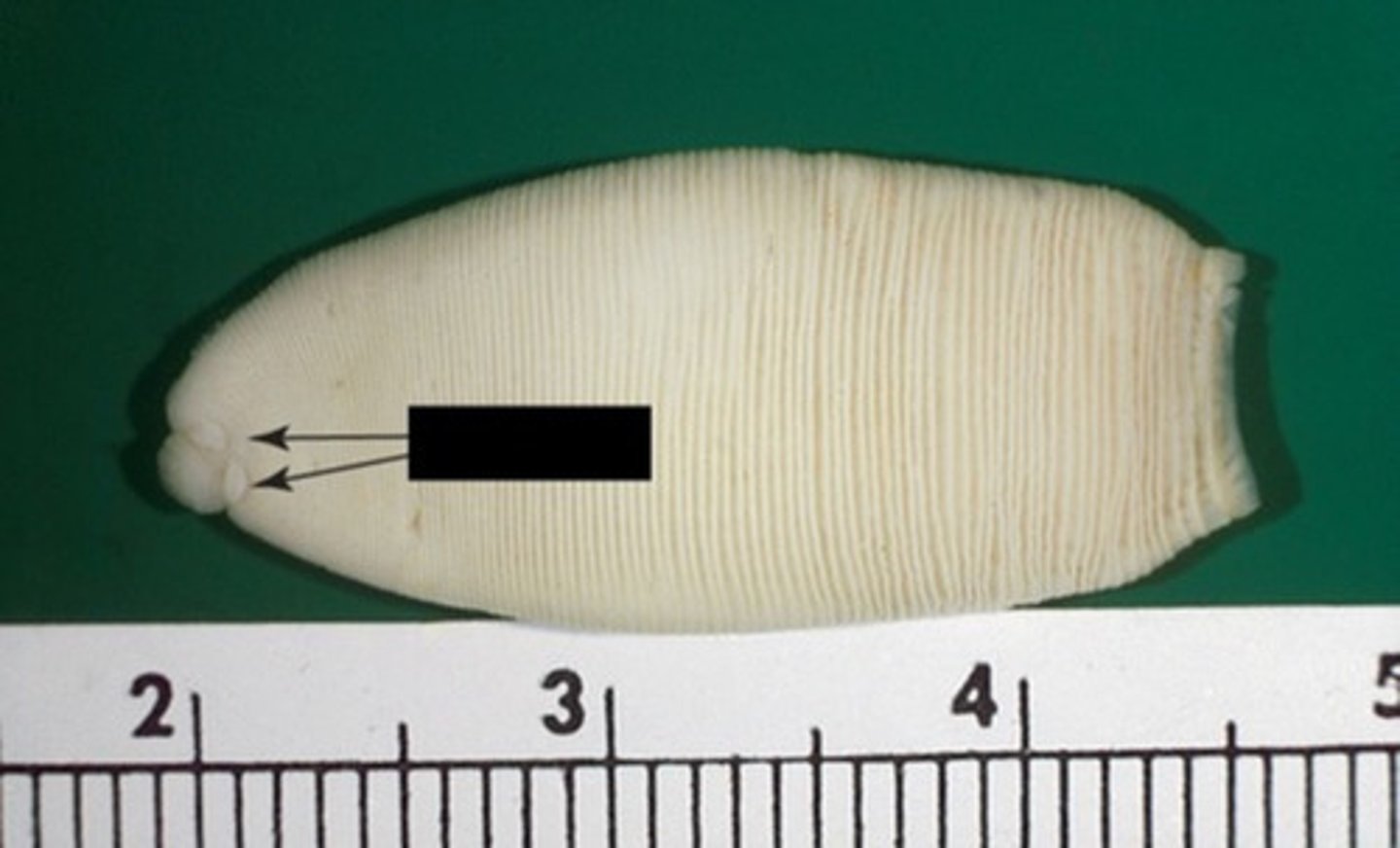
What is the type of tapeworm, and what are the arrows pointing to?
Anocephala perfoliata (horses)
- lappets
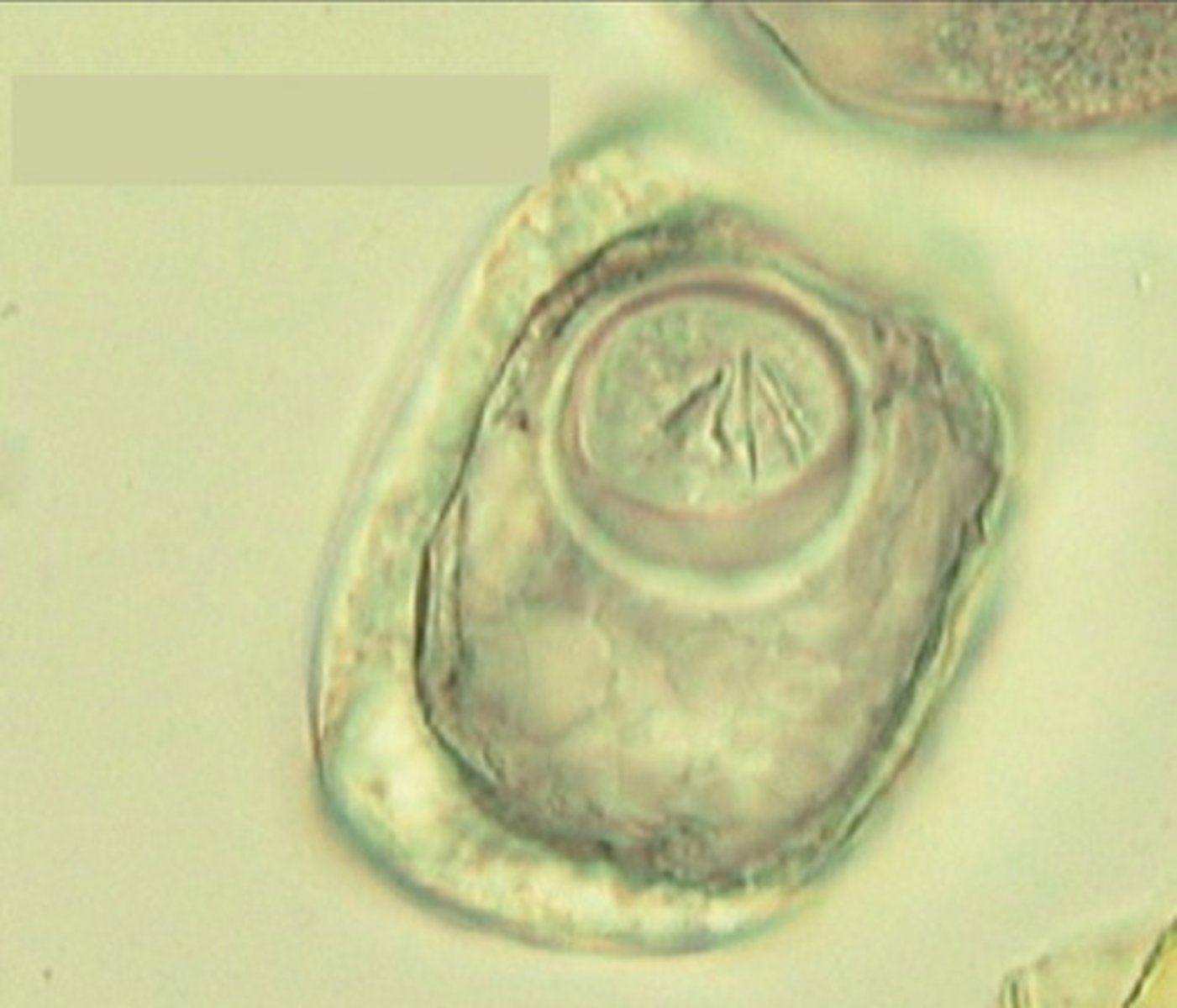
Monieza spp.
- ruminant tapeworm
- Pyriform apparatus type egg
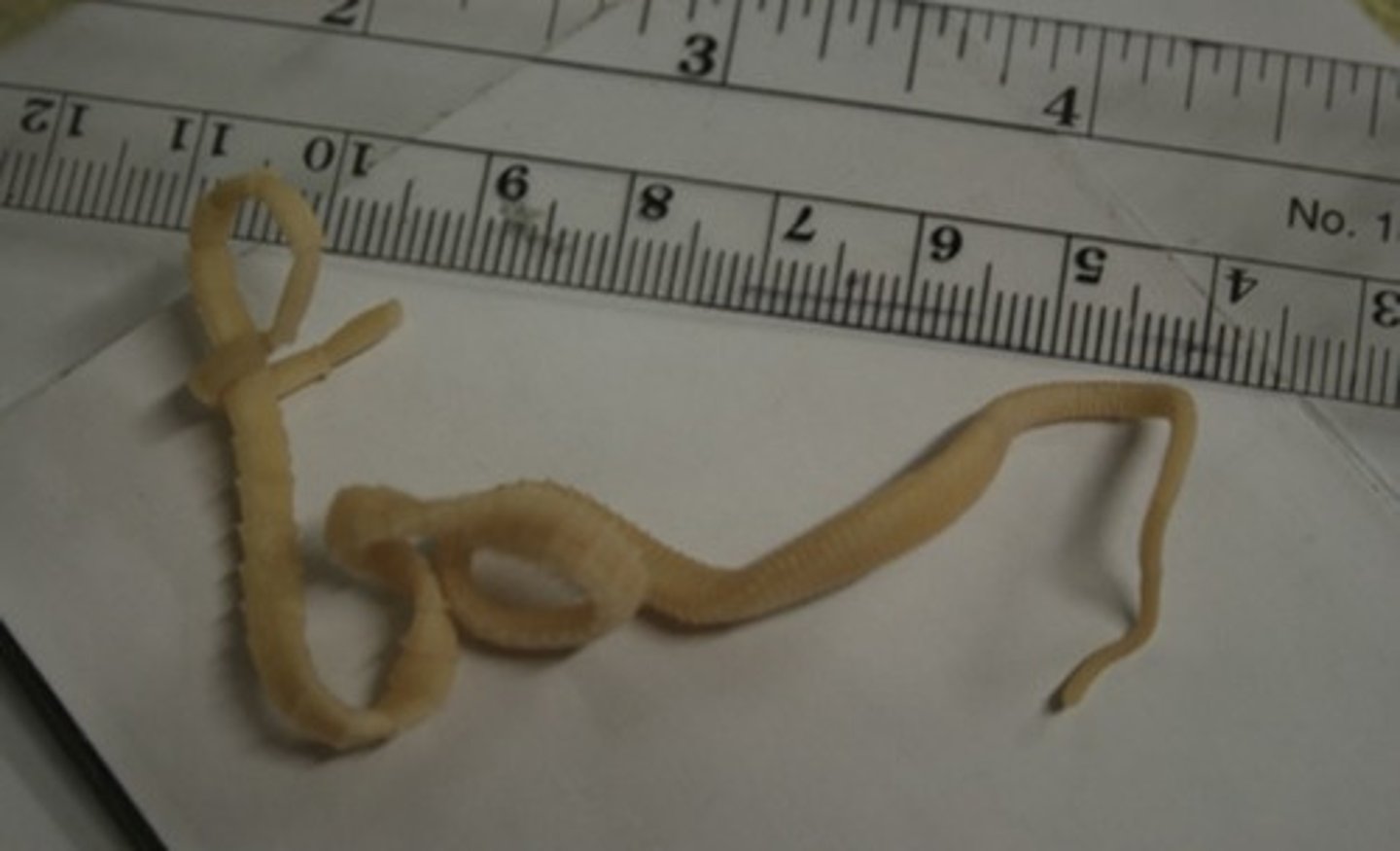
Dipylidium caninum
- double pored/ cucumber seed tapeworm of dogs
- classic tapeworm
- can be up to 50 cm long
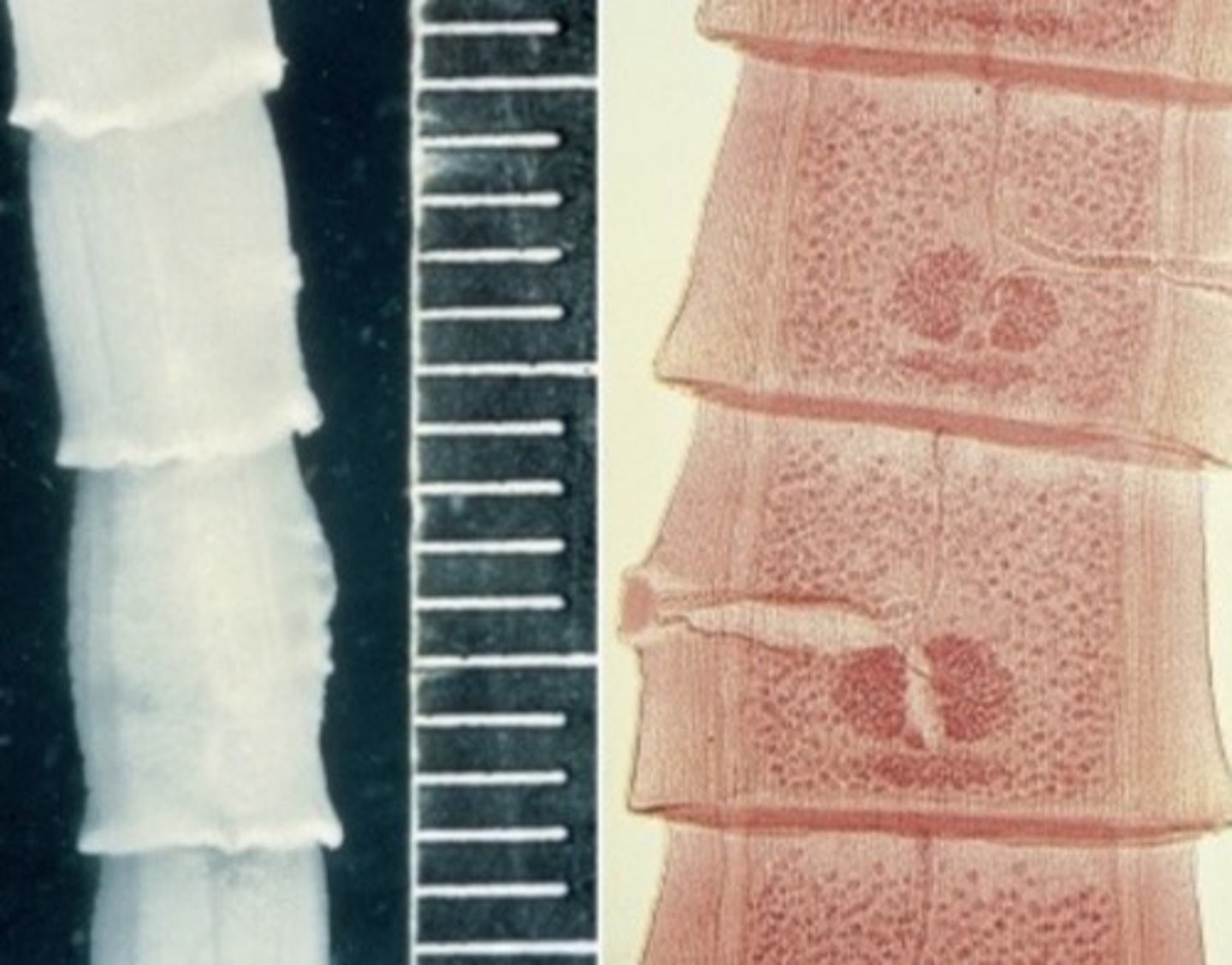
Eucestoda proglottids
- mature
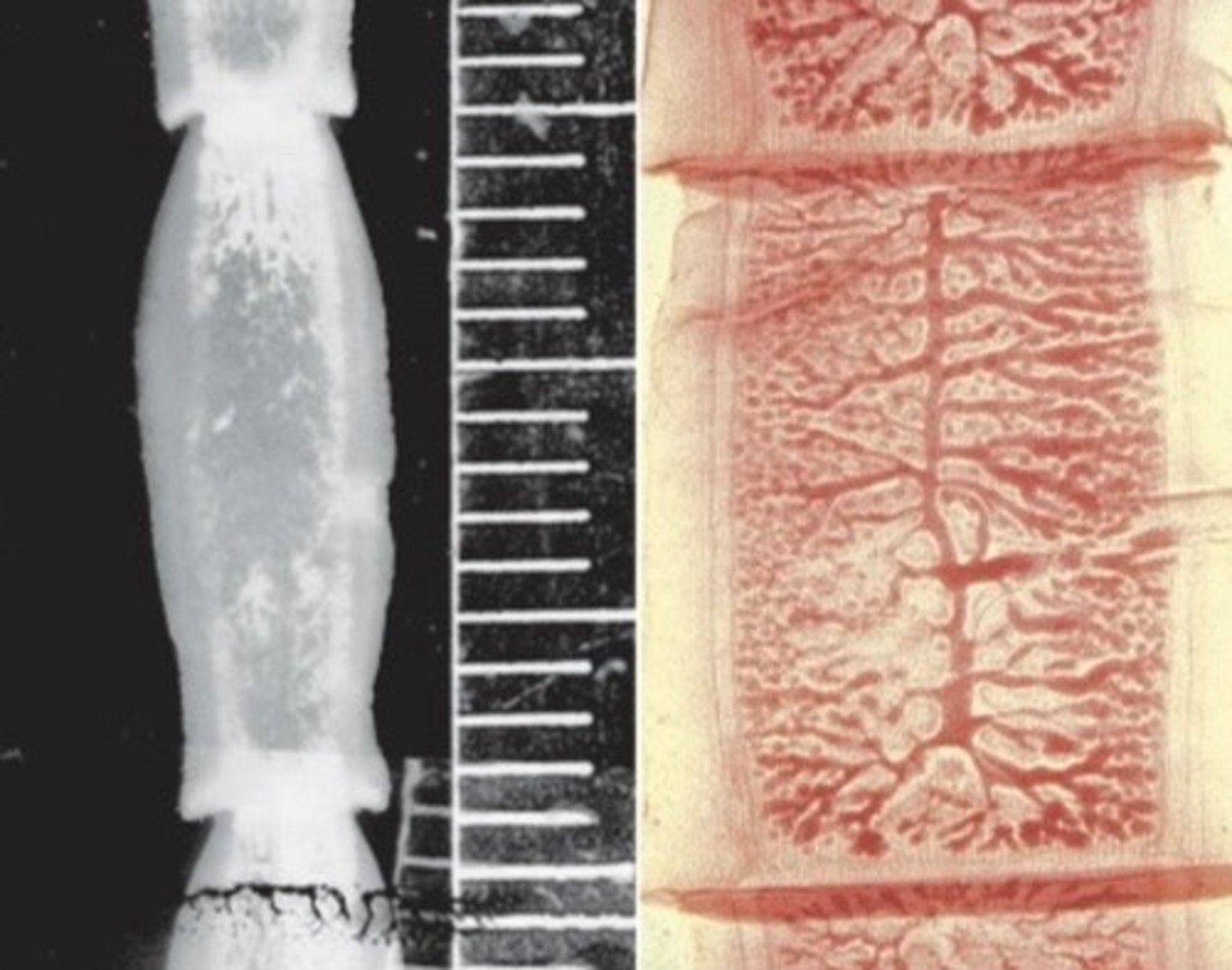
Eucestoda proglottids
- Gravid (aged)
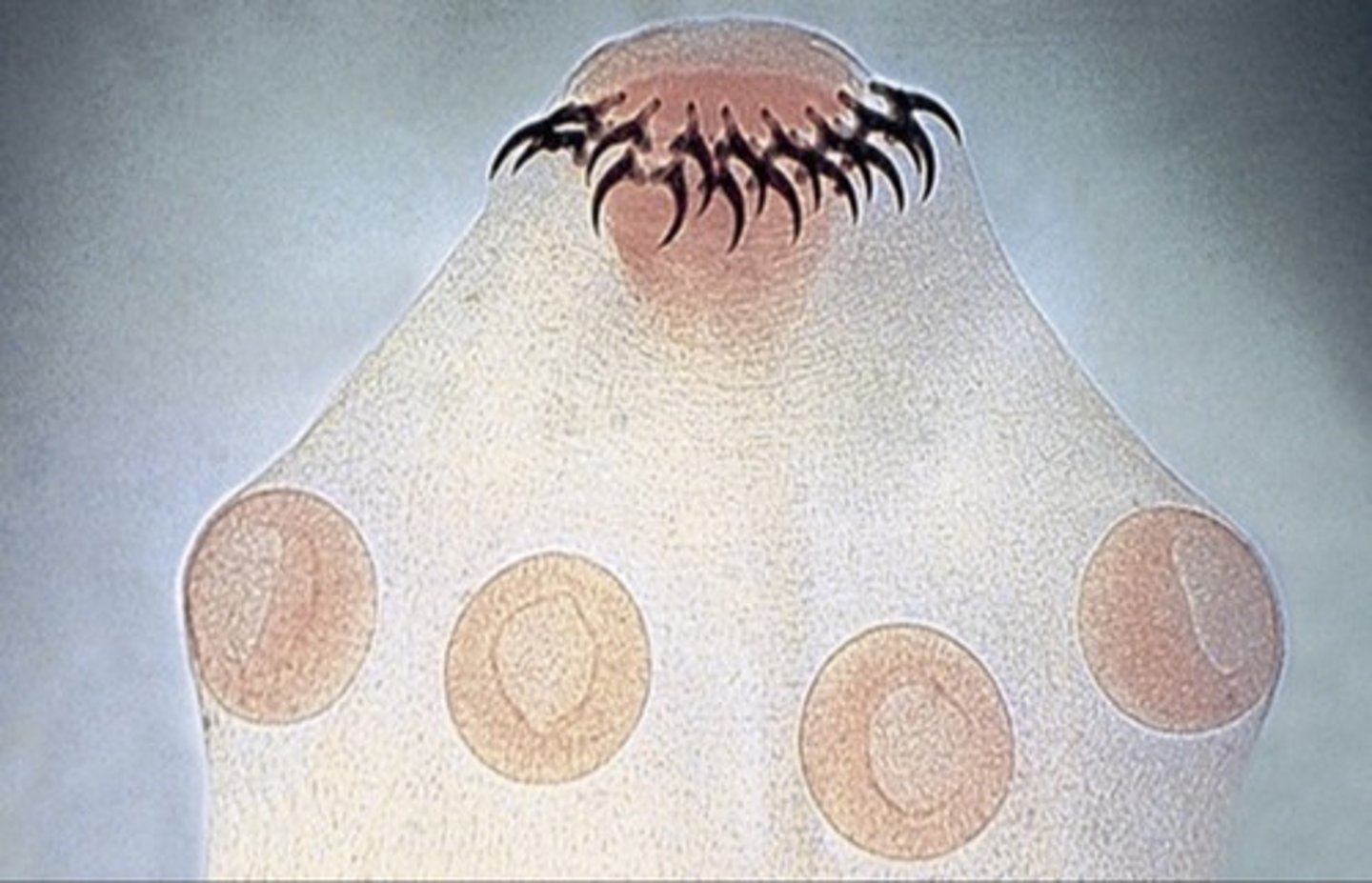
What are the four circle areas called?
Acetablula
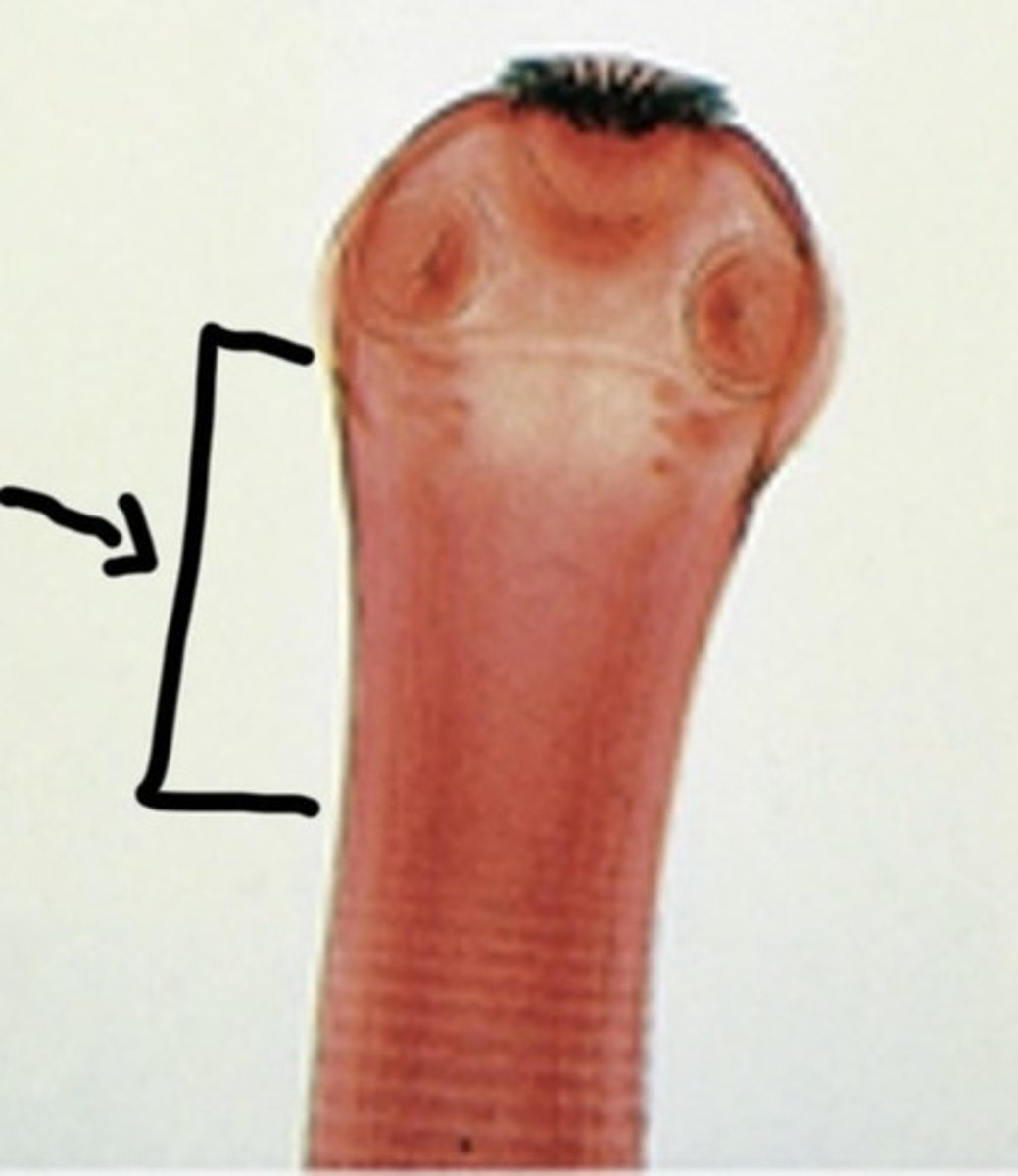
What is this pointing to?
Neck of a Eucestoda (true tapeworm)
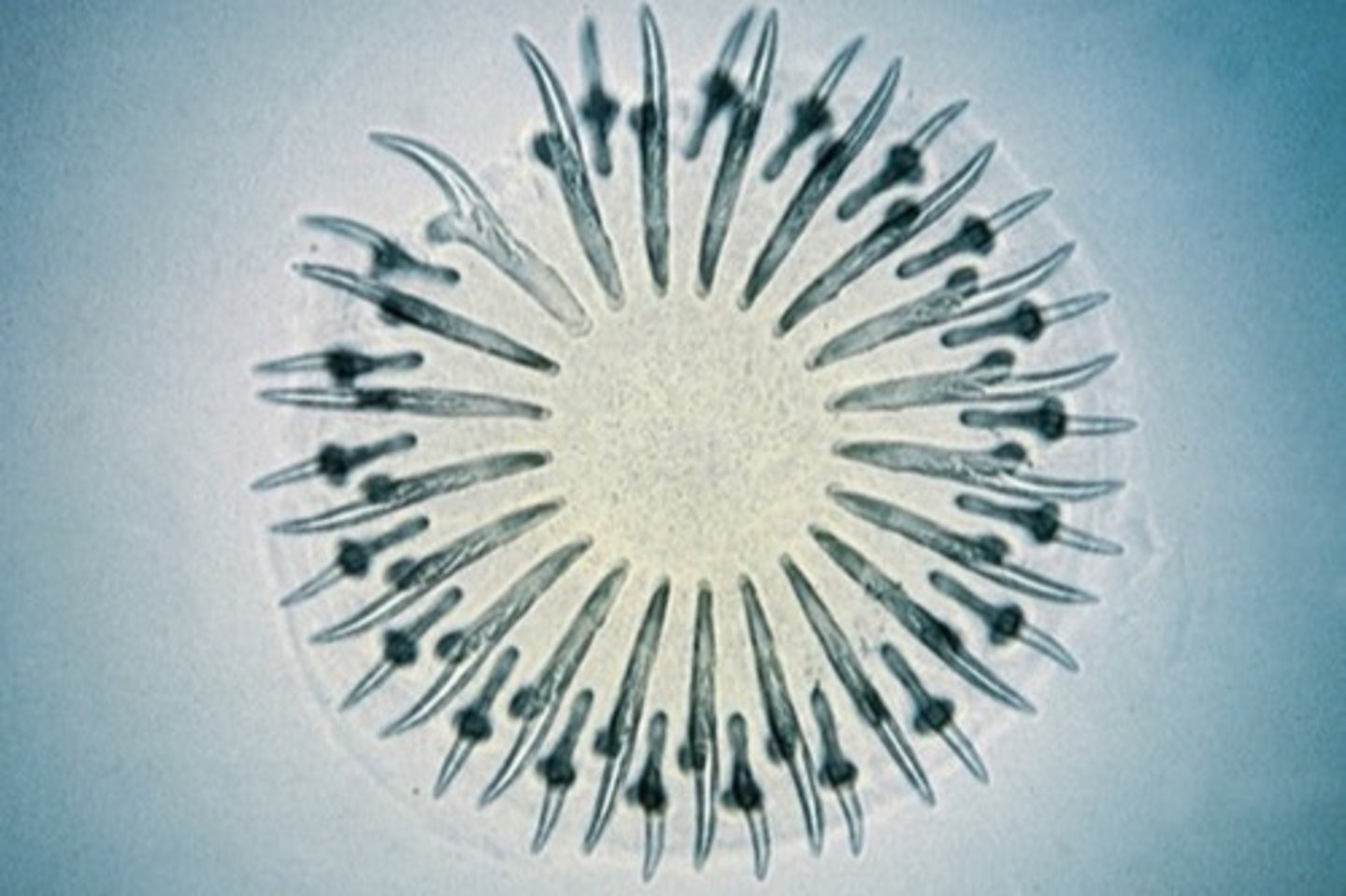
Rostellum of an armed Eucestoda (true tapeworm)
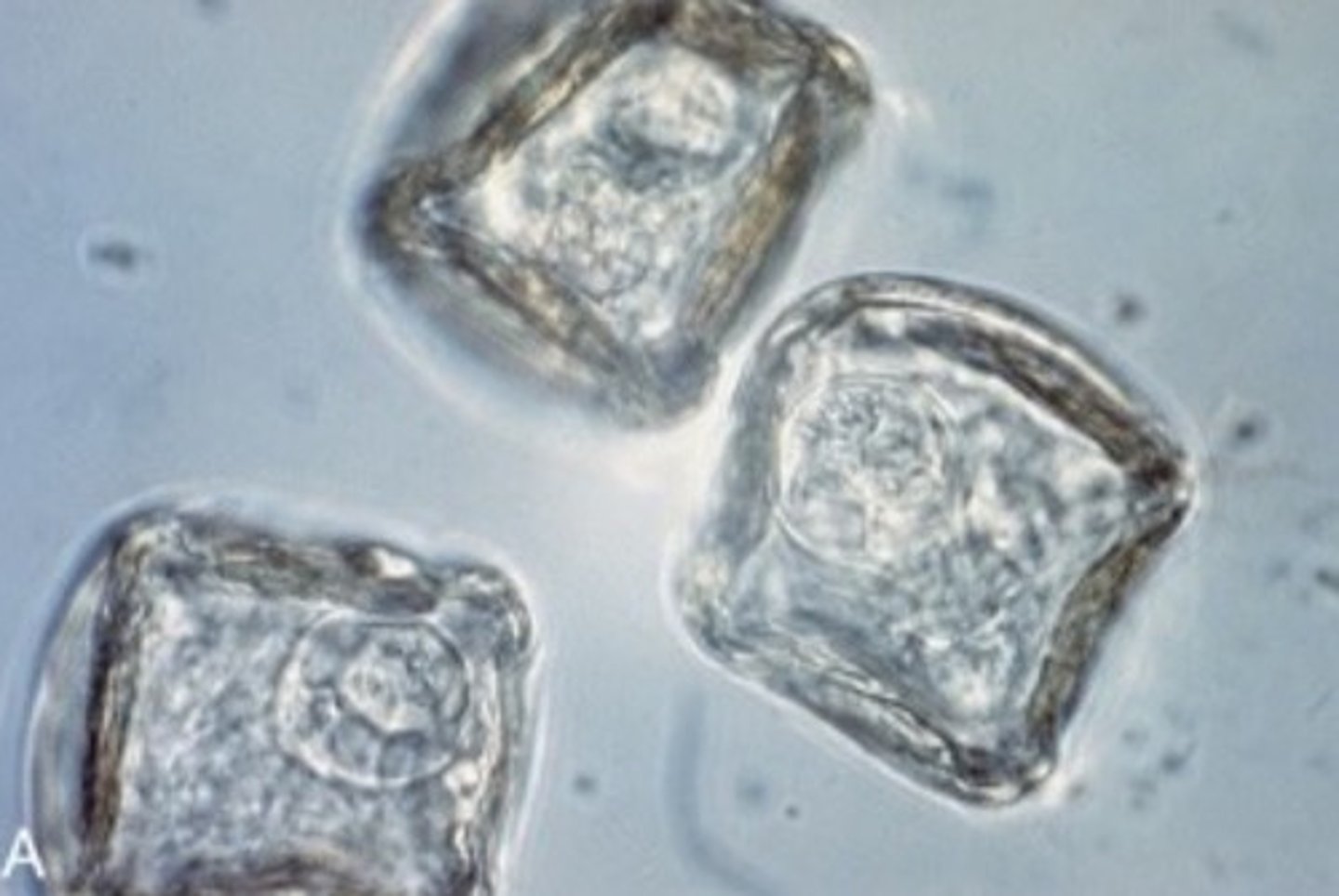
Pyriform apparatus type eggs
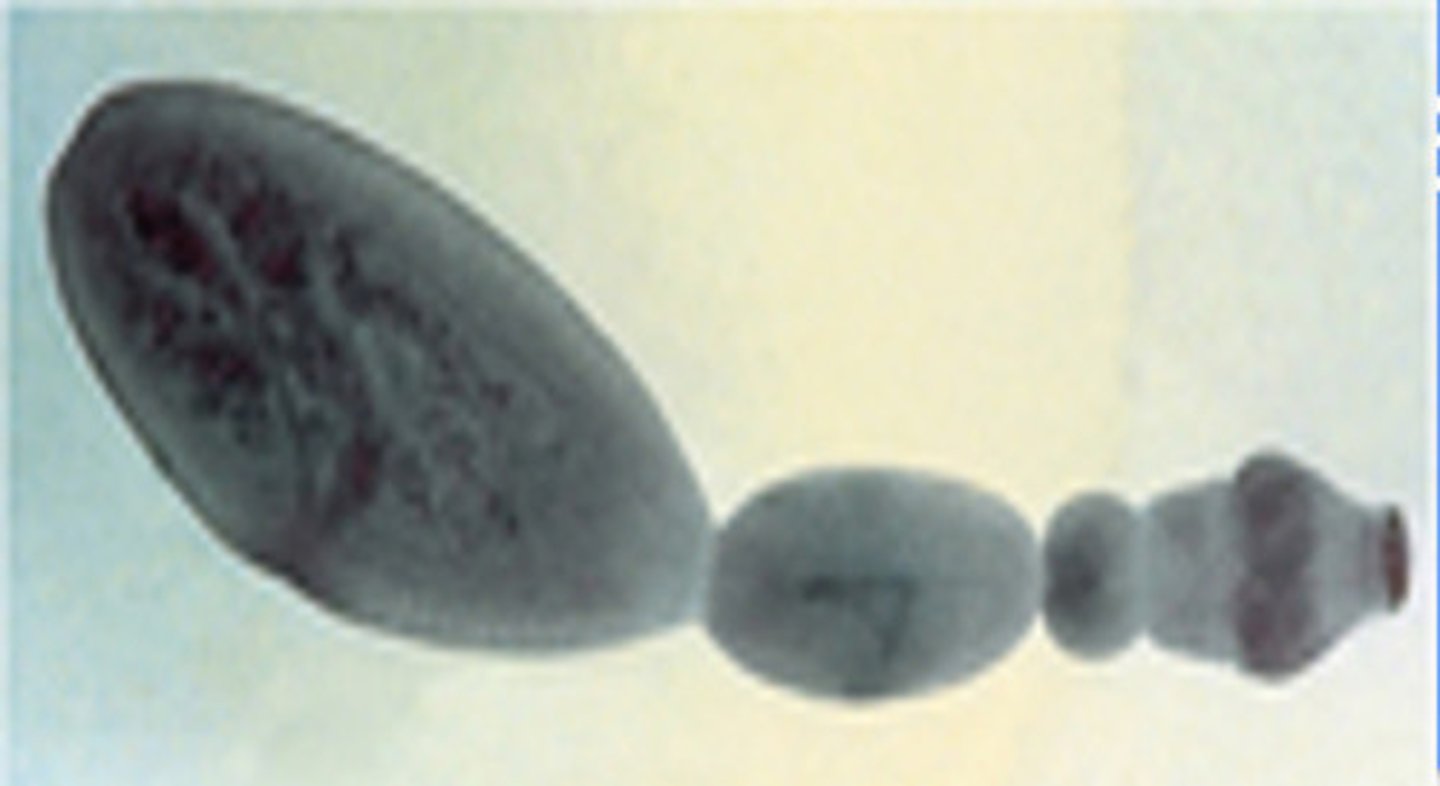
Echinococcus spp.
- hydatids of dogs and cats
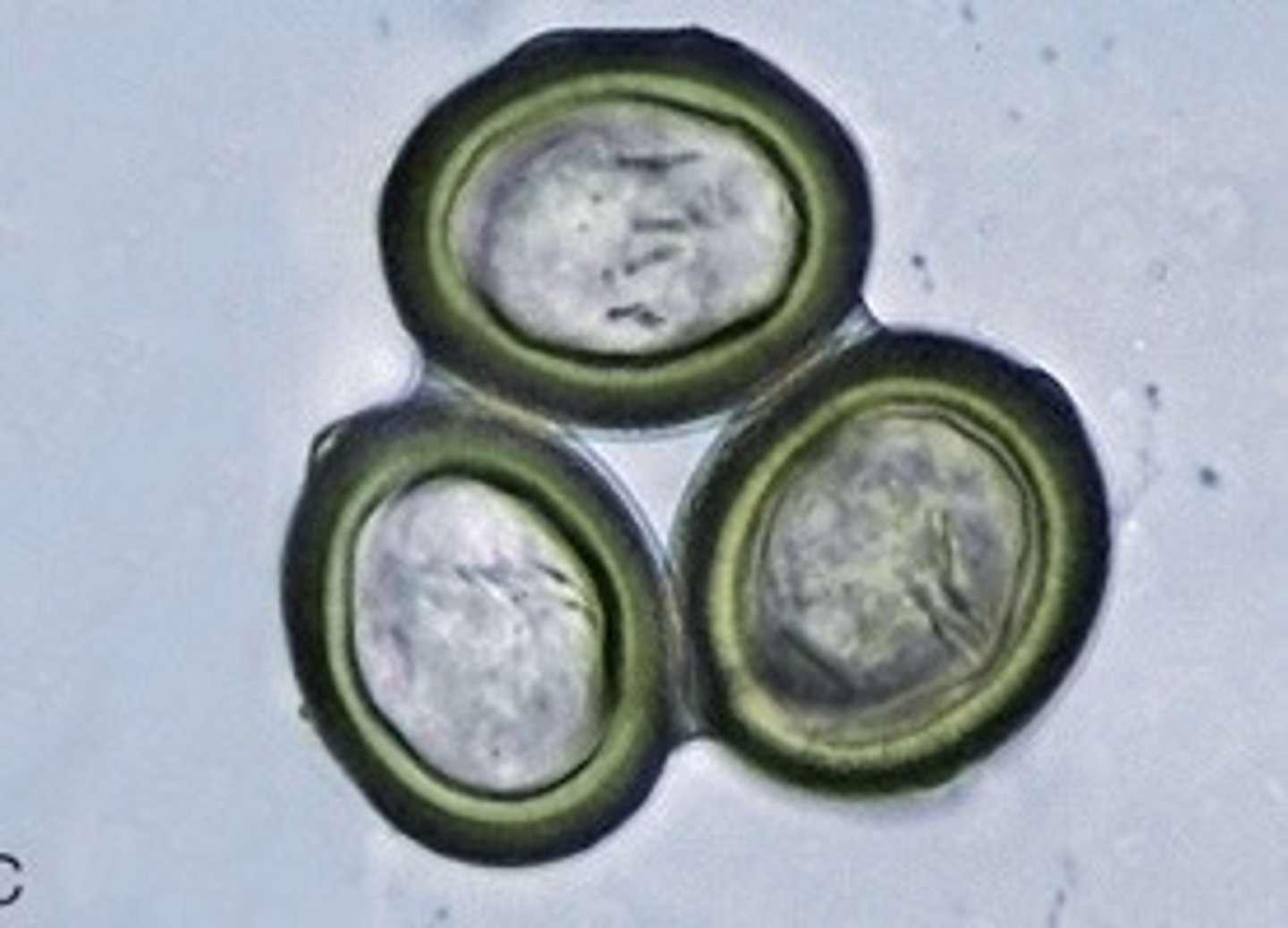
Taenia eggs
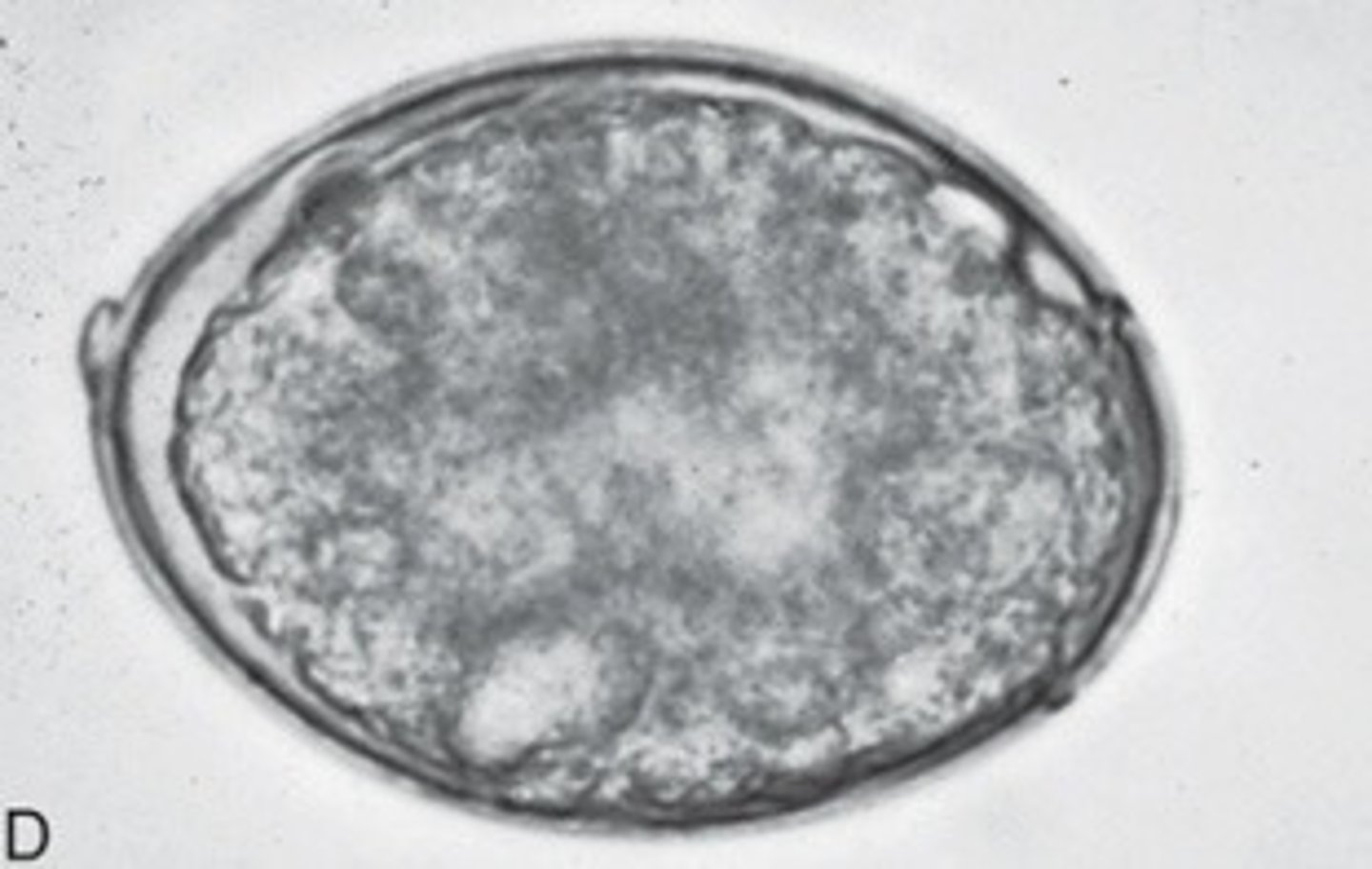
Pseudophyllidean egg
1. The phylum Acanthocephala has only ___ species of parasite(s) that are important to
veterinary medicine.
- What are they?
Two
- Macracanthorhynchus hirudinaceus (thorny-headed worm of swine)
- Oncicola canis (canine acanthocephalan)
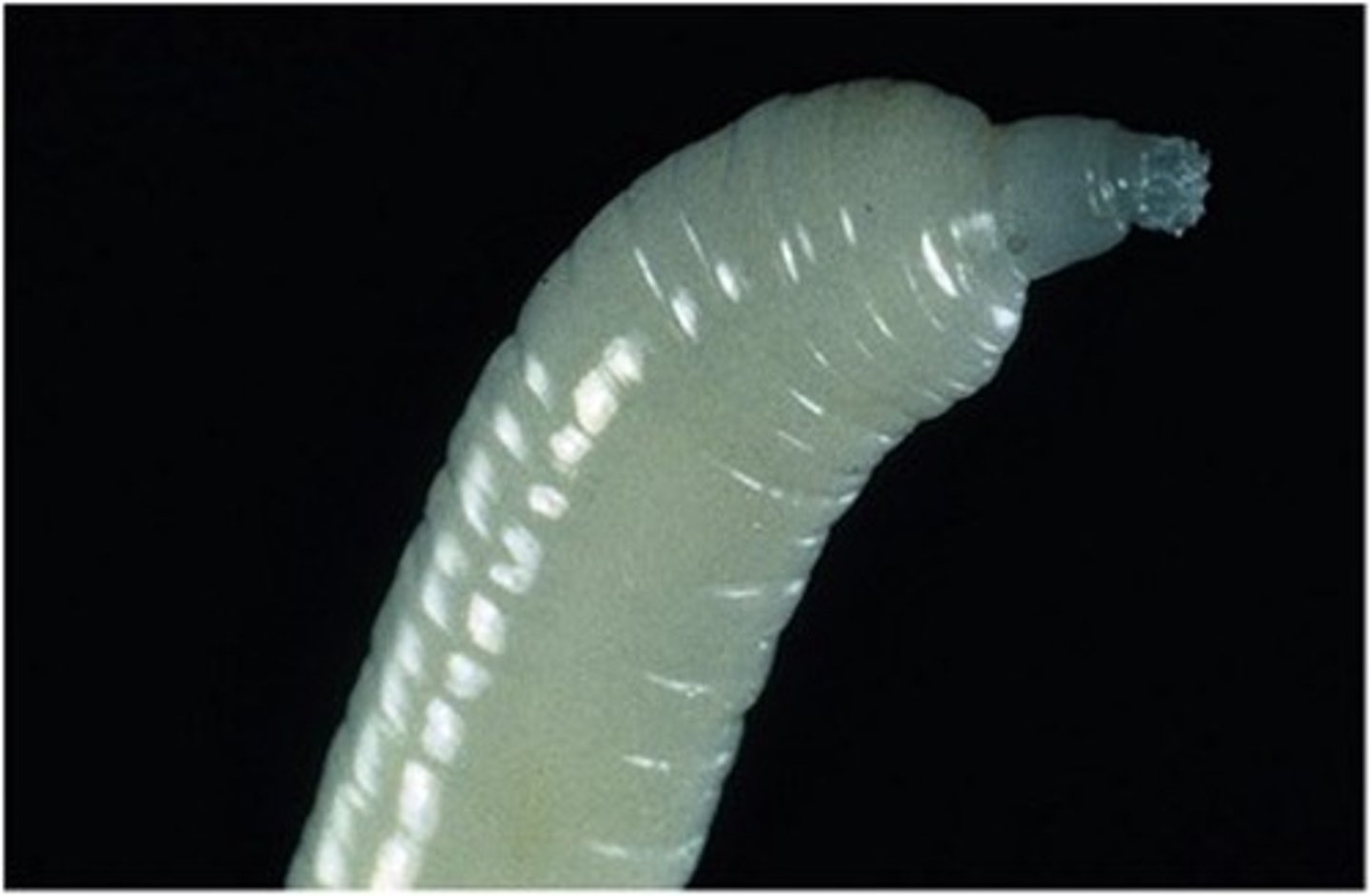
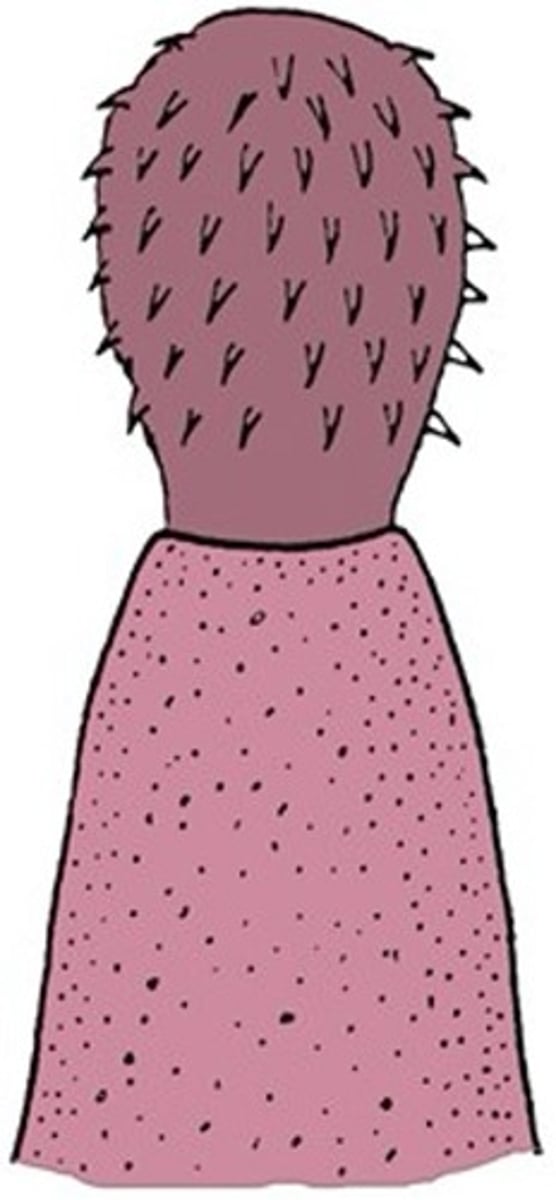
This Acanthocephalan of pigs gets its common name from the anterior end of its proboscis.
The common name is:
Thorny headed worm
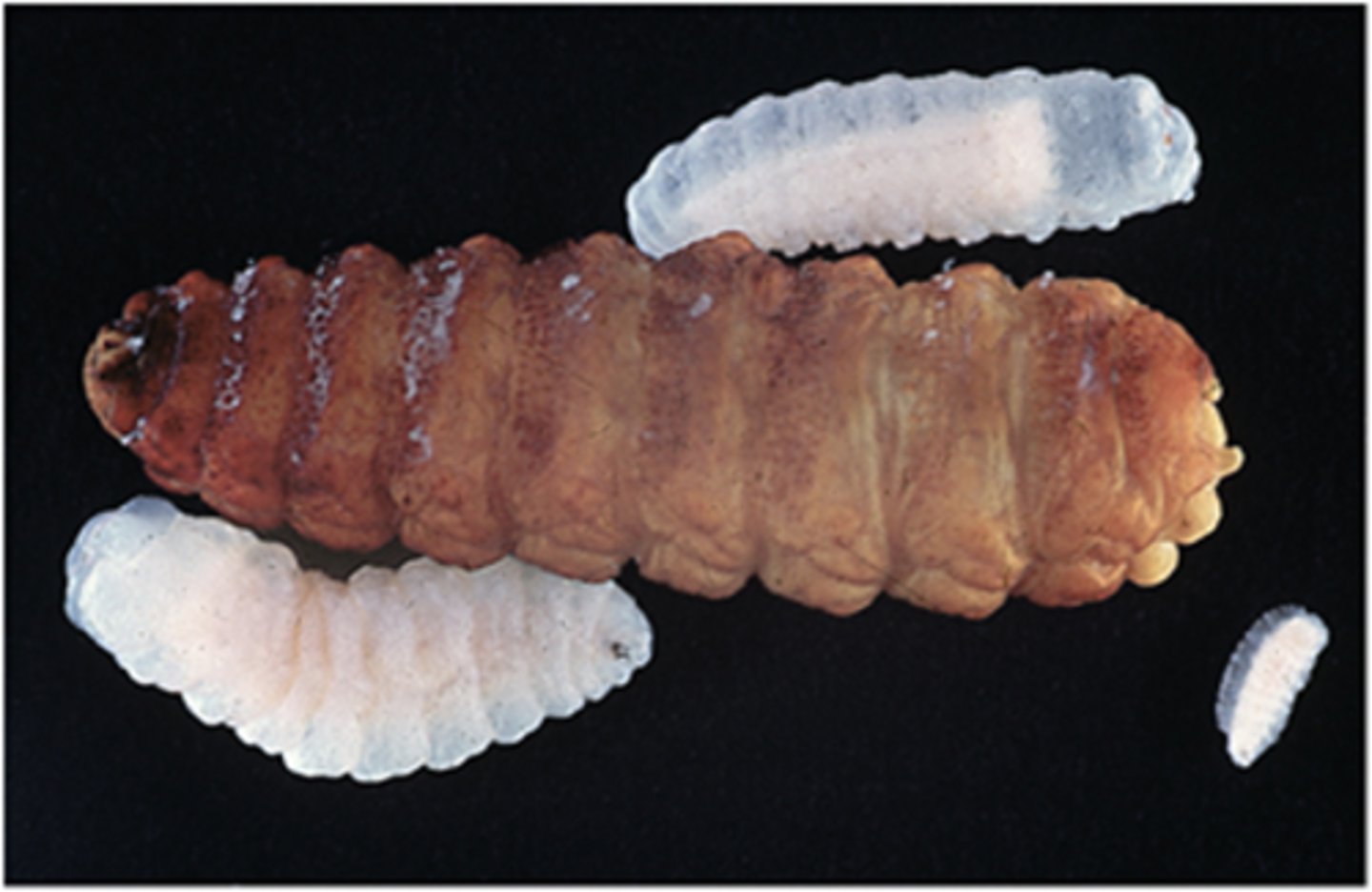
The larval stages seen here are produced by ______________ and found in the nasal
passages of sheep.
oestrus ovis
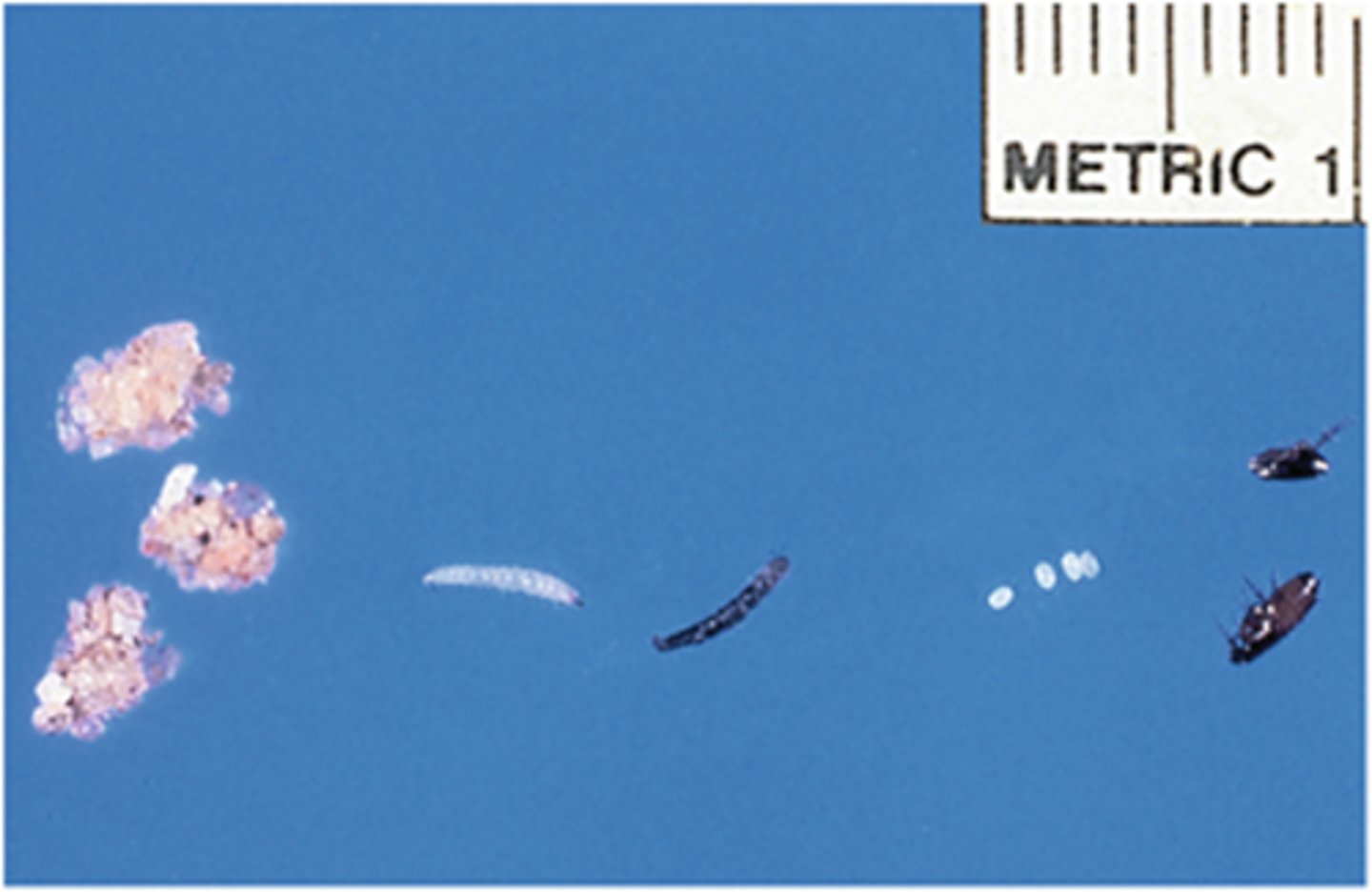
The life cycle stages in this picture illustrate the stages of the:
cat flea
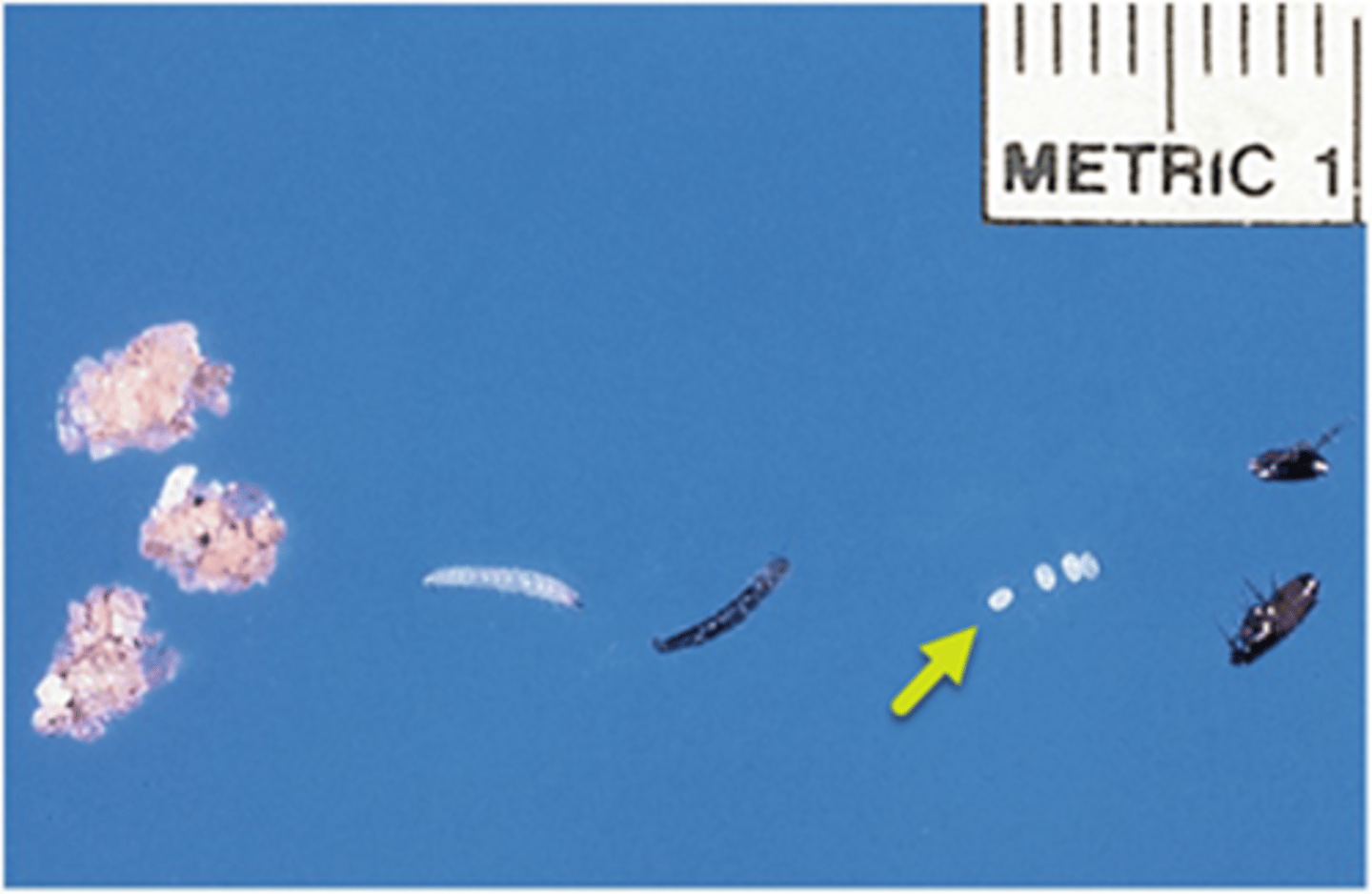
The yellow arrow is pointing to the ________ life cycle stage of the flea.
egg
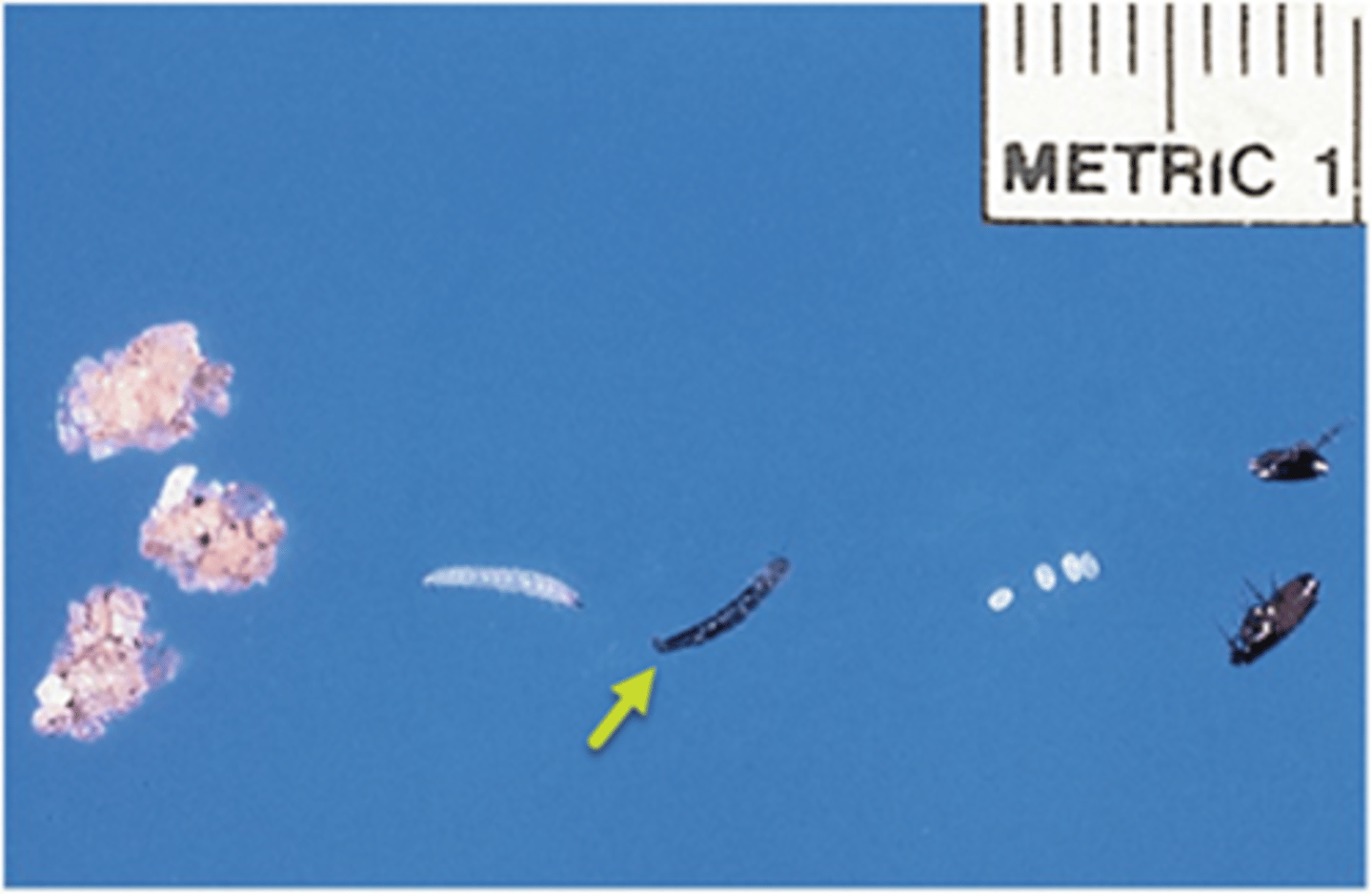
The yellow arrow is pointing to the _____________ life cycle stage of the flea.
larval
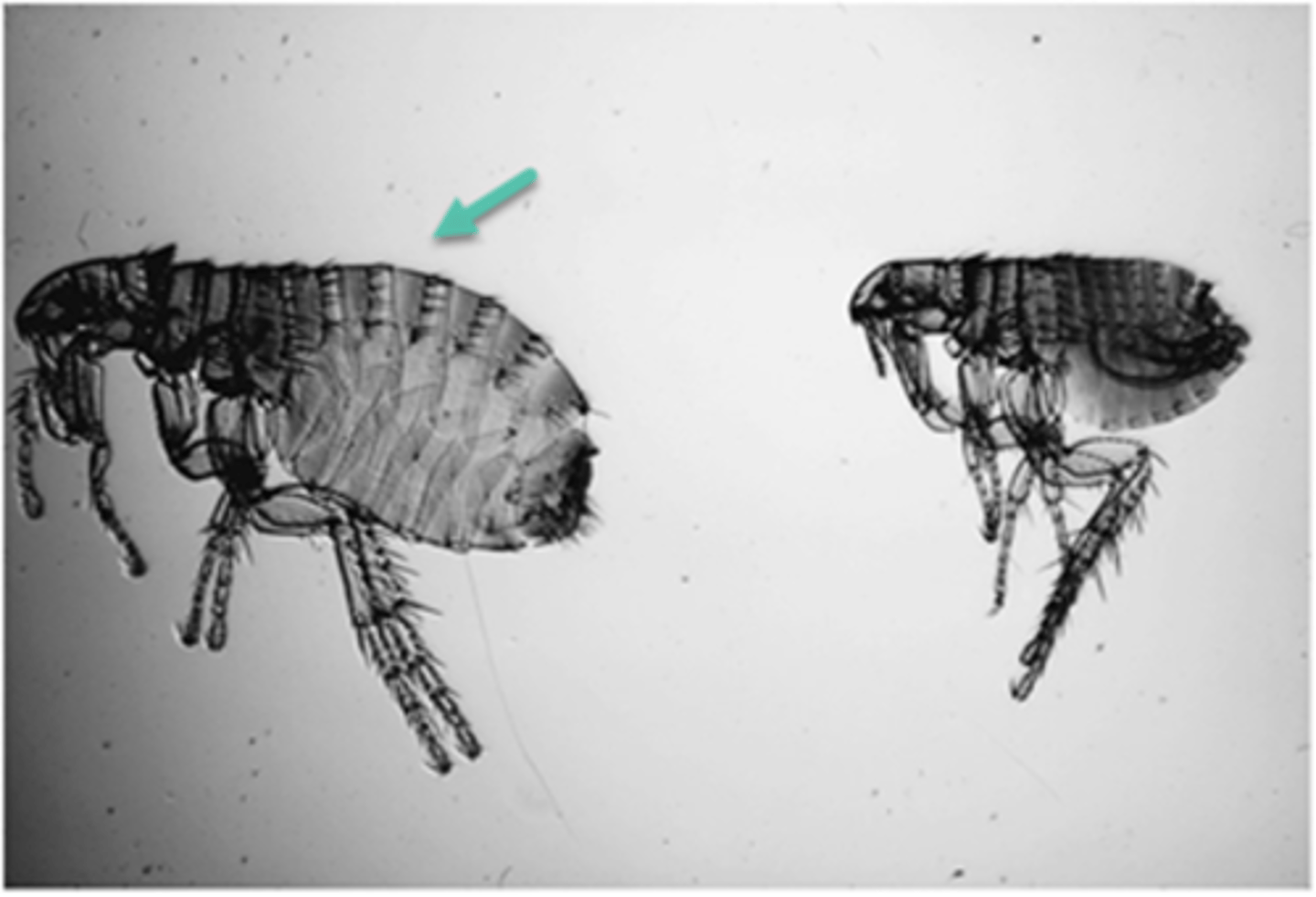
The flea on the left, denoted by the green arrow, is the ___________ flea.
female
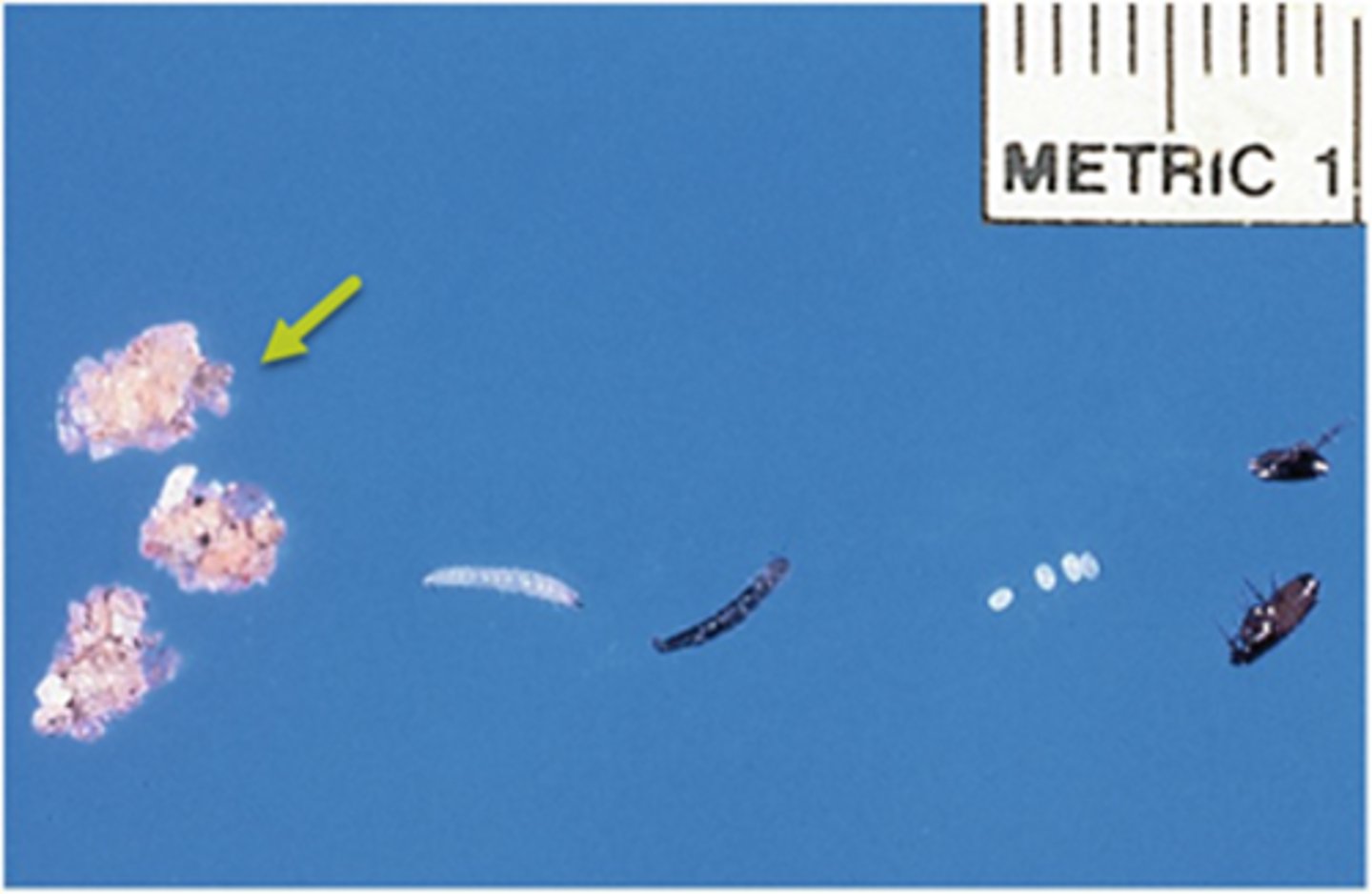
The yellow arrow points out the _______ life cycle stage of the flea.
pupal
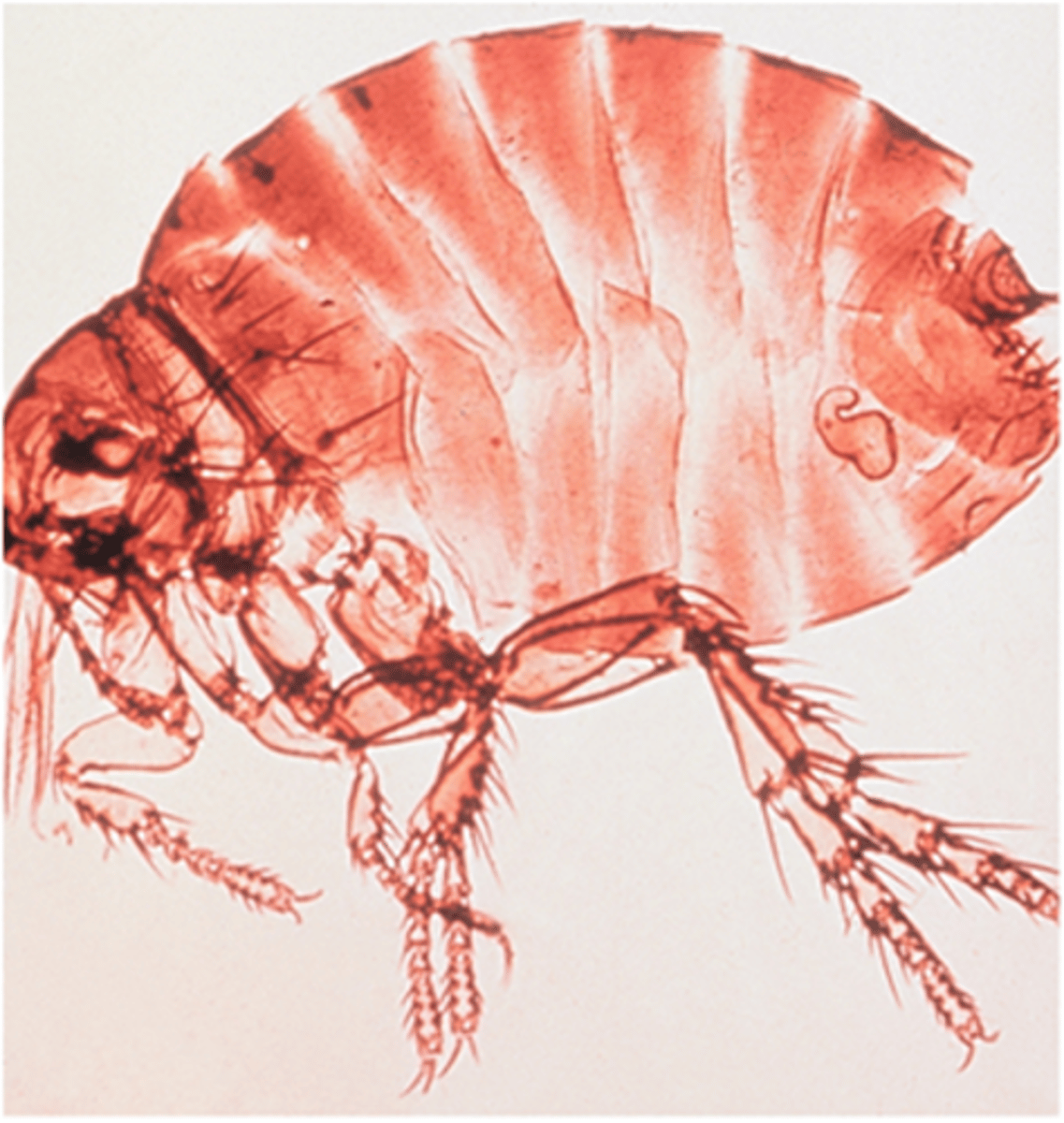
This flea of chickens and guinea fowl is known as:
echidnophaga gallinacea
- sticktight flea of poultry
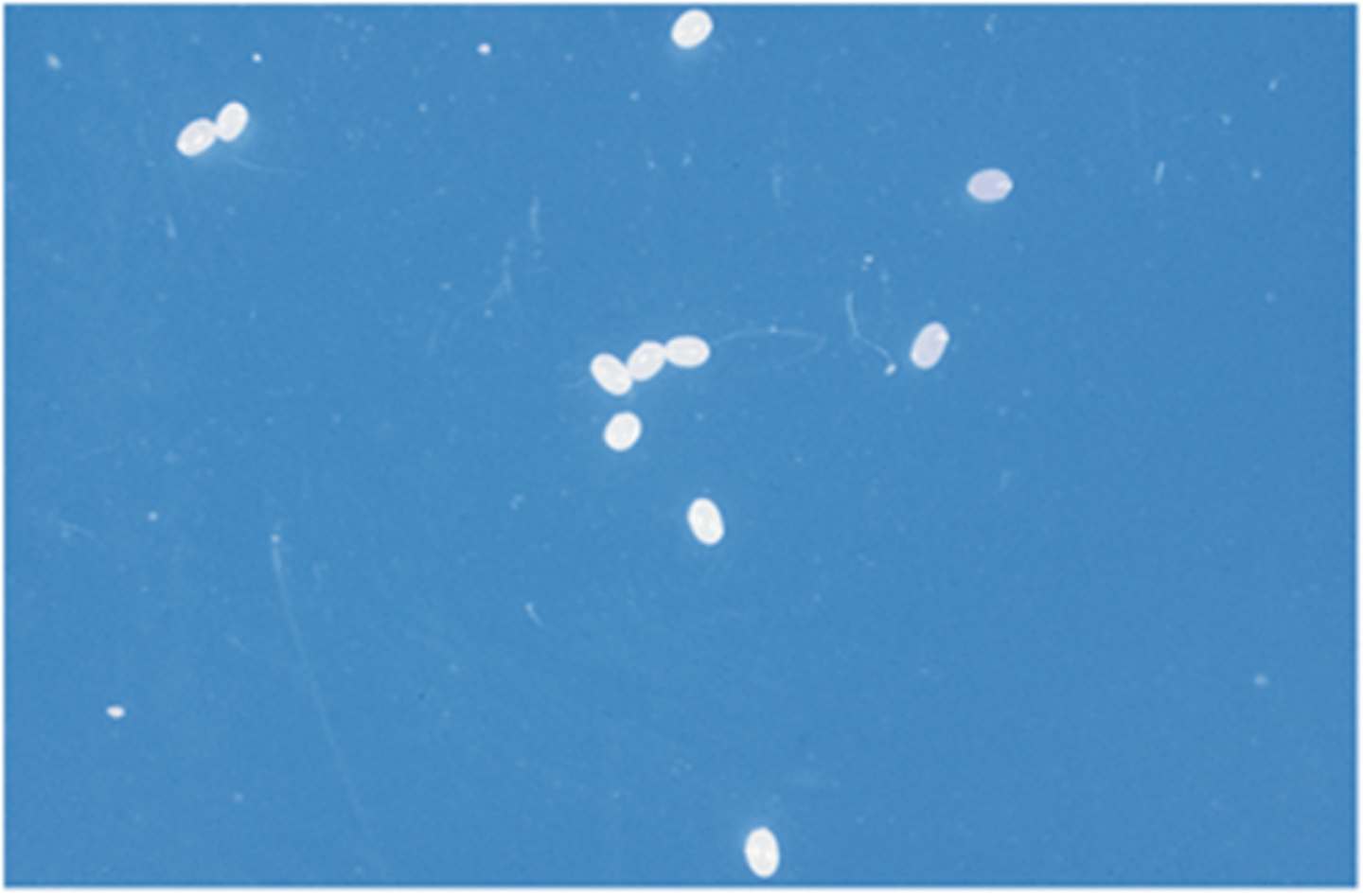
The eggs of cat fleas appear as tiny pearls due to the fact:
they are nonsticky
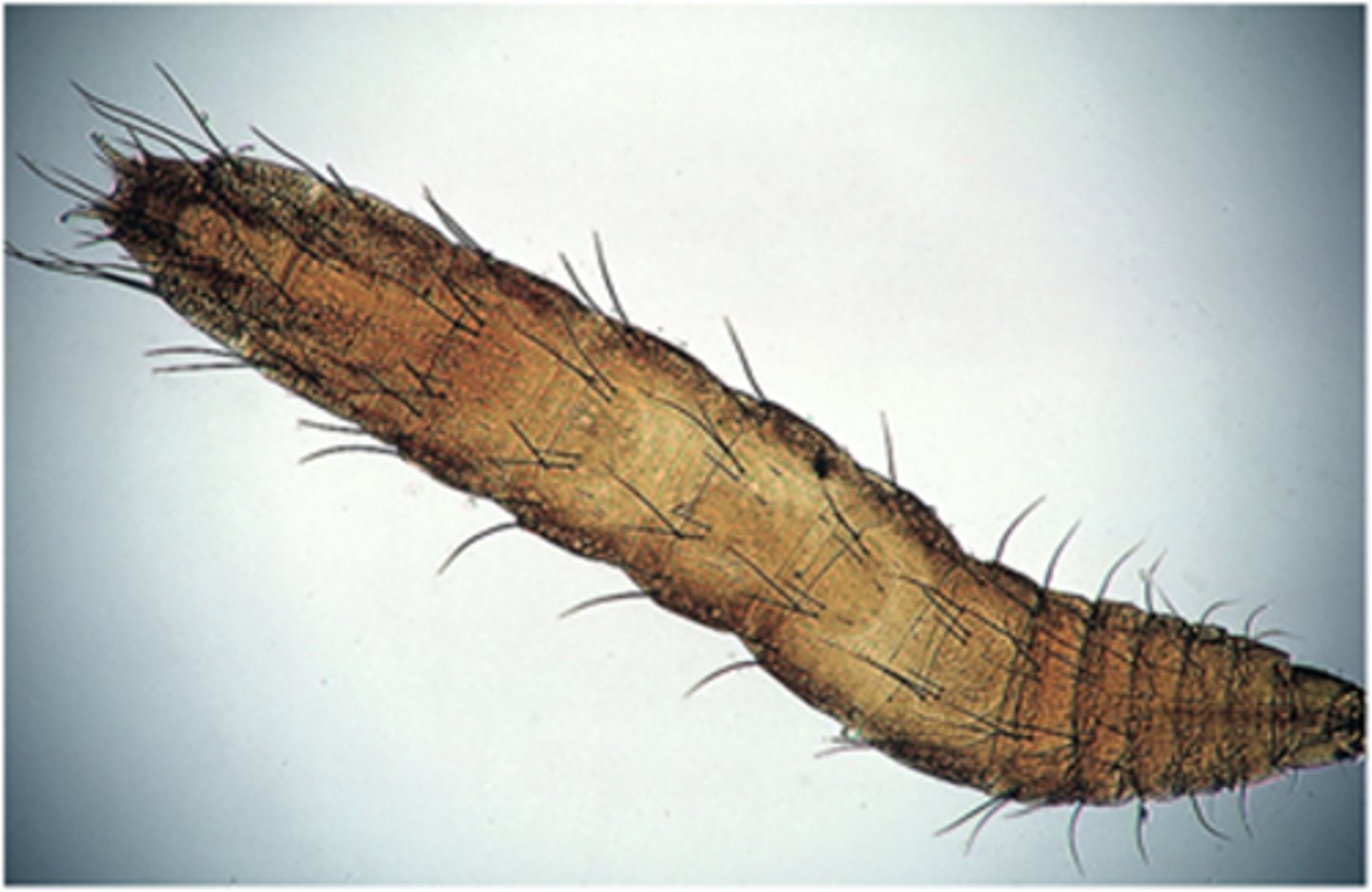
The larval form of this parasite is sparsely covered with fine hairs and ingests organic debris
from the environment. Adults are commonly seen on dogs and cats. What is this parasite?
ctenocephalides felis
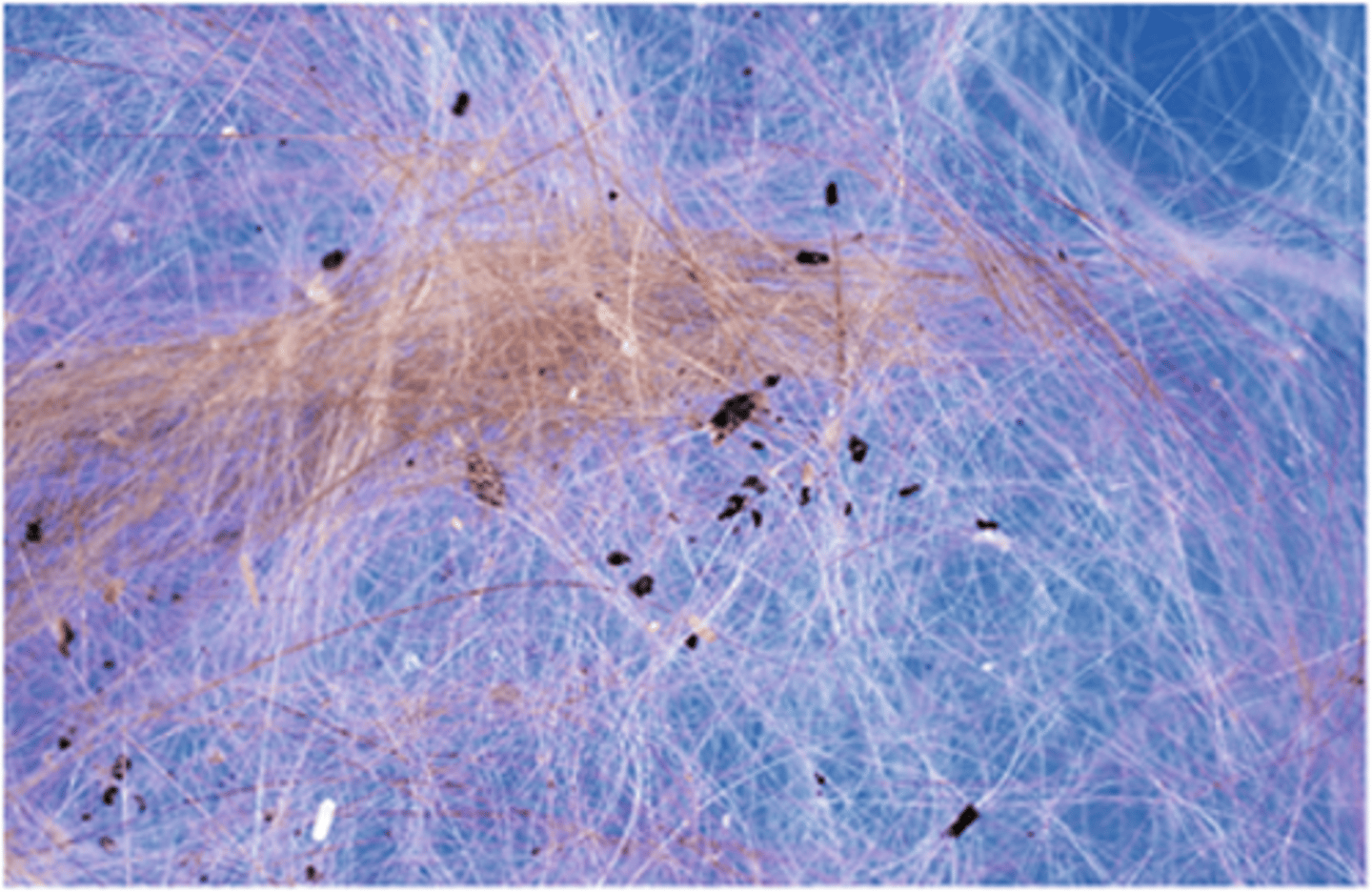
Finding "dirt" in the hair coat of a dog or cat is indicative of:
flea infestation
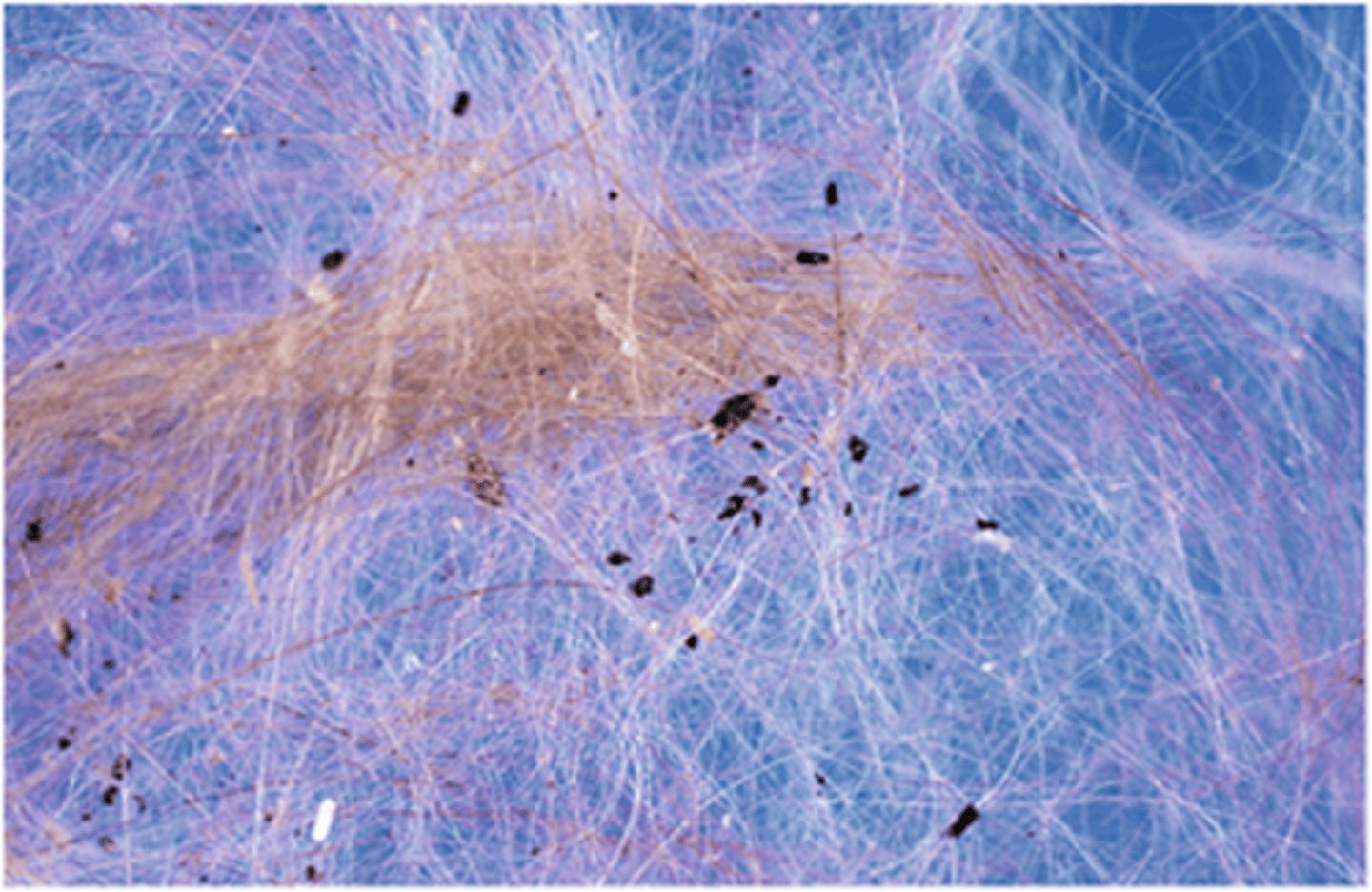
When finding dirt in the hair coat, you can place it on the counter or a white paper towel and
add water or hydrogen peroxide. If the "dirt" turns red, you report on the record the animal is
positive for ___________.
flea dirt
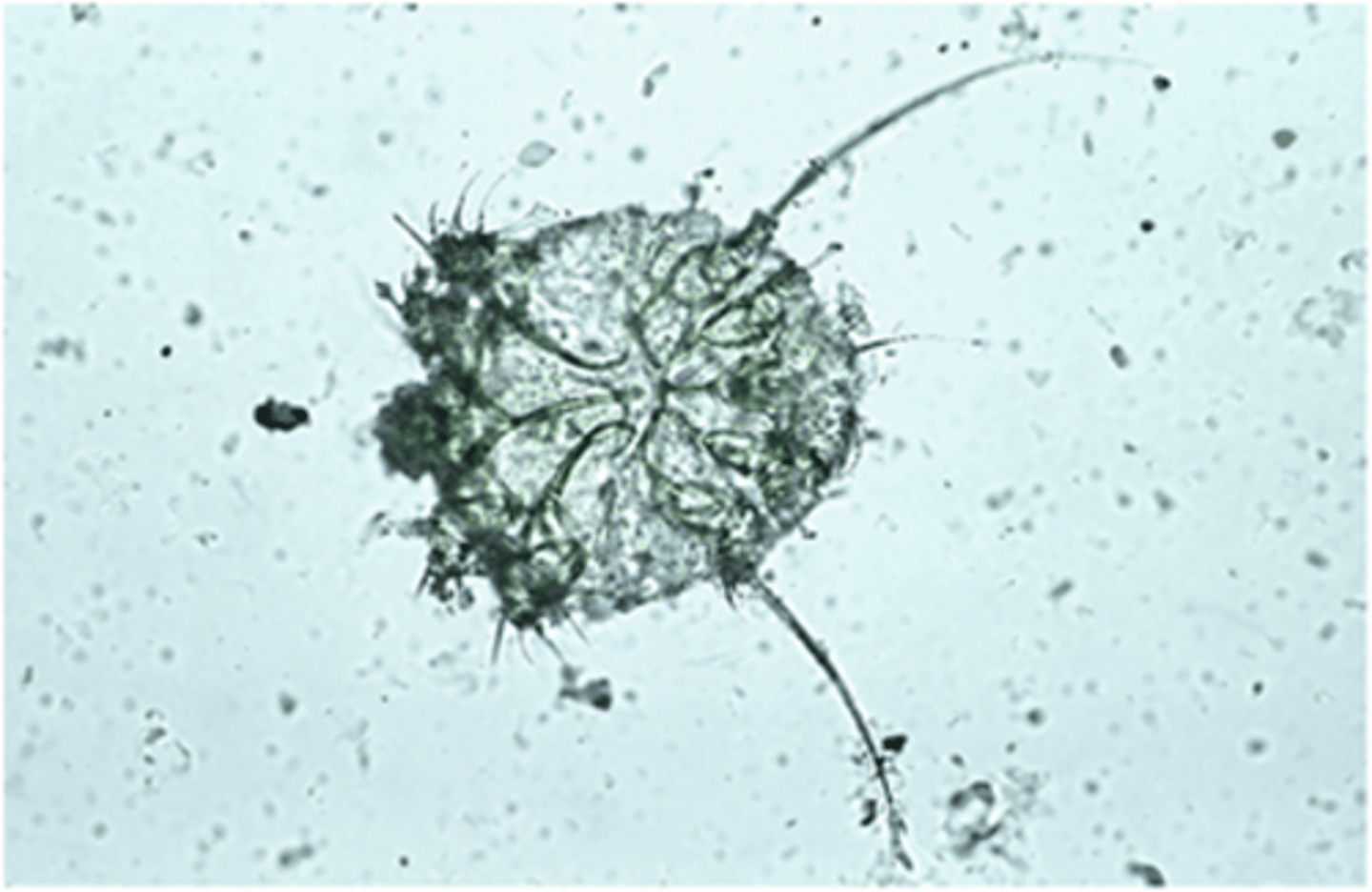
When found on a skin scrape of a dog, this parasite should be identified as:
sarcoptes scabei variety canis
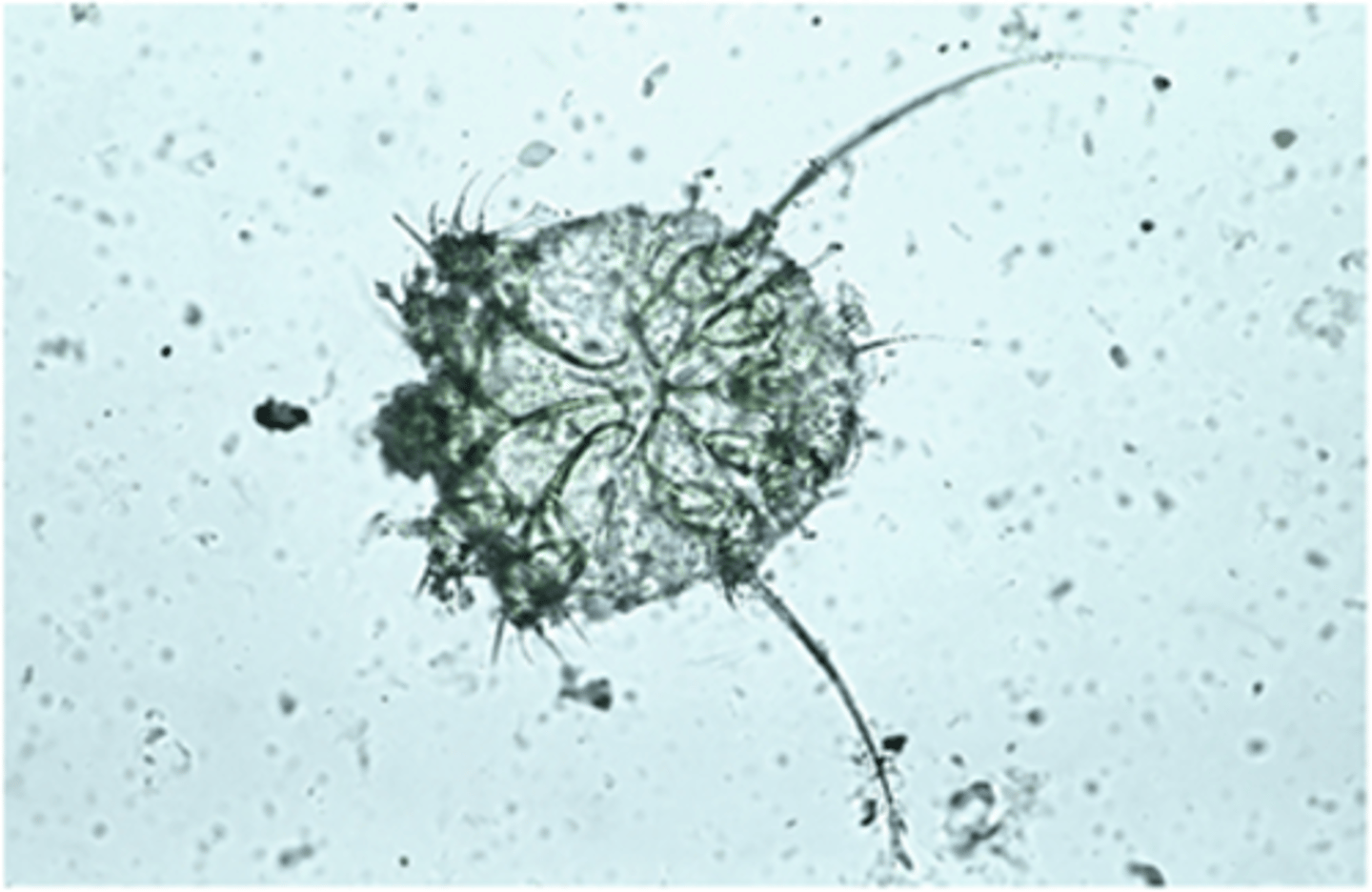
When found on a skin scraping of a sheep, this parasite should be identified as:
sarcoptes scabei variety ovis
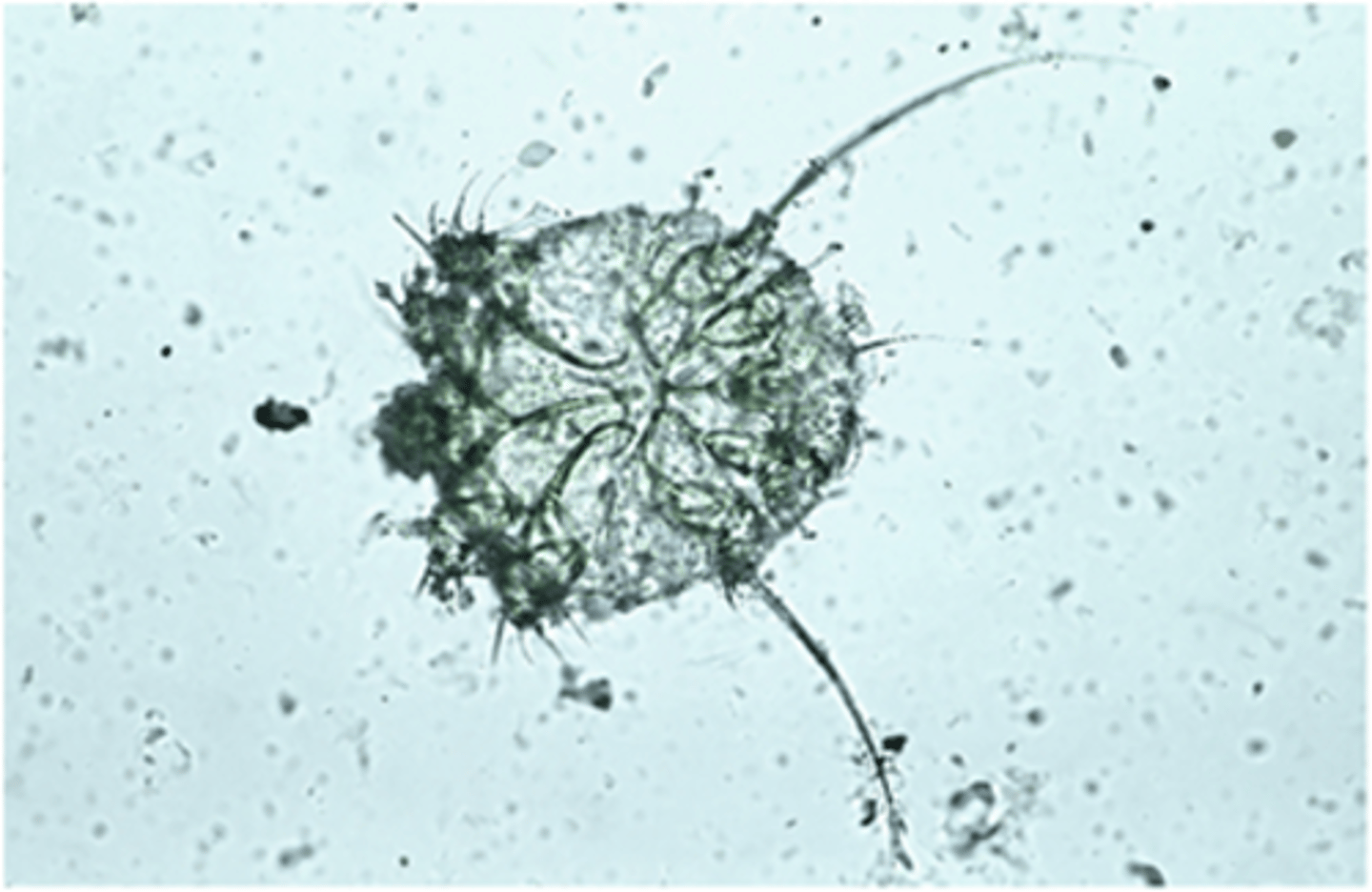
This parasite causes a disease called:
sarcoptic acariasis
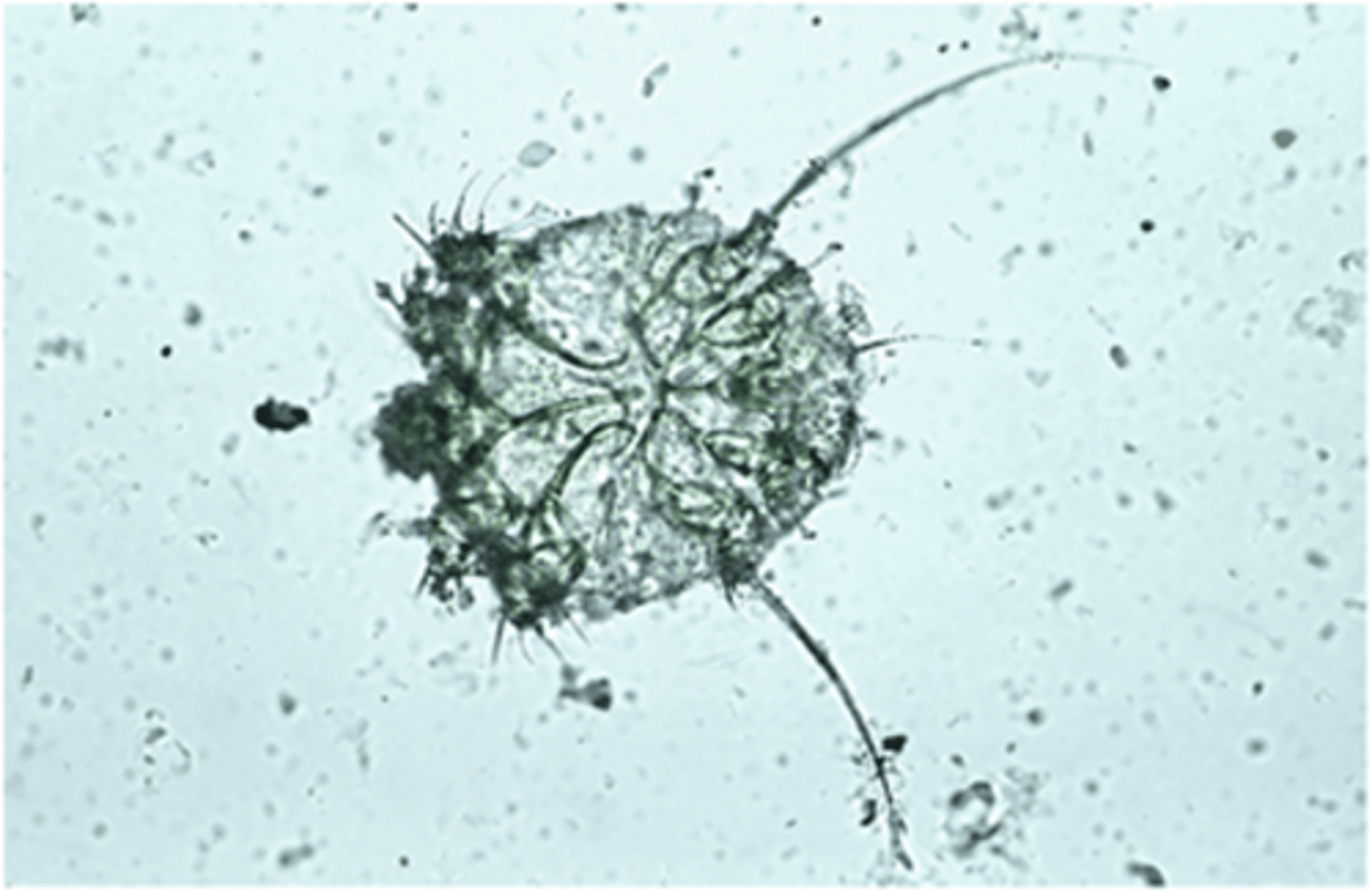
This mite is an example of a sarcoptiform mite. Sarcoptiform mites have the following
features in common except:
they are diagnosed by culture of the skin
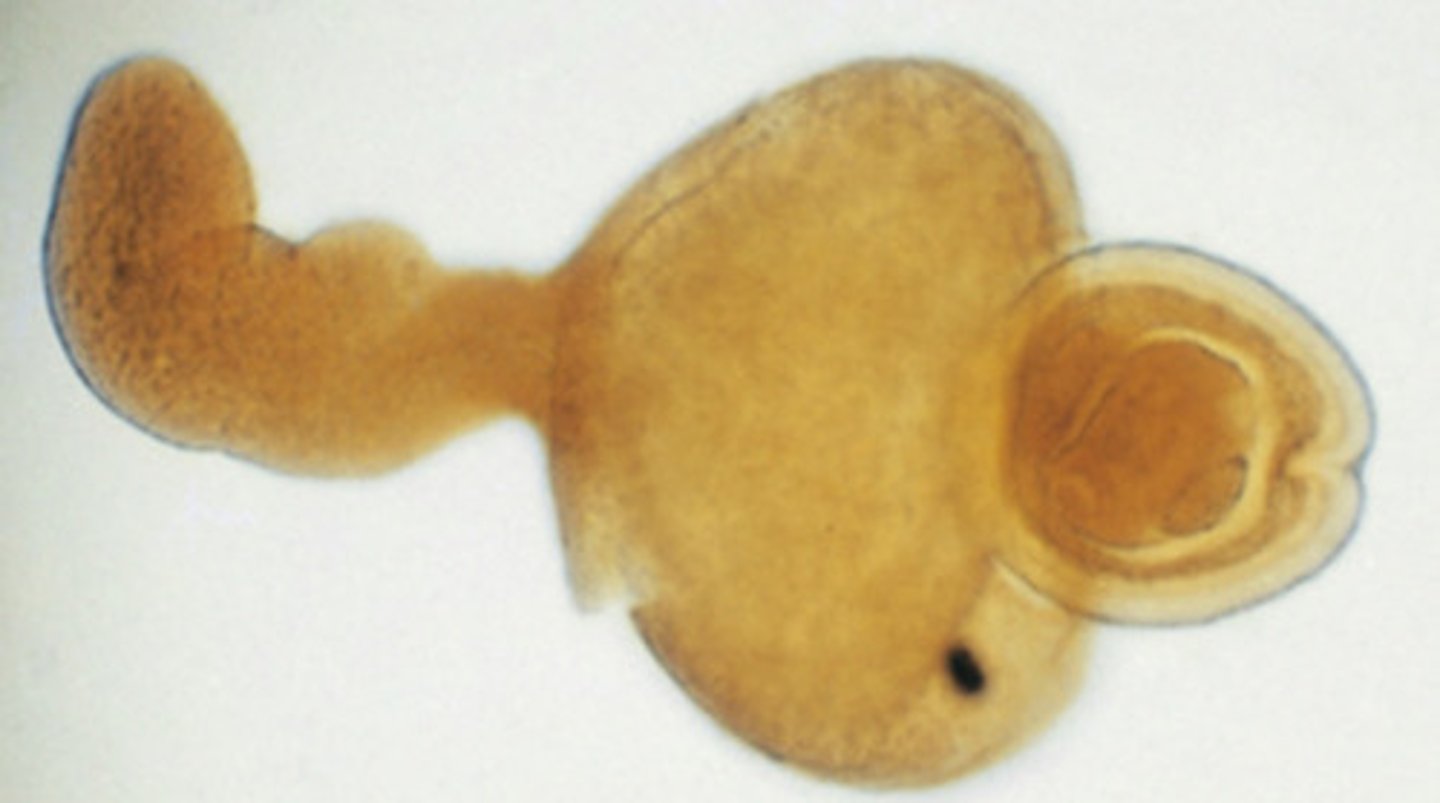
Cystercoid larval stage of a cestode
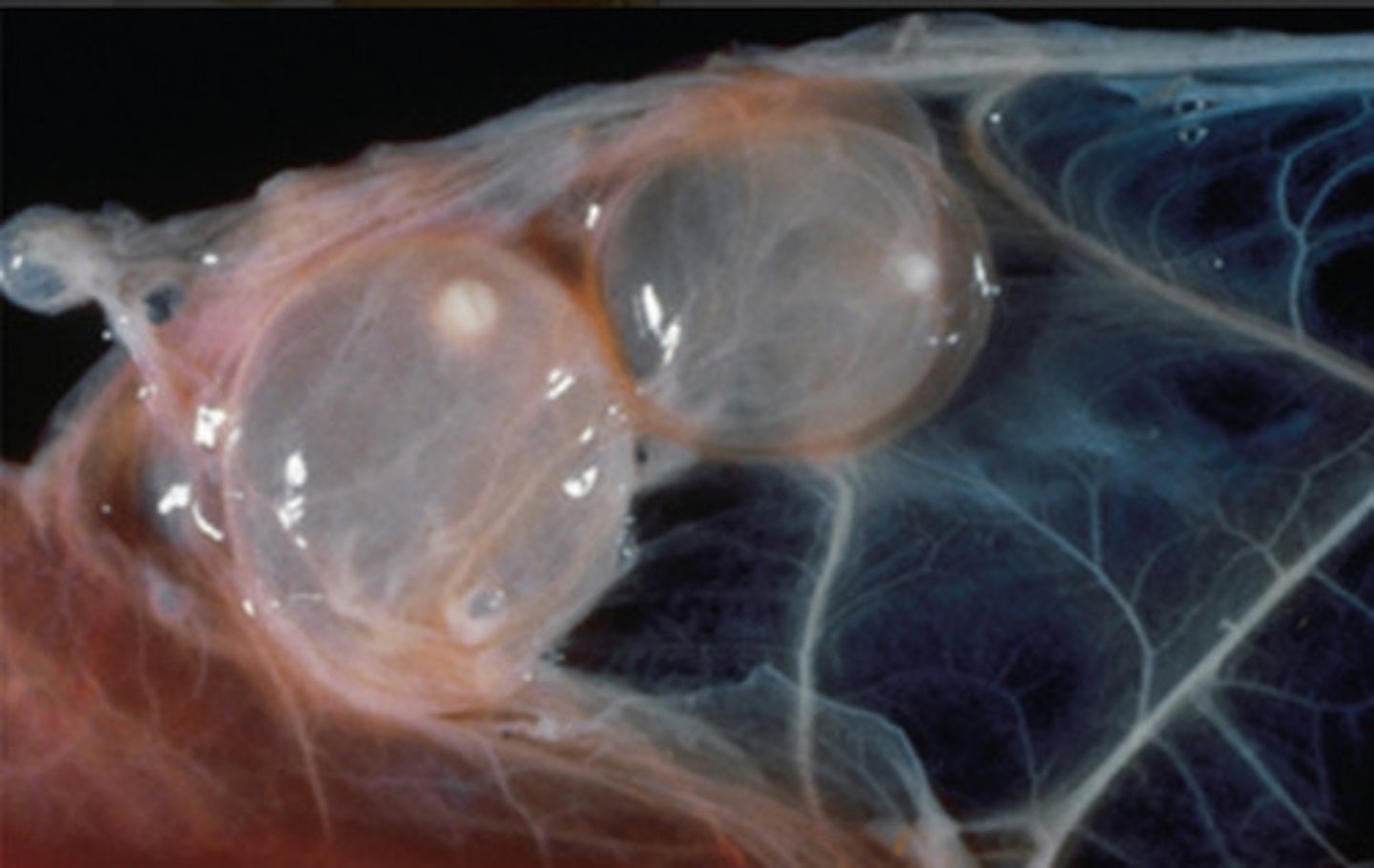
Cysticercus larval stage of a cestode
- commonly called a bladder worm
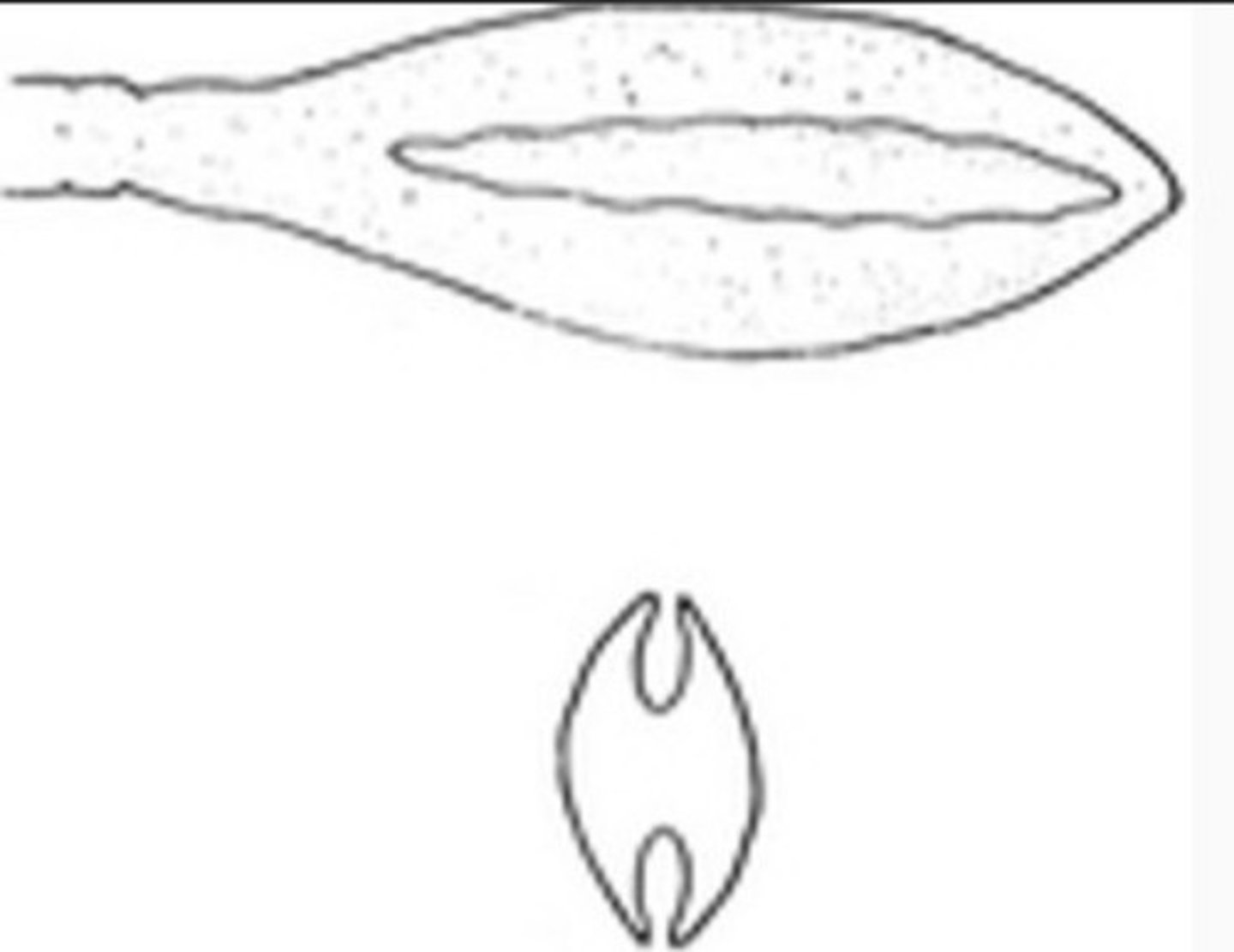
Bothria of cotyloda (pseudotapeworm)
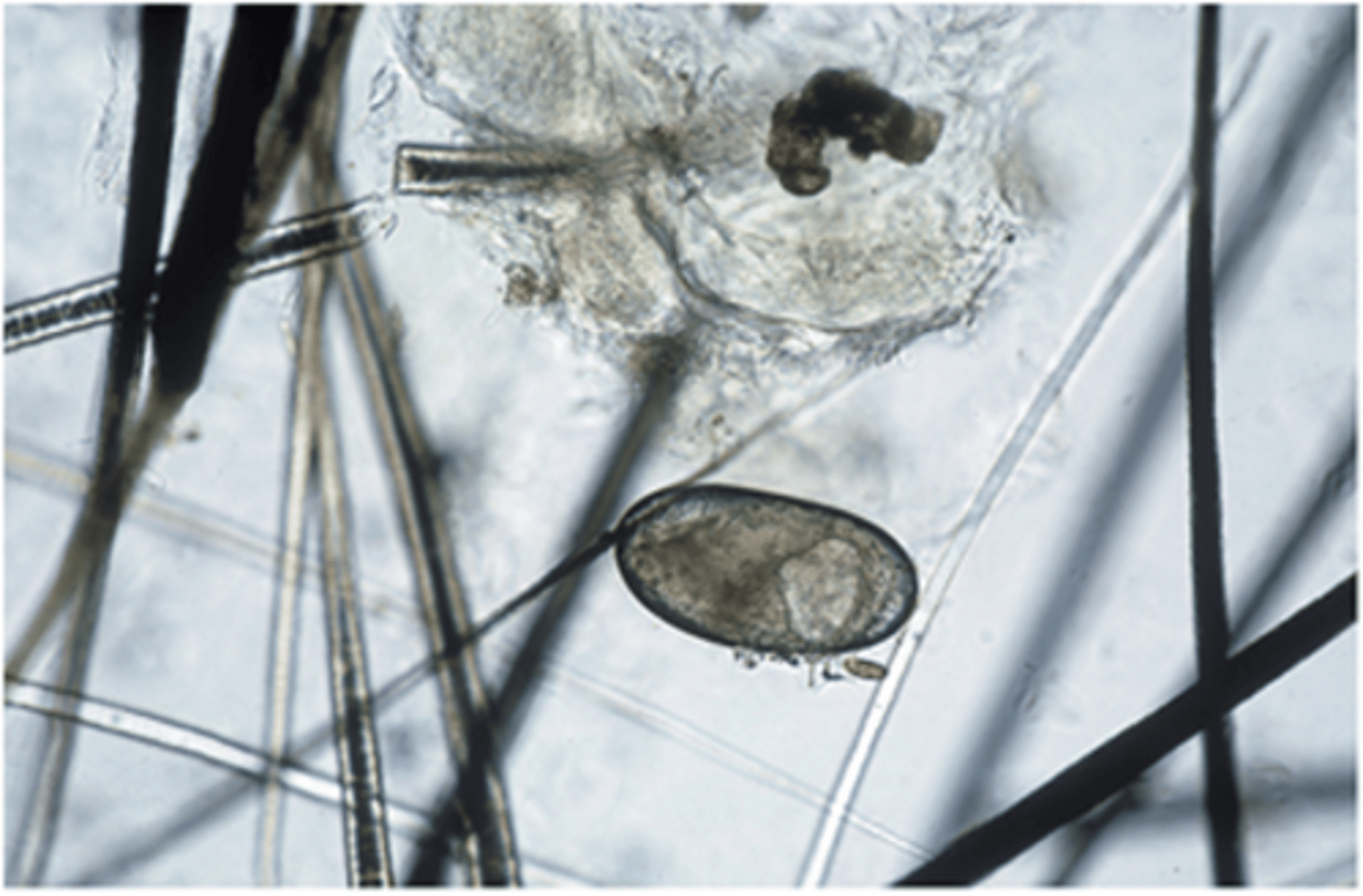
The egg of Sarcoptes scabei can be found most often on a skin scrape of which large
animal species?
pigs
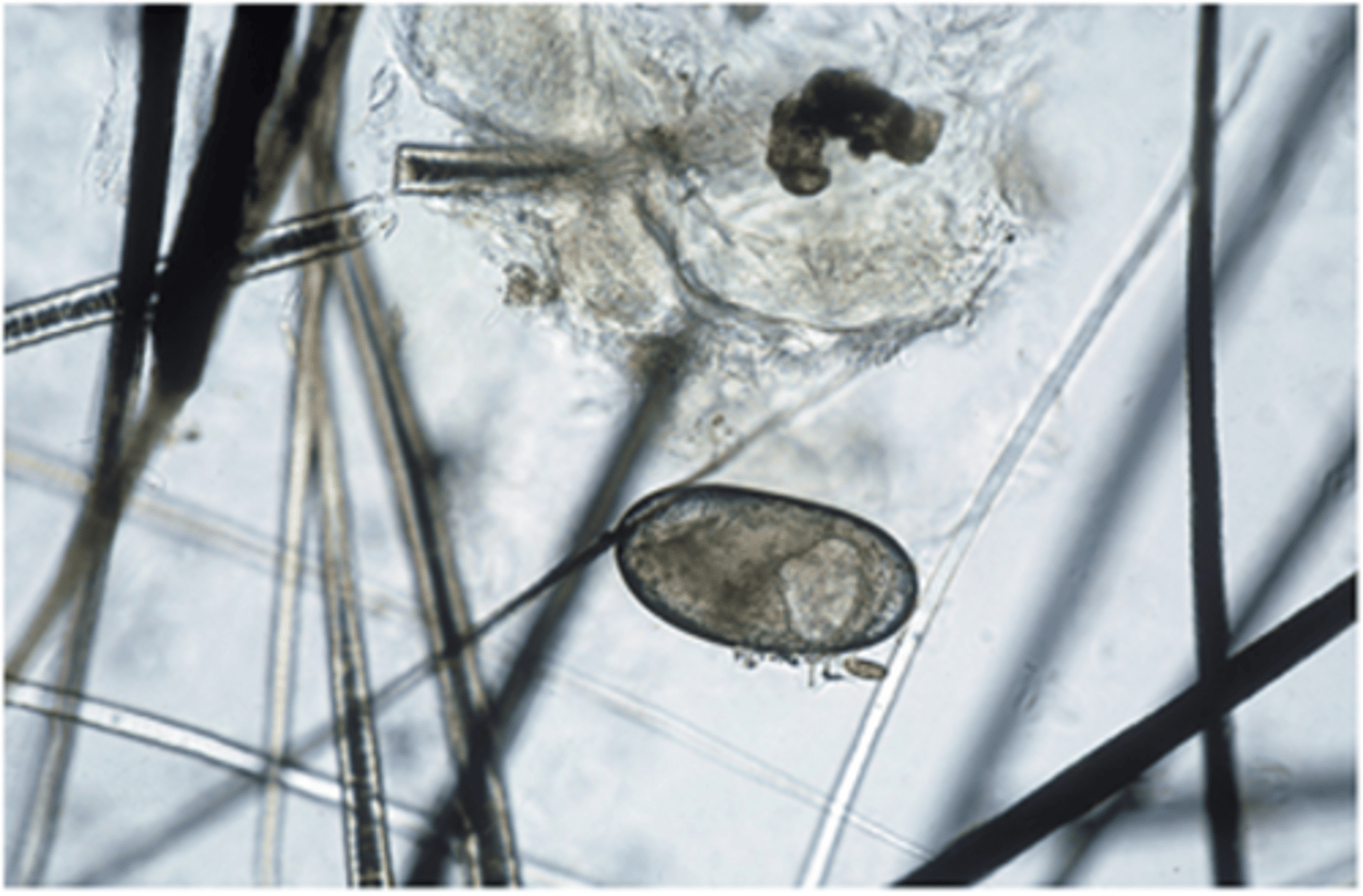
It is important to note that scabies mites are:
species specific
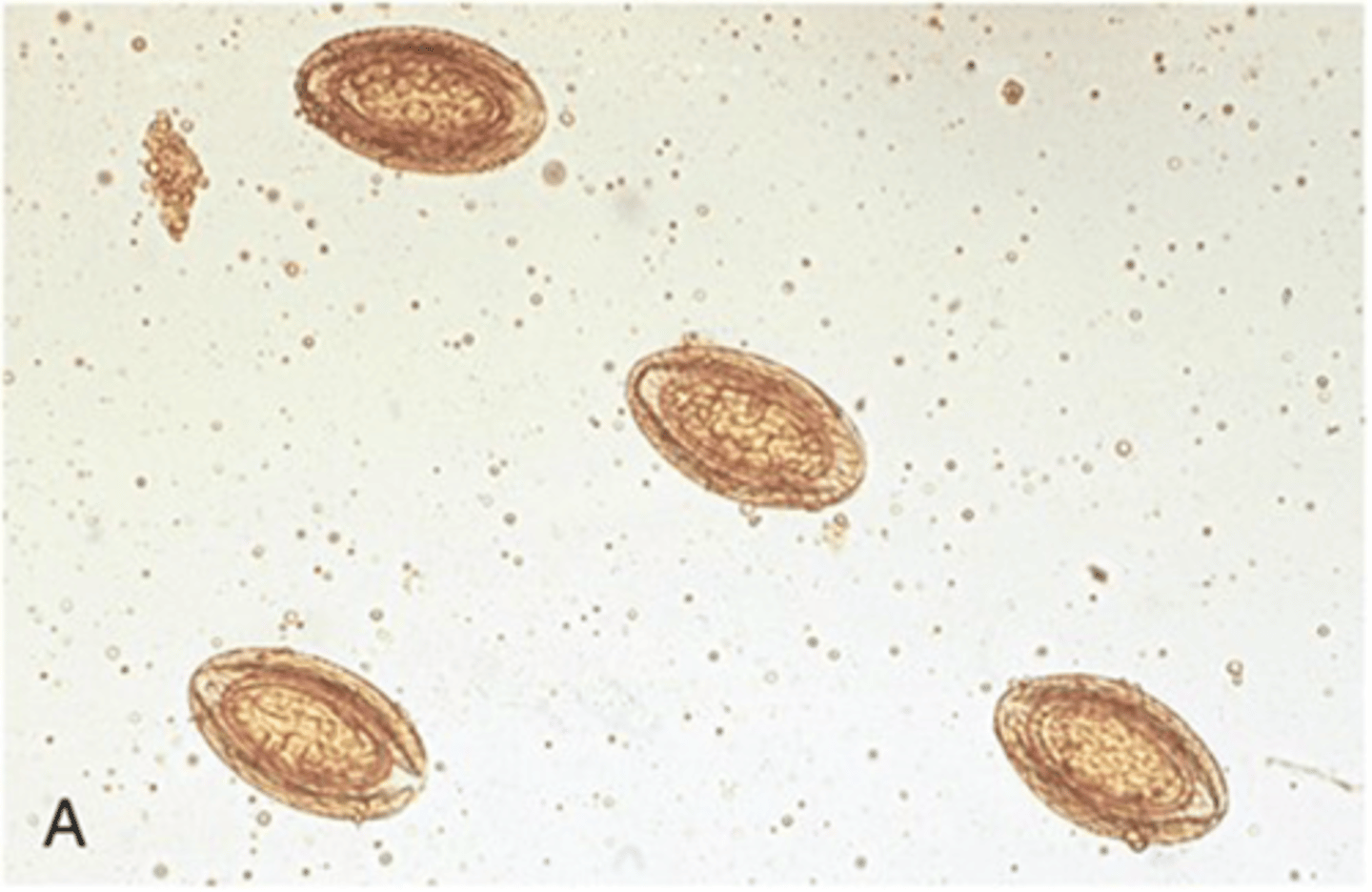
Identify these Acanthocephalan ova of pigs.
Macracanthorhynchus hirudinaceus
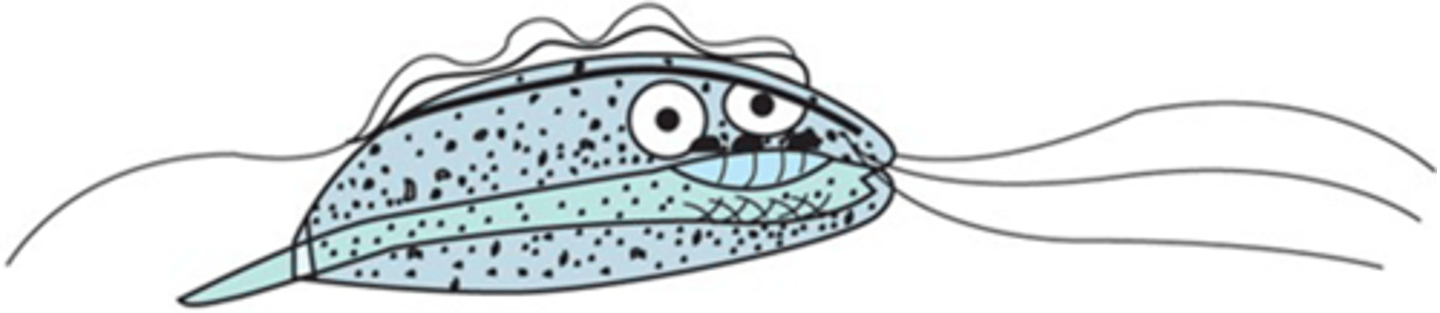
This protozoan belongs to the phylum ____________ and subphylum ________.
saromastigophora, mastigophora
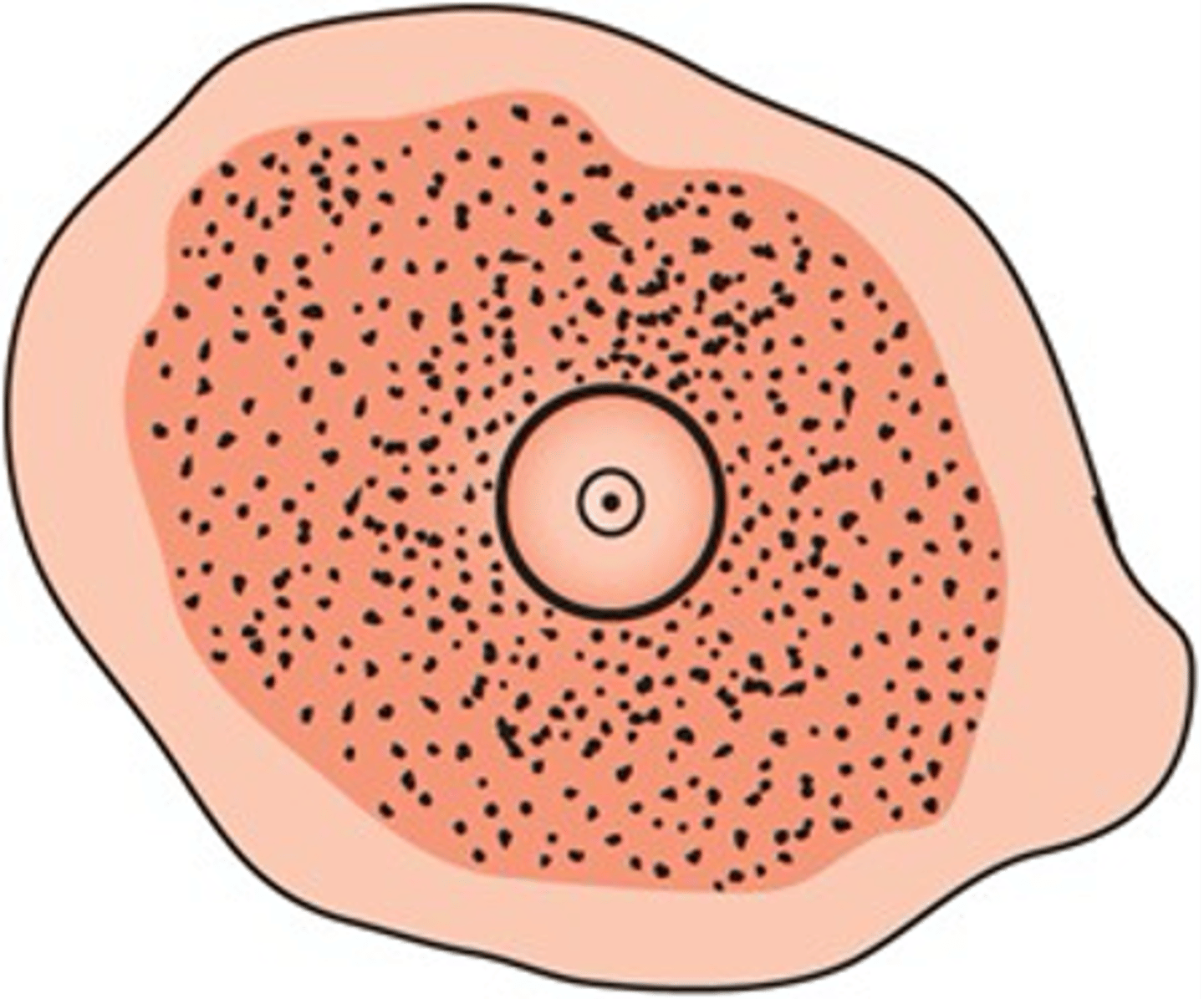
This amoeboid protozoan belongs to the phylum _________ and subphylum _____.
sarcomastigophora, sarcodina
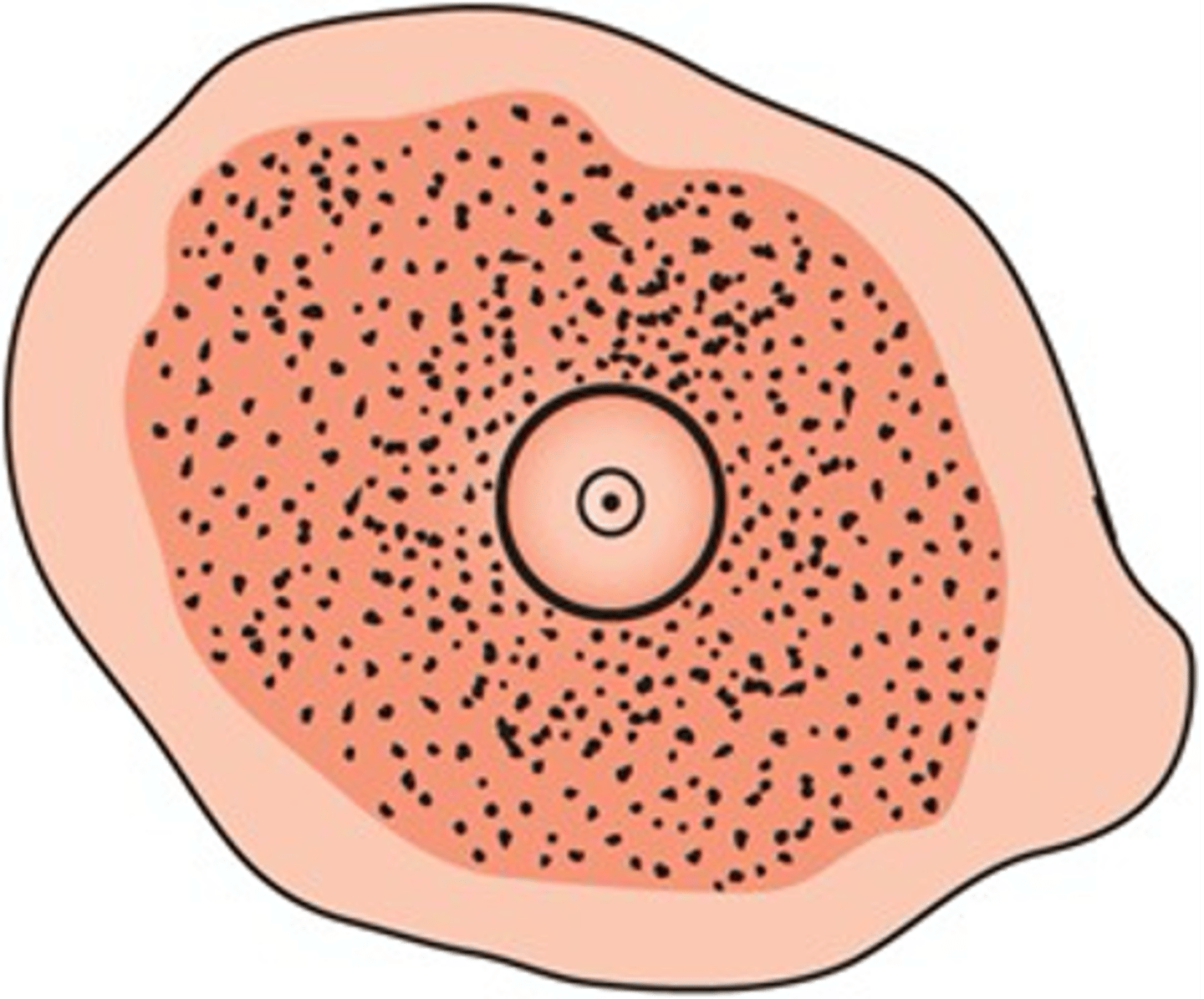
This amoeboid protozoan stage is the _________ stage.
trophozoite
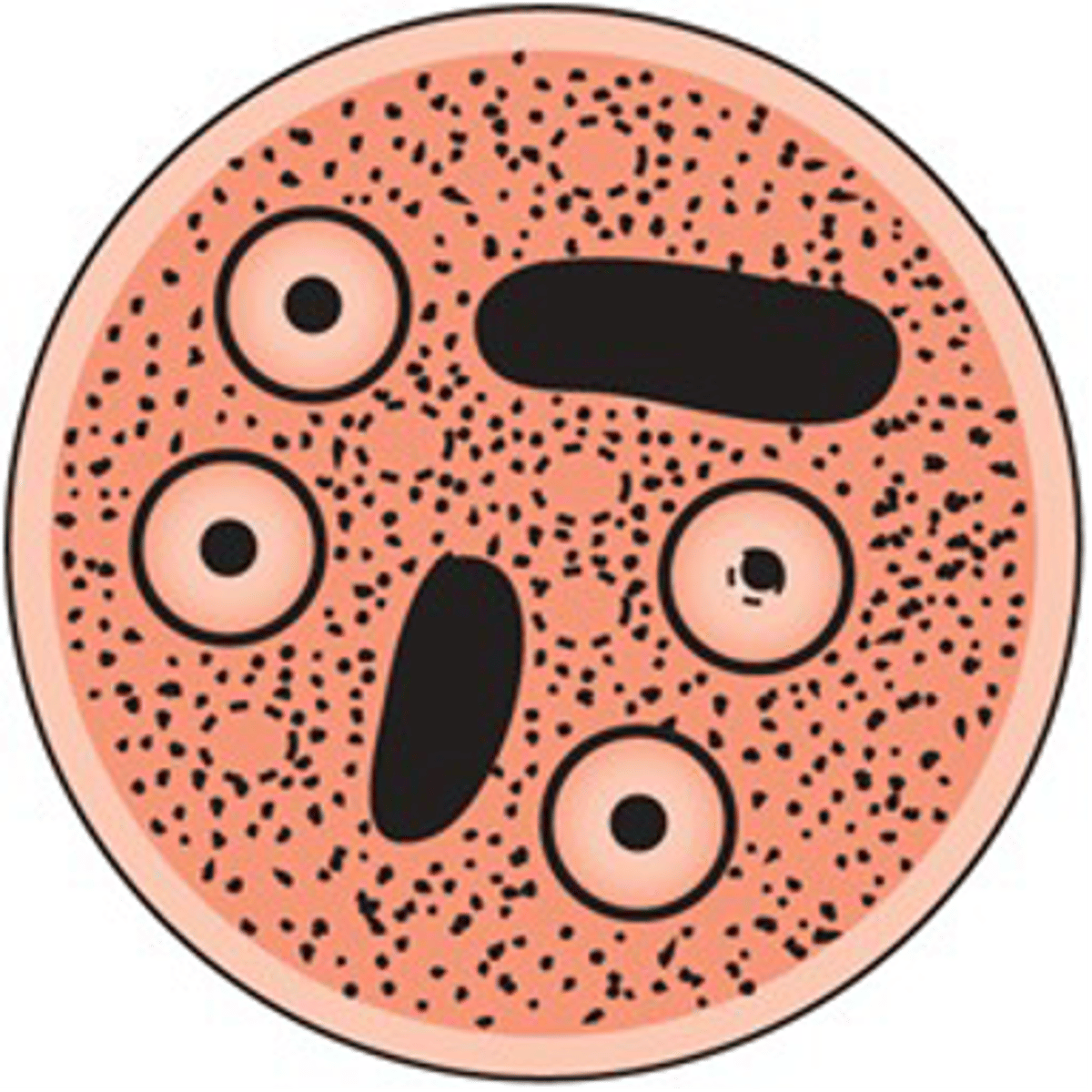
This amoeboid protozoan is the __________ stage used to survive in the environment.
cyst
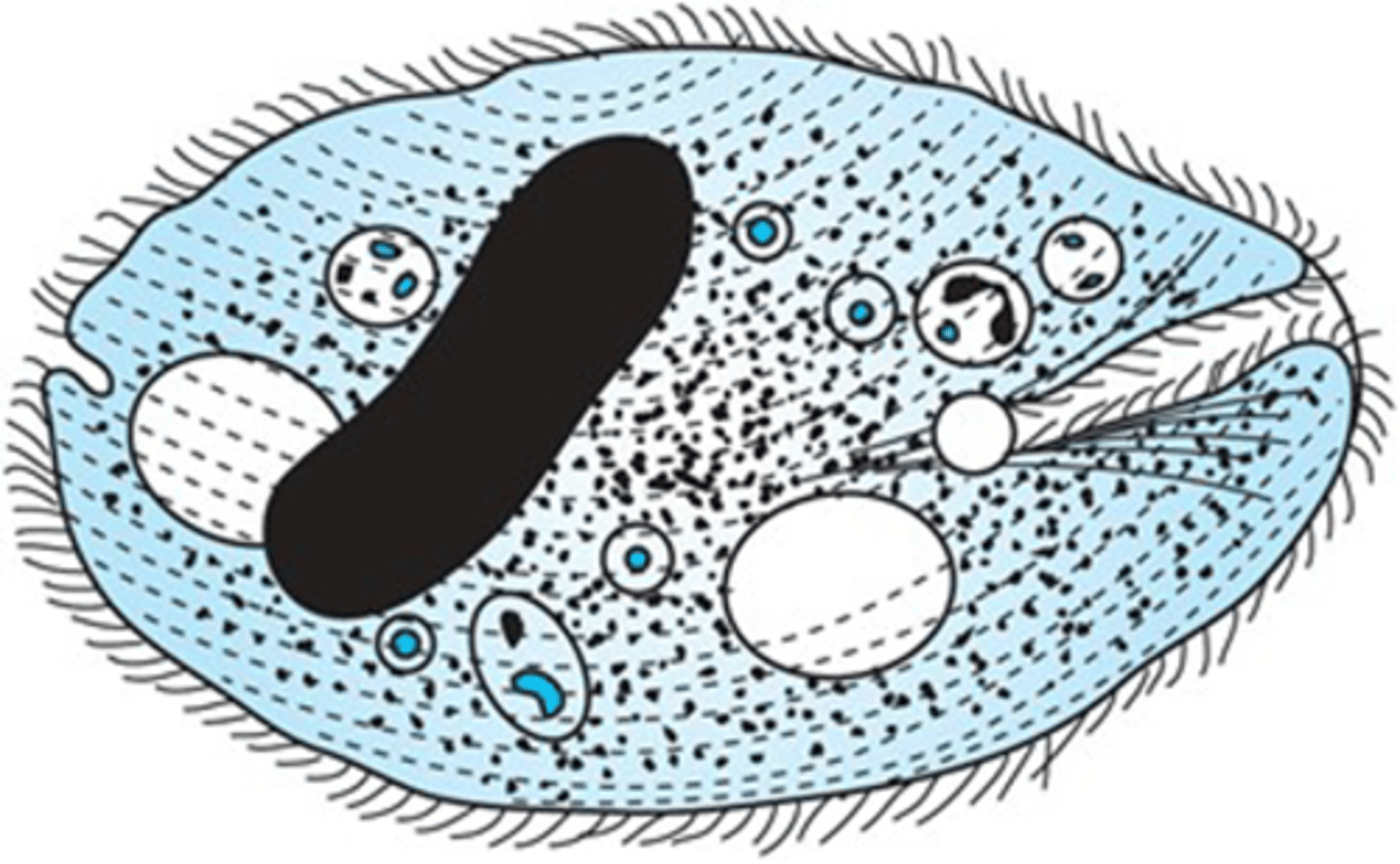
The hair-like structures used to move this protozoan place it in the phylum:
ciliophora
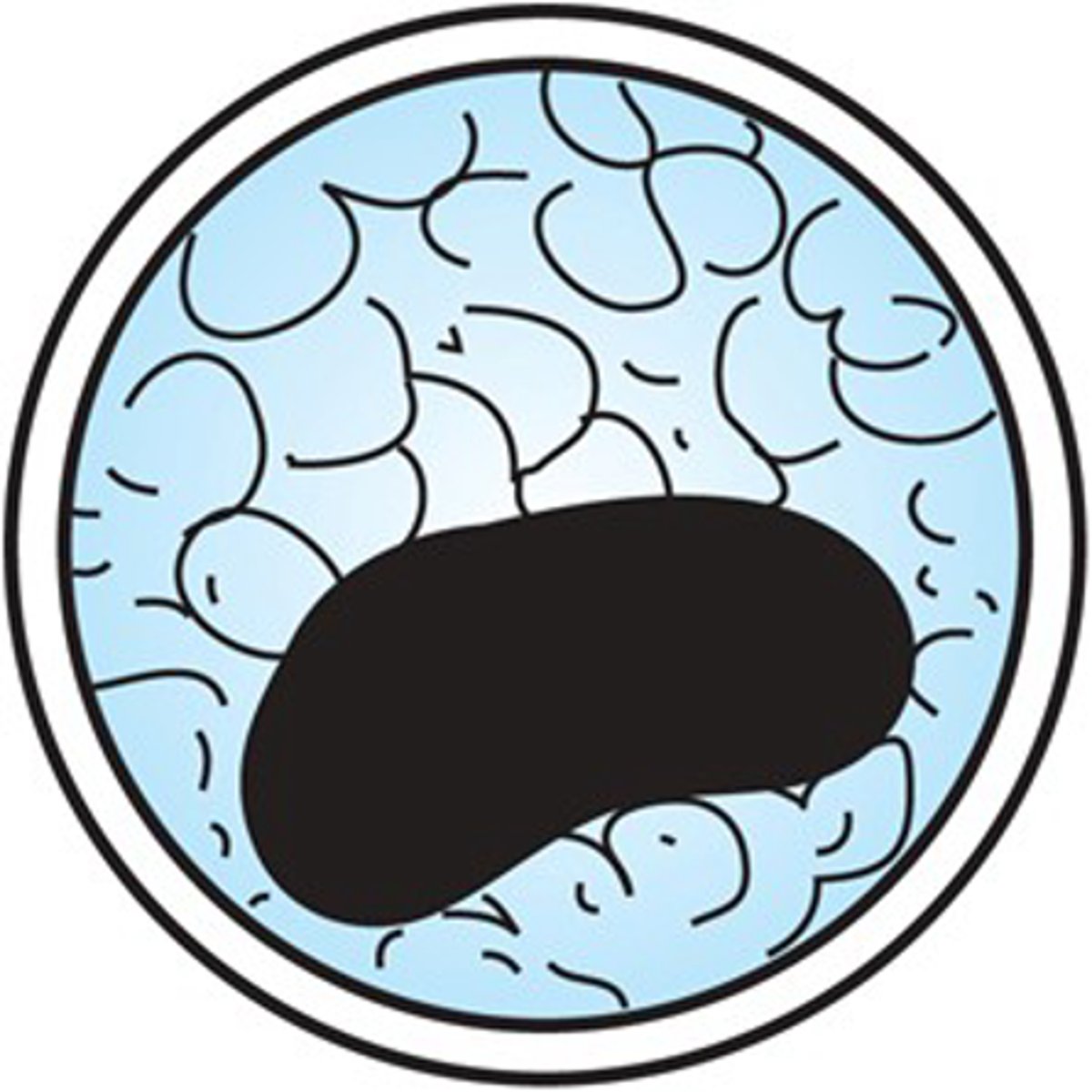
This cyst stage of the kingdom Protista, phylum _______ is used to ensure survival of the
parasite in the environment.
ciliophora
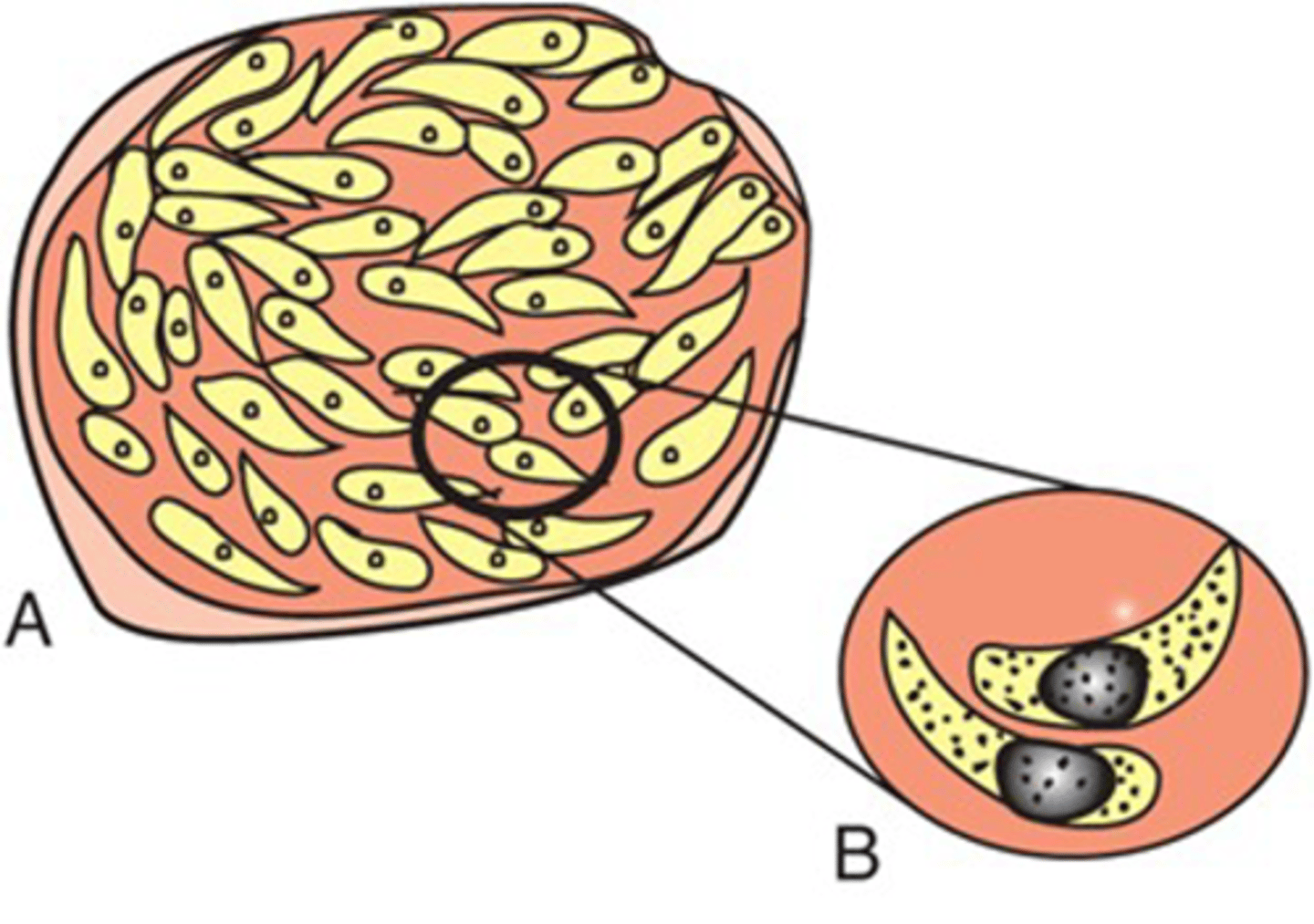
This protozoan cyst belongs to the phylum Apicomplexa. The banana-shaped structures are
called:
sporozoites
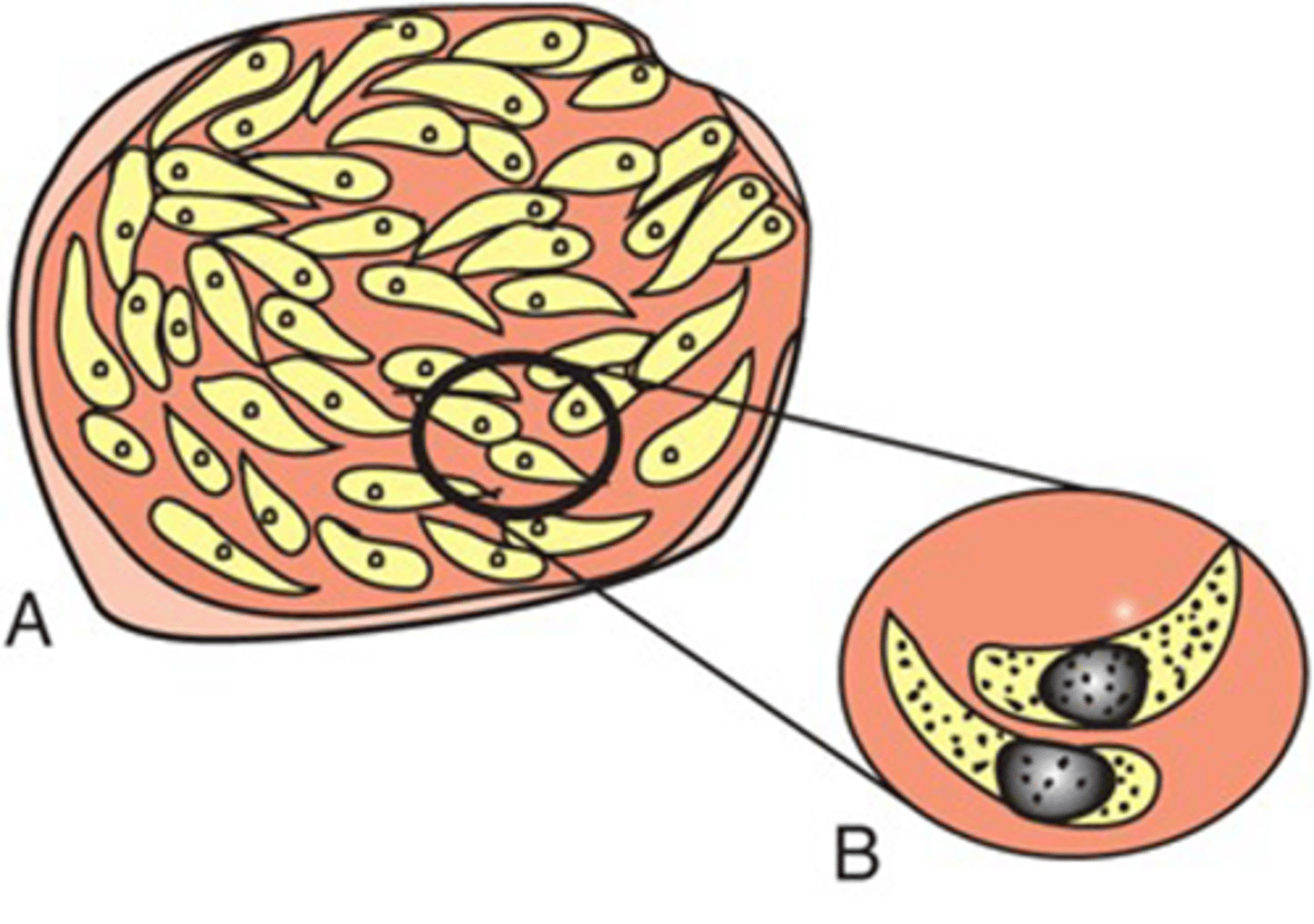
The cyst stage, seen here, belongs to the kingdom Protista, phylum Apicomplexa. All
parasites that are found in the kingdom Protista are:
unicellular
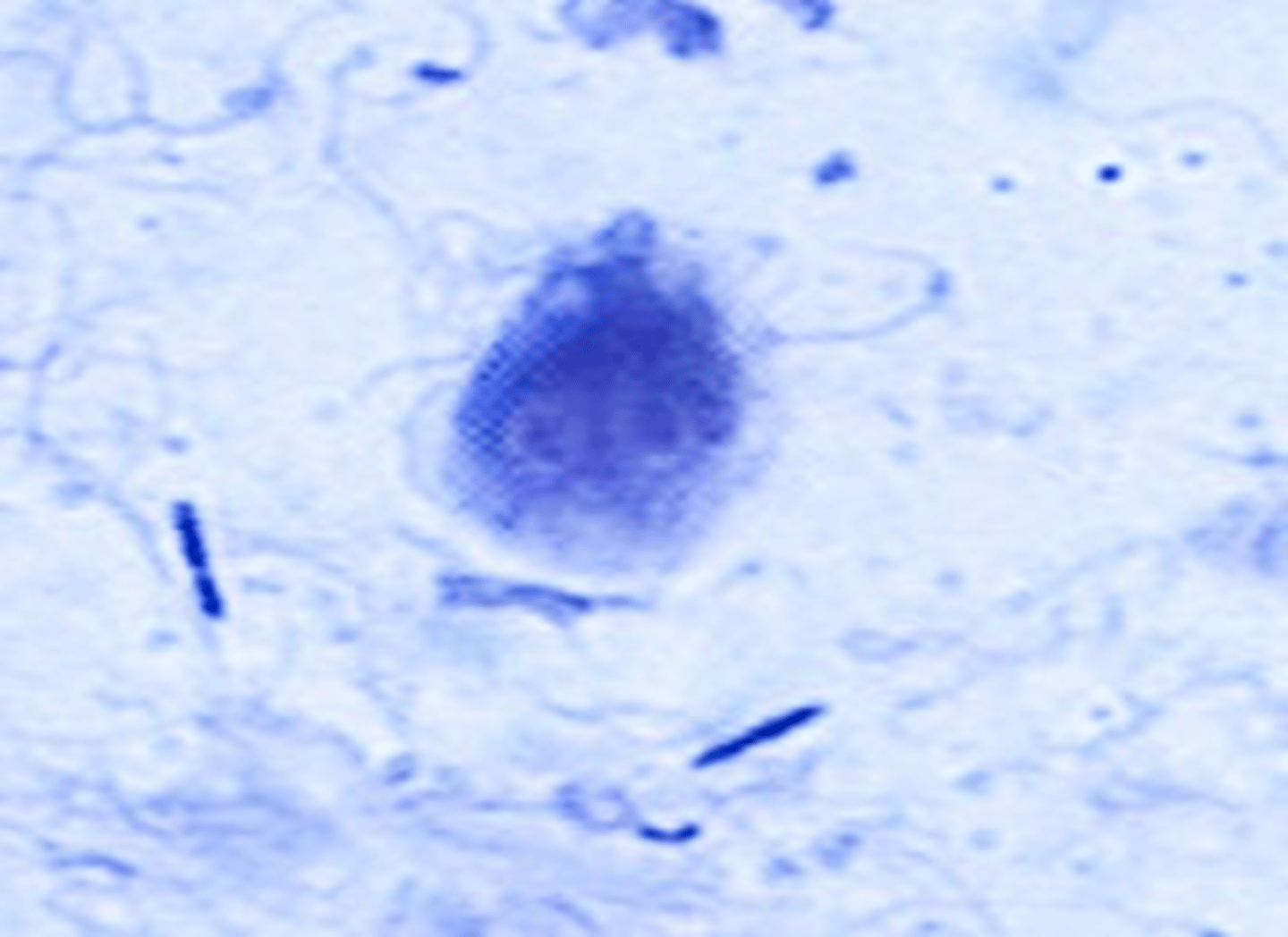
Identify this protozoan of dogs, found on a wet mount fecal smear.
giardia species
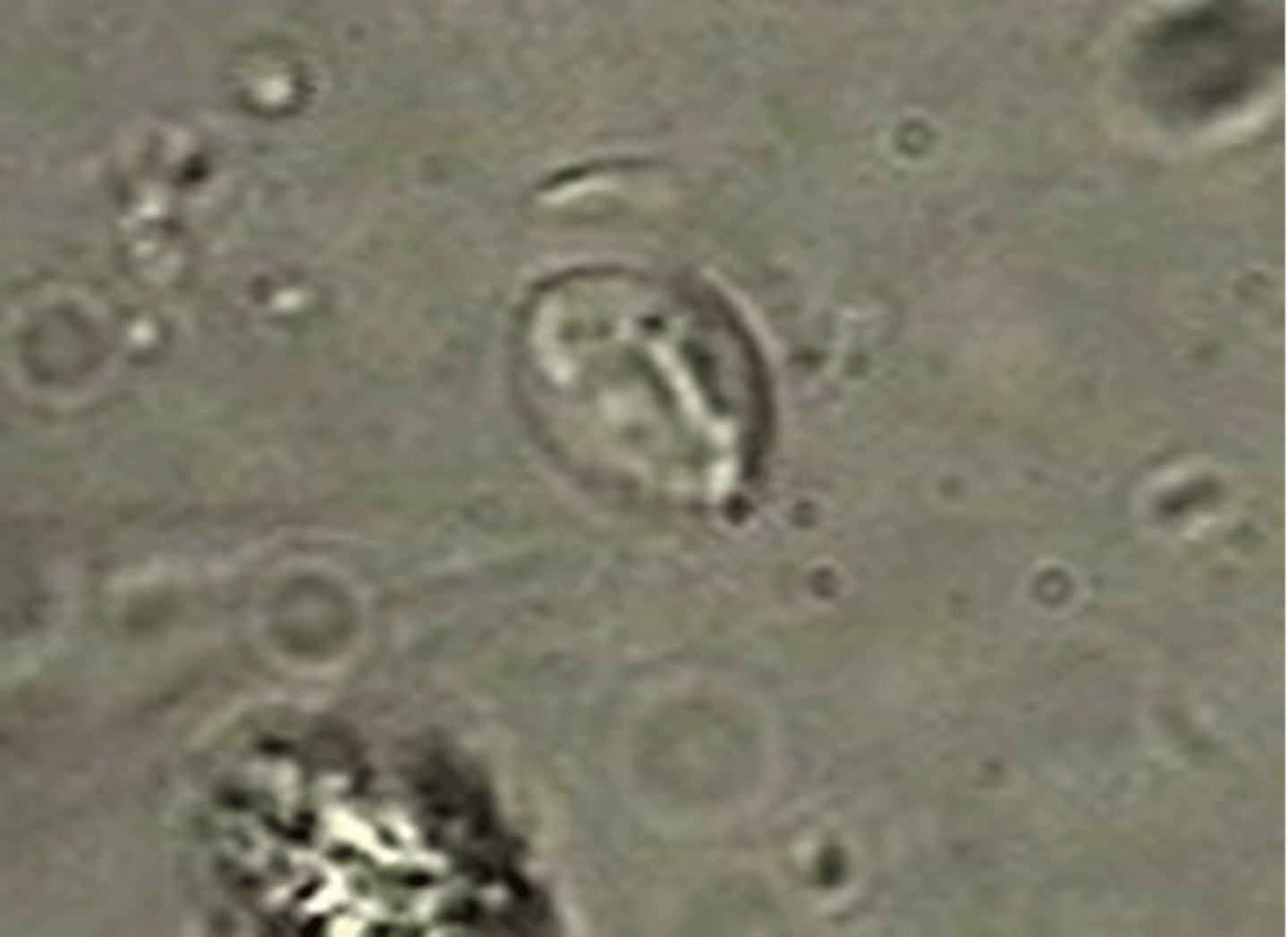
Identify this protozoan mastigophora cyst found in feces on a flotation.
giardia species
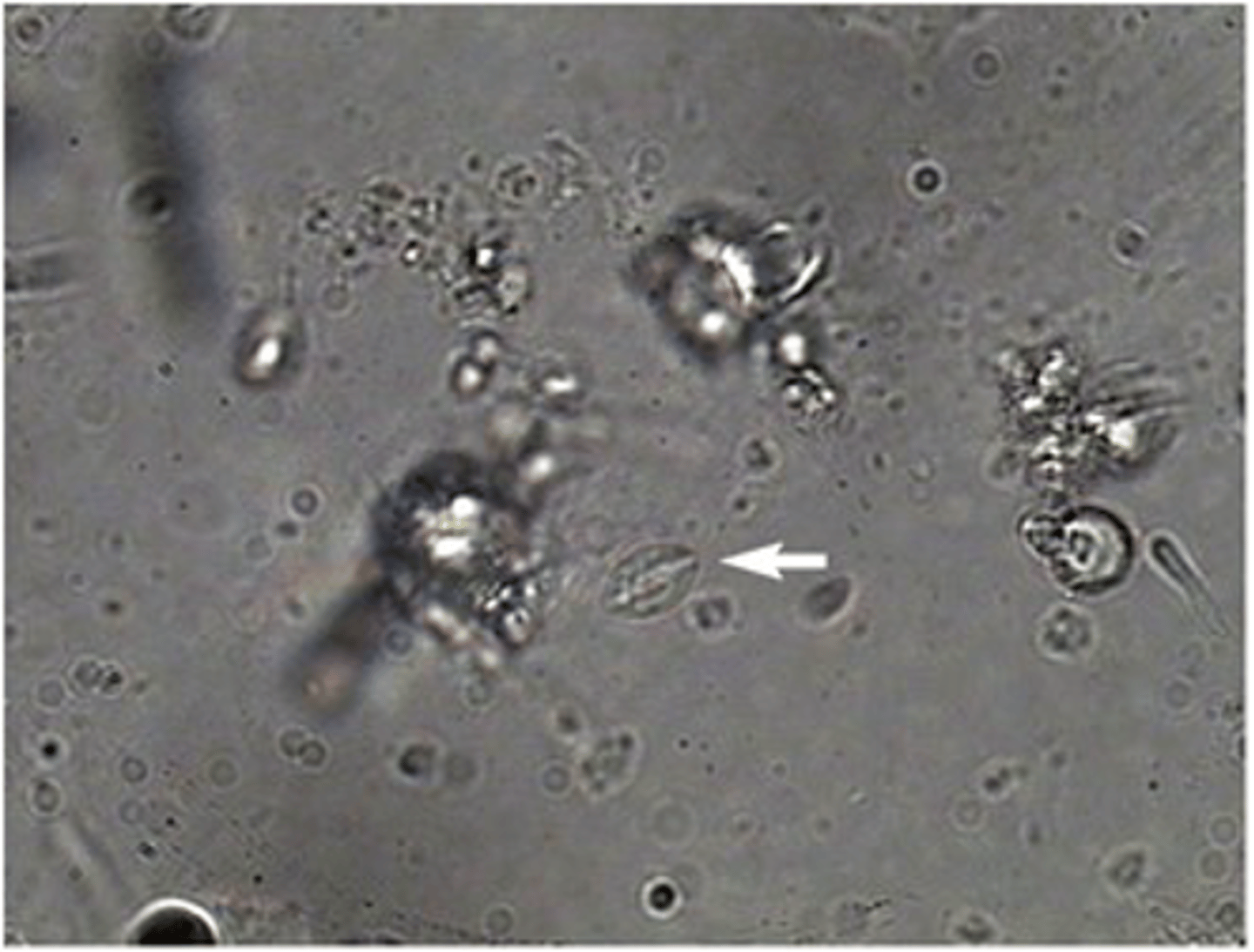
This mastigophoran parasite was once given a genus and species. It has since been
changed to a genus and ________.
assemblages
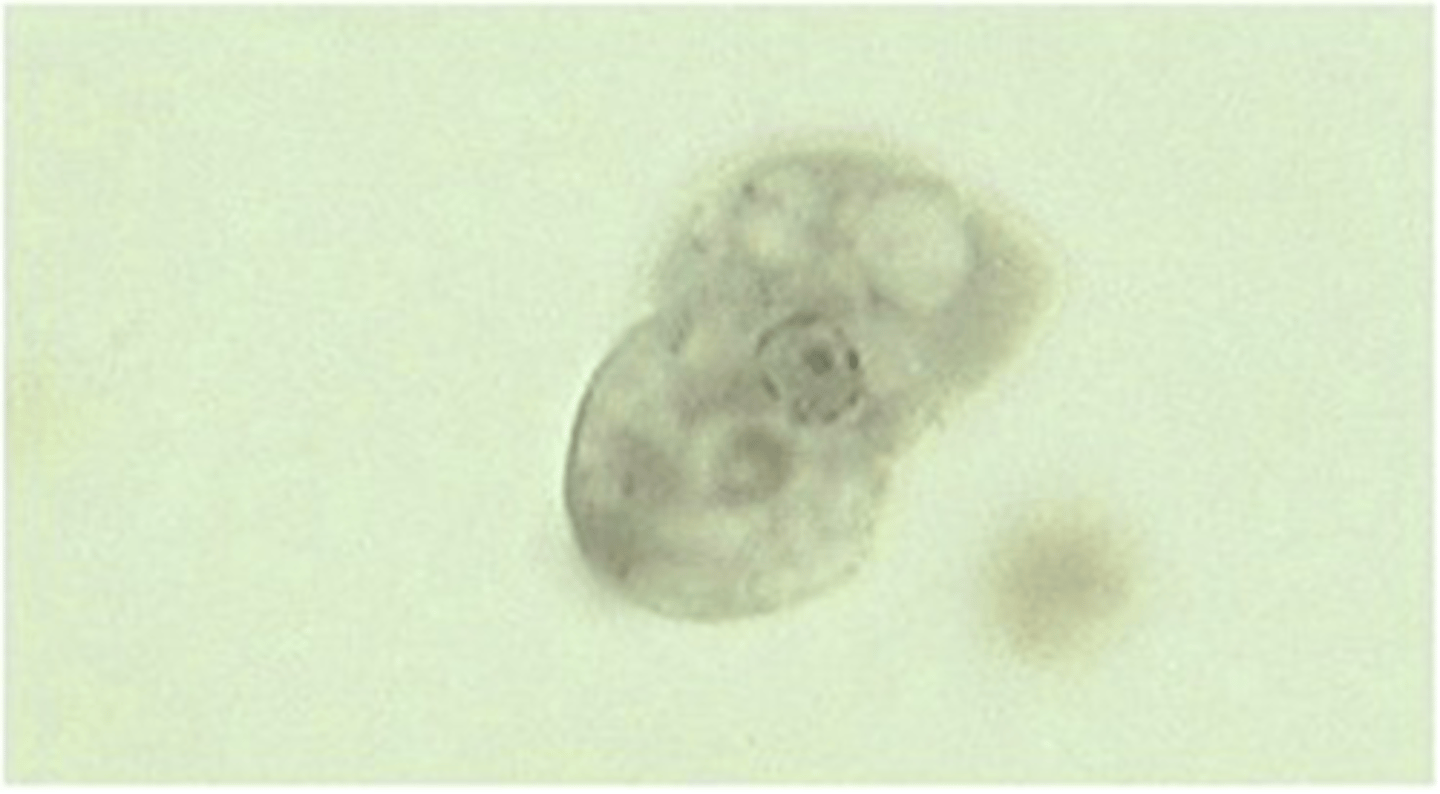
This trophozoite stage of the phylum Sarcomastigophora, subphylum Sarcodina, is seen in
dogs, cats, primates, and humans. Identify this protozoan parasite.
entamoeba
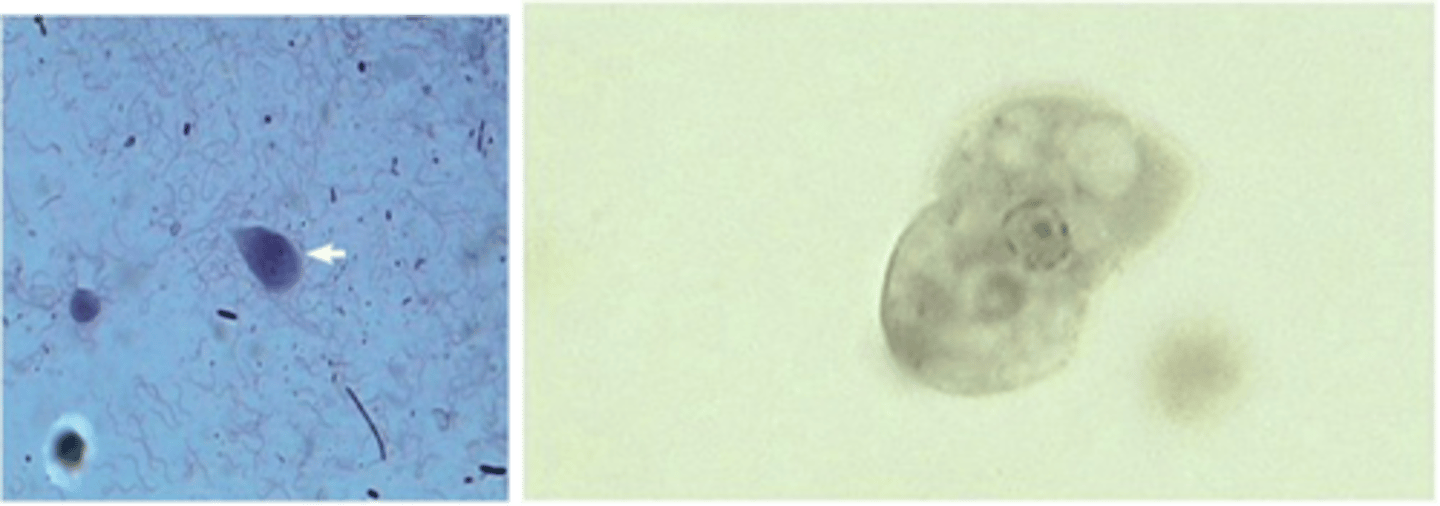
These trophozoite protozoans would typically be found in:
diarrheal samples
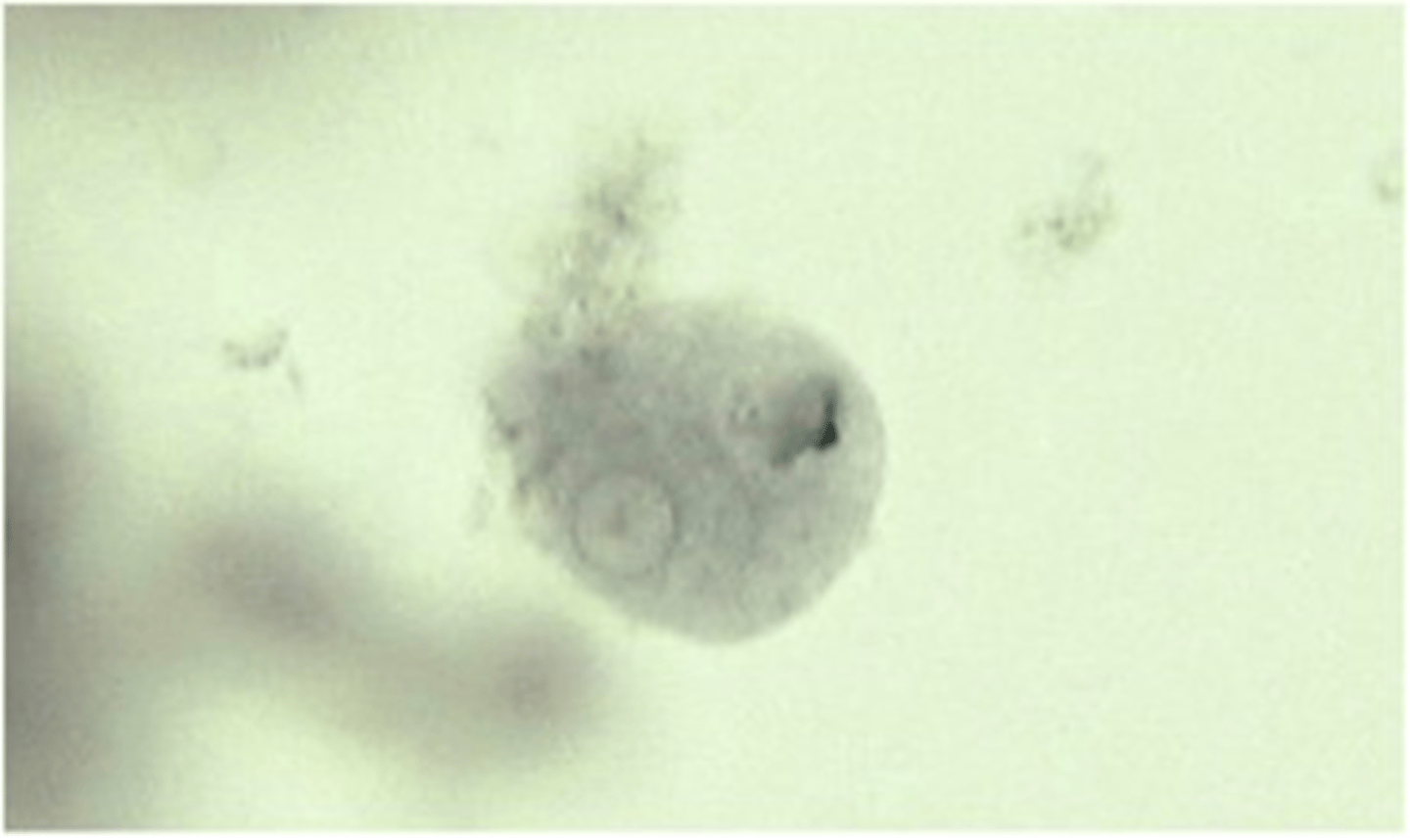
This cyst form of ______________ is known to cause amoebic dysentery.
entamoeba histolytica
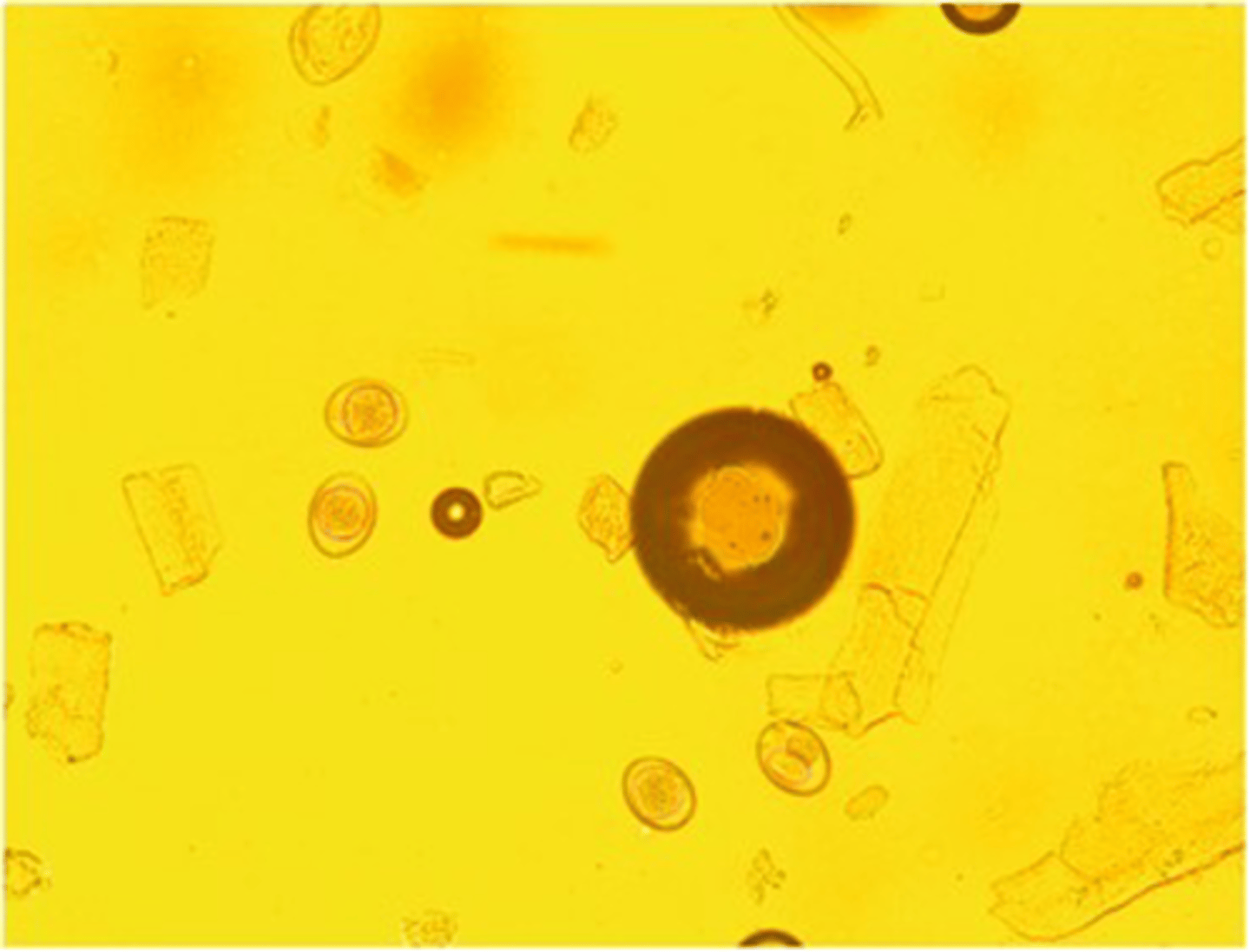
These oocysts of a protozoan that infects dogs, cats, and pigs have several different species,
each having different sized oocysts. This picture shows two different sized oocysts. This
protozoan genus is:
cystoisospora
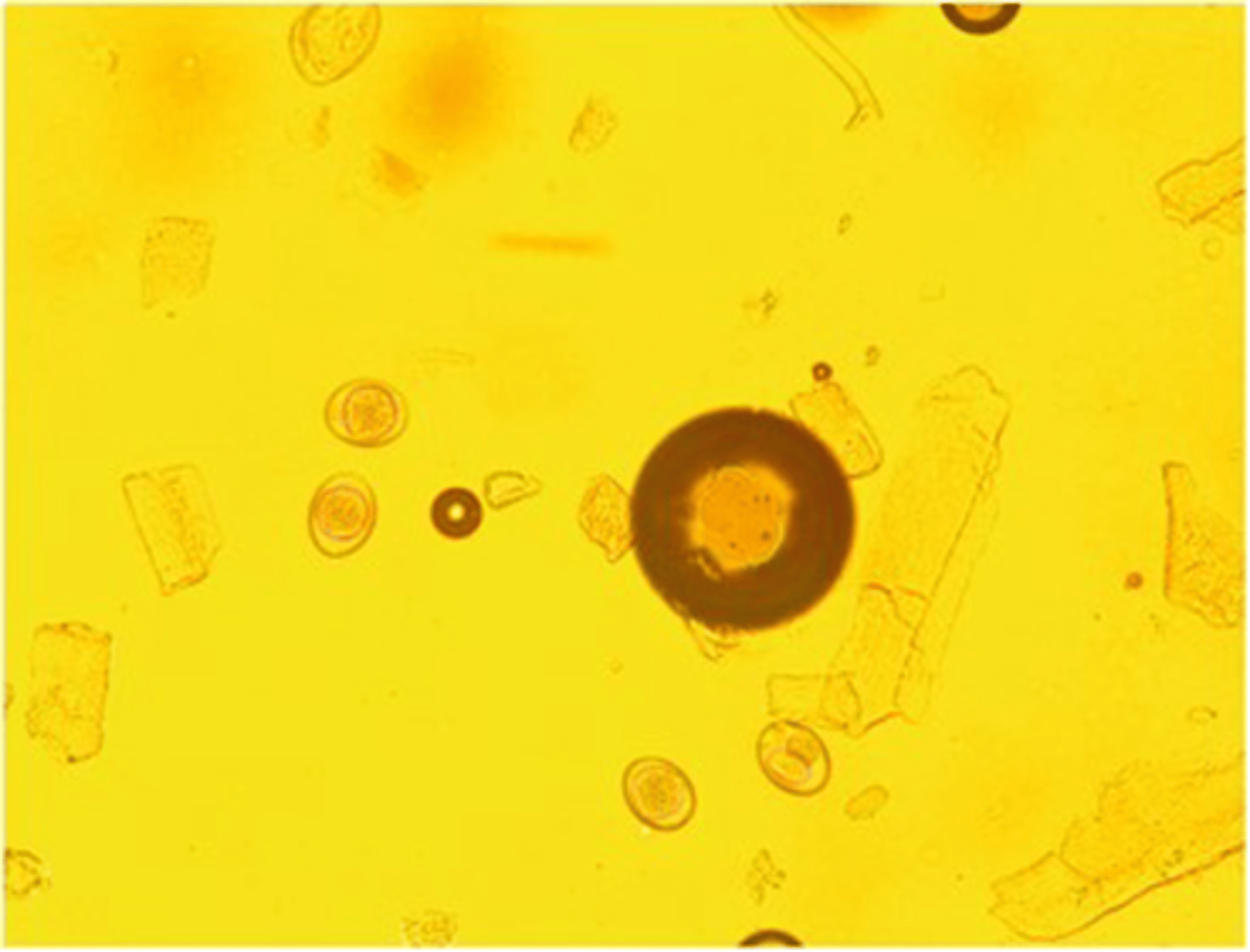
Identify the largest genus and species of protozoan seen here in dogs.
cystoisospora canis
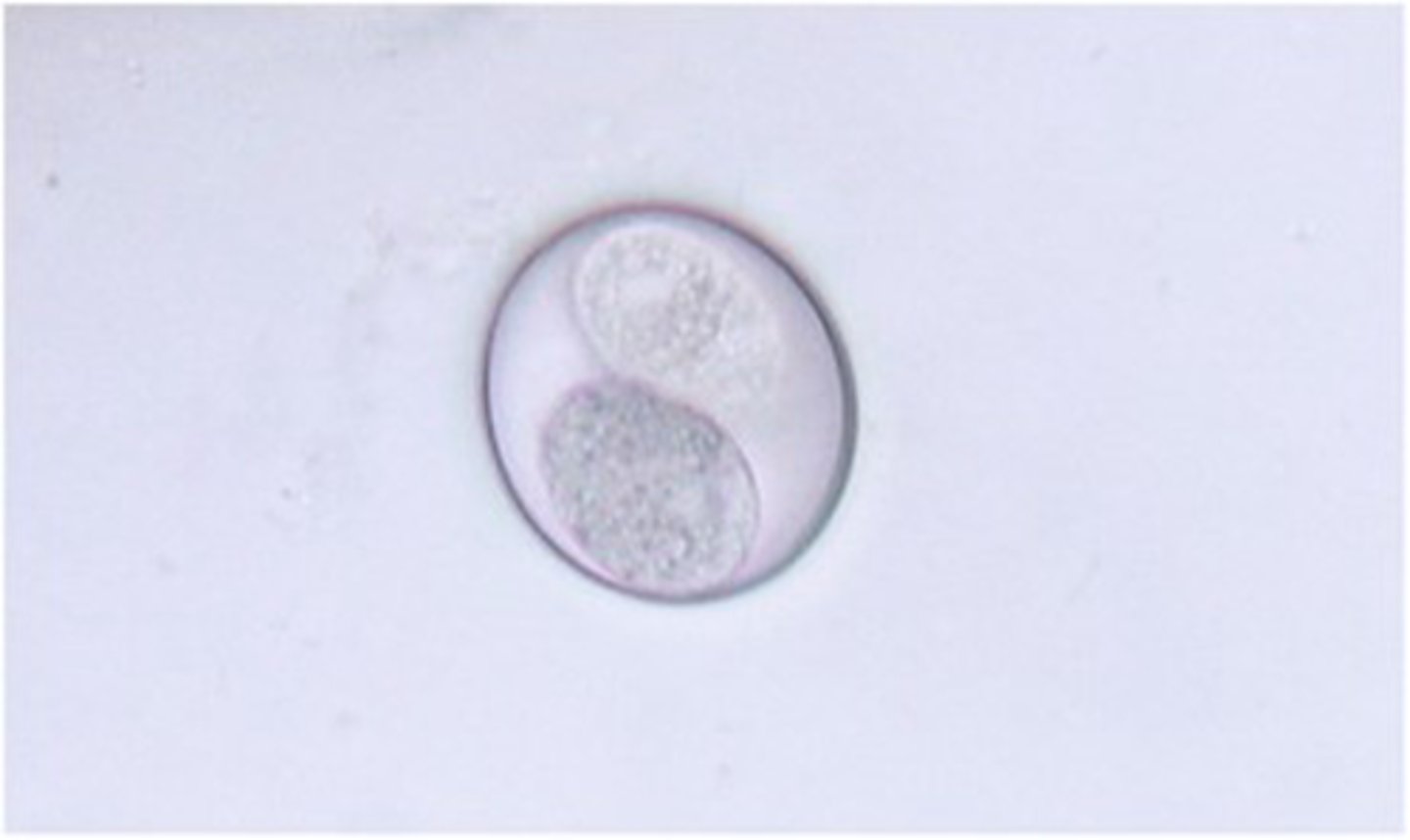
This sporulated oocyst belonging to Cystoisospora rivolta is found in the feces of the:
cat
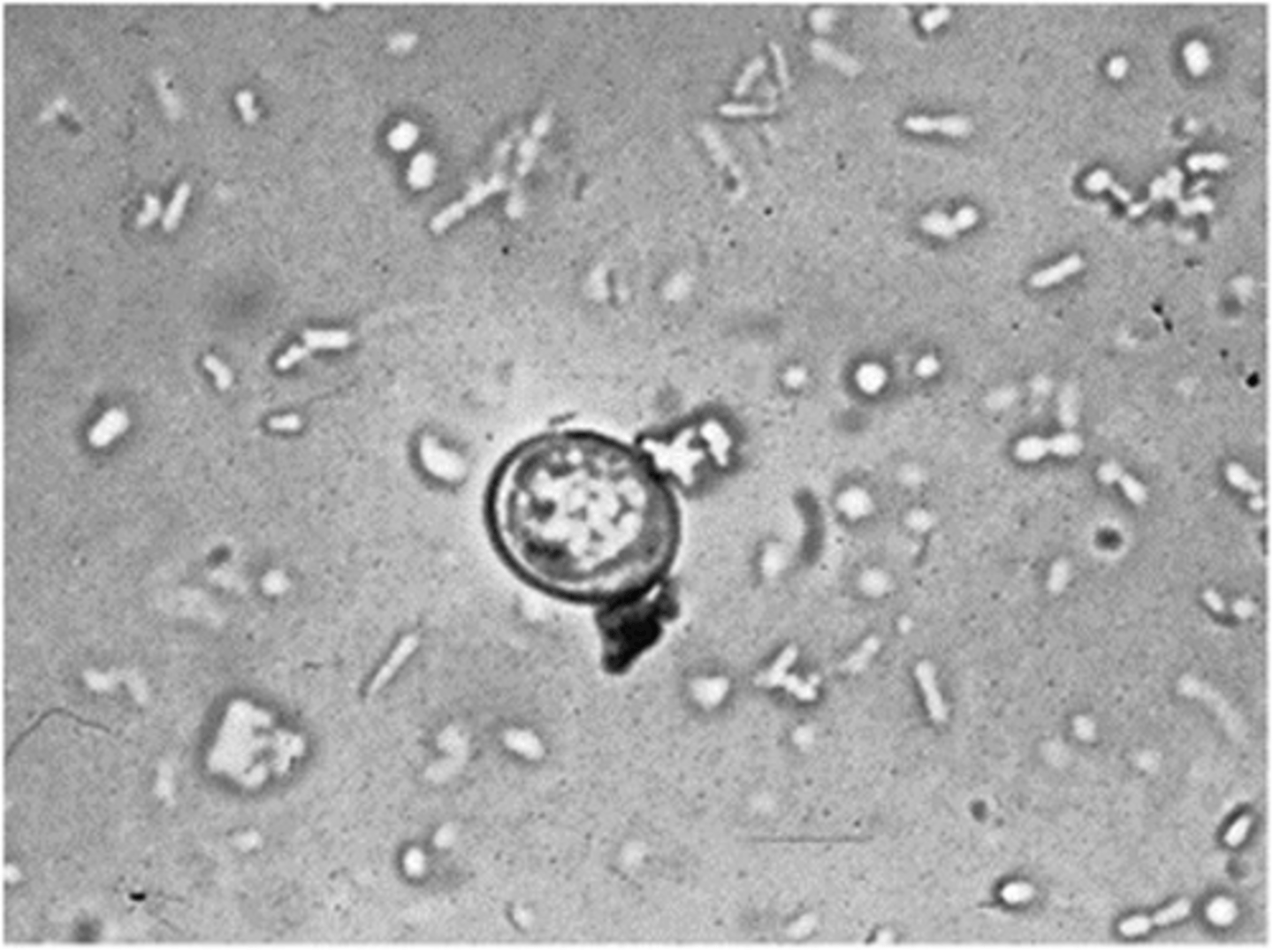
Identify this oocyst as to genus and species. The definitive host is the cat and the parasite
can only produce oocysts in the cat host. This is a zoonotic protozoan parasite.
toxoplasma gondii
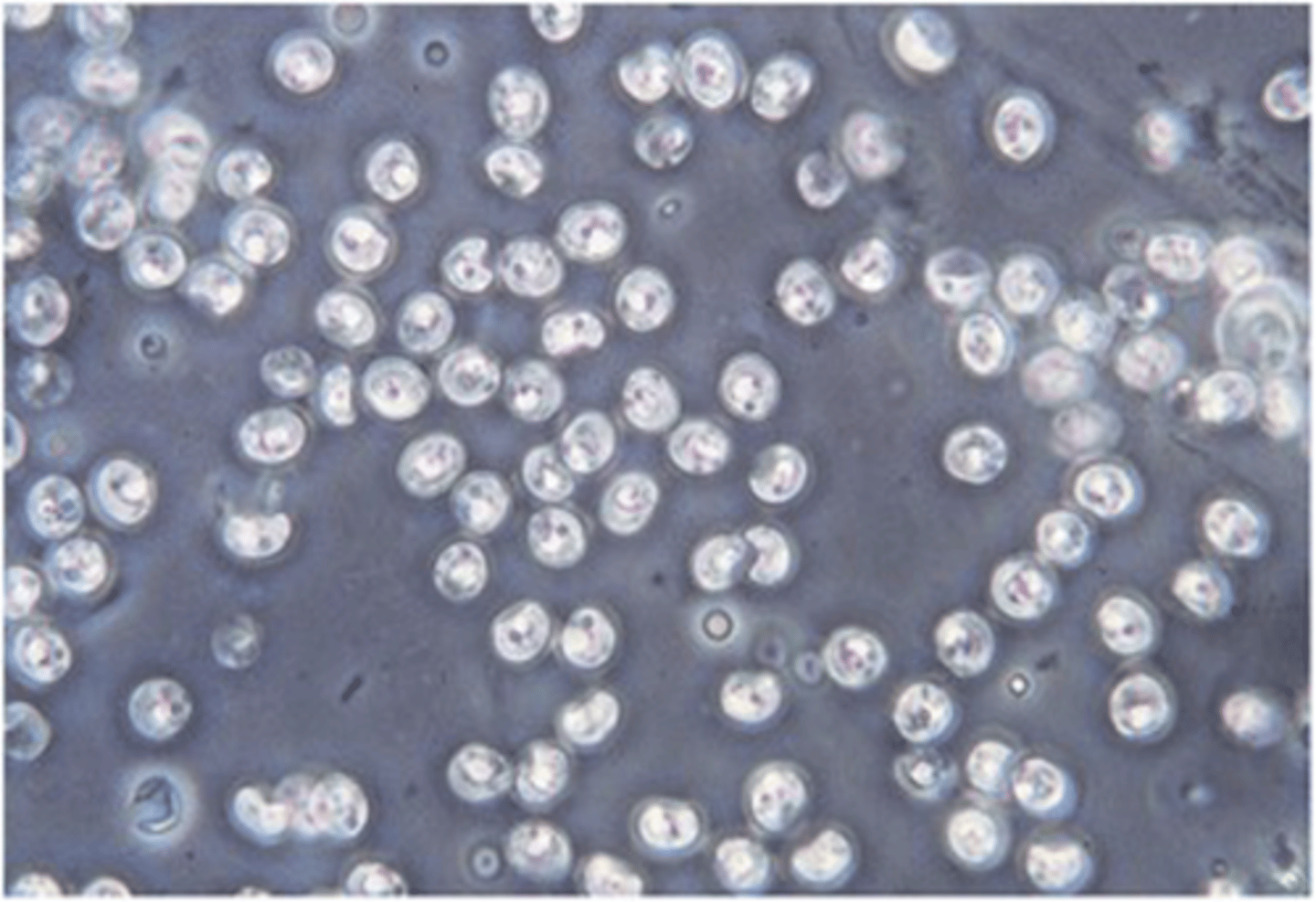
This apicomplexan of dogs and cats produces extremely small oocysts. While seen on fecal
flotation, they are observed just under the coverslip rather than in the normal plane used for
other parasite oocysts and ova.
cryptosporidium species
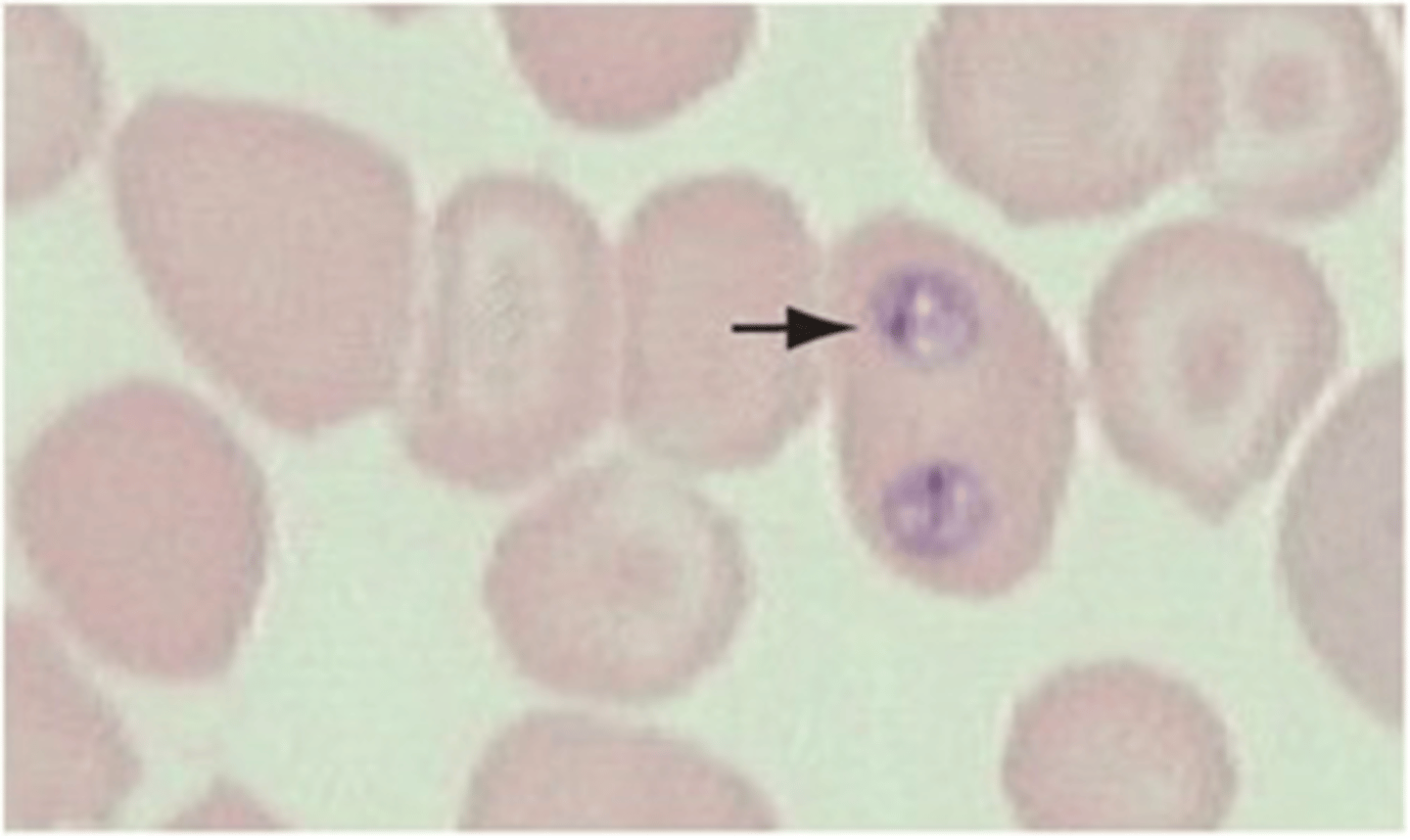
This apicomplexan of dogs is seen in the red blood cells. It is called the canine piroplasm.
The genus and species is:
babesia canis
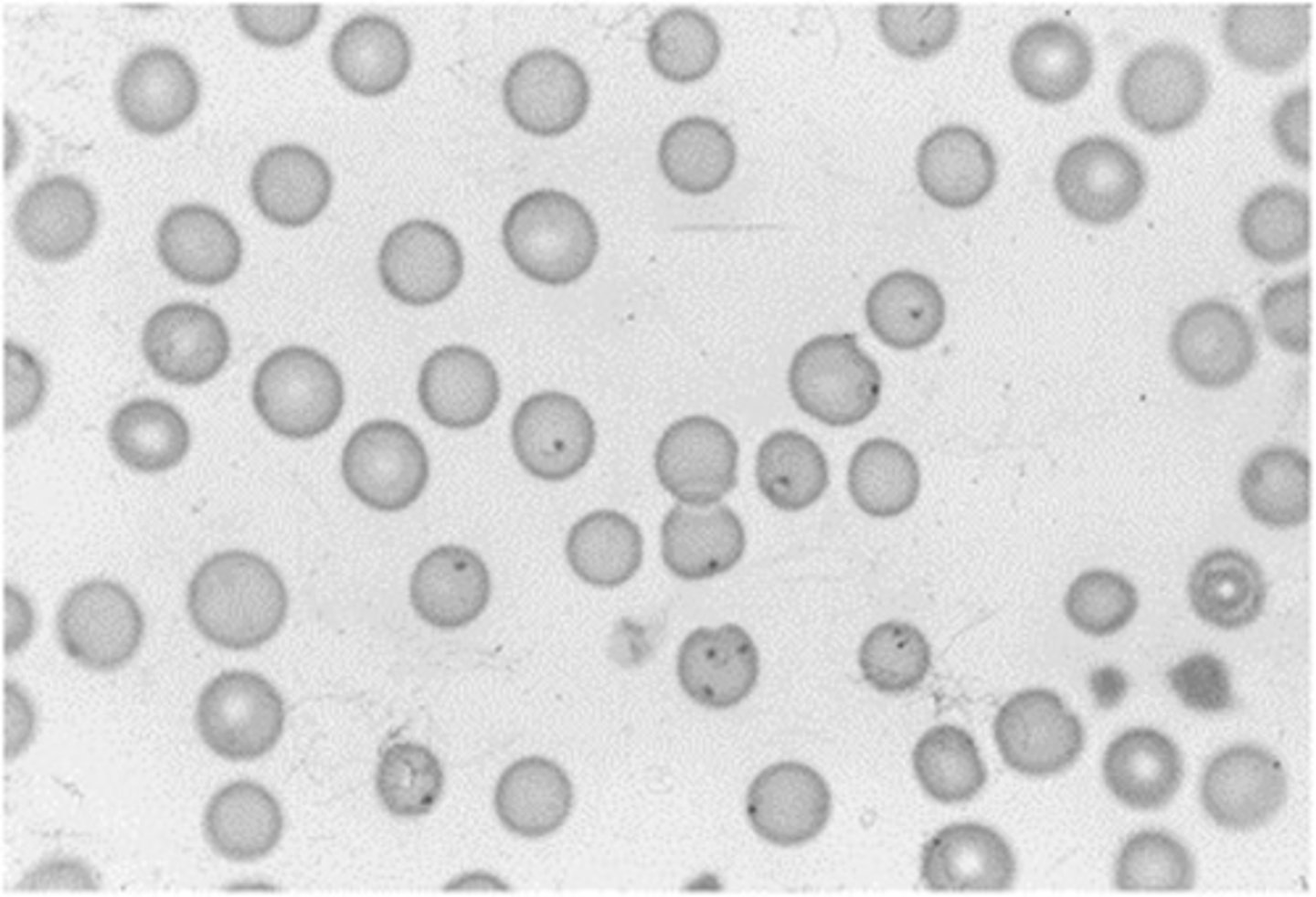
This protozoan parasite of cats is found in a classic ring form in the red blood cells. It has a
poor prognosis of cure in cats and is considered a piroplasm. The genus and species is:
cytauxzoon felis
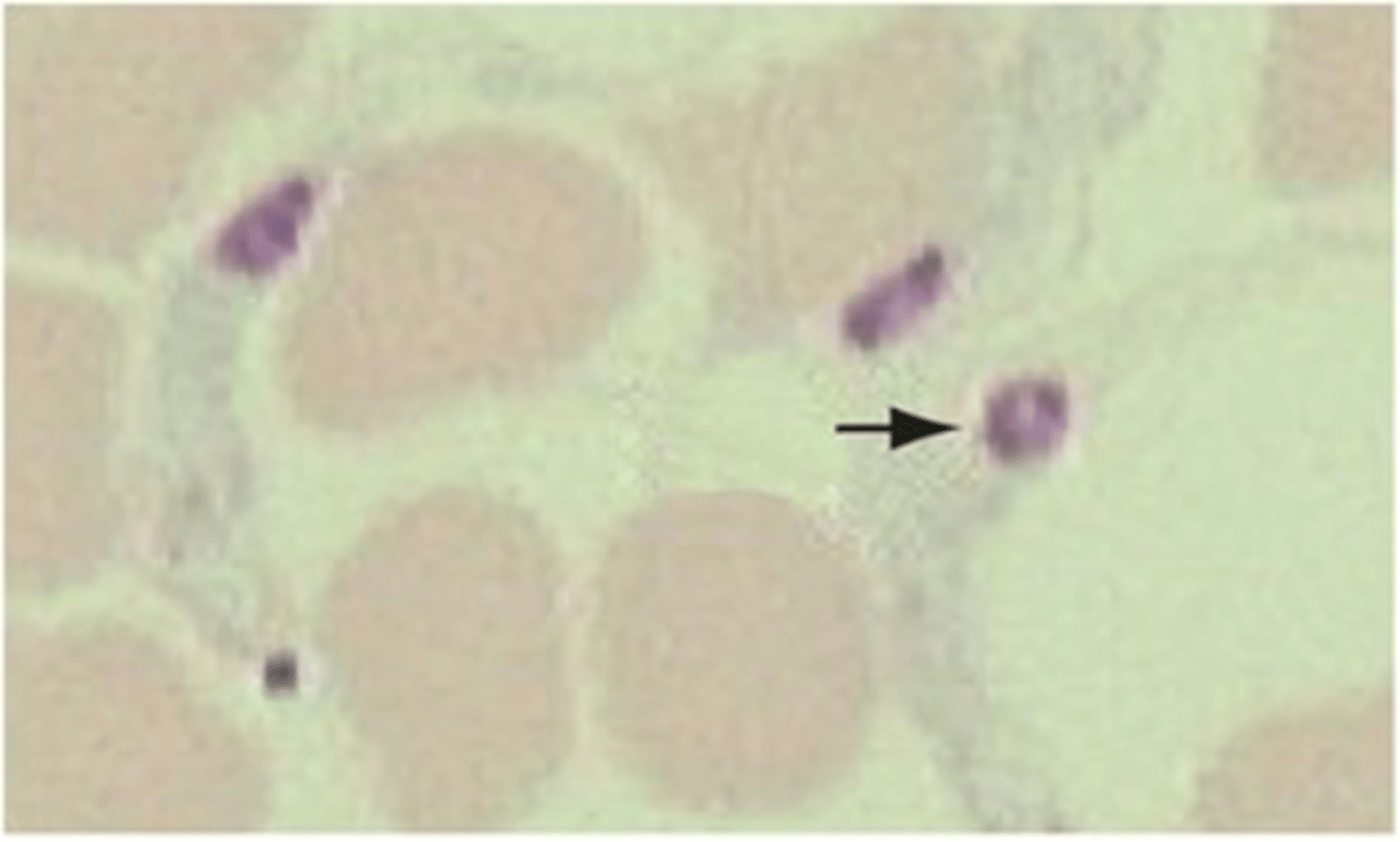
These "onion skin" tissue cysts can be found in skeletal muscle of dogs. The parasite
produces a violent and often fatal course of disease in dogs. It is spread by ticks. What is this
protozoan of dogs?
hepatozoon americanum
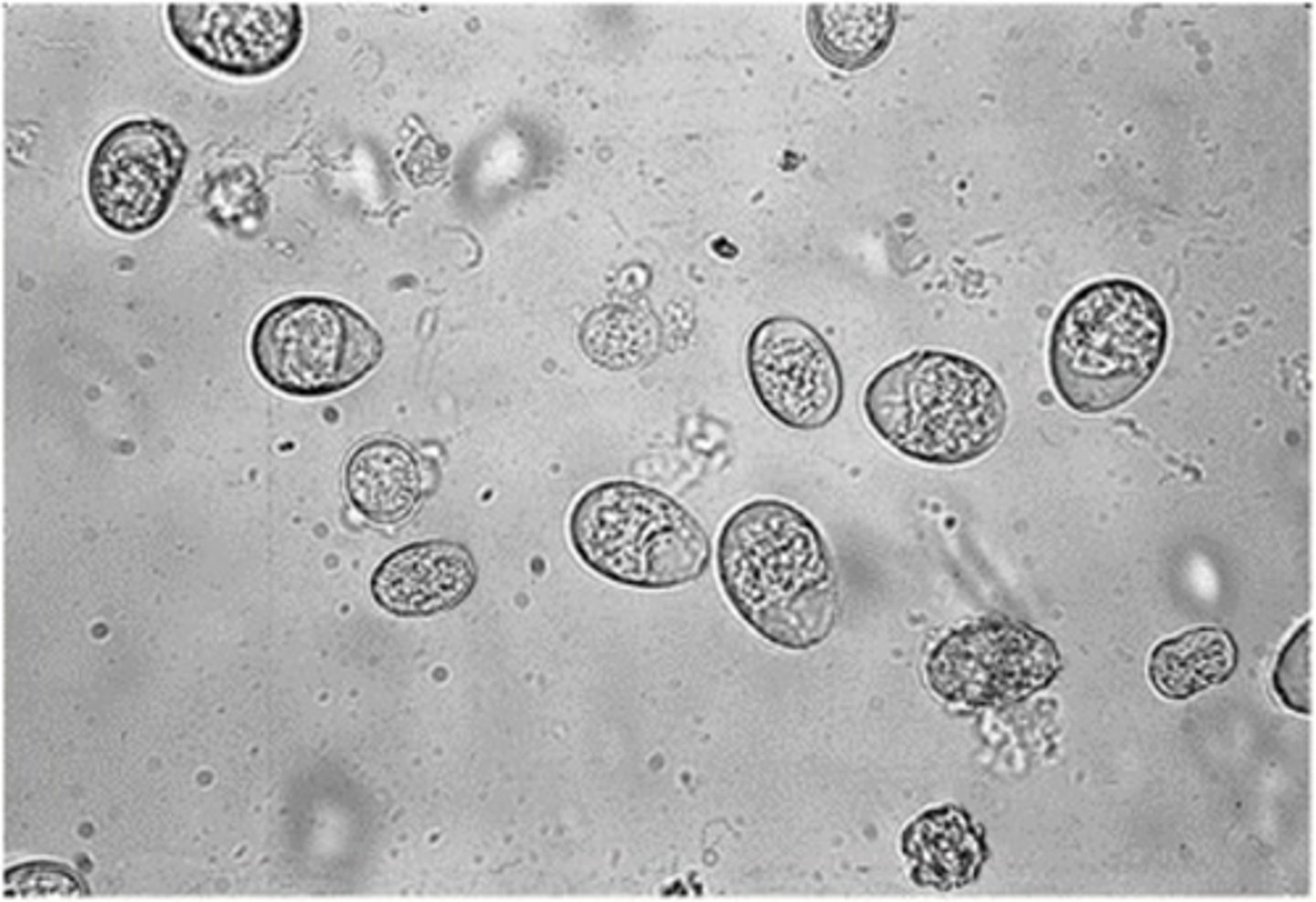
While called a coccidian, this genus and species infects cattle. The protozoan is:
eimeria bovis
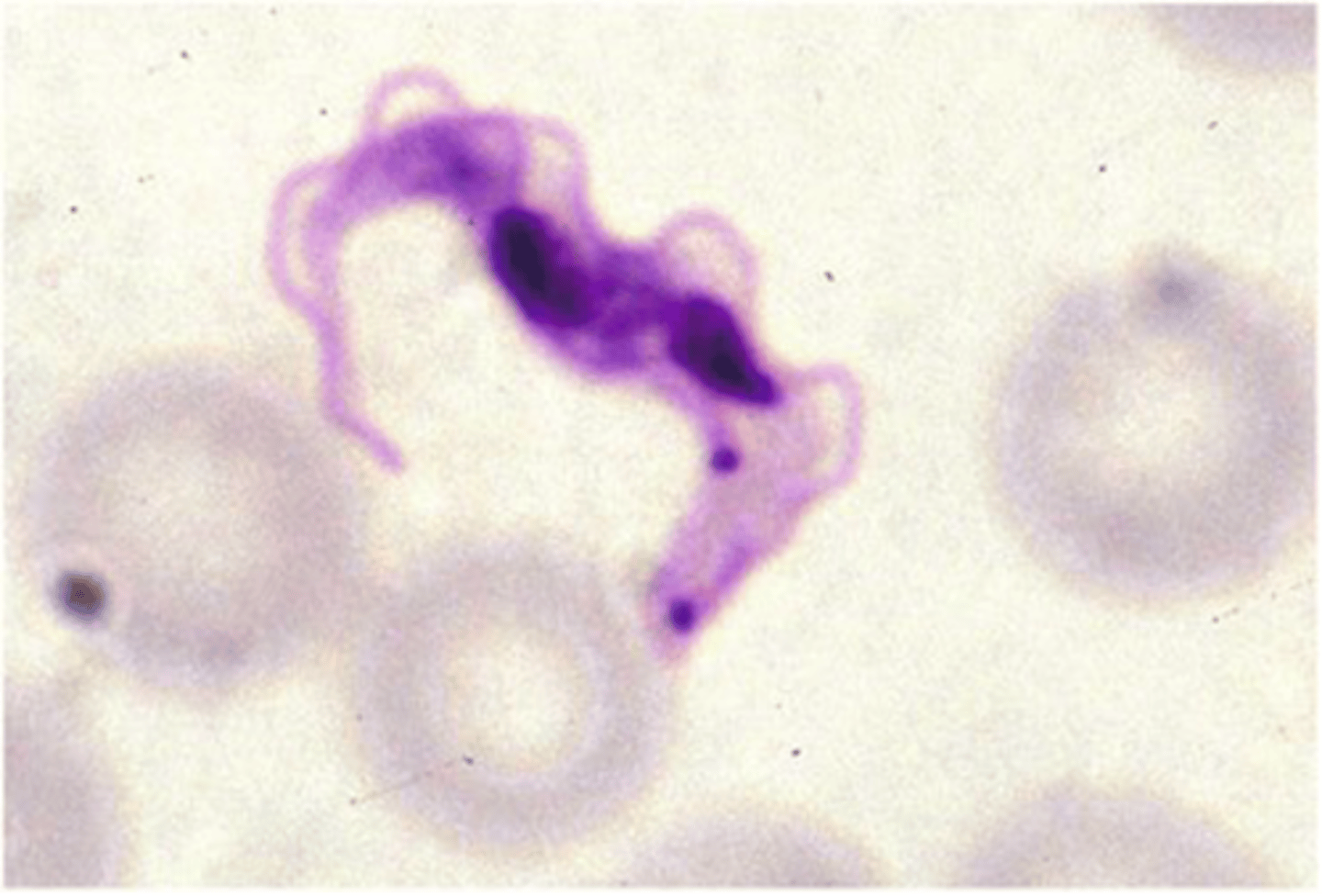
This flagellate found in ruminants and dogs is found in the circulatory system. It is
transmitted by the bite of an infected fly. It is also a zoonotic protozoan parasite. This parasite is:
trypanasoma species
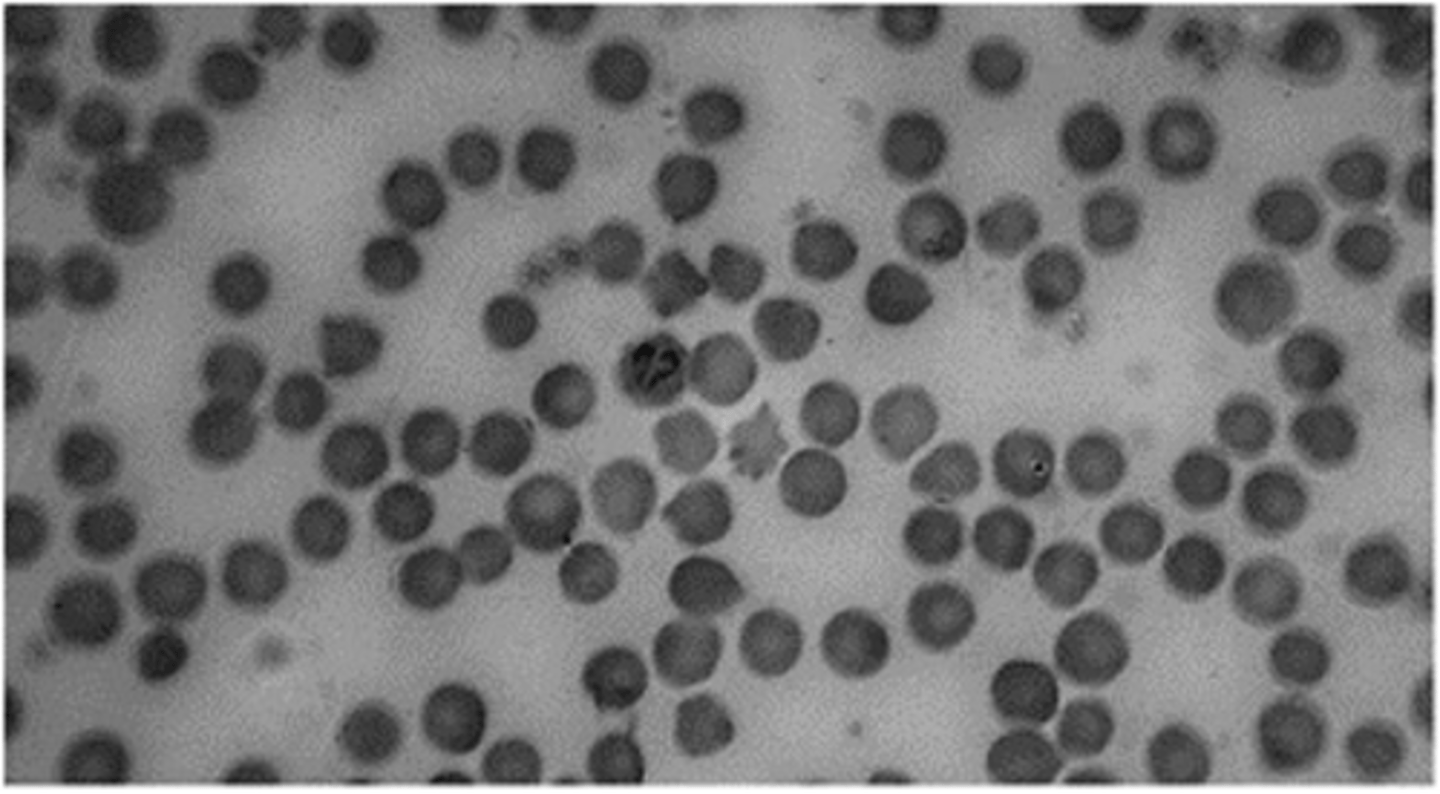
This large piroplasm is found in the red blood cells of cattle and spread by the tick
Rhipicephalus annulatus. This protozoan is:
babesia bigemina
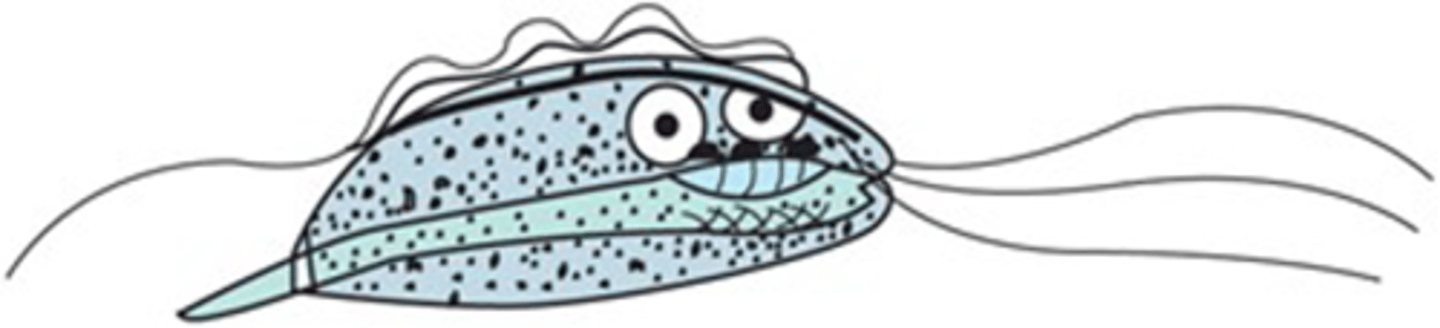
This protozoan flagellate causes spontaneous abortion in pregnant cattle and is considered
a sexually transmitted parasite.
tritrichomonas foetus
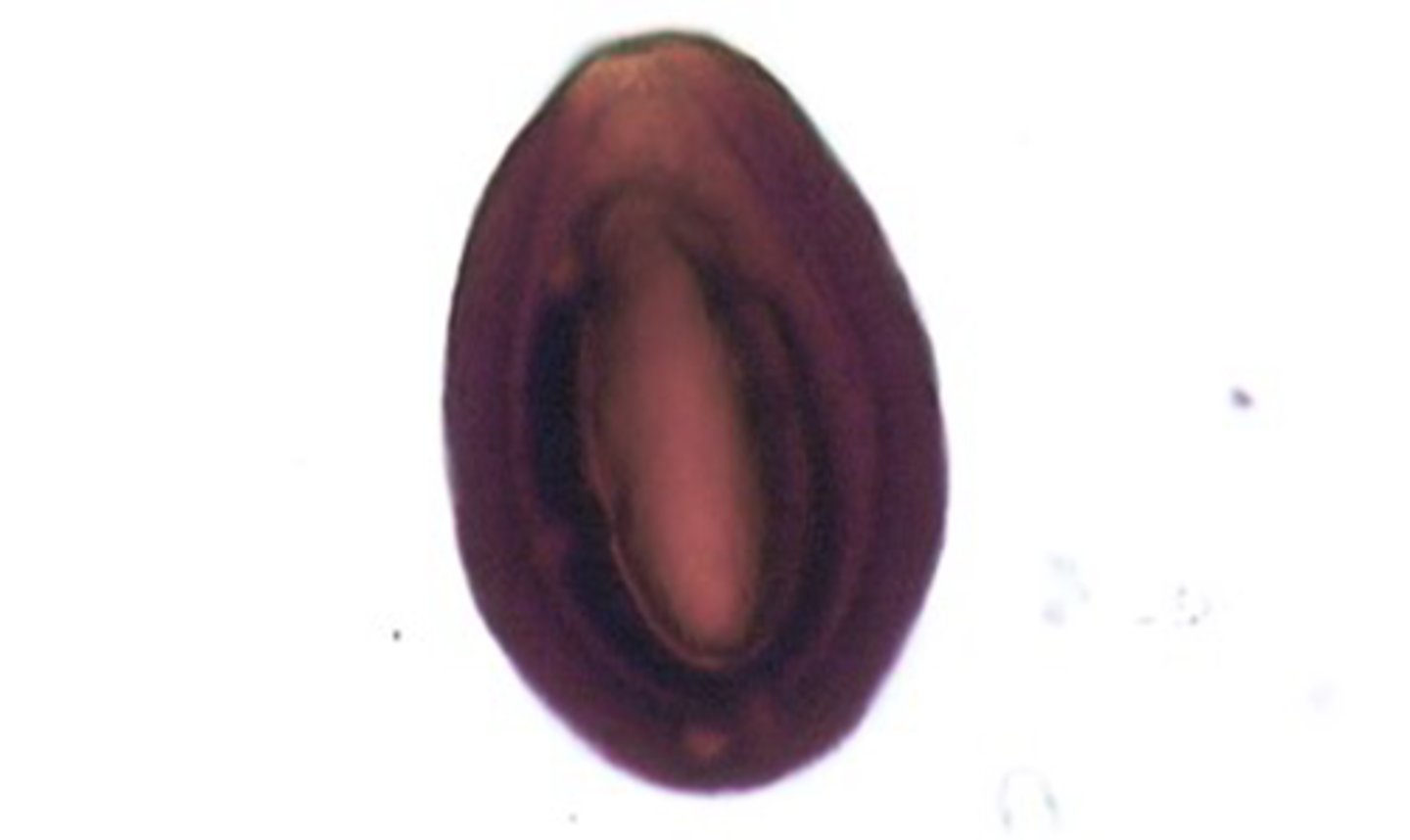
This equine protozoan oocyst is unsporulated and found most commonly in young horses,
as the host can become immune to the parasite.
eimeria leuckarti
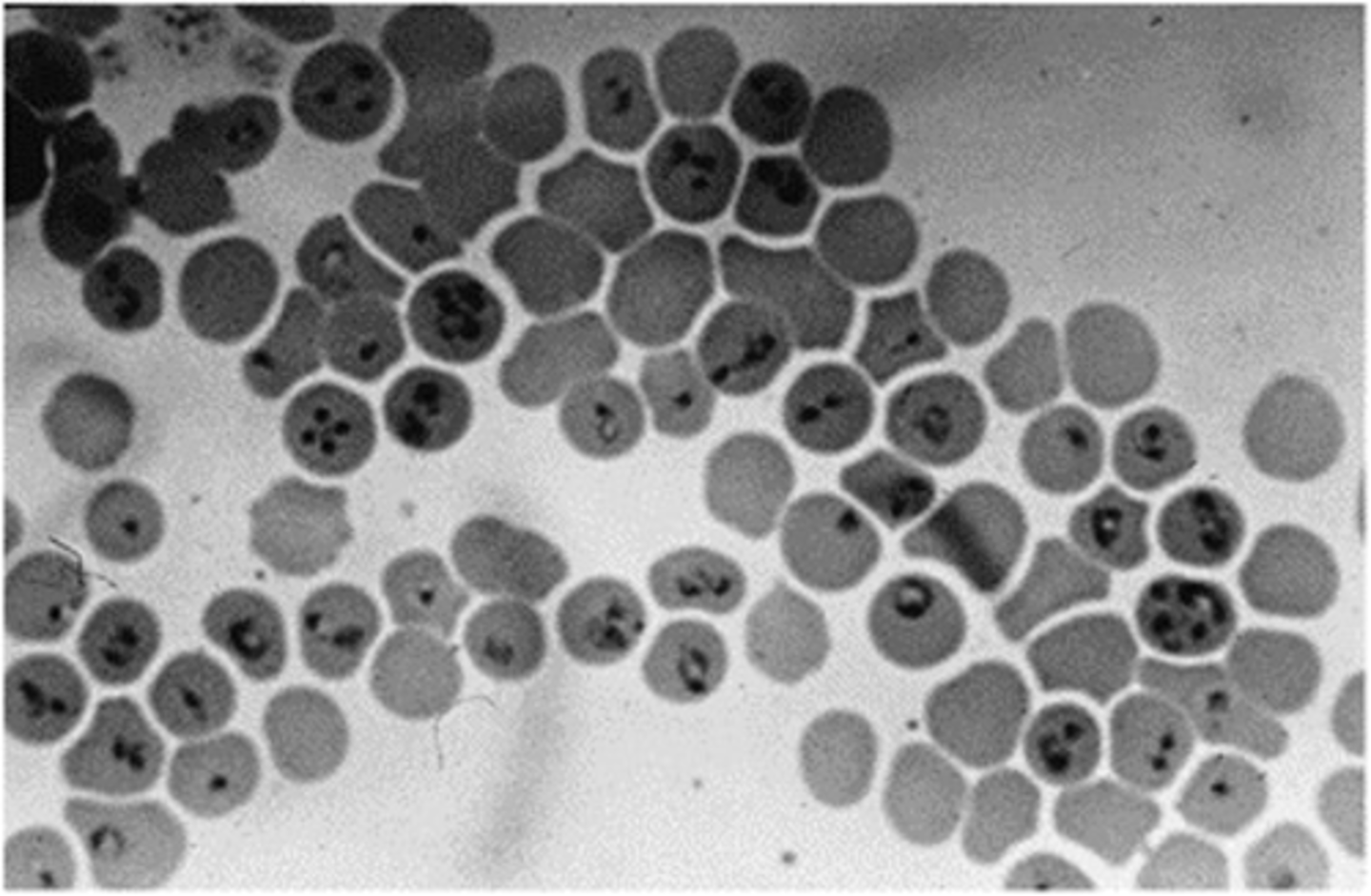
Babesia equi, seen here, has been renamed to:
theileria equi
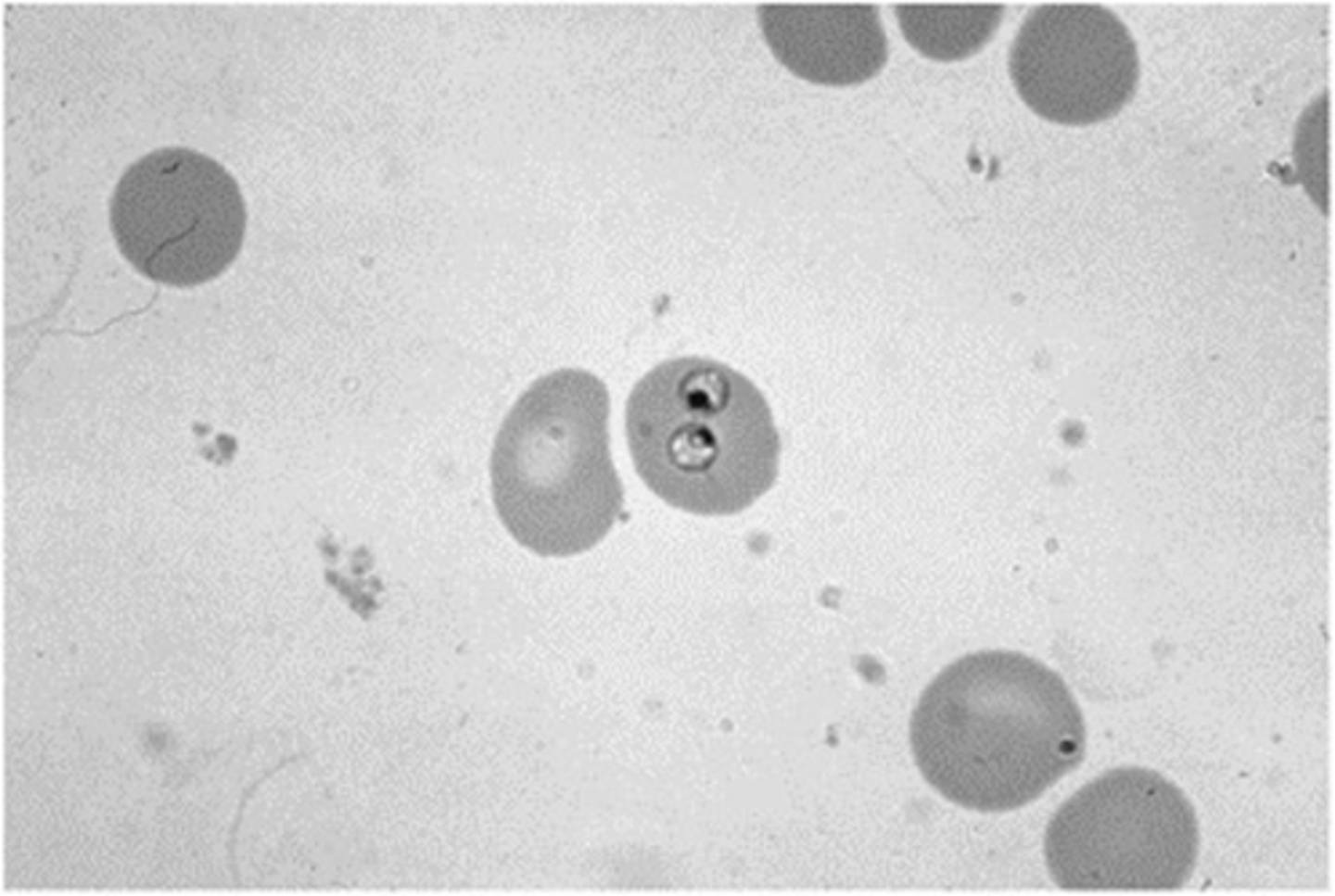
This piroplasm of horses has not had a name change.
babesia caballi
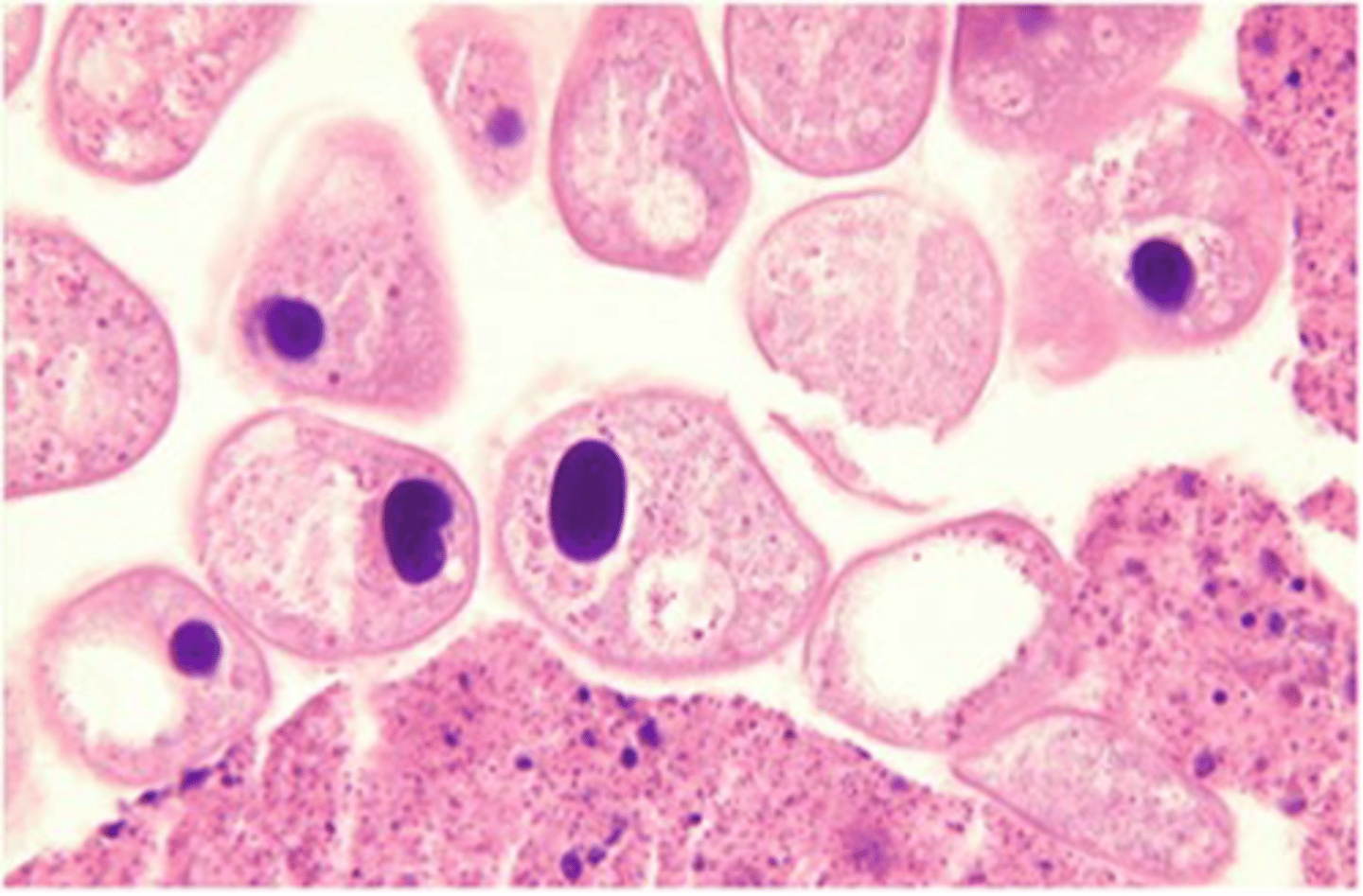
This protozoan, ciliate trophozoite form is found in the large intestine of swine but can also
be seen in dogs. It can cause diarrhea but is generally considered nonpathogenic.
balantidium coli
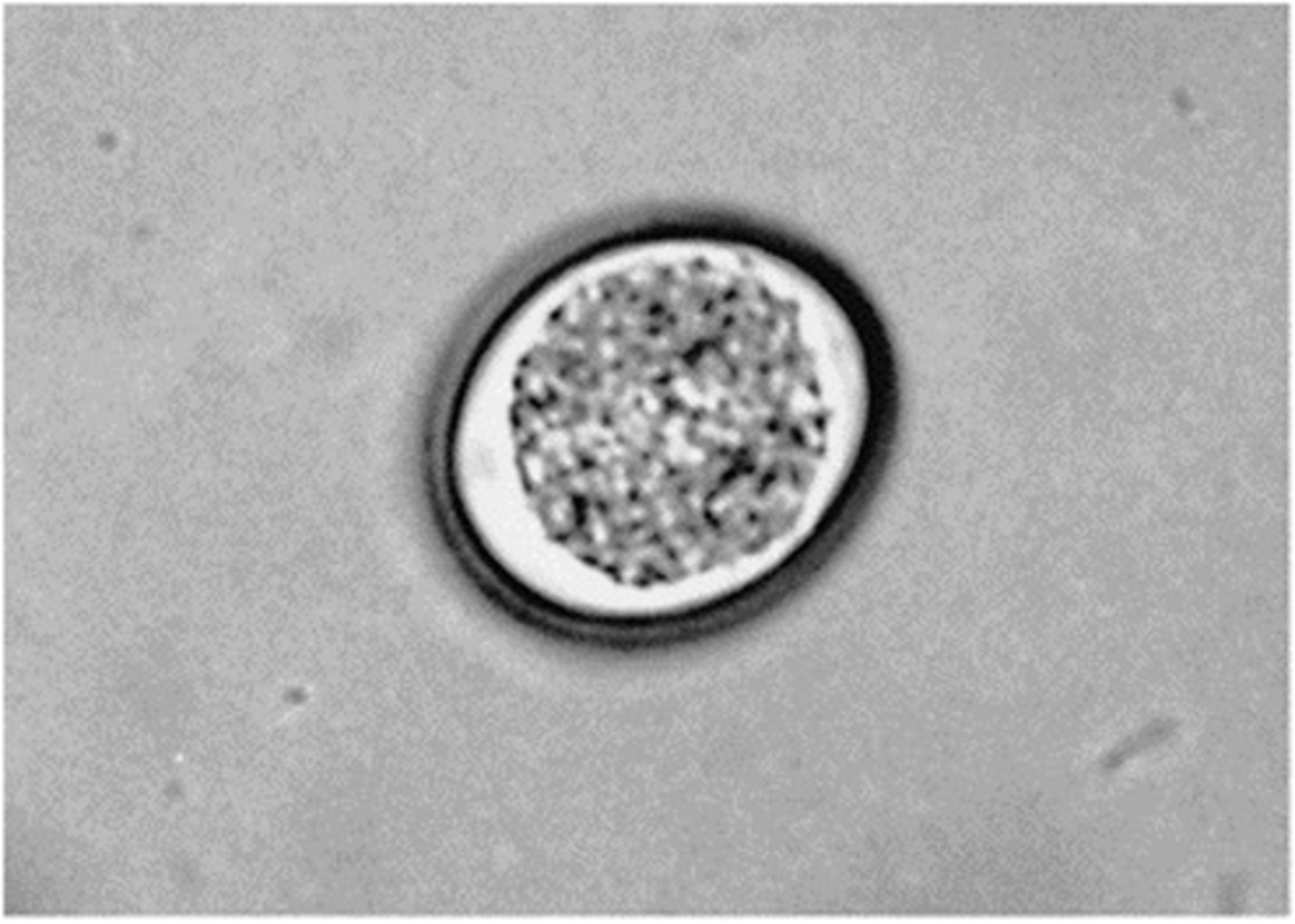
This coccidian of pigs is identified as:
cystoisospora suis
This protozoan flagellate has not been renamed to an assemblage and is still called
____________ in pet birds.
giardia psittaci
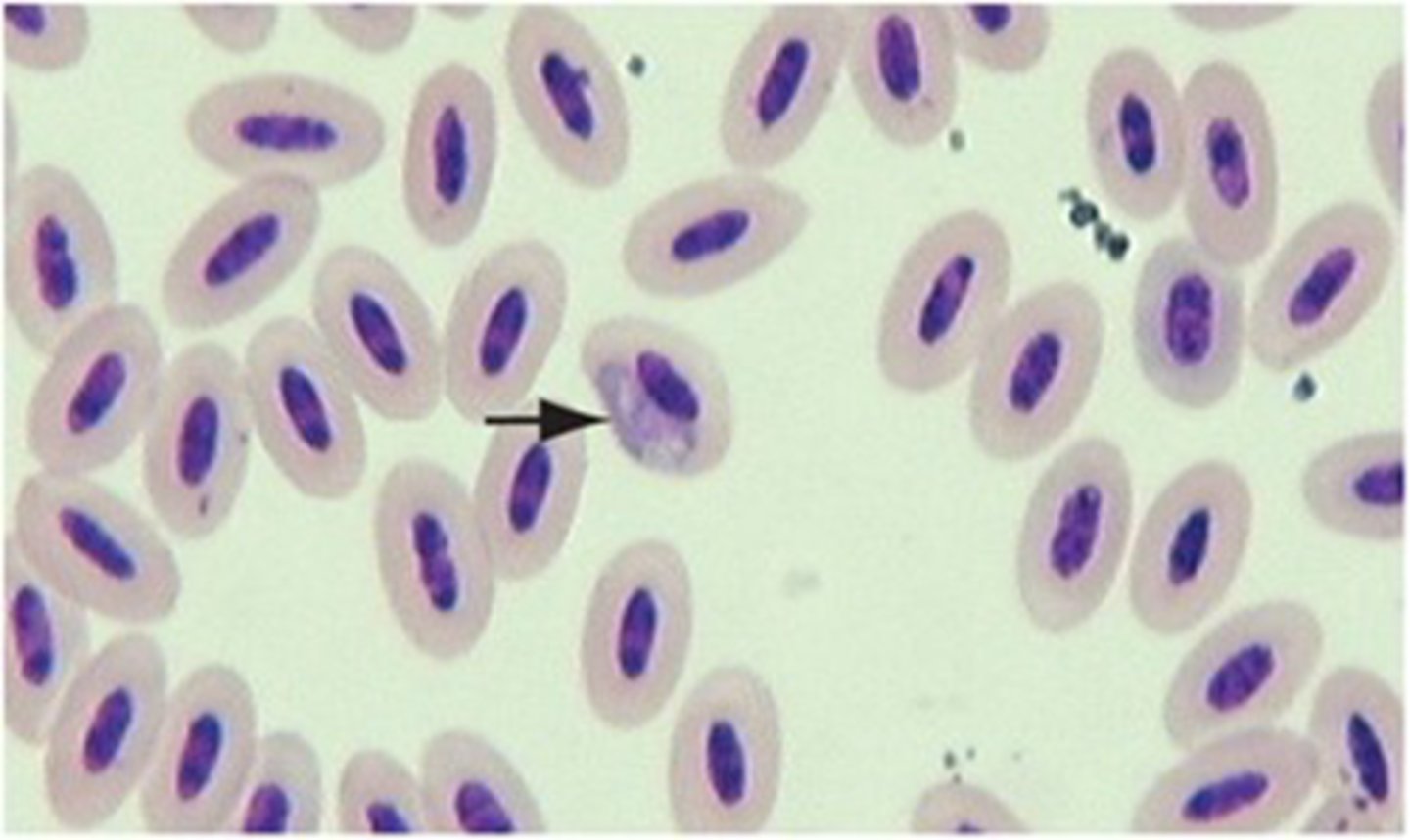
This protozoan trophozoite is found in the crop of pigeons, doves, poultry, and raptors. It can
only be passed by direct contact with an infected bird or infected water. This protozoan does not
produce oocysts.
trichomonas gallinae
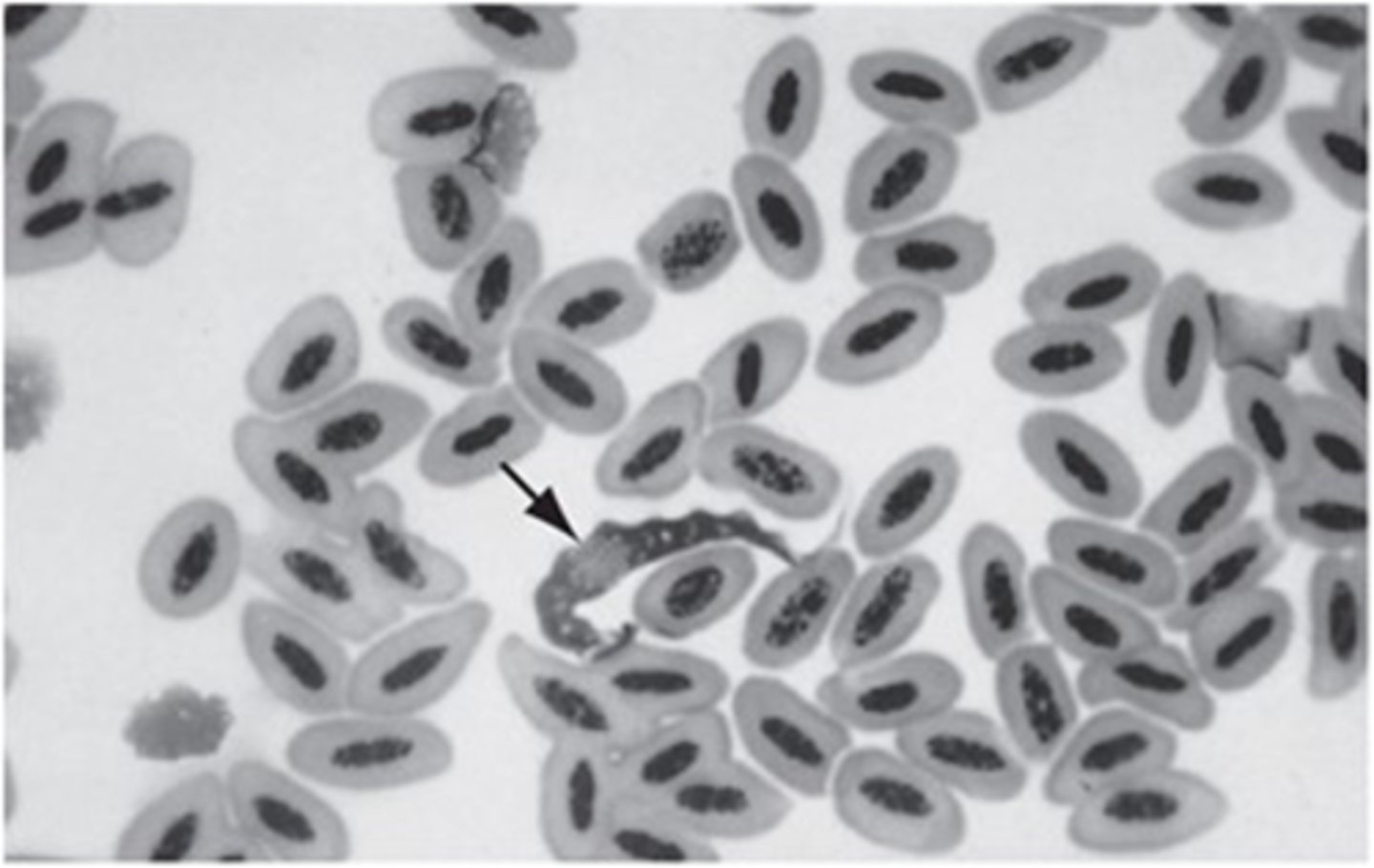
Trypanasoma species found in a cockatoo use the intermediate host ____.
unidentified
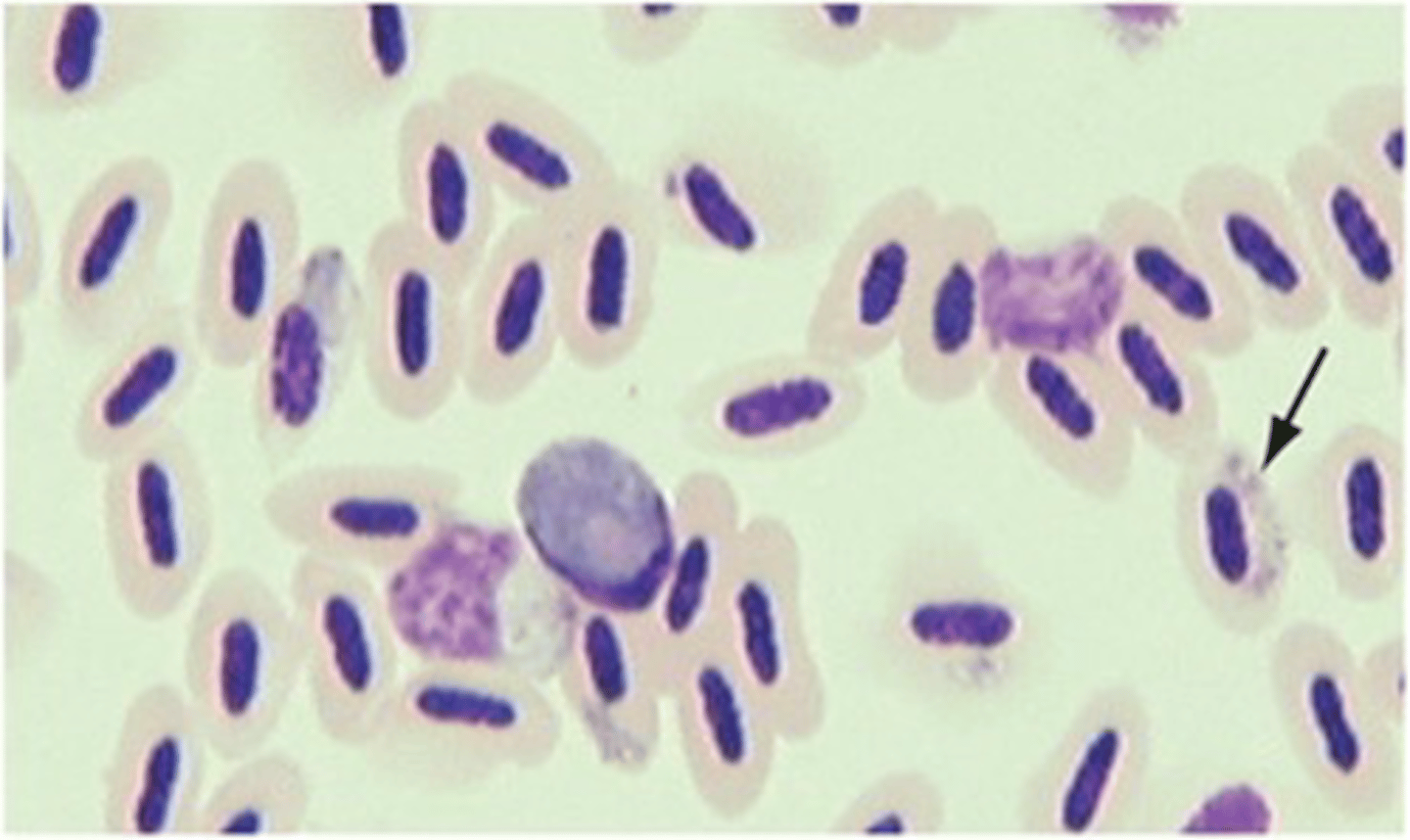
The trophozoite form that looks like a "sausage-shaped body" is produced by the protozoan:
haemoproteus species
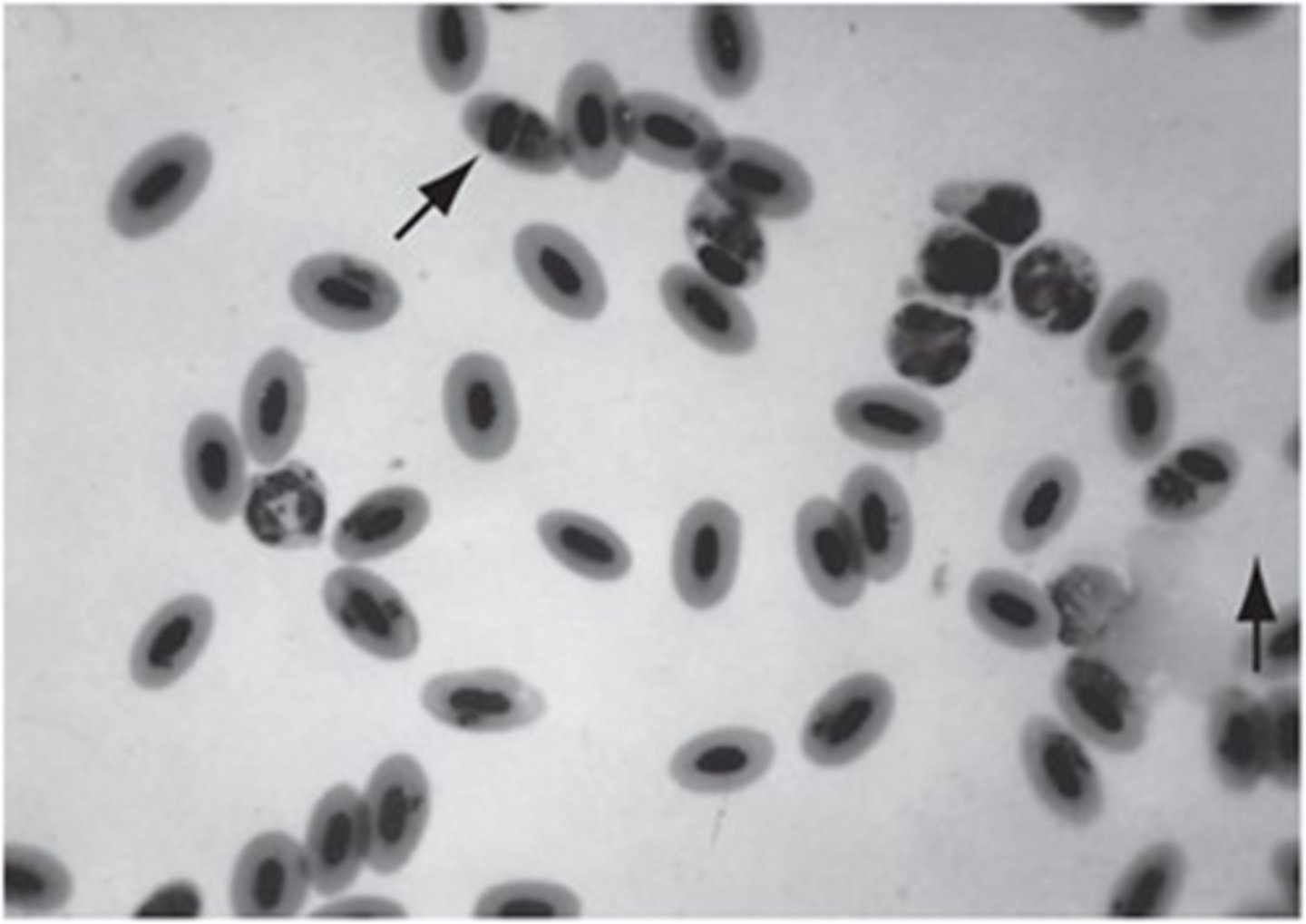
______________ causes a displacement of the nucleus in the red blood cells of birds. This
protozoan causes avian malaria.
plasmodium species
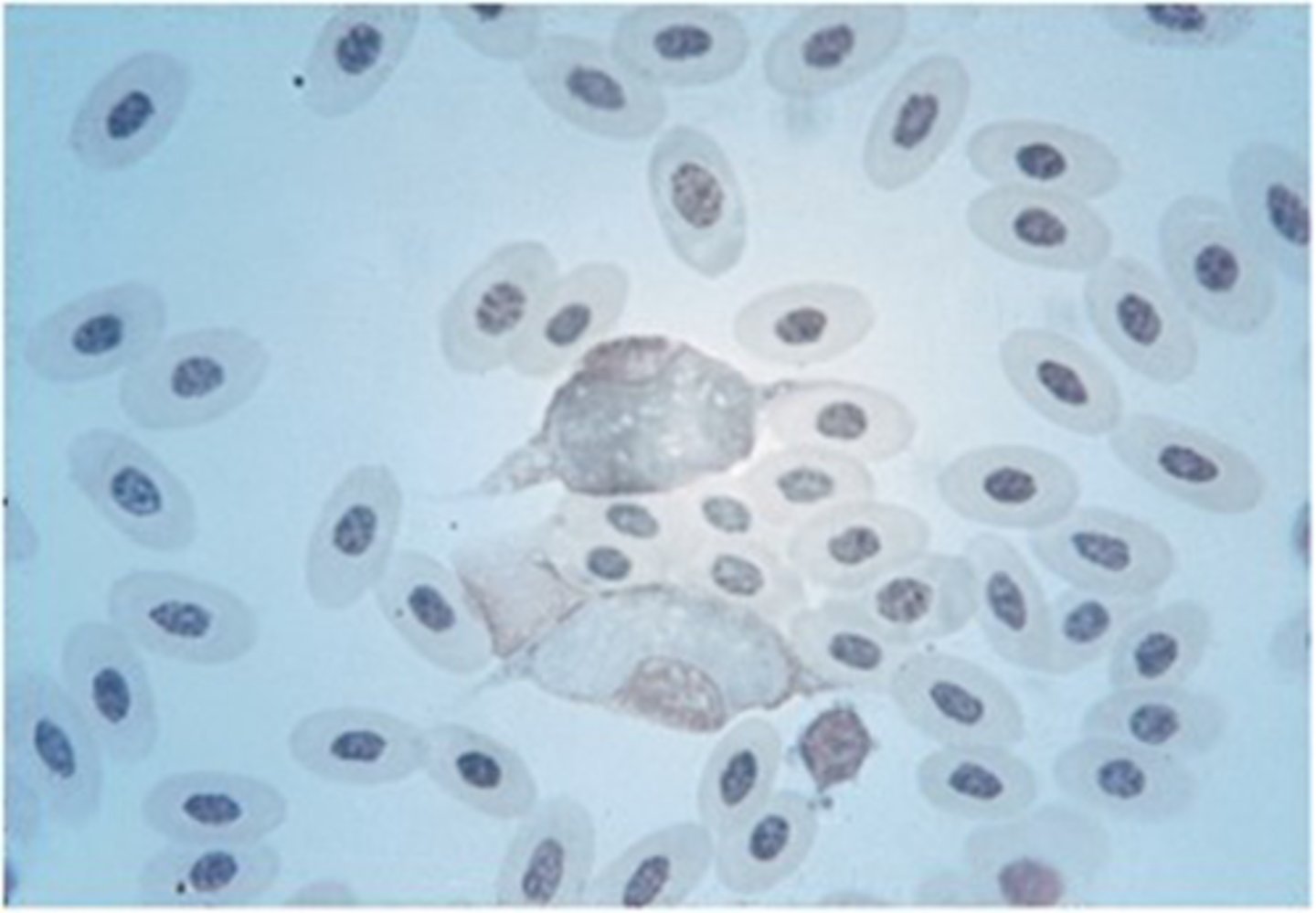
Raptors play host to this protozoan parasite seen within white blood cells. This protozoan is:
leucocytozoon
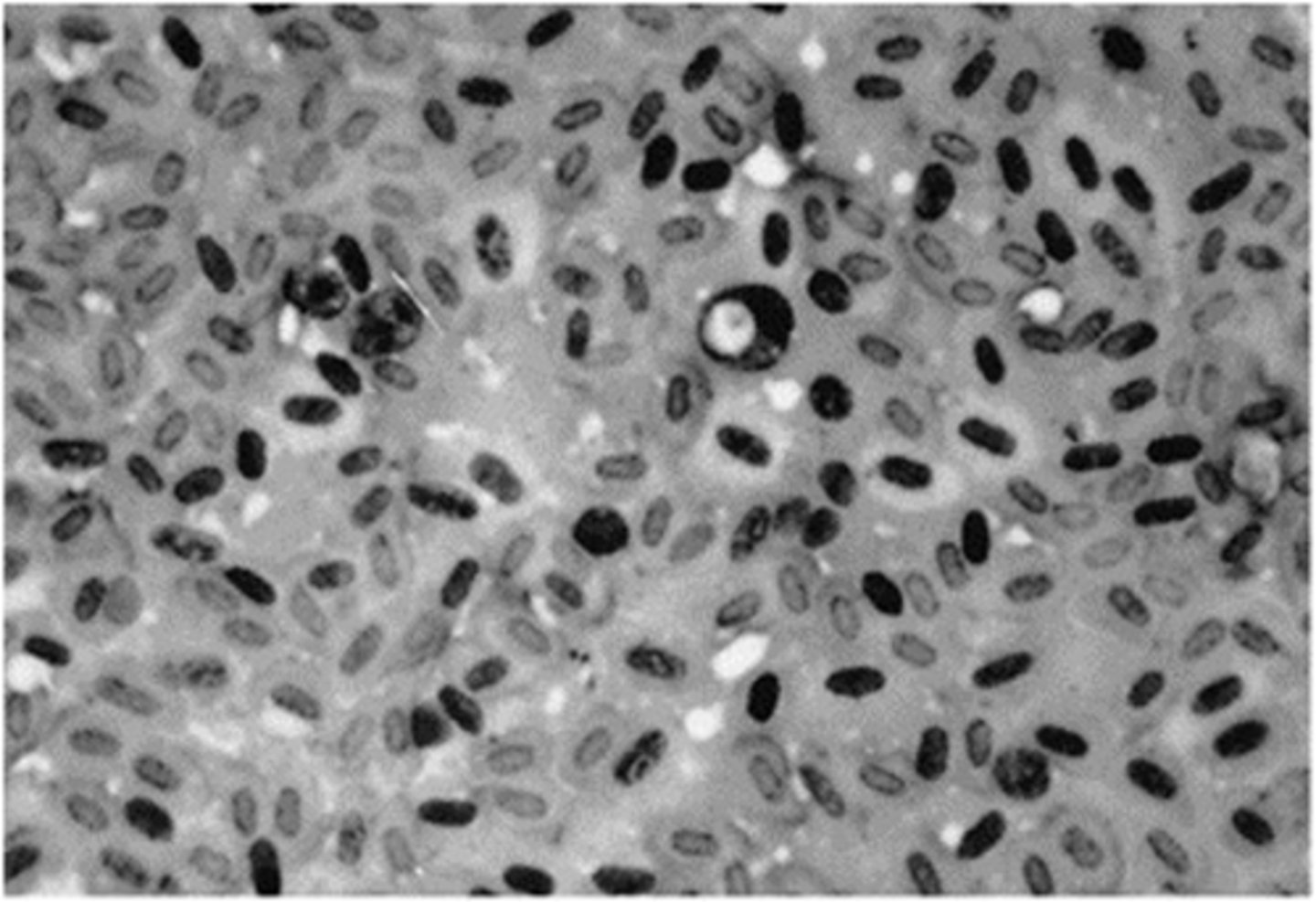
Atoxoplasma serini is a Coccidia seen in rabbits. The genus of this protozoan has been
changed to:
cystoisospora
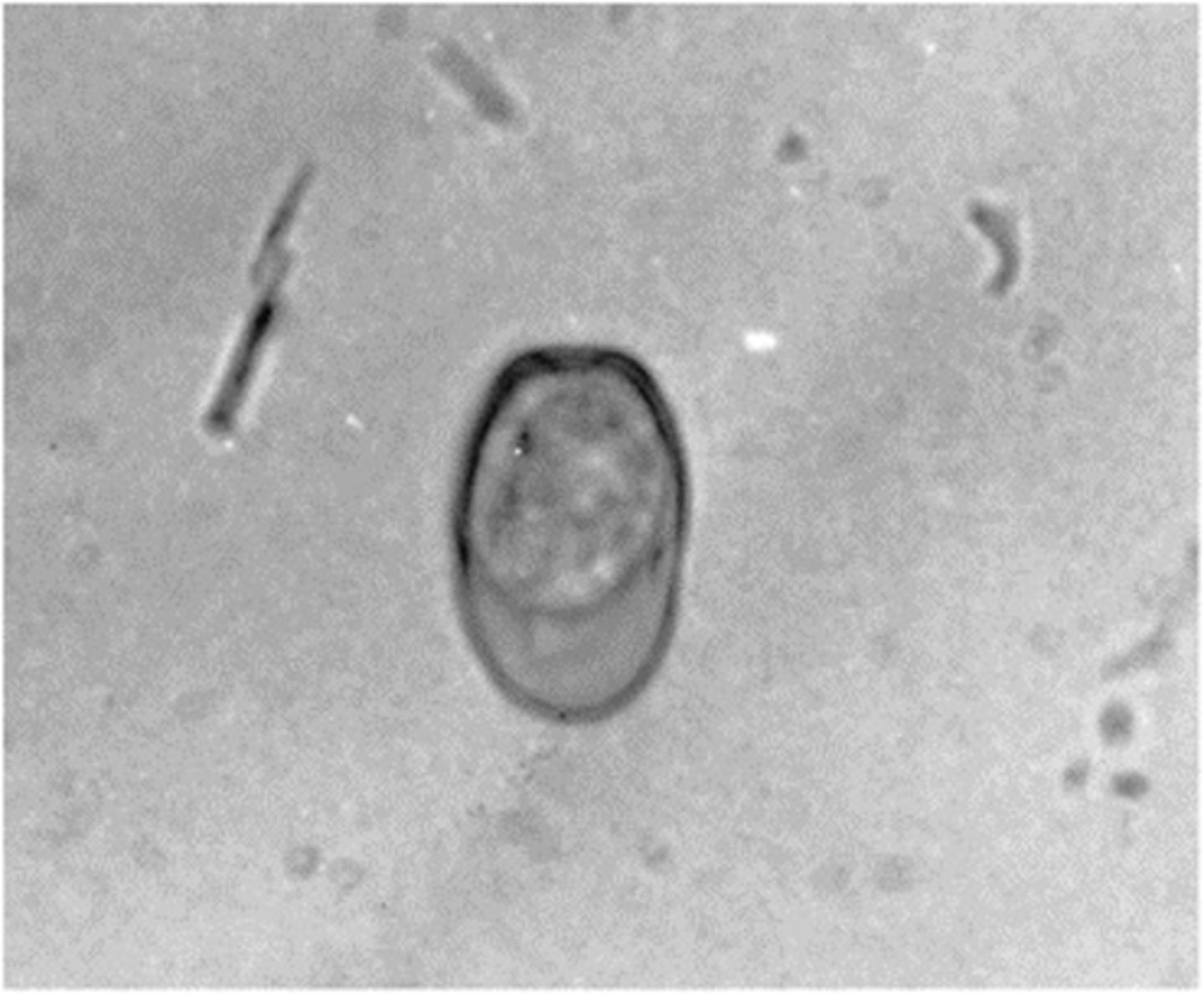
Identify this protozoan parasite of rabbits. It has a micropyle at one end of the oocyst.
eimeria magna
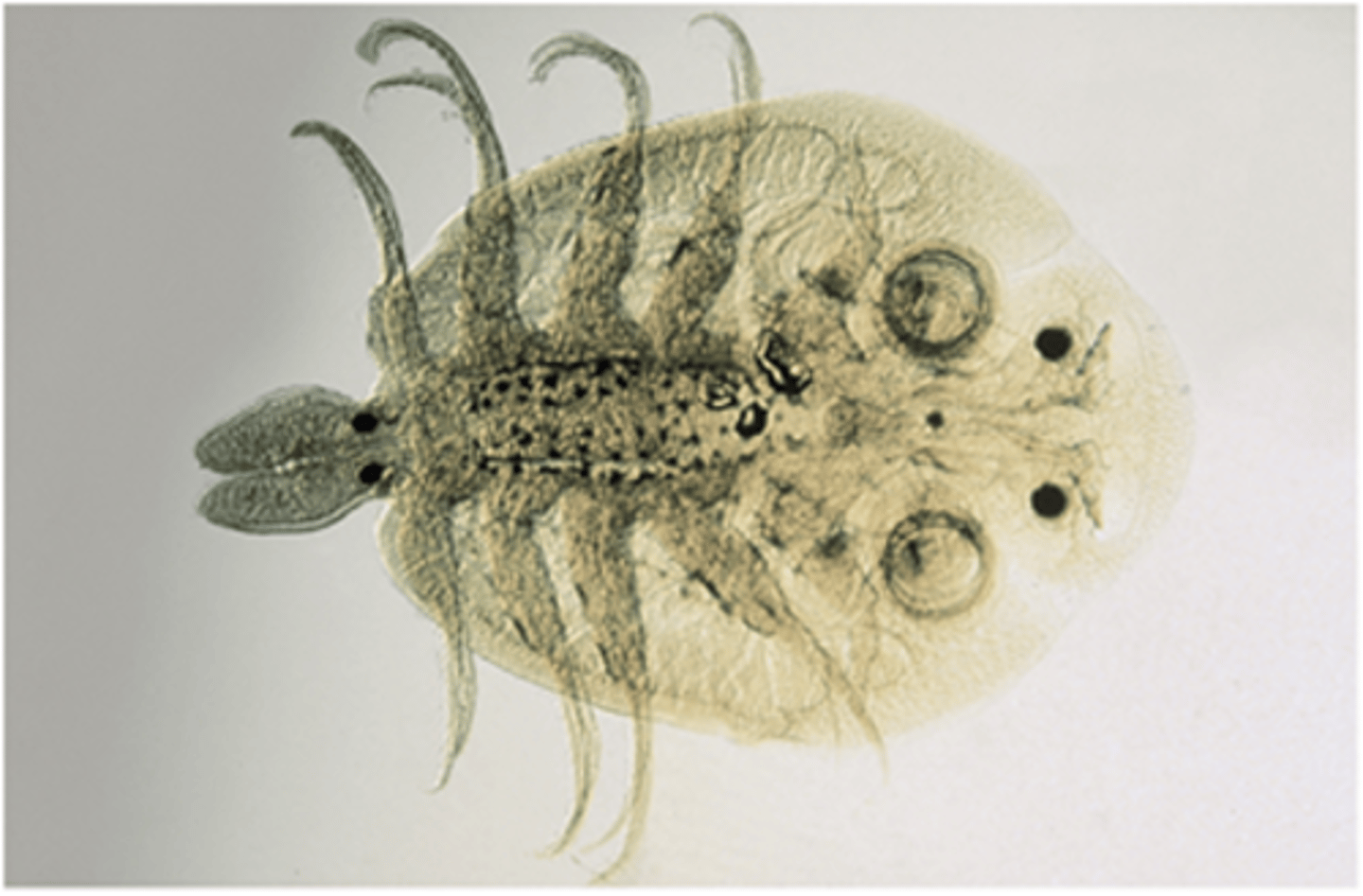
This tiny, microscopic crustacean is Argulus species. It is known to parasitize:
fish