exp cultures module II
 Call Kai
 Learn
Learn Practice Test
 Spaced Repetition
 Match
Match Flashcards
 Knowt Play
1/72

There's no tags or description
Looks like no tags are added yet.
Name | Mastery | Learn | Test | Matching | Spaced | Call with Kai |
|---|
No analytics yet
Send a link to your students to track their progress
73 Terms
Persian Empire
at its peak (ca. 550-350) stretched from eastern Europe to Upper Indus Valley and from central Asia to Egypt
Satrapy
territory of the Persian Empire (Satrap, governor of a satrapy)
Cyrus the Great
Founder of Achaemenid Empire (ca. 550), established capital at Pasargadae and formalized local autonomy and religious tolerance in governance
Darius I
(r. 522–486 BCE): rules from Persepolis; formalizes Satrapy system, introduces centralized currency and Royal Road system
Athens
central polity in Attica, first home of democratic governance, head of Delian and then Athenian League
Cleisthenes
(archon 508-7): introduces reforms that lasted approximately 200 years, attributing votes to a larger citizen body, leading to the formation of Democratic governance, or governance by the citizen body, or demos
Battle of Salamis
a naval battle fought in 480 BC, between an alliance of Greek city-states under Themistocles, and the Achaemenid Empire under King Xerxes
Delian League
established in the wake of the Persian War as a military alliance against any enemies that might threaten Greeks around the Aegean
Magonids
Royal family of Punic empire form 550-340 BCE that set up occupation of western Mediterranean
• famous leaders include Hamilcar I
Punic
Phoenician peoples of the western Mediterranean ruled out of Carthage, at war with Rome (Punic Wars) between 264 and 146
Sicilian Wars
fought off and on from 580-265 BCE between Greeks (often led by Syracuse) on Sicily and multiple opponents
Battle of Himera
(480) between Carthage and Syracuse, resulted in decisive Syracusan control
Battle of Cumae
(474) between Etruscan fleet and Syracuse, resulted in decisive Syracusan control of Tyrrhenian Sea and collapse of western Etruscan powers
Alexander the Great
ruler of Macedonia and the Macedonian empire from 336-323, consolidated Greek mainland and conquered Persian Empire,
• Conquest includes Anatolia, Mesopotamia, Egypt and modern Afghanistan, Pakistan and parts of south-central Asia
Hellenistic
pertaining to Hellenic (Greek) culture, especially, the culture of the Mediterranean in the two centuries after Alexander the Grea
Rome
polity in central Italic Peninsula with remains of habitation dating from 14th c. BCE. Eventually the principal city of the Roman Empire (see Module II)
• Tiber River: primary inland waterway connecting Central Italy
Roman Republic (est 509 BCE)
from Latin res publica, the matter of the people), a government defined by magistracies, popularly elected offices, led by a pair of Consuls: military and political leaders of Rome, always elected as a pair for one year term
Senex
old man, where we get the world senator
Pyrrhic War
(280-275), war with Pyrrhus of Epirus, at first a campaign against Roman expansion, eventually led to Rome’s occupation of a majority of the Italic Peninsula.
Pyrrhic Victory: a battle won where the loss of support on the winning side is so great as to spell eventual defeat
Punic Wars
264-146, first war for control of the western Mediterranean
Macedonian Wars
214-146, wars with kings of Macedon and in treaty with kings of Pergamon and other Hellenistic kingdoms
eventually led to Rome’s occupation of the Greek Mainland and, in 133, inheritance of Pergamon and western Asia Minor
Octavian / Augustus
eventual successor to Caesar; his son by adoption. Named Octavian, assumes title of Augustus and princeps (first citizen) in 27 BCE
Lex de Imperio
(adopted December, 69 CE)An ancient Roman law adopted by the Roman senate, partially preserved on a bronze tablet, bestowing imperial authority on the emperor Vespasian
Ptolemy I Soter
Ptolemy I, savior, one of Alexander’s bodyguards and diadochos (successor) to Alexander the Great, ruler and pharaoh of Egypt from Partition of Babylon: convention where the territory occupied by Alexander’s army was divided amongst family and military leader
Alexandria
capital of Egypt under the Ptolemies, at the mouth of the canopic branch of the Nile
Library of Alexandria
first archive established with the intention of holding all of the written wisdom of the known world, included the museion
Posidippus of Pella
Epigrammatic poet living in 3rd c., who wrote on aesthetics, Alexandria and the Ptolemies
Hippodamian Plan
a city plan that looks like a gridiron
• Earliest known example at Tell el-Amarna in Egypt (15th c. BCE). Introduced in the Greek world by Hippodamus of Miletus in the mid-fifth century BCE
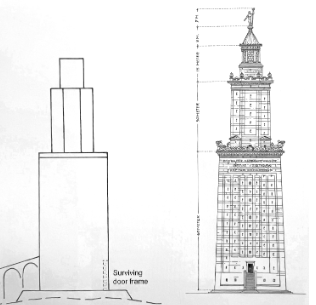
Pharos of Alexandria
Early 3rd century, Egyptian-Greek. Designed by Sostratus of Knidos
• Lighthouse on Pharos Island approximately 100 M high
Euergetism
practice of distributing wealth through financial support or public benefaction, often bound with the claim to being beneficent
Temple of Serapis
mid-late 3rd c., Egyptian Greek
Serapis
Osiris-Apis, Osirapus, a god of the underworld and rebirth, associated with Hades and Demeter in the Greek world, promoted intentionally on the orders of Ptolemy I to syncretize Egyptian and Greek religion
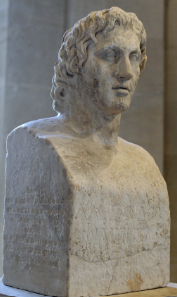
Azara Herm
(a herm with the head of Alexander the Great, 356-323). Date: late 4th century BCE. Culture: Greek. Artist: Lysippos. 27” high, marble. Louvre Museum.
• Roman version after an original Greek artwork
Portrait
a sculpture that is endowed with a person’s distinguishing characteristics; it can be idealized, abstracted, etc., but to be a true portrait some part of it should reflect a trait specific to a particular person
Anastole
the arrangement of the hair, particular to Alexander the Great with his hair swept back from the middle of his brow.
Pseudo-athlete
(Statue of an Italian businessman). Date: ca. 100 BCE. Culture: Roman. Life-sized, marble, from Delos. Athens Archaeological Museum
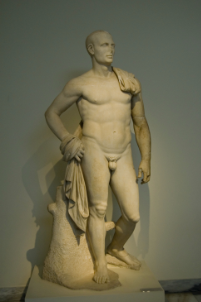
Characteristics of the pseudo-athlete
Naturalistic, idealized head and body with attributes appropriate for age. Perhaps veristic
Honorific statue set up in a businessmen’s club
Example of Roman portraiture combining idealized styles and veristic styles for the sake of commemoration of an individual
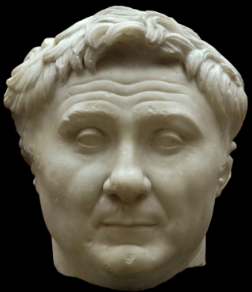
Portrait of Pompey the Great
Date: ca. 50 BCE. Culture: Roman. Life-sized, marble. Ny Carlsberg Glyptotek. Excavated from the Tomb of the Licinians near the Porta Pia (Porta Salaria), Rome
Numismatic
relating to coins
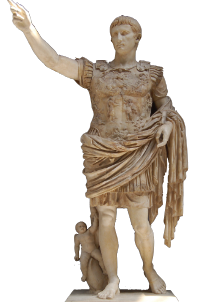
Augustus of Primaporta
Date: ca. 20 CE. Culture: Roman. 6’8” high, marble, from Primaporta. Vatican Museums
Polytheism
religious system in which multiple gods are worshipped simultaneously; in the ancient Mediterranean, this system is non-exclusive and additive
Melqart
The chief god of the Phoenician city of Tyre; associated with kingship, colonization, and maritime expansion. His cult spread across the Mediterranean and was often identified with the Greek Herakles.
Diaspora in a religious context
The spread of a population beyond its homeland, carrying its religious practices with it and adapting them to new environments
Tanit
major Phoenician goddess associated with fertility, sexuality, and war; widely worshipped across the Mediterranean and often equated with Greek Aphrodite or Near Eastern Ishtar
Syncretism
the (attempted) amalgamation of different religious traditions, producing new forms of gods, rituals, or beliefs that combine elements from multiple cultures. The blending or fusion of
Interpretatio
The practice of translating foreign gods into the terms of one’s own religious system (e.g., identifying Melqart with Herakles), allowing cross-cultural understanding without fully merging traditions
Pantheon
The collective body of gods worshipped within a particular culture, often organized into a loose hierarchy or family structure
Cult
The system of rituals, practices, and institutions devoted to a particular deity, usually tied to a specific place (temple, sanctuary) and communit
Herakles / Hercules
A Greek hero later worshipped as a god, associated with strength and boundary-crossing; syncretized with other deities (Melqart) across Mediterranean cultures
Capitoline triad
The central group of Roman state gods—Jupiter, Juno, and Minerva— worshipped on the Capitoline Hill; reflects broader Indo-European patterns of divine organization
Tinia / Uni / Menrva
The Etruscan equivalents of Jupiter, Juno, and Minerva; demonstrate how Greek and Roman deities were adapted and transformed within local religious system
Imperial Cult
The worship of emperors as divine or semi-divine figures within the Roman Empire, typically integrated into existing local religious practices rather than replacing them
Relational Entanglement
describes when an object is appropriated and integrated into local practices - the object itself is unchanged, but the way people relate to it might be altere
Material Entanglement
the creation of something new that is more than just the sum of its parts and combines the familiar with the foreign
Pronaos East Wall, Tomb of Petosiris
Agricultural scene with mix of egyptian and greek styles
4th-3rd cent BC, Priest of Thoth, tomb well known for combining Egyptian and Greek
imagery
Embalming and Abduction scene in Catacombs of Kom al Shoqaf
scene of the embalming of Osiris and the abduction of Persephone on the same wall
1st-4th cent AD, Alexandria, tombs with imagery that combine Greek, Roman, and Egyptian imagery
Consuls
military and political leaders of Rome, always elected as a pair for one year terms
Herm
rectilinear stone pillar with a head on top; it gets its name from Hermes, who was the most common god represented in them and because he was a god of directions, and they were first used as boundary markers and sign posts.
What is notable about the pseudo-athlete?
Diadoumenos (youth binding head with ribbon): Date: ca. 430 BCE. Polykleitos
Naturalistic, idealized head and body with attributes appropriate for age. Perhaps veristic
Honorific statue set up in a businessmen’s club
Example of Roman portraiture combining idealized styles and veristic styles for the sake of commemoration of an individua
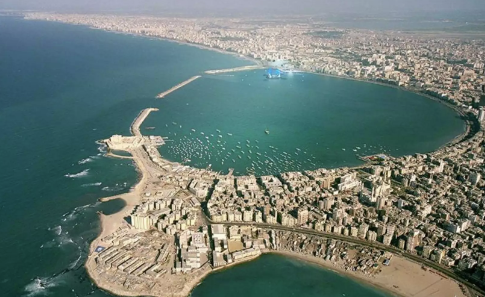
Eastern Harbor of Alexandria, Egypt
founded by Alexander the Great in 331 BC, it was the capital of Egypt for nearly a thousand years.
distinctive peninsula leading to the site of the ancient Pharos Lighthouse, one of the Seven Wonders of the Ancient World.
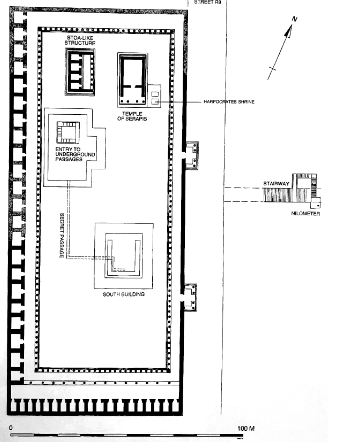
Serapeum of Alexandria
a major temple complex dedicated to the god Serapis (a syncretic Greco-Egyptian deity) in Alexandria, Egypt
Serapis was a combination of the Egyptian gods Osiris and Apis
bridges cultures under the Ptolemaic and Roman empires
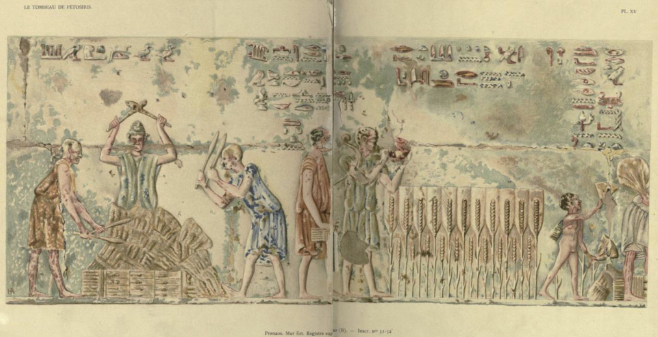
Pronaos East Wall, Tomb of Petosiris: 4th-3rd cent BC Agricultural scene with mix of egyptian and greek styles
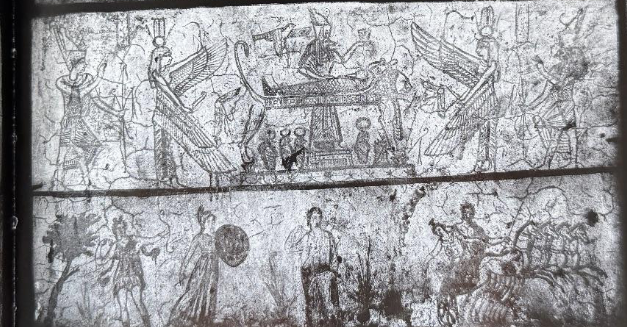
Embalming and Abduction scene in Catacombs of Kom al Shoqafa: scene of the embalming of Osiris and the abduction of Persephone on the same wall
Peloponnesian Wars
(431-404): war between Greeks over hegemony of Greek alliance; collapse of Delian league and fracture of panhellenism leads to it
Consequences: fractured/antagonistic Greek world, Athens democracy rises while Greeks tend away from it, power vacuum
Senate vs Magistracy
Senate: the body of elected members, representing Rome’s citizens
Magistracy: the positions held by members of the roman citizenry, voted into various posts that oversaw aspects of Roman governance
Imperial strategy of Greeks vs Persians
Persians: treaty-based/alliance-based leadership (not nonviolent) that forces people to never fight against Persia or to fight with Persia; had many innovative structures like preservation of postal system + royal roadways
Greek: very coordinated military strategy; tyrant-like leaders w broad rule (before 509 BCE), each Greek polity might have different governments but all are allied;
Xerxes (Persian ruler 486-465 BCE) tries and fails to bring Persians back, forcing Greeks to militarize and increasing Athenian power ~490-440 BCE
Cleisthenes
in 509 BCE, he proposed government reforms in Athens; his goal was to expand citizenship to rural populations and establishing councils, ballots, courts, magestracies, etc. ; his reforms remain in place ~200 yrs → aimed to maintain and BALANCE power
Consequences of Sicilian Wars
strengthening of Greek alliances and military prowess
Etrustcans lose power and are weakened
Relationship between Macedonian and Persian empires
Macedonians adopt Persian methods (local rulers, postal services, road systems, etc.); however, Macedonia decimates Persia under Alexander the Great
Characteristics of Macedonian Empire
home base: Babylon
not formalized, no written line of succesion or hard infrastructure; death of Alexander results in ~50 years of conflict
Syncretism as an imperial tool after Alexander
allowed Hellenistic rulers to stabilize, unite, and govern vastly diverse populations without relying solely on military repression
by merging Greek religious traditions with indigenous belief systems, leaders created hybrid deities and cults that legitimized their rule to both Hellenized elites and native population
Why can the term hellenistic be considered problematic?
"Hellenistic" is the term used to describe the spread of Greek culture in the period following Alexander the Great's expansion. It also refers to that historical period. It can be problematic because of questions of what we mean by "Greek" culture and what geographical regions it includes (doesn't usually include the west Mediterannean. Italy or the Punic world, example).
First trumvirate, second triumvirate
#1 Pompey, Caesar, Crassus
#2 Octavian (Augustus), Mark Antony, Lepidus