(2) Portugal: Military History and Notable Events
 Call Kai
 Learn
Learn Practice Test
 Spaced Repetition
 Match
Match Flashcards
 Knowt Play
1/46

There's no tags or description
Looks like no tags are added yet.
Name | Mastery | Learn | Test | Matching | Spaced | Call with Kai | Chat |
|---|
No analytics yet
Send a link to your students to track their progress
47 Terms
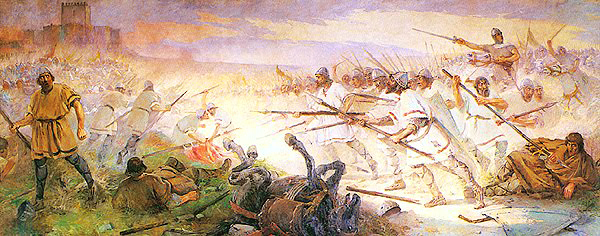
1128 - Battle of Sao Mamede (All Facts)
Battle in which (Dom) Afonso Henriques and his forces defeated his mother Teresa and her forces in order to found the Kingdom of Portugal
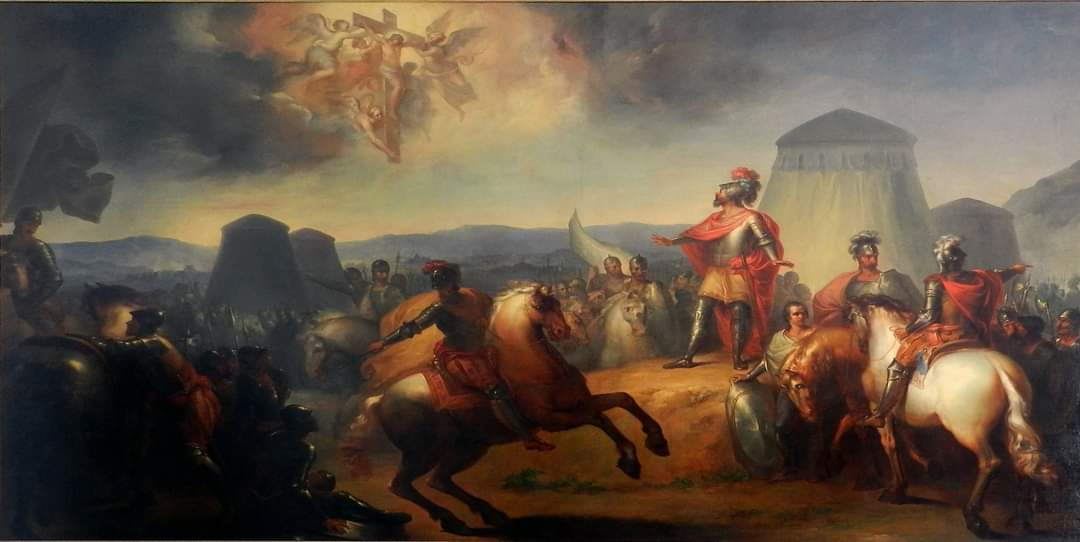
1139 - Battle of Ourique (All Facts)
Battle in which (Dom) Afonso Henriques and his forces defeated the Almoravids
Battle after which (Dom) Afonso Henriques assumed the title of King of Portugal
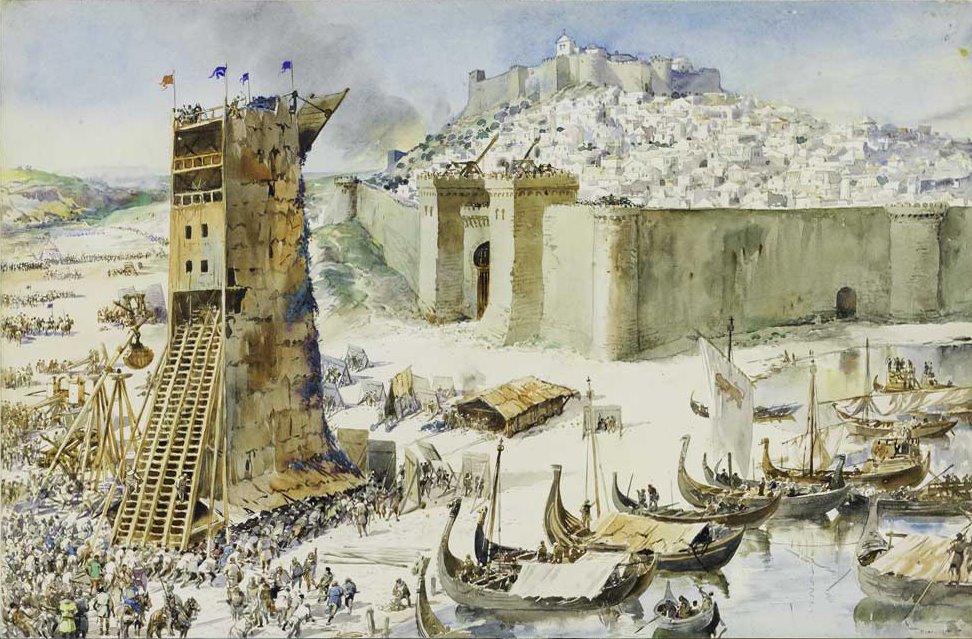
1147 - Siege of Lisbon (All Facts)
Battle in which (Dom) Afonso Henriques and his forces defeated the Almoravids, taking the namesake city
Battle which ended with a peaceful mass evacuation of its Muslim inhabitants after they surrendered to an allied Christian force under Afonso and Portugal
1297 - Treaty of Alcanices (All Facts)
Peace Treaty between Portugal and Castile in which Castile defined the Portuguese frontiers
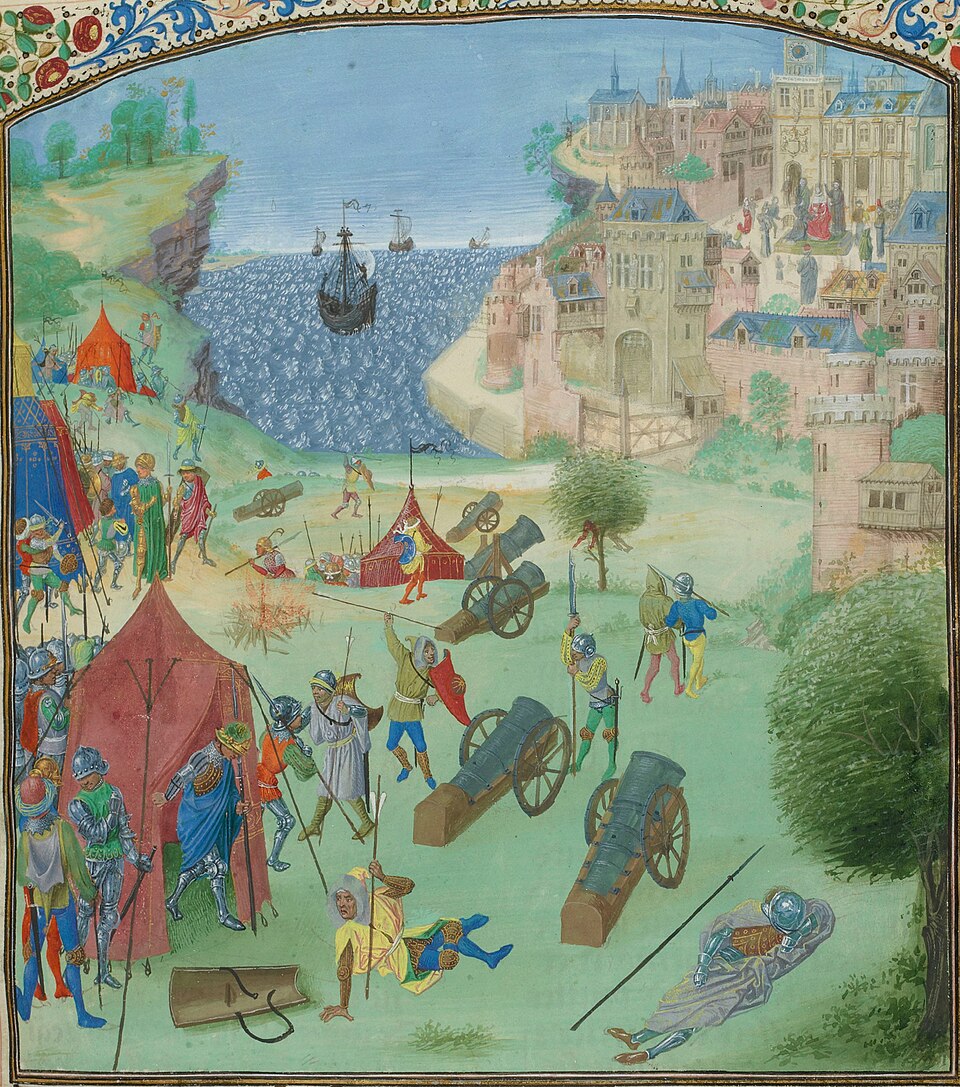
1384 - Siege of Lisbon (All Facts)
Battle in which John of Portugal and his forces defended their namesake city and defeated King John of Castile and his forces
Battle in which the Portuguese likely won because the Castilian army was hit was a devastating plague that killed over 2,000 men and its best commanders, thus saving the Portuguese from the Castilian threat
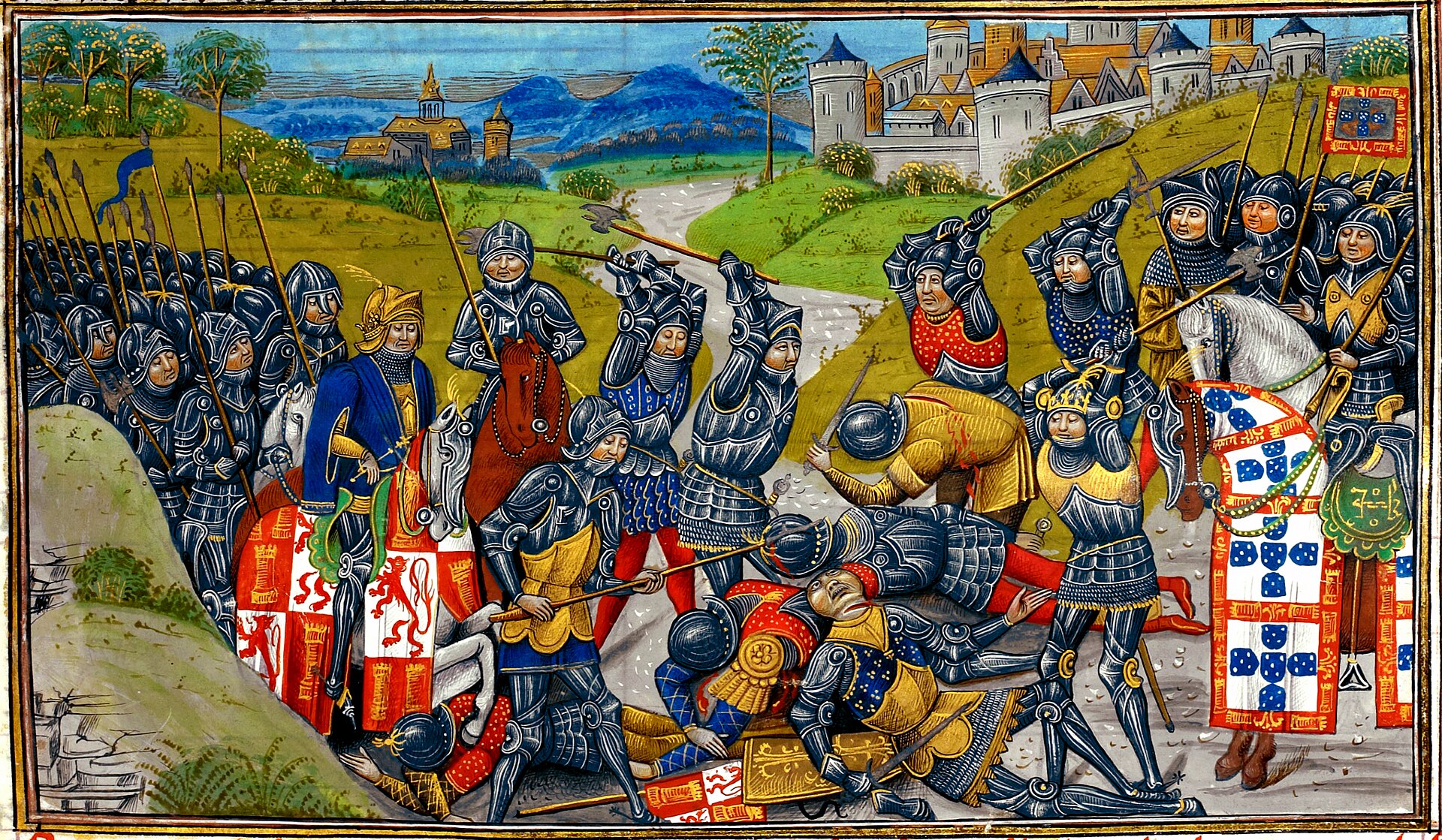
1385 - Battle of Aljubarrota (All Facts)
Battle in which John of Portugal and his forces, with the help of English forces, defeated John of Castile and his forces
Battle in which the Portuguese, outnumbered, but with the help of 300 English archers sent by John of Gaunt (himself pursuing claims to the Kingdom of Castile), defeated the 17K-large Castilian force
Although tired by a 12-mile march, the Castilians were ordered to attack the Portuguese but came under terrible crossfire from English archers and those not killed became entangled in a network of wolf-traps and trenches
Battle which secured
Portuguese independence
This allowed a new age of its history to unfold, it being independent of its powerful neighbor
John of Portugal’s kingship
Battle after which John of Castile fled to Seville
Battle which famously lasted less than an hour
1475 - 1479 - War of the Castilian Succession (All Facts)
Series of conflicts which arose from a dispute over the succession to the namesake throne between Joanna of Castile, wife of King Afonso V of Portugal and daughter of King Henry IV of Castile; and Isabella of Castile, sister of Henry IV of Castile, backed by the Castilian nobility
Series of conflicts between the Portuguese, who backed Joanna of Castile; and the Castilian nobility, who backed Isabella of Castile
Series of conflicts in which Isabella of Castile (with the help of her then-husband and eventual co-ruler King Ferdinand of Aragon) and the Castilian nobility eventually held out and defeated Joanna of Castile and the Portuguese
Series of conflicts in which the Portuguese fought poorly at home but repeatedly defeated the Spanish at sea and on all the islands (except for the Canary Islands)
Series of conflicts that ended with the Treaty of Alcacovas, in which Portugal agreed to give Spain rights to the Canary Islands in exchange for a monopoly of trade and navigation along the whole West African coast
Series of conflicts which effectively established Isabella as Queen of Castile (and eventually as Queen of the unified kingdom of Spain)
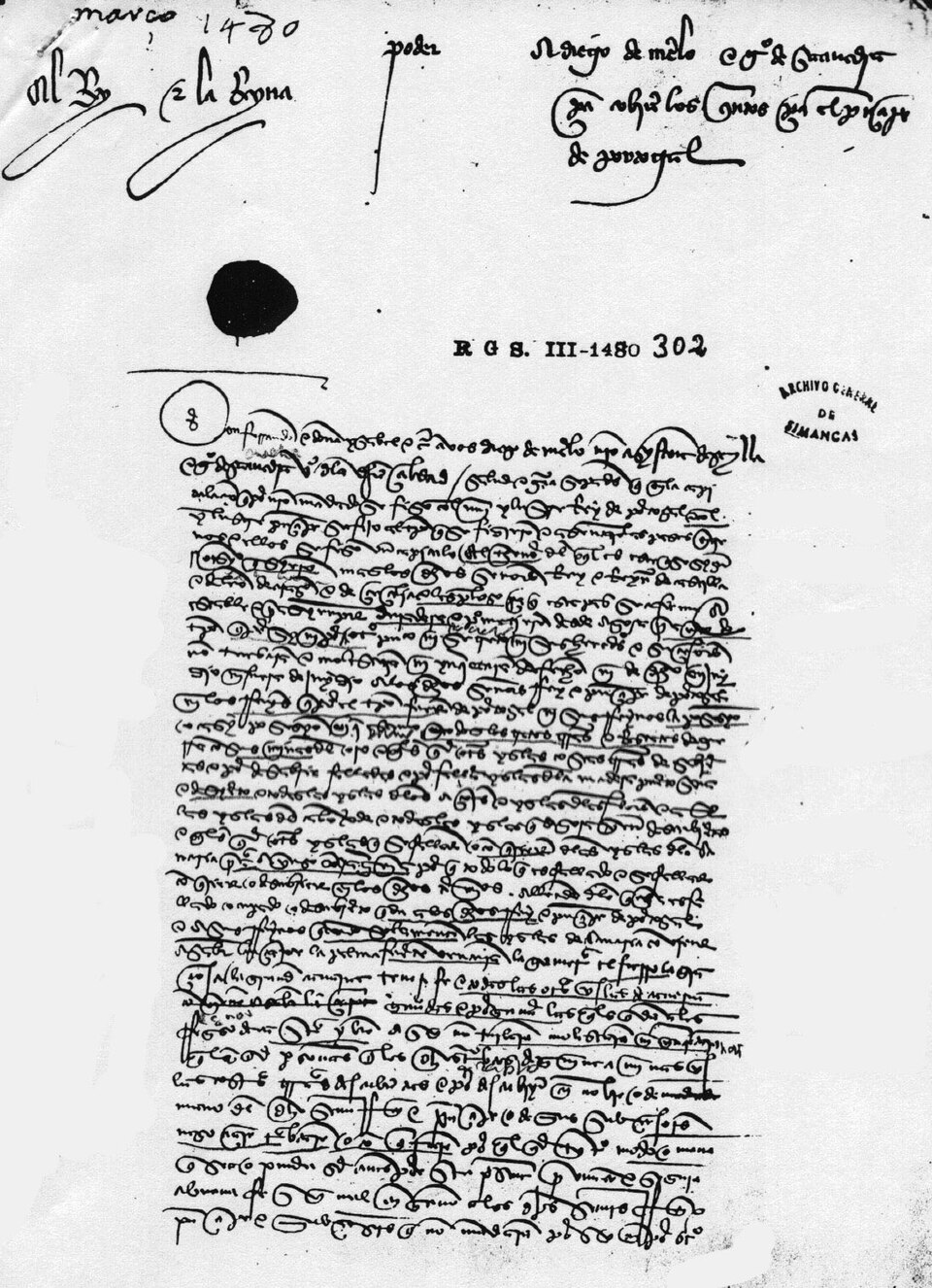
1479 - Treaty of Alcacovas (All Facts)
Peace Treaty signed between Portugal and Castile which ended the Castilian War of Succession
Peace Treaty in which which Portugal agreed to give Castile rights to the Canary Islands in exchange for a monopoly of trade and navigation along the whole West African coast
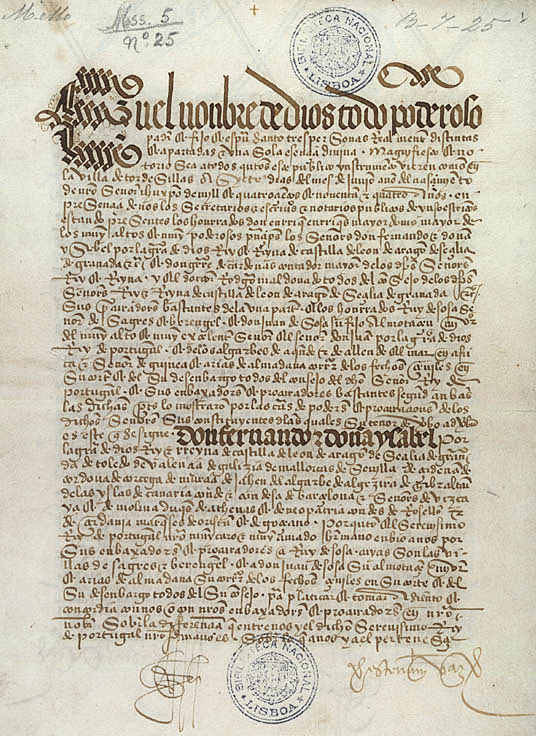
1494 - Treaty of Tordesillas (All Facts)
Treaty signed between King John II of Portugal and King Ferdinand and Queen Isabela of Spain
Treaty which
divided all the land explored on, discovered, owned, and/or controlled thus far by the two kingdoms; and any others that may be discovered in the future
divided the newly discovered lands outside Europe between the Kingdom of Portugal and the Kingdom of Spain, along a meridian 370 leagues or 2,056 km (1,277 mi) west of the Cape Verde islands, off the west coast of Africa, a line of demarcation that was about halfway between Cape Verde (already Portuguese) and the islands visited by Christopher Columbus on his first voyage
divided the lands, with the lands east of the demarcation line belonging to Portugal, and west of the demarcation line belonging to Spain, thus, in hindsight, slightly favoring Spain
Treaty which made the Cape Verde Islands a part of Portugal
1500s - 1700s - Portuguese-Mutapa Wars (All Facts)
Series of conflicts between the Portuguese and those in modern-day Mozambique
After one bloody colonial war in which the Portuguese were nearly driven into the sea by the army of Nyambo Kapararidze, they emerged victorious having defeated Kapararidze and replaced him with the puppet ruler called Mavura who signed a treaty turning his kingdom into a Portuguese protectorate
This war began in 1628, when Kapararidze, resentful of Portuguese incursions into his territory, killed the Portuguese ambassador and sacked their trading posts at the instigation of Arab traders who feared competition would break up their monopoly
Four hundred Portuguese were killed before Karapraridze was defeated
Conflict which the Portuguese blamed on the Muslim traders, unwilling to recognize the nationalism of the Mozambican populace
Anxious to give credibility to their own prejudices, their first order to the new king Mavura was to expel Arab traders
In 1629, Munhumutapa state made its fourth and most humiliating treaty yet with the Portuguese, having been defeated in battle
In 1631, war broke out again between the two namesake parties
1508 - Battle of Chaul (All Facts)
Battle in which the Gujarati and Mamelukes defeated Lourenco de Almeida and his forces
Battle in which a Portuguese fleet had been surprised and sunk off the namesake settlement on the west coast of India
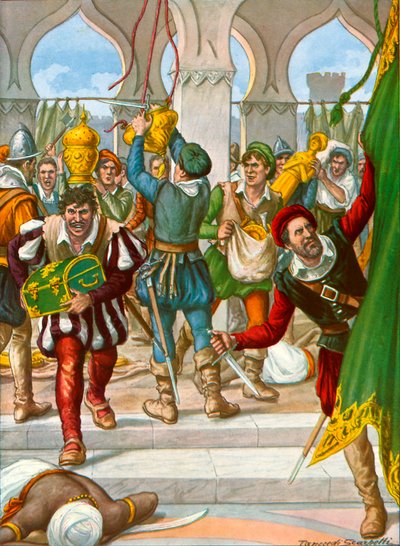
1510 - Conquest of Goa (All Facts)
Incident in which Alfonso de Albuquerque and his men invaded, defeated, and conquered the namesake Indian city on an island
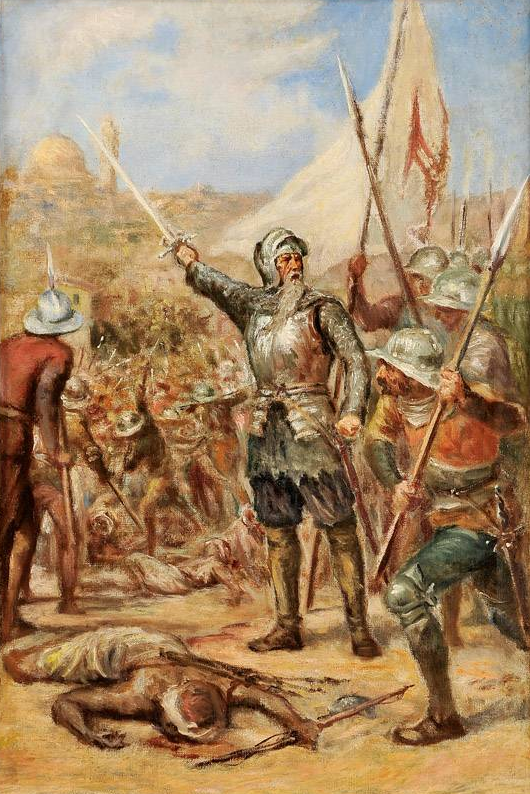
1511 - Capture of Malacca (All Facts)
Incident in which Alfonso de Albuquerque and his men invaded, defeated, and conquered the namesake Malayan city in Southeast Asia, having completed a string of naval bases and trading posts running from the Red Sea through Goa in India to the Far East
Incident which severely strained Albuquerque’s resources in men and ships due to
the stiff resistance of the defenders
the problems caused by the monsoon there
having been obliged to remain in the area for almost a year, during which Goa, the city on an island they had just seized, almost fell to the Muslim-Indian Sultanate of Bijapur
1529 - Treaty of Zaragoza (All Facts)
Treaty between King Charles of Spain and King John III of Portugal which confirmed the prior Treaty of Tordesillas, by which Spain and Portugal had divided up the New World
This relied on the confirmation given in the Badajoz Conference held prior
Treaty which fixed the dividing line between the Spanish and Portuguese in the Pacific Ocean 17 degrees easy of the Moluccas
Treaty in which the Portuguese regained control of the archipelago in return for paying compensation to King Charles of Spain
1536 - 1821 - Portuguese Inquisition (All Facts)
1536 - Treaty of Friendship and Alliance in Lyons (All Facts)
(Naval) Treaty signed between King Francis of France and King John III of Portugal, in which they formed an alliance against Spain
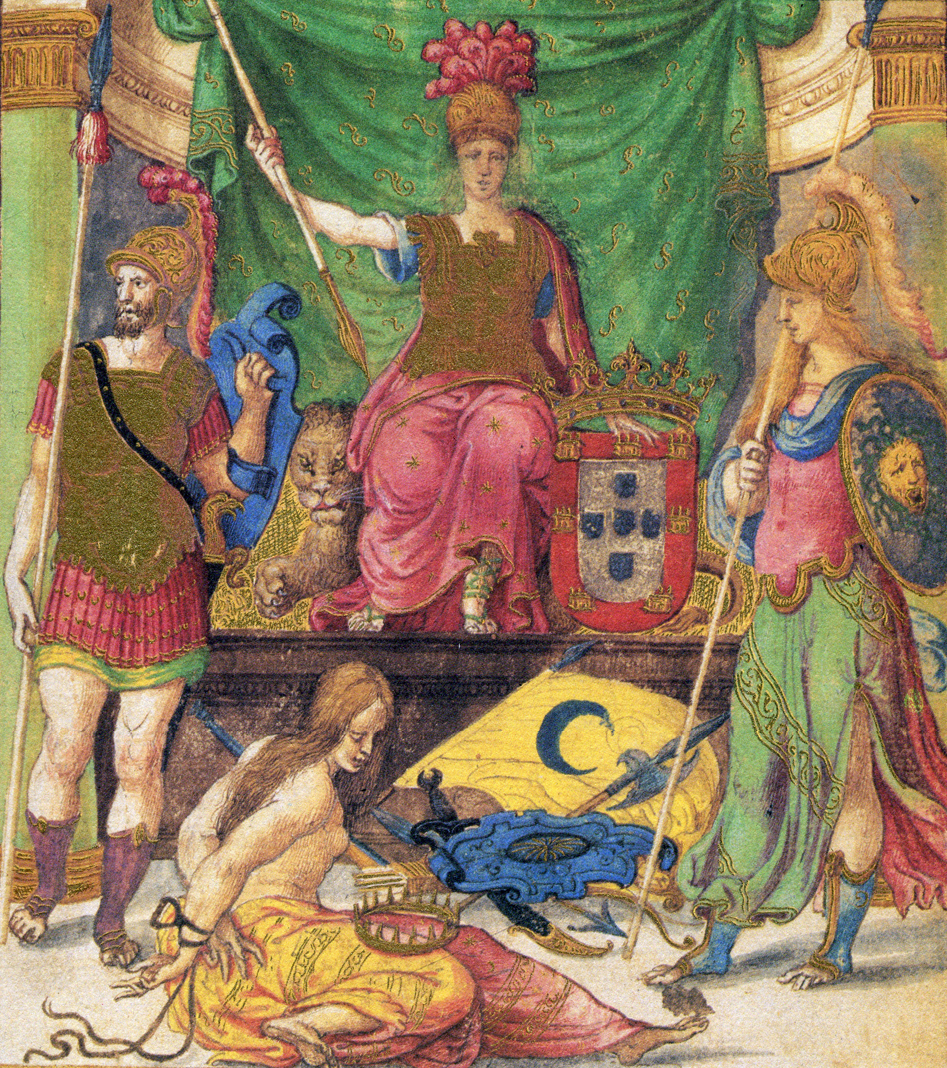
1546 - Siege of Du (All Facts)
Battle in which Portugal routed (defeated) the Gujarati in India
1552 - 1554 - Ottoman Campaign in Hormuz (All Facts)
Conflict in which the Portuguese prevented the Ottoman Turks from capturing the the namesake Strait in the Persian Gulf

1578 - Battle of Alcácer Quibir / Battle of “Three Kings” (All Facts)
Battle in which Mulai Ahmed al-Mansur of the Sadian Dynasty (of Morocco) and his Saadi (Moroccan) forces defeated King Sebastian of Portugal and his Portuguese forces and foreign mercenaries
Battle in which King Sebastian of Portugal and his forces were severely outnumbered and crushed, having been out of touch with its fleet and overcome by the heat
Battle in which King Sebastian of Portugal and his 8K forces perish along with improbable dreams of a Christian crusade against the Moors of Africa
Battle in which King Sebastian of Portugal died and 15K Christians were captured
1579 - 1683 - Angolan Wars (All Facts)
Long series of conflicts in modern-day Angola involving Portugal, the Kingdom of Ndongo, the Kingdom of Kongo, the Kingdom of Matamba, the Kingdom of Kasanje, the Kingdom of Libolo and the Dutch West India Company (during the Dutch-Portuguese War)
In 1623, Queen Nzinga of Ndongo led her army against the Portuguese
As King of Ndongo, she allied with the Jaga people
She was driven by the Kingdom of Ndongo and re-established herself in Matamba
As King of Matamba, she allied with the Dutch (who were fighting the Portuguese already in the Dutch-Portuguese War)
She divided and conquered between the Dutch and Portuguese, taking advantage of the Dutch-Portuguese War, having ruled over both Dutch and Portuguese there
By 1650, Queen Nzinga of Ndongo and Matamba made a peace treaty with Portugal
This occurred after 30 years of fighting between the Portuguese and the Mbundu
This occurred after tens of thousands of the inhabitants of the namesake died and hundreds of thousands were taken into slavery as whole kingdoms of the namesake were depopulated
Series of conflcits during which,
In 1629, Queen Nzinga of Mbundu was victorious in her war against the Portuguese and made her sister queen of the Ndongo, who were previously allies of Portugal
However, during this time, the Portuguese planted the first American crops in Africa, maize and cassava, on the coast of the namesake colony
In 1644, Queen Nzinga and her Dutch slave traders allied to take the namesake latter city from the Portuguese during the Dutch-Portuguese War
From 1641 to 1648, the Dutch took control of Luanda during the Dutch-Portuguese War until it was recaptured by the Portuguese in 1648
In 1665, Portuguese colonists based in the namesake invade the Kongo Kingdom, but were unable to subdue local resistance to them
Series of conflicts which saw
The Battle of Pungo Andongo
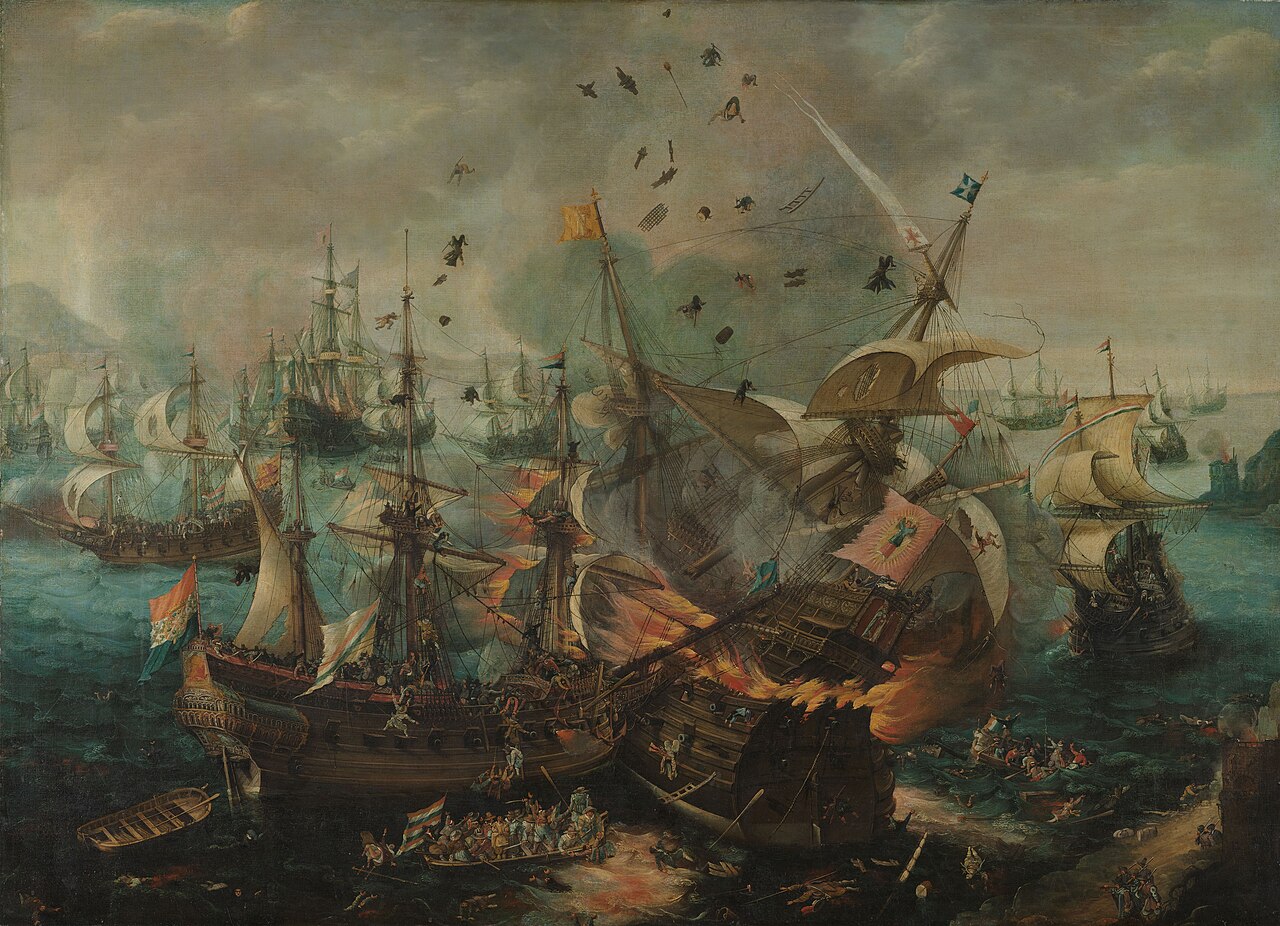
1598 - 1648 - Dutch Revolt / Eighty Years’ War (All Facts)
War which Portugal became part of when they were unified by the Iberian Union by King Philip II of Spain
War which saw
The Dutch-Portuguese War
The Dutch Invasions of Brazil
The Siege of Recife
The Siege of Malacca

1598 - 1663 - Dutch-Portuguese War (All Facts)
War during the Dutch Revolt / Eighty Years War which was fought by the Dutch against the Portuguese after they had become a part of Spain via the Iberian Union of King Philip II of Spain (King Philip of Portugal) starting with the reign of King Philip III of Spain (King Philip II of Portugal) in which the Netherlands, via its West and East India Companies, took many colonies from Portugal
War which was not formally declared per se, but in which the Dutch went after the Portuguese by extension of being unified by Spain in the Iberian Union
War in which the Netherlands had the advantage because Portugal was still working to regain its independence from Spain and break the Iberian Union in the Portuguese Restoration War which they were simultaneously fighting
War in which the Dutch
picked off Portuguese coastal settlements from the Persian Gulf to Japan in their bid to gain control of the lucrative trade in cloves, nutmegs, cinnamon, and pepper
had the advantage of a stronger economic base at home (especially at Amsterdam) to pay for better ships and better trained manpower
relied on their commanders, which were trained professionals
War in which the Portuguese
relied on their hidalgos, which were aristocratic and generally incompetent
War in which the Dutch invaded Portuguese colonies, as an extension of their precedented invasions of Spanish colonies including and through establishing
(Portuguese / Dutch) Brazil
The Kingdom of the Kongo
(Portuguese / Dutch) Malacca
War during which the Dutch
captured and took the fort of Axim (modern-day Ghana) on the Gold Coast from the Portuguese
and their slave traders allied with Queen Nzinga of Angola and took Luanda, the capital of (Portuguese) Angola from the Portuguese
However, the Portuguese recaptured Luanda seven years later and the rest of the Angolan coast two years after that
took Jaffnapatam, the last possession in (Dutch) Ceylon of the Portuguese
took Carolusberg from the Portuguese on the Gold Coast in West Africa
However, the Swedes took Carolusberg from the Dutch a few years later
War which saw
The Siege of Recife
The Insurrection of Pernambuco
The Recapture of Recife

1612 - Battle of Swally (All Facts)
Battle in which the British East India Company defeated the Portuguese off the west coast of India and after the battle, established its first factory at Surat

1618 - 1648 - Thirty Years’ War (All Facts)
Conflict
between Catholics and Protestants in Germany following the failure to reconcile them via the Peace of Augsburg
Conflict in which
4.5M-8M people were killed from
the battlefield
plague and disease
the constant maneuvering helped to spread disease
famine
the constant maneuvering laid waste to vast tracts of farmland
Crops were destroyed
German towns lost as many as 50% of their populations from
being razed to the ground by siege and fire
plague borne by countless armies
the European continent was nearly destroyed
Conflict which began
with the Defenestration of Prague and Bohemian Revolt
when Bohemia elected itself a new Protestant as king, Frederick V, previously the elector of Palatine, to replace the Habsburg King Ferdinand II, whom the Bohemian estates had previously “accepted” as king
Conflict during which
The Protestant Union was dissolved
Conflict during which
Johann Tserclaes (Count of Tilly) and his Catholic forces sacked the Heidelberg University Library
Bavaria (as well as Spain and Austria) invaded France with their armies and advance units of the Bavarian cavalry arrived in the Parisian suburbs
These armies invaded France but were driven back
Conflict which saw
The Bohemian Revolt
The Defenestration of Prague
The Battle of White Mountain
The Vatellina War (between Spain and Switzerland)
The Battle of Lutter
The Battle of Dessau Bridge
The Sack of Magdeburg
The Battle of Breitenfeld
The Battle of Lutzen
The Battle of Nordlingen
The Battle of Wittstock
The Battle of Rheinfelden
The Battle of Freiburg
Conflict which involved
The Eighty Years’ War / Dutch Revolt (between Spain and the Netherlands / Dutch Republic)
Conflict which ended with
The Peace of Prague
The Peace of Westphalia
This took three years of negotiation in two cities, Munster and Osnabruck, to bring about the official signing
Just four years prior to the start of the war,
Catholics and Protestants alike in Germany were already preparing for the conflict, which threatened to engulf the whole continent as
battle-lines were already being drawn up by then
fortunes were already being spent equipping private armies throughout Germany
Germany prepared itself to be the battlefield when the war would break out
In the Protestant north of Germany,
whole cities were ringed with star-shaped walls, bastions, and moats
In Catholic Bavaria and in the Rhineland,
great new fortresses pierced the skylines
intense diplomatic activity was taking place, particularly on the part of
Prince Christian of Anhalt-Bernburg
King James of England
Conflict which ended when three successive salvos crashed out from 70 cannons on the walls of Munster to announce that peace came from a war-ravaged Europe after three decades of bitter conflict in which every power became involved both on land and sea
Conflict after which
100K+ mercenaries had to be paid and returned home lest they turn themselves into robber-bands adding even more torment to a war-weary Europe
the high cost of the war caused massive tax demands on both nobles and peasants, both parties of whom threatened revolt

1618 - 1620 - Bohemian Revolt (All Facts)
Revolt of the namesake estates against Ferdinand II and the Habsburgs that were ruling there
Revolt of Bohemians against the pro-Catholic policy of the regents in Prague
Revolt led by Jindřich Thurn (of Bohemia)
Revolt which triggered the Thirty Years’ War
Revolt which began with the Defenestration of Prague

1620 - Battle of White Mountain (All Facts)
Battle in which the Holy Roman Empire and Catholic League of Imperial Princes, with help from Spain, defeated Bohemia and the Electorate of the Palatinate during the Bohemian Revolt during the Thirty Years’ War
Battle during which
King Frederick V of Bohemia and his queen were in high spirits at the dinner table as they entertained the English ambassadors there
the armies of the fanatically Catholic emperor Ferdinand II had invaded Bohemia from Austria
King Frederick V was confident that his enemy’s forces were too weak with hunger or wracked with plague to fight while his own army occupied an unassailable position on the namesake location near Prague
the army of Bohemia had become mutinous during a lengthy artillery barrage and many had refused to fight as they were overwhelmed by Bavarian and Spanish infantry
King Frederick V rode out to encourage his soldiers after his dinner with the English ambassadors, but had not even reached the city gates when he met the first fugitives after his army had been defeated and Holy Roman Emperor Ferdinand II’s banner flew over the namesake location
the citizens of Prague closed the gates against their invaders, and King Frederick V and his wife fled in such haste that they almost forgot their youngest prince, although they did remember most of their crown jewels
1623 - Amboina Trial / Amboina Massacre (All Facts)
Incident in which 21 men, including ten in the service of the English East India Company, as well as ten Japanese traders and one Portuguese trader; were accused of treason (conspiring against the Dutch), tortured, and executed by agents of the Dutch East India Company on the namesake island in modern-day Indonesia
Incident whose perpetrators obviously felt they would be backed by Jan Pieterszoon Coen, who himself acquired a reputation for unbridled ruthless
Incident prior to which the Dutch gave the English permission to trade in spices at the namesake island, which they did so well that the Dutch saw their bid to monopolize the trade slipping away
1624 - 1654 - Dutch Invasions of Brazil (All Facts)
Series of conflicts in which the Dutch West India Company worked to invade the namesake Portuguese colony in the Dutch-Portuguese War (and Eighty Years War) in order to better control sugar sand slave supply sources
1624 - Capture of Bahia (All Facts)
Battle in which Dutch forces defeated the Spanish (and Portuguese) forces and took the namesake town from the Spanish (and Portuguese) in (Spanish / Portuguese) Brazil during the Dutch Invasions of Brazil during the Dutch-Portuguese War during the Dutch Revolt / Eighty Years’ War

1630 - Siege of Recife (All Facts)
Battle in which the Dutch captured the namesake sugar capital of Brazil from the Portuguese during the Dutch Invasions of Brazil during the Dutch-Portuguese War during the Dutch Revolt / Eighty Years War
After their capture, the Dutch developed the namesake Brazilian city along the lines of Amsterdam,
with canals and tall town houses
in which architects, engineers, and artists all came from Holland to develop it
in which a policy of religious toleration was introduced, allowing Calvinists, Catholics, and Jews to practice their religion without interference
It was besieged specifically by mercenaries of the Dutch West India Company, many of whom were English and so many English were there that an English Protestant chaplain was stationed there

1632 - Siege of Hooghly (All Facts)
Battle in which the Mughal forces defeated the Portuguese forces, having taken the namesake fortress and expelling the Portuguese from the area

1634 - Battle of Nordlingen (All Facts)
Battle in which Ferdinand III of Austria and the Holy Roman Empire, the Catholic League, and Spain defeated the Protestant German Princes and Sweden during the Thirty Years’ War
Battle during which Ottavio Piccolomini contributed to his commander’s downfall and went on to distinguish himself in the Holy Roman victory
Battle after which
France feared its result would lead to the revival of the Holy Roman Empire’s dream of universal domination and thus served as a pretext for its entry into the Thirty Years’ War
Sweden’s influence in southern Germany ended
Battle which brought about the ceasefire which, in turn, brought about the Peace of Prague
1635 - Convention of Goa (All Facts)
Agreement between England and Portugal which opened up the west coast of India to English trade and the east coast of India to the London-registered East India Company, which expanded its trade all over India by that point
1640 - 1659 - Catalan Revolt (All Facts)
Revolt in which (King) John IV of Portugal took advantage of Gaspar de Guzman’s preoccupation with the namesake and entered Lisbon and declared himself King, being crowned in the Lisbon Cathedral
Revolt which thus triggered the Portuguese Restoration War against Spain
1640 - 1668 - Portuguese Restoration War (All Facts)
War in which King John IV took back Portugal from Spain and regained their independence, breaking the Iberian Union
War which began when King John IV was declared King of Portugal and founded the House of Braganza for the Portuguese throne, replacing the previous House of Habsburg
War which was supported by Cardinal Richelieu of France
War which saw
The Battles of Montes Claros
1640 - 1641 - Siege of Malacca (All Facts)
Battle in which the Dutch defeated the Portuguese and captured and took the namesake Portuguese colony for themselves during the Dutch-Portuguese War during the Dutch Revolt / Eighty Years’ War
Battle which culminated from the Dutch
blockading the namesake straits from the Portuguese
harrying Portuguese shipping to the straits

1643 - Battle of Rocroi (All Facts)
Battle in which Louis II de Bourbon and his French forces defeated Don Francisco de Melo and his Spanish forces during the Thirty Years’ War and Franco-Spanish War
Battle in which Louis II de Bourbon
played a daring game, leading his horsemen in an attack across the field to cut his way through the center and drive de Melo’s horsemen into the marshes
Battle in which, while the tercios, brave and skillful as ever, held their ground, but eventually died where they stood
Battle which was France’s first military victory against a foreign power for over 100 years, wiping out the cream of the Spanish army
Battle after which Louis II de Bourbon became famous, having given France a brilliant new commander
1643 / 1645 - 1654 - Insurrection of Pernambuco (All Facts)
Portuguese Revolt in (Portuguese) Brazil against their Dutch overlords (the Dutch West India Company) during the Dutch-Portuguese War
Revolt led by Joao Fernandes Vieira and three others with support from fellow Portuguese settlers and the Tupi natives
Revolt caused by the settlers’ anger at
the taxes of the Dutch West India Company
the imposition of Calvinism onto a Catholic population
Revolt in which the natives on both sides, including the Tupi, suffered much of the worst casualties
Revolt in which rebels trapped a Dutch detachment in a fort and released the commander but killed 200 natives
In response, the cannibalistic Tapuia Natives responded with wholesale butchery
1650 - 1730 - Portuguese-Omani Conflicts (All Facts)
Series of conflicts between Portugal and the Omani Imamate / Empire
Series of conflicts in which
The Portuguese
were evicted from the Swahili ports on the East African coast by the Sultan of Oman at the time
1649 - 1650 - Siege of Muscat (All Facts)
Battle in which the Omanis defeated the Portuguese and took the namesake port city of Oman from them
1652 - 1654 - Recapture of Recife (All Facts)
Incident in which the Portuguese defeated the Dutch and took back the namesake vast sugar-growing city and surrounding area during the Dutch-Portuguese War, taking advantage of the Netherlands’ war with England in the First Anglo-Dutch War
Incident in which the Portuguese successfully took their chance of regaining the namesake vast sugar-growing area of northeastern Brazil that was taken by the Dutch earlier in the century because the Dutch were distracted in the First Anglo-Dutch War
Incident in which the Portuguese fleet arrived off the namesake city and port and oversaw the capitulation of the Dutch garrison and burghers there, terrified of standing alone without relief from home

1665 - Battle of Montes Claros (All Facts)
Battle in which António Luís de Meneses and his Portuguese forces defeated the Spanish forces during the Portuguese Restoration War
1668 - Treaty of Lisbon (All Facts)
Peace Treaty between Spain and Portugal, ending the Portuguese Restoration War, in which
Spain recognized Portuguese independence
1671 - Battle of Pungo Andongo (All Facts)
Battle in which the Portuguese defeated the Kingdom of Ndongo (modern-day Angola) during the Angolan Wars
Battle after which the Portuguese annexed the Kingdom of Ndongo to form (Portuguese) Angola as a full-fledged colony
1684 - Battle of Maungwe (All Facts)
Battle in which Changamire Dombo and his Zanzibar forces defeated the Portuguese
1696 - 1698 - Siege of Mombasa (All Facts)
Battle in which the Omani Sultanate and their East African Allies defeated the Portuguese and took their fortress in the namesake Portuguese colony, Fort Jesus, in which Portugal’s garrison there surrendered
Battle after which all that remained of Portuguese possessions in East Africa were a few enclaves on the Zambezi and Mozambique coasts
Battle during which the East African indigenous city-state of Pate, resentful of Portuguese efforts to dominate trade and impose Christianity onto them, allied with the Omani Sultanate and revolted successfully against their Portuguese overlords, driving them out of their land
Battle after which England and the Netherlands observed the decline of Portuguese power in the area with interest but at a distance