Auditory Perception and Music
 Call Kai
 Learn
Learn Practice Test
 Spaced Repetition
 Match
Match Flashcards
 Knowt Play
1/31

There's no tags or description
Looks like no tags are added yet.
Name | Mastery | Learn | Test | Matching | Spaced | Call with Kai |
|---|
No analytics yet
Send a link to your students to track their progress
32 Terms
Compressions (sound)
Areas of high density and pressure where particles are pushed together
Rarefactions (sound)
Areas of low density and pressure where particles are pulled apart
Sine wave (“pure tones'“)
Simplest sound wave, only has one frequency (the fundamental)
Frequency
Measured in Hz. Doubling —> octave up
Related to perceived pitch
Amplitude
Measured in dB
Related to the perceived loudness (intensity)
Harmonics
Higher multiples of a fundamental frequency —> gives sound “timbre” (unique qualities that distinguishes a voice from an instrument for ex)
Changes sound without changing its pitch
Waveform
Intensity over time
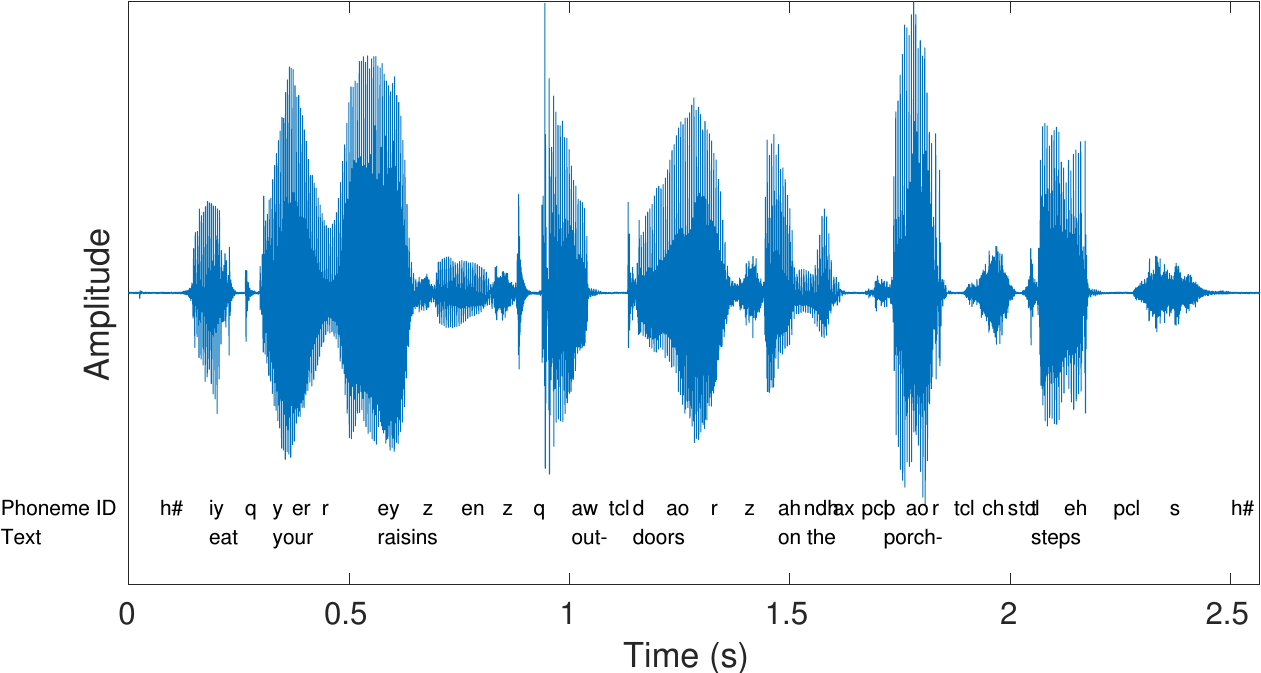
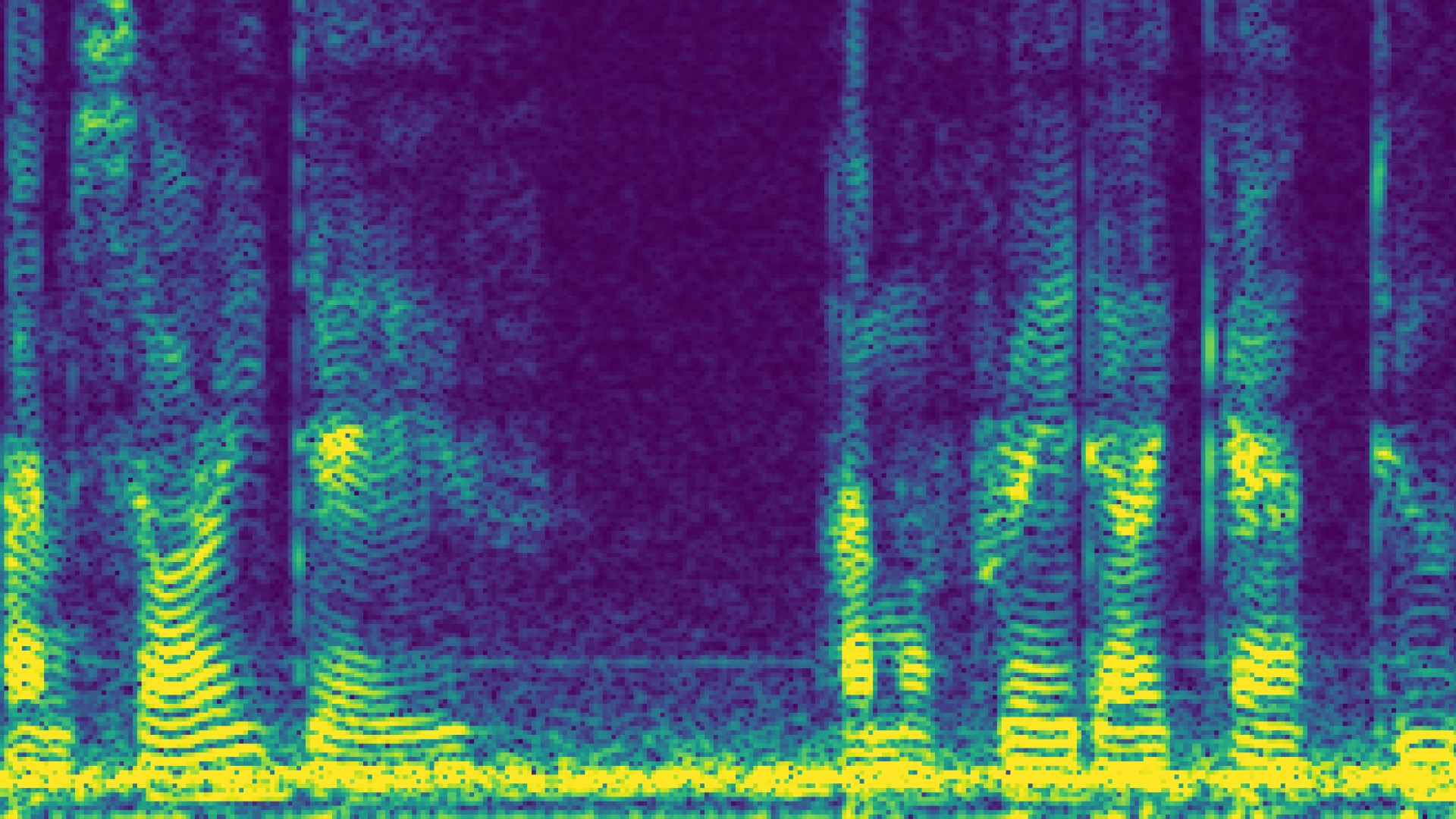
Spectrogram
Frequency and intensity over time
Pure tones = one frequency, one line
Complex tones = multiple frequencies at once, many lines
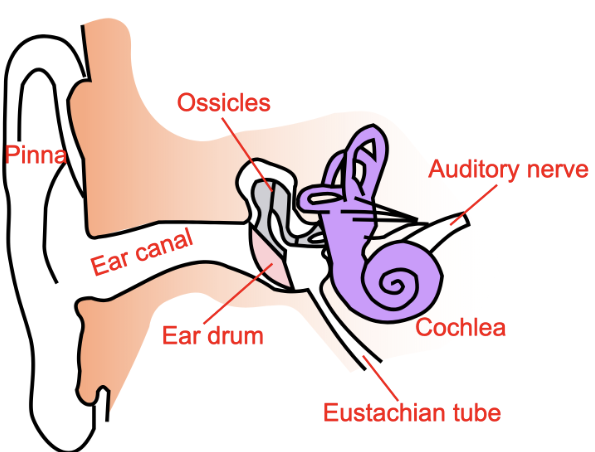
External auditory canal
Basilar membrane
Located within the cochlea; forms bulges due to sound —> pushes hair cells up
Hair cells
Specialized neurons
Auditory equivalent of photoreceptors (but they detect mechanical energy (pressures on the hair) instead of light)
How do hair cells work
Converts mechanical sound vibrations into electrical signals for the brain. Sound causes fluid in the cochlea to vibrate, bending hair-like stereocilia atop these cells, which opens ion channels, depolarizes the cell, and releases neurotransmitters to the auditory nerve
Too loud sounds → break tips of hair sounds → permanent damage because hair cells cannot repair themselves
Cochlea (“acoustic prism”)
Physical structure mirrors spectrogram
High frequencies stimulate hair cells near base, low frequencies stimulate hair cells near apex
Transmits electrical impulses to auditory complex
Cochlear implant
Artificially produces electrical impulses
Can stimulate much less variations of sound —> much lower sound quality
Conductive hearing loss
Vibrations inhibited due to ear wax buildup, infection, otosclerosis (degeneration of ossicles)
Hearing loss due to physical obstructions to ear
Sensorineuron hearing loss
Caused by damage to the inner ear’s hair cells or nerve pathway to the brain
Metabolic - can be caused by certain drugs (ototoxicity)
Sensory - caused by exposure to loud noises over long periods of time
Auditory cortex
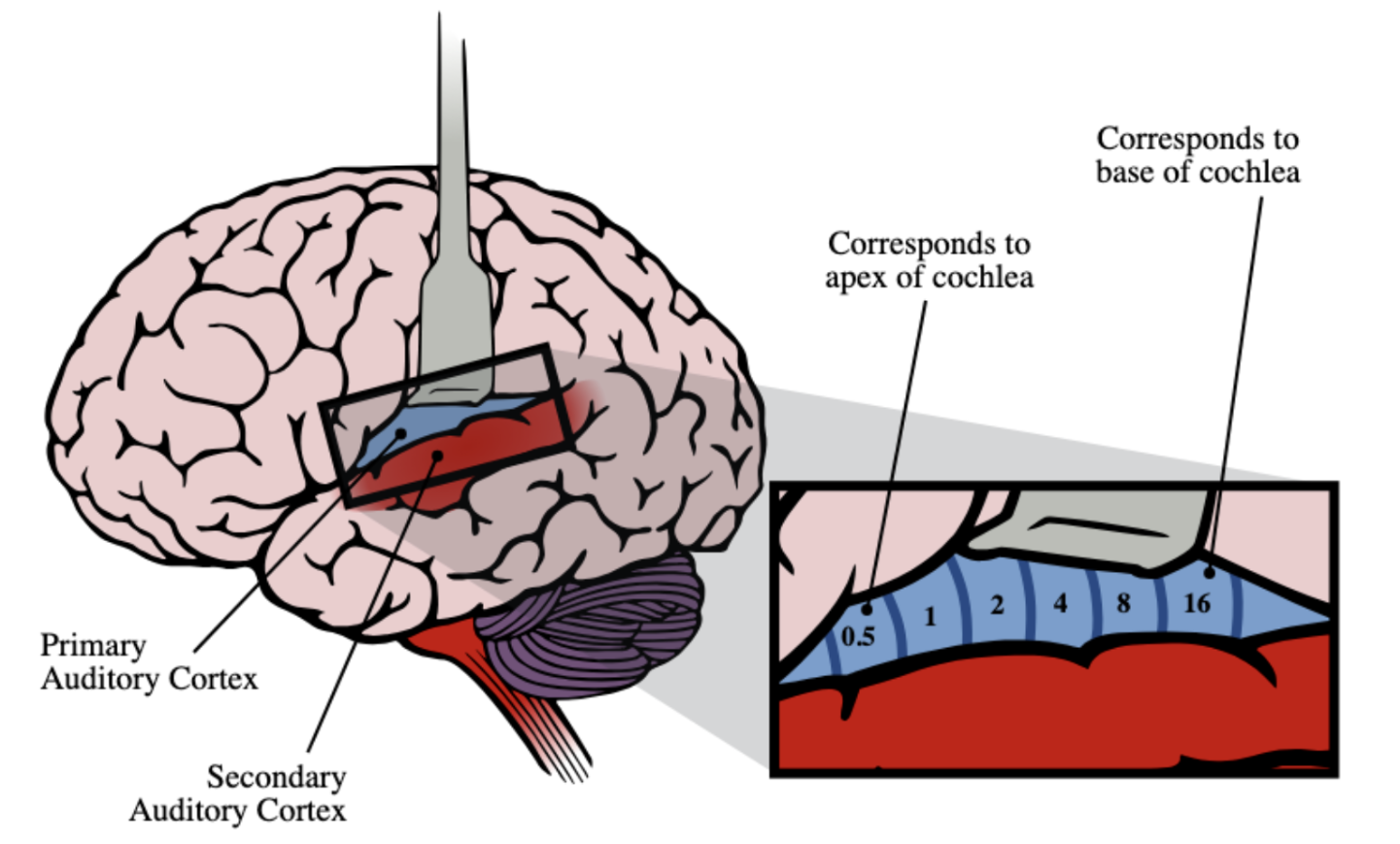
Primary auditory cortex (A1) in the temporal lobe
After A1, splits into dorsal (where) and ventral (when) stream, like vision!
Tonotopic organization
Tonotopic organization
Different neurons react differently to different pitches, organized spatially
Binaural cues
Sound localization technique using auditory signals from both ears
ITD & ILD
Interaural Time Different (ITD)
Sound reaching opposite ear from source takes longer
Interaural Level Difference (ILD)
Sound reaching opposite ear from source is quieter
Monaural cues
Sound localization technique using auditory signals from one single ear
Pinna folds
Pinna folds
Shape of ear; used for sound localization as their shape filters incoming sound waves differently depending on their source
Cone of confusion
Region where you can’t discriminate the location of a sound
ITD and ILD are ambiguous
Best way to resolve = moving the head around
Localizing distance (sound)
The best for sound is 1 meter
Inverse square law —> we underestimate long distances
We are good at telling of things are approaching or receding
Reverberations
Sound bounces off surfaces
Sound localizing technique; if someone is far in a room, much of the sound will be bouncing off the surface. If someone is close, much of the sound will be direct
Auditory Stream Segmentation
We need to segment one “stream” (one source) of sound from others in an environment where they’re all mixed together
Use auditory grouping principles
Auditory Grouping Principles
Proximity (in time) - sounds occurring close together in time are likely to be perceived as one stream
Size and pitch - bigger things (ex: animal vocal tracts) vibrate slower —> lower pitch
Timbre
Continuity
Cocktail effect
Ability to focus attention on one speaker alone
Acoustic startle response
Very rapid motor response to a loud unexpected noise
Amusia
Inability to perceive / reproduce tone
“tone deafness”
Music agnosia
Inability to hear music holistically
Can be selective to music; cannot recognize familiar songs