Part 2: Leaf Structure
 Call Kai
 Learn
Learn Practice Test
 Spaced Repetition
 Match
Match Flashcards
 Knowt Play
1/13

There's no tags or description
Looks like no tags are added yet.
Name | Mastery | Learn | Test | Matching | Spaced | Call with Kai |
|---|
No analytics yet
Send a link to your students to track their progress
14 Terms
Explain the relation between magnesium, chlorophyll and chloroplasts
Magnesium is important for photosynthesis because it is needed to make chlorophyll. Chlorophyll is the green pigment found inside chloroplasts. Its job is to absorb light energy for photosynthesis.
Chloroplasts are organelles found in plant cells where photosynthesis takes place. Chlorophyll is the pigment within chloroplasts that absorbs light energy.
Why is chlorophyll ‘green’
Chlorophyll appears green because it reflects green light and absorbs mainly red and blue light from the spectrum of white light.
Where does photosynthesis occur in a plant?
Photosynthesis occurs in the green parts of a plant that contain chlorophyll in chloroplasts. Leaves are the main site of photosynthesis (contain highest concentration of chloroplasts & chlorophyll), but green stems and some green fruits can also photosynthesize.
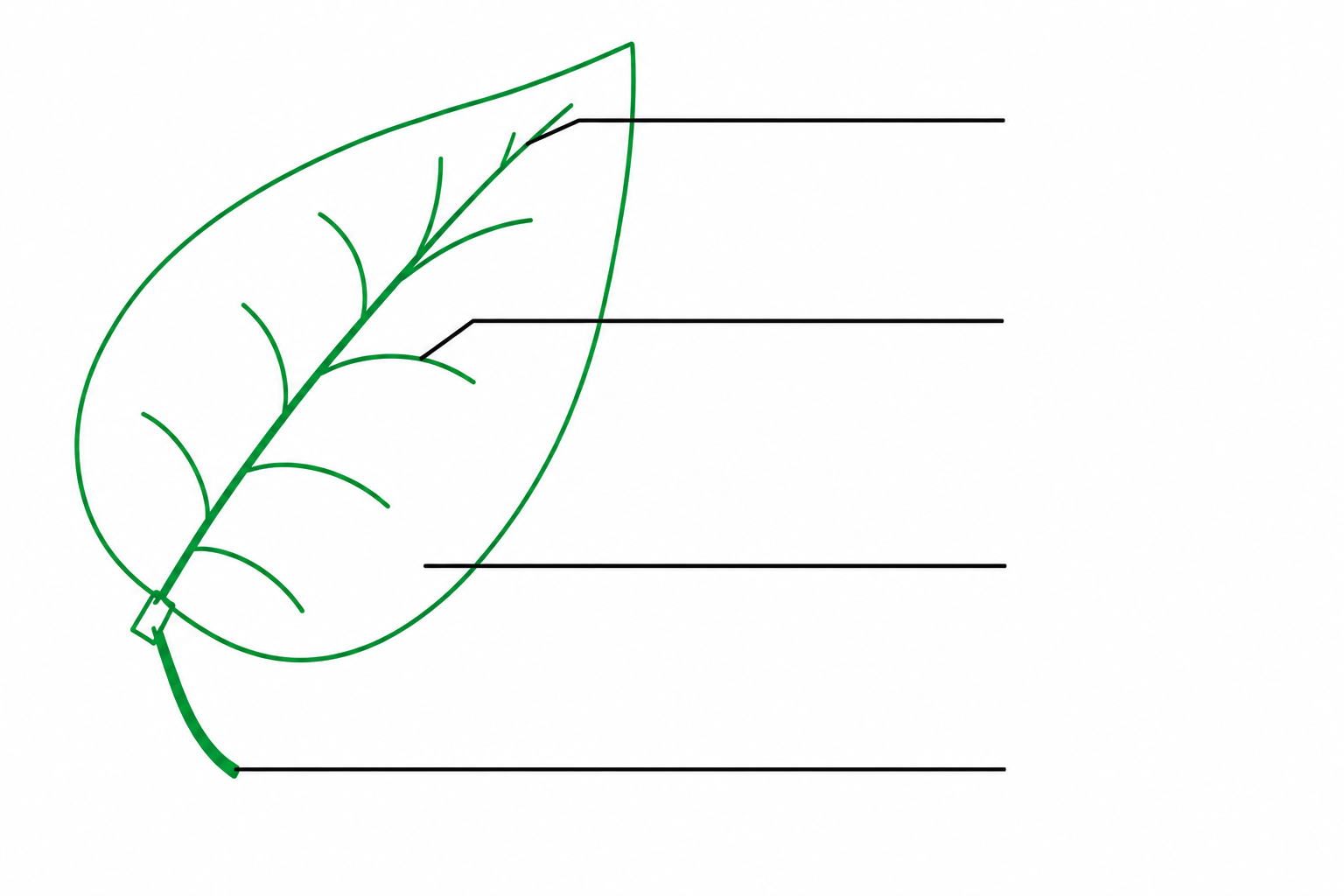
Label the external structures of a leaf
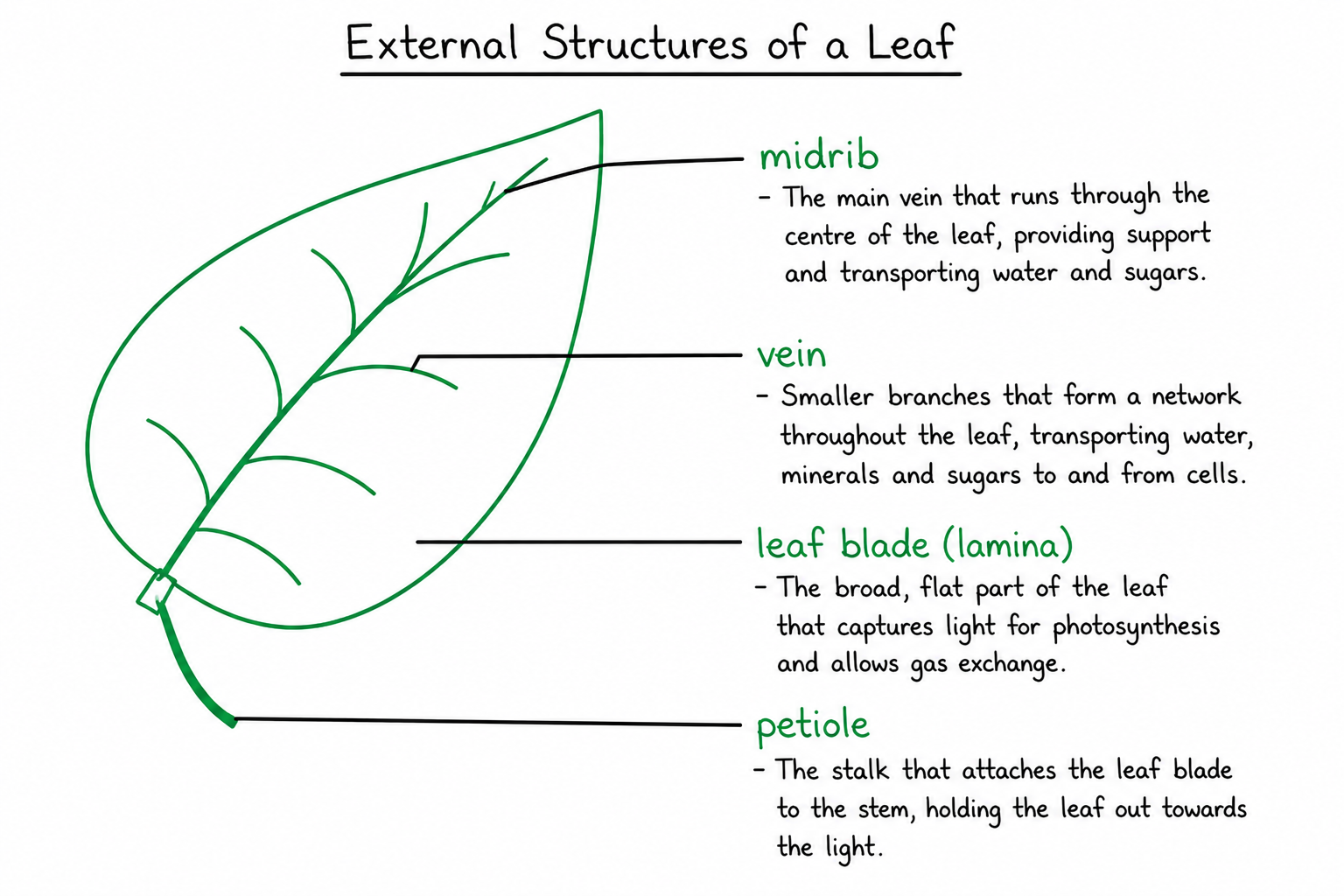
What are the external adaptations of a leaf for photosynthesis
Large surface area (lamina) - The lamina is broad and flat, providing a large surface area. This allows the leaf to absorb more light and carbon dioxide, increasing the rate of photosynthesis.
A branching network of veins throughout the leaf. Veins contain xylem and phloem (vascular bundles) allowing water to be delivered quickly for photosynthesis and sugars to be transported away for respiration.
Thin leaf - Shorter distance for CO2 to diffuse through, therefore it reaches cells faster and photosynthesis takes place faster.
Petiole – The stalk that attaches the leaf to the stem. It holds the leaf in a position where it can receive maximum sunlight for photosynthesis.
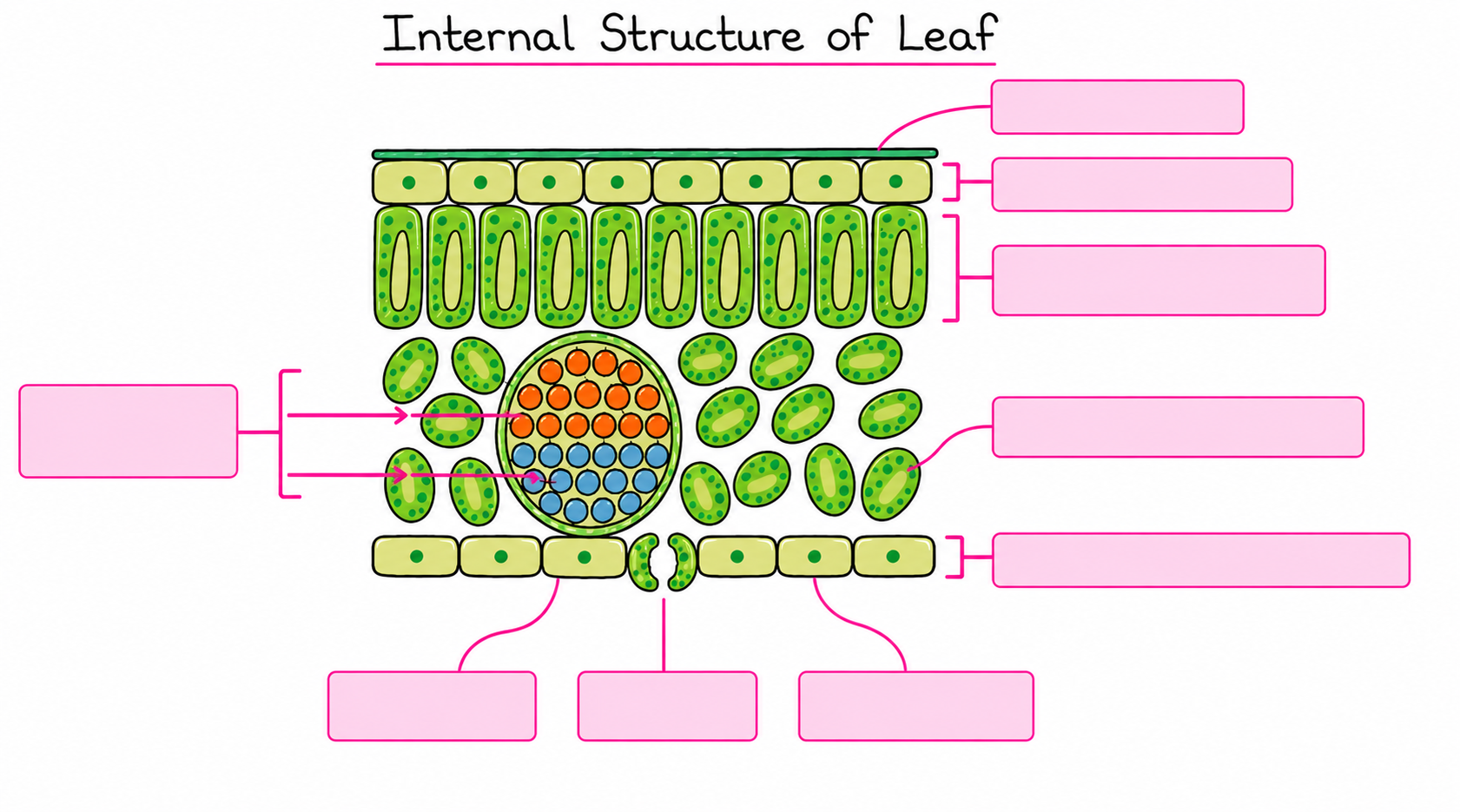
Label the internal structure of this leaf