Lecture 5: Polymerase Chain Reaction (PCR) Overview
 Call Kai
 Learn
Learn Practice Test
 Spaced Repetition
 Match
Match Flashcards
 Knowt Play
1/32

There's no tags or description
Looks like no tags are added yet.
Name | Mastery | Learn | Test | Matching | Spaced | Call with Kai |
|---|
No analytics yet
Send a link to your students to track their progress
33 Terms
Polymerase Chain Reaction (PCR)
An in vitro technique that allows the amplification of a DNA fragment from a DNA template.
DNA polymerase
An enzyme that catalyzes DNA synthesis by sequential addition of deoxyribonucleotides to the 3ʹ-OH end of a polynucleotide chain.
Denaturation
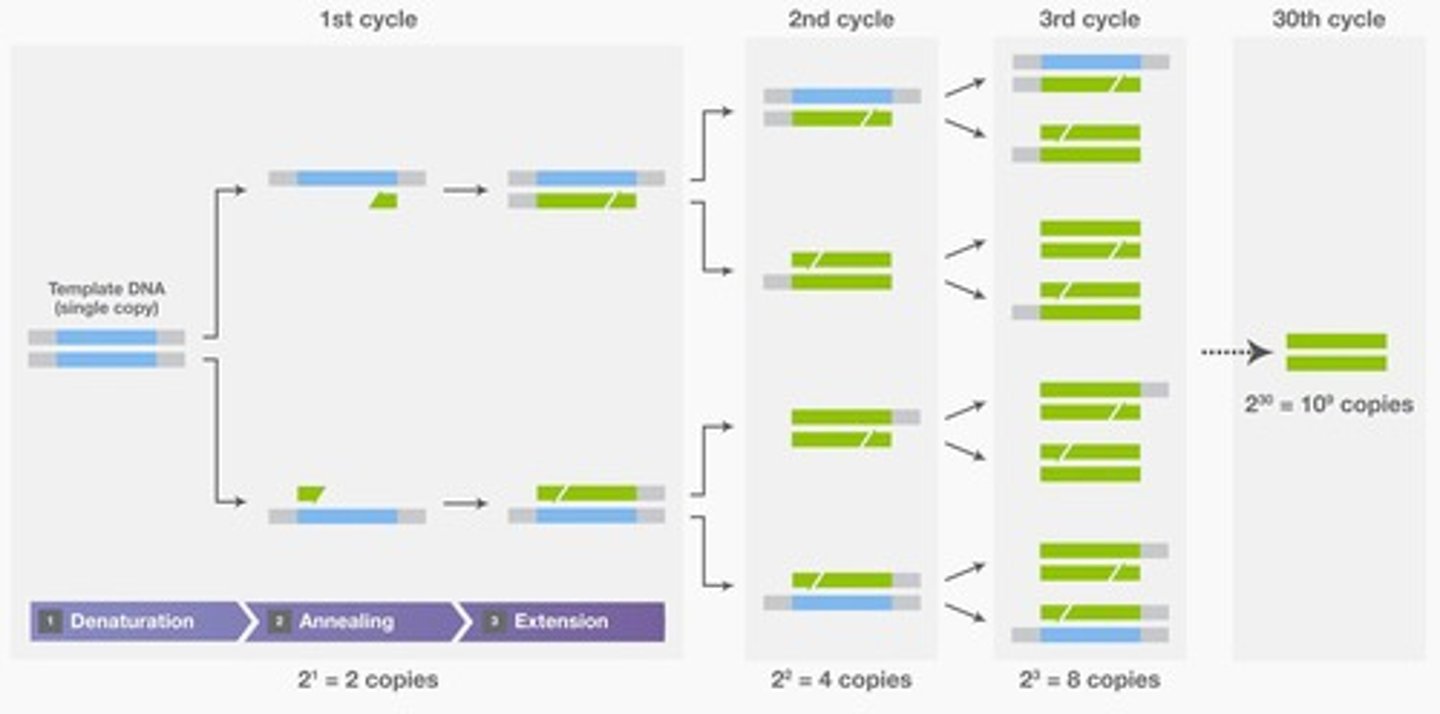
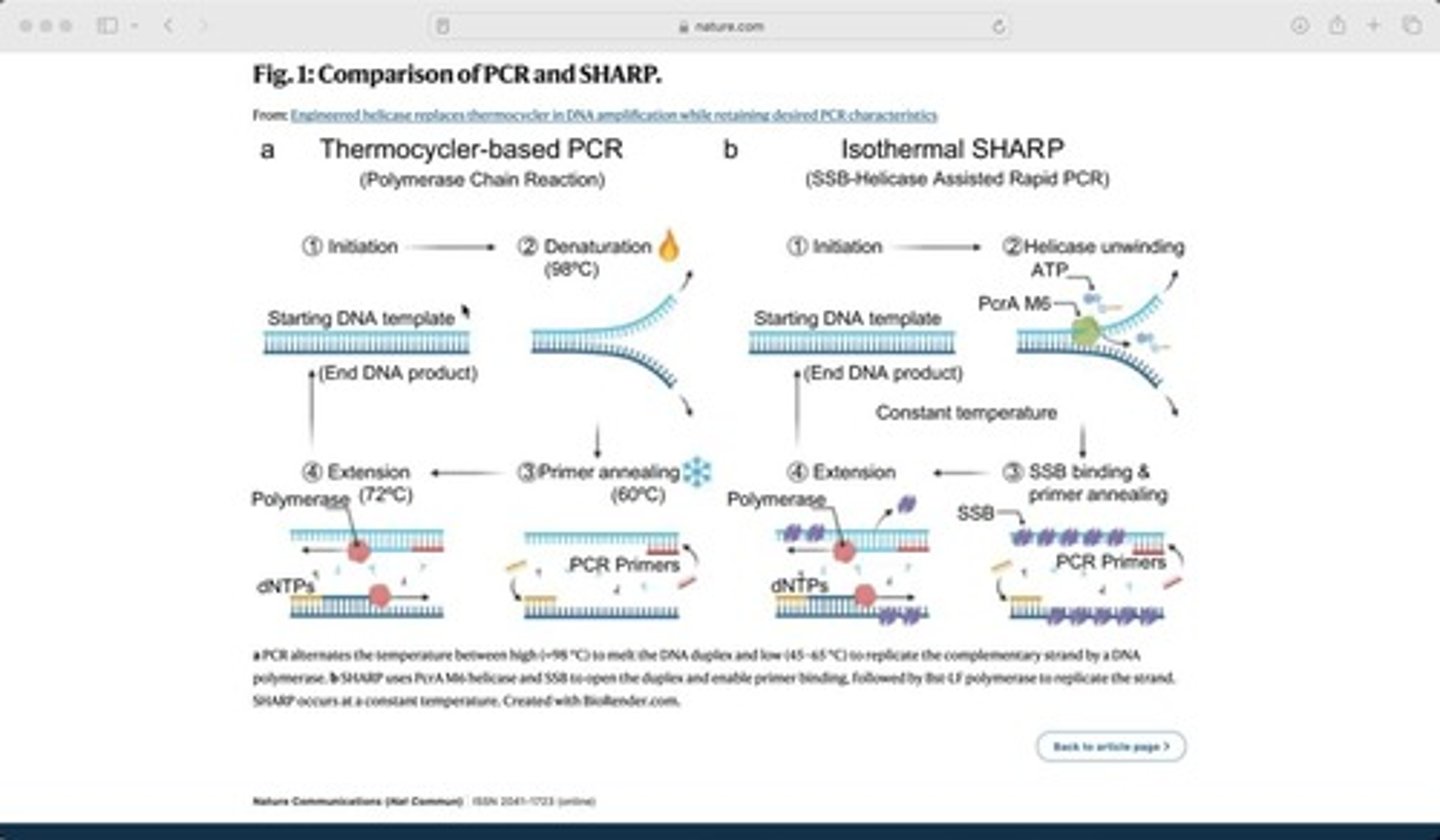
The first step in PCR where the double-stranded DNA is heated to separate it into two single strands.
Annealing
The second step in PCR where primers bind to the single-stranded DNA template.
Elongation
The third step in PCR where DNA polymerase synthesizes a new DNA strand complementary to the template strand.
extension
the fourth step in PCR where the primer sequences from their 3' ends to synthesize the target DNA fragment
Cycling
The repeated series of denaturation, annealing, and elongation steps in PCR.
Applications of PCR in Research
Detection of specific genes, sequences, and species identification.
Applications of PCR in Medicine
Identification of pathogens, such as viruses.
Applications of PCR in Biotechnology
Use in recombinant systems.
Applications of PCR in Forensics
Used for paternity tests and other forensic analyses.
3ʹ-OH end
The end of the primer strand to which deoxyribonucleotides are added during DNA synthesis.
Template strand
The strand of DNA that provides the sequence for the synthesis of a new complementary strand.
Primer strand
The short strand of nucleotides that is complementary to the template strand and initiates DNA synthesis.
In vitro technique
A procedure performed outside of a living organism, often in a controlled laboratory environment.
Recombinant systems
Biotechnological systems that involve combining DNA from different sources.
Pathogen identification
The process of detecting infectious agents, such as viruses, using PCR.
Electrophoresis
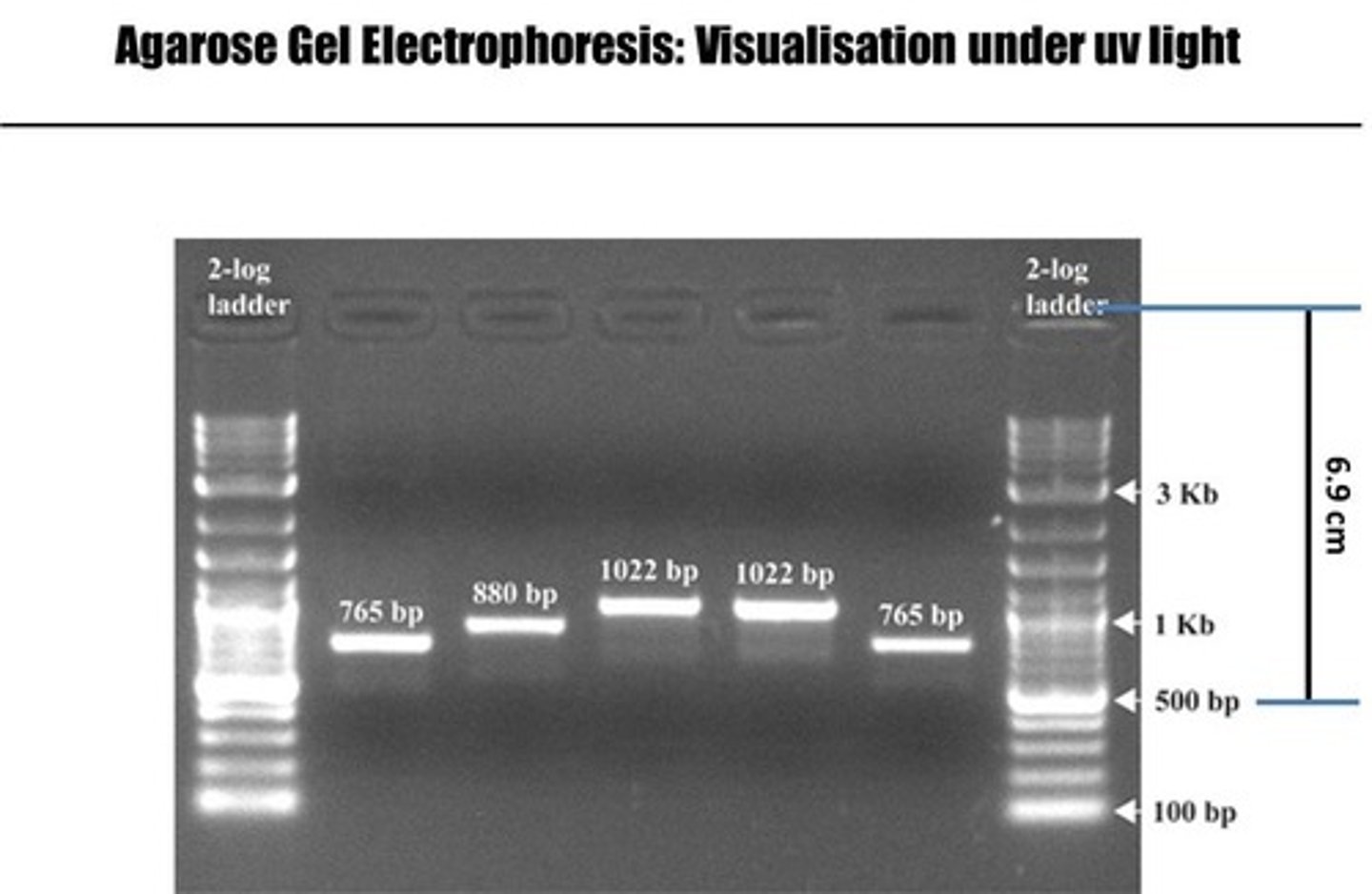
A technique for separating DNA fragments based on size.
Reaction mix
The combination of components needed for PCR, including DNA template, DNA polymerase, and buffer.
DNA template
The source of DNA to be amplified, which can be genomic DNA, cDNA, plasmid DNA, or a library.
DNA polymerase reaction buffer
A solution that provides the necessary environment for DNA polymerase activity.
Thermostable enzyme
An enzyme that remains active at high temperatures, essential for PCR. i.e. Taq polymerase
Pfu Polymerase
A DNA polymerase derived from Pyrococcus furiosus, known for its proofreading activity.
Proof reading activity
The ability of some DNA polymerases to correct errors during DNA synthesis, specifically in the 3' to 5' direction.
Processivity
The ability of DNA polymerase to continuously synthesize DNA without dissociating from the template.
Fidelity
The accuracy of DNA replication, often higher in polymerases with proofreading capabilities.
Mg2+ [MgCl2]
A cofactor required for the activity of DNA polymerase in PCR.
dNTPs [dATP, dCTP, dGTP, dTTP]
The building blocks of DNA, necessary for DNA synthesis during PCR.
2x Primers (Forward and Reverse)
Short sequences of nucleotides that initiate DNA synthesis during PCR.
H2O
Water, used as a solvent in the PCR reaction mix.
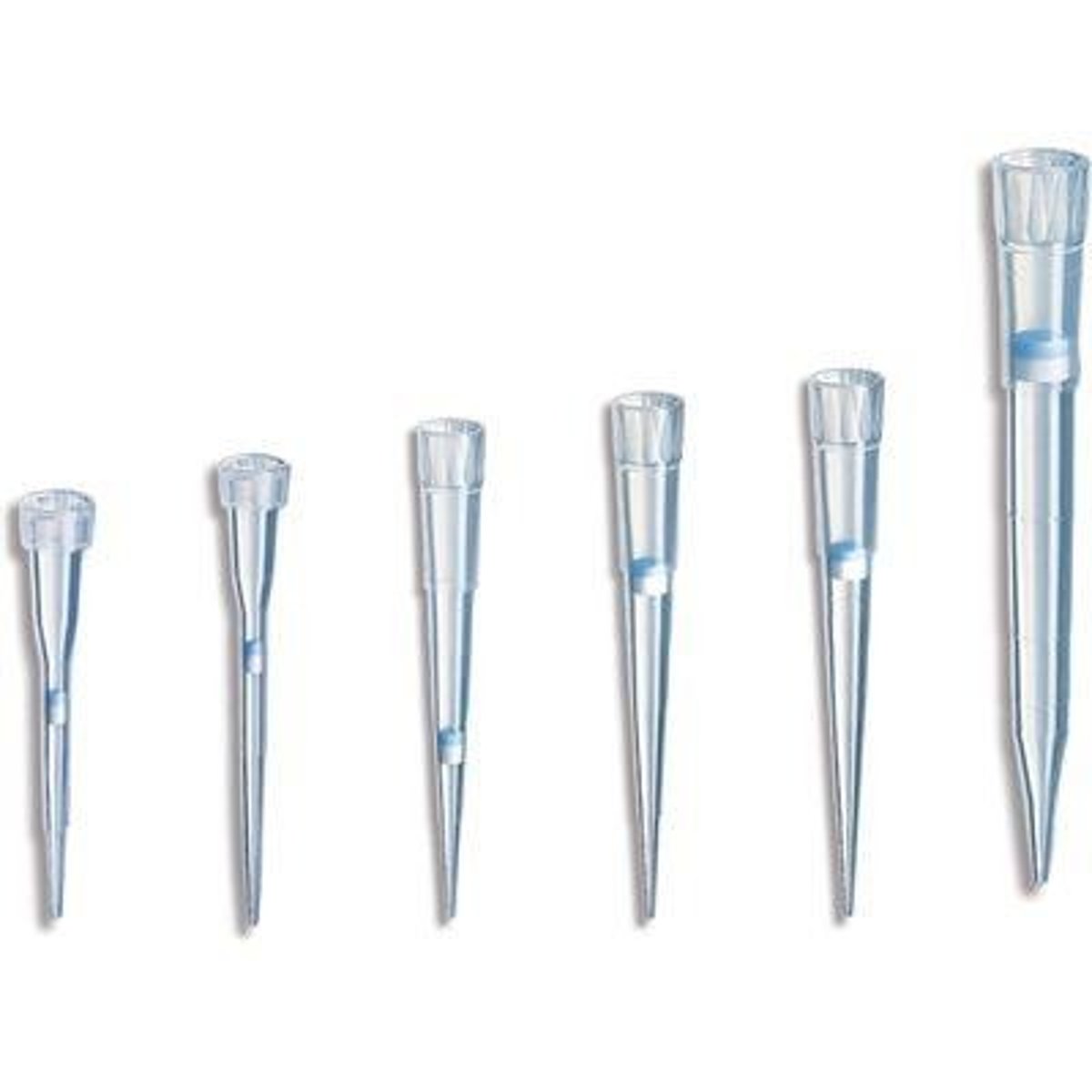
Pipettes / tips
Tools used to accurately measure and transfer small volumes of liquids.
Microtubes & PCR tubes
Containers used to hold samples during PCR and other laboratory procedures.
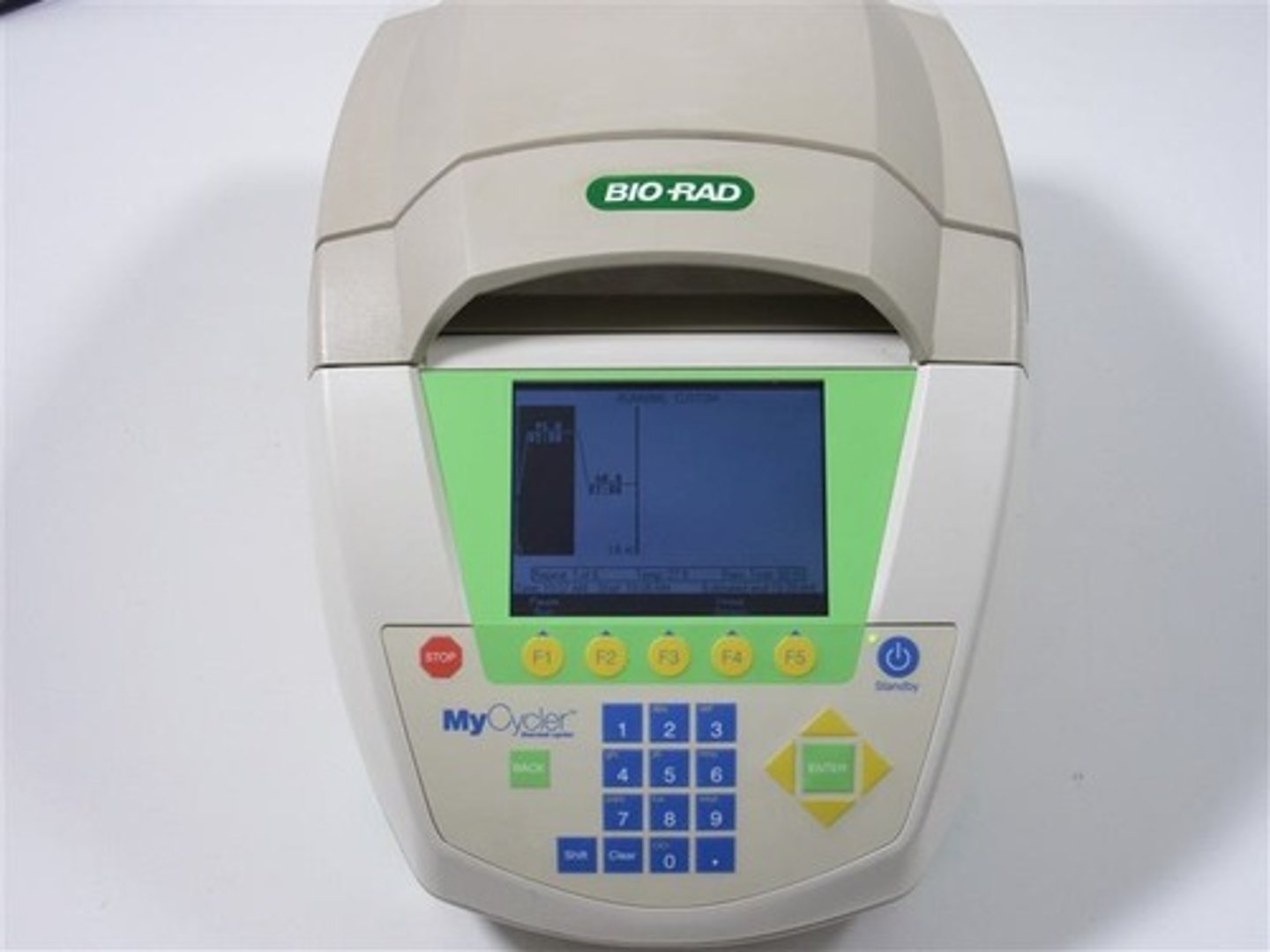
PCR Instrument
A machine used to perform PCR, providing controlled temperature cycles.