Foodservice Equipment and Small-wares
 Call Kai
 Learn
Learn Practice Test
 Spaced Repetition
 Match
Match Flashcards
 Knowt Play
1/40

There's no tags or description
Looks like no tags are added yet.
Name | Mastery | Learn | Test | Matching | Spaced | Call with Kai |
|---|
No analytics yet
Send a link to your students to track their progress
41 Terms
What six places establish the requirements for material, construction, safety, and sanitation for tools and equipment used within foodservice?
American Standards Association
American Gas Association
National Board of Fire Underwriters
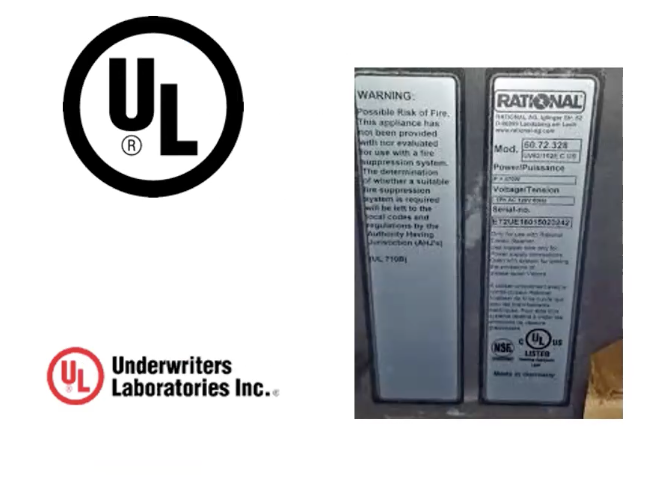
Underwriters Laboratories Inc.
American Society of Mechanical Engineers
National Sanitation Foundation Intl.
What does the National Sanitation Foundation do?
determines the consensus standards for design, construction, installation of kitchen tools, cookware, and equipment
ensures that things can be easily cleaned, all surfaces are nontoxic, nonabsorbent, and nonreactive, all contact surfaces and internal corners are smooth, coating materials are nontoxic and easily cleaned, and that waste/liquids can be easily removed
explains why we mainly use stainless steel equipment
What does the Underwriters Laboratory do?
ensures that gas/electric equipment meet published safety standards
How are liquids measured in a commercial setting?
via transparent graduated measuring cups with pouring lips
place on flat surface and read at eye level
can make use of rubber scrapers if you are trying to remove viscous liquids.
What are six portion control tools?
scales
scoops
ladles
spoodles
markers
ruler
What are two different types of scales?
electronic scales (allow you to tare)
portion scale
Describe how scoops get their corresponding scoop number.
scoop size is determined by the number of servings it can get from 1 quart (32 ounces)
ex: #8 scoop = 32 oz / 4 oz (as the scoop gives 4 oz servings)
in general, the bigger the scoop number, the smaller the serving
What are the different ladle sizes (5)?
1 oz (1/8 cup)
2 oz (1/4 cup)
4 oz (1/2 cup)
6 oz (3/4 cup)
8 oz (1 cup)
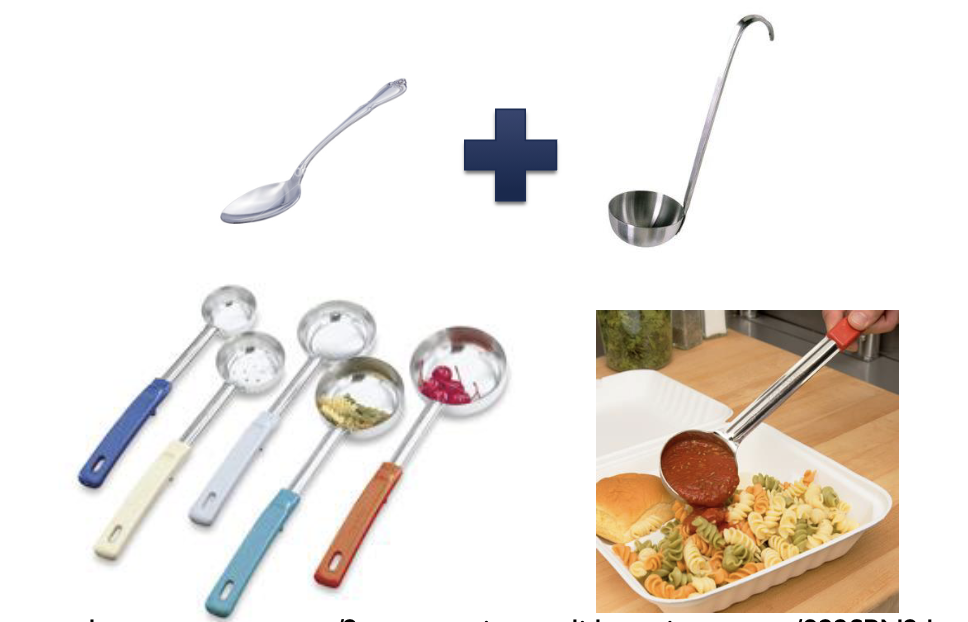
What is a spoodle?
cross between a ladle and a spoon
What are slotted spoons?
spoons with holes
What are the four different types of thermometers?
bi-metallic
infrared
meat
candy
What are some characteristics of a bi-metallic thermometer?
easy to calibrate, most commonly use
calibrate via boiling point or freezing point
What are some characteristics of infrared thermometers?
can be use for the interior of the fridge
What are some characteristics of meat thermometers?
dont want to insert it into bone bc bone has extra heat
What are some characteristics associated with a candy thermometer?
made for high heat and sugar specifically
help to determine the texture of your candy (soft ball vs hard ball)
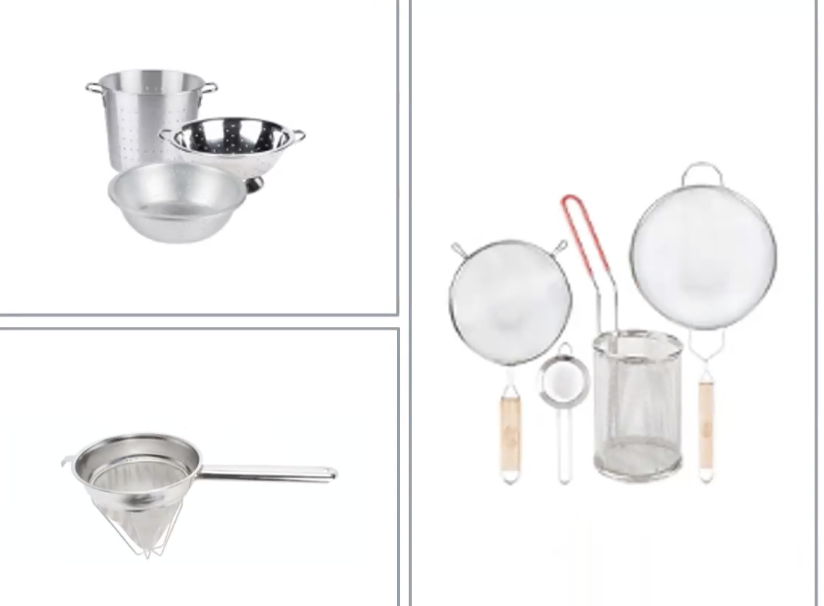
What are skimmers/strainers, colanders and sieves?
help to separate liquid from food material, cook pasta, etc.
What is cookware commonly made of?
stainless steel
rarely made of copper, as when there is an acidic food being cooked it can leach out (copper is toxic)
What are the different metals that cookware can be made out of (8)?
copper (toxic, so not really found in cookware as much)
aluminum
stainless steel (common, not that good of a conductor therefore it can sometimes have other layers of metal in it such as copper or aluminum)
cast iron
enamelware
nonstick coatings
ceramics
plastic
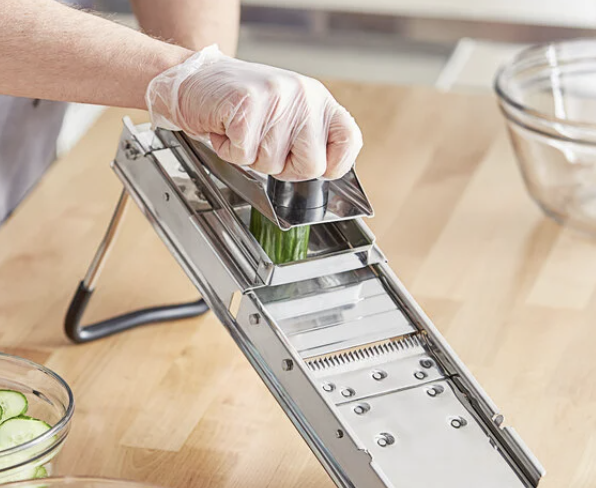
What is a mandoline?
What is an immersion blender?
portable blender that you can use to blend up hot soups/other things
don’t have to put it into a mixing boil and change equipment
What are the different materials that cutting boards can be made out of (3)?
wooden
lucite (high-quality, transparent thermoplastic)
plastic
tend to be color coded depending on what you are cutting to prevent cross contamination
What are the different types of knives (4)?
carbon steel
stainless steel (majority)
high carbon steel (preferred and more expensive)
ceramic (can’t sharpen these)
What are lowerators/plate dispensors ?
can be heated or unheated, help to dispense plates
weight of plates causes it to go down
What are two different types of sinks?
3 compartment (washing/rinsing/sanitizing)
handwashing station
What are different types of holding equipment (7)?
insulated carriers (ex: pizza delivery)
chafers (think of filipino parties)
heat/infrared lamps
hot food holding cabinets
warming drawers
holding tables
steam table
What are the two benefits of trash compactors?
compacts trash
avoids people from dumpster diving
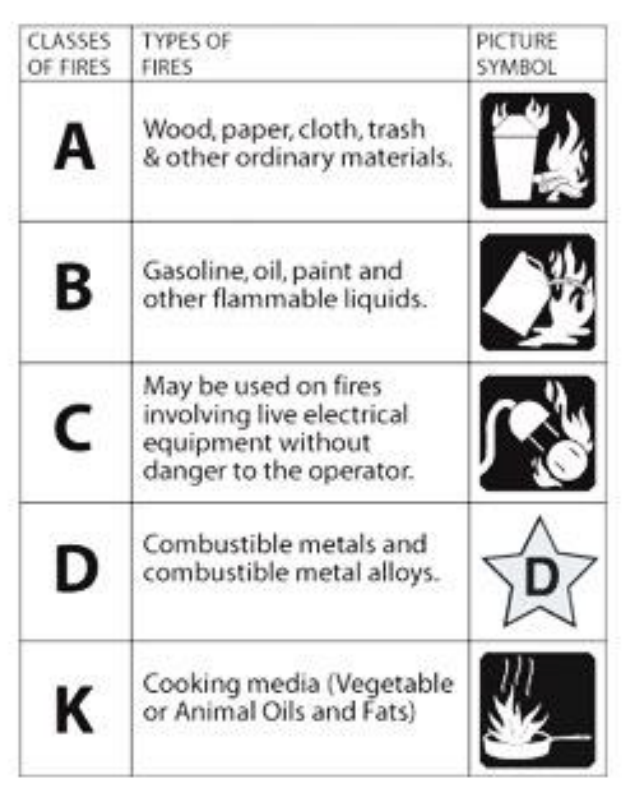
What are the five different types of fires?
What is flatware? What is hollow-ware?
flatware = utensils
hollow-ware = think of steaming milk and the container used
What is an inert metal?
one that does not react with food
What three metals are acceptable for foods?
stainless steel (sometimes has aluminum to decrease the weight)
aluminum
tin
Which metals are toxic and thus should not be used in with food items (7)?
zinc (soft)
copper (soft)
brass (soft)
lead
cadmium
bismuth
antimony
often used in foodservice, but not in food contact surface areas
If a soft metal (zinc, copper, and brass) are used, what is required before its use?
soft metals such as zinc, brass, and copper should be plated with hard metals first
What does the gauge of a metal represent?
gauge number relates to the thickness of a metal
the thinner the metal, the higher the gauge number
What gauge is commonly used in foodservice equipment?
10-14 gauge gallivanted steel
most common for equipment
What gauge is commonly used for table tops with heavy usage?
12 - 14 gauge stainless steel
What are some characteristics of stainless steel (6)?
high resistance to corrosion
inert chemically
durable
good appearance
expensive
not a good conductor of heat
What are the different stainless steel finishes (7)?
#1 = drab and rough
#2 = full finish, bright
#3 = full finish, dull
#4 = standard finish for foodservice equipment
#6 = soft, velvety finish
#7 = high glossy polish
What are some characteristics associated with aluminum (5)?
low cost
light in weight
good thermal and electrical conductivity
relatively hard and durable
discolors easily as it reacts with high acid or alkaline foods
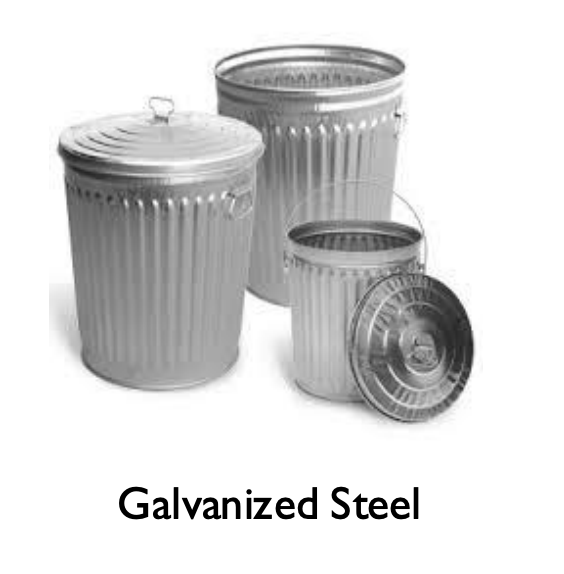
What is galvanized steel?
steel and iron covered with zinc
can be used for trashcans
Why can’t zinc be used in FS?
easily wears off
common material for refrigerator doors and or waste containers
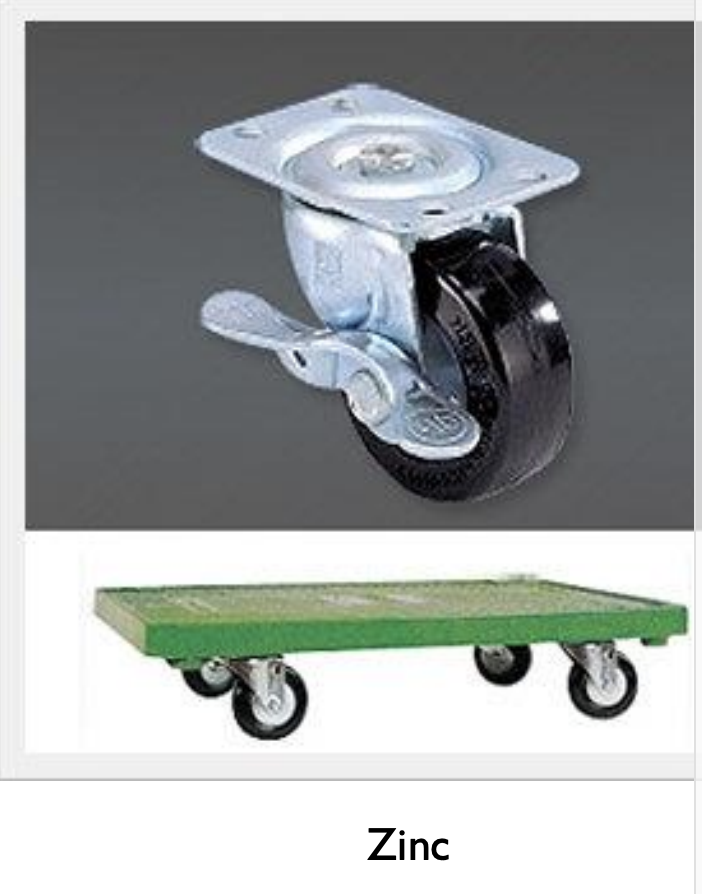
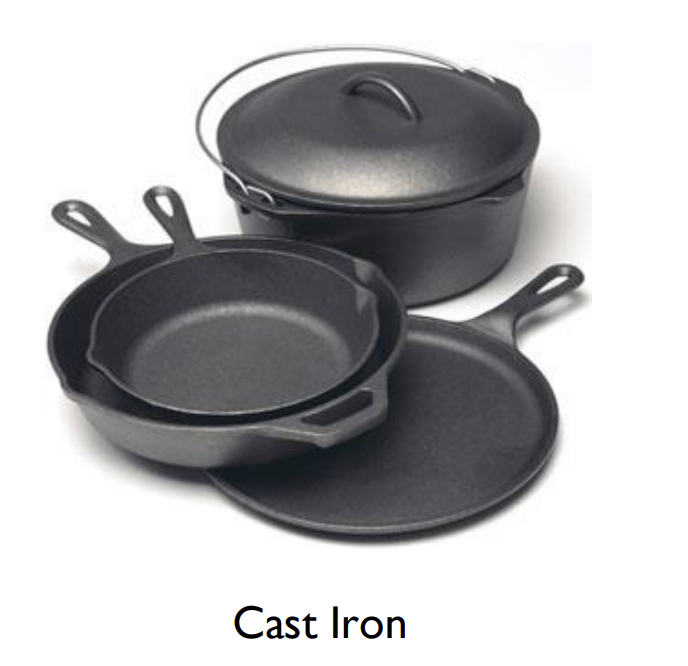
What are cast irons typically used for?
used for braces, castings for stands and support
heavy
don’t wash with soap