Microbio: Module 7 - Viral Diseases
 Call Kai
 Learn
Learn Practice Test
 Spaced Repetition
 Match
Match Flashcards
 Knowt Play
1/205

There's no tags or description
Looks like no tags are added yet.
Name | Mastery | Learn | Test | Matching | Spaced | Call with Kai |
|---|
No analytics yet
Send a link to your students to track their progress
206 Terms
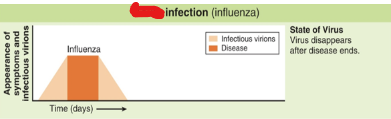
Acute Infection
Sudden onset of symptoms; comes and goes; relatively short duration; results in burst of virions released from infected cells
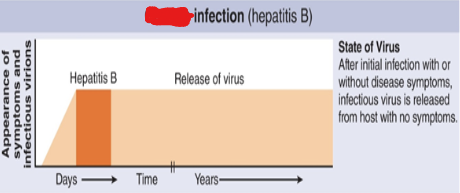
Chronic Infection
Continuous production of low levels of viral particles and virus can be transmitted in absence of symptoms
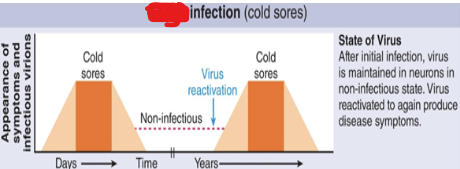
Latent Infection
Genome remains silent in host cells and can reactivate to cause productive infection
Fecal-Oral Transmission
Viruses may have more than one route of entry and mode of transmission which makes them difficult to categorize and there may be little connection between the route of entry and the particular organs/tissues involved with the disease
How do viral diseases differ from bacterial diseases in terms of mode of transmission, how the disease is categorized, and route of entry?
Often diagnosed according to their clinical symptoms, specifically by lab diagnosis which is the only way to definitively diagnose a particular viral infection; yes
How are viral infections most frequently diagnosed? Does this type of diagnosis give a definitive causative agent?
Enveloped viruses are generally easier to eliminate with standard disinfectants and soaps since their outer membrane is fragile and easily disrupted by naked viruses have a rigid protein shell that makes them highly resistant to environmental stress, drying, and many common cleaners
Explain the significance of a virus having an envelope vs. being naked in terms of how difficult they are to eliminate.
Fecal-oral route and raw/undercooked shellfish from contaminated waters
Food and Waterborne Viral Diseases: Mode of Transmission for Gastroenteritis
2-10 days
Food and Waterborne Viral Diseases: Incubation Period for Gastroenteritis
Norovirus, Rotavirus, Enteroviruses
Food and Waterborne Viral Diseases: Causative Agent(s) for Gastroenteritis
None
Food and Waterborne Viral Diseases: Reservoir for Gastroenteritis
RotaTeq and Rotarix vaccines available against rotavirus infections since 2010
Food and Waterborne Viral Diseases: Treatment/Vaccines for Gastroenteritis
19 to 21 million norovirus infections per year and children younger than 5 and older adults particularly vulnerable
Food and Waterborne Viral Diseases: Statistics for Gastroenteritis
Fecal-oral route
Food and Waterborne Viral Diseases: Mode of Transmission for Hepatitis A
30 days to 2 months
Food and Waterborne Viral Diseases: Incubation Period for Hepatitis A
Hepatitis A virus
Food and Waterborne Viral Diseases: Causative Agent(s) for Hepatitis A
Humans
Food and Waterborne Viral Diseases: Reservoir for Hepatitis A
None
Food and Waterborne Viral Diseases: Treatment/Vaccines for Hepatitis A/E
2,007 new cases in 2016, cases have been increasing yearly since 2012
Food and Waterborne Viral Diseases: Statistics for Hepatitis A
Fecal-oral route, contaminated drinking water in developing countries, consumption of uncooked/undercooked pork, dry deer meat, raw shellfish
Food and Waterborne Viral Diseases: Mode of Transmission for Hepatitis E
Hepatitis E - Inflammation of liver
Food and Waterborne Viral Diseases: Causative Agent(s) for Hepatitis E
Varies depending on the specific genotype of the virus
Food and Waterborne Viral Diseases: Reservoir for Hepatitis E
Uncommon in US, endemic in Asia, Middle East, African, and Central America
Food and Waterborne Viral Diseases: Statistics for Hepatitis E
No vaccines
Food and Waterborne Viral Diseases: Treatment/Vaccines for Hepatitis E
Direct fecal-oral contact, indirect contact with saliva or fecal matter, or by contaminated sewage/water
Food and Waterborne Viral Diseases: Mode of Transmission for Poliomyelitis
7-14 days
Food and Waterborne Viral Diseases: Incubation Period for Poliomyelitis
Poliovirus
Food and Waterborne Viral Diseases: Causative Agent(s) for Poliomyelitis
Humans
Food and Waterborne Viral Diseases: Reservoir for Poliomyelitis
Salk (killed/inactivated) and Sabin (oral, live attenuated)
Food and Waterborne Viral Diseases: Treatment/Vaccines for Poliomyelitis
Last case in US was in 1979 and it is still endemic in some regions of Middle East, recently eradicated in Africa
Food and Waterborne Viral Diseases: Statistics for Poliomyelitis
Jaundice
A medical condition characterized by a yellowing of the skin, the whites of the eyes, and mucous membrane; happens from damage to liver
Gastroenteritis, Hepatitis A/E, and Poliomyelitis
What are the food and waterborne viral diseases?
Common cold, RSV, Influenza, COVID-19, Measles, Mumps, German Measles, Chickenpox/Shingles, and Small pox
What are the respiratory viral diseases?
Respiratory droplets, by hands or fomites (doorknobs, faucets, furniture, toys, etc.)
Respiratory Viral Diseases: Mode of Transmission for Common Cold
1-3 days
Respiratory Viral Diseases: Incubation Period or Common Cold
Large variety of distinctive group of viruses, each group can have over 100 strains; includes: Coronavirus, Enterovirus, Rhinovirus, Adenovirus, and HMPV
Respiratory Viral Diseases: Causative Agent(s) for Common Cold
Humans and fomites
Respiratory Viral Diseases: Reservoir for Common Cold
Over the counter medications to help with symptom relief and no vaccine
Respiratory Viral Diseases: Treatment/Vaccines for Common Cold
Millions of cases in the US each year and adults have an average of 2-3 colds/year, children have more
Respiratory Viral Diseases: Statistics for Common Cold
Respiratory droplets and by hands or fomites
Respiratory Viral Diseases: Mode of Transmission for RSV or Respiratory Syncytial Virus
4-5 days
Respiratory Viral Diseases: Incubation Period for RSV or Respiratory Syncytial Virus
Respiratory Syncytial Virus
Respiratory Viral Diseases: Causative Agent(s) for RSV or Respiratory Syncytial Virus
Humans and fomites
Respiratory Viral Diseases: Reservoir for RSV or Respiratory Syncytial Virus
Supportive care, incubation with mechanical ventilation in some cases, vaccines are available for older adults, pregnant woman, or monoclonal antibody products are available to protect infants and young children
Respiratory Viral Diseases: Treatment/Vaccines for RSV or Respiratory Syncytial Virus
Most widespread cause in infants under 6 months of age, by age 2 most are infected, for children younger than 5 there are 2.1 million outpatient visits/year and 57,527 hospitalizations
Respiratory Viral Diseases: Statistics for RSV or Respiratory Syncytial Virus
Respiratory droplets and aerosols and fomites play a secondary role
Respiratory Viral Diseases: Mode of Transmission for Influenza A,B,C
24-48 hours
Respiratory Viral Diseases: Incubation Period for Influenza A,B,C
Influenza
Respiratory Viral Diseases: Causative Agent(s) for Influenza A,B,C
Humans (especially young children) and animals (waterfowl and pigs)
Respiratory Viral Diseases: Reservoir for Influenza A,B,C
Supportive care, bed rest, fluids, annual flu vaccine, antivirals: relenza, tamiflu, rapivab
Respiratory Viral Diseases: Treatment/Vaccines for Influenza A,B,C
Hemagglutinin (H)
As many as 500 spikes, attaches to sialic acid receptor on host epithelial cells that line respiratory mucosa, and aid viral penetration into cells
Neuraminidase
100 on surface of each virus and plays a role in release of new virions
Both serve as virulence factors and both are antigens
What do neuraminidase and hemaglutinin both have?
RSV
Which respiratory virus is particularly life threatening to children under 6 months of age?
Common cold
Which respiratory disease yields the highest number of cases per year?
Reservoir is from humans, wild aquatic birds, domestic poultry, and swine and they have the ability to cause an epidemic AND pandemics
Influenza A: What are the reservoirs and does it have the ability to cause epidemics or pandemics?
It is the primary reason it remains an ongoing pandemic threat and it has a major, abrupt antigenic change in the H or N spikes and it results from different viral strains mixing and creating this strain
Why is it important that Influenza A has animal reservoirs?
Reservoir is primarily humans (rarely seals) and it can cause an epidemic
Influenza B: What are the reservoirs and does it have the ability to cause epidemics or pandemics?
Humans (and occasionally pigs/dogs) and they do not cause epidemics or pandemics
Influenza C: What are the reservoirs and does it have the ability to cause epidemics or pandemics?
About 200,000 hospitalizations; 3,000 & 49,000 deaths; and 31.4 million get infected
Cite at least three statistics related to the impact of influenza.
Comes down to symptom onset and severity; colds develop gradually with mild symptoms whereas flu strikes suddenly and causes high fever, extreme fatigue, and severe body aches
Describe how you could differentiate whether a patient had a cold vs. the flu.
Aerosol and droplet transmission
Respiratory Viral Diseases: Mode of Transmission for COVID-19 or SARS COV-2
2-14 days
Respiratory Viral Diseases: Incubation Period for COVID-19 or SARS COV-2
COVID 19
Respiratory Viral Diseases: Causative Agent(s) for COVID-19 or SARS COV-2
Still unknown, bats suspected and suspicion of intermediate host like snakes
Respiratory Viral Diseases: Reservoir for COVID-19 or SARS COV-2
Multiple vaccines available and antivirals (paxlovid, remdesivir)
Respiratory Viral Diseases: Treatment/Vaccines for COVID-19 or SARS COV-2
According to CDC - 103,957,053 total cases and 1,123,613 deaths in the US
Respiratory Viral Diseases: Statistics for COVID-19 or SARS COV-2
Respiratory droplets
Respiratory Viral Diseases: Mode of Transmission for Measles or Rubeola Virus
10-21 days
Respiratory Viral Diseases: Incubation Period for Measles or Rubeola Virus
Measles
Respiratory Viral Diseases: Causative Agent(s) for Measles or Rubeola Virus
Humans
Respiratory Viral Diseases: Reservoir for Measles or Rubeola Virus
MMR vaccine
Respiratory Viral Diseases: Treatment/Vaccines for Measles or Rubeola Virus
2,030 confirmed measles cases in US 2026
Respiratory Viral Diseases: Statistics for Measles or Rubeola Virus
Respiratory droplets
Respiratory Viral Diseases: Mode of Transmission for Mumps
10-20 days
Respiratory Viral Diseases: Incubation Period for Mumps
Mumps
Respiratory Viral Diseases: Causative Agent(s) for Mumps
Humans
Respiratory Viral Diseases: Reservoir for Mumps
MMR vaccine
Respiratory Viral Diseases: Treatment/Vaccines for Mumps
2009-2010 two large outbreaks in NYC and Guam multiple outbreaks from 2015-2017
Respiratory Viral Diseases: Statistics for Mumps
Respiratory droplets, urine, and prenatal transmission
Respiratory Viral Diseases: Mode of Transmission for Rubella or German Measles
12-32 days
Respiratory Viral Diseases: Incubation Period for Rubella or German Measles
German Measles
Respiratory Viral Diseases: Causative Agent(s) for Rubella or German Measles
Humans
Respiratory Viral Diseases: Reservoir for Rubella or German Measles
MMR Vaccine
Respiratory Viral Diseases: Treatment/Vaccines for Rubella or German Measles
Less than 10 cases in US each year
Respiratory Viral Diseases: Statistics for Rubella or German Measles
Respiratory droplets, contact with fluid from blisters, mother to child via placenta
Respiratory Viral Diseases: Mode of Transmission for Chickenpox/Shingles or Varicella Zoster Virus
10-23 days
Respiratory Viral Diseases: Incubation Period for Chickenpox/Shingles or Varicella Zoster Virus
Chickenpox and shingles
Respiratory Viral Diseases: Causative Agent(s) for Chickenpox/Shingles or Varicella Zoster Virus
Humans
Respiratory Viral Diseases: Reservoir for Chickenpox/Shingles or Varicella Zoster Virus
Chickenpox vaccines (MMRV)
Respiratory Viral Diseases: Treatment/Vaccines for Chickenpox/Shingles or Varicella Zoster Virus
More than 3.5 million cases; 9,000 hospitalizations; 100 deaths prevented by chickenpox vaccine each year
Respiratory Viral Diseases: Statistics for Chickenpox/Shingles or Varicella Zoster Virus
Person to person via saliva droplets, contaminated clothing and bedding
Respiratory Viral Diseases: Mode of Transmission for Smallpox or Variola Virus
7-19 days
Respiratory Viral Diseases: Incubation Period for Smallpox or Variola Virus
Smallpox
Respiratory Viral Diseases: Causative Agent(s) for Smallpox or Variola Virus
Humans
Respiratory Viral Diseases: Reservoir for Smallpox or Variola Virus
TPOXX - Developed in 2018 to treat smallpox in case of bioterrorism event
Respiratory Viral Diseases: Treatment/Vaccines for Smallpox or Variola Virus
Killed 500 million people in the 20th century and disease eradicated in 1979
Respiratory Viral Diseases: Statistics for Smallpox or Variola Virus
Crowded indoor environment, low humidity, poor ventilation, and frequent close personal contact
What are some of the conditions that aid in the spread of influenza?
Antivirals are highly time-sensitive, they must be started within 1 or 2 days of initial symptoms; the virus is genetically volatile and prone to rapid mutation; and specific antivirals in medications are not recommended for complication or progressive illnesses, hospitalized patients, or young children without careful evaluation
Describe some of the limitations associated with the antivirals used to treat influenza.
To treat or prevent secondary bacterial infections
Why would a physician prescribe antibiotics to an elderly patient infected with influenza even though antibiotics are only effective at treating bacterial infections?