EXAM 2 - ANIMAL
 Call Kai
 Learn
Learn Practice Test
 Spaced Repetition
 Match
Match Flashcards
 Knowt Play
1/75

There's no tags or description
Looks like no tags are added yet.
Name | Mastery | Learn | Test | Matching | Spaced | Call with Kai |
|---|
No analytics yet
Send a link to your students to track their progress
76 Terms
Kingdom Animalia characteristics (macro-hi)
Multicellular eukaryotes
Adaptations to help DETECT, capture, eat, and digest
Cells supported by structural proteins, NOT cell wall
Reproduce sexually, diploid stage dominant
One (1) larval stage at least
Heterotrophic
Invertebrates or vertebrates
larval stage
larvae → juveniles (not reproducing) → adults (reproducing)
Invertebrates vs Vertebrates
Invertebrates: 95% animals: no dorsal support
Vertebrates: 5% animals: have dorsal support
Phylum Porifera name & characteristics (8)
→ Silly People Can Always Notice Strange Random Animals
Sponges
Sessile (attached) filter feeds
Pore-bearing
pores
outpore
Collection of cells (NO tissues, organs, systems)
Asymmtrical
No germ layers & no true body cavity
“Skeleton” made of spicules
Regenerative ability
All aquatic, mostly marine
Porifera = ?
pores
outpore
Porifera = pore-bearing
pores: water goes in through ostia
outpore: water goes out through osculum
Ostia vs Osculum (Sponges)
Ostia: tiny pores where water enters sponge
Osculum: big hole where water exits
(Sponges) "skeleton" made of spicules
*Spicules: tiny hard spikes
These tiny, hard spikes support and protect the sponge
Sponge Anatomy (3) *“cytes”
→ cell types of sponges
Pinacocytes
Choanocytes
Amoebocytes
(Sponge Anatomy) Choanocytes
—> “C” for collar
“collar cells”
generate water currents (with flagellum)
trap food for ingestion (using collar traps)
*move water and catch food basically
Sponge Canal Systems (3)
"conoid" = sponge canal system
1. Asconoid
2. Synconoid
3. Levconoid
*(in order of increasing complexity)
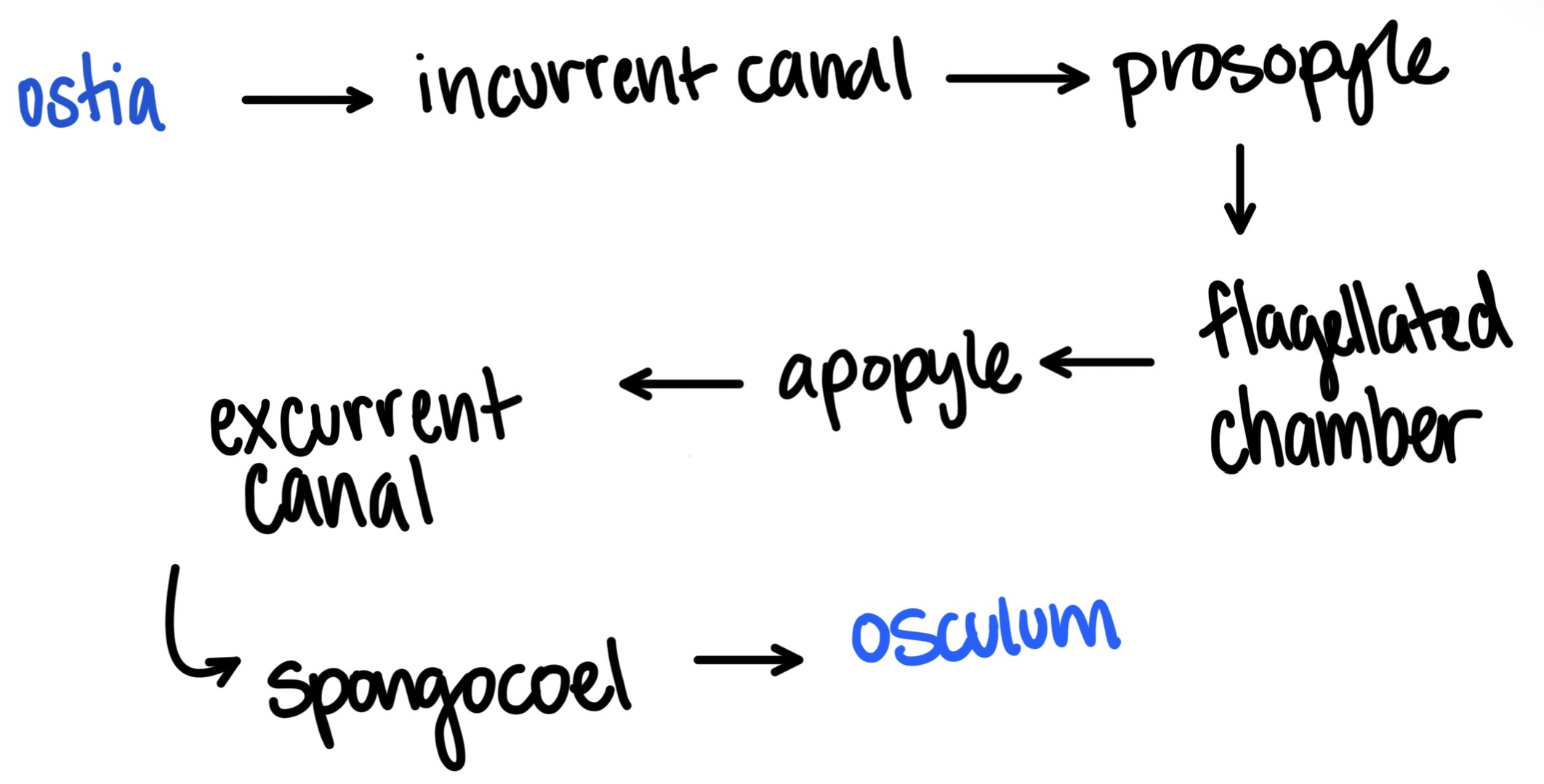
(Sponge Canal System) Asconoid
ostia → spongocoel → osculum
the simplest sponge canal system
- few folds, so less efficient
(Sponge Canal System) Synconoid
Ostia → prosopyle → radial canal → osculum
more complex because it has folds/canals so it’s more efficient
(Sponge Canal System) Levconoid
most complex and efficient sponge canal system
ostia → “many small chambers” → osculum
(Sponge Anatomy) Pinacocytes
→ 🍍 has hard, protective layer
form dermal layer (outside, protective layer)
form osta (allows water to go in)
(Sponge Anatomy) Amoebocyte (3)
--> "A" for All
1. stem cells that can differentiate into the other cell types
2. Digest food articles
3. produce spicules
* they do it all
Sponges Reproduction (Asexual & Sexual)
Asexual
fragmentation
budding with gemmules
Sexual
monocious → spawning
larval parenchymula forms
(Asexual Reproduction in Sponges) Fragmentation
sponge breaks into pieces, and each piece can grow into a new sponge
*new sponge grows from a broken part of parent sponge basically
(Asexual Reproduction in Sponges) Budding with gemmules
new sponges forming from the parent’s body
budding: small bud forms on parent sponge and grows on new sponge
gemmules: hard ball of cells form inside sponge (survival capsules) that grow into new sponges later
(Sexual Reproduction in Sponges) Monoecious + Spawning
*monoecious: produce both egg and sperm
Sponge producing and releasing egg/sperm into water (spawning) for fertilization
(Sexual Reproduction in Sponges) Larval Parenchymula
After fertilization, a larval parenchymula forms. The larva attaches to a substrate and develops into an adult
swimming larva that settles and becomes an adult sponge
Classes in Phylum Porifera (4)
Calcarea
Hexactinellida
Demospongiae
Homoscleromorpha (irrelevant lowk)
(Animal Architecture) Levels of Organization
Puppies Chew Toys On Sofas
Protoplasmic
Cellular
Tissue
Organs
Systems
(Animal Architecture: Levels of Organization) Protoplasmic
*Puppies
simplest eukaryotes - protozoans
unicellular organisms
(Animal Architecture: Levels of Organization) Cellular
*Chew
EX: sponges - multicellular animals made up of cells, NO tissues
multicellular specialized cells only that function individually
(Animal Architecture: Levels of Organization) Tissue
*Toys
EX; Cnidarians (jellyfish) - cells grouped together to perform a function
cells work together as a team
(Animal Architecture: Levels of Organization) Organs
*On
EX: flat worms - tissues assembled into structures w/functions (organs)
(Animal Architecture: Levels of Organization) Systems
*Sofas
EX: most animals - organs working together to perform a common function
(Animal Architecture) Symmetry (3)
Asymmetry
Radial
Bilateral
(Animal Architecture: Symmetry) Asymmetry
no way to divide into equal parts
EX: sponges
(Animal Architecture: Symmetry) Radial
body divided into more than 2 equal parts
usually in sessile or weak-swimming animal
no anterior or posterior end
common to Cnidaria, Ctenophora, Echinoderms
EX: early animals
(Animal Architecture: Symmetry) Bilateral
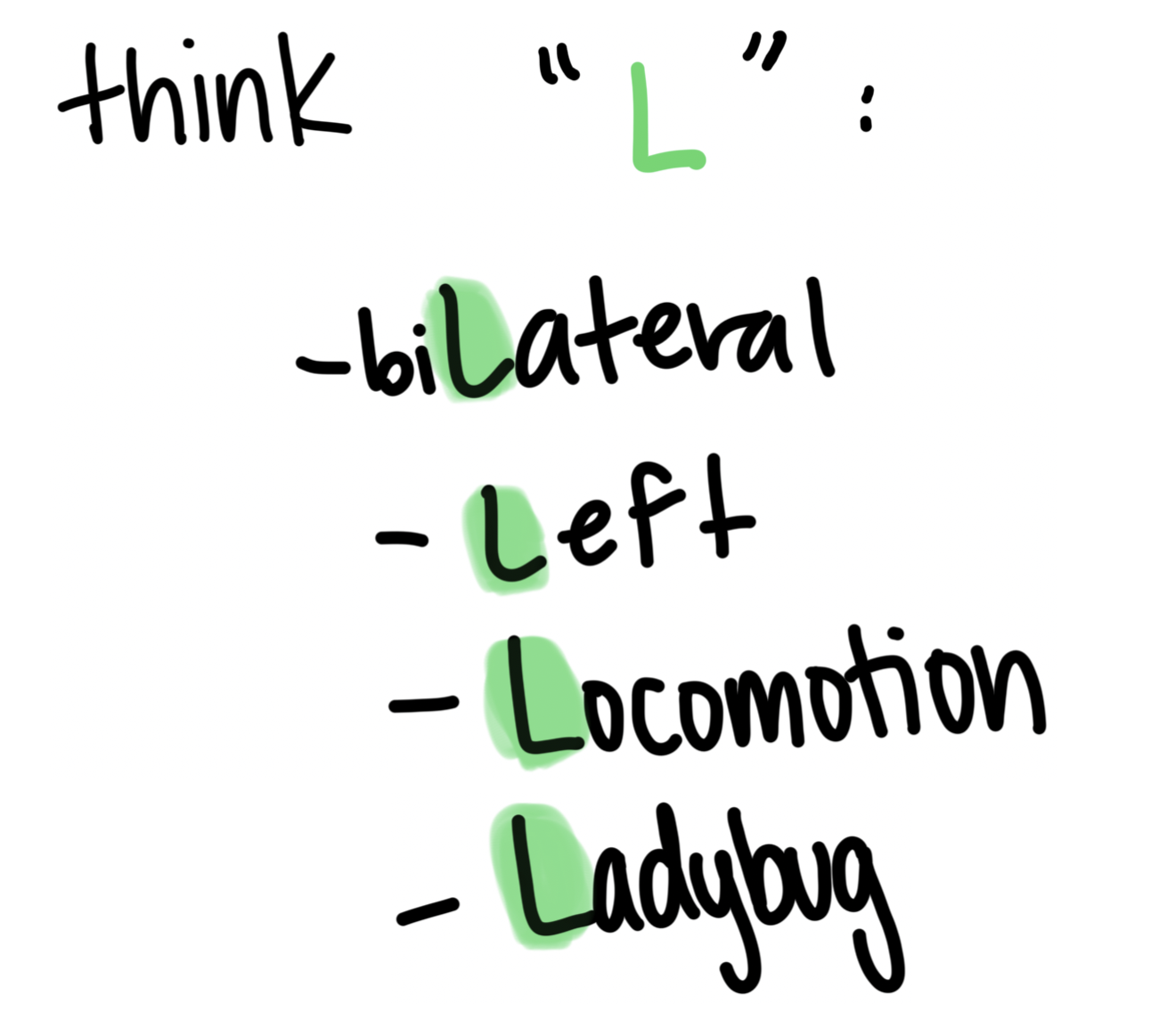
body can be divided into 2 equal planes: left and right
allows for better directional movement/locomotion
cephalization: formation of a head
EX: in most animals like a ladybug
Cephalization- Definition and What Type of Symmetry?
Cephalization: formation of a head
Bilateral Symmetry
Body Planes
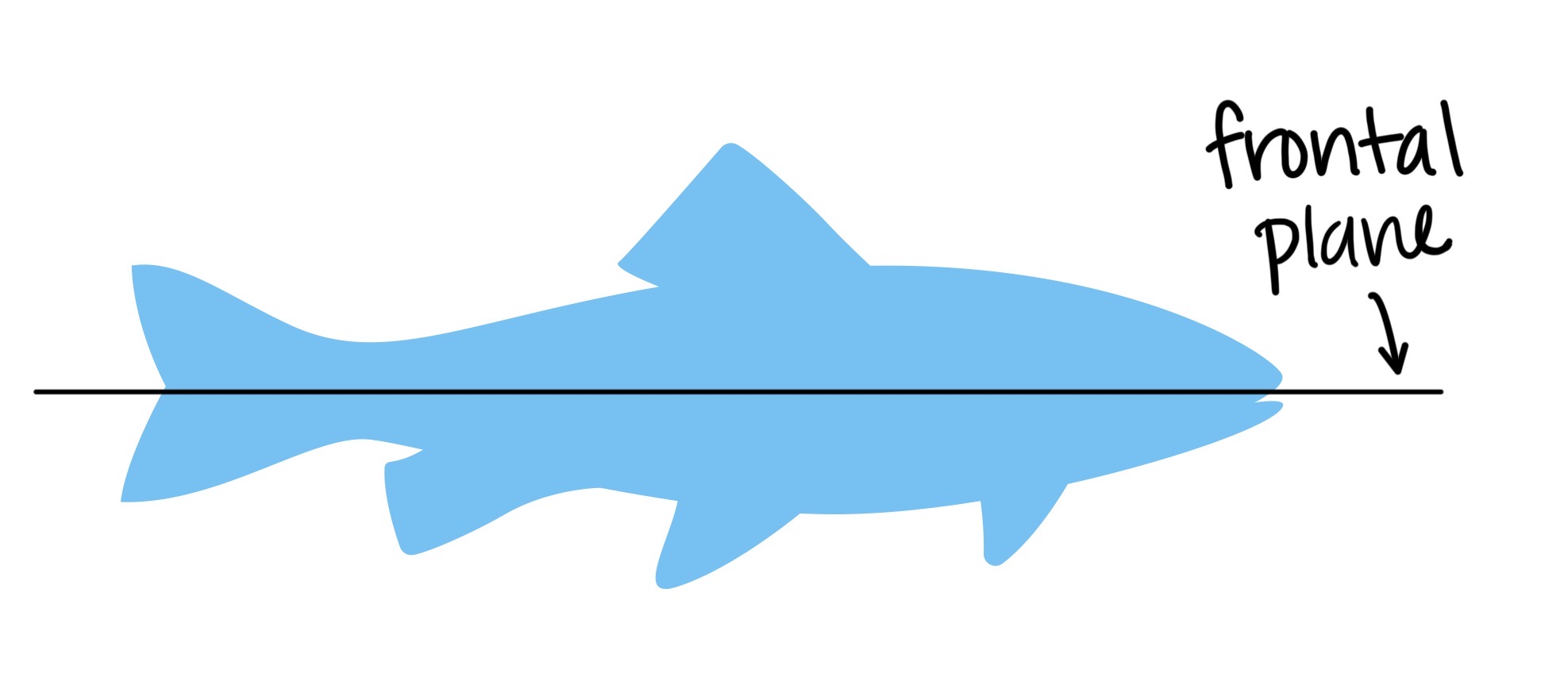
Frontal Plane
Sagittal Plane
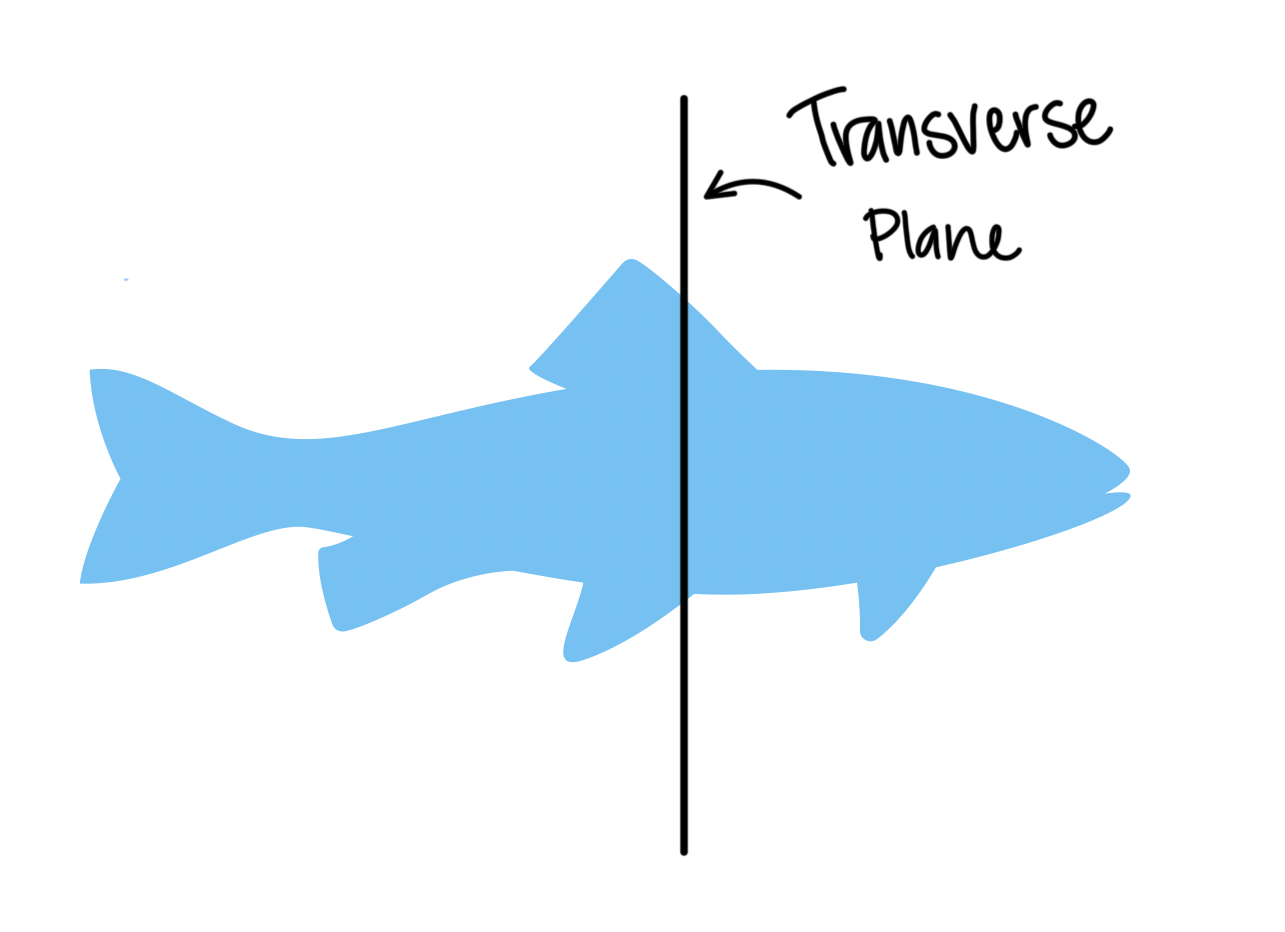
Transverse Plane
For all BILATERAL animals
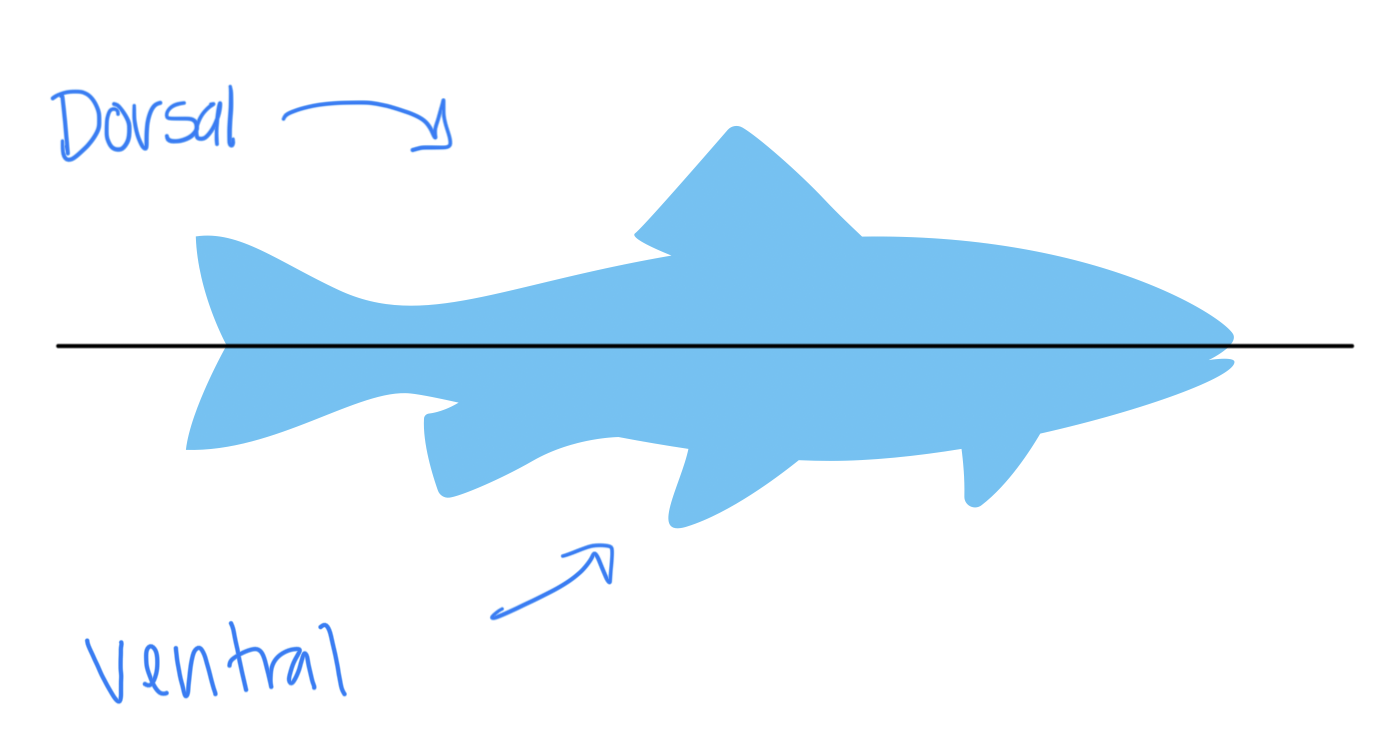
Frontal Plane
Splits into a top (dorsal) and bottom (ventral)
Transverse Plane
“trans” = across
splits into a front and back
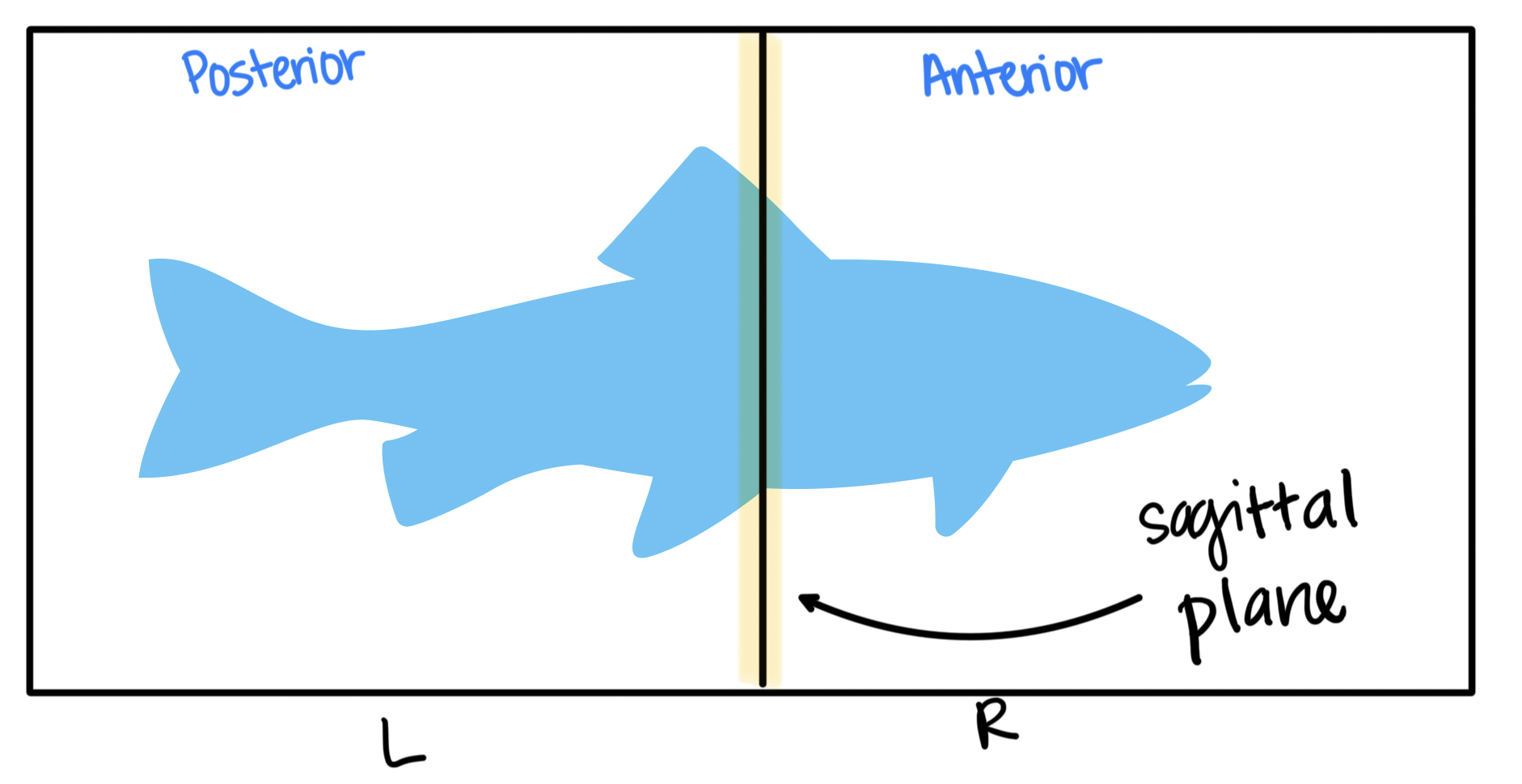
Sagittal Plane
splits into a left or right (anterior or posterior)
Dorsal vs Ventral
Dorsal: top (back)
Ventral: bottom (belly)
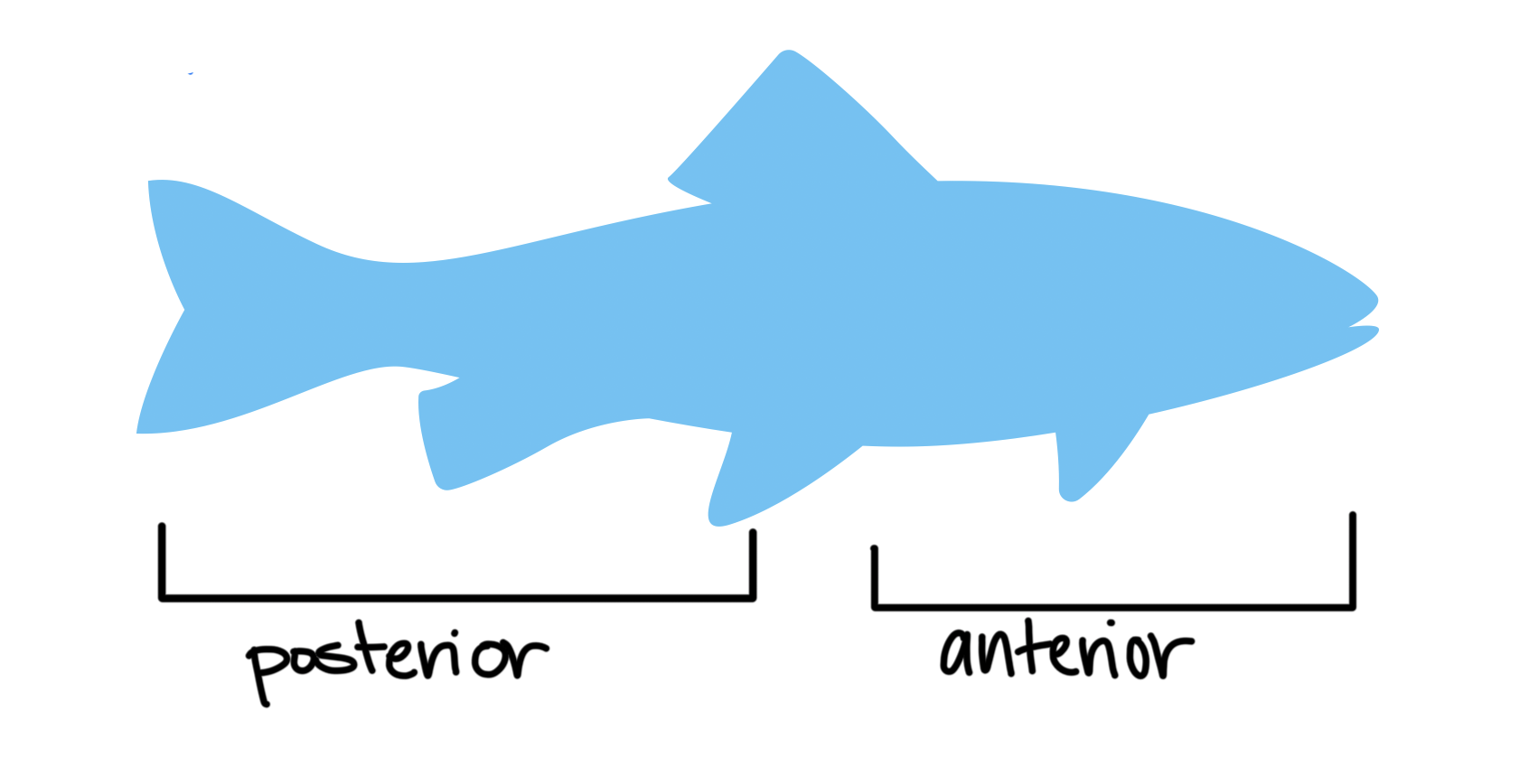
Anterior vs Posterior
Anterior: head end/front (mouth/head)
Posterior: tail end/back (tail)
(Animal Architecture) Reproduction & Development
Mitosis
Meiosis
Cleavage
Morula
(Animal Architecture: Reproduction and Development)
Mitosis vs Meiosis
Mitosis: for growth, repair, replacement, and asexual reproduction
2 identical daughter cells
1 division
Meiosis: for making sex cells (egg and sperm)
2 divisons
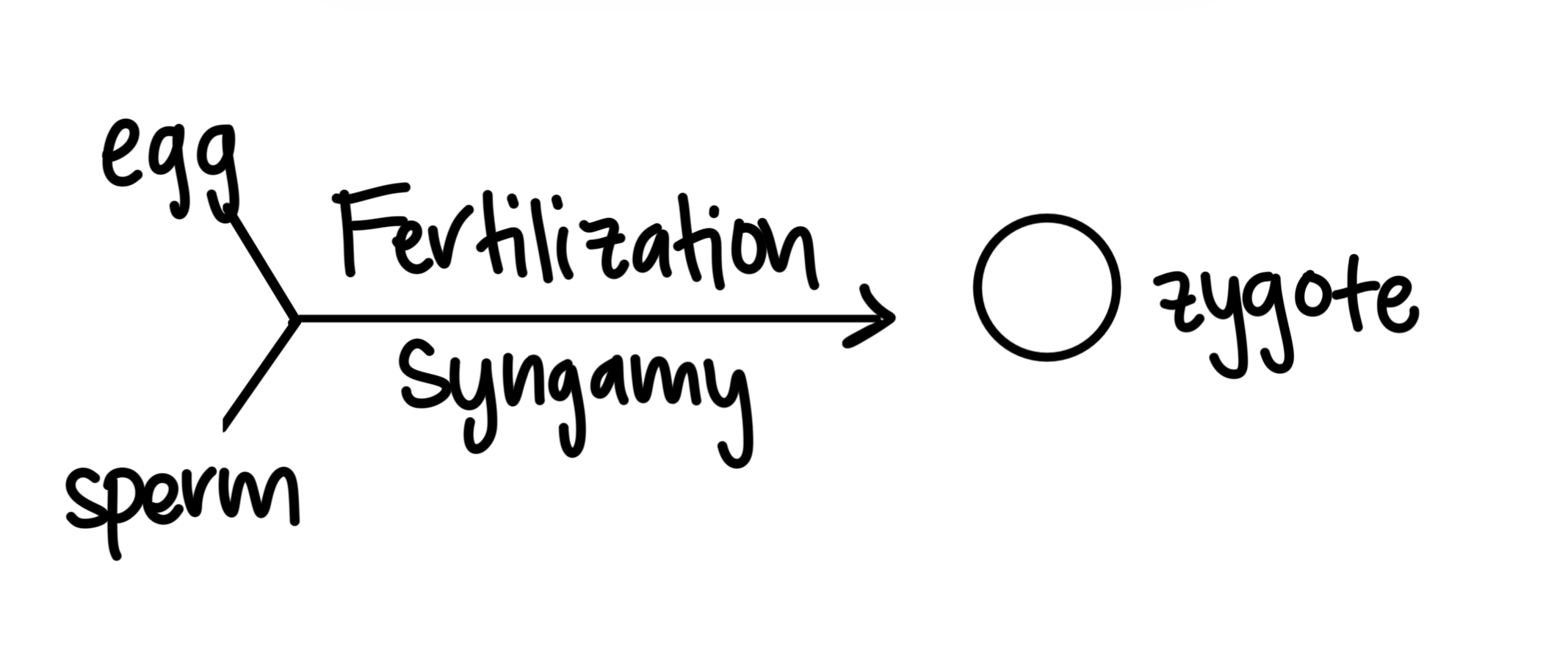
Syngamy
fusion of sex cells
(Animal Architecture: Reproduction and Development) Cleavage
rapids division without growth
→ forms a ball of cells called a morula
A. Radial cleavage
B. Spiral Cleavage
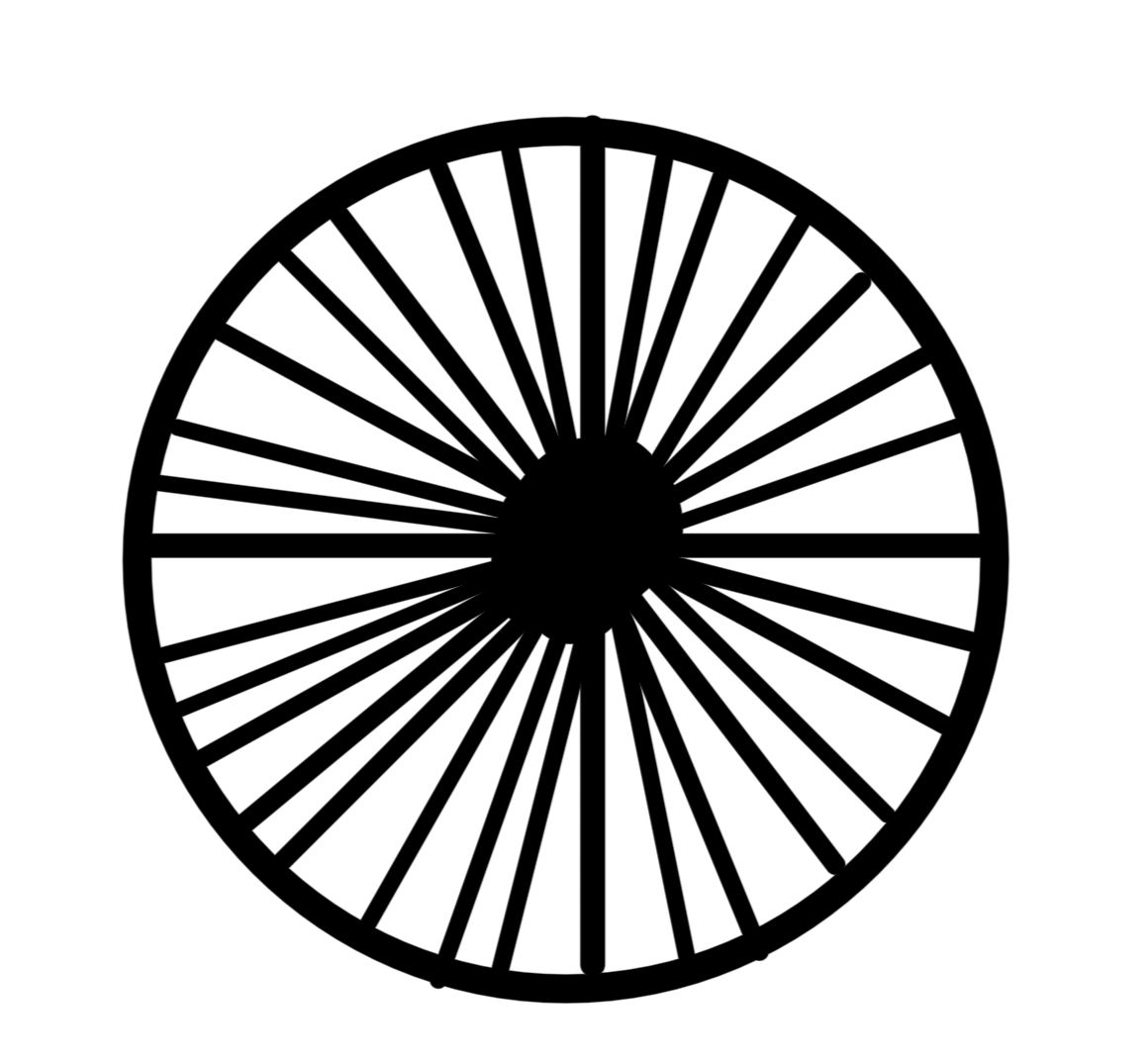
(Animal Architecture: Reproduction and Development) Morula
solid ball of cell (64-128 cells)
formed after cleavage
(Types of Cleavage) Radial Cleavage
cleavage planes are symmetrical to the polar axis and priduces layers of cells on top of each other
(Types of Cleavage) Spiral Cleavage
→ Oblique → 🌀 → spiral
cleavage planes are oblique to the polar axis and produce a quartet of cells that like between others
Blastula → blastocoel
“blast” 💥 = hollow
Blastula: hollow ball of cells
Blastocoel: hollow cavity
Gastrula
forms from gastrulation
an early embryo that has 3 layers of cells (ectoderm, mesoderm, endoderm)
(Germ Layers) Diploblastic Animals
"Di" = 2
Endoderm & Ectoderm
(Germ Layers) Triploblastic Animals
“Tri” = 3
3 Germ Layers
Endoderm
Mesoderm
Ectoderm
Protostomes & Deuterostomes
Protostome vs Deuterostomes
Protstome: mouth formed first, then anus formed second
Deuterostome: anus formed first, then mouth formed second
Body Cavities (3)
Acoelomate
Pseudocoelomate
Coelomate
(Body Cavities) Acoelomate
triploblastic animals that lack a body cavity
Cnidarians
Platyhelminthes
*no body cavity
(Body Cavities) Pseudocoelomate
body cavity derived between the mesoderm and endoderm layers
Nematodes
*incomplete body cavity
(Body Cavities) Coelomate
true body cavity derived from between the 2 mesoderm layers
molluscs + all others
*true body cavity
Phylum Cnidaria characteristics
C-ARNODTHR (See Another)
Cnidocytes; house Nematocysts (stinging cells)
All aquatic, mostly marine
Radial Symmetry
No cephalization
One opening (mouth) —> gastrovascular cavity
Diploblastic as adults (ectoderm, mesoglea, endoderm)
Two body types —> polyp & medusae
Hydrostatic skeleton
Reproduction: Asexual = budding/Sexual = spawning
Nematocyst
stinging cell
(Phylum Cnidaria):
1. Ectoderm
2. Mesoglea
3. Endoderm
1. Ectoderm = outer
2. Mesoglea = non-living, middle
3. Endoderm = inner
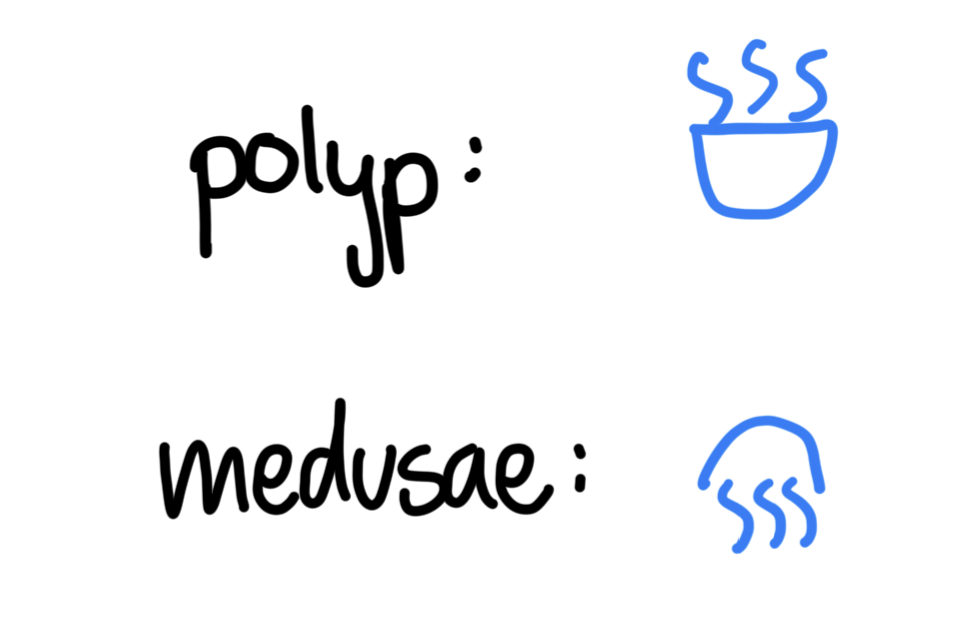
(Phylum Cnidaria) 2 Body Types
Polyp: sessile, tentacles face up (jellyfish larvae or coral)
monoecious
Medusae: free-swimming, tentacles face down (jellyfish adult)
diocious
reproduce sexually w/planula larva
(Phylum Cnidaria) Hydrostatic Skeleton
based on water pressure to help body move and stay firm
(Phylum Cnidaria) Asexual vs Sexual Reproduction
Asexual: budding (polyps)
Sexual: spawning (either)
release sex cells into water and good luck!
Phylum Cnidaria: 4 classes?
→ “zoa”
Class Hydrozoa: polyp stage dominant
Class Scyphozoa
Class Cubazoa: medusae dominant, fast swimmers
Class Anthozoa: polyp stage dominant
What is the name for cells that use nematocysts?
Cnidocyte
Phylum Ctenophora characteristics (4)
M’LL8-dy (m’lady)
Marine, prefer warmer water
Like Cnidarians → radial symmetry and only tissue
Lack nematocysts (stinging cells, basically jellyfish w/no sting)
8 rows of comb-like plates (tenes), used for locomotion
Phylum Platyhelminthes
*Ft. Crap Minds
Flatworms
Triploblastic + acoelomate
Cephalization with a highly organized nervous system
Regenerative ability
Asexual reproduction by fragmentation
Parasitic mostly
Mostly Monoecious
Incomplete gut, only mouth
NO respiratory, circulatory, or skeletal system
Dorsoventrally flattened (flat top to bottom)
Sexual Reproduction using a host(s)
Dorsoventrally flattened
flattened from top to bottom
What is the purpose of cephalization in the Phylum Platyhelminthes?
Cephalization → the head is for movement, bilateral symmetryNO respiratory, circulatory, or skeletal system
How do Platyhelminthes maintain body shape?
Since Platyhelminthes have NO skeletal system, it relies on hydrostatic pressure/skeleton
How do Platyhelminthes do cellular respiration without a respiratory system?
They do cellular respiriation throguh absoprtion/diffusion
3 Classes of Platyhelminthes
Class Turbellaria
Class Trematoda
Class Cestoda
(Platyhelminthes Class) Class Turbellaria
Planarians
(Platyhelminthes Class) Class Trematoda
Flukes
(Platyhelminthes Class) Class Cestoda
Tapeworms
Planarians characteristics
free-living (not parasitic)
ciliated epidermis
carnivorous
mouth and pharynx on ventral (bottom) side
Ciliated epidermis
outer layer with cilia that helps them move
Phylum Platyhelminthes
Flatworms
Phylum Nematoda
Unsegmented Roundworms