psych1b Research Methods
 Call Kai
 Learn
Learn Practice Test
 Spaced Repetition
 Match
Match Flashcards
 Knowt Play
1/80

There's no tags or description
Looks like no tags are added yet.
Name | Mastery | Learn | Test | Matching | Spaced | Call with Kai |
|---|
No analytics yet
Send a link to your students to track their progress
81 Terms
empiricism?
approach to understanding the world that lets us understand it through our senses, or we rely on tools to make systematic observations about the world
qual vs quan
reflexivity?
scientists self-consciously consider how their background or privilege shapes what questions they ask and what interpretations they make
producer vs consumer of research?
steps for testing theories?
1) research question
2) literature review
3) form a hypothesis- statement of how variables relate to one another
4) design a study
5) conduct it
6) analyse the data
7) report the results
what are good scientific theories?
1) are falsifiable
2) make predictions
3) are parsimonious - occams razor
pre-registering data?
idea that psychologists should post their hypothesis and research etc before conducting a study
as atm there is a tendency to do a study then pretend the conclusion is what you wanted to study all along
what are mertons scientific norms?
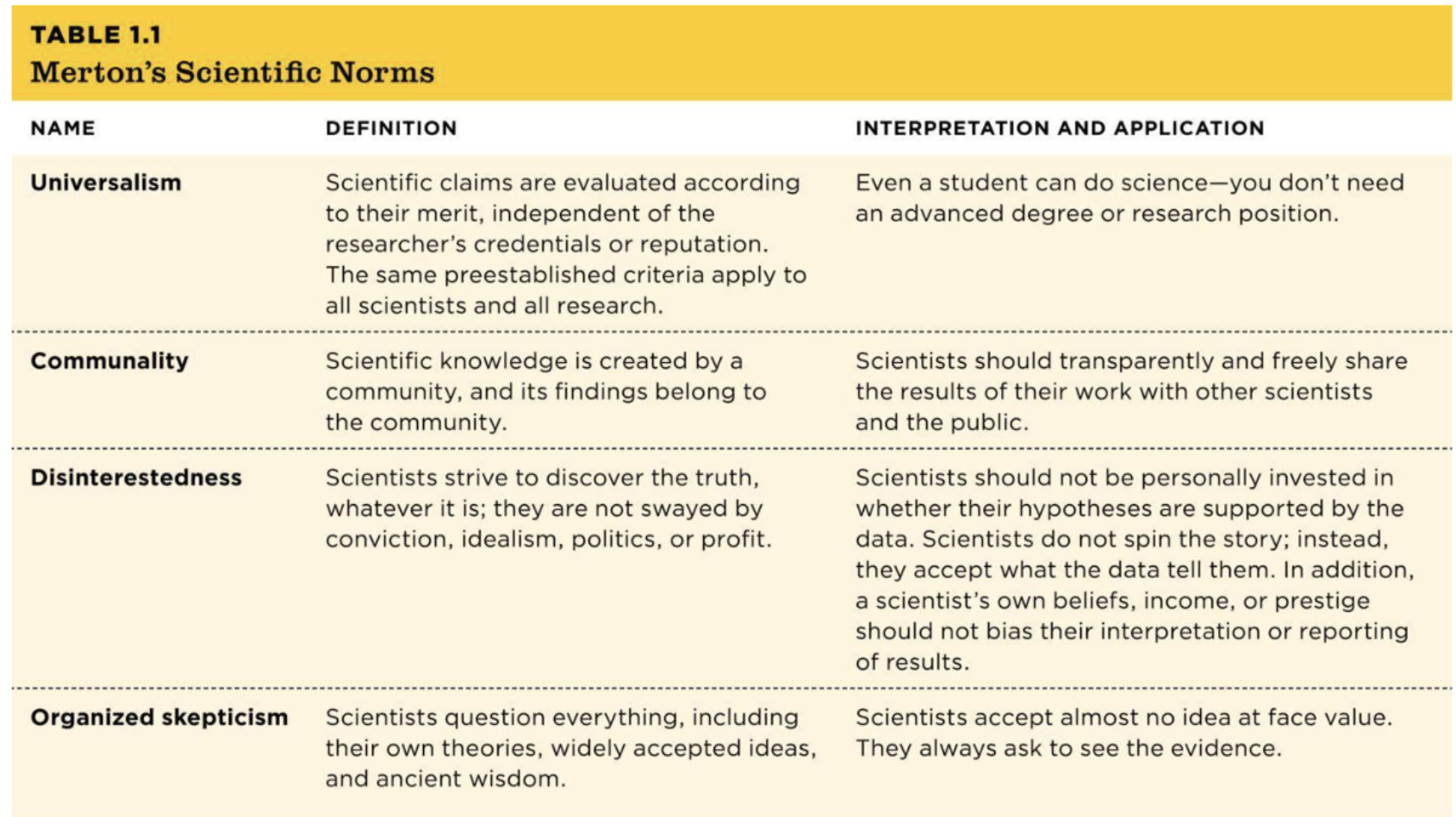
universalism- all scientific claims should have equal weight doesn’t matter who conducted it
communality- science should be shared
disinterestedness- no bias
organised skepticism- shouldn’t take anything with face value
basic research?
understand a topic at its most basic level eg investigate limitations of infant attachment
feeds back into research ya tenemos
applied research?
seeking to improve something, conducted in to solve practical problems, findings directly applied to finding a solution to a real world problem
eg which method is better for EWT
translational research?
in a lab study, eg can meditation lessons improve college students’ GRE scores
most research at edi is basic/translational
qualitative research
about understanding, not generalising, make sense of psychological phenomenon
interviews, focus groups, observations, naturally occurring data (eg comment thread)
“how and why”
rich detailed data
small carefully chosen samples
interpret and understand meaning
“some ppants talked about growth and reframing, versus sadness and depression post breakup”
why? help explain complex experiences, recognise overlooked group, explore new phenomena
helpful when little is known about a topic, when experiences vary, allow us to generate new theories
quantitiative methods
seeks to predict, measure, establish causes and correlations
what and how many
likert scales etc
broad big samples for larger more representative samples
“62% sample showed distress post breakup”
naturally occuring data versus researcher generated
letting convo unfold naturally, facebook chains, video audio recordings, versus structuring responses
nonrepresentative sampling?
not worrying about it being generalisable to whole population
also: snowball sampling, purposive sampling (try and find that subset of football fans)
main qualitative analysis methods?
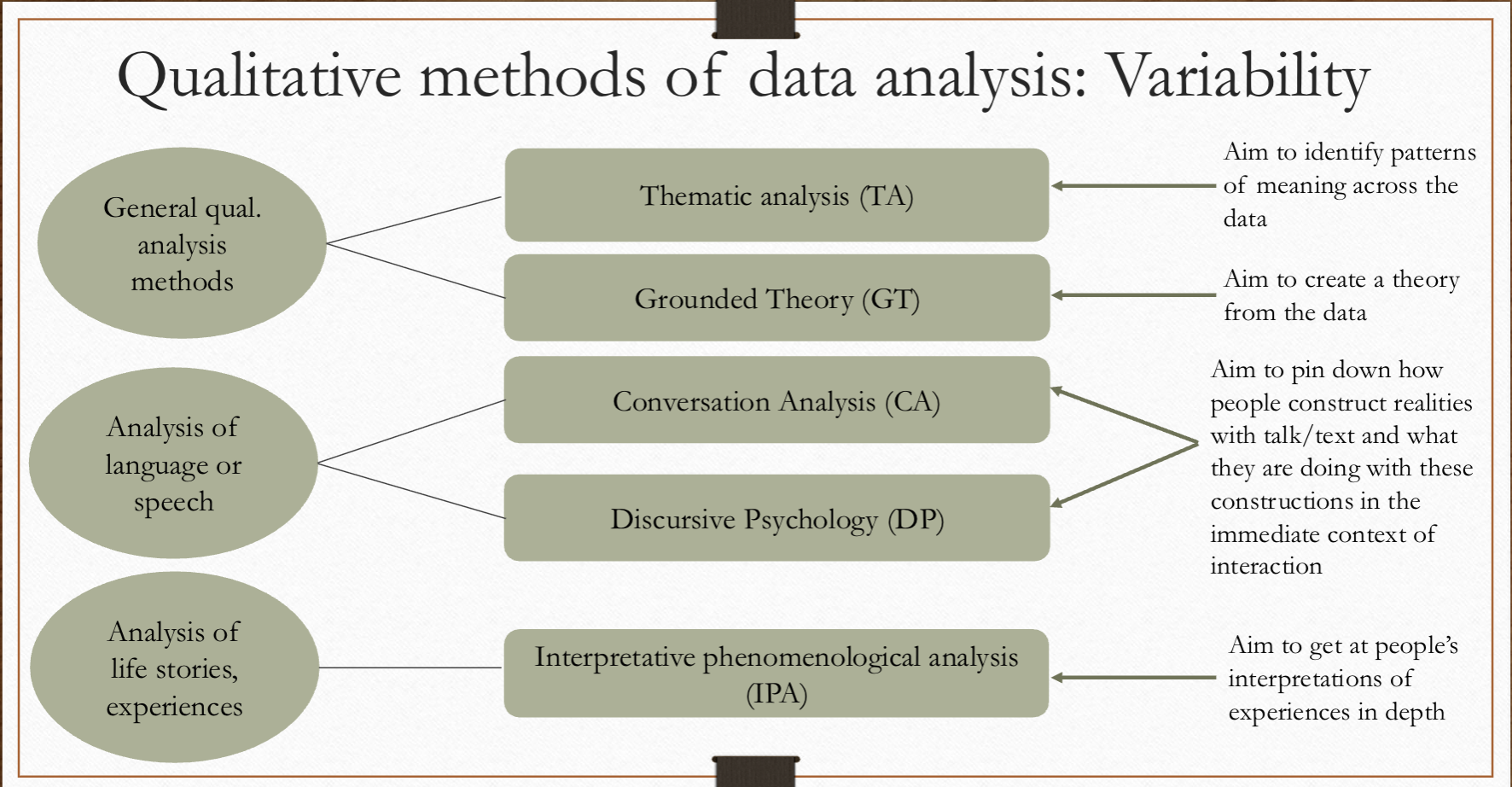
thematic analysis- very fluid, have multiple different approaches and assumptions
grounded theory- generate a new kind of theory
conversation and discursive- language and speech
IPA- analysis of life stories and experiences
ONLY THEMATIC ANALYSIS IS A METHOD OF DATA ANALYSIS, REST ARE METHODOLOGIES
epistemology versus ontology
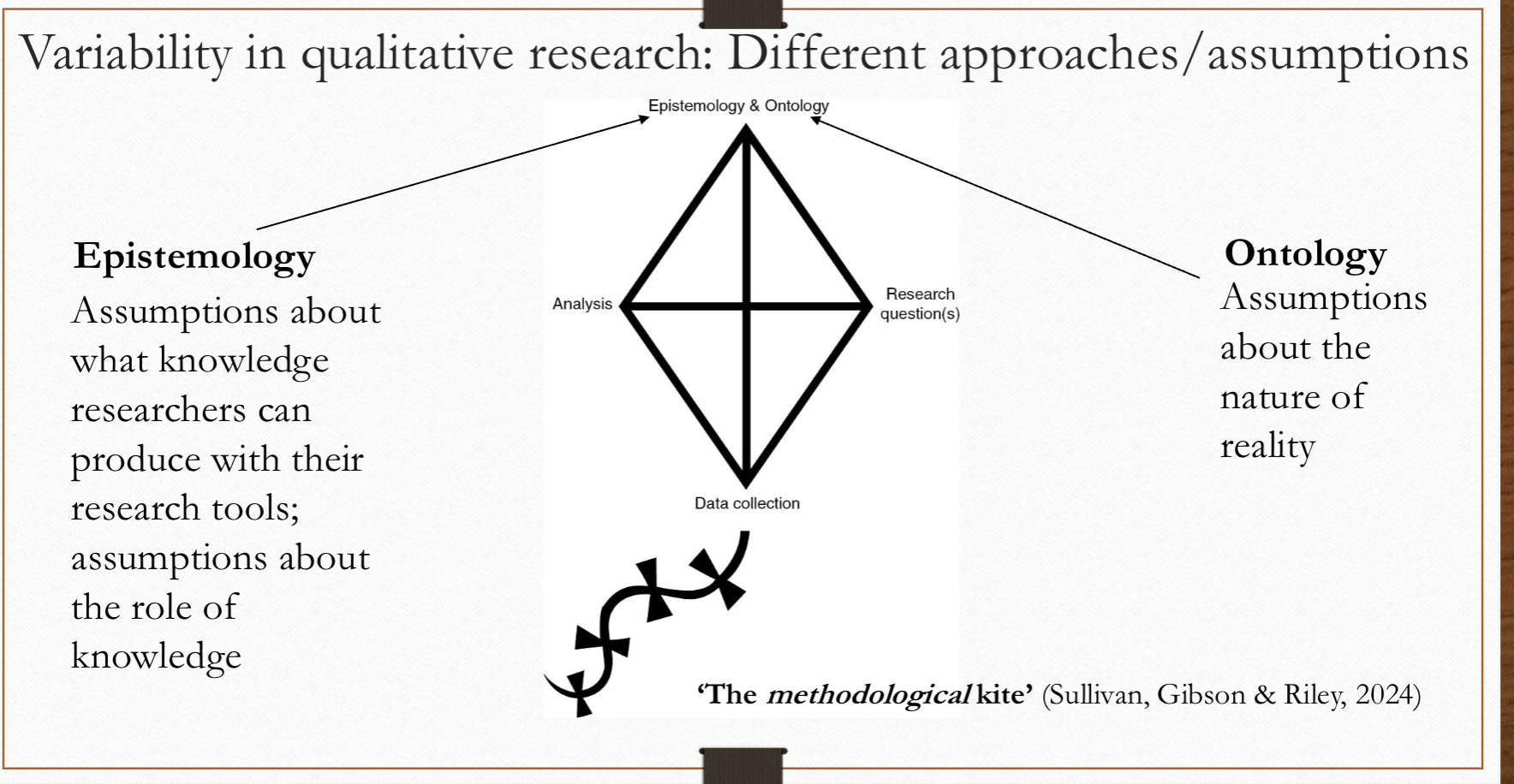
3 main approaches in qualitative research? positivism and realism, critical realism, social construction and relativism
positivism- real true reality that is out there, with good enough methods we can understand psychology, assumes language is a tool that reflects reality
critical realism- is a reality but our ability to capture it is mediated by our biases, can only access one version of it, language creates reality doesn’t reflect it
social construction- reality always constructed, cant pinpoint out in reality, language shapes everything we understand to be true, this is how knowledge is coconstrcuted etc
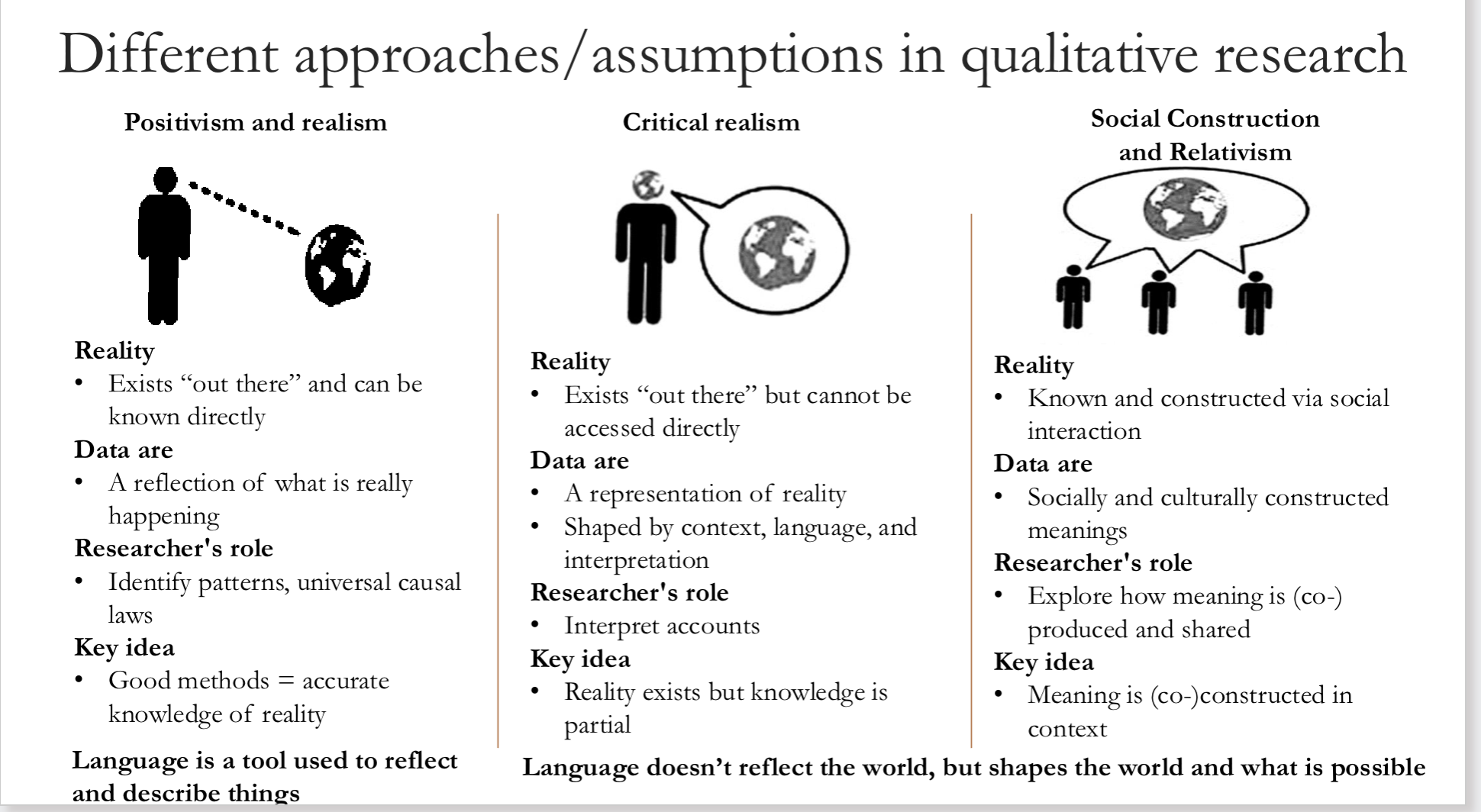
EXAMPLE OF METHOD AND IMPLICATIONS FOR RQs
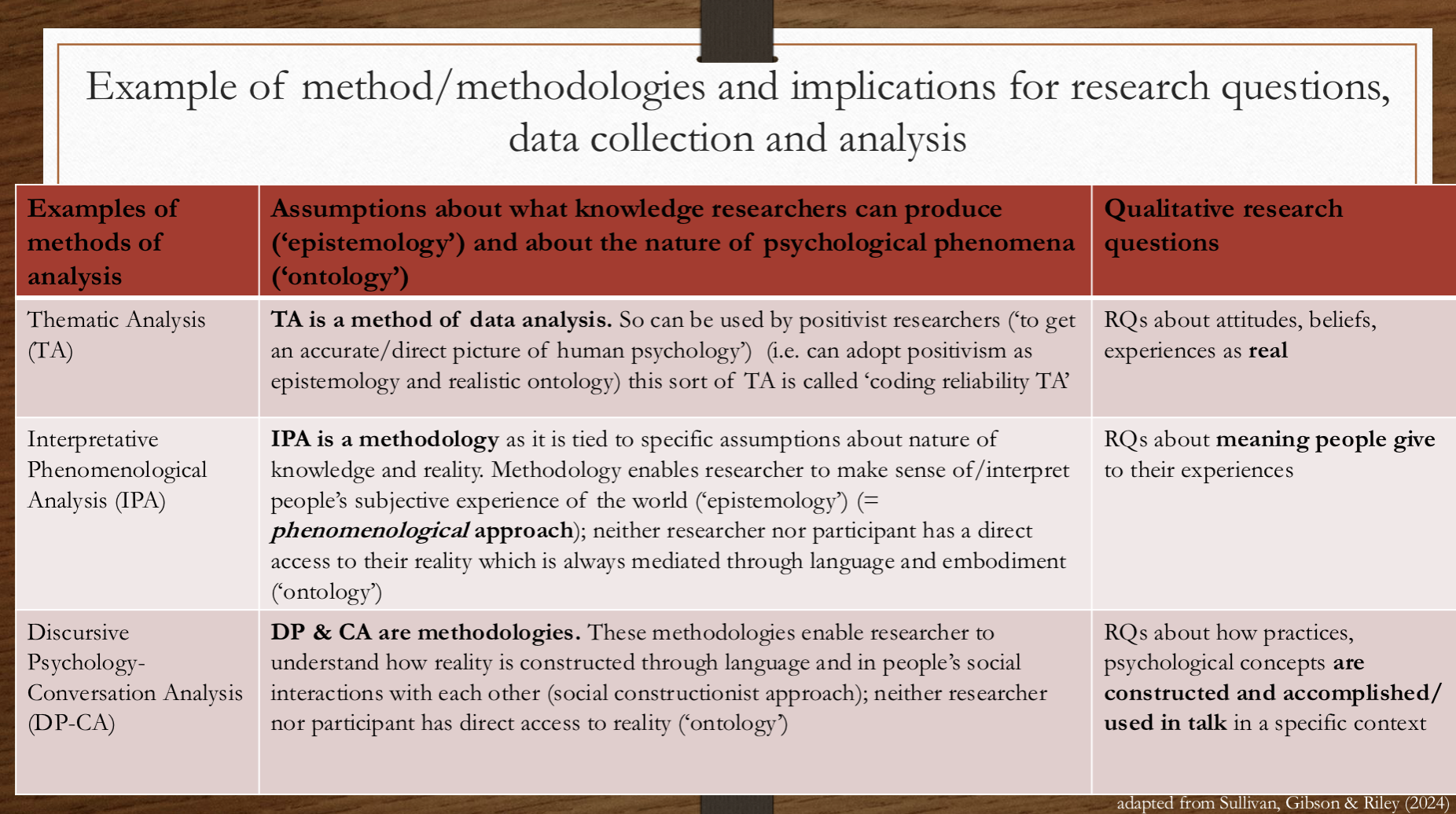
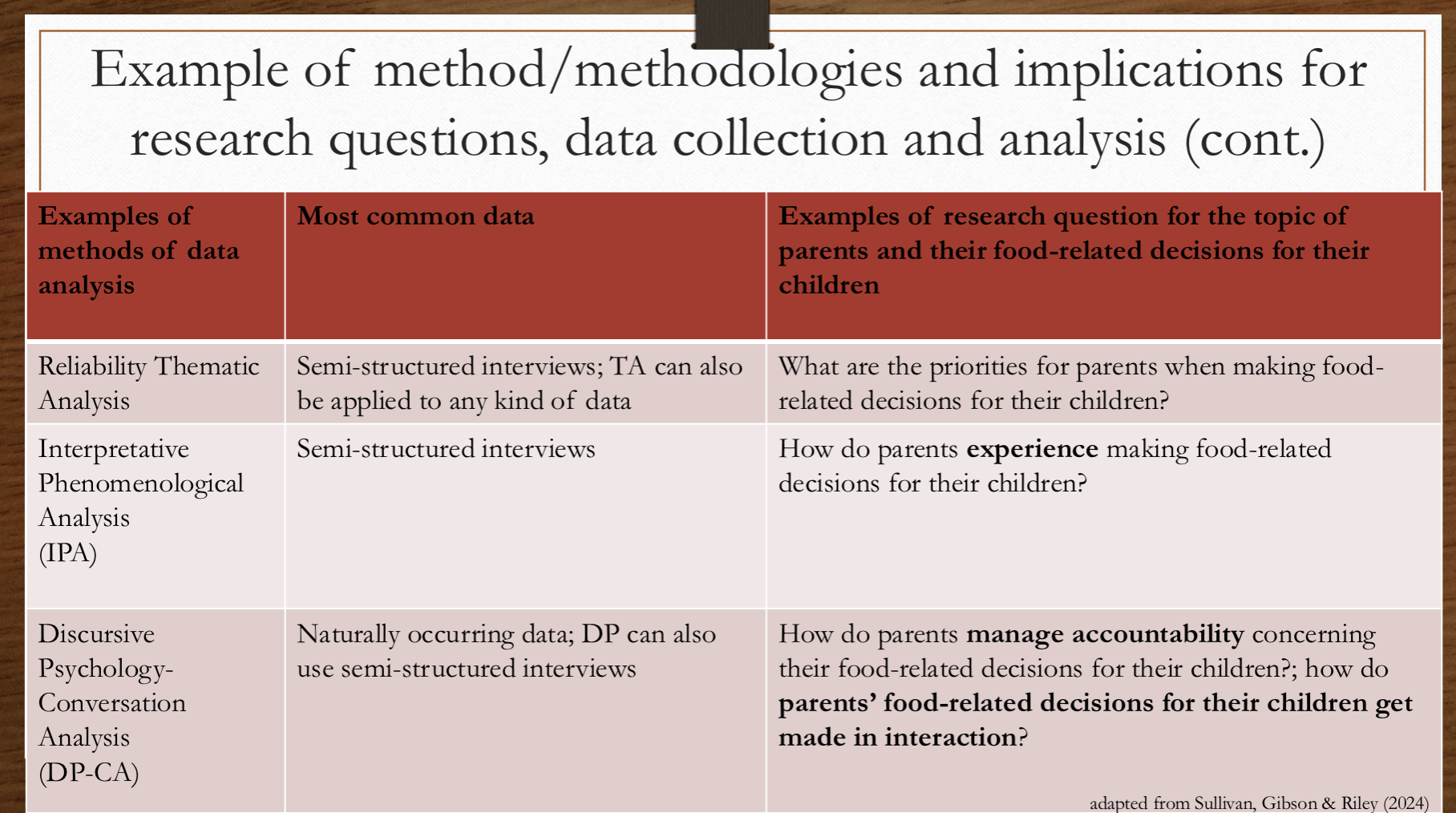
thematic analysis- code all of data( attribute meaning to labels), and then generates common themes ( eg source of rumours= negative)
discursive- focuses on how it is said not what is said- discursive constructions (features) and what it achieves, eg what does “i don’t care” suggest
what is coding reliability TA?
multiple researchers code same thing, then their codes get compared
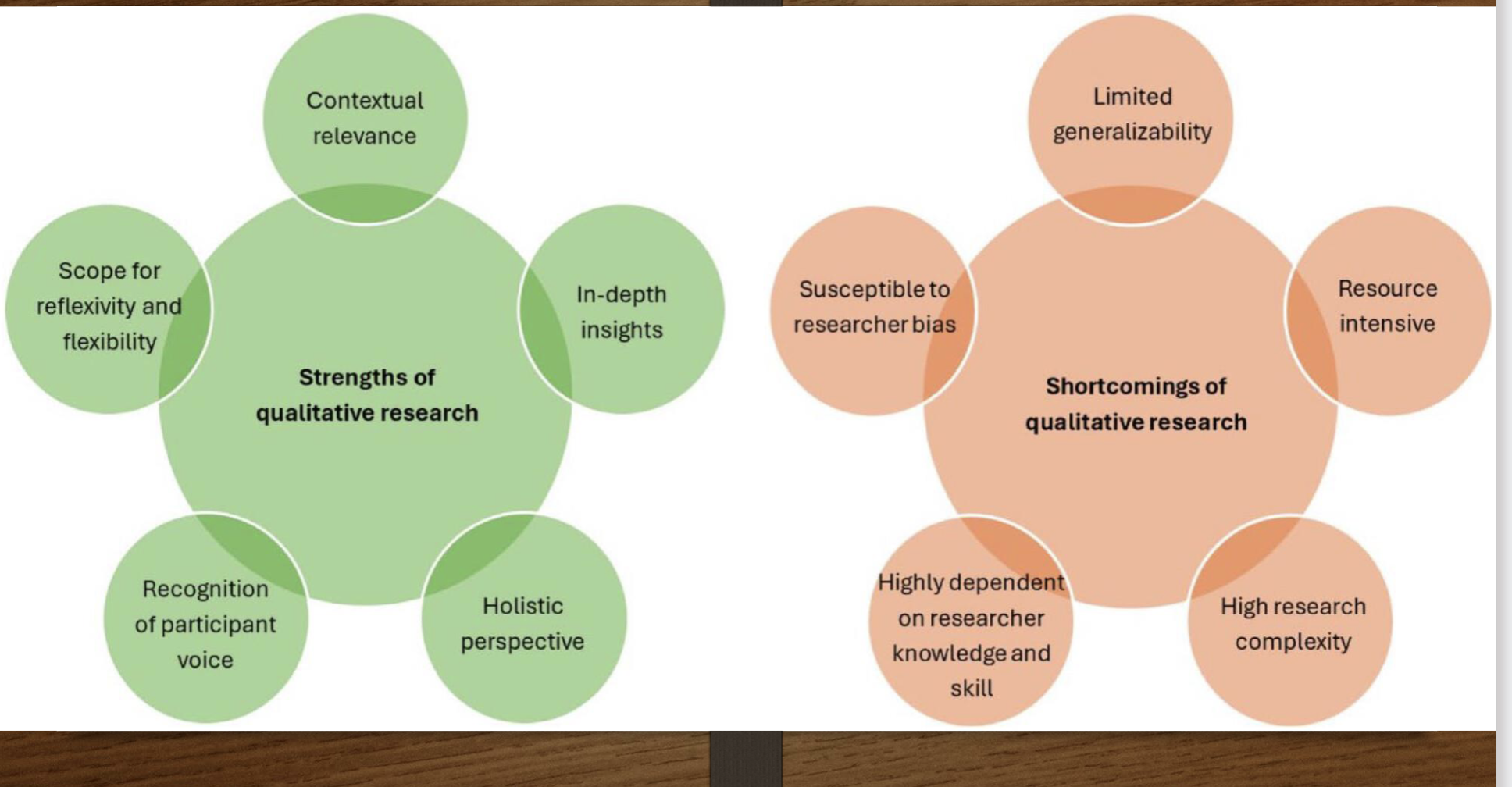
strengths and limitations of qualitative relationships?
close ended versus open ended questions
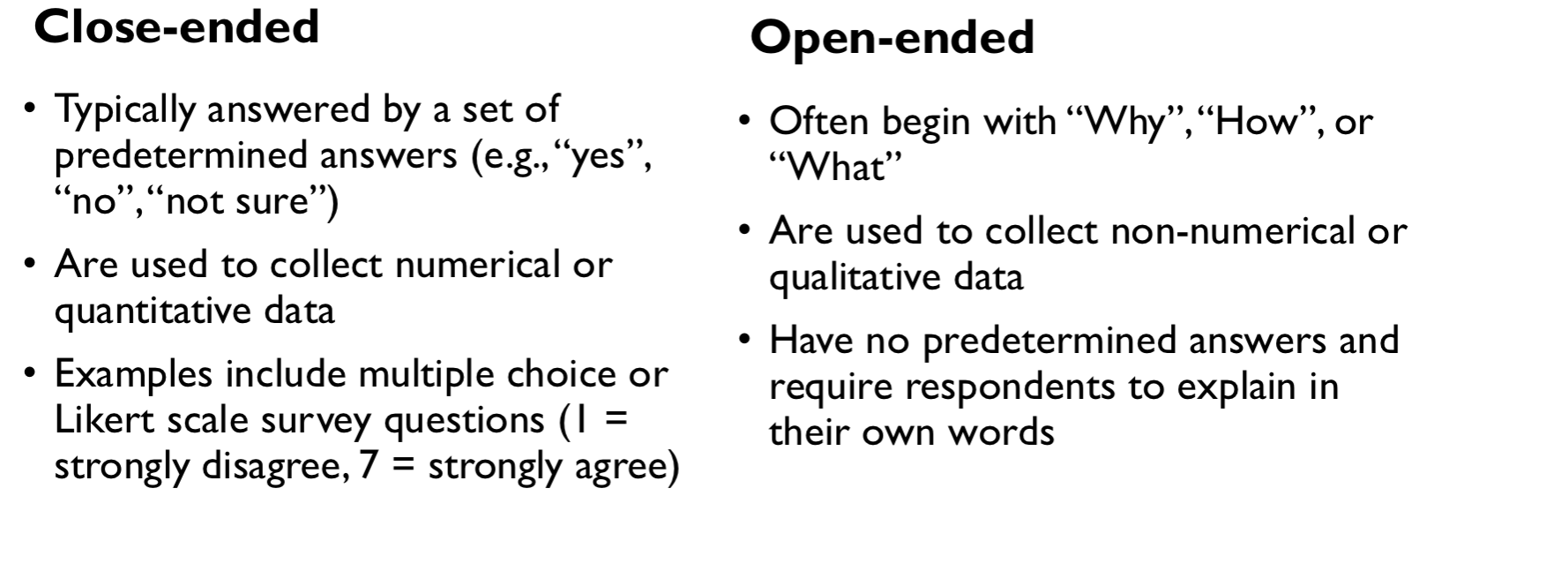
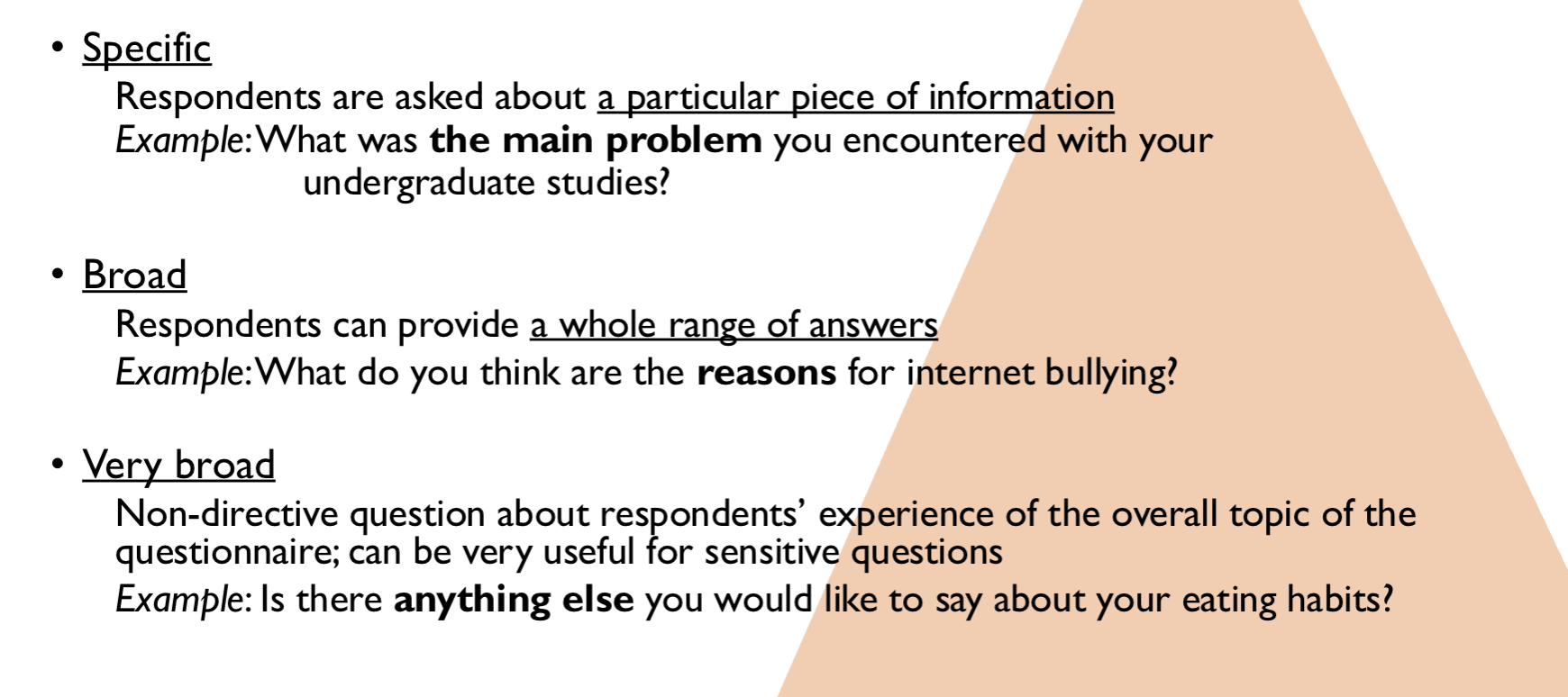
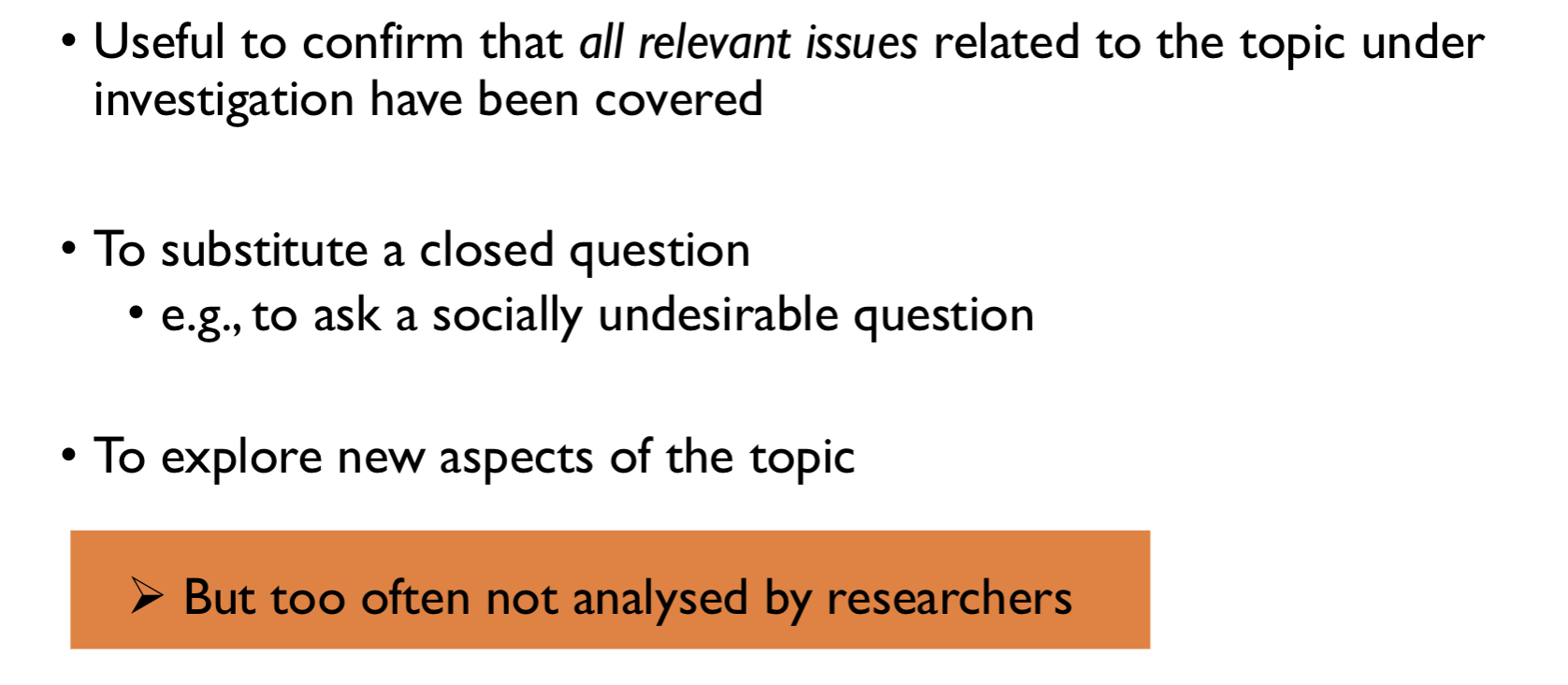
types of open ended questions + why
what is thematic analysis?
super popular and flexible
can be used with open ended questions
small and large data sets
tool for searching identifying and analysing relevant pattersn in qualitative data (themes)
can have RQs about attitudes and beliefs, about experiences, about social constructions of particular topic or phenomenon
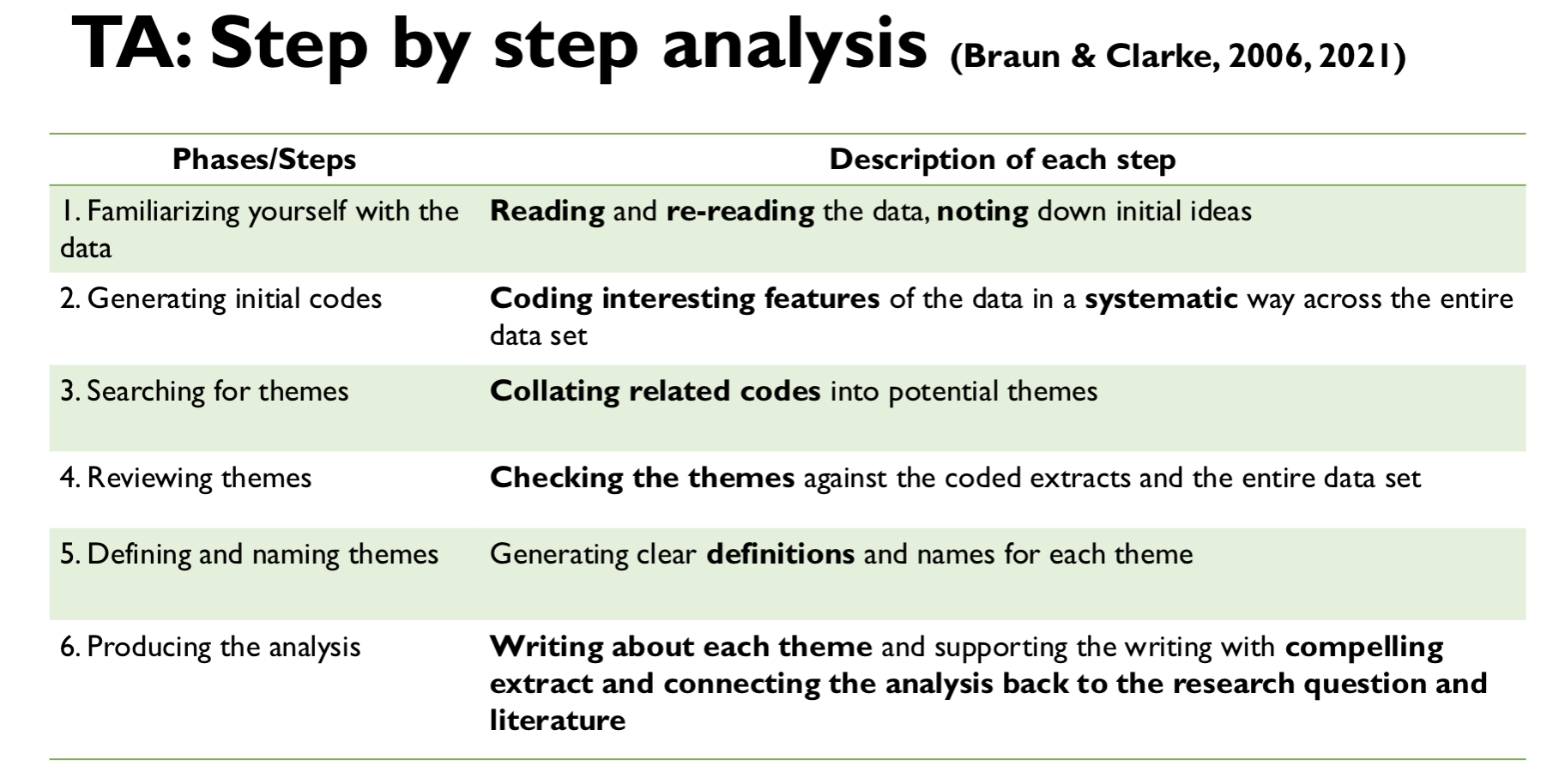
what r the 6 steps of thematic analysis?
inductive versus deductive codes(or both)
deductive- codes reflect pre-existing theories or findings- SHerlock holmes has preconceived theory
inductive- generated from data and aim at staying as close as possible to the meaning in the data - inductive hob - bottom up as you get heat from data then it rises into the theory
latent versus manifest codes
manifest/Explicit codes- explores meaning at surface of data, descriptive, captures explicitly expressed meaning, stays closes to ppant language and overt meanings of data (minimal interpretation)
latent/implicit codes- conceptual, focuses on a deeper more implicit or conceptual level of meaning (eg assumptions, values, world views that underlie the data)—— sometimes quite abstracted from obvious content of data
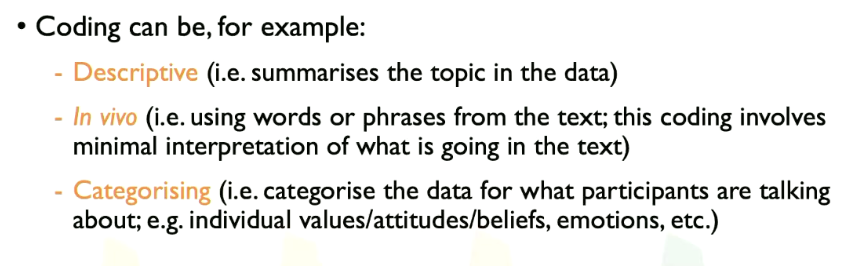
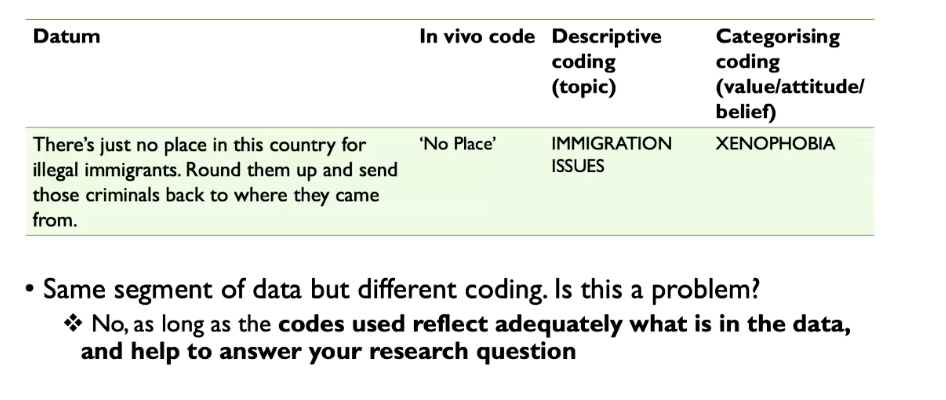
descriptive coding, in vivo, categorising codes:
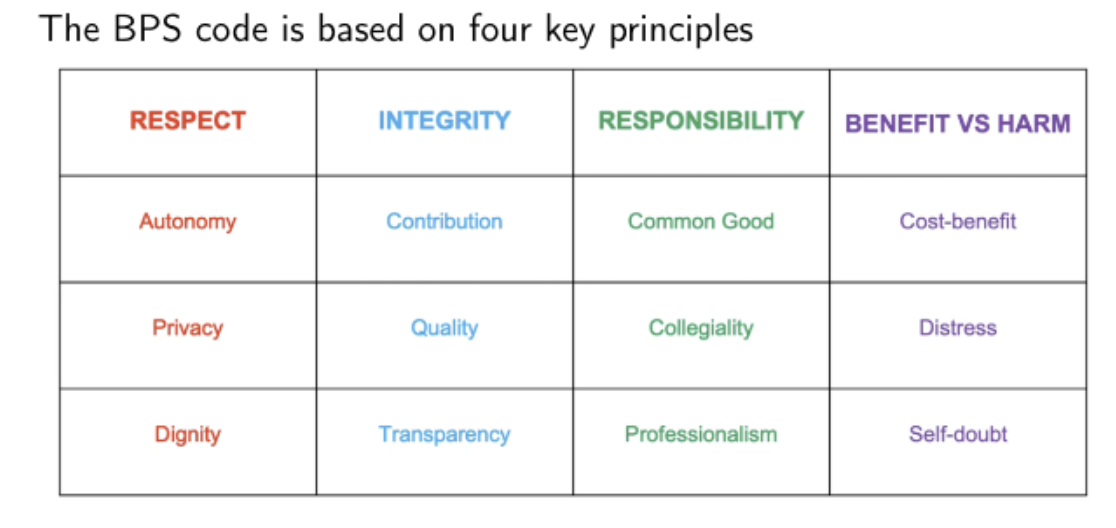
ethics and BPS principles?
moral principles that govern research
examples of risk in ethics
research involving vulnerable groups
research involving sensitive topics
deception
access to confidential info
psychological stress
invasive interventions-eg taking of blood samples
informed consent?
consent must be based on sufficient info
right to withdraw consent during data collection
data can be deleted anytime even after study
identifiable vs unidentifiable data
identifiable- can recognise the person (eg theyre on video, audio recording, unusual circumstance)
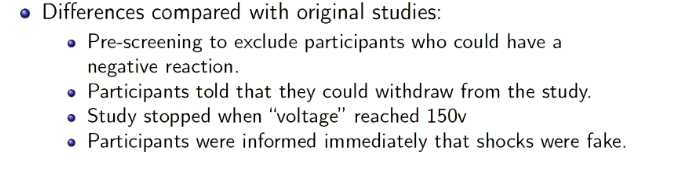
how did burger replicate milgrams research in 2009?
peer review
peer review is w journals etc, increase likelihood of honest feedback by having anonymous peer reviewers
what are confounding variables?
different factors confound results
what other factors could explain the observation you have
how did bushman study catharsis on aggression?
ppants write essay
“Steve” says it is the worst essay ever
ppants then angry
3 categories
1) imagine steves face on a punch bag and punch it
2) no instructions just hit punch bag
3) sit quietly for 2 mins
then play computer game against steve, can blast white noise - ppants who punched steves face on the punching bag used way more white noise - the least angry was condition 3
probabilistic?
findings are not expected to explain all the cases all the time
there are exceptions to psych research results
ways intuition is biased?
1) availability heuristic- think about media coverage- 30% of stories about terrorism, only 1% deaths
2) confirmation bias- ppants do questionnaire, then are told they are either depressed or not, people put into high depression group sought info that said the tool wasn’t valid, low depression group sought info it was valid
components of an empirical journal article?
abstract
introduction
method
results
discussion
references
operationalisation?
the process through which constructs which can’t be directly measured are redefined in a way that is measurable
specify scale you are using
do a lit review
common types of measurement
self report examples
observational examples - # posts on social media, delayed gratification marshmallows, student marks on an exam, observational
physiological- EEG signals, blood pressure, cortisol levels, height
scales of measurment
categorical versus quantitative
discrete- nominal and ordinal
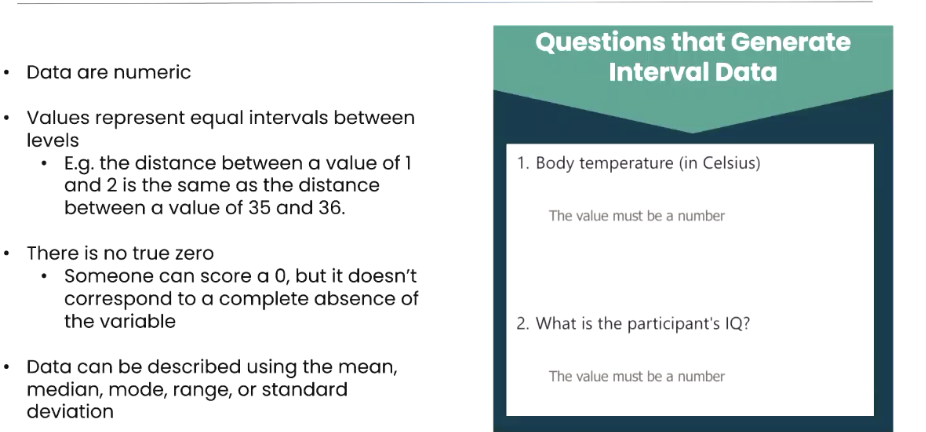
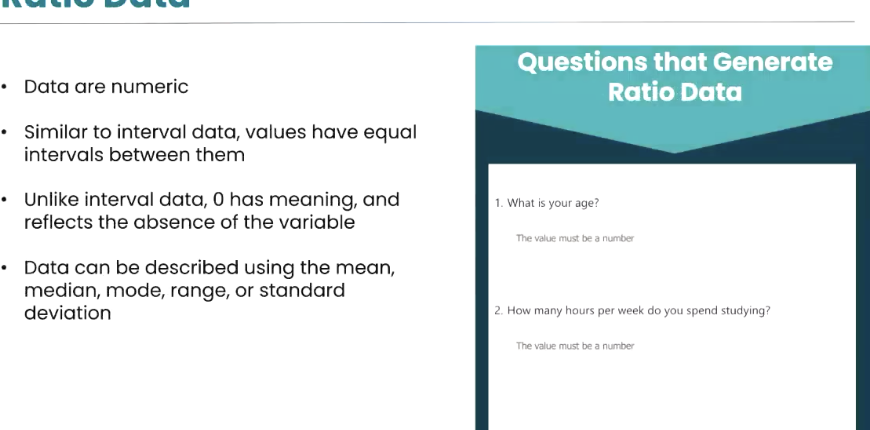
continuous- interval and ratio
interval and ratio data
3 types of reliability
1) test-retest reliability - expect good agreement between measurement time 1 and time 2
2) interrater reliability- how 2 observers rank results
3) internal reliablity- use cronbachs alpha, shows how well items relate to each other and the tool - look for 0.8 for a reliable alpha
reliability versus validity
sameness (repeatable) versus accuracy
for something to be valid it must be reliable
but being reliable doesn’t make it valid
scatterplots?
used often for evaluating reliability
correlation coefficient- r value
what is criterion validity?
are values produced by your measure associated with other behaviours related to the construct
can be assessed through known-group paradigms, allows you to test validity using groups in which the construct of interest has already been established
convergent validity?
your tool corresponds with other tools
discriminant validity?
ensures that a test or measure designed to assess a specific construct (e.g., intelligence) does not unintentionally correlate with measures of conceptually distinct constructs (e.g., personality).
for which type of validity do we need to collect empirical evidence?
criterion validity- check what we are measuring is associated with other measures of the same thing
check questions 9th march
what is a variable?
changes
measured variable (dv) and manipulated variable (IV)
conceptual variable to operational definition (whats being measured here/manipulated)
three types of claims that can be made
frequency claim- %%% - particular level or degree of a single variable - ONLY ONE MEASURED VARIABLE
association- eg playing musical instrument leads to better cognition- TWO MEASURED VARIABLES OR MORE- argues one level of a variable is likely to be associated with a particular level of another variable - ASSOCIATE AND CORRELATE
causal- one variable causes another to change, eg family meals curb eating disorders - SUPPORTED BY EXPERIMENTS- HAS A MANIPULATED VARIABLE AND A MEASURED VARIABLE
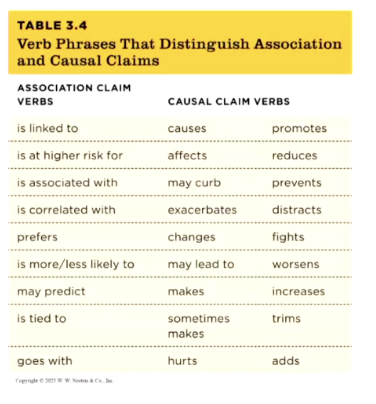
verbs for causal claims
27:42 march 9th
what are the big four validities?
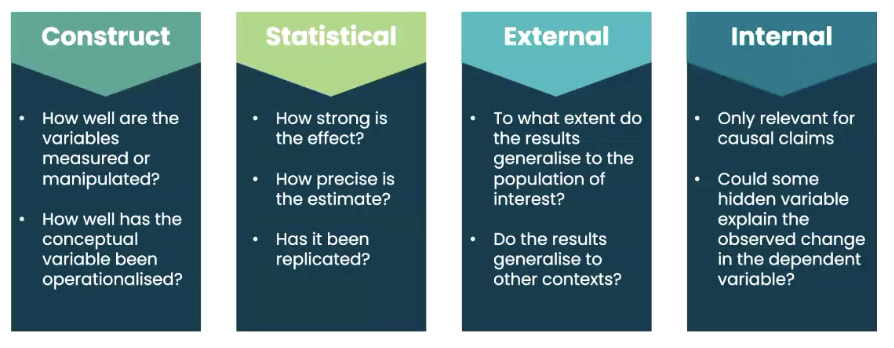
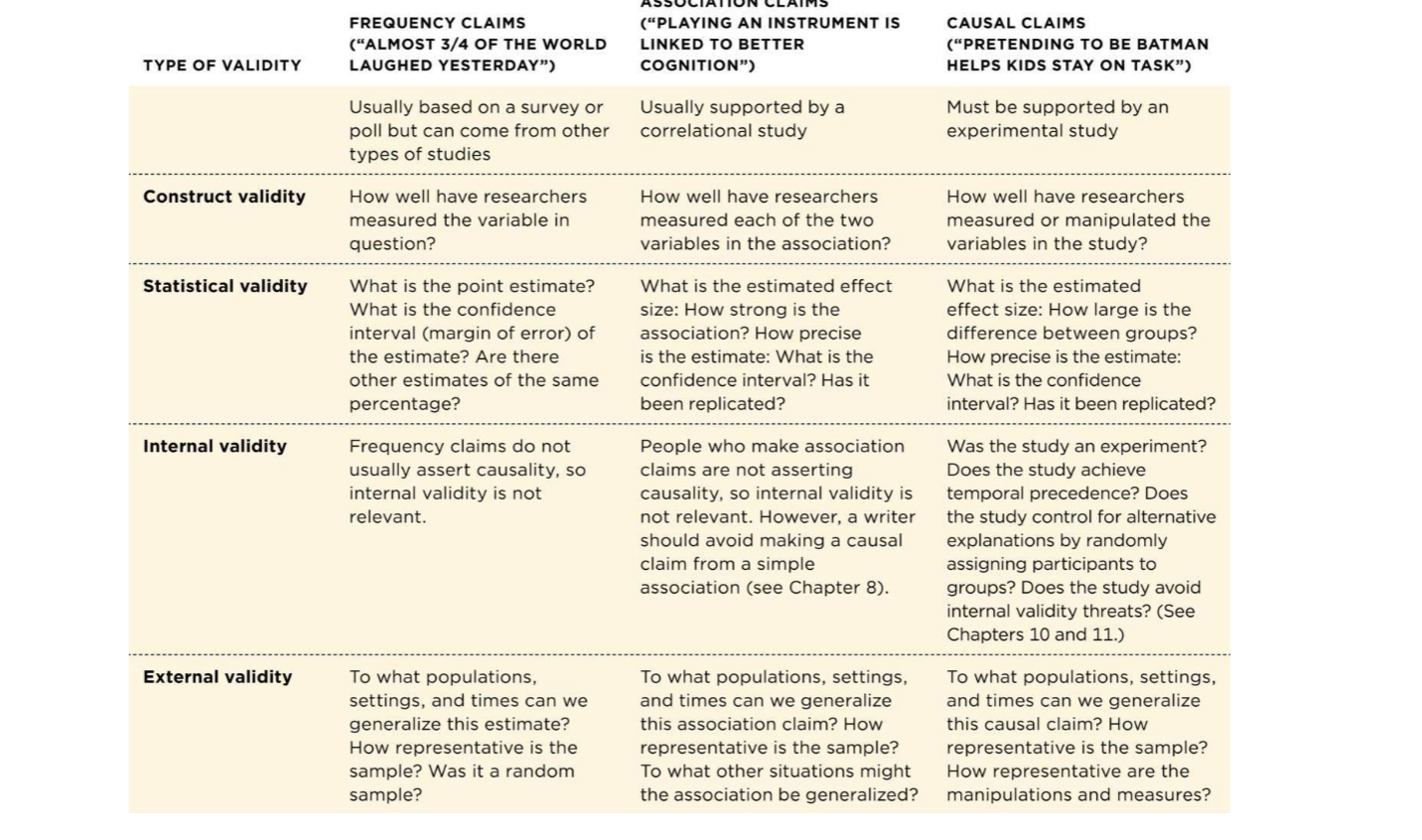
interrogating frequency claims
construct validity
external validity / generalisability
statistical validity
interrogating association claims
construct validity
statistical validity
external validity
looking at preciison of estimate and correlation coefficient and generalisability
interrogating causal claims
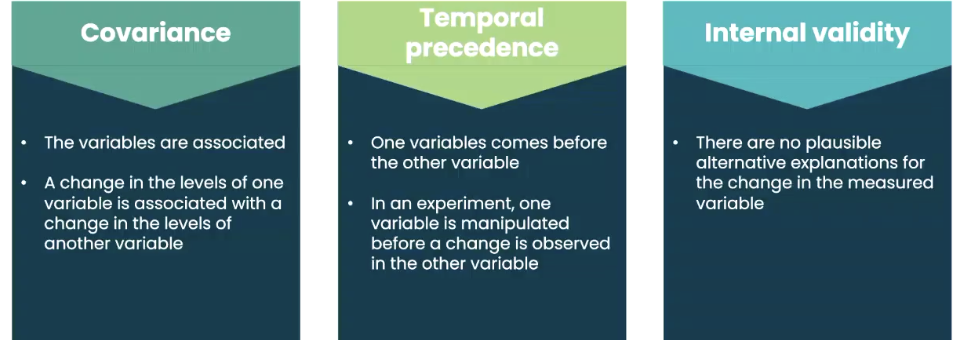
Experiments can support causal claims!
when are causal claims a mistake? (example)

what are the other validities to interrogate in causal claims?
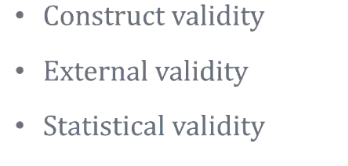
interrogating the 3 types of claim using the big 4 validities
which type of validity is most important?
experiment- internal validity >
association claim - external validity <
whats the validity most important to interrogate for every study?
construct
what sort of tests can we do to increase construct validity?
things like when was the phone first picked up in the morning versus put down at night (reverse) for seeing how much sleep people get)
how do we check external validity?
representative sample- is sample unrepresentative or biased
does point estimate generalise to whole pop?
different question formats
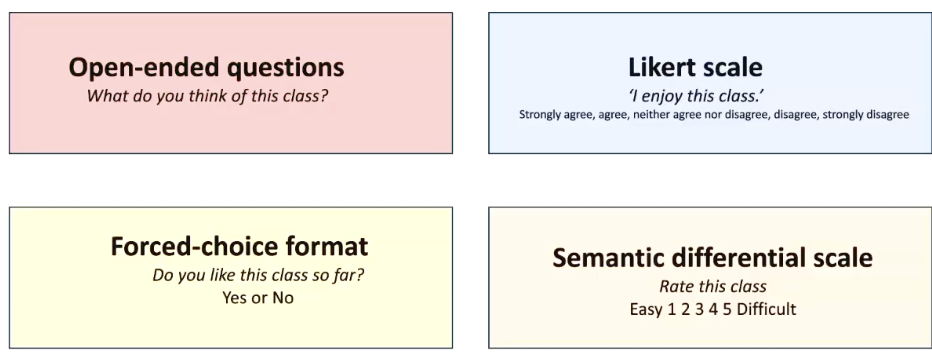
how to write a well worded question
be careful of leading people on (good thing to investigate is the survey used!)
double barrelled questions
don’t use negatively worded questions - write them as simply and clearly as possible (nazis)
priming participants - order that you give people questions may prime ppants to diff answers
what are 3 different types of shortcuts ppants use when bored to answer questions
response sets (nondifferentiation), hitting buttons
acquiescence (bias to agree)- agree as bored
fence sitting - hitting the middle option lots
theyre a threat to construct validity as the survey may not measure the variable of interest
what might affect accurate responses?
social desirability bias— make things anonymous
sometimes we don’t know why we do these things
self-reporting memories of events
rating consumer products - price and prestige are a factor
2 example of observational research
mehl - recorded 30 second sample every 12.5 minutes
no sex difference in words spoken by day
campos- observed families in evening to measure emotional tone and what parents and children talked about at dinner
parents talk about health benefits, children talk about how much they disliked the food
example of observer bias
when researchers see what they expect to see
langer and abelson asked therapist to watch a man talking about his feelings and work expeirences
analytic therapists who were told the man was a job applicant rated hihm as attractive and innovative
analytic therapists who erre told the man was a patient rated him as defensive and frightened
HOWEVER BEHAVIOUR THERAPISTS WERE UNAFFECTED BY THE LABEL
construct validity of observations?
threatened by observer bias, observer effects and reactivity
observer effects?
see what we expect to see
students given rats, half told rats are smart half told rats are just average
the rats the observers thought were smarter learnt the maze quicker
whats blinding
experimenters dont know who is in which trial
whats reactivity?
people react differently
solution 1- blend in
soultion 2- wait it out (-eg jane goodall)
3- measure the consequences of behaviour
externally valid versus unknown external validity
also for y2, it doesn’t matter if not generalisable to EVERYONE, pop of interest is more important
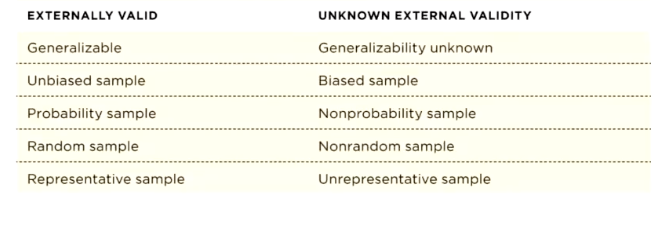
biased sample vs representative sample
biased- whenever we dont use a propbability sample technique, may be caused by convenience sampling (people it is easy to contact), self-selection volunteer sampling,
representative samplign- simple random sampling (make a list of everyone in the population and then select ppants with random sampling software), systematic sampling ( every nth person). cluster sampling (groups of ppl exist in your population, randomly select number of prisons for example), multistage sampling (Randomly sample prisons, then randomly sample prisoners from those prisons), stratified random sampling (try and represent everyone in proportion to real life groups), oversampling (very small numbers of trans people, sample more of them so proportionate number)
random sampling versus random assingment
random sampling, increases external validity
random assignment, increases internal validity as you ABBA people
unrepresentative sampling non probability sampling techniques?
convenience sampling- whoever is available
purposive sampling (snowball sampling)
quota sampling - just say i need X of men and X of women
when is external validity not a priority?
nonprobability samples in the real world - is thing that is biased relevant to what is being measured
what does a larger sample increase?
statistical validity