DAT Ch 5: Cell Division
 Call Kai
 Learn
Learn Practice Test
 Spaced Repetition
 Match
Match Flashcards
 Knowt Play
1/10

There's no tags or description
Looks like no tags are added yet.
Name | Mastery | Learn | Test | Matching | Spaced | Call with Kai |
|---|
No analytics yet
Send a link to your students to track their progress
11 Terms
What does the cell theory state about cell division?
All cells arise from pre-existing cells through cell division
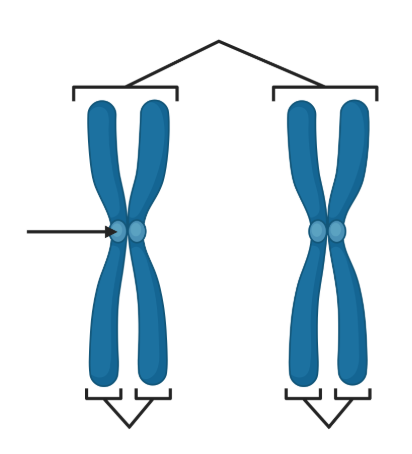
Identify the different components in the diagram
Chromosomes = individual DNA molecules that contain a portion of entire genome
Homologous chromosome pair = pairs of homologous chromosomes that contain genes in the same order
One chromosome inherited from each parent
Sister chromatids = identical, attached copies of a single chromosome that form dyads
Dyads = replicated chromosomes w/ 2 sister chromatids in X formation
Centromeres = regions of DNA that connect sister chromatids in dyad
Kinetochores = proteins on sides of centromeres → help MTs pull sister chromatids apart during cell division
What are the 2 processes involved in M-phase of the cell cycle?
Karyokinesis = division of nucleus = PMAT
Cytokinesis = physical division of cytoplasm & cell membrane
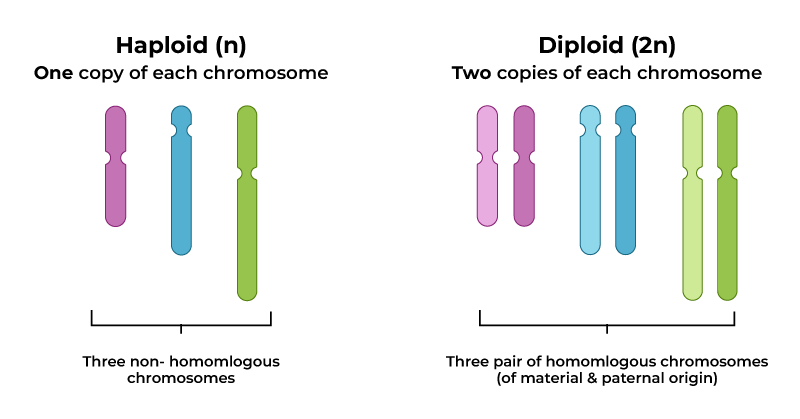
Describe ploidy and the 2 terms used to describe the concept in eukaryotic cells
Ploidy = # of chromosome sets in the body
Diploid = cells contain 2 sets of chromosomes
1 chromosome set per parent
Humans = 23 pairs of 46 chromosomes = 2n = 46
Haploid = cells contain 1 set of chromosomes
n = 23 chromosomes
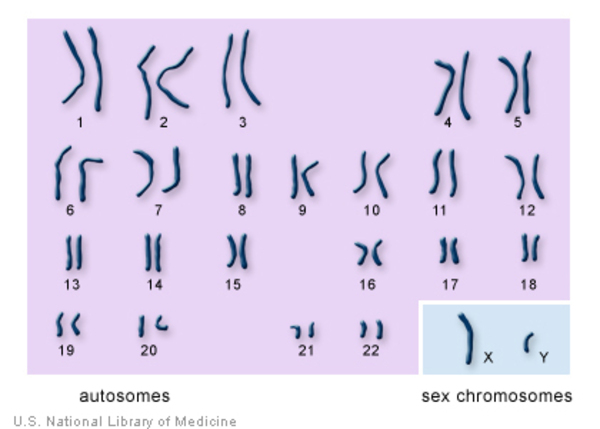
What are the 2 types of chromosomes in a genome?
Sex chromosomes = 1 pair in human body, determine sex of human
Autosomes = 22 pairs in human body → nonsex chromosomes
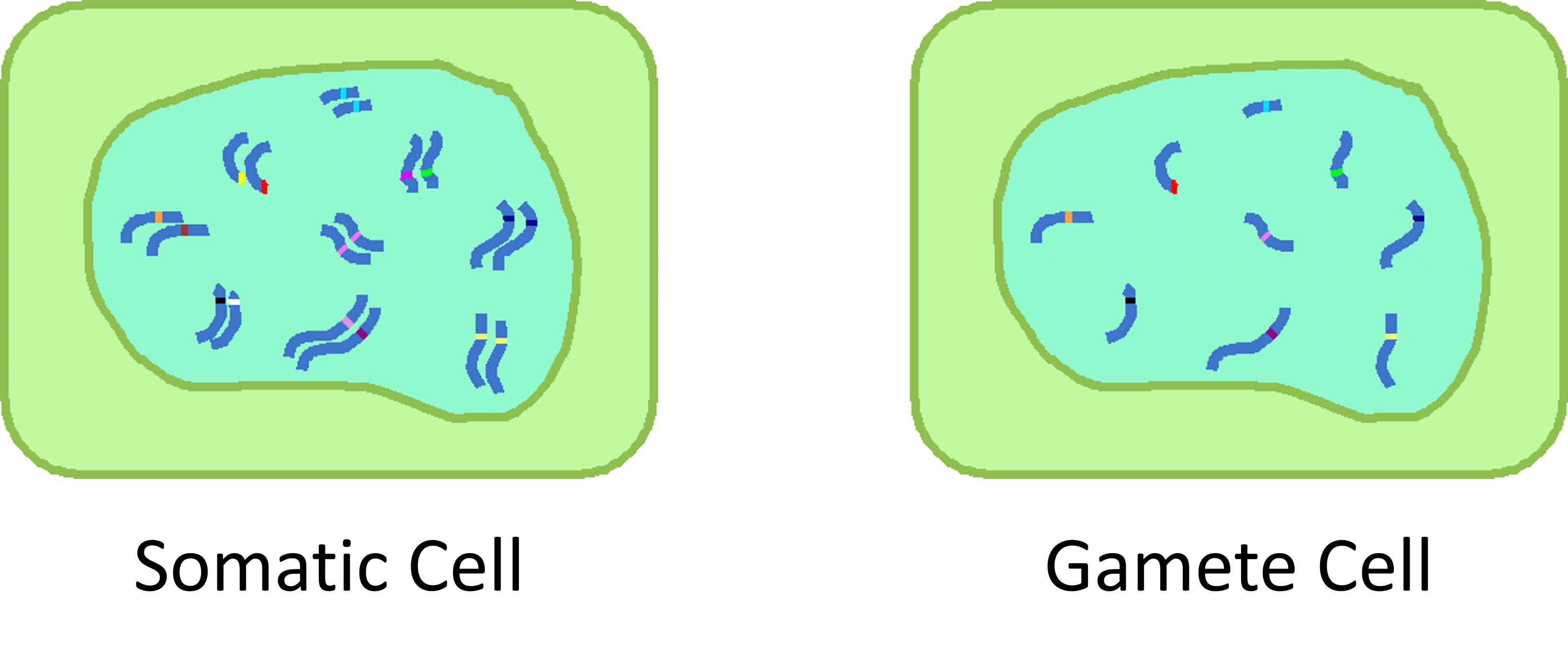
What are the 2 types of cells?
Gametes = haploid reproductive cells (sperm & egg)
Somatic cells = all body cells excluding gametes (diploid in humans)
Describe the 3 types of cells involved in the germ line
Germ cells = diploid cells that divide through mitosis to differentiate → gametocytes
Gametocyte = eukaryotic differentiated germ cells divide through meiosis → gametes
Gametes = haploid reproductive cells (sperm & egg)
What are the 2 main phases of the cell cycle and its components?
Interphase = longest stage of cell cycle, where cell grows, carries out functions, and duplicates DNA
G1 G0 S G2
90% of cell cycle
M-phase = final stage of cell cycle
Karyokinesis = division of nucleus/genetic material
Prophase
Metaphase
Anaphase
Telophase
Cytokinesis = division of cell
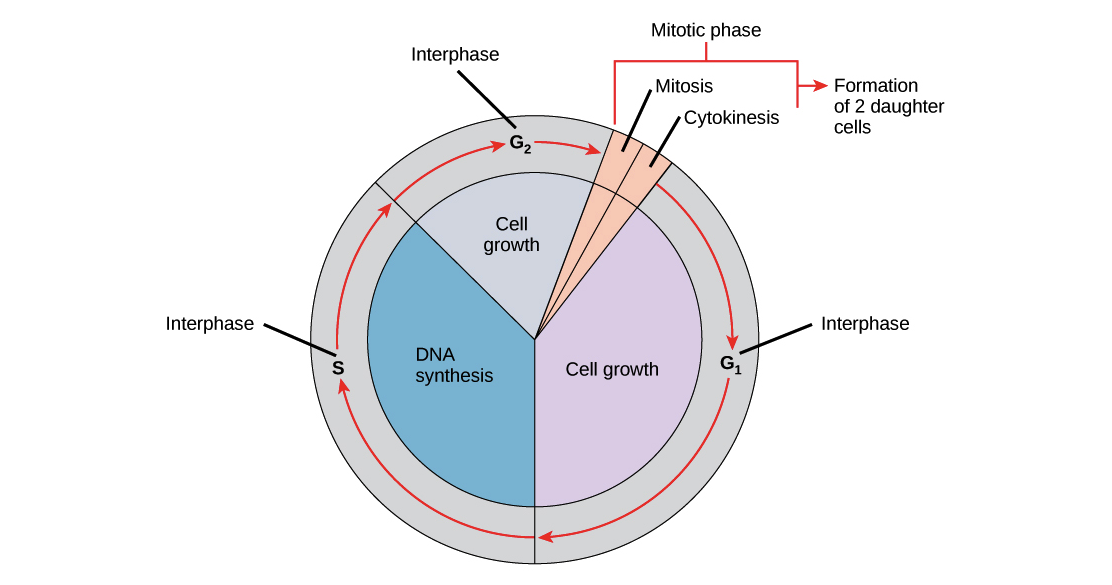
Describe the 3 major components of interphase
Gap phase 1 (G1) = cell growth + G1 Checkpoint
Favorable conditions = S phase
Unfavorable conditions = G0
G0 = cells carry out functions but exit cell cycle & no division
Synthesis phase = cells replicate genome + centrosome
Genome = all DNA in cell
Centrosome = centriole pair + PCM
Gap phase 2 (G2) = organelles replicated + G2 Checkpoint
Maturation Promoting Factor = cyclin-CDK pair that forces cell to stop growing + start division
Enough must be present to continue through cell cycle
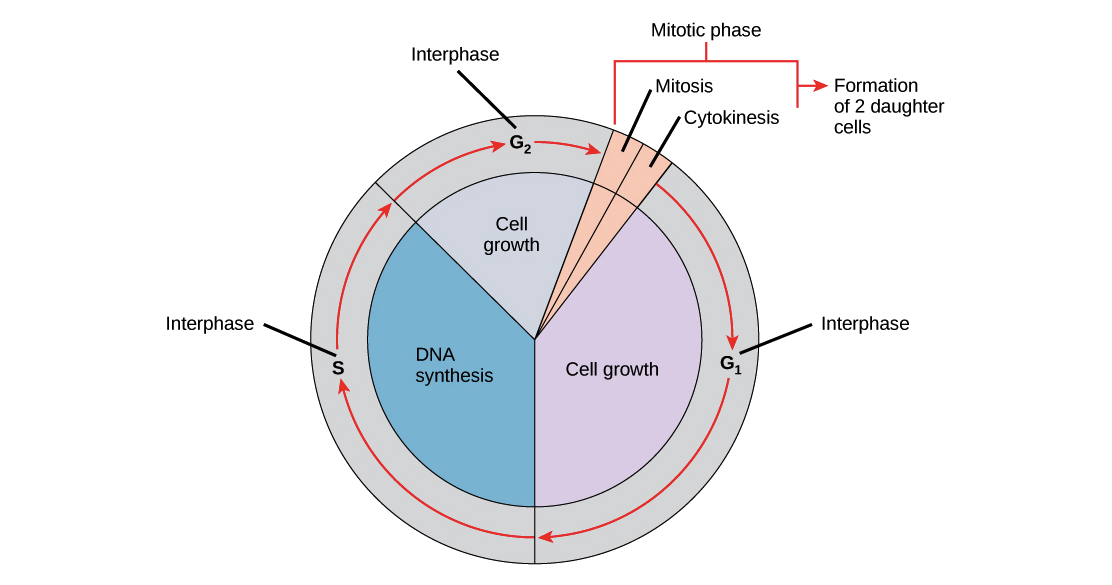
Describe the difference in M-phase for eukaryotes vs. prokaryotes
Eukaryotes → karyokinesis using MTOCs (centrosomes)
Mitosis
Meiosis
Prokaryotes → binary fission
Genome replication + cell division occurs AT THE SAME TIME
NO MTOC
“Prokaryotes = procrastinators = wait until last second to replicate genome”
Describe the role of Microtubule Organizing Centers (MTOCs)