marketing analysis
 Call Kai
 Learn
Learn Practice Test
 Spaced Repetition
 Match
Match Flashcards
 Knowt Play
1/22

There's no tags or description
Looks like no tags are added yet.
Name | Mastery | Learn | Test | Matching | Spaced | Call with Kai |
|---|
No analytics yet
Send a link to your students to track their progress
23 Terms
industry definition
collection of comeptitiors that produce similar or subsitutie products to a defined market
industry segments
formed as the products or services of the industr ar targeted to particular subsets of the general market
still reffered as “the industry” even if segment
why do we need to define an indsutry when developing busienss plan
to target reserach scope and effort - target those most likely to buy our proudce
application of models are more definied
better comparisons of compettion
can define correct competitiors
charestics of industry strucutre
industry size
sales? dollars? in units? number of employees?
growth rate
in profit levels, employee numbers, sales, product#
major events
ex. regulations/supplies/manufacturing/tech improviemtns/developmetns
industry stages - new, mature, growth, decline
industyr major particpatns (suppliers, processors,r etailers, buyers) and supply channels (mergers, buyouts, market pwoer, particpants)
what kind of models to use in industry strucutre
industry concentration
industry life cycle
supply channel, integration and market power
industry concentration model
four firm concnetration ratio model
represtns percentage of total industry sales accounted for by the four largest firms in the industry
high = 80-100%
medium = 80-50%
low = 50-0%
industry life cycle model
used to define where your industry is now and where it is going and when
reconginzes that industries evolve over time, structurally and interms of overall profit and revune
measured in total industry sales and growth in total inddsutry sales
not the same as product lifecycle betcasue theres a constant updating of products
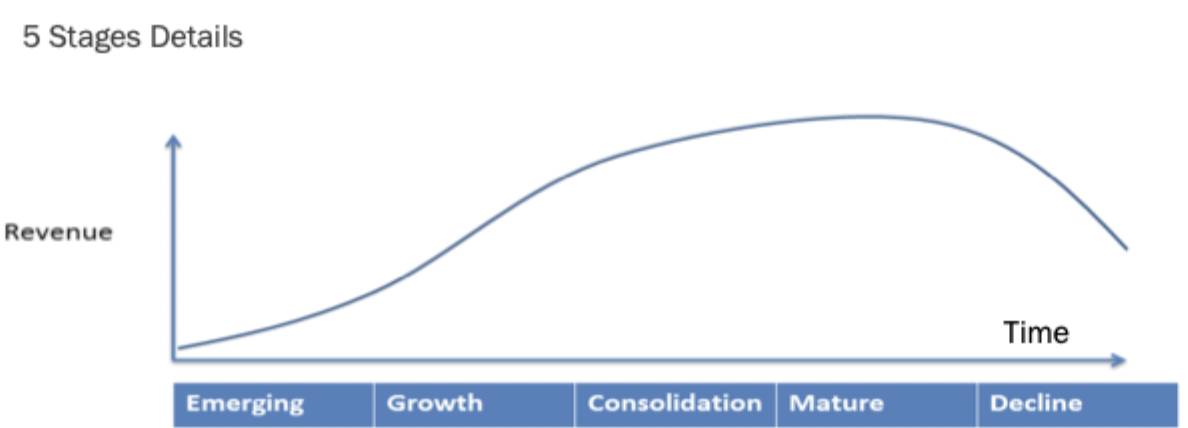
5 stages of industry lifecycle
emerging
traits = hihg innoviation, high differntiaion, little compeition, high risk
key sucess factor = innovation
gorwth
high growth, poor negotiation power of buyers, few barreirs to entry, high profitablity, low risk
growth
consolidation
slower growth, high comeptition, profitablity is reduced
stragegic managment and finacial power
mature
low growth, standardiziation, high barreirs to entry, higher negoation power of buyers
marekt size and costs
decline
low differnciation, extremem comeption, poor profitabilty, high risks
costs
supply channel, integrationa nd market power model - what to include
detail of how product flows through channels
indsutyr partiaptns in channel and intermareis- names and size
information on market pwoer and integratio in market - vertical, horizontal, where is the power held
defintion of supply channel and indistry partiapnts
system of organizatins, ppl, activites, information and resoruces invovled in moving a product or service from supplier to end customer
enterie process of getting from manufacture to consumpiton
supply channel structure
supplier
manufature
wholsaer
retailer
customer
vertical integration
when company extends operations WITHIN THE SUPPLY CHAIN by buying out a company in the stage before or after
moving up and down the supply channel structure
ex. manufaturing buying out a wholsaler
up = bacwards
down = forward
what is the value of vertical integration
cuts down costs and be more effeicnent to grow and gaining more profits - moving from one supply chain to antoher
cutting costs on admin. ex. only need one ceo
horizontal integration
company extends operations WITHIN THE SUPPL CHAIN by exapnding WITHIN THEIR OWN STAGE
ex. manufature buys out manufatorer
value for horizontal integration
be more competitive- buy out your comepiton
be bigger and cut down on costs, more effiicent= be more comeptitive
if buisenss wants mroe profit, theres only so much of the market, buy out someone elses peice of the same size pie
gainsof vertical and horizontal integration
decrease comeption
increase market share
diversify gains/prfits from economis of scale/cost synergies
reduce supply uncertainty and quality varaiton - more control over quality
ex. mcdonalds
increase market power to coordinate
bigger= more market share= more power
losses of vertical and hroizontal integration
consumer face lower product options and higher price
anti-comptiiton concerns
too big and too inflexible- ig another coapny wants to buy you out, goverment has to authroize it.
industry structure - market power
abilty of the firm to control or influece supply channel prices, goods, and movment over other channel members
comes ffrom channel integration or high concnetration
pros and cons of marekt power
pros- compnay
capture ecnomies of scale and scope (hroizontal)
reduce supply uncenrtianty and quality variations (vertical)
cons - consumer
comapnies can raise prices above marginal costs
reduces consumer welfare
traditonal price discocery fails
Price discovery is the process where buyers and sellers determine where a transaction can take place based on supply and demand.
role of goverment and anticoomeption/antitrust
indsustry trends- external trends vs internal
- major external and UNCONTROLLABLE FACTORS that influece organiziatons decsion making and affect its perfomance and stragies, factos include:
ecnomic
demographic
legal
poltical
social conditons
tehcn changes
natural forces
hihg imapct trends SPECFIC to industry
when and how to use PESTLE
for external trends- a broad assemesnt of key features of the external envioment facing a busienss
research and review each pestle indempently
detmerine relative impac on firm /sector
dont include items that have low to md impact on the indsutry
one factor may dominate or have more info depending on the indsutyr you are anazlying
whena nd how to use trend analysis chekclist
for internal and indsutyr sptecifc trends- future focused
checklist, includes major trends
market size, prpofit, gorhwt, supply, demand changes predicted
buyer patterns, target audience,s societal, population
disturubiton channels: retailing, manufacturing and suppliers
product and tehc
cliamte and enviormenal
legal , regulatin, trade
new entrants- small or slare companies