4-6 MARKER EXAM QUESTIONS
 Call Kai
 Learn
Learn Practice Test
 Spaced Repetition
 Match
Match Flashcards
 Knowt Play
1/23

There's no tags or description
Looks like no tags are added yet.
Name | Mastery | Learn | Test | Matching | Spaced | Call with Kai |
|---|
No analytics yet
Send a link to your students to track their progress
24 Terms
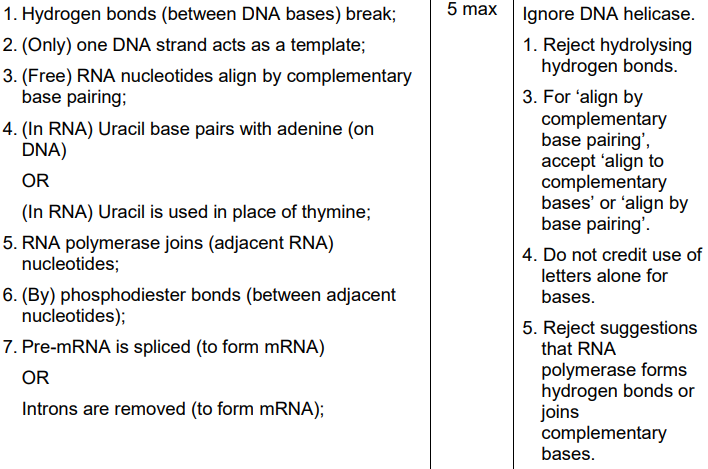
Describe how mRNA is formed by transcription in eukaryotes [5 marks]
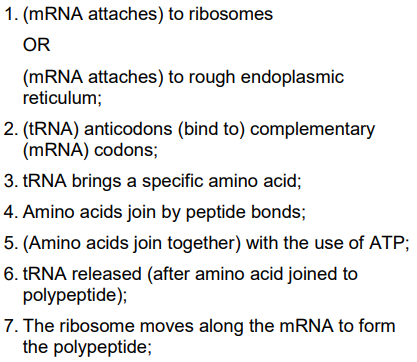
Describe how a polypeptide is formed by translation of mRNA [6 marks]
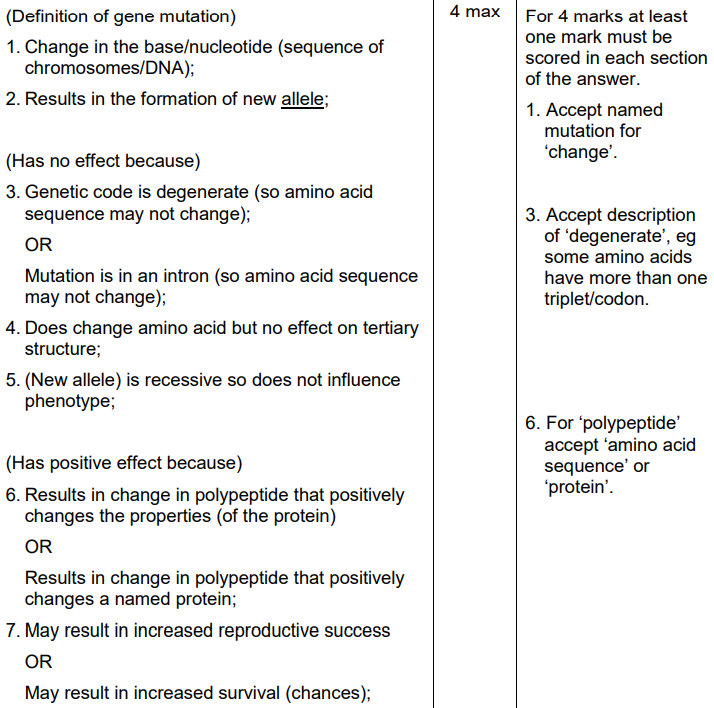
Define ‘gene mutation’ and explain how a gene mutation can have:
no effect on an individual
a positive effect on an individual
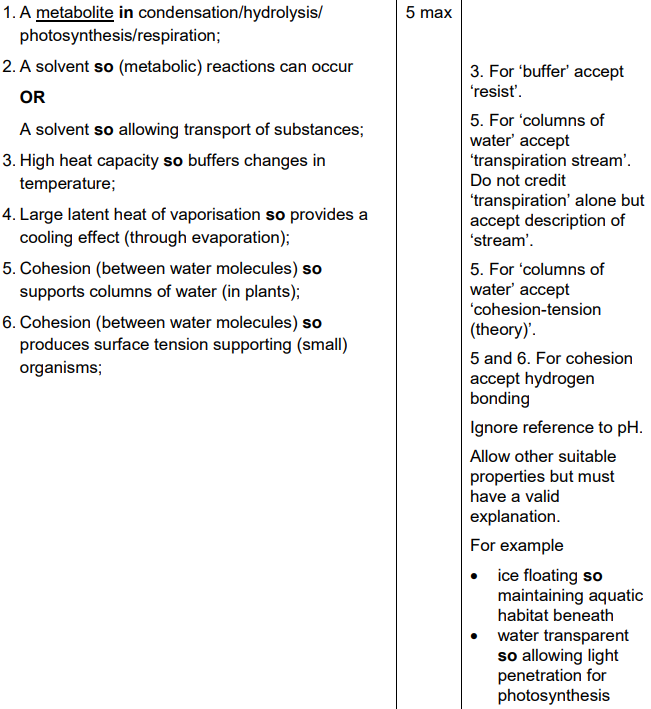
Explain five properties that make water important for organisms [5 marks]
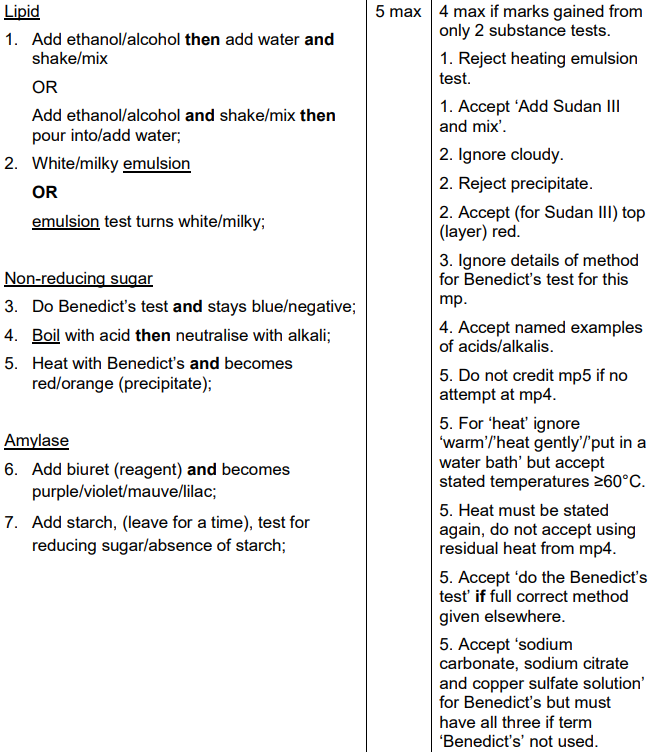
Describe the biochemical tests you would use to confirm the presence of lipid, non-reducing sugar and amylase in a sample [5 marks]
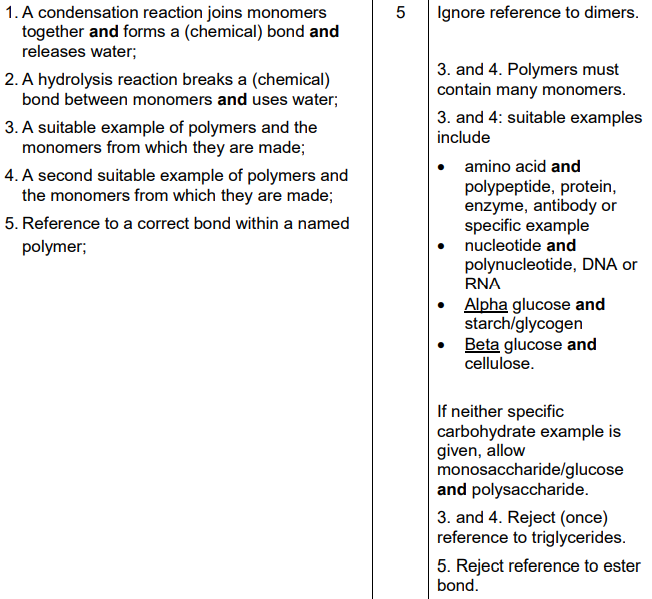
Describe the chemical reactions involved in the conversion of polymers to monomers and monomers to polymers.
Give two named examples of polymers and their associated monomers to illustrate your answer [5 marks]
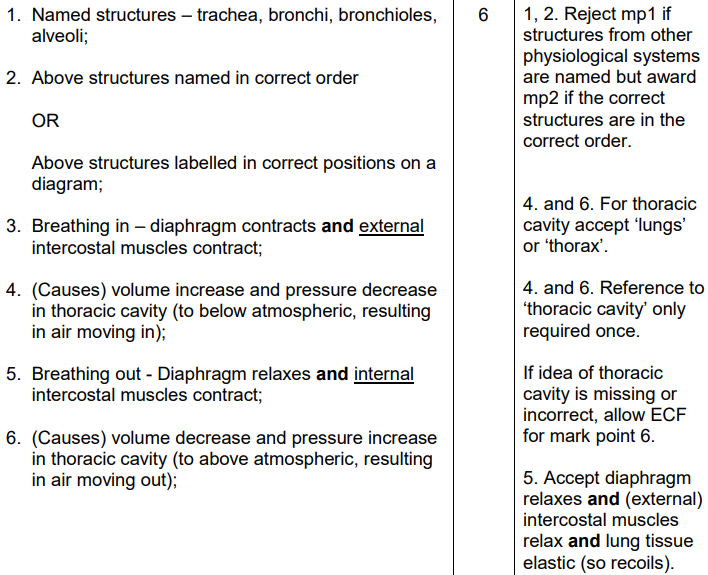
Describe the gross structure of the human gas exchange system and how we breathe in and out [6 marks]
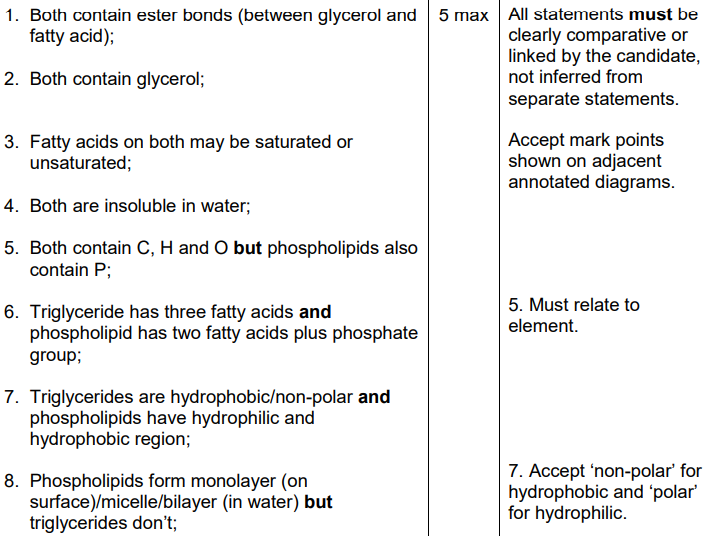
Mucus produced by epithelial cells in the human gas exchange system contains triglycerides and phospholipids.
Compare and contrast the structure and properties of triglycerides and phospholipids [5 marks]
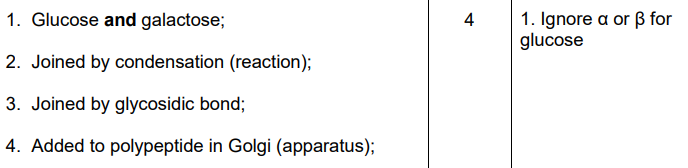
Mucus contains glycoproteins. One of these glycoproteins is a polypeptide with the sugar, lactose, attached.
Describe how lactose is formed and where in the cell it would be attached to a polypeptide to form a glycoprotein [4 marks]
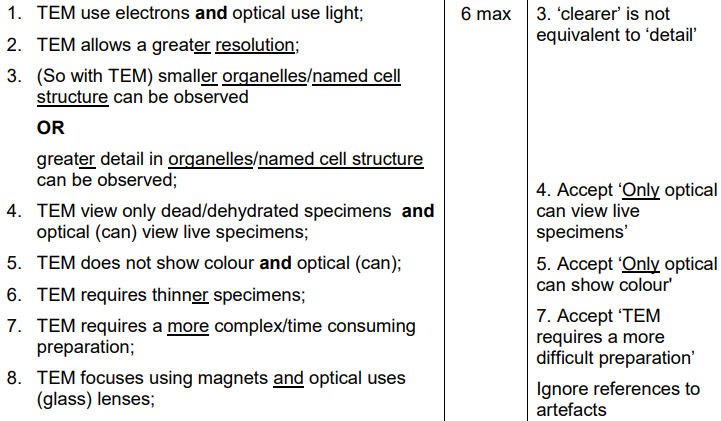
Contrast how an optical microscope and a transmission electron microscope work and contrast the limitations of their use when studying cells [6 marks]
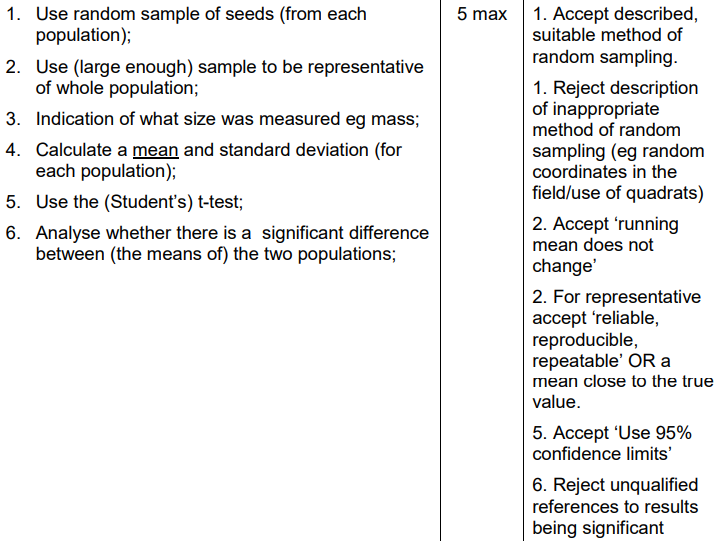
Describe the role of haemoglobin (Hb) in the loading, transport and unloading of oxygen [5 marks]
haemoglobin binds to O2 in the lungs
at high partial pressure of O2 (pO2)
binding of an O2 molecule to haemoglobin makes binding of another O2 easier
forms oxyhaemoglobin in red blood cells
haemoglobin unloads O2 in respiring cells/tissues
at low partial pressure of O2 / high partial pressure of CO2
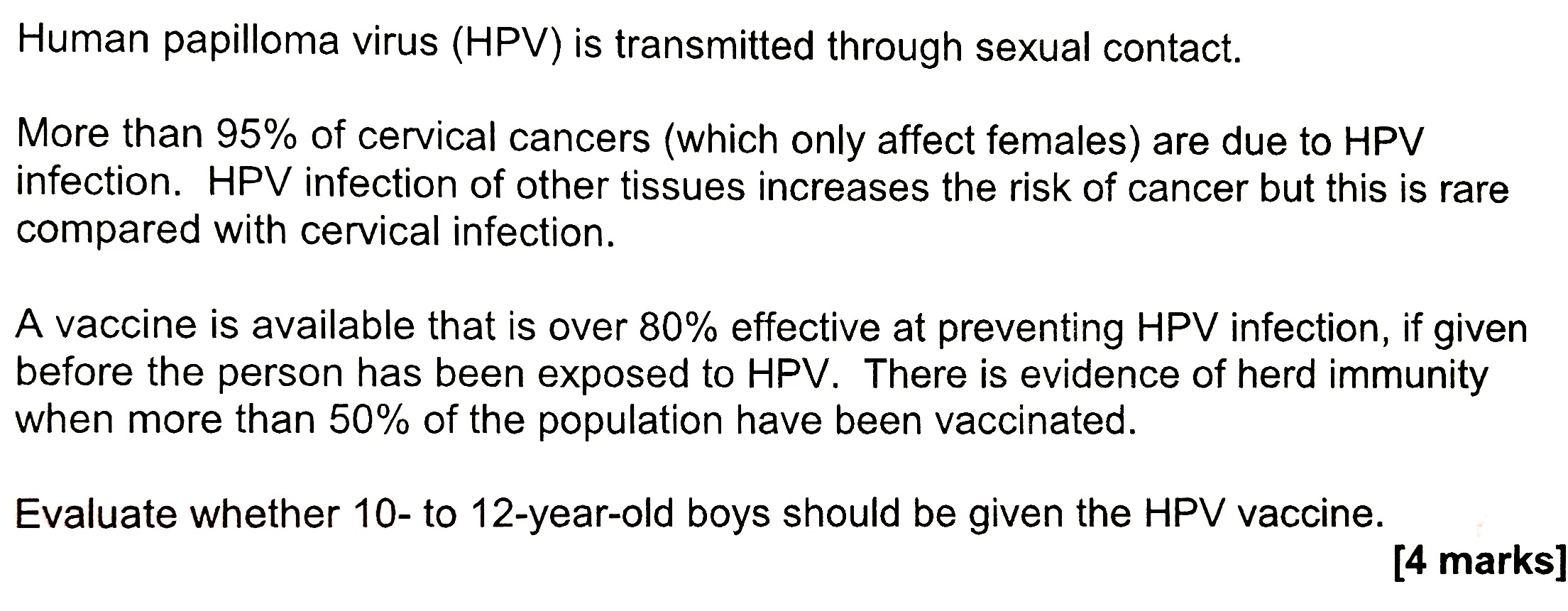
Describe how B-lymphocytes respond when they are stimulated by antigens [4 marks]
(present antigens on cell surface which helper T cells bind to and) stimulate division of B cells by mitosis
B cells differentiate into plasma cells
which release antibodies
B cells differentiate into memory cells
Glucose is absorbed from the lumen of the small intestine into epithelial cells.
Explain how the transport of sodium ions is involved in the absorption of glucose by epithelial cells [5 marks]
Na+ ions are pumped out of epithelial cells into bloodstream
via/by active transport (through membrane protein/pump)
concentration of Na+ ions in the cell becomes lower than in the lumen
sodium ions move by facilitated diffusion (into the epithelial cells from lumen)
glucose is then absorbed with the Na+ ions against concentration gradient of glucose
Oxygen and chloride ions can diffuse across cell-surface membranes. The diffusion of chloride ions involve a membrane protein. The diffusion of oxygen does not involve a membrane protein.
Explain why the diffusion of chloride ions involves a membrane protein and the diffusion of oxygen does not [5 marks]
chloride ions are water soluble/charged/polar
cannot cross lipid bilayer of membrane
so need to be transported using carrier protein/facilitated diffusion
O2 is lipid soluble/non-polar/not charged
so it can diffuse across the cell membrane
Describe the process by which a non-reducing sugar, such as sucrose, is broken down and absorbed into the cell lining in the ileum [4 marks]
sucrose is hydrolysed/digested by sucrase (a membrane-bound disaccharidase)
hydrolysis breaks the glycosidic bond and produces glucose and fructose (plus water is used)
glucose is absorbed by co-transport (with Na+ ions) (via carrier protein)
fructose absorbed by facilitated diffusion
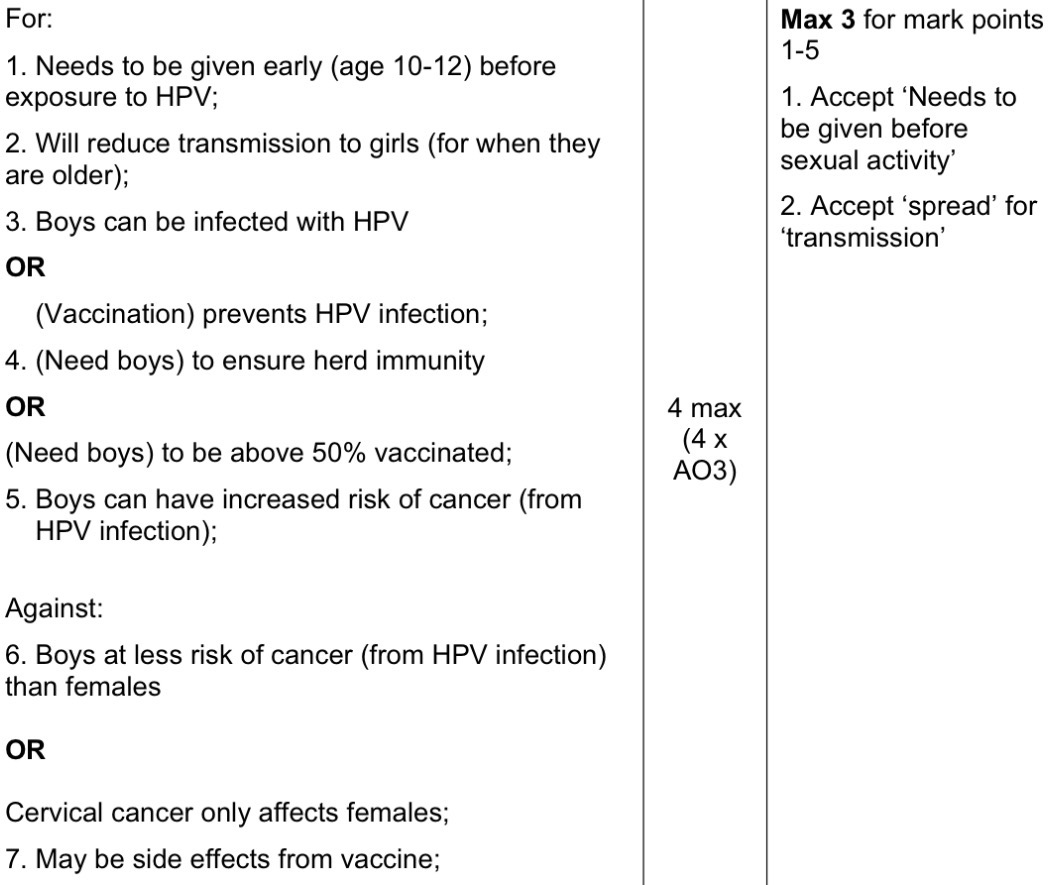
Describe how a quaternary protein is formed from its monomers.
Do not include the process of translation in your answer. [5 marks]
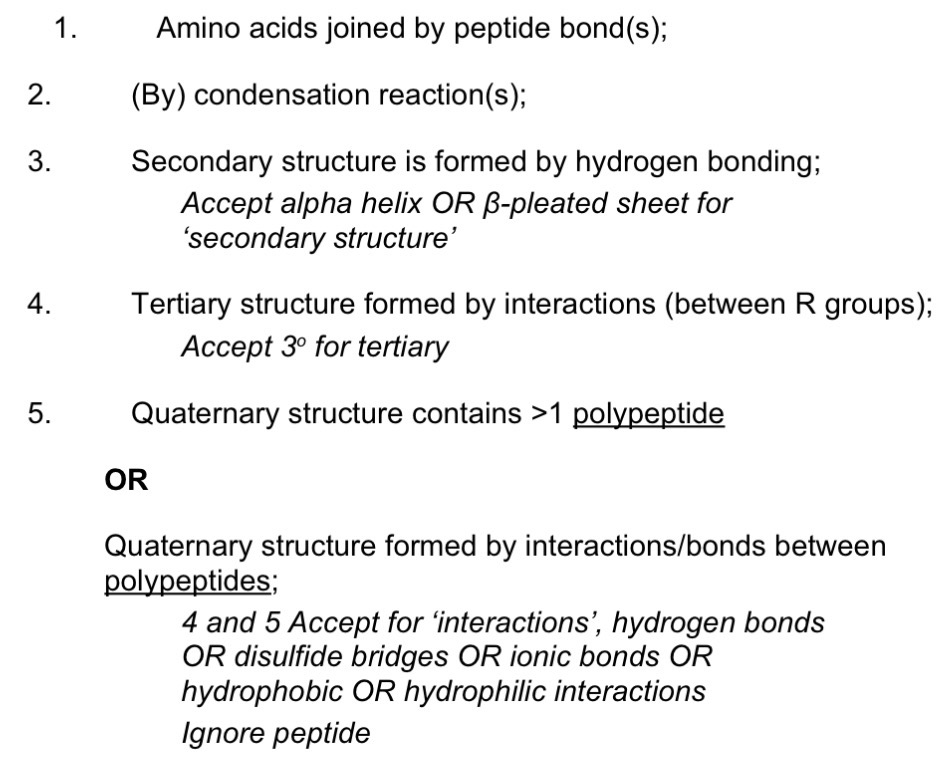
Describe the structure of DNA and the structure of a chromosome [6 marks]
polymer of nucleotides
nucleotide consists of deoxyribose, phosphate and organic/nitrogenous base
phosphodiester bonds between nucleotides
DNA double helix held by hydrogen bonds OR 2 strands held by hydrogen bonds
hydrogen bonds between adenine with thymine, and cytosine with guanine
DNA is associated with histones/proteins
(during mitosis/when visible) chromosome consists of two chromatids joined at a centromere
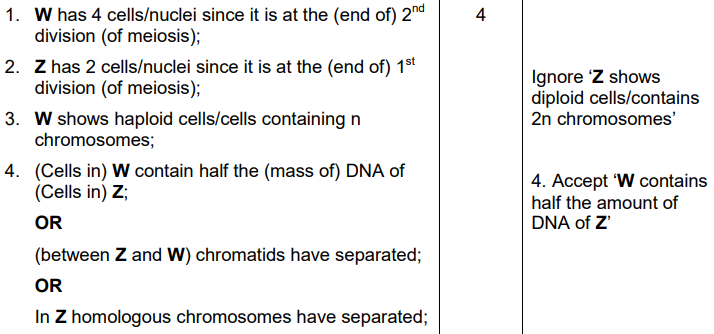
Describe how the process of meiosis results in haploid cells.
Do not include descriptions of how genetic variation is produced in meiosis [4 marks]
DNA replication (during late interphase)
two divisions
separation of homologous chromosomes (in first division)
separation of (sister) chromatids (in second division)
produces 4 haploid cells (accept gametes for cells)
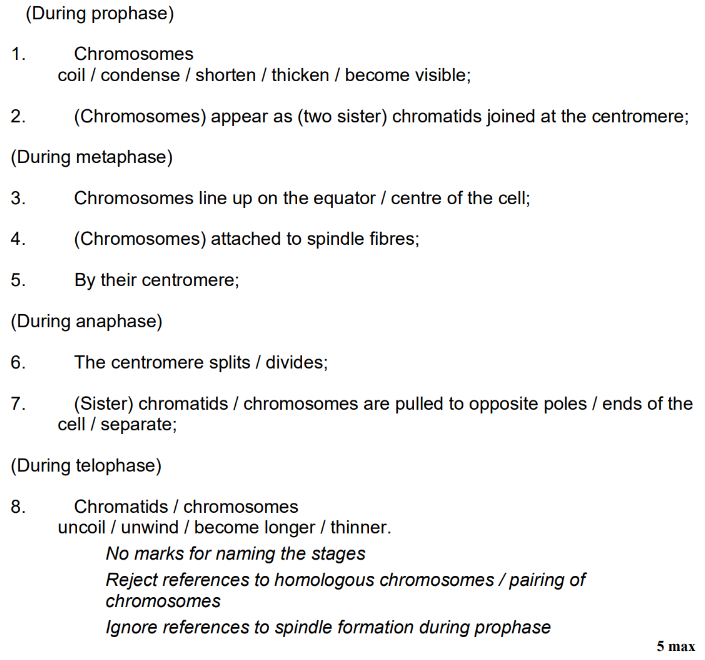
Describe the appearance and behaviour of chromosomes during mitosis [5 marks]
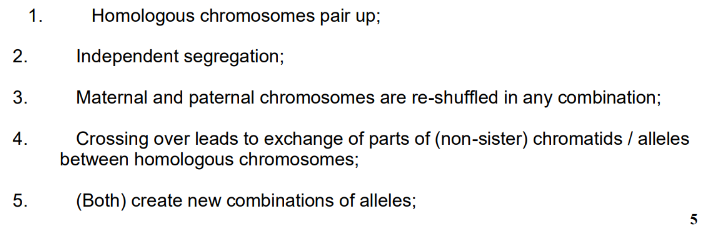
Describe and explain the processes that occur during meiosis that increase genetic variation [5 marks]