Volcanoes
 Call Kai
 Learn
Learn Practice Test
 Spaced Repetition
 Match
Match Flashcards
 Knowt Play
1/50

There's no tags or description
Looks like no tags are added yet.
Name | Mastery | Learn | Test | Matching | Spaced | Call with Kai |
|---|
No analytics yet
Send a link to your students to track their progress
51 Terms
What is the term for molten rock that reaches Earth's surface?
Lava.
What is magma?
Molten rock below the surface, which may include fragments of rock and gas.
At what types of plate boundaries do most volcanoes form?
Divergent plate boundaries (73%), convergent plate boundaries (15%), and hot spots (12%)
What is the primary characteristic of volcanism at spreading centers?
Hot, ductile mantle rock rises upward, causing non-explosive eruptions.
What are the three V's of volcanic eruptions?
Viscosity, Volatiles, and Volume of the magma.
What is decompression melting?
The process of rock melting due to a decrease in pressure.
What is the primary composition of magmas?
A mixture of elements and gas, primarily consisting of silica.
What is a magma chamber?
A reservoir of magma that lies underneath every active volcano.
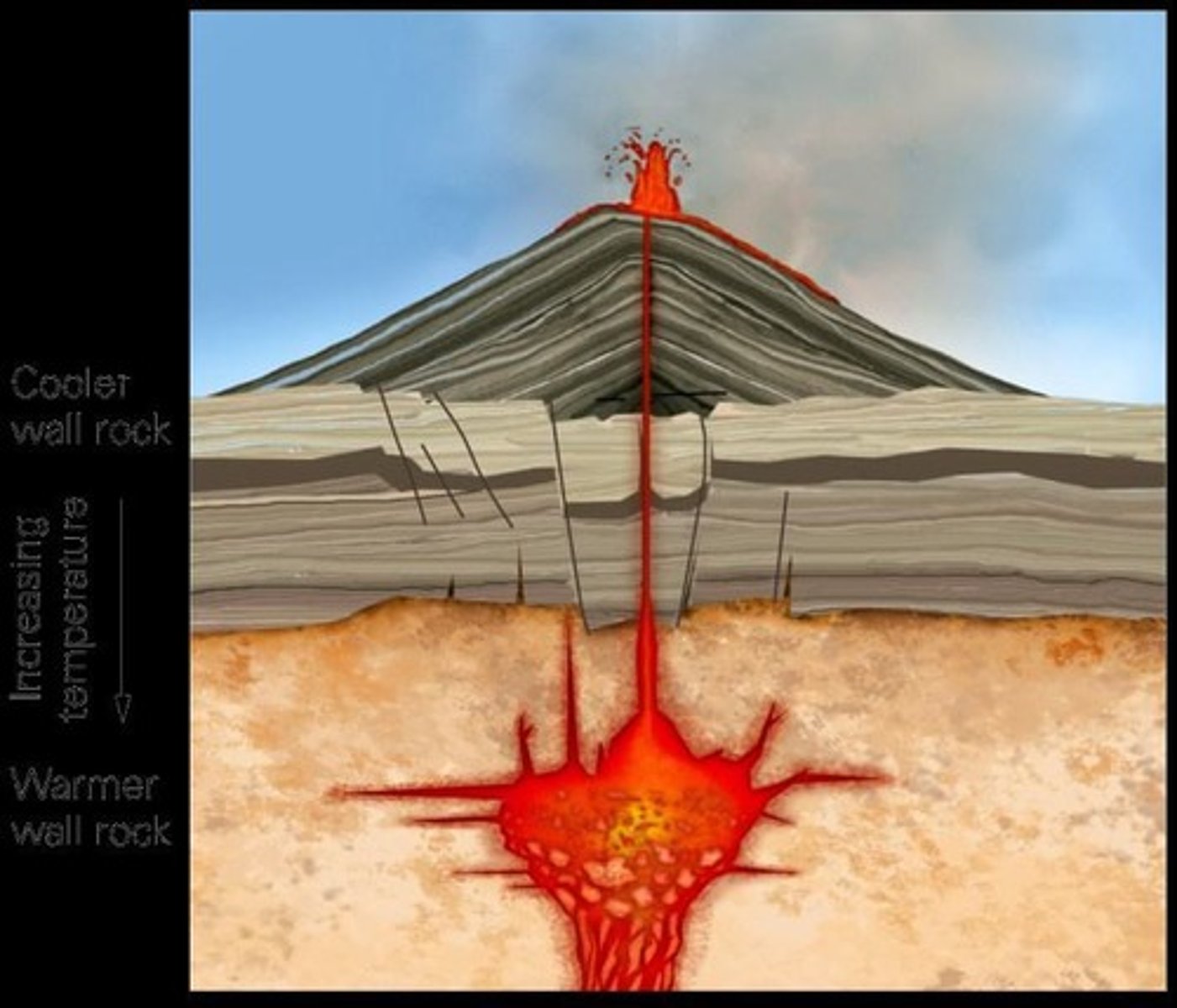
What type of eruptions are associated with oceanic hot spots?
Peaceful eruptions that build shield volcanoes.
What is the difference between oceanic and continental hot spots?
Oceanic hot spots have peaceful eruptions, while continental hot spots can have incredibly explosive eruptions.
What factors influence the viscosity of lava?
Silica content and temperature.
What happens to magma as it rises towards the surface?
It undergoes volume expansion and may eventually lead to an eruption.
What is the role of water in the melting of rock?
Water lowers the melting temperature of rock.
What is a caldera?
A large depression formed when a volcano erupts explosively and collapses.
What geological feature is formed by the explosive eruptions of subduction zone volcanoes?
Volcanic islands.
How does the amount of silica tetrahedra affect magma viscosity?
More silica tetrahedra result in higher viscosity.
What effect does higher temperature have on magma viscosity?
Higher temperature results in lower viscosity.
What is the relationship between mineral crystals and viscosity?
More mineral crystals lead to higher viscosity.
What type of magma is associated with peaceful eruptions?
Basaltic magma, which has lower water content.
What type of magma typically leads to violent eruptions?
Rhyolitic magma, which has higher water content.
What is the Volcanic Explosivity Index (VEI)?
A scale from 0 to 8 measuring eruption explosiveness based on volume, height, and duration.
What eruption style is characterized by low viscosity and low volatiles?
Icelandic eruption.
Which eruption style is considered the most explosive?
Plinian eruption.
What is the eruptive style of a shield volcano?
Effusive eruptions with low viscosity lava.
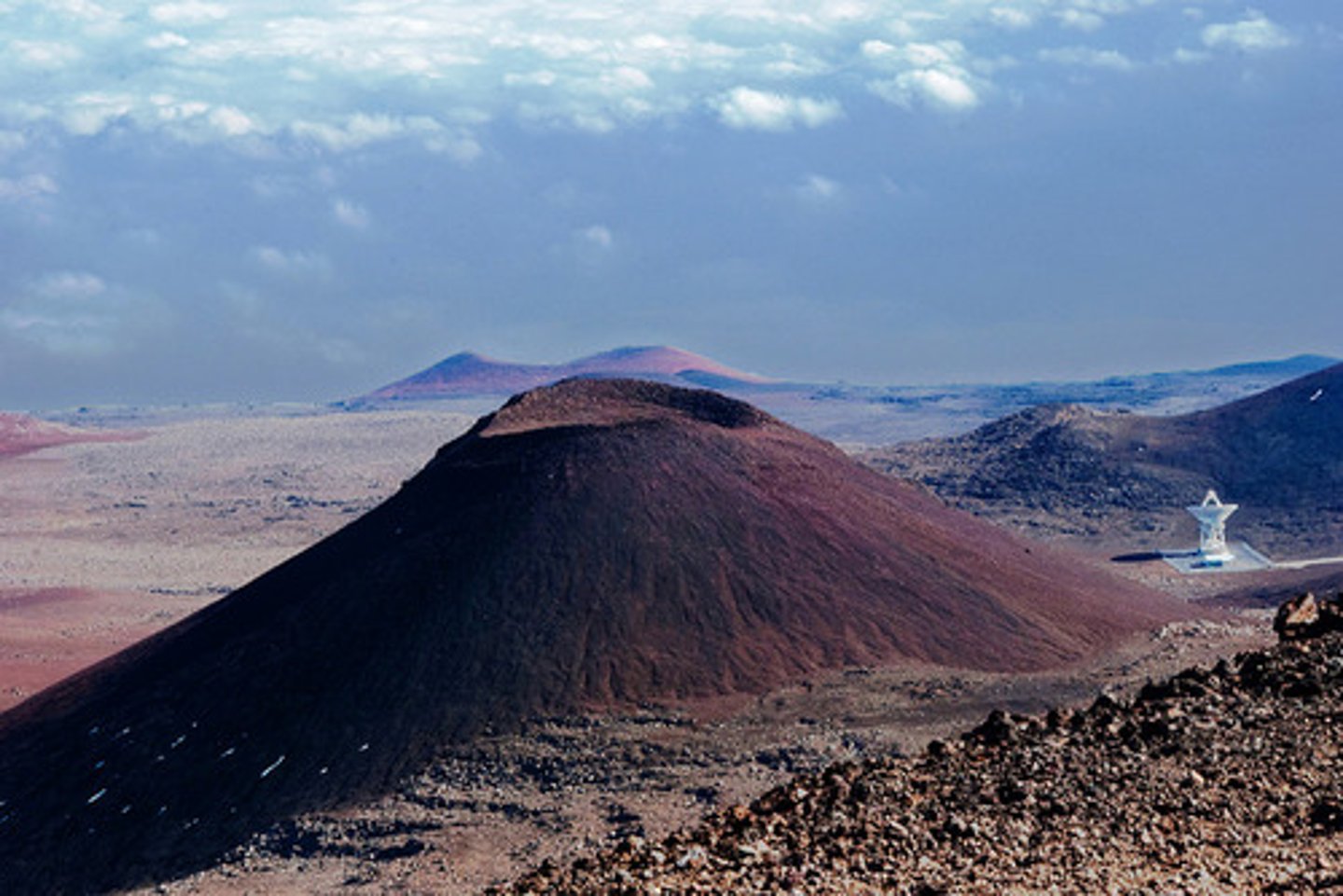
What defines a stratovolcano?
A volcano characterized by explosive eruptions and a conical shape.
What is a pyroclastic flow?
A fast-moving current of hot gas and volcanic matter.
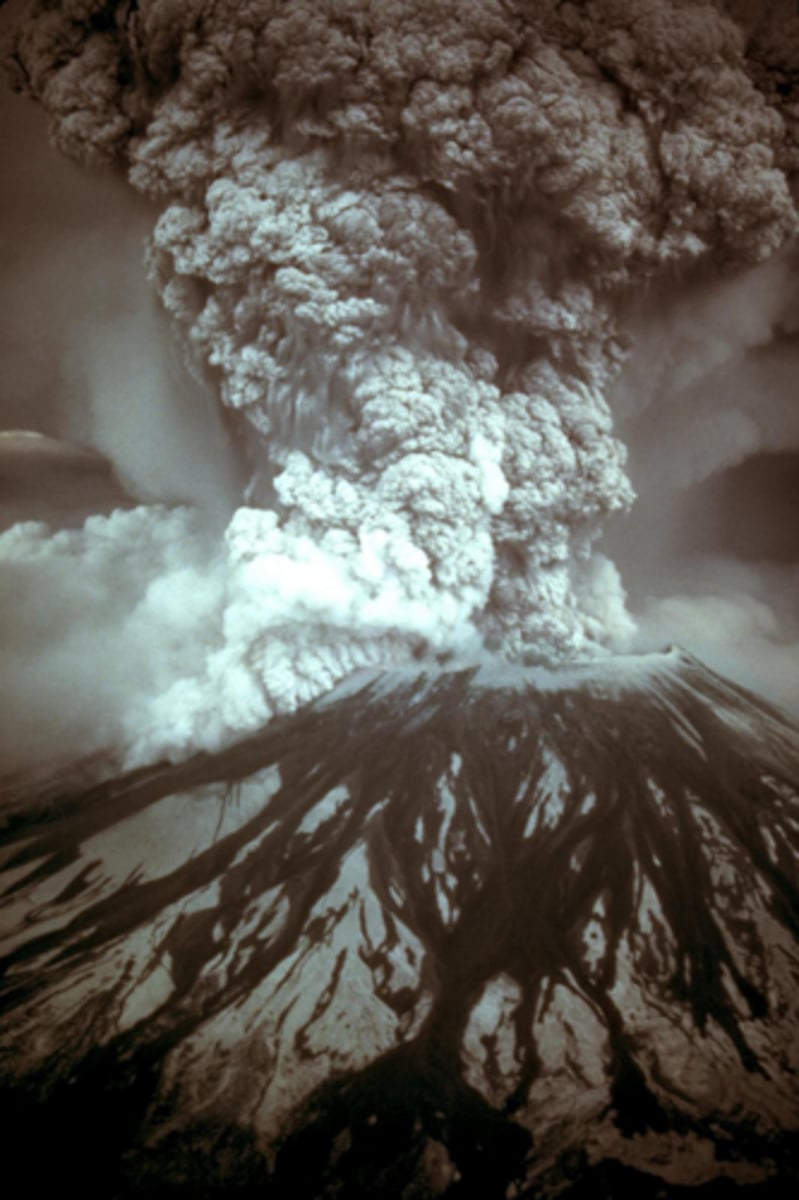
What is the primary gas released during volcanic eruptions?
Water vapor, followed by carbon dioxide and sulfur dioxide.
How does water content in magma influence eruption style?
Higher water content typically leads to more explosive eruptions.
What type of lava flow is characterized by smooth, ropy surfaces?
Pahoehoe lava.
What is the primary composition of shield volcanoes?
Basaltic lava.
What is the eruption style of a Hawaiian volcano?
Effusive eruptions with low explosivity.
What are tephra and its components?
Tephra are volcanic materials ejected during an eruption, including ash, lapilli, and blocks.
What is the eruptive style of a vulcanian eruption?
More explosive than Strombolian eruptions, generating ash clouds.
What is the relationship between magma viscosity and gas escape?
Higher viscosity makes gas escape more difficult, leading to explosive eruptions.
What are the characteristics of a scoria cone volcano?
Built from ejected lava fragments, typically small and steep.
What is the primary hazard associated with pyroclastic flows?
They are very dangerous and can cause many deaths due to their speed and heat.
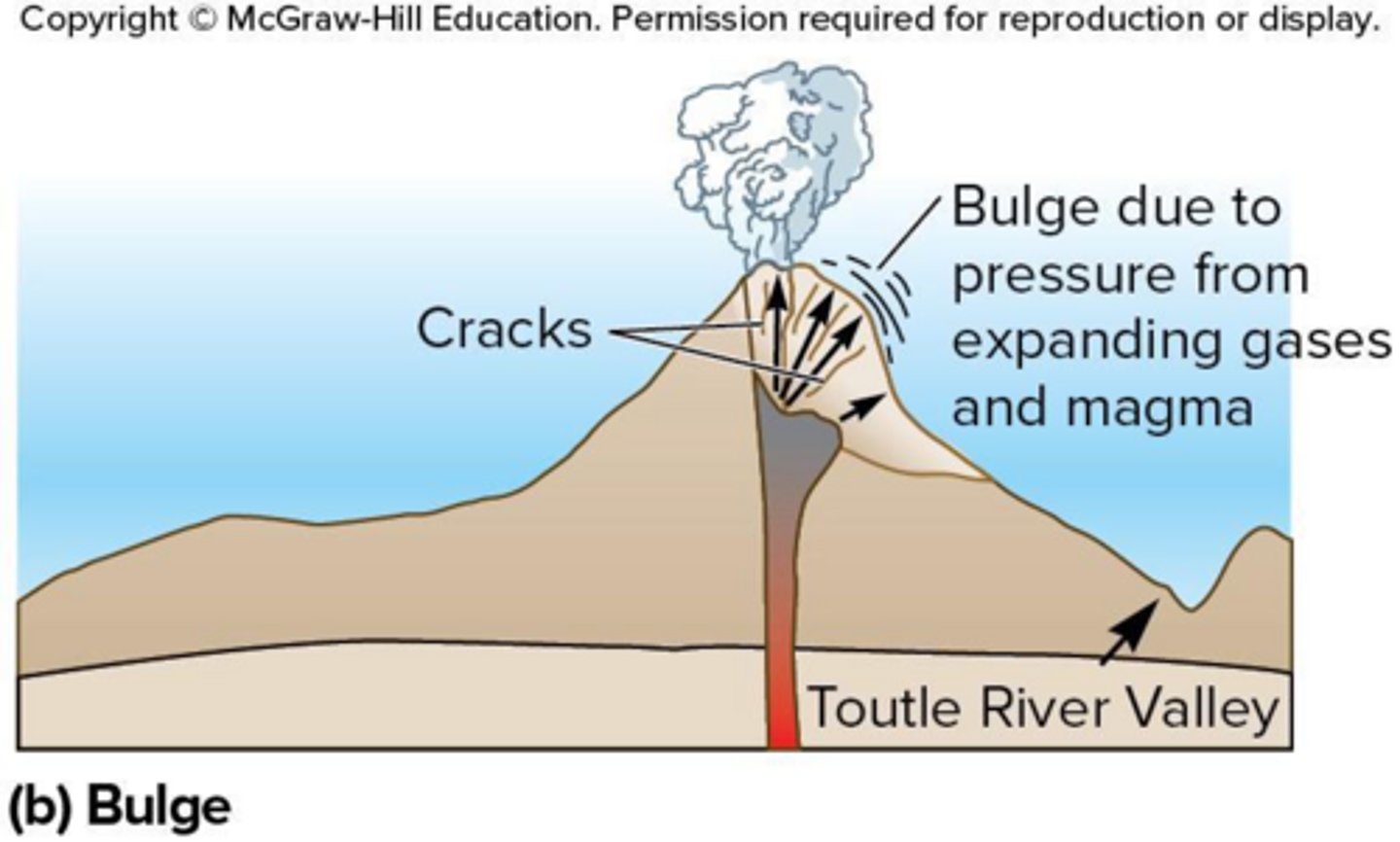
What are flood basalts?
High volume eruptions that flood vast areas of the Earth with flat lying lava surfaces.
What is the viscosity and volatile content of flood basalts?
Flood basalts have low viscosity and low volatiles/water content.
How can flood basalt eruptions affect the global environment?
They can release huge amounts of gases, including CO2 and SO2, into the atmosphere.
What are fissure eruptions?
Eruptions that occur along fractures in the Earth's crust, leading to large igneous provinces.
What types of eruptions do stratovolcanoes have?
They can have explosive pyroclastic deposits and effusive lava flows.
What is a cinder cone volcano?
A steep, cone-shaped hill made of accumulated solid pyroclastic material.
What are the primary effects of volcanic eruptions?
Lava flows, pyroclastic flows and falls, volcanic gases, and storms.
What are secondary effects of volcanic eruptions?
Fires, flooding, mudslides (lahars), and debris avalanches.
What are tertiary effects of volcanic eruptions?
Long-term changes to the landscape, climate effects, and alteration of mountain appearances.
What is a geyser?
An eruption of water superheated by magma, requiring heat, subsurface water, and a plumbing system.
What are the signs of impending volcanic eruptions?
Seismic waves, ground deformation, gas measurements, and changes in water composition.
What is the primary cause of volcanic deaths?
Pyroclastic flows account for about 29% of volcanic deaths.
How do volcanic eruptions contribute to soil fertility?
They renew mineral content and replenish soil fertility over time.
What are the three V's associated with flood basalts?
Low viscosity, low volatiles, and very large volume.
What is the primary composition of stratovolcanoes?
They typically have rhyolitic or andesitic composition.