Section 5. An Introduction to Driving
 Call Kai
 Learn
Learn Practice Test
 Spaced Repetition
 Match
Match Flashcards
 Knowt Play
1/78

There's no tags or description
Looks like no tags are added yet.
Name | Mastery | Learn | Test | Matching | Spaced | Call with Kai |
|---|
No analytics yet
Send a link to your students to track their progress
79 Terms
Your ________ may ________.
Vision: notice hazards in different types of lighting, judge distances, and adjust to traffic speed, and read road signs
Hearing: hear horns, sirens, motorcycles, or screeching tires that may alert you of hazards. Illegal to wear a headset/earplugs in both ears while driving
Fatigue and Drowsiness: affect your vision and increase reaction time to hazards
Physical and Mental: must be alert to quickly decide the correct course of action in any type of traffic situation, including unexpected ones
Medications: Prescription and over-the-counter medications can make you an unsafe driver. Some medicines can make you sleepy. Your responsibility to know the effects of the medications you take.
Health: Physicians must report patients (at least 14 years old) to DMV for medical conditions that might affect ability to drive safely, such as lapse of consciousness
health; affect your driving
Your health may affect your driving.
________
Hearing: hear horns, sirens, motorcycles, or screeching tires that may alert you of hazards. Illegal to wear a headset/earplugs in both ears while driving
Fatigue and Drowsiness: affect your vision and increase reaction time to hazards
Physical and Mental: must be alert to quickly decide the correct course of action in any type of traffic situation, including unexpected ones
Medications: Prescription and over-the-counter medications can make you an unsafe driver. Some medicines can make you sleepy. Your responsibility to know the effects of the medications you take.
Health: Physicians must report patients (at least 14 years old) to DMV for medical conditions that might affect ability to drive safely, such as lapse of consciousness
Vision: notice hazards in different types of lighting, judge distances, and adjust to traffic speed, and read road signs
Your health may affect your driving.
Vision: notice hazards in different types of lighting, judge distances, and adjust to traffic speed, and read road signs
________
Fatigue and Drowsiness: affect your vision and increase reaction time to hazards
Physical and Mental: must be alert to quickly decide the correct course of action in any type of traffic situation, including unexpected ones
Medications: Prescription and over-the-counter medications can make you an unsafe driver. Some medicines can make you sleepy. Your responsibility to know the effects of the medications you take.
Health: Physicians must report patients (at least 14 years old) to DMV for medical conditions that might affect ability to drive safely, such as lapse of consciousness
Hearing: hear horns, sirens, motorcycles, or screeching tires that may alert you of hazards. Illegal to wear a headset/earplugs in both ears while driving
Your health may affect your driving.
Vision: notice hazards in different types of lighting, judge distances, and adjust to traffic speed, and read road signs
Hearing: hear horns, sirens, motorcycles, or screeching tires that may alert you of hazards. Illegal to wear a headset/earplugs in both ears while driving
________
Physical and Mental: must be alert to quickly decide the correct course of action in any type of traffic situation, including unexpected ones
Medications: Prescription and over-the-counter medications can make you an unsafe driver. Some medicines can make you sleepy. Your responsibility to know the effects of the medications you take.
Health: Physicians must report patients (at least 14 years old) to DMV for medical conditions that might affect ability to drive safely, such as lapse of consciousness
Fatigue and Drowsiness: affect your vision and increase reaction time to hazards
Your health may affect your driving.
Vision: notice hazards in different types of lighting, judge distances, and adjust to traffic speed, and read road signs
Hearing: hear horns, sirens, motorcycles, or screeching tires that may alert you of hazards. Illegal to wear a headset/earplugs in both ears while driving
Fatigue and Drowsiness: affect your vision and increase reaction time to hazards
________
Medications: Prescription and over-the-counter medications can make you an unsafe driver. Some medicines can make you sleepy. Your responsibility to know the effects of the medications you take.
Health: Physicians must report patients (at least 14 years old) to DMV for medical conditions that might affect ability to drive safely, such as lapse of consciousness
Physical and Mental: must be alert to quickly decide the correct course of action in any type of traffic situation, including unexpected ones
Your health may affect your driving.
Vision: notice hazards in different types of lighting, judge distances, and adjust to traffic speed, and read road signs
Hearing: hear horns, sirens, motorcycles, or screeching tires that may alert you of hazards. Illegal to wear a headset/earplugs in both ears while driving
Fatigue and Drowsiness: affect your vision and increase reaction time to hazards
Physical and Mental: must be alert to quickly decide the correct course of action in any type of traffic situation, including unexpected ones
________
Health: Physicians must report patients (at least 14 years old) to DMV for medical conditions that might affect ability to drive safely, such as lapse of consciousness
Medications: Prescription and over-the-counter medications can make you an unsafe driver. Some medicines can make you sleepy. Your responsibility to know the effects of the medications you take.
Your health may affect your driving.
Vision: notice hazards in different types of lighting, judge distances, and adjust to traffic speed, and read road signs
Hearing: hear horns, sirens, motorcycles, or screeching tires that may alert you of hazards. Illegal to wear a headset/earplugs in both ears while driving
Fatigue and Drowsiness: affect your vision and increase reaction time to hazards
Physical and Mental: must be alert to quickly decide the correct course of action in any type of traffic situation, including unexpected ones
Medications: Prescription and over-the-counter medications can make you an unsafe driver. Some medicines can make you sleepy. Your responsibility to know the effects of the medications you take.
________
Health: Physicians must report patients (at least 14 years old) to DMV for medical conditions that might affect ability to drive safely, such as lapse of consciousness
To ________ your vehicle, it is critical to keep both hands on the wheel.
control
To control your vehicle, it is critical to ________.
keep both hands on the wheel
________ (Push/Pull)
To use this steering wheel method:
Start with your hands at 9 and 3 o’clock or 8 and 4 o’clock
Do not cross your hands over the middle of the steering wheel
Keep your hands in these positions, even when making turns
Hand-to-Hand Steering
Hand-to-Hand Steering (Push/Pull)
To use this steering wheel method:
________
Do not cross your hands over the middle of the steering wheel
Keep your hands in these positions, even when making turns
Start with your hands at 9 and 3 o’clock or 8 and 4 o’clock
Hand-to-Hand Steering (Push/Pull)
To use this steering wheel method:
Start with your hands at 9 and 3 o’clock or 8 and 4 o’clock
________
Keep your hands in these positions, even when making turns
Do not cross your hands over the middle of the steering wheel
Hand-to-Hand Steering (Push/Pull)
To use this steering wheel method:
Start with your hands at 9 and 3 o’clock or 8 and 4 o’clock
Do not cross your hands over the middle of the steering wheel
________
Keep your hands in these positions, even when making turns
________
Use this steering wheel method when you turn at low speeds, park, or need to recover from a skid. To use this method:
Start with your hands at 8 and 4 o’clock
Reach across the steering wheel to grasp the opposite side
Let go of the steering wheel with your other hand
Reach across the arm still holding the wheel, grip the wheel, and pull up
Hand-Over-Hand Steering
Hand-Over-Hand Steering
Use this steering wheel method when you ________. To use this method:
Start with your hands at 8 and 4 o’clock
Reach across the steering wheel to grasp the opposite side
Let go of the steering wheel with your other hand
Reach across the arm still holding the wheel, grip the wheel, and pull up
turn at low speeds, park, or need to recover from a skid
Hand-Over-Hand Steering
Use this steering wheel method when you turn at low speeds, park, or need to recover from a skid. To use this method:
________
Reach across the steering wheel to grasp the opposite side
Let go of the steering wheel with your other hand
Reach across the arm still holding the wheel, grip the wheel, and pull up
Start with your hands at 8 and 4 o’clock
Hand-Over-Hand Steering
Use this steering wheel method when you turn at low speeds, park, or need to recover from a skid. To use this method:
Start with your hands at 8 and 4 o’clock
________
Let go of the steering wheel with your other hand
Reach across the arm still holding the wheel, grip the wheel, and pull up
Reach across the steering wheel to grasp the opposite side
Hand-Over-Hand Steering
Use this steering wheel method when you turn at low speeds, park, or need to recover from a skid. To use this method:
Start with your hands at 8 and 4 o’clock
Reach across the steering wheel to grasp the opposite side
________
Reach across the arm still holding the wheel, grip the wheel, and pull up
Let go of the steering wheel with your other hand
Hand-Over-Hand Steering
Use this steering wheel method when you turn at low speeds, park, or need to recover from a skid. To use this method:
Start with your hands at 8 and 4 o’clock
Reach across the steering wheel to grasp the opposite side
Let go of the steering wheel with your other hand
________
Reach across the arm still holding the wheel, grip the wheel, and pull up
________
There are only two situations that may require steering with one hand:
When you are turning while backing up to see where you are going behind you. Place your hand at the 12 o’clock position on the steering wheel.
When you are operating vehicle controls that require you to remove a hand from the steering wheel.
One-Hand Steering
One-Hand Steering
There are only ________ that may require steering with one hand:
When you are turning while backing up to see where you are going behind you. Place your hand at the 12 o’clock position on the steering wheel.
When you are operating vehicle controls that require you to remove a hand from the steering wheel.
two situations
One-Hand Steering
There are only two situations that may require steering with ________:
When you are turning while backing up to see where you are going behind you. Place your hand at the 12 o’clock position on the steering wheel.
When you are operating vehicle controls that require you to remove a hand from the steering wheel.
one hand
One-Hand Steering
There are only two situations that may require steering with one hand:
________
When you are operating vehicle controls that require you to remove a hand from the steering wheel.
When you are turning while backing up to see where you are going behind you. Place your hand at the 12 o’clock position on the steering wheel.
One-Hand Steering
There are only two situations that may require steering with one hand:
When you are turning while backing up to see where you are going behind you. Place your hand at the 12 o’clock position on the steering wheel.
________
When you are operating vehicle controls that require you to remove a hand from the steering wheel.
Your ________, ________, and ________ are important for communicating with other drivers, pedestrians, and bicyclists.
signals; horn; headlight
Your signals, horn, and headlight are important for ________ with other drivers, pedestrians, and bicyclists.
communicating
Your signals, horn, and headlight are important for communicating with ________, ________, and ________.
other drivers; pedestrians; bicyclists
Always ________ when you turn, change lanes, slow down, or stop.
signal
Always signal when you ________, ________, ________, or ________.
turn; change lanes; slow down; stop
You can ________ using your vehicles signal lights or using hand-and-arm positions.
signal
You can signal using your ________ or using ________.
vehicles signal lights; hand-and-arm positions
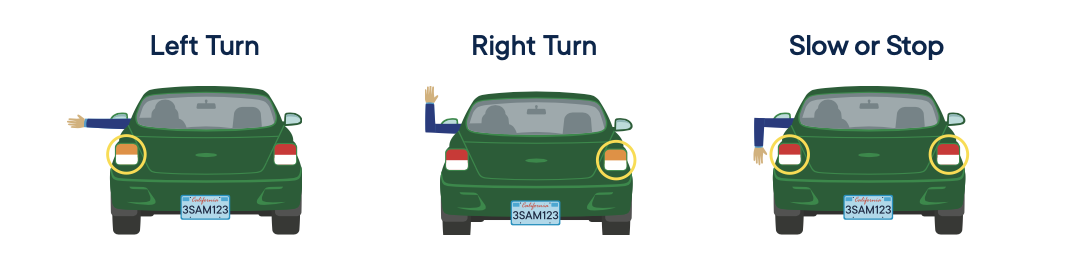
If your ________, or ________, use the hand-and-arm signals shown in the images.
signal lights are not functioning; bright sunlight makes your signal lights hard to see
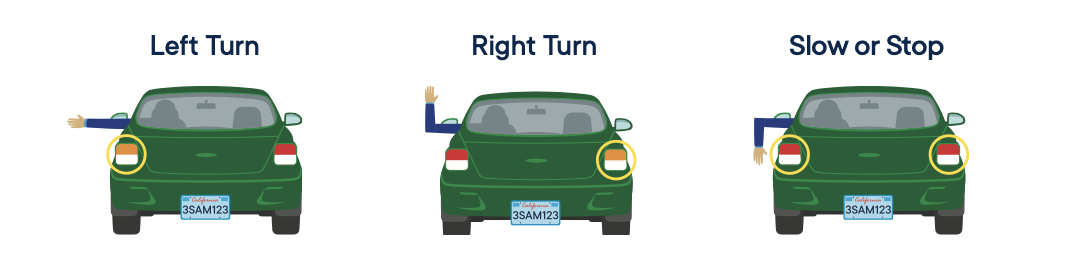
If your signal lights are not functioning, or bright sunlight makes your signal lights hard to see, use the ________ signals shown in the images.
hand-and-arm signals
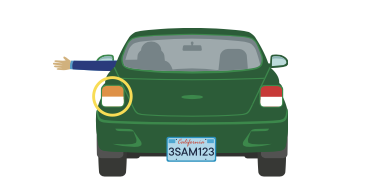
Identify the hand-and-arm signal.
Left Turn
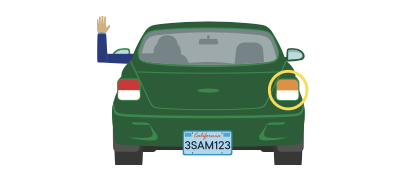
Identify the hand-and-arm signal.
Right Turn
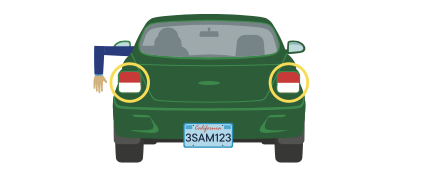
Identify the hand-and-arm signal.
Slow or Stop
________ may signal a turn with their arm held straight out, pointing in the direction they plan to turn.
Bicyclists
Bicyclists may ________ with their arm held straight out, pointing in the direction they plan to turn.
signal a turn
Bicyclists may signal a turn with their ________, ________.
arm held straight out; pointing in the direction they plan to turn
You should ________:
At least 100 feet before you turn
Before every lane change
At least 5 seconds before changing lanes on a freeway
Before pulling next to the curb or away from the curb
Even when you do not see other vehicles around you
When you are almost through the intersection if you plan to turn shortly after crossing the intersection
Remember to turn off your signal when you no longer need it
signal
You should signal:
________
Before every lane change
At least 5 seconds before changing lanes on a freeway
Before pulling next to the curb or away from the curb
Even when you do not see other vehicles around you
When you are almost through the intersection if you plan to turn shortly after crossing the intersection
Remember to turn off your signal when you no longer need it
At least 100 feet before you turn
You should signal:
At least 100 feet before you turn
________
At least 5 seconds before changing lanes on a freeway
Before pulling next to the curb or away from the curb
Even when you do not see other vehicles around you
When you are almost through the intersection if you plan to turn shortly after crossing the intersection
Remember to turn off your signal when you no longer need it
Before every lane change
You should signal:
At least 100 feet before you turn
Before every lane change
________
Before pulling next to the curb or away from the curb
Even when you do not see other vehicles around you
When you are almost through the intersection if you plan to turn shortly after crossing the intersection
Remember to turn off your signal when you no longer need it
At least 5 seconds before changing lanes on a freeway
You should signal:
At least 100 feet before you turn
Before every lane change
At least 5 seconds before changing lanes on a freeway
________
Even when you do not see other vehicles around you
When you are almost through the intersection if you plan to turn shortly after crossing the intersection
Remember to turn off your signal when you no longer need it
Before pulling next to the curb or away from the curb
You should signal:
At least 100 feet before you turn
Before every lane change
At least 5 seconds before changing lanes on a freeway
Before pulling next to the curb or away from the curb
________
When you are almost through the intersection if you plan to turn shortly after crossing the intersection
Remember to turn off your signal when you no longer need it
Even when you do not see other vehicles around you
You should signal:
At least 100 feet before you turn
Before every lane change
At least 5 seconds before changing lanes on a freeway
Before pulling next to the curb or away from the curb
Even when you do not see other vehicles around you
________
Remember to turn off your signal when you no longer need it
When you are almost through the intersection if you plan to turn shortly after crossing the intersection
You should signal:
At least 100 feet before you turn
Before every lane change
At least 5 seconds before changing lanes on a freeway
Before pulling next to the curb or away from the curb
Even when you do not see other vehicles around you
When you are almost through the intersection if you plan to turn shortly after crossing the intersection
Remember to ________ when you no longer need it
turn off your signal
You should signal:
At least 100 feet before you turn
Before every lane change
At least 5 seconds before changing lanes on a freeway
Before pulling next to the curb or away from the curb
Even when you do not see other vehicles around you
When you are almost through the intersection if you plan to turn shortly after crossing the intersection
Remember to turn off your signal when you ________
no longer need it
Use your vehicle’s ________ to let other drivers know you are there or warn others of a hazard. Use your horn to:
Avoid collisions
Alert oncoming traffic on narrow mountain roads where you cannot see at least 200 feet ahead
horn
Use your vehicle’s horn to let other drivers ________ or ________. Use your horn to:
Avoid collisions
Alert oncoming traffic on narrow mountain roads where you cannot see at least 200 feet ahead
know you are there; warn others of a hazard
Use your vehicle’s horn to let other drivers know you are there or warn others of a hazard. Use your horn to:
________
Alert oncoming traffic on narrow mountain roads where you cannot see at least 200 feet ahead
Avoid collisions
Use your vehicle’s horn to let other drivers know you are there or warn others of a hazard. Use your horn to:
Avoid collisions
________
Alert oncoming traffic on narrow mountain roads where you cannot see at least 200 feet ahead
Your ________ help you see what is in front of you and make it easier for other drivers to see your vehicle.
vehicle’s headlights
Your vehicle’s headlights ________ and ________.
help you see what is in front of you; make it easier for other drivers to see your vehicle
________ your high-beam headlights to low beams within 500 feet of a vehicle coming toward you or within 300 feet of a vehicle you are following.
Dim
Dim your ________ headlights to ________ within 500 feet of a vehicle coming toward you or within 300 feet of a vehicle you are following.
high-beam; low beams
Dim your high-beam headlights to low beams ________ or ________.
within 500 feet of a vehicle coming toward you; within 300 feet of a vehicle you are following
It is ________ to drive using only parking lights. Use your headlights:
When it is too dark to see form 1,000 feet away
Beginning 30 minutes after sunset
Until 30 minutes before sunrise
In adverse weather. If you need to use your windshield wipers due to fog, rain, or snow, you must turn on your low-beam headlights
When conditions (such as clouds, dust, smoke, or fog) prevent you from seeing other vehicles
On mountain roads and tunnels (even on sunny days)
When a road sign states that headlights must be on
To help other drivers see your vehicle, especially when the sun is low on the horizon
illegal
It is illegal to drive using ________. Use your headlights:
When it is too dark to see form 1,000 feet away
Beginning 30 minutes after sunset
Until 30 minutes before sunrise
In adverse weather. If you need to use your windshield wipers due to fog, rain, or snow, you must turn on your low-beam headlights
When conditions (such as clouds, dust, smoke, or fog) prevent you from seeing other vehicles
On mountain roads and tunnels (even on sunny days)
When a road sign states that headlights must be on
To help other drivers see your vehicle, especially when the sun is low on the horizon
only parking lights
It is illegal to drive using only parking lights. Use your ________:
When it is too dark to see form 1,000 feet away
Beginning 30 minutes after sunset
Until 30 minutes before sunrise
In adverse weather. If you need to use your windshield wipers due to fog, rain, or snow, you must turn on your low-beam headlights
When conditions (such as clouds, dust, smoke, or fog) prevent you from seeing other vehicles
On mountain roads and tunnels (even on sunny days)
When a road sign states that headlights must be on
To help other drivers see your vehicle, especially when the sun is low on the horizon
headlights
It is illegal to drive using only parking lights. Use your headlights:
________
Beginning 30 minutes after sunset
Until 30 minutes before sunrise
In adverse weather. If you need to use your windshield wipers due to fog, rain, or snow, you must turn on your low-beam headlights
When conditions (such as clouds, dust, smoke, or fog) prevent you from seeing other vehicles
On mountain roads and tunnels (even on sunny days)
When a road sign states that headlights must be on
To help other drivers see your vehicle, especially when the sun is low on the horizon
When it is too dark to see form 1,000 feet away
It is illegal to drive using only parking lights. Use your headlights:
When it is too dark to see form 1,000 feet away
________
Until 30 minutes before sunrise
In adverse weather. If you need to use your windshield wipers due to fog, rain, or snow, you must turn on your low-beam headlights
When conditions (such as clouds, dust, smoke, or fog) prevent you from seeing other vehicles
On mountain roads and tunnels (even on sunny days)
When a road sign states that headlights must be on
To help other drivers see your vehicle, especially when the sun is low on the horizon
Beginning 30 minutes after sunset
It is illegal to drive using only parking lights. Use your headlights:
When it is too dark to see form 1,000 feet away
Beginning 30 minutes after sunset
________
In adverse weather. If you need to use your windshield wipers due to fog, rain, or snow, you must turn on your low-beam headlights
When conditions (such as clouds, dust, smoke, or fog) prevent you from seeing other vehicles
On mountain roads and tunnels (even on sunny days)
When a road sign states that headlights must be on
To help other drivers see your vehicle, especially when the sun is low on the horizon
Until 30 minutes before sunrise
It is illegal to drive using only parking lights. Use your headlights:
When it is too dark to see form 1,000 feet away
Beginning 30 minutes after sunset
Until 30 minutes before sunrise
________
When conditions (such as clouds, dust, smoke, or fog) prevent you from seeing other vehicles
On mountain roads and tunnels (even on sunny days)
When a road sign states that headlights must be on
To help other drivers see your vehicle, especially when the sun is low on the horizon
In adverse weather. If you need to use your windshield wipers due to fog, rain, or snow, you must turn on your low-beam headlights
It is illegal to drive using only parking lights. Use your headlights:
When it is too dark to see form 1,000 feet away
Beginning 30 minutes after sunset
Until 30 minutes before sunrise
In adverse weather. If you need to use your windshield wipers due to fog, rain, or snow, you must turn on your low-beam headlights
________
On mountain roads and tunnels (even on sunny days)
When a road sign states that headlights must be on
To help other drivers see your vehicle, especially when the sun is low on the horizon
When conditions (such as clouds, dust, smoke, or fog) prevent you from seeing other vehicles
It is illegal to drive using only parking lights. Use your headlights:
When it is too dark to see form 1,000 feet away
Beginning 30 minutes after sunset
Until 30 minutes before sunrise
In adverse weather. If you need to use your windshield wipers due to fog, rain, or snow, you must turn on your low-beam headlights
When conditions (such as clouds, dust, smoke, or fog) prevent you from seeing other vehicles
________
When a road sign states that headlights must be on
To help other drivers see your vehicle, especially when the sun is low on the horizon
On mountain roads and tunnels (even on sunny days)
It is illegal to drive using only parking lights. Use your headlights:
When it is too dark to see form 1,000 feet away
Beginning 30 minutes after sunset
Until 30 minutes before sunrise
In adverse weather. If you need to use your windshield wipers due to fog, rain, or snow, you must turn on your low-beam headlights
When conditions (such as clouds, dust, smoke, or fog) prevent you from seeing other vehicles
On mountain roads and tunnels (even on sunny days)
________
To help other drivers see your vehicle, especially when the sun is low on the horizon
When a road sign states that headlights must be on
It is illegal to drive using only parking lights. Use your headlights:
When it is too dark to see form 1,000 feet away
Beginning 30 minutes after sunset
Until 30 minutes before sunrise
In adverse weather. If you need to use your windshield wipers due to fog, rain, or snow, you must turn on your low-beam headlights
When conditions (such as clouds, dust, smoke, or fog) prevent you from seeing other vehicles
On mountain roads and tunnels (even on sunny days)
When a road sign states that headlights must be on
________
To help other drivers see your vehicle, especially when the sun is low on the horizon
If you can see ________ or ________ ahead, warn drivers behind you using these methods:
Turn on your emergency flashers
Lightly tap your brake pedal three or four times
Use a hand signal when slowing and stopping
collision; hazard
If you can see collision or hazard ahead, ________ drivers ________ you using these methods:
Turn on your emergency flashers
Lightly tap your brake pedal three or four times
Use a hand signal when slowing and stopping
warn; behind
If you can see collision or hazard ahead, warn drivers behind you using these methods:
________
Lightly tap your brake pedal three or four times
Use a hand signal when slowing and stopping
Turn on your emergency flashers
If you can see collision or hazard ahead, warn drivers behind you using these methods:
Turn on your emergency flashers
________
Use a hand signal when slowing and stopping
Lightly tap your brake pedal three or four times
If you can see collision or hazard ahead, warn drivers behind you using these methods:
Turn on your emergency flashers
Lightly tap your brake pedal three or four times
________
Use a hand signal when slowing and stopping
If you need to ________ because of ________:
Turn on emergency flashers. If your vehicle does not have emergency flashers, use your turn signals
If possible, pull off the road away from all traffic
If you cannot get completely off the road, stop where people can see you and your vehicle from behind
Do not stop over a hill or just around a curve. Other drivers may not see your vehicle in time to avoid a collision
Call for emergency roadside assistance and stay in your vehicle until help arrives
stop; vehicle trouble
If you need to stop because of vehicle trouble:
________
If possible, pull off the road away from all traffic
If you cannot get completely off the road, stop where people can see you and your vehicle from behind
Do not stop over a hill or just around a curve. Other drivers may not see your vehicle in time to avoid a collision
Call for emergency roadside assistance and stay in your vehicle until help arrives
Turn on emergency flashers. If your vehicle does not have emergency flashers, use your turn signals
If you need to stop because of vehicle trouble:
Turn on emergency flashers. If your vehicle does not have emergency flashers, use your turn signals
________
If you cannot get completely off the road, stop where people can see you and your vehicle from behind
Do not stop over a hill or just around a curve. Other drivers may not see your vehicle in time to avoid a collision
Call for emergency roadside assistance and stay in your vehicle until help arrives
If possible, pull off the road away from all traffic
If you need to stop because of vehicle trouble:
Turn on emergency flashers. If your vehicle does not have emergency flashers, use your turn signals
If possible, pull off the road away from all traffic
________
Do not stop over a hill or just around a curve. Other drivers may not see your vehicle in time to avoid a collision
Call for emergency roadside assistance and stay in your vehicle until help arrives
If you cannot get completely off the road, stop where people can see you and your vehicle from behind
If you need to stop because of vehicle trouble:
Turn on emergency flashers. If your vehicle does not have emergency flashers, use your turn signals
If possible, pull off the road away from all traffic
If you cannot get completely off the road, stop where people can see you and your vehicle from behind
________
Call for emergency roadside assistance and stay in your vehicle until help arrives
Do not stop over a hill or just around a curve. Other drivers may not see your vehicle in time to avoid a collision
If you need to stop because of vehicle trouble:
Turn on emergency flashers. If your vehicle does not have emergency flashers, use your turn signals
If possible, pull off the road away from all traffic
If you cannot get completely off the road, stop where people can see you and your vehicle from behind
Do not stop over a hill or just around a curve. Other drivers may not see your vehicle in time to avoid a collision
________
Call for emergency roadside assistance and stay in your vehicle until help arrives