L9- Protein Homeostasis 1
 Call Kai
 Learn
Learn Practice Test
 Spaced Repetition
 Match
Match Flashcards
 Knowt Play
1/37

There's no tags or description
Looks like no tags are added yet.
Name | Mastery | Learn | Test | Matching | Spaced | Call with Kai |
|---|
No analytics yet
Send a link to your students to track their progress
38 Terms
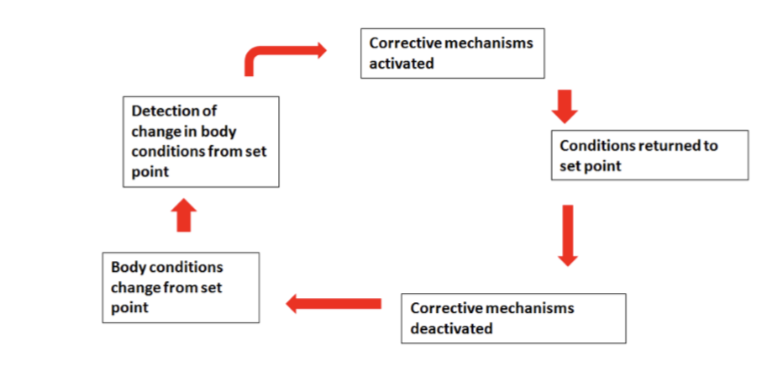
what is homeostasis
Homeostasis is the property of an open system, especially living organisms, to regulate its internal environment to maintain a stable, constant condition by means of multiple feedback controls, regardless of the external conditions.
controlled by feedback loops
what is proteostasis
the maintenance of the correct amounts of functional proteins and organelles in and outside the cell
what is the proteostasis network (PN)
serves to ensure that correctly folded proteins are generated at the right time and cellular location. Additionally, it prevents proteins from misfolding and aggregating and ensures that superfluous and misfolded protein species are removed
what are the key effectors of the PN
molecular chaperones, which ensure proper protein folding and conformational maintenance and cooperate with the degradation machinery
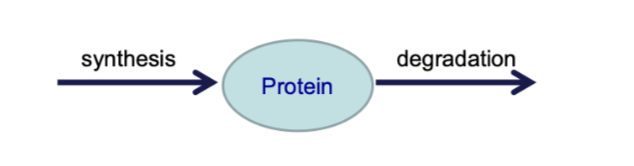
how are protein levels maintained
protein turnover
Need to maintain the correct number of each type of protein in the cell.
give an example of protein regulation by negative feedback
p53 tumour suppressor
transcription factor
Involved in cell cycle arrest, DNA repair and apoptosis
Normally kept at low basal level- Otherwise stops cells from proliferating and completing normal functions
how is P53 kept low at basal level
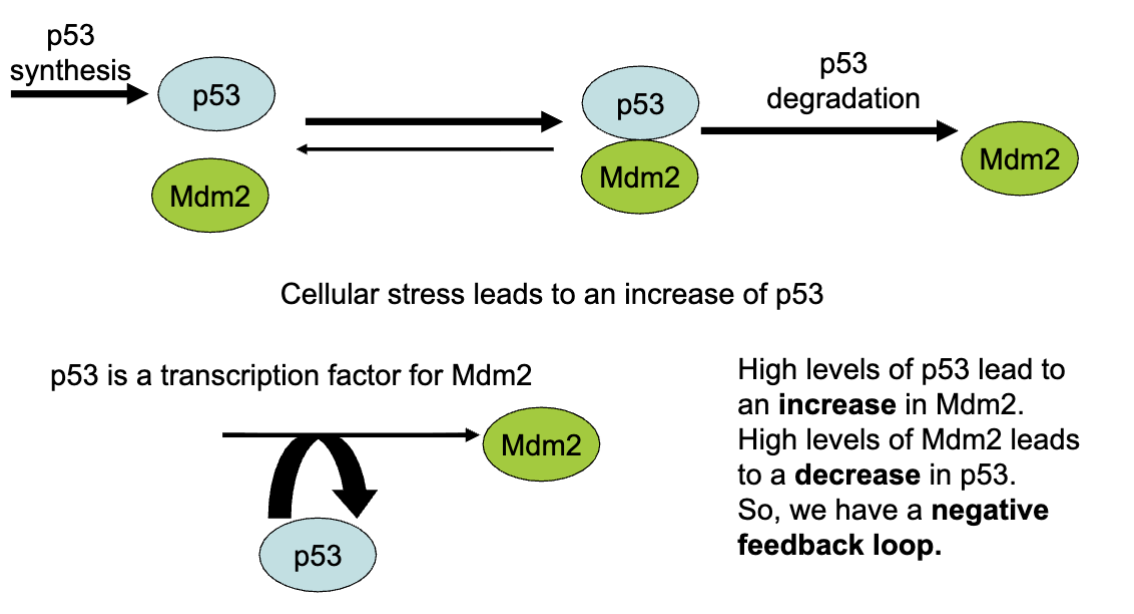
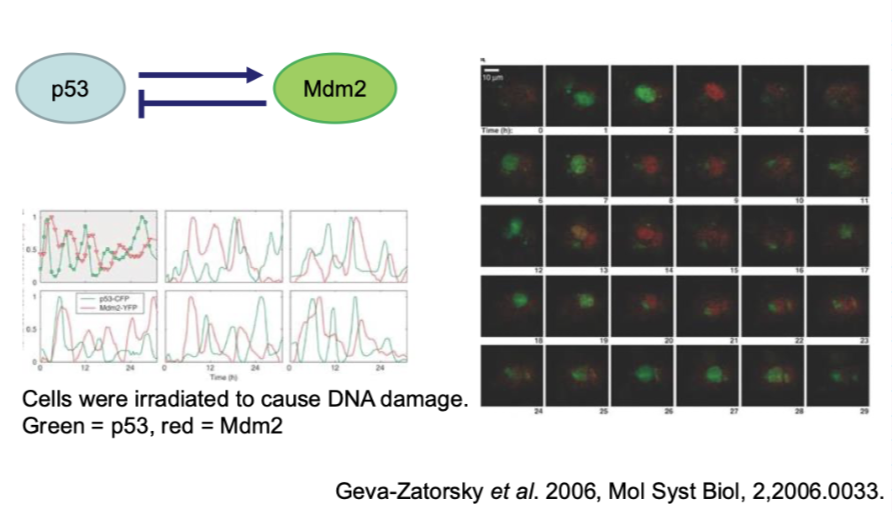
maintained by negative feedback loop with mdm2
Mdm2 is an E3 ligase. Mdm2 binds to p53, and targets p53 for degradation by the proteasome
Only when p53 detects damage is it phosphorylated and prevented from target by mdm2
High levels of p53 lead to an increase in Mdm2.
High levels of Mdm2 leads to a decrease in p53.
So, we have a negative feedback loop.
how can p53 negative feedbacl loop be visualised
fluorescence microscopy
In nucleus of one single cell
Wave of one protein then the other
When one activated the other inactivated
what are the other aspects of proteostasis apart from protein amount
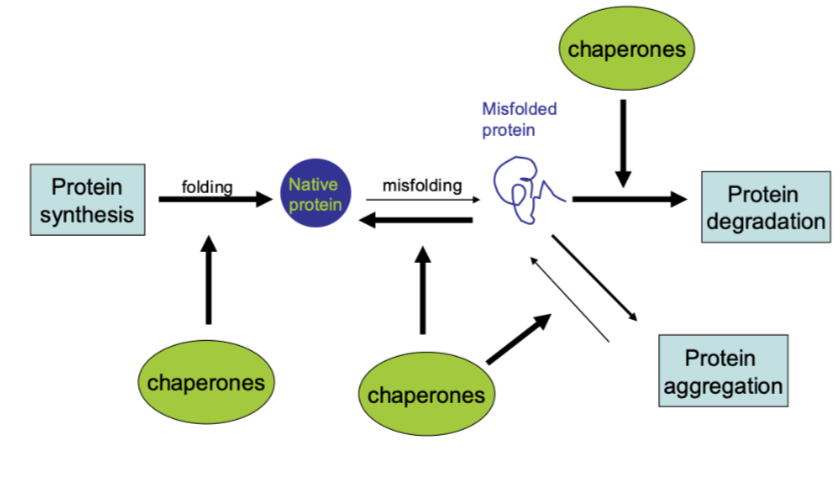
From synthesis, folding and acquisition of naïve state of protein is controlled
Steps after that- eg misfolding, can return to normal state
Aggregation and degradation
A lot controlled by chaperones
what is the life cycle of a protein
Synthesis
Folding
Transport
Modifications
Function
Degradation
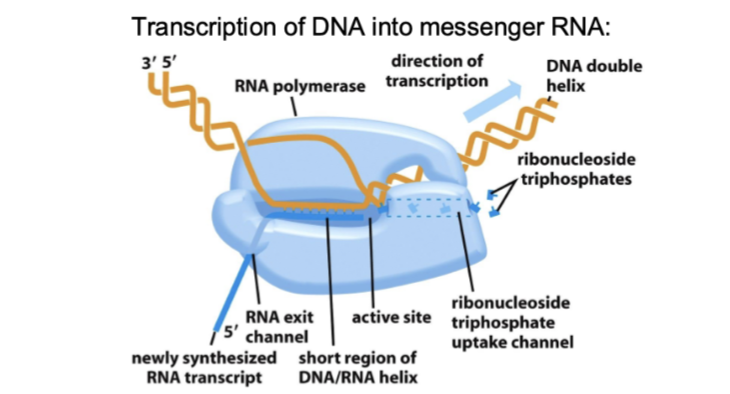
what is transcription
Transcription is regulated by transcription factors which can either promote or inhibit transcription
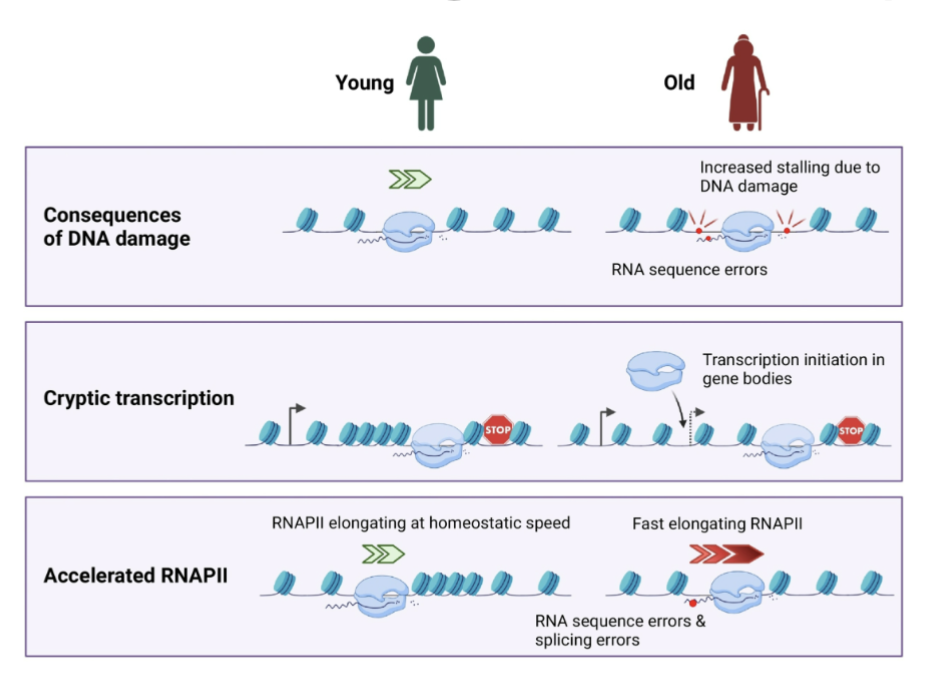
Aged and senescent tissues display overall reduced transcription, while the fraction of transcripts with sequence errors and splicing errors increase
what are 3 age-related changes in transcritption
Stalling RNA polymerase as result of increased DNA damage
truncated mRNA- When RNA polymerase binds in gene itself instead of promoter
accelerated RNAPII- RNA pol works faster- makes errors and mutations that affect quality of proteome downstream
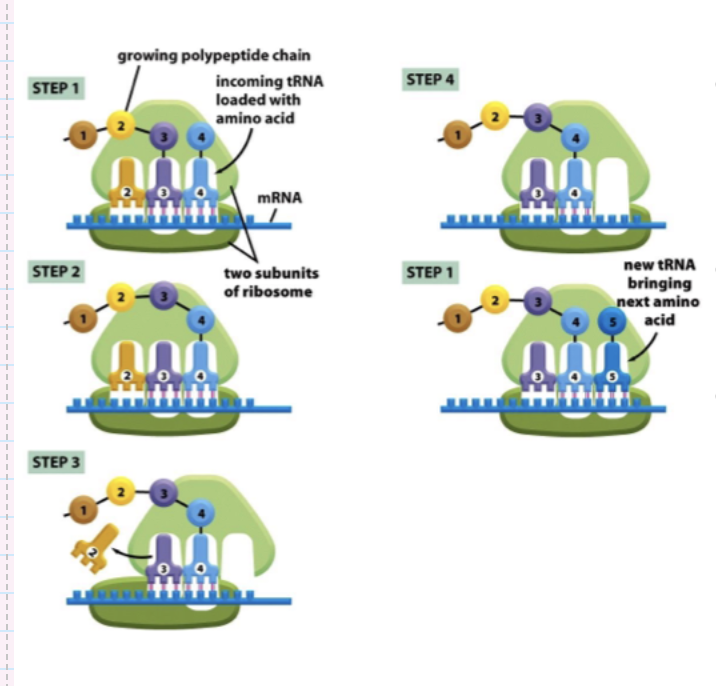
what is the relationship between translation and ageing
Dysregulation in signalling pathways (e.g. mTOR) will lead to changes in translation
Activity of some translation factors declines with age
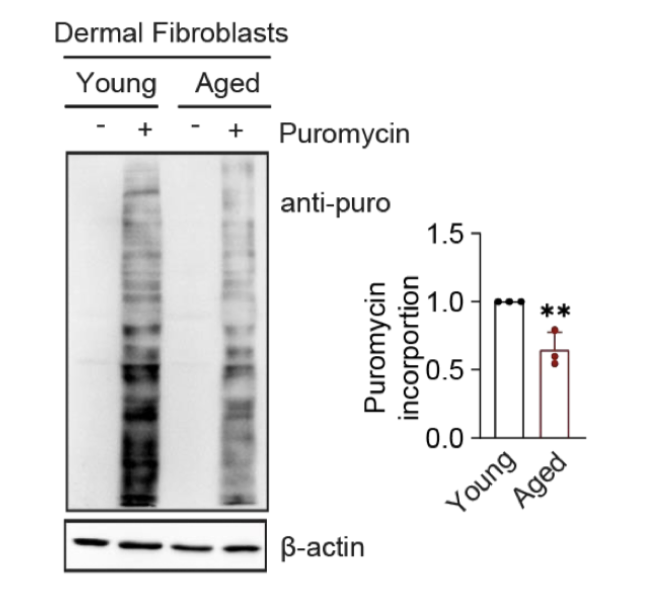
how can reduced translation with age be visualised
Toxin that binds to new proteins from ribosome- tells how many copies being translated
Can see the rate of overall protein translation
less protein labelled in old cells- rate of translation becomes slower
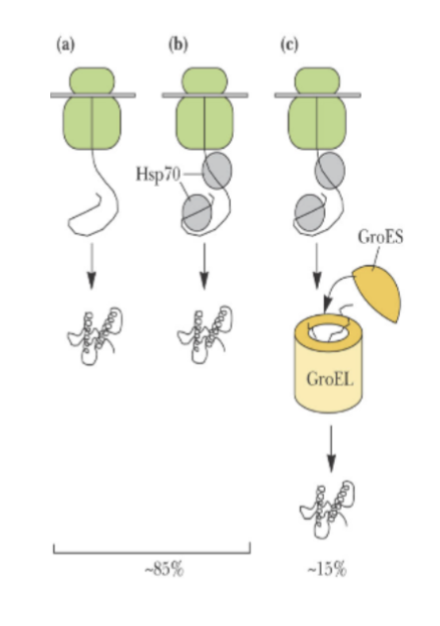
describe protein folding
for small proteins, happens naturally as exit the ribosome
for larger proteins- need help from chaperones
Chaperone-independent folding. The protein folds as it is synthesized on the ribosome (green)
Hsp70-assisted protein folding. Hsp70 (gray) binds to nascent polypeptide chains as they are synthesized and assists their folding.
Folding assisted by Hsp70 and chaperonin complexes
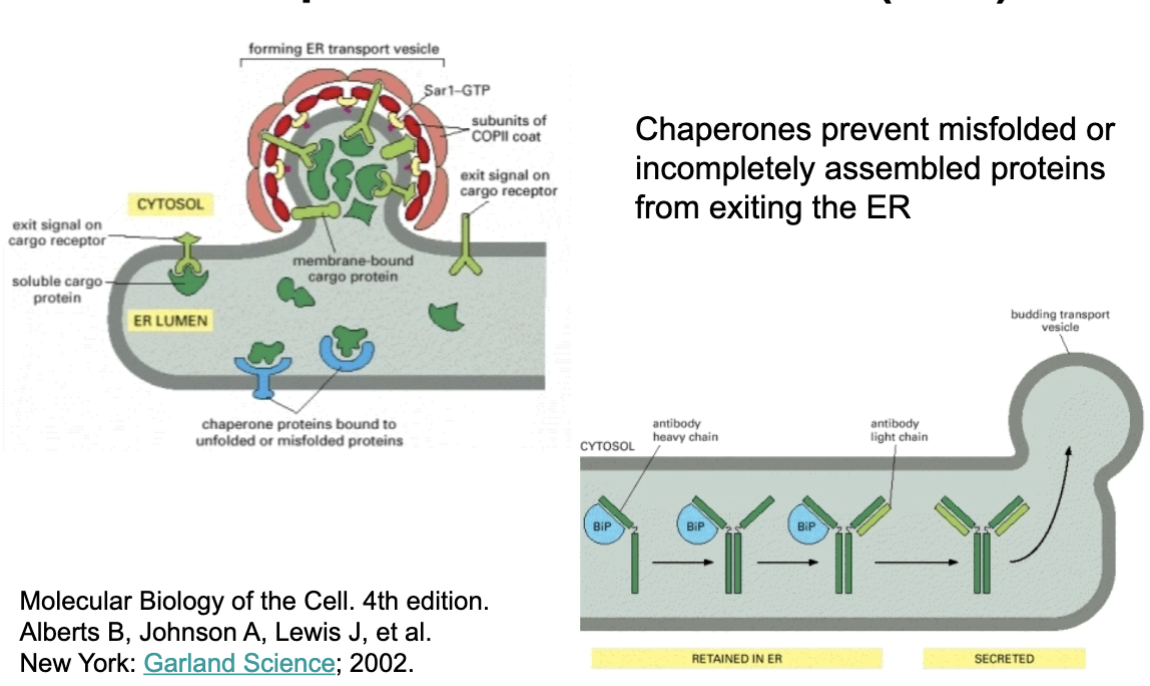
how are proteins transported from the endoplasmic reticulum
Chaperones prevent misfolded or incompletely assembled proteins from exiting the ER
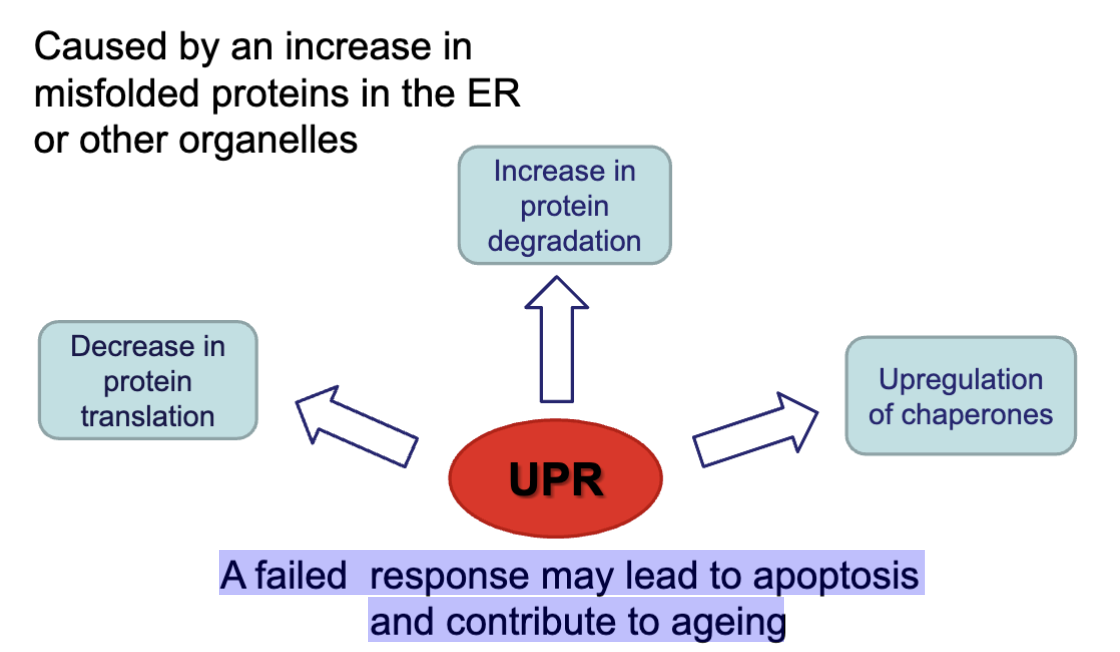
what is the unfolded protein response (UPR)
Caused by an increase in misfolded proteins in the ER or other organelles
A failed response may lead to apoptosis and contribute to ageing
what are protein modifications
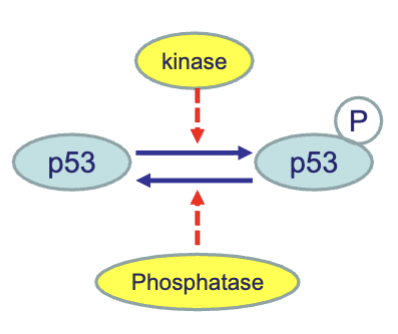
Many reversible covalent modifications affect protein function e.g.
Phosphorylation
Acetylation
Glycosylation
Ubiquitination
Also undesired modifications due to reactive oxygen or reactive nitrogen species
what are the 3 major classes of oxidative damage
conformational
covalent
Both kinds of damage can drastically affect protein function.
what is conformational protein damage
Conformational damage refers to unfolding of the protein
caused by heating, attack by free radicals, chemicals, pH changes, etc
what is covalent protein damage
Covalent damage is a chemical change in the amino acids that make up the protein
E.g. oxidation, isomerization, carbonylation or formation of isoaspartate.
changes may occur spontaneously or may be induced and/or accelerated by environmental factors.
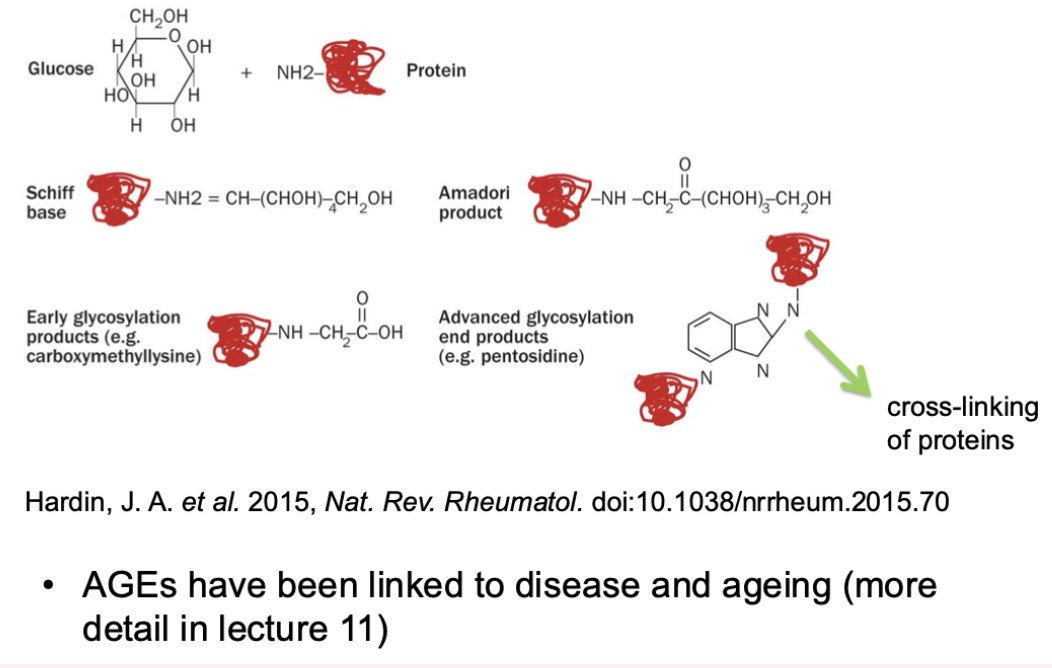
what are advanced glycation end-products (AGEs)
Type of protein modification
Advanced glycation end-products (AGEs) are harmful protein modifications formed when sugars react non-enzymatically with proteins, lipids, or DNA.
Glycation is promoted by high glucose levels, unhealthy diet, ageing, and diseases such as diabetes.
Glucose chemically reacts with proteins to form:
a Schiff base
then an Amadori product
which can develop into irreversible AGEs
These modified proteins cannot function normally.
AGEs cause cross-linking and clumping of proteins inside and outside cells.
AGE accumulation in blood vessels and tissues contributes to:
plaques
vessel stiffening
cardiovascular disease
age-related tissue dysfunction
what does repair of protein damage depend upon, what if it is unsuccessful
the ability to recognise a change in a protein as abnormal,
a means of reversing the change.
If repair is unsuccessful damaged protein needs to be removed to prevent:
cellular dysfunction
protein aggregation
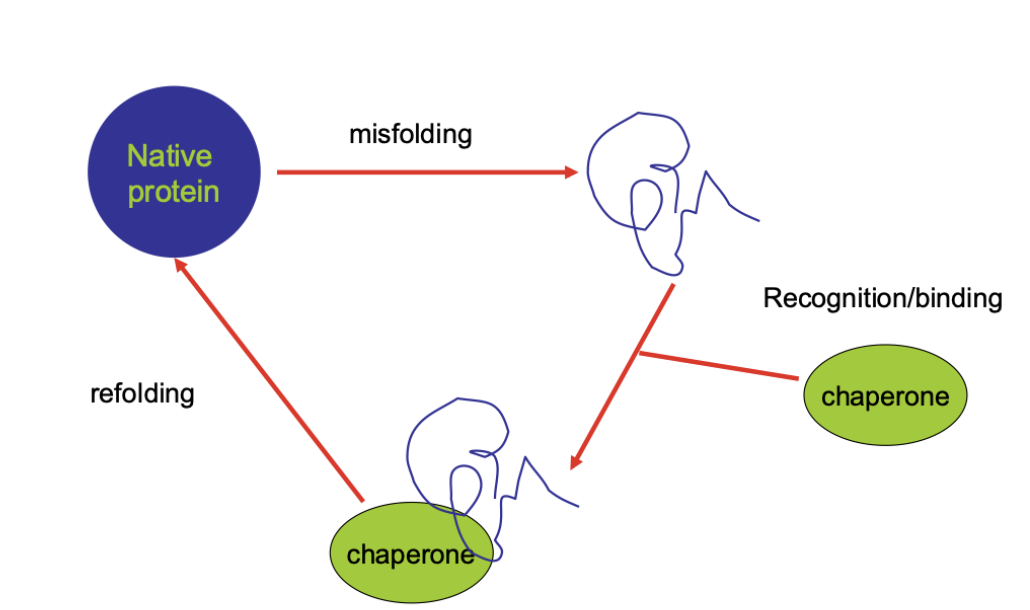
what molecules are key in repairing conformational damage
Chaperones are key to repairing misfolding or removing the protein if acn’t be repaired
describe repair/removal of different covalent damage
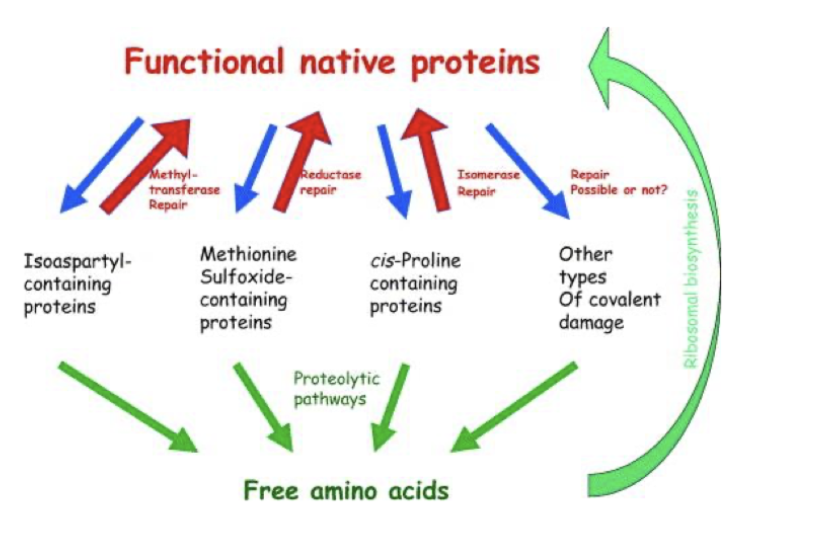
what is another name for molecular chaperones
Many chaperones are also known as heat shock proteins e.g. Hsp90. (Heat shock triggers misfolding in the cell)
• Present in cells under normal conditions.
• Upregulated after stress.
Many functions, e.g.
Folding/refolding
Prevent protein aggregation
Assist in targeting proteins for degradation
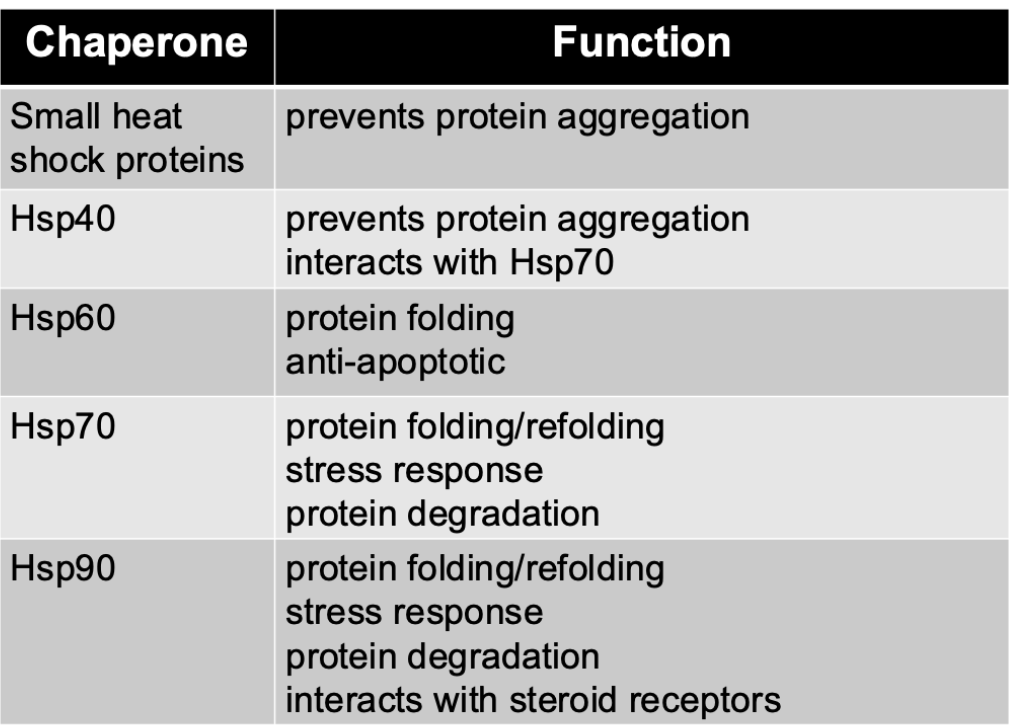
give 5 examples of chaperones and their function
Classified based on protein size, and increasing in complexity
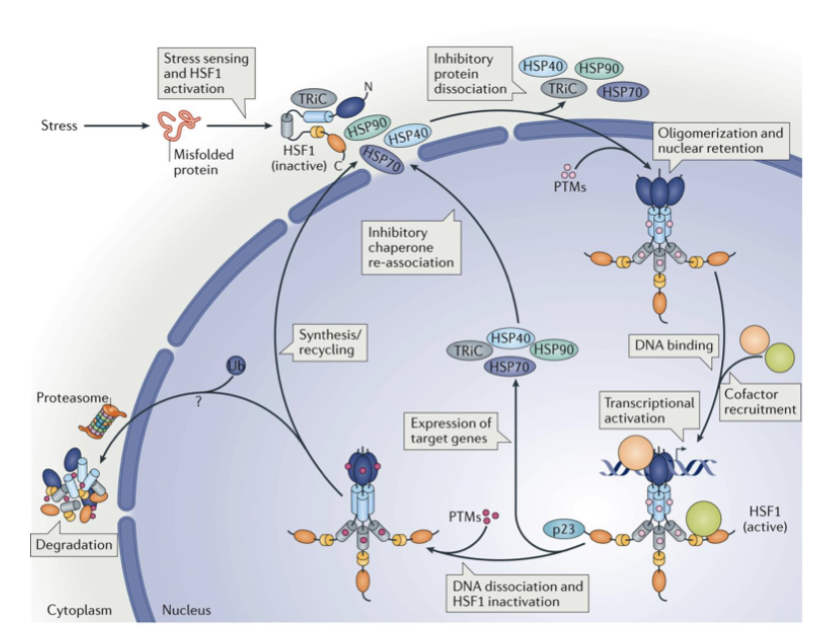
what regulates the transcription of heat shock genes
heat shock transcription factor 1 (HSF1)
Normally present as inactive monomers.
• In stressed cells HSF1 forms homotrimers.
• Trimers are activated by phosphorylation and translocate to the nucleus where they bind to the heat shock element (HSE).
• This results in synthesis of heat shock proteins (known as the “heat shock response” but stress does not have to be thermal).
what is the heat shock response cycle
Normally HSF1 as monomer in cytoplasm as bound to chaperones in abundance, as not enough misfolded proteins in cell
If misfolded proteins detected, chaperones sequestered to deal with them
With additional signalling, HSF1 escapes and goes to the nucleus to form trimeric assembly with additional co factors bind to DNA and synthesize a number of needed chaperones
Increased chaperone level slows down activation as can trap more monomers of HSF1
Trimeric form of HSF1 is recycled to monomeric state or degraded by proteolytic systems
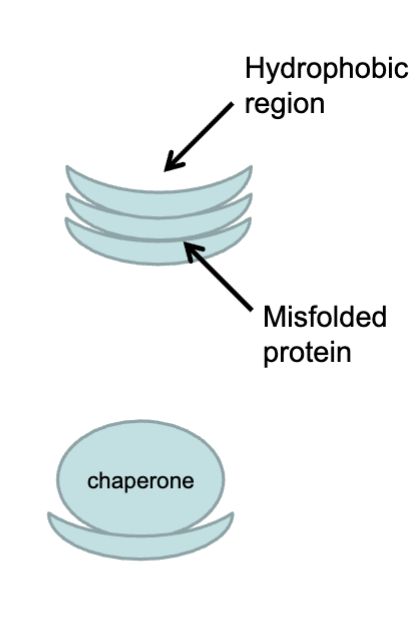
how do chaperones prevent protein aggregation
Misfolded proteins expose hydrophobic regions which tend to “stick” together
Chaperones bind to hydrophobic region to prevent misfolding protein “sticking” together
how are chaperones involved in protein degradation and signal transduction
Chaperone-mediated autophagy
target some proteins for degradation via ubiquitin-proteasome system
Hsp70 and Hsp90 interact with many
different signalling proteins:
Nuclear hormone receptors
Protein kinases
Cell cycle regulators
Cell death regulators
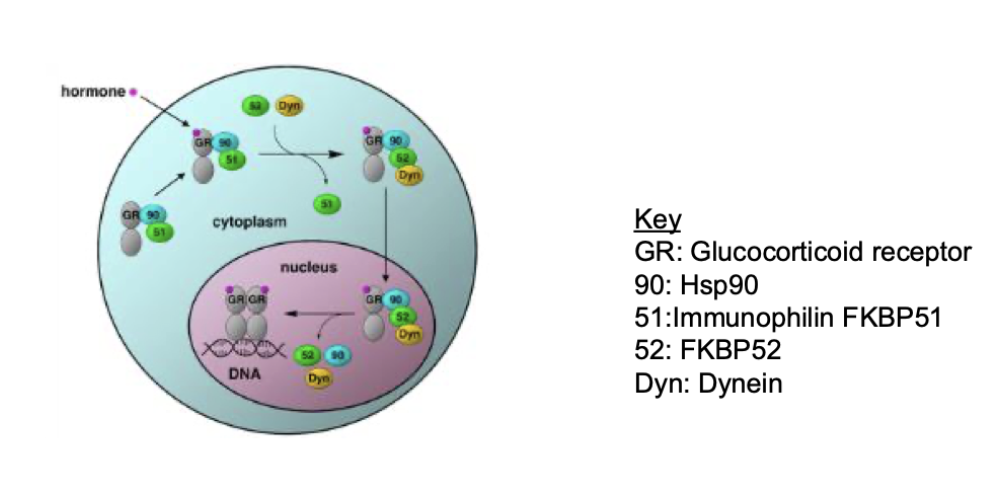
how does Hsp90 regulate glucocorticoid receptor (GR) signalling
Hsp90 binds the Glucocorticoid receptor (GR) in the cytoplasm and keeps it in an inactive but stable state.
GR signalling only occurs when chaperone exchange/remodelling permits receptor activation.
When a glucocorticoid hormone binds GR, the chaperone complex is rearranged/displaced.
The GR complex is transported to the nucleus by the dynein motor system.
In the nucleus, the chaperone complex must disassemble so GR can function as a transcription factor (TF).
Activated GR then binds DNA and regulates gene transcription.
how do chaperones change with ageing
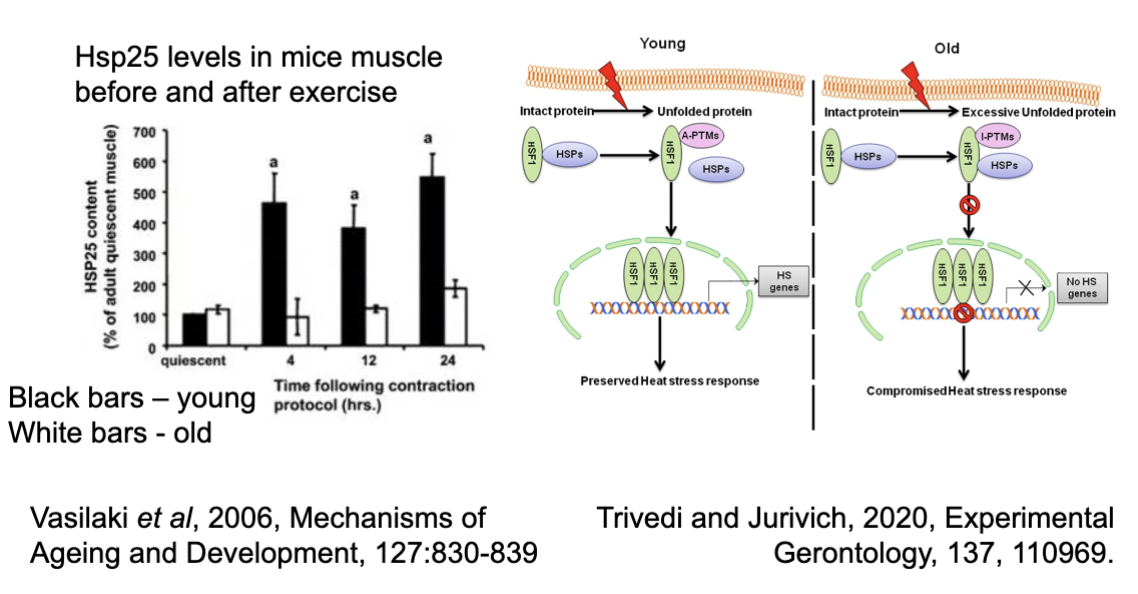
Decline in the heat shock response with age
Possibly due to decline in HSF1 transcriptional response with age.
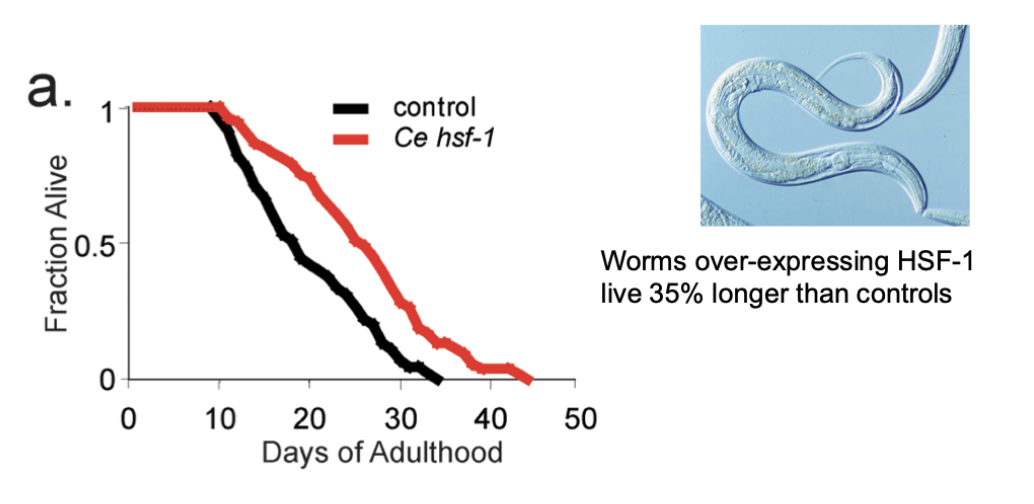
Overexpression of HSF1 and HSPs has been shown to extend lifespan in C. elegans and D. melanogaster.
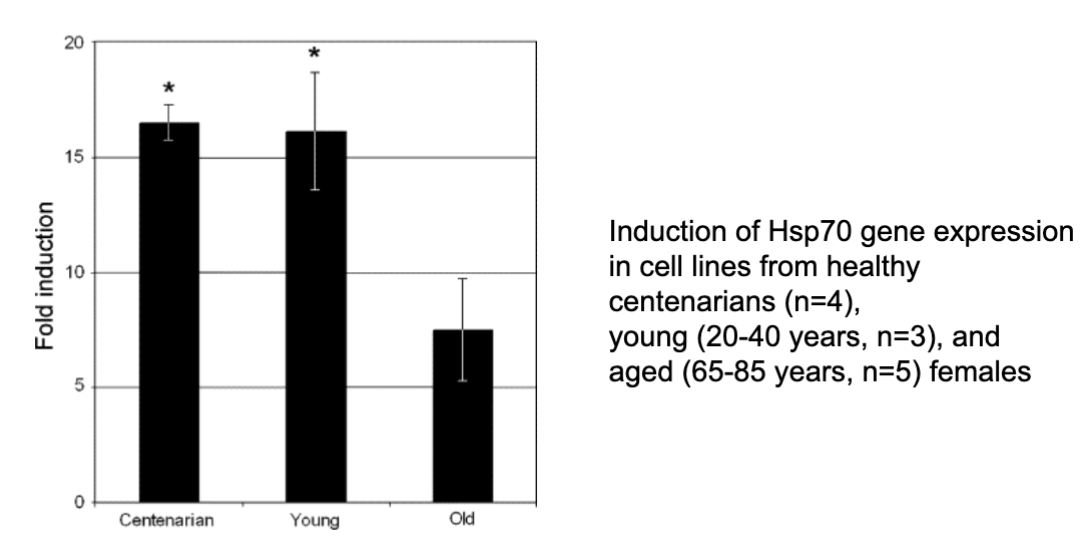
Cells from human centenarians display preserved upregulation of HSPs during stress
what happens to HSF1 transcriptional response with age
it declines
Evidence of downregulation
After exercise
what does overexpression of HSF1 in C. elegans cause
extended lifespan
what happens to HSP in human centenarians
Cells from human centenarians display preserved upregulation of HSPs during stress
how does proteostasis decline with age
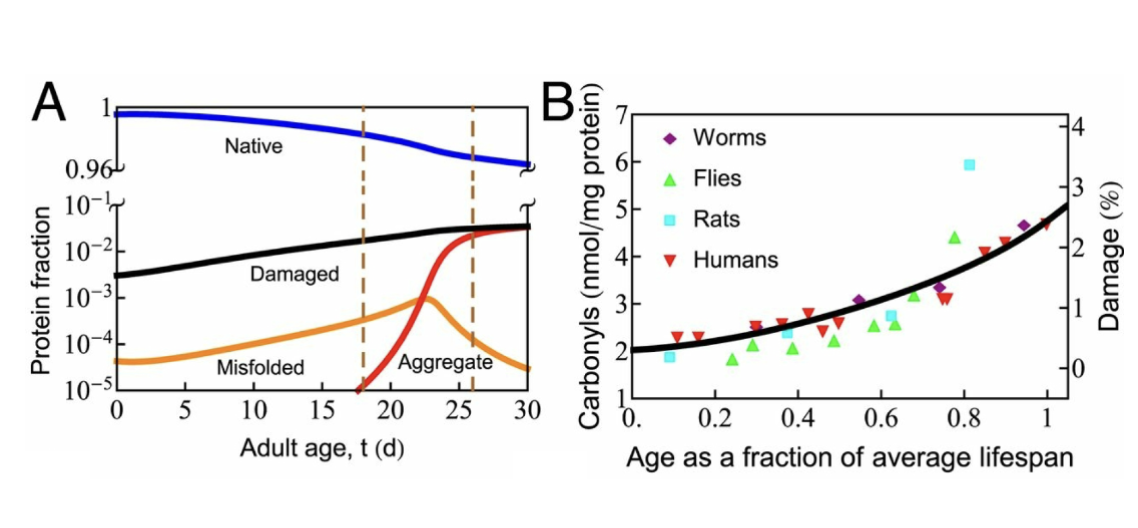
what is the chaperone overload hypothesis
Based on narrow understanding
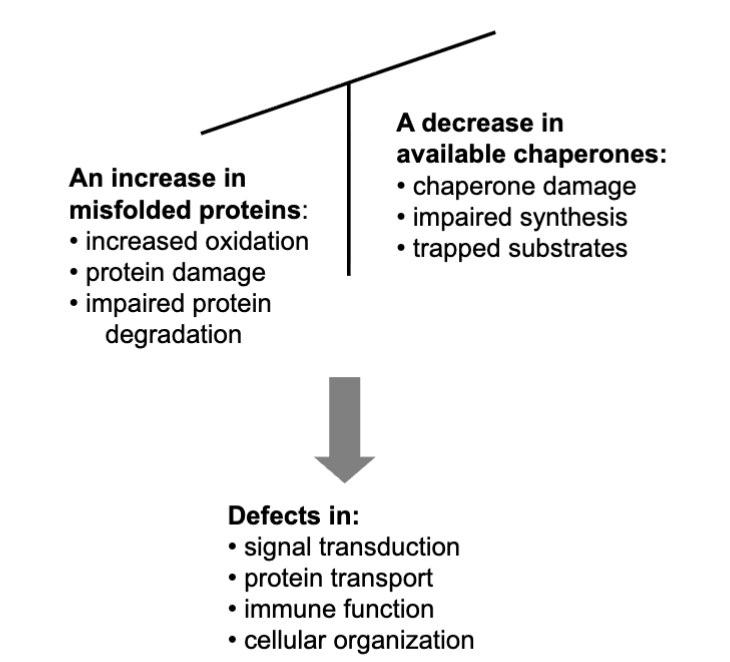
An increase in misfolded proteins:
• increased oxidation, protein damage, impaired protein degradation
A decrease in available chaperones:
• chaperone damage, impaired synthesis, trapped substrates
causes:
Defects in:
• signal transduction, protein transport, immune function, cellular organization