BIOL 445 - Module 4
 Call Kai
 Learn
Learn Practice Test
 Spaced Repetition
 Match
Match Flashcards
 Knowt Play
1/305

There's no tags or description
Looks like no tags are added yet.
Name | Mastery | Learn | Test | Matching | Spaced | Call with Kai |
|---|
No analytics yet
Send a link to your students to track their progress
306 Terms
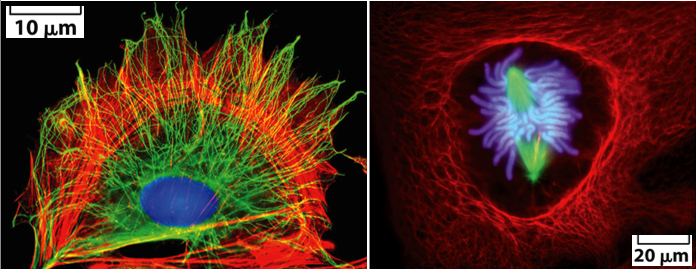
What is the cytoskeleton?
system of protein filaments that provides cell shape and enables directed movement
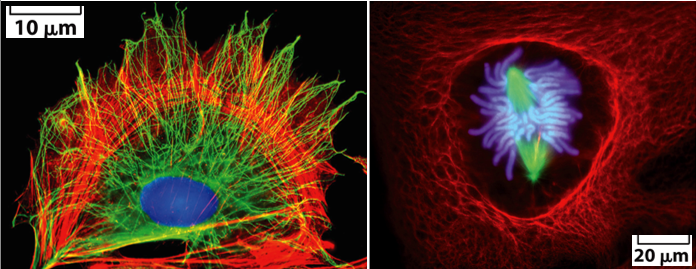
What are the main functions of the cytoskeleton?
provides structural support and allows for directed cell movement
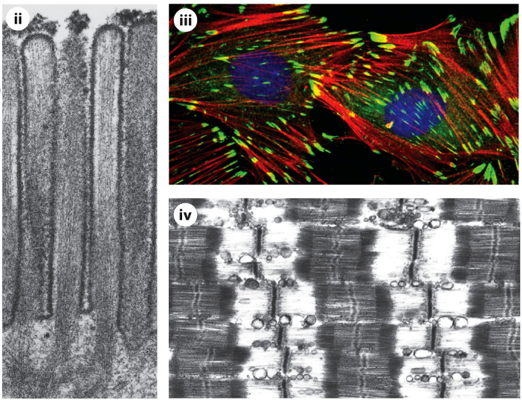
What is another name for actin filaments?
microfilaments
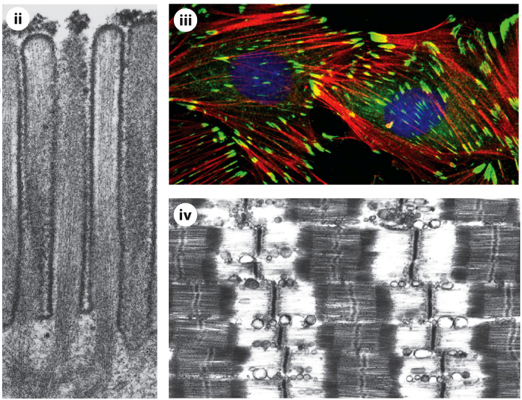
What protein are actin filaments made of?
actin
What nucleotide does actin bind?
ATP
What is G-actin?
Globular (monomer) form of actin
What is F-actin?
Filamentous (polymer) form of actin
How is an actin filament structured?
two protofilaments twisted around each other
What are the actin isoforms?
All of the above
How are isoforms similar to isozymes?
both are different forms of proteins with similar functions but slight differences in structure
What structures can actin filaments form?
linear bundles, 2D networks, and 3D gels
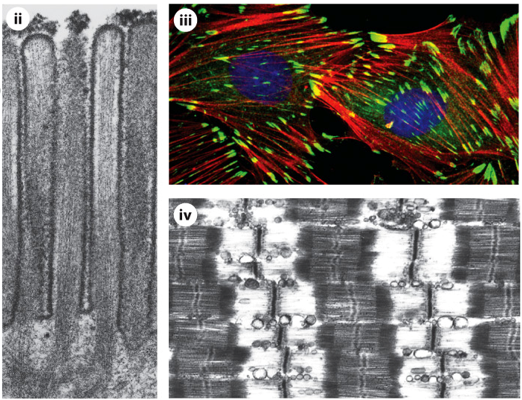
What helps actin filaments form complex structures?
cross-linking accessory proteins
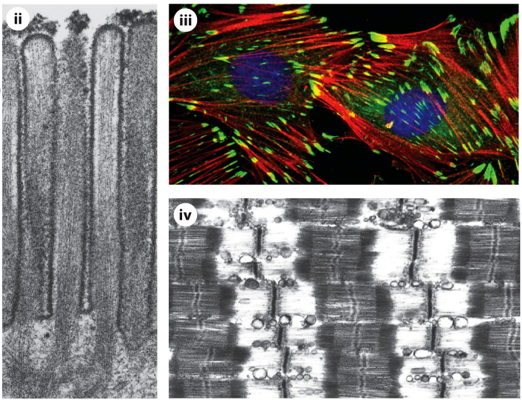
Where are actin filaments concentrated in the cell?
the cell cortex (just beneath the plasma membrane)
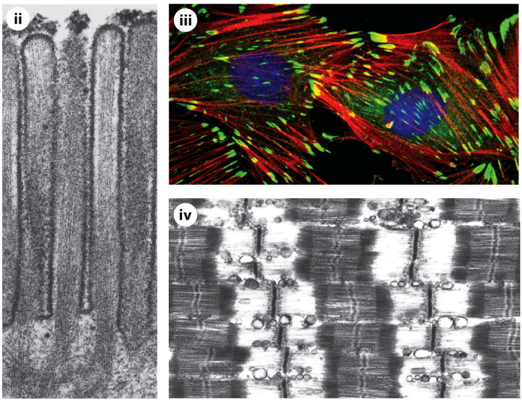
What is the cell cortex?
a thin meshwork of actin underlying the plasma membrane
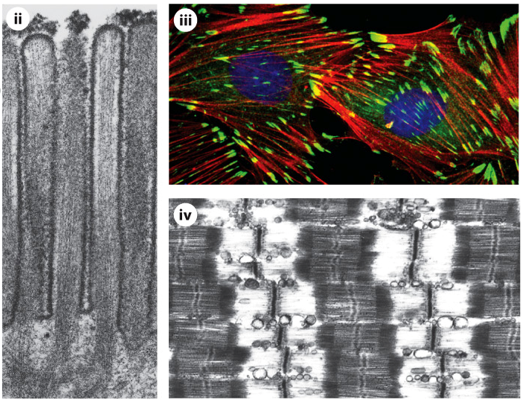
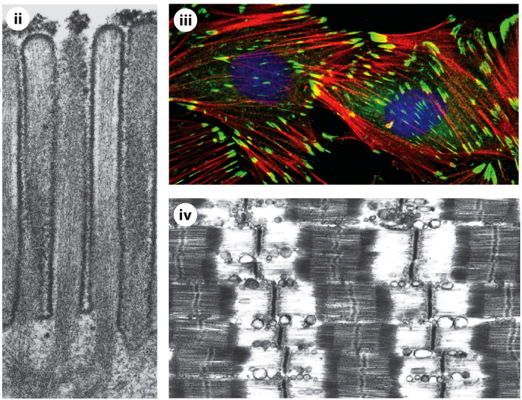
How do actin filaments contribute to cell shape?
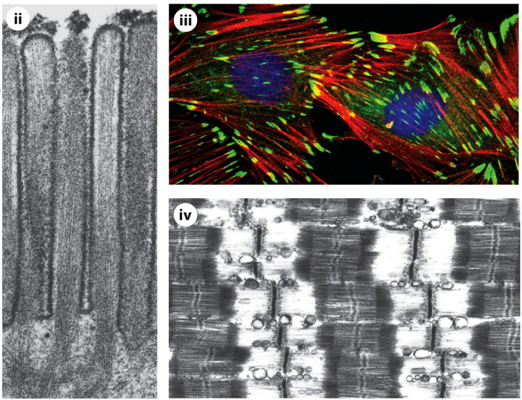
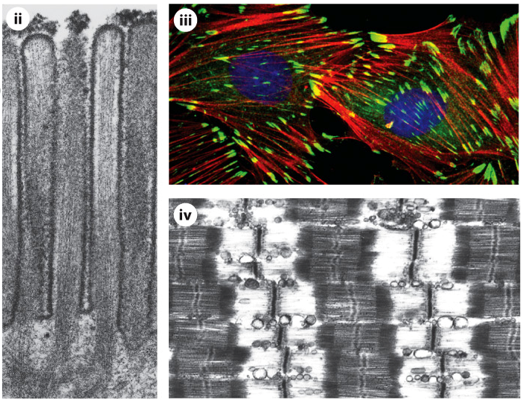
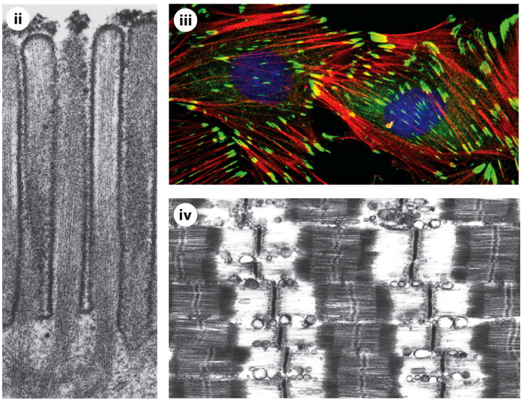
support structures like microvilli in intestinal cells
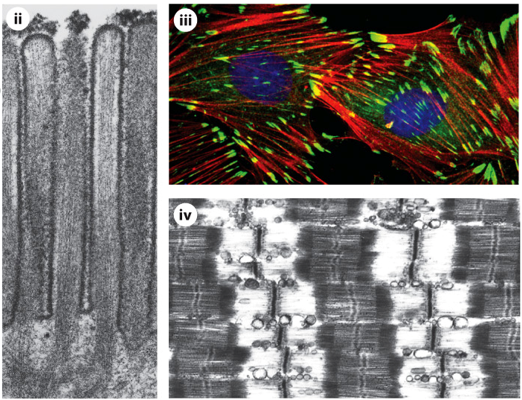
What are microvilli?
finger-like projections that increase surface area, supported by actin filaments
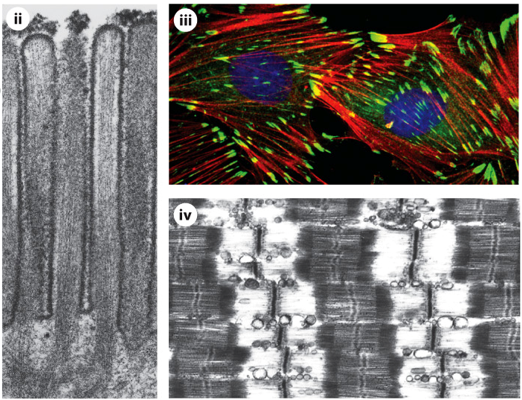
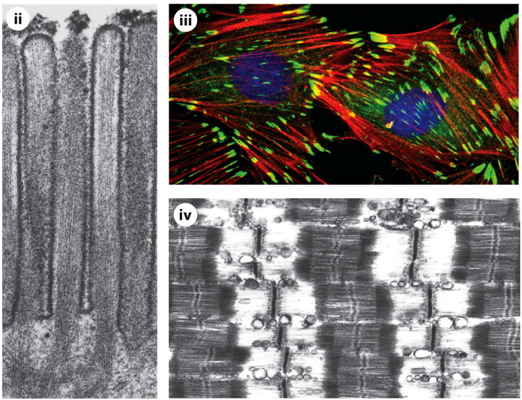
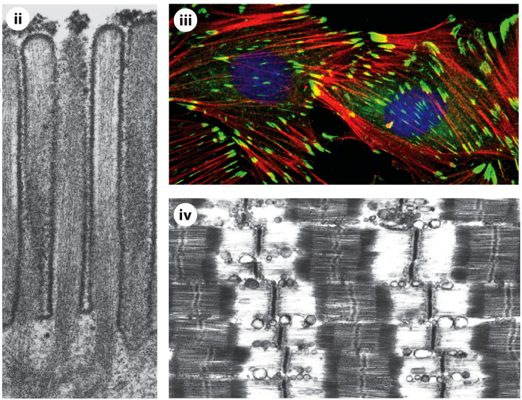
What are stress fibers?
contractile bundles of actin in non-muscle cells
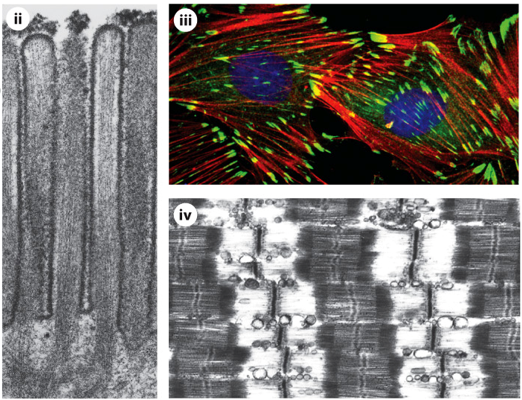
What is the function of stress fibers?
cell adhesion and motility
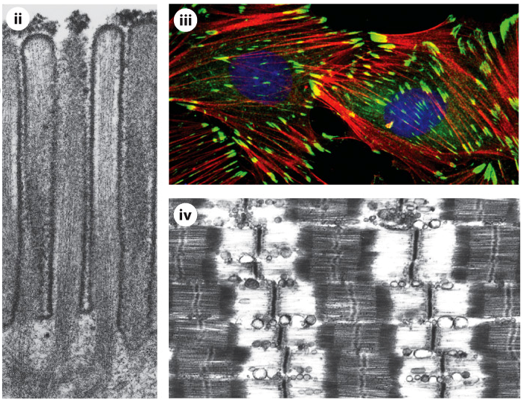
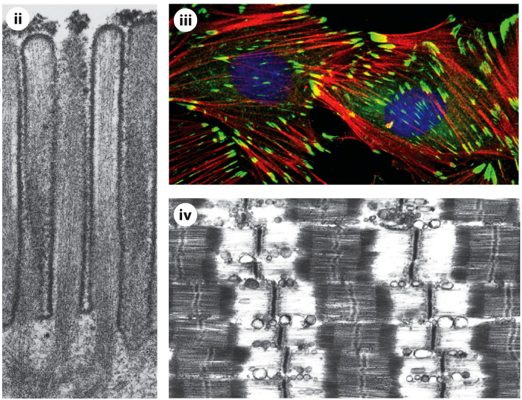
Where are contractile bundles found in muscle cells?
in actin filaments that enable muscle contraction
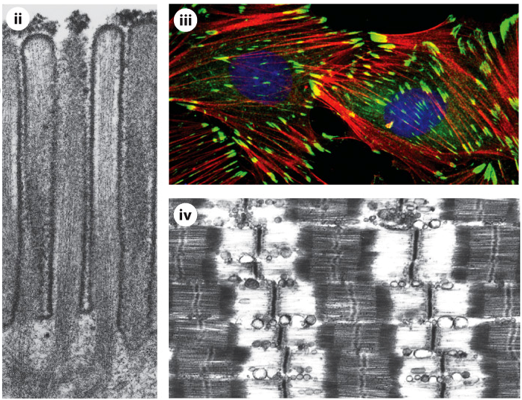
What is the role of actin in muscle cells?
works in contractile bundles to enable muscle contraction
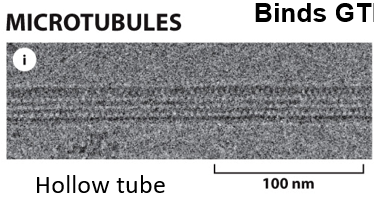
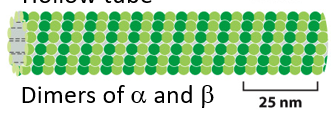
What are microtubules?
long, hollow cylinders made of tubulin protein
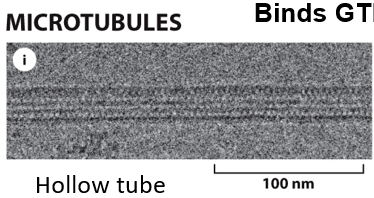
What protein composes microtubules?
tubulin
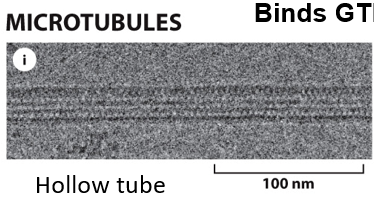
What nucleotide does tubulin bind?
GTP
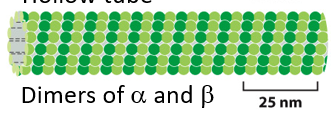
What is the basic subunit of microtubules?
dimer of α-tubulin and β-tubulin
How many isoforms exist for α- and β-tubulin?
6 isoforms each
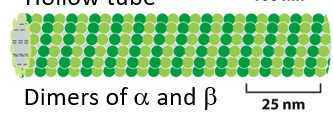
How many protofilaments make up a microtubule?
13 protofilaments
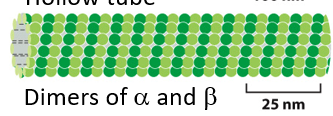
Are microtubules more rigid or flexible than actin filaments?
more rigid
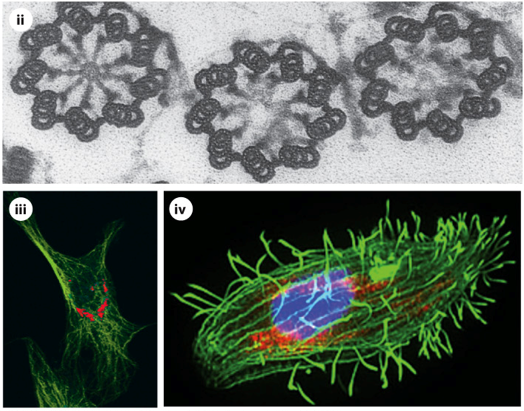
Where are microtubules often anchored in the cell?
microtubule organizing center (MTOC)
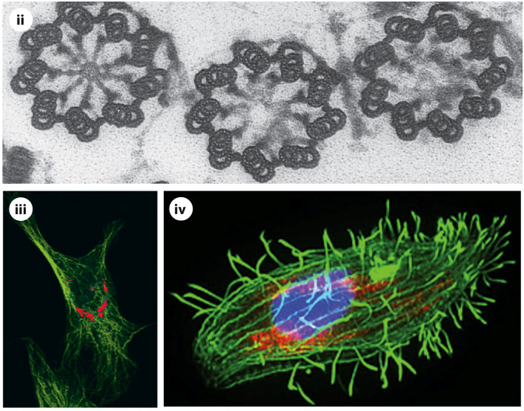
What is the main MTOC in animal cells?
centrosome
What are the main functions of microtubules?
organize organelles and segregate DNA during cell division
What role do microtubules play in intracellular organization?
position and organize organelles within the cell
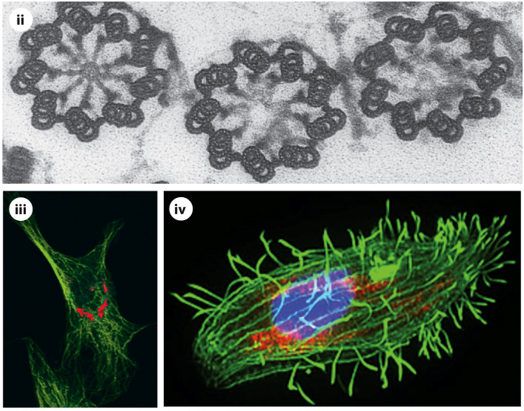
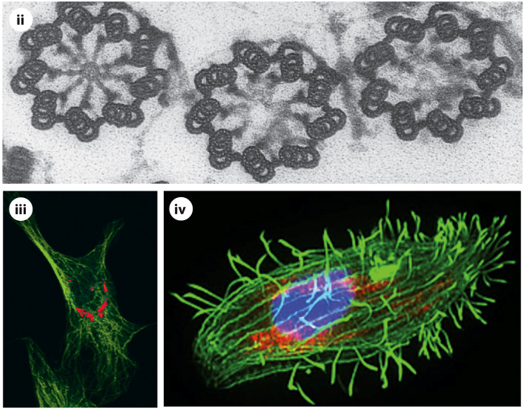
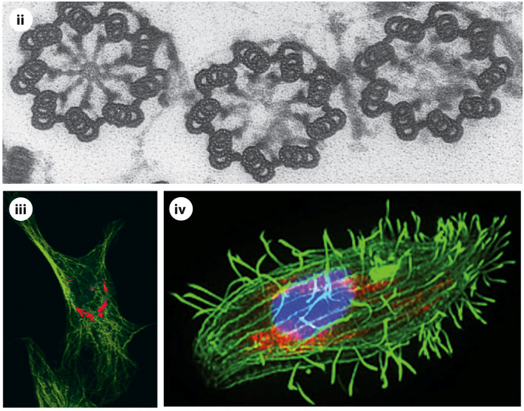
What are cilia?
projections from the cell surface made of microtubules
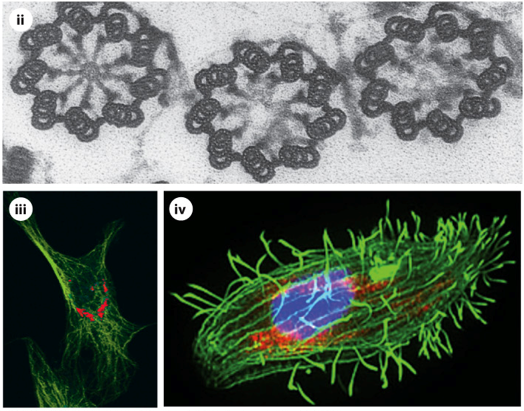
What is the function of motile cilia?
movement (locomotion and moving substances like mucus)
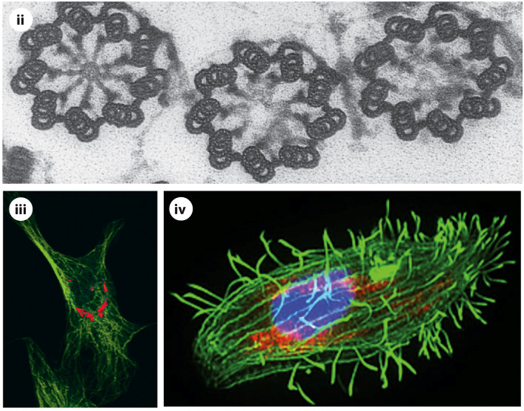
Where are motile cilia found in humans?
respiratory tract
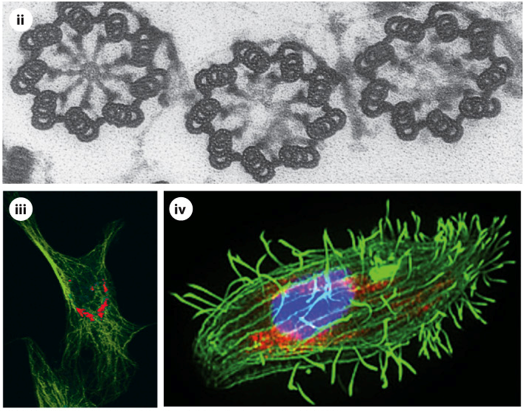
What is the function of motile cilia in the respiratory tract?
mucociliary clearance (moving mucus and trapped pathogens)
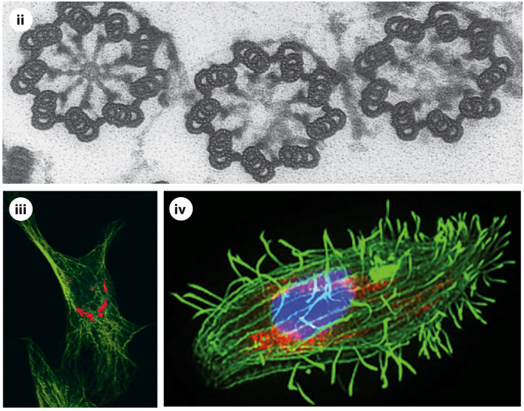
What are primary cilia?
non-motile, sensory structures on cells
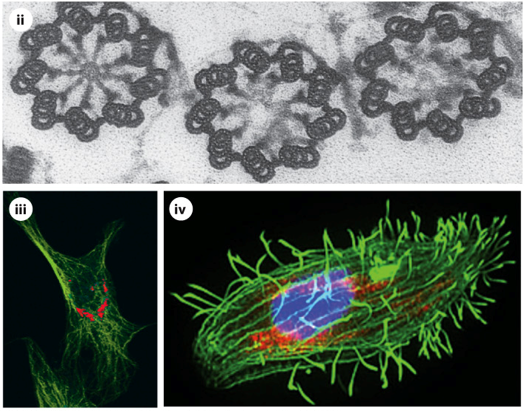
What is the function of primary cilia?
act as sensory antennae
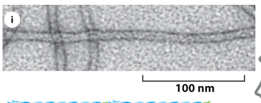
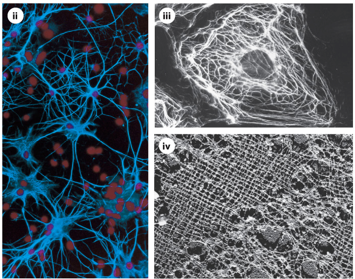
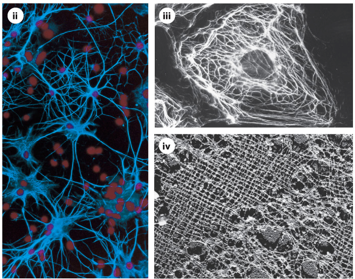
What are intermediate filaments?
rope-like protein fibers that provide mechanical strength to cells
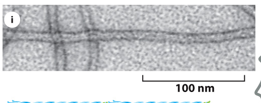
What are intermediate filaments made of?
a large family of intermediate filament proteins (e.g., keratin, lamins)
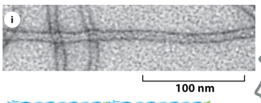
Do intermediate filaments bind nucleotides?
No
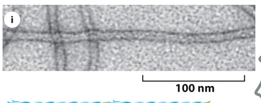
What is the basic structure of intermediate filaments?
coiled-coil dimers of elongated monomers
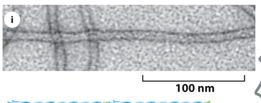
How are intermediate filaments assembled?
monomers → dimers → coiled structures → rope-like filament
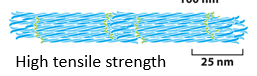
What key mechanical property do intermediate filaments have?
high tensile strength (resist stretching)
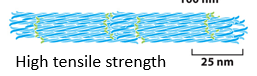
Are intermediate filaments rigid or flexible?
very flexible but hard to break (like rope)
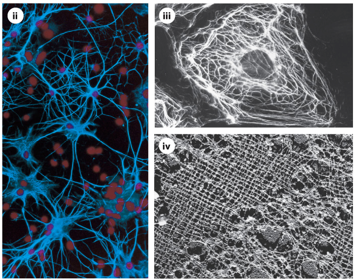
What is the main function of intermediate filaments?
provide structural support and mechanical strength
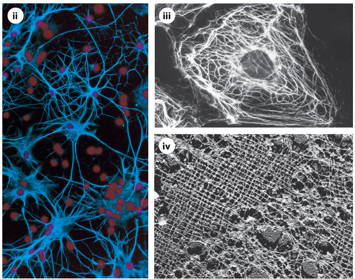
What is the role of intermediate filaments in epithelial cells?
strengthen cell layers and anchor cells to each other and to the extracellular matrix
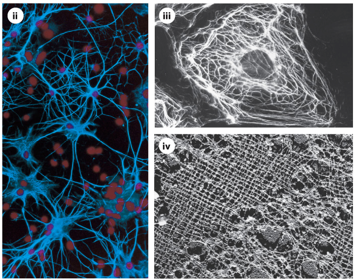
Why are intermediate filaments important in epithelial tissues?
they help tissues resist mechanical stress
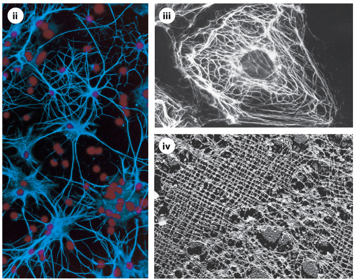
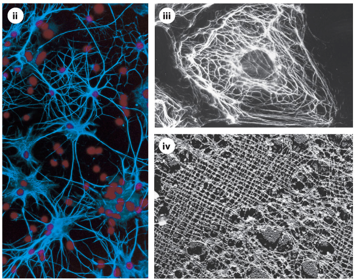
What are neurofilaments?
intermediate filaments found in neurons
What is the function of neurofilaments?
provide structural support for axons
How do neurofilaments affect axon function?
they regulate axon diameter
Why is axon diameter important?
larger diameter → faster signal conduction
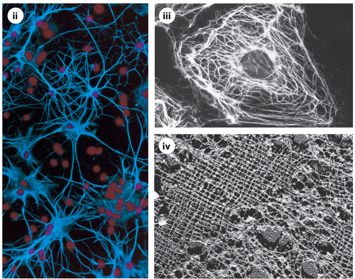
What is the nuclear lamina?
a meshwork of intermediate filaments beneath the inner nuclear membrane
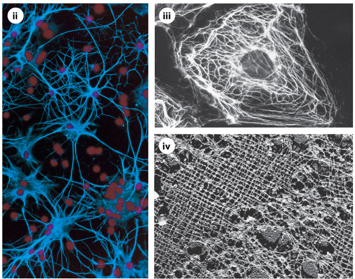
What proteins form the nuclear lamina?
lamins
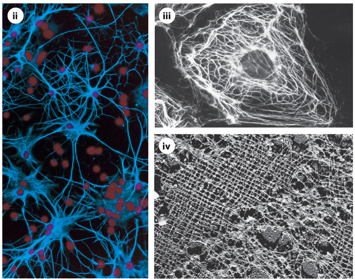
What are the functions of the nuclear lamina?
All of the above
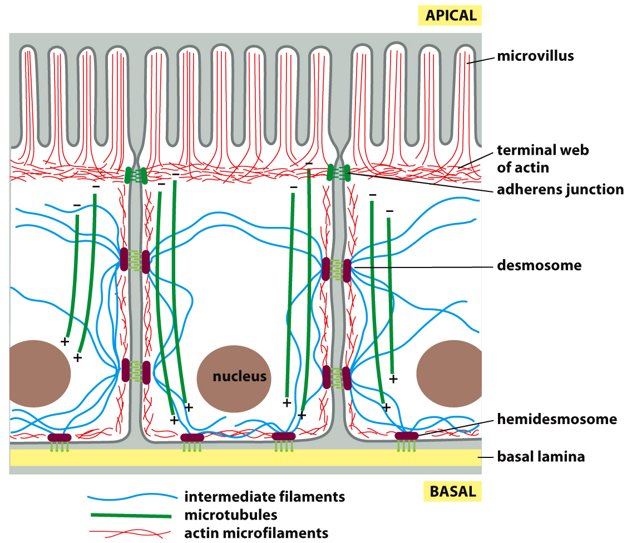
What is cell polarity?
the spatial difference between the apical and basal sides of a cell
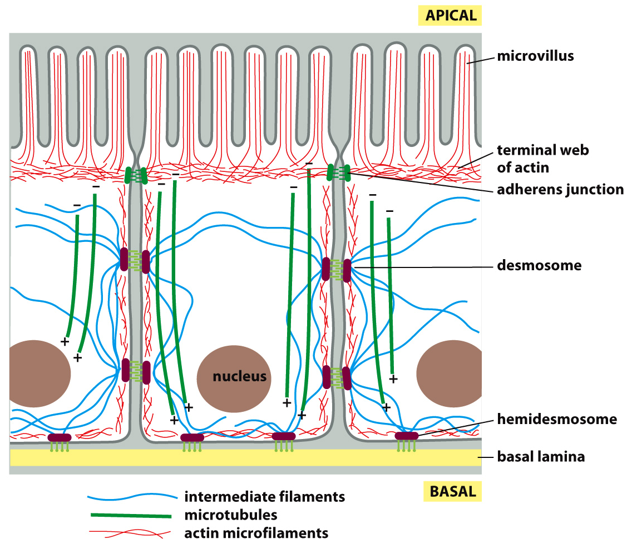
What is one key function of the cytoskeleton related to polarity?
it helps establish and maintain cellular polarity
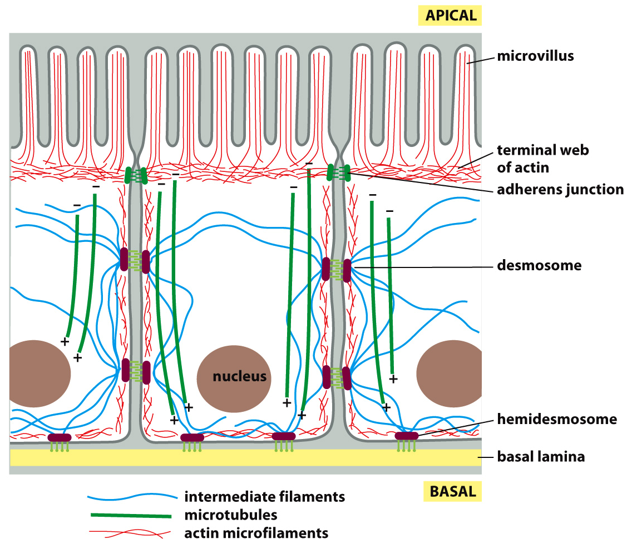
What structures are formed by actin in intestinal epithelial cells?
microvilli
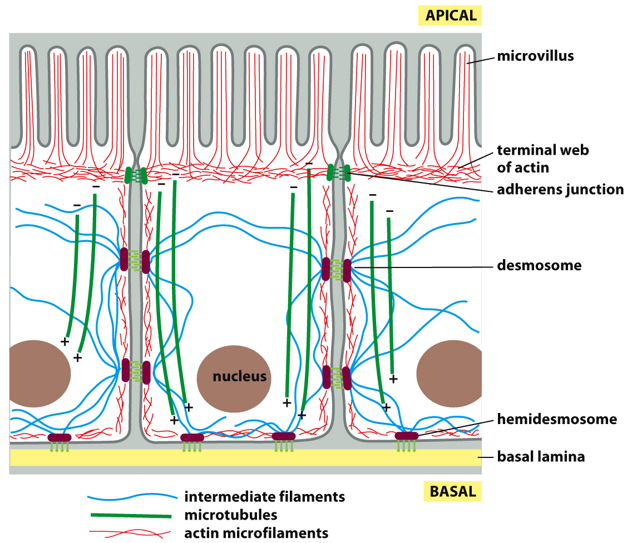
What is the function of microvilli?
increase surface area for absorption
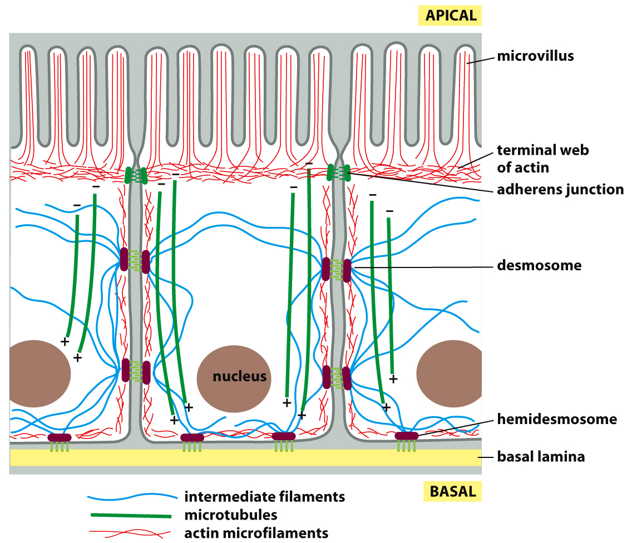
How do actin filaments contribute to cell adhesion?
help cells attach to neighboring cells
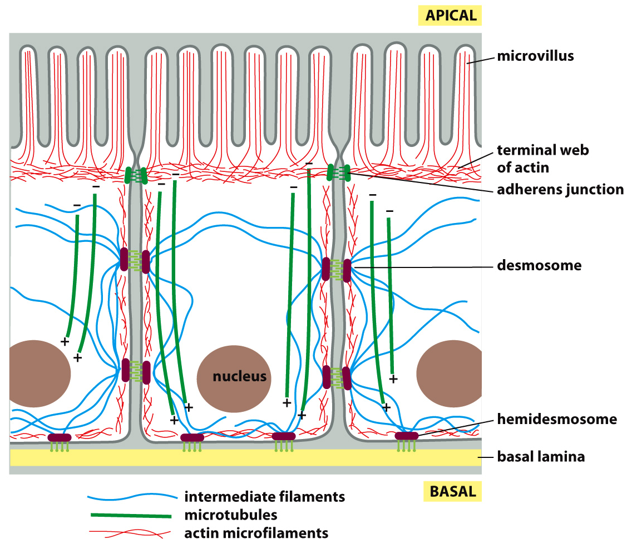
What is the role of microtubules in polarized cells?
coordinate intracellular transport
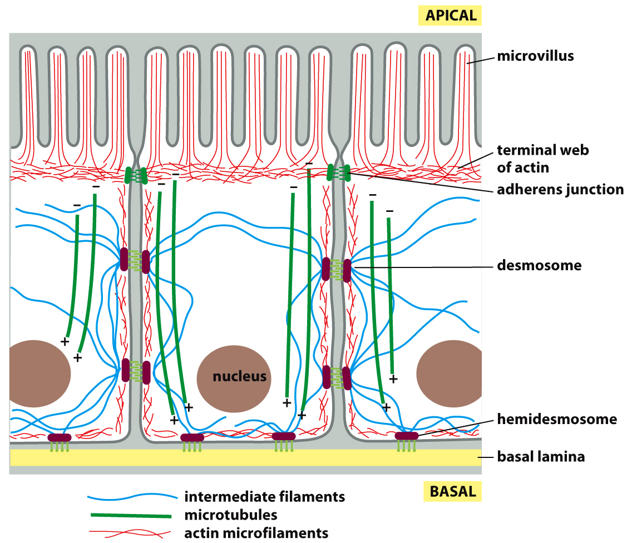
How do microtubules function in transport?
serve as tracks for vesicle movement
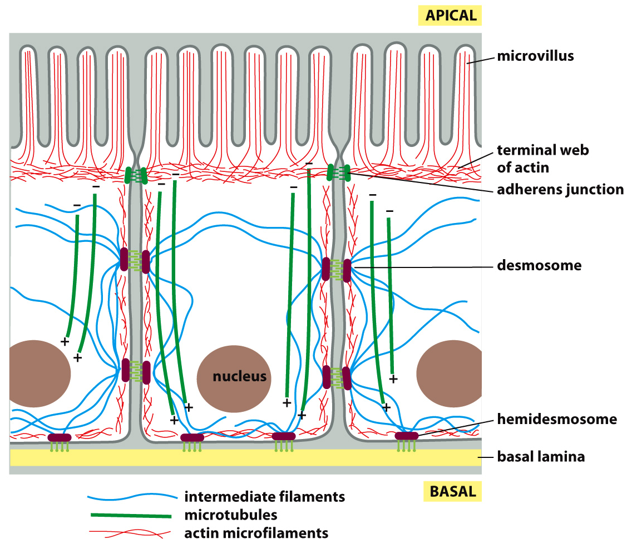
What role do intermediate filaments play in polarized cells?
provide structural support and cell attachment
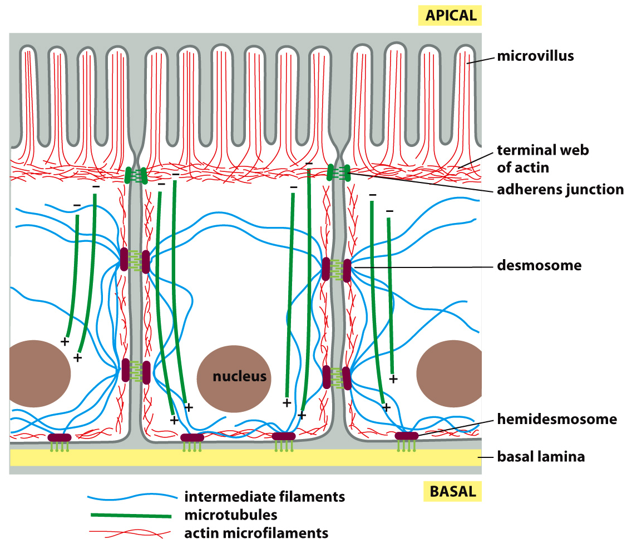
How do intermediate filaments contribute to tissue structure?
attach cells to each other and to the extracellular matrix
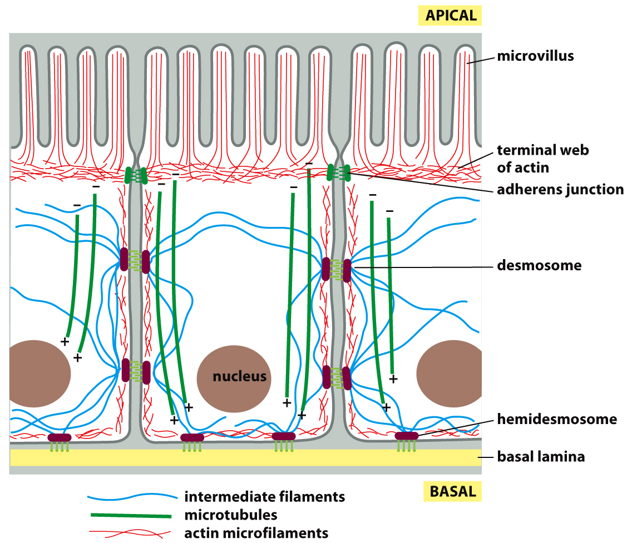
What structures do intermediate filaments anchor to?
desmosomes
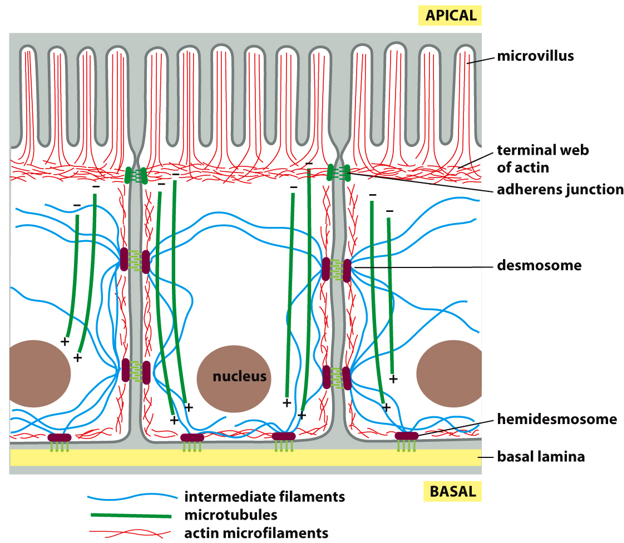
What are desmosomes?
cell junctions that connect cells and link them to the cytoskeleton
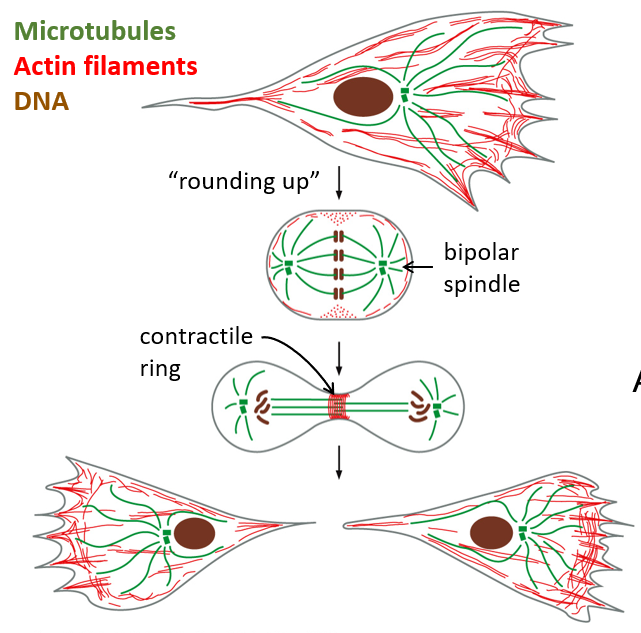
What role does the cytoskeleton play in cell division?
drives and coordinates the physical processes of mitosis and cytokinesis
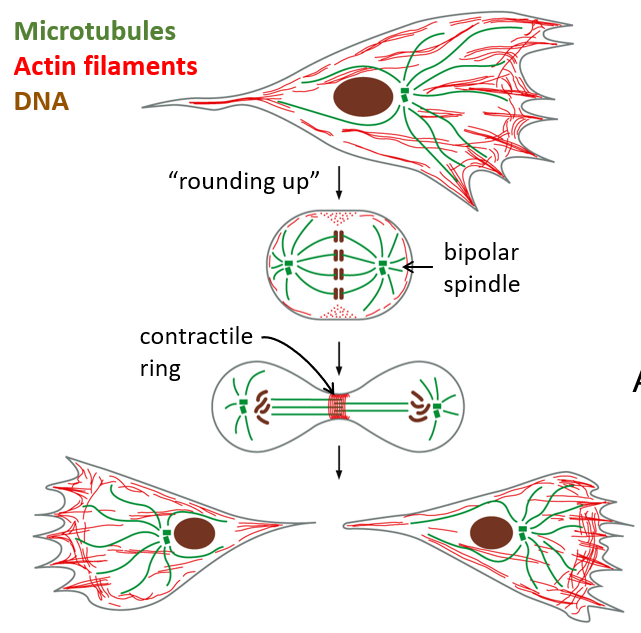
How is the cytoskeleton different in interphase vs mitosis?
it’s highly reorganized during mitosis compared to interphase
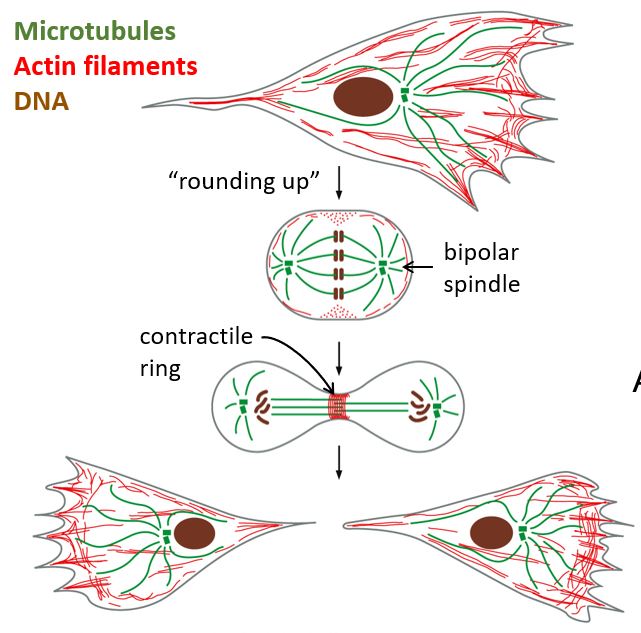
What happens to cell shape at the start of mitosis?
cells become rounder
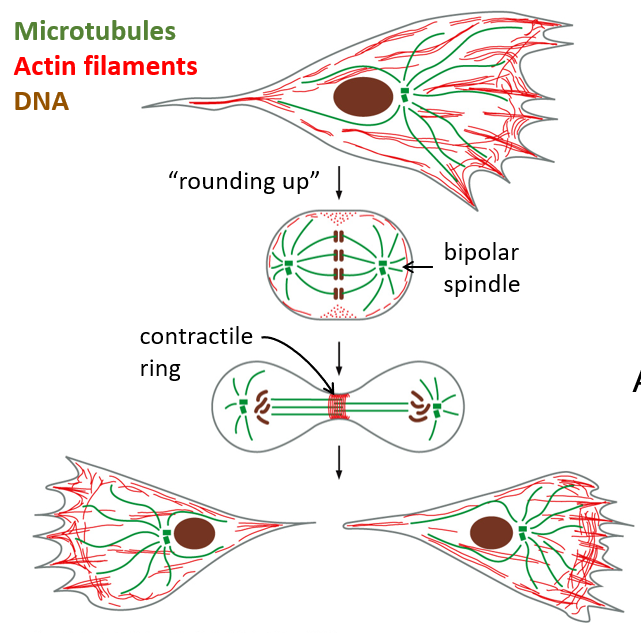
Why do cells become round during mitosis?
cytoskeletal reorganization and reduced attachment to surrounding cells and the extracellular matrix
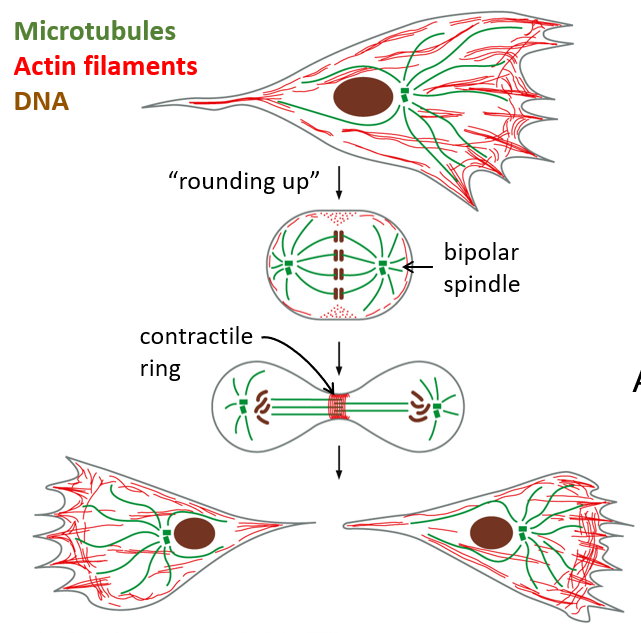
What structure do microtubules form during mitosis?
the mitotic spindle (bipolar spindle)
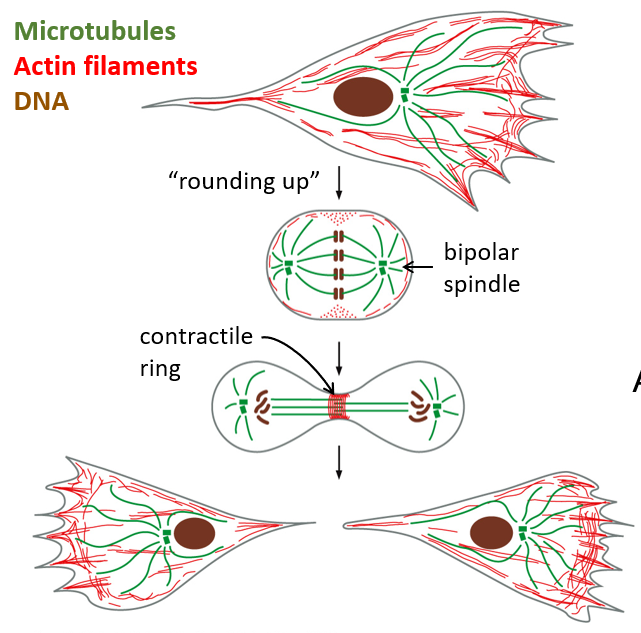
What is the function of the mitotic spindle?
segregates duplicated chromosomes into two daughter cells
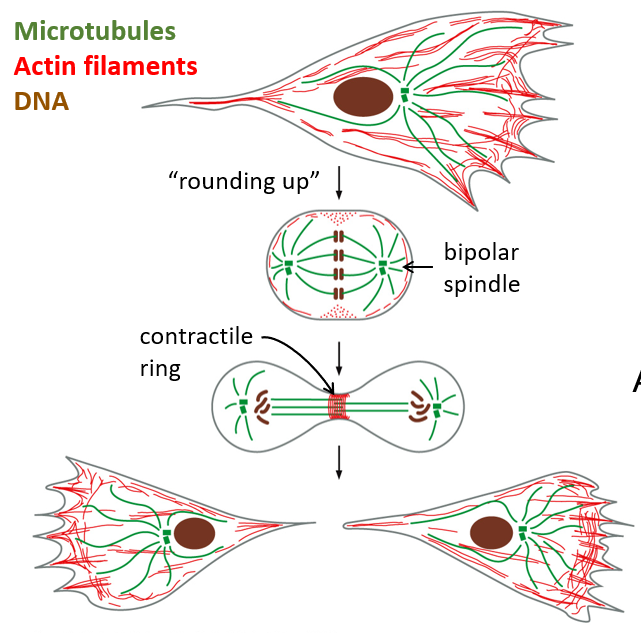
How do microtubules contribute to chromosome movement?
they attach to chromosomes and pull them apart
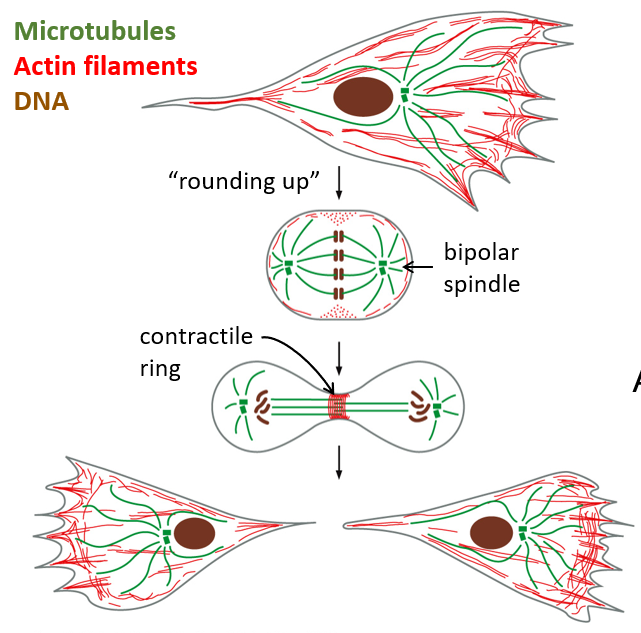
What structure do actin filaments form during cytokinesis?
the contractile ring
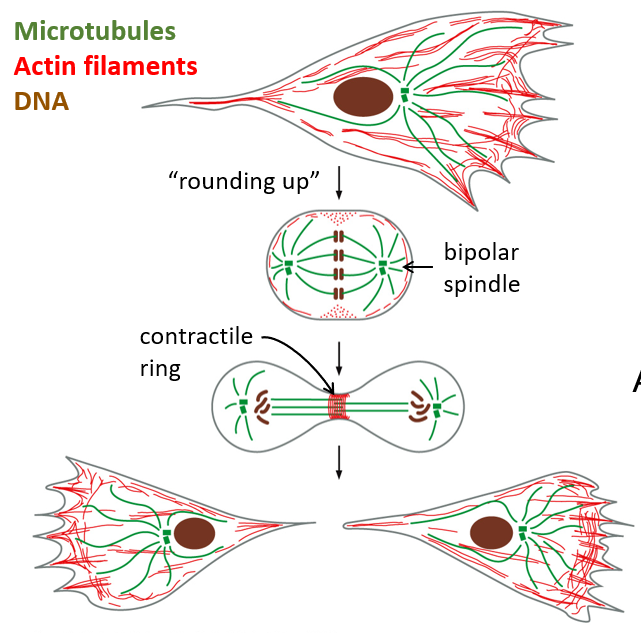
What is the function of the contractile ring?
it constricts to divide the cell into two daughter cells
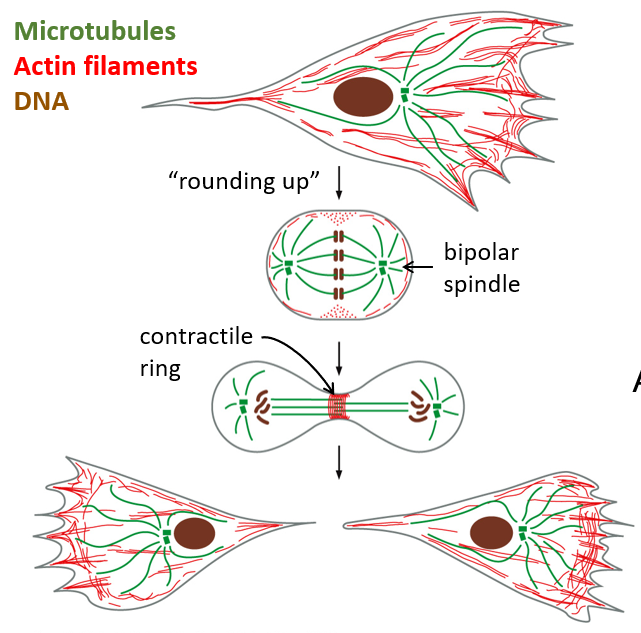
What process involves the contractile ring?
cytokinesis
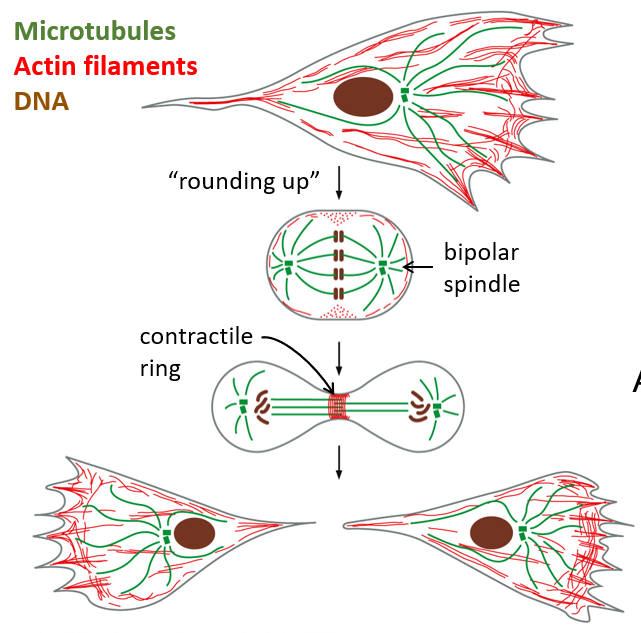
What happens to the cytoskeleton after mitosis is complete?
it reorganizes back to its interphase configuration
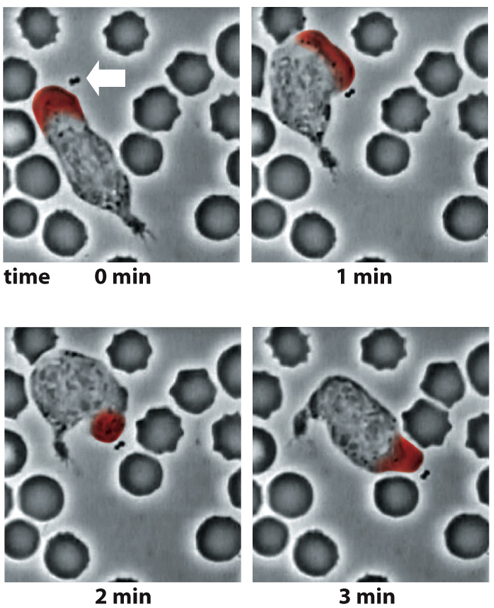
What role does the cytoskeleton play in cell motility?
it enables cells to move and change shape
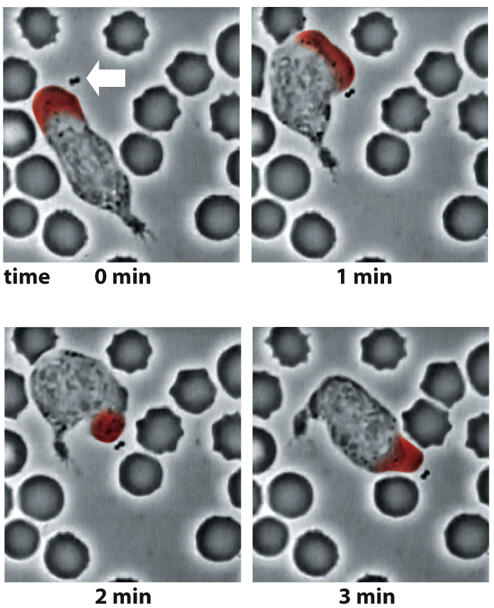
Which cytoskeletal component primarily drives cell motility?
actin filaments
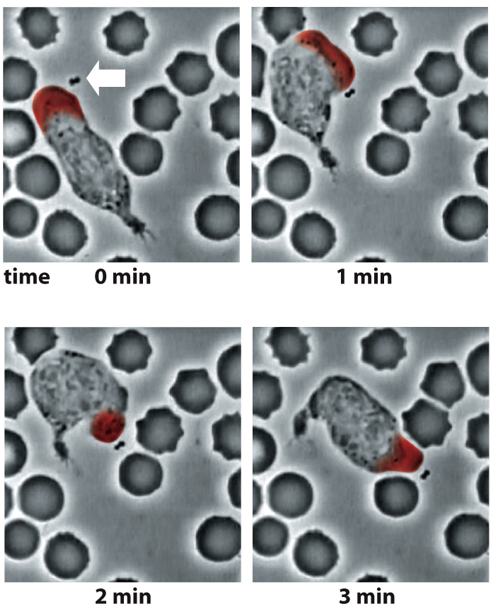
How does a neutrophil find bacteria?
by following chemical signals via chemotaxis
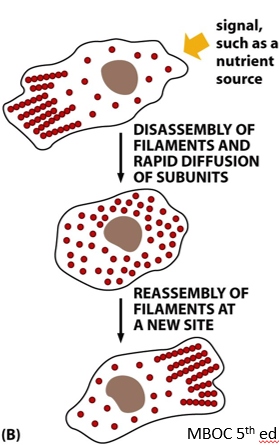
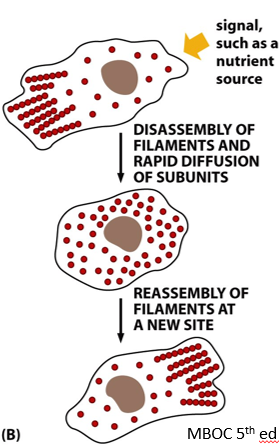
Why is the dynamic nature of the cytoskeleton important?
allows rapid changes in cell shape, movement, and function
What are cytoskeletal filaments?
polymers made of small protein subunits
What are microtubules made of?
tubulin subunits
What are actin filaments made of?
actin subunits
What are intermediate filaments made of?
various proteins such as keratin, vimentin, and lamins
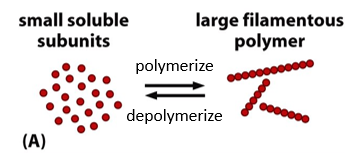
What is polymerization?
assembly of subunits into filaments
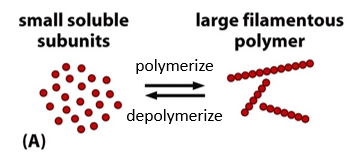
What is depolymerization?
breakdown of filaments into subunits
What type of interactions hold cytoskeletal filaments together?
Non-covalent interactions
What regulates cytoskeleton dynamics?
accessory proteins
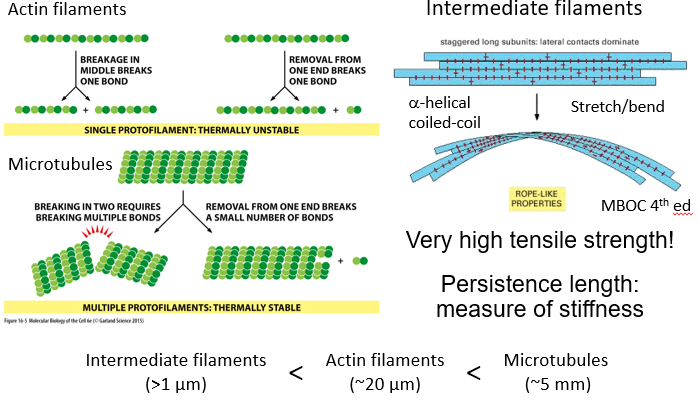
What are lateral interactions in cytoskeletal filaments?
Interactions between adjacent protofilaments that strengthen the structure
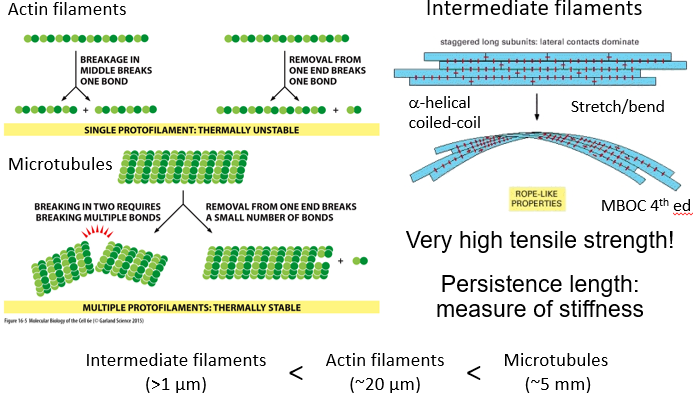
Why do lateral interactions strengthen filaments?
More interactions = more bonds to break → greater stability
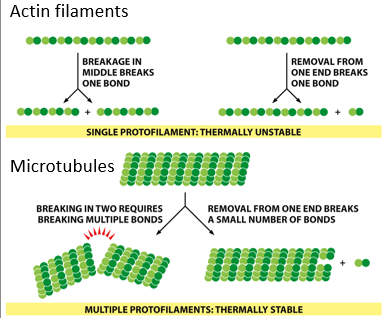
Why are actin filaments less thermally stable than microtubules?
fewer protofilaments → fewer lateral interactions → easier to break

Why are microtubules more stable than actin filaments?
More protofilaments (13) → more lateral bonds → harder to break
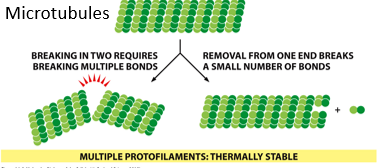
What must be broken to sever a microtubule?
Multiple bonds across multiple protofilaments
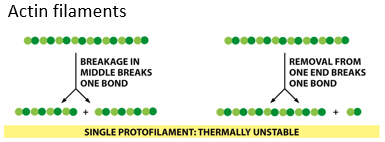
What must be broken to sever an actin filament?
one bond (only between 2 protofilaments)
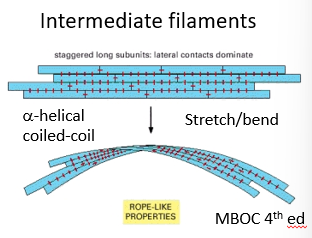
How do intermediate filaments compare mechanically to actin and microtubules?
Very strong, flexible, and resistant to breaking
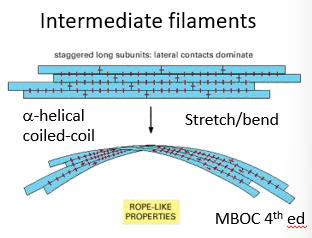
Which cytoskeletal element has the highest tensile strength?
Intermediate filaments
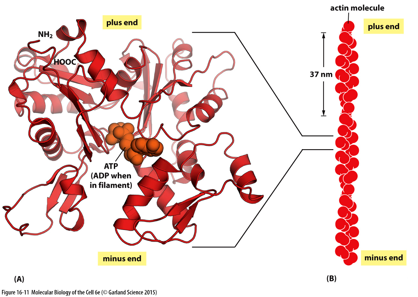
Which cytoskeletal elements are polar?
actin filaments and microtubules
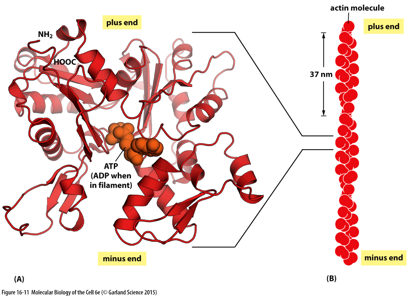
Which cytoskeletal elements are not polar?
intermediate filaments
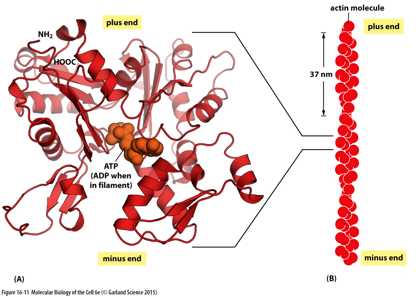
What is the plus end of a subunits also called?
barbed end
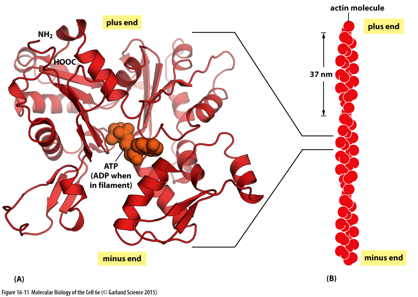
What is the minus end of a subunits also called?
pointed (pointy) end