Week 13 & 14 - Mental Health
 Call Kai
 Learn
Learn Practice Test
 Spaced Repetition
 Match
Match Flashcards
 Knowt Play
1/24

There's no tags or description
Looks like no tags are added yet.
Name | Mastery | Learn | Test | Matching | Spaced | Call with Kai |
|---|
No analytics yet
Send a link to your students to track their progress
25 Terms
insomnia
lack of adequate sleep.
sleep-onset insomnia: difficulty falling asleep
sleep-maintenance insomnia: difficulty staying asleep
sleep-offset insomnia: waking up too early
non-restorative sleep: adequate sleep but sleepy during day
can be associated with forms of anxiety (depression, manic disorders, chronic pain)
narcolepsy
severe daytime sleepiness.
client may also fall asleep at inappropriate times
other symptoms: cataplexy, hypnagogic hallucinations, muscular paralysis, automatic behaviour
drug classes used to treat anxiety and sleep disorders
CNS depressants:
Benzodiazepines
Barbiturates
Other agents:
Zopiclone => IDEALLY for short-term (7-14 days) treatment of insomnia in adults)
→ inhibition of GABAa activity leads to a calming, sedative, and hypnotic effect, promoting sleep
→ similar action to benzodiazepines but chemically distinct
Act on continuum in terms of effects:
anxiolytic - reduce anxiety
sedative - promote relaxatoin
hypnotic - promote sleep
Benzodiazepines
tolerance develops with repeated use
dependency can develop as well
decrease time to fall asleep for clients with insomnia, reduce sleep interruptions
Interactions → Respiratory depression can occur when mixed with other CNS depressants
paradoxical drug reactions
a drug reaction that constitutes an outcome that is exactly opposite from the outcome that would be expected from the drug’s known actions.
Example: Benzodiazepines are characterized by increased talkativeness, excitement and excessive movement and occur in less than 1% of patients
Barbiturates
Cross-tolerance - tolerance to barbiturates can promote tolerance to opioids and other CNS depressants
Interactions:
increase the activity of some liver enzymes which can alter metabolism of other drugs
SSRIs MOA
Prevent reuptake of 5HT, primarily
Therapeutic effects with increased sensitivity of post-synaptic receptors, usually 4-6 weeks after start of treatment
Same efficacy as TCAs and MAO inhibitors
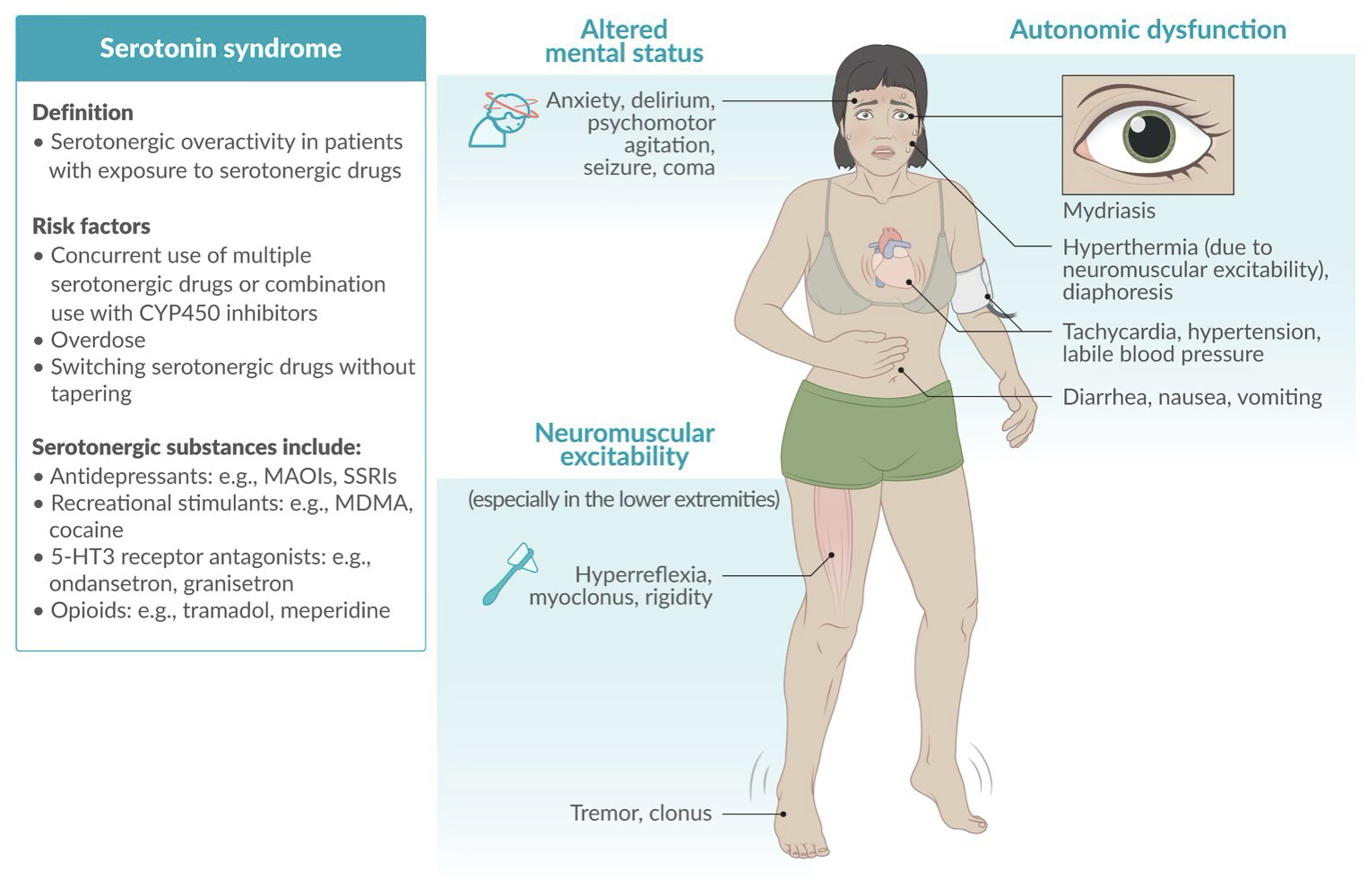
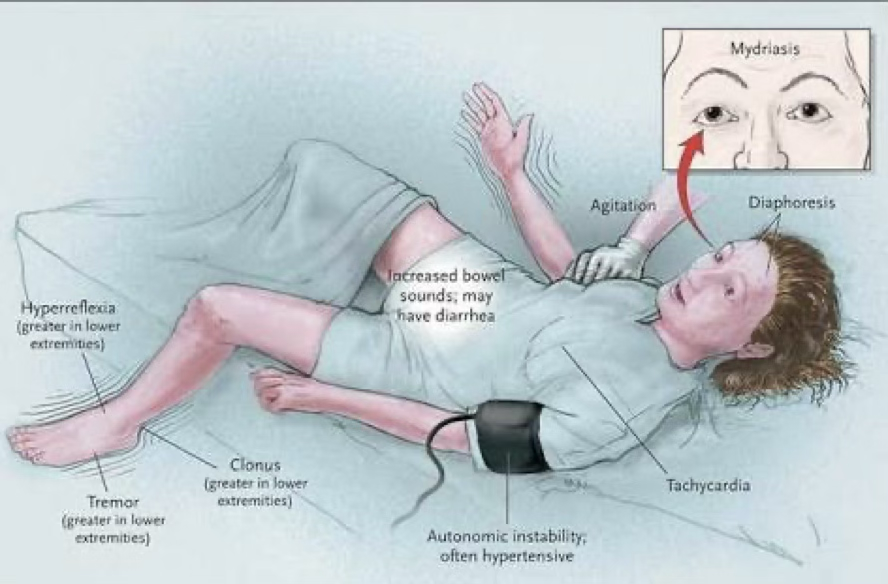
Serotonin syndrome
Serotonergic overactivity in patients with exposure to serotonergic drugs.
Altered mental status - anxiety, delirium, agitation, seizure, coma, psychomotor
Autonomic dysfunction - mydriasis, hyperthermia, diaphoresis, tachycardia, hypertension, labile blood pressure
Neuromuscular excitability - hyperreflexia, myoclonus, rigidity, tremor
Risk factors:
concurrent use of multiple serotonergic drugs or combination use with CYP450 inhibitors
overdose
switching serotonergic drugs without tapering
Monoamine Oxidase Inhibitors
Indication:
depression, for clients that do not respond to TCAs or SSRIs
equal efficacy to TCAs and SSRIs but smaller margin of safety
e.g., Selegiline
Monoamine Oxidase Inhibitors: Drug-Drug Interactions
Insulin and oral hypoglycemic → enhances hypglycemia
Antihypertensive agents → profound hypertension
When used with SRRIs → Serotonin syndrome
Food containing tyramine:
MAO inhibitors prevent breakdown of dietary tyramine
Tyramine promotes release of NE which causes acute hypertension, palpitations, occipital headache, flushing, sweating, nausea
Atypical Antidepressants have used beyond depression
Duloxetine is also indicated for fibromyalgia and other nerve pain disorders (e.g., diabetic peripheral neuropathy)
Bupropion is used in smoking cessation
Atomoxetine and methylphenidate are commonly used inADHD
Trazodone is more often used as a sedative/sleep aid
mania is associated with
too much NE and glutamate or too little inhibitory NTs such as GABA
Lithium Carbonate
Action: uncertain, crosses cell membranes, altering sodium transport, not protein bond
side effects: thirst, metallic taste, increased frequency of urination, find head-and-hand tremor, drowsiness, diarrhea
Blood levels monitored (lithium toxicity -severe diarrhea, vomiting, drowsiness, muscular weakness and lack of coordination, withhold)
Monitor creatinine concentrations, thyroid hormones, and CBC every 6 months
Kidney damage may be a risk
Thyroid function may be altered usually after 6 to 18 months. Observe for dry skin, constipation, bradycardia, hair loss, and cold intolerance
Avoid during pregnancy
Symptoms of Schizophrenia
Positive symptoms — behaviours in addition to normal behaviours
hallucinations, delusions
disorganized thought, speech pattern
movement disorders
Negative symptoms — behaviours that take away from normal behaviours
lack of interest in social activities
lack of emotion, responsiveness
lack of pleasure in daily activities
reduced or repetitive speech
lack of desire to care for personal hygiene
Cognitive symptoms — often not noticed as part of condition until positive or negative behaviours emerge
significant learning and memory problems
decreased ability to concentrate
Neuroleptic
term given to CNS drug that can cause Parkinson-like symptoms
acute dystonia
Dystonic movement result from a slow sustained muscular spasm that lead to an involuntary movement
can involve neck, jaw, tongue & entire body (opisthotonus)
There is also involvement of eyes leading to upward lateral movement of known occulogyric crisis
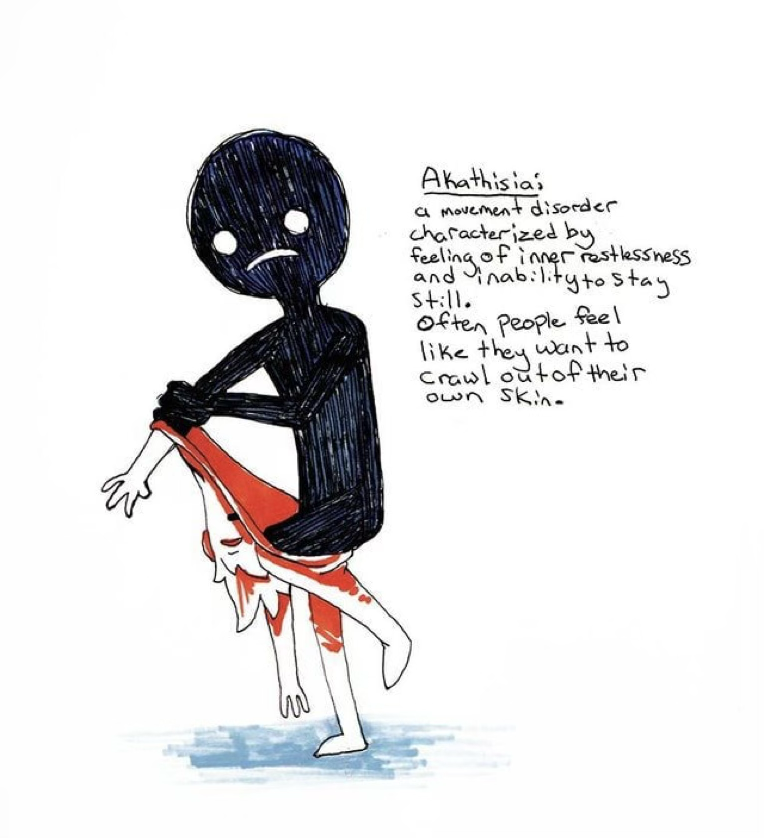
akathisia
A subjective feeling of muscular discomfort that can cause patients to be agitated, restless, and feel generally dysphoric
Treated with propanolol, benzodiazepines, and clonidine.
Tardive Dyskinesia
It is a delayed one with abnormal, irregular movements of the muscle of the head, limb & trunk
Characterized by chewing, sucking, grimacing and perioral movements

Neuroleptic Malignant Syndrome (NMS)
Rare but serious
Onset is often in 1st 10 days of treatment
rapid onset of sever motor, mental & autonomic disorders
prominent muscular symptom is muscular tonicity
stiffness of the muscles in throat & chest may cause dysphasia & dyspnea
Cannabinoids
Most frequently used class of addictive substances, derived from Cannabis sativa
THC is responsible for most of the psychoactive properties in cannabinoids
Psychological dependence.
Addiction — decreased coordination, disconnected thoughts, paranoia, euphoria, bloodshot eyes
Hallucinogens
Produced an altered, dream-like state of consciousness; all are Schedule 1 drugs, no medial use
Prototype substance is LSD
Addiction — laughter, visions, deep personal insights, religious revelations, afterimages, bright lights, vivid colours
Example — LSD, Mescaline, MMDA, PCP, Ketamine, Psilocybin
Addictive, Psychological Dependence, Tolerance — Yes.
CNS Stimulants
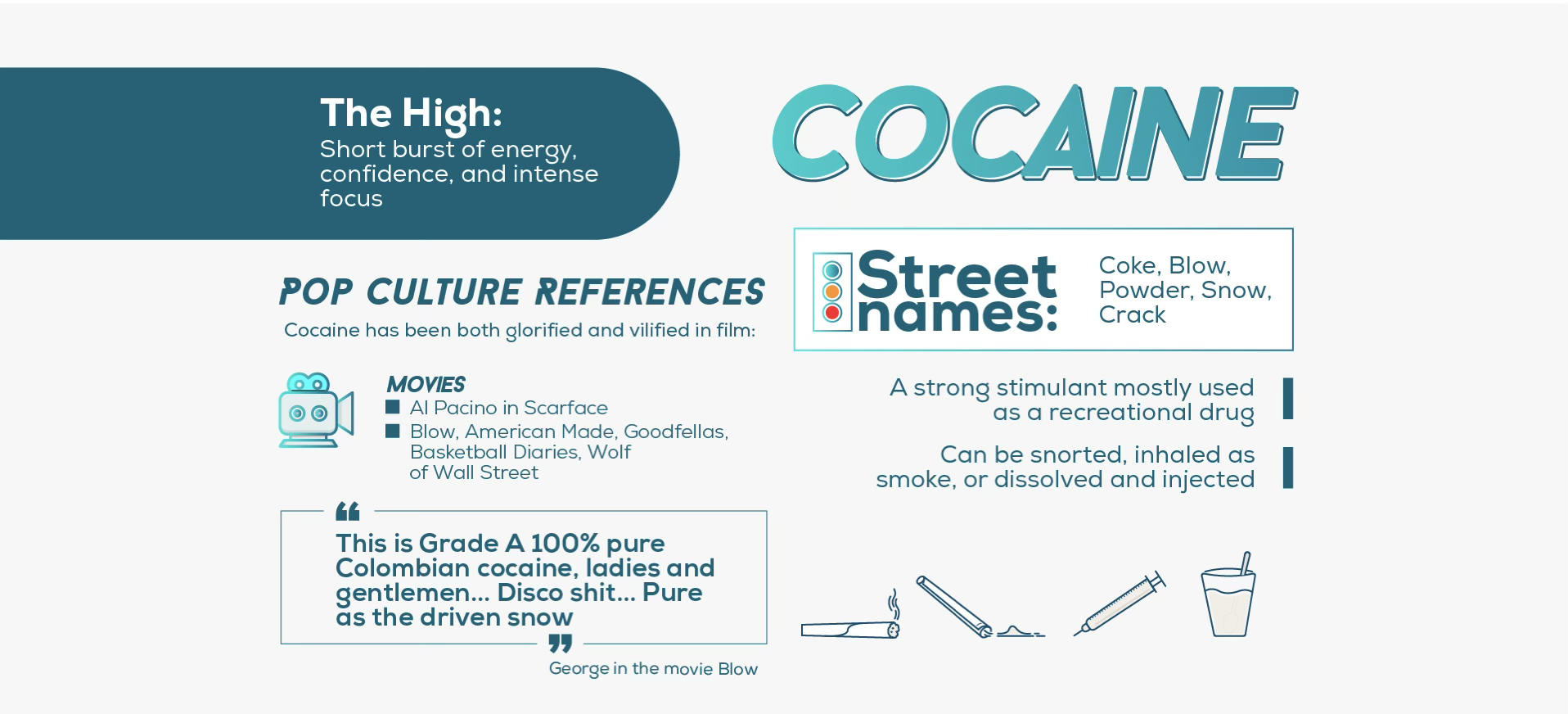
Example: Cocaine
Increase the activity of the CNS some available by prescription (e.g., Adderall / Ritalin)
Physical dependence, Psychological dependence, Tolerance.
Addiction — increased blood pressure and respiratory rate euphoria, alertness confidence, restless, anxiety
Examples — cocaine, caffeine, amphetamines, methylphenidate
Nicotine
Strongly addictive, highly carcinogenic
Can cause effects to those nearby as well
some effects similar to CNS stimulants
Physical dependence, Psychological dependence, Tolerance.
Addiction — increased alertness an focus, relaxation, lightheadedness, increased HR and blood pressure
Inhalants
Vaporize or form a gas at room temperature
Usually placed in paper/plastic bag or soaked in cloth and inhaled
Some can be easily found
Tolerance - Unknown
Addiction - lightheadedness, drowsiness, exhilaration, euphoria, hallucinations
Examples - adhesives and glues, aerosol, cleaning agents, solvents, fuels, nitrous oxide
Anabolic Steroids
Unlike other substances; effects may be delayed for weeks, months
Provide a boost in athletic performance, similar to testosterone
Long-term effects can cause the opposite
Addiction - substance adds to skeletal muscle mass and increased strength at first