ceutics plasma proteins
 Call Kai
 Learn
Learn Practice Test
 Spaced Repetition
 Match
Match Flashcards
 Knowt Play
1/33

There's no tags or description
Looks like no tags are added yet.
Name | Mastery | Learn | Test | Matching | Spaced | Call with Kai |
|---|
No analytics yet
Send a link to your students to track their progress
34 Terms
how does increased plasma protein binding affect volume of distribution
increased protein binding means a higher amount of drug in plasma, and a LOWER volume of distribution
t/f: both plasma protein bound drug and free drug can exert effects
false. only free form gives effect.
free drug (unbound) -> can cross membranes, bind to receptors, and exert effects
plasma protein bound drug -> cannot cross membranes or bind to receptors, meaning it is inactive until it dissociates
fraction in plasma unbound
fraction unbound= concentration of unbound/ total
(will be between 0 and 1 always)
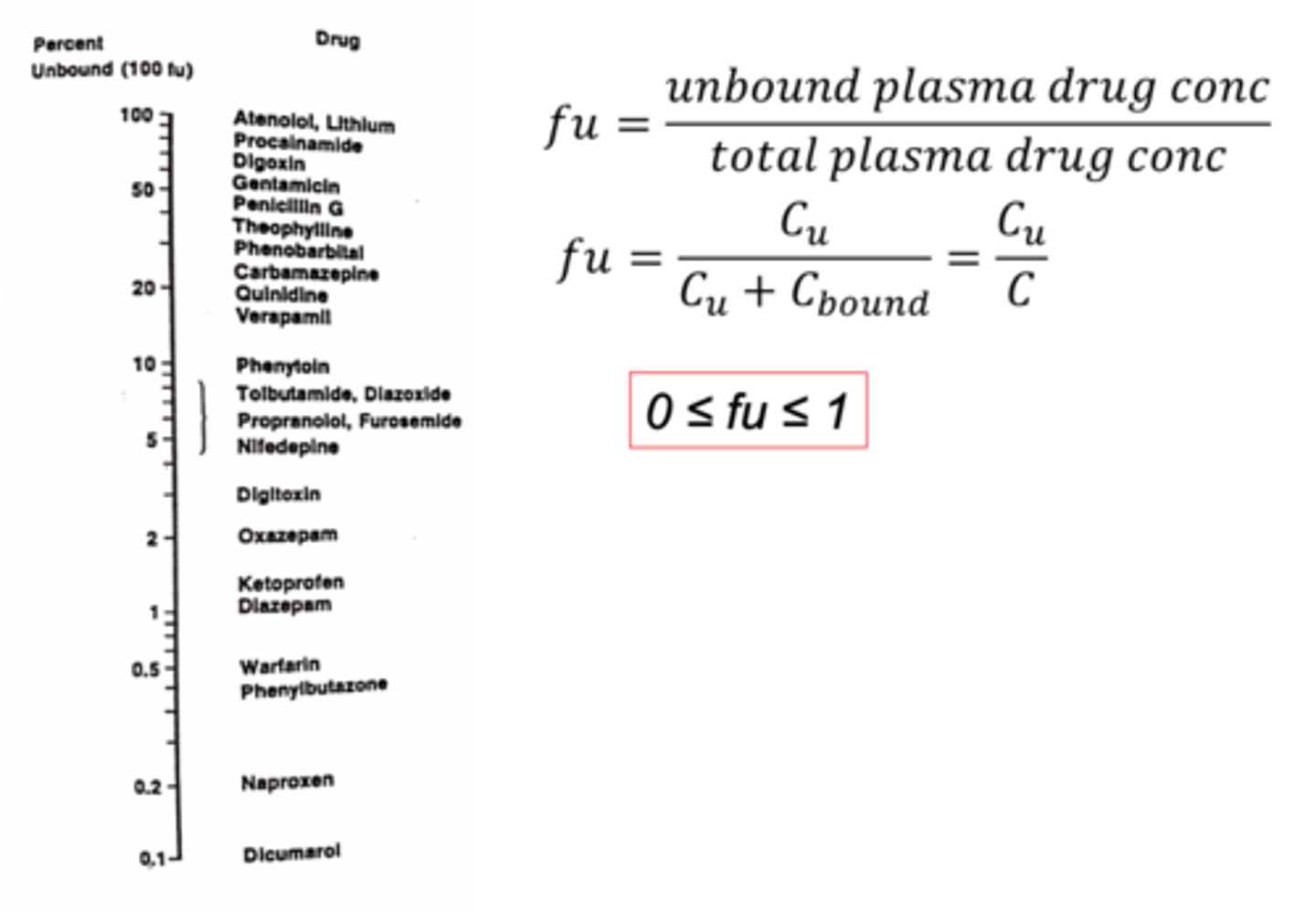
drug X is 90% unbound. where are we likely to find this drug? small or large volume of distribution?
since it is unbound it will most likely be in tissue, not bloodstream
-probably has higher affinity for tissue proteins compared to plasma proteins
- larger volume of distribution
warfarin is 0.5% unbound. where is it most likely to be? small or large volume of distribution?
- in bloodstream; bound to plasma proteins
- small volume of distribution
t/f: unbound drug has a higher chance of overdose than a bound drug
true, drug is most likely in tissues and exerting its effect
if all the drug was bound to plasma proteins, the apparent volume of distribution would be limited to which compartment?
vascular compartment
plasma proteins do not cross over into tissue unless there is __________
inflammation-> increased vascular permeability
(but NOT albumin, that ones too big. that one is only wasted in nephrotic syndrome)
permeation vs transport
permeation: will drug cross lipid membrane? (passive)
transport: will the drug be available to interact with transport proteins
_________ drugs have an affinity for albumin, while ________ drugs prefer lipoproteins or glycoproteins
acidic= albumin
basic= lipoproteins or glycoproteins
what effect would extensive plasma protein binding have on the ct curve?
NO EFFECT. drug is already in plasma.
it has an effect on concentration EFFECT curve-> will decrease intensity of effect but lengthen duration
what effect would extensive plasma protein binding have on the concentration EFFECT curve?
will decrease intensity of effect but lengthen duration
- note does nothing to ct curve since drug is already absorbed
what effect does protein binding have on
duration of action?
onset at site of action?
prolongs duration
takes longer to reach site of action
t/f: inactive drug molecules do not bind to plasma proteins, therefore they are not displayed on the ct curve
false. they do interact with plasma proteins- they just take up space. we do not consider them on the ct curve as they have no pharm effect
t/f: albumin only interacts with the positive charge of acidic compounds
false. albumin can interact with both positive and negative charges
but note that acidic drugs do prefer albumin
what effect would nephrotic syndrome have on albumin-bound drugs
since albumin is being wasted, so are the drug molecules, lower therapeutic effect
what effect can competition have on drugs bound to albumin
competition: molecules w a more favorable structure (higher affinity) will displace other drugs from albumin
-> the displaced drug can either
1. exert its effect
2. be eliminated in the kidney. possible to overdose pt on free drug molecule (amplified therapeutic effect)
what would be the apparent volume of distribution if a drug is highly bound to albumin
low bc stays in vasculature (<40)
what would be the apparent volume of distribution if a drug is highly lipophilic
a. 5L
b. 50L
c. 50,000L
c. 50,000L
<40 means it stays largely in plasma
highly lipophilic drugs will end up in tissue
t/f: alpha1 acid glycoprotein can carry less drug molecules than albumin and therefore be easier to saturate
true
if tissue cells have a higher affinity for a drug compared to albumin, how will that effect the apparent volume of distribution
increased apparent volume of distribution
effect of drug bound to albumin on elimination and potency
slow down elimination (bc bound to plasma protein)
low potency (not exerting its effect)
t/f: drug displacement off of albumin will increase the free drug concentration, but this increase is transient since it will redistribute to other body compartments
true.
also note the free drug may exert its effect OR it could just be eliminated
if disorders with chronic inflammation often have low albumin levels, how would you dose a drug that is highly protein bound
give lower dose bc there would be too many free drugs since theres no albumin to bind to
what kind of drugs prefer binding to lipoproteins (cholesterol, triglycerides, etc)
basic drugs, lipophilic drugs (like dissolves like-> dissolve into lipophilic core)
alpha-1 acid glycoprotein is the second most abundant plasma glycoprotein and tends to attract ________ drugs
basic
what effect would increased alpha-1 acid glycoprotein have on a basic drug
more binding sites for basic drugs= may trap them in vasc compartments and lower therapeutic effect
what kind of relationship would there be between plasma proteins and amount of free drug
a. direct
b. inverse
b. inverse
t/f: plasma concentration vs time curves indicate both BOUND and UNBOUND drug concentration
true. BUT most of the time it will be bound drug bc an unbound drug is usually in tissues or urine
t/f: plasma protein binding can be measured directly, whereas tissue binding must be inferred
true. we cant check how much drug is in tissue unless we do biopsy
why would a drug with low protein binding have a very negative slope compared to protein bound drug
more unbound drug means more rapid elimination either by liver or kidney
[for bound drug, slower elimination= less negative slope (sequestered in vasc compartment)]
t/f: a drug with higher protein binding will have a greater effect, more biotransformations, and greater elimination
false. its bound to albumin, sequestered in vasc compartment
there is an equilibrium btwn bound and unbound drug based on what
how much free drug is in tissue. once it exerts its effect/is destroyed, drugs will come off of albumin and exert effect (longer duration compared to drugs that are not protein bound)
t/f: a fast acting drug can be either be not bound to proteins or very lipophilic
true
-not bound to proteins= more free drug is available to exert its effect
-very lipophilic= rapidly cross cell membranes and reach its site of action