7a - rational and irrational decision making
 Call Kai
 Learn
Learn Practice Test
 Spaced Repetition
 Match
Match Flashcards
 Knowt Play
1/20

There's no tags or description
Looks like no tags are added yet.
Name | Mastery | Learn | Test | Matching | Spaced | Call with Kai |
|---|
No analytics yet
Send a link to your students to track their progress
21 Terms
what methods can be used to study decision making?
experimental behavioural studies
normative decision theory (maths)
animal behavioural studies
naturalistic observation
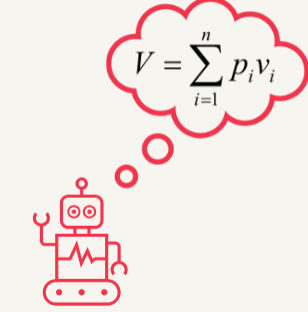
how do you work out expected value
multiply probability x value of an outcome for expected value
what is risk aversion
whilst expected value would indicate that most people would choose a riskier option (that would result in higher value), most people choose certainty and a lower risk option
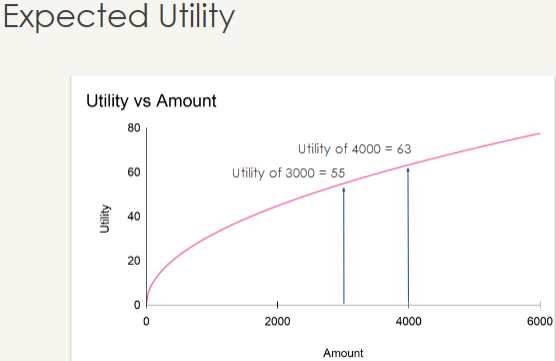
what is utility
how good something makes you ‘feel’ → if you already have a certain amount, and you get more, there is a diminishing sensitivity to gains (more increase in utility if you start at 0)
explains risk aversion
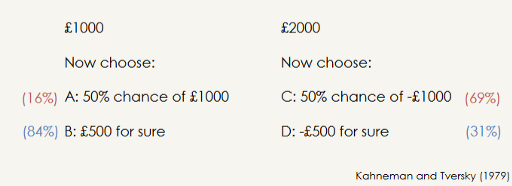
how do losses violate expected utility
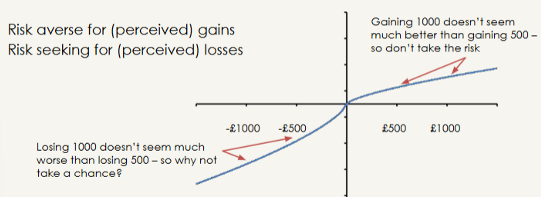
people are risk averse for gains, but risk seeking for losses
this is true for non-monetary things too - e.g. 1/3 probability 600 people will be saves, 1/3 probability nobody will die - 200 people will be saved vs 400 people will die
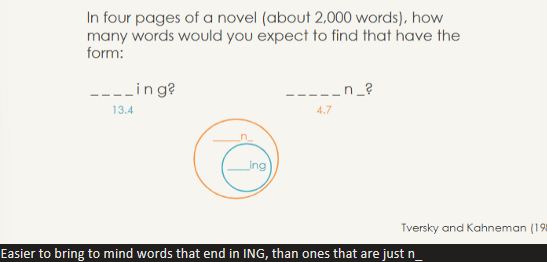
what is the availability heuristic
how often/easy to imagine something happening, but can lead to misjudgements e.g. shark attack in Australia (media environment = things that rarely happen are projected online so easier to bring to mind - e.g. plane crash probability is very very unlikely BUT can imagine it easily)
what evidence is there for the availability heuristic (Lichtenstein et al.)
people overestimate rare events (e.g. death by firework), and underestimate common events e.g. heart attack
how did Tversky and Kahneman evidene the availability heuristic
list of 39 names including 19 famous men vs 20 less famous women (or other way around)
81% judged that gender with famous names was more frequent (less frequent but easier to recall)
what is conjunction fallacy
conjunction fallacy is a cognitive bias in which individuals assume that a more detailed scenario with multiple conditions is more probable than a simpler, single condition scenario, even though probability theory dictates the opposite
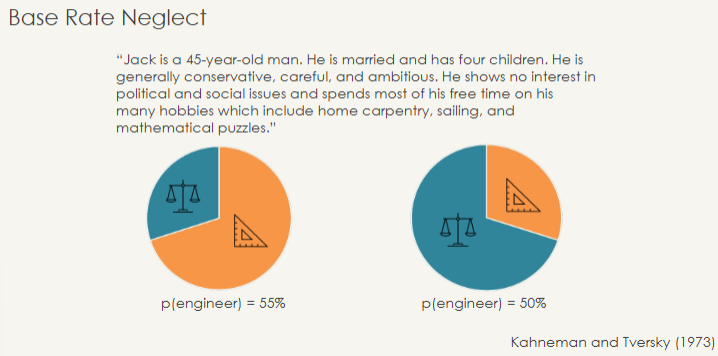
what is the representativeness heuristic
judgements of probability are based on assessments of similarity → usually sensible, but can lead to misjudgement.
e.g. neglecting the base rate of how many people occupy a particular career
Anchoring heuristic
if provided with a number, people’s answers will be influenced by the number regardless if they know it has nothing to do with the answer
e.g. more or less than 65% → will answer ~45%, more or less than 10%, will answer ~25%
this happened even if random baseline was spun on a wheel to prove it had nothing to do with the question
what is the Gambler’s fallacy
misperceptions of randomness → e.g. roulette table producing 26 black spins is just as ‘random’ as any other configuration
e.g. apple had to change their algorhythm to make it not random so it appeared random
how do ‘even money’ streaks change after time
after streaks of black, people will bet against the streak even though likihood doesnt change
why was the number 53 relevant in italy
didnt come up for 2 years in the lottery so people out loads of money on it
what is prospect theory
explains how people make decisions under risk, emphasizing that losses weigh more heavily than equivalent gains and that choices are influenced by reference points and framing.
what is value function
outcomes considered as gains or losses with respect to a reference point (often the status quo → your current level of wealth)
if you have less, there is diminishing sensitivity to losses
if you have more, you have diminishing sensitivity to gains
outline risk attitudes
risk averse for percieved gains, risk seeking for percieved losses
what is endowment effect
The endowment effect occurs when ownership increases the perceived value of an item.
People are generally more reluctant to give up something they own than to acquire the same item if they do not own it.
This effect is closely linked to loss aversion, a principle from prospect theory, which suggests that the pain of losing an owned object outweighs the pleasure of gaining an equivalent object
what is the certainty effect?
changes in probability will have a much bigger impact when they approach certainty (0% or 100%)
most people would chose to improve chance of winning from 90%-95% than 65-70%
what is the attractrion effect
The attraction effect is a cognitive bias where people tend to have a preference for a certain option when it is presented alongside a similar but less attractive alternative. This bias occurs because the presence of the less attractive alternative makes the preferred option appear even more attractive in comparison.
this is true even in slime mould with no nervous system (e.g. food source in bright light/no light, you can bias where it goes with a decoy option)
true also in ants
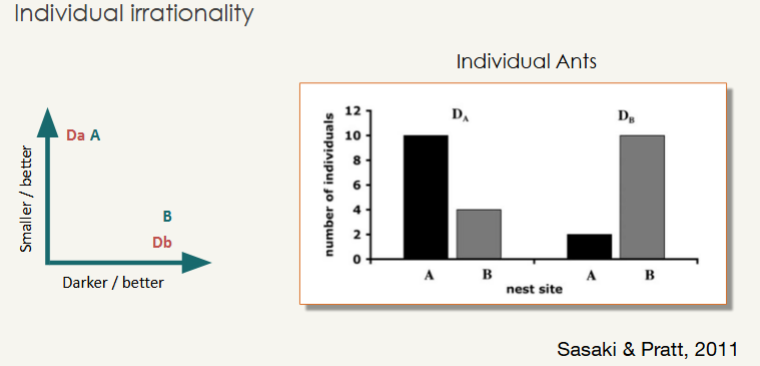
how does attraction effect change from individual-colony of ants
attraction effect is less relevant when the whole colony is picking - they get no comparison as not all ants see all options