FINANCE LEC 8: Takeovers PT 2
 Call Kai
 Learn
Learn Practice Test
 Spaced Repetition
 Match
Match Flashcards
 Knowt Play
1/19

There's no tags or description
Looks like no tags are added yet.
Name | Mastery | Learn | Test | Matching | Spaced | Call with Kai |
|---|
No analytics yet
Send a link to your students to track their progress
20 Terms
What is a cash bid
When the acquirer pays for the targets shares with cash
How do calculate the synergy gain, Net cost and NPV of a cash bid
Gain: Vat-(Va+Vt)
Net cost: CASH PAIDt-Market VALUEt
NPV: Gain - Net cost
What is a share/script bid
When you pay for the targets firm with shares as the currency of exchange eg. I’ll give you 3 newly issued acquirer shares in the company for every 10 of your shares.
What does Beta represent
the proportion of the new firm’s shares that are owned by the target
How do calculate the synergy gain, Net cost and NPV of a cash bid
Synergy gain: Vat-(Va+Vt)
Net cost: bxVat - Market valueT
NPV: gain - net cost
What is the stock exchange ratio and how do you find the maximum exchange ratio
The number of acquirer shares that the target shareholders receive for each target share. eg. 3:10.
Find b, when you let NPV=0, this tells you the proportion owned by the target
then do b=proportion x acquirers shares/acquirers shares + proportion x acquirers.
What happens if the exchange ratio is too high and too low
Too high: wealth gets transferred from acquirer to target shareholders
Too low: wealth gets transferred from target to acquirers shareholders
Methods to pay for shares and their features
cash bid
what’s fixed: $ amount paid is fixed
ownership: target shareholder’s don’t own any of new company
risk: acquirer bears all the market/financial risk risk pre-closing and operational risk after closing
Fixed share bid
what’s fixed: share count of acquirer’s shares is fixed, even though $value may change. eg. we will give you 3 shares for every 10 of your shares
Ownership: proportional ownership fixed at announcement
risk: both parties share pre-closing market risk and post closing operational risk in proportion to ownership
Fixed value bid
where the value of acquirer shares is fixed not the share count. the share count is set using prevailing share price.
Ownership: proportional ownership unresolved until closing cuz that decides number of shares
risk: pre closing risk beared by acquirer (ie. if sp drops they have to issue more shares), post clsoing operational risk shares
Collars, floors and ceilings: assuming fixed count
Collar: between $53 and $71.73
Floors: protection for target is SP drops too low, ie. if share price drops to 50, instead they only have to give (53/50)=1.06 shares to target
ceilings: protection for acquirer, is SP is too high, ie. share price rises to $74, they instead have to give (71.73/74)=0.969 shares to target instead of 1
Order of finding ratios
they tell you EPS
Earnings
market cap/number of shares
Share price (MV/no.shares)
P/E ratio
Calculation of new P/E ratio
(P/Ebidder * earningsB/earnings BT)+(P/Etarget * earningsT/earningsBT)
What is EPS bootstrapping
when a higher p/e ratio firm acquriers a lower pe ratio firm to boost eps even though with no real gains, no value can be created.
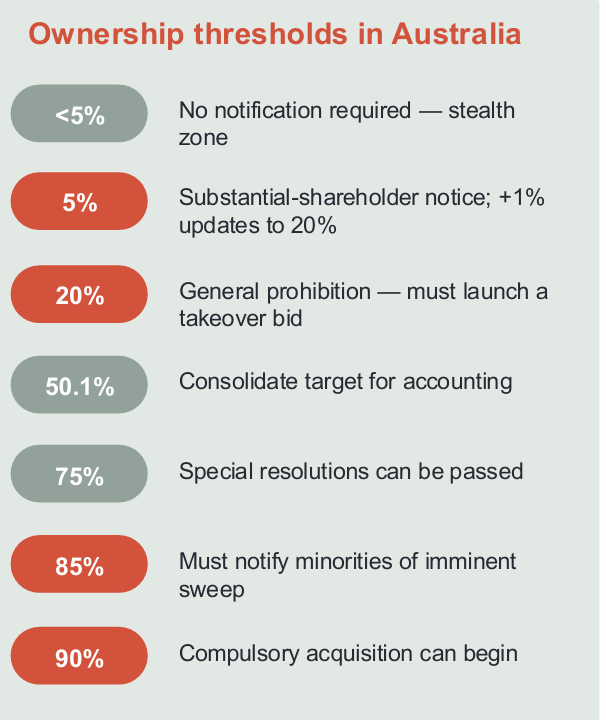
ownership thresholds
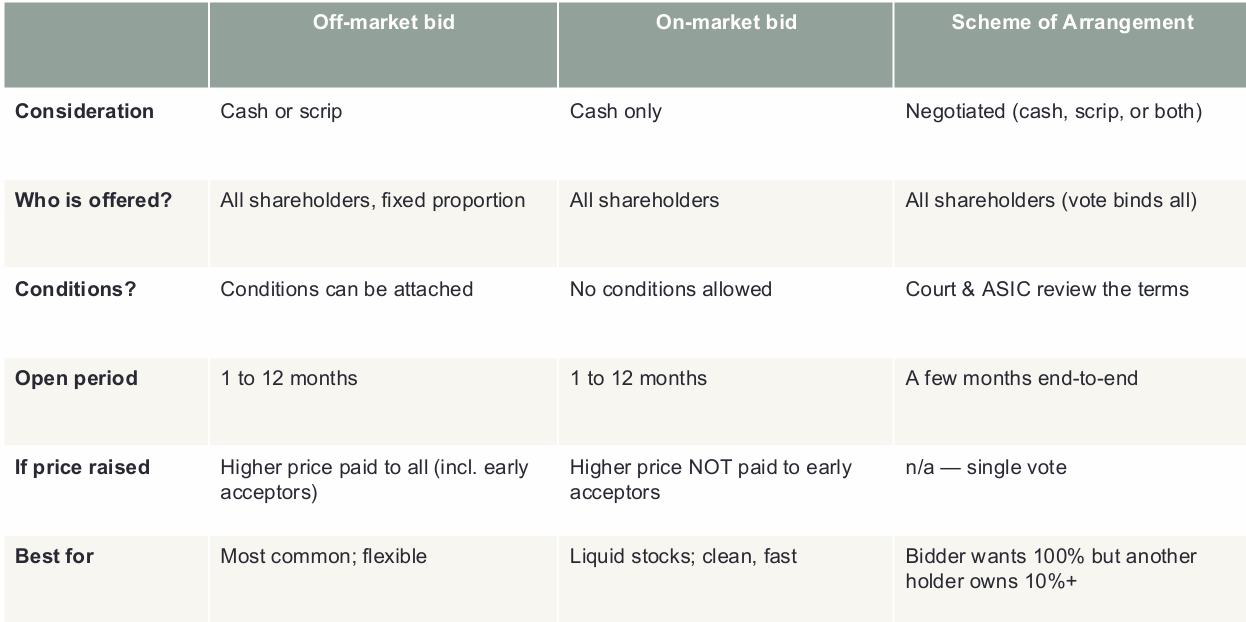
How to launch takeover bid after 20% wall
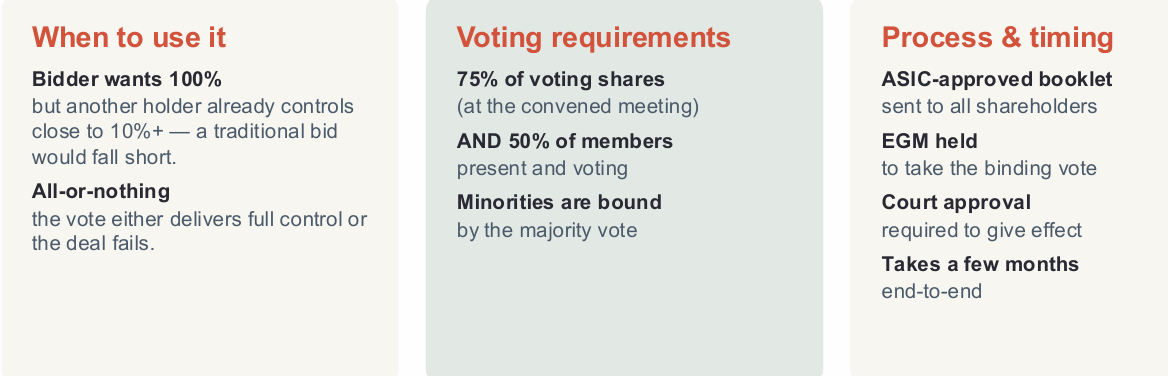
scheme of arrangement
What is the takeover panel
Bc target management can try issue lots of lawsuits to slow down takeover process that would normally take long to process in court there is a creation of a special takeover panel to assist in lawsuits filed by signficant shareholders, targets, acquirers, ASIC. the takeover panel can force or restrict the sale of shares.
Types of responses to takeovers
Friendly:
target and acquirer approve
So acquirer makes public offer, target accepts, shareholders vote yes
Hostile
target and acquirer in disapproval
Acquirer can still try acquire firm
buy buying 20% of shares then pusuing thru three methods
or do a proxy fight where the get on board or convince investors to get ppl on the board who would vote yes for takeover
Defenses to takeovers
poison pill
illegal in Australia
but when acquirer ownership passes certain threshold, target may be allowed to issue rights in order to dilute their ownership and voting rights making takeover more expensive
Staggered board
only 1/3 of leadership able to be replaced in a give year to slow down takeover and allow target to benefit from other defenses
Golden parachutes
lucrative payouts attached if senior execs are replaced after takeover can deter takeover
White knight
getting acquired by friendlier target
White squire
getting acquired by large shareholder
Directors fidiciary duties
must express their position/rec. ie. accept/reject takeover
can’t frustrate bid
takeover panel can strike down frustrating tactics
Do takeovers create value
target yes, bidder generally no, in general uncertain cuz they are expensive, impose discipline on target management but can have synergy gains