GI Physiology - Stomach (Dr. Olgun)
 Call Kai
 Learn
Learn Practice Test
 Spaced Repetition
 Match
Match Flashcards
 Knowt Play
1/101

There's no tags or description
Looks like no tags are added yet.
Name | Mastery | Learn | Test | Matching | Spaced | Call with Kai |
|---|
No analytics yet
Send a link to your students to track their progress
102 Terms
where protein digestion begins by the secretion of a protease
stomach
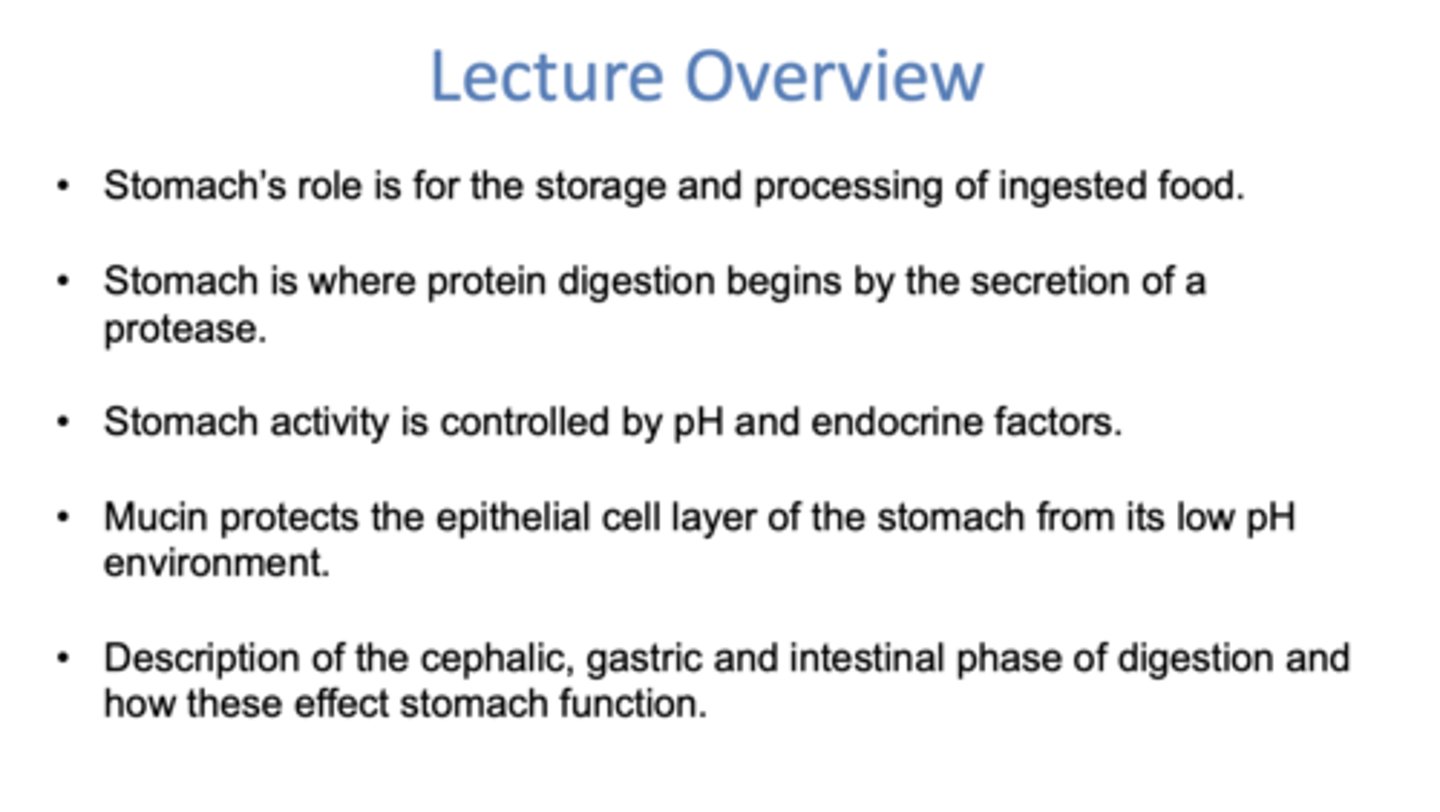
t/f: stomach's role is for the storage and processing of ingested food
true
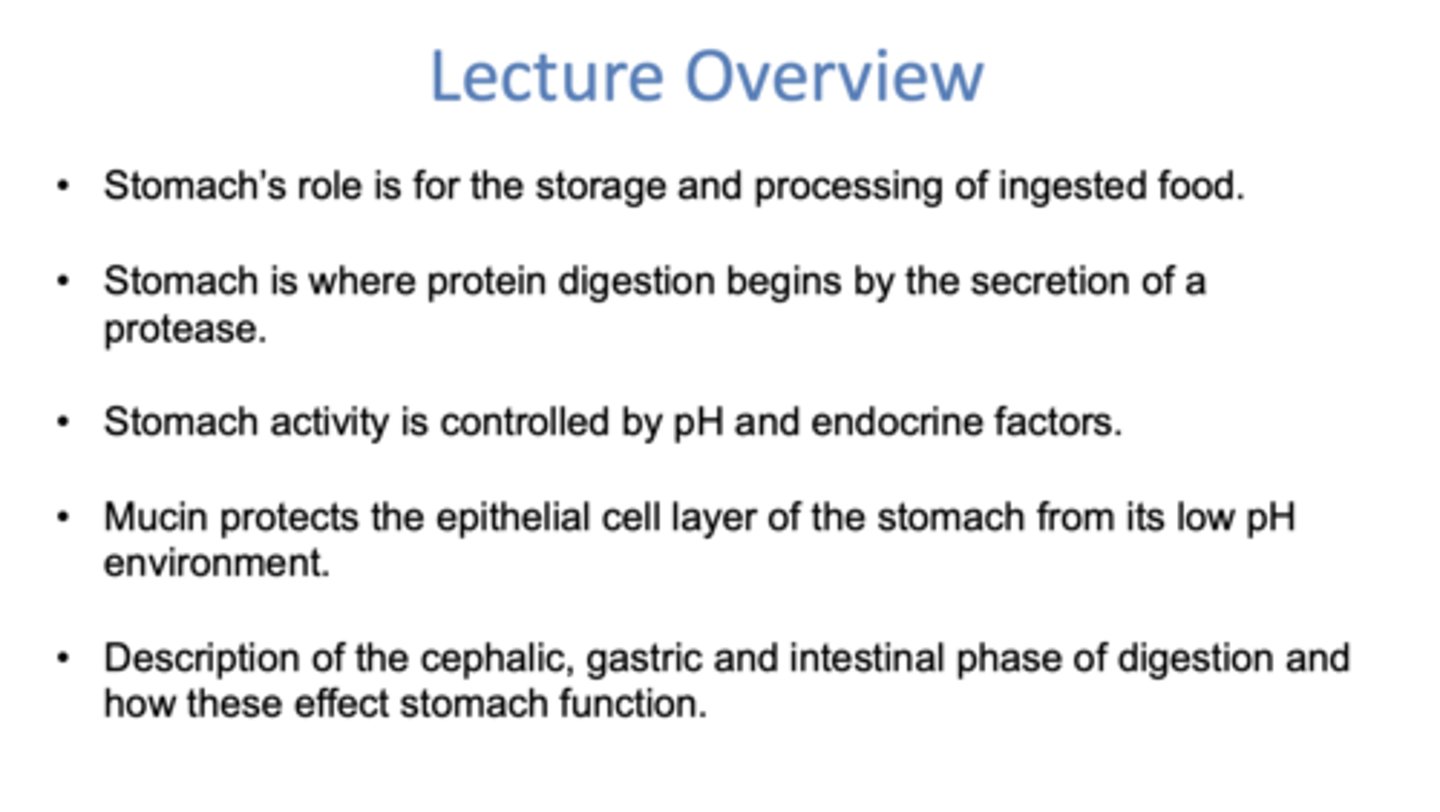
What protects the epithelial cell layer of the stomach from its low pH environment?
Mucin
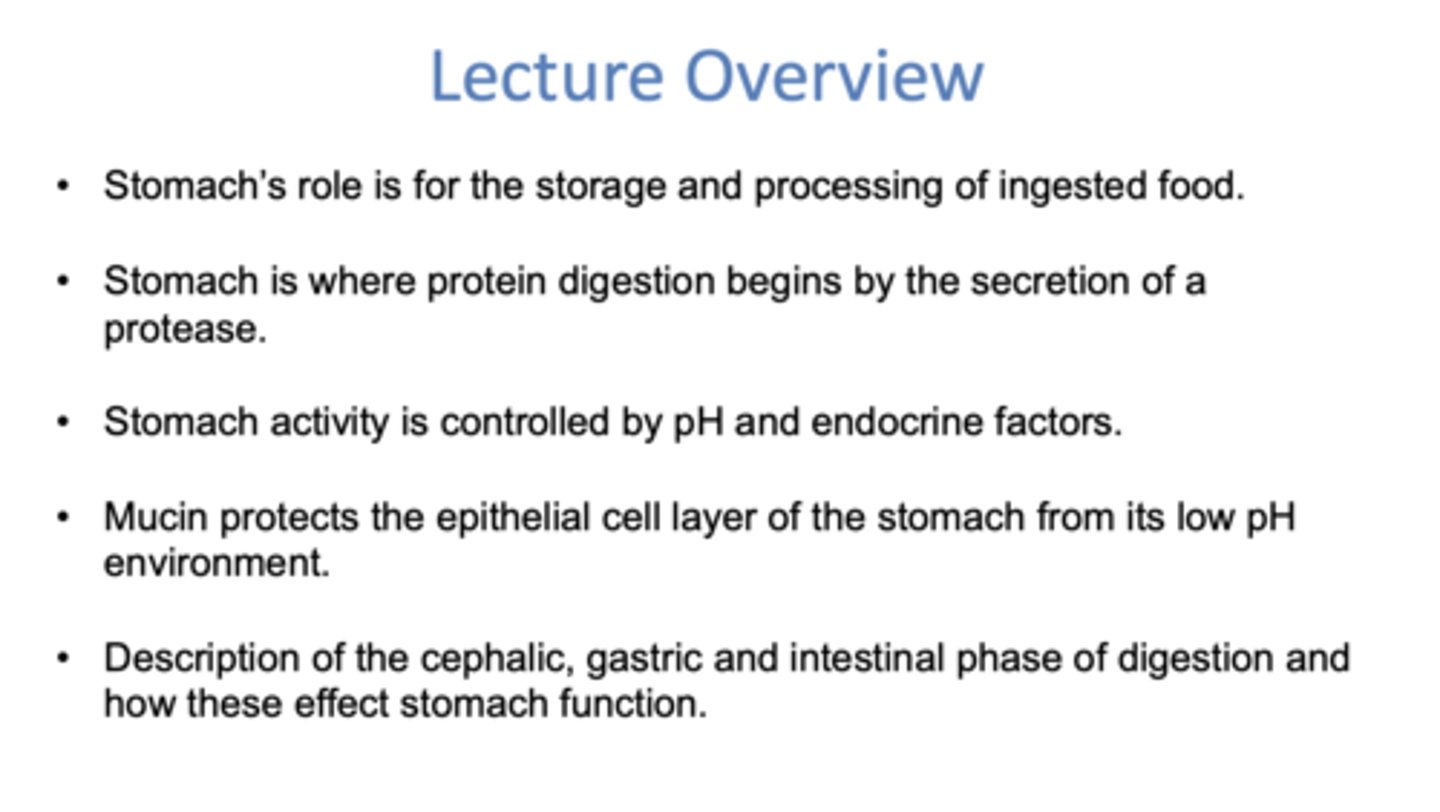
What phase of digestion is the following:
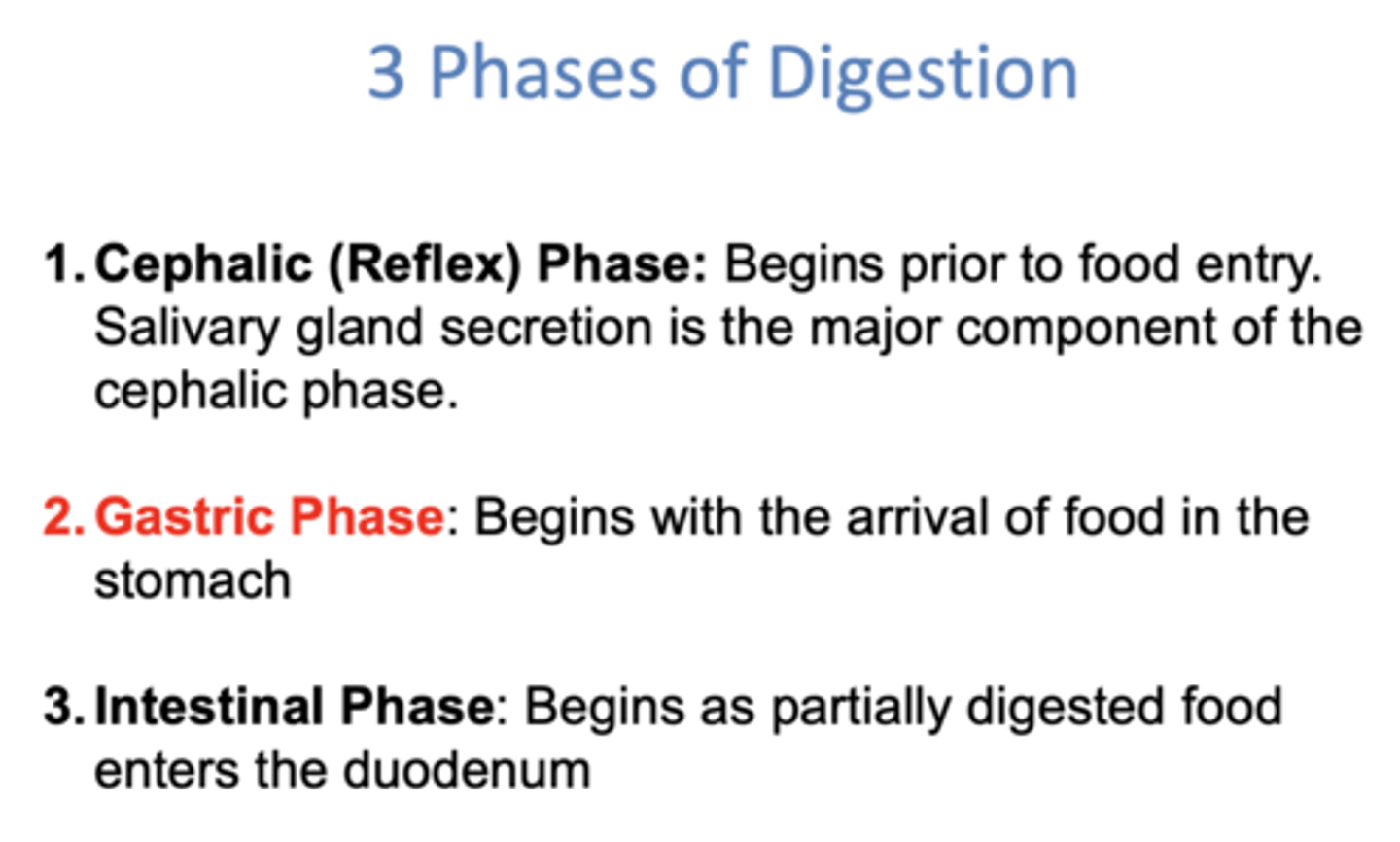
Begins with the arrival of food in the stomach
Gastric phase
What is the purpose of the gastric phase?
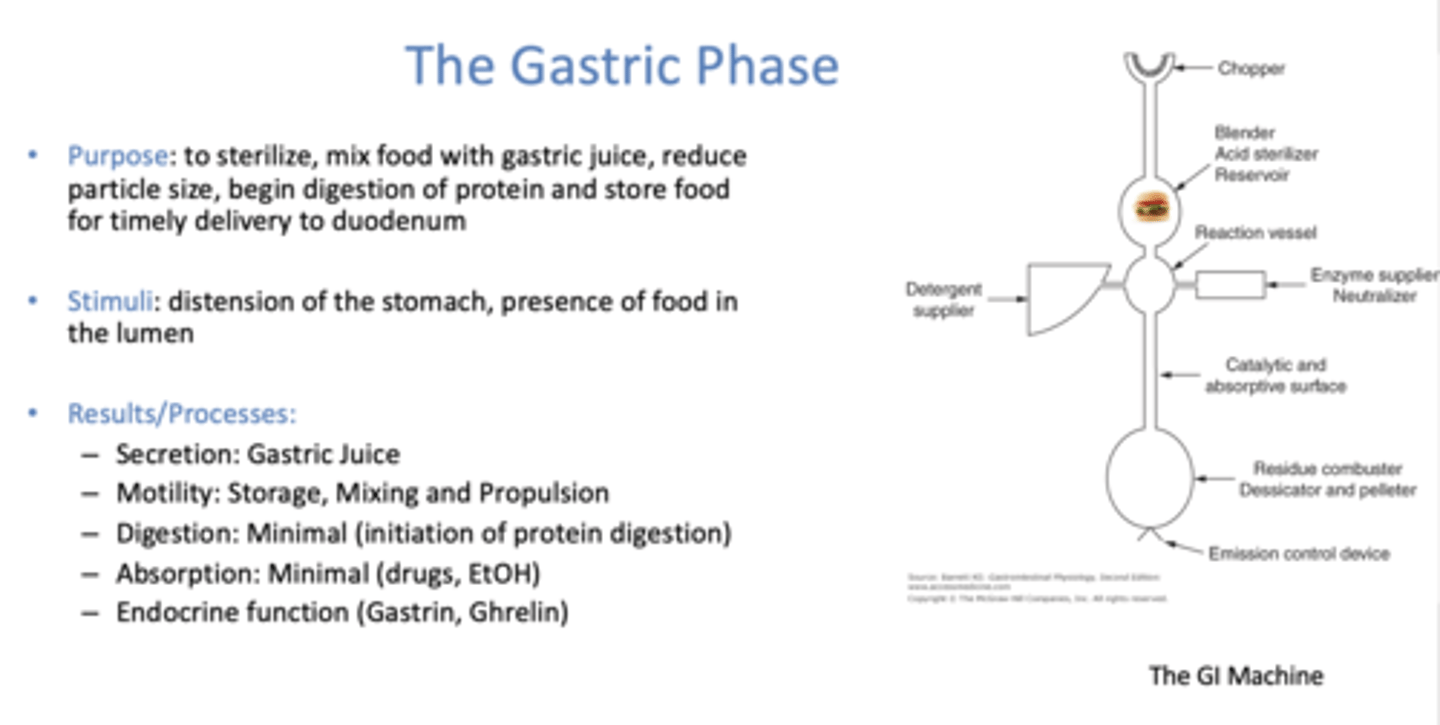
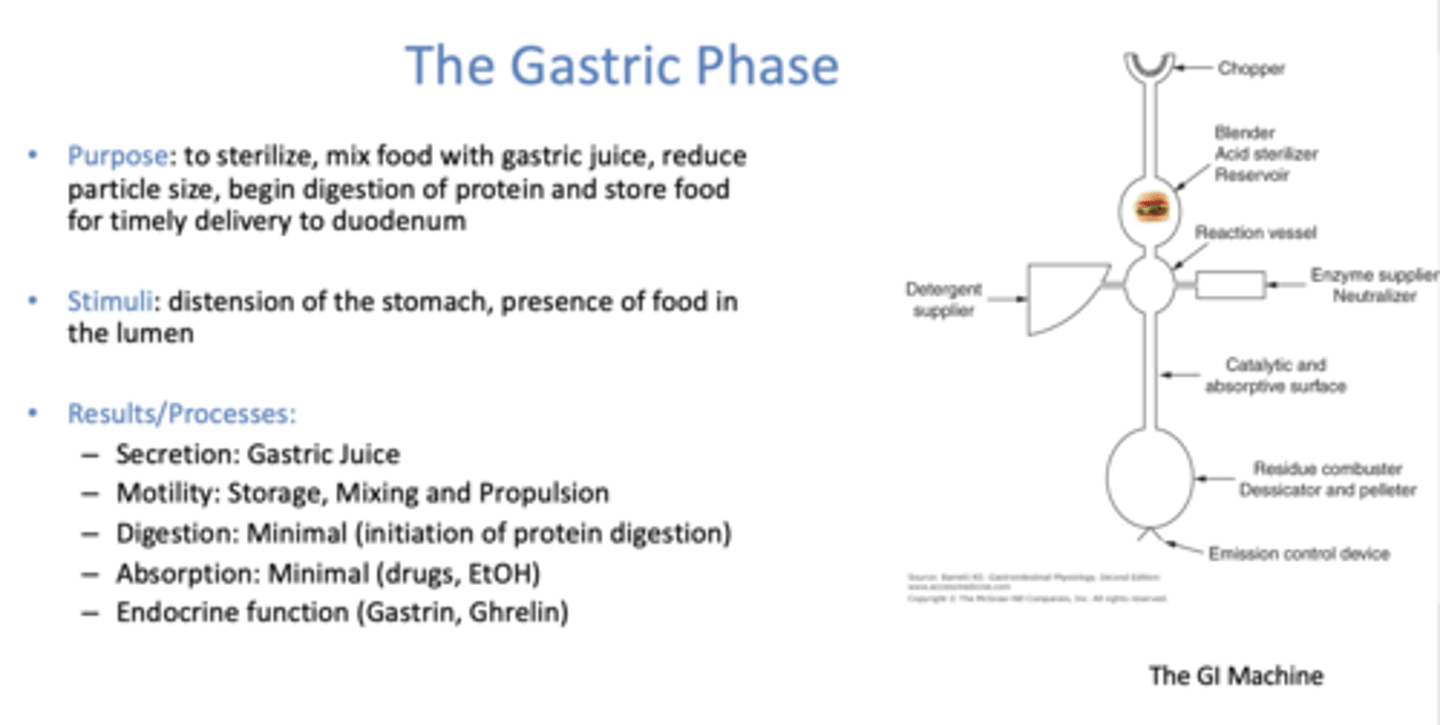
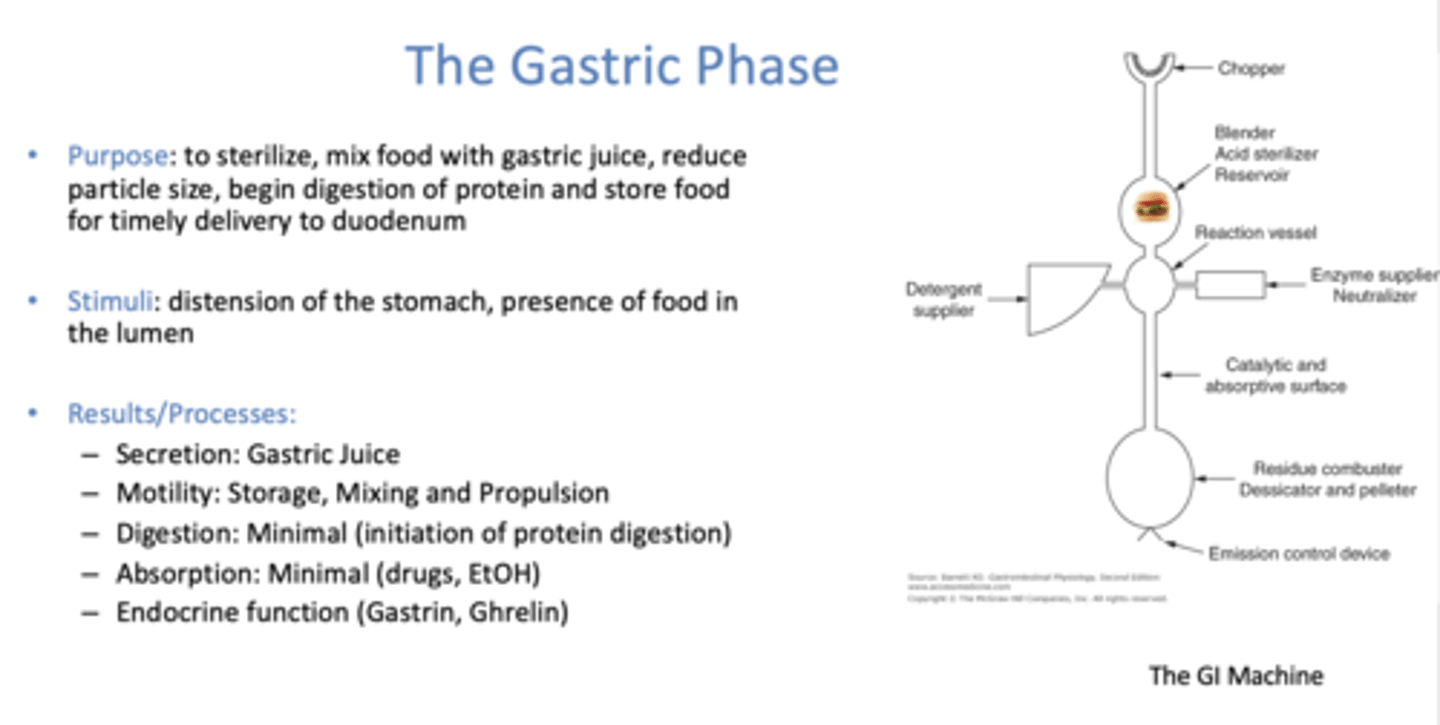
To sterilize, mix food with gastric juice, reduce particle size, begin digestion of protein and store food for timely delivery to duodenum
What stimulates the gastric phase?
- Distension of the stomach
- Presence of food in the lumen
Which of the following are results/processes for the gastric phase?
A. Secretion: Gastric Juice
B. Motility: Storage, Mixing and Propulsion
C. Digestion: Minimal (initiation of protein digestion)
D. Absorption: Minimal (drugs, EtOH)
E. Endocrine function (Gastrin, Ghrelin)
F. All of the above
F. All of the above
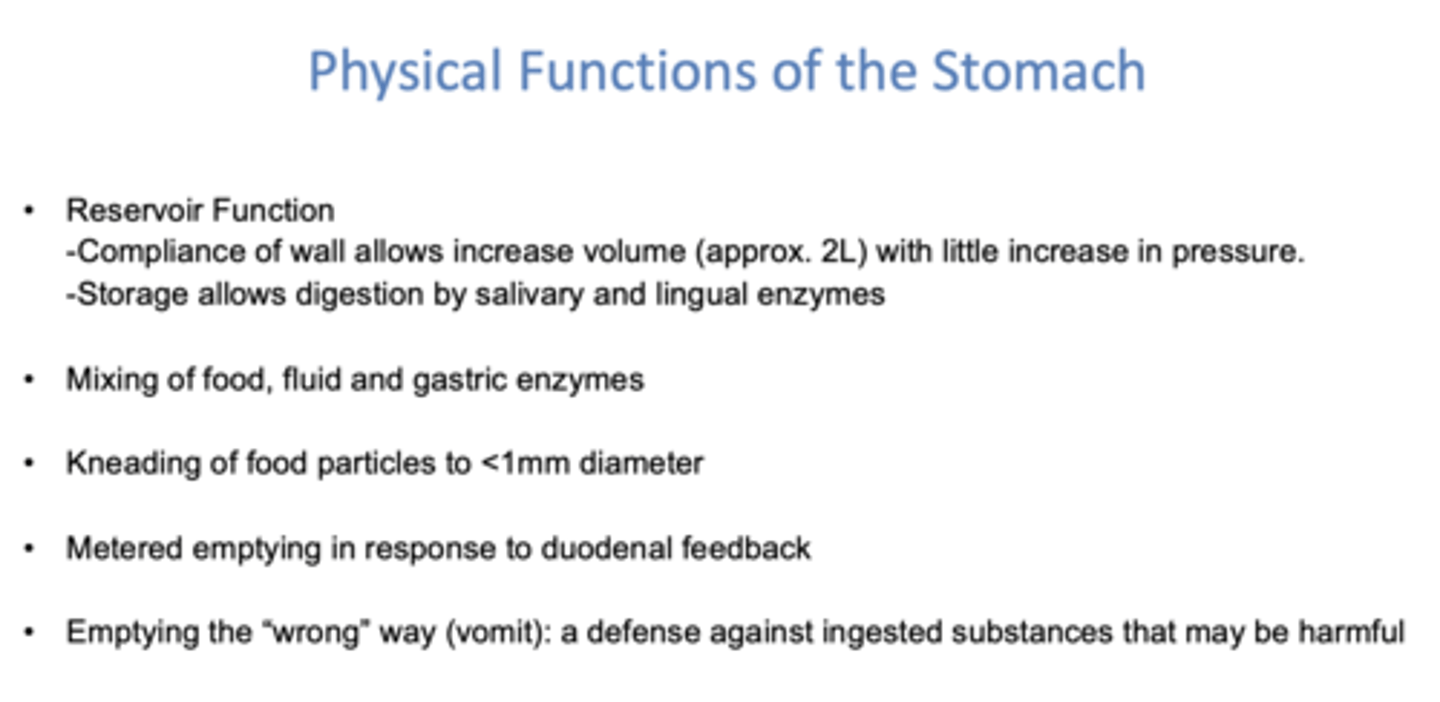
Which of the following is not considered a physical function of the stomach?
a. compliance of wall allows increase volume with little increase in pressure
b. storage allows digestion by enzymes
c. mixing of food, fluid, gastric enzymes
d. Kneading of food particles to <1mm diameter
e. Metered emptying in response to duodenal feedback
f. Emptying the "wrong" way (vomit), a defense against ingested substances that may be harmful
g. none of the above
g. none of the above (all are functions!)
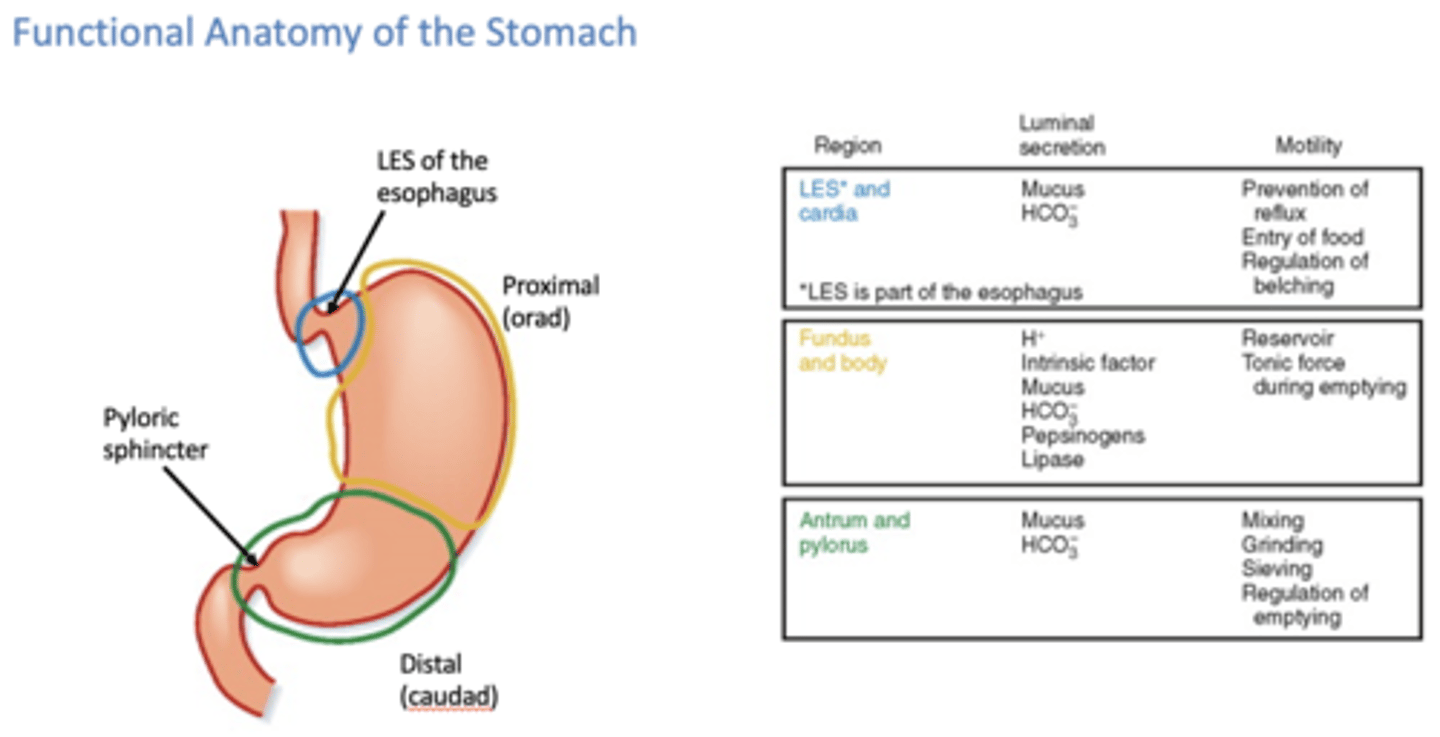
sphincter that separates esophagus from stomach:
lower esophageal sphincter
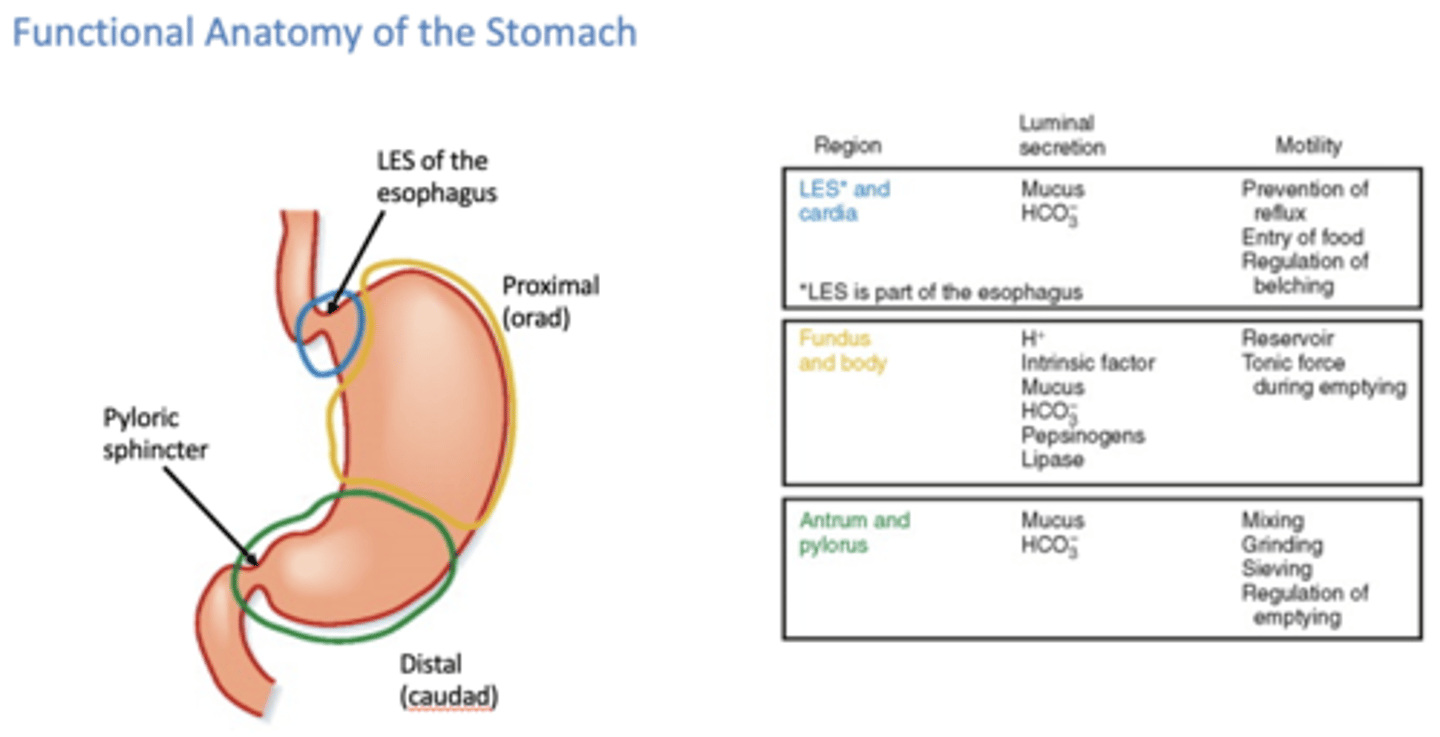
sphincter that separates stomach from duodenum:
pyloic sphincter
What secreted product of the stomach does the following?
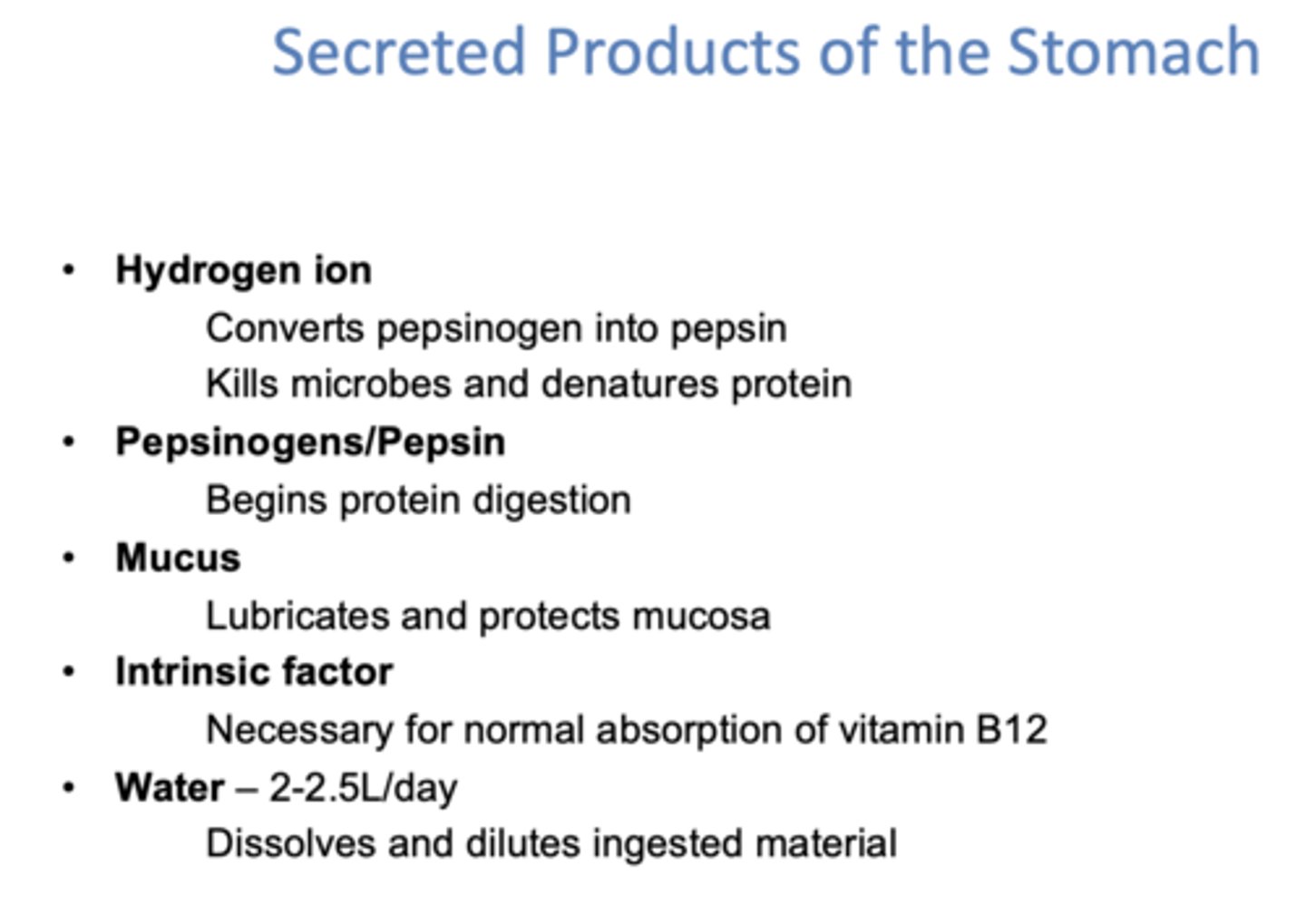
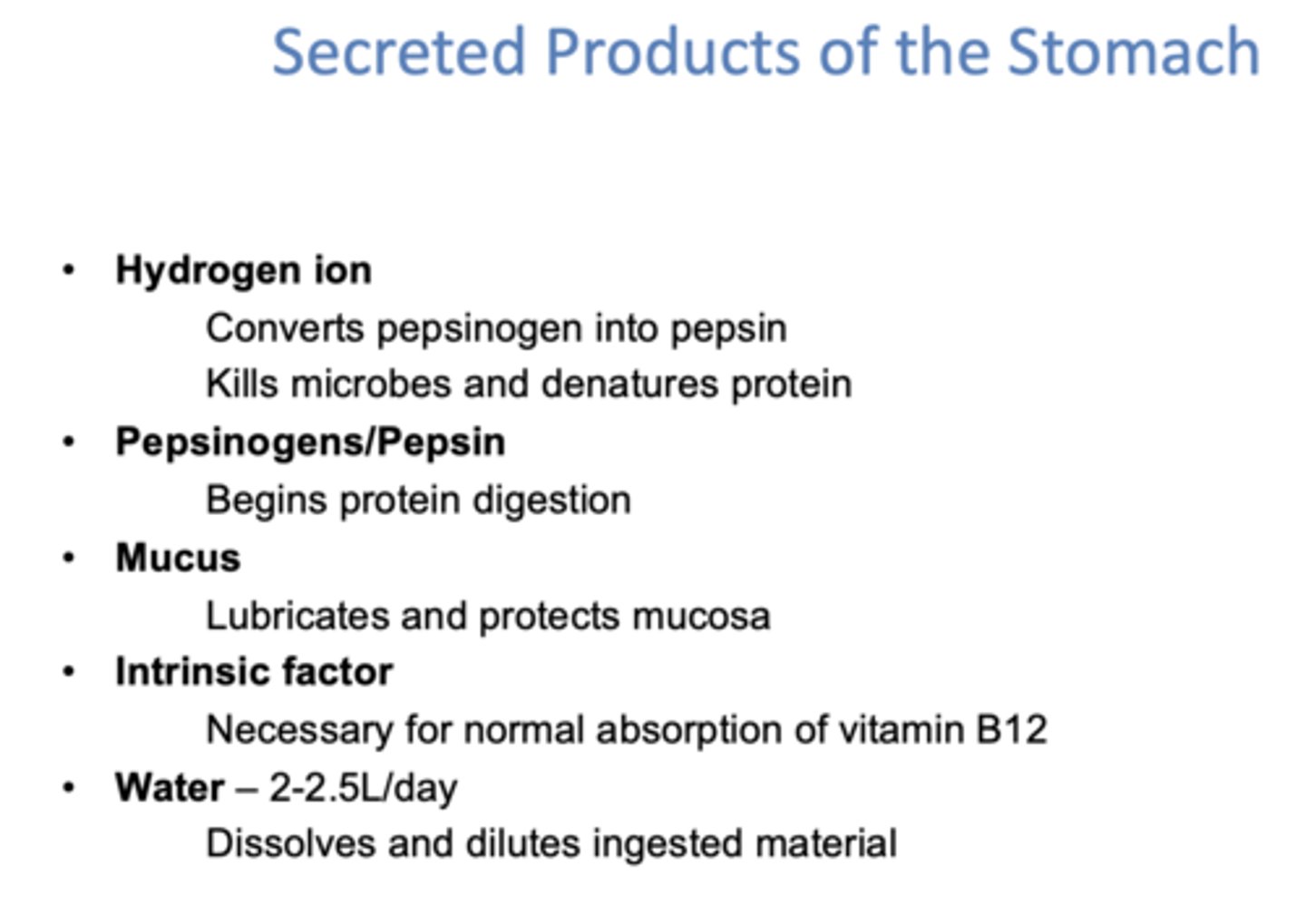
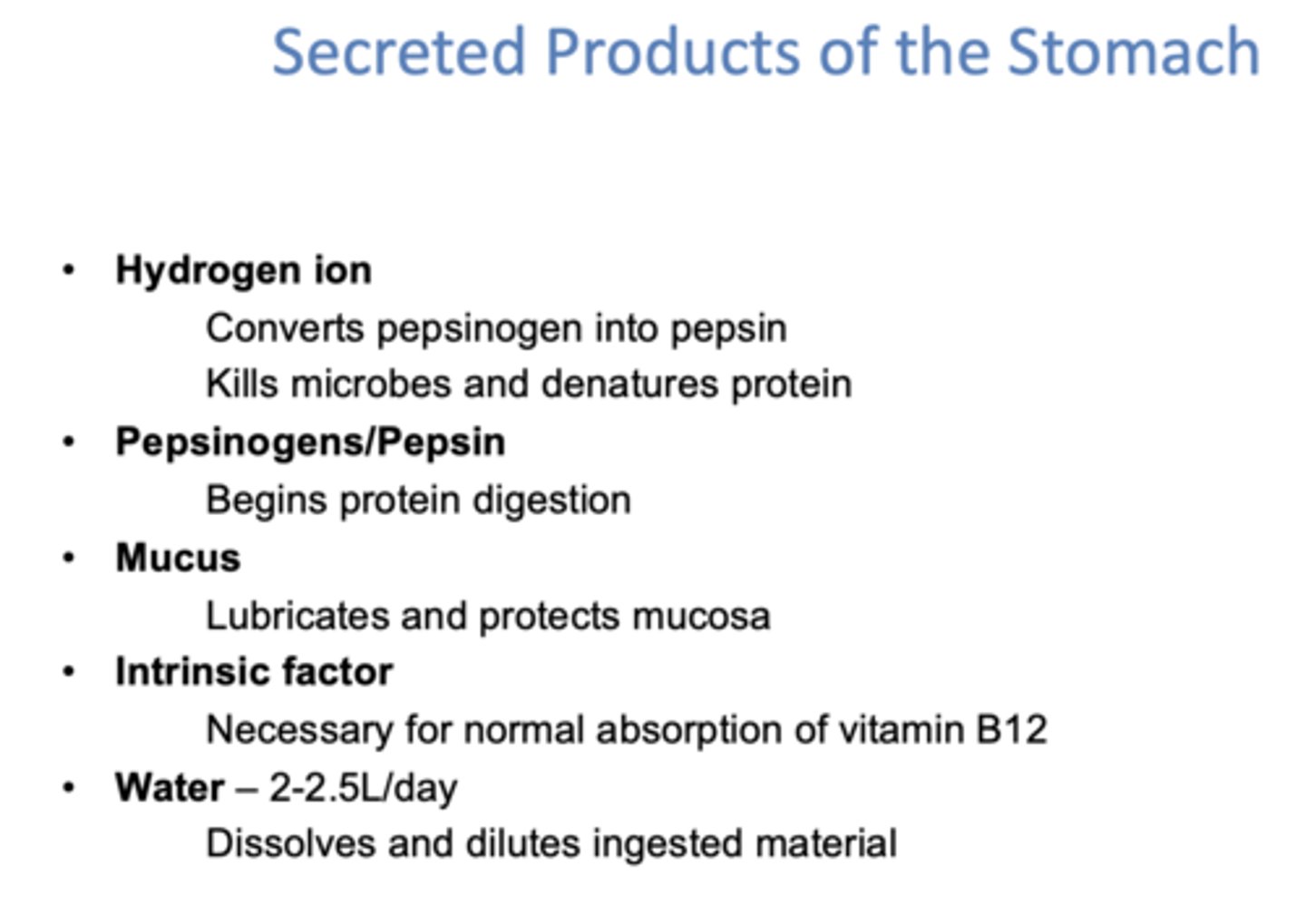
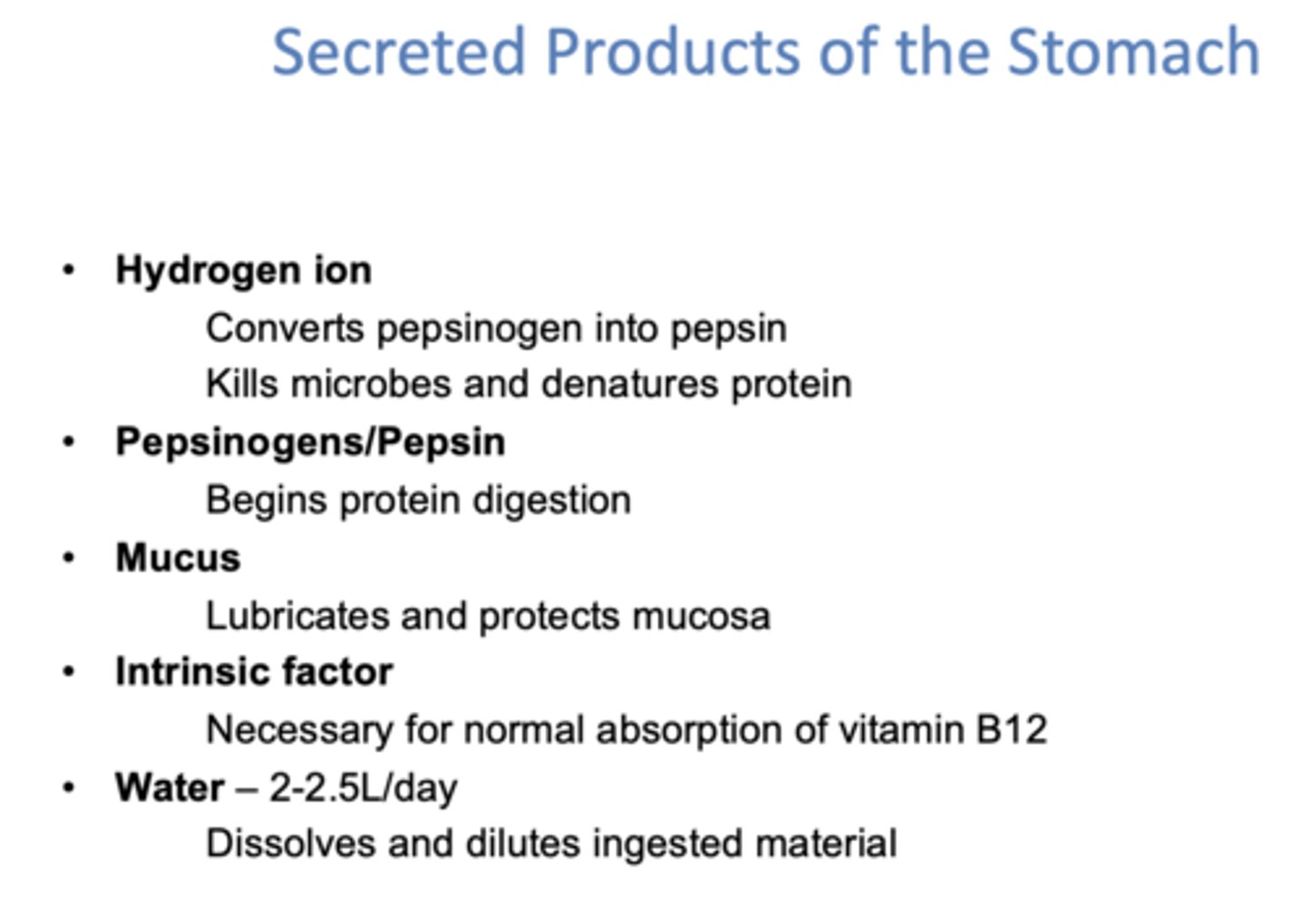
- Converts pepsinogen into pepsin
- Kills microbes and denatures protein
hydrogen ion
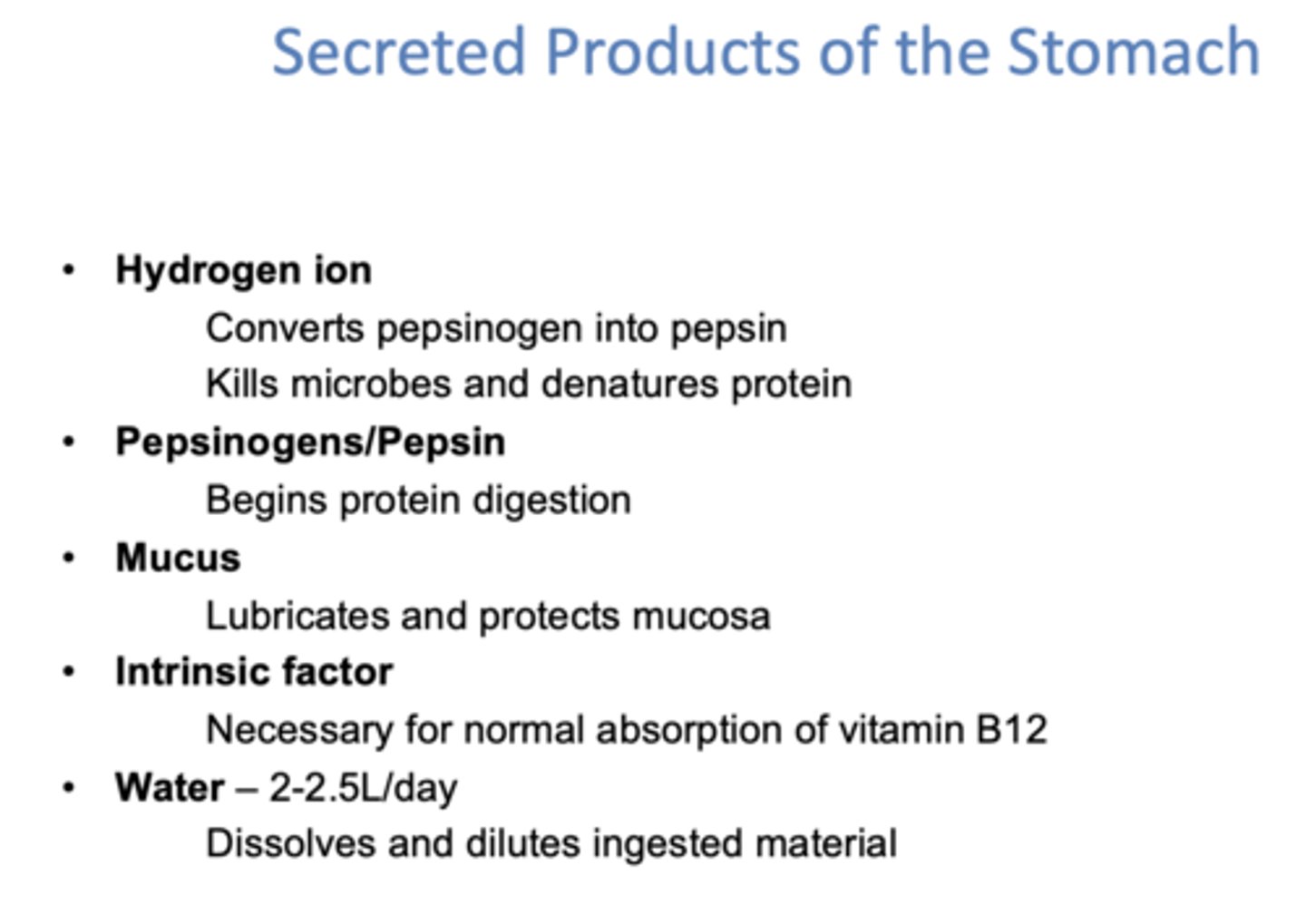
What secreted product of the stomach does the following?
Begins protein digestion
Pepsinogens/Pepsin
What secreted product of the stomach does the following?
Lubricates and protects mucosa
mucus
What secreted product of the stomach does the following?
Necessary for normal absorption of vitamin B12
intrinsic factor
What secreted product of the stomach does the following?
Dissolves and dilutes ingested material secreted from stomach (2-2.5L/day)
water
what 3 cells found in gastric glands secrete digestion products & what do they secrete?
- Parietal cells: acid
- Enterochromaffin cells: histamine
- Chief cells: pepsinogen
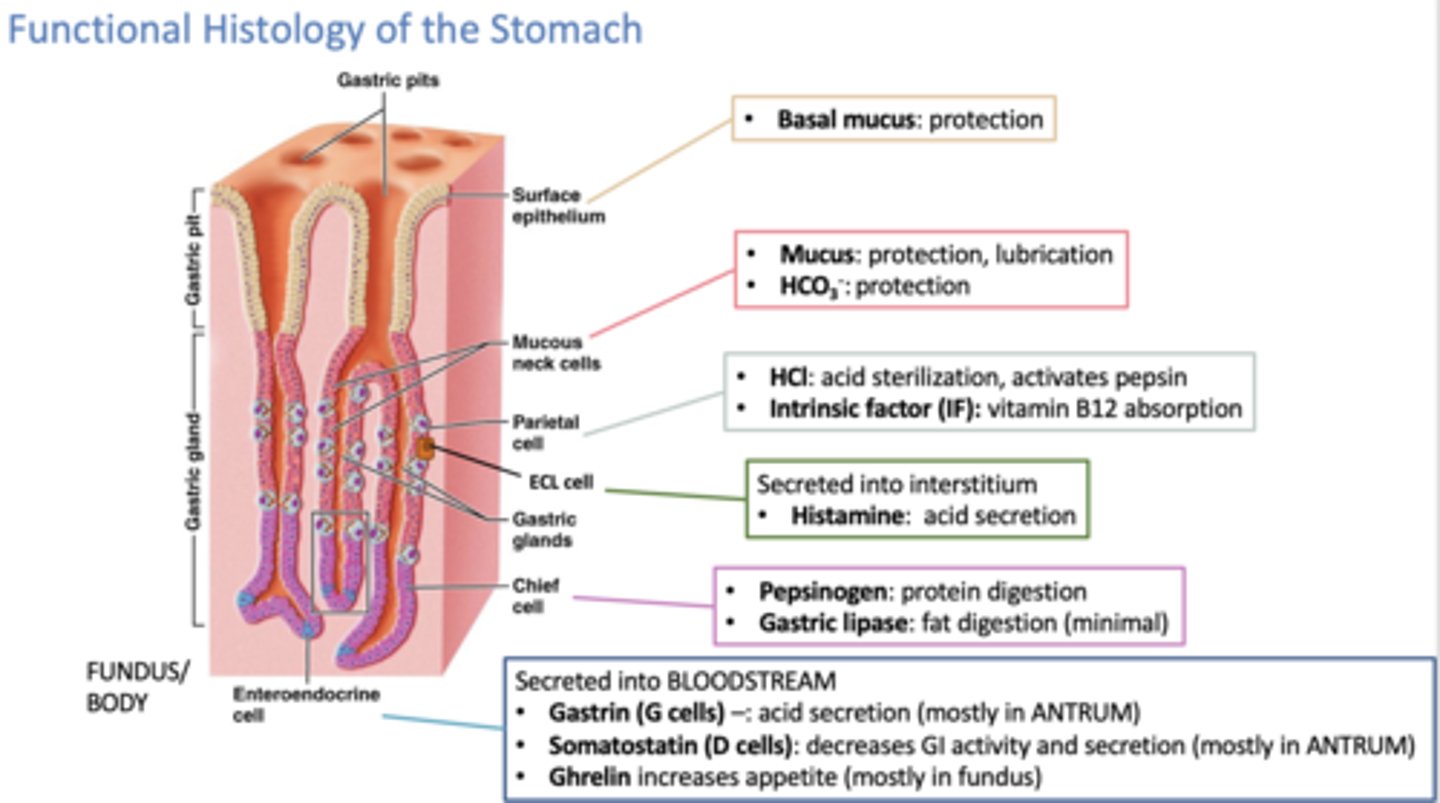
these cells secrete acid and intrinsic factor:
parietal cells
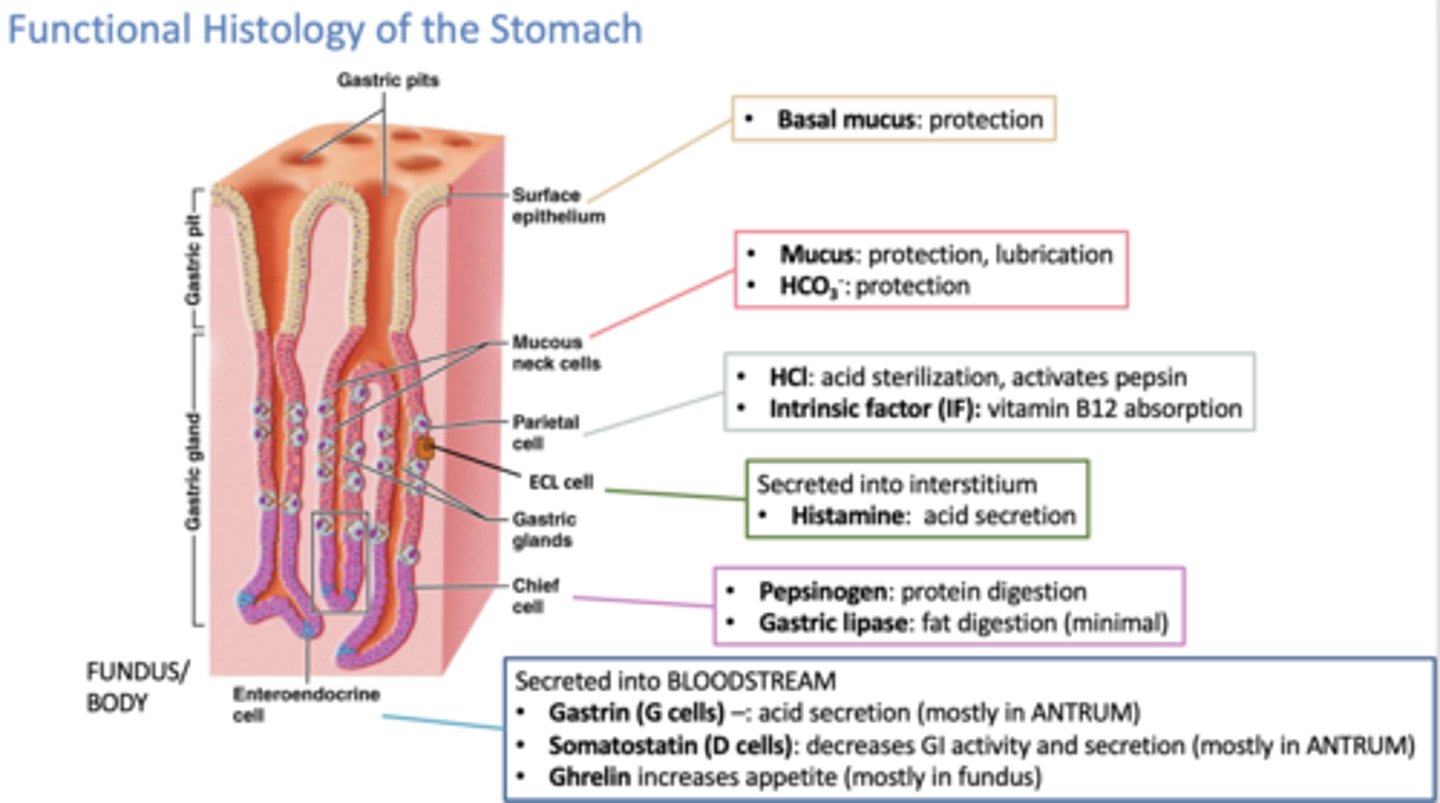
these cells secrete histamine:
enterochromaffin cells
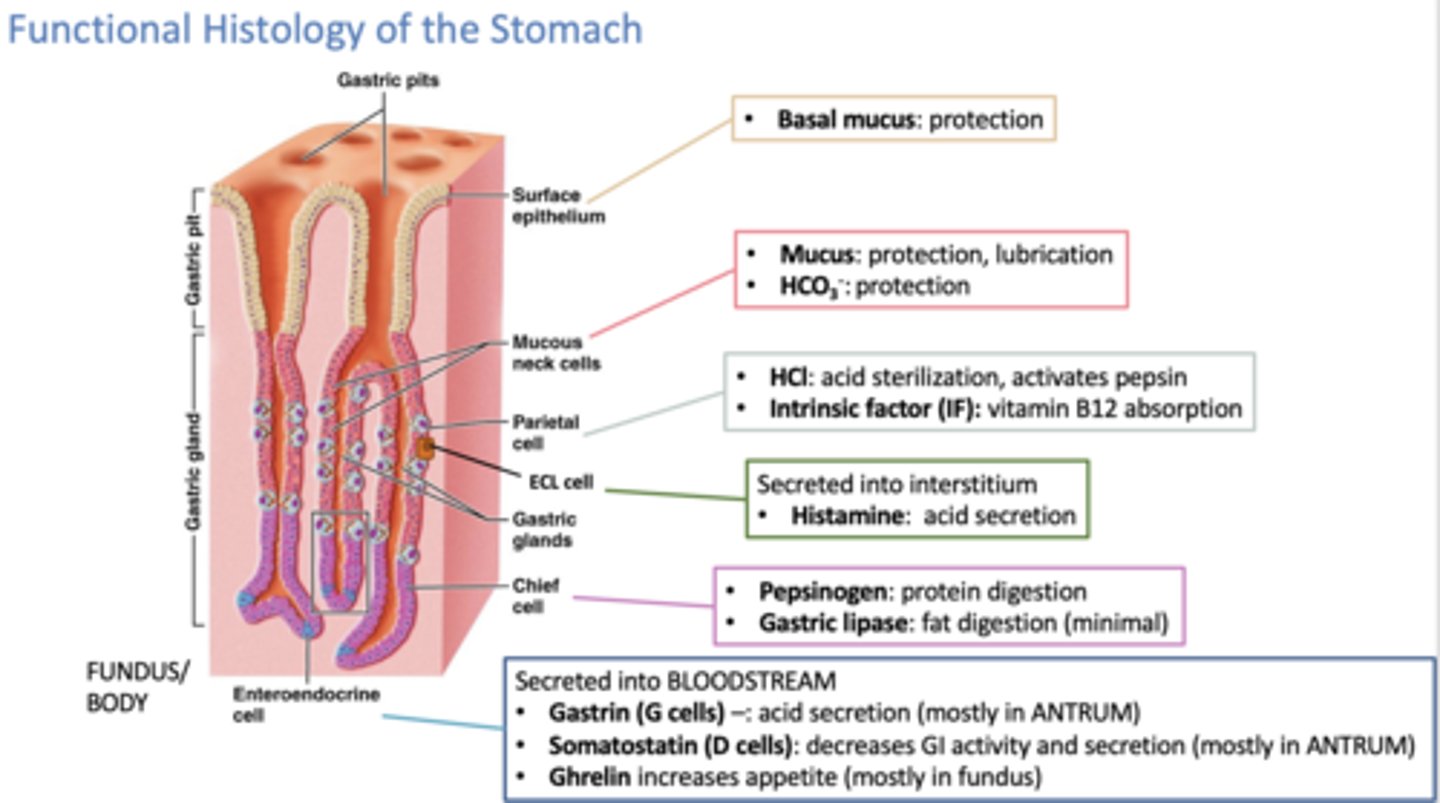
these cells secrete pepsinogen:
chief cells
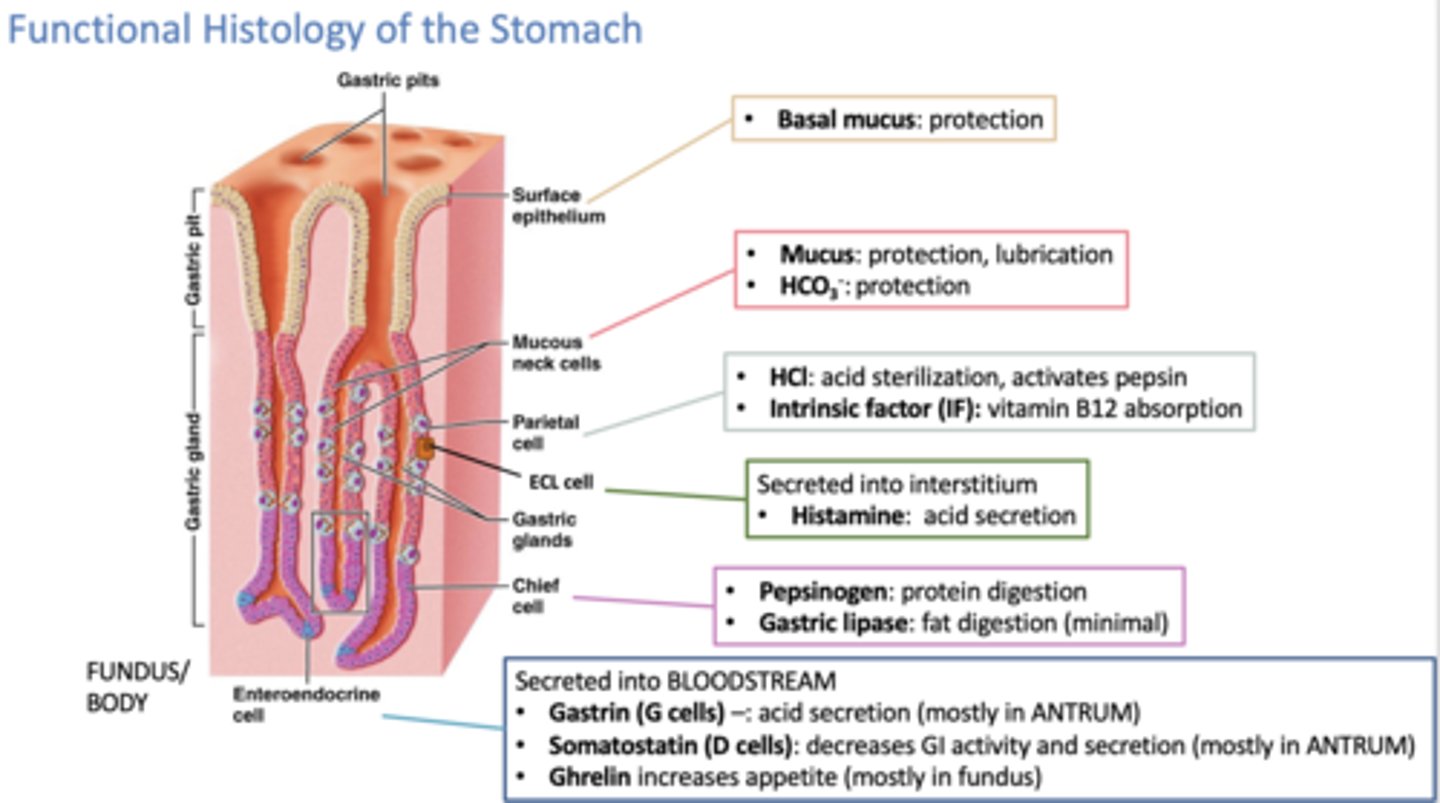
What cells decreases GI activity and secretion (mostly in ANTRUM)?
Somatostatin (D cells)
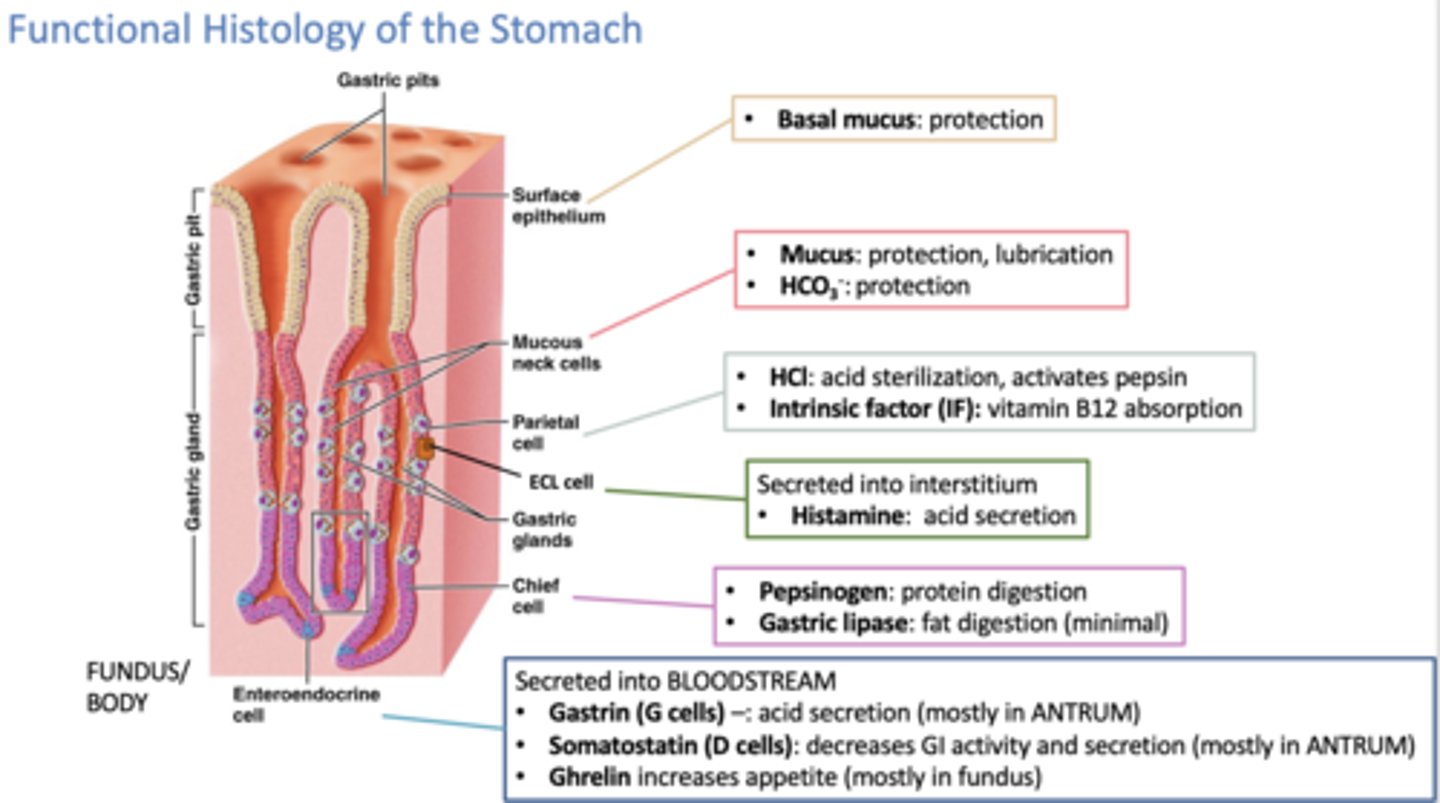
________ increases appetite (mostly in fundus)
Ghrelin
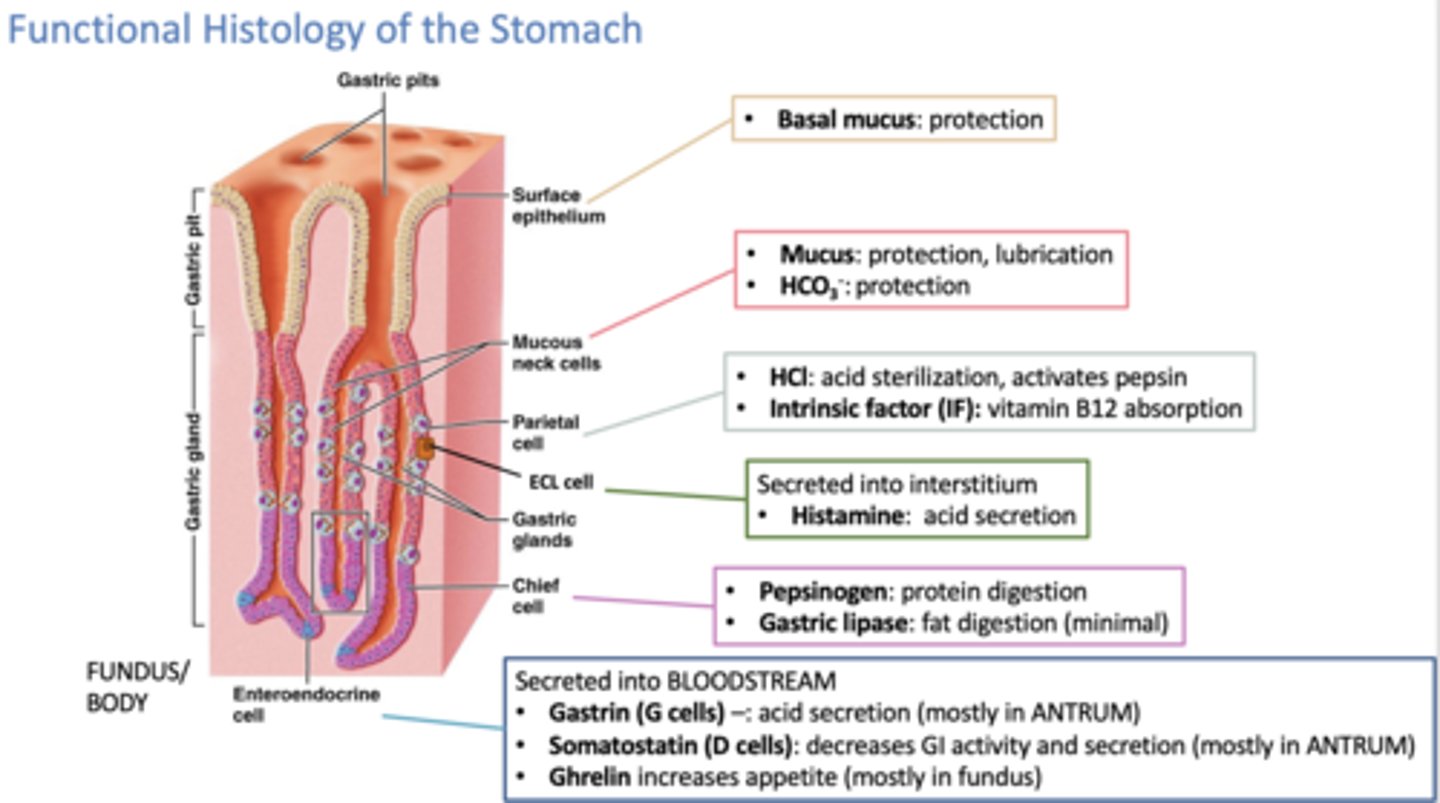
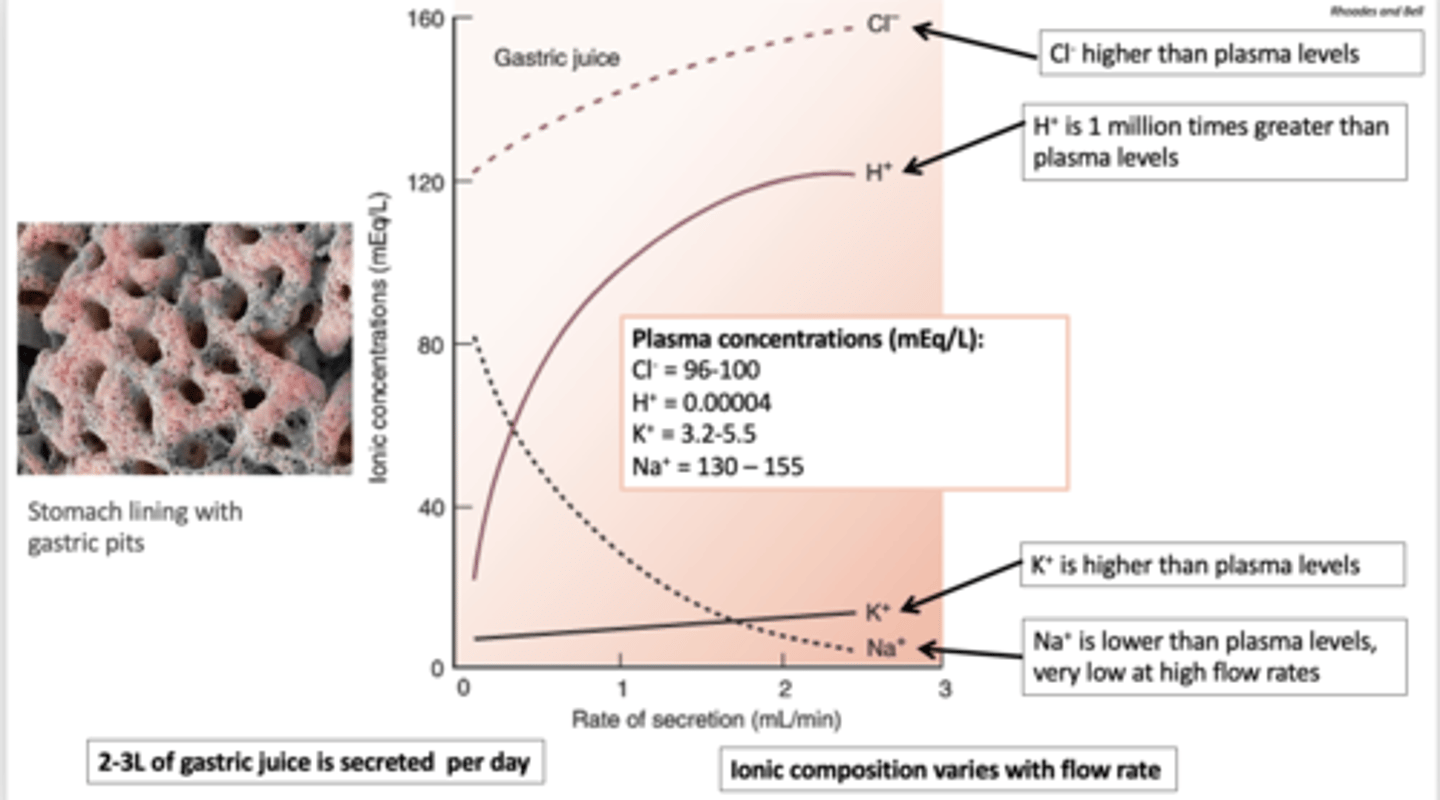
How does Cl- compare in gastric juice vs plasma levels?
Cl- higher than plasma levels
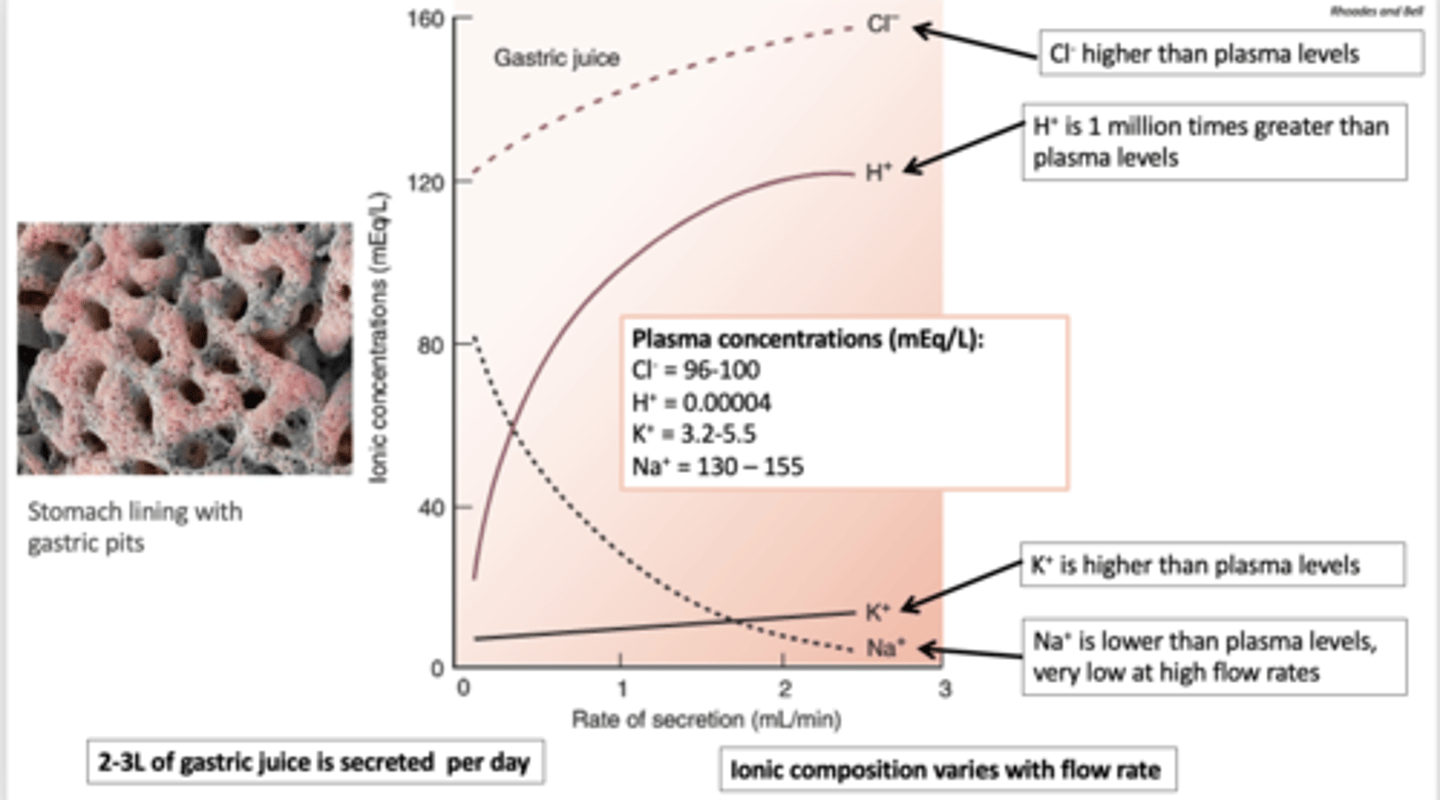
How does H+ compare in gastric juice vs plasma levels?
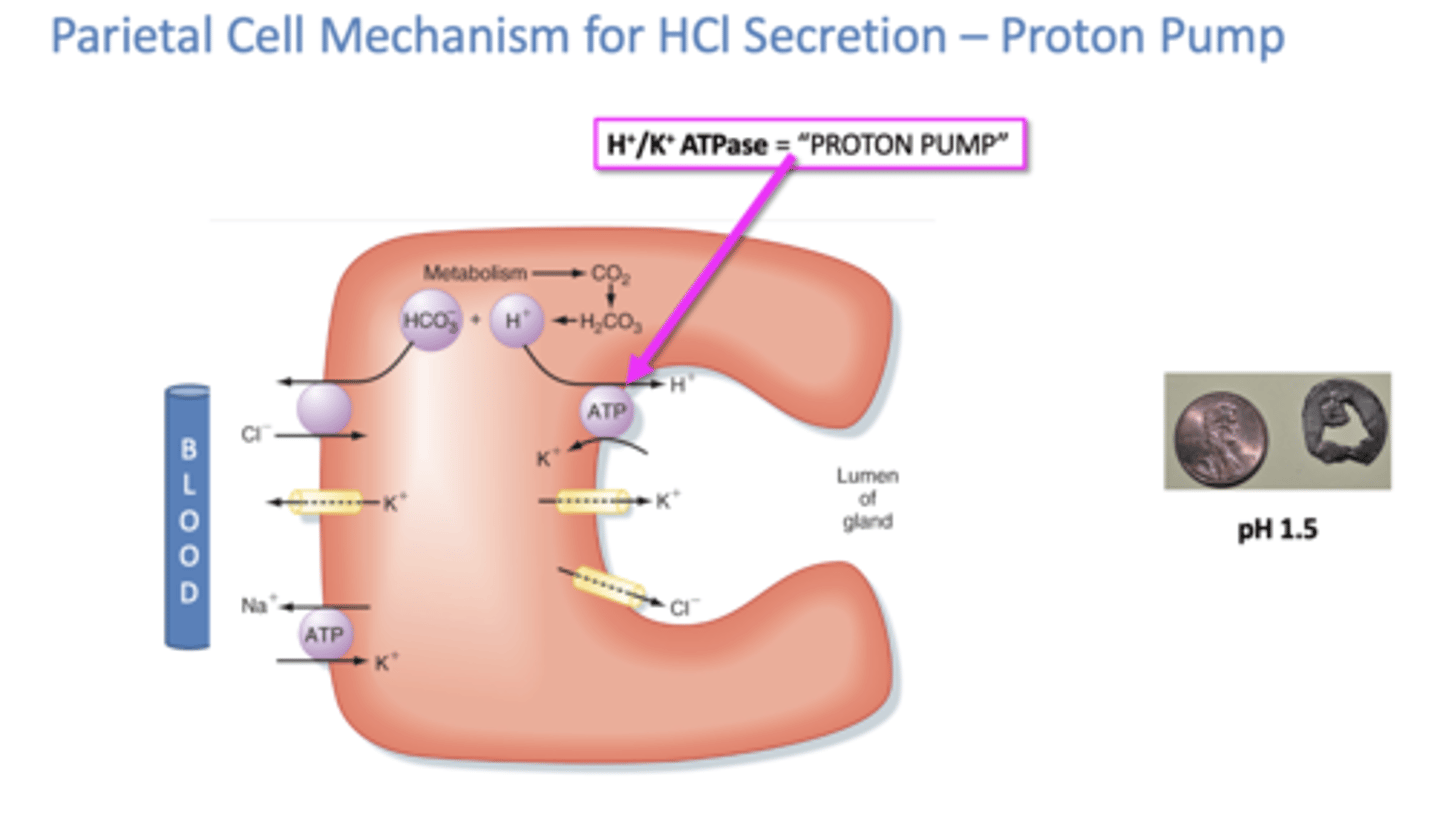
H+ is 1 million times greater than plasma levels
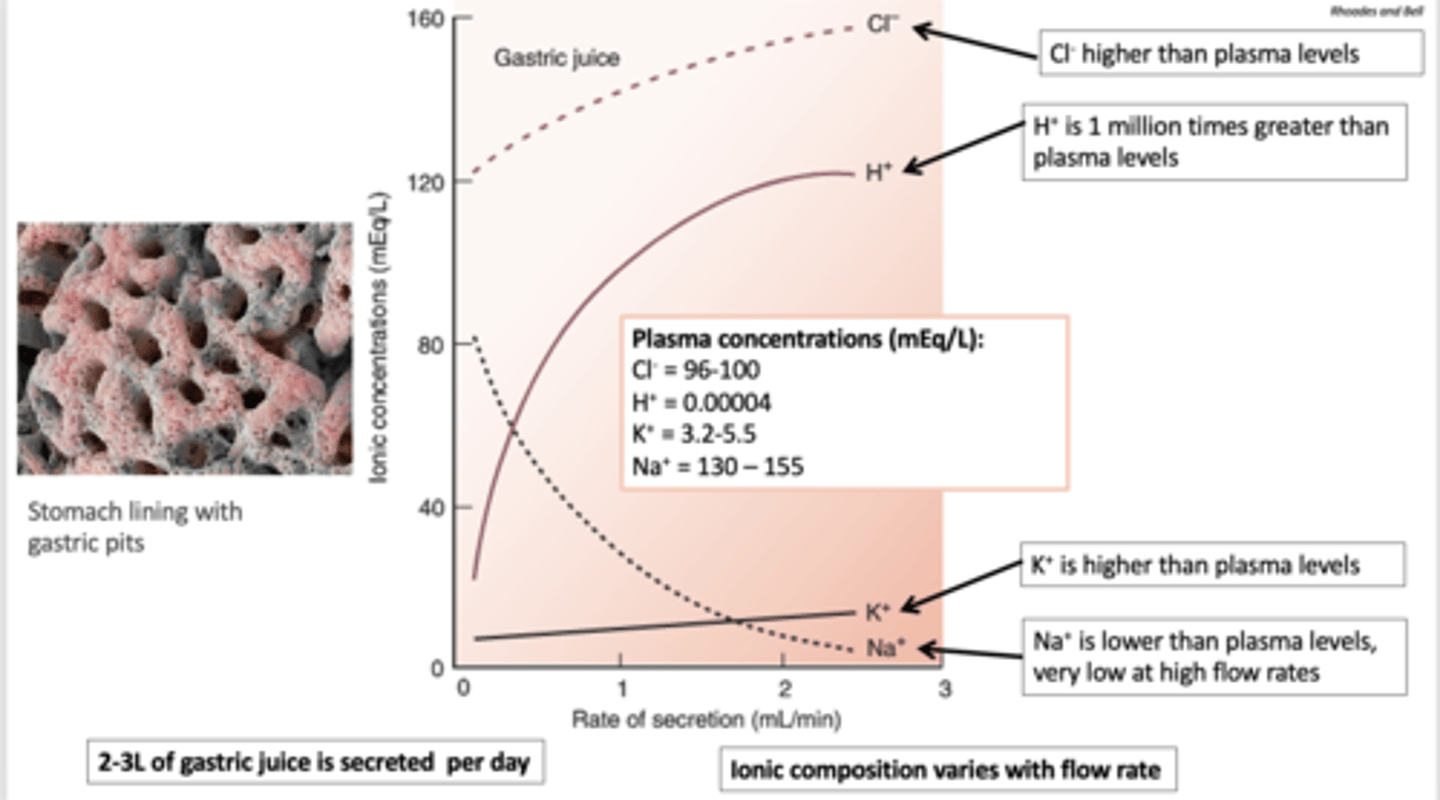
How does K+ compare in gastric juice vs plasma levels?
K+ is higher than plasma levels
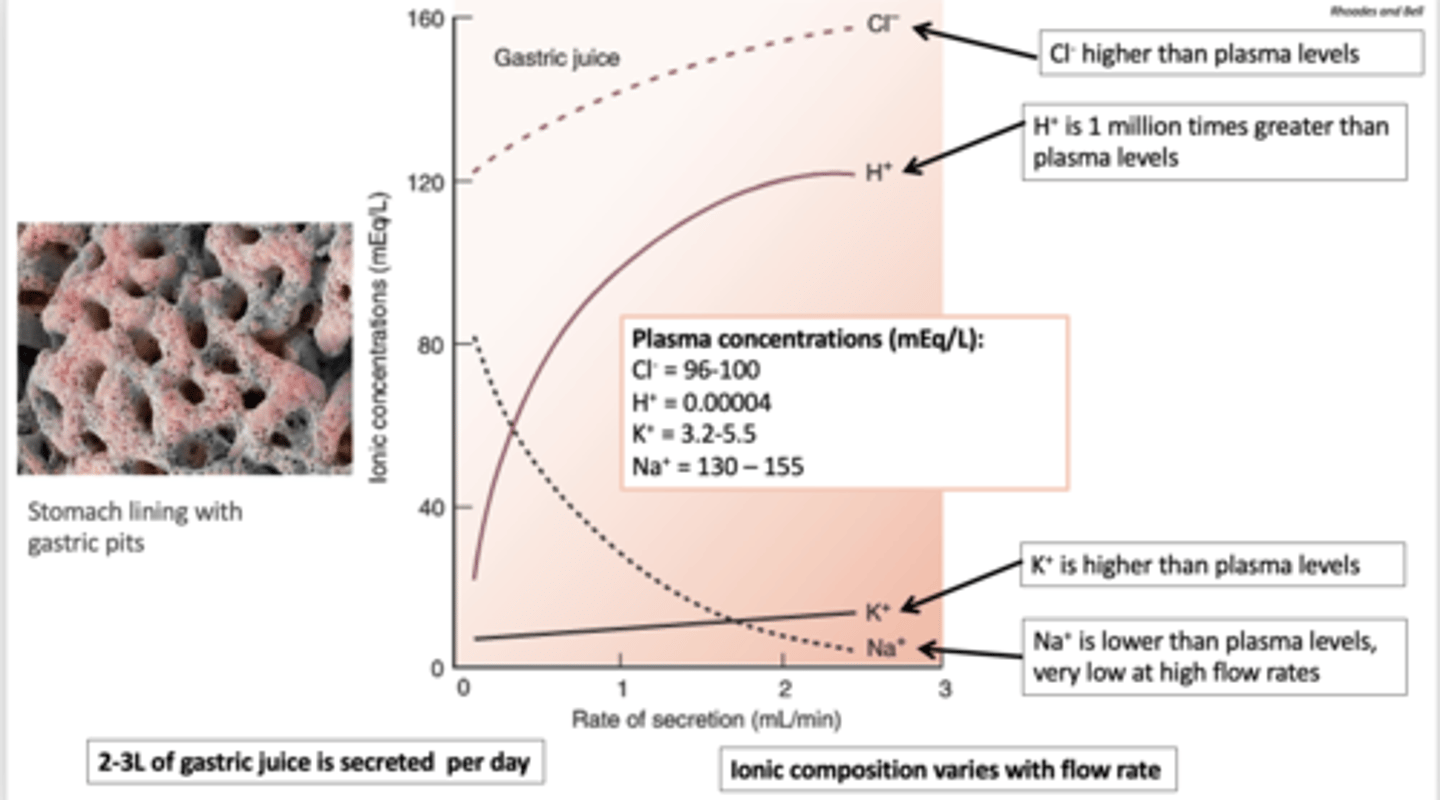
How does Na+ compare in gastric juice vs plasma levels?
Na+ is lower than plasma levels, very low at high flow rates
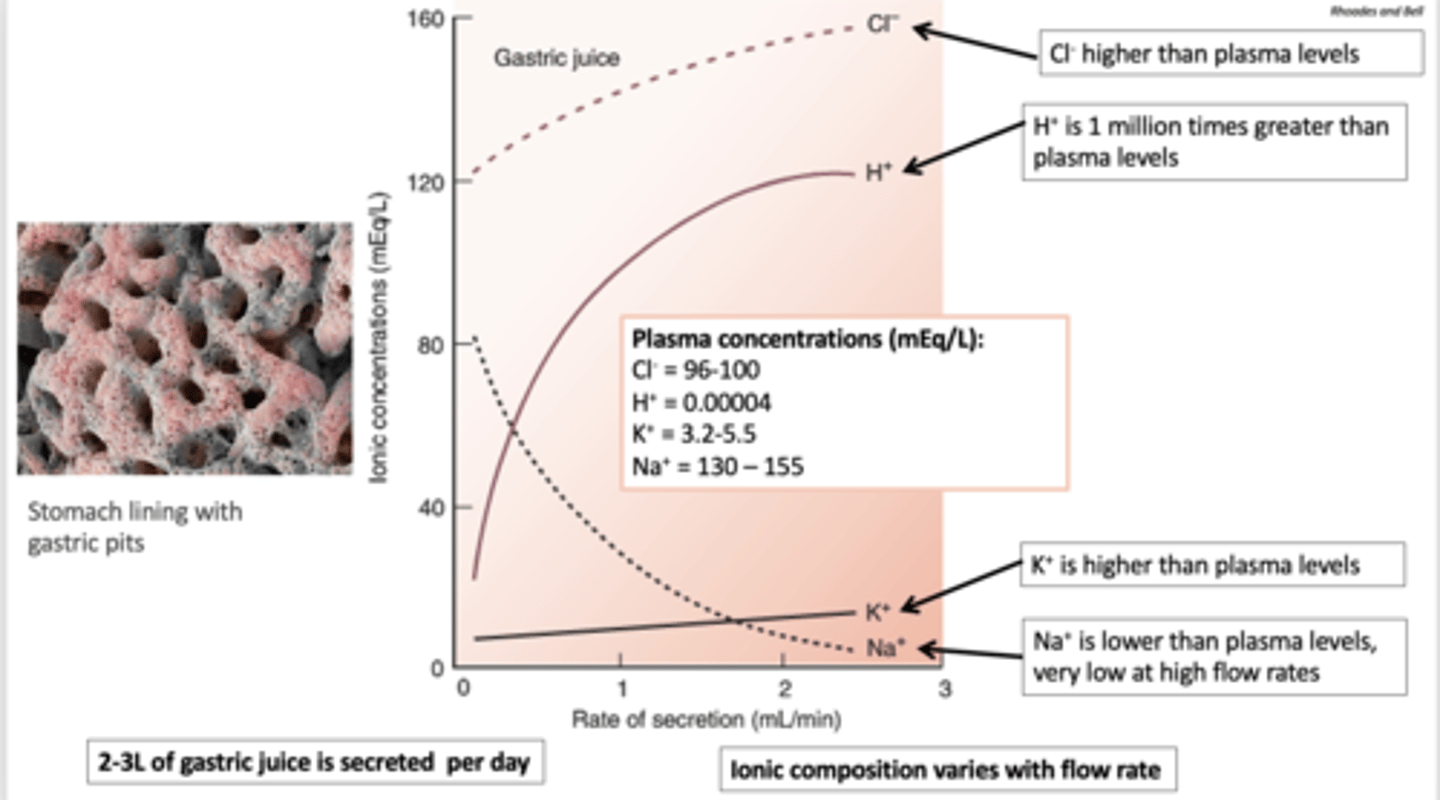
____-____ L of gastric juice is secreted per day
2-3
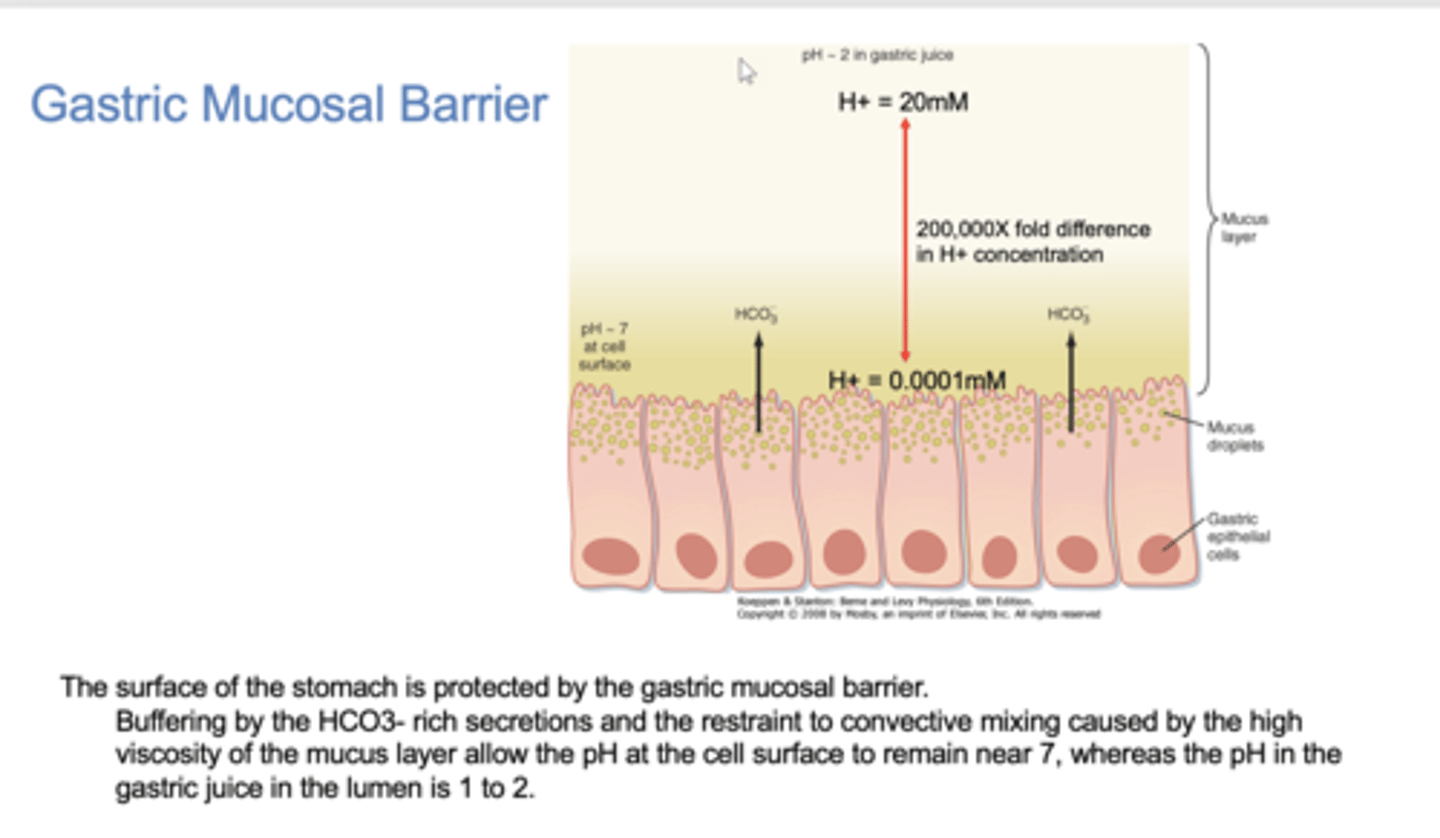
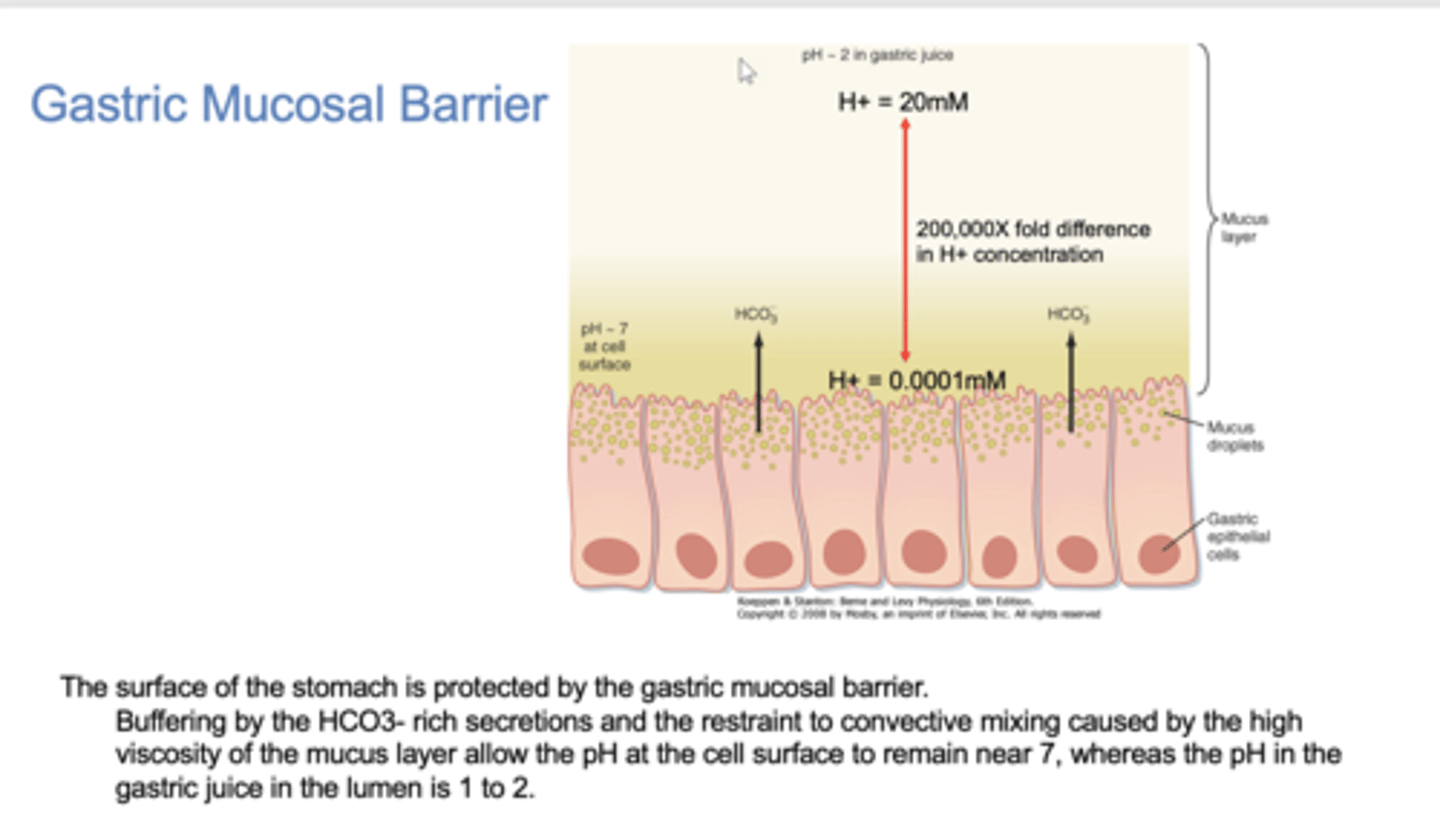
The surface of the stomach is protected by the ___________
gastric mucosal barrier
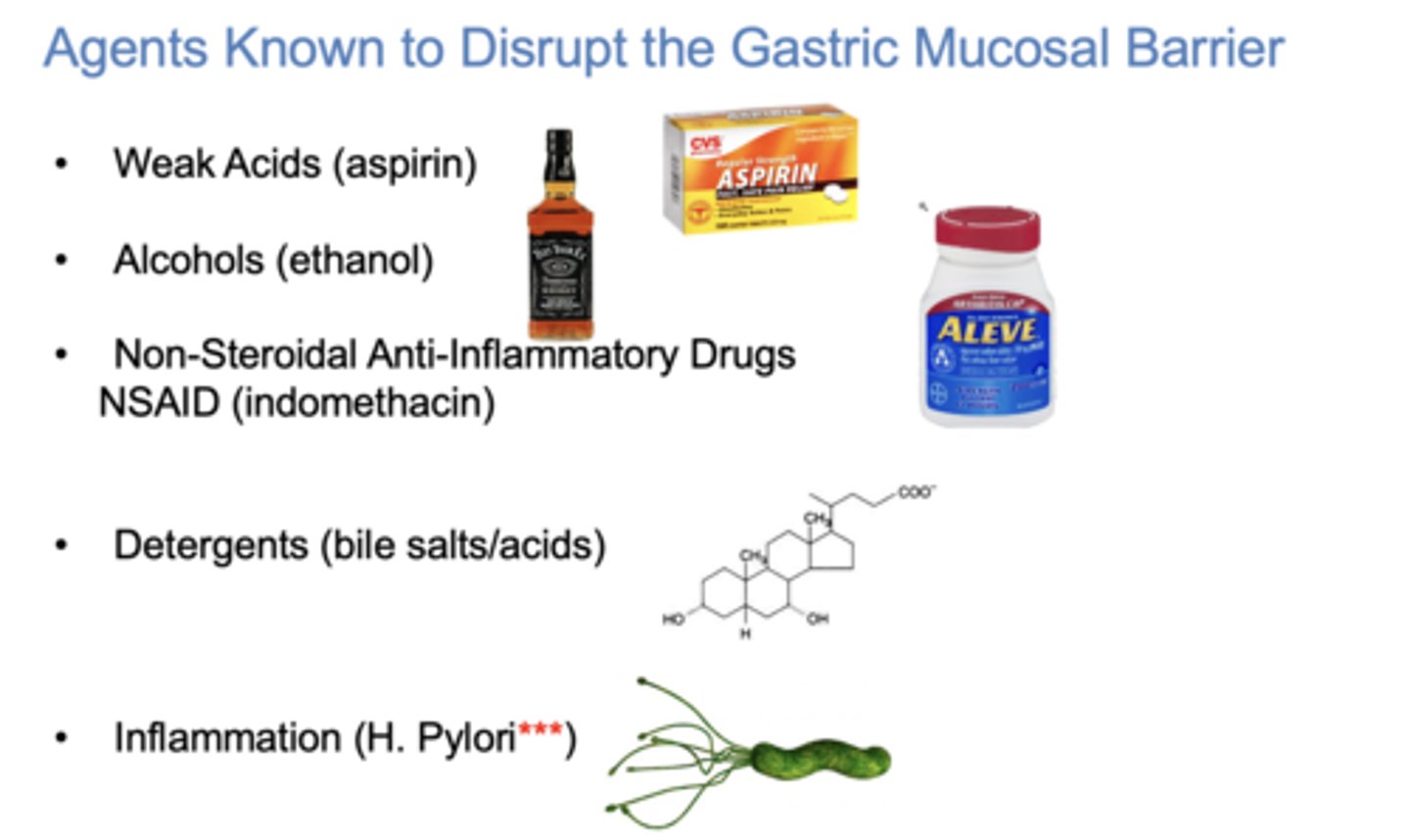
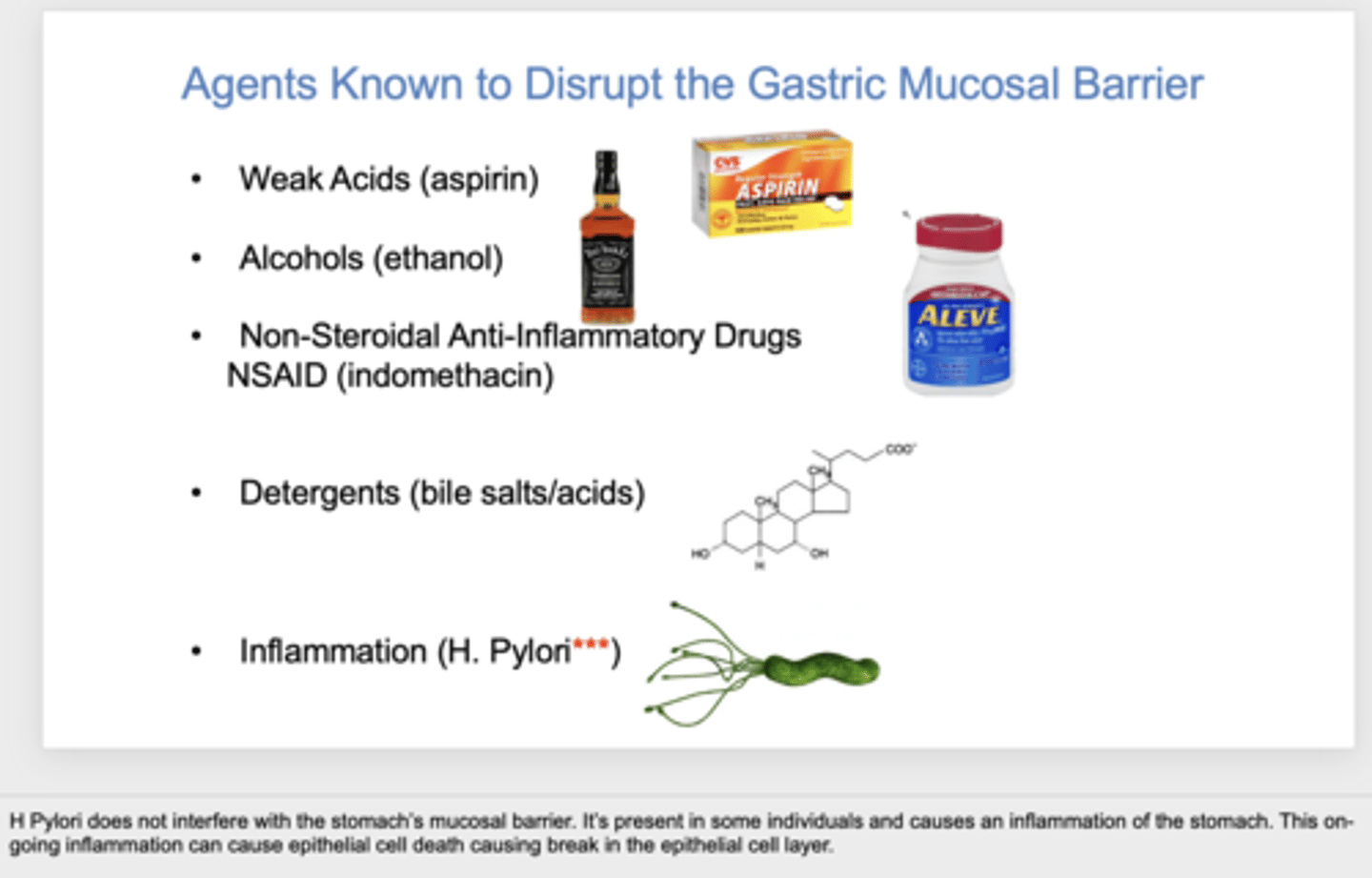
What are the 5 agents discussed in lecture known to disrupt the Gastric Mucosal barrier?
- Weak acids (aspirin)
- Alcohol
- NSAIDs
- Detergents (bile salts/acids)
- Inflammation (H.Pylori)
t/f: H Pylori interferes with the stomach's mucosal barrier by directly causing peptic ulcers
false
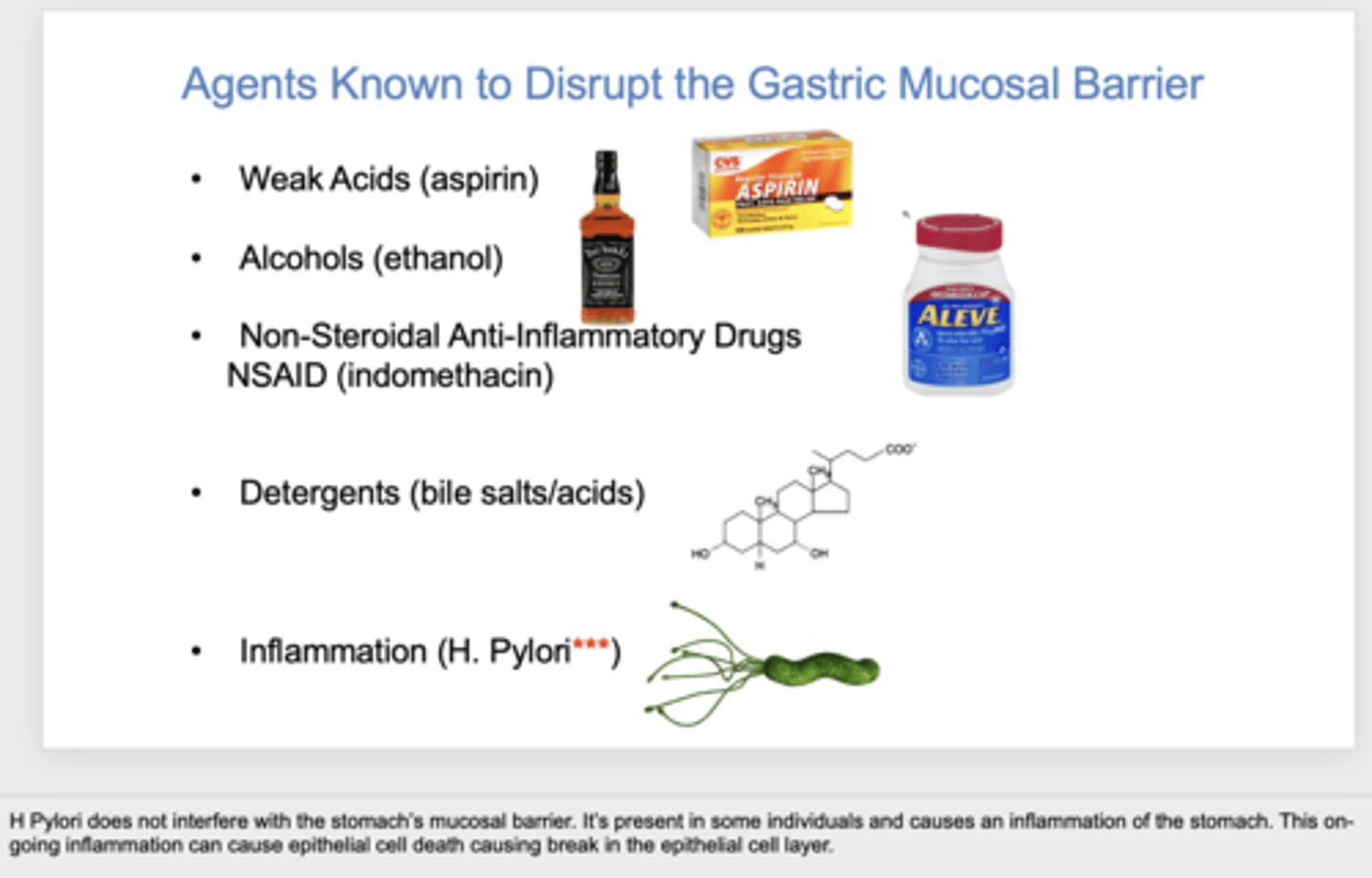
t/f: H Pylori interferes with the stomach's mucosal barrier by causing a inflammatory response that results in the interference of the mucosal barrier, resulting in peptic ulcers
true
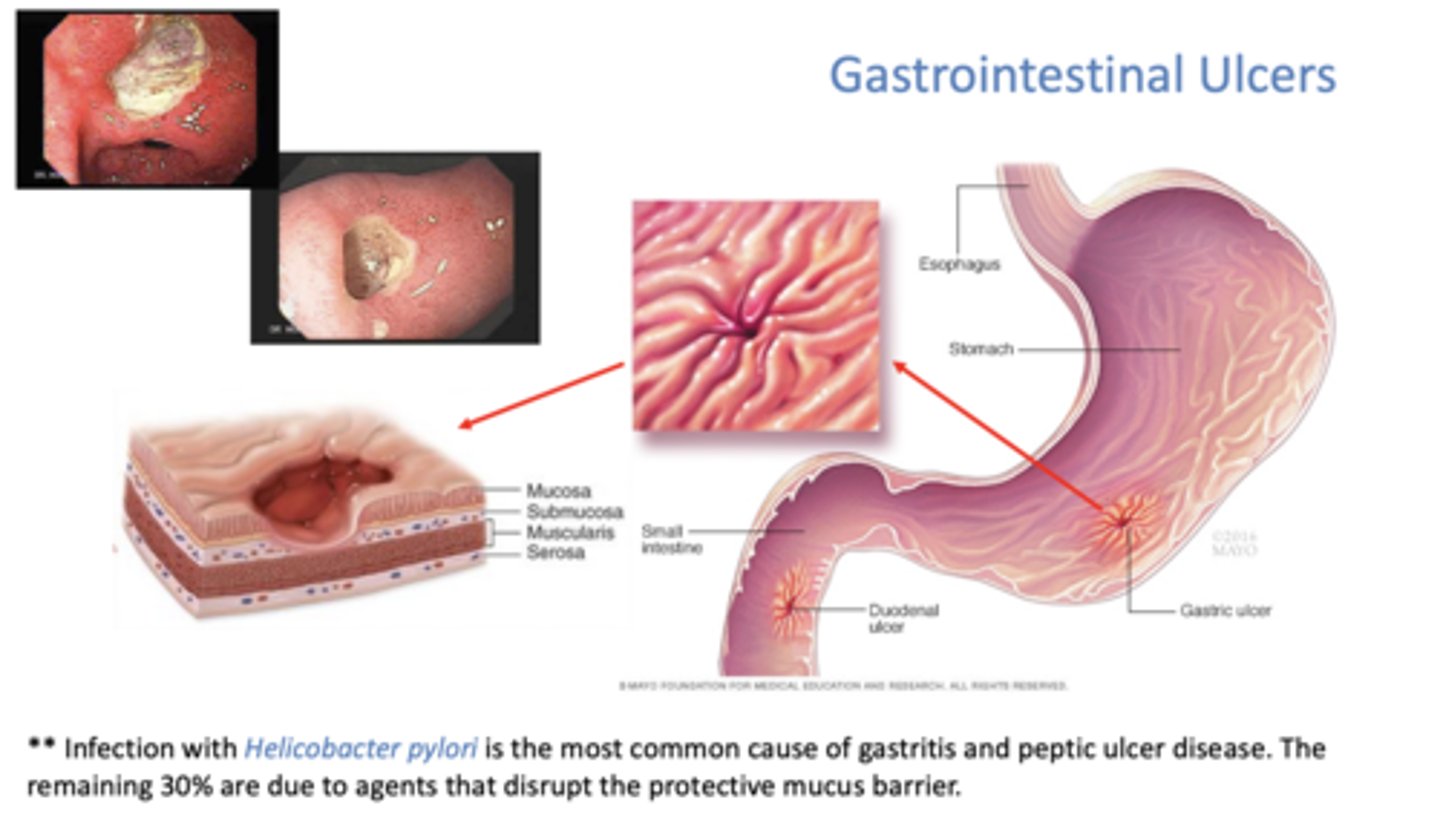
What is the most common cause of gastritis and peptic ulcers?
infection with H. Pylori
the mucus layer allows the pH at the cell surface to remain near __
7
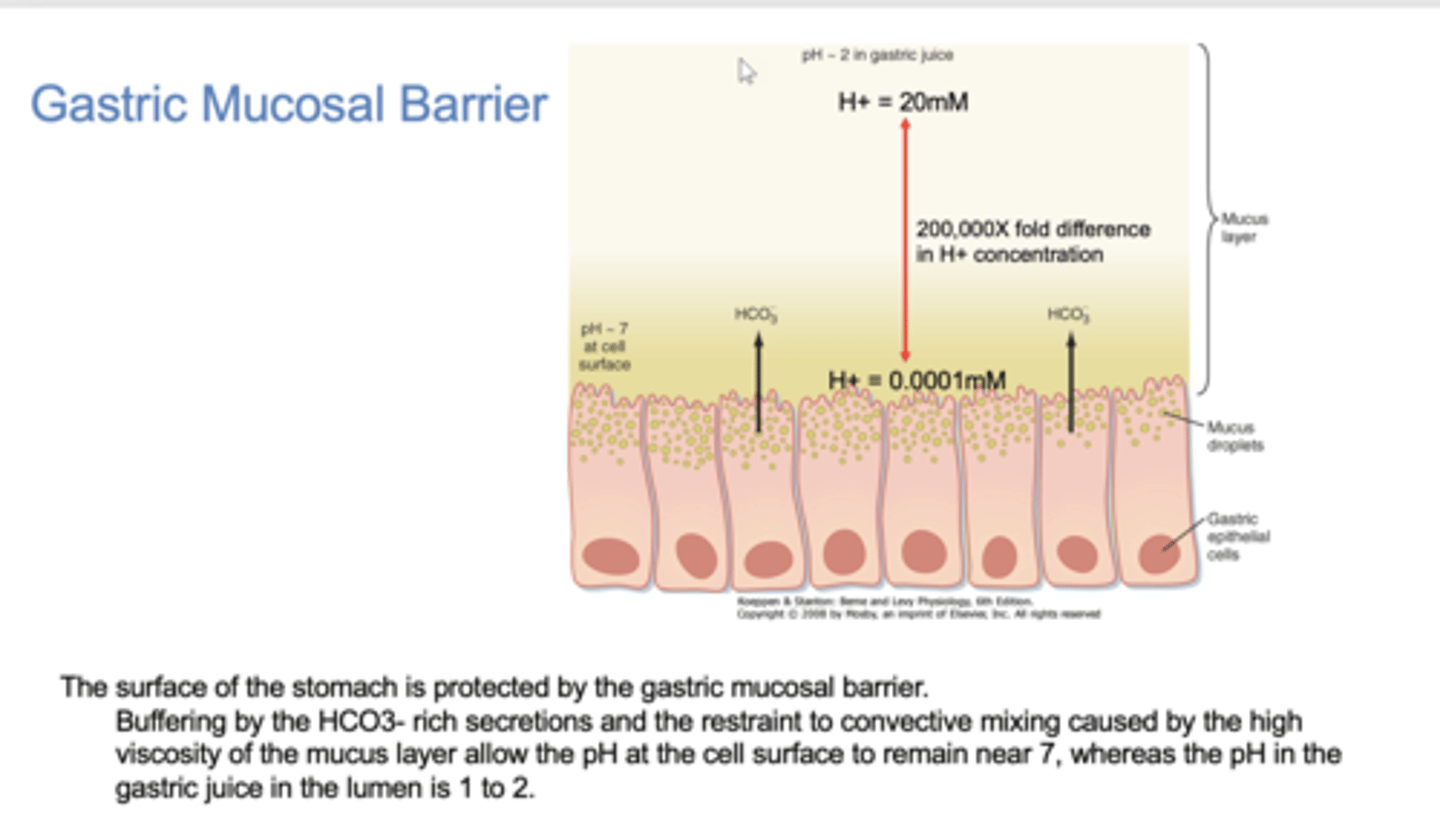
the pH in the gastric juice in the lumen is __
1-2
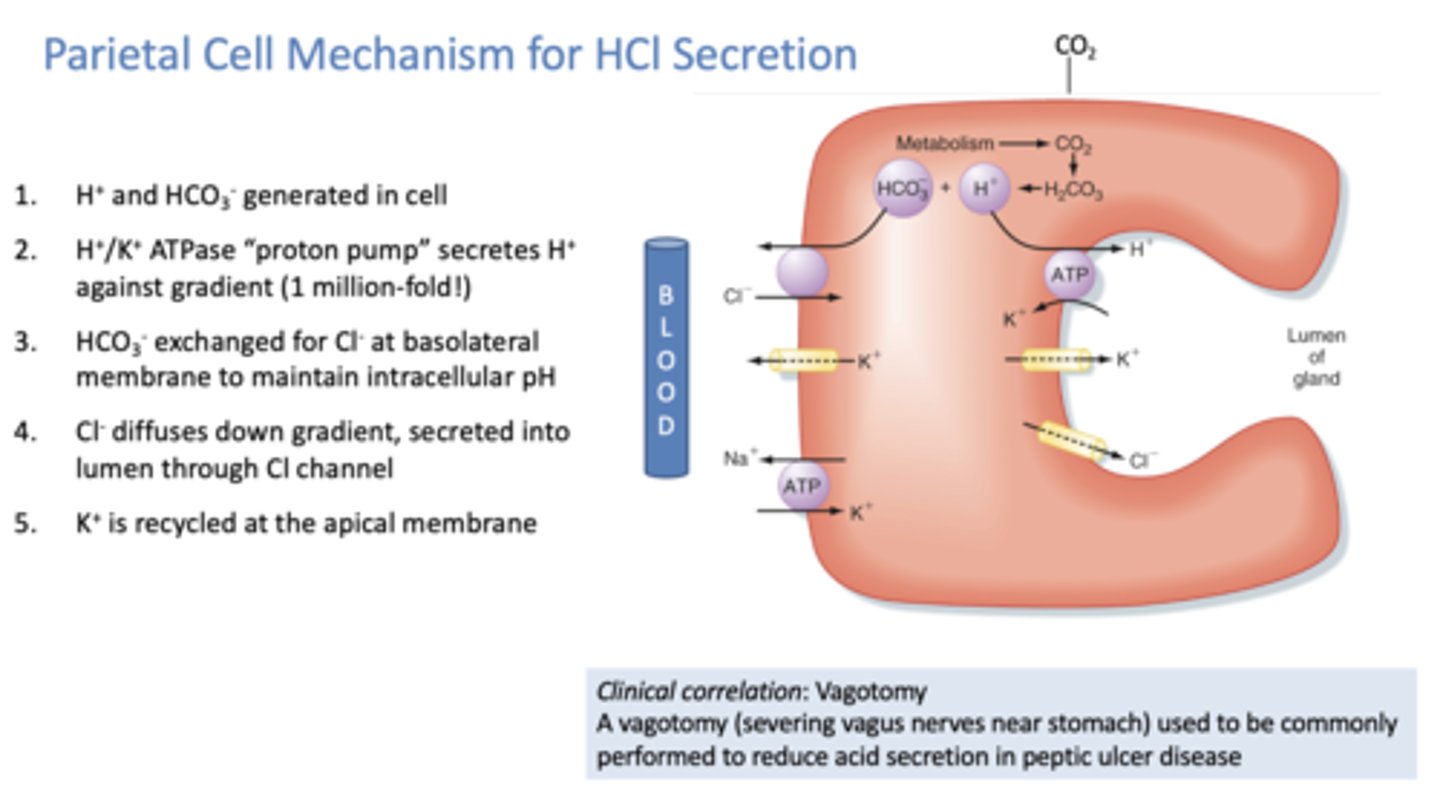
What is the parietal cell mechanism for HCl secretion?
H+/K+ ATPase ("Proton pump")
The following steps are the mechanism for what?
1. H+ and HCO3- generated in cell
2. H+/K+ ATPase "proton pump" secretes H+ against gradient (1 million-fold!)
3. HCO3- exchanged for Cl- at basolateral membrane to maintain intracellular pH
4. Cl- diffuses down gradient, secreted into lumen through Cl channel
5. K+ is recycled at the apical membrane
Parietal cell mechanism for HCl secretion
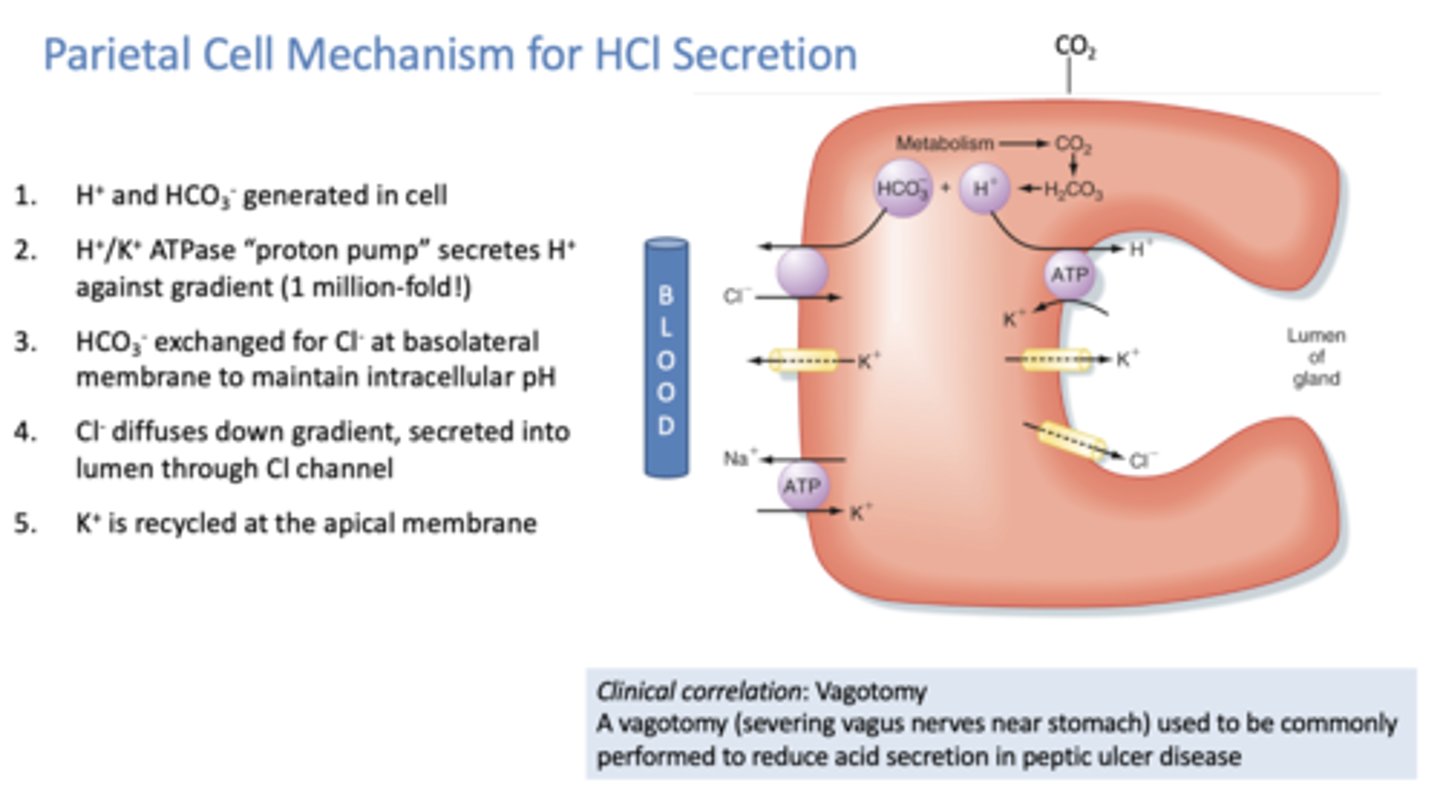
________ used to be commonly performed to reduce acid secretion in peptic ulcer disease
Vagotomy (severing vagus nerves near stomach)
__________ strongly increases vascular permeability
histamine
breakage of gastric mucosal allows back-diffusion of ____ which damages tissue
H+
3 mechanisms of communication that regulate the GI tract:
Endocrine (Gastrin)
Neurocrine (Ach)
Paracrine (Histamine)
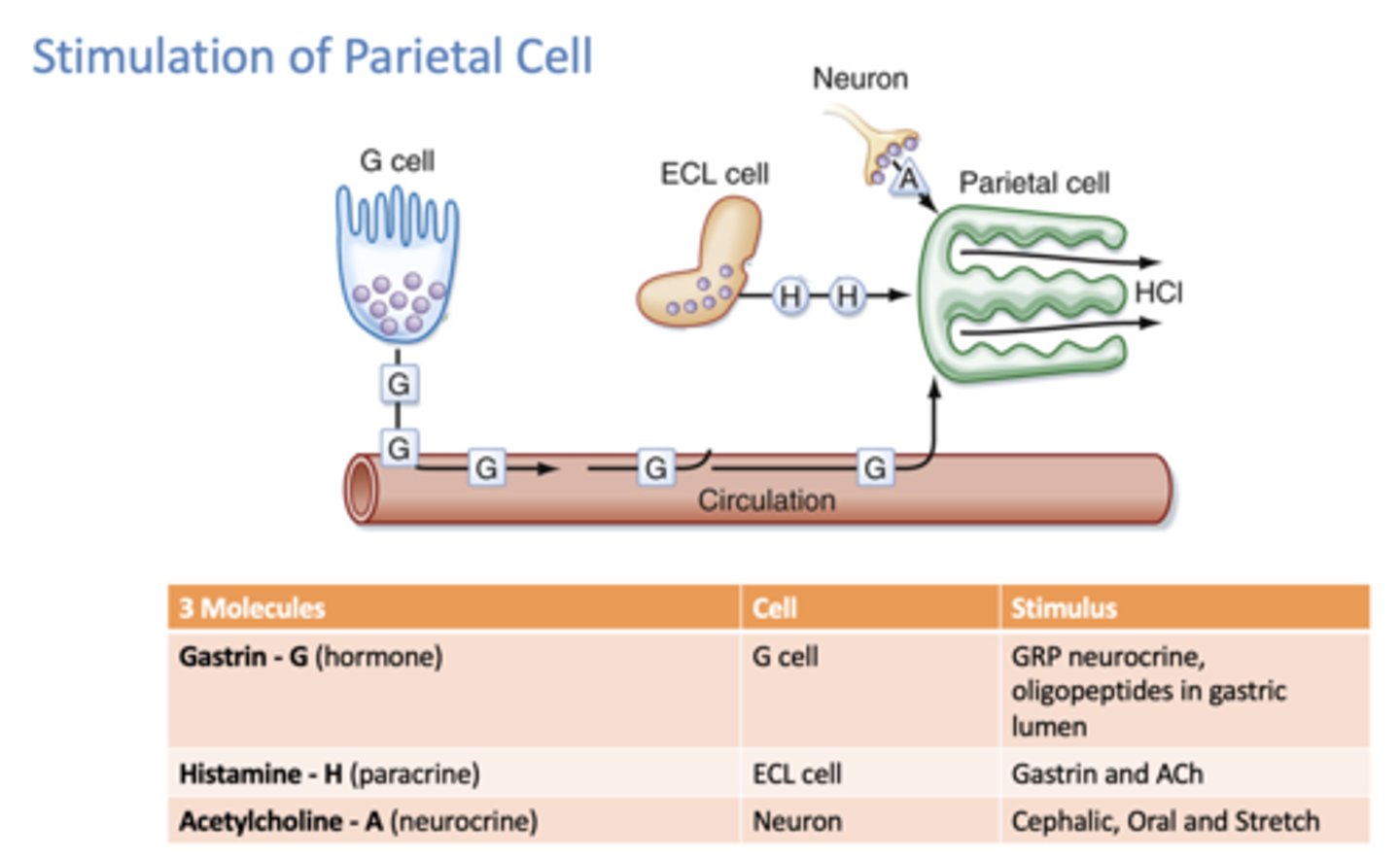
An example of an endocrine in the GI system is
Gastrin
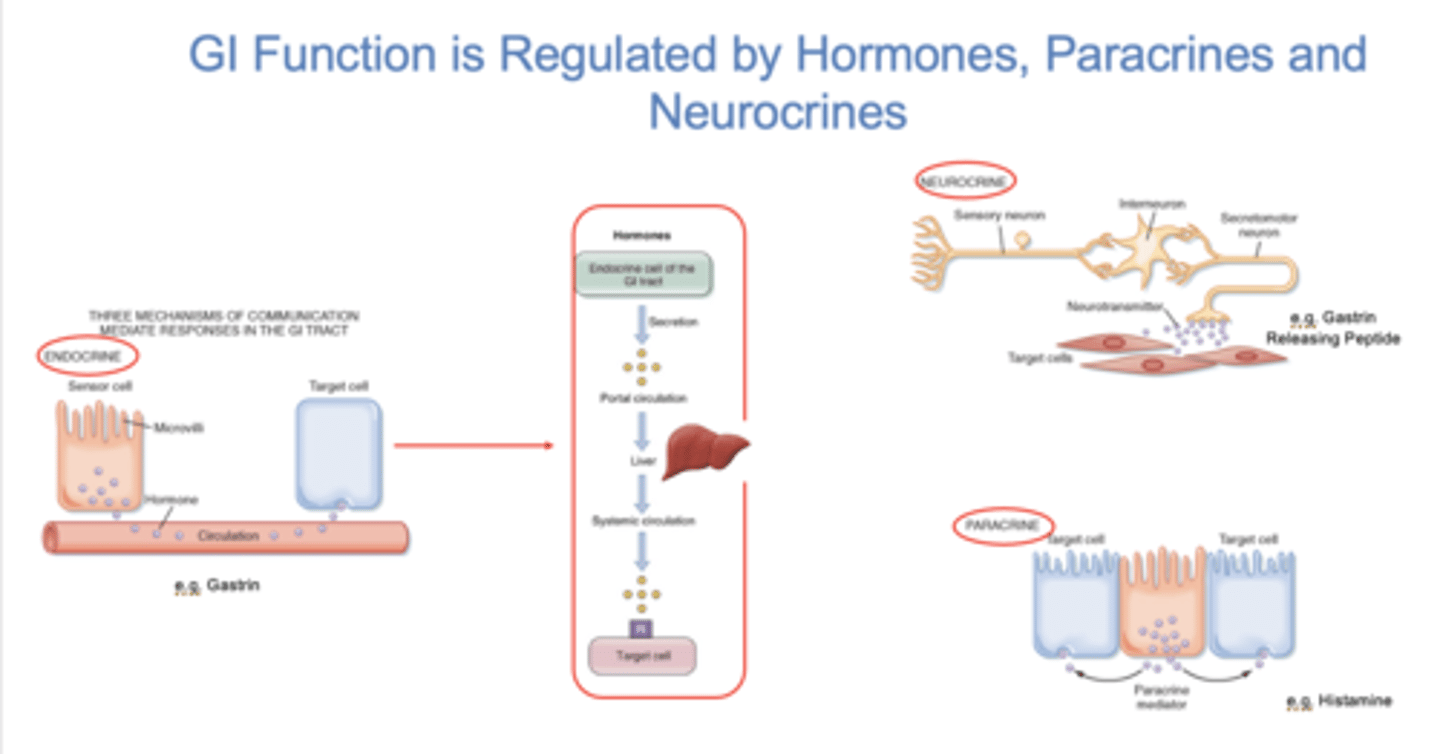
An example of a neurocrine in the GI system is
gastrin-releasing peptide (GRP)
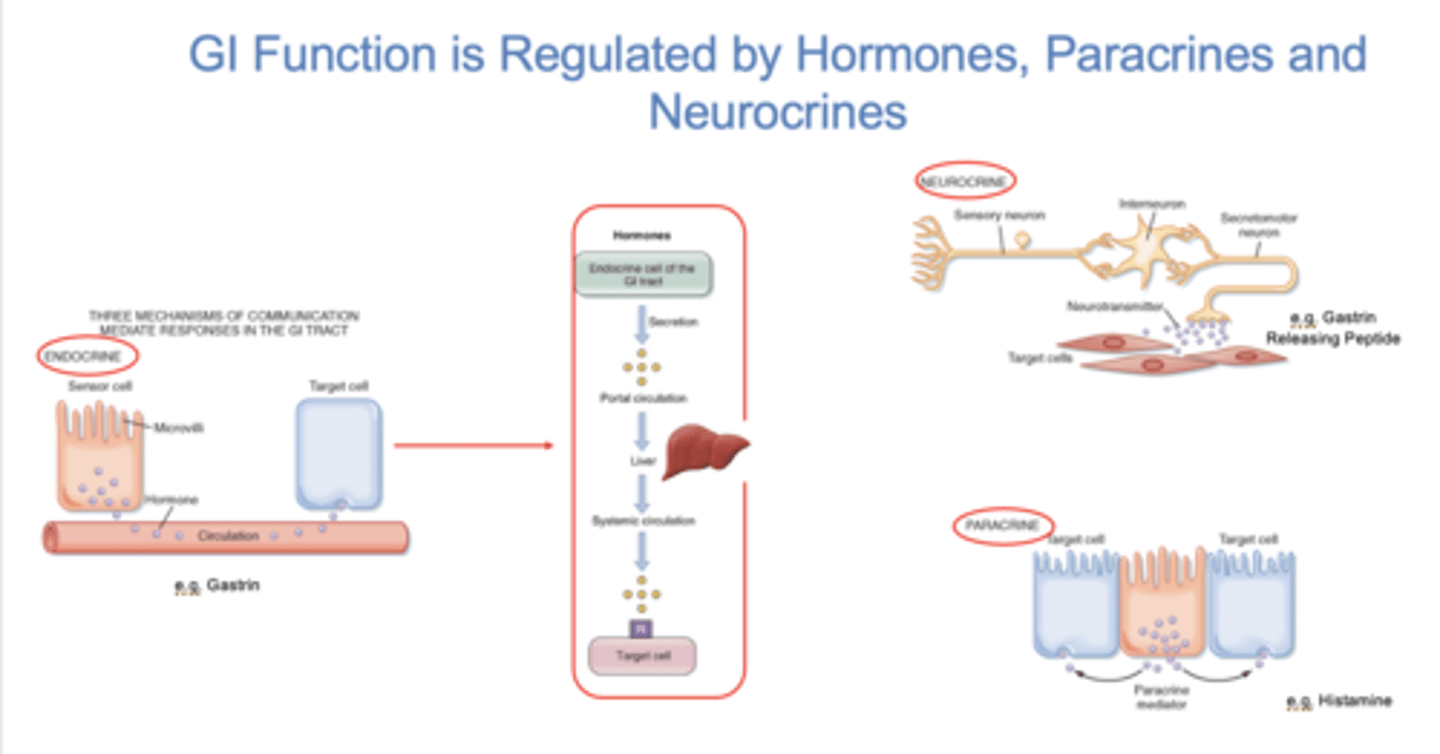
An example of a paracrine in the GI system is
Histamine
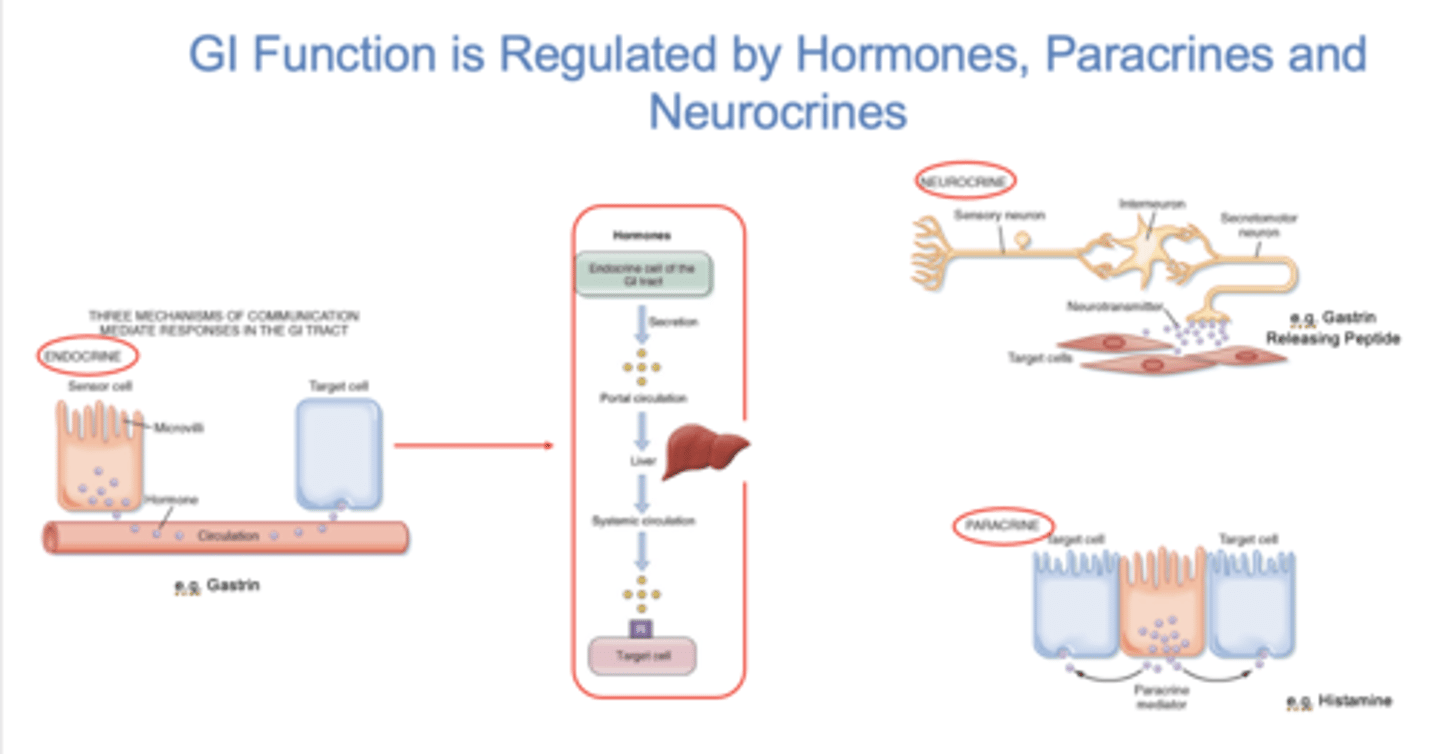
G cells secrete _____
gastrin
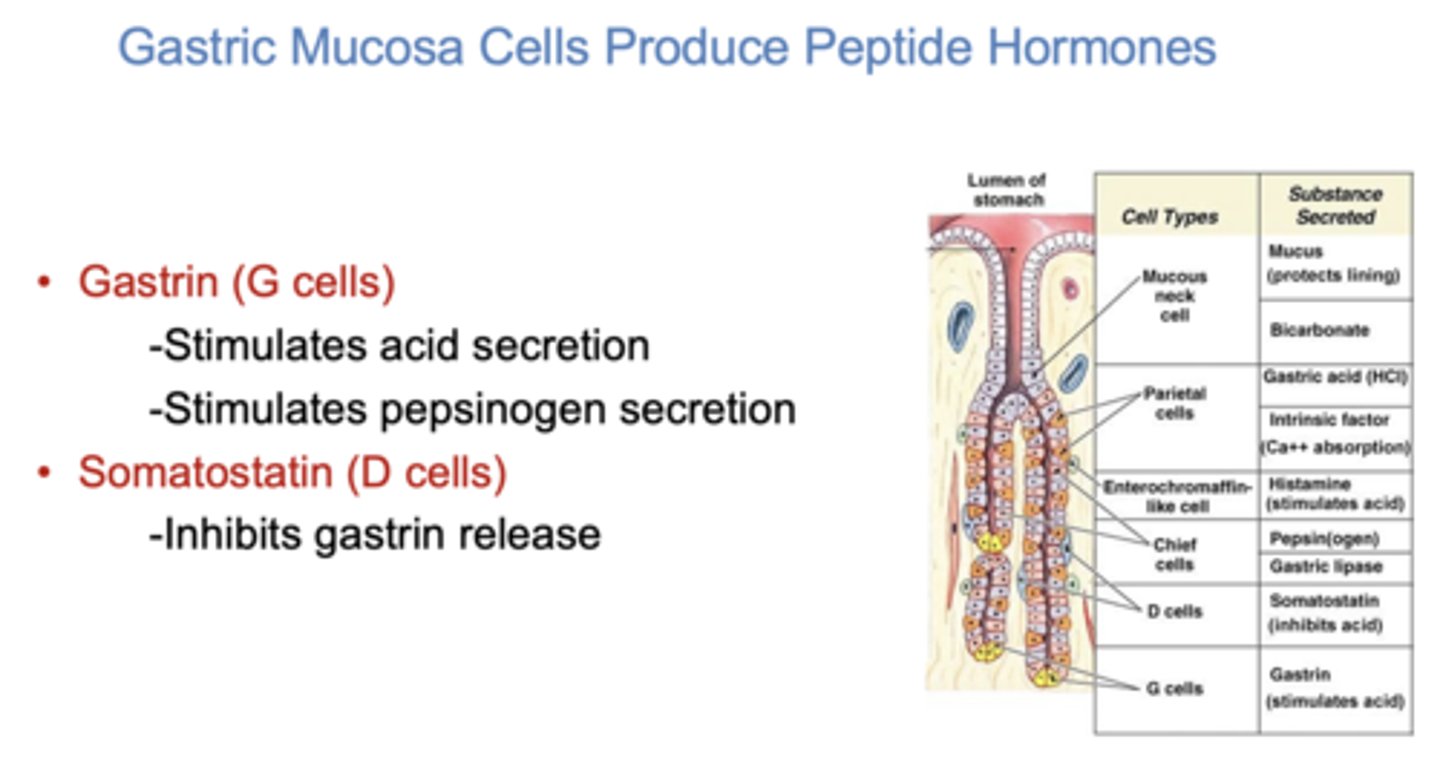
these cells secrete somatostatin:
D cells
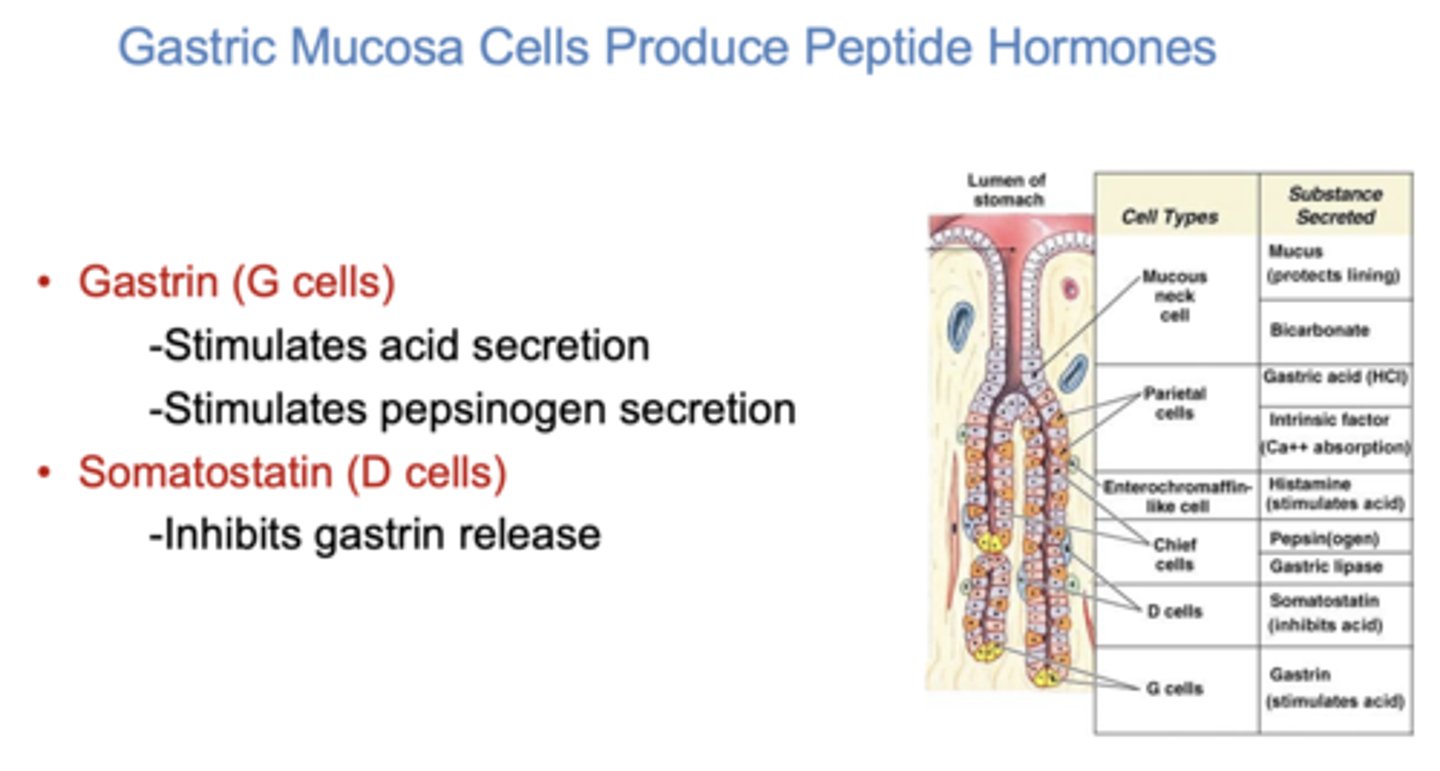
D cells secrete ______
somatostatin
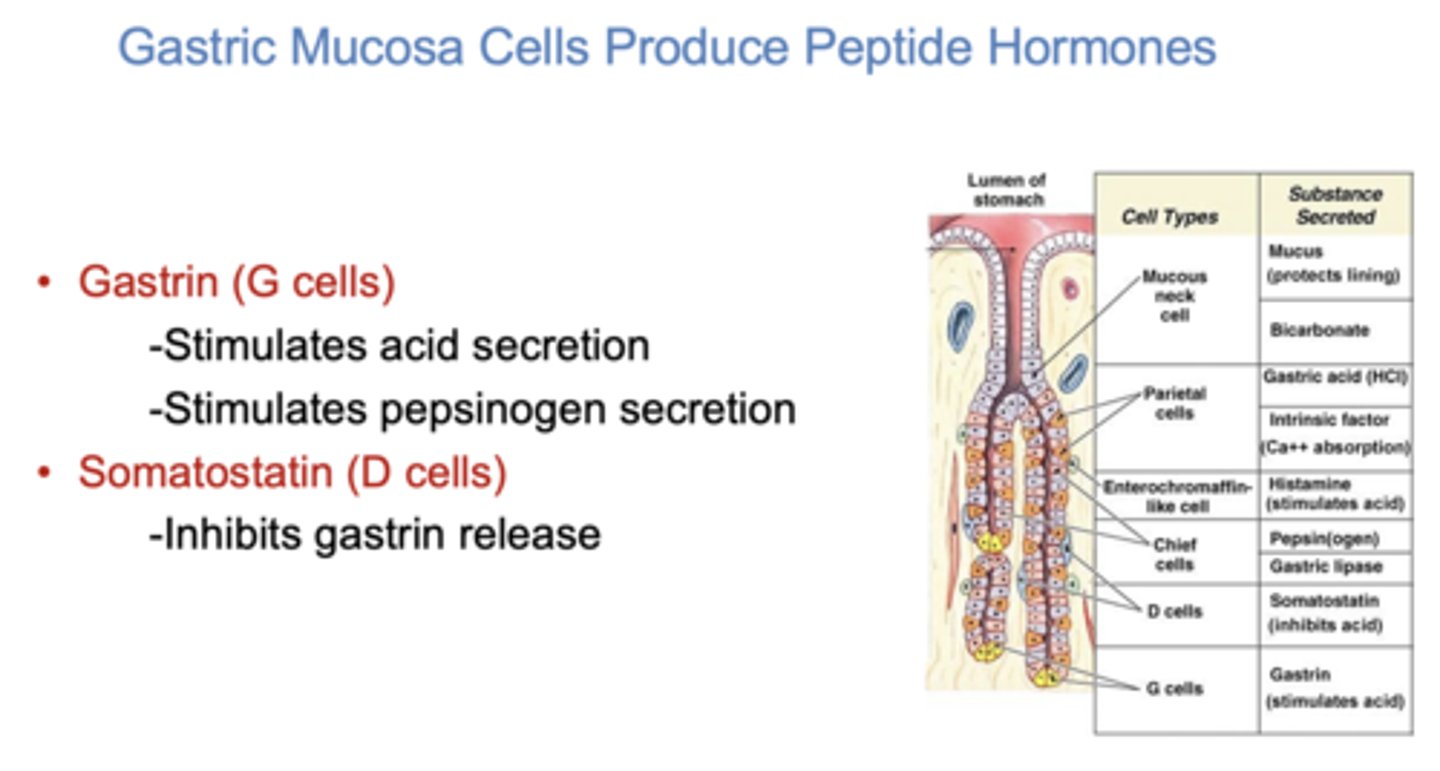
What inhibits gastrin release, therefore inhibiting acid?
somatostatin from D cells
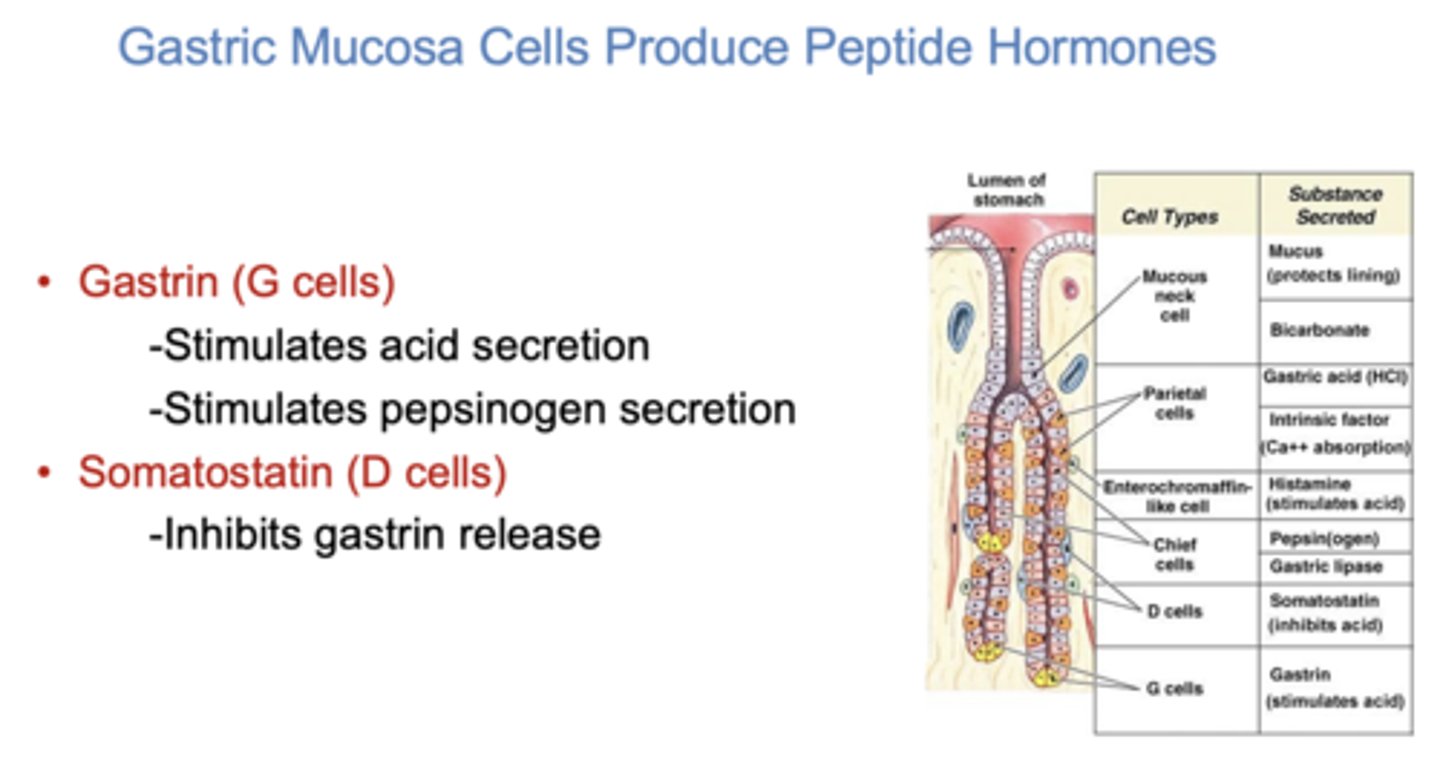
What stimulates acid and pepsinogen secretion?
gastrin from G cells
Everything short of having food entering the stomach is considered the _________
cephalic phase
The _______ is the sole neural link between the brain's higher functions and gastric secretion
vagus nerve
The vagus nerve is the sole neural link between the brain's higher functions and gastric secretion. It exerts its effects through two separate pathways: direct stimulation by _______ and indirect through _______
acetylcholine, gastrin
What cells are the following:
Release H+ and intrinsic factor. Low pH conditions helps to kill bacteria in food and to denature protein.
Parietal cells
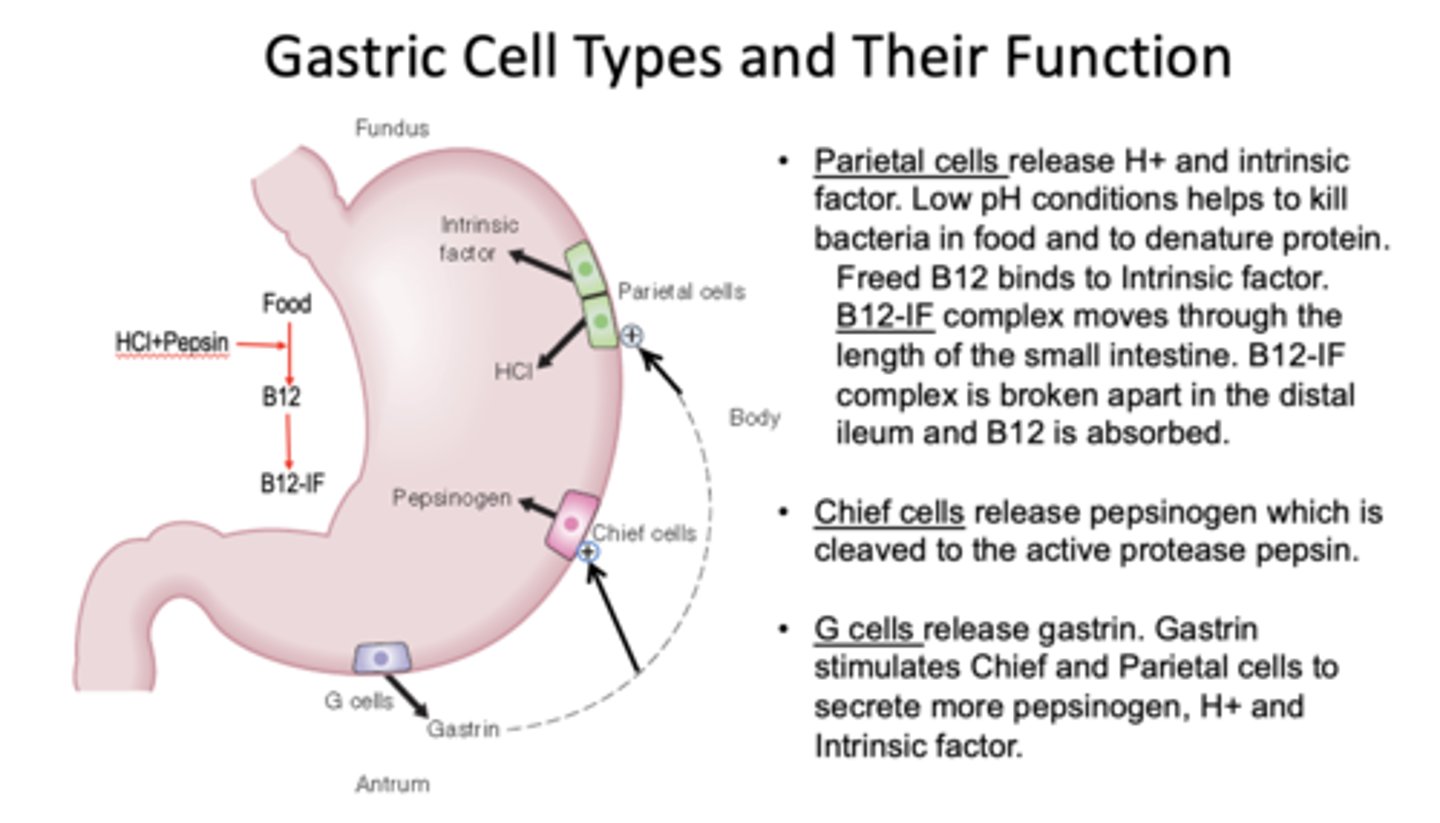
Freed ________ binds to Intrinsic factor. B12-IF complex moves through the length of the small intestine. B12-IF complex is broken apart in the distal ileum and B12 is absorbed.
B12
Pepsinogen is secreted by _______
chief cells
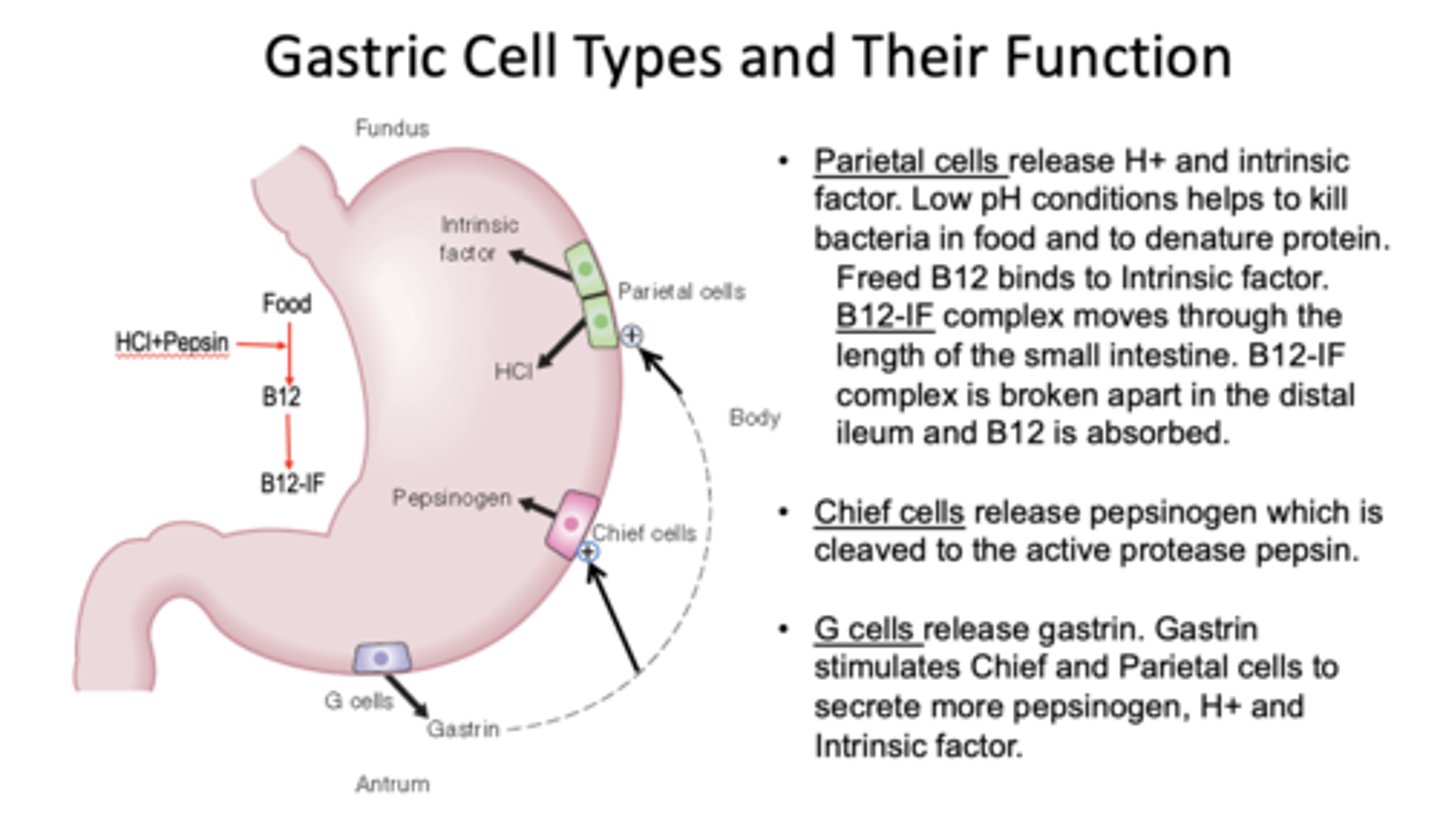
_________ release pepsinogen which is cleaved to the active protease pepsin.
Chief cells
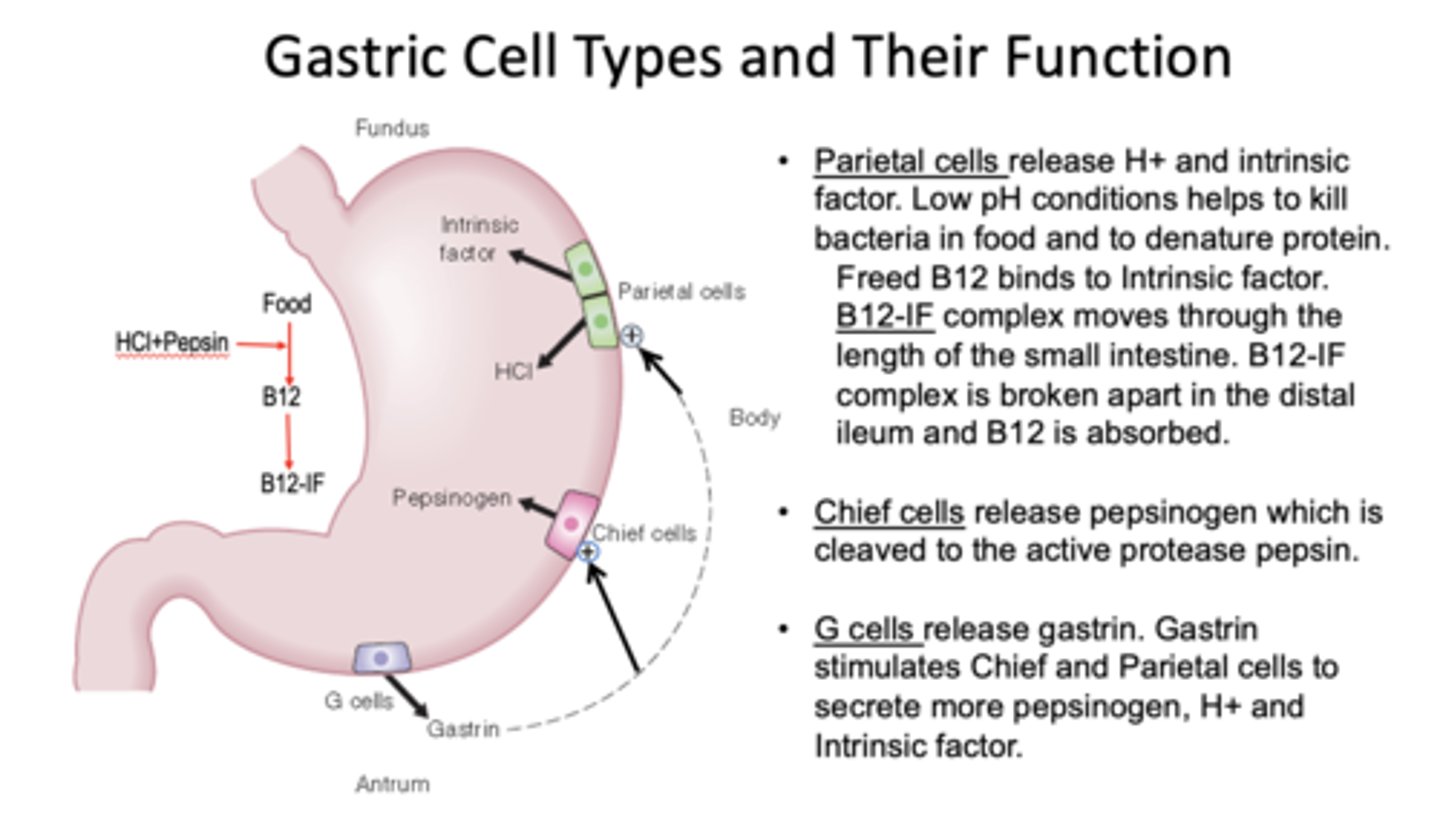
________ release gastrin. Gastrin stimulates Chief and Parietal cells to secrete more pepsinogen, H+ and Intrinsic factor.
G cells
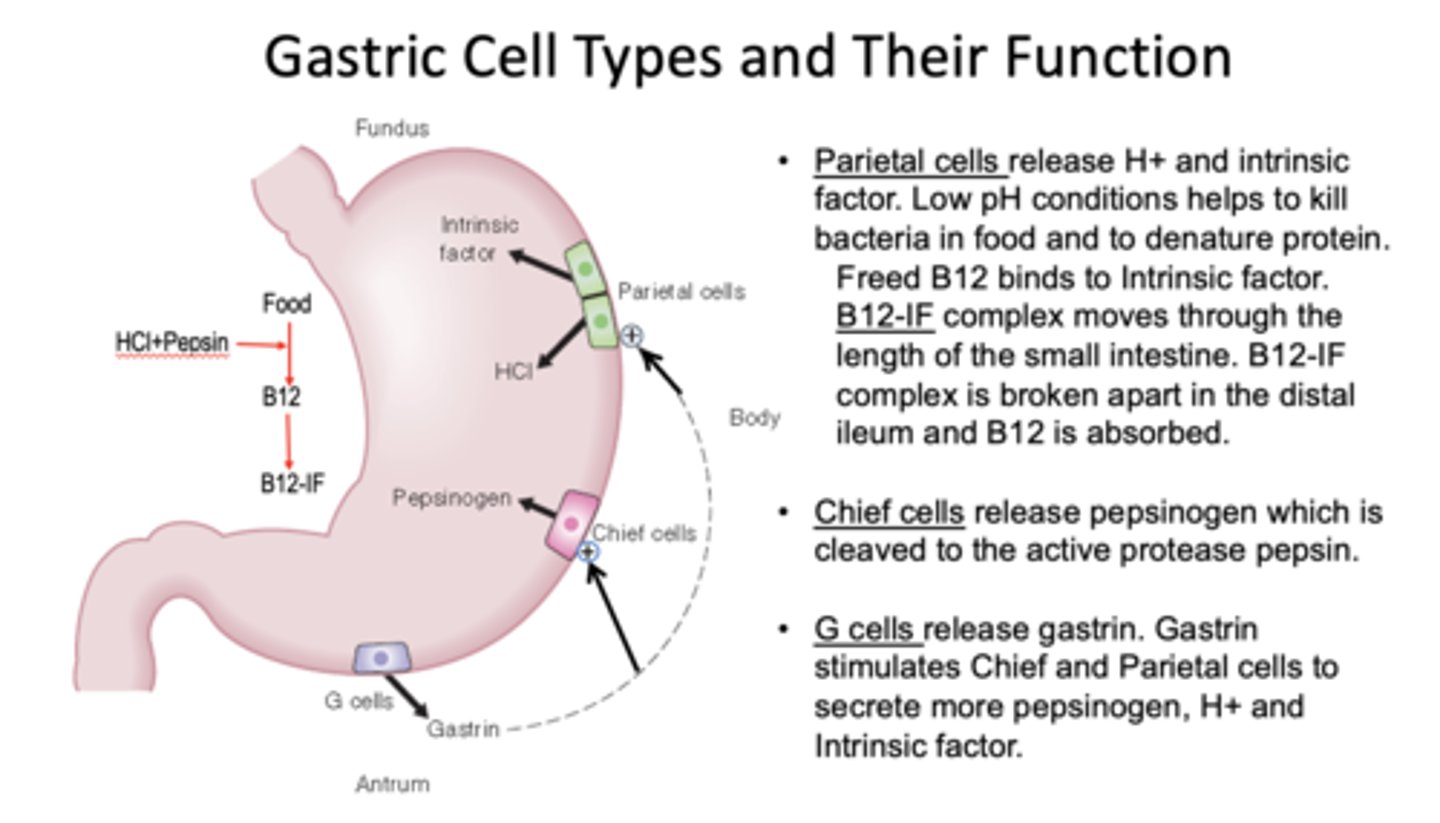
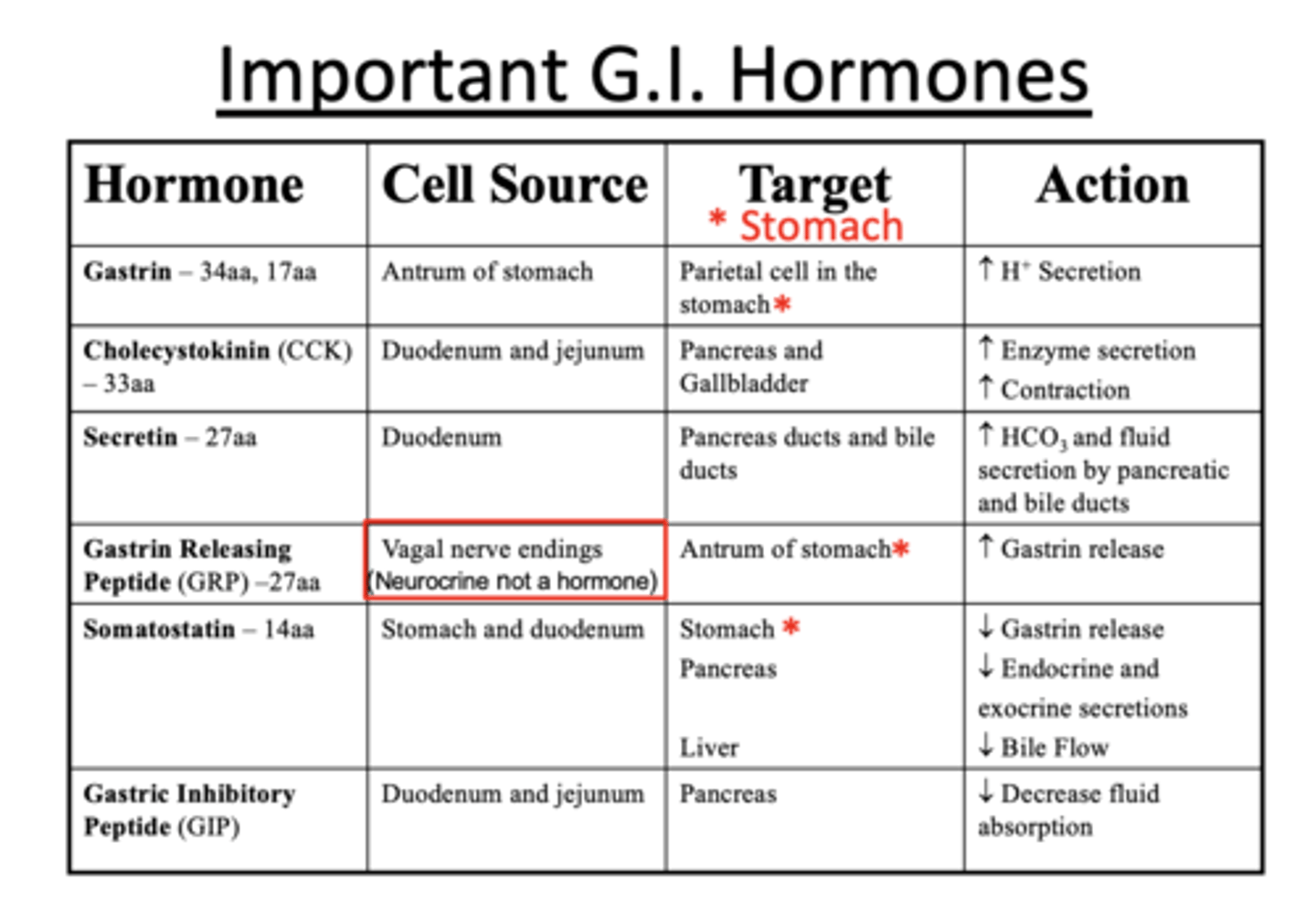
What is the target of gastrin?
Parietal cell in the stomach
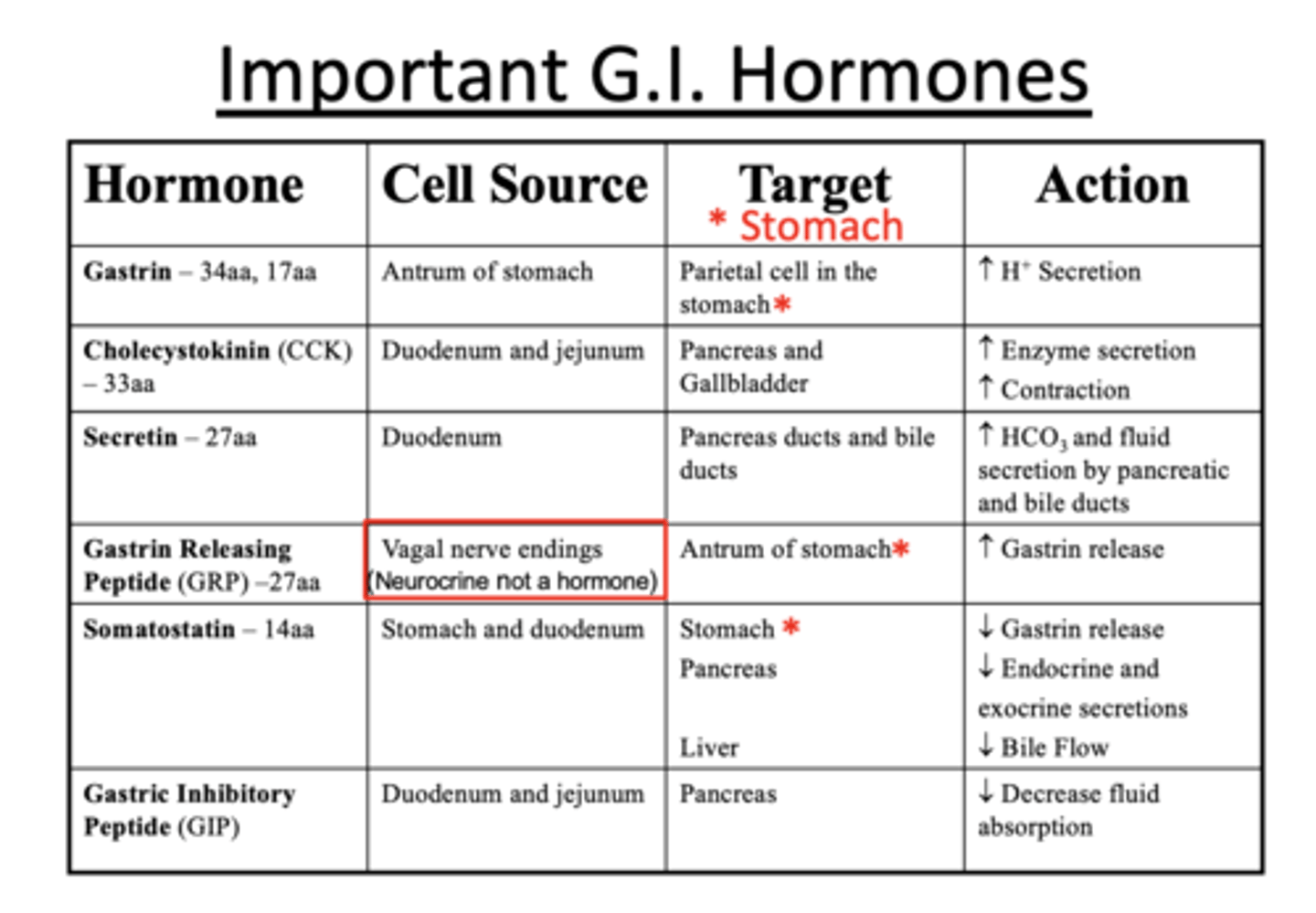
What is the cell source and target of gastrin releasing peptide (GRP)?
- Vagal nerve endings
- Antrum of the stomach
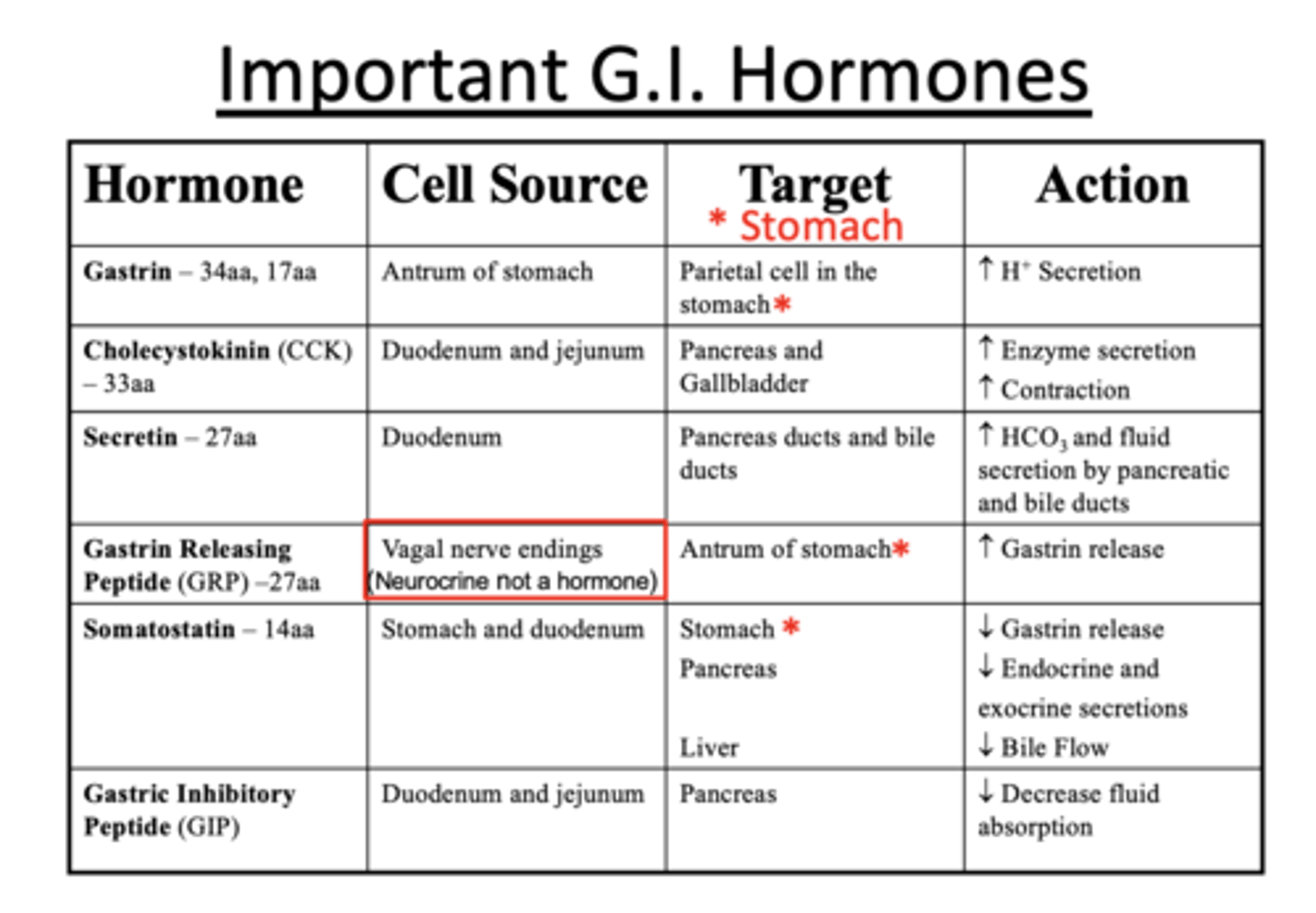
What is the target of somatostatin?
- Stomach
- Pancreas
- Liver
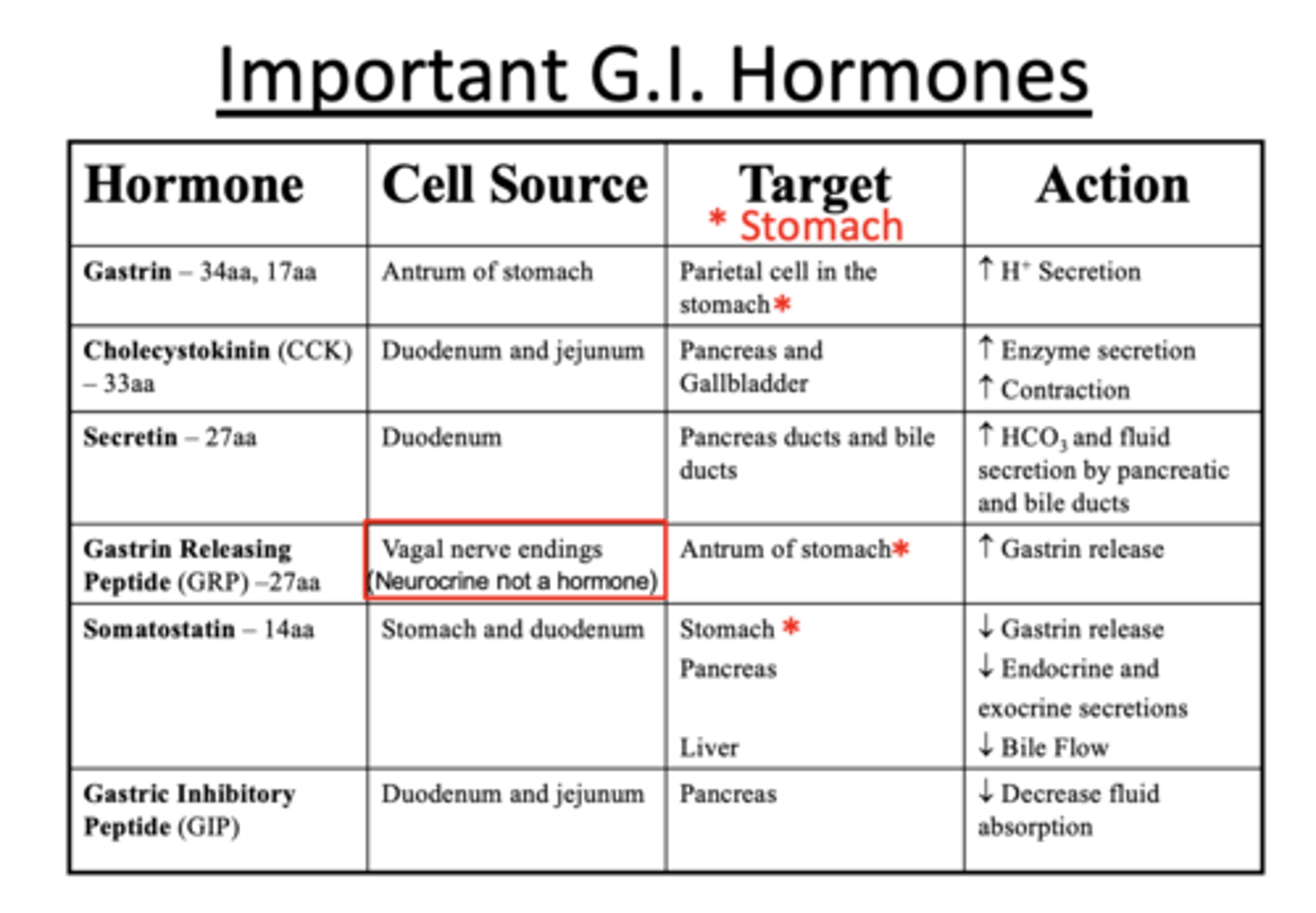
Cholecystokinin and secretin both target the pancreas, but how do they differ?
CCK: Increases enzyme secretion
Secretin: Increases HCO3
In the gastric phase, distension of the stomach excites ___________
stretch receptors
in Gastric phase, elevated pH activates
chemoreceptors in mucosa
T/F: Pepsin cleaves proteins to peptide fragments
True
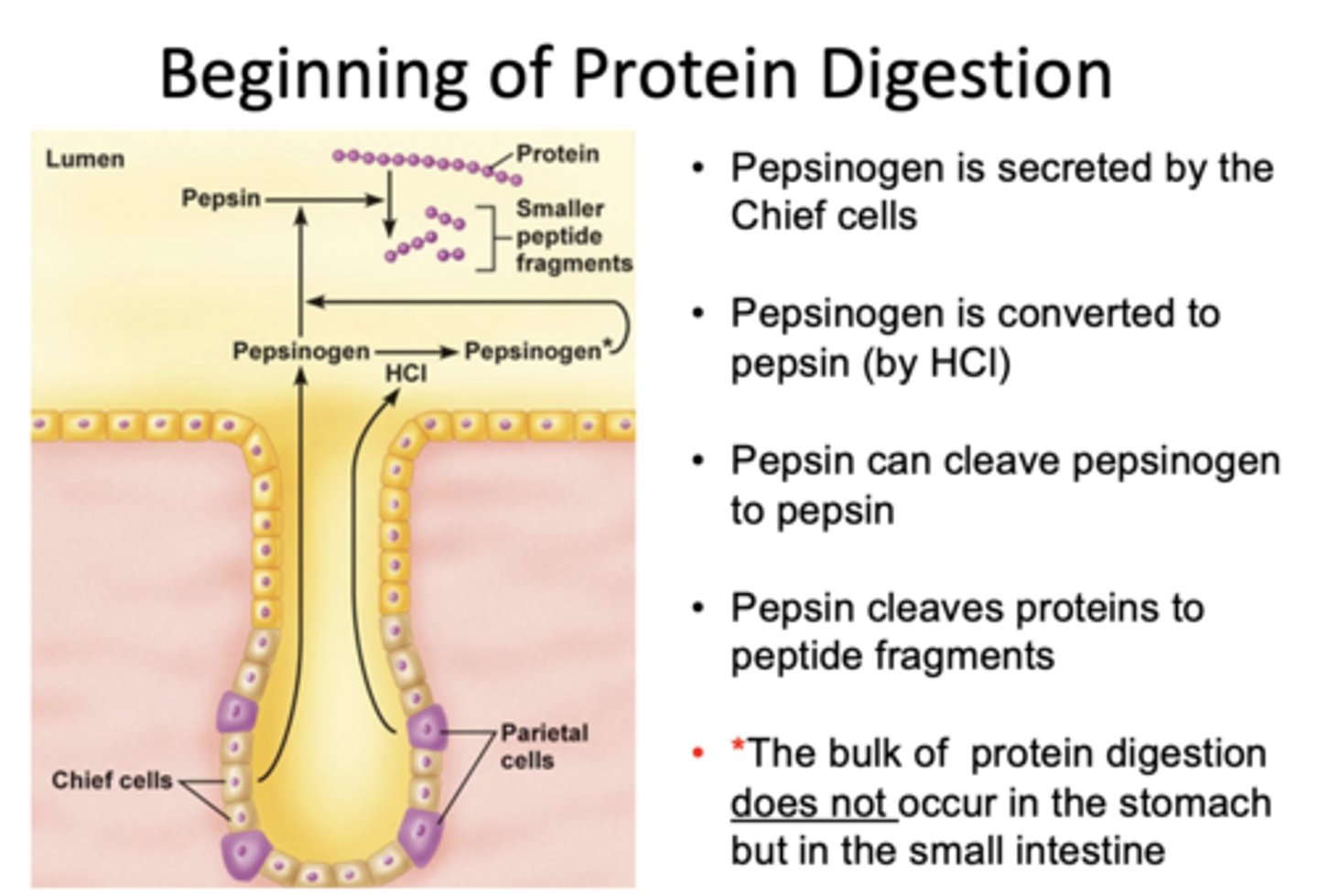
the BULK of protein digestion occurs in the ________
small intestine
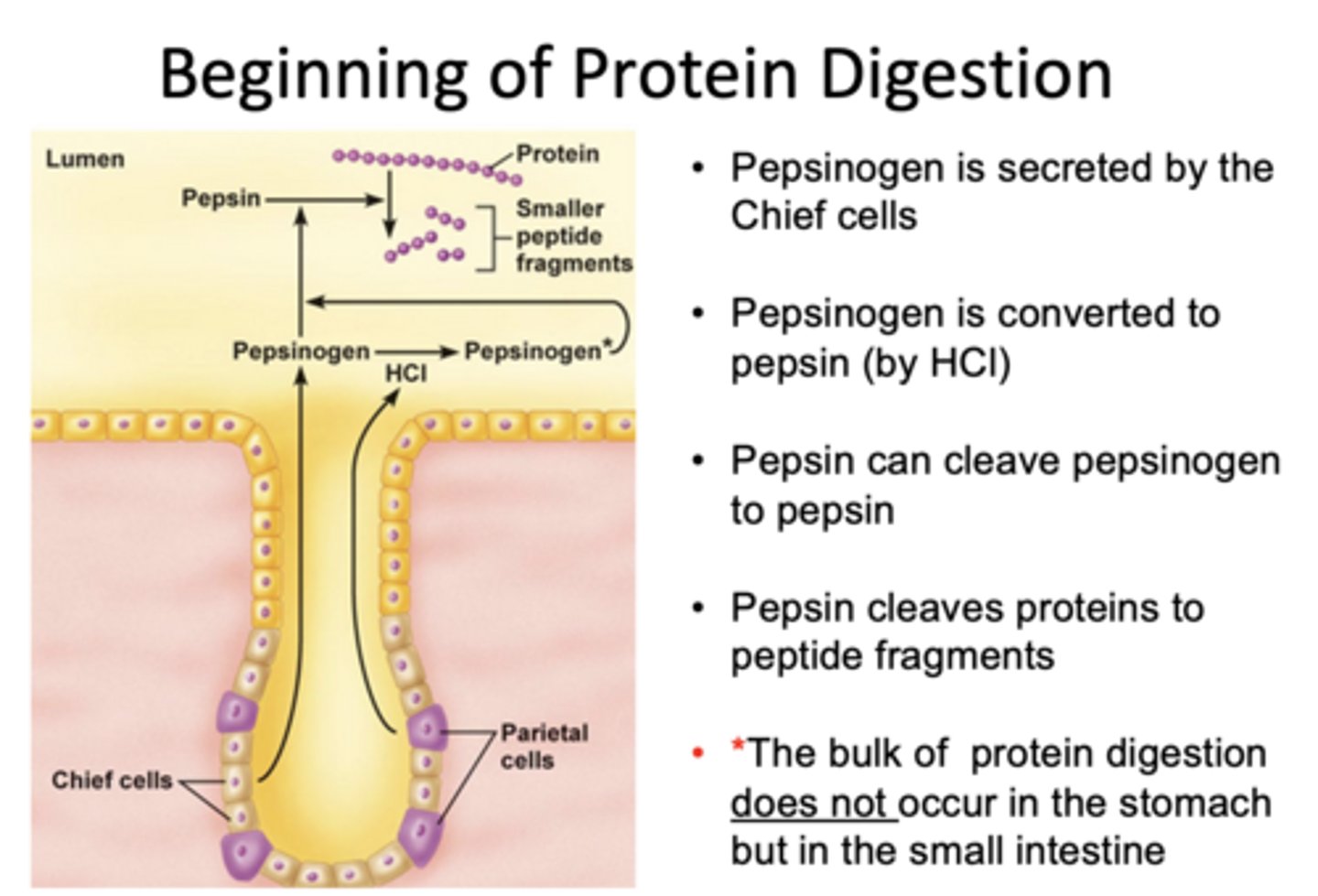
the only digestion that occurs in the stomach is of ______
protein
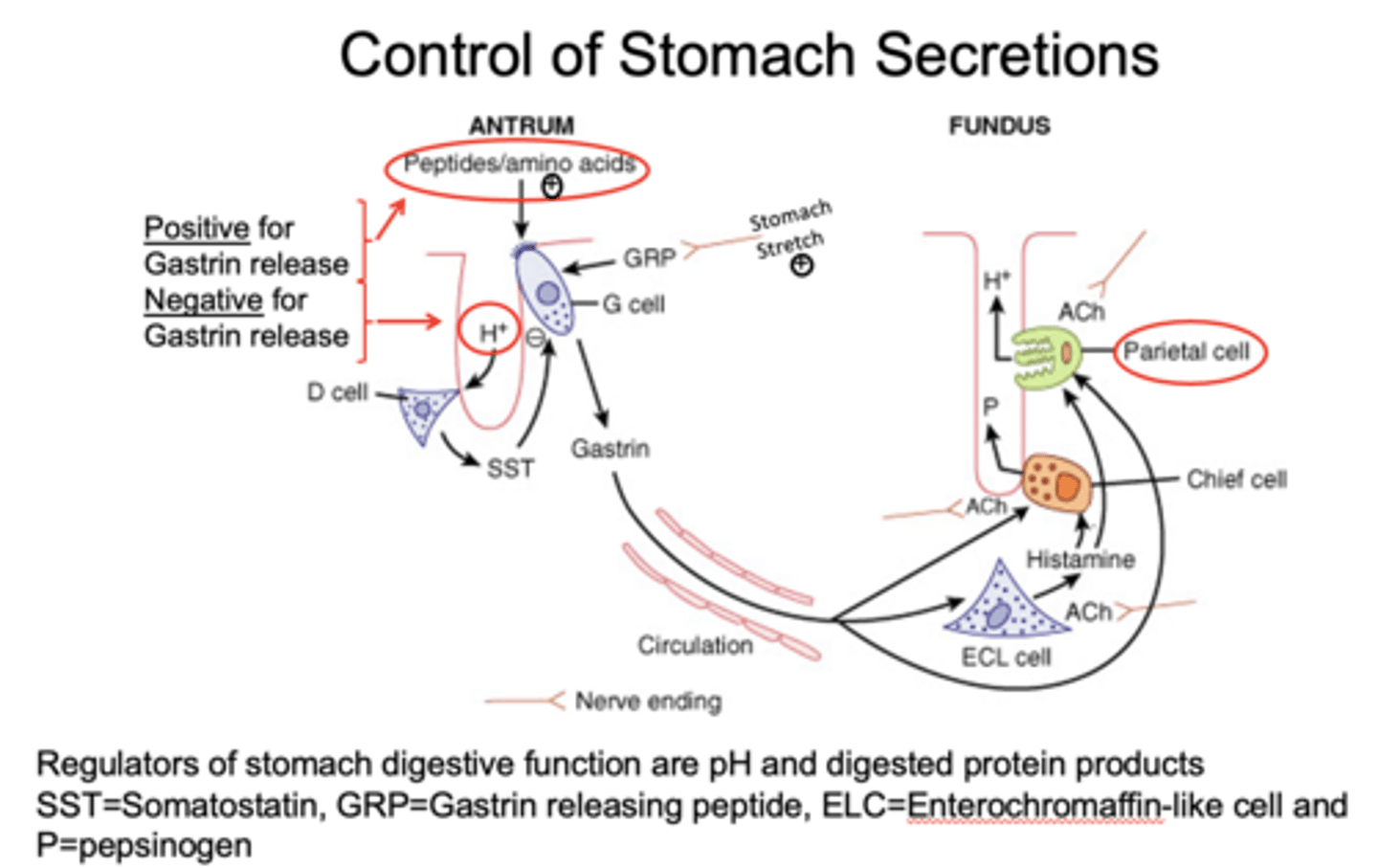
in a resting stage, the stomach is _____ for gastrin release
negative
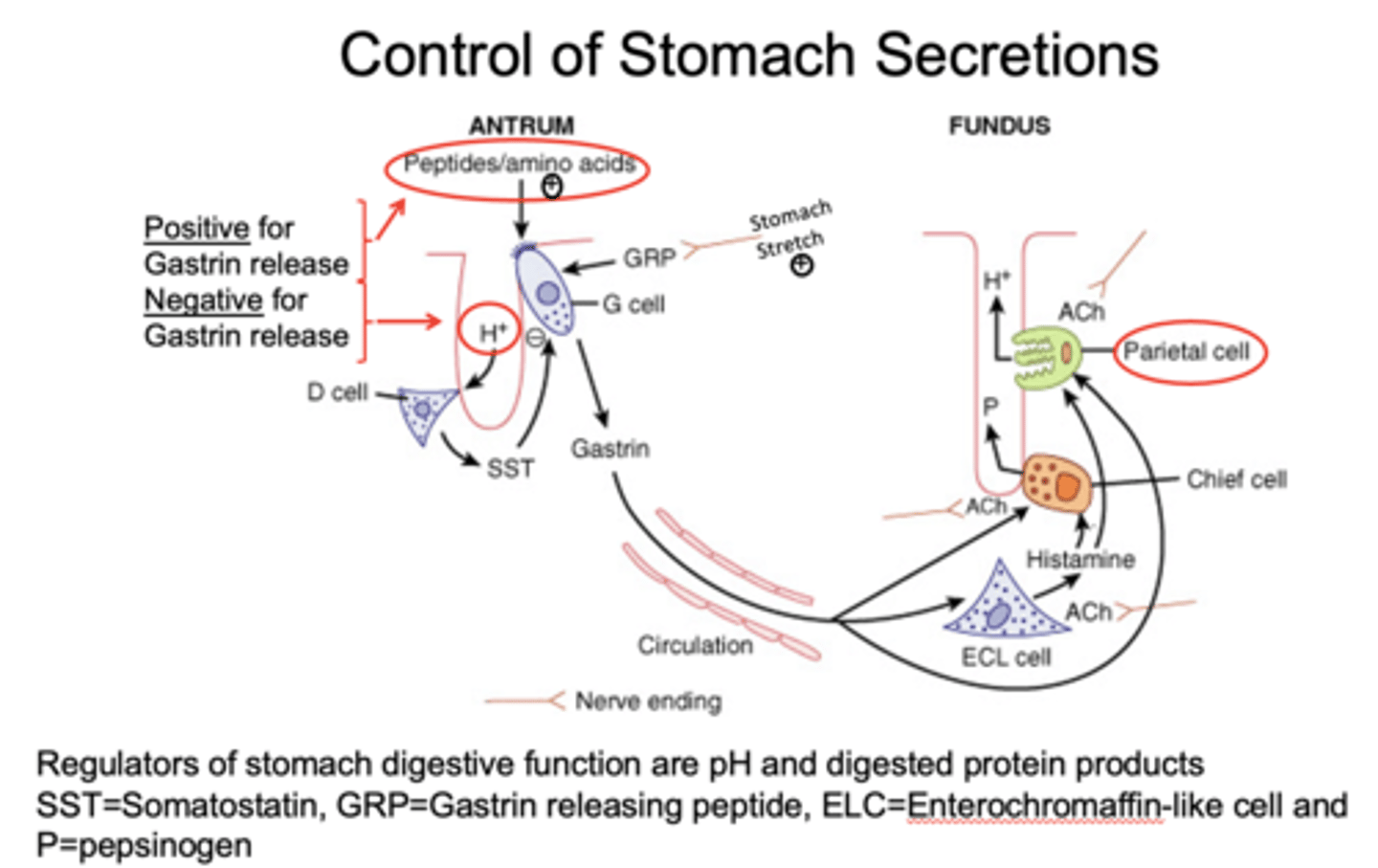
in a stimulated stage, the stomach is _____ for gastrin release
positive
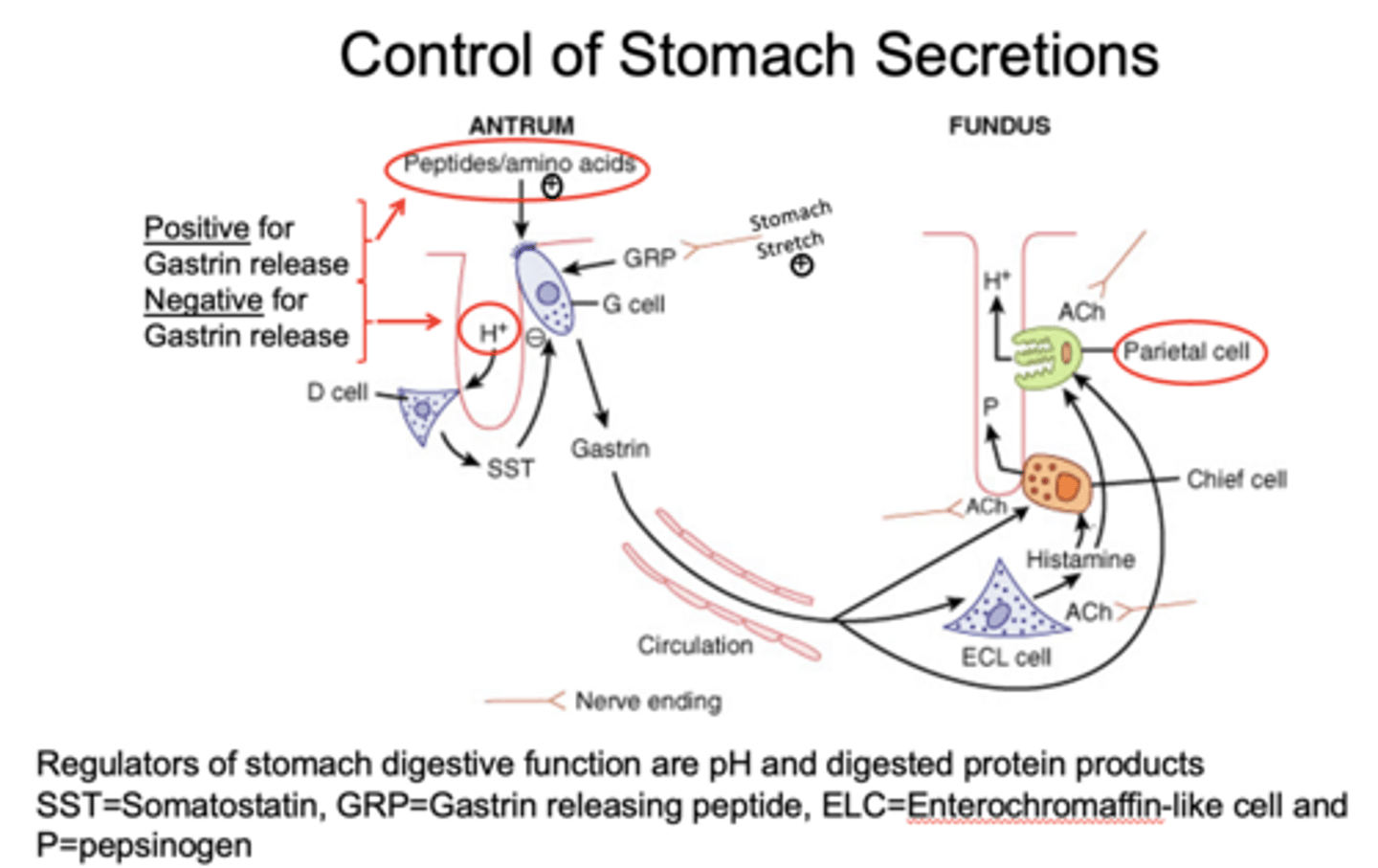
what causes the D cells to release somatostatin?
low pH
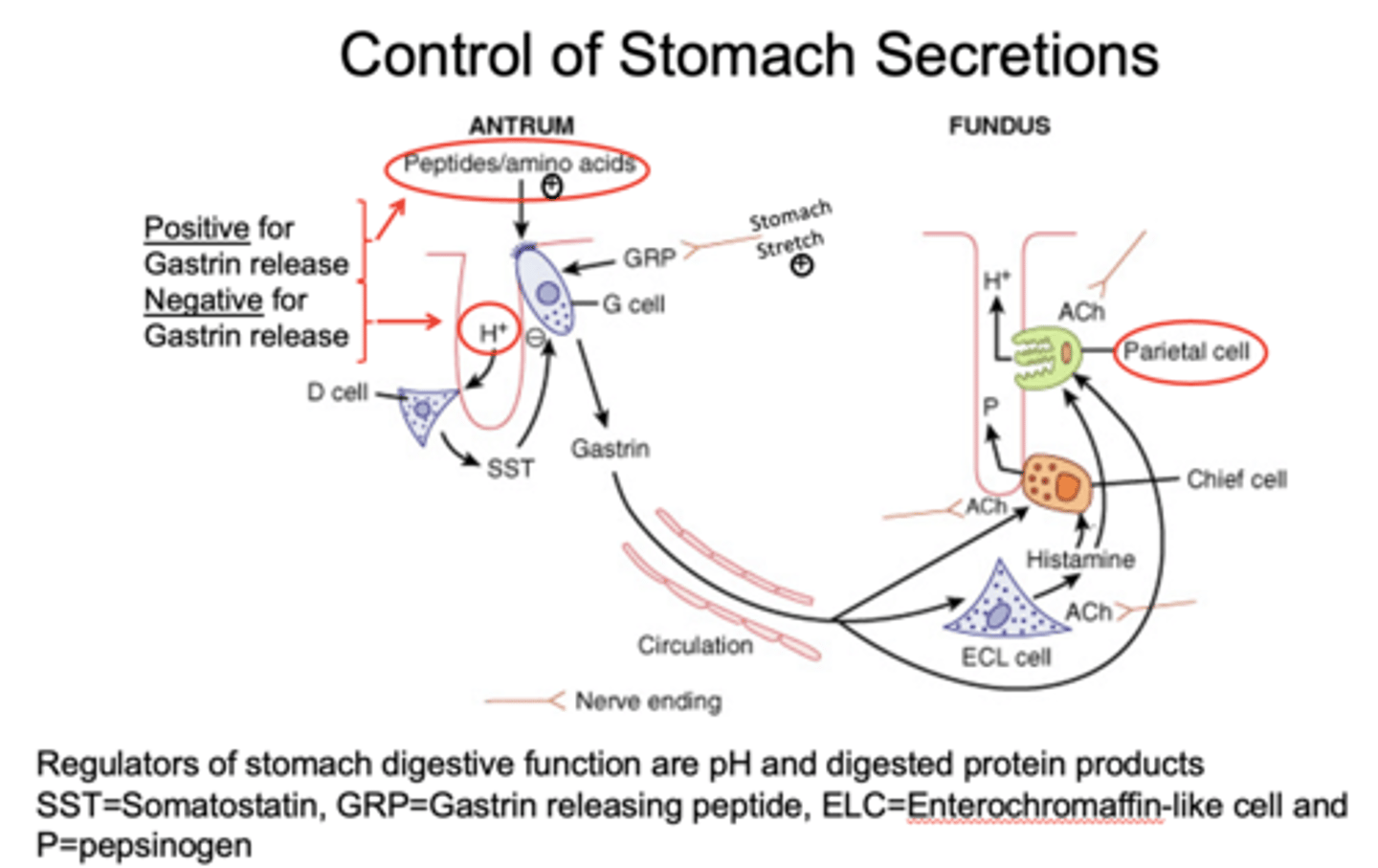
high pH will affect G cells by ______ gastrin release
stimulating
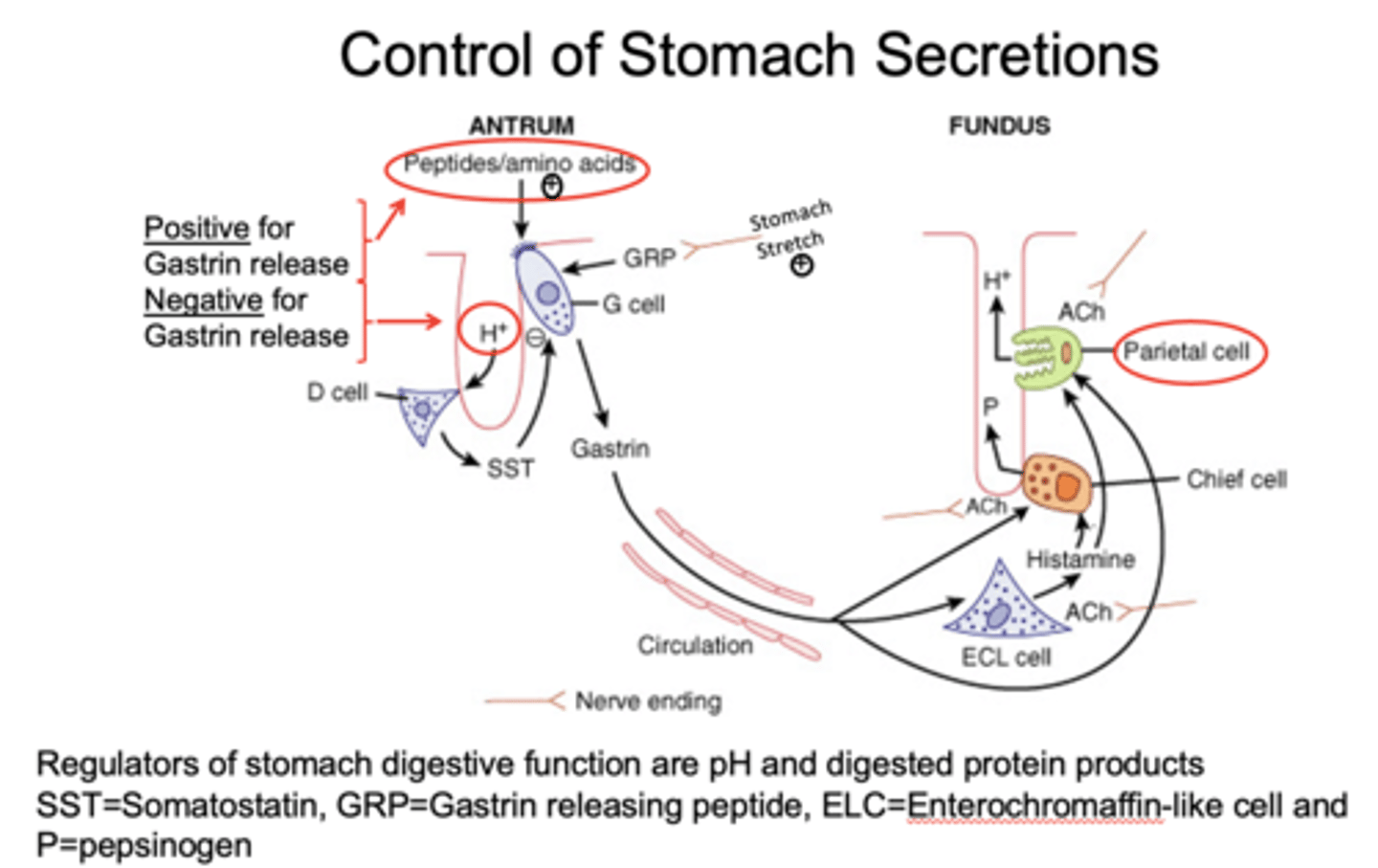
low pH will affect G cells by ______ gastrin release
inhibiting
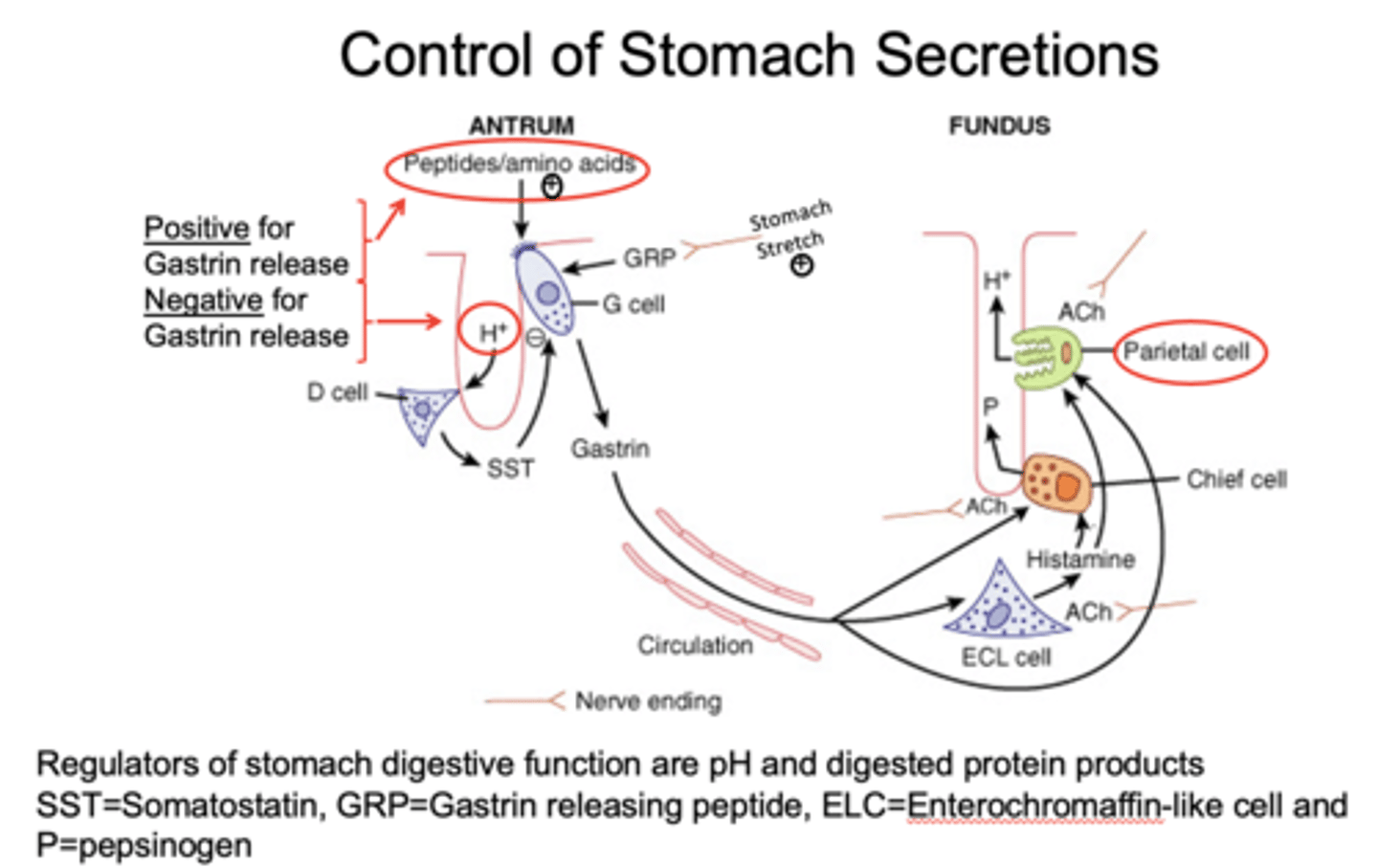
somatostatin will inhibit:
G cell release of gastrin
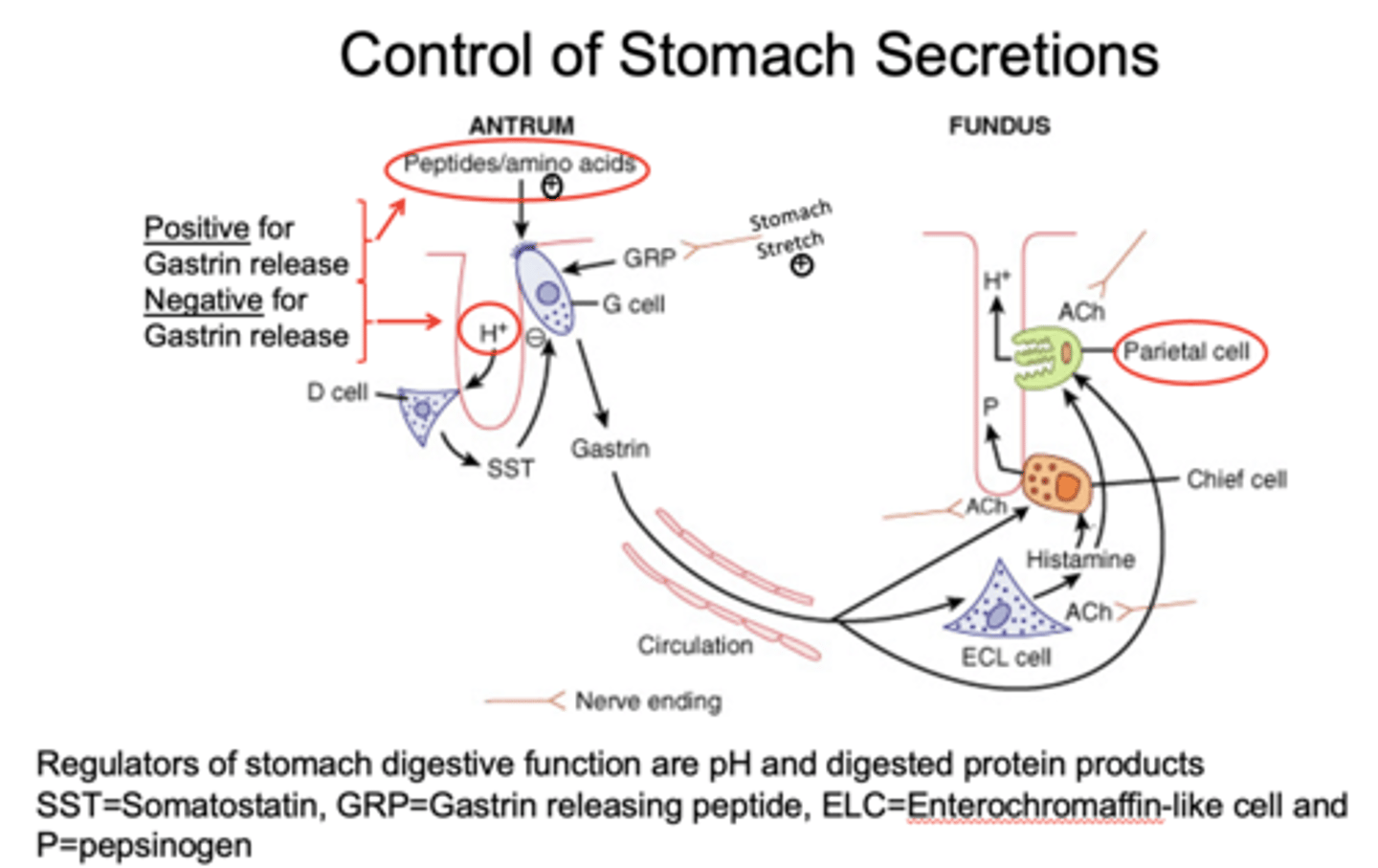
gastrin acts on what cells?
parietal cells
chief cells
enterochromaffin-like cells (ECLs)
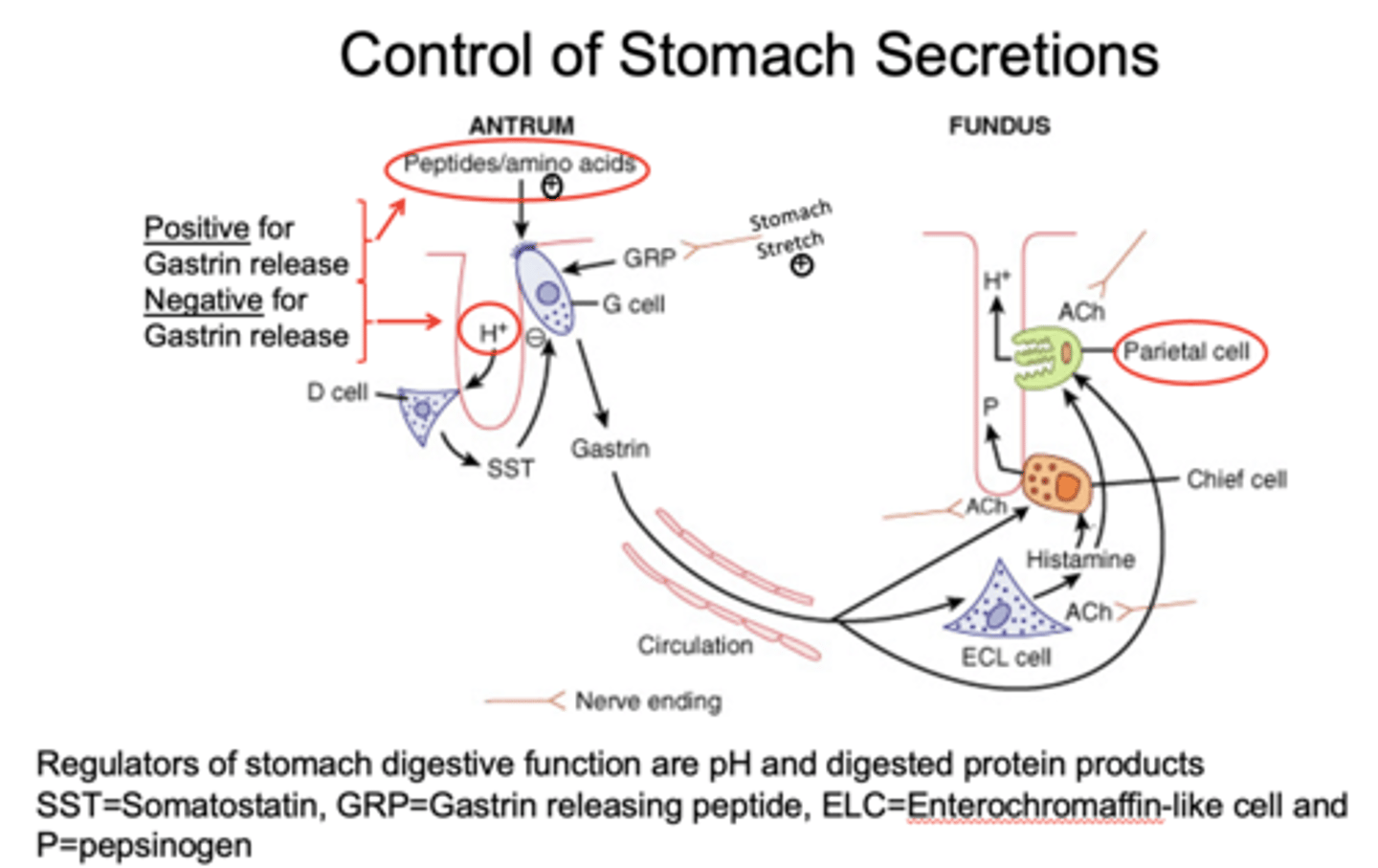
enterochromaffin cells will stimulate parietal cells using _______
histamine
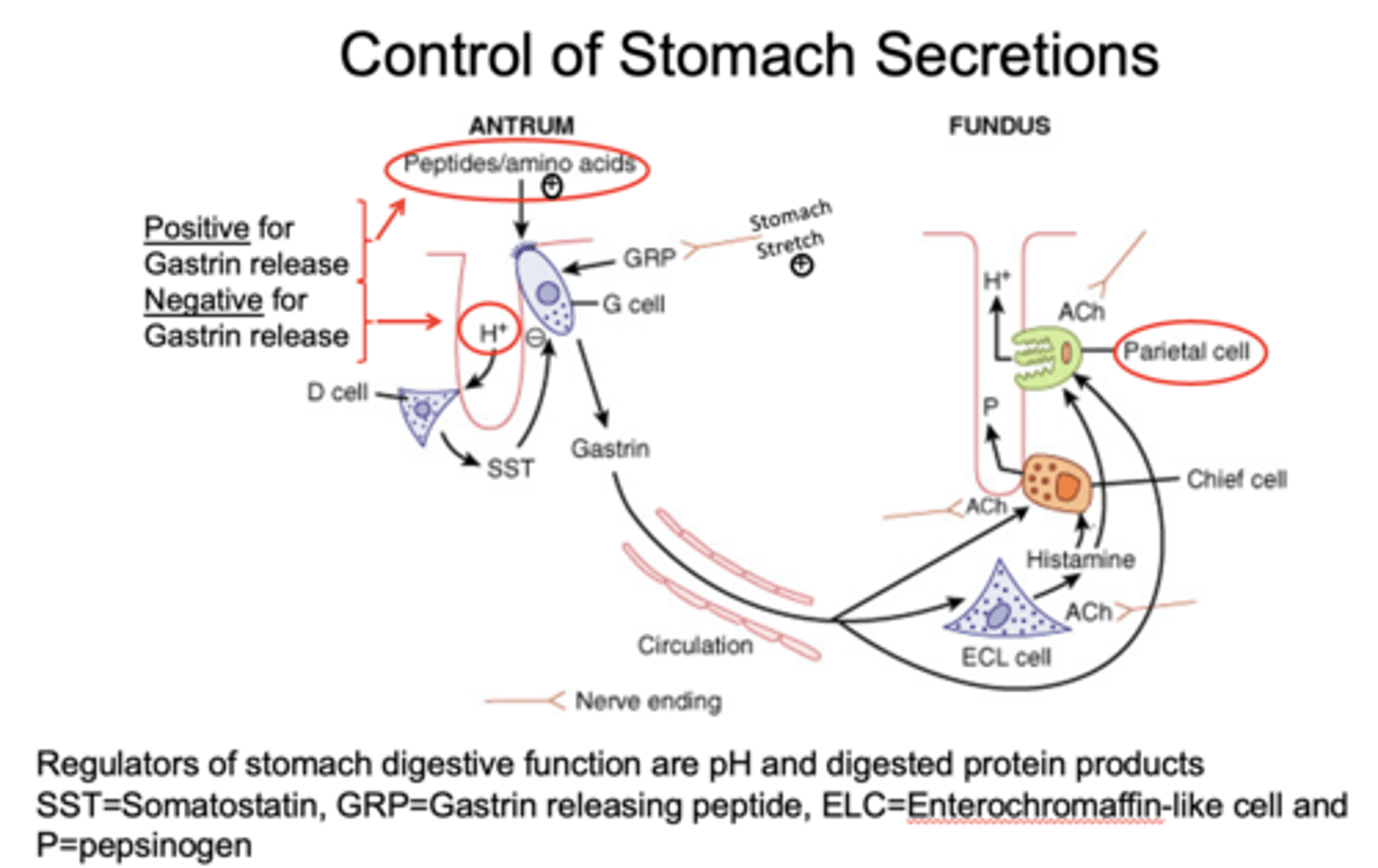
What 3 things stimulate parietal cell?
- Ach
- Gastrin
- Histamine
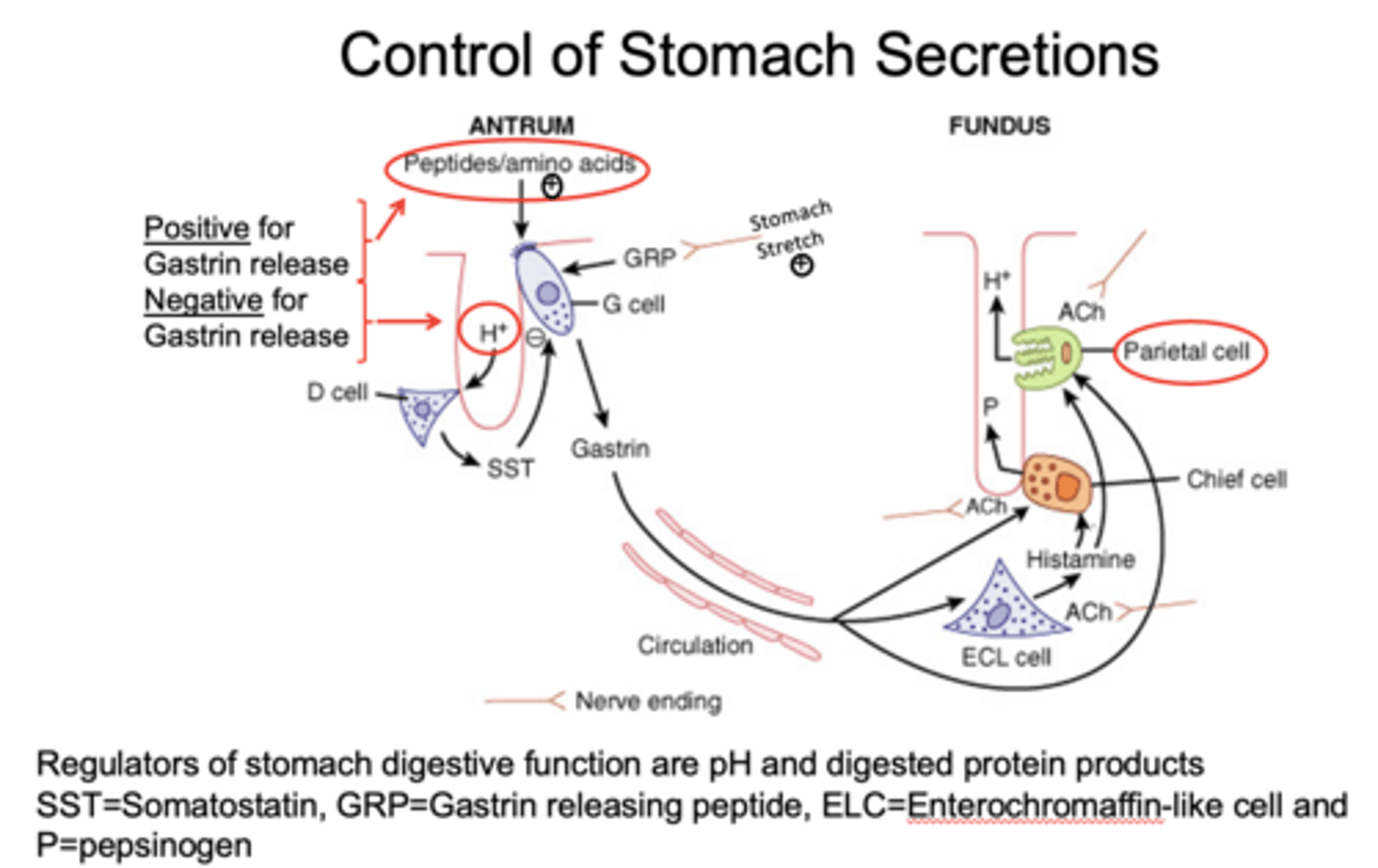
peptides and amino acids (from food) as well as stomach stretching acts on what cell to initiate gastric reflexes?
G cells
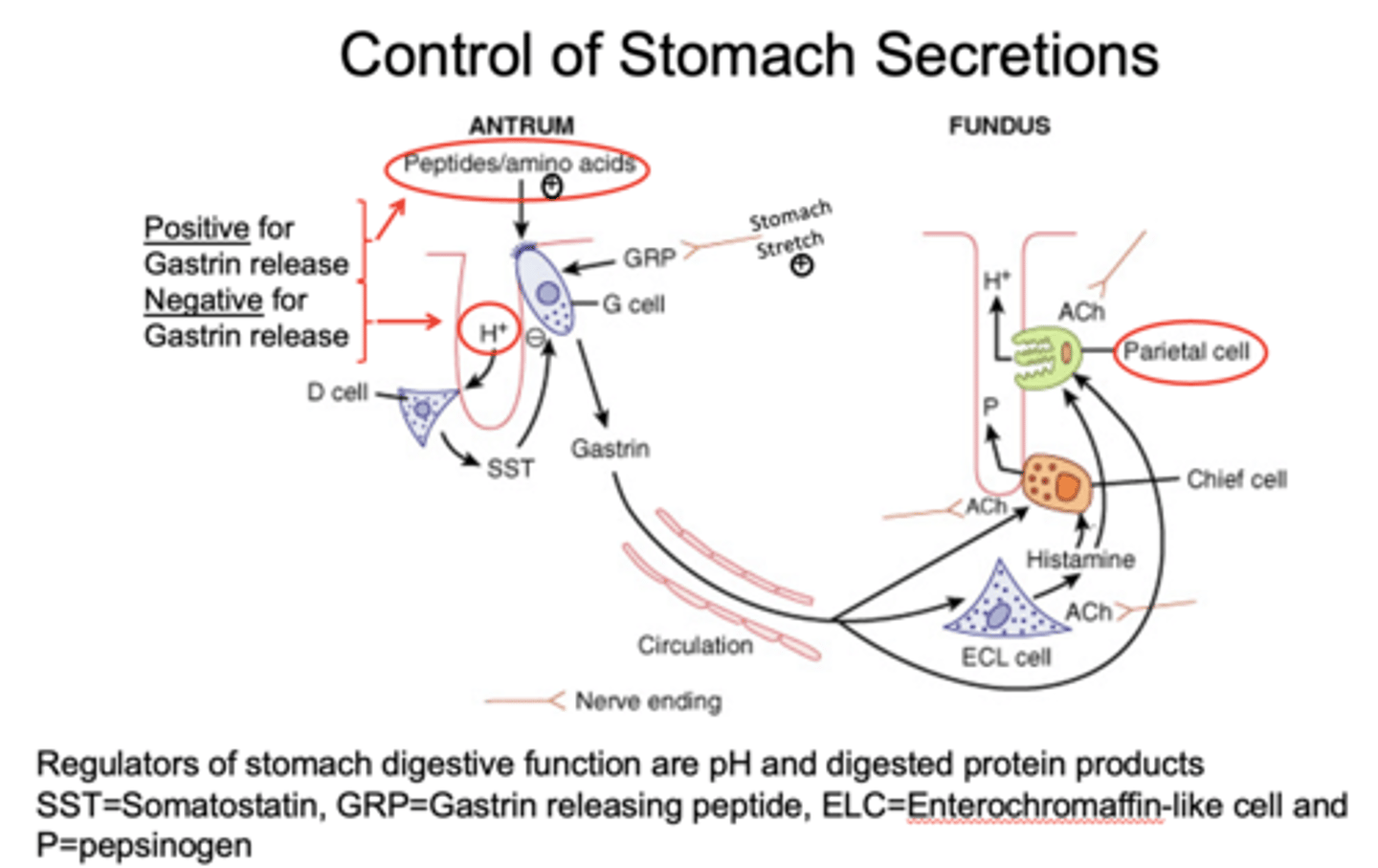
what true hormone is released into circulation and initiates digestive mechanisms?
gastrin
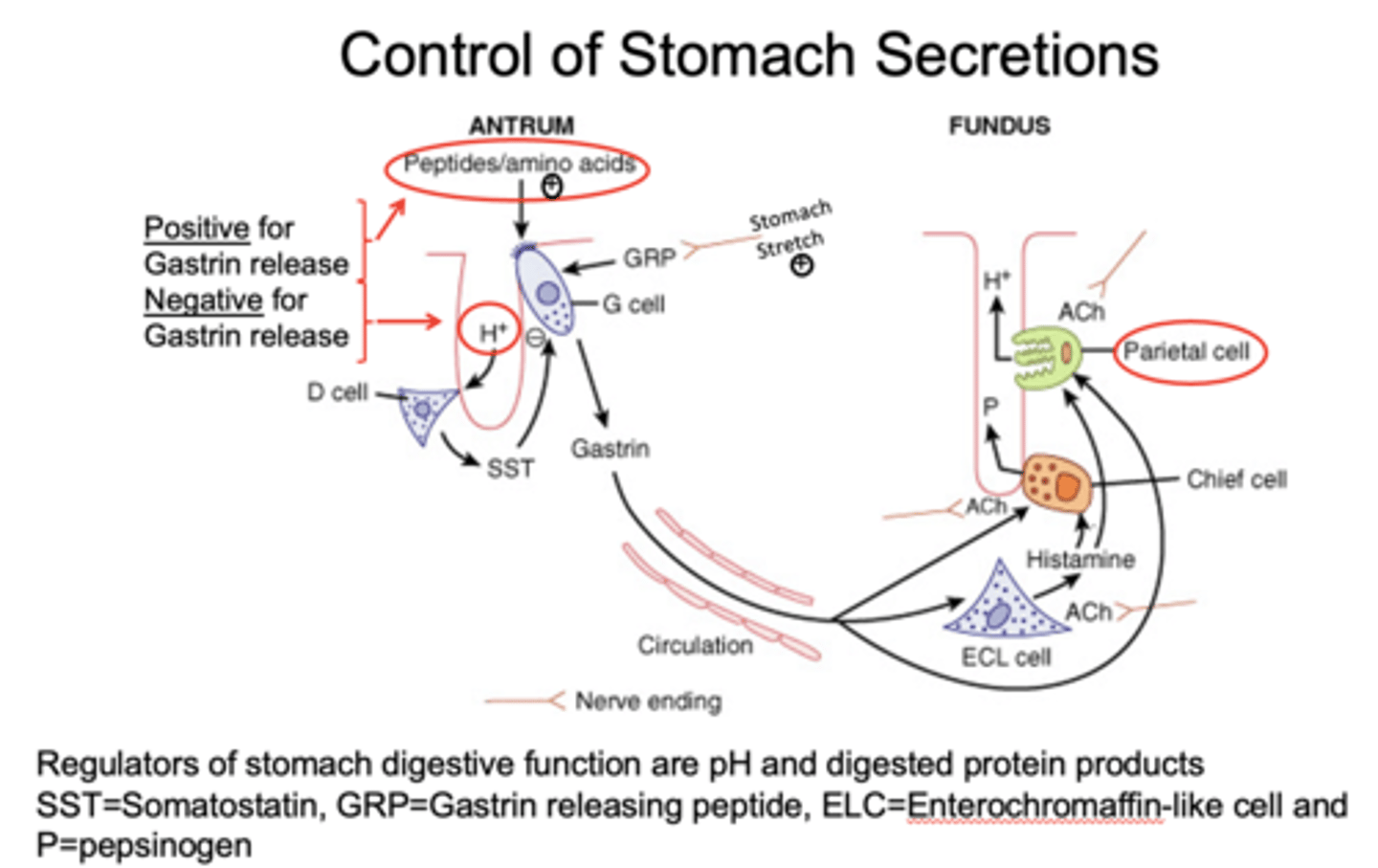
H+ and pepsinogen secretion is increased by _________
gastrin
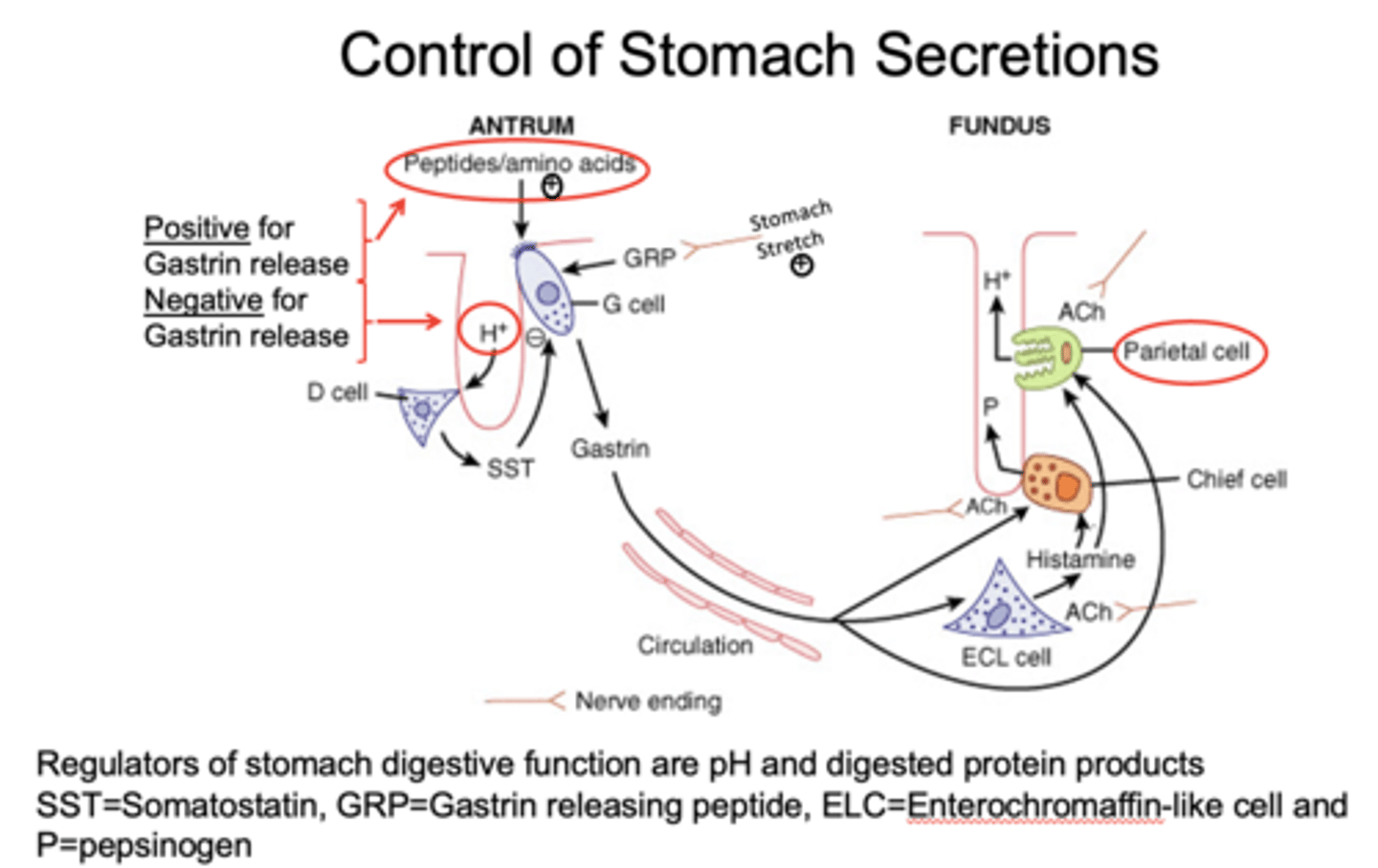
H+ and pepsinogen secretion is inhibited by _________
somatostatin
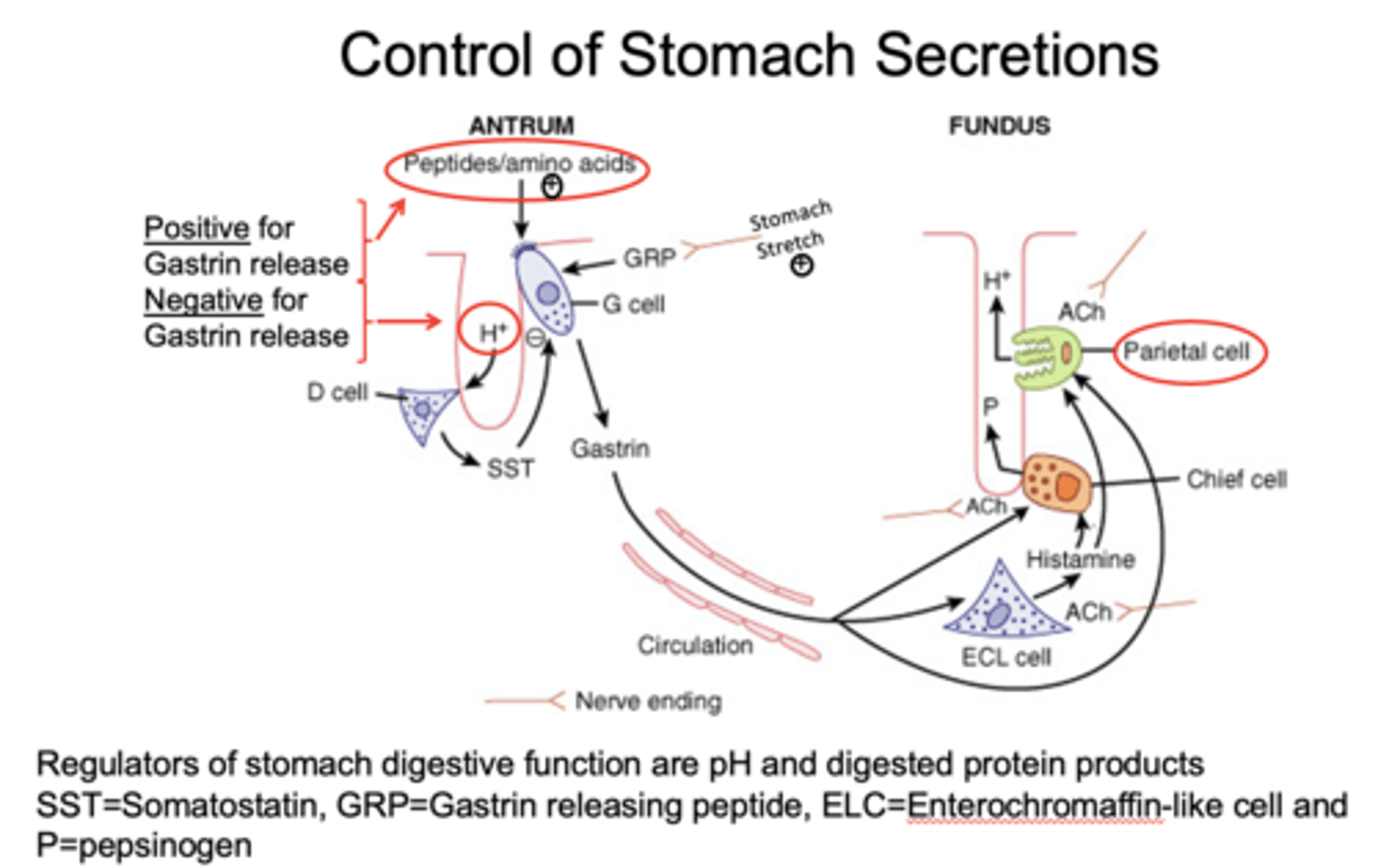
at a pH of 1-2, the stomach is _________
resting
at a pH of ≥3, the stomach is _________
stimulated
list 3 positive regulators of digestion:
- Acetylcholine
- Gastrin
- Histamine
Most H+/K+ ATPases are sequestered within ________ in the parietal cell cytoplasm
tubulovesicles
t/f: Upon hormonal stimulation (rising pH) the Tubulovesicles fuse with the cell membrane which significantly increases H+/K+ ATPase in the cell membrane. This increase of H+/K+ ATPases in the membrane allows large numbers of hydrogen ions to be pumped into the stomach.
true
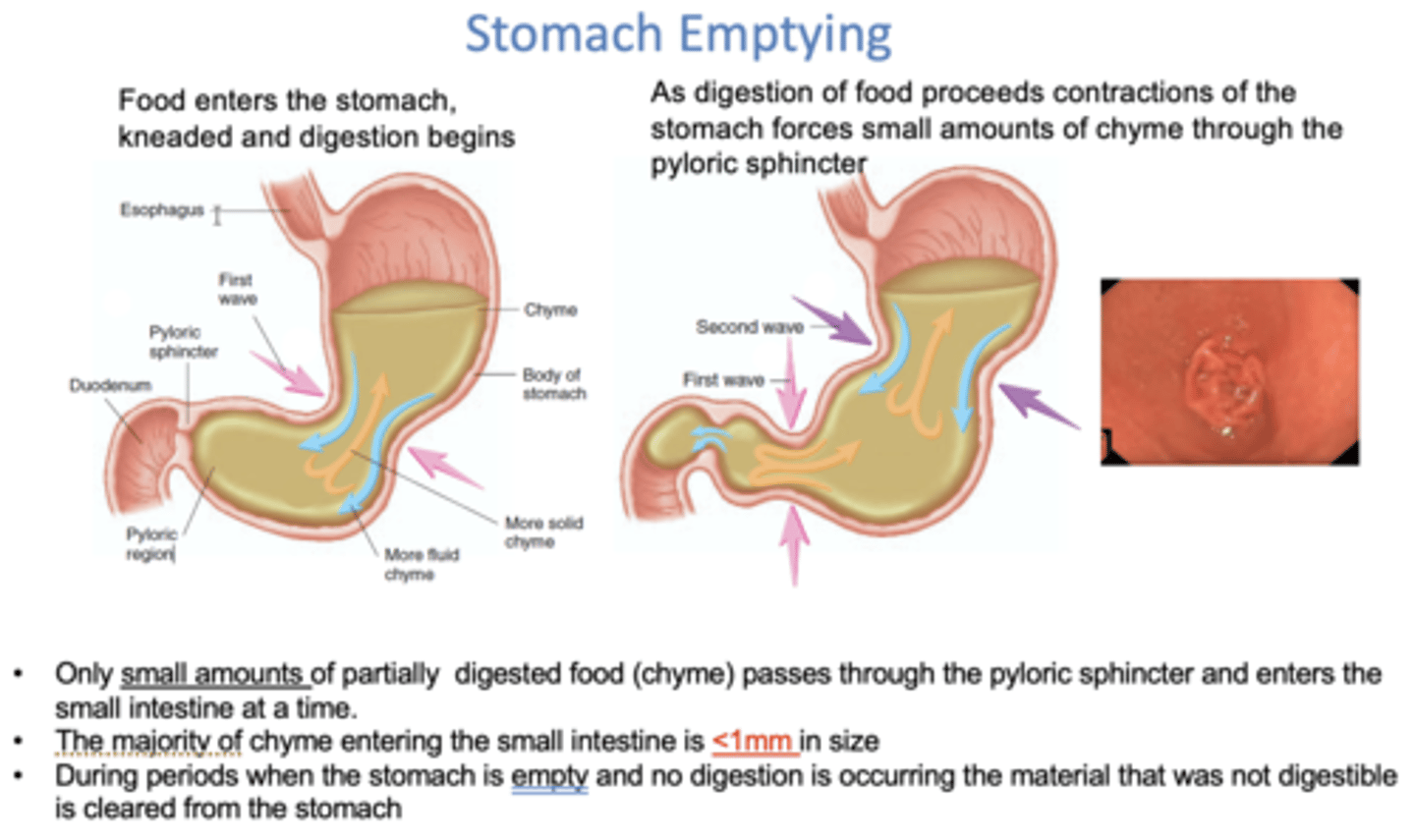
The majority of chyme entering the small intestine is ____in size
<1mm
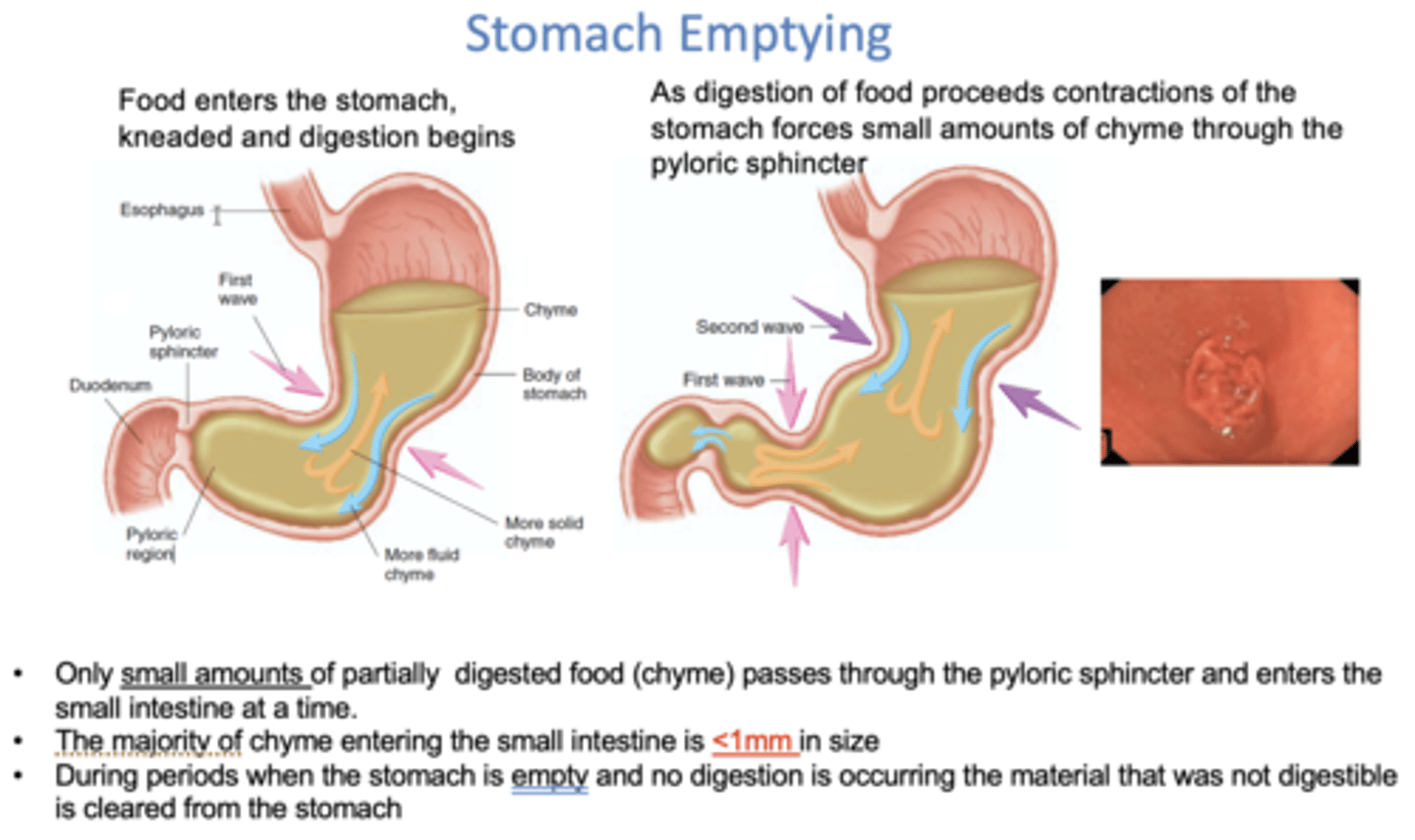
t/f: Only small amounts of partially digested food (chyme) passes through the pyloric sphincter and enters the small intestine at a time
true
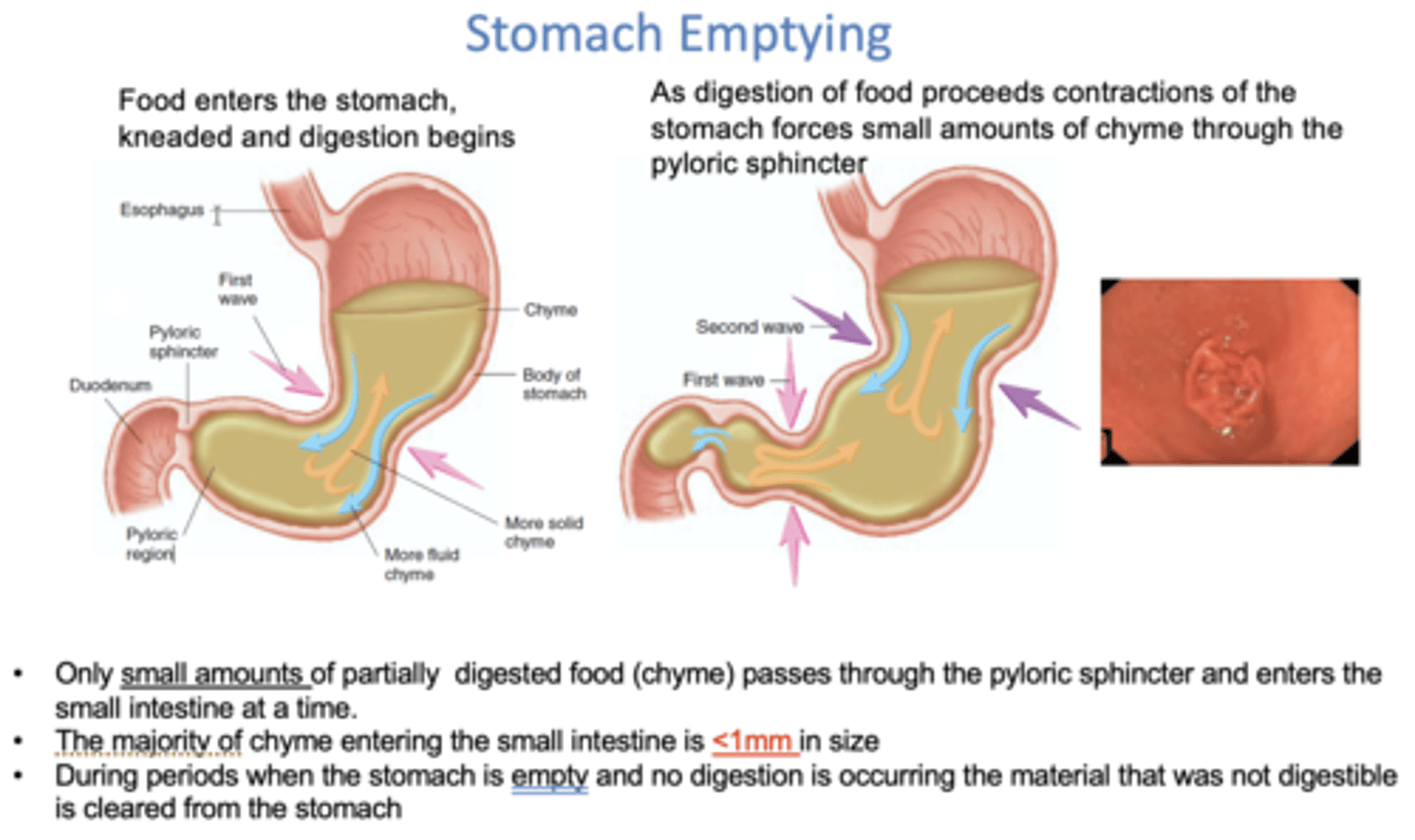
During periods when the stomach is empty and no digestion is occurring the material that was not digestible is...
Cleared from the stomach
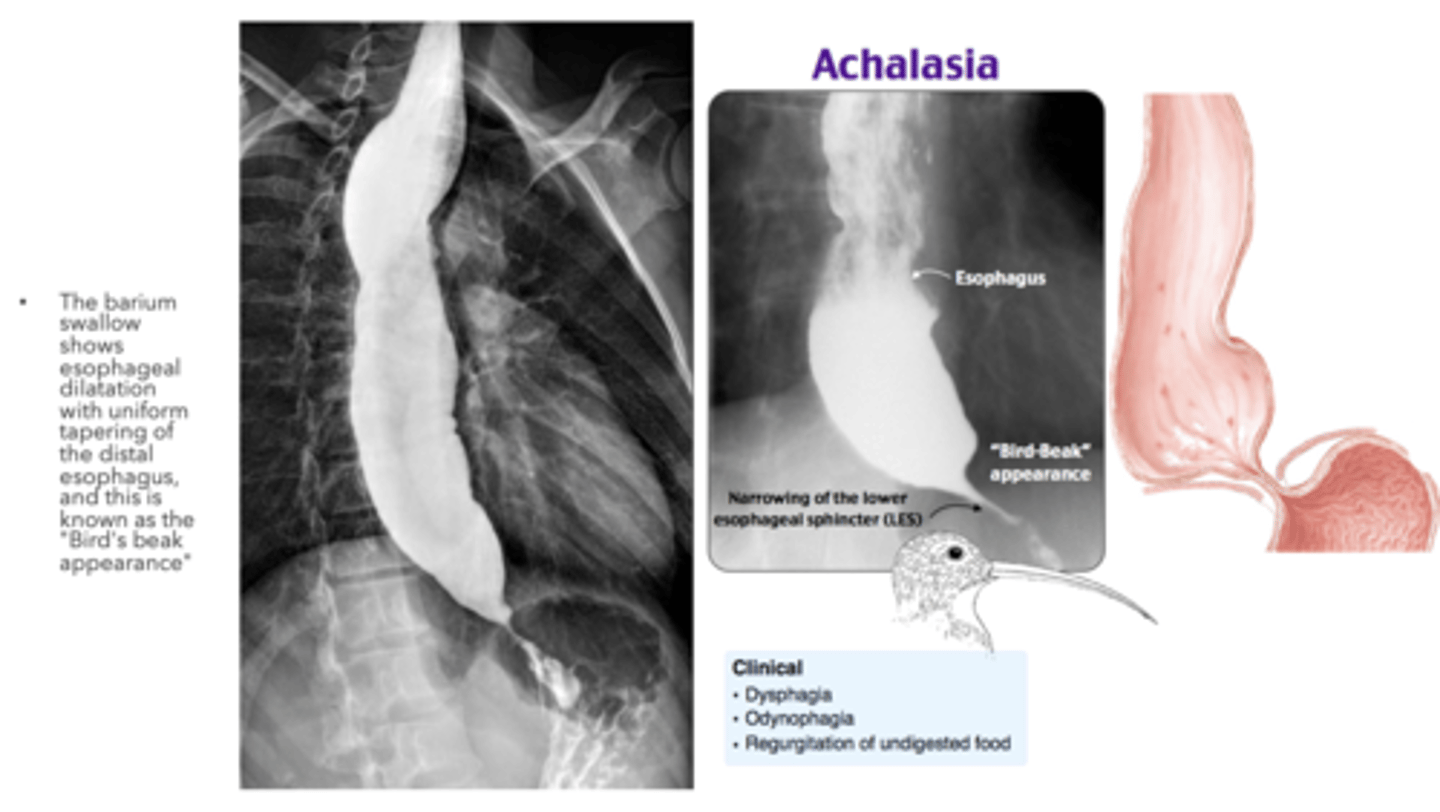
___________ is the barium swallow that shows esophageal dilatation with uniform tapering of the distal esophagus, and this is known as the "Bird's beak appearance"
Achalasia
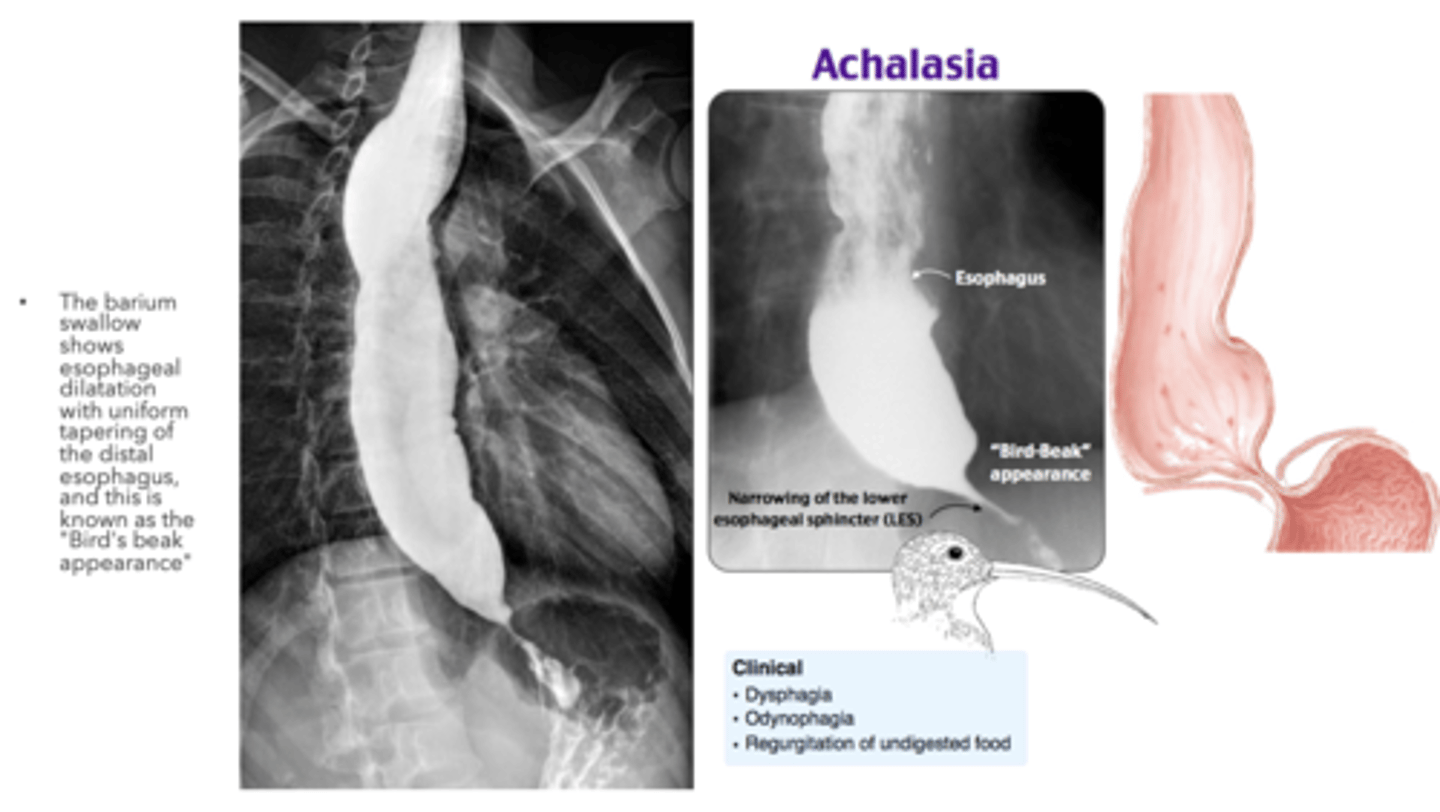
Narrowing of the lower esophageal sphincter (LES) is known as..
Achalasia
What are the 3 different treatment methods for GERD/Heart Burn?
- Antacids
- H2 receptor blockers
- Proton Pump inhibitors
What are the functions of gastric motility?
- Receive food bolus
- Storage of food
- Mix with digestive juices
- Grind to smaller pieces
- Propulsion (gastric emptying)
- Clear food during interdigestive period (migrating motor complex)
Where are the thickest muscle layers of the stomach?
Antrum and pylorus
What are the three components to gastric motlity?
- Proximal stomach motility
- Distal stomach motility
- Gastric emptying
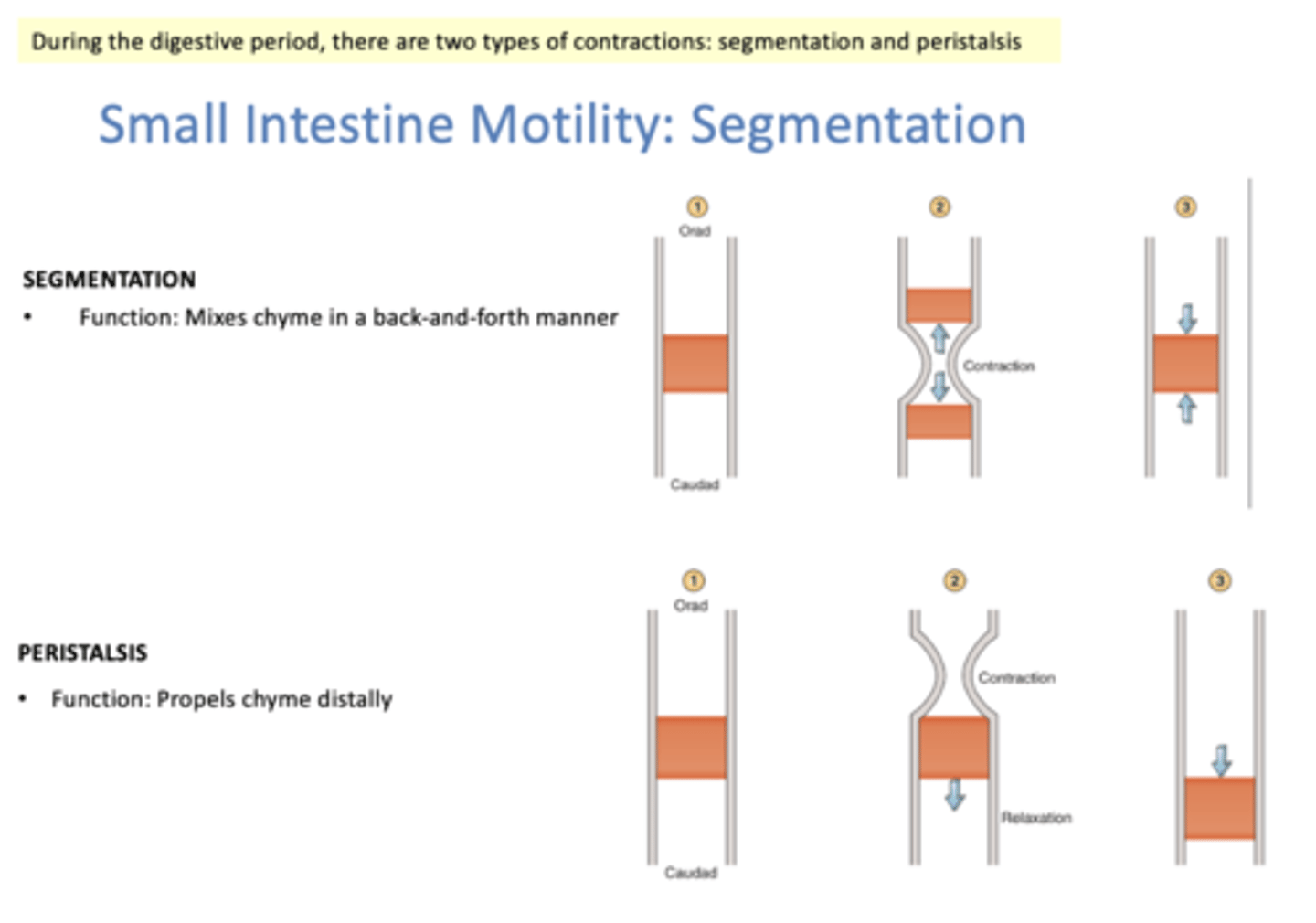
What is the function of segmentation in small intestine motility?
Mixes chyme in a back-and-forth manner
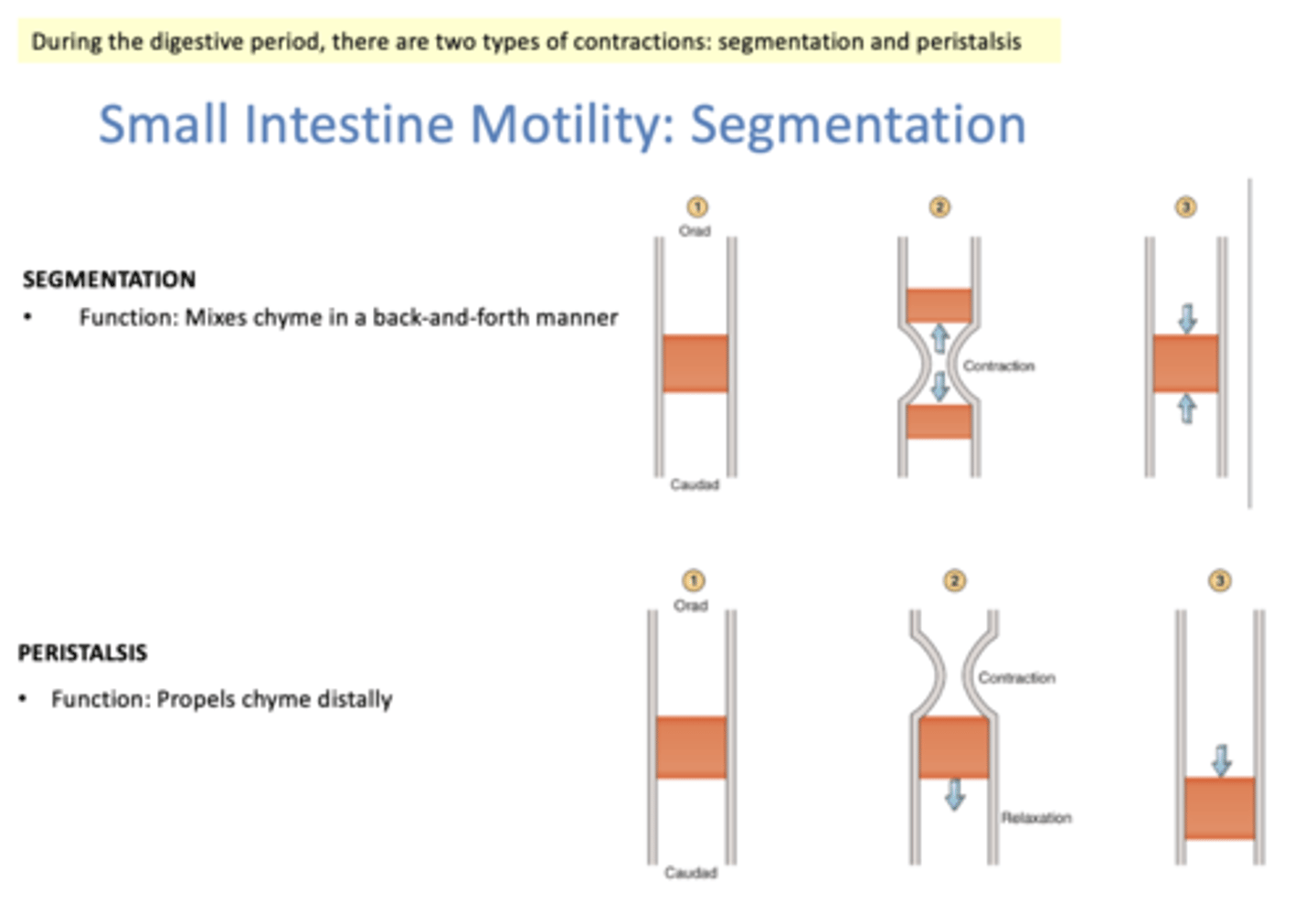
What is the function of peristalsis in small intestine motility?
Propels chyme distally
when digestive products move into the small intestine and it is already filled/overactive, what products are released to slow passage of chyme?
- CCK
- GIP
- Secretin
products moving into the small intestine (CCK, GIP, Secretin) is a ______ regulator of digestion
negative
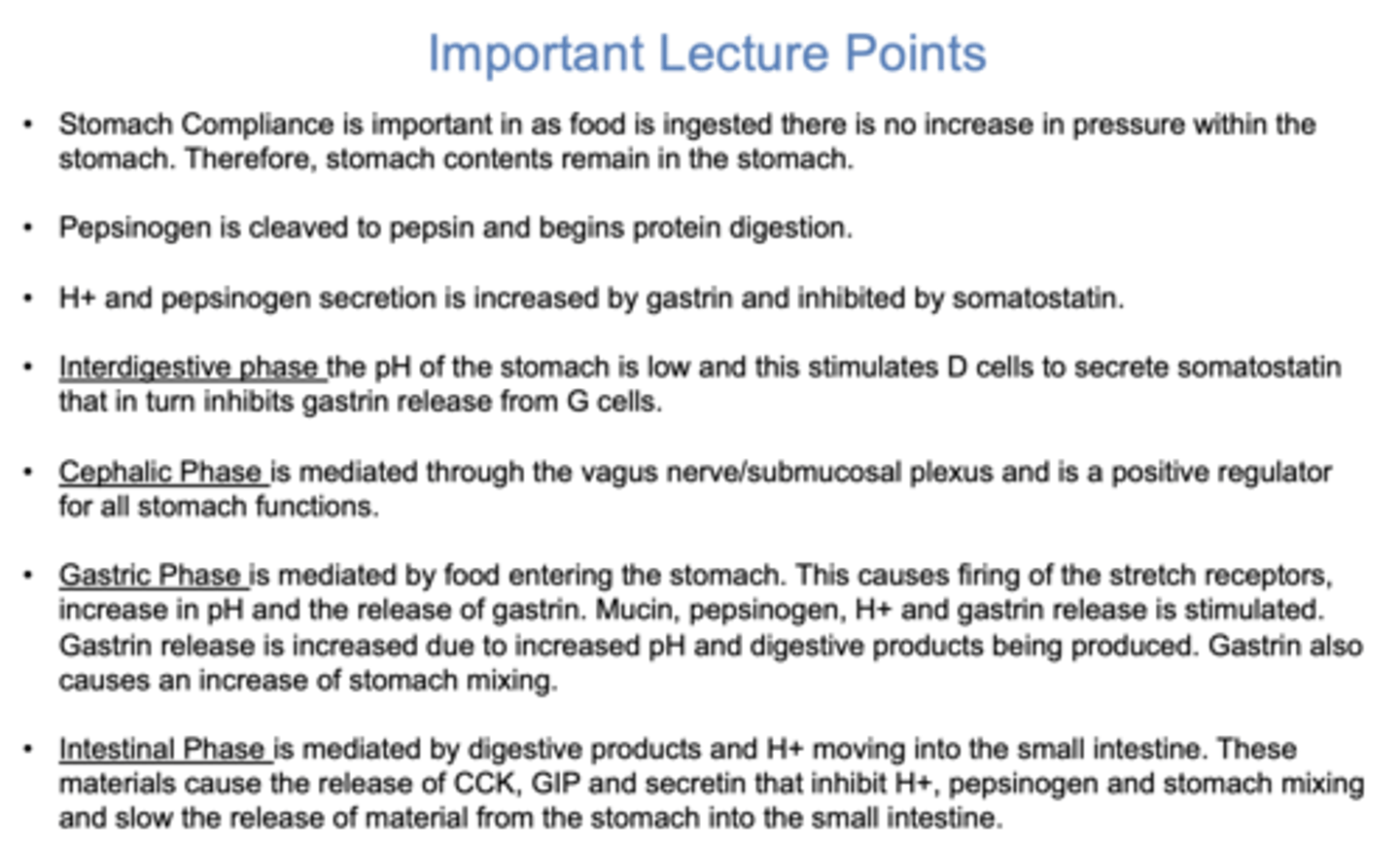
_________ is important in which as food is ingested there is no increase in pressure within the stomach, therefore stomach contents remain in stomach
Stomach Compliance
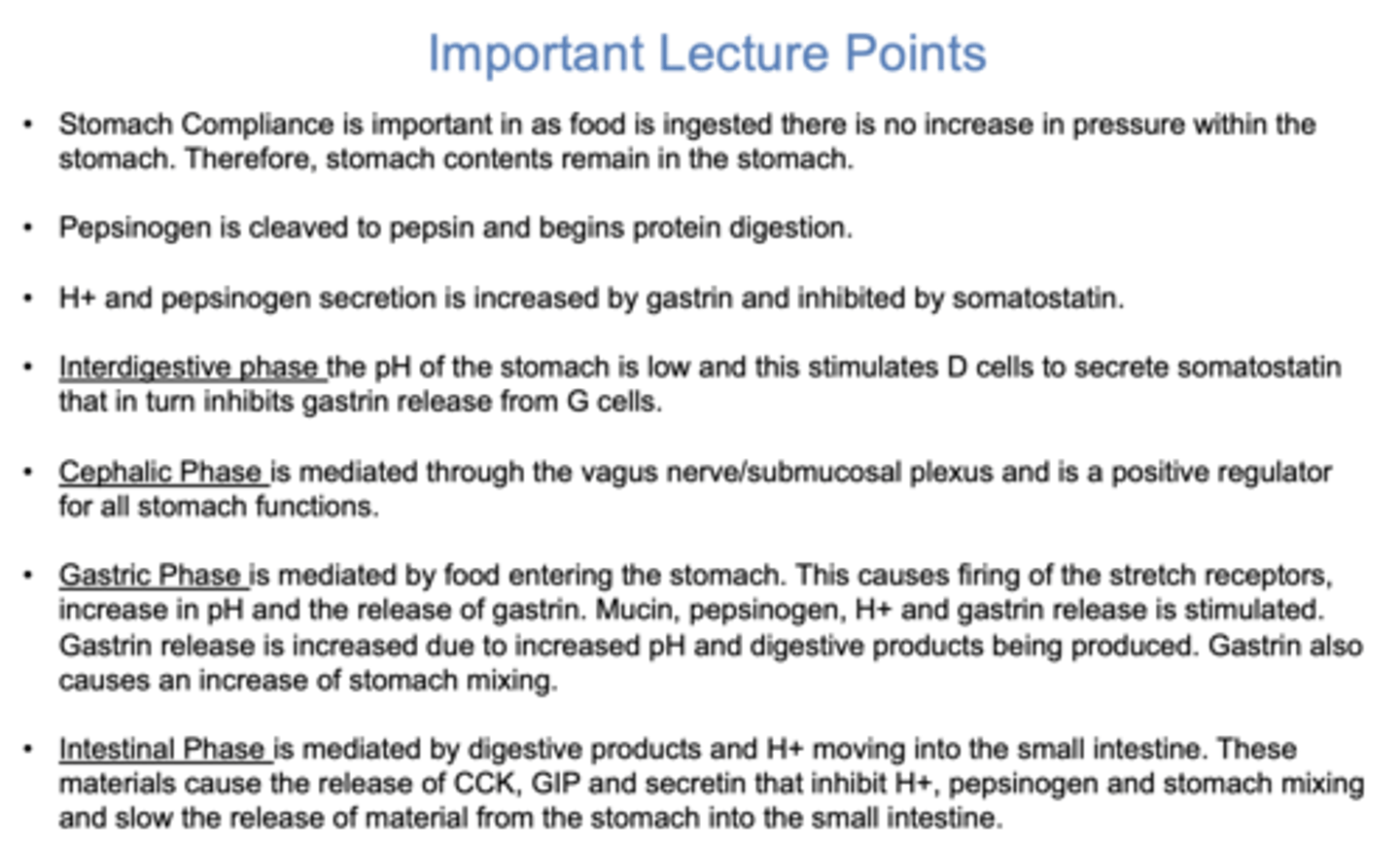
Pepsinogen is cleaved to _________ by HCl and begins protein digestion.
Pepsin
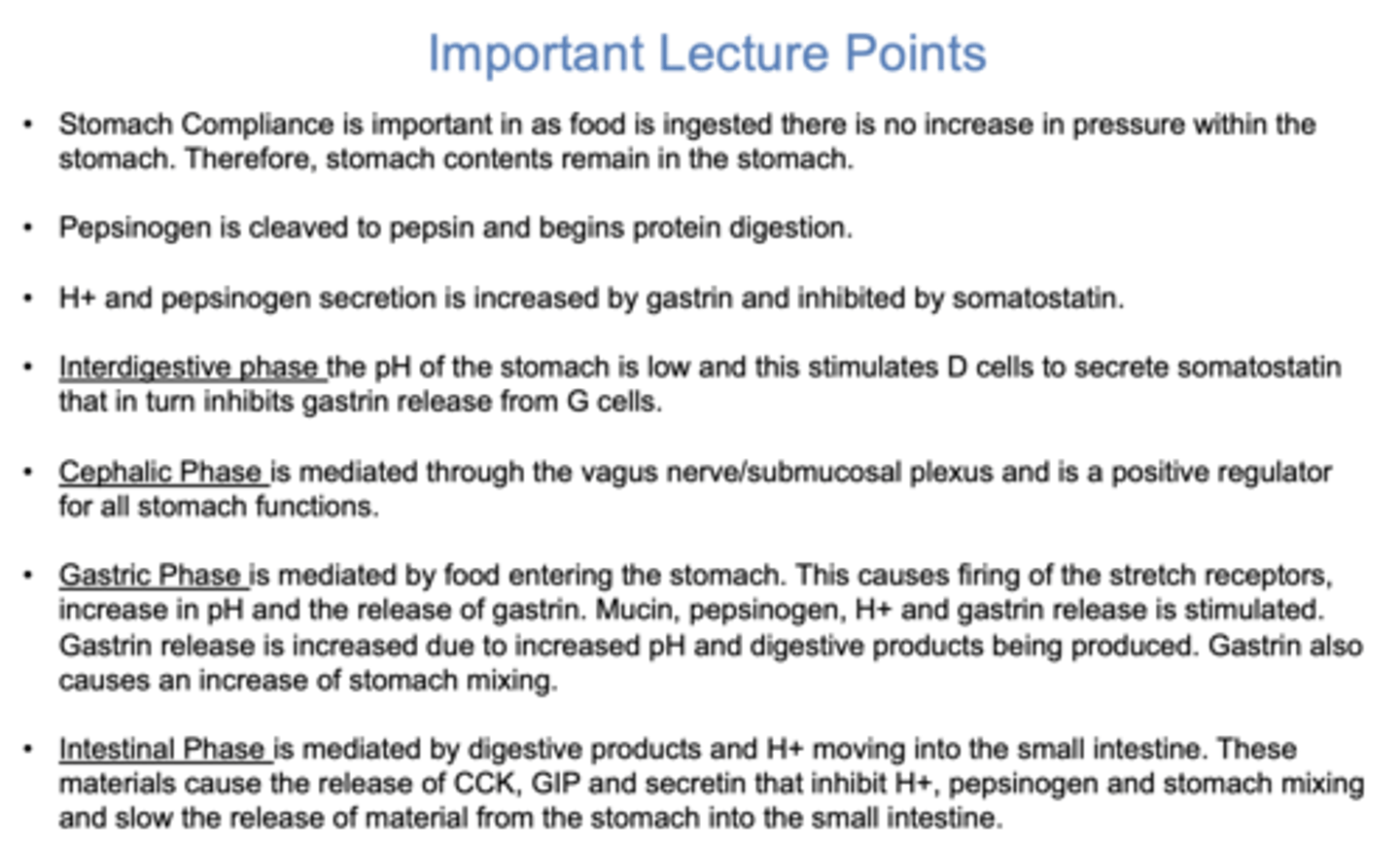
H+ and pepsinogen secretion is increased by gastrin and inhibited by ____________
Somatostatin
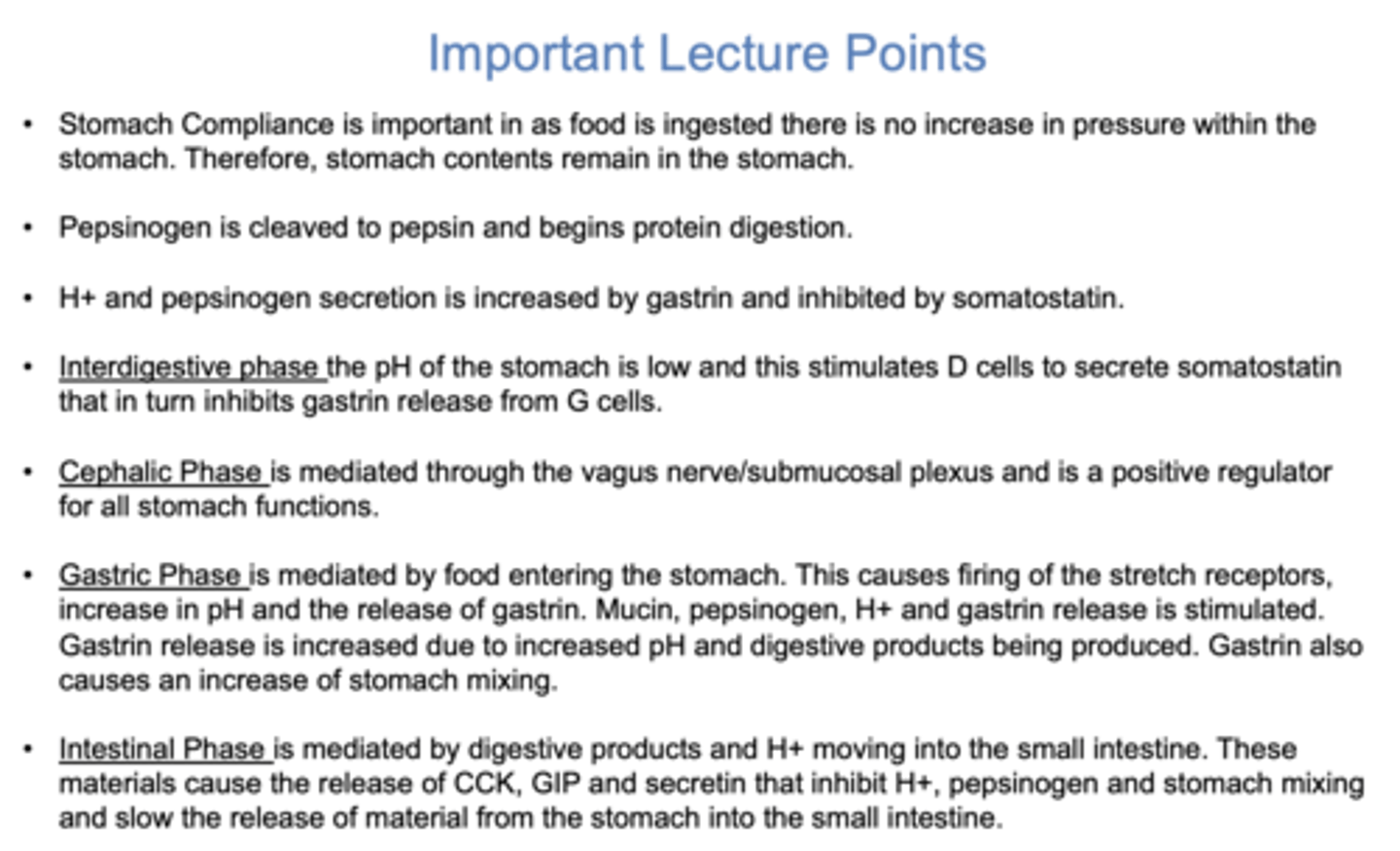
What phase is the following?
The pH of the stomach is low and this stimulates D cells to secrete somatostatin that in turn inhibits gastrin release from G cells.
interdigestive phase
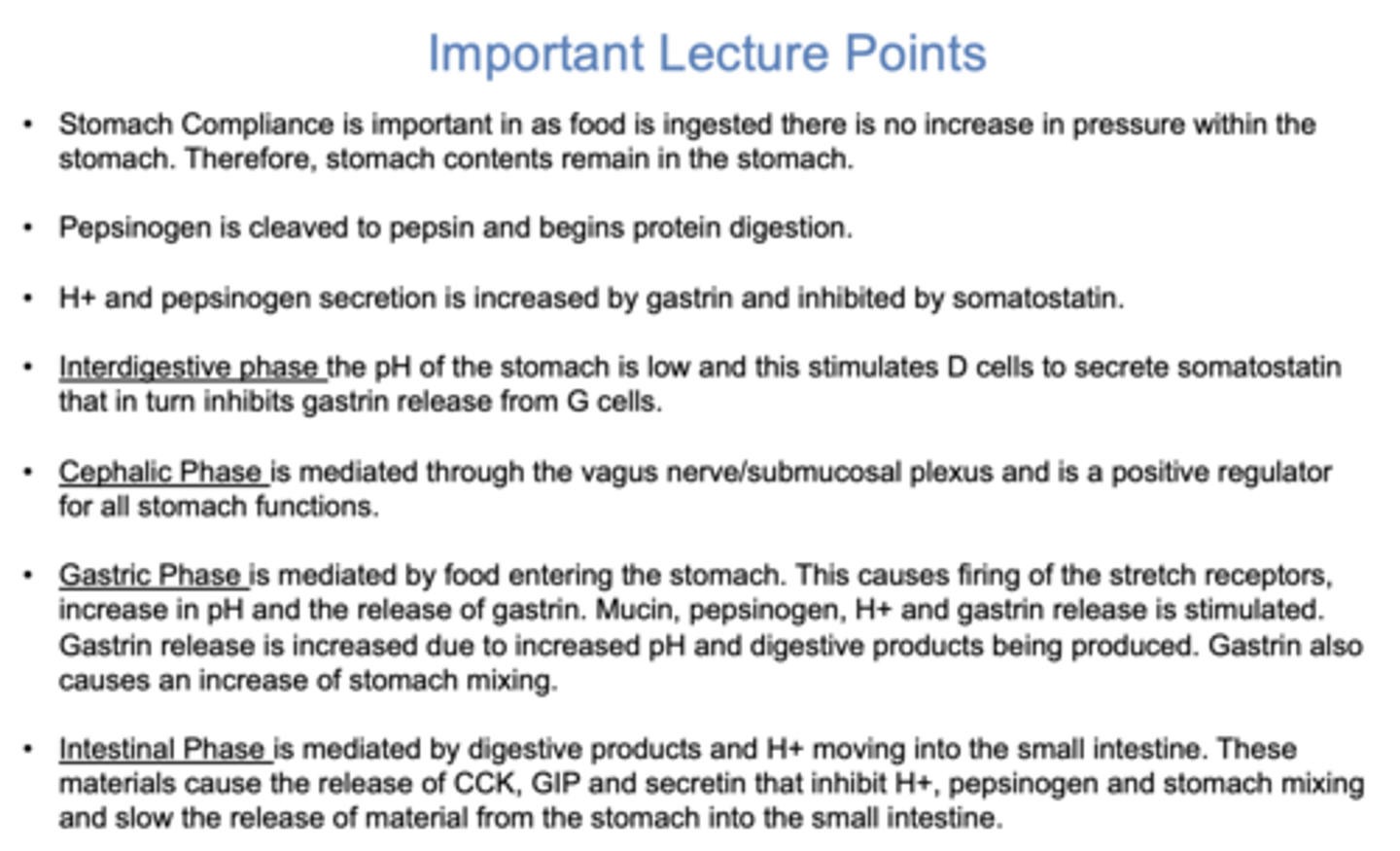
What phase is the following?
Mediated through the vagus nerve/submucosal plexus and is a positive regulator for all stomach functions.
cephalic phase