APAH Full Review (except west Asia + islam and later Europe and americas)
 Call Kai
 Learn
Learn Practice Test
 Spaced Repetition
 Match
Match Flashcards
 Knowt Play
1/261

There's no tags or description
Looks like no tags are added yet.
Name | Mastery | Learn | Test | Matching | Spaced | Call with Kai |
|---|
No analytics yet
Send a link to your students to track their progress
262 Terms
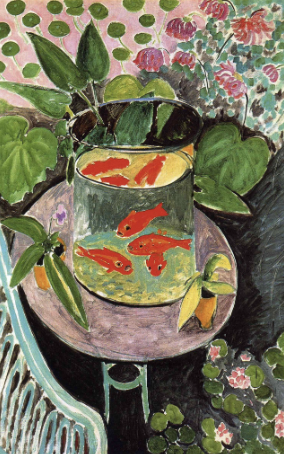
The Goldfish: (Fauvism)
Henri Matisse
Oil on canvas
Still life
Clash of contrasting colors
White of canvas shows through
Painted quickly and energetically
Influence of Japanese woodblock prints
Fauvism:
Work revolves around the use of color and simple forms
Color was not given to us so that we could imitate nature, but so that we could express emotion
Color from this point forward was no longer required to be literal
Extension of Gauguin and Van Gogh
Matisse strove to remove nonessential details from his work and retained only the most fundamental qualities of the subjects
Compare to:
Rachel Ruysh’s Fruit and Insects
Any other still lifes going forward
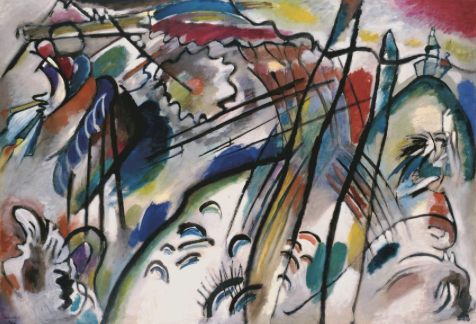
Improvisation 28: (Expressionism)
Vassily Kandinsky
German Expressionism
Oil on canvas
Shows the developing movement towards representational abstraction
Title comes from musical compositions
Strong black lines, definitive
Colors seem to shade from the black lines
Kandinsky believed that sound and color were somehow linked and this painting represented the link
Most of his works have musical titles
Composition, improvisation
Kandinsky wanted the viewer to respond to his painting like a person attending a concert or a sonata
His work is considered to be an interpretation of his own inner nature
His works express spiritually through the use of color
It is very important to note that this was a movement just prior to WWI
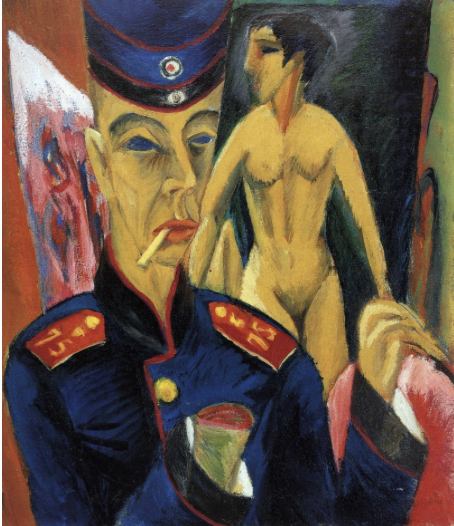
Self Portrait as a Soldier: (Expressionism)
Ernest Kirchner
German Expressionism
Oil on canvas
Kirchner started a group of young artists called “Da Brucke” or “The Bridge”
Believed they were on the verge of representing the change to come of modernism and the passing of barbarism
Movement will die with advent of WWI
Kirchner did not want to go to WWI but volunteered to avoid front lines, driver of a truck that hauled artillery
Declared unfit for service due to asthma and mental health issues
Some claimed he faked both to avoid service
This work was painted while he recuperated
Nude model indicates what he used to paint, but no longer can
Severed hand indicates his idea that he longer longer has the ability to paint
Hitler, a somewhat trained artist, will absolutely hate the work of modern artists and will take many of the German Expressionists artists’ works in an exhibit called “the degenerate art exhibit” where Kirchner’s work will be mocked and ridiculed publicly
Compare to any artist self portraits:
Le Brun
Frida Kahlo
Rembrant and Saskia
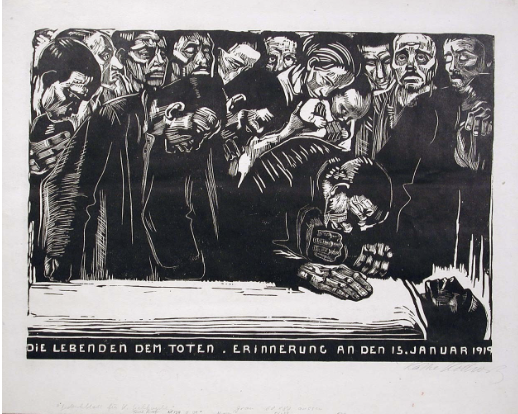
Memorial Sheet of Karl Liebknecht: (Expressionism)
Kathe Kollwitz
Woodcut
Kollwitz is a radical socialist (communist)
Her art is dominated by themes of poverty, inequality, and war
Her son died in WWI
Karl Liebknecht was a communist leader in Germany that was shot in a communist revolt against WWI
No political message in this piece, it is supposed to express human grief
Strong contrast of black and white is meant to express the grief
Comparable to Japanese Woodblock Prints
Modern interpretation of the funerary
Compare to any other funerary pieces but consider this one an early 20th century example
Expressionism
A group of artists formed by Vasily Kandinsky created a group Der Blaue Reiter
Very interested in the color blue
Kandinsky was an intellectual, studied Einstein’s papers
Writings of scientists convinced Kandinsky that there was no solid, tangible reality
Kandinsky’s work is considered to be the first totally non representational European art
His work is considered to be an interpretation of his own inner nature
His works express spiritually through the use of color
It is very important to note that this was a movement just prior to WWI
Cubism
Born in the study of Pablo Picasso
Many will follow in his footsteps and appropriate his work
Picasso was heavily influenced by the strong lings of African masks that were being stolen from Africa and brought to Europe
He was inspired to depict the human form in strong angular shapes
Cubism is dominated by wedges and shading is used to bring about depth
Two types of cubism:
Analytical: jagged edges and sharp lines (only one we need to know)
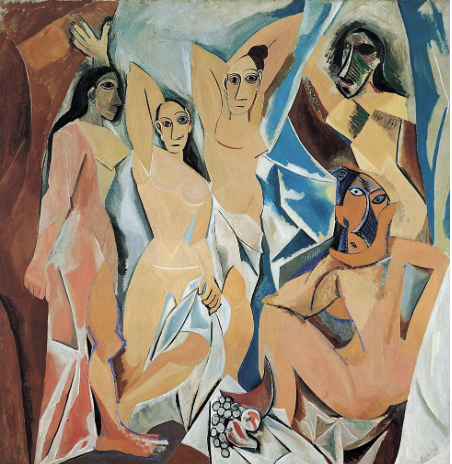
Les Demoiselles d’Avignon (Young Women of Avignon Street): (Cubism)
Pablo Picasso
Barcelona
Oil on canvas
Inspired by African masks and Post Impressionist painters that put stronger lines into their works
Shows five prostitutes in a bordello on Avignon Street in Barcelona
Each poses for a customer
Poses are not intended to be alluring, instead awkward, expressionless, and uninviting
Three on the left are more conservatively painted, two on the right more radical
Picasso was also highlighting examples of exploitation, women forced into prostitution and the exploitation of Africans
So much appropriation in this piece
Women on left poses like Greek Archaic sculpture
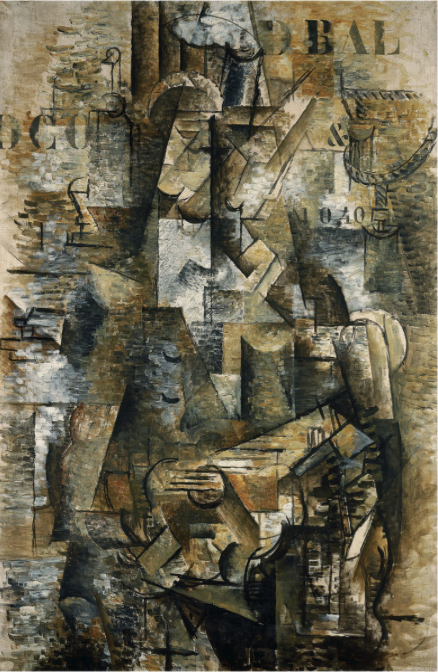
The Portuguese: (Cubism)
Georges Braque (worked closely with Picasso)
Analytic Cubism
to analyze deeply the lines, structure, and forms of nature
Oil on canvas
A complete reaction of naturalistic painting, or painting meant to closely resemble nature
Fracture forms, the breaking down of objects into smaller forms
Monochromatic
Inspired by a Portuguese musician, but not a portrait of a Portuguese musician
Instead this is an exploration of shapes
The only realistic elements are the letters and numbers behind the musician, might be a cafe atmosphere
Significant because it shows greater degrees of abstraction away from naturalism which will be very common in the later 20th century
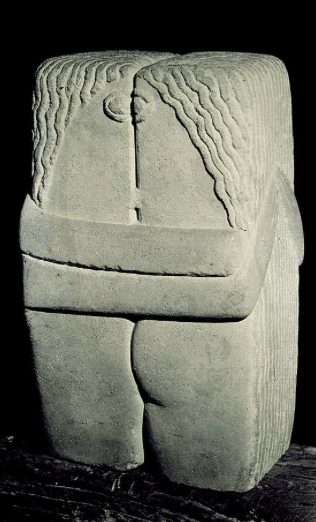
The Kiss: (Cubism)
Constantin Brancusi
Cubist sculpture
Limestone
Some argue this piece to be symbolism, other cubism, just know that there is a debate
Cube like rendering of the male and female bodies intertwined in a kiss
Brancusi studied under Rodin
Appropriates from both Klimt’s version and Rodin’s version of The Kiss
There were three versions of Brancusi’s the Kiss which he would recreate for the patron that asked for it
Third version used as a tombstone in Paris of a suicide victim
Considered to be very Avant Garde, a rejection of the rules to bring about something more primitive and true to nature
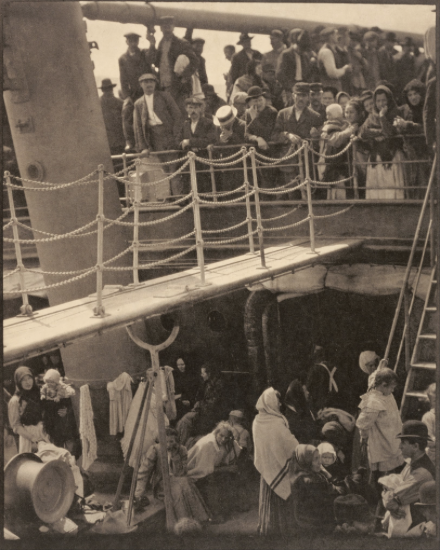
The Steerage: (Cubism)
Alfred Steiglitz
American Photography
Considered a realist bc he tools pictures as he saw them, didnt arrange people
He often looked for diagonal lines as framing elements in his photos
Some of the people are more likely being deported back to Europe after being denied US entry or those whose visas have expired
Influenced by Cubist paintings, compared to cubist works by Picasso
Steiglitz tried to see shapes and then shoot the image as it was
Image has a cubist like arrangement
Represents the social divisions of society
The Steerage is the part of the ship for the poorest passengers
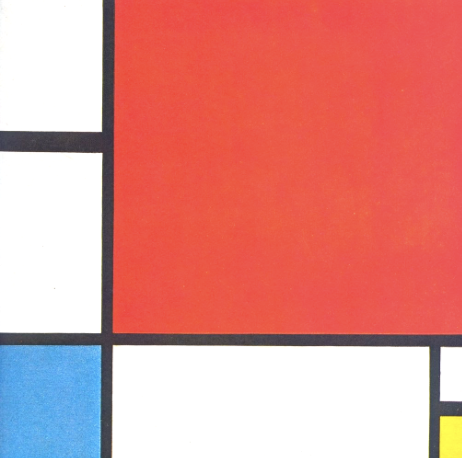
Composition with Red and Blue: (DeStyjl)
Piet Mondrian
Modern art
DeStyjl: (the style)
Began by Piet Mondrian
Completely abstract
Titles have no reference to anything representational
Painted on white background and use black cubes to shape rectangular spaces
Only uses primary colors… red, yellow, and blue
No diagonal lines
Will have major influence on the design of architecture - simple lines, no ornamentation - will often be called “international style”
Mondrian intended this style to be art for all cultures and societies, void of tradition or ethnicity
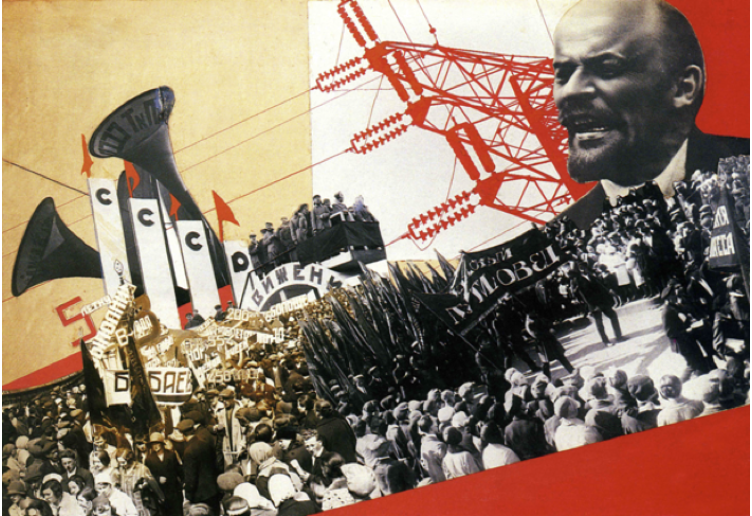
Illustration From The Results of the First 5 Year Plan: (Constructivism)
Varvara Sepanova
Soviet Union
Photomontage and illustration
Stepanova was one of the main constructivists coming out of soviet russia
Graphic art used for propaganda, easy to make copies
Based on Stalin’s Five Year Plan to modernize Russia post revolution so that Russia can be caught up with the West
Industrialization and modernization seen in the images
Electricity brought to Russia by the first Five year plan
Red dominates as it was the color most associated with communism
CCP is the Russian spelling of USSR
Large image of Lenin was meant to stimulate patriotism and nationalism
Constructivism:
Developed out of communist Russia post 1917
Vladimir Lenin saw it as removed from the art of the past and the beginning of something new, he gave constructivist a lot of support
The art was completely removed from any art form that had come before, seen as egalitarian, for all, not bourgeois. Communists considered all earlier art as either religious indoctrination or art that was intended or meant for the wealthy,... two things commies despise
Used new materials that hadn’t been used in art
Often used for propaganda purposes
Compare to pieces of propaganda:
Chairman Mao En Route to Anyuan is highly comparable
Surrealism: (elements of it are making sense, but are presented in a way that don’t make sense)
Inspired by the advent of psychology and the studies of Freud and Jung
Surrealists were inspired by dreams and their meaning
Subconscious thoughts, sort of like Expressionism
Two types of surrealism:
Abstract: suggestive forms but changed, biomorphic
Veristic: real objects put together in unusual ways
The name of the piece often has nothing to do with the image
It’s not meant to be clearly understood
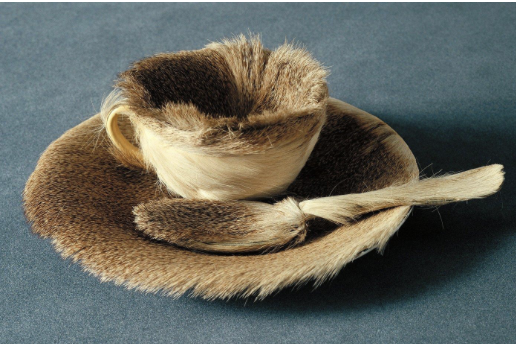
Object: (Surrealism)
Meret Oppenheim
Fur covered cup, saucer, and spoon
Picasso once said that anything looks good in fur, so Oppenheim created this piece
It is an assemblage like the DaDa piece Fountain by Duchamp
Almost created as a joke but became one of the best examples of Surrealist sculpture
Combines the soft with the hard, feminine masculine overtones
She became very famous from the work and it will inhibit her growth as an artist
Compare to:
Camelid sacrum
Fountain
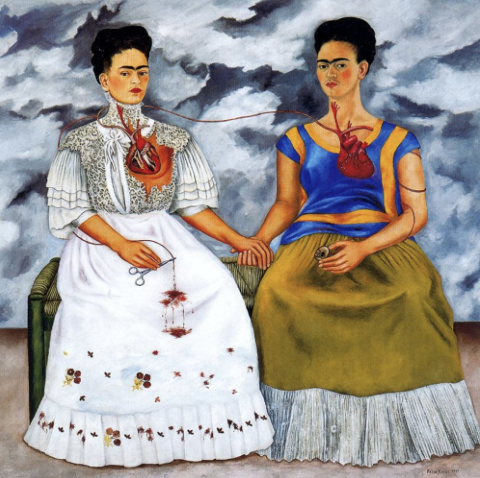
The Two Fridas: (Surrealism)
Frida Kahlo
Mexico
Oil on canvas
Frida Kahlo is of Mexican and Jewish ancestry (embodies her multiculturalism)
Juxtaposition of two self portraits
Left: spanish/jewish european ancestry in white lace
Right: dressed as a mexican peasant
Her two hearts are joined together by veins that are cut by scissors at one end and lead to a small portrait of her husband Diego Rivera (artist too)
Painted at the time of their divorce. Rivera was a notorious philanderer and Kahlo also had affairs
But, Kahlo was forever in love with him
Two figures share a bench, behind is a stormy sky
The vein acts like a connection between, a sort of umbilical cord between her and rivera, that has been severed
Blood on her lap is suggestive of her numerous miscarriages
Kahlo suffered from polio as a child and was hit by a bus as a young woman
Her art often showed her struggles and at the same time her refusal to be a domestic middle class Mexican woman that ran a household
She often scoffed at what society called beautiful and flaunted her characteristics that were considered masculine
Harlem Renaissance:
African Americans will move to NYC in the 1920s in great numbers
The specific neighborhood was Harlem
Many talented people in a variety of art forms ended up in this neighborhood… music, art, theater, sculpture, poetry, literature
Began after WWI and will continue through 1930s
Called the Harlem Renaissance because of the vast artistic movement that developed
In general, focused on racial pride, civil rights, and the influence of slavery on modern culture
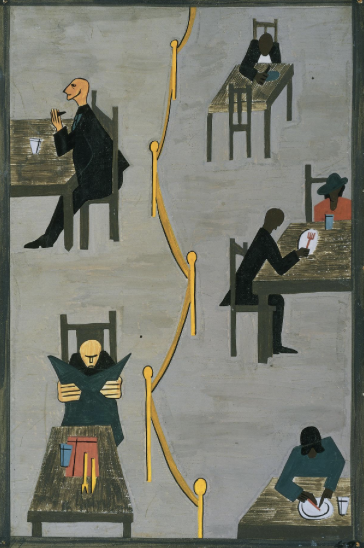
Migration of the Negro, Panel 49: (Harlem) (narrative)
Jacob Lawrence
Tempera on hardboard
60 paintings in the series (showing african american life in the south)
Each painting in this series united by similar colors
Depicts African Americans moving from the rural south to urban north post WWI
Meant to show the total African American experience
Flat simple shapes with forms that seem to hover in large spaces of color
Uses tempera as if going back to the Italian Renaissance
Scene shows a public restaurant in the north that segregates African Americans from the white patrons
Yellow poles and rope shows the line of segregation
Significant because in the time there was greater and greater degrees of abstraction happening within painting, and this artist returns to the narrative function of art to document what is happening with the African art experience
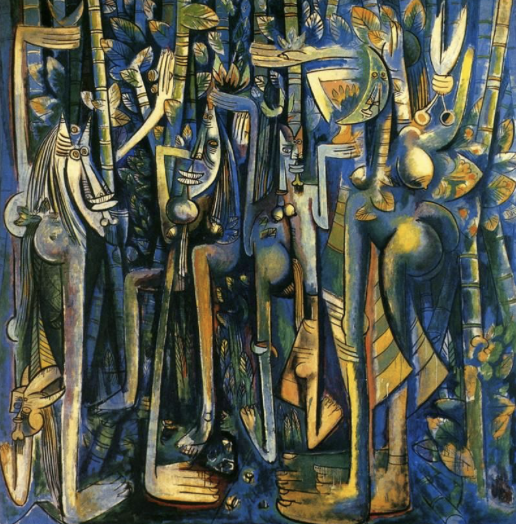
The Jungle: (Harlem) (appropriation + blending of cultures)
Wilfredo Lam
Cuban with Euro-American influences
Gouache on paper mounted on canvas
Lam is the cuban of euro asian and african descent and travelled to Europe and the US a number of times
He was inspired by the multicultural aspects of Cuba's history between spain and african slaves, his art reflects this
His work is highly influenced by African sculpture and masks, cubism, and surrealism
In this piece, the crescent figures represent African masks
This piece address Cuba’s history of slavery and sugar plantations
In the 1940s, Cuba was known for two things… sugar and a party place for Americans. Lam is showing the laboring lower class cubans in this piece
Significant because it shows the cross cultural blending and the influence of multiple modern art traditions, surrealism and cubism, in a multicultural setting
An excellent example of art as a sign of what is happening in society
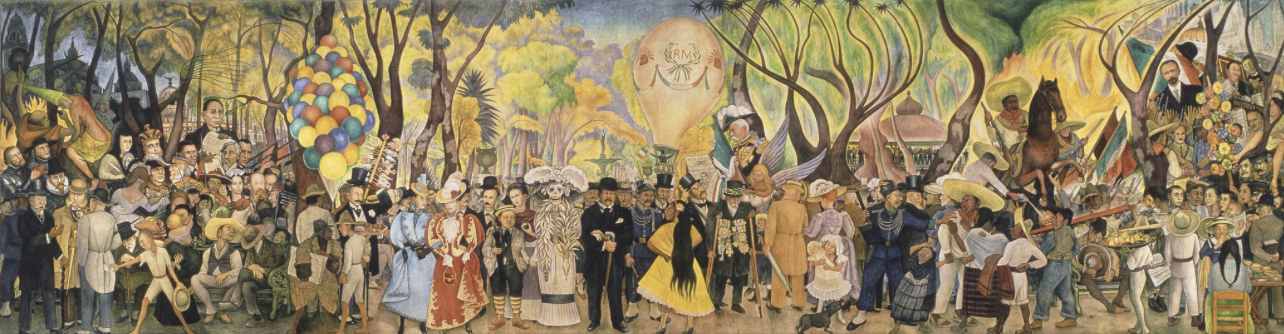
Dream of a Sunday Afternoon in Alameda Central Park: (Mexican muralists) (narrative)
Diego Rivera
Mexico City
Fresco
Painting depicts Alameda Park
Horror vacui painting of over 400 years of important historical figures of Mexican culture and politics
Depicts:
Sor Juana
Benito Juarez, five term president of Mexico
General Santa Ana
Jose Marti, father of Mexican independence
Also shows everyday common mexicans
A police officer ordering a family out of an elitist park
A young Diego Rivera with his future wife, Frieda Kahlo behind him
Meant to be viewed from left to right in a sort of timeline of Mexican history trhasting with Cortez through Mexico in the 1940s
Significant because the painting shows all aspects of Mexican society, not just the “winners of history”
Rivera guarantees that those who are usually forgotten in history are included in this massive mural
Mexican Muralists - Diego Rivera:
Most of the muralists were trained using fresco technique which had been largely abandoned with the advent of the canvas
Mexican moralists painted large paintings that all could see and often had political message
The themes of the work of muralists were often socialist in nature, working class struggles, the poor
Diego Rivera was the best known of the Mexican muralists
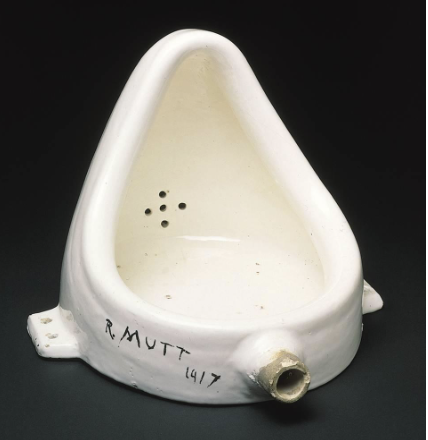
Fountain: (DaDa)
Marcel Duchamp
US
Porcelain China with black paint (text)
Ready made sculpture
Entered in an art show and it was refused, said it was not art
Signed by R. Mutt, which was a play on a popular comic
The title is a pun. Fountains spout liquid and the urinal collects liquid
Placing it upside down adds irony to the setting because the liquid would spill
Forces the viewer to ask “what is art?”
Duchamp is trying to push the envelope of what’s accepted
DaDa:
A nonsense word that is meant to describe an art movement between 1916-1925 that took place in Germany, France, and US
The movement was a reaction to the horrors of WWI, the most violent time the world has ever seen
All conventional rules of artistic representation were abandoned
DaDaists accepted “ready mades” which were objects of everyday life incorporated into art
incorporated words and text into their art
DaDa is the victory of the concept of art over the execution of the art
Armory Show and Duchamp:
Armory Show in NYC, a sort of American salon
Unjuried, invitees could enter any art they wanted
American public was horrified, NYC wanted to get it shut down
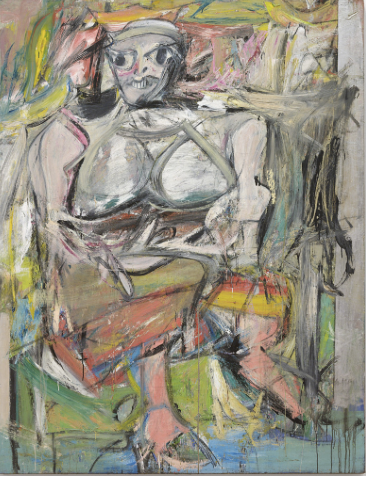
Woman I: (abstract expressionism)
Willem Kooning
US
Oil on canvas
Satirical critique on women in 1950s advertising, camel cigarettes
Combination of stereotypes
Influenced by everything from Venus of Willendorf to 1950s pin up girls
Ironic comment on the artificial world of film and advertising
Splashing of paint onto canvas
Jagged lines create an overpowering image
Simile is cut out from a magazine advertisement
Series of six paintings
Abstract Expressionism:
Developed in the US in the 1950s
This is the first truly American Avant Garde movement, it originated in the US
Reaction to Mondrian and De Stijil, too minimalist
Abstract expressionism took a more active approach with the artist’s hand, often described as action painting
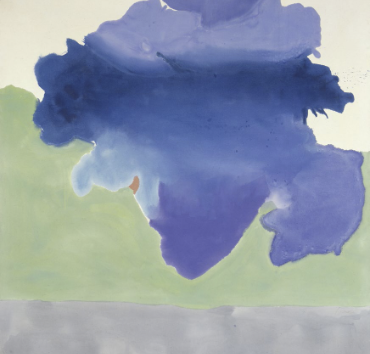
The Bay: (color field painting)
Helen Frankenthaler
Acrylic with turpentine on canvas
Very large canvas laid down on the floor
Canvas unprimed so that the paint soaks into the canvas more directly
Paint was thinned with paint thinner, turpentine
Technique is called “soak stain”
Paint with thinner is poured onto the canvas
Inspired by the drip method of Jackson Pollock
Color Field Painting:
A reaction to abstract expressionism of the 1950s
Lacks the aggression of the abstract expressionists
Relies on subtle tones, softness
Adopts new painting styles
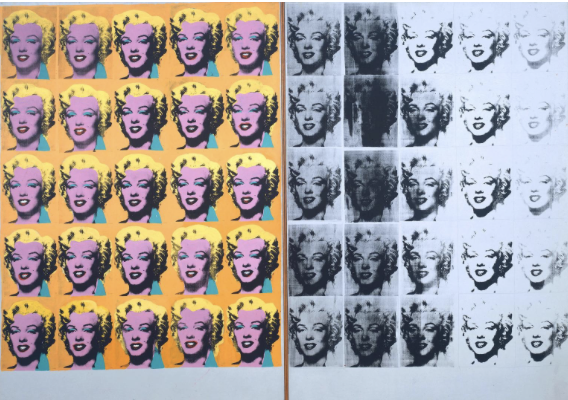
Marilyn Diptych: (pop art)
Andy Warhol
Oil, acrylic, silkscreen enamel on canvas
Diptych’s usually reserved for medieval christian worship, now with a pop icon
Repeated imagery cheapens the idea of Marilyn Monroe, no meaning left
Focuses on the cult of celebrity
Monroe’s image varies throughout the work, causing the viewer's eyes to move around much the same way as an abstract expressionist work
The image is more than a celebration of Monroe, instead it is a critique on the role of mass media in our lives
Reproduced many times, denies the concept of a unique piece of art, hence “pop art”
Warhol started this piece a week after Monroe's death
Pop art:
Popular art
Developed out of the hyper consumerism of the 1950s and 60s
Appropriates from items of everyday world of mass popular culture
Movie stars, pop music, common everyday items like cans of soup
Generally thought to be a reaction to Abstract Expressionism
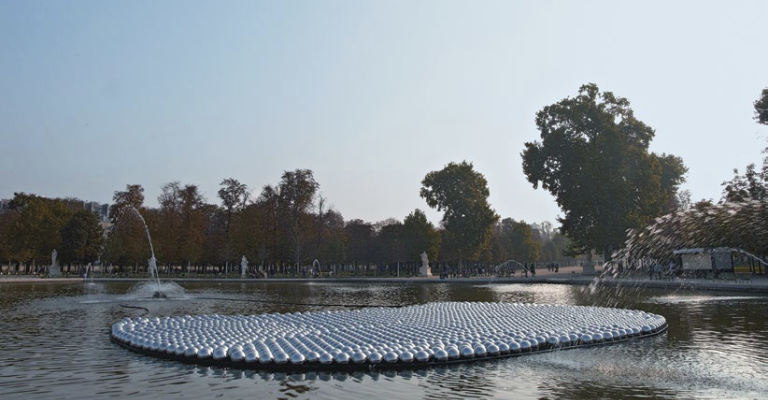
Narcissus Garden: (happenings)
Installation Art (of mirror balls)
Kusuma is a major Japanese artist
Originally 1500 large mirror balls placed under a sign that said “your narcissism for sale”
Supposed to be a commentary on the narcissism of the modern world
This image shows a different installation where the balls have been put in water
Installation has been exhibited in numerous locations around the world
Happenings:
An act of performance art that is initially planned but involves spontaneity, improvisation, and audience participation
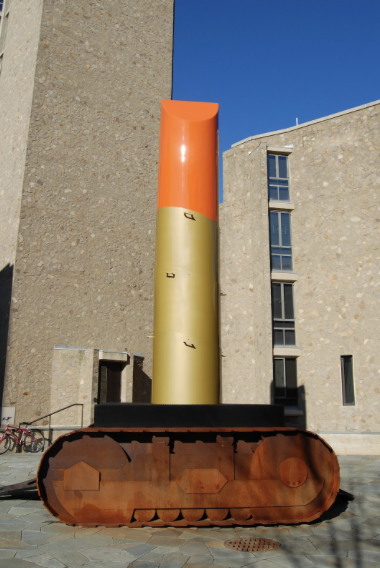
Lipstick on Caterpillar Tracks: (happenings)
Claes Oldenburg
Yale university
Steel, aluminum, cast resin, painted with enamel
Intended for a platform for public speakers for anti-vietnam war protests
Tank based bottom platform with vertical lipstick was considered anti-war symbolism
Themes of death, power, desire, and sensuality
Male and female forms unite
Lipstick was hyper femininity
Tank base and middle shape of the lipstick was hyper masculinity
Originally placed at the main square at yale for 10 months in 1969
Recreated with steel base and solid lipstick, still at Yale but in a less prominent square
Oldenburg’s first public work
Happenings:
An act of performance art that is initially planned but involves spontaneity, improvisation, and audience participation
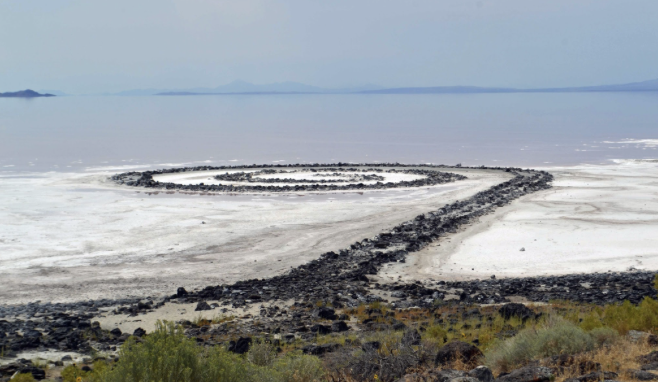
Spiral Jetty: (site art / earth art)
Robert Smithson
Salt Lake, Utah
Mud, stone, dump trucks, and a helicopter
Extremely remote and abandoned area of the salt lake
The coil is seen in North American indigenous earthworks similar to the Serpent Mound
Between 1972 and 2002, the jetty was barely visible as the water level returned to normal
Smithson argued that it shouldn’t be preserved and that nature should run its course
Smithson will die in a helicopter accident while working on a piece in texas
Site Art / Earth Art:
An artistic protest against he perceived artificially and commercialization of art
Rejection of the museum
Inspired by cubism, modernism, and minimalism
Temporary in nature, many exhibits only exist now in photographs or video
Robert Smithson is the most known earth artist
Modern Architecture and Architects
The second industrial revolution which brought about steel and the steam engine will change architecture forever
Steel allows for buildings to be built from a very strong yet light skeleton instead of strong, but heavy stone or concrete
Vertically is the essence of modern architecture
Louis Sullivan was a student of the Chicago School
Sullivan designed on the idea that “Form Follows Function”
That means that buildings should be designed in a manner that meets their intended function as best as can possibly be built
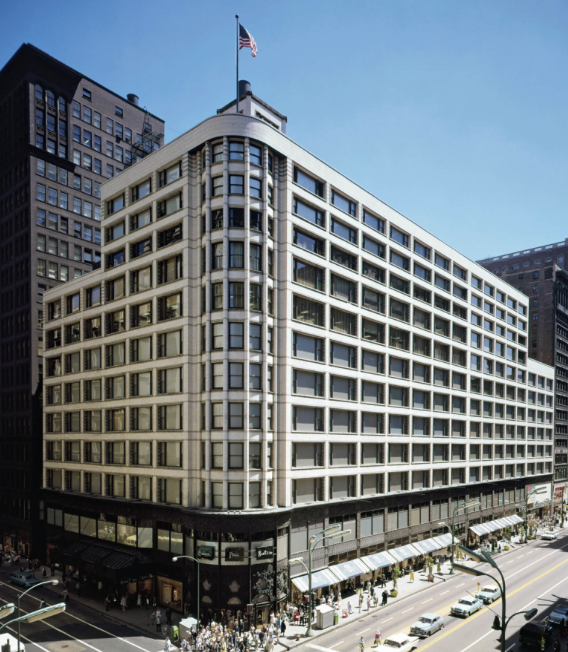
Carson, Pirie, Scott and Company Building: (Modern architecture)
Louis Sullivan
Chicago
Iron, steel, glass, terra-cotta
Function: department store
Early form of the skyscraper, all skyscrapers will appropriate from this building
Sullivan designed this building to sell products, Macy’s, Nordstrom, not Walmart
Maximum window space on the ground floor for passersby to see displays
Horizontal emphasis symbolizes continuous flow of floor space to show the shopper that this building has all the items one might need. One stop shopping
Steel skeleton structure allows for height and lots of windows to let in light
Steel skeleton structure encased in decorative terra-cotta tiles and decorated by cast iron decorative elements to give it charm and turn the building into an artistically beautiful place. Turns shopping from being a utilitarian task to a dignified event
Use of “Chicago Window” to allow ventilation throughout building to keep customers shopping longer
Significance… form follows function!
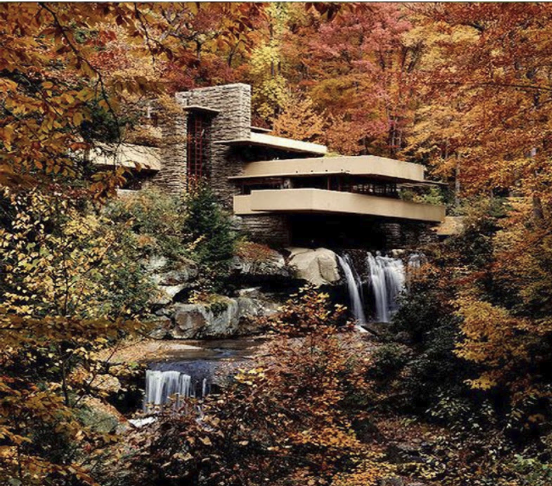
Falling Water: (Modern architecture)
Bear Run, Pennsylvania
Reinforced concrete, sandstone, steel, and glass
Frank Lloyd Wright
Designed by the idea, “the surrounding landscape should look more beautiful than before any building that was added to it”
This is a rejection that a building should be designed in a historic style such as Baroque of Neoclassical
Believed architecture should blend organically with its surroundings
Architecture should embrace democracy and freedom of movement
Believed the fireplace should be the center of the home
Self proclaimed “world greatest architect”
Even today many agree with him
Irregular and complex ground plan
Steel cantilevers to allow porches to extend out past the main living structure
Floor of living room and walls are made of stone that is found in the region
The hearth/fireplace is the center of the house, functional both physically and emotionally. Stacked in nature stone
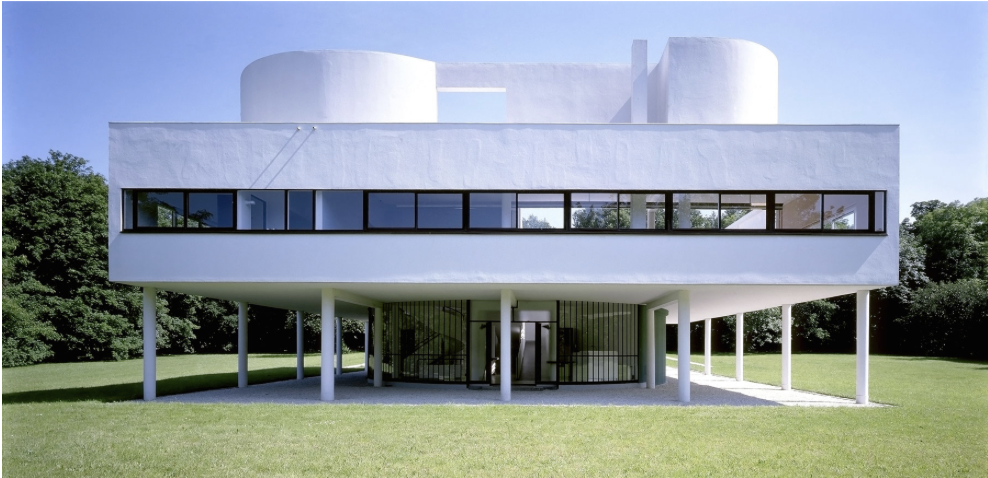
Villa Savoye: (Modern architecture - International Style)
Le Corbusier
France
Steel and reinforced concrete
Patron: Savoye Family (country house)
Three bedroom house with servant’s quarters
Boxlike horizontal quality, an abstraction of a house similar to representational abstraction of art that we may have seen
Main part of house lifted off the ground by narrow steel posts
Cars park under the house and enter the house through the turning circle (stairs)
House appears to float on columns
Subtle colors, white exterior symbolizes modern cleanliness post WWI and Industrial Revolution (soot, smog)
Healthy living
Very few walls, wide open interior with furniture built into the walls that collapses and can be put away
Open courtyard on the second floor
Compare to any homes we have studied
Monticello
House of the Vetti
Antoine Le Corbusier and the International Style:
1920s through late 50s
Geometric and no exterior ornamentation
straight/sleek designs. Use of glass and steel
“Efficient” and “less is more” are themes in the international style
Will become the style of the Modern Skyscraper that looks like walls of glass
International Style will become “modernist architecture/style”
Le Corbusier is considered the movement’s founder
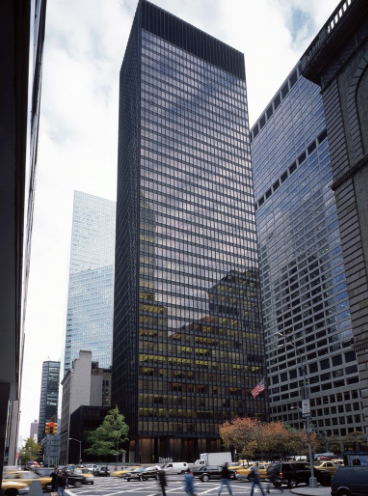
Seagram Building: (modern architecture)
Ludwig Mies Van Der Rohe and Philip Johnson
New York
Steel frame with glass curtain wall, concrete
Ferroconcrete, concrete reinforced with steel, incredibly strong
An appropriation of the minimalist International Style
“Less is more” can be seen in this structure, great simplicity, geometry, and elegance
Set back from the street with a reflecting pool at its base
While modern… appropriates from the verticalility of Greek architecture
Bronze accents
Columns on ground floor have fluting
The eye automatically catches the verticality of the height with the horizontality of the rows of windows
Steel and glass skyscrapers will become the model in the post WWII economic boom. This building is the inception
Considered a triumph of human architecture at the time, Pax America
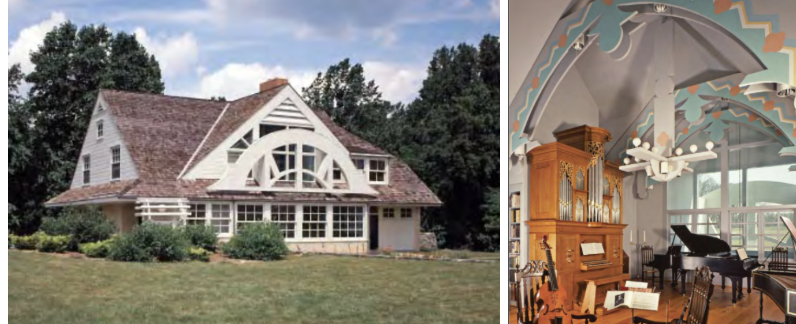
House in New Castle County:
Robert Venturi, John Rausch, and Denise Scott Brown
Delaware
Wood frame, stucco
Traditional american house, familiar elements altered in scale and placement (? mr. lynde didn’t put the notes for these, so if you’re seeing this pls send me the slide notes)
Postmodern Architecture:
Emerged in the 1970s and 80s
A reaction to the international style
Postmodern architects saw the international style as cold and impersonal
Postmodernists like to incorporate ornamentation and decoration with references to the past except in a modern context
In other words, modern buildings with references to the past
essential knowledge of Etruscan and Roman art
Etruscan Art and Roman art is characterized by a pantheon of gods celebrated in large civic and religious buildings
Much ancient writing survives in the fields of literature, law, politics, and business. These documents shed light on Roman civilization as a whole and on Roman art in particular
etruscan art is known mainly through archaeology, literary tradition is mostly lost
etruscan: first major empire in Italy, not all Romans are Etruscan, but most of their culture is
there were numerous city states, but the art is studied as a single genre
etruscan art shows heavy Greek influence among other influences
roman art can be subdivided into the following periods: Republican, Early Empire, Late Empire, Late Antique
roman architecture shows an incredible deal of variety and willingness to experiment
roman art and architecture will be embraced in 17th century Europe
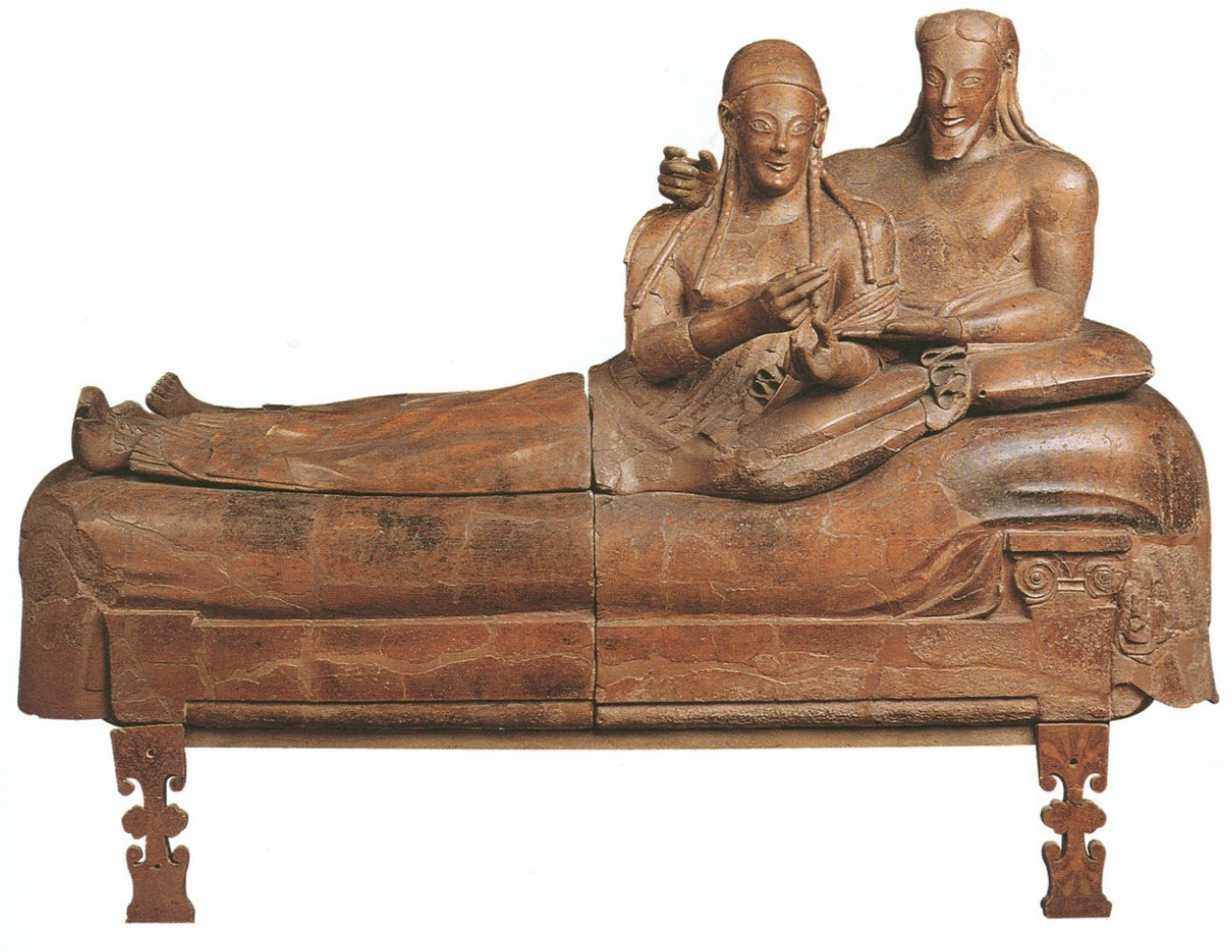
Sarcophagus of the Spouses: (Etruscan)
Cerveteri, Italy
terracotta
funerary
same time period as the Archaic period in Greece (appropriation)
Archaic smile
in ancient times, a man and woman being depicted together is very rare
women had higher status in Etruscan society
Sarcophagus of a married couple whose ashes are placed (likely high status, but not ruling/governing people)
affectionate
both holding the same thing, planning to feed each other
possibly an egg which was the Etruscan symbol for life after death
concentration and detail is on upper body, less on lower half
L shaped turn to the body, unrealistic
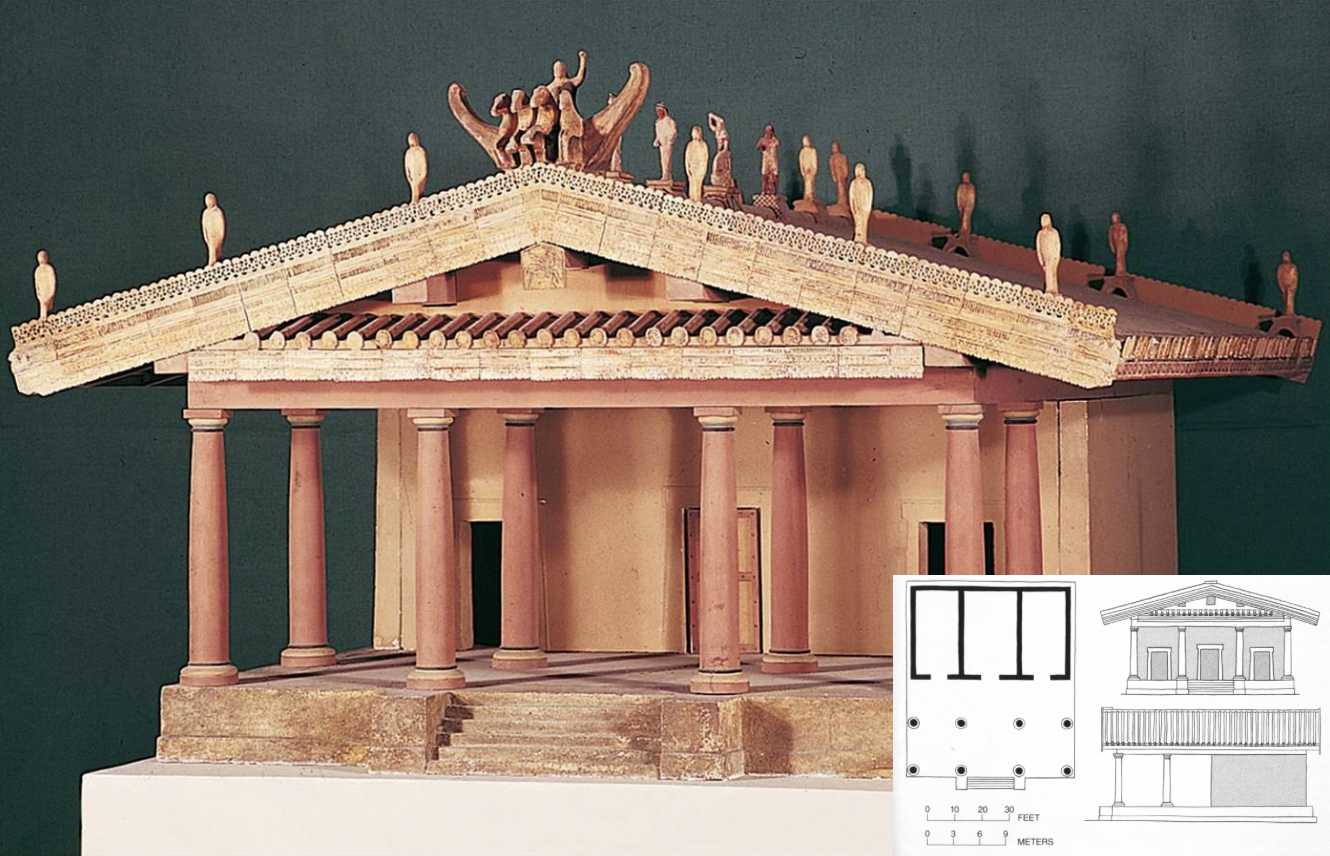
Temple of Minerva: (Etruscan)
Mud brick, wood
veii, italy
sacred space
Minerva: Athena in Italy
similar to Parthenon in how they both praise the same god
but the columns, pediment, and frieze are different
Vitruvius recorded the Temple of Minerva’s architecture in his writing
none of the Etruscan temples exist today, only his writings survive
three cell for three separate gods
highly influenced by Greek temples:
wood columns
capitals (tuscan order)
pediment
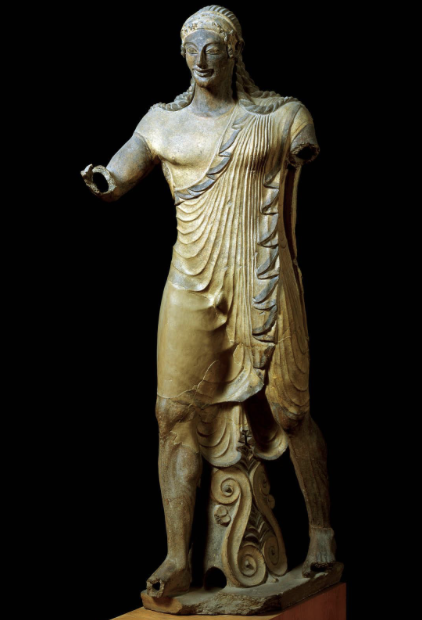
Apollo (Apulu): (Temple of Minerva at Veii; Etruscan)
terracotta
one of four sculptures that stood on the roof of the Temple of Minerva
strides forward more than Kouros
Archaic smile
may be in battle with Hercules
artists: could be Vulcan of Veii
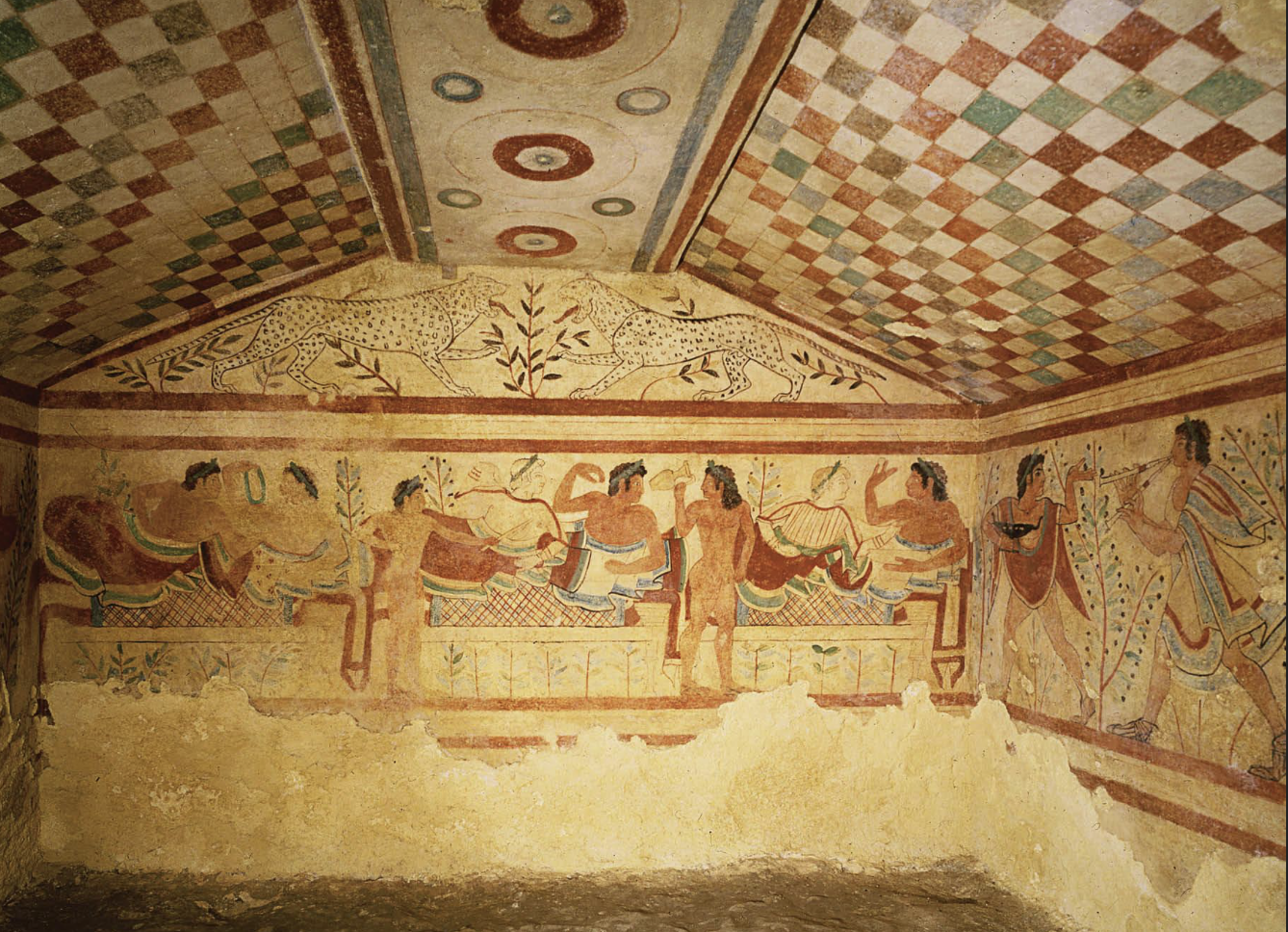
Tomb of the Triclinium: (Etruscan)
Tarquinia
tufa (mud brick) and fresco: takes white wet plaster, smear on wall, take dyed egg white pigments to paint fast while plaster is still wet
women are light-fair skinned (meant to be inside) while men are dark skinned (meant to be outside
appropriated from Greek
many tombs still exist, believed to be heavily influenced by Greek paintings (none exist)
piece is named after a dining table, one appears in the painting
ceiling = polychrome checkerboard pattern; circles = symbolize time
Etruscan funeral rites were festive and seen as a last time to enjoy a meal with the deceased before crossing over to the afterlife
overall the tomb suggests a celebration of the dead, dancing figures on the right and left walls, musical instruments
only Etruscan paintings that survive are funerary and on tomb walls
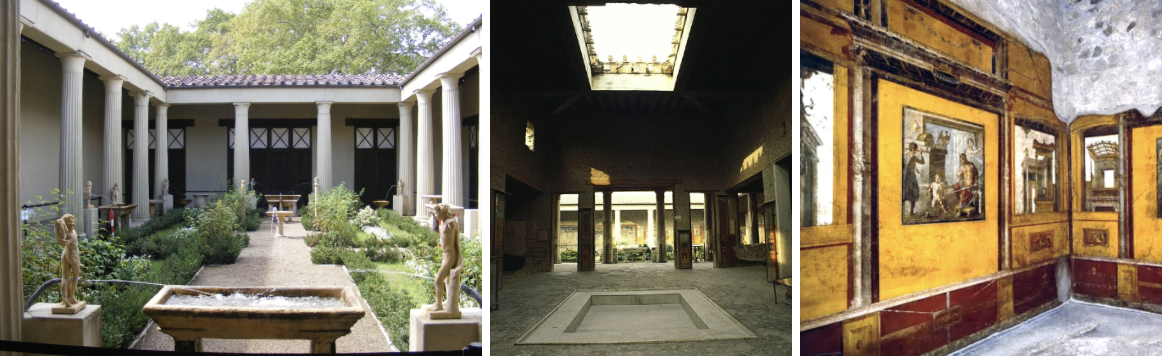
House of the Vettii: (1st Roman)
stone and fresco
Pompeii
Roman town home (villa = countryside, town home = city)
peristyle: four stoas and open sky
refuge of nature from the city; allows light into the garden but keeps town around them out
atrium: skylights where water would fall through to the basin underneath
axial plan: someone entering at the atrium can see the peristyle garden in the back
cubicula (rooms): on all sides of the atrium
heavy greek influence/appropriation
helps understand how Romans decorated their interiors
in triclinium (dining room) a number of paintings exist in good condition
three styles of Pompeian painting, this is the 4th style which combines all three
1: painted rectangular squares
2: large mythical scenes and landscapes
3: small scenes/ images set in a field of color and framed by columns
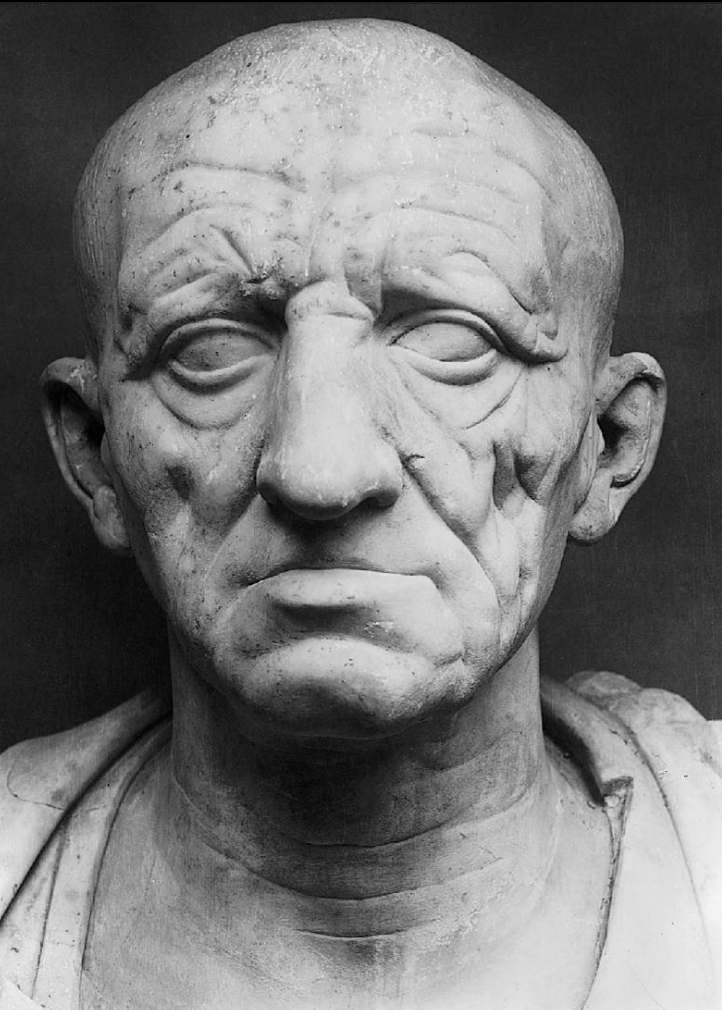
Head of a Roman Patrician: (Roman Republic)
marble
extreme realistic portrait called “Veristic”
influence of Hellenistic art of Greece
Roman patrician/senator (upper ruling class)
high status, but not idealized
did not want youthful and beautiful people running the government, wanted more experience (wisdom)
realism conveys a seriousness of a mind known to Romans as “gravitas”
Gravitas can only come with experience
youth was valued for beauty in arts, but not for governing authority
likely sculpted after death
only characteristic of Republic period
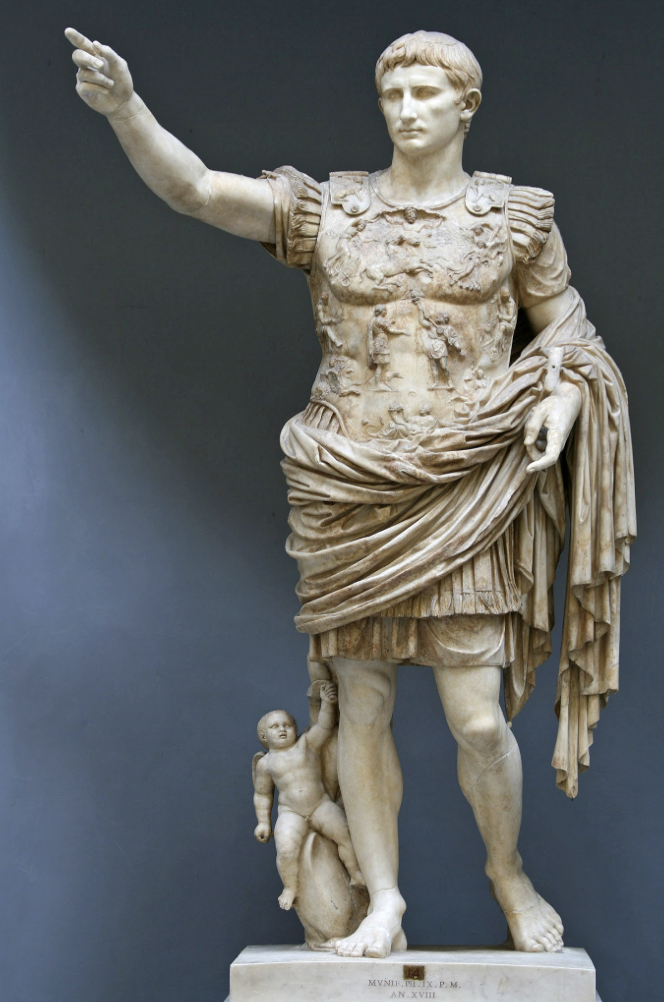
Augustus of Primaporta: (Roman Empire)
original was in bronze, in marble
first real roman emperor
sending message that their king was young, powerful, and strong
not showing age and wisdom, youthful strength
symbolizing that Augustus will bring a golden age to Rome (Pax Romana)
cupid: son of Venus, aligning with the gods, divine right
dolphin: naval battle that was won, ending civil war and establishment of Augustus reign
heavily appropriated from Canon of Polykleitos
contraposto pose
youthfulness, strong stetted out arm speaking to troops, stance and modeling after Doryphoros all point to a message of leader
cuirass (breastplate): covered in propaganda messages
Augustus has the gods on his side, he is a military victor, bringing of the Pax Romana lasting 200 years
message: sun will shine on Rome under the role of Octavian Augustus
purpose: propaganda to unite the empire after the civil war
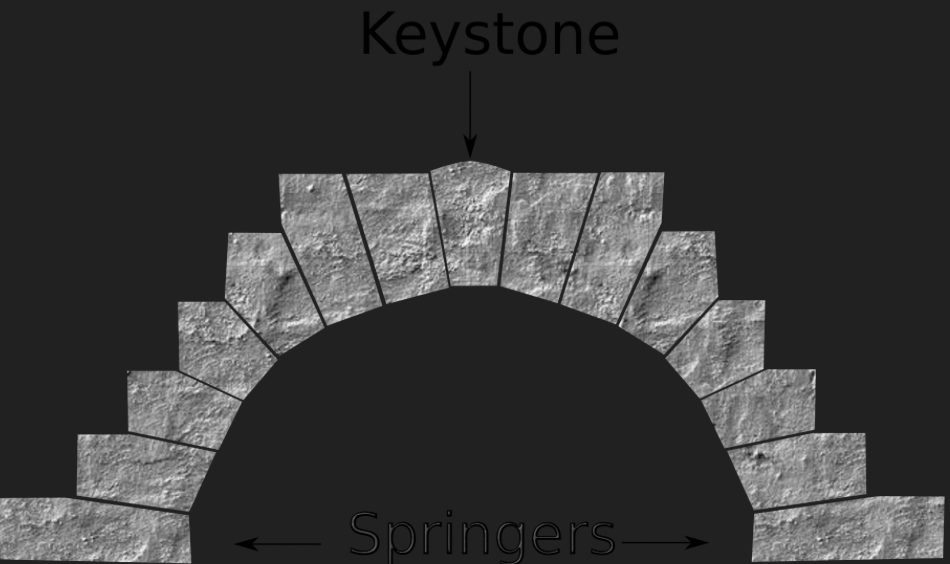
roman arches
improvement on post and lintels
can bare an extremely heavy load
arch: series of wedge shaped stones, smaller at the bottom and wider at the top, the wider top does not pass through a narrower bottom
allows major amounts of weight to rest on top
barrel vault: arch continues in a tunnel like fashion
groin vault: two barrel vaults intersect
romans will build enormous billings because they support an incredible amount of weight (colosseum, pantheon)
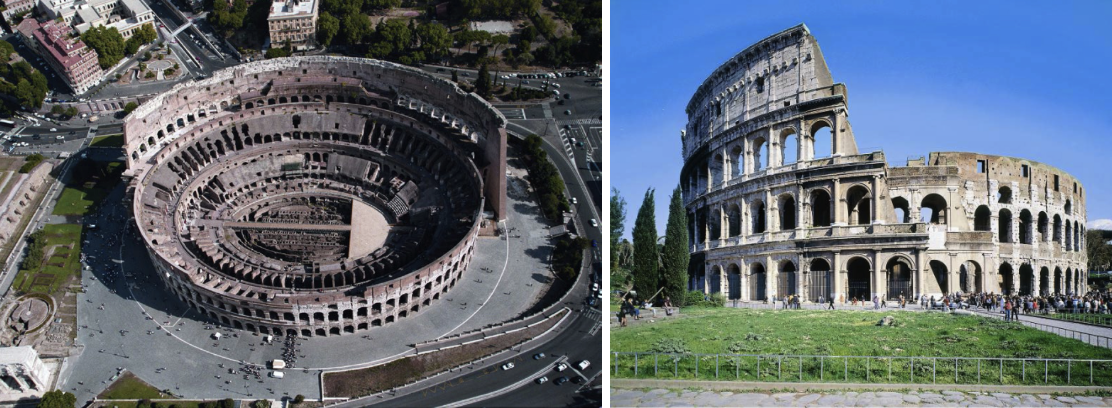
Colosseum: (Roman Empire)
stone, concrete, travertine
patrons: Emperors Vespasian and son Titus (Flavian Emperors)
vast barrel vaults and groin vaults
Rome was a multiethnic society
meant for entertainment/spectacles
gladiator combat
animal hunts
recreated battles
uniquely Roman, but putting two theaters into one is Greek
use of doric, ionic, and corinthian columns
1st story = tuscan, 2nd story = ionic, 3rd story corinthian
small square window looking holes at the top
understanding roman forums
“forums” were found throughout every major city in the empire. Essentially the same concept as a Greek agora
the forum in Rome was the most impressive
center of roman business and government (Athenian Agora)
locations for worship and sacrifice to the local gods
around the sides of the forums would be bathhouses, markets, and government buildings
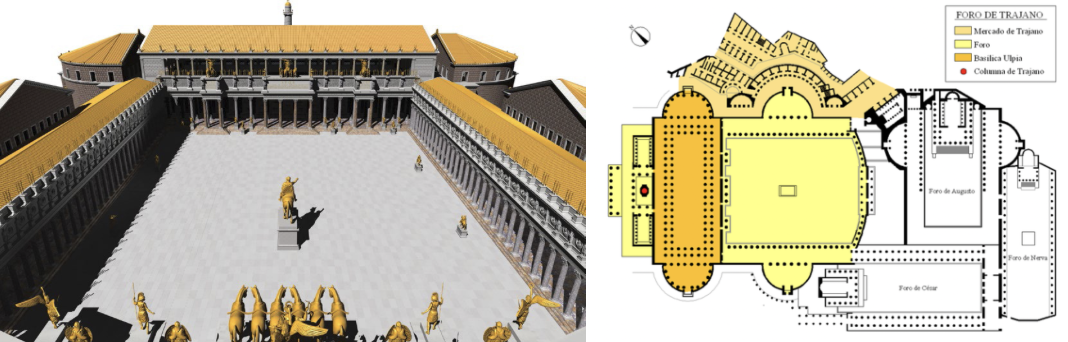
Forum of Trajan: (Roman Empire)
architect: Apollodorus of Damascus
patron: Emperor Trajan
stone masonry with concrete (uniquely roman) and timber
forums for many emperors, this is Trajan’s forum
apse: half circle at the end of the basilica
basilicas were originally courthouses/government houses
has an axial plan
large central plaza surrounded by stoa-like buildings on each flank
sort of massive peristyle, not technically a peristyle
included Basilica of Ulpia and Markets of Trajan
Market:
multilevel mall like structure
semi circular interior was a series of groin and barrel vaulting
significant because it was another example of multi-storied architecture found in Rome like the Flavian Amphitheater
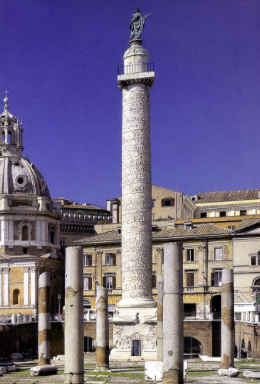
Column of Trajan: (Forum of Trajan; Roman Empire)
funerary, Trajan’s ashes are at the base of the column
stood behind the Basilica Ulpia between the Greek and Roman libraries
128 foot high narrative telling the conquering the Dacians
low relief to deter shadowing
2,500 different figures, 23 registers circling the column
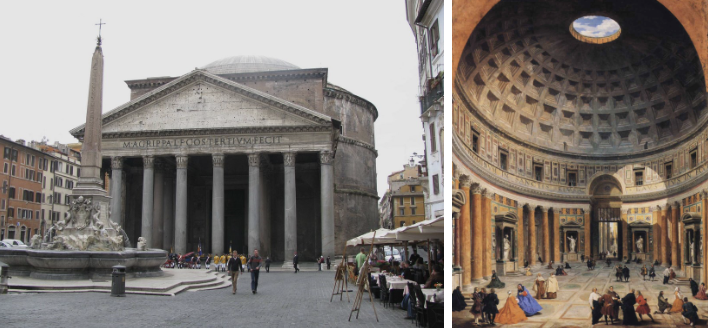
Pantheon: (Roman Period)
concrete with stone facing, granite, and pumice
original would have had two stoas on the side, a lot of steps leading to the entrance, would have not been able to see the circle from the outside
patron: originally Augustus and Marcus Agrippa but early structure destroyed
Pantheon built by Emperor Hadrian
corinthian capitals on portico (porch)
two pediments, one in front of the other
walls of the cupola (dome) are 20 feet thick at base and become thinner as they rise
oculus (opening at the top) 27 feet wide, allows for sunlight to move across the temple
roof-ceiling is pumice (light volcanic rock, floats) covered with concrete
interior is based on a circle
seven niches in the walls for statues of the gods
as Rome conquered more regions they wanted to honor the gods of the conquered (massive temple to all gods of the empire)
has an apse inside
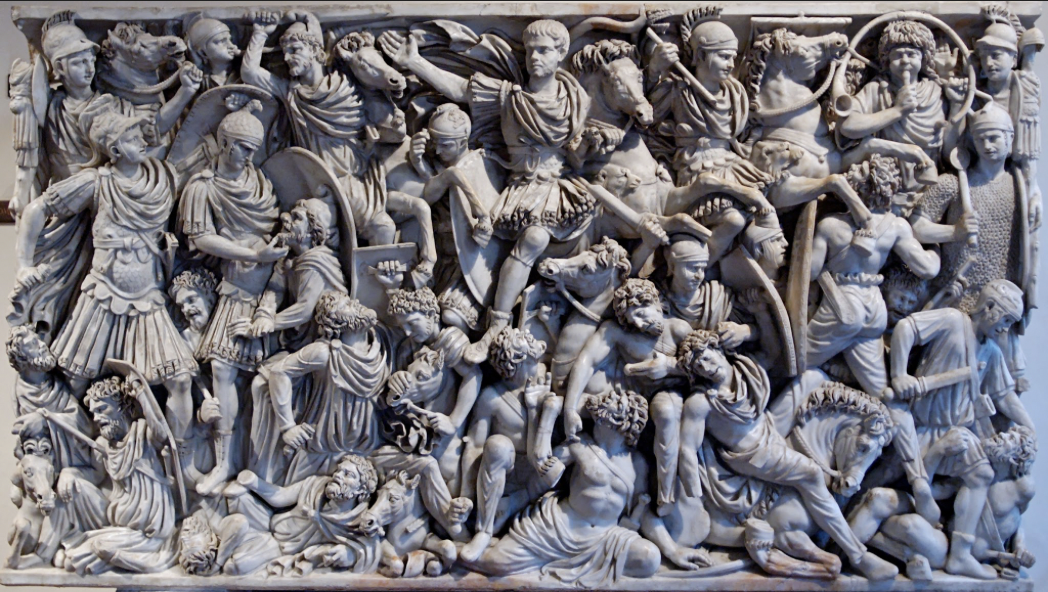
Ludovisi Battle Sarcophagus: (Roman Empire)
horror vacui: fear of open space
extremely crowded surface with figures piled on top of each other
Pax Romana is over
Barbarians: one who speaks another language (have beards)
Christianity is crowing, had a different burial practice (tomb with body intact)
prior to this, Romans always cremated
things are changing with barbarians coming in and different religious practices
Sarcophagus with a lid, has imagery all throughout it
figures lack individuality; expressing confusion of battle
Roman army defeats barbarians (Romans have no beards)
youthful Roman general at top center without weapons or helmet showing that he is invincible and needs to protection
significance: Pax Romana has ended and Rome is at war. Rome begins weakening. Influence of changes in religion, Christians kept the body intact, moving away from cremation
essential knowledge of Greek art
Greek art is characterized by a pantheon (more than one) of gods celebrated in large civic and religious buildings
Much ancient writing survives in the fields of literature law, politics, and business. These documents shed light on Greek civilization as a whole and on Greek art in particular.
greek art is studied chronologically according to changes in style
greek works are not studied according to dynastic rule, as in Egypt, but according to broad changes in stylistic patterns
greek art is most known for its idealization and harmonic proportions both in sculpture and in architecture
greek art has had an important impact on European art and architecture
greeks are a seafaring culture, will take over Mesopotamia and Egypt
gods serve as showing bad behavior, as what not to do
greeks traded heavily with Egypt
democracy comes out of Greece
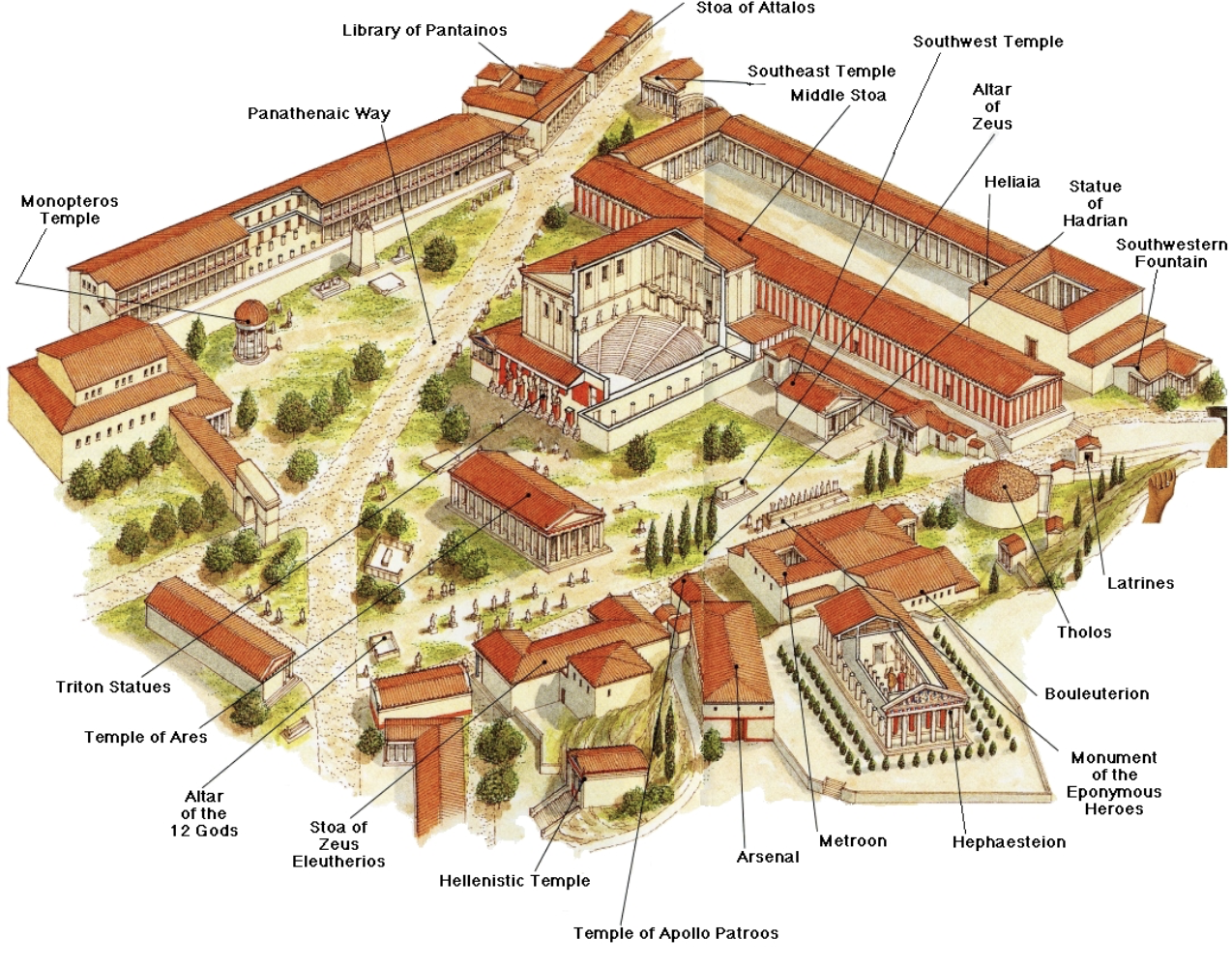
Athenian Agora:
limestone
first multifunction (plaza and city) center for people to meet (place for the people = democracy
setting for Panathenaic festivals and many altars for other greek gods
once a year all citizens held a parade, entering at the Dipylon Gate, walking up the holy side (Acropolis; sacred space) to give the statue of Athena a new garment (peplos) on her birthday
plaza was surrounded by a bouleterion (city hall) used by council, tholos temples (round temples/gazebos) and stoas (covered walkways with columns on one side and a wall on on the other)
rebuilt and remodeled numerous time across many periods
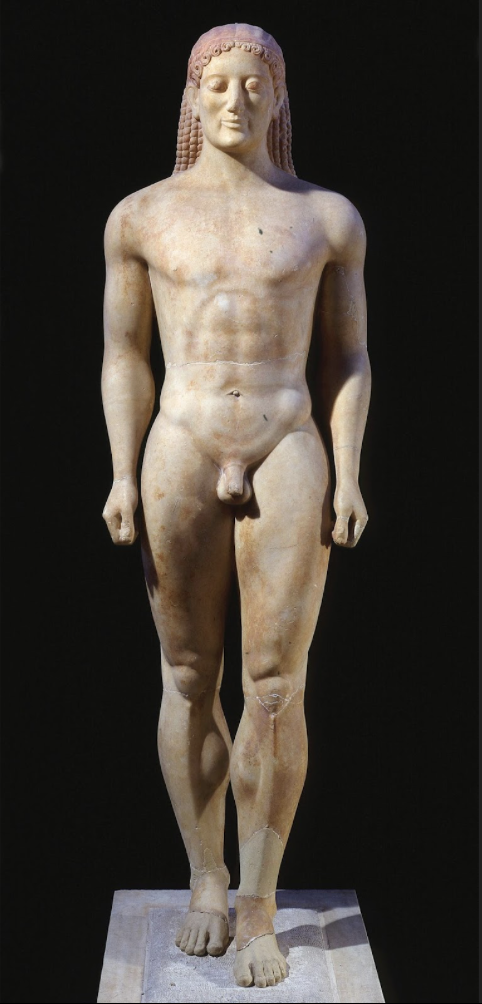
Anavysos Kouros: (Archaic)
marble and paint (was brightly painted)
heavily appropriates from Egyptian sculpture (square shoulders, 1 step forward)
funerary; a grave marker for a young man killed in battle
not a portrait; idealization of an ideal warrior
kouros: naked youth
rigidly frontal
idealizing democracy and sacrifice, not idealizing rich pharaohs in Egypt
“Archaic Smile”
Athens
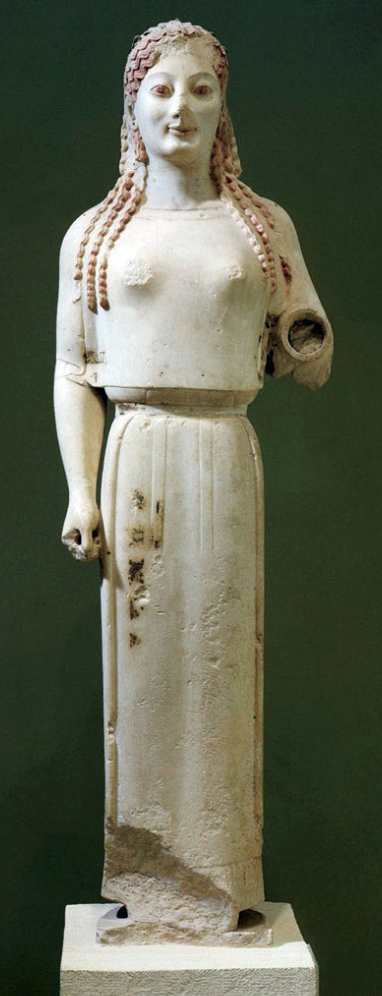
Peplos Kore: (Archaic)
marble and paint (was brightly painted)
not funerary; hand appearing out of sleeve was some sort of tribute or offering
peplos is the garment she’s wearing
breaks mold of archaic statuary with arm extending away from body
may have been representation of a goddess due to extended arm
Artemis (bow and arrow) or Athena
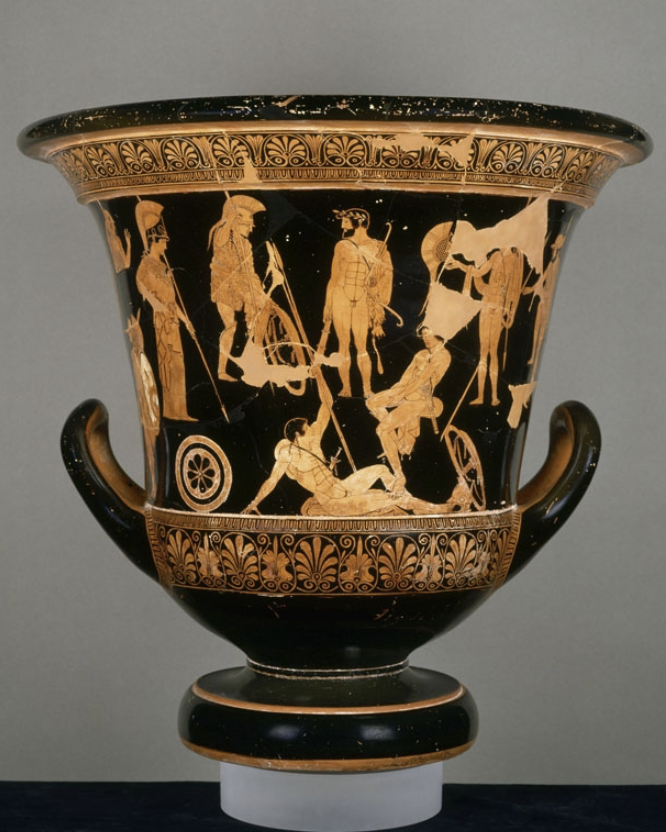
Niobides Krater: (Classical)
clay
found in Italy, showing greek trade
first time in greek vase paintings that the heads of the figures are not on the same level
Archaic: black figure technique (large figures in black on the natural red surface of clay)
Classical: Anokides introduces red figure technique (vases painted black and natural red surface of clay depicted the figures)
greek myth of killing of Niobi’s children
Niobi bragged about her fertility with 7 daughters and 7 sons
Leto heard the bragging, used her only two children (Artemis and Apollo) to kill Niobi’s children
other side could be Hercules surrounded by heroes and Athena, or warriors of Marathon placing themself under Hercules’ protection
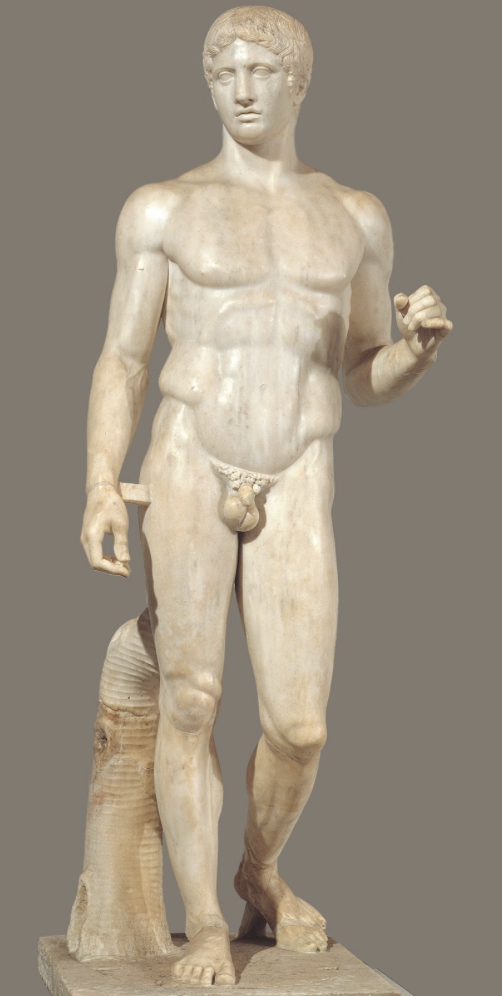
Doryphoros (Spear Bearer): (Classical)
Polykleitos
Polykleitos made formula for human form: The Canon (based on Phythagoras)
roman marble copy of a greek bronze original
lost wax technique:
forms sculpture with wax, puts it in a box open at the top, box filled with plaster, wax inside melted, then turn plaster upside down to fill with bronze
distinct from Archaic for being more nature with contrapposto pose (putting our weight on one side then switching to the other)
considered ideal male form by Spartans (warrior + athlete)
found in Pompeii in an athletic/recreational complex (people would work out and aspire for his perfect figure)
held spear in left hand
not intended to look at the viewer (stoic and contemplative)
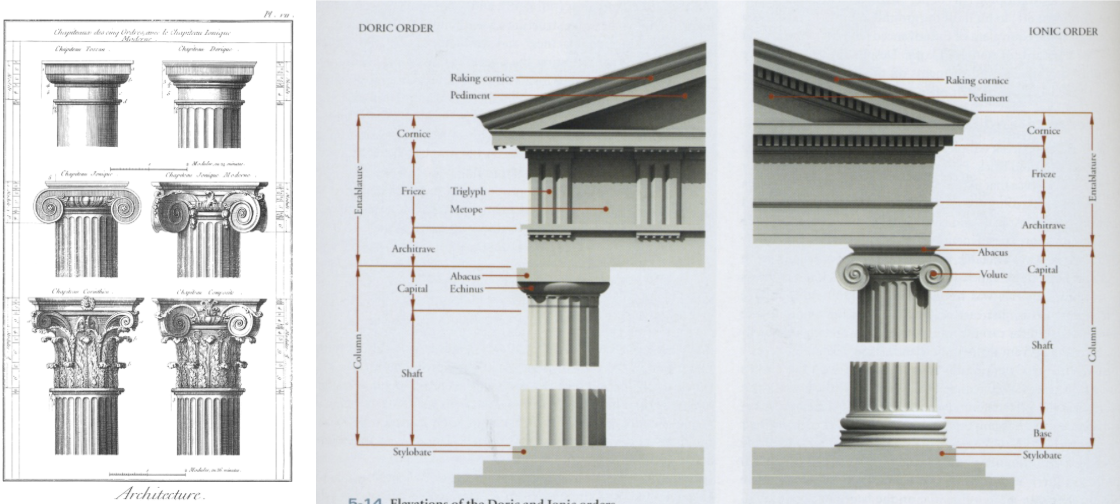
Greek architecture (capitals + structure)
Doric/Tuscan: top row
most strong
fluting: indents in columns
frieze: three long stones → metope (image telling a story) → three more stones…
Ionic: second row
looks like a scroll
smooth frieze, no metope or stones
Corinthian: last row
least strong
most decorative
stylobate: foundation of building (could be stairs)
pediment: triangle roof-top
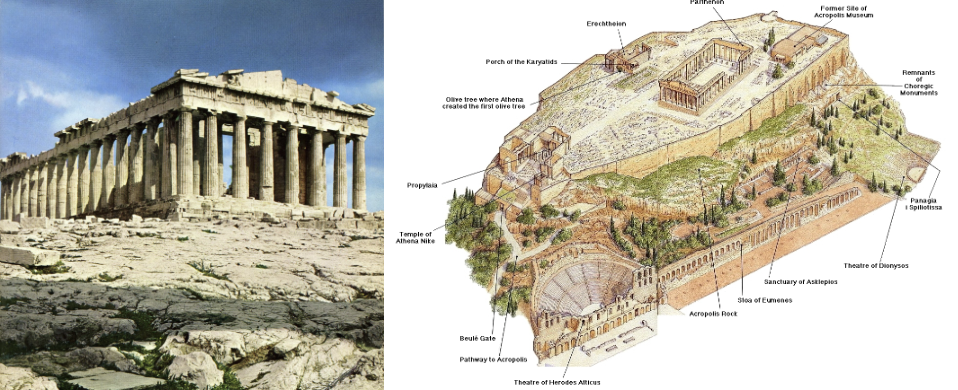
Acropolis/Parthenon: (Athenian Agora; Classical)
Marble
1st sacred space in Europe (hypostyle hall)
interior has ionic order (built later), outside is doric order
architects: Iktinos (made doric) and Kallikrates (made ionic)
patron: citizens of Athens through leadership of Pericles
originally built in archaic, destroyed when Persians sacked Athens
Delian League: Pericles used funds donated by all greek city states incase Persians returned
cela had massive gold and ivory statue of Athena that is lost
greeks skilled at geometry and algebra, shown in design of Parthenon (to connect with the divine)
no right angles
when ottomans took over Greece they blew apart the inside
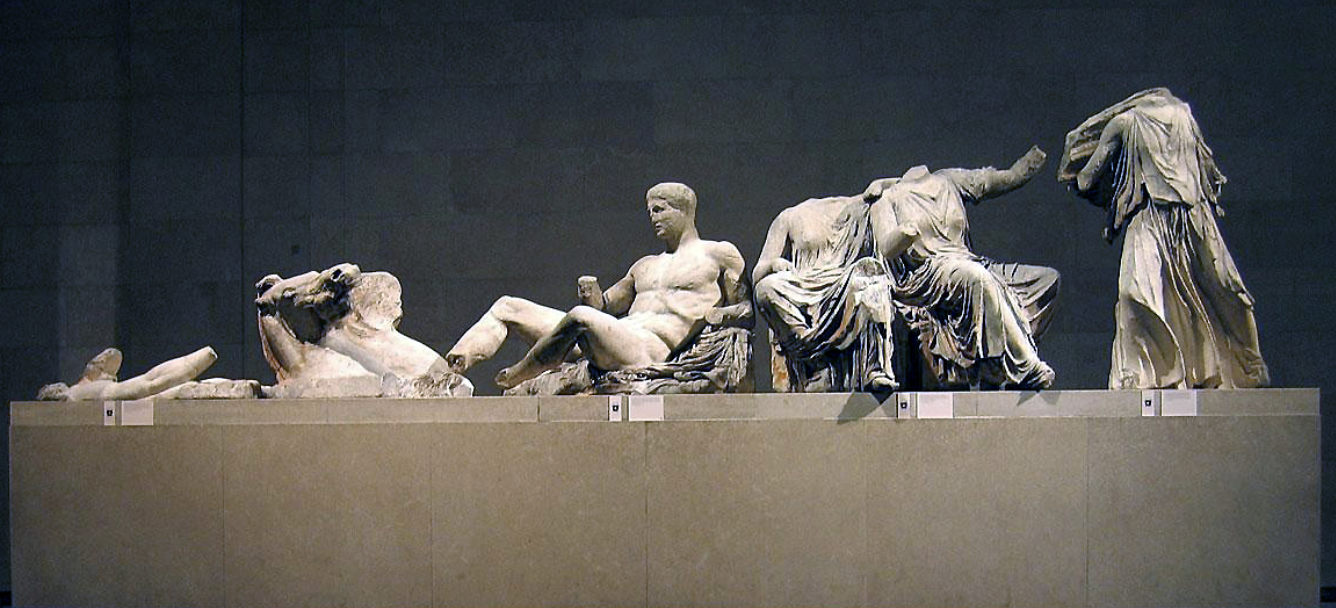
Helios, Horses, and Dionysos: (Parthenon; Classical)
east pediment of the Parthenon
marble
may have been sculpted by Phidias
story of birth of Athena
born from the head of Zeus, other deities are watching
Dionysus: god of wine and leisure (bachelor, unmarried man)
seated figures: goddesses Demeter and Persephone
numerous contrapposto poses
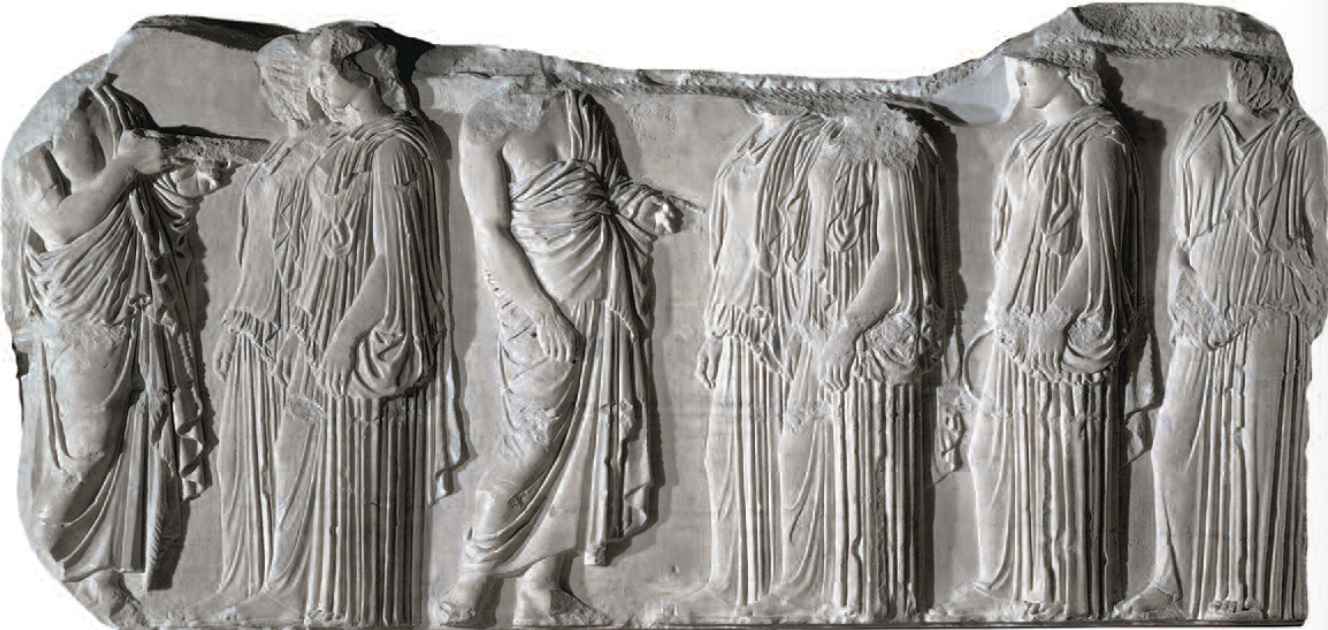
Plaque of Ergastines: (Parthenon; Classical)
portion of inner ionic frieze of the Parthenon
marble
depicts Panathenaic Procession held every year to honor Athena
in the procession the people of Athens enter at the Dipylon Gate and end at Athena, giving her a new peplos
Ergastines: women in Athens who wove Athena’s peplos
unique: human event (not deities) shown in the temple
depicting six Ergastines greeted by two priests
Isocephalism: all the heads are at the same level
viewed from the floor; figures become more three dimensional at higher parts of the relief
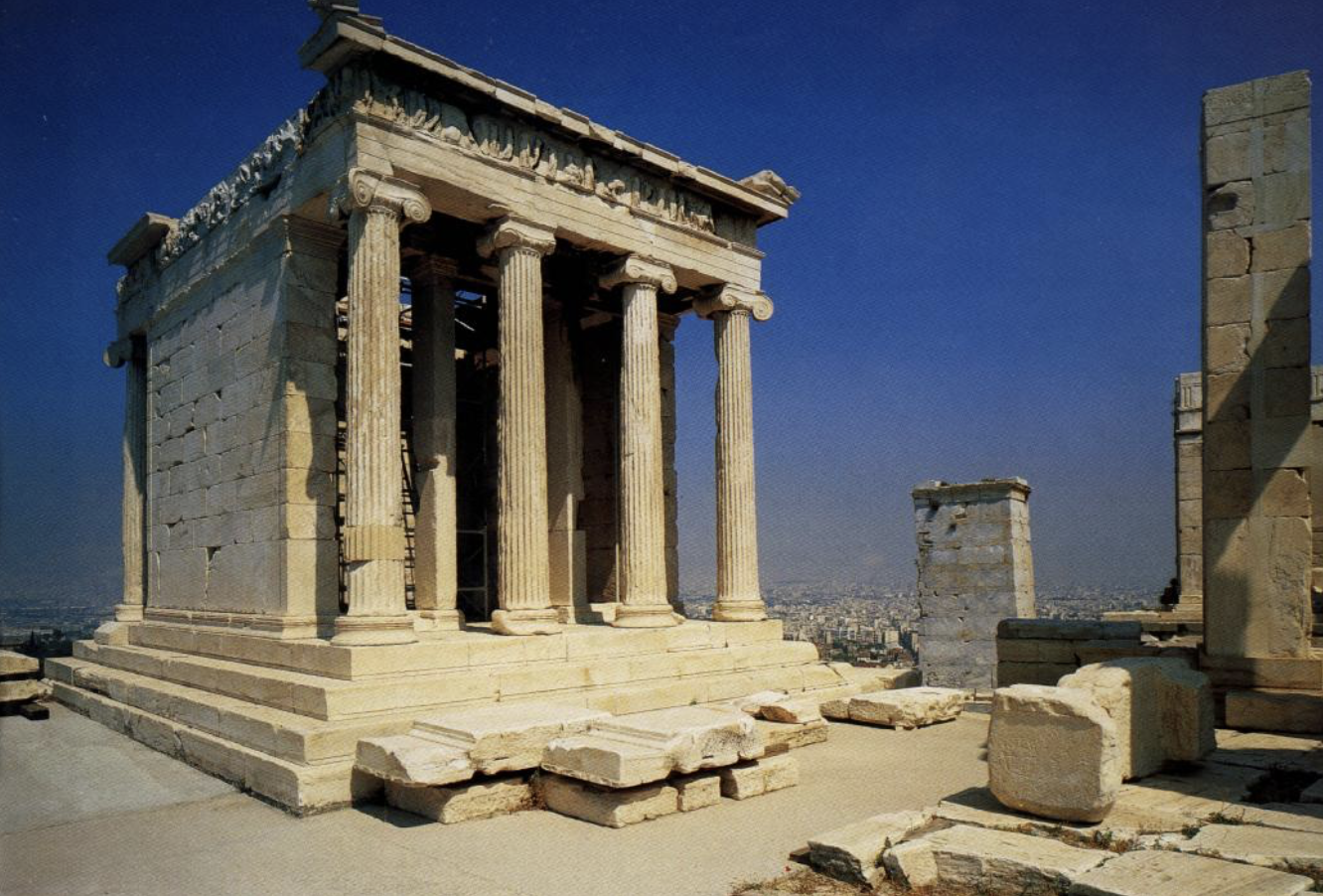
Temple of Athena: (Parthenon; Classical)
Kalikrates
Marble
At Acropolis to commemorate the “victory” over the Persians in the Battle of Marathon
Ionic period was firmly in place, columns and frieze (built when Parthenon was finished or close to)
Inside is a wood sculpture of Athena, dressed in new peplos in Panathenaic procession
many sculptures of Nike (victory)
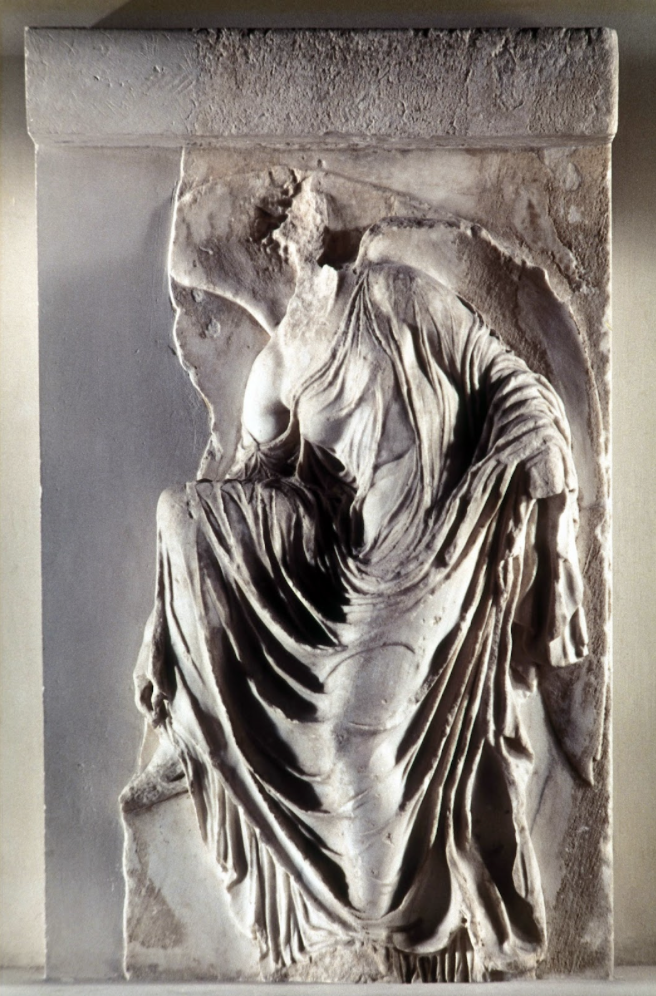
Nike Adjusting her Sandal: (Temple of Athena; Parthenon; Classical)
marble
high relief
very deep drapery, looks as wet, revealing the body
embodies characteristics of Classical sculpture
her balance is achieved through exaggerated contrapposto pose
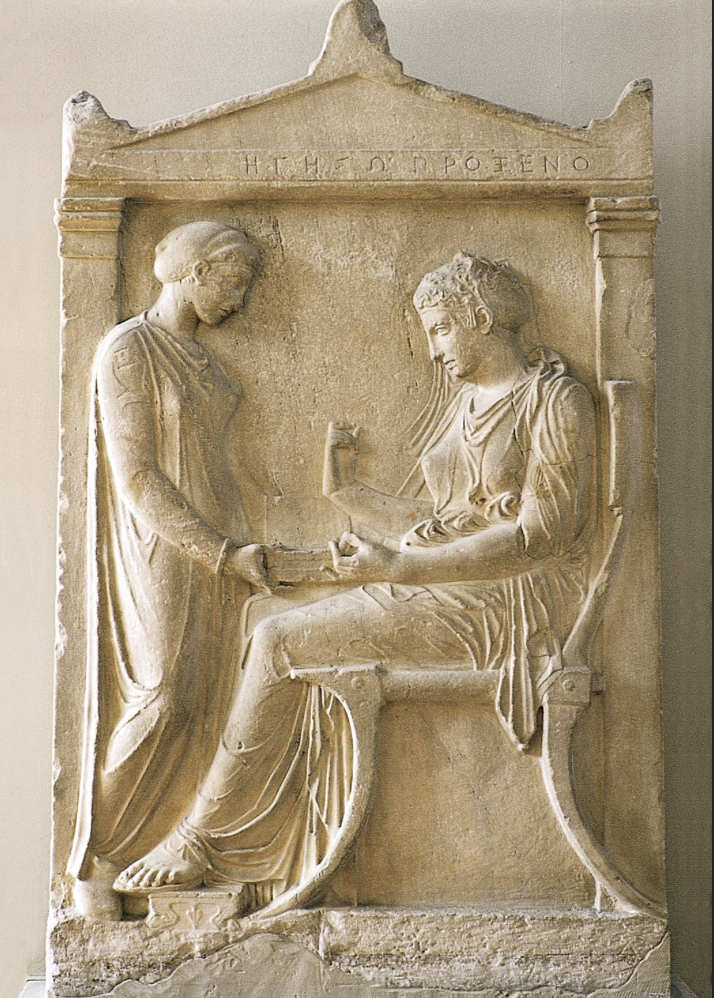
Grave Stele of Hegeso: (Classical)
Kallimachos
Dipylon cemetery, Athens
marble and paint
funerary in classical period (very different from Kouros)
regular woman’s gravestone, but comes from high status family
honors her and her father from the writing at the top (status of women)
she’s being depicted in a house (women’s place was in the home)
greek woman couldn’t leave without a charperone
women who did go out alone = prostitutes
Hegeso = seated woman examining a piece of jewelry brought by a servant (not visible, originally painted)
significance: what is not shown
Dipylon cemetery included sculptures of men outdoors, engaging in professions (hunting, athletics, warfare)
hellenistic art
320-30 BCE
Greek culture spreads out from the Balkan Peninsula into Asia and Africa
blending of Greek classical art with art from the east (Turkey, Iraq,Iran)
diffusion of greek culture through trade, Alexander the Great, and the Roman Empire
art shows movement, emotion, childhood, old age
shows wide range of human condition when classical sculpture only embraced stoic youthful
Greek, but dramatic!
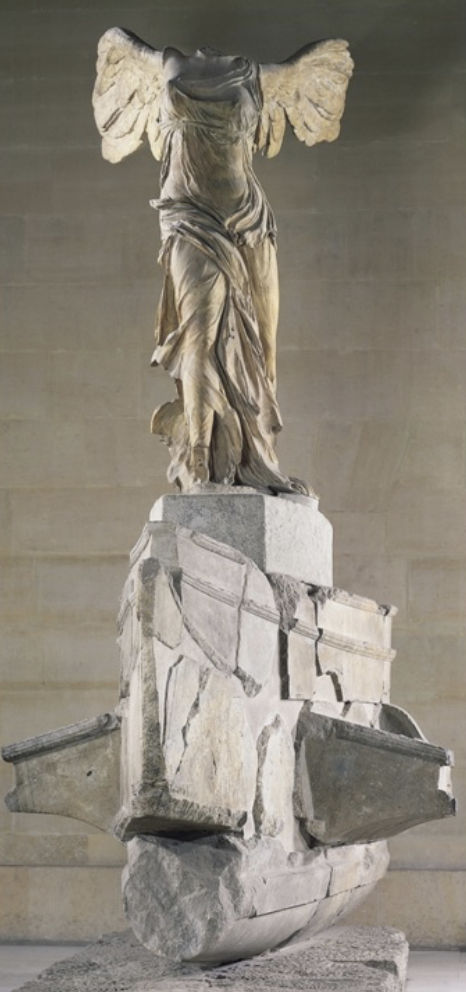
Nike of Samothrace: (Hellenistic)
marble
found in situ on Island of Samothrace (close to Turkey)
found in a fountain with a boat like shape, meant to be the statue on the bow of a boat
wet drapery look meant to imitate the water on the bow of a boat or from the fountain
appears as if the wind was in the wings; slight twist in contrapposto pose as Nike lands her feet on the bow while adjusting for wind
monumental in size
right arm could have held a victory crown
major greek naval battle occurred off of Samothrace, this sculpture may be commemorative of that victory
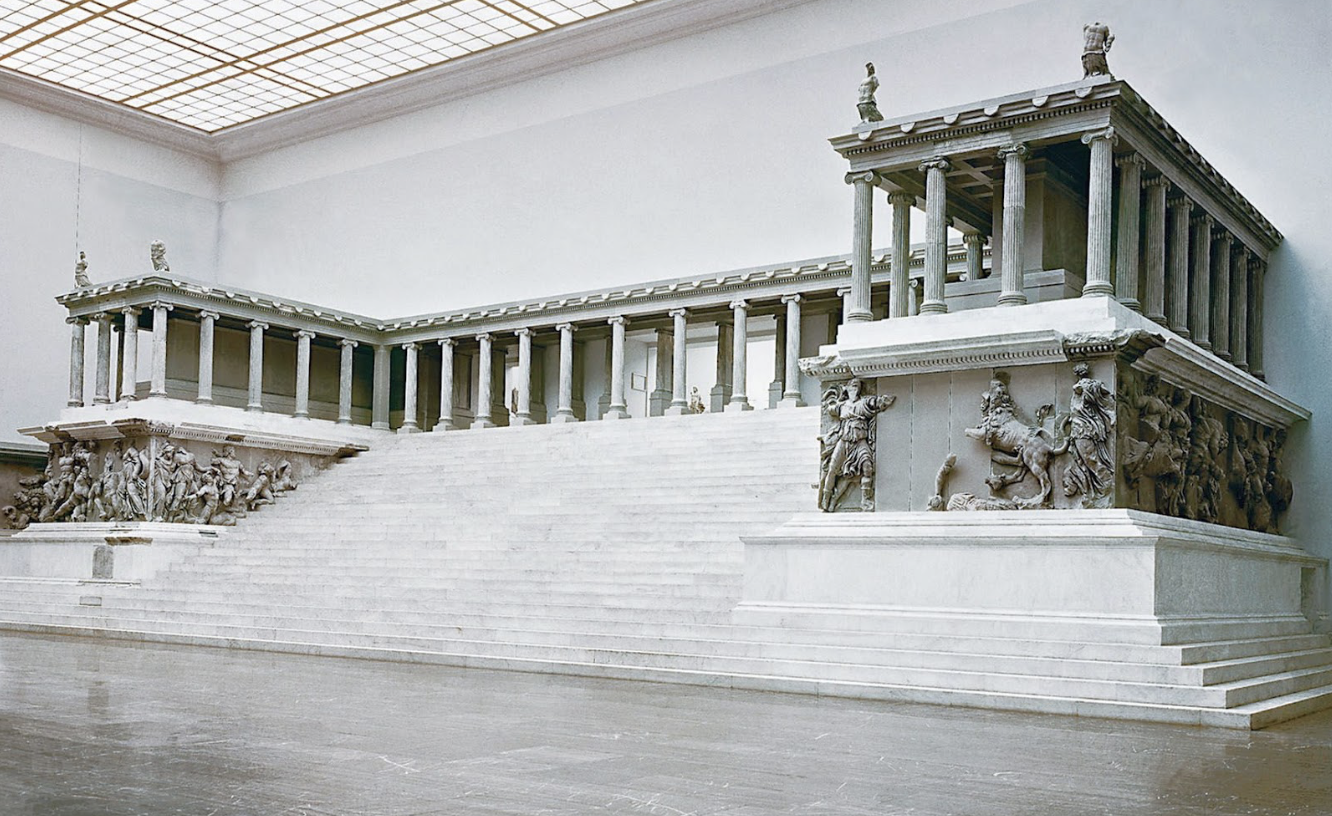
Great Altar of Zeus and Athena at Pergamon, Coastal Turkey: (Hellenistic)
marble
narrative
sacred space
dramatic and steep flight of stairs leading to platform where fires burn in honor of Zeus (sacrifices and offerings made)
ionic order throughout, telling story of story of Zeus and Athena wraps around the monument
superiority of the Greek Gods to original gods
one religion replacing a local religion
propaganda to locals
only portion that is original is the frieze, temple is a recreation
in Berlin today
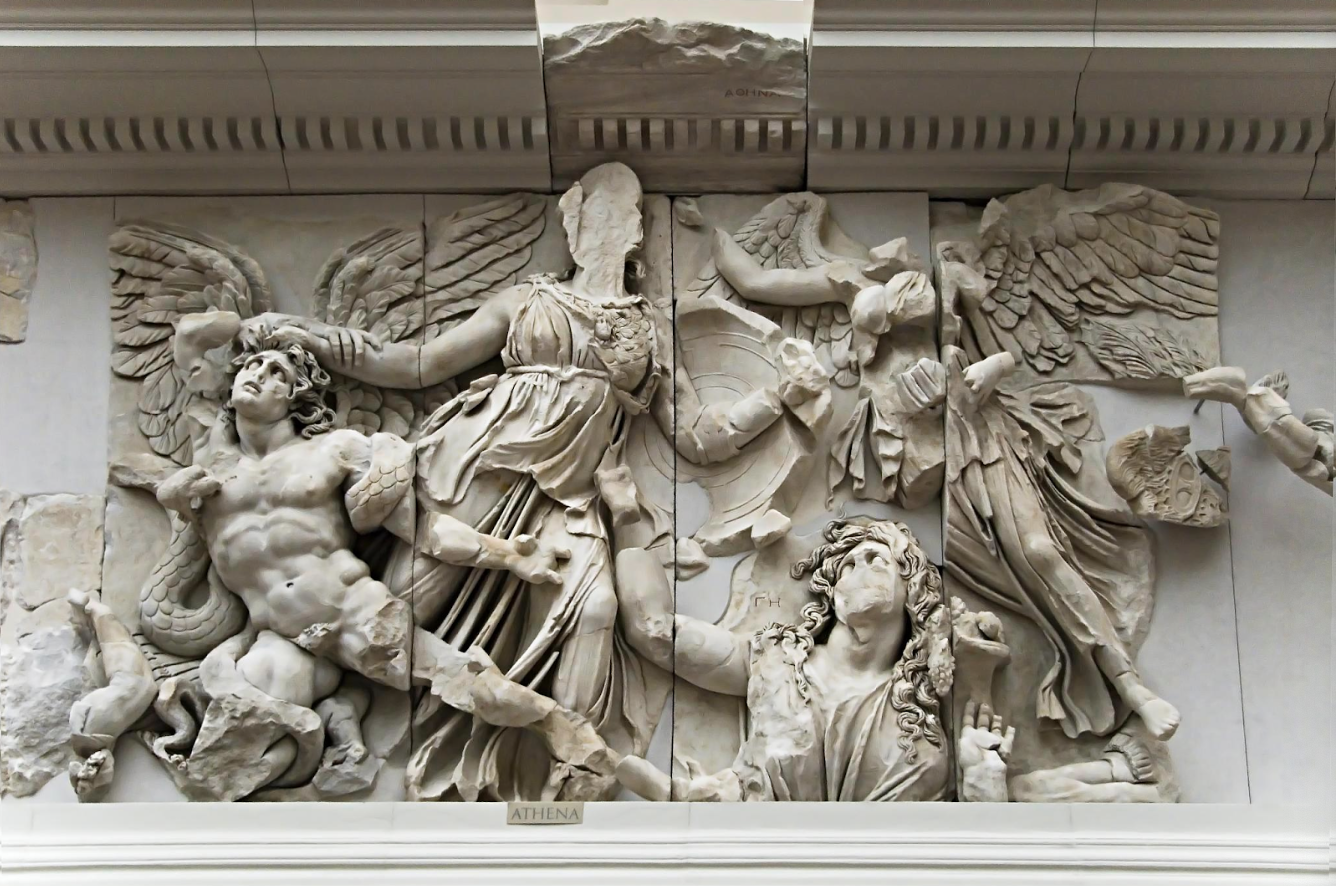
Athena portion of Frieze: (Great Altar of Zeus and Athena; Hellenistic)
superiority of the Greek Gods to original gods
one religion replacing a local religion
propaganda to locals
Athena victorious over a giant named Alkyoneos while his mother watches
Alkyoneos being dragged up the stairs to worship Zeus
Nike appears from behind to lay a victory crown on Athena’s head
deeply carved, high relief, dramatic tension in body and faces
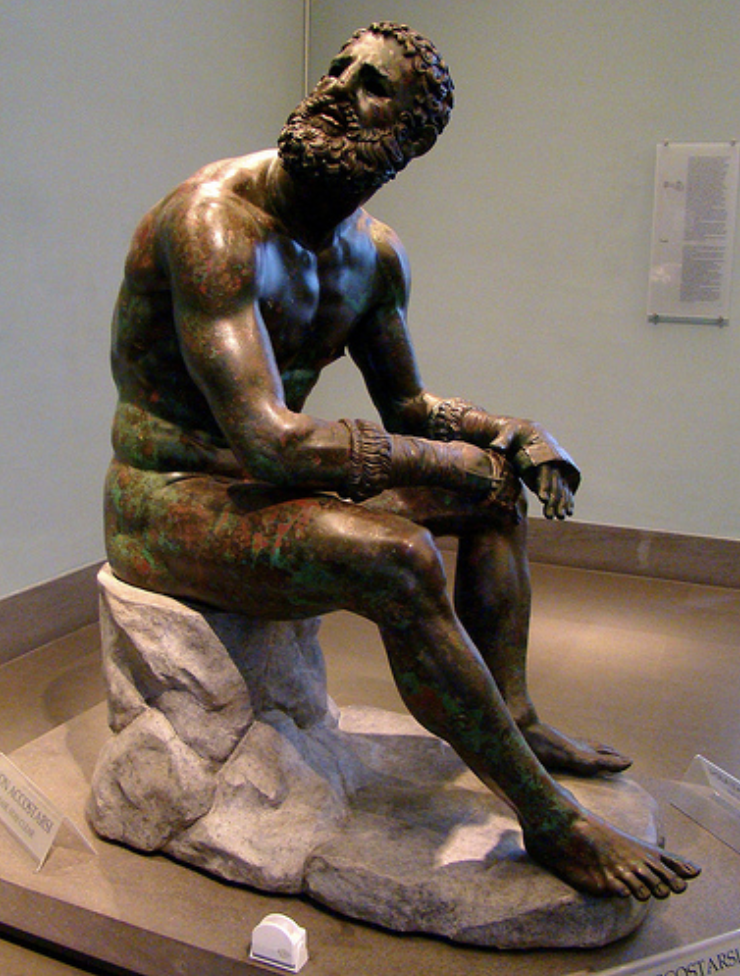
Seated Boxer:
bronze; one of very few Greek bronzes to survive
shows an aged boxer looking up at his opponent in defeat
smashed nose, blood runs in copper drips onto his face and arms
copper used as highlights on lips, nipples, straps on gloves, wounds on head
great emotion, agony of both physical and emotional defeat (don’t see that emotion in Classical)
ancient romans most likely brought the sculpture from Greece to Rome
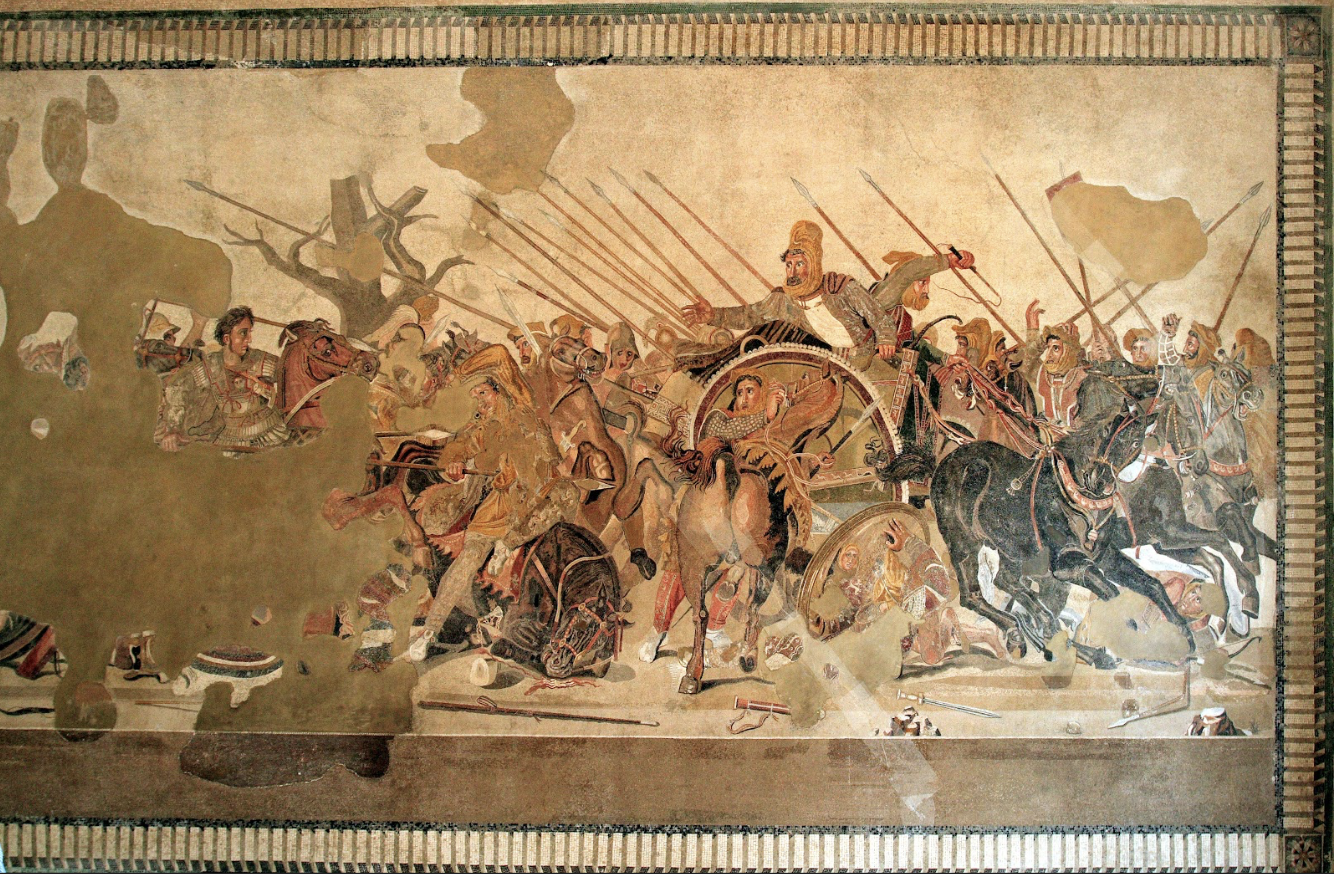
Alexander Mosaic From the House of Faun: (Hellenistic)
a Roman copy floor mosaic Pompeii
mosaics: small colored stones and shells to create a picture
complex interweaving of figures
battle between Alexander the Great and Darius III of Persia
Alexander at left, assured of his success
Darius reaches for Alexander but his charioteer commands retreat
Greek wall paintings no longer exist, so this Roman copy is the closest thing to the Greek genre
shows extreme attention to detail, emotion, directionality, multiple poses, foreshortening
connect to Persepolis
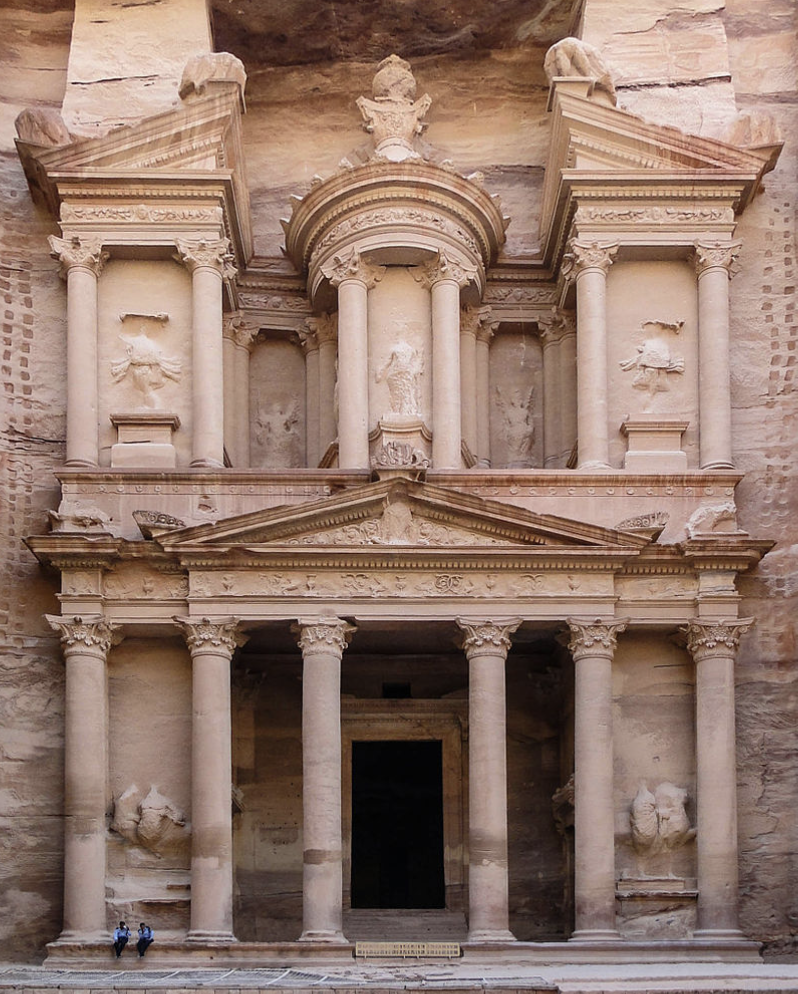
Tomb Named Al-Khazneh, “The Treasury”: (Hellenistic)
Nabataean Peoples
Jordan
Pre-Islamic/Greek influence
rock cut tomb
Hellenistic in style, both Greek and near eastern architecture
figurative sculpture adorns the tomb, Amazons, Isis (Egypt)
Greek/Roman influence on lower half
Tholos on upper floor, broken pediment (unique)
Corinthian columns, not evenly spaced
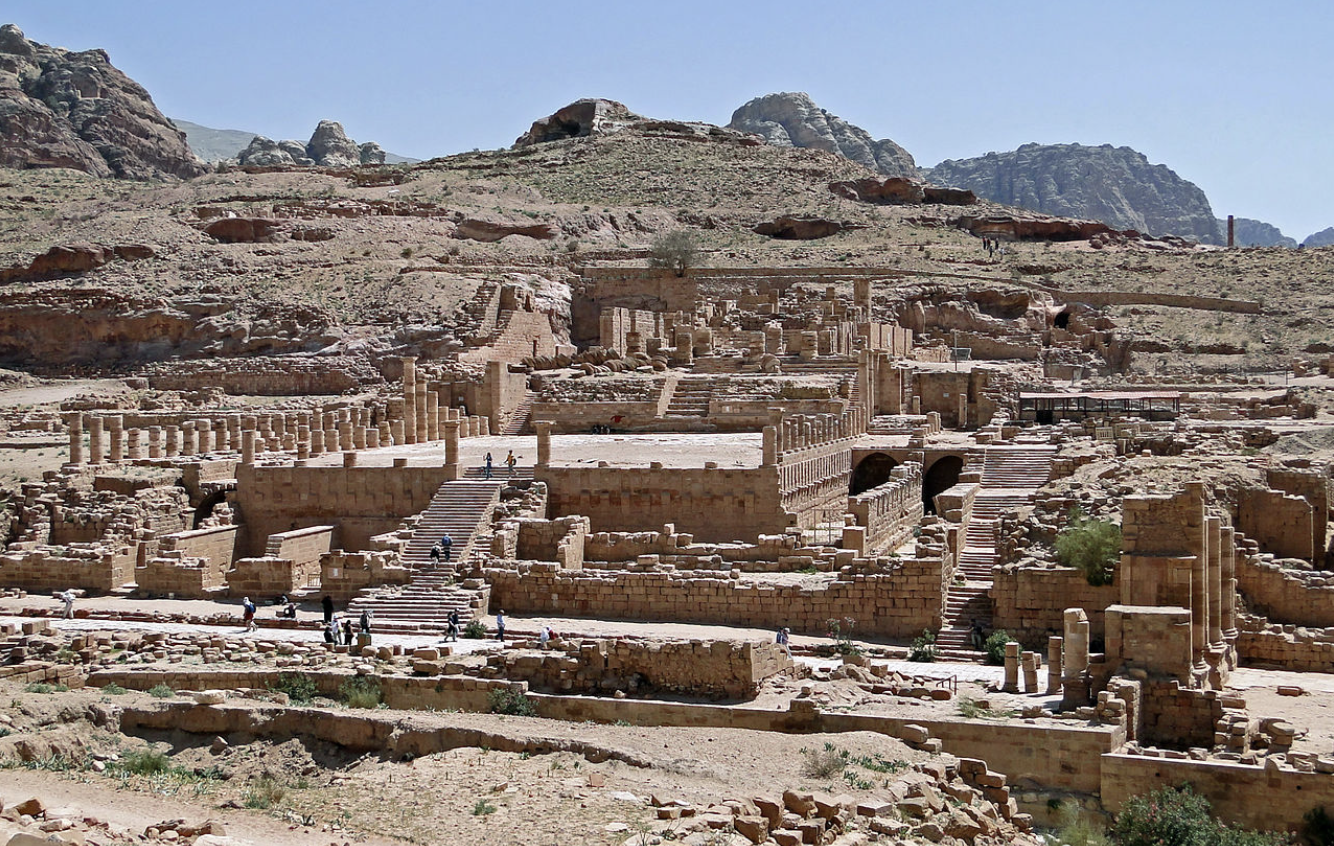
Great Temple of Petra: (Hellenistic)
Nabataean Peoples
Jordan
Pre-Islamic/Greek influence
cut rock
Hellenistic influence, but the culture is not necessarily Greek, influenced through trade
Patron: Aretha IV
Silk Road, merchant peoples
Dead buried in rock cut tombs on hillside behind temple
A combo Greek and Egyptian temple amongst a nomadic trading people showed the influence of Greek Hellenistic culture
well developed metropolis
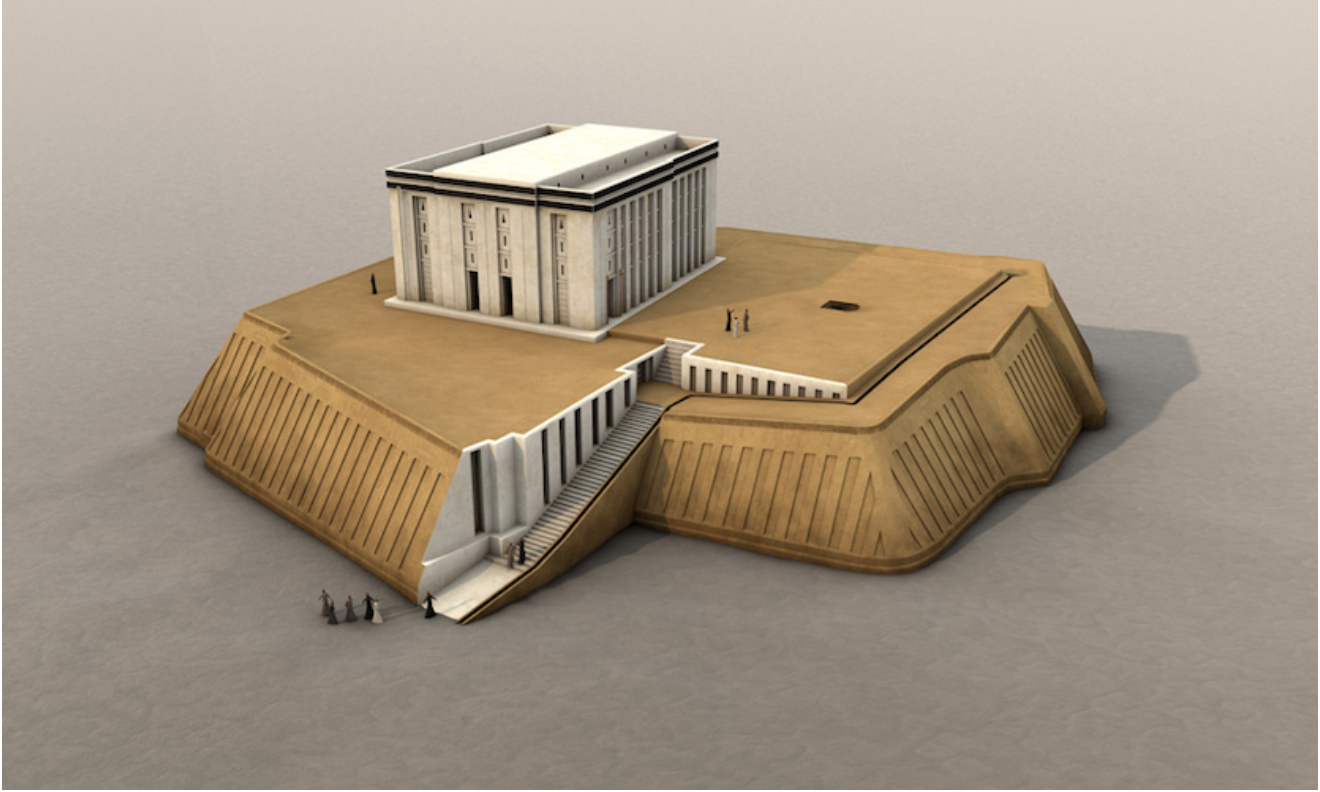
White Temple and Its Ziggurat
Sumerian
Uruk, Iraq
Mud
Commoners lived beneath the Ziggurat, priests live in the temple
Ziggurats are meant to connect the earth to the heavens
Complex appeared to be a mountain rising out of the sky
sacred space
Cella: chamber in the Temple
rituals done in temple and terrace outside
was a location for farmers to pay taxes
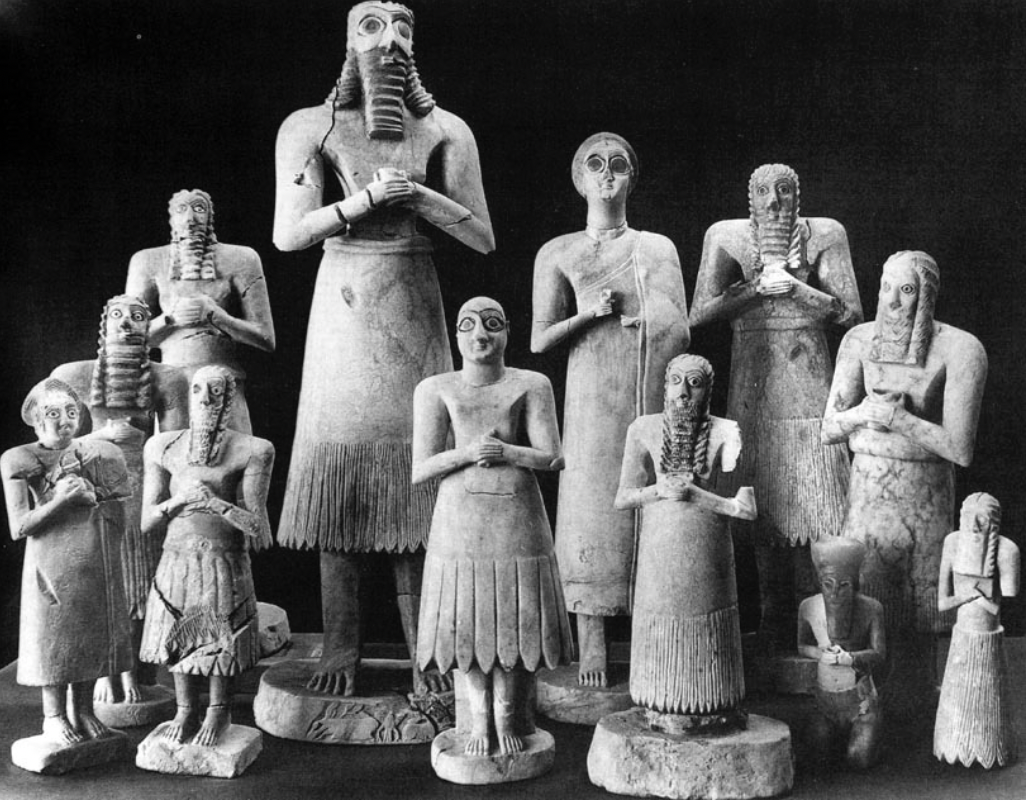
Sumerian Votive Figurines
Gypsum inlaid shell and black limestone
votive: together, staying loyal
hierarchy of scale: ones that are more important are larger
wide open eyes = total devotion
figures used as gifts of gratitude to Gods to replace the humans that could not always be praying to the God in person
replaced an actual person, but kept the belief that a person was present in the figurine
none were found in situ (original situation), all buried under the temple instead off inside of it
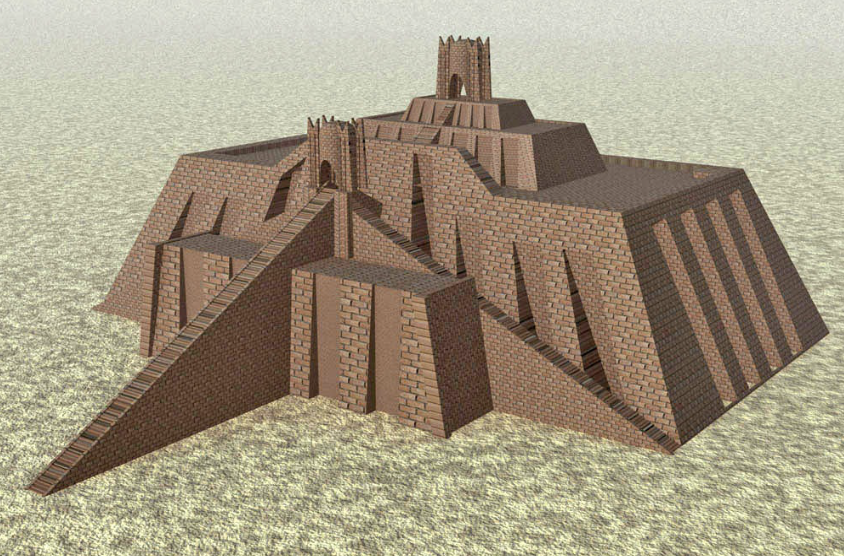
Great Ziggurat of Ur
mud brick, baked brick, and tar
similar to Ziggurat at Uruk in function, but this is 1000 years later and far more complex
showing continuity and change over time
three separate terraces between 70-100 feet high
Temple of Nanna is the highest terrace
location where farmers brought their harvest to pay taxes and receive allotments (land) from governing clergy
spiritual and physical nourishment
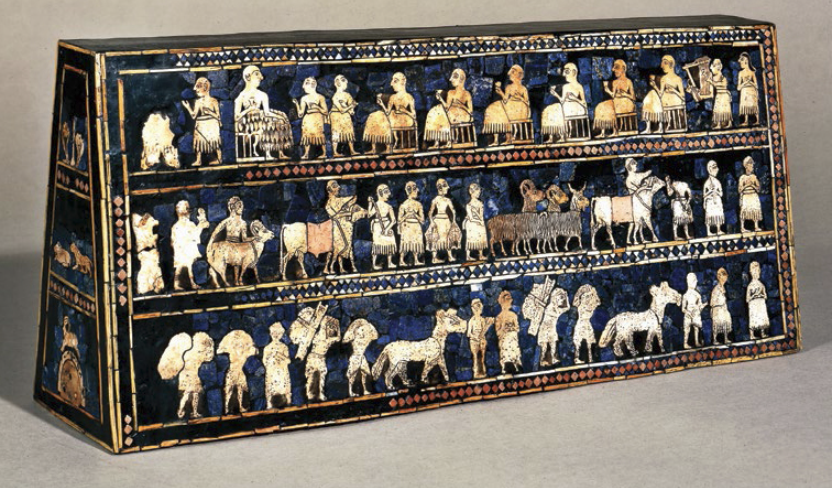
Standard of Ur
Sumerian
narrative in function
wood, shell, lapis lazuli, limestone
organized in registers (rows)
two sides: war and peace
hierarchy of scale
reflects trade networks outside of Sumer:
lapis = Afghanistan
shells = Persian Gulf
red limestone = India
likely in a wealthy person’s tomb or belonged to one, could have been a sound box
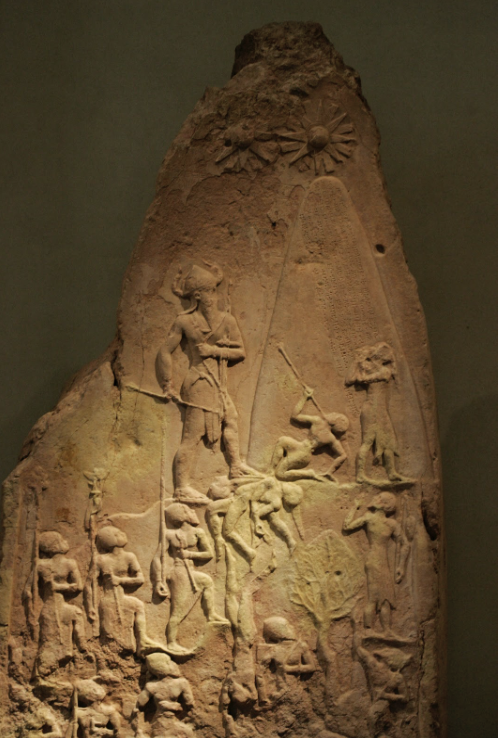
Victory Stele or Naram Sim
Akkadian
Sandstone
bas (low) relief = background is cut out
narrative battle scene
steles always commemorate something: victory of Akkad over Lullabi
hierarchy of scale = Naram Sim is the largest figure
propaganda proclaiming Naram Sim’s military and religious authority
horned helmet is a sign of divinity (bulls horn)
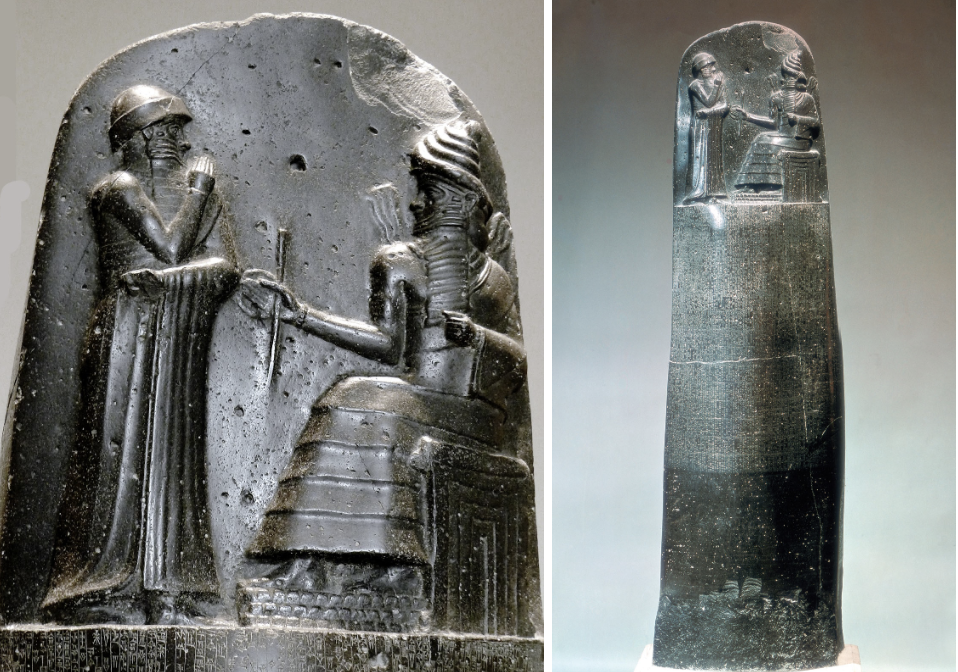
Stele of Hammurabi
Iran
basalt
Hammurabi conquered all of Mesopotamia (Babylon)
earliest written law code in history
stood in the middle of a town
the God Shamash on the right is wearing a horned helmet (bulls = divinity), sitting on a temple/ziggurat
Shamash hands Hammurabi a ring and scepter, signifying Hammurabi’s god-given right to rule and establish the law code (divine right)
Hammurabi’s figure is idealized (arm muscles)
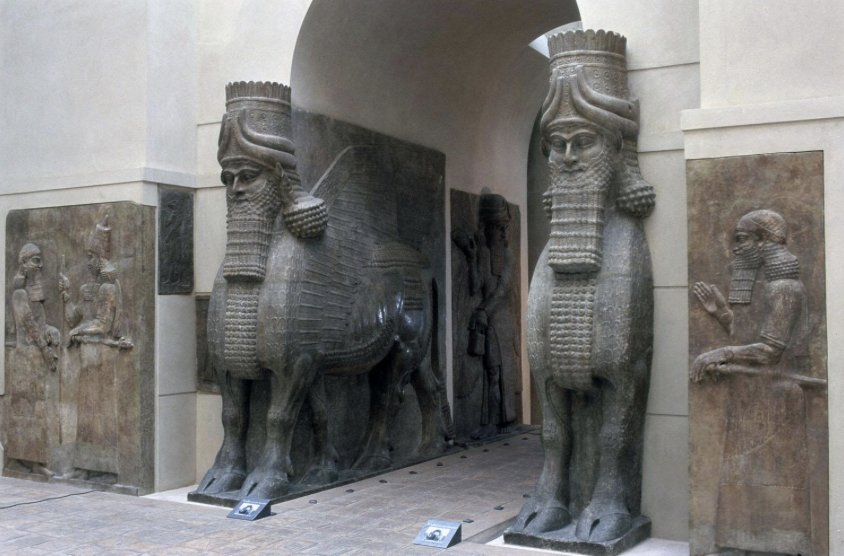
Lamassu
Iran
Assyrian (they conquer mesopotamia after Hammurabi’s death)
limestone
put at the gates of the capital city of Khorasbad (by King Sargon II)
Apotropaic: keeps evil things/spirits away (ward off enemies)
human-headed winged animal guardian, five legs
from the front = standing
from the side = walking
bulls horn crown (divinity)
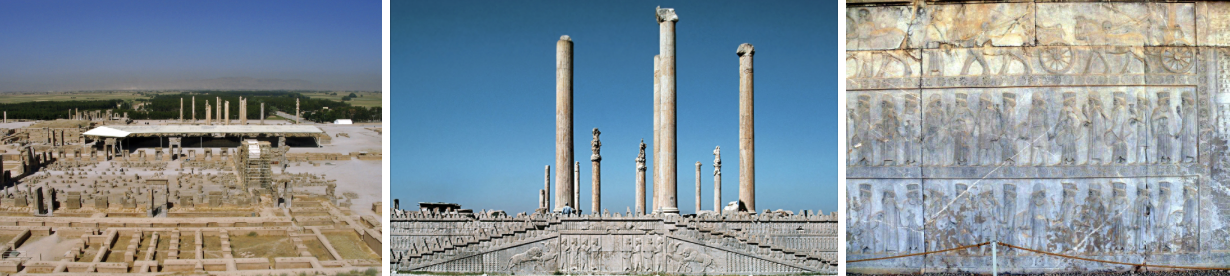
Persepolis
Fars Province, Iran
limestone
Persians (had biggest empire, conquered assyrians and babylonians)
but Alexander the Great (Greek) will destroy and conquer all of Persia)
built by Darius I and Xerxes
multiple palaces used for large receptions, festivals, and celebrations
used to convey power and prestige to the conquered regions that came to the palaces to pay taxes
had Lamassu at gates (appropriated from Assyrians
apadana: audience hall
36 columns and wooden roof
inverted lotus at the bottom, the top had bulls
reception hall for a king
had relief sculptures of representatives from the subject nations (greeks, Egyptians, babylonians) bringing taxes
had registers (standard of ur)
compared to capital cities like nan modol
characteristics of ancient near east
mostly concentrates on royal figures and gods
everything is inspired on religion, kings are often considerer a god/divine
stylistic conventions of the time: hierarchy of scale, registers, stylized human forms
architecture is characterized by ziggurats and palaces
for all places, the further you go in, the more sacred it gets
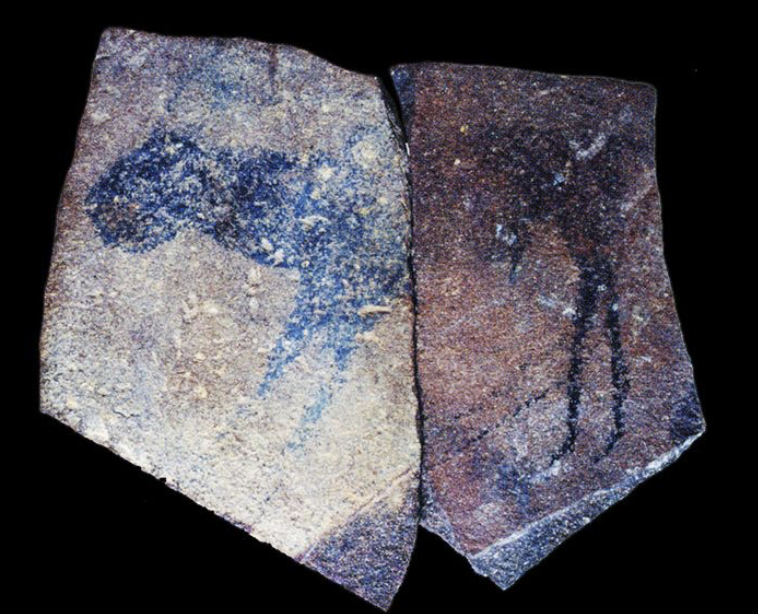
Apollo 11 Stones
Period: Paleolithic
Location: Namibia, South Africa
Material/Technique: Charcoal on stone
Importance: Culture at this time was based on the hunter-gatherer lifestyle and just existing, held rituals to influence and control animal behavior
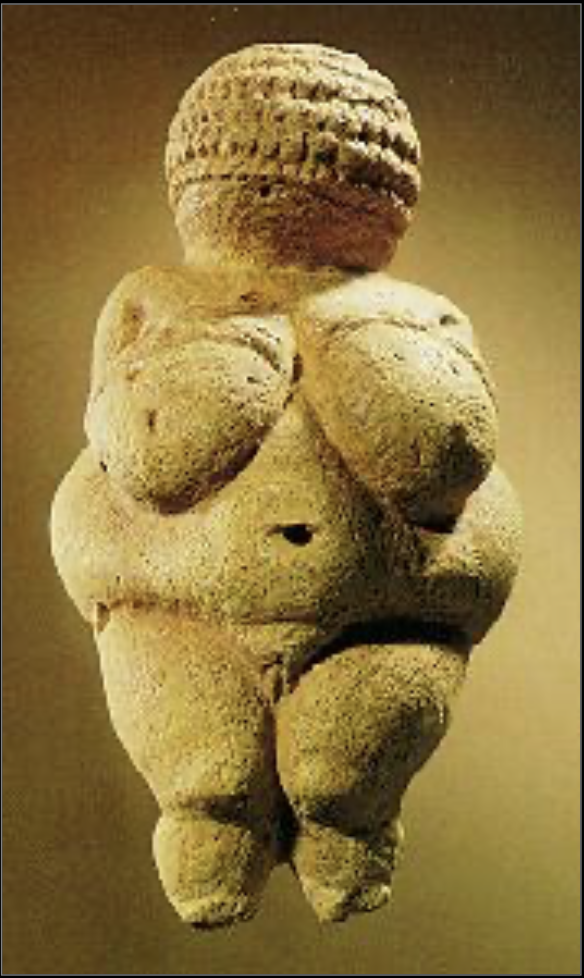
Venus of Willendorf
Period: Paleolithic
Location: Willendorf, Austria
Material/Technique: Limestone, subtractive method
Importance: fertility and child-bearing goddesses, may have been held during labor
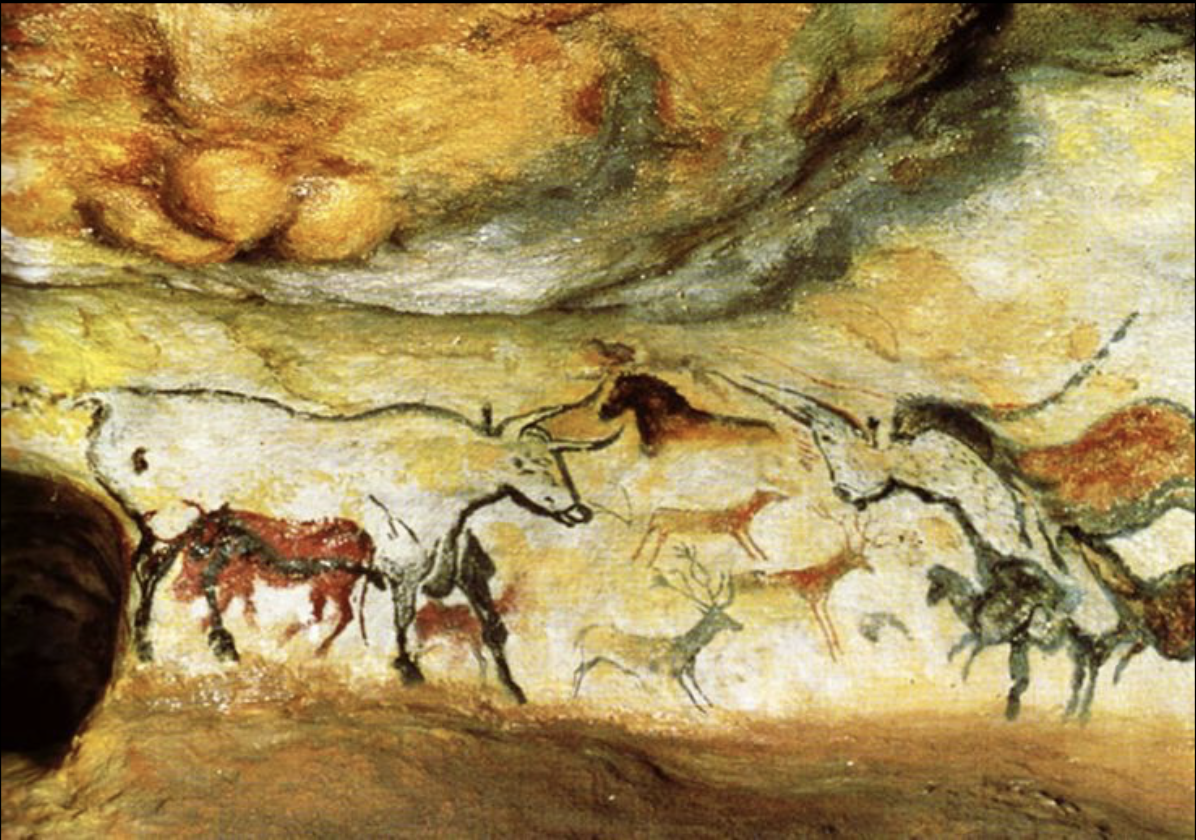
Lascaux Caves
Period: Paleolithic
Location: Dordogne, France
Material/Technique: Paint made from natural resources, walls scraped to make even for painting
Importance: Sacred space, artistry becomes more of a specialized skill (social-stratification) in 15,000-13,000 BCE
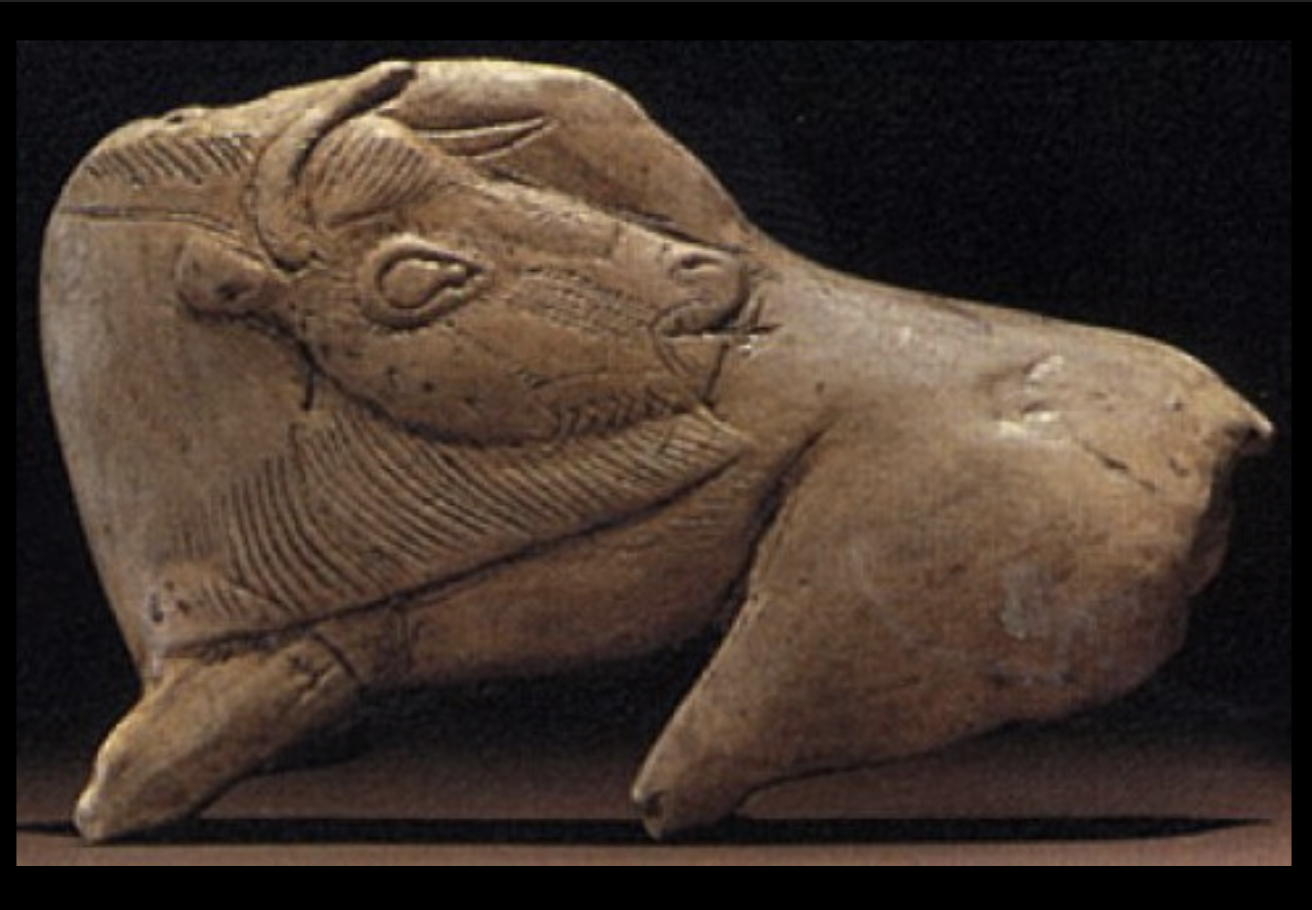
Bison with Turned Head
Period: Paleolithic
Location: Dordogne, France (near Lascaux Caves)
Material/Technique: Carved from reindeer antler, used on a spear
Importance: Carved with small tools, showing that the culture (most likely same as artists who made Lascaux caves) had social-stratification
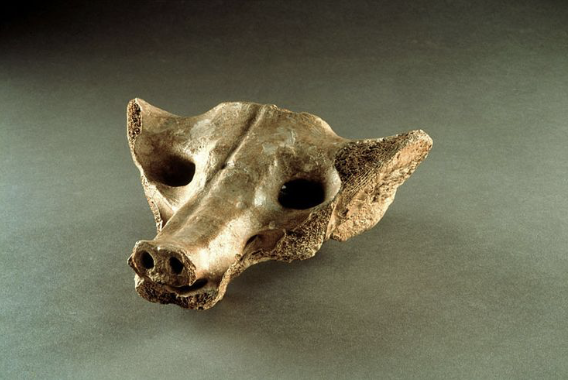
Camelid Sacrum in the Shape of a Canine
Period: Paleolithic
Location: Tequixquiac, Mexico
Material/Technique: Sculpture of a bone of an extinct camel (social-stratification)
Importance: Most likely religious purposes (hunting/worship), one natural form was used to make another natural form
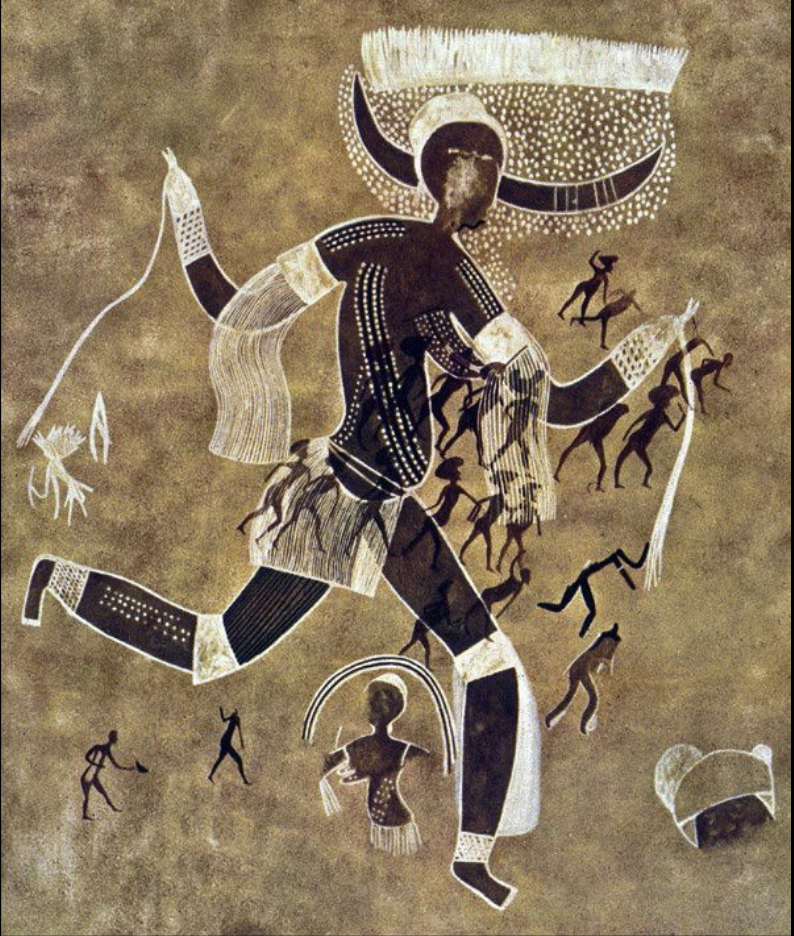
Running Horned Woman
Period: Paleolithic/Neolithic (transition between both periods)
Location: Tassili’ nAjjer, Algeria
Material/Technique: Pigment on rock
Importance: Climate change transformed Sahara from a grassland to a desert, composite view of the body, dots reflect ritualistic makeup
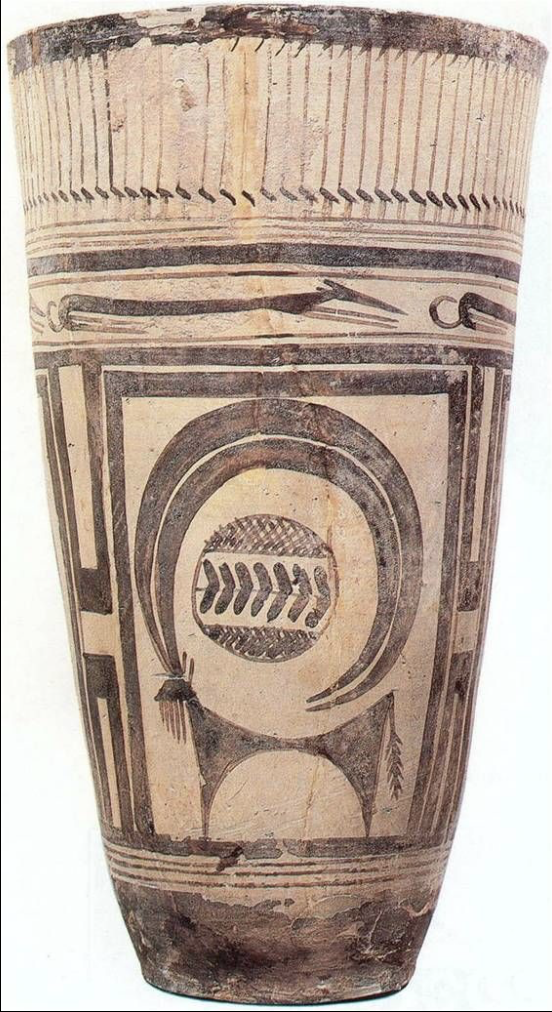
Beaker with Ibex Motifs
Period: Neolithic
Location: Susa, Iran
Material/Technique: Terracotta
Importance: Funerary purposes (found near burial site), might have held ashes, transition from hunter-gatherer lifestyle to residing in villages (requiring storage), middle of horns could be clan symbol identifying the family of the deceased
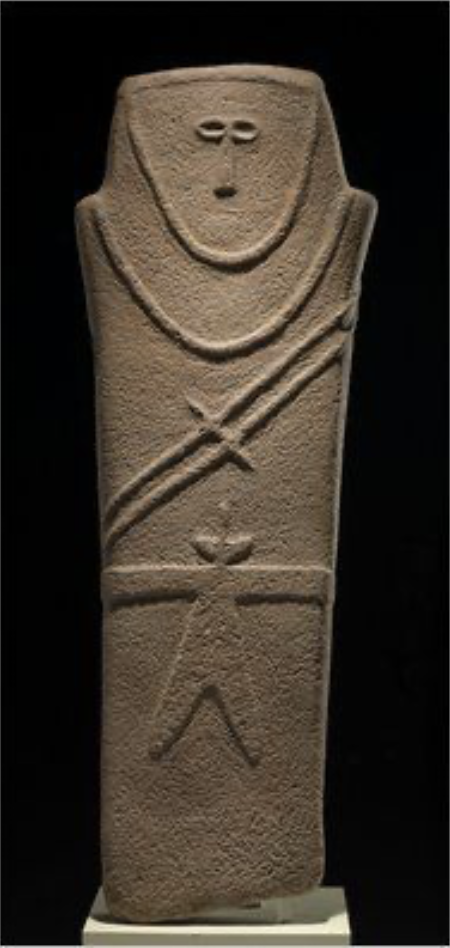
Anthropomorphic Stele
Period: Neolithic
Location: Arabian Peninsula
Material/Technique: Sandstone
Importance: Anthropomorphic (relating to human form), found near ancient trade routes, could be funerary (gravestone) or religious
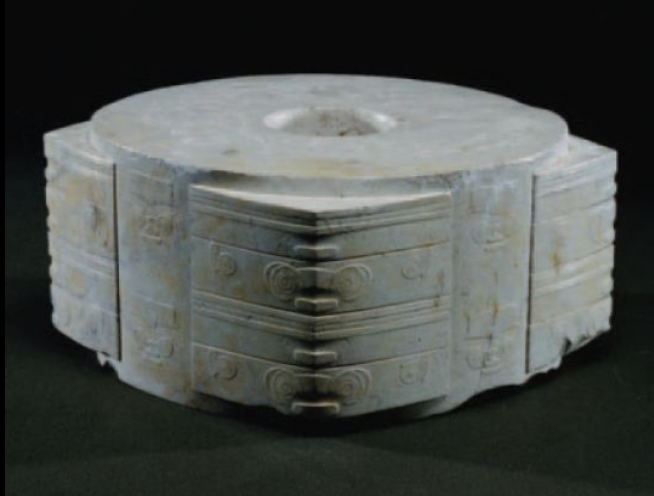
Jade Cong
Period: Neolithic
Location: Liangzhu, China
Material/Technique: Jade
Importance: Jade appears at burial sites of elites (funerary), placed in and around bodies, many seem burned, four corners have a face pattern that could be spirits or deities
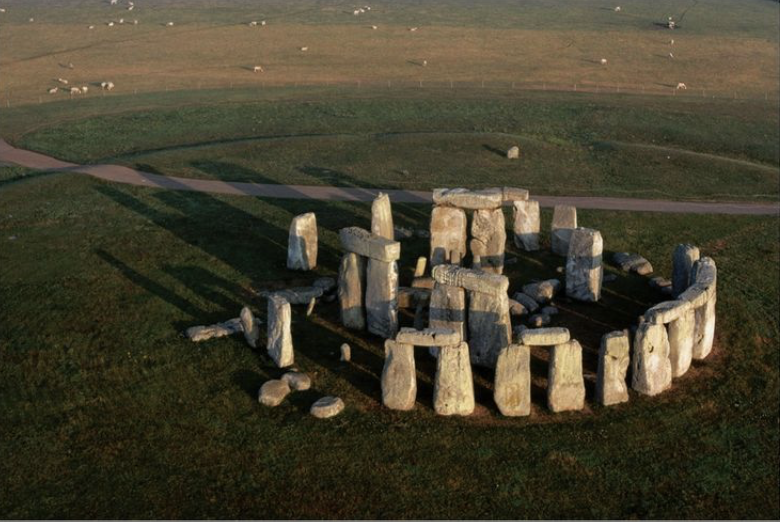
Stonehenge
Period: Neolithic
Location: Wilshire, England
Material/Technique: Sandstone, post (vertical) and lintel (horizontal) construction, mortise and tenon (legos)
Importance: could have oriented sunrise on the longest day of the year, predict eclipses, or that it was a ceremonial center (sacred space) concerning death and burial since bodies were found nearby
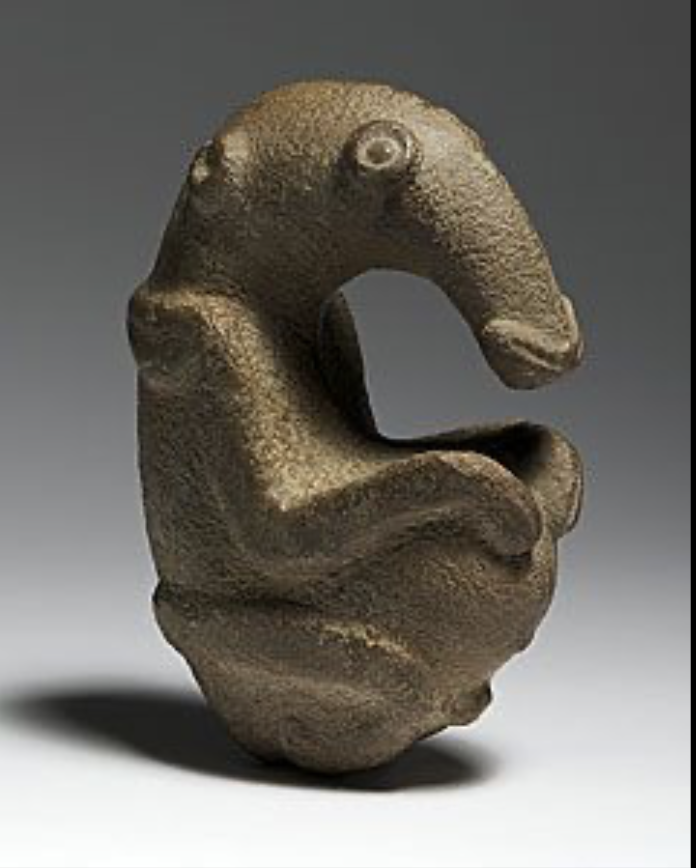
Ambum Stone
Period: Neolithic
Location: Papua New Guinea
Material/Technique: Greywacke stone (stone used to carve stone)
Importance: Anthropomorphic, anteater in fetal position, anteaters were important food source for the island culture
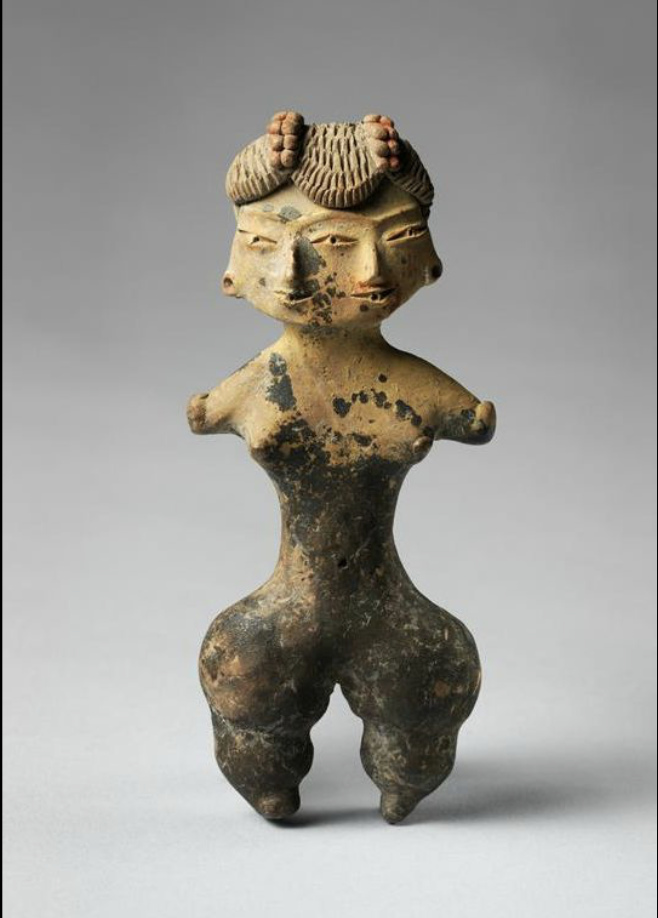
Tlatilco Female Figure
Period: Neolithic
Location: Central Mexico
Material/Technique: Terracotta
Importance: Stylized hair (stratification), shamanistic/religious function
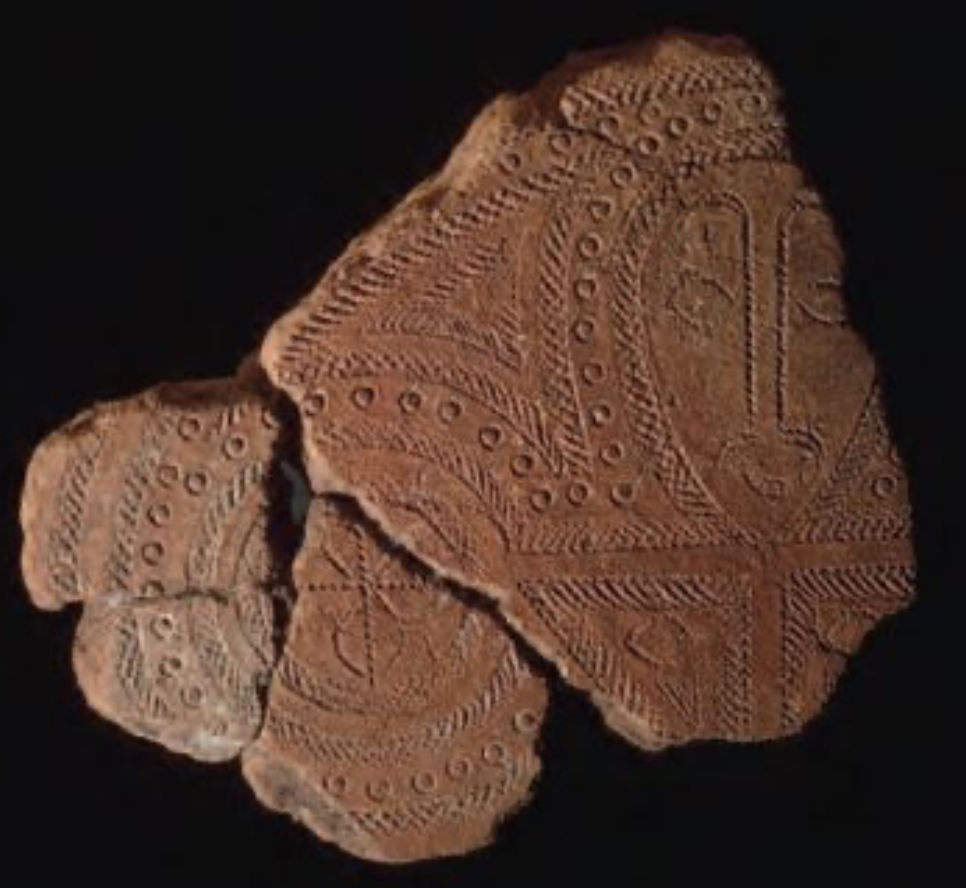
Terracotta Fragments
Period: Neolithic
Location: Solomon Islands
Material/Technique: Terracotta, pottery
Importance: Imagery and style similar to Polynesian cultures, symbolizes cultural history
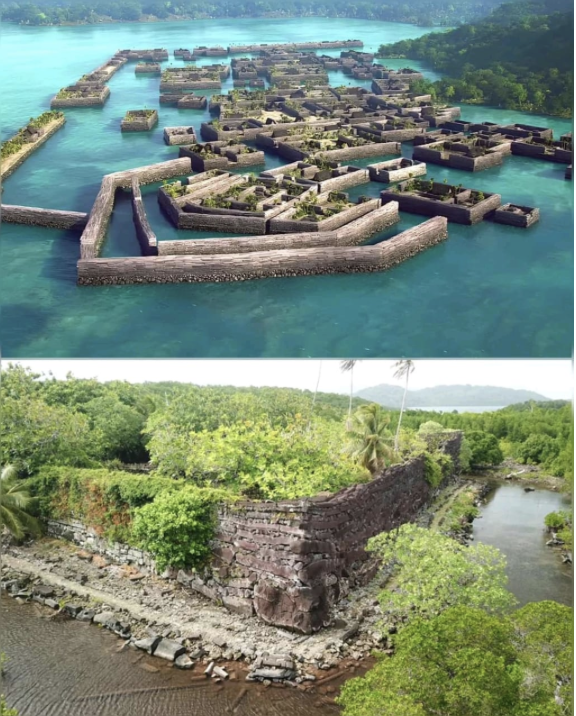
Nan Madol
Period: NR
Location: Ancient Capital city of Saudeleur Dynasty of (Ponpei) Micronesia
Material/Technique: Basalt, coral rock boulders connected by canals
Importance: Built in shallow waters in shape of a boat, allowed trade winds to flow through the city (natural cooling system), canals flushed clean daily by tides, upper class lived close to king (probably seen as a threat), lower classes lived further
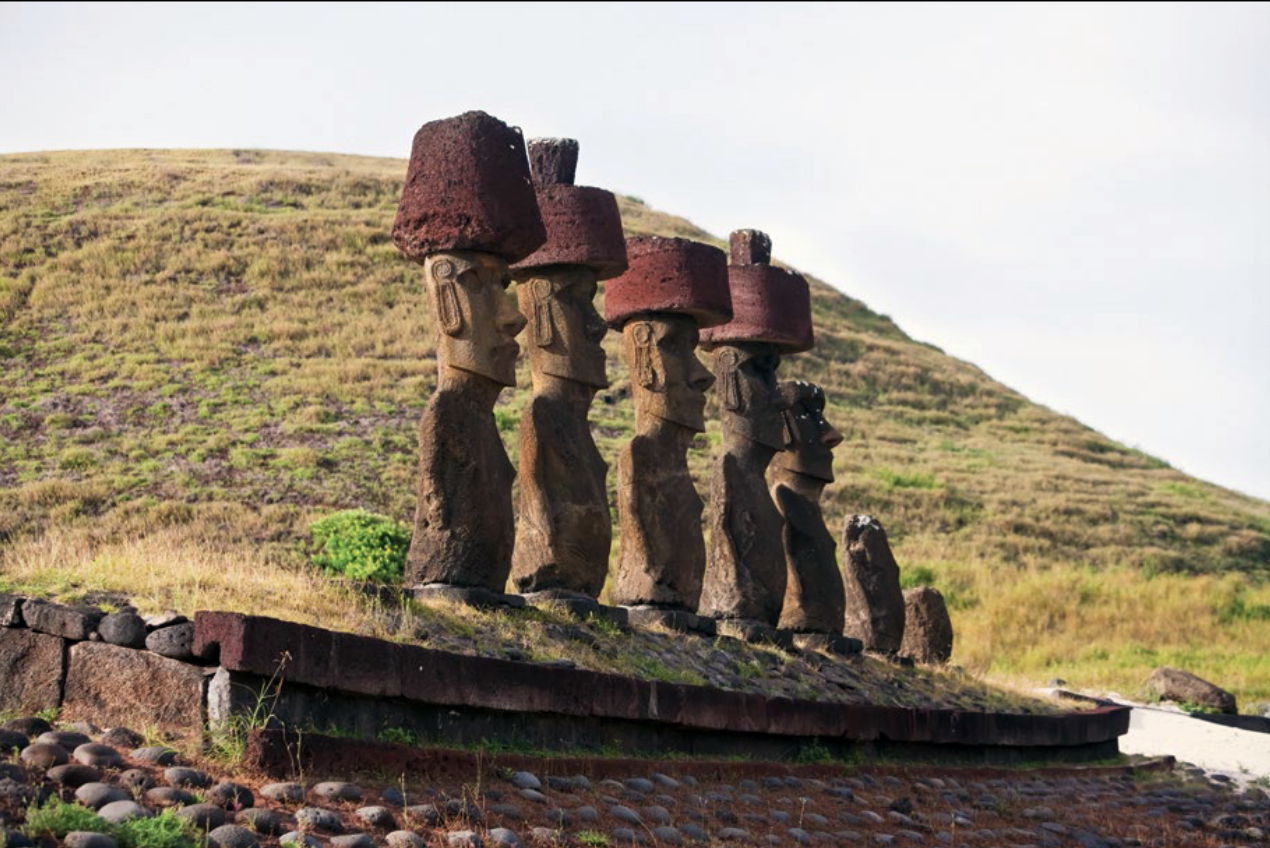
Moai on Platform
Period: NR
Location: Rapa Nui (Easter Island) Chile, Polynesia
Material/Technique: Volcanic tuff (basalt / ash stone), built on platforms of stone
Importance: Platforms mixed with ashes from cremations, both statues and platforms are sacred, images represent chieftains and leaders deified after death, combination of sacredness with power and authority
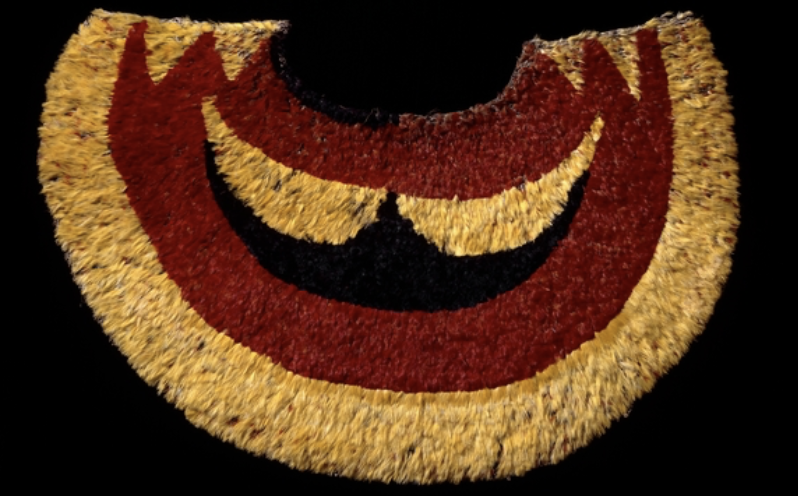
Ahu Ula
Period: NR
Location: Hawaii, Polynesia
Material/Technique: made from 500k bird feathers
Importance: Red represents royal color, artist chanted wearer’s ancestors names while making the cloak to let the cloak help/protect/guide the wearer, status symbol of power and authority
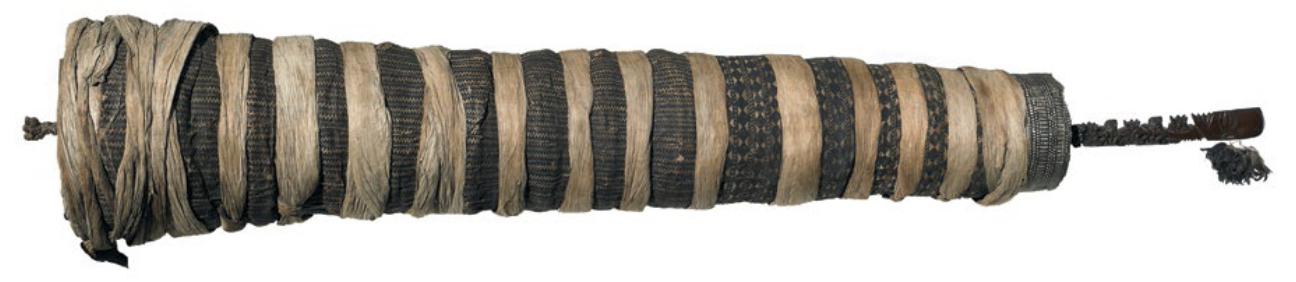
Staff God
Period: NR
Location: Rarotonga, Cook Islands, Polynesia
Material/Technique: Wood, tapa, fiber, and feathers
Importance: Staff placed in common area of a village, most destroyed/knocked over by Christian Missionaries, male and female elements, wooden core made by men, tapa cloth made by women
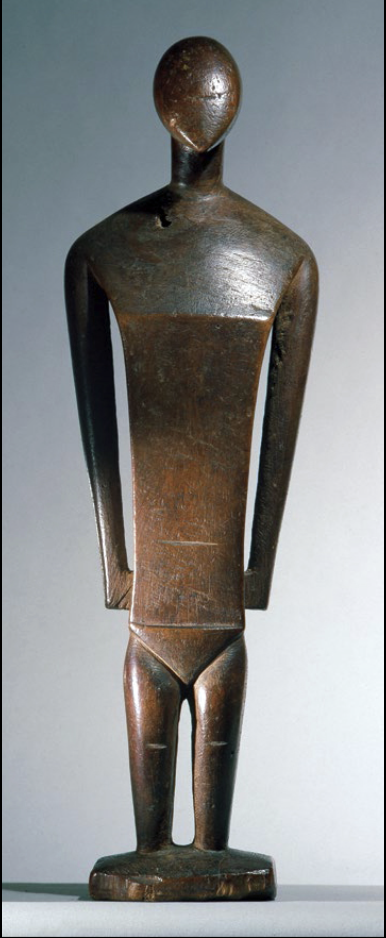
Female Deity
Period: NR
Location: Nukuoro, Micronesia
Material/Technique: breadfruit wood
Importance: Used in ceremonies respecting ancestors, kept in a communal sacred space, honored women/female deities (divine/goddesses), in ceremonies the figure would be clothed
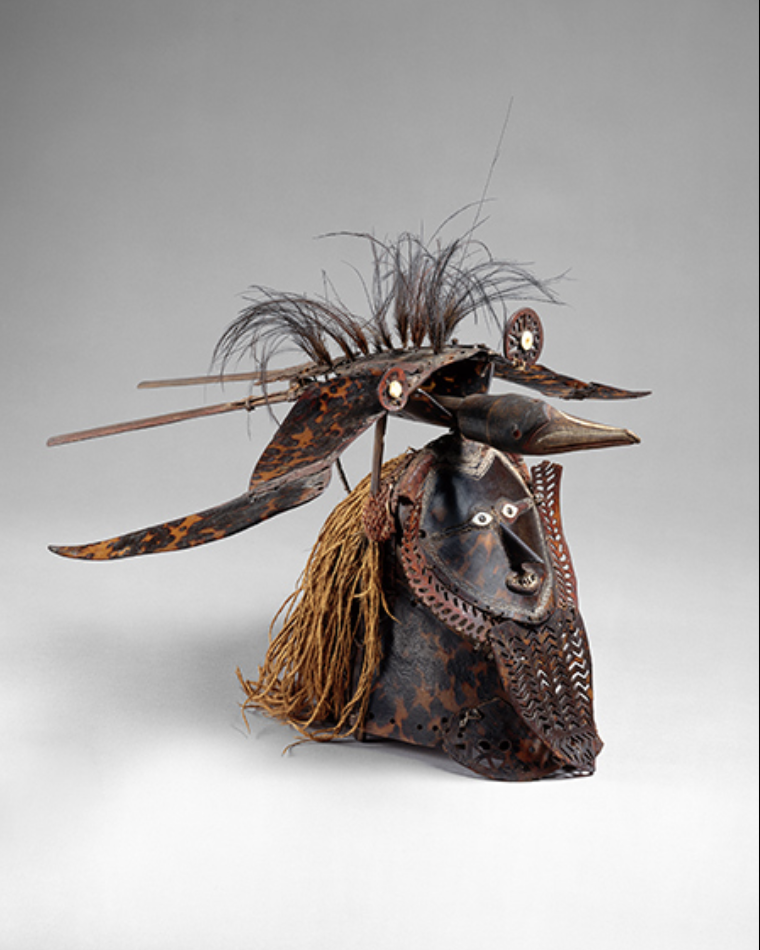
Buk Mask
Period: NR
Location: Torres Strait, Melanesia (btwn Papua New Guinea and Australia)
Material/Technique: Turtle shell, wood, fiber, feathers, sea shells
Importance: Ceremonies related to death, fertility, and male initiation, which included fire, drumming, chanting, and recreated stories of ancestors and the power of their ancestors in modern lives
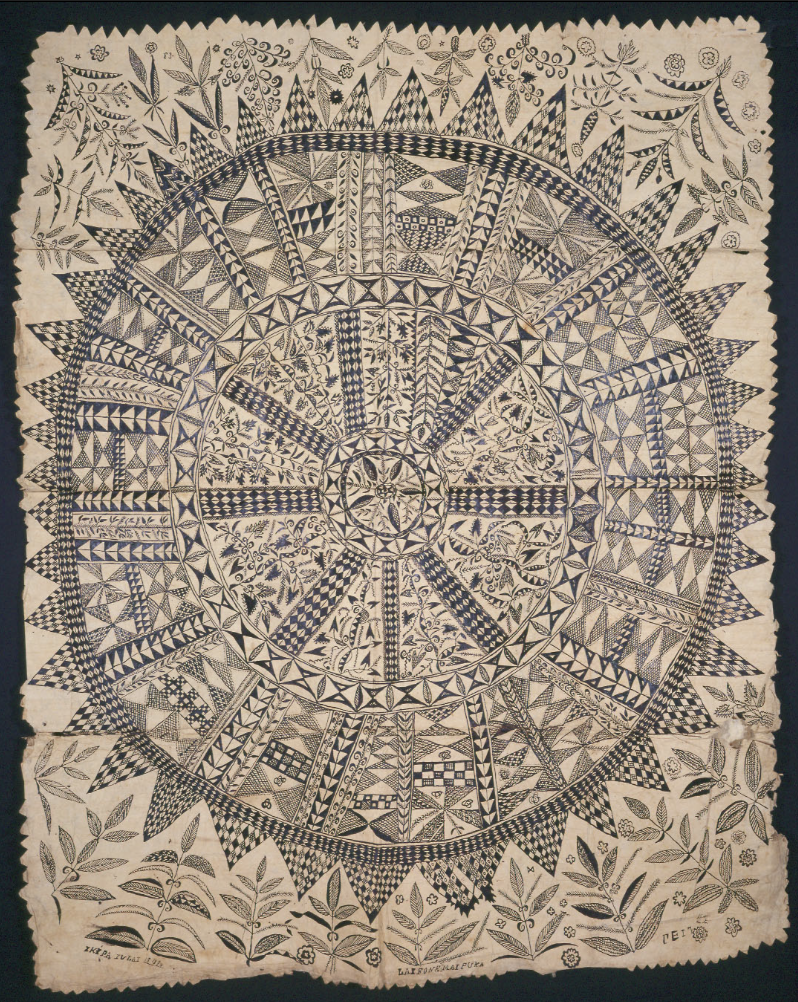
Hiapo (tapa)
Period: NR
Location: Niue, Polynesia
Material/Technique: Tapa (bark cloth)
Importance: Commemorating an event, honoring a chief, noting ancestors, each symbol or set of symbols has a meaning, women’s art, can serve as a symbol of status and rank
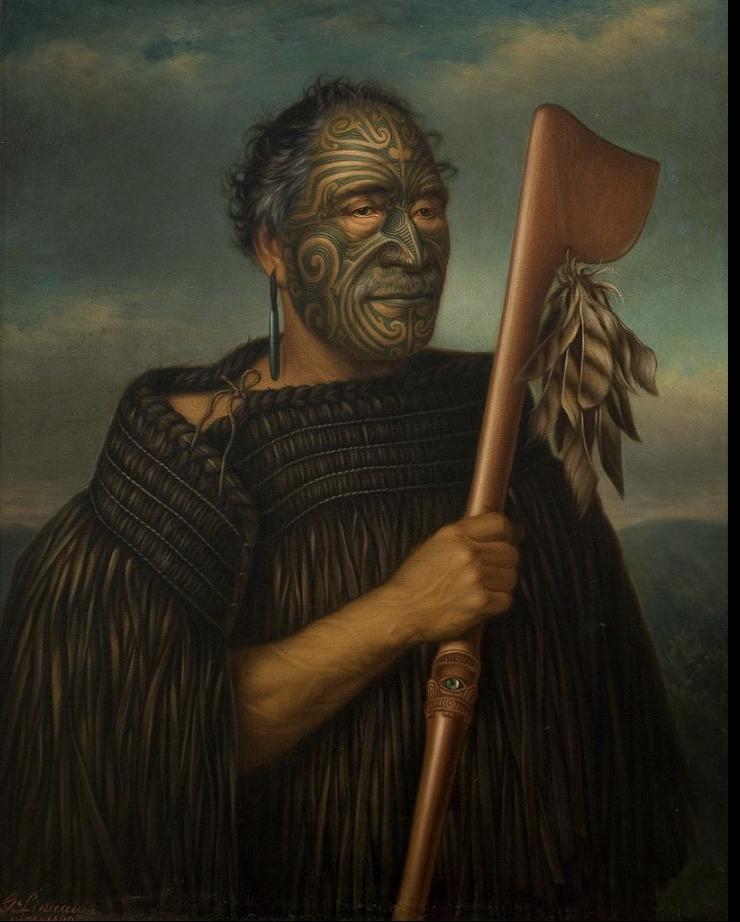
Tamati Waka Nene
Period: NR
Artist: Gottfried Lindauer
Patron: Henry Partridge
Location: Hokianga, New Zealand, Polynesia
Material/Technique: oil on canvas, painting
Importance: Made after his death (posthumous), European style of painting (subject turned to the side, sky in the background), tattoos and stag with eye represent rank, Maori facial tattoos signaled rank as the highest rank had a majority of their face covered, Combination of cultures (European and Maori)
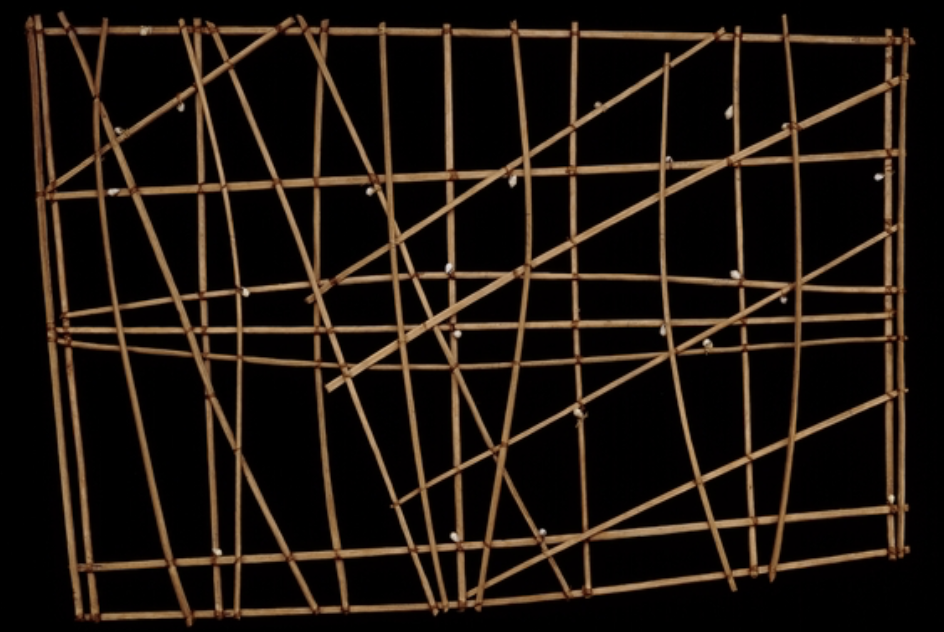
Navigation Chart
Period: NR
Location: Marshall Islands, Micronesia
Material/Technique: Wood and fiber
Importance: Diagonal lines indicate wind and water currents, shells indicate islands, not always used at sea, used for memorization
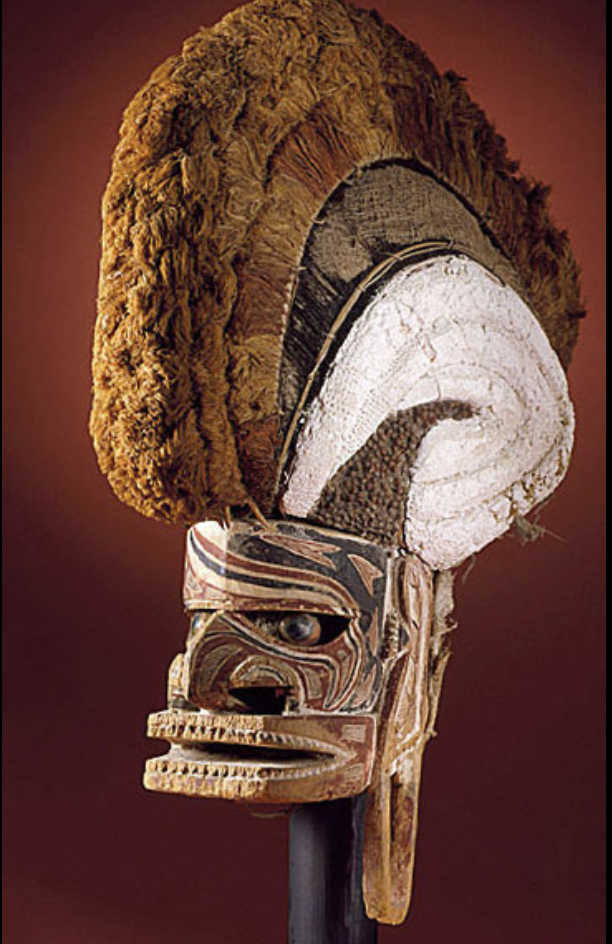
Malangan Mask and Carvings
Period: NR
Location: Papua New Guinea, Melanesia
Material/Technique: Wood, pigment, fiber, shells
Importance: Ancestor worship, highly ritualistic with a natural agricultural surplus, funerary spiritual beliefs dictated that deceased must be guided into the afterlife, carvings are created for the ceremony and left to rot, while the masses are created for the family to stay, portraits of the soul, no two masks are the same, artists were always creating the mask