Chapter 5-6 Biology 3/4
 Call Kai
 Learn
Learn Practice Test
 Spaced Repetition
 Match
Match Flashcards
 Knowt Play
1/78

Earn XP
Description and Tags
Immunityyyyy
Name | Mastery | Learn | Test | Matching | Spaced | Call with Kai | Chat |
|---|
No analytics yet
Send a link to your students to track their progress
79 Terms
What is an antigen?
A molecule or part of a molecule that can elicit an immune response. They are usually found expressed on the surface of the plasma membrane of cells, or floating freely in body fluids.
How does the body distinguish self from non-self?
By using protein markers on the surface of their cells called MHC’s that differ in each individual.
Theres MHC-1, and MHC-2
What is MHC-1?
Found on all nucleated body cells, MHC-1 allows natural killer cells or cytotoxic T-cells to attach and identify as self. They do this by presenting proteins that are being made inside the cell.
How can MHC-1 help identify virus infected cells?
Host cells' MHC-1 will present viral proteins on the outside of the cell membrane, and will signal abnormality to body as non-self.
What is MHC-2?
MHC-2 presents foreign antigens on the surface of antigen presenting cells (APCs).
When a specific T helper cell binds to this antigen-MHC-2 complex, it activates the T helper cell.
This activation causes the T helper cell to release cytokines, which then stimulate B cells to produce antibodies.
What are antibodies?
Highly specific proteins produced by B lymphocytes in response to an antigen.
Other known as Immunoglobulins (Ig).
What is a B Lymphocyte?
B lymphocytes are a type of white blood cell that are responsible for producing antibodies in response to an antigen.
After exposure to an antigen, they can differentiate into plasma cells that secrete antibodies or memory B cells that provide long-lasting immunity.
What is a T Lymphocyte?
A type of white blood cell responsible for cell-mediated immunity by recognizing specific antigens presented on infected or abnormal cells.
After exposure to a specific antigen, they differentiate into cytotoxic T cells that directly destroy infected cells via apoptosis, helper T cells that activate other immune cells, or memory T cells that provide long-lasting immunity.
First line of defence
Stops pathogens from entering the body
e.g: INTACT skin, mucous membranes
Second line of defence
The innate immune response, which activates immediately when pathogens breach your external barriers.
e.g: blood clotting, or a fever
Third line of defence
The adaptive immune response, which uses specialized lymphocytes (B-cells and T-cells) to target specific pathogens, neutralize them, and create long-lasting immunological memory.
e.g: Lymphocytes, Antibodies.
What are 2 physical barriers in animals?
Intact skin (effective barrier to most microorganisms)
Mucous membrane (foreign particles get caught in mucus, and are carried by the beating cilia, where they are swallowed, and destroyed)
What are 2 chemical barriers in animals?
Acid in the stomach (destroys microbes that are swallowed)
Lysozyme (found in tears, and other bodily fluids that split bacterial walls and cause them to burst.)
What are 2 microbiological barriers in animals?
Non-pathogenic microbes that live on the surface of the body
Presense of normal flora that prevents growth and colonization of other bacteria.
What are 2 physical/mechanical barriers in plants?
Waxy cuticle and bark - provides a physical barrier in the same way skin does
What are 2 chemical barriers in plants? + 1 microbiota barrier?
Saponins - inactive compounds stored in vacuoles that may cause damage to teh cell membrane of pathogens.
Defensins - Proteins that block the growth of pathogens (usually released by germinating seeds)
Microbiota barrier:
Microorganisms on the surface of leaves, which compete with pathogens, preventing harmful infections.
Phagocytosis?
The phagocyte recognises specific non-self antigens on the pathogens surface and engulfs it.
The membrane forms a vesicle and encloses the pathogen
The vesicle fuses with a lysosomic enzymes to break down the pathogen, and waste products are expelled.
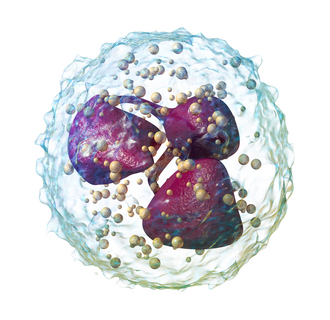
What does a neutrophil do? (main type of white blood cell)
A type of white blood cell that travels around the body and engulfs and digests bacteria.
They release chemicals that disrupt bacteria and fungal membranes.
They release cytokines (that attract other immune cells and cause inflammation)
What do macrophages do? (main type of white blood cell)
Engulf foreign bodies in tissues
They present antigens on MHC-II to activate adaptive immunity and release cytokines to regulate inflammation and tissue repair.
(horseshoe shaped nuclei)
What do dendritic cells do? (main type of white blood cell)
Dendritic cells are specialized antigen-presenting cells that phagocytose pathogens in tissues exposed to the environment, then migrate to lymph nodes to activate naive T cells.
What do natural killer cells do?
They recognize specific antigens on infected or abnormal host cells and destroy them by releasing chemicals like perforin to trigger apoptosis.
What do mast cells do?
Cells found in tissues that release chemicals like histamine and cytokines when they are activated by pathogens or allergens, driving inflammation and allergic responses
What is the role of complement proteins?
Contributes to inflammation by increasing the local permeability of capillaries and attracting phagocytes
Destroying bacterial membranes by sticking and punching holes in them.
Attract phagocytes and stimulate them to become more active.
Op-SON-ising pathogens - Binding to pathogens singnalling for phagocytosis.
What are cytokines?
Signalling molecules for the immune system,
indicate the presence of damage or foreign body.
Promote growth and poliferation of lymphocytes, induce fever, and promote antibody responses.
what is the role of an eosinophil?
Eosinophils are white blood cells that defend against parasitic infections by releasing toxic substances and are involved in allergic and inflammatory immune responses.
What is an interferon?
They are signalling proteins (type of cytokine) released by virus-infected host cells to warn neighbouring uninfected cells, stimulating them to produce antiviral proteins that block viral replication
PROCESS of the inflammatory response? (important and long process) (change)
The pathogen enters the first line of defence (e.g: thru a cut)
Injured cells release cytokines
Platelets release clotting factors at the site of the cut
Cytokines attract white blood cells like mast cells to the area
The mast cells release histamines, which increase blood vessel dilation and permeability, thus allowing blood containing complement proteins and other white blood cells to come to the area
Neutrophils are activated and secrete factors such as defensins and H2O2 that kill pathogens
Macrophages are activated and secrete cytokines and other debris.
The inflammatory response continues until the pathogen is eliminated and the wound is healed.
What is lymph?
The clear fluid that enters the lymphatic system after being collected from the spaces between cells, carrying white blood cells, fats, proteins, and any trapped pathogens.
What does the lymphatic pathway do?
The lymphatic pathway is a pathway that drains excess tissue fluid and filters it through lymph nodes to detect pathogens, and returns the purified fluid to the circulatory system.
What are the primary lymphoid organs?
Bone marrow
The thymus
Lymph nodes
Spleen
What happens in the bone marrow?
Contains blood stem cells which manufacture B and T lymphocytes
B lymphocytes undergo development in the bone marrow, and then are transported to other secondary lymphoid organs like the spleen to complete their maturation process and become activated.
Immature T lymphocytes (produced in the bone marrow) travel to the thymus, where they become educated and mature.
What is the role of the lymph nodes?
Cleanse lymph (As lymph flows through sinuses of the node, it slows down microorganisms and foreign matter is removed)
Alerts the immune system to pathogens
Important in hemopoiesis (lymphocytes and monocytes are made here, as the body produces new mature blood cells.
What are naive B and T cells?
B or T cells that havent activated for a specific antigen. They are generalised
What is the role of the spleen?
Helps screen blood and removes pathogens and bacteria
It is the site of B lymphocyte maturation
What are the 2 distinguishing features of adaptive immunity?
Specificity - The ability to recognise and respond specifically to antigens
Immunological memory - The ability to remember and mount to a larger and more rapid response when exposed to the same antigen again.
What are the FUNCTIONS of an antibody? (how they do their job)
Neutralisation - bind to pathogens and block their action
Agglutination - bind to antigens and form antigen-antibody complexes, signalling phagocytosis
Precipitation - binds to soluble antigens, causing them to ebcome insoluble and precipitate out of solution
Complement activation - attaches to antigens on surfaces of pathogens, causing lysis and signaling phagocytosis.
What is clonal selection?
The process by which a specific antigen binds to a lymphocyte with a complementary receptor.
This specific cell rapidly proliferates and differentiates into effector cells and memory cells to fight an infection.
What is the role of an APC? (Antigen presenting cell)
Engulfs pathogens via phagocytosis.
Displays the foreign antigens on its MHC 2 markers.
Travels to the lymph nodes to present the antigen to T helper cells, activating the adaptive immune response.
(Mainly dendritic and macrophage cells)
What is the PROCESS of humoral immunity?
An Antigen-Presenting Cell (APC) phagocytoses the pathogen and displays the foreign antigen on its MHC II marker.
The APC travels to the lymph node.
A specific, naive Helper T cell with a complementary receptor binds to this antigen-MHC II complex.
Meanwhile, a free antigen directly binds to and activates a naive B cell with a complementary receptor.
The selected Helper T cell and the selected B cell find each other in the lymph node.
The Helper T cell releases cytokines to stimulate the B cell.
The B cell proliferates and differentiates into plasma cells (which secrete antibodies) and memory B cells (for long-term immunity).
What is the PROCESS of cell mediated immunity? (T cells)
APCs displaying foreign antigens on MHC II bind to helper T cells.
Cytokines co-stimulate activation of helper T cells
The activated T helper cells proliferate, producing more helpter T cells, which also release cytokines
B cells are stimulated to produce antibodies that bind to the antigens and stimulate non-specific agents to destroy the antigens
If APCs or virus infected body cells are presenting viral antigens on MHC I, then cytotoxic T cells are activated and turn into effectors cells.
When the effector cytotoxic T cell makes contact with body cells displaying viral antigens, it destroys the body cells by releasing cytotoxins, like perforin.
A small number of T cells remain behind as memory T cells. (both memory helper and cytotoxic).
(The order is not important, as they can occur concurrently)
What do helper T cells do?
They stimulate B lymphocytes to divide into antibody-producing cells, and also the cytotoxic T cells to divide. this is done through the production of cytokines
If T helper cells are not present, then B lymphocytes cannot go into action.
They enhance the action of phagocytes.
What is the role of cytotoxic T cells in the adaptive response?
They destroy virus infected body cells before the viruses have time to proliferate.
The cytotoxins produced by cytotoxic T cells punch holes in the cell membrane, triggering apoptosis and cell death.
Note about when to explain humoral or cell mediated immunity
Q asks about VIRUSES effects and the adaptive immune response, then talk about cytotoxic T cells (or could be humoral immunity. Both can be elaborated)
Q asks about BACTERIA’s effects then its ONLY humoral immunity.
What is the primary response in the immunological memory?
A pathogen enters the body.
An antigen-presenting cell (APC) engulfs the pathogen and presents its antigen.
Specific helper T cells recognise the antigen and activate complementary B cells.
The activated B cell undergoes clonal expansion by mitosis.
The cloned B cells differentiate into plasma cells and memory B cells.
Plasma cells produce and secrete large quantities of specific antibodies.
The pathogen is eliminated
Memory B cells remain in the body, allowing a faster and stronger secondary immune response if the same antigen is encountered again.
What is the secondary response in the immunological memory?
This results in a shorter lag time, as memory B and T cells are already circulating the body.
These memory cells rapidly undergo clonal selection and expansion, leading to faster and significantly higher production of antibodies and plasma cells.
Due to the antibodies being produced faster and in large quantities, the pathogen is effectively eliminated.
What is a live attenuated vaccine?
Involves a living microbe that has been weakened.
Advantage: This usually provides long-lasting immunity as it produces a strong adaptive immune response.
Disadvantage: can cause disease in some individuals with a weakened immune system.
What is an inactivated vaccine?
Involves the use of killed microbes (chopped up DNA),
They produce a strong adaptive immunity, due to different antigens.
However, the response is weak in comparison to attenuated vaccines, and thus require boosters.
What is herd immunity?
The more people vaccinated in a population, the less the chance of an infectious agent spreading throughout the population.
Its essential for protecting those of the community who cannot be vaccinated or have suppressed immune systems.It's
What is the difference between emerging disease and re-emerging disease?
Emerging:
New or previously unrecognised disease
may increase in the near future
Re-emerging:
A disease that reappears after a significant decline in its incidence.
Mutation of pathogen?
Occurs when a pathogen moves from one host to another
increase the ability of the pathogen to move across hosts
animal —> human = zoonotic pathogen
What is antigenic drift?
Minor change to the antigens on the pathogens surface via mutations over a period of time
likely to lead to reinfection in the same species
shift > drift
What is antigenic shift?
major
When two or more different strains of virus combine to form a new subtype
This new subtype has a mixture of the surface antigens of the two or more original strains
production of an entirely new virus species
shift > drift
How can antigenic shift impact a population?
new antigen is not recognised by hosts immune system
Pathogen easily spread between people
high volume of movement of pathogen
lack of herd immunity - not enough people have immunity for the disease
A greater population gets infected with the disease.
What can increase the likelihood of outbreaks?
lack of sanitation and poor hygiene (more likely in undeveloped countries)
more travel / transmission opportunities for the virus.
How did pathogens introduced by Europeans affect the Australians?
lack of immunity - detrimentally affected by the virulent pathogens such as smallpox - higher fatality rate
lack of knowledge and experience - no medical care - more deaths
What are 2 physical methods of identifying pathogens?
X ray crystallography
electron microscopy
What is an immunological method for identifying a pathogen? (ELISA - just know how it works bro)
ELISA test: (looks for the presence of an antigen)
antigen requiring identification is coated on the wells
specific antibodies to the antigen are added to the wells. the antibodies also have enzyme indicators attached to them
the plate is incubated, and antibodies bind to antigens
wells are washed to remove unbound antibodies
substrate enzyme is added, causing a colour change if the antibody-antigen complex has formed, thus a positive test.
What is a molecular method for identifying a pathogen?
Polymerase Chain Reaction (PCR), which allows for the amplification of specific DNA or RNA sequences of the pathogen.
This method enables the detection of the pathogen's genetic material, providing a highly sensitive and specific identification.
outline the steps by which B lymphocytes are produced.
B lymphocytes are produced in the bone marrow, where they also mature and become "educated" to distinguish between self-antigens and non-self antigens. During this stage, they develop unique, specific surface receptors
Once mature, these specific cells migrate to the lymphatic system, specifically the lymph nodes and the spleen, which serve as critical transport networks and sites for antigen recognition
A B cell encounters and binds to a specific non-self antigen that matches its receptor
Upon re-encountering the same antigen, memory B cells quickly recognize the pathogen
This results in a significantly faster and larger production of antibodies, often neutralizing the pathogen before symptoms develop
Describe how the use of monoclonal antibodies differ when treating cancer and autoimmune disease
Cancer: mAbs target and eliminate cancer cells or inhibit tumour growth.
Autoimmune disease: mAbs suppress specific parts of the immune system to prevent it from attacking healthy tissues.
What do histamines do?
blood vessel dilation
increase the permeability of blood vessels to immune cells and fluids into the tissue
What do anti-histamines do?
Counteracts the effect of histamines and therefore suppresses some allergic symptoms.
PROCESS of an allergic reaction?
allergen comes in contact with B cell
B cells produce IgE antibodies
The IgE attaches to mast cells
when the allergen is encountered again, it binds to the activated mast cells via the IgE antibodies.
When the antigen bridges the gap between 2 antibodies, it triggers the release of histamines via exocytosis
What are the types of methods for the 3 investigations? (handwash one, simulator, ELISA case study)
handwash investigation: Controlled experiment
simulator investigation: Modelling
ELISA case study investigation: Diagnostic Test
what is the difference between natural and artificial immunity? + 4 examples of each kind
Natural immunity is acquired through natural exposure to pathogens or naturally transferred antibodies, such as infection with chickenpox (natural active) or antibodies passed from mother to baby via breast milk (natural passive).
Artificial immunity is acquired through medical intervention, such as vaccination, which stimulates the production of antibodies and memory cells (artificial active), or injection of ready-made antibodies, such as snake antivenom (artificial passive).
What are 2 scientific and 2 social strategies employed to identify and control spread of pathogens?
Scientific strategies:
Vaccination to stimulate immunity and reduce disease transmission.
Diagnostic testing (e.g., PCR) to identify infected individuals for treatment and isolation.
Social strategies:
Isolation and quarantine to prevent infected people from spreading the pathogen.
Hand hygiene and sanitation to reduce pathogen transmission.
Reliability
An experiment is reliable if it gives the same result when you repeat the experiment
Precision
how close the measurements of an experiment are to each other.
can be improved through calibrating equipment
Accuracy
the closeness of a measured value to the true value
can be improved through choice of equipment
Systematic error
gives measurements that are consistently different from the true value, that can be due to limitations of the instruments.
can be improved through calibrating equipment
Random error
Often due to slight fluctuations in an instrument
can be improved through increasing the number of trials
human error
due to the limitations of the human ability.
can be improved by labelling equipment correctly.
the control
a control group acts as a basis of comparison for the experiment by excluding the effect of the independent variable.
PROCESS for mAB’s for cancer?
an animal like a mouse is injected with an antigen and in response produces specific plasma cells
the plasma cells are harvested from the animal
harvested plasma cells are fused with tumour cells to form hybridoma cells
the hybridoma cells are screened to determine which ones are producing useful antibodies
the selected hybridoma is allowed to divide and produce large quantities of monoclonal antibodies for use against the patients cancer
PROCESS of a vaccination
antigens (e.g: via a live-attenuated, inactivated pathogen). It is injected or administered into the body.
B cells undergo clonal selection and differentiation to produce specific plasma cells that secrete unique antibodies against the antigen.
Alongside plasma cells, the clonal expansion of lymphocytes generates memory B cells and memory T cells
Upon second exposure, Memory cells recognise the specific antigen faster.
They trigger a stronger and more rapid immune response, producing antibodies to destroy the pathogen before symptoms can develop
PROCESS of mAbs for treating cancer.
They bind to specific cell-surface receptors (e.g., HER2 in breast cancer) to block chemical growth/division signals, slowing or stopping tumor growth.
They attach to specific antigens on the cancer cell surface and act as tags (opsonins). This flags the cells so that immune system components (like phagocytes or natural killer cells) can easily recognize and destroy them.