L102a: bacterial pathogens in fish
 Call Kai
 Learn
Learn Practice Test
 Spaced Repetition
 Match
Match Flashcards
 Knowt Play
1/53

There's no tags or description
Looks like no tags are added yet.
Name | Mastery | Learn | Test | Matching | Spaced | Call with Kai |
|---|
No analytics yet
Send a link to your students to track their progress
54 Terms
What percentage of fish are lost to infectious disease?
30%
What groups do we divide infectious disease into?
Bacterial
Parasitic
Viral
Fungal
Non-infectious disease
How can we calculate constant pressure of disease?
P = NV/R
P = probability of developing pathogens
N = number of pathogenic organisms
V = virulence of organisms
R = resistance of the host
What is the relationship of disease severity and pathogen number?
Increased pathogen number → increased disease severity
What are genetic and physiologic factors of host resistance?
Genetic propensity for disease resistance
Stress → immunosuppression
What are things that can stress the fish?
High density
Non-optimal husbandry
Changes in environment (ESPECIALLY TEMPERATURE)
What are gross signs of bacterial infection (septicemia)?
Internal hemorrhage
Hemorrhage at base of fis
Exophalmia (bulging eyes)
Ascites or dropsy
Granulomatous inflammation
External necrosis
What are the two organs that will be most informative for culturing a fish with septicemia?
Kidney
Spleen
THESE ARE THE BLOOD FILTERING ORGANS
Why is culturing fish skin extremely difficult?
Fish have massive bacterial flora on the skin due to constant exposure of skin to environment
what direction approach can we do to culture the spleen?
Lateral
what direction approach can we do to culture the kidney?
Laterally and dorsally
What causes the majority of bacterial infections in aquarium fish?
Opportunistic (secondary) bacteria as they are widespread in their environment
When will opportunistic bacteria strike to cause disease in the fish?
Cause disease when fish are injured, stressed, and/or immunosuppressed
What do opportunistic bacterial infections often result in the fish?
Skin or gill lesions that progress to septicemia
What type of bacteria are most of the opportunistic bacteria?
Gram-negative rods
What specific opportunistic bacterial infections often is the most problematic, widely distributed, and zoonotic?
Aeromonads
What are the specific Aeromonads strains?
Aeromonas hydrophilic
A. Sobria
A. Caviae
What are the names of opportunistic bacteria that lead to infections?
Aeromonads
Pseudomonas spp.
Plesiomonas shigelloides
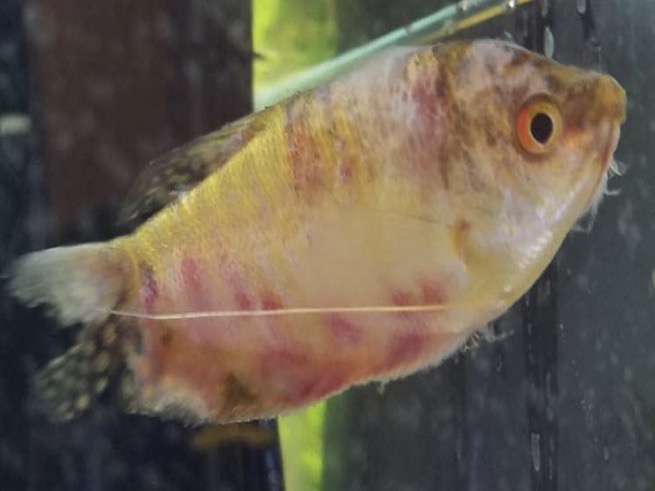
How would you describe the lesion in the following fish?
Multifocal hemorrhagic dermatitis consistent with bacterial infection
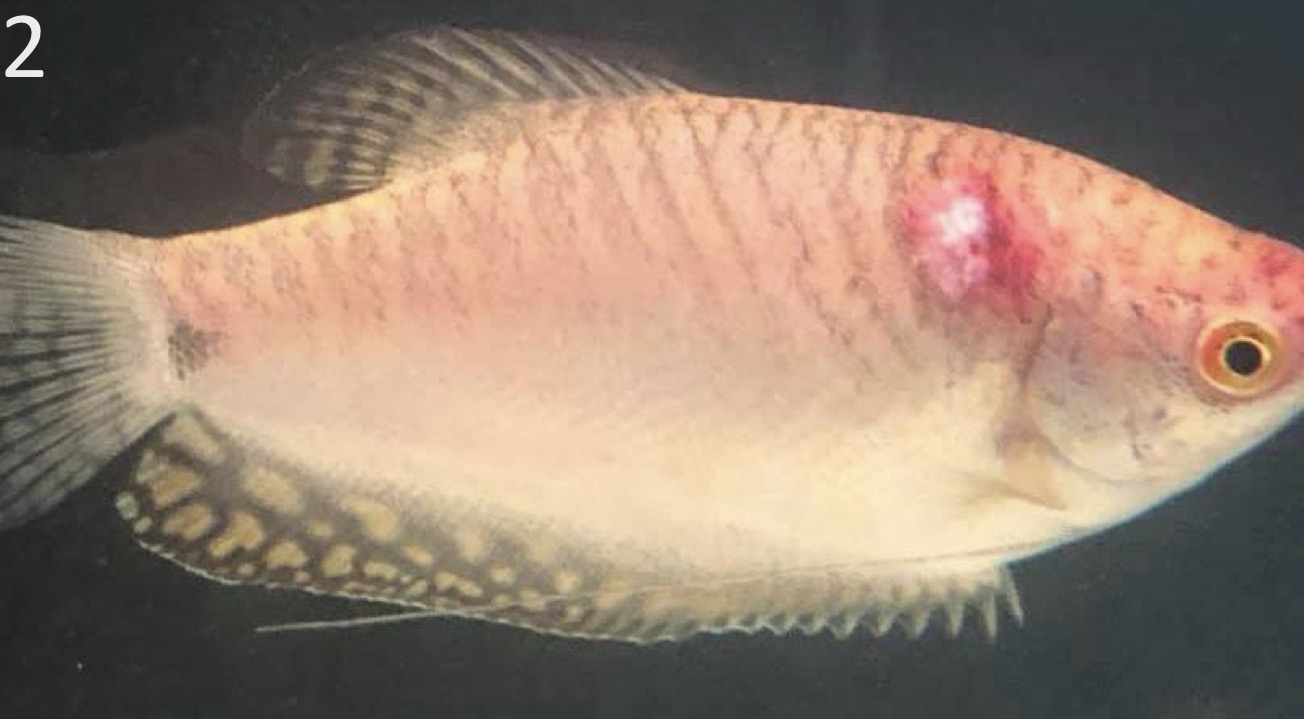
How would you describe the lesion in the following fish?
Focal ulcerative dermatitis consistent with bacterial infection
List the primary pathogens
Mycobacteria spp.
Vibrio spp.
Streptococcus spp.
Francisella noatunesis
Flavobacteria spp. / Tenacibaculum martitum
Flavobacterium spp.
Yellow pigmented filamentous bacteria associated with disease in freshwater fish
What other names can Flavobacterium columnare be called?
Columnaris disease
Cotton / wool mouth
Saddleback
Where will Flavobacterium columnare in freshwater typically infect?
Infects the gills and skin then will progress to septicemia
What temperature will Flavobacterium columnare typically infect freshwater fish?
Historically a warm water disease (above 20 *C) but emerging in cold water fish
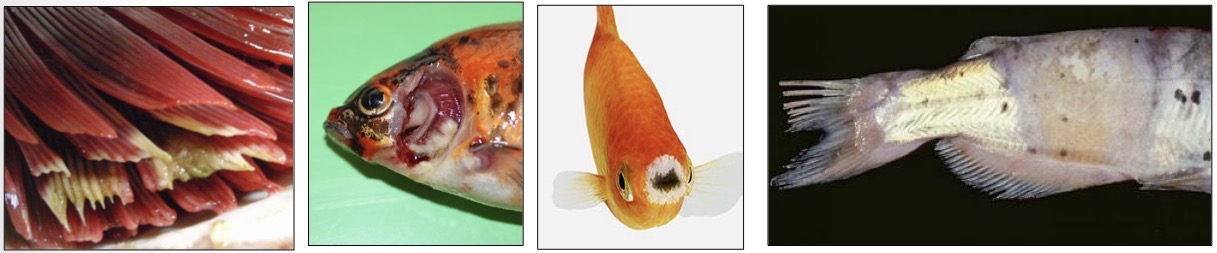
What bacteria is responsible for the signs in the following fish?
Flavobacterium columnare in freshwater fish
How do we diagnose F. Columnare in fish?
Gill clip and skin scrape wet mounts
Long filamentous bacteria that produce “haystacks”
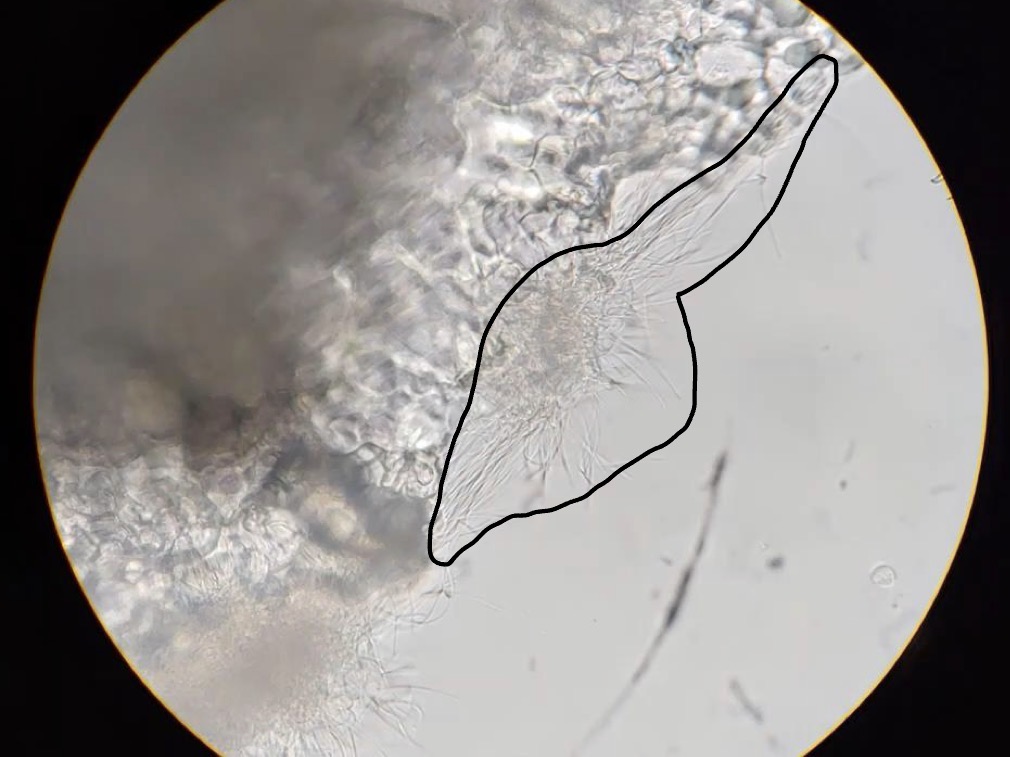
What bacteria is shown on the wet mount slide?
F. Columnare
HAYSTACK APPEARANCE
What bacteria is THE “bacterial gill disease”?
Flavobacterium branchiophilum
What is the mechanism of action of Flavobacterium branchiophilum?
Bacteria remain SUPERFICIAL but produce a toxin that results in acute vasoconstriction → hypoxia and hyperplasia of the fish
What is the treatment of F. columnare?
Oral or injectable antibiotics
What is the treatment of Flavobacterium branchiophilum?
Immersion treatment in formalin, Chloramine-T, hydrogen peroxide
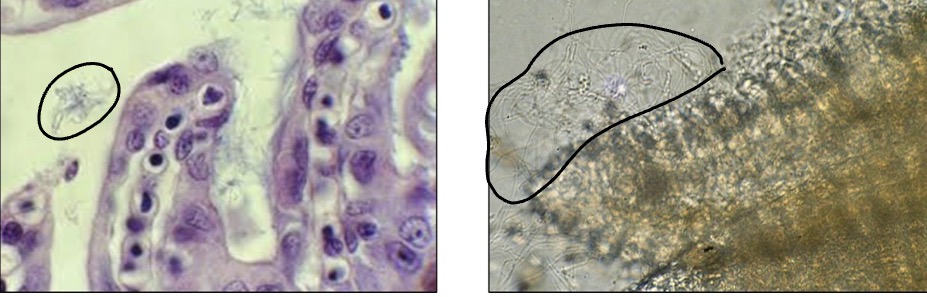
What bacteria is shown on the following slides?
Flavobacterium branchiophilum
Which will streptococcus spp. infect?
Both wild and captive fish
Both freshwater and saltwater fish
INFORMS YOU IT IS NOT HOST SPECIFIC
What clinical signs will appear in fish infected with streptococcus spp?
Fibrinous lesions systemically
High bacterial loads in the brain
What is streptococcus associated with wild marine fish often attributed to?
Environmental conditions such as:
Temperature changes
Freshwater run-off into ocean
MCQ: What pathogen would be most effectively treated with immersion antimicrobials?
Flavobacterium branchiophilum
What type of environment does Vibrio spp. (vibriosis) infect?
Saltwater pathogen
What clinical signs will be seen in fish infected with vibrio spp?
Skin lesions and signs of sepsis
What situations will vibrio spp. be epizootic?
Stressed or immunocompromised fish
Ingestion of diseased or asymptomatic fish
Contamination of wounds
What bacteria causes “Fish Tuberculosis”?
Mycobacteria spp.
What are the clinical signs of a mycobacteria spp. infection?
Often chronic wasting disease with prominent granulomas (especially in the liver) in individual fish
What fish environment are there high incidences of mycobacteria spp infection?
Aquarium fish
Laboratory fish
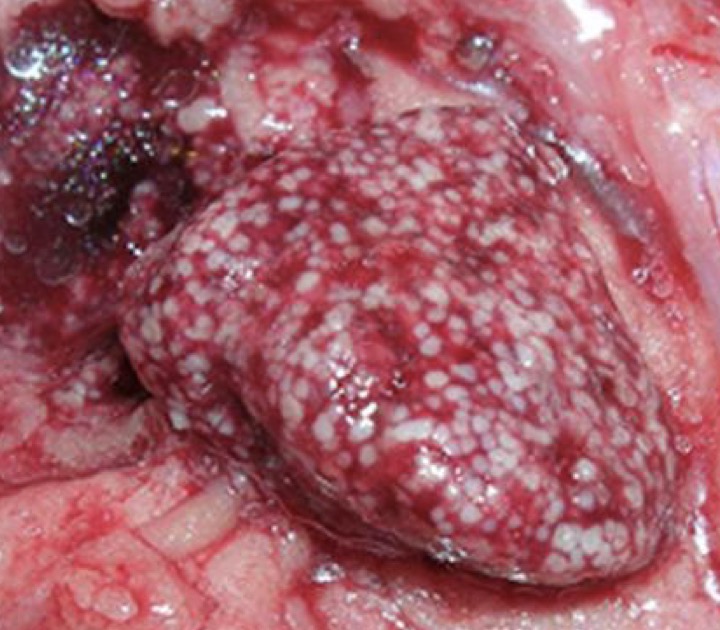
What bacteria is responsible for the following lesion?
Mycobacteria spp
Why is mycobacteria spp. infection extremely difficult to manage?
Bacteria is an INTRACELLULAR pathogen that causes granulomatous formation that is unresponsive to antibiotics
Destroys the biofilm in the fish’s environment → hard to eradicate
What bacteria causes Fish Handler’s Disease?
Mycobacteria spp. but will not cause systemic disease in humans
What type of fish are the only fish where antibiotics are licensed for use in the USA in the treatment of bacterial disease?
Foodfish
What do we do for the treatment of bacterial disease in aquarium fish?
Off-label and minor use-minor species FDA regulations apply = more flexibility in treatment
ALWAYS HAVE ANTIBIOTICS OR GRAM NEGATIVE BACTERIA ON HAND (THESE ARE THE OPPORTUNISTIC PATHOGENS)
What are alternative strategies for endemic bacteria used in aquaculture?
Vaccines
Selective breeding programs
MCQ: what characteristic makes mycobacteriosis so difficult to treat in infected fish?
Intracellular infections result in granuloma infection
MCQ: what management strategy is best for opportunistic bacterial pathogens in an aquarium setting?
Optimal fish husbandry
MCQ: what management strategy is best for primary bacterial pathogens in an aquarium setting?
Biosecurity
What steps are done prior to the entrance of new fish?
Collect thorough history from animal source
Quarantine 30-60 days prior to introduction
Comprehensive fish exam and prophylactic treatment for parasites
Maintain strict biosecurity SOPs
List the biosecurity SOPs
System specific equipment and people
Disinfection of equipment with bleach or iodine (RINSE WELLNESS SINCE TOXIC TO FISH)
Foot baths
Wellness documented records to trace infections