maintaining biodiversity
 Call Kai
 Learn
Learn Practice Test
 Spaced Repetition
 Match
Match Flashcards
 Knowt Play
1/30

There's no tags or description
Looks like no tags are added yet.
Name | Mastery | Learn | Test | Matching | Spaced | Call with Kai |
|---|
No analytics yet
Send a link to your students to track their progress
31 Terms
Factors affecting biodiversity
The biggest threat to biodiversity is the growth of the human population.
Some threats to biodiversity from human population growth are:
Habitat destruction and degradation of the environment
The overexploitation and unsuitable use of resources
Modern agricultural practices, including monoculture, the use of chemical fertilisers and crop protection chemicals
Global climate change
Habitat destruction
The destruction of the natural environment leads to habitat loss.
The clearing of land for agriculture, industry, housing, transport, leisure facilities, waste disposal and water storage removes vegetation, and many species of plants and animals either lose their habitats completely or become divided into small areas (habitat fragmentation).
Populations that get subdivided by this process are in danger of inbreeding and local extinction.
Deforestation has a devastating effect on the biodiversity of some countries.
Roots bind soil particles together and absorb much of the rainfall, but when forests are taken away, water runs straight off the land, leading to flooding.
Deforestation can lead to severe land degradation as a result of soil erosion and loss of soil nutrients.
Loss of marine ecosystems
Some causes of loss of marine ecosystems are:
Dynamite coral reefs- an extreme way to catch fish
Fishing using trawl nets that are pulled across the seabed; very little, if any, of the natural seabed is left in the North Sea as a result of this activity
Dredging of coastal waters and development along coastlines for industry, housing and tourism
Removal of trees, ploughing, and runoff from roads and urban areas increase sediment in rivers that flow into coastal waters.
Another problem is that by removing large predatory fish such as cod, less food is available for larger fish, marine mammals and seabirds, leading to further loss of biodiversity.
Hunting
Overexploitation involves poor people taking wild animals for bush meat.
The development of roads into forests for logging has made larger areas available for hunting bush meat
Primate species are particularly at risk: monkeys and chimpanzees.
Plants are also susceptible to hunting- removal of habitats for sale or as food.
Agriculture
Arable farmers often plant the same crop year after year in larger fields, as this allows them to specialise in one or a few crops; they can then use large machinery for cultivation and harvesting.
Intensive farming of this sort relies on high levels of fertilisers, crop protection chemicals, and the fossil fuels necessary to power machinery and manufacture agrochemicals.
Intensive arable farming is a type of monoculture.
Rearing beef cattle over large tracts of land in the tropics following clearance of natural vegetation is also monoculture.
Monocultures allow farmers to cultivate land more efficiently, so less land is required when farmers mix arable crops and livestock and when wastage is much higher.
Monocultures often have much reduced biodiversity compared to the natural habitat they replaced.
Herbicides are sprayed to control weeds.
Pesticides control outbreaks of diseases.
Agrochemicals have many negative impacts on the wild species that remain
Fertilisers make the soil nutrient-rich; it is thought that this encourages the growth of some plants which shade out slower-growing species, depriving them of light.
Herbicides are used to kill weeds, and that may be sources of pathogens and pests of crop plants, herbicides howver may kill non target species so reducing biodiversity in the surrounding areas.
Insecticides kill pests but also kill non-target species; insects that are important pollinators may be killed. Reduces biodiversity.
pollution from agriculture
Three main sources of pollution from agriculture are: fertilisers, pesticides and waste products from intensive livestock production.
Problems occur when a farmer uses too much fertiliser or if fertiliser is added before a heavy period of rain.
The result of this is that the fertiliser can drain from the land into lakes and rivers to cause water pollution and eutrophication (nitrate and phosphate ions from plants enrich the waters).
Nitrate is the main nutrient in run-off from arable land and is a limiting factor in marine waters, causing algae to bloom in the sea.
Fertilisers and sewage run-off cause huge growth of plankton; these plankton quickly die and are consumed by bacteria that deplete the water of oxygen.
Climate change
Climate change is occurring much faster and is likely to be too fast for species to adapt, which may result in a great loss of biodiversity.
Climate change causes a modification of weather patterns and an increasing number of extreme weather events such as hurricanes, typhoons, floods and droughts.
With global warming, the distribution of many species is changing- they are moving towards the poles and to higher altitudes.
Species entering new ecosystems means they won’t be as well adapted and will be in competition with better-adapted species.
Global climate change poses a threat to biodiversity in polar regions- loss of Arctic ice may lead to loss of an entire biome.
Another threat to marine habitats is the decrease in pH of seawater- acidification.
Carbon dioxide is very soluble in water, and as carbon dioxide increases in the atmosphere, it dissolves in water and decreases the pH.
Low pH makes it difficult for organisms to make shells of calcium carbonate.
The calcium carbonate of organisms acts as a sink for carbon; if this activity decreases, then less carbon dioxide is taken out of the atmosphere.
Warming of oceans is likely to cause stratification so that surface waters will not mix with nutrient-rich water from deep in the oceans. If this happens, the phytoplankton- the main producers in the sea- will not grow to provide food for the great diversity of the oceans.
Reasons for maintaining biodiversity
reasons are: ecological, economic, agricultural and aesthetic
Ecological reasons for maintaining biodiversity
Ecosystems with high biodiversity have higher stability and are better able to withstand environmental changes, such as storms, than those with less biodiversity, and they recover more rapidly and more thoroughly after environmental damage.
Ecosystems become unstable when there are decreases in population of organisms at different trophic levels- the loss of top predators would mean more herbivores, leading to increased overgrazing, land degradation, erosion and loss of biodiversity. Top predators fulfil roles in maintaining a balance in ecosystems.
Keystone species- species whose presence contributes to the function of an ecosystem; if a keystone species disappears from an ecosystem, species diversity decreases, ecosystem becomes unstable.
Loss of a keystone species leads to the loss of other species, in a domino effect; species losses cascade through the habitat as the loss of one species promotes the loss of others- this can be seen in top or apex predators.
Economic reasons for maintaining biodiversity: materials from natural resources
Although monocultures provide most of the human population with food, natural ecosystems still provide us with food and materials, for example, fish and timber.
Important drugs have been discovered in plant and animal species.
Without genetic diversity in the wild, plant breeders find it harder to breed new variants, which reduces the income made by the horticultural industry.
Economic reasons to maintain biodiversity: ecosystem services
Plants transpire water vapour, which contributes to the water cycle to provide us with drinking water
Water is filtered through soils and rock before it enters the water supply
Soil fertility is maintained by nutrient cycling
Organic waste materials added to waters in broken down
Reefs and mangrove forests protect coasts from erosion
Habitats moderate floods, droughts, and extreme wind and temperature
Insects and other pollinators ensure the crop plants and orchard crops are fertilised
Forests and peat bogs absorb carbon dioxide and reduce the effect of carbon dioxide in the atmosphere; they are carbon sinks
Agricultural reasons to maintain biodiversity
Biodiversity is important in maintaining soil structures.
Continual monocultures reduce soil biodiversity.
Maintaining a good soil structure with plenty of rotting material is good for binding soil particles together to prevent soil erosion and loss of nutrients.
Aesthetic reasons for maintaining biodiversity
Areas of natural wilderness and managed countryside are appreciated by many as beautiful places that should be conserved for future generations.
The natural world continues to inspire artists, photographers, poets, writers and other creative people.
Countries promote ecotourism as they provide income.
It has become increasingly important to provide natural places for people to experience, as more than half the world population live in urban areas and may suffer from nature deficit disorder.
Conservation of species, usually animals, in their natural habitat involves conserving their life support systems.
In situ conservation
Conservation of a species in its natural habitat is in situ conservation.
In situ conservation is always the preferred option for conserving individual species because species have all the resources that they need in an environment to which they are adapted.
Sometimes animals and plants are unable to adapt to an artificial environment
Animals are more likely to breed in their natural environment, especially larger animals who may be put in conditions much smaller than their natural habitat.
Internationally designated areas- in situ conservation
Biospheres reserves are areas recognised under UNESCOs Man and the Biosphere programme to promote sustainable development based on the work of local communities and sound science.
There are 5 biosphere reserves in the UK.
Nationally protected areas
There are three types of nationally protected areas in the UK:
National parks
Areas of outstanding natural beauty
National scenic areas
National parks are areas of countryside which includes villages and towns
National nature reserves
Nature reserves are areas that protect sensitive ecosystems and provide outdoor laboratories for research.
Management is geared to maintain conditions for some of the UK’s rarest animals and plants
Local nature reserves
Local nature reserves are under the control of local authorities through ownership by a lease or agreement with the owner of the land.
The main aim is to care for the natural features that make the site special.
Many local nature reserves are managed by country wildlife trusts.
Marine Conservation Zoos
Protection schemes for the seas around the UK.
There are currently 28 Marine Conservation Zones covering an area of about 10000km2.
These zones protect habitats and species that are representative of the biodiversity in our seas.
Managing these areas involves reducing the negative impact of fishing, pollution and other factors.
Sites of Special Specific interests
SSSIs give legal protection for the best sites for wildlife and geology.
The protection is such that landowners cannot change the management of the area without permission.
Other methods of ecosystem protection
Ecosystems are protected by being owned by bodies such as the National Trust and English Heritage.
Farmers may provide wildlife habitats on farmland, such as ponds, hedges and buffer zones around crops.
Farmers must:
ensure that land is well managed and retains its traditional character
protect historic features and natural resources
conserve traditional livestock and crops
provide opportunities for people to visit and learn about the countryside.
Ex situ conservation
Removal of a species to a protected place that is not its normal habitat. Botanic gardens, seed banks, zoos, and gene banks.
The list of endangered protected species is growing in number, and additional human dominated activites such as water development, mining, road construction and resort development, livestock grazing, poaching, logging, habitat loss and habitat degradation continue to be threats to biodiversity.
Sometimes it is impossible to conserve a species in its natural habitat because that habitat is shrinking, fragmented, or there are so few specimens left in the wild that they must be removed to safeguard their future.
Botanic gardens
Some botanical gardens focus on plants from specific regions or have collections from specific taxonomic groups
Growing plants that are extinct in the wild in the hope they can be reintroduced.
Protecting wild populations of plants collected from the wild, easier to grow plants in places that are not their natural habitat than it is with wild animals.
Protecting plants threatened by habitat loss.
Researching methods of reproduction and growth so that species can be cultivated in botanic gardens under appropriate conditions and can be propagated
Researching conservation methods so plants can be introduced, perhaps to new habitats, if their original habitat has been destroyed; this includes studying how natural communities change as new species become established so plants can be reintroduced in an appropriate sequence over time.
Seed banks- ex situ conservation
Many botanical gardens have seed banks where seeds are stored.
A seed bank is a long-term store of germplasm in the form of seeds. Collections of seeds are dried and then stored at temperatures near -20 degrees.
Seeds are collected from the wild or from crops, sorted, dried and stored in very cold conditions.
They are checked at intervals to see whether they are still viable- this ensures a supply of plants for the future and also is a store of genetic diversity- an important store of genes and alleles for future breeding programmes or to use for genetically modifying plants of economic importance.
It is also a store of plant material that may be useful in providing chemicals such as medicines for the future.
Removing water from seeds slows their metabolism, so they remain viable for many years.
With this small water content, there is little danger that ice crystals will damage the cells in the seed during freezing and thawing.
The only way to find out whether stored seeds are still viable is to try to germinate them.
Seedbanks carry out germination tests at 5-year intervals.
When fewer than 85% of seeds germinate successfully, plants are grown from these seeds so fresh seeds can be collected and stored.
When such plants are grown from samples of stored seeds, there is the possibility of altering the genetic diversity that was originally stored.
Samples of rare plants are unlikely to contain all the genetic diversity of the original sample after being stored in a seedbank and then grown into plants.
The only answer to this problem is to put as large and diverse a sample as possible into storage in the first place.
Many species have seeds that do not survive freezing or drying, so cannot be stored in seed banks.
Instead of storing seeds, other ways have been used to save their genes for the future- some can be kept as tissue culture and others just have to be grown as mature plants in the ground in the field gene banks.
Zoos- ex situ conservation
Zoos protect endangered and vulnerable species
Zoos take part in breeding programmes for those species that will breed in captivity.
Researching the biology of species to gain a better understanding of breeding habits, habitat requirements and genetic diversity.
Contributing to reintroduction schemes
Educating the public about wildlife and conservation
Zoos cooperate so that breeding programmes generate genetic biodiversity and species do not become inbred- a risk when maintaining small populations
As part of many breeding programmes, animals are transported from one zoo to another to prevent inbreeding and promote genetic diversity in the animals kept in captivity.
Frozen zoos- ex situ conservation
A cheaper option is to collect sperm and keep it frozen for many years in a sperm bank.
When required, sperm samples are thawed and used for artificial insemination.
Eggs and embryos can also be stored in the same way as sperm.
Eggs are more difficult to freeze because they are more likely to be damaged by the freezing or thawing process.
Eggs are large cells with a lot of water that tend to form ice crystals, which damage internal membranes.
Eggs are fertilised in vitro and then frozen until a surrogate mother becomes available.
Frozen zoos now hold genetic resources for many endangered and vulnerable species in case they are ever needed.
These facilities hold much more genetic diversity than a normal zoo- material can be kept for a long time.
International conservation- international union for the conservation of nature (IUCN)
The International Union for Conservation of Nature assesses the status of many of the world’s species of animals and plants.
International organsitation working in the field of conservation
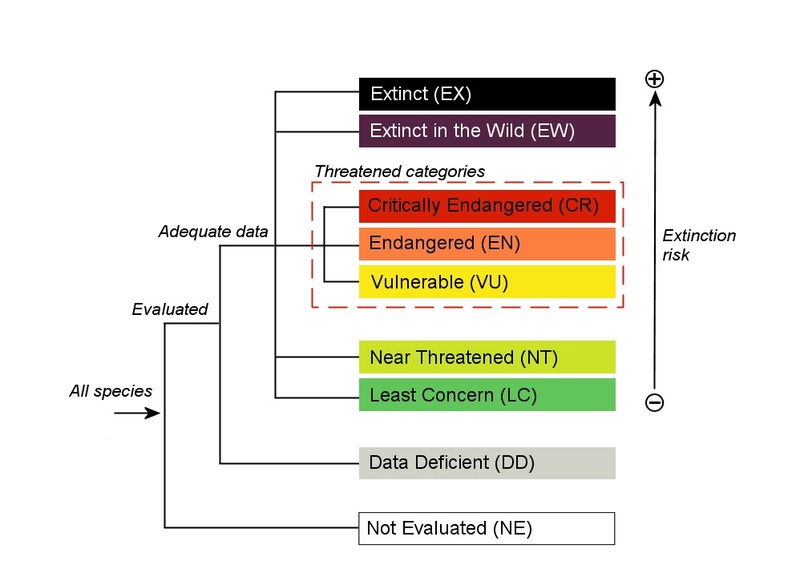
International conservation- convention of biological diversity (CBD)
The covention of biological diversity (CBD) was signed at the 1992 Earth Summit and ratified in 1993.
The convention had three main strands, which are:
conservation of biological diversity by the use of in situ and ex situ conservation methods
sustainable use of biological resources
fair and equitable sharing of benefits arising from genetic resources
International conservation- the Secretariat of the Convention on Biological Diversity (SCBD)
Based in Montreal, Canada was established to oversee the implementation of the goals of the convention and organise international cooperation and future meetings.
Countries that signed the convention had to develop national strategies for the conservation and sustainable use of biological diversity by writing and implementing biodiversity action plans
At the 10th meeting of the SCBD in 2010 in Japan, countries agreed to take action to halt the alarming global decline of biodiversity, set 20 targets; here are three:
Target 5: The rate of loss of all natural habitats, including forests, is at least halved and, where feasible, brought close to zero, and degradation and fragmentation are significantly reduced.
Target 6: All fish and invertebrate stocks and aquatic plants are managed and harvested sustainably, legally and applying ecosystem-based approaches, so that overfishing is avoided, recovery plans and measures are in place for all depleted species and vulnerable ecosystems, and the impacts of fisheries on stocks, species and ecosystems are within safe ecological limits.
Target 12: The extinction of known threatened species has been prevented and their conservation status, particularly of those most in decline, has been improved and sustained.
Trade in wild animal and plants
Trade in animals for the pet trade and in animal materials such as ivory is huge, so is the trade of plants lifted straight from the wild- much of this trade is illegal.
In 1973, 145 countries signed an agreement to control the trade in endangered species and any products from them, such as fur, skin and ivory.
This agreement is called the Convention on International Trade in Endangered Species of Wild Fauna and Flora (CITES).
CITES came into force to protect various plants and animals from exploitation.
CITES considers the evidence presented to it about endangered species and assigns the species to one of three appendices.
Appendix 1 has the species most at risk of extinction.
Appendices 2 and 3 list those species that are less threatened with extinction but may be so in the future if trade persists.
Concerns have been expressed that a CITES listing doesn’t always benefit a species; if trade in a species or product becomes illegal, this means the cost of the product rises, which means people may feel more inclined to break the law.