Organic Chemistry Reactions *Alkenes and Alkynes
 Call Kai
 Learn
Learn Practice Test
 Spaced Repetition
 Match
Match Flashcards
 Knowt Play
1/8

There's no tags or description
Looks like no tags are added yet.
Name | Mastery | Learn | Test | Matching | Spaced | Call with Kai |
|---|
No analytics yet
Send a link to your students to track their progress
9 Terms
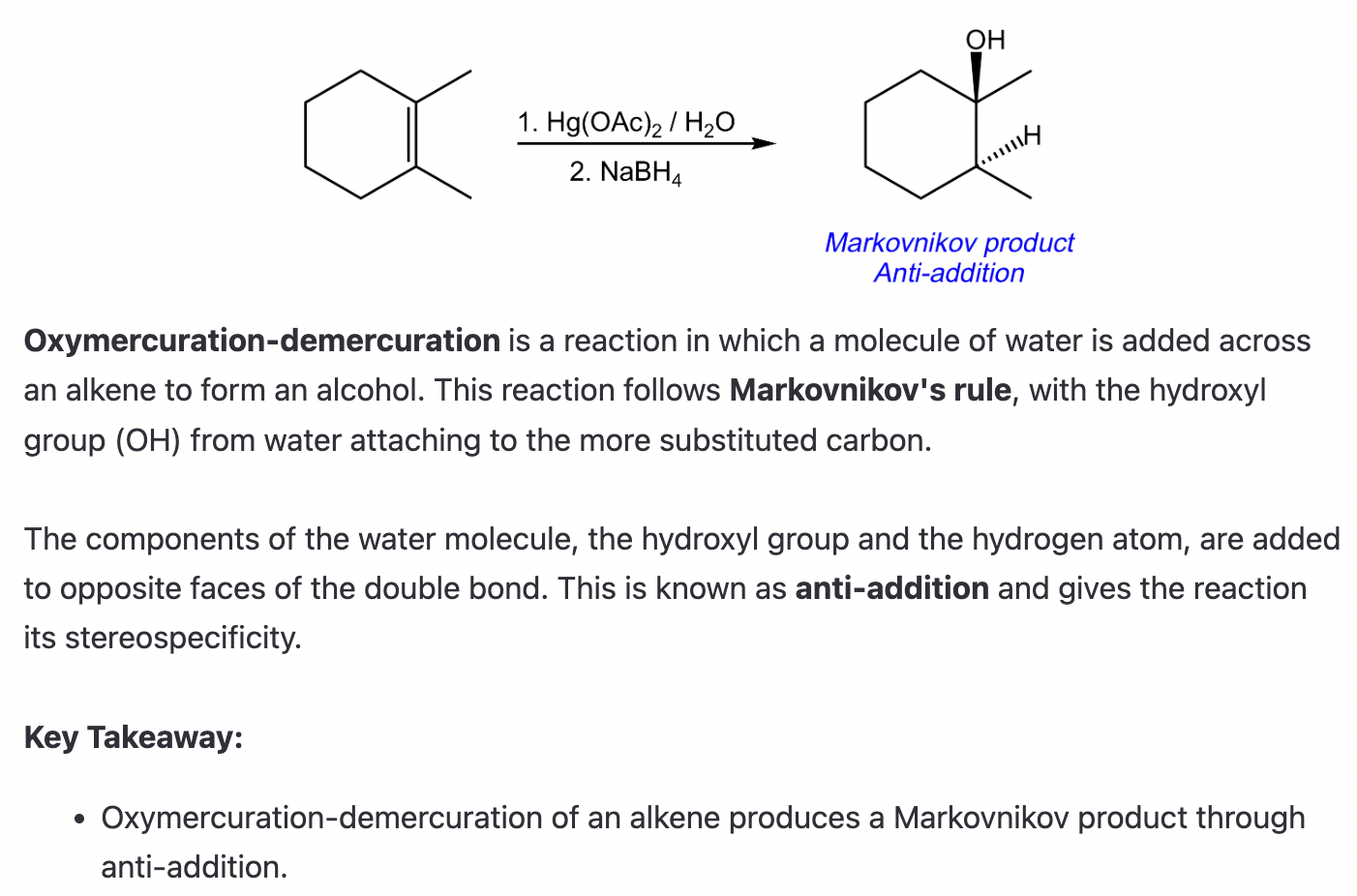
Oxymercuration Demurcuration
Markovnikov addition of OH
No rearrangements
Anti addition
Reagents:
Hg(OAc)2, H20, THF
NaBH4, OH-
Halogenation
always anti addition
No hydride or methyl shifts
Reagents:
X2/CCl4 (un reactive solvent, CHCl2 - with chlorine in it)
X2/H2O2
X goes to less subsituted carbon
Anti markovnikov addition
X2/H20 (reactive solvent)
OH always ends up on the more substituted Carbon (H20 attacks more substituted carbocation)
X on the less substituted Carbon
Hydrobormination with ROOR (H202)
ANTI - Markovnikov addition
No rearrangements
Where on an epoxide will be attacked?
If step one is a basic (negatively charged thing)
then epoxide will be attacked at the LESS subsituted Carbon
Easier to attack carbon
H2/Pd-C
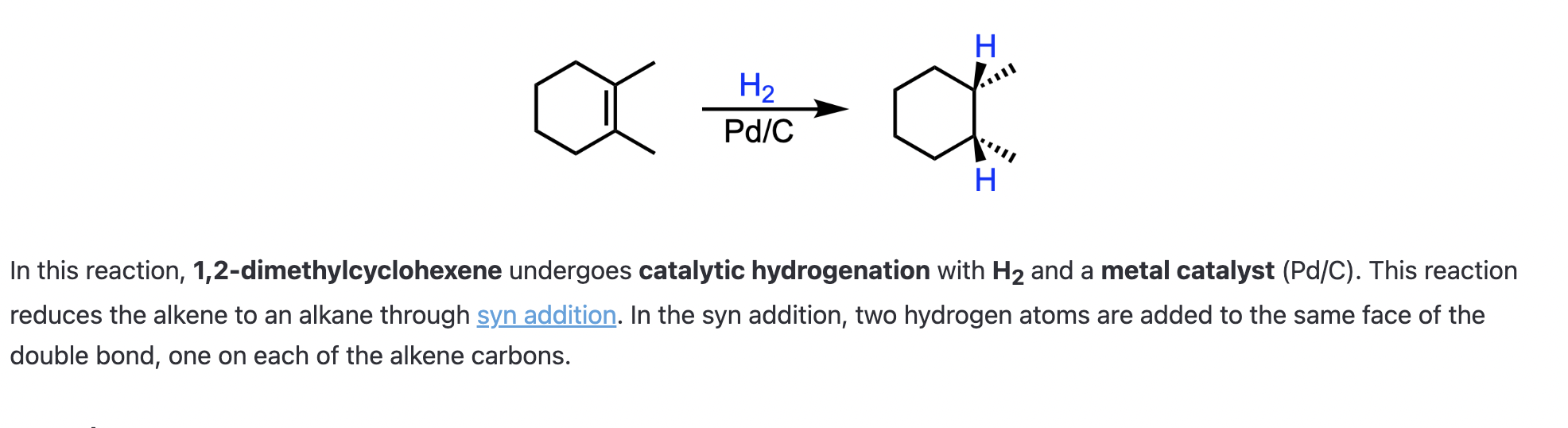
Syn addition
removes all double or triple bonds
Lindlar’s catalys
removes only one bond
Na, NH3
Anti addition
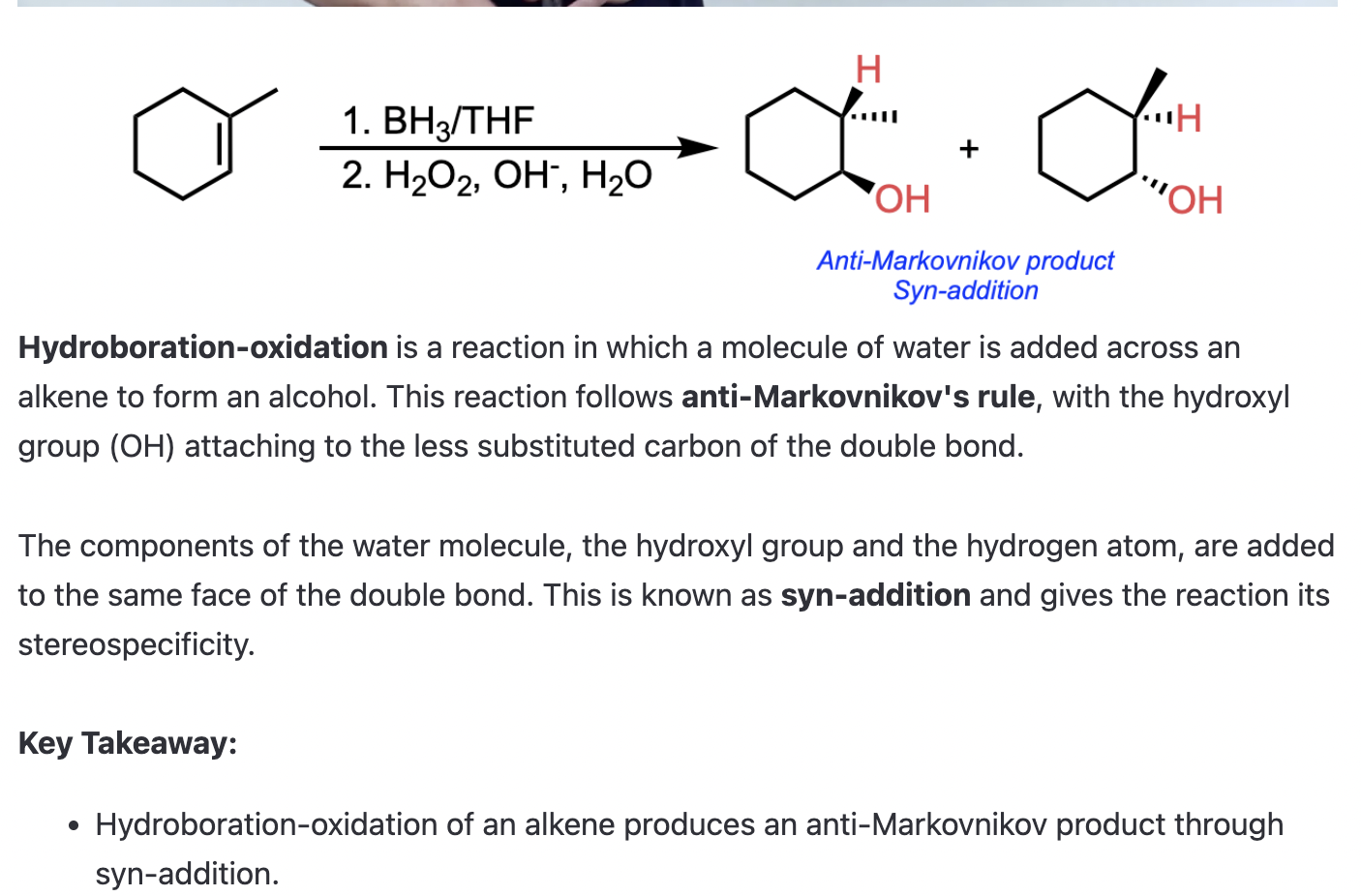
Hydroboration Oxidation
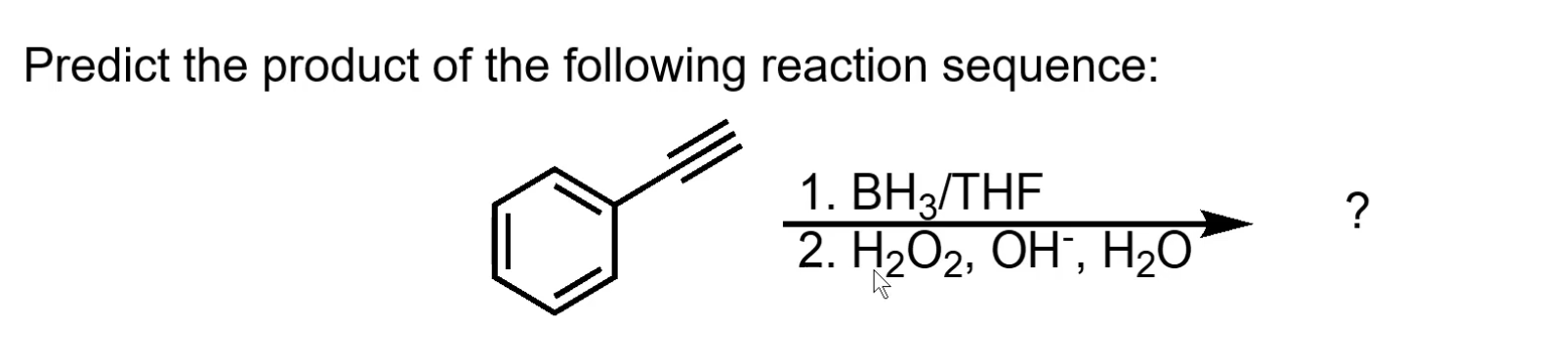
Forms anti - markovnikov product
Sodamide NaNH2 is used for?
often used for forming alkynes for di-halides
What best describes the regioselectivity and stereoselectivity in the hydroboration-oxidation of an alkene?
Markovnikov vs not
Syn vs anti
Which best describes the regioselectivity and stereospecificity in the oxymercuration-demercuration of an alkene?