Blood Cell Immunology
 Call Kai
 Learn
Learn Practice Test
 Spaced Repetition
 Match
Match Flashcards
 Knowt Play
1/35

There's no tags or description
Looks like no tags are added yet.
Name | Mastery | Learn | Test | Matching | Spaced | Call with Kai |
|---|
No analytics yet
Send a link to your students to track their progress
36 Terms
List the anticoag. used to collect plasma
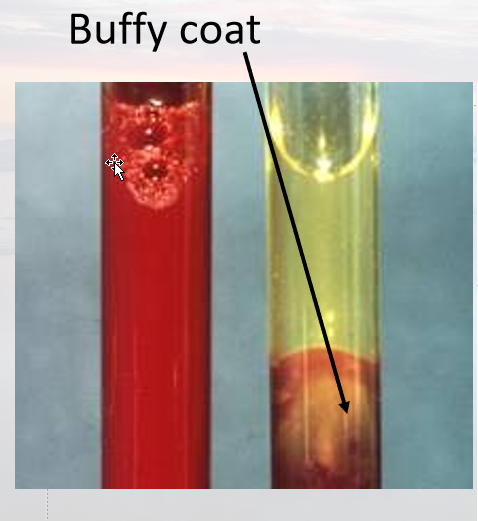
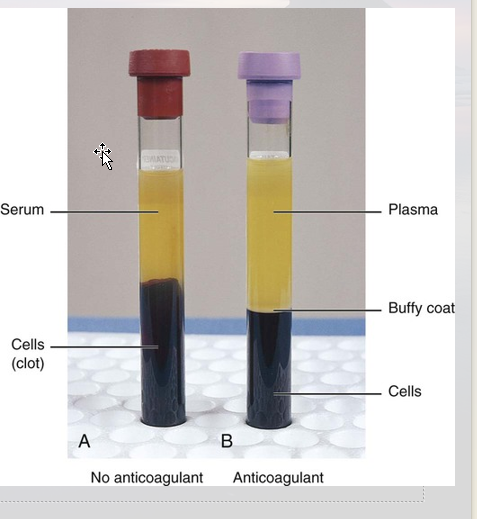
What are the layers observed?
Plasma:
Anticoag. used to collect:
Ethylenediamine tetra-acetic acid (EDTA)
blood cell counts and morphology
if fresh fingerstick smears = not available (purple/lavender top)
Sodium citrate
blood coagulation and platelet studies (blue top)
Heparin
preventing hemolysis and to test for osmotic fragility
Layers
once collected → centrifuge + gravity sedimentation → 3 layers:
Plasma: anticoagulated blood (fluid portion)
buffy coat (white cell layer and platelets)
RBCs (packed)
Describe Serum
Different from Plasma
Testing
Collection
Used for
Different from Plasma
Blood collected without an anticoagulant
Platelets + coagulation factors act. → fibren mesh → entrabs cellular elements → Serum (plasma minus fibrinogen)
Testing:
Collection:
centrifuging clotted blood in red top tubes → 2 layers
Used for:
chemistry, blood bank, and serology testing
Describe the procedure for Blood Cell Differentiation
Wright’s stain
2 Dif. stains
Methylene blue (basic dye)
stains acidic compounds blue
DNA
RNA
basophil granules
Nuclei
Eosin (acidic dye)
stains basic compounds pink/red
hemoglobin
eosinophil granules
Describe RBCs
Shape
Hematopoiesis origins
Size
Describe what happen to central Pallor
RBCs:
Shape;
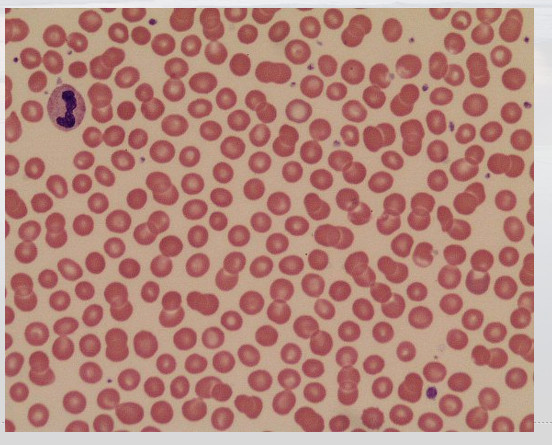
Biconcave w/ central pallor
hematopoiesis
Main: Bone Marrow
extramedullary hematopoiesis:
spleen, liver, and lymph nodes
When bone marrow fails to function (myelofibrosis) or unable to meet demands (hemolytic anemia)
Size:
7.2 microns in diameter (same size of small lymphocyte nucleus)
Central pallor makes up approximately 1/3 of the cell
Central Pallor:
increases in iron deficiency anemia
Absent in Spherocytes
RBCs
Differentiate between Microcytic and Macrocytic RBCs
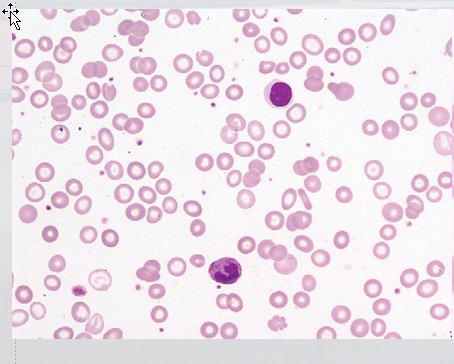
Micro Causes:
Pyridoxine deficiency
Thalassemia
Iron deficiency anemia
Chronic disease anemia
Sideroblastic anemia
Macro Causes:
Vitamin B12 or Folate deficiency
Liver Disease
MDS
Chemotherapy (e.g. methotrexate)
Microcytosis
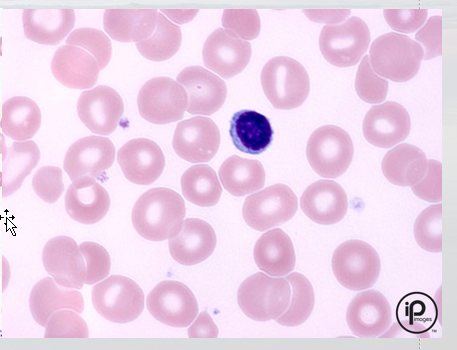
Macrocytosis
Describe Neutrophils (segs)
Production
Size
Nuelceus Structure
Granules
Functions
Neutrophils
Production:
bone marrow
Size: 10-16 microns
Nucleus Structure: Segmented
2-5 lobes; most 3-4 lobes
Granules:
bactericidal enzymes such as hydrolases, lipases, nucleases
Functions:
first cells to accumulate in acute inflammatory responses (motile)
Phagocytosis, bactericidal activity
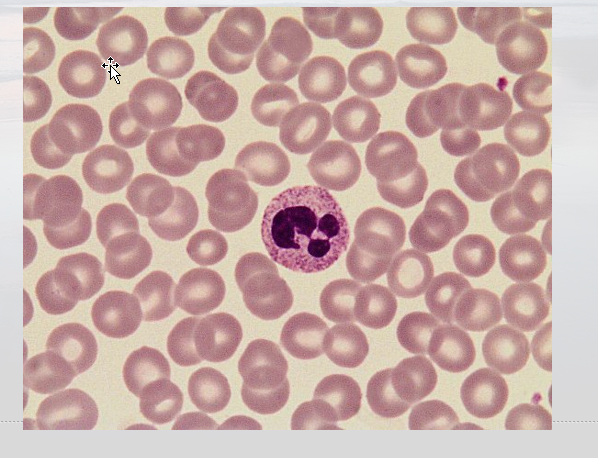
Neutrophils
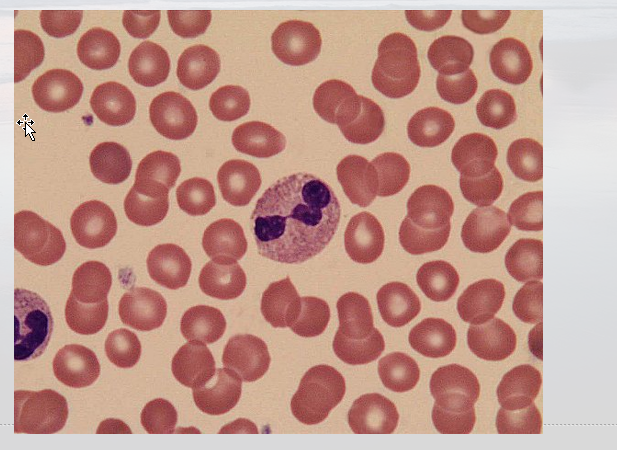
Neutrophils
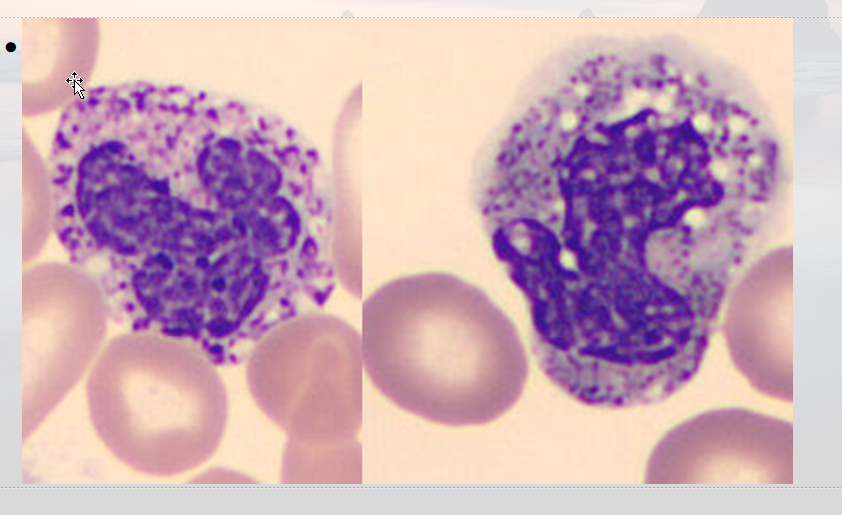
Toxic Granulation Vacuolization; neutrophil; sign that infection or something is going on
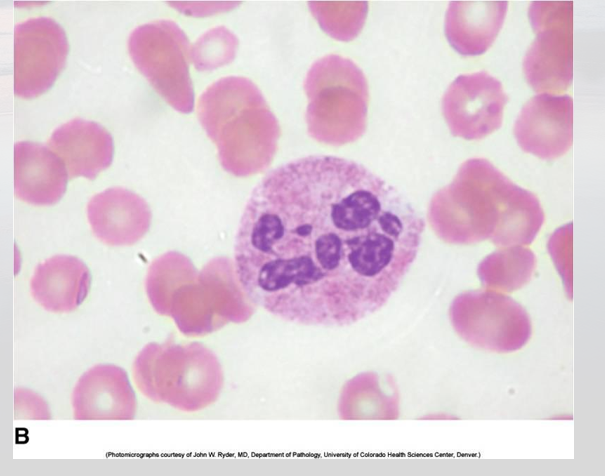
Hypersegmented Neutrophils; Associated with megaloblastic anemia
Describe Eisinophils
Produced
Size
Granules
Function
Produced
bone marrow
size: 10-15 microns in diameter
Granules
Large cytoplasmic granules (acidophilic)
Function:
Phagocytic (not main)
Anti parasite
Allergies
Contains substances that acts as antihistamines
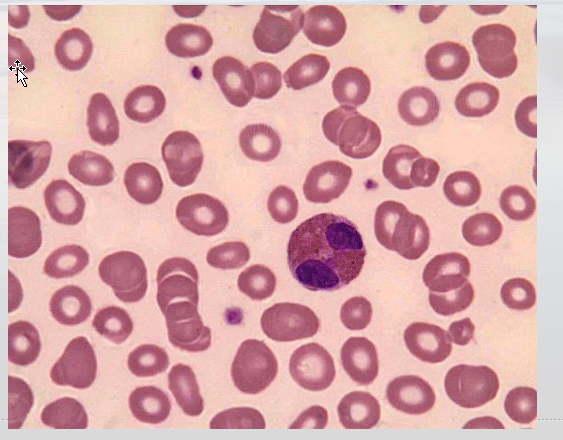
Eisinophils
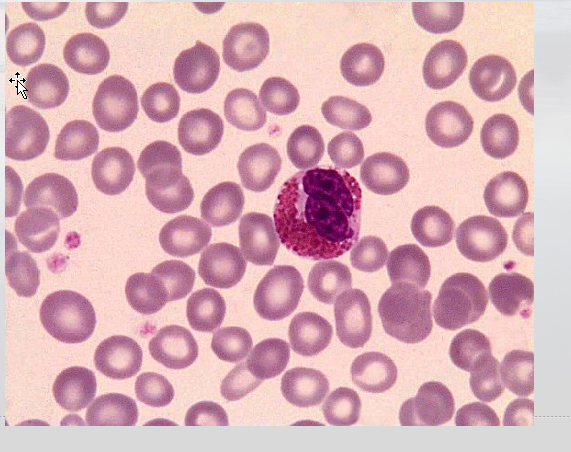
Eisinophils
Describe Basophils
Produced
Matures into
Size
Granules
Function
Produced
bone marrow
Matures into
Mast Cells (tissue basophil)
after migration into tissue
size: 10-14 microns in diameter
Granules:
Large cytoplasmic granules (basophilic)
Function:
immediate-type hypersensitivity reactions such as allergic drug reaction
Releases mediators of allergic reactions (histamine)
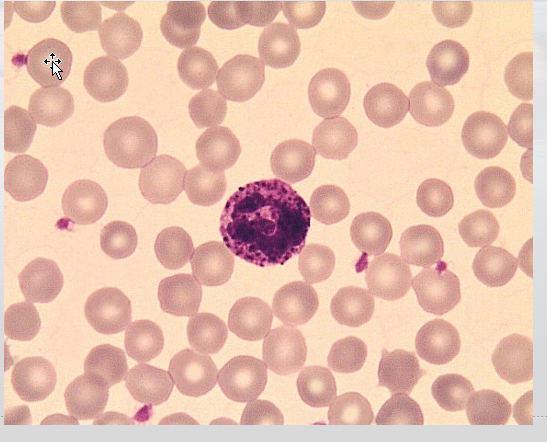
Basophil
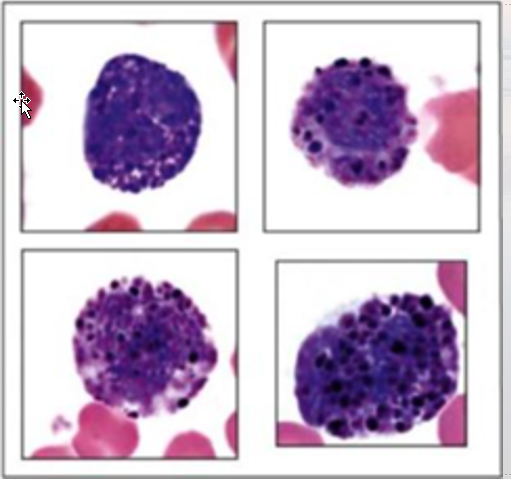
Basophils
Describe Monocytes
Produced
Migration
Matures into?
Size
Describe nucleus
Function
Produced in bone marrow
Migration:
blood → tissue
Matures: into macrophage
Size: 14-20
Nucleus:
no segmentation
Horseshoe or kidney-bean shaped
Function:
phagocytosis
removing aged, dead, or abnormal RBCs, WBCs, plateles
anti mycobacteria, bacteria, fungi, and viruses
process/present antigens → humoral activity
act. by products of lymphocyte activation (lymphokines)
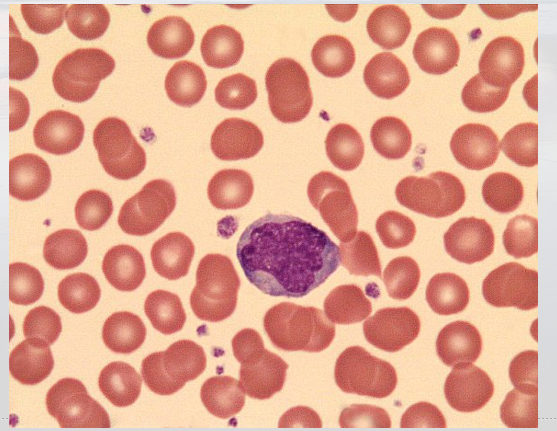
Monocytes
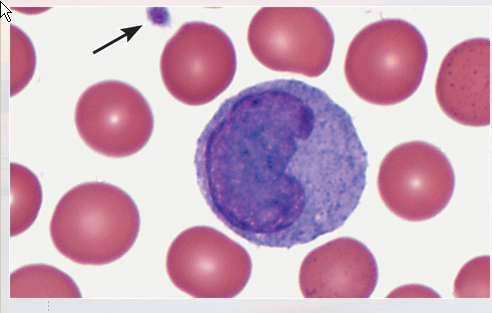
Monocytes
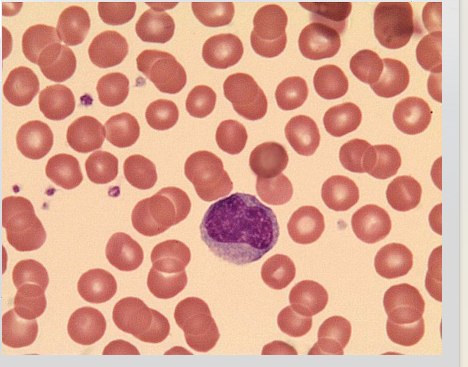
Monocytes
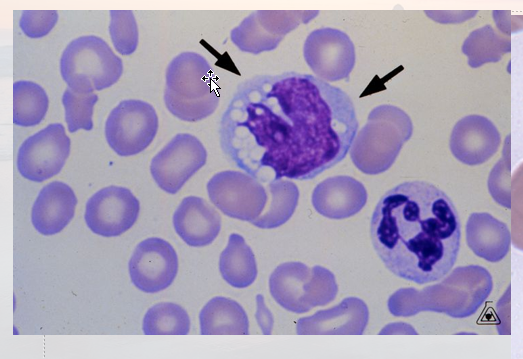
Monocytes; w/ vacuoles
Describe Lymphocytes
Nucleus:
No segmentation of nucleus
Functions
antibody production by plasma cells (activated B-cells)
Cell-mediated immunity
delayed hypersensitivity,
organ transplant rejection,
tumor rejection
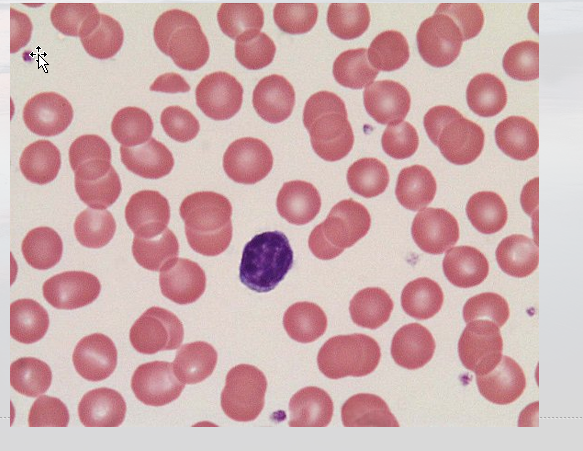
lymphocyte
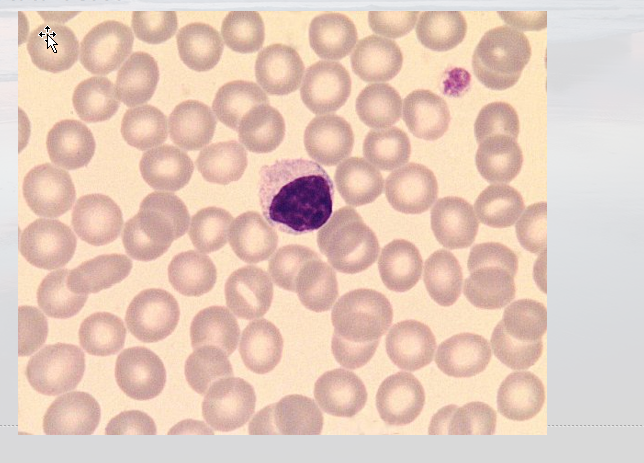
lymphocyte
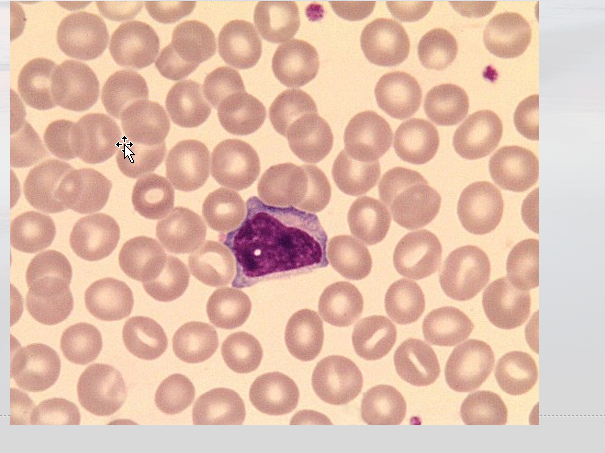
lymphocyte
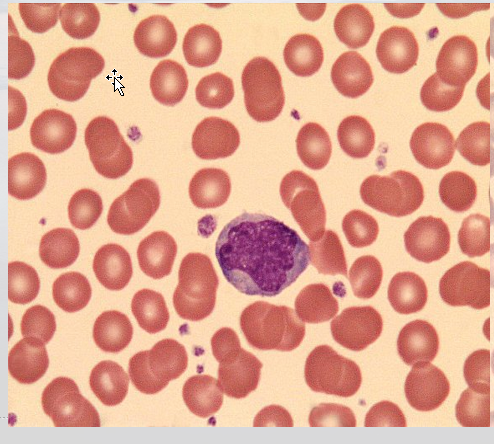
monocyte
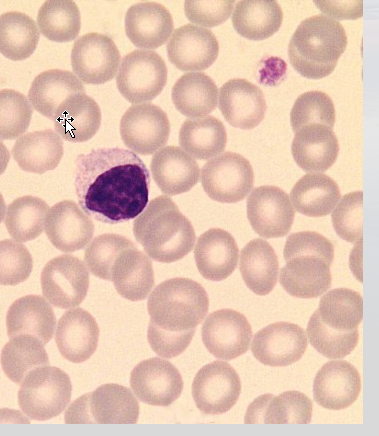
lymphocyte
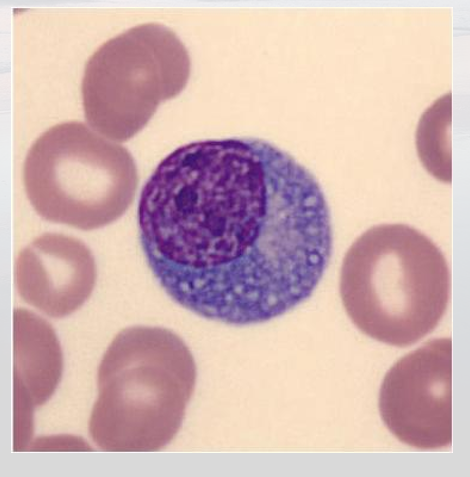
Plasma cells
Describe Platelets (thrombocytes)
Produced
Precursor
Size
Shape
Function
Produced
bone marrow
Precursor:
Megakaryocyte
Size: 2-4
Shape
Light purplish-blue to sky blue
Round, oval, or irregular forms
Function
maintaining homeostasis of blood
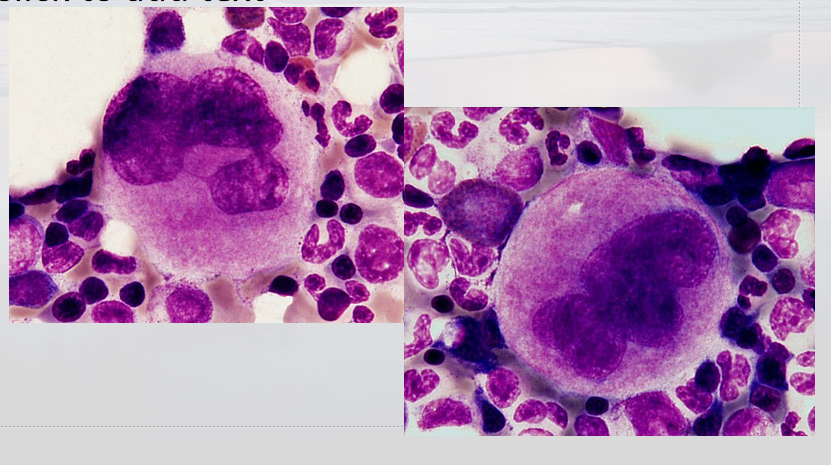
megakarocytes
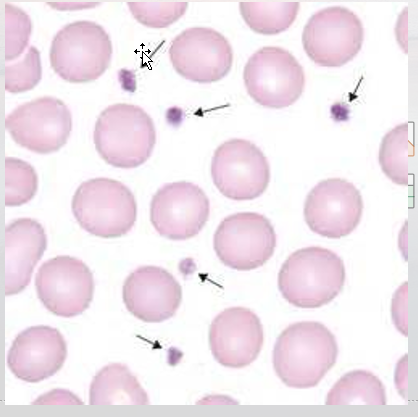
Platelets
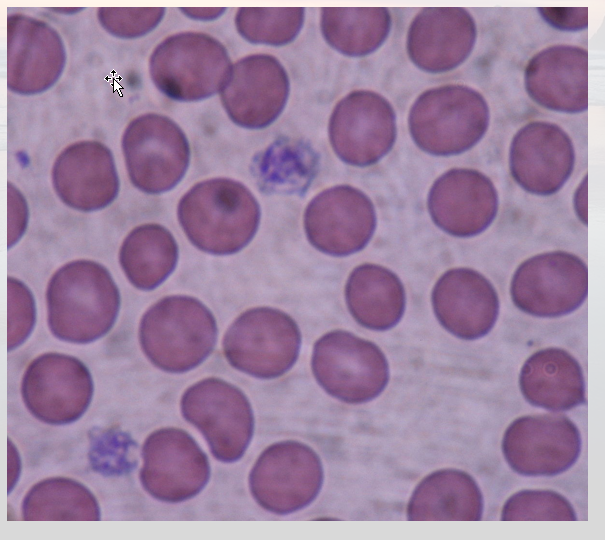
Giant Platelet Disorder