Equilibrium and Hearing
 Call Kai
 Learn
Learn Practice Test
 Spaced Repetition
 Match
Match Flashcards
 Knowt Play
1/19

There's no tags or description
Looks like no tags are added yet.
Name | Mastery | Learn | Test | Matching | Spaced | Call with Kai |
|---|
No analytics yet
Send a link to your students to track their progress
20 Terms
equilibrium
sensation regarding position of the head in space; gravity, linear acceleration, and rotation
hearing
sensations regarding vibrations in the air around the head
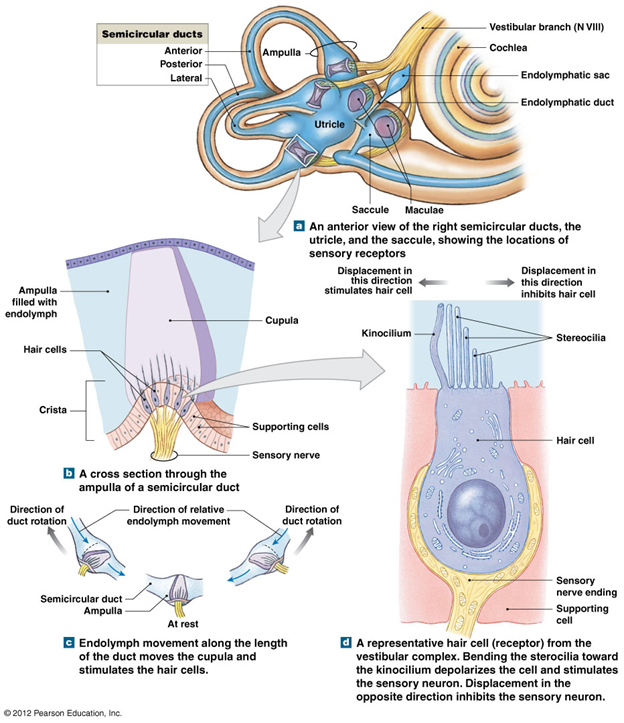
Semicircular ducts
contains ampulla and cupula
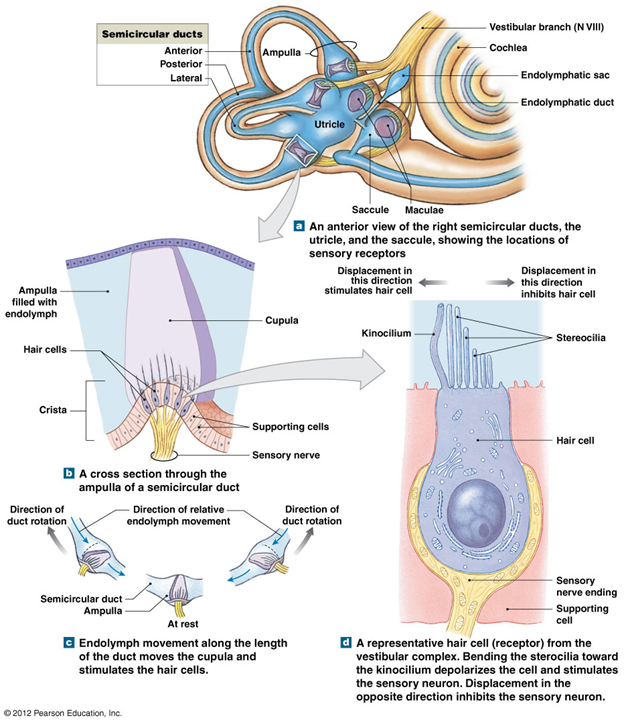
ampulla
expanded region containing receptors(cristae)
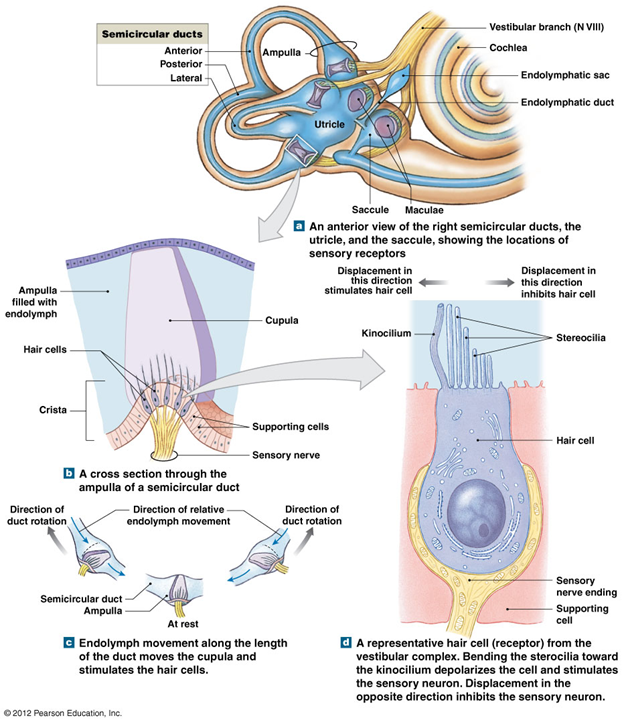
cupula
gelatinous structure extending across ampulla; contains stereocilia and kinocilium
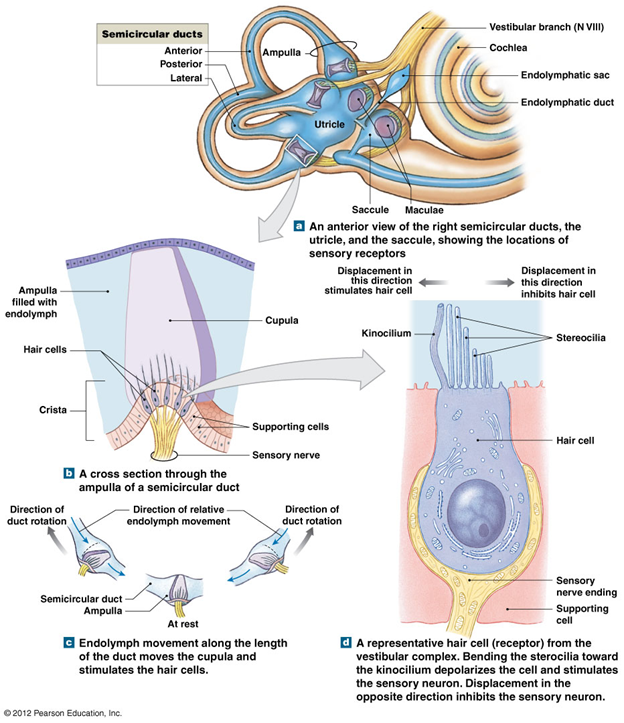
Hair cells of the semicircular ducts:
detects deflection of the cupula, secretes neurotransmitter to sensory neurons; bending of cilia alters rate of neurotransmitter release
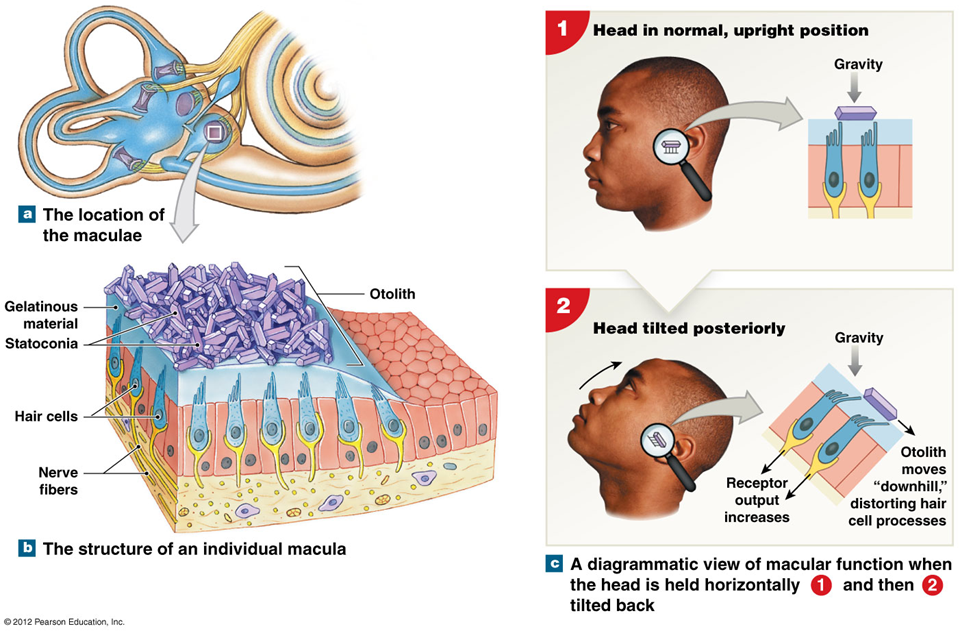
Utricle/saccule
each houses a single macula
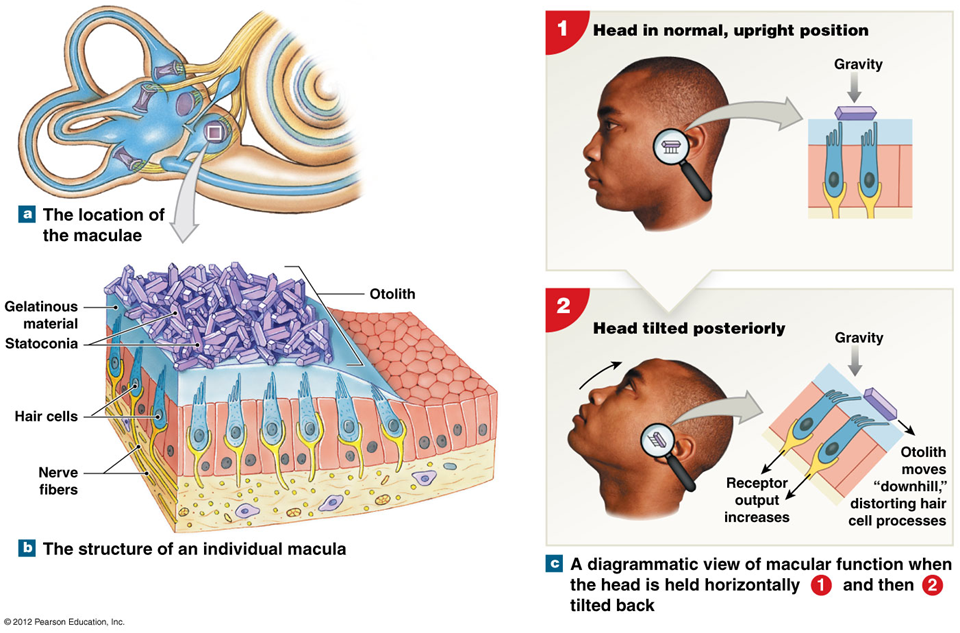
macula
contains a cluster of hair cells and a otolith embedded with crystals (statoconia)
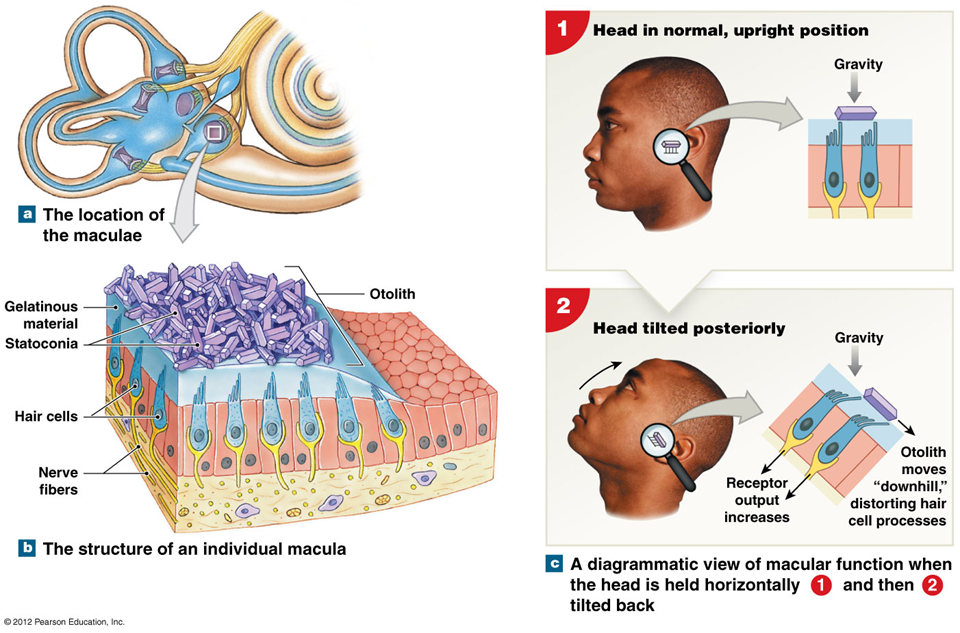
Hair cells of the maculae:
bending of processes in otolith is cause by gravitational pull when head tilts and inertial drag during acceleration
Pathways for equilibrium:
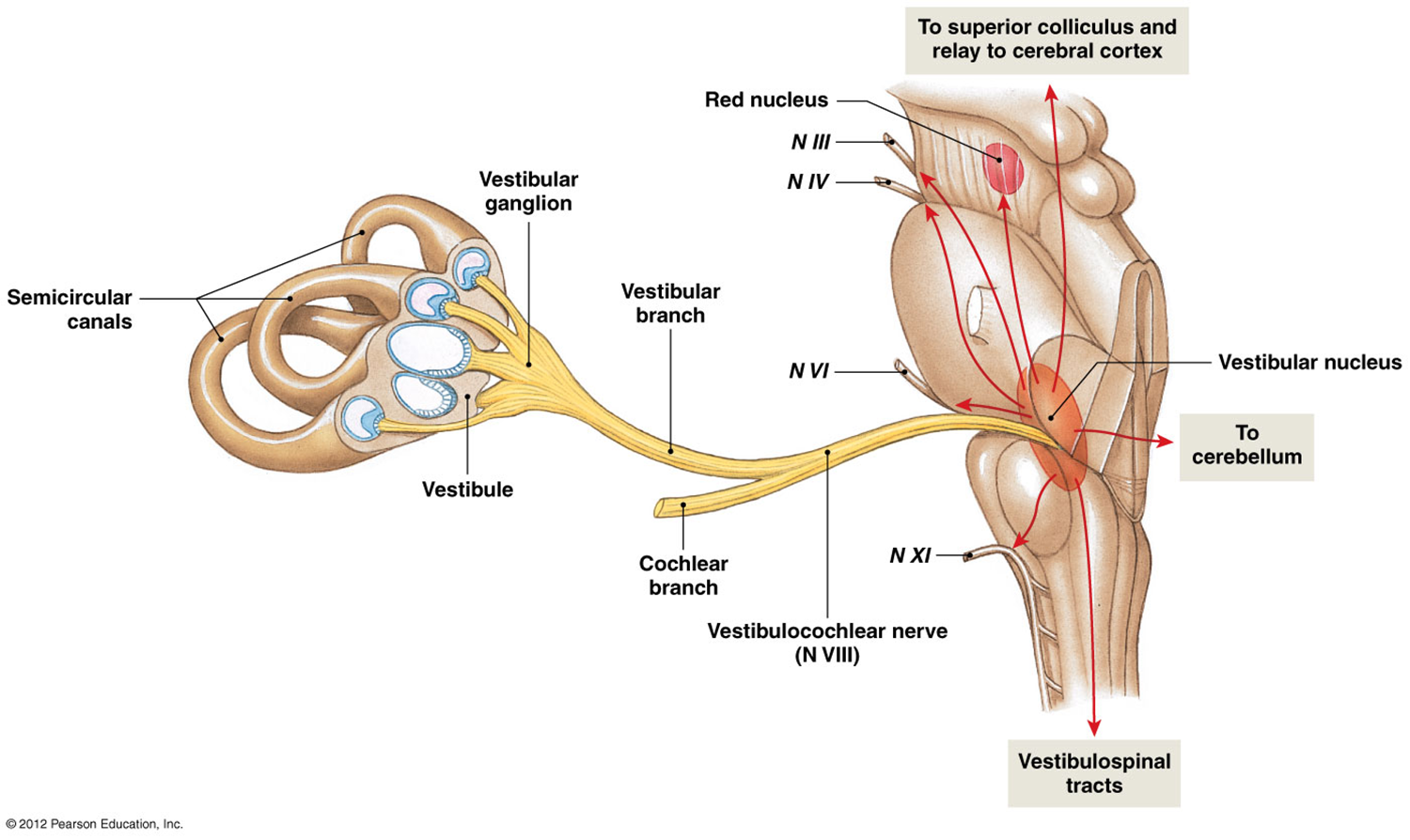
hair cells monitored by sensory neurons cell bodies in vestibular ganglion fibers form vestibular brand of CN 8
Functions of vestibular nuclei:
integrates info from both sides of the head
relays info to the cerebrum and cerebellum
sends reflex commands to motor nuclei
sound waves
vibrations of air
frequency (pitch)
waves per unit time; highness or lowness of sound
amplitude (volume)
energy of the waves; loudness of softness of sound; indicated by the number of activated receptors
What are the chambers of the cochlea?
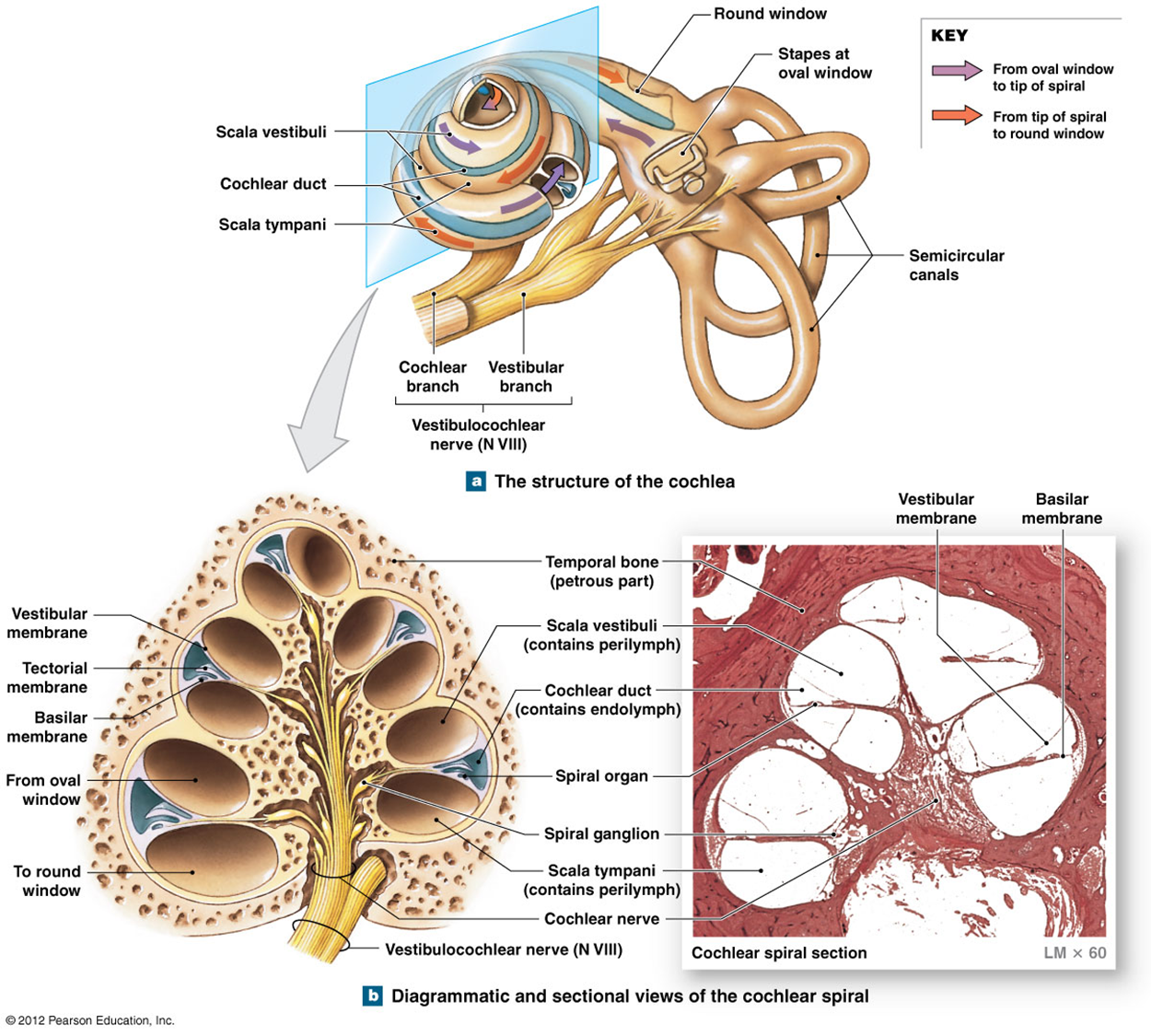
scala vestibuli; receives vibrations from oval window
scala media (cochlear duct)
scala tympani; sends vibrations to round window
What are the membranes of the cochlea?
vestibular membrane; b/t vestibuli/media
basilar membrane; b/t media/tympani
tectorial membrane; in scala media
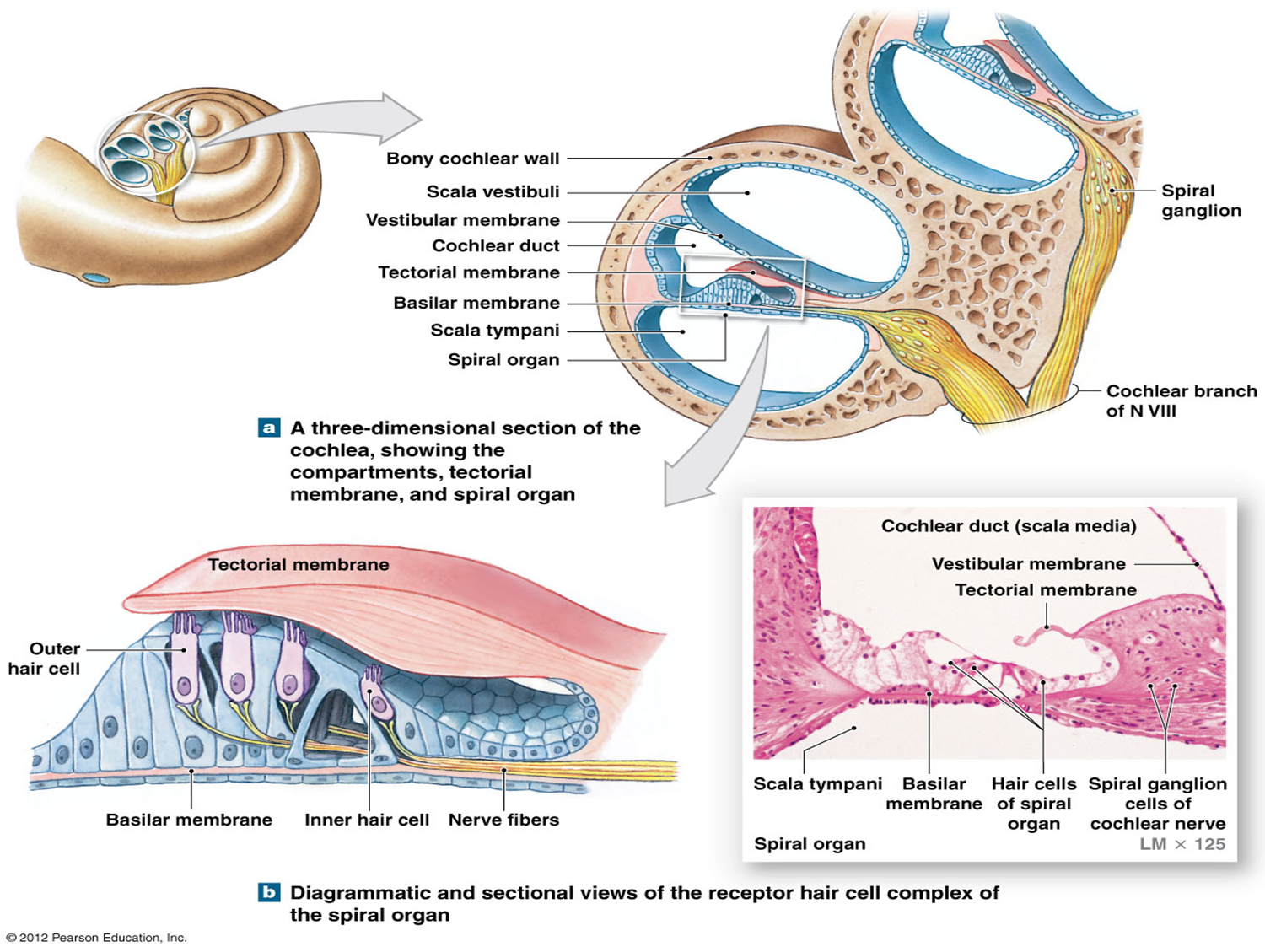
Organ of Corti
hair cells detect relative movement of basilar and tectorial membranes
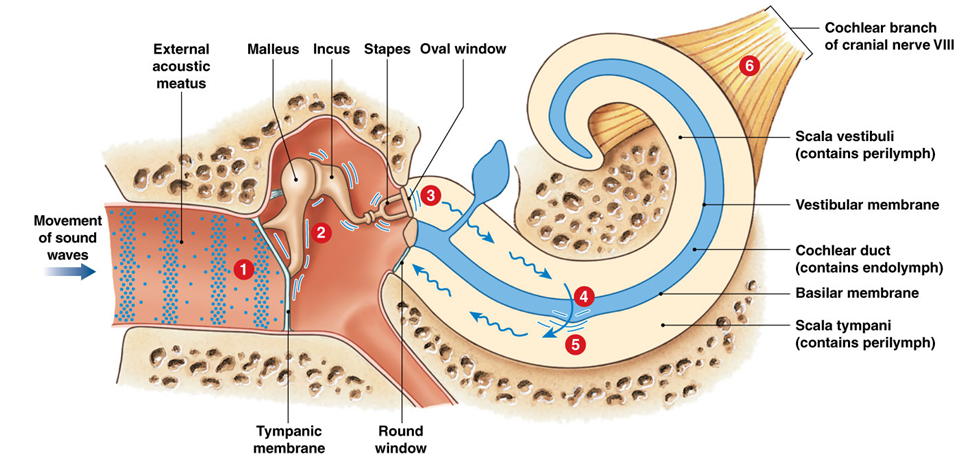
Reception and transduction of sound:
waves are collected and directed to tympanic membrane
vibration of tympanic membrane transmitted through auditory ossicles
vibration of stapes at oval window
causes pressure waves in the fluid of the
scala vestibulipressure waves are transmitted through scala media to scala tympani
a portion of the basilar membrane vibrates relative to tectorial membrane
hair cells activate sensory neurons to indicate vibration site / intensity to CNS
Auditory pathways:
cochlear hair cells are monitored by bipolar sensory neurons; synapse in cochlear nuclei
CNS processing of auditory information:
info decussates and ascends to inferior colliculus, info is relayed to medial geniculate nucleus to auditory cortex