2 -- Glass ionomer and RMGI Cements: Leme Kraus
 Call Kai
 Learn
Learn Practice Test
 Spaced Repetition
 Match
Match Flashcards
 Knowt Play
1/66

There's no tags or description
Looks like no tags are added yet.
Name | Mastery | Learn | Test | Matching | Spaced | Call with Kai |
|---|
No analytics yet
Send a link to your students to track their progress
67 Terms
glass ionomers are ____ based, ____-_____ restorative materials
water based
self-adhesive
Why should I use Glass ionomer based materials
Evidence of successful long-term use in high caries risk children, adults, older adults and institutionalize populations
what type of adhesion do glass ionomers use
chemical
self adhesive system (no need for an additional adhesive system)
_______-releasing materials are essential when treating high-caries-risk patients
fluoride
glass ionomers are ____ releasing
fluoride
glass ionomers are less resistant to _____ forces, so we use on class V
biting
glass ionomers can be used to _____ dental materials
cement
glass ionomers are indicated to eliminate _____ ____
active infections
using glass ionomer as a liner helps with ____ ___ and ____ protection
thermal insulation
pulp
glass ionomer can be used for both ____ and ____ restorations
permanent and provisional
glass ionomers can be used as a ____ under other restorative materials
liner
Gets covered with a final restorative material
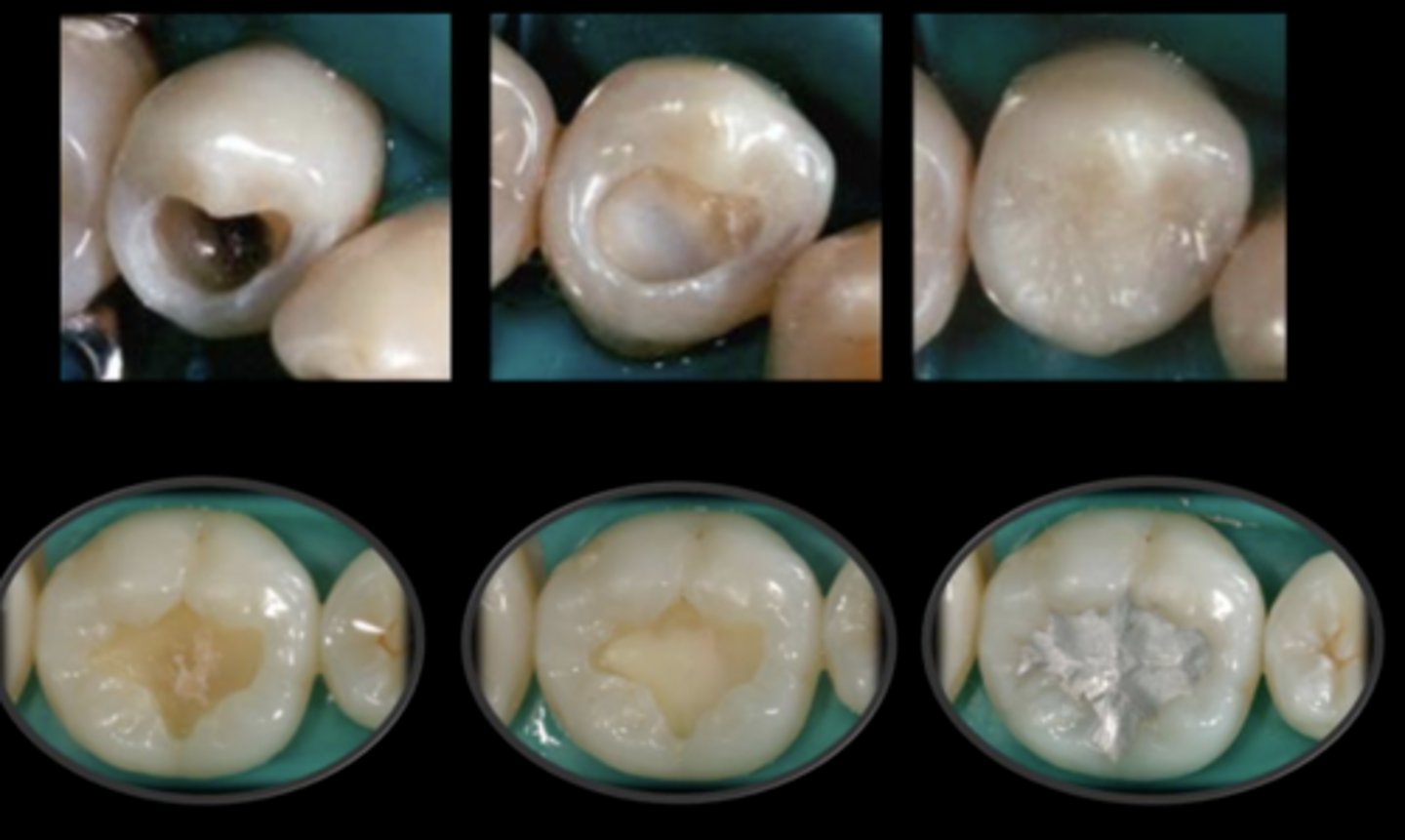
Provisional restorations
As a placeholder until the patient can come back for the final restorations
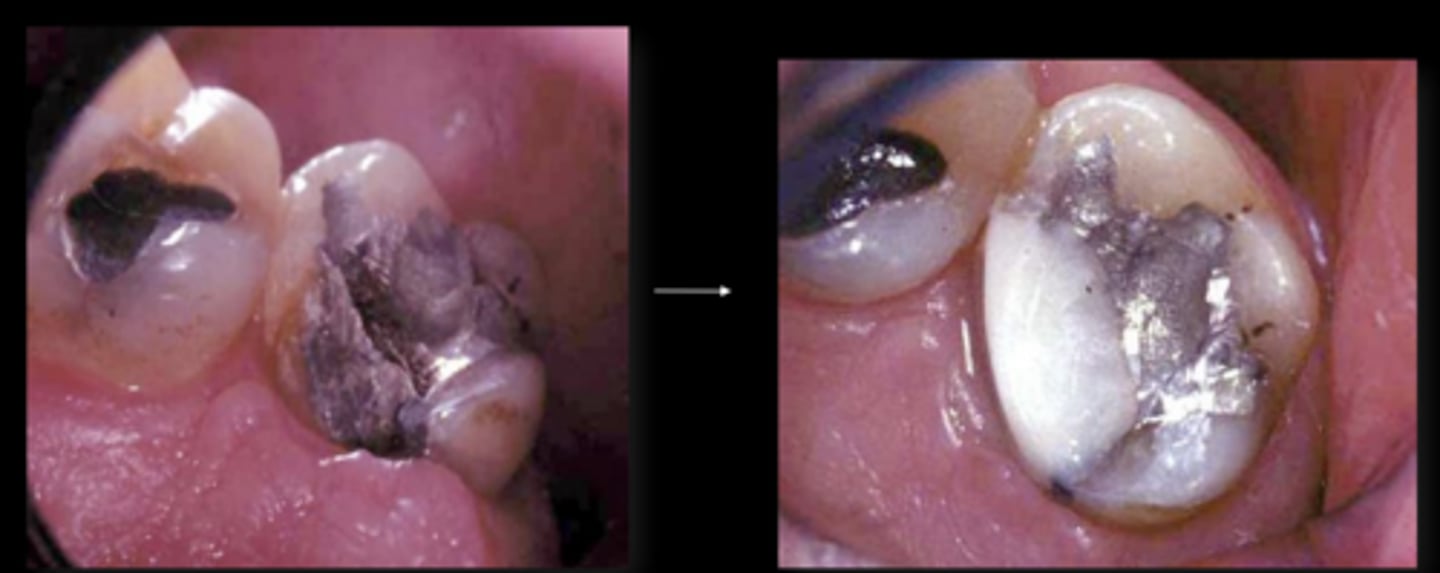
Final restorations (which types of restorations)
Class V - good interface with dentin and cementum
Class I and II - more common in older adults and pediatric patients
Class III
- mainly in areas not under high loads
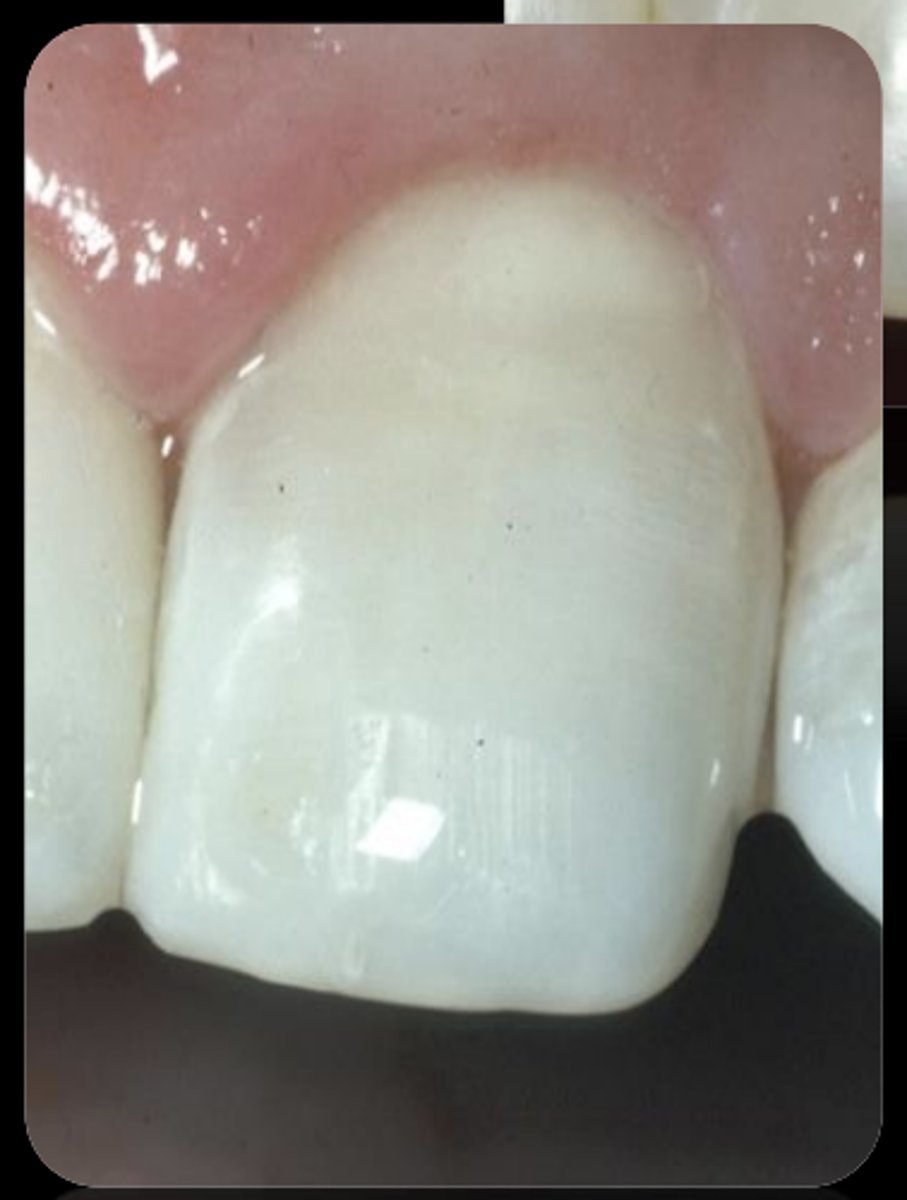
Cementation
Indirect restorations
Prefabricated or cast endodontic posts
Orthodontic appliances
Different types
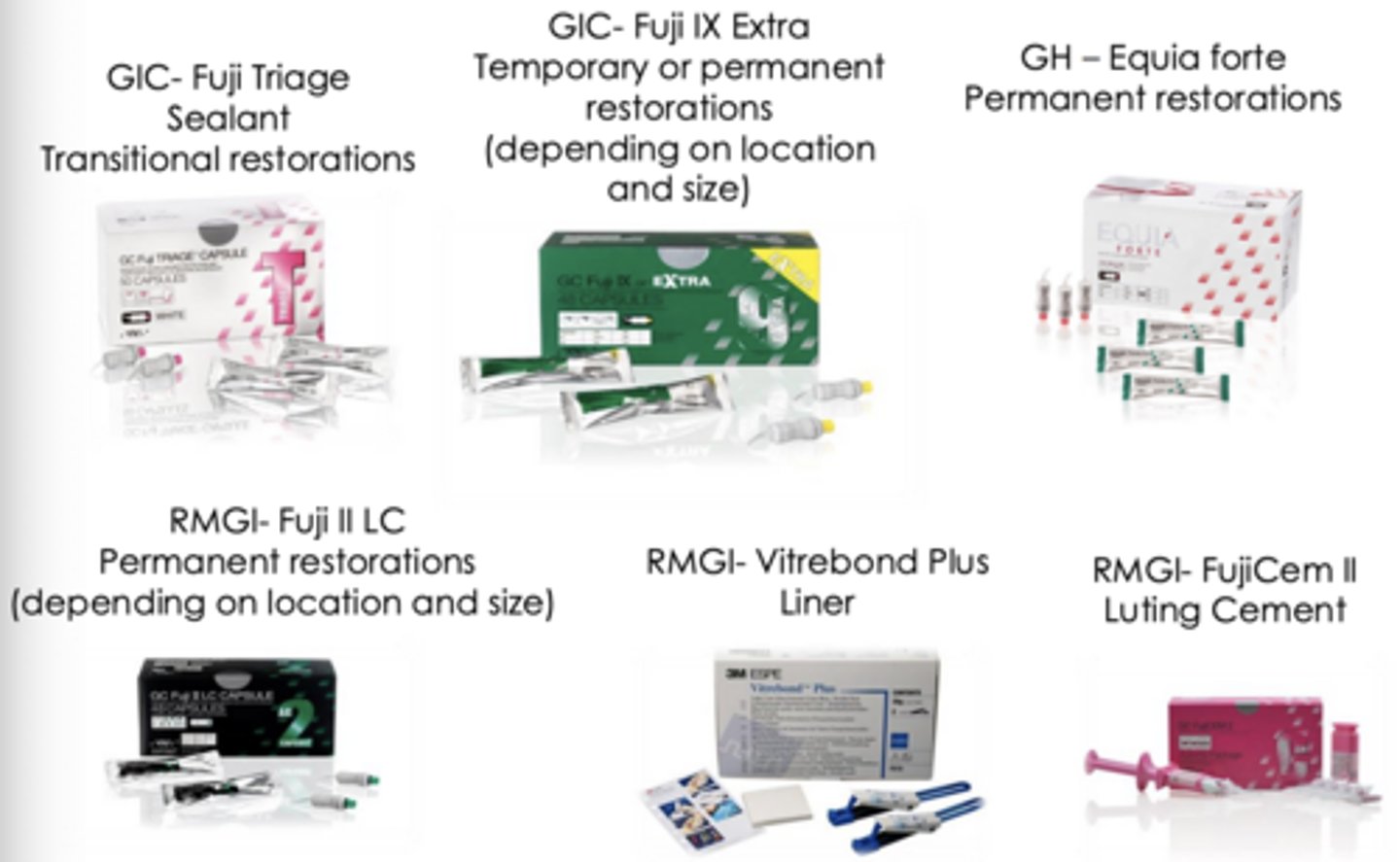
Main type of GIC based on composition
Conventional Glass ionomer (GI)
Resin Modified Glass-ionomers (RMGI)
Glass-Hybrids (GH)
Metal reinforced GI
Images
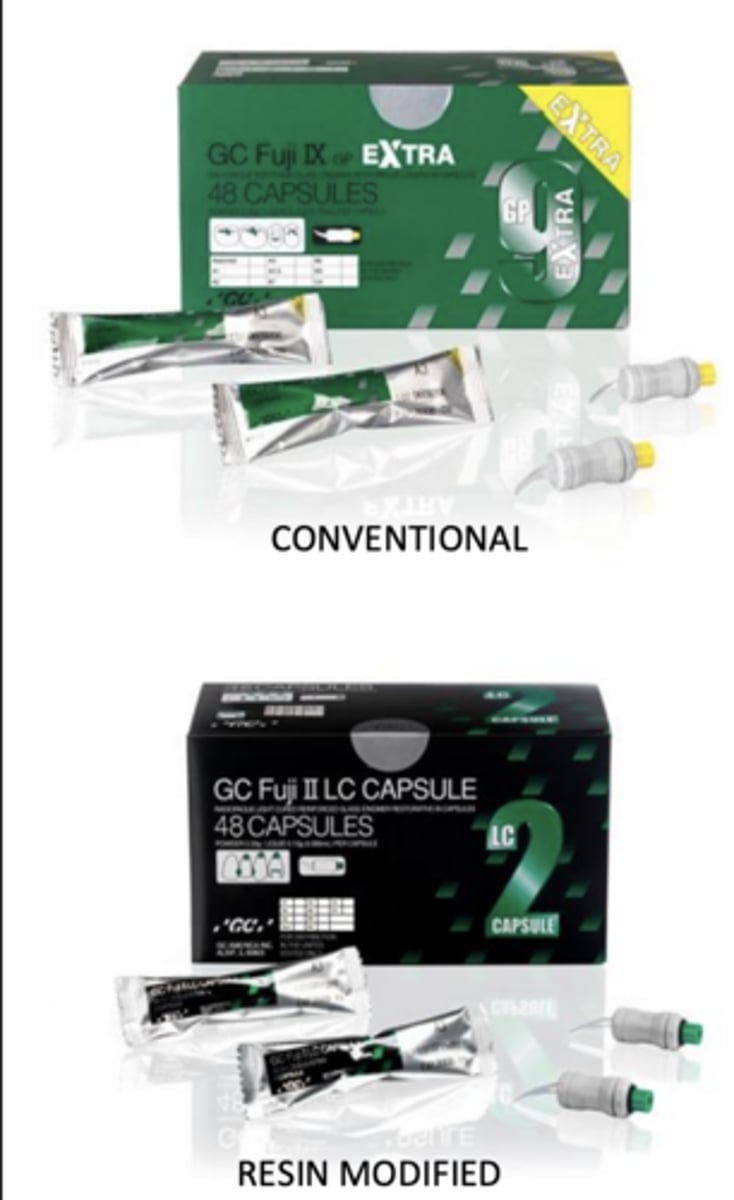
Images
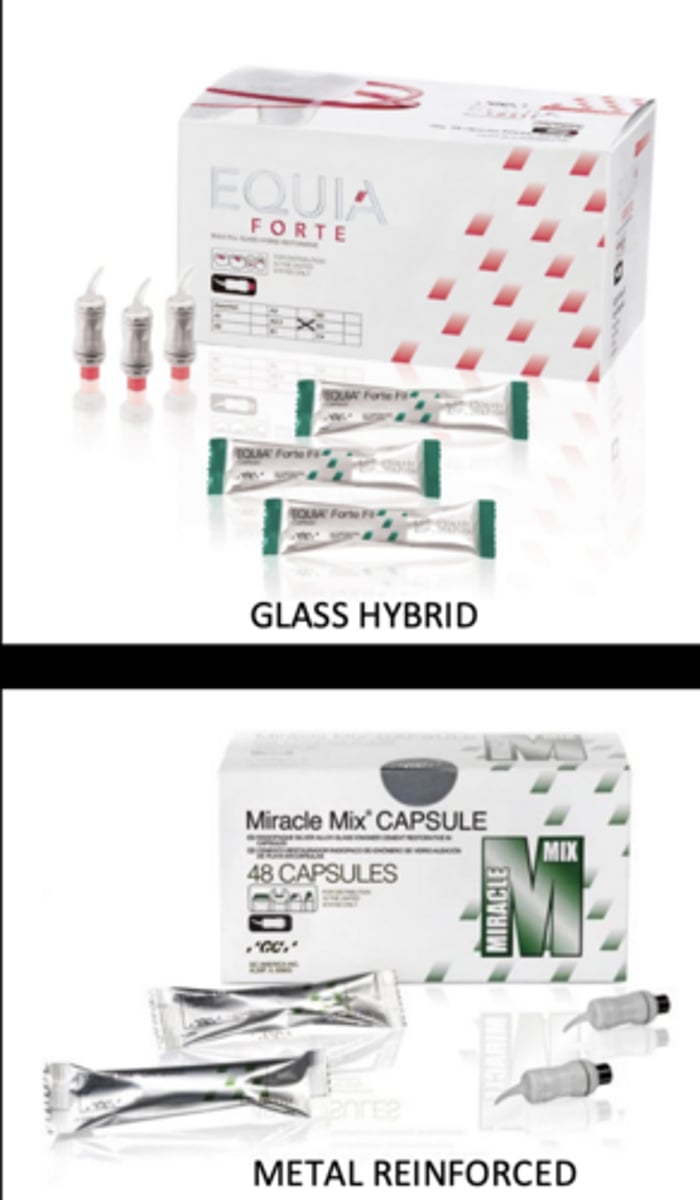
Glass ionomer cements classifications: Type I
cementing (luting) crowns, bridges, and orthodontic brackets
Glass ionomer cements classifications: Type II a
Esthetic restorative cements
Glass ionomer cements classifications: Type II b
Reinforced restorative cements
Glass ionomer cements classifications: Type III
Lining cements, bases
Glass ionomer cements: compositions
Powder: FluoroAluminoSilicate (FAS) Glass
Liquid: Aqueous solution of Polyacrylic acid
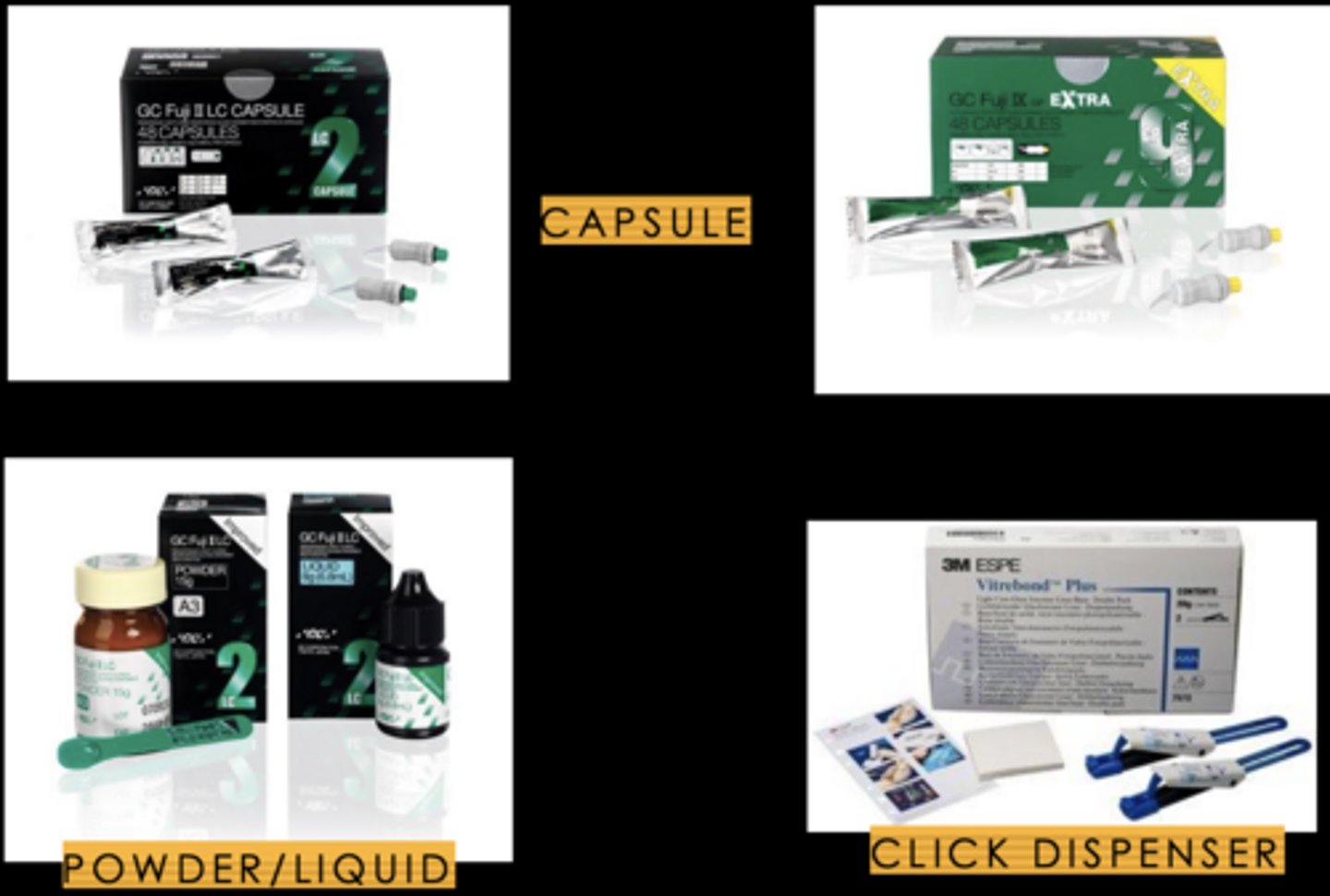
manual mixing previously but now in a capsule form
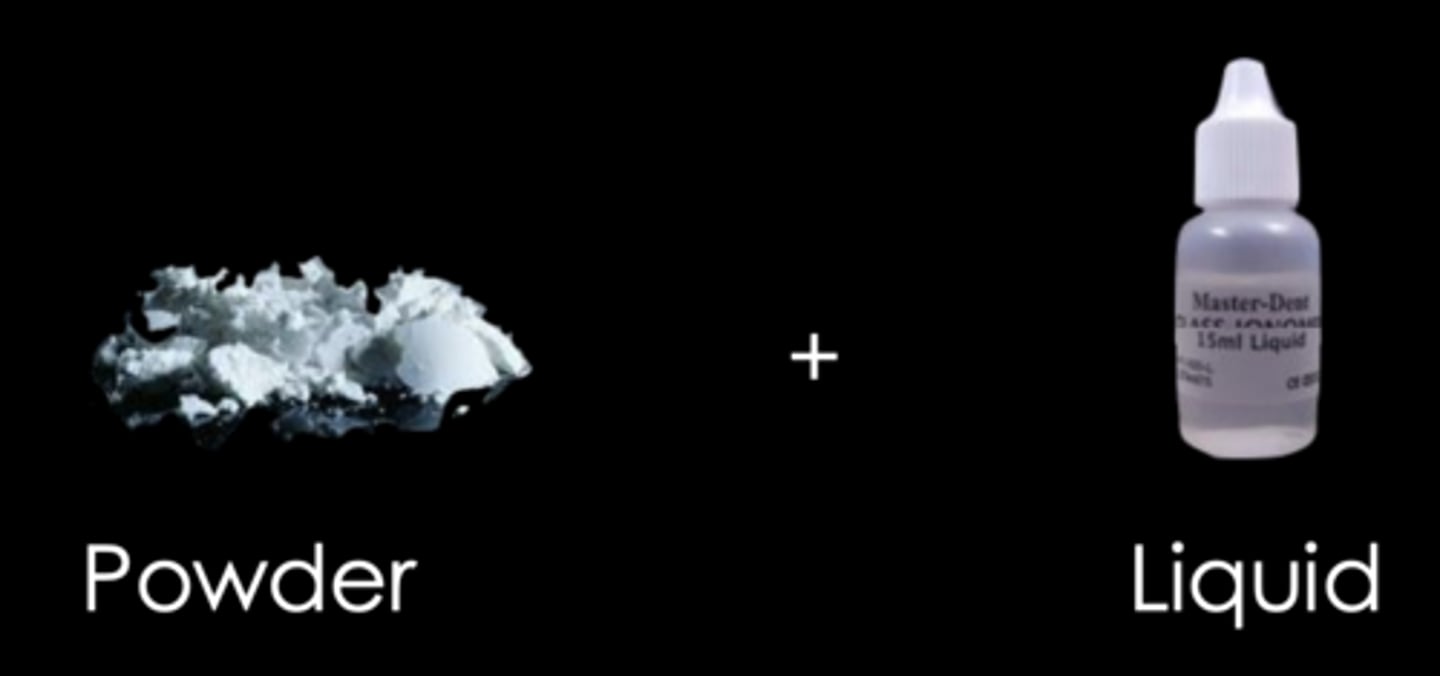
what type of reaction do glass ionomer cements have
Acid-Base Reaction
Essential components in glass ionomer reaction
FluoroAluminoSilicate (FAS) Glass (powder)
Water (helps ion transport in the Acid-Base reaction and fluoride release)
Tartaric acid (helps to control the working time and setting characteristics of the material)
What are the functions of the water in a Glass ionomer
Helps ion transport in the acid-base reactions
Fluoride release
Setting reaction: Dissolution
Mixing FAS glass and polyacrylic acid in water-based reaction media
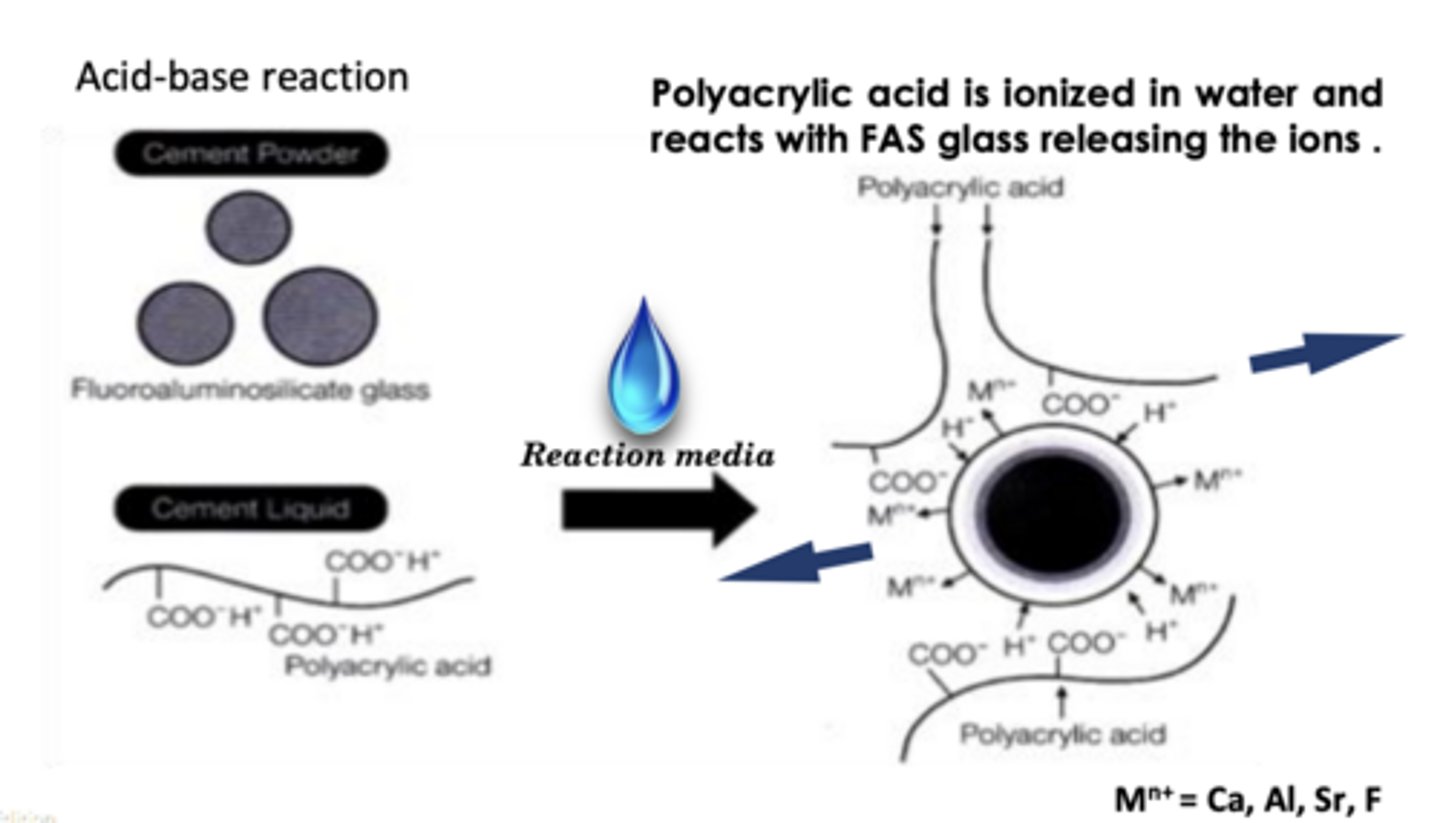
Setting reaction: Gelation and initial setting
The carboxylate ions react with metallic ions to form a salt bridge, resulting in gelation and setting
Release of F- as a result of the setting reaction and ion-exchange
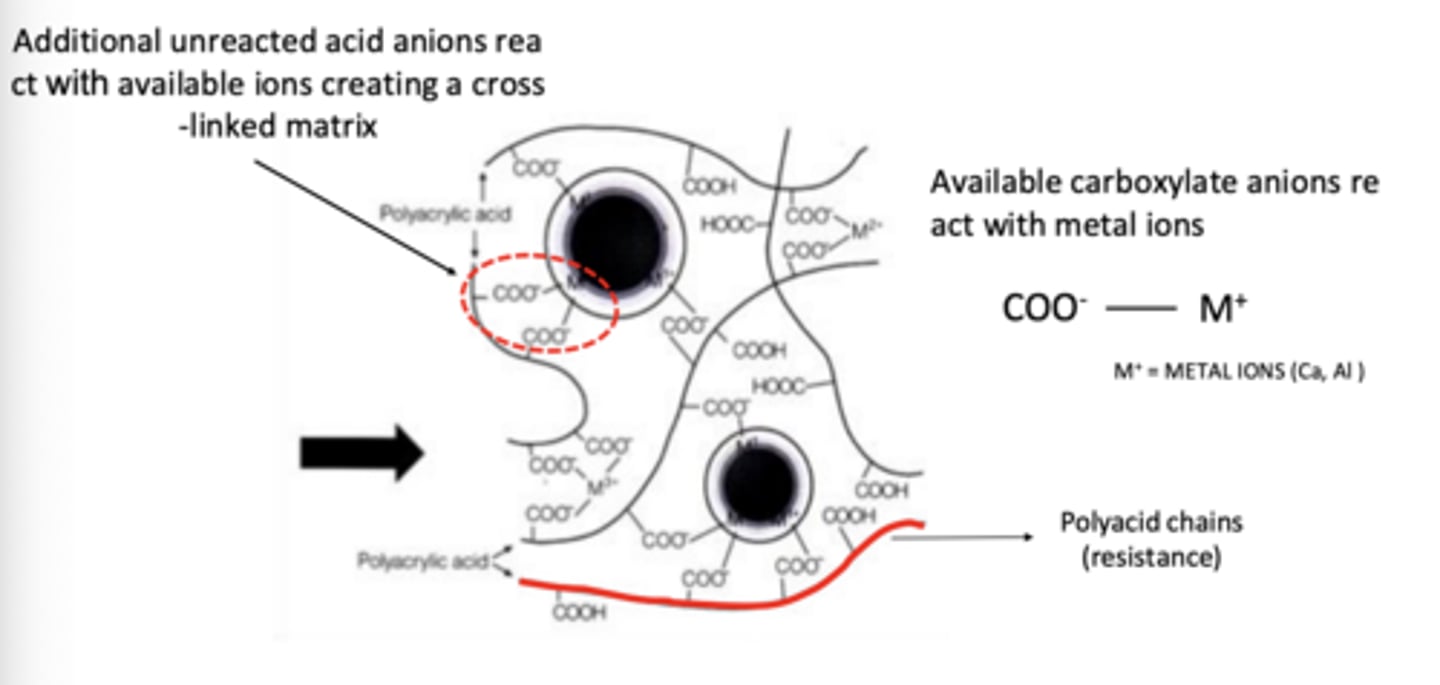
Setting reaction: Hydration of salts and maturation
Strength of the cement builds up with time:
Silicic acid rapidly polymerizes to form silica hydrogel
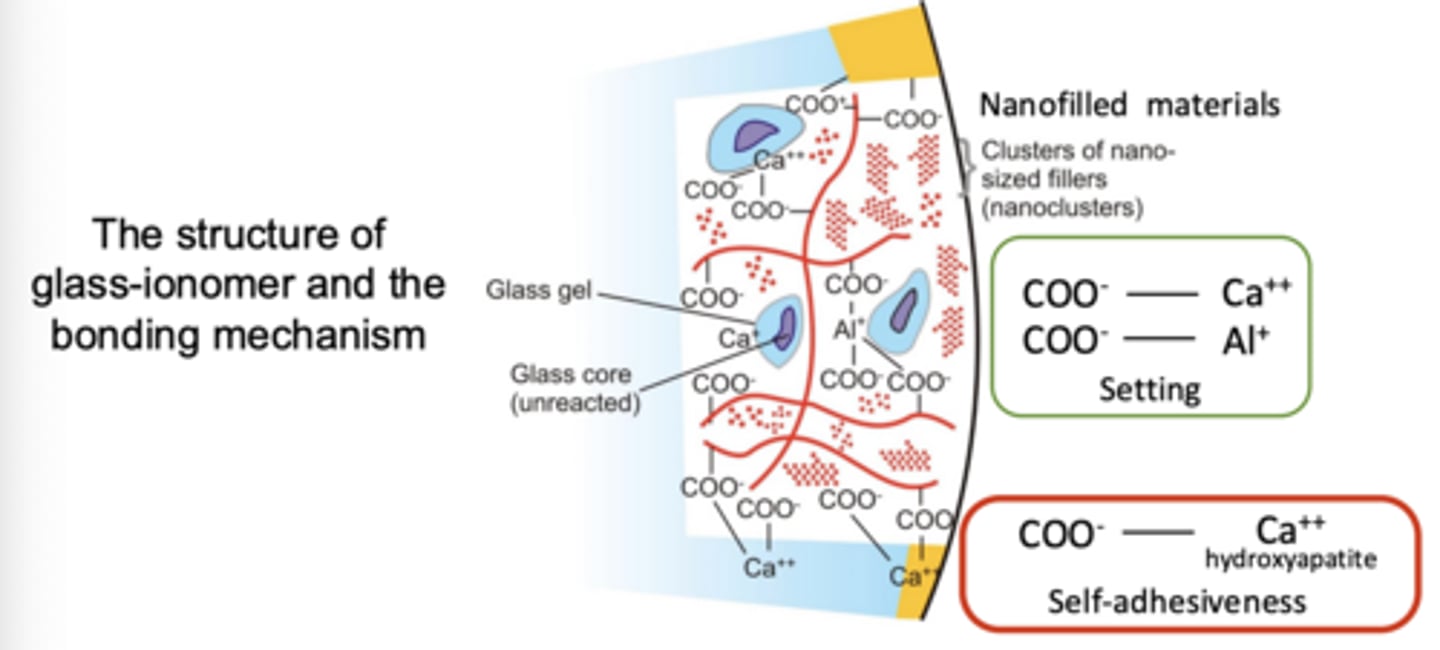
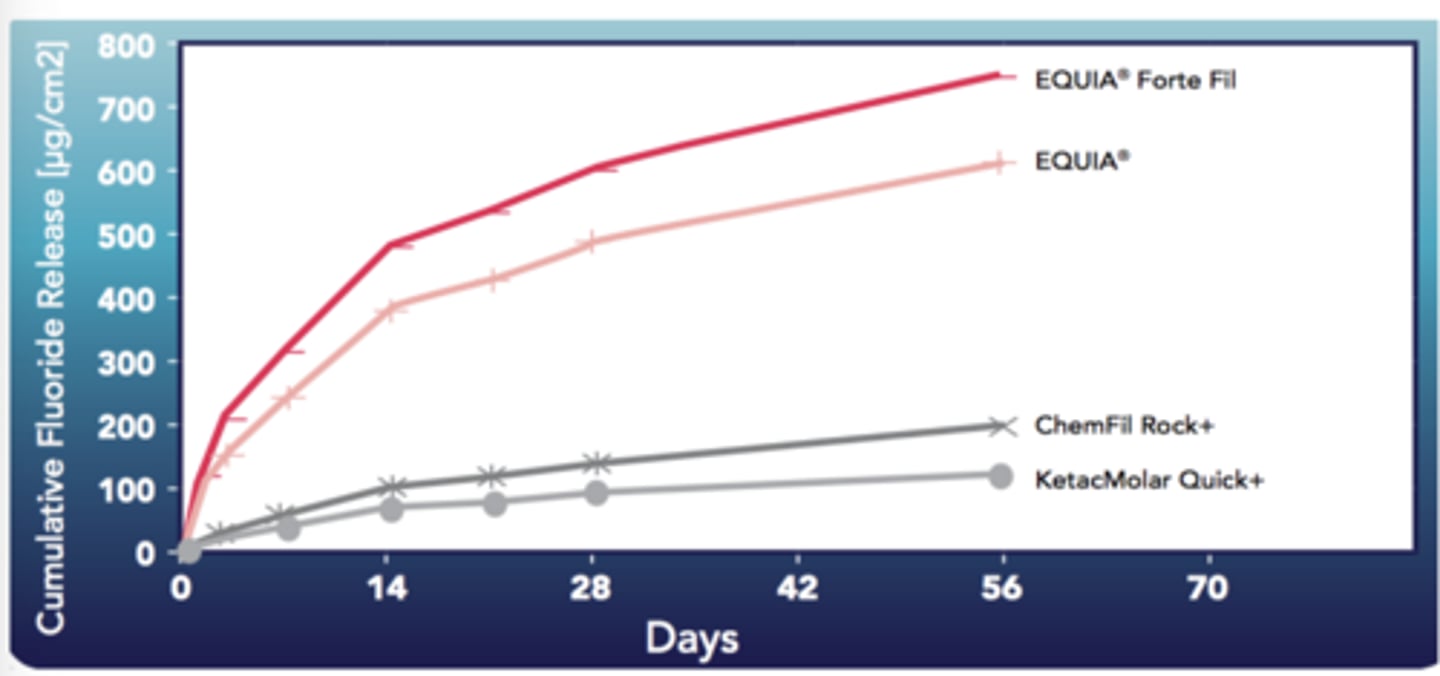
When is the fluoride released
initial setting is when you have the most fluoride released and will continue up to 14 days where it then starts to slow down
RMGI composition
Polycarboxylic acid (liquid)
Fluoroaluminosilicate glass (powder)
Water (helps the ion transport needed for the acid-base reaction and fluoride release)
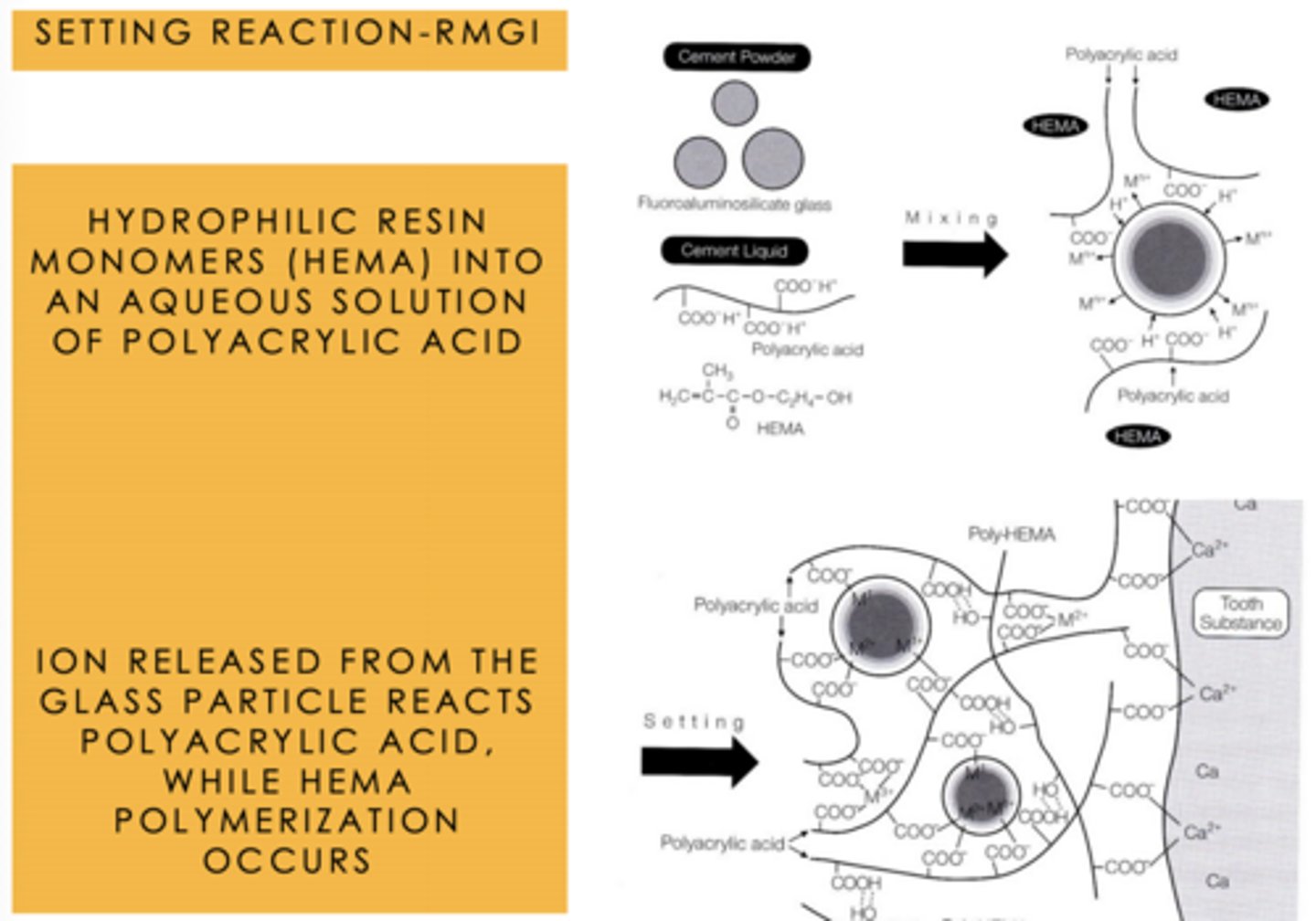
Hydrophilic methacrylate monomer (HEMA) photo-initiated/redox reaction
Free radical initiators (trigger curing of methacrylate groups)
RMGI: what are the two-types of reactions?
Traditional acid-base
Free-radical methacrylate polymerization
Setting reaction- RMGI
Mechanical properties: Compressive strength
Glass-ionomers: 170
RMGI: 210
RBC: 350 RBC>RMGI>GI
Dentin: 300
Enamel: 380
Mechanical properties: Flexural strength
Glass-ionomer: 30
RMGI: 90 RBC>RMGI>GI
RBC: 180
Mechanical properties: Tensile
Glass ionomer: 10
RMGI: 15
RBC: 50 RBC>RMGI>GI
Dentin: 106
Enamel: 10
Mechanical properties: Fracture toughness
Glass-ionomer: 0.25
RMGI: 0.7
RBC: 0.8-1.2 RBC>RMGI>GI
Dentin: 3
Enamel: 1
Mechanical properties: Wear rate
Glass ionomer: 73 glass ionomer has the fastest wear rate
RBC: 10-20
Enamel: 15-29
The more resin you add the less ______ ____ properties
fluoride releasing
Properties continued
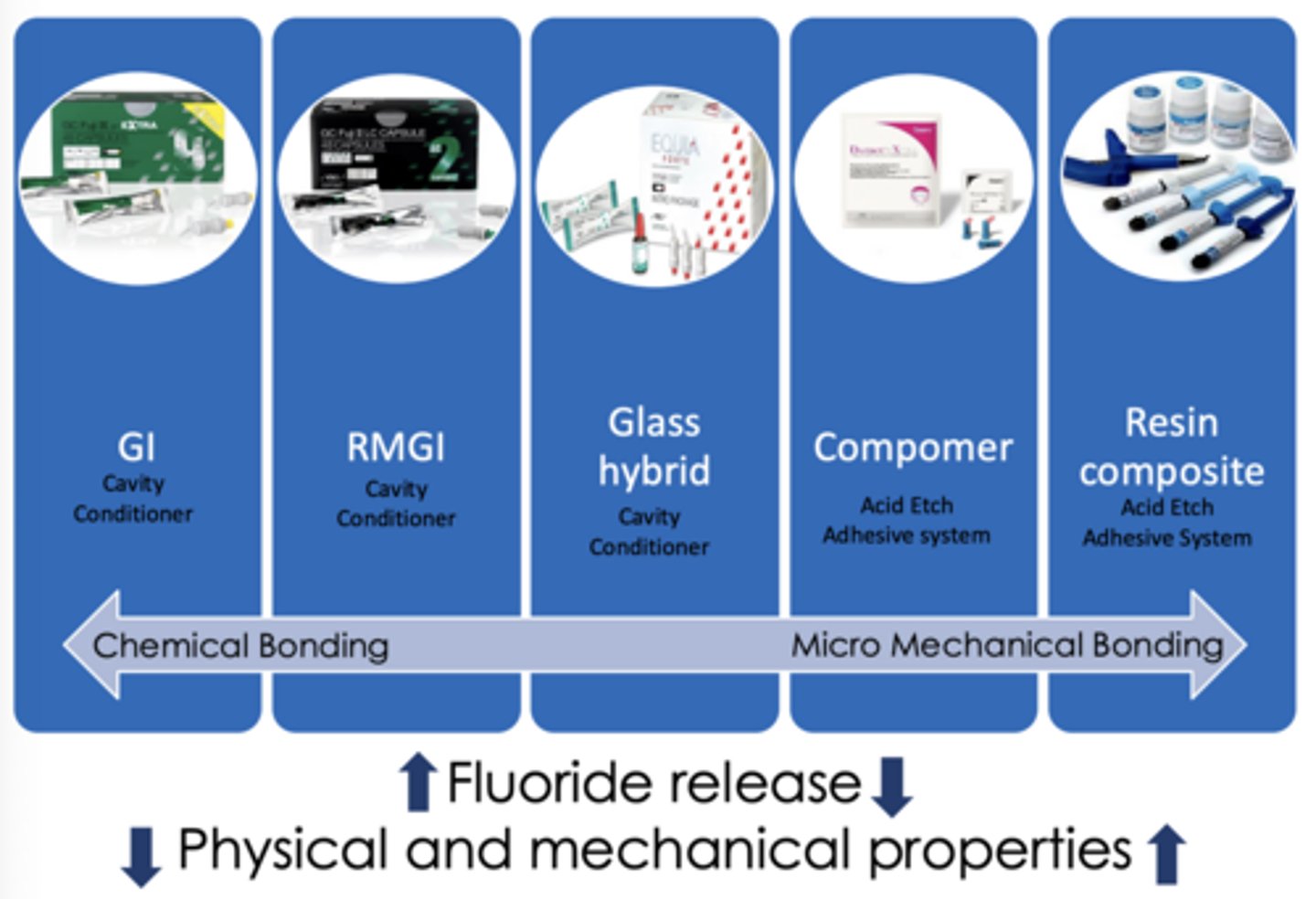
Fluoride recharge-release - The highest level of F recharge comes from _____ and _____
highest level of recharge from GI and RMGI
- serve as fluoride reservoirs
- recharge with F toothpaste, NaF rinses and varnishes
RMGI ionomer is the best balance of
F- release
F recharge
Physical properties
Fluoride release
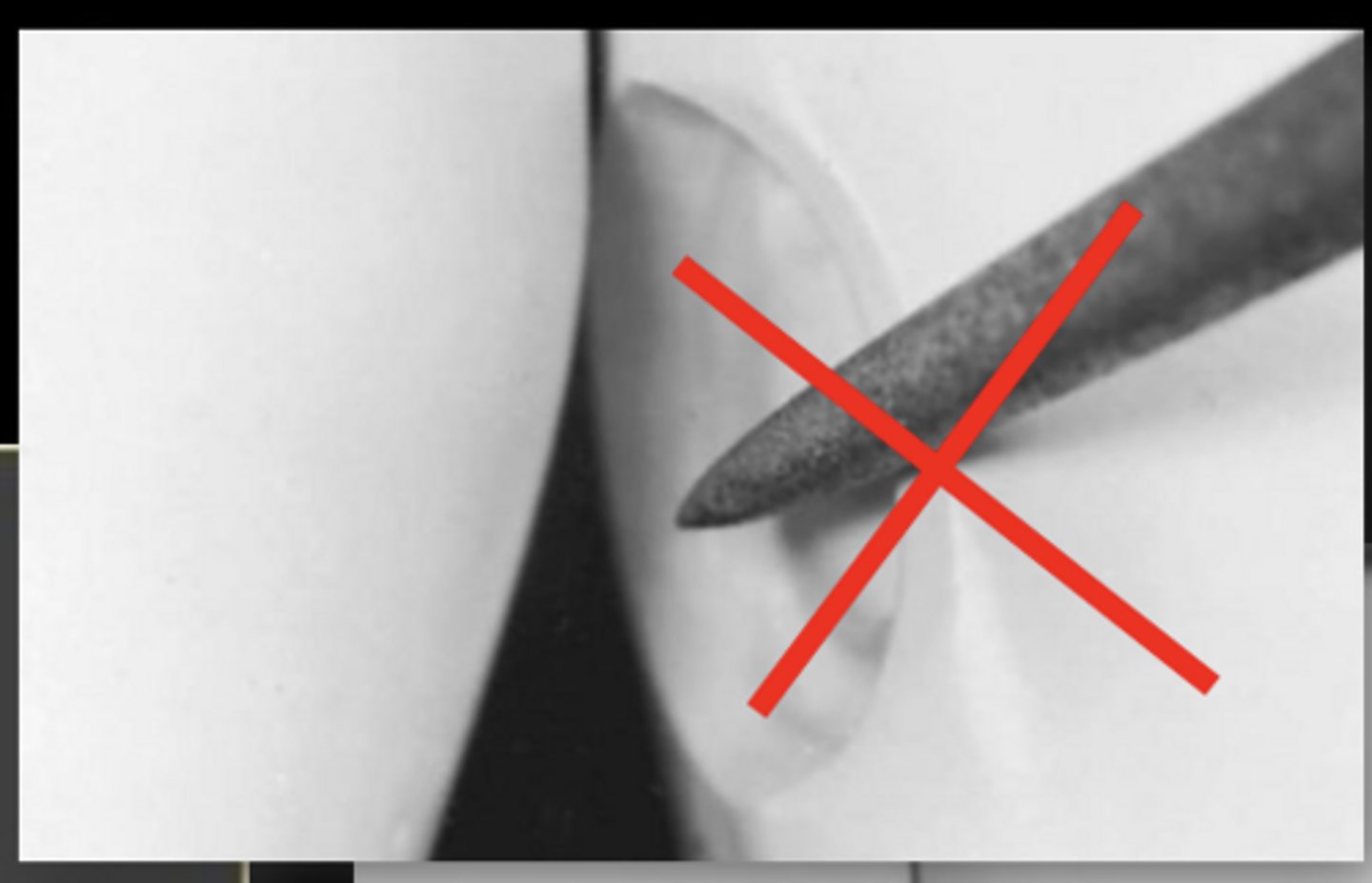
can you bevel with glass ionomers?
NO
Top Ten clinical guidelines (conventional GIC)
1. Always follow manufacturer's directions
Top Ten clinical guidelines (conventional GIC)
2. Cavity preparation: outline and depth should follow the extent of caries lesion
NO bevels
Top Ten clinical guidelines (conventional GIC)
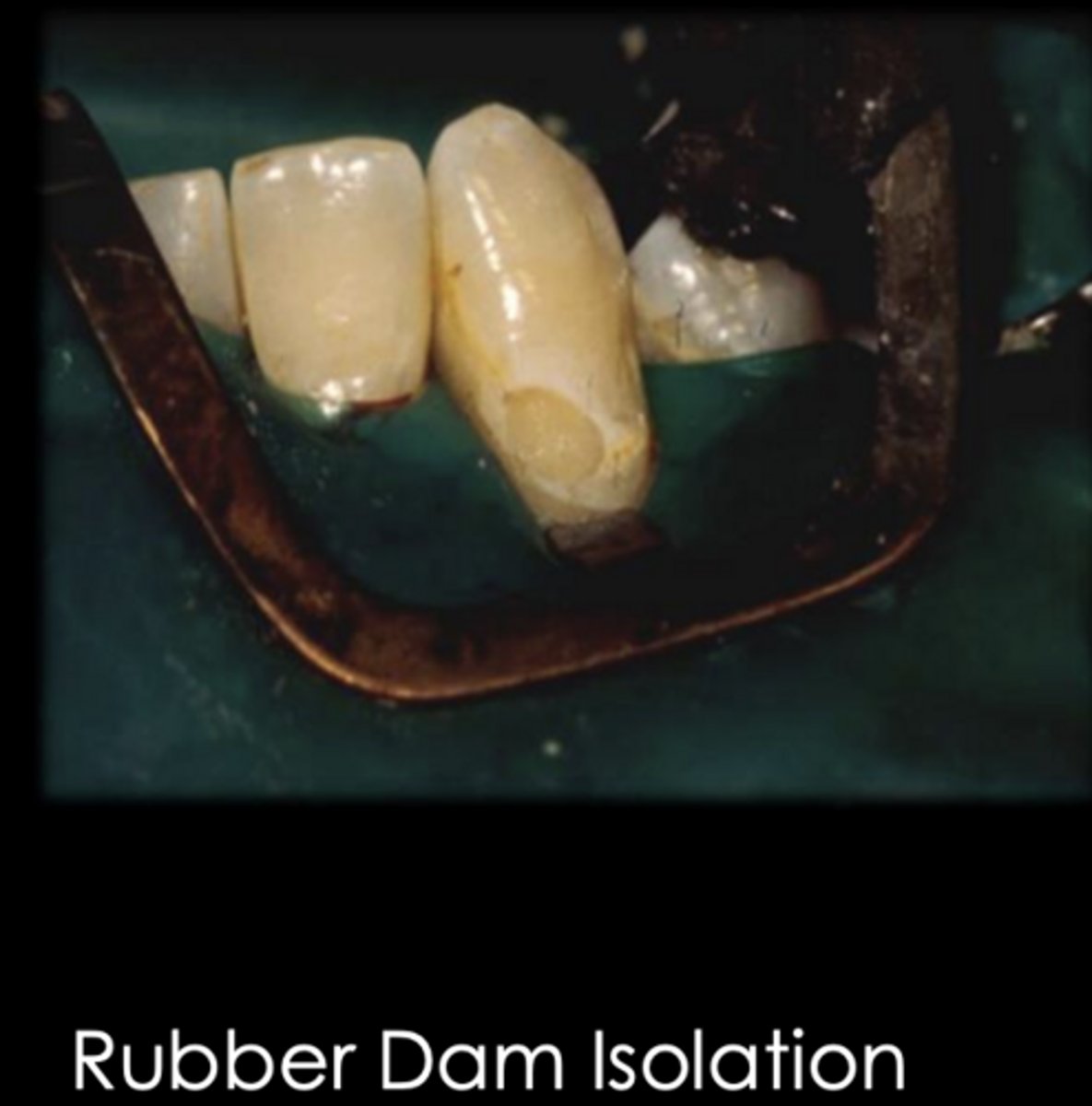
3. Maintain good isolation: Rubber dam
Top Ten clinical guidelines (conventional GIC)
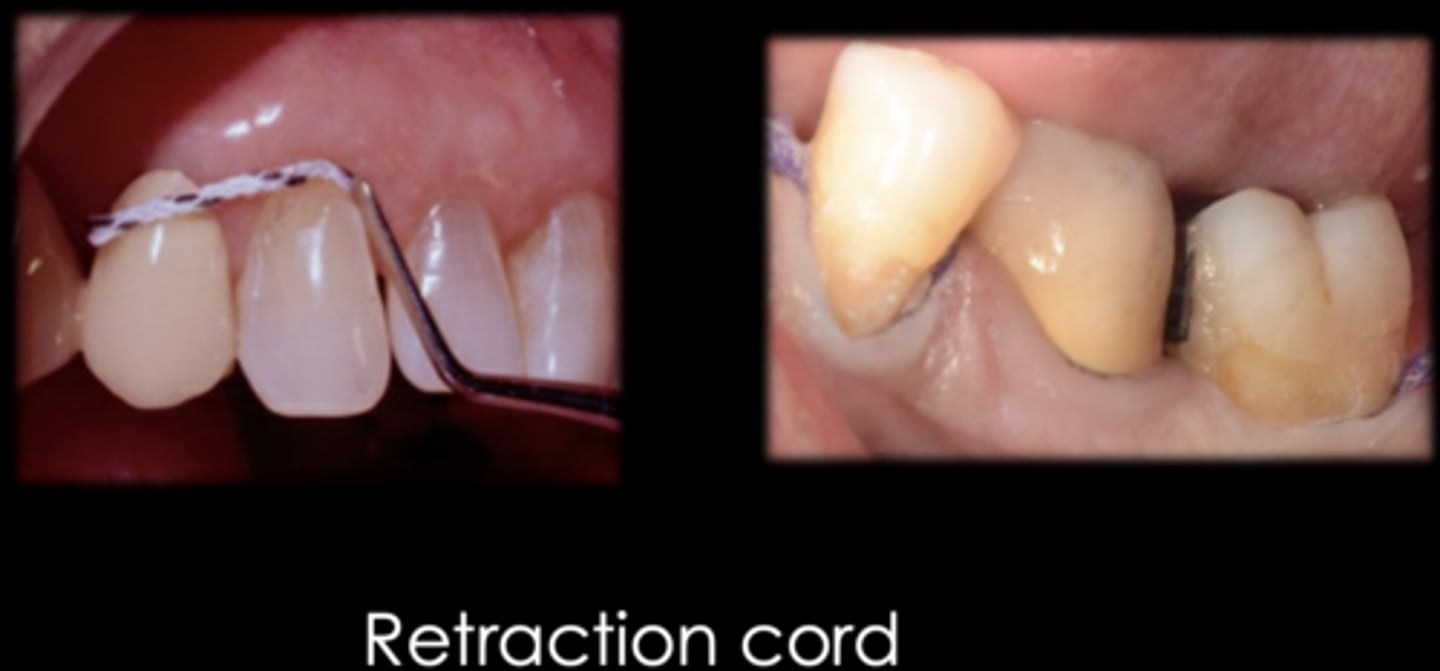
3. Maintain good isolation: Retraction cord
Top Ten clinical guidelines (conventional GIC)
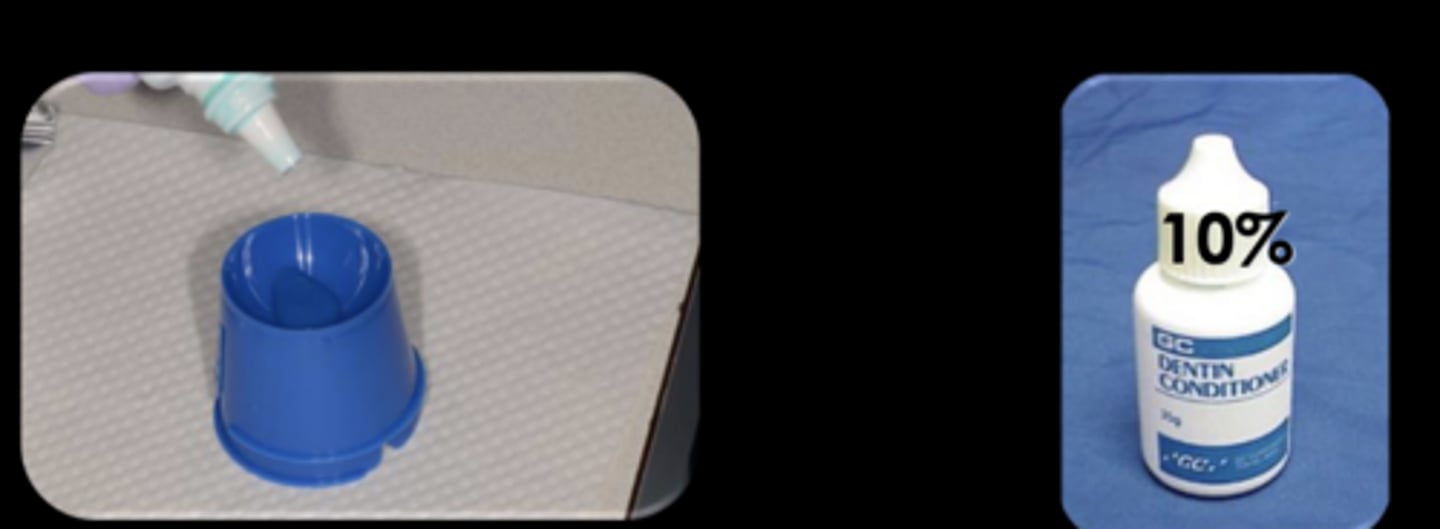
4. Use of conditioner helps bonding
a. conditioning
- rule of 200 (% X time in sec = 200)
b. rinse
c. remove water excess
Two mechanisms of adhesion for RMGI:
Chemical bonding: ionic bonds between carboxyl groups and calcium from hydroxyapatite
Micro-mechanical interlocking: inter-diffusion layer
Top Ten clinical guidelines (conventional GIC)
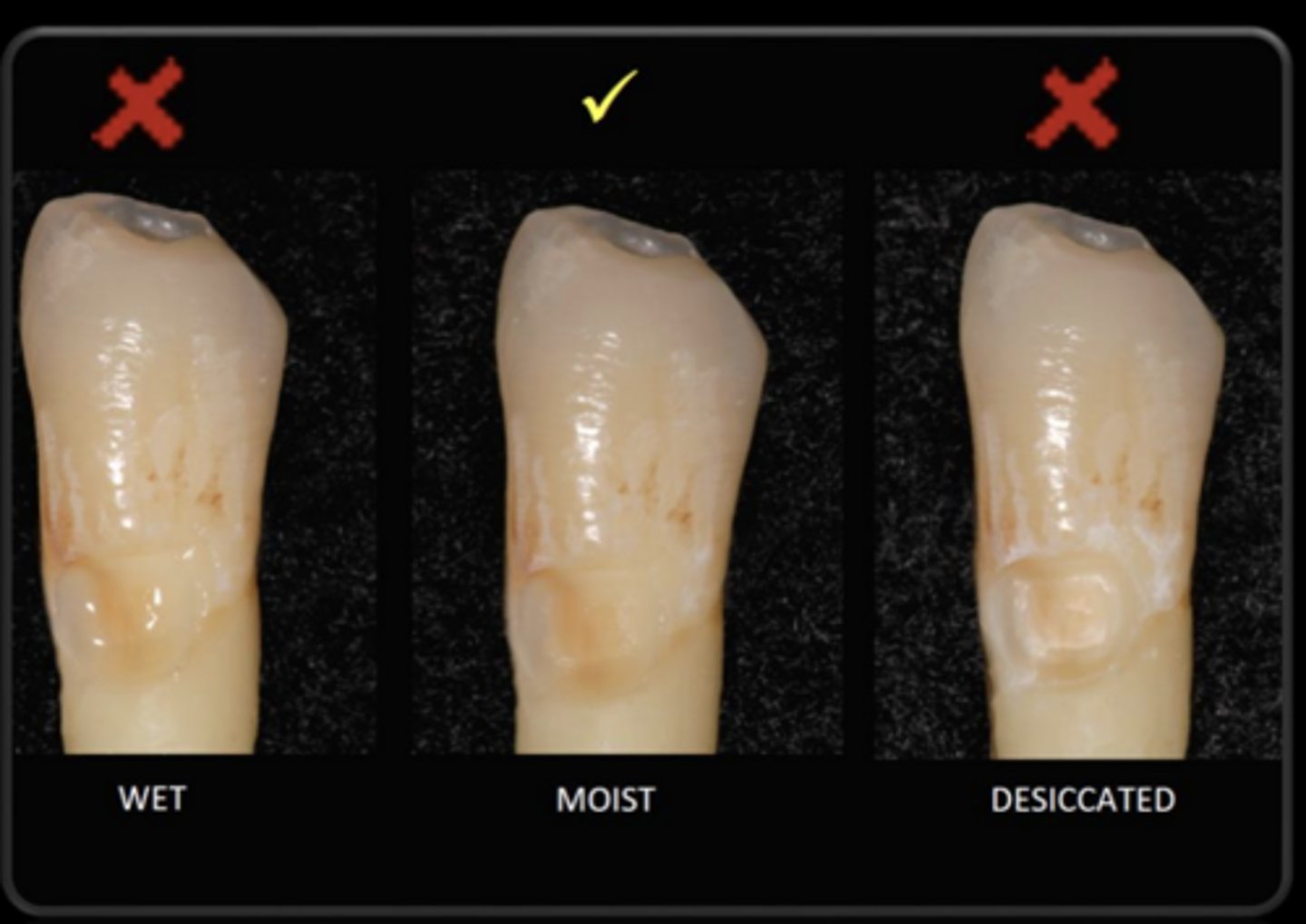
5. Do not desiccate dentin before application
Top Ten clinical guidelines (conventional GIC)
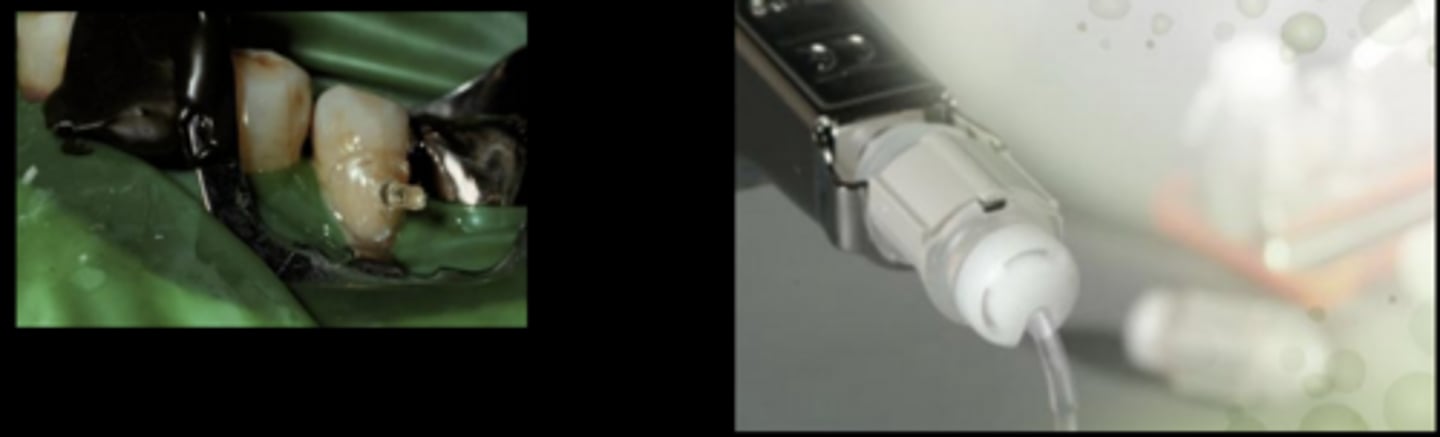
6. Work efficiently (do not over manipulate)
Use minimum number of strokes (3-5)
Top Ten clinical guidelines (conventional GIC)
7. Avoid early contact with moisture
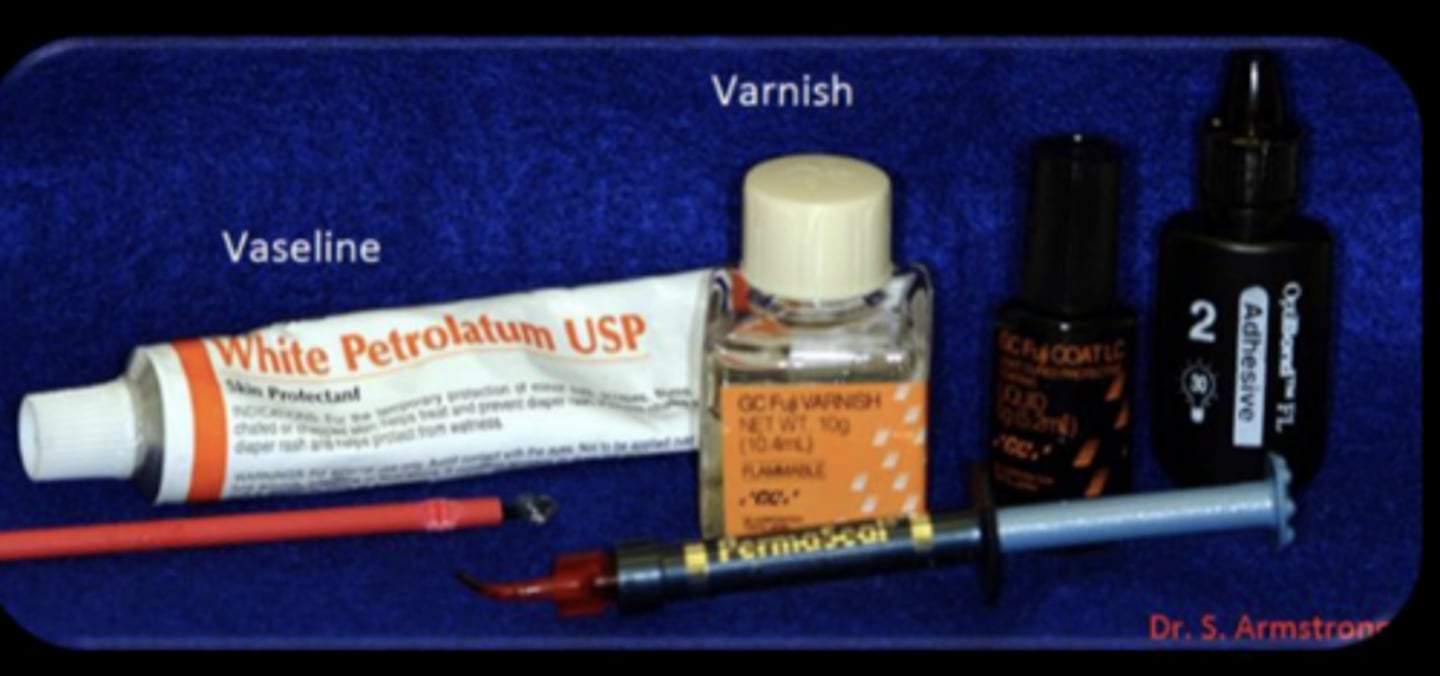
A transient _____ ______ is recommended to protect the GI from loss and uptake of water duing setting
surface protectant
Top Ten clinical guidelines (conventional GIC)
8. Avoid early finishing
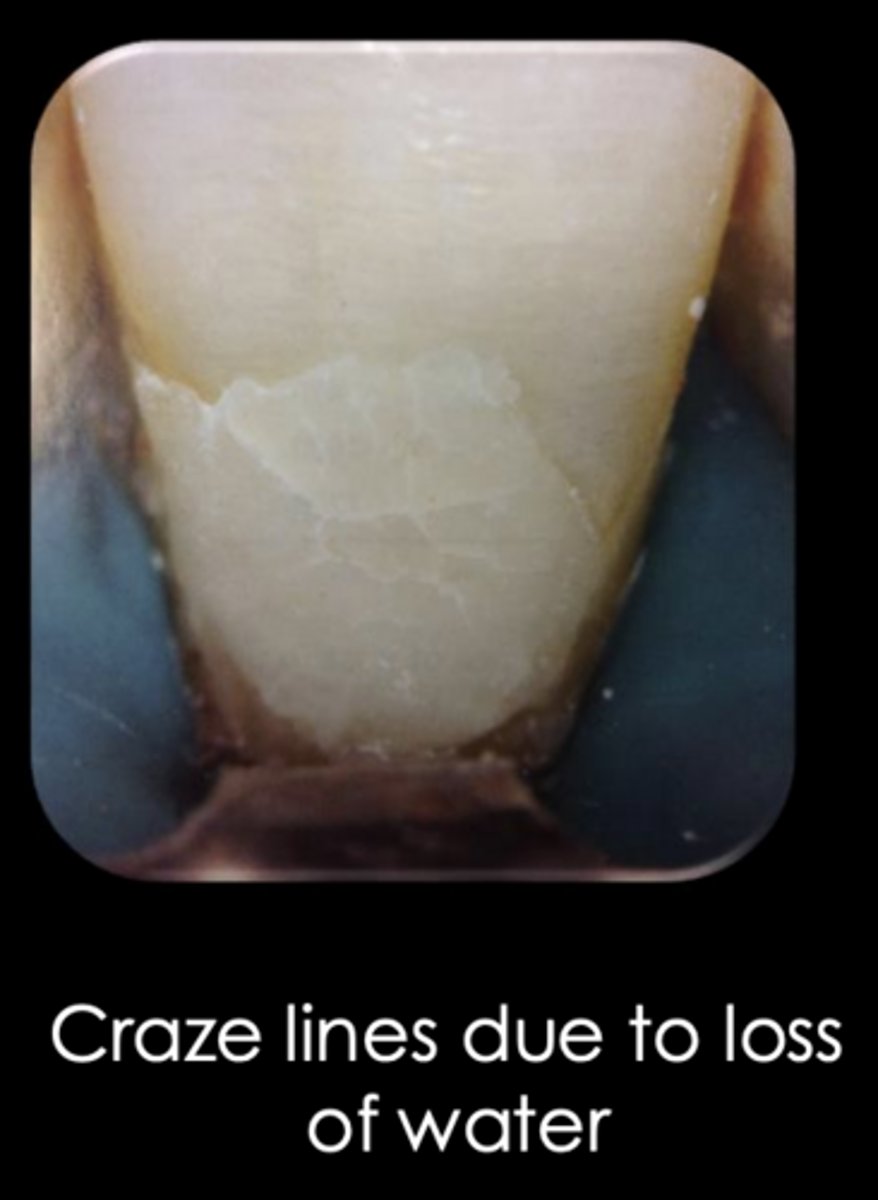
Top Ten clinical guidelines (conventional GIC)
9. Gentle contouring and finishing
Finishing under water spray with superfine diamond, or carbide finishing bur, or silicone points
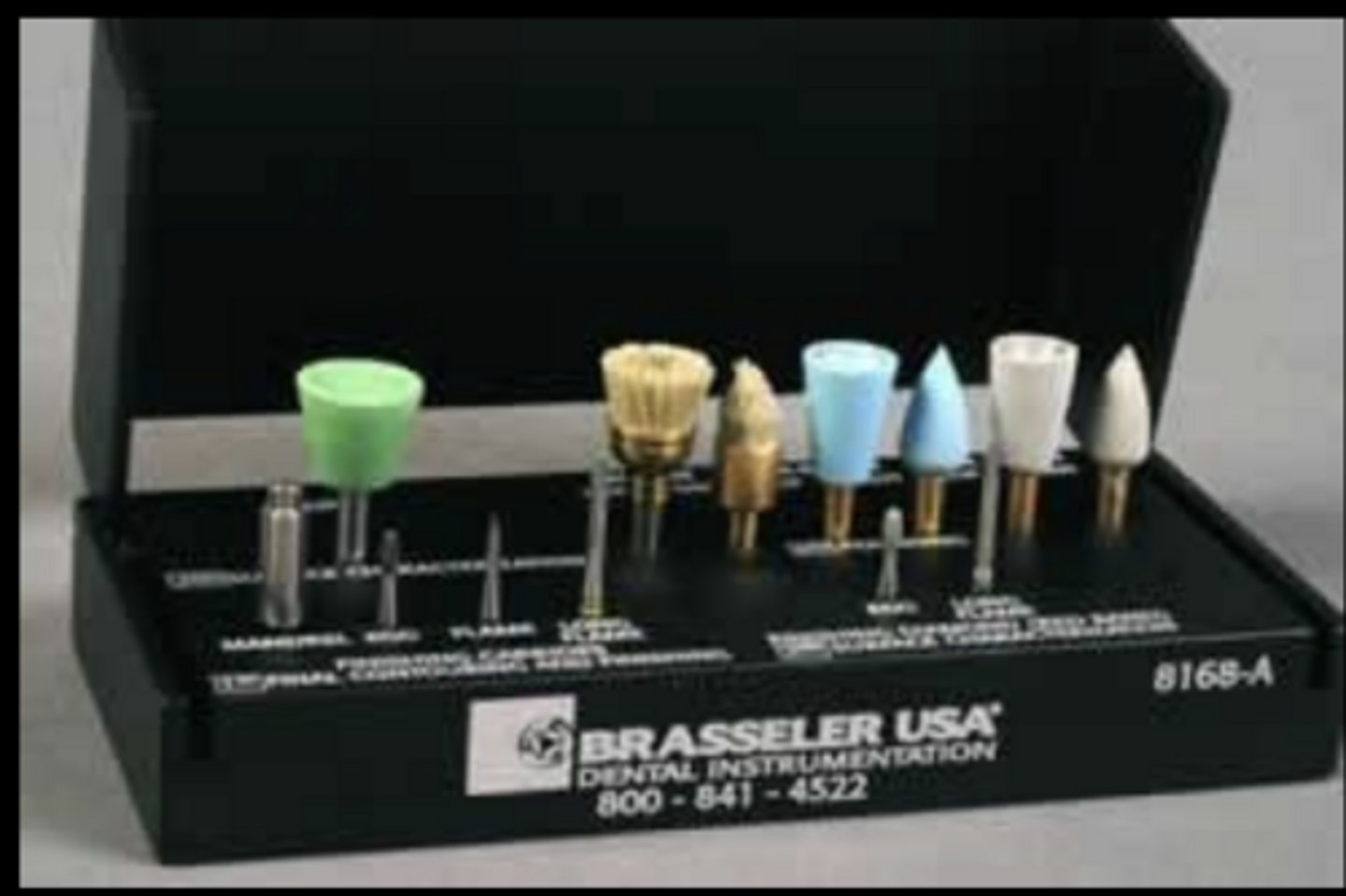
Top Ten clinical guidelines (conventional GIC)
10. Evaluate your work. Reflect
Oh ya she is looking good
Summary of Top Ten clinical guidelines
1. Always follow manufacturer's direction
2. Preparation without a bevel
3. Maintain good isolation
4. Use of conditioner helps bonding
5. Do not desiccate dentin before application
6. Work efficiently (do not over manipulate)
7. Avoid early contact with moisture
8. Avoid early finishing when possible
9. Gentle contouring and finishing
10. Evaluate your work. Reflect!
Do not use _________ ______ before Vitrebond
Cavity conditioner
Etching of the Vitrabond cured surface for _____ technique with resin composite is not deleterious
sandwich
SUMMARY: Chemical reaction
Ionization polyacrylic acid (water), dissolution of glass releasing ions, reaction carboxylic acid and Ca and Al ions from glass
SUMMARY: Water
importance (ionize acid and reaction media)
SUMMARY: Mechanical properties and Clinical indications
conventional has lower mechanical properties but more Fluoride release the moment you start adding more resin the higher the mechanical properties but the less Fluoride release
SUMMARY: Indications
high caries risk patients for GIC and RMGI due to Fluoride releasing properties
What are two critical roles water plays in the setting of GI
1. Serves as reaction medium for the initial dissolution
2. Hydration over time as it matures
3. Dilute matrix over time
1 and 2
You have a patient who has a large number of cervical restorations made of RMGI. The patient's restorations and teeth were recently cleaned with an ultrasonic scaler. What should you be concerned about
1. Nothing. I am glad patient got his teeth cleaned
2. Creation of a rough restoration surface has been associated with increased biofilm formation
2. Glass ionomer wear more
You have a patient who has a large number of cervical restorations made of RMGI. The patient's restorations and teeth were recently cleaned with an ultrasonic scaler. What should you be concerned about?
- Surface roughness
What should be done if that is the case ?
1. Repolish restoration
2. Apply a surface sealant
3. Monitor the restorations
4. All the above
4