Myth in Art Week 4: Myth on Greek Classical and Hellenistic Architectural Sculpture:
 Call Kai
 Learn
Learn Practice Test
 Spaced Repetition
 Match
Match Flashcards
 Knowt Play
1/92

There's no tags or description
Looks like no tags are added yet.
Name | Mastery | Learn | Test | Matching | Spaced | Call with Kai | Chat |
|---|
No analytics yet
Send a link to your students to track their progress
93 Terms
When was the classical period?
Classical period: 480-323 BCE.
When was the Hellenistic period?
Hellenistic period: 323-100 BCE.
What were typical things shown in classical and Hellenistic sculpture?
Trojan War, Heroes, Gigantomachy, Centauromachy, Amazonomachy
List some places where classical architectural sculpture is found
• Temple of Aphaia, Aegina, ca. 500-480 BCE.
• Athenian Treasury, Delphi, ca. 490-480 BCE.
• The Parthenon, Athens, 447-432 BCE.
• Hephaisteion, Athens ca. 460-410 BCE.
• Temple of Apollo, Bassaie, ca. 429-400 BCE.
List places where Late Classical/Hellenistic architectural sculpture (Asia Minor) is found
• Mausoleum of Halikarnassos, ca. 350 BCE.
• Great Altar of Zeus, from Pergamon, ca. 180-160 BCE.
• Temple of Athena, Ilion, ca. 240-160 BCE.
Why would specific myths be used?
sometimes in temples it is because they are appropriate for the god, sometimes it is used to reflect values with the god
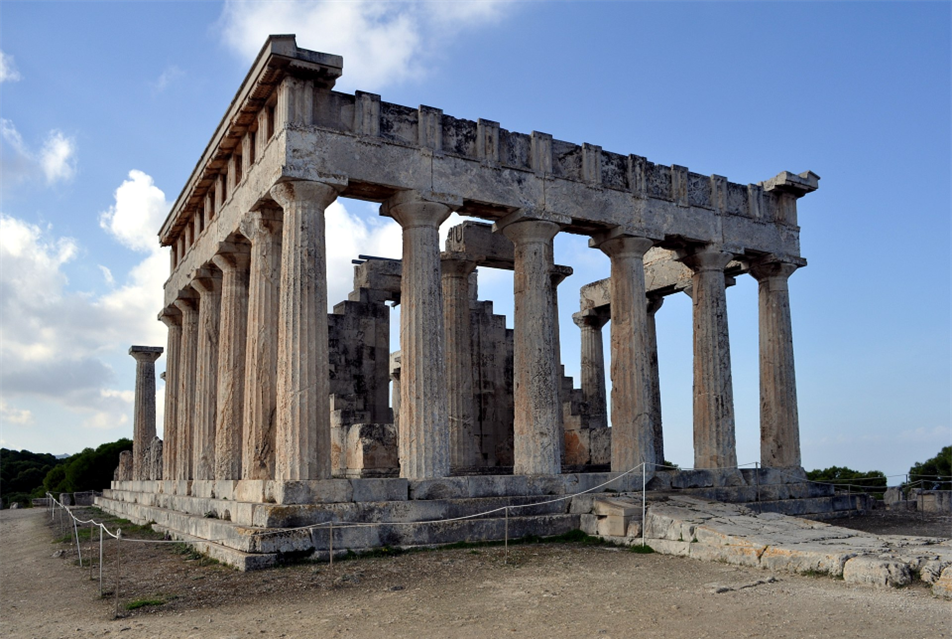
Identify and date this temple
The Temple of Aphaia at Aegina, 500-480 BCE.
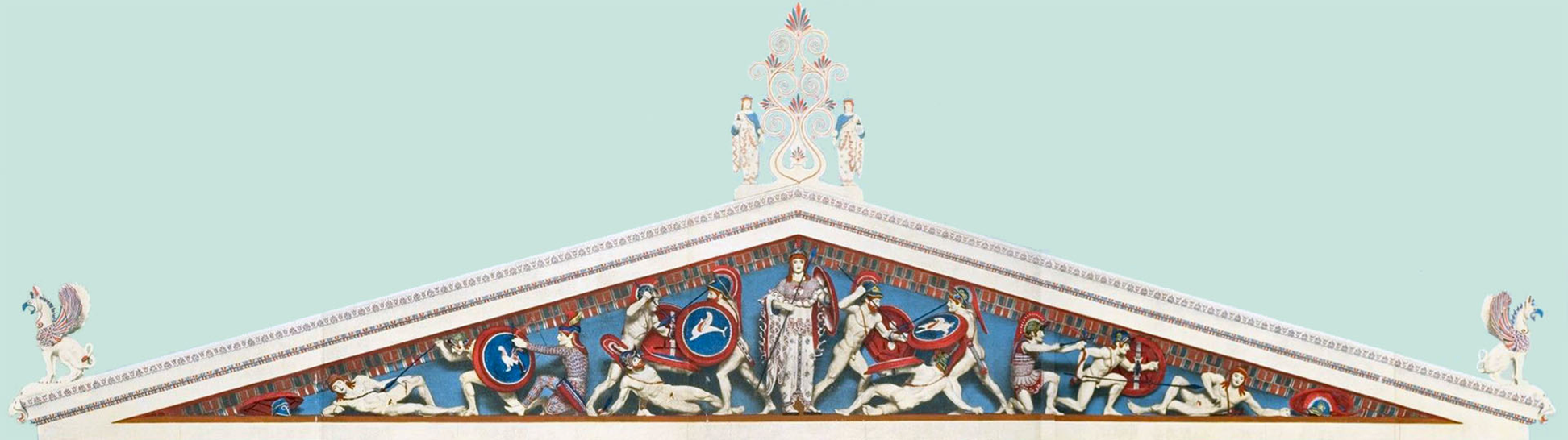
Identify this pediment
The Temple of Aphaia at Aegina, West Pediment (ca. 500-490 BCE?)- Composition – the similarity of the giant athena is paramount, the west pediment depicts achilles and ajax fighting paris
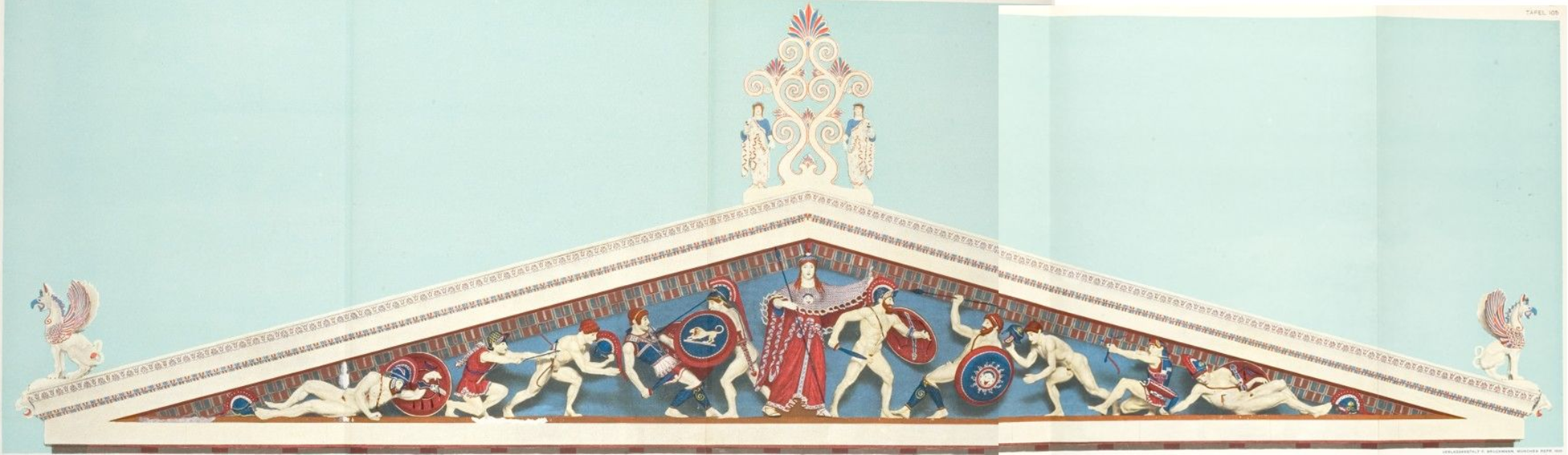
Identify this pediment
The Temple of Aphaia at Aegina, East Pediment (ca. 490-480 BCE?)- The east pediment refers to an earlier narrative – heracles and telemon attacking troy when Laomedon was king (father of priam)
Heroes depicted here linked to aegina
- First mythical king of Aegina was son of Zeus,
- The pediment therefore reflects this genealogy of aegina
What do the east and west pediments have in common?
Sculptures – replaced with other set of sculptures after it was built.
- Both have a central figure of athena seemingly related to trojan war
- Important – these sculptures show stylistic differences that were starting to happen in the time period
- Reconstructions of the two pediments – show that they both highlight heroic combat – battles happening either side of central figure of Athena
How does the pediment reflect the political situation of the time?
- Political situation at the time – ongoing conflict between aegina and Athens – despite aegnia taking part in the battle of salamus in 480BCE
o Could have been a way for aegina to celebrate their heroic past but also a way to distinguish themselves from Athens
Identify this statue:
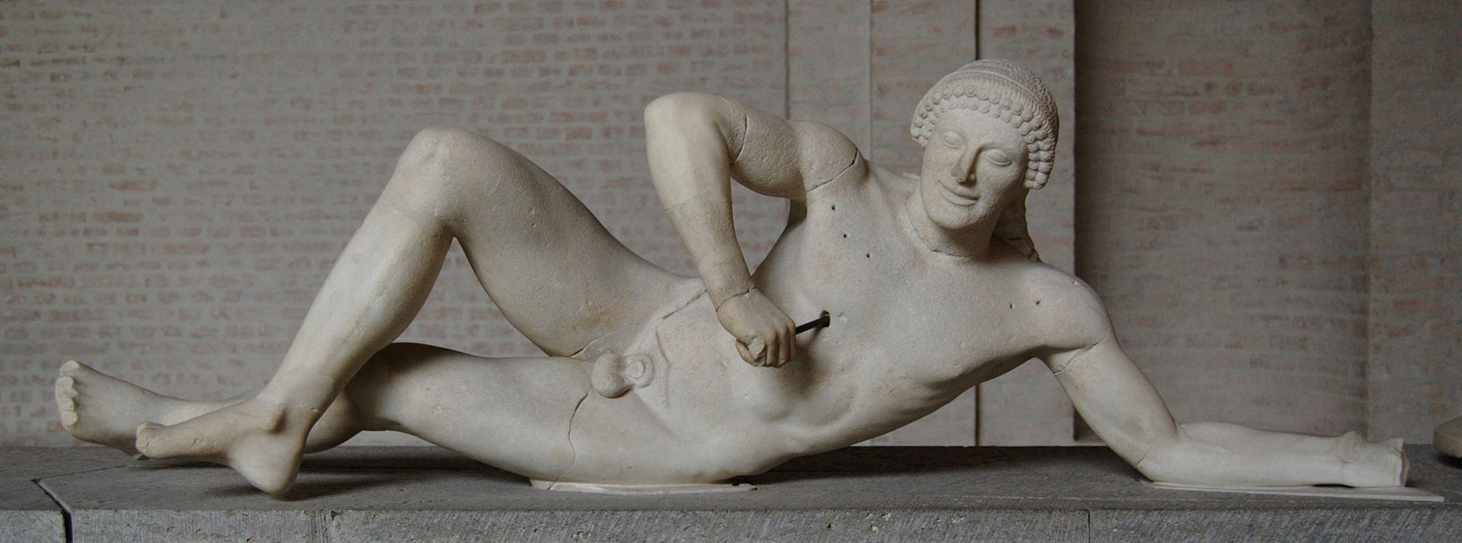
West wounded warrior
Identify this statue:
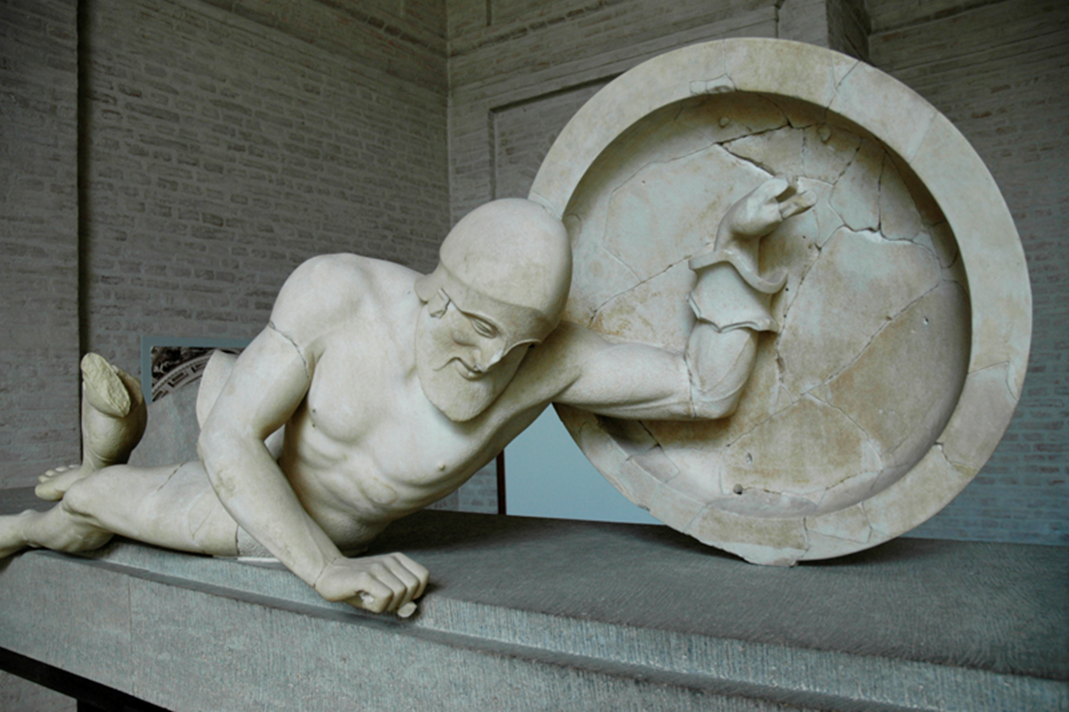
Wounded warrior from east pediment
What do these two statues reflect?
Change in style reflected in east vs west pediment
What style is the wounded west warrior in?
o Wounded warrior from west in archaic style structure
§ Some defined musculature, but is quite simple, hairstyle and smile are also typically archaic
What style is the wounded east warrior in?
Warrior from east is more typical to classical period
§ The severe style – bridging between the two – musculature more defined, little bit more idea of weight going through the body too
What is the centauromachy?
Story behind the centauromachy – centaurs invited to wedding but got drunk and intended to carry of the bride – resulting in a vicious battle. The Centauromachy took place at the wedding of Pirithous (King of the Lapiths) and his bride Hippodamia (also referred to as Deidamia). [1, 2]
What is the amazonomachy?
Amazonomachy traces back to battel between amazons and Herakles – or the battle between theseus and amazons after they invaded attica in revenge (both of these are fairly easilyu recognisable, similar narrative elements drawn upon in specific instances – and can have specific meaning in the buildings upon which they appear)
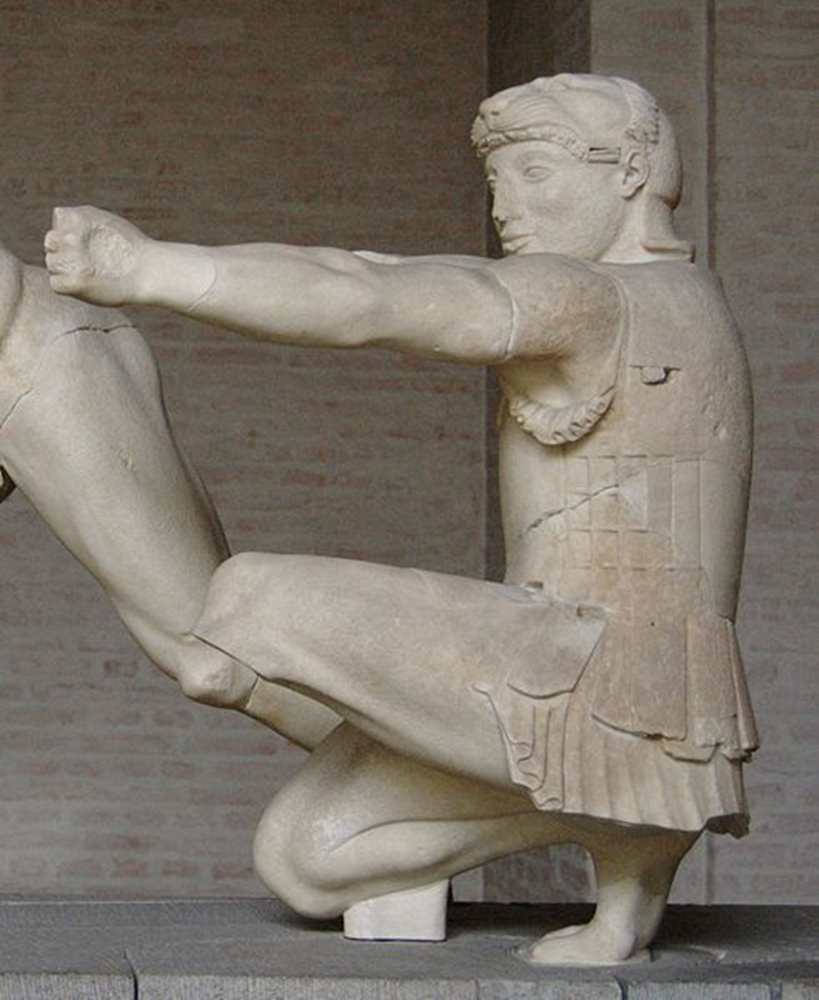
Identify this statue
Herakles , east pediment, Munich Glyptothek, Inv. 84. from the temple of Aphaia- East pediment has much more defined muscles - torsion?
Note Herakles with lion skin cap, more upright positioning than the archer on the west who is slightly more awkwardly balanced. Herakles eye is also more aligned with his hand than that of the west pediment archer.
Identify this statue:
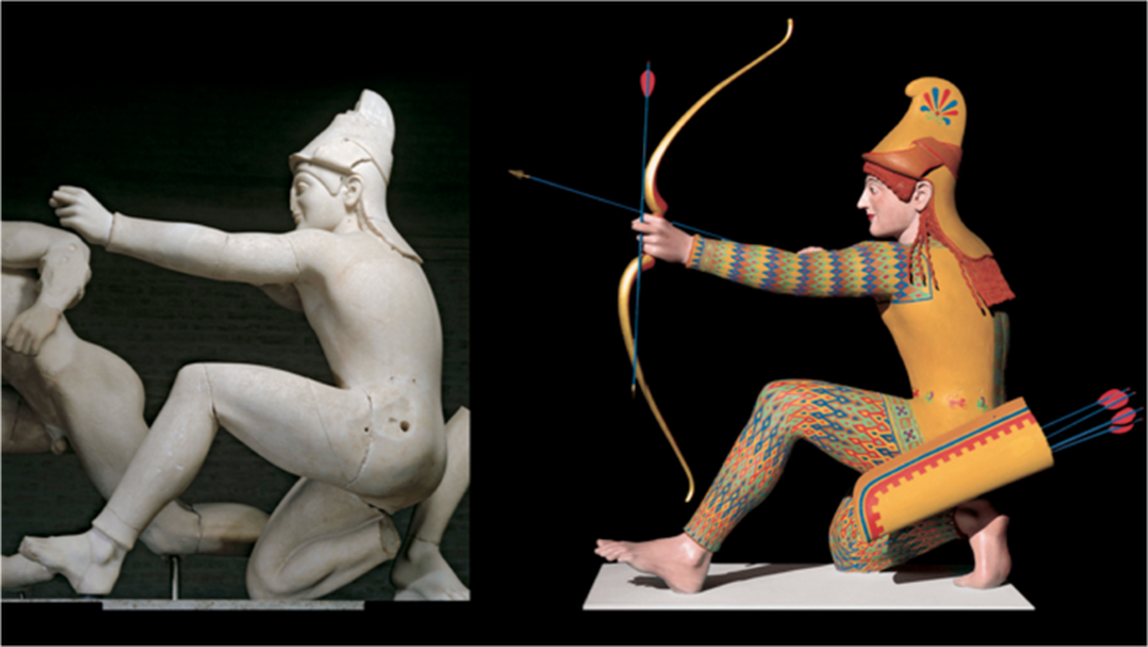
Marble and polychromy reconstruction of the archer from the west pediment of the temple of Aphaia Note - the costume of the west archer.
Identify this building:
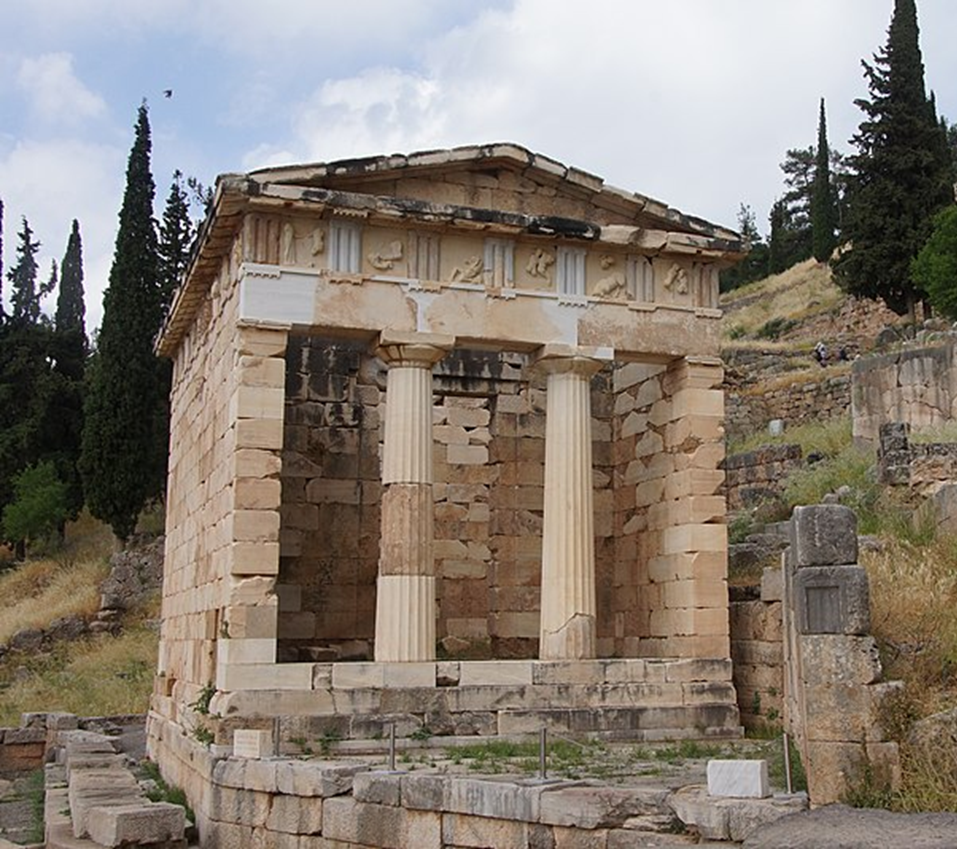
Athenian Treasury, Delphi, ca. 490-480 BCE
What were the inscriptions found on the treasury/why was it dedicated- and what does this mean for what would be inside?
o “The Athenians dedicated this to Apollo as first-fruits from the Persians at the Battle of Marathon”. (Dinnsmoor (1946) 87.).
o “The Athenian (treasury was built) from the spoils of the landing of Datis at Marathon”. Pausanias, Guide to Greece, 10.11.5.
o Therefore was likely built to contain spoils from battle
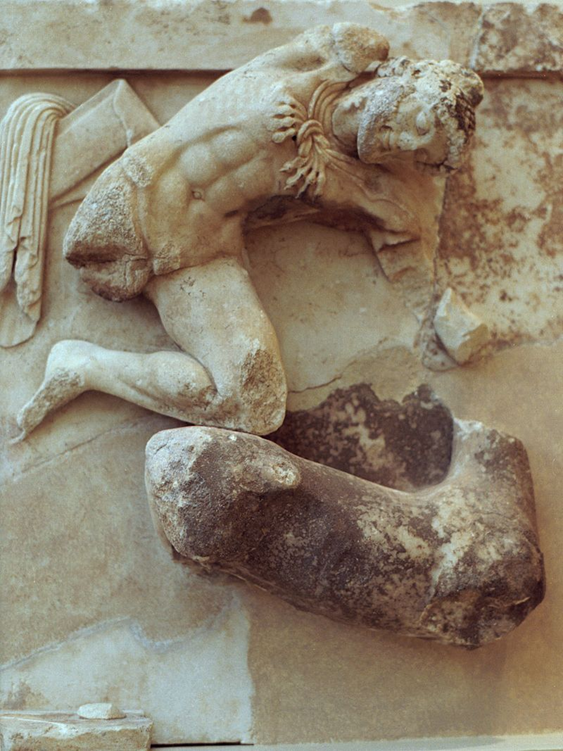
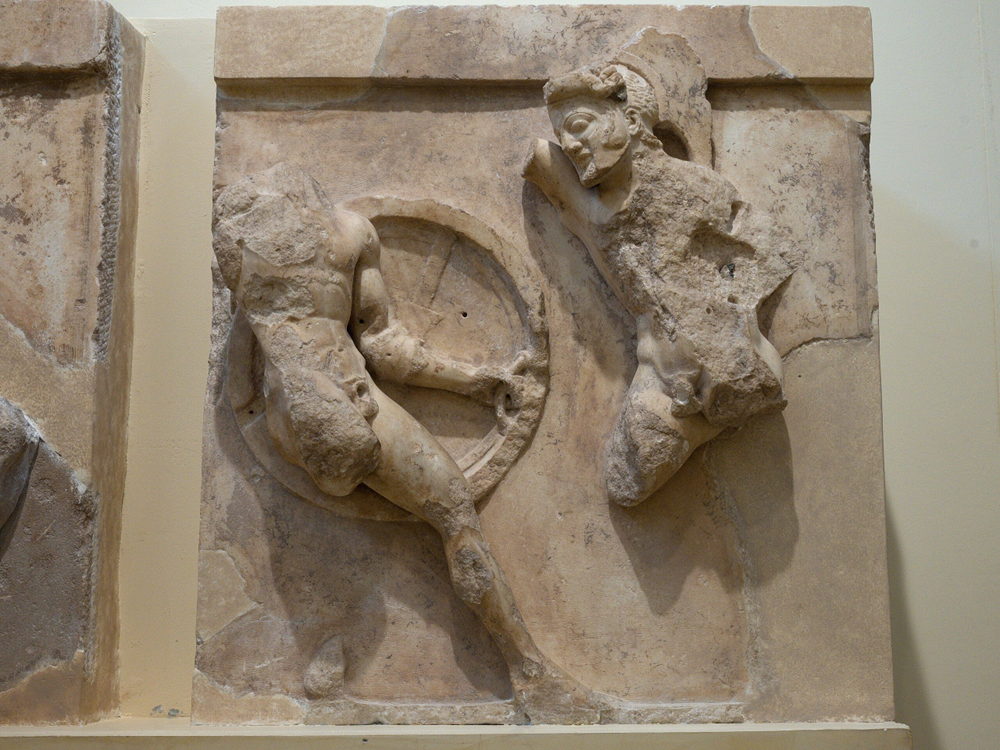
Identify these metopes
North metopes showing Heracles on the treasury
Which myths of Heracles are these metopes displaying?
Ceryneian hind (top one)
Bottom one: Herakles and Cycnos (son of Ares) - different Herakles narrative told by Hesiod in poem Shield of Herakles and other lit sources.
Identify these metopes:
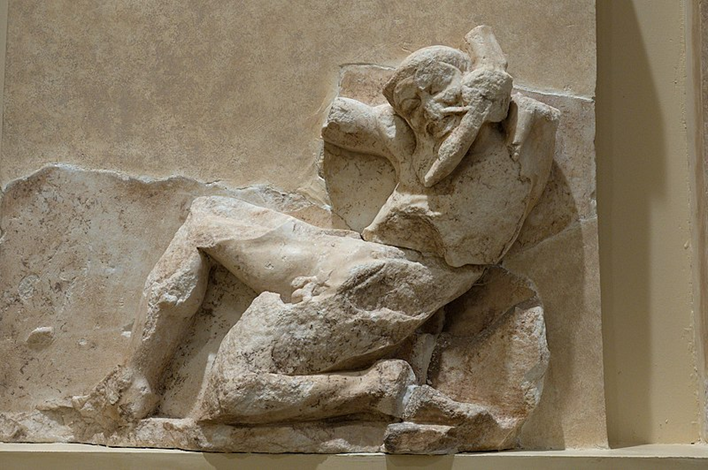
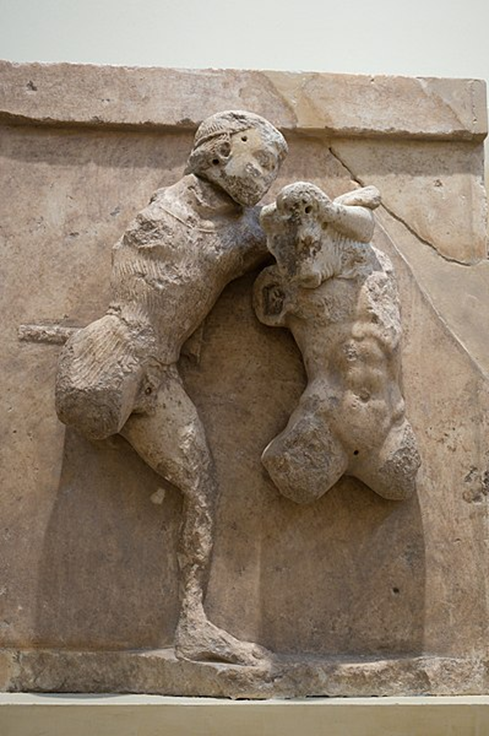
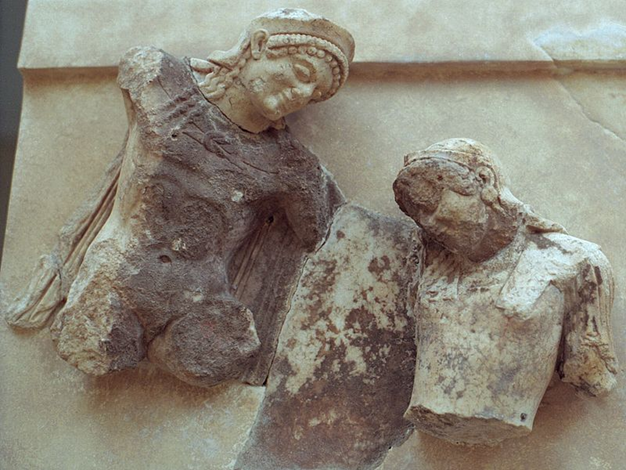
South metopes of the Athenian treasury in Delphi
Identify the myths these metopes show
Middle- minotaur
Bottom: It’s Skiron; the Minotaur and Amazon Antiope. Very difficult to identify!
Where would these metopes have appeared and whats the significance of them?
o These actually appeared above where the spoils would have appeared
o Theseus is more significant as he appears on this south side where the dedication and spoils of marathon would be as well
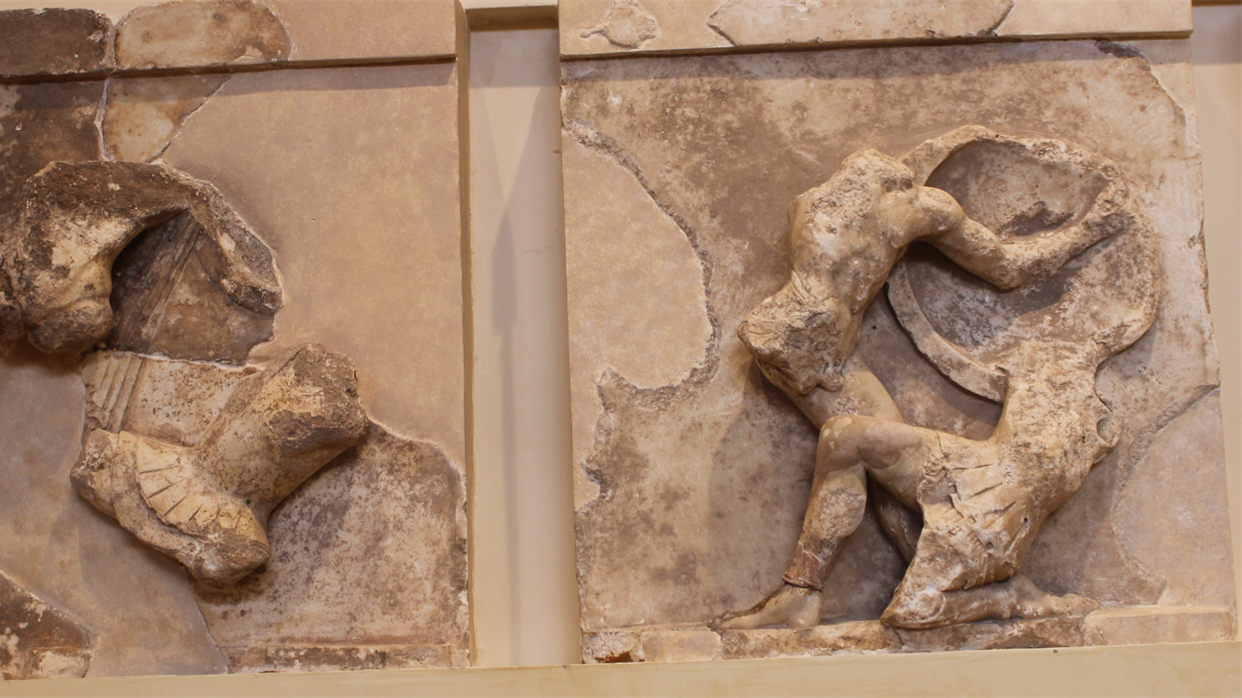
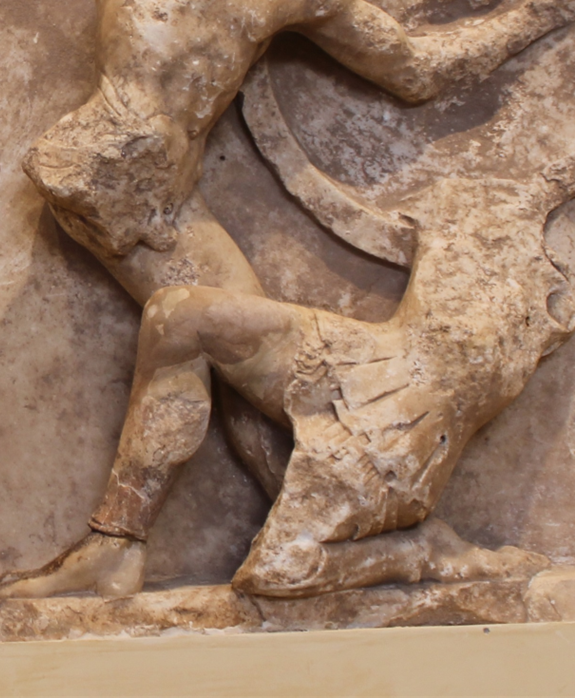
Identify these metopes
East Metopes: Amazonomachy on the Athenian treasury in Delphi
What similarities does the amazonoamchy have with the gigantomachy and with how the Trojans are depicted at Aphaia?
There is similarity to the Gigantomachy - the Amazons are depicted similarly to the giants with falling poses = defeat.
The Amazons are dressed similarly to the how the Trojan warriors are depicted at Aphaia - long leggings - defining them as non Greek.
What is significant about the use of this imagery on this building? How can it be contextualised?
Connections between Delphi and Athens through similar/shared deeds of heroes Herakles and Theseus.
Historical - Athenians and allies had gathered at the shrine of Herakles at Marathon prior to the battle. Amazonomachy narrative being used to parallel the expulsion of the Persians from Attica.
Spatially: south side of treasury when the Marathon dedication appears and where the spoils from the battle would have been displayed - highly visible as it faced the Sacred Way. Theseus metopes also above this.
What is the thesion in Athens?
Sanctuary in Athens that supposedly housed theseus bones recovered front he island of skyros
The exact location of this building is unknown but we do know it had paintings by Micon depicting
Athenians v. Amazons
Lapiths v. Centaurs
Theseus and Minos
(know about this from Pausanias, Guide to Greece, 1.17.2-6)
Identify this temple:
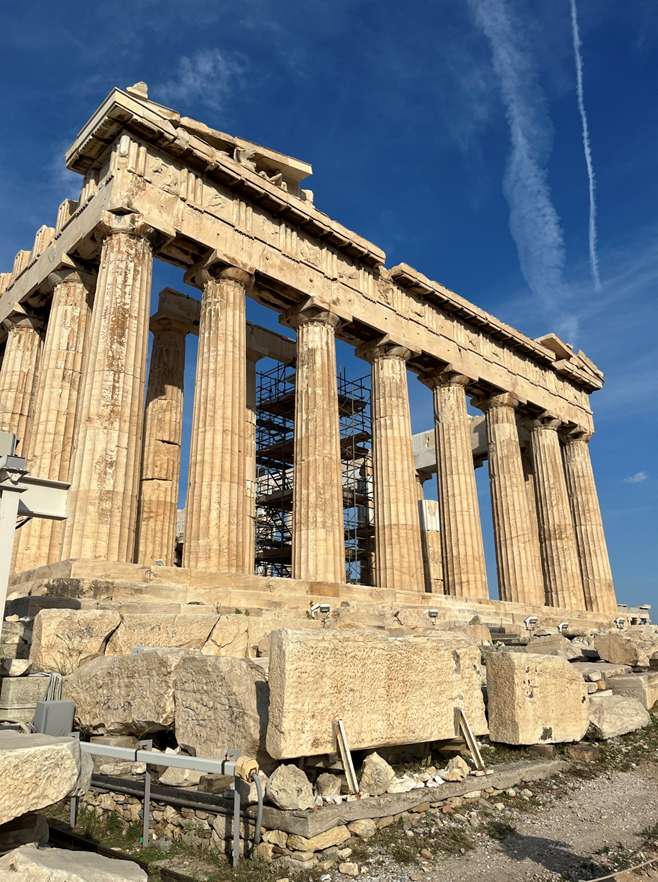
The Parthenon Athens
Date the temple and give info on it
Building started in 447 BCE.
Inaugurated 438 BCE.
Pediment sculptures completed 432 BCE.
We rely on drawings made by a French artists from 1674 for reconstructions of the pediments, even at that time many things were missing
Pausanias describes the cult statue of Athena (slide 19)
What did the pediments depict?
Western pediment had Poseidon and Athena competitions and the amazonaomachy on the metopes below
East pediment is Athenas birth and the metopes below show the centauromachy?
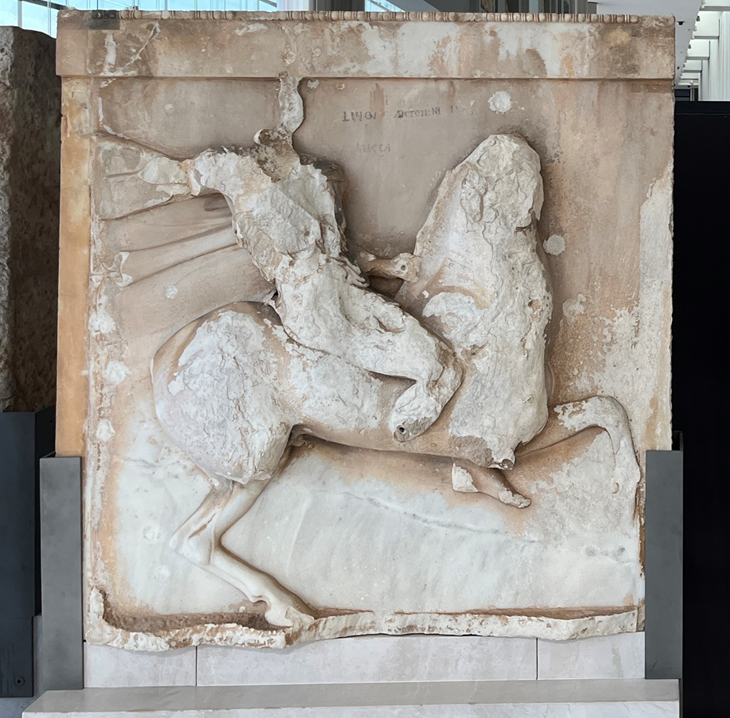
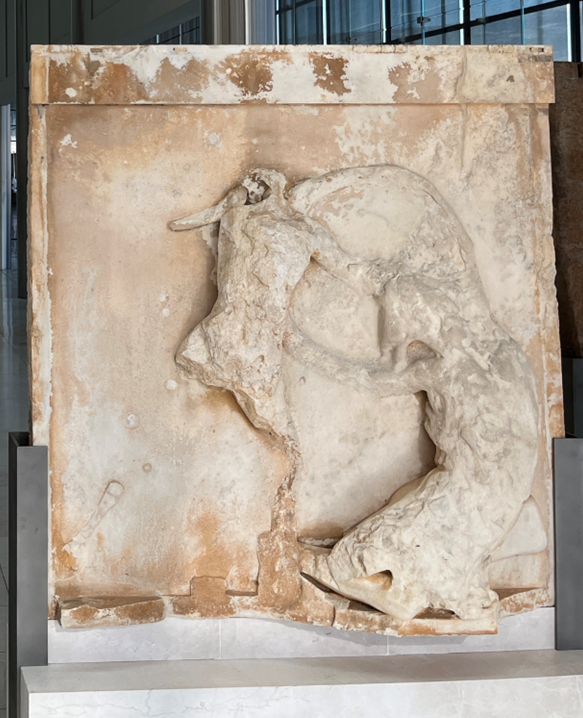
Identify these metopes:
West metopes: Amazonomachy:
Describe the west metopes
These appeared as alternating scenes with either mounted amazons or unmounted opponents fighting
The Greek men tend to eb depicted heroically naked and the women have their clothing in disarray
Identify this image:
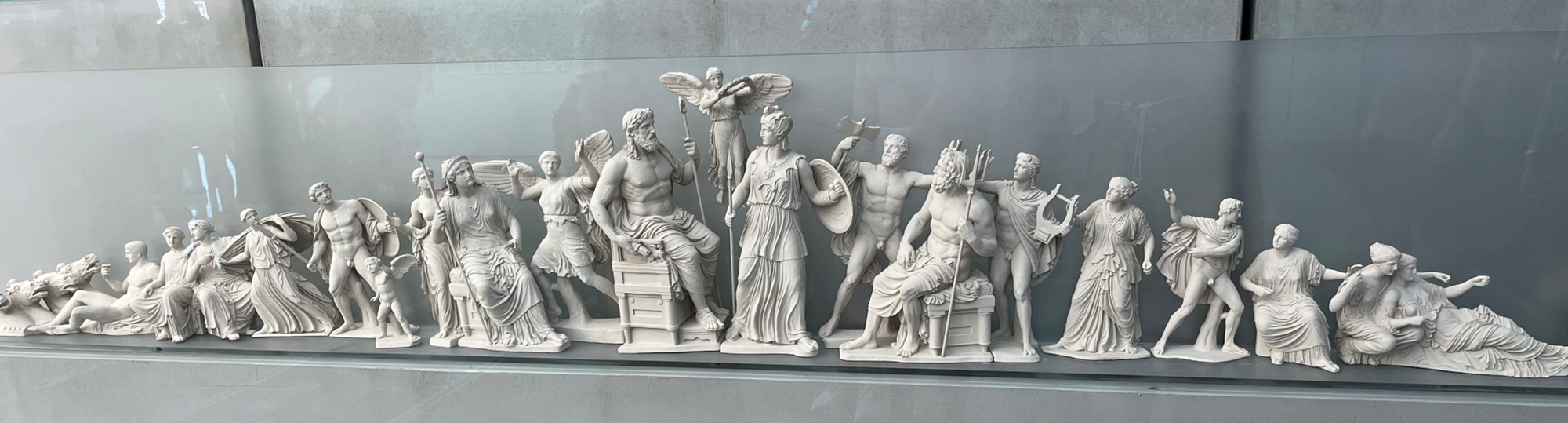
Reconstruction of east pediment in The Acropolis Museum, Athens: The Birth of Athena
Describe the pediment
Variety of gods and goddesses witnessing the scene
What does survive is a figure of Dionysus looking towards the horse sof Helios chariot
On the far right of the pediment is three seated goddesses, hestia, Aphrodite and aphrodites mother Dion (i think)
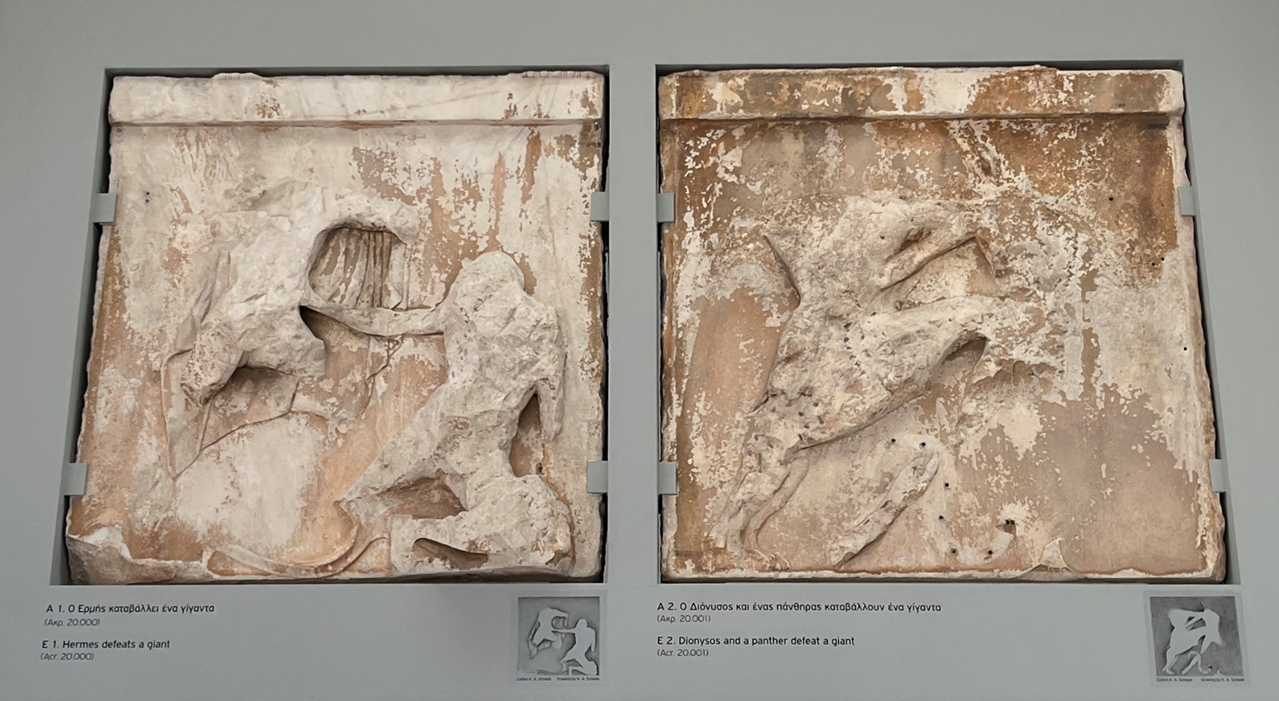
Identify these metopes
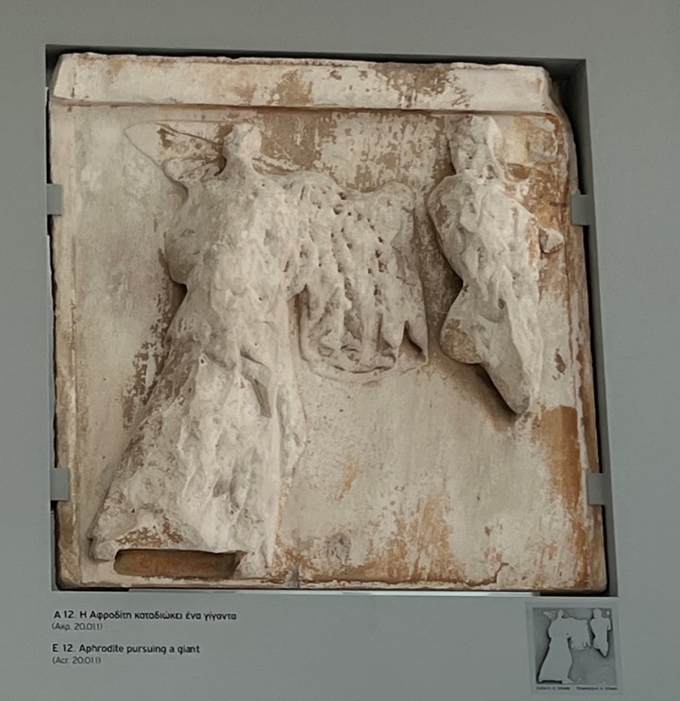
East metopes: Gigantomachy:
Describe and identify the myths and characters in these metopes
Most of these have two figures sometimes three
Theyre quite damaged so difficult to identify
To the left there is hermes grabbing a fallen giant
In the centre Dionysus is striking a giant, there is also a snake on that metope (made of metal and attached)
On the right is Aphrodite about to attack a giant who is holding a large rock
Identify this metope
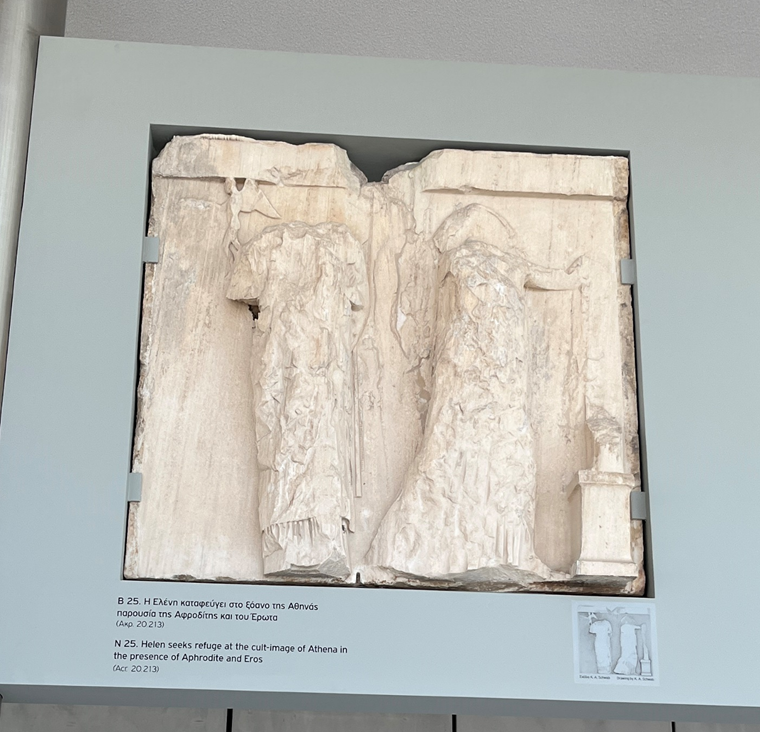
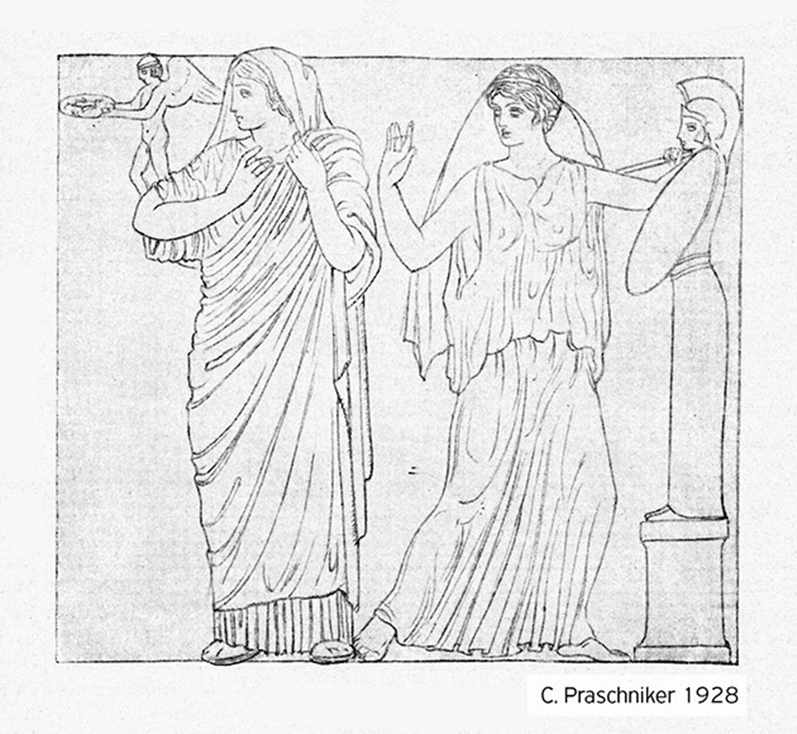
North metope: Fall of Troy:
Give info/describe this metope
18 of these were destroyed in the explosion
Does seem to be an abscene of battle scenes, interesting considering the dominance of these in the other metopes
Suggests these are all episodes that took place at night after the fall of troy
One shows Helen pleeing to Athena for help against Menelaus and his wrath
Identify these metopes
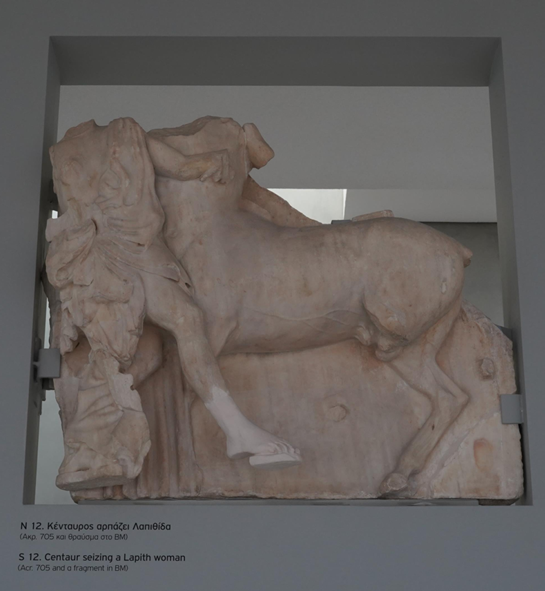
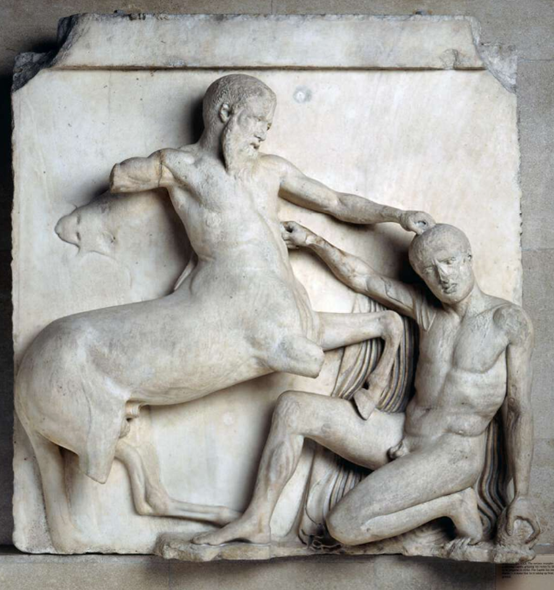
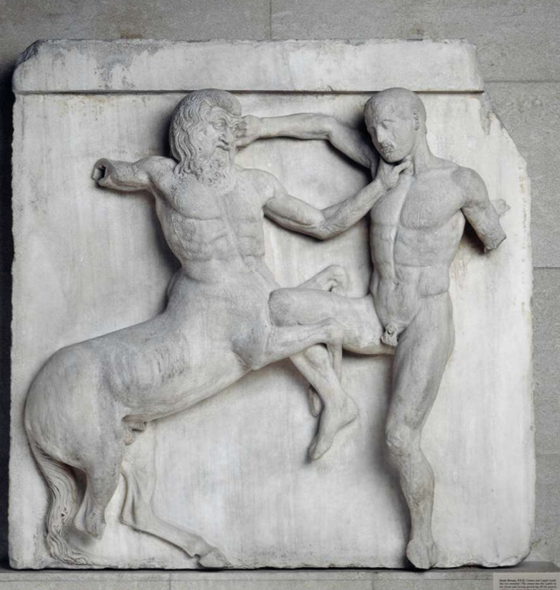
South metopes: Centauromachy:
Give info on these metopes:
Some metopes on the side don’t include any centaurs, thought that these might have shown the marriagee of p e r e t h e u s and hippodamia
The human bodies of the Lapiths are deicted with very fine musculature
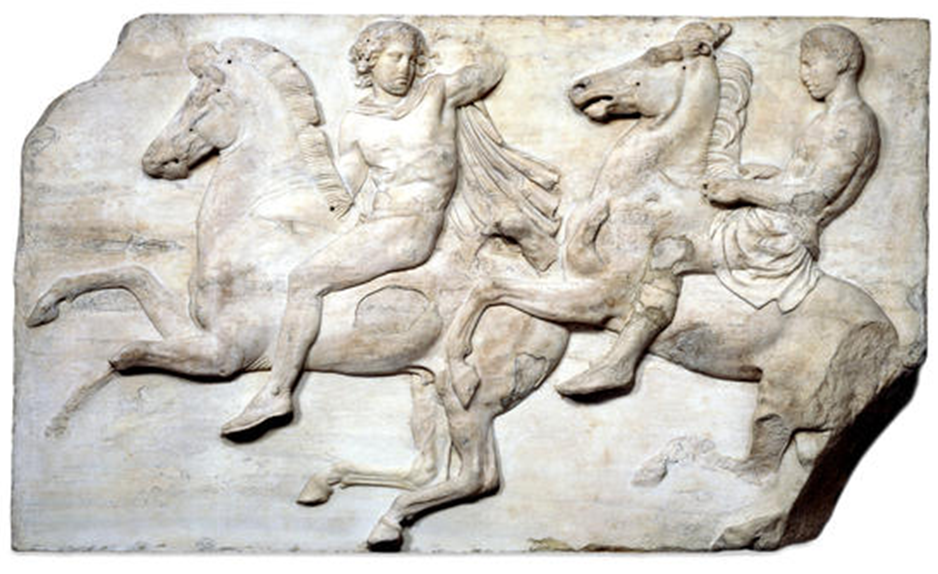
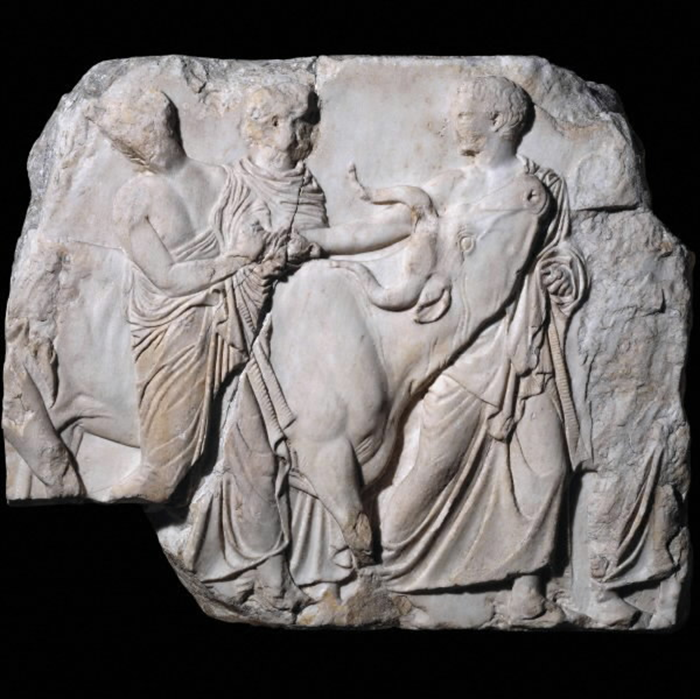
Identify this from the Parthenon
The frieze
What does the frieze show?
Athenians preparing and taking part in the procession
Two horsemen taking part in the procession, another is a bull being taken to sacrifice
The frieze isn’t showing the stories of individuals
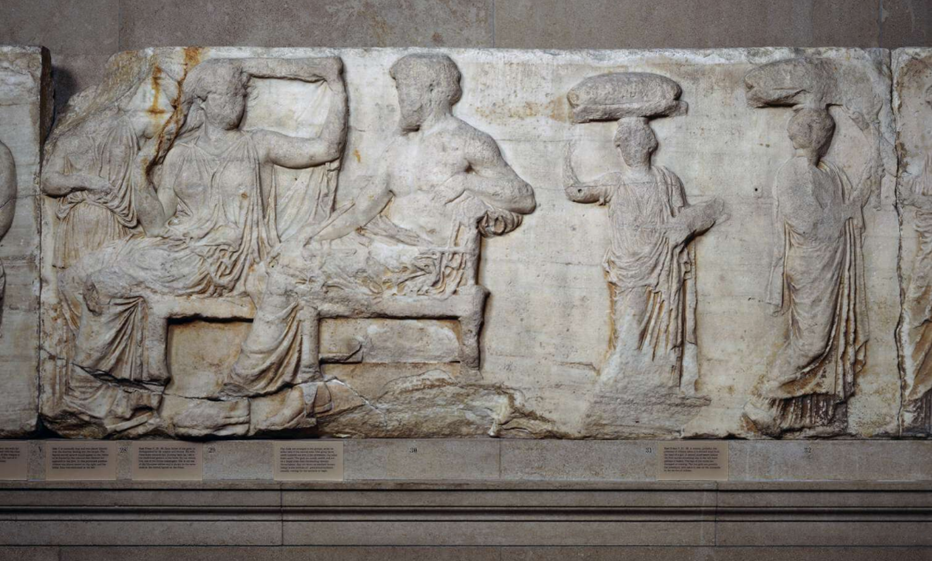
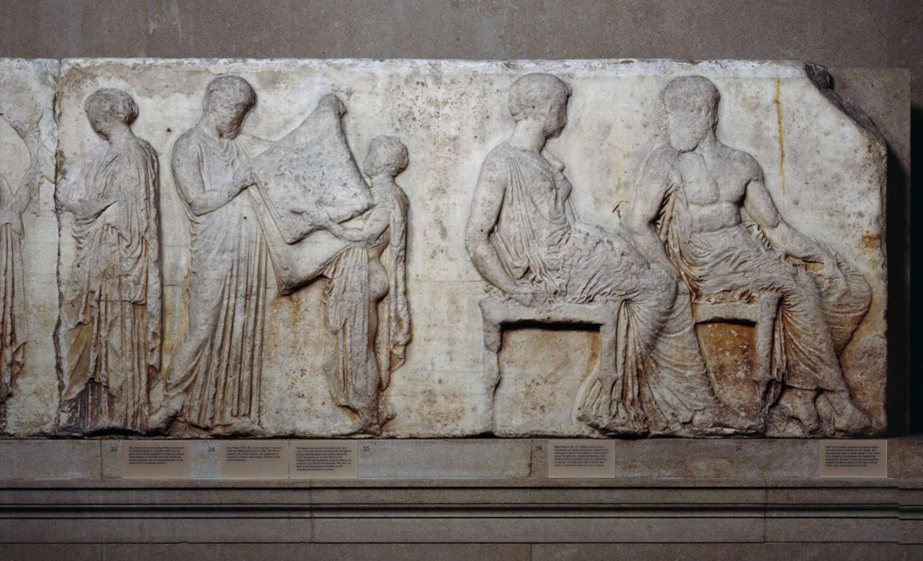
Identify this
Parthenon Frieze: East side:
Describe the frieze
Five gods and five humans, including women and a child holding a peplos
Zeus and hera are seated to the left and on the right is athena with hephaestus
Identify this statue:
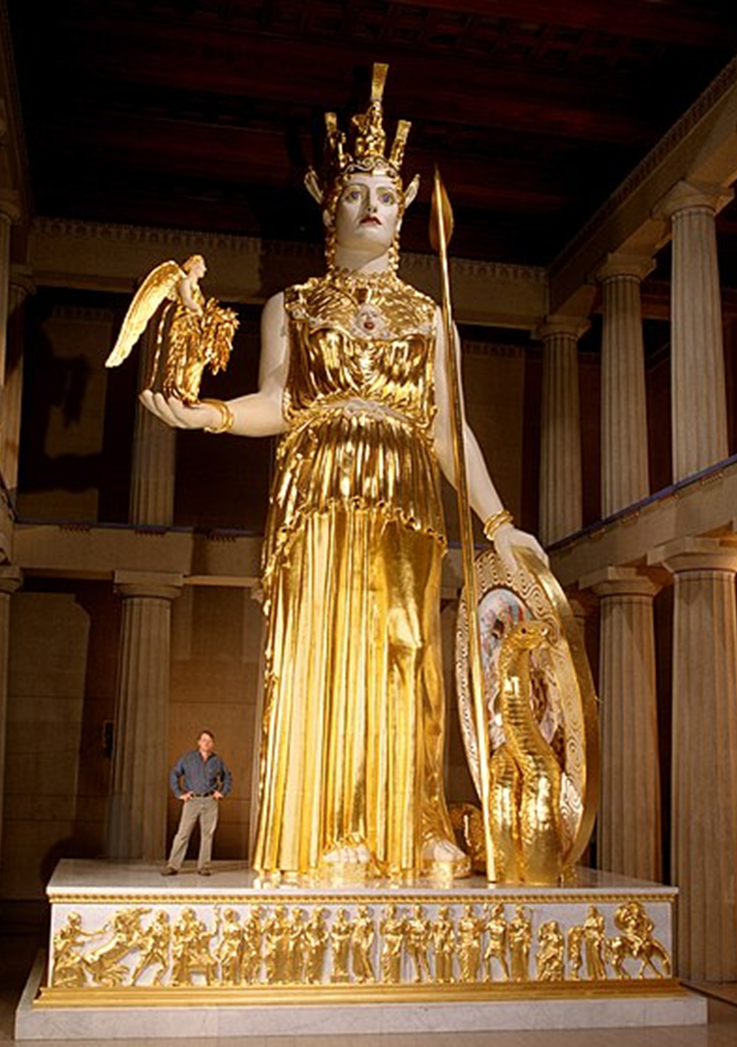
A recreation of the Cult statue of Athena Parthenos
Give info on this statue (sculptor, date, height, physical description)
Sculpted by Pheidias.
Completed in 438 BCE.
12m high.
She is wearing an elaborate helmet with a sphinx, griffins and two pegasoy as well
Holding a golden Nike in one hand
Shield spear and serpent on the other side
On the base of the statue was the myth relating to Pandora, Athena had a role in dressing Pandora
The shield was also embossed with imagery
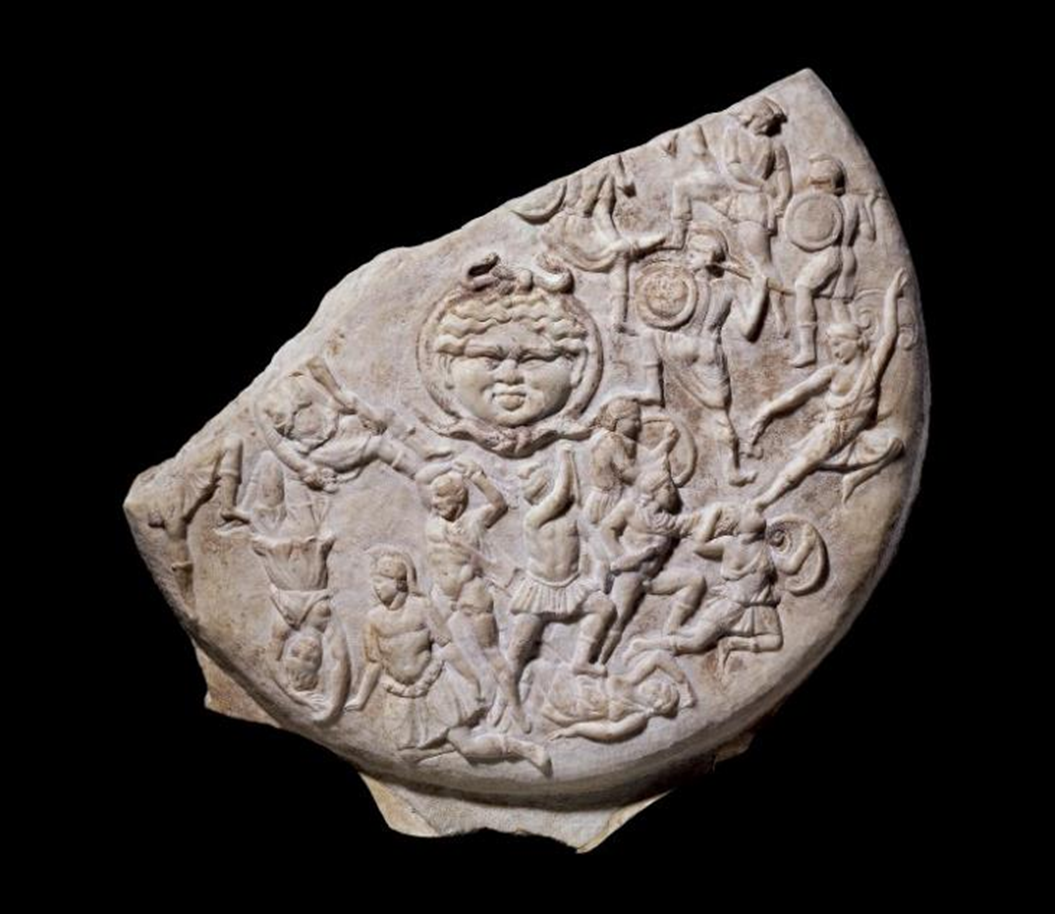
Identify this
Athenas statue: Roman copy: “The Strangford Shield” British Museum. Full of action, its thought that the two male figures below the face may represent Pheidias
How would you contextualise the narratives on the metopes?
Amazonomachy as an emblem of the Amazon’s attack on the Athenians; also echoes the Persian invasion of Athens?
What are the main themes of the eastern and western sculptures?
Athenian identity- founding of the city, unity in the face of outsiders
East Pediment: Birth of Athena and gigantomachy on metopes
West Pediment: contest between Athena and Poseidon and amazonomachy on metopes
Frieze: depiction of the Panathenaia/ intrinsically Athenian festival contributes to the construction of a shared Athenian identity. Additionally evoke reverence towards Athena herself?
Is there anything you would expect to see in the Gigantomachy, Amazonomachy or Centauromachy that seems to be missing (with the caveat of the fragmentary evidence)? Why might this be?
No Theseus or Heracles
How does the cult statue reiterate the themes of the exterior decoration?
The decoration on the east pediment links thematically to the statue- prepares the viewer for seeing the cult statue
Embossed with Amazonomachy, gigantomachy and centauromachy on sandals. Same as exterior decoration.
What other themes could potentially be drawn out through the myths used?
Role of men and women- women as the other in the Amazonmachy, gender roles in the Panathenia
Revolution - Pandora got rid of hope in popular interpretation of the myth.
Identify this building:
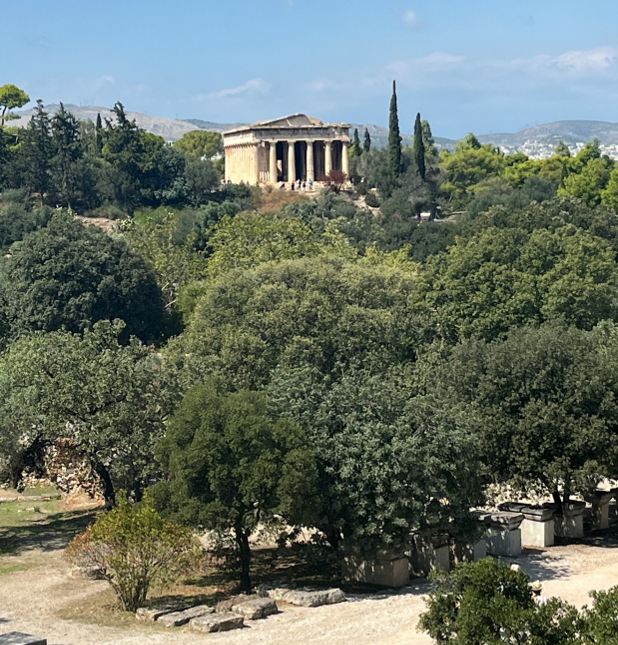
Hephaisteion, Athens
Date the Hephaisteion
Dating slightly problematic here too:
- Started ca. 460-449 BCE.
- Completed ca. 410s BCE. (likely due to funds being diverted to parthennon but also pelopennesian war)
What rooms were in the Hephaisteion?
Pronaos, cella and opisthodomos.
What is on the exterior of the hephaisteion?
Exterior: pediment, metopes and acroteria.
What is on the interior of the hephaisteion?
Interior: two friezes.
Why was there a temple to Hephaestus in Athens?
Why there was a temple to hephaestos here – he played a role in the Athenian mythical past – also evidence for bronzeworking to the southwest of temple – likely he being significant to those craftsmen as well
Where was the Hephaeston in the agora and what importance did its placement hold?
- Hephaeston on the hill – framed by the two syphic buildings and overlooked the civic centre of the city where lots of governmental proceedings took place as well as religious and ceremonial ones.
- Benches constructed around 422bce – provided limited seating for people to observe events happening in civic space
- The imagery the hephaeston carries would have been visible to anyone in the civic space
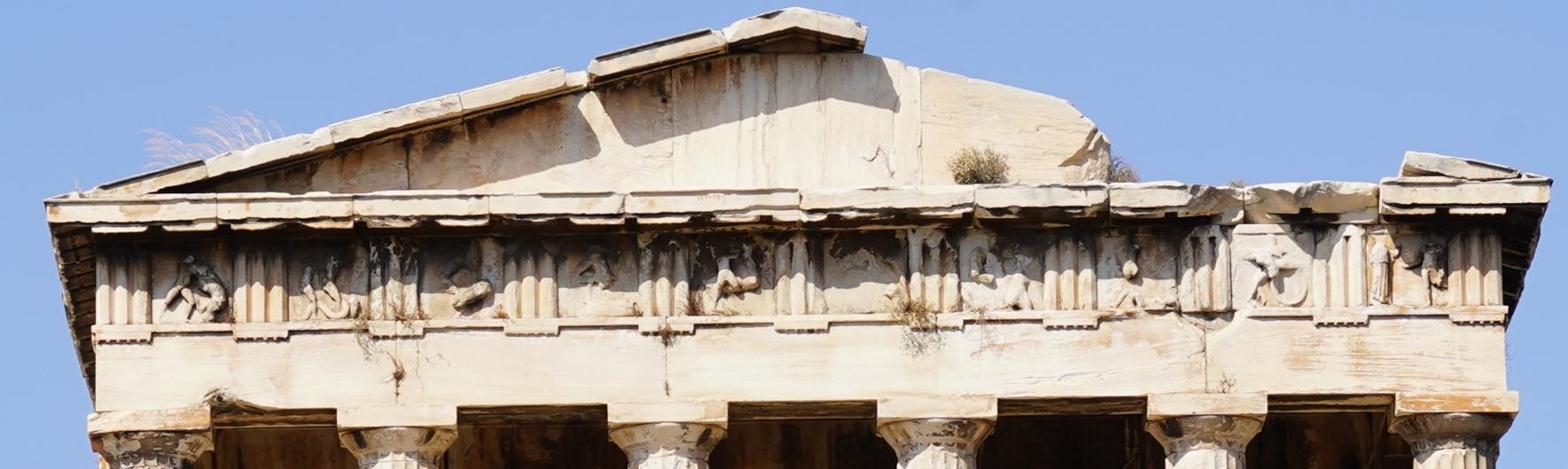
Identify these metopes
East on the hepaheston
Describe these metopes
o Oldest elements of the decoration – possibly predate the parthenon
o Clustered on eastern end – 10 on east façade snhowing the labours of heracle
o Ssome down two sides as well – not in great condition
o Looking at reconstructions –
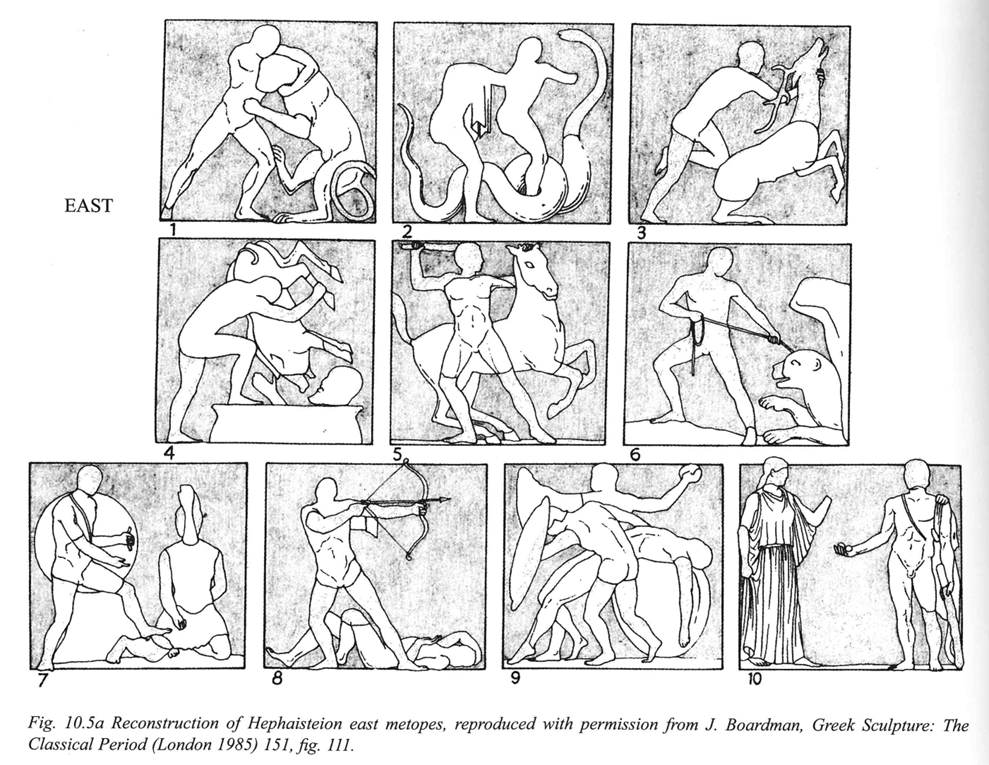
Labours of Herakles:
•1-6: Nemean lion; Hydra; Keryneian hind; Erymanthian boar; horses of Diomedes; dragging Cerberus from Hades.
•7-10: fight with Amazon; Geryon over 2 metopes; apples of Hesperides with Athena.
Identify these metopes:
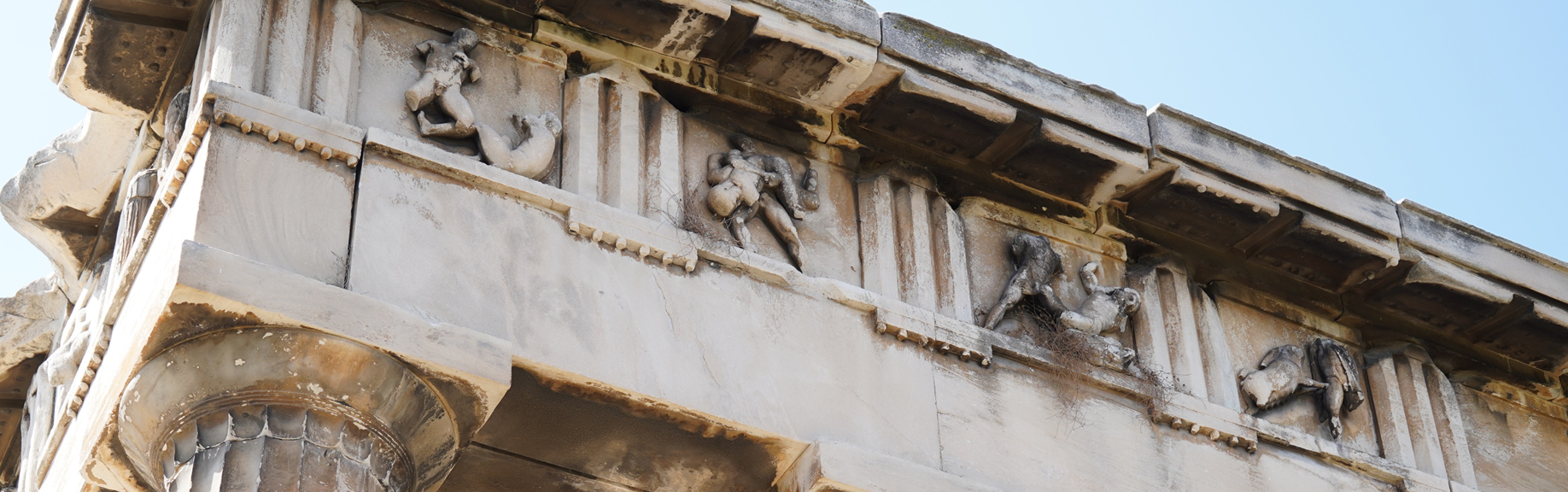
North metopes
what do these metopes show?
The labours of theseus- Prokrustes, Kerkyon, Skiron and Krommyon sow
Identify these metopes:
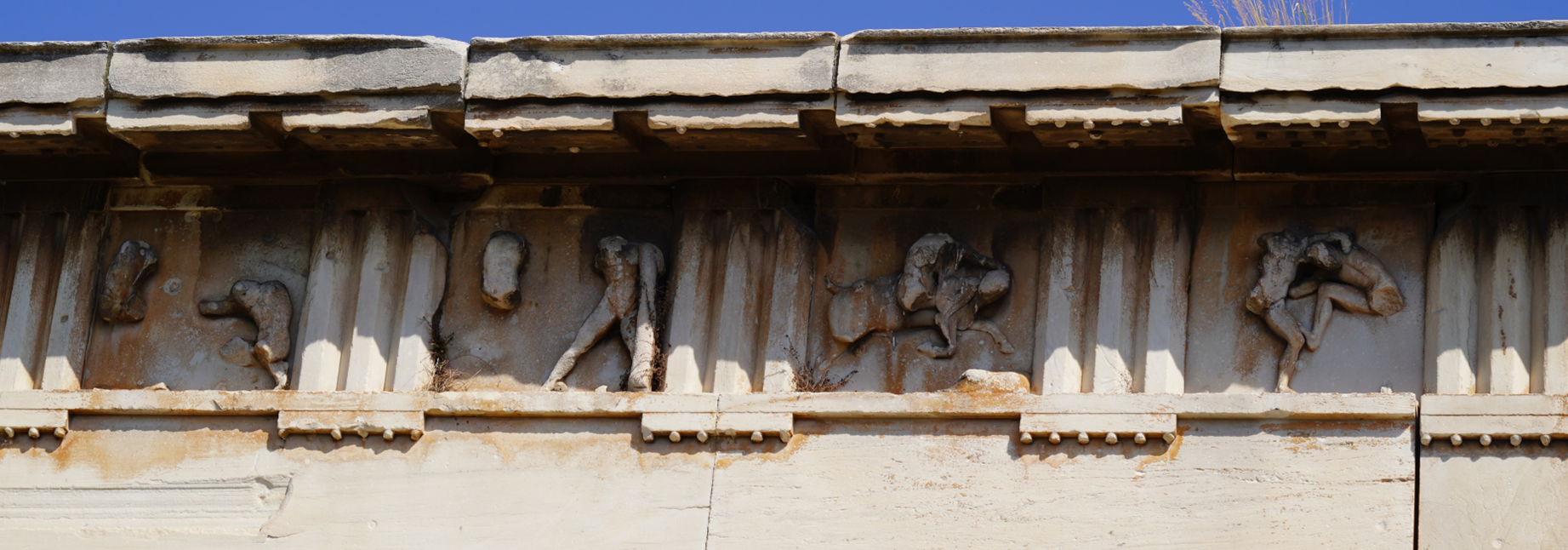
Metopes south- Labours of Theseus: Periphetes, Sinis, Marathonian bull, Minotaur Showing different labours – very fragmentary
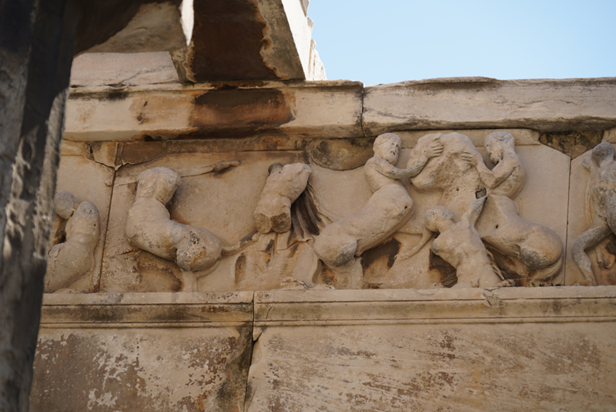
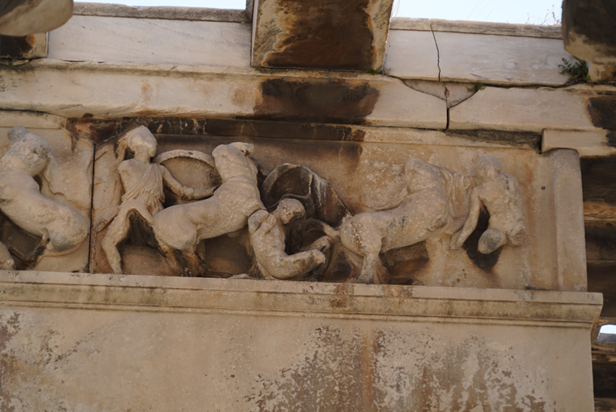
What myth did the west frieze show?
Battle of the Lapiths and centaurs- Fairly typical depictions of a centauromachy, one key difference which is that the centaurs are using large boulders and rocks to attack the Lapiths, we sometimes see giants using rocks in the gigantomachy- this may have been used as inspiration
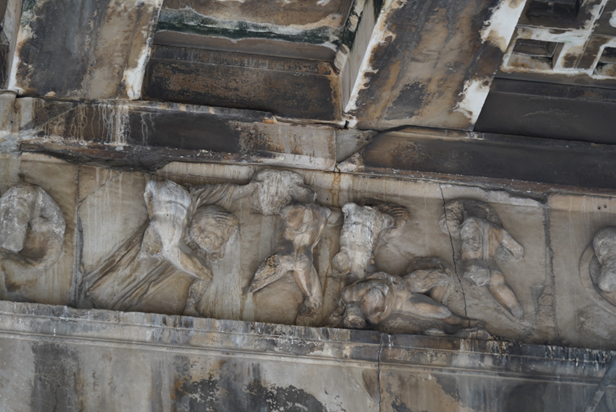
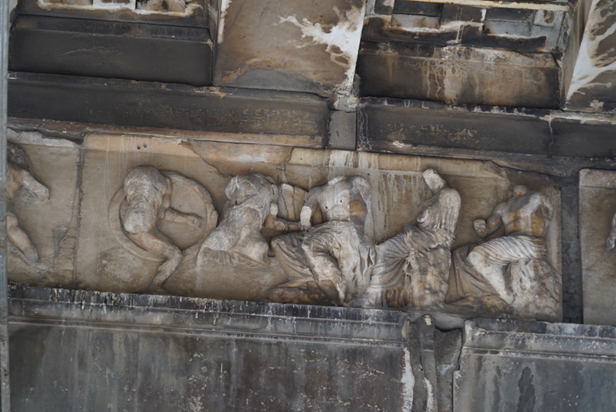
What myth did the east frieze show?
- Unknown battle
- This appeared under the metopes showing heracles and with the side metopes showing theseus – so we have this concentration and placement od the imagery on the east as well – this all would have been viewed from the agora below
Explain the potential exchoes of tyrannicides shown in the friezes
- Theseus undetstood to appeari n the centre of both friezes – adopting the poses of the tyranicides
o The tyranicides are the term used to describe the two famous bronze statues of harmodios and aristogeiton – martyrs to the cause of ahtneian freedom – statues commemorating thenm were in the agora from late 6th century bce but were stolen by persians in sack of the city and new ones rectoried afterwards
§ Some roman copies – eg the onei n the naples museum
o On east frieze the figure has been interpreted as theseus in positon of aristogeiton, and on west he appears more in pose of Harmodios, clean shaven and he has one hand up raised presumably with a sword in it
- Again got this blending of myth and history – theseus in the guise of these two historical figures amalgamates these two things (myth and real) together
Identify and date this temple:
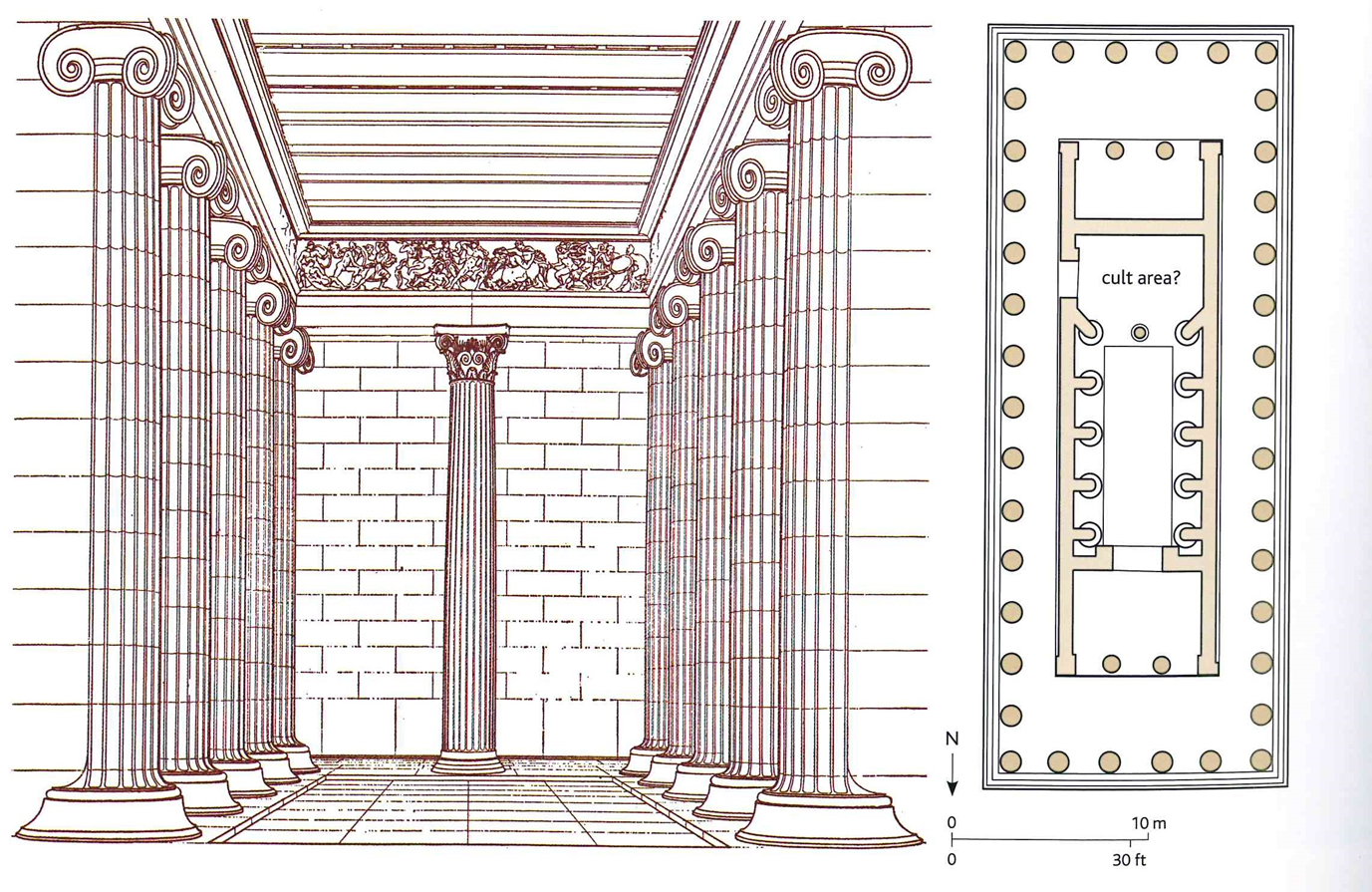
Temple of Apollo at Bassae, ca. 429-400 BCE
Give info on this temple
This temple was built on the site of an older sanctuary
Bassae, near Phigaleia in Peloponnese.
Blend of old and new architectural ideas. Conventionally doric on the outside but in the intear there was a long ionic colonnade
15 interior columns opposed to the usual 13
Pausanius History of Greece, 42.7-10.
Designed by Iktinos (Parthenon).
Apollo Epikourios, “Apollo the helper”.
12 metopes and internal frieze consisting of 23 blocks.
Frieze now in the British Museum.
Metopes have survived very fragmentarily
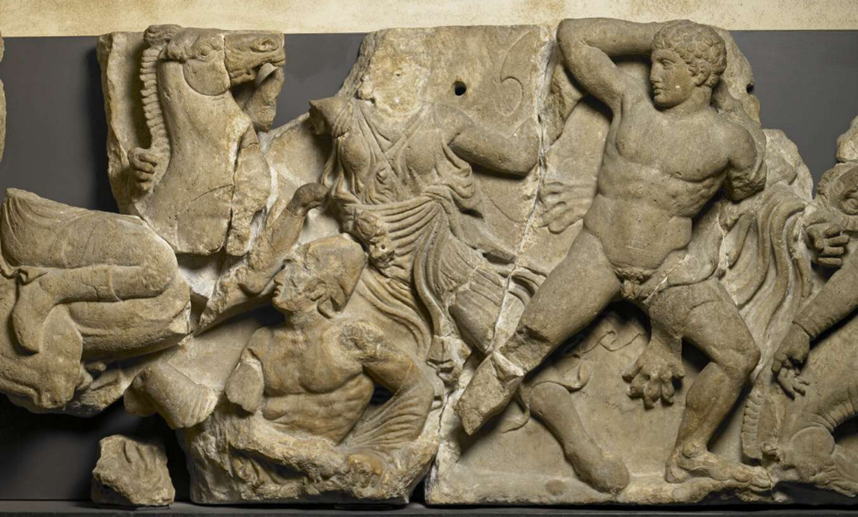
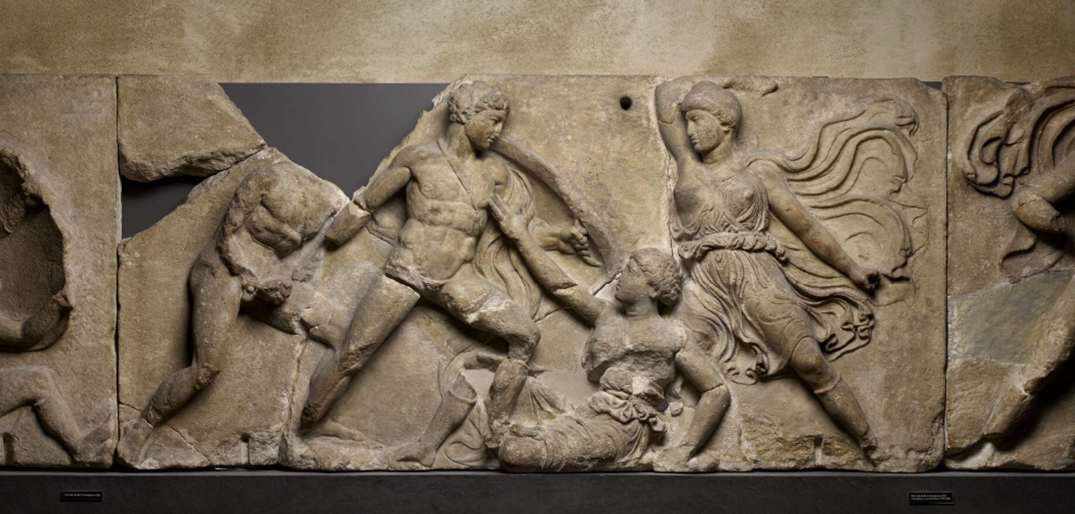
Identify the myth in the south and east friezes
Amazons and Greeks
Motion - the clothing of the Amazon is flowing out behind her, where the man is stagnant.
Panel 1: Herakles holding lion pelt
Fighting Hippolyte - the labour of taking her girdle - the swathe of fabric around her waist may signify this.
Panel 2:
Heroic nudity vs clothing of the amazons
Defeat. Reminiscent of Achilles/Penthesilea?
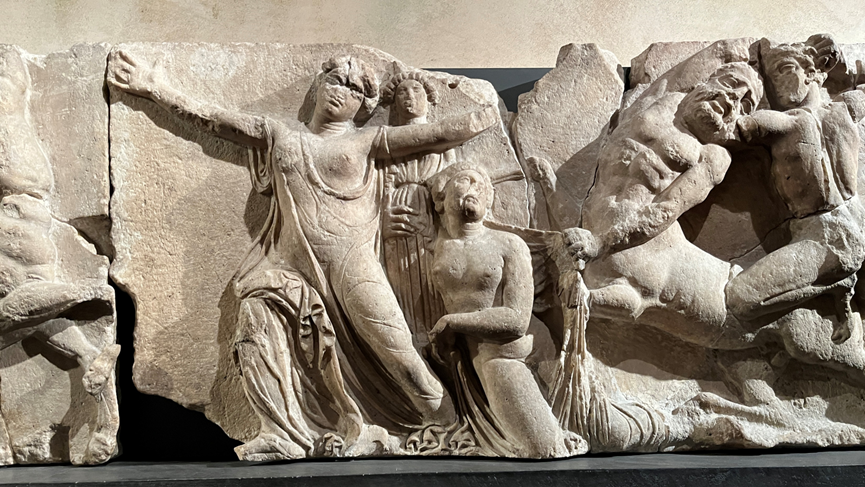
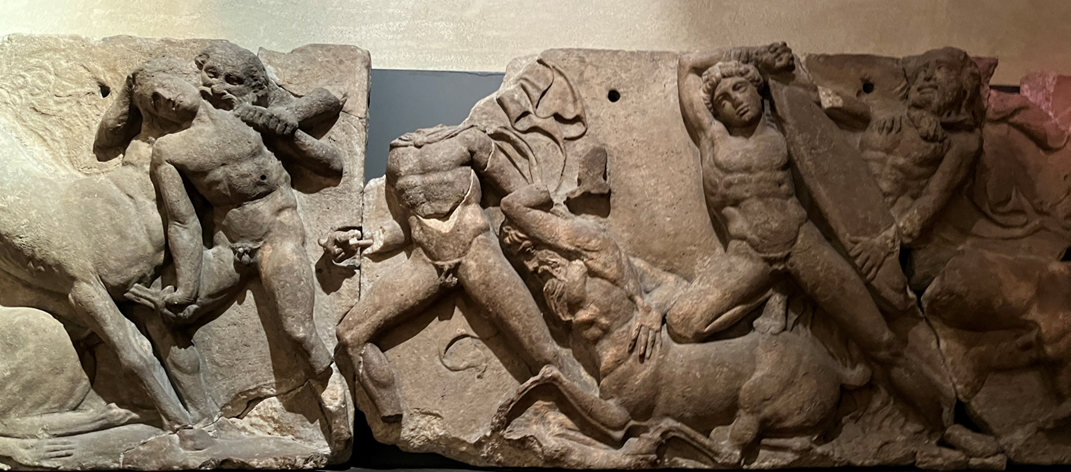
Identify the myth on the west and north friezes
West and North Frieze panels: Centaurs and Lapiths
Panel 1:
Lapith women included too- increased violence, plot portrayal, grasping fabric.
Grasping the cult statue.
Graphic, violent; open body language of the standing woman - an appeal for help or pity - evocative. Clinging drapery on women.
Panel 2:
Centaur biting lapith?
Graphic, violent; horror of war?
Identify the scene and characters in the north west corner:
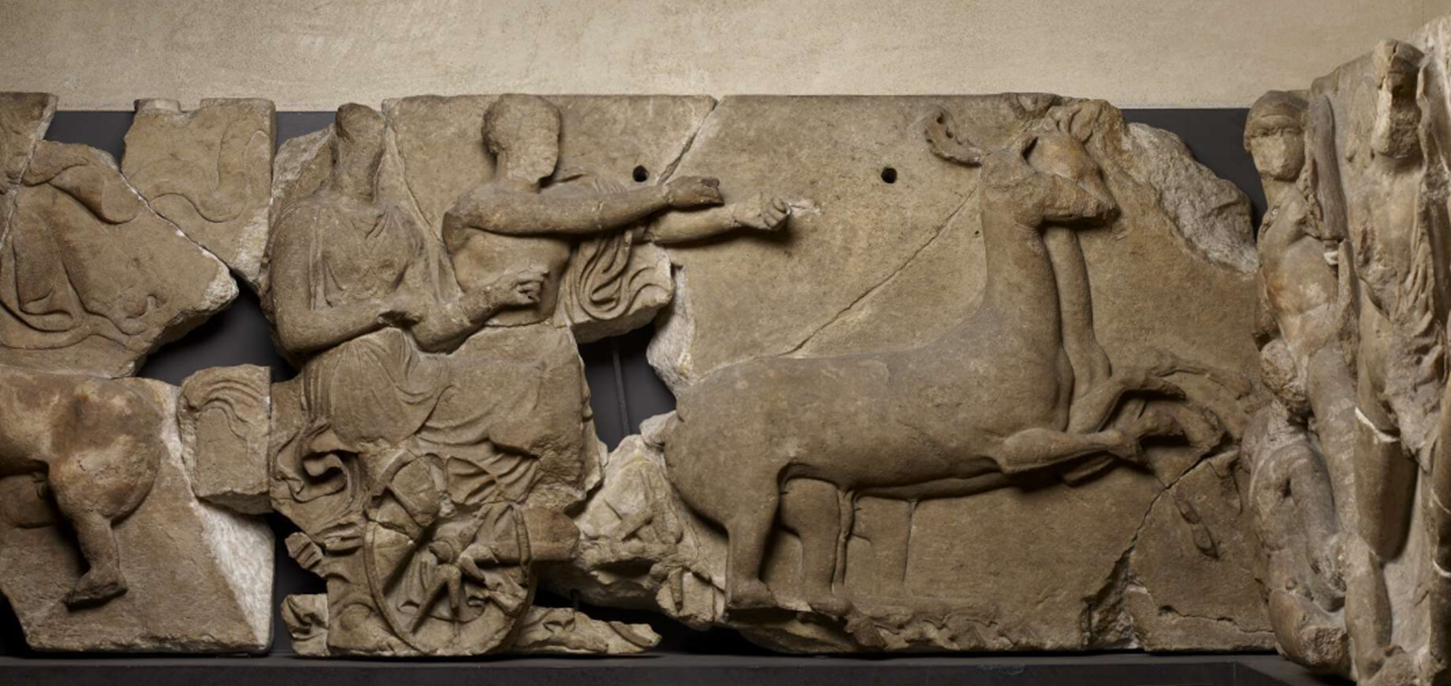
Apollo and Artemis, north-west corner:
Apollo is shooting his bow towards a centaur and Artemis is holding the reigns of the chariot (similar depictions of them attacking from the frieze at the syphian treasury)
This block seems awkward in where ties positioned but the cuts in the adjoining block show that it is in the right position, but it may not reflect the original plan
Identify and date the building in this reconstruction:
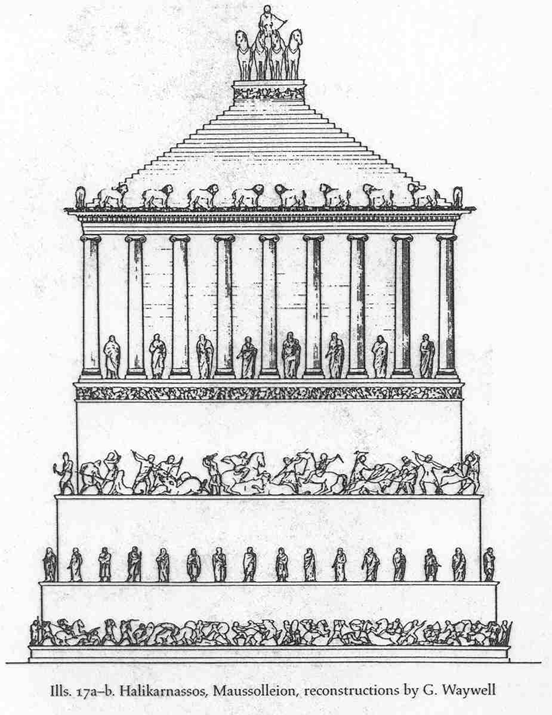
Mausoleum of Halicarnassus, ca 350 BCE:
Give info on the mausoleum
Halikarnassos, capital of Karia in western Anatolia.
Mausolos, (Hekatomnid dynasty) ruled ca. 377/376- 353 BCE.
Tomb of unparalleled size/splendour:
ca. 45 m high, four sides featuring sculptural decoration.
Situated in the centre of the city in its own precinct.
Eclectic iconography.
Some sculpture and frieze segments in the British Museum.
In the centre of the city in ties own precinct which you entered through a gateway
The mausoleum itself hasn’t survived but some sculpture and friezes have survived
What is the problem with trying to interpret how these buildings would have looked?
The problems with trying to interpret how these buildings would have looked when there isn much surviving: reconstruction:
o Issues with measurements given by literary sources
o Uncertainty to where the freestanding statues on it might have taken place
o In three parts – large podium base, large colonaido n top, and roof with a colossal chariot sculpture in marble on top as well
What do we know for certain about the frieze?
- Continuous freize around top of podium, decorated with Amazonomachy and some sort of processional scene as well – Amazonomachy as the only one that survives well
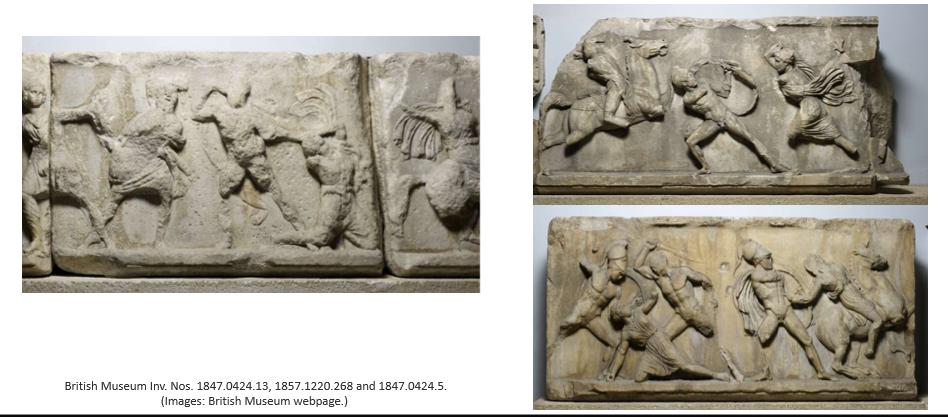
Give detail on this amazonamchy frieze (describing and detailing the different blocks)
Less dense – more space between figures – but is still quite dense and wr have some overlapping figures
- On left – heracles – paw from lionskin hanging down behind his legs – about to sieze a fallen amazon he is grabbing by hair – likely to represent Hippolyta recognised by the cloak around her waist representing girdle Herakles was supposed to retrieve (similar to bassai! – see shared google doc)
- Block top right – depicts amazons attacking, but unusually we have an amazon riding a horse backwards – horse rearing and amazon facing backwards is aiming bow in opposite direction
o Reference to amazon riding skills and possibly to the eastern identity as well
- Block below – greeks depicted nude – but wearing Attic-style crested helmets (change from bassai where they are bareheaded)
- Reference to Greek portrait heads which were helmeted and used in Athens to commemorate generals
- Variety of quality and style on the frieze
- Compositionally more variety in the pose of the figures of well to the bassai frieze (which can be a little repetitive)
- Contextualising the frieze – Amazonomachy and centauromachy were used in different context- funery context of a Hellenised ruler who held power under the persians
- Using this depiction of Greek superiority to align and identify himself with Greek culture but also demonstrate the power of his own reign using this as a form of identity projection
Identify and date this altar:
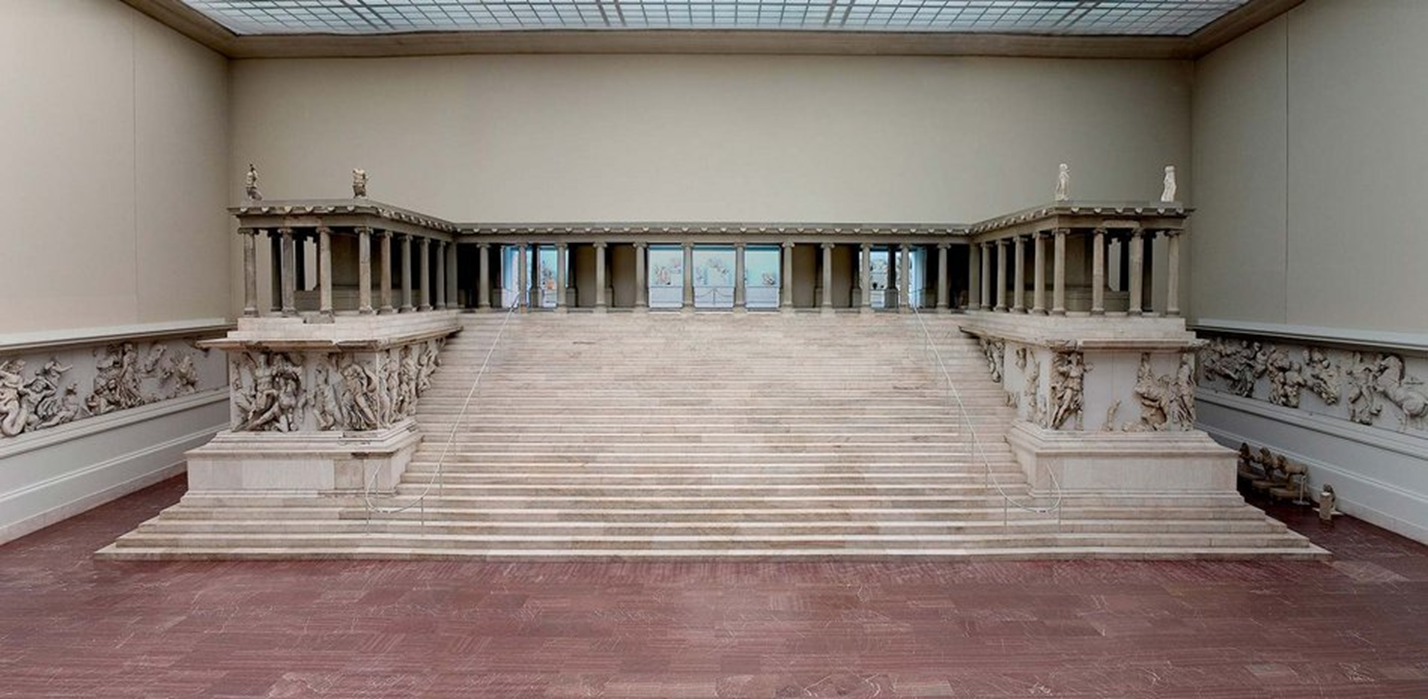
The Great Altar of Zeus from Pergamon
ca. 180-160 BCE
What did the altar celebrate?
Celebrated pergamine victory and thew Attalid dynasty – trying to promote themselves as the inheritors of Athenian dynasty
Describe the gigantomachy frieze on the altar
- The gigantomachy featured on various Greek temples, but the scale of it on the Pergamon alter is unprecedented
- Approximately 84 figures and animals preserve,d but orignall around 100
- We have inscriptoions to help identify the gods – helped swith reconstructing positioning of the indibidual figures as well
What is shown on the east frieze of the temple?
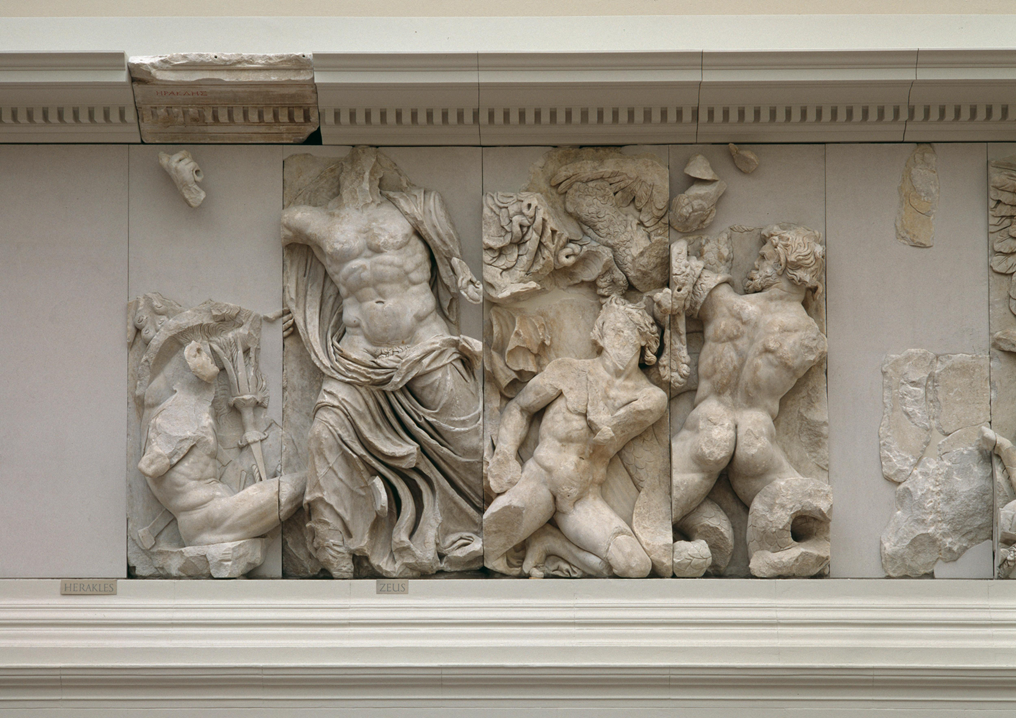
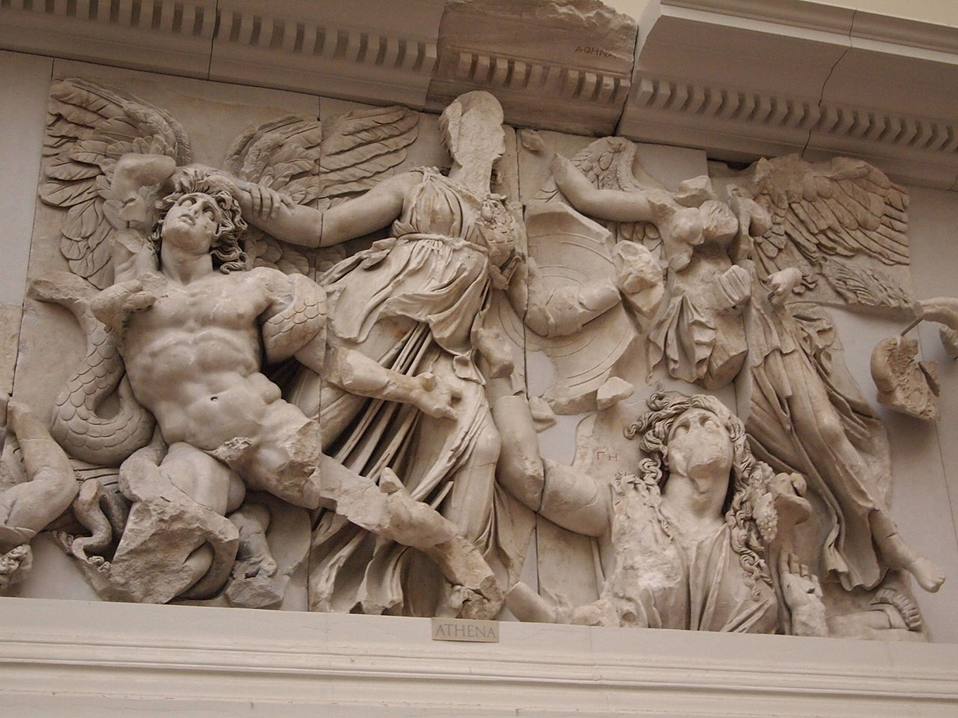
Eats Frieze: Zeus and Athena:
Baroque style, vigorous poses
Zeus panel has highly defined musculature,
Athena is pulling the hair of the giant
Stylistically the alter is an example of baroque style – sense of drama found – vigorous poses and extraAVEGANT GESTURES
o Zeus panel – musculature is highly defined – clear on bodies of giants – eg in the athena panel where she is pulling the hair of the giant as well
o Hair is also a characteristic of the giants here – adds to sense of wildness to their character
o Suggested zeus and athena echo poseidom and athena on west pediment of parthenon
o Something we could go back and consider ourselves – how much we think similarities are there
o Echoes with the parthewnon would align with the Attalid attempt to situate themselves as successors to Athens in terms of power and culture
o The gigantomachy here used to reporosednt attic victory – come out of neighbouring war against the gals
Identify this frieze on the altar:
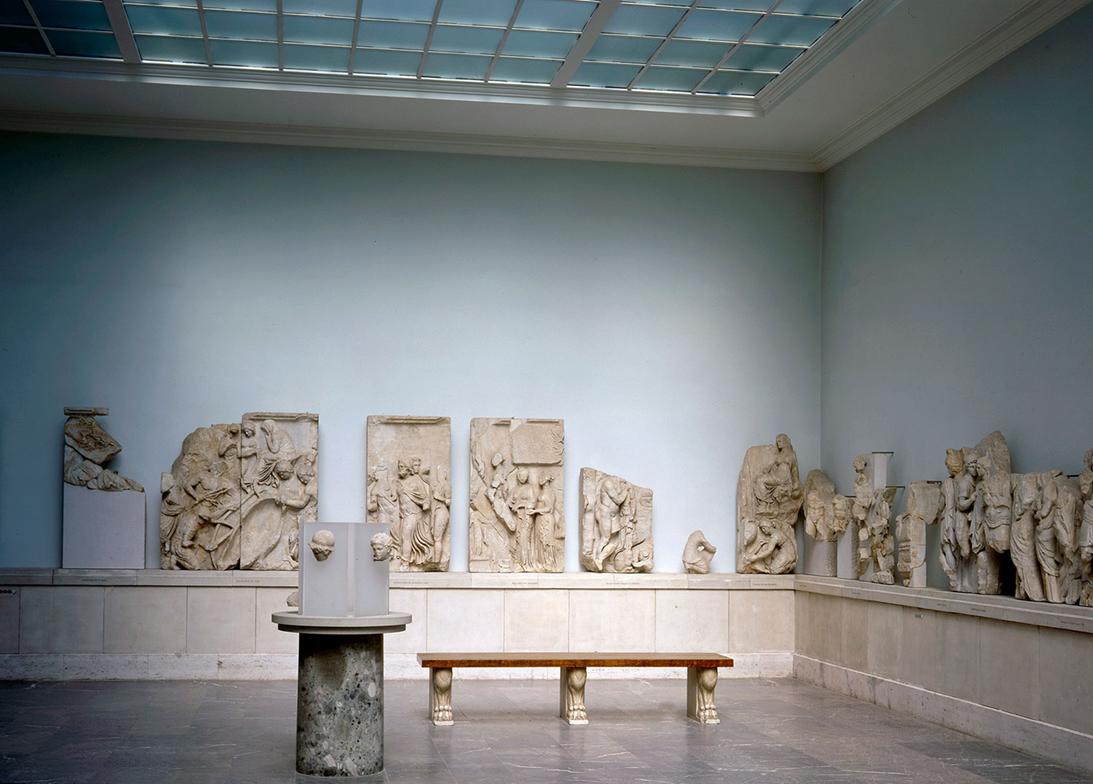
The Telephos frieze
How much survives? What does it depict? Where is it located and How long is it?
- Only have about a third surviving
- Depicts life of mythical hero telophos (mythical founder of perdamon)
- Located on upper section of interior walls of the altar building (behind colonnade).
- Approx. 80-90 m in length.
discuss the kind of narration the Telephos frieze is
Myth is quite complex and elaborate – desnness of narrative makes frieze unusual
o The continuous narration some has been disputed as some is missing
o Continuous narration because we have repeating characters appearing within the same pictorial pallade
How does it deal with pictoral space?
- It deals with pictorial space:
- - figures small in comparison to gigantomachy
- Allows for the inclusion of more and different elements within them
- - tree – naturalistic elements
- - also the impression of depth to the image – and more figures
- In panels 5 and 6 see the men working in the foreground prepaeing a raft in which one of the charactwrs is cast adrift on, women thought to be sitting on mountain in the distance
- Panel 40 – column appearing – architectural elements therefore included as well
- As well as being an early example of continuous narrative its depiction of pictorial space is important acting as a forerunner for wall paintings
Identify and date this temple:
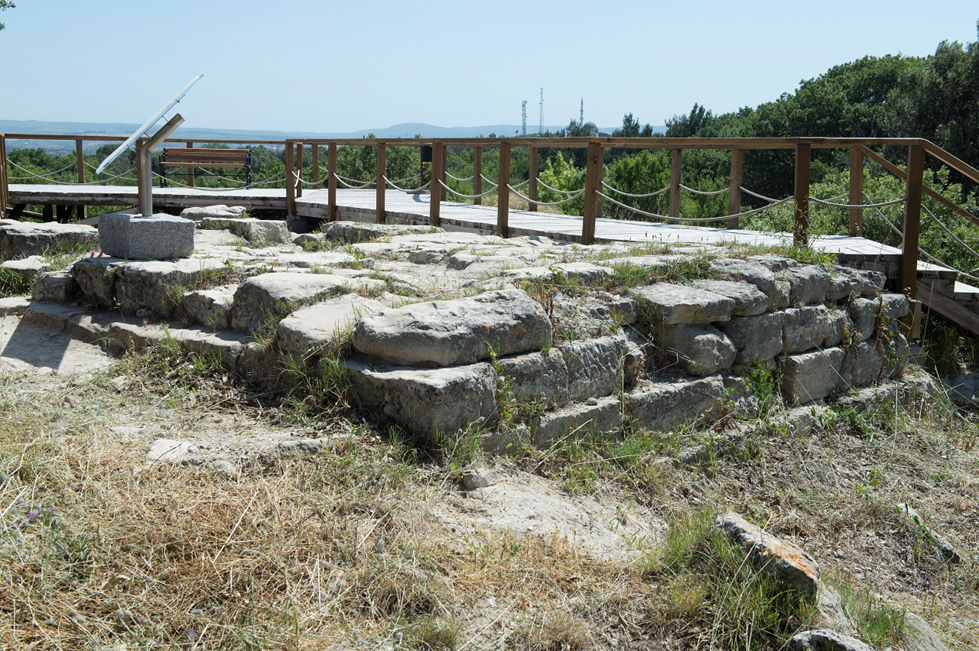
Temple of Athena, Ilion, ca. 240-160 BCE
Give info on the temple (what the site is identified as, dating, how much has survived, what has survived
- This is the site identified as troy
- The forecourt of the Temple of Athena
- Dated to a wide time period – likely part of ab uilding programme undertaken in the third century
- not much survived
- We do have some metopes – thought it originally could have had 64 if it had had them on all sides, but may well have just had metopes on two ends
- Metopes – fragmentary, difficult to identify
- Some themes picked out – the gigantomachy on east, possibly fall of toy on north and centauromachy on south
What do these two metopes depict?
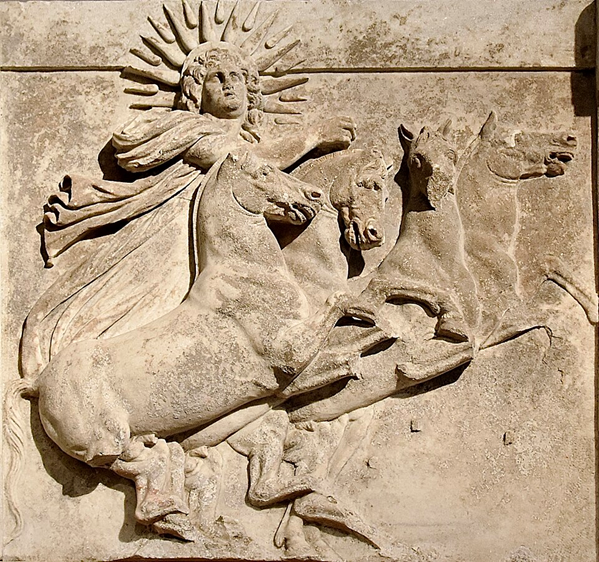
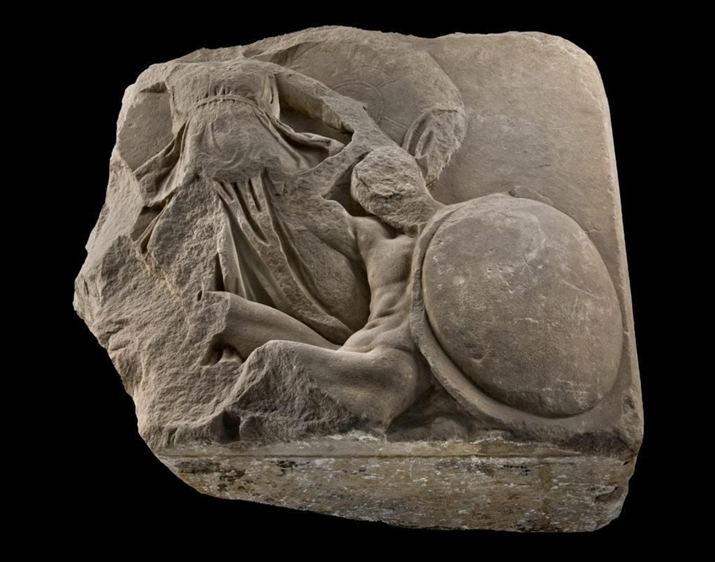
(Apollo) sun chariot and Athena on the bottom one
What are these metopes reminiscent of?
Helios’ horses appear on the Parthenon. Also reminiscent of Apollo sculpture that we saw last week.
Athena metope - probably a representation of the Gigantomachy, so again similar to earlier versions.